
1 Kg Lactase Enzyme Powder CAS 9031-11-2 from Enzymes.bio is a dairy-processing enzyme preparation used to hydrolyze lactose into glucose and galactose. In practical food production, that conversion supports lactose-reduced milk and dairy products, improves perceived sweetness, and helps limit lactose crystallization in products such as ice cream, concentrated dairy, and milk-powder systems. Enzymes.bio supplies the product directly online by the 1 kg unit; after online purchase, the order is processed and shipped with a Certificate of Analysis and Safety Data Sheet included .
Lactase is also known as β-galactosidase, the enzyme class widely described in food biotechnology for breaking the β-glycosidic bond in lactose, the main carbohydrate of milk and whey [1]. Its value is not only nutritional; the same reaction changes sweetness, solubility, freezing behavior, fermentation substrate availability, and the way dairy ingredients behave during processing.
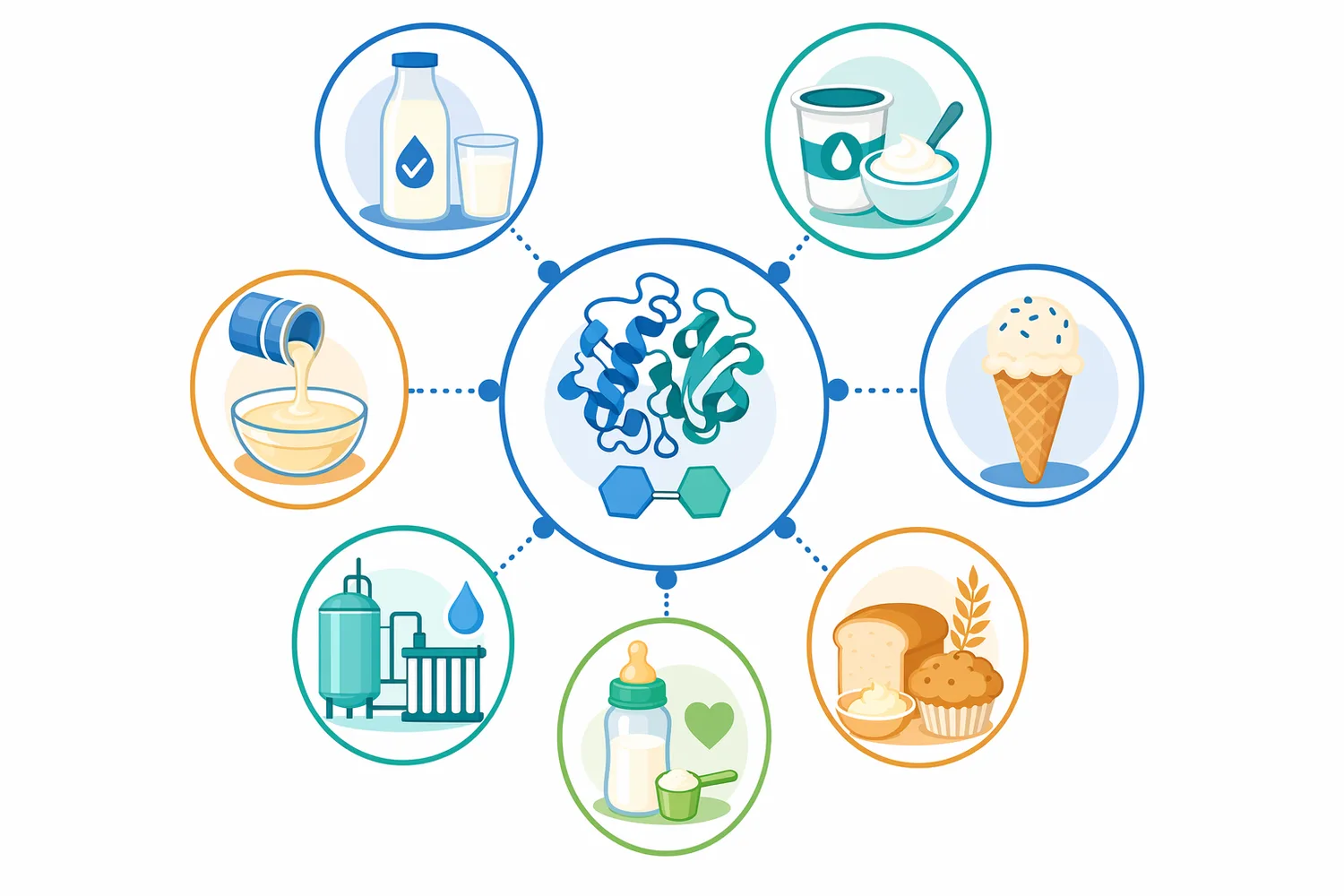
Enzymes.bio lists this product as Lactase Enzyme Powder CAS 9031-11-2, supplied in a 1 kg pack for use in dairy and related food applications including low-lactose milk, milk powder, yogurt, ice cream, and bakery systems containing dairy ingredients . The product is purchased online by the 1 kg unit, with the order processed and shipped after checkout rather than through a request-for-quote workflow.
For a buyer planning production trials or routine food-processing use, the main point is straightforward: lactase acts on lactose, not on milk protein or fat. It converts lactose into glucose and galactose, so the most visible process outcomes are linked to carbohydrate behavior: lower intact lactose, higher reducing-sugar content, more sweetness, less lactose crystallization pressure, and different fermentation behavior in cultures that can use the resulting sugars [1].
Lactase belongs to the broader family of carbohydrate-active enzymes used to modify food polysaccharides and oligosaccharides by cutting or rearranging glycosidic bonds [2]. In this case, the substrate is the milk disaccharide lactose, and the target bond is the linkage between galactose and glucose. Because the reaction is specific to that bond, lactase is especially relevant where dairy ingredients are present, including milk, whey, cream-based mixes, yogurt bases, milk powders, dairy-containing bakery mixes, and lactose-rich by-product streams.
Lactose is a disaccharide composed of one glucose unit and one galactose unit. Lactase hydrolyzes lactose by using water to cleave the β-galactosidic bond, producing two monosaccharides: glucose and galactose [1].
Lactose + water --lactase--> glucose + galactose
That simple reaction has several practical consequences. First, the amount of intact lactose falls. This matters because people with low intestinal lactase activity may not digest lactose efficiently, allowing lactose to pass into the colon where it can contribute to gas production, osmotic effects, abdominal discomfort, diarrhea, bloating, and related symptoms [3]. Food processors use lactase upstream so the dairy product reaches the consumer with less lactose already present.
Second, the sugar profile changes. Lactose is relatively low in sweetness compared with glucose and galactose, so hydrolysis can make a dairy product taste sweeter even when no extra sugar has been added [1]. This is why lactase is often considered not only a lactose-reduction tool but also a sweetness-management tool in flavored milks, yogurts, frozen dairy desserts, and dairy-containing bakery formulations.
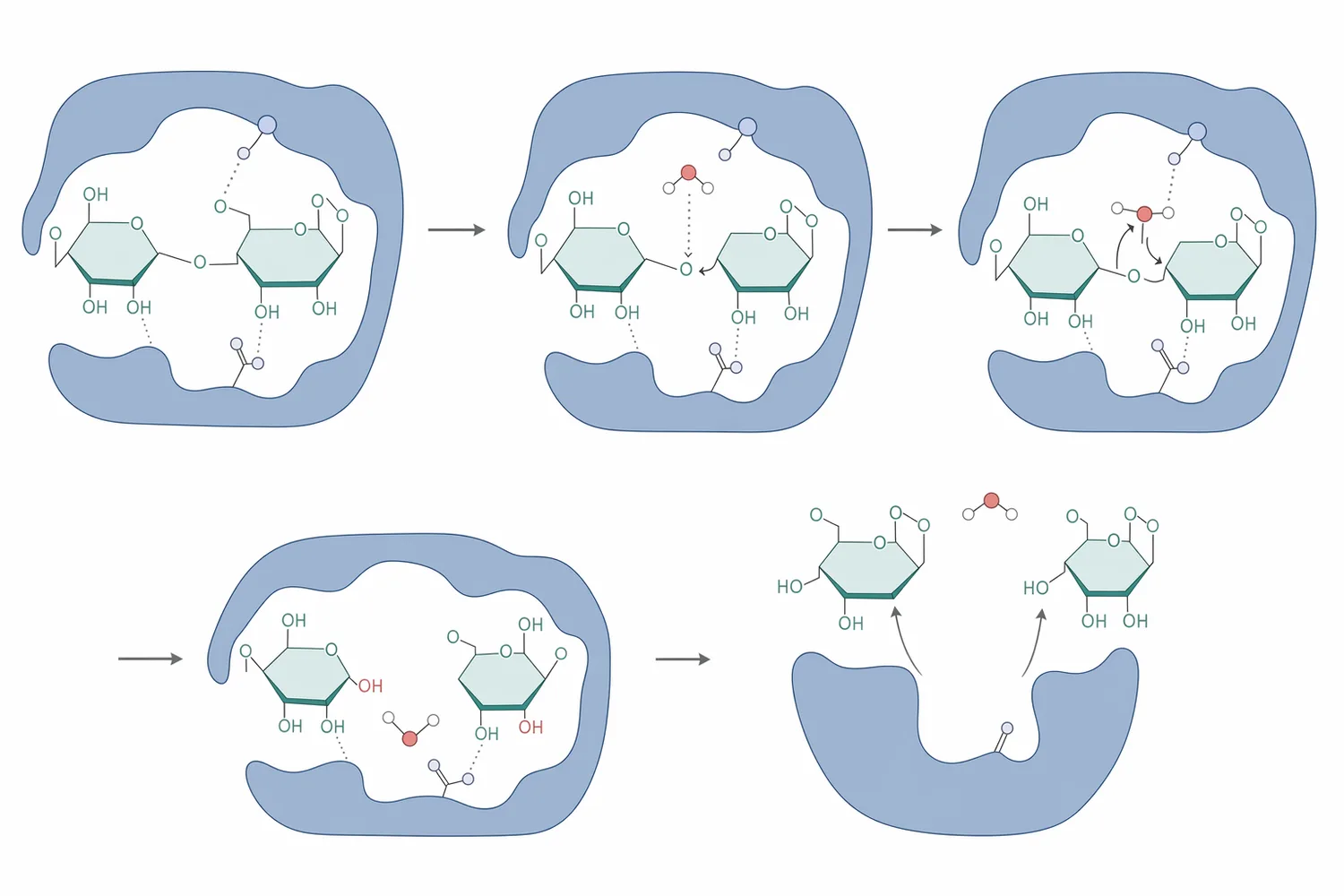
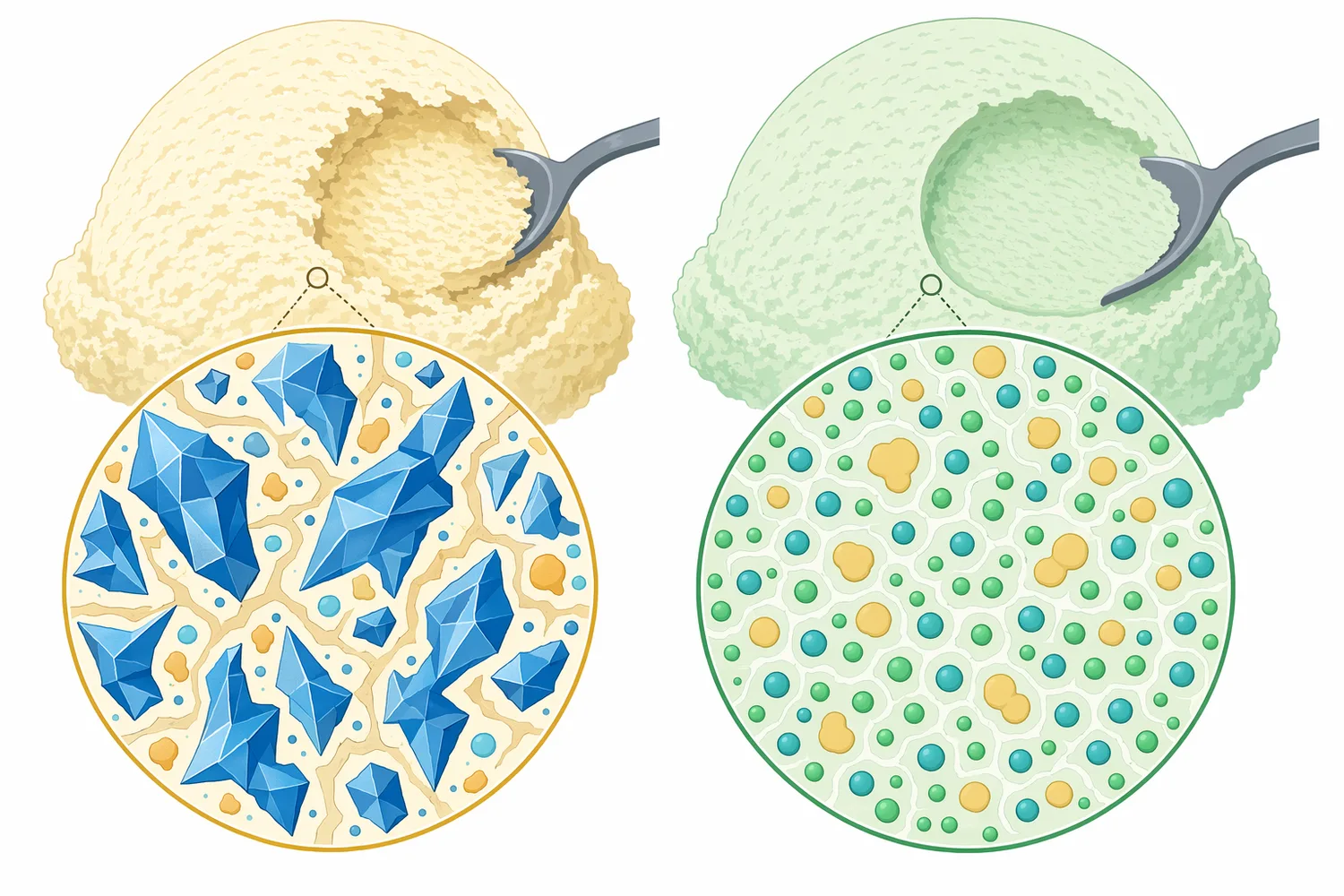
Third, the physical behavior of the carbohydrate phase changes. Lactose has limited solubility and can crystallize in concentrated or frozen dairy systems. When lactase splits lactose into glucose and galactose, the concentration of intact lactose falls and the resulting monosaccharides behave differently in solution, helping reduce the gritty or sandy texture associated with lactose crystallization in some dairy products [4].
Finally, under certain conditions, β-galactosidase can also perform transgalactosylation. Instead of simply transferring galactose to water, the enzyme may transfer galactosyl groups to other sugar acceptors, forming galactooligosaccharides. This is a recognized but more specialized use of β-galactosidase, distinct from the routine objective of lactose hydrolysis in milk [1].
The commercial importance of lactase is tied to the global prevalence of lactase non-persistence. In many adults, intestinal lactase expression declines after childhood, which can make ordinary milk and dairy products difficult to tolerate when lactose remains intact [3]. Lactase-treated dairy gives processors a way to keep the nutritional and sensory advantages of milk-based foods while reducing the specific carbohydrate that drives lactose-intolerance symptoms.
In milk, the reaction is especially direct: lactose is dissolved in the aqueous phase, and lactase accesses it without needing to break down protein networks or fat globules. As hydrolysis proceeds, the product becomes a mixture containing less lactose and more glucose and galactose. This can support lactose-reduced or lactose-free positioning where the finished product meets applicable local requirements and labeling rules [4].
In fermented dairy, lactase affects both the substrate and the eating quality. Yogurt cultures and related lactic acid bacteria interact with milk carbohydrates during fermentation, and many food-associated lactobacilli possess carbohydrate-metabolizing enzyme systems connected to dairy fermentation and digestion [5]. When lactose is hydrolyzed before or during fermentation, the available sugars and acidification behavior may shift, which can influence fermentation time, sweetness perception, and final flavor balance.
In frozen dairy, lactose hydrolysis is a texture tool. Ice cream and frozen yogurt depend on a delicate balance among water, fat, proteins, stabilizers, sugars, and dissolved solids. By reducing intact lactose, lactase helps limit lactose crystal growth; by increasing monosaccharides, it also changes freezing-point behavior and sweetness. The result can be a smoother product when the rest of the formulation and freezing process are aligned [4].
The core application for lactase is milk lactose hydrolysis. The enzyme is added during processing so lactose is split before the product is consumed. This supports dairy products designed for consumers who want the taste, protein, minerals, and culinary function of milk but with reduced lactose [4].
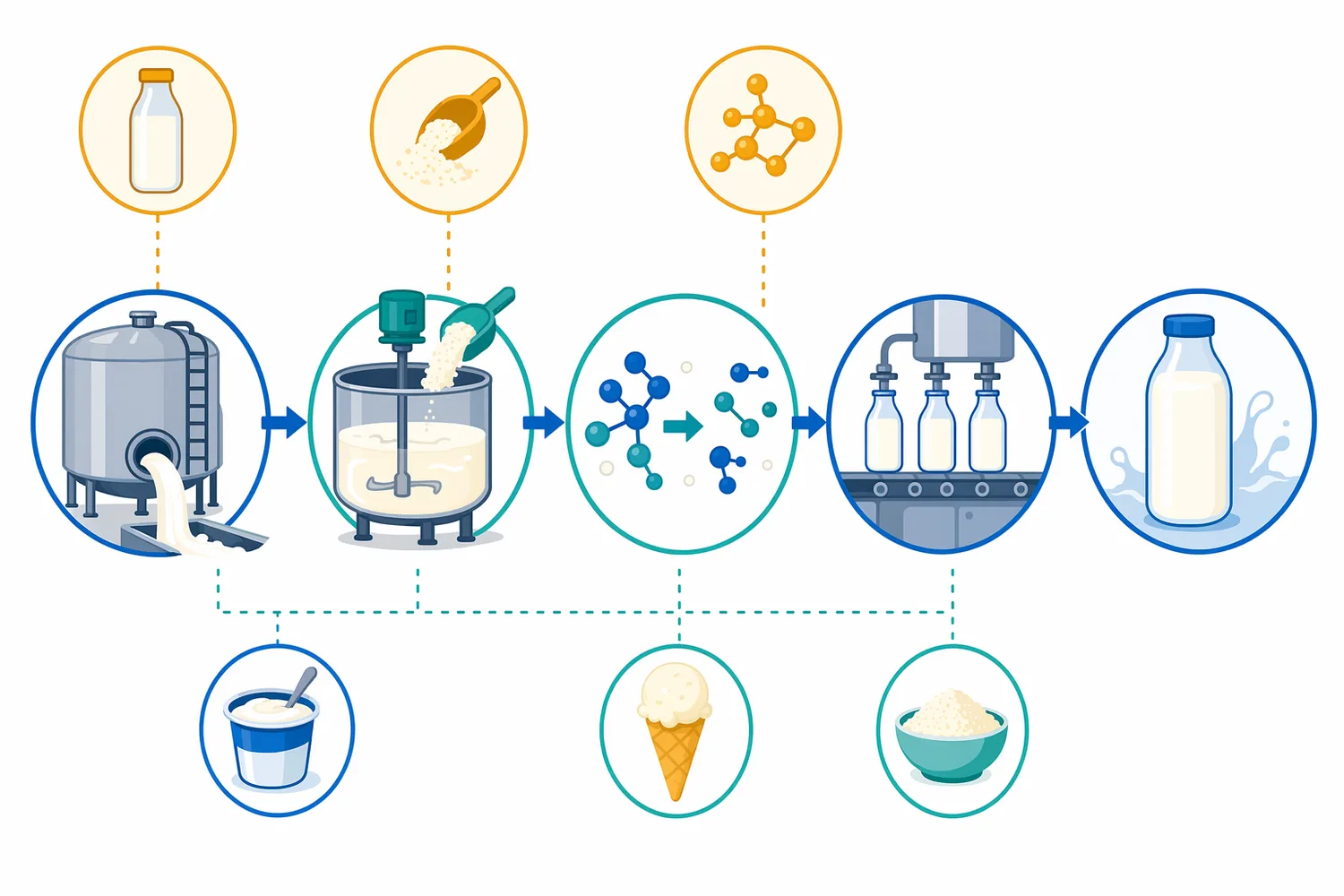
Mechanistically, lactase-treated milk is not simply “diluted” or stripped of carbohydrate. The lactose molecule is converted into its component sugars, so total carbohydrate remains largely in the form of glucose and galactose rather than intact lactose. That distinction matters for taste and processing: the product can taste sweeter because the hydrolysis products have higher sweetness than lactose, while the lower lactose concentration supports reduced-lactose positioning [1].
Because the enzyme changes sugar composition, lactase-treated milk may require attention to downstream heat treatment, flavor development, and browning potential in applications where reducing sugars are exposed to heat. Glucose and galactose are reducing sugars and can participate more readily than lactose in Maillard browning with amino groups under suitable heating conditions, which is valuable in some baked systems but may need to be considered in heat-intensive dairy processes [6].
In yogurt and cultured dairy systems, lactase can support three linked outcomes: reduced lactose, increased sweetness, and altered fermentation behavior. When lactose is hydrolyzed, cultures encounter more glucose and galactose in the dairy matrix, and the finished yogurt can taste naturally sweeter without relying only on added sucrose or syrups [5].
The sensory effect is concrete: lactose contributes relatively little sweetness, while glucose and galactose contribute more. That can help round out acidity in yogurt, kefir-style products, and cultured dairy desserts. A milder perceived acidity does not mean the pH is automatically higher; rather, the sweetness-acid balance changes because the sugar profile changes [1].
Texture effects can also appear in fermented products. Yogurt structure depends primarily on milk proteins, acidification, heat treatment, and solids level, but carbohydrate composition influences water binding, sweetness, and the way the gel is perceived in the mouth. Lactase is therefore best understood as a carbohydrate-modification tool that can complement, rather than replace, culture control and protein-structure management [6].
In ice cream and frozen dairy desserts, lactose can become a texture risk when concentration and freezing conditions promote crystal formation. Lactose crystals may create sandy or gritty perception, especially in products with high milk-solids content or during extended storage with temperature fluctuation. Lactase reduces this risk by decreasing the pool of intact lactose available to crystallize [4].
The hydrolysis products also influence sweetness and freezing behavior. Glucose and galactose are smaller molecules than lactose, so they contribute differently to dissolved-solids behavior in the unfrozen phase. In practical terms, lactase treatment can help a frozen dairy mix deliver more sweetness and smoother texture without simply adding more sucrose [1].
This is particularly relevant to frozen yogurt, where the process combines fermentation and freezing. Lactase can contribute to carbohydrate availability for cultures before freezing, then continue to influence sweetness and crystallization behavior in the frozen product. The enzyme’s benefit is therefore both biochemical and physical: it changes the sugar identity first, and that new sugar profile changes how the product tastes and freezes [4].
Milk powders, condensed dairy bases, and concentrated milk ingredients contain lactose at higher solids concentration than fluid milk. As water is removed, lactose becomes more likely to approach conditions where crystallization, caking, stickiness, or texture changes can matter. Lactase treatment reduces intact lactose and produces more soluble monosaccharides, which changes how the carbohydrate phase behaves during concentration and drying [4].
For milk-powder applications, the main mechanism remains the same: hydrolysis before or during the relevant liquid stage changes the sugar profile before drying. The final powder or ingredient then carries that altered carbohydrate composition into later use. In reconstituted products, this can affect sweetness and lactose level; in dry blends, it can affect how dairy solids contribute to formulation behavior .
Because powder systems involve heat, concentration, and low-moisture storage, the effect of increased glucose and galactose should be understood in the context of the whole formula. These monosaccharides bring sweetness and solubility advantages, while their reducing-sugar chemistry may influence browning in heated applications [6].
Lactase is relevant in bakery systems when the formula includes milk, whey, milk powder, lactose-containing dairy solids, or similar ingredients. Lactose itself is not fermented by ordinary baker’s yeast as readily as simple sugars, so hydrolyzing lactose can increase the amount of glucose and galactose available in the dough system [1].
This can support sweetness and crust color. Glucose and galactose can participate in Maillard reactions during baking, contributing to browning when they react with amino compounds under heat. In dairy-containing breads, buns, cakes, biscuits, or sweet baked goods, lactase-treated dairy ingredients may therefore influence both flavor and surface color [6].
The effect is formulation-dependent because bakery systems are complex: flour enzymes, added sugars, yeast activity, dairy solids, proteins, heat profile, and water availability all contribute to the finished result. Lactase’s specific contribution is still clear: it changes lactose into sugars that behave differently in fermentation, sweetness, and browning.
Whey is one of the most important lactose-containing by-product streams in dairy processing. Cheese whey and related streams contain lactose that can be hydrolyzed by β-galactosidase into glucose and galactose, creating sweeter syrups or more fermentable carbohydrate substrates [1].
This matters because lactose-rich whey can be challenging to dispose of or valorize if it remains untreated. Enzymatic hydrolysis can make whey more useful as a food ingredient base, fermentation substrate, or precursor for specialty carbohydrate ingredients. In this role, lactase supports value recovery from dairy side streams rather than only improving consumer milk products [4].
Whey is also a common substrate for galactooligosaccharide production when processing conditions are directed toward transgalactosylation. That application is more technically specialized than ordinary hydrolysis, but it demonstrates the broader value of β-galactosidase in transforming lactose-rich materials into higher-value carbohydrate ingredients [1].
| Application area | Main substrate issue | What lactase changes | Practical product effect |
|---|---|---|---|
| Fluid milk | Intact lactose limits suitability for lactose-sensitive consumers | Lactose is hydrolyzed into glucose and galactose | Supports lactose-reduced or lactose-free milk positioning where finished-product requirements are met |
| Yogurt and cultured dairy | Lactose remains in the dairy base; acidity can dominate taste | Increases simple sugars while reducing lactose | Can improve sweetness-acid balance and support culture carbohydrate availability |
| Ice cream and frozen desserts | Lactose crystallization can cause sandy texture | Reduces intact lactose and changes dissolved sugar profile | Helps improve smoothness and sweetness in frozen dairy systems |
| Milk powder and concentrated dairy | High solids increase lactose-crystallization pressure | Converts lactose before concentration or drying | Helps manage lactose behavior in concentrated or dried dairy ingredients |
| Dairy-containing bakery | Lactose is less useful for yeast fermentation and has different browning behavior | Produces glucose and galactose | Can support sweetness, fermentation contribution, and baked color development |
| Whey processing | Lactose-rich stream may have limited direct value | Hydrolyzes whey lactose or supports specialty carbohydrate conversion | Enables sweeter whey ingredients, fermentation substrates, or galactooligosaccharide routes |
This table is best read mechanistically: lactase is doing the same chemical job in each case, but each food matrix turns that sugar conversion into a different processing benefit. The enzyme does not create the texture, flavor, or label outcome alone; it changes lactose chemistry so the rest of the process behaves differently [6].
The terms lactase and β-galactosidase are often used together because lactase activity is a β-galactosidase function: cleavage of β-galactosidic linkages such as the bond in lactose. Microbial β-galactosidases are widely studied for industrial use because microorganisms can produce enzymes with practical stability and performance characteristics for food processing [4].
Different β-galactosidases can behave differently in food systems. Enzyme source influences pH behavior, temperature tolerance, stability, and the balance between hydrolysis and transgalactosylation. Food-enzyme literature commonly distinguishes enzymes used around milk-like conditions from those better suited to more acidic matrices, but the shared biochemical target remains lactose [1].
At a conceptual level, this helps explain why lactase appears in many dairy categories. Milk, yogurt, whey, and frozen dairy mixes are not identical environments; they differ in acidity, solids, salts, fat, protein structure, and water availability. The enzyme’s functional impact depends on how well the lactase remains active long enough to convert lactose in that specific matrix [7].
Most dairy processors use lactase for hydrolysis: splitting lactose into glucose and galactose. This is the expected route in typical milk lactose-reduction applications, where water is abundant and the objective is to reduce intact lactose [1].
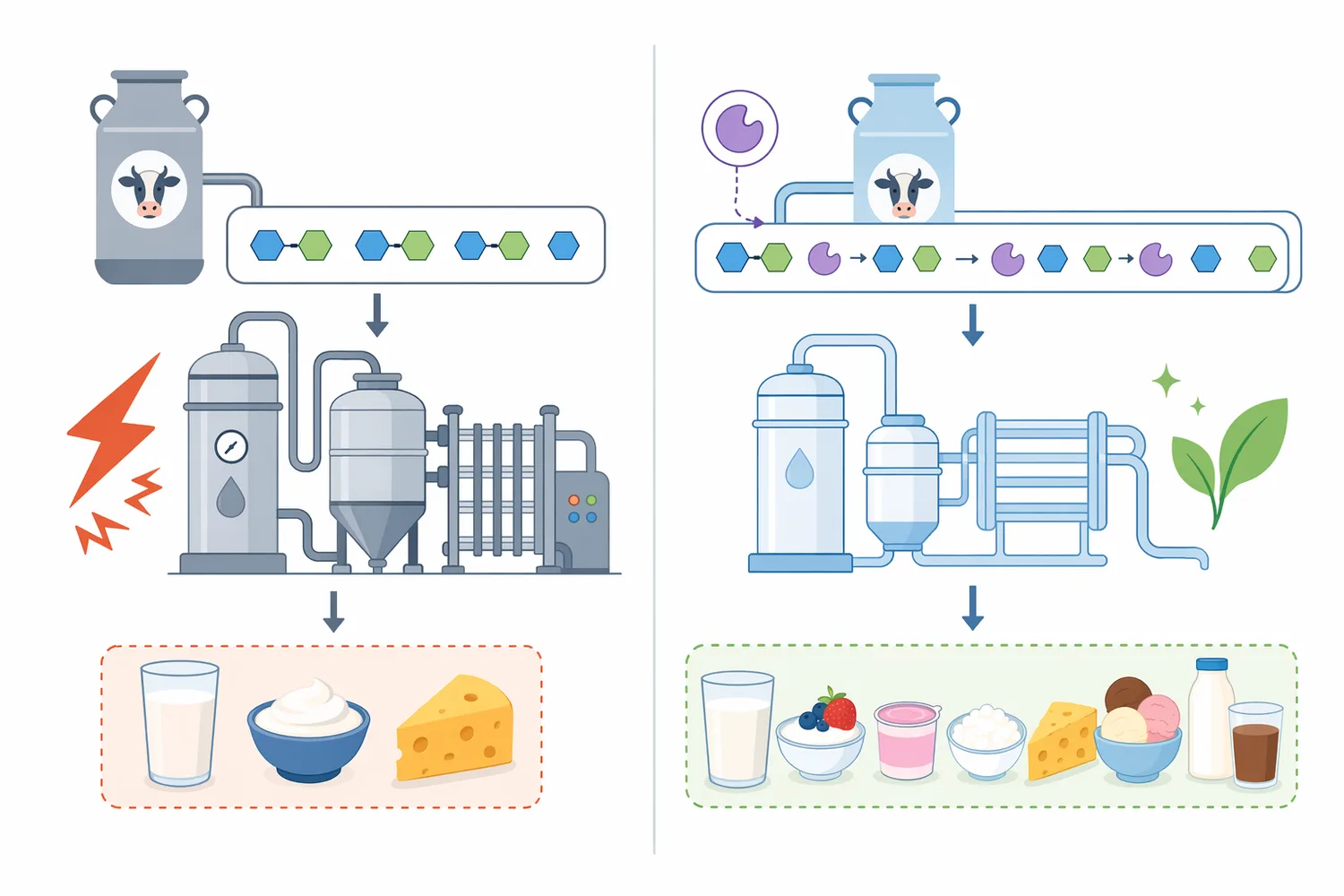
Transgalactosylation is a different β-galactosidase-catalyzed pathway. In that case, a galactosyl group is transferred to a sugar acceptor rather than to water, forming galactooligosaccharides. These carbohydrates are of interest because they can function as prebiotic ingredients in food and nutrition applications [4].
The practical distinction is important. Hydrolysis is the mainstream application for lactose-reduced dairy. Galactooligosaccharide formation is a specialized carbohydrate-conversion application, more dependent on substrate concentration and processing design. Both rely on β-galactosidase chemistry, but they are not the same production goal [1].
Lactase can increase perceived sweetness without adding a separate sweetener because glucose and galactose taste sweeter than lactose. The enzyme does not add sugar mass; it changes the identity of the sugars already present in milk [1].
This is useful in yogurt, flavored milk, frozen dairy, and dairy-based desserts where sweetness needs to balance acidity, cocoa bitterness, fruit acidity, or the cooling effect of frozen products. It can also help formulators manage added sugar levels, although the degree of sweetness change depends on the product matrix and hydrolysis extent [6].
Lactose crystallization is a practical problem in ice cream, sweetened condensed products, concentrated milk systems, and some powders. Lactase lowers the concentration of lactose available to crystallize and replaces it with monosaccharides that remain more compatible with the aqueous phase under many processing conditions [4].
This is why lactase can have a noticeable texture effect even though it does not directly modify proteins, emulsifiers, or stabilizers. It changes the carbohydrate phase, and that carbohydrate phase influences mouthfeel, freezing behavior, and storage texture.
Lactase-treated dairy provides glucose and galactose that may be more immediately available to certain cultures than intact lactose. In fermented dairy, this can influence acidification and flavor development because lactic acid bacteria rely on carbohydrate metabolism to produce organic acids and aroma compounds [5].
The result is not universal acceleration in every process, but the mechanism is clear: lactase changes the substrate pool available to microbes. Where cultures benefit from that sugar profile, fermentation performance and product balance can improve.
Lactose-rich whey and permeate streams can be converted into sweeter, more fermentable, or more functional ingredients by lactase treatment. This supports broader food-industry goals around enzyme-enabled resource efficiency and value creation from by-products [6].
In this setting, lactase is part of a sustainable-processing toolkit. Instead of treating lactose only as a waste-load contributor or low-value carbohydrate, processors can convert it into sugars and oligosaccharides with more useful functional properties.
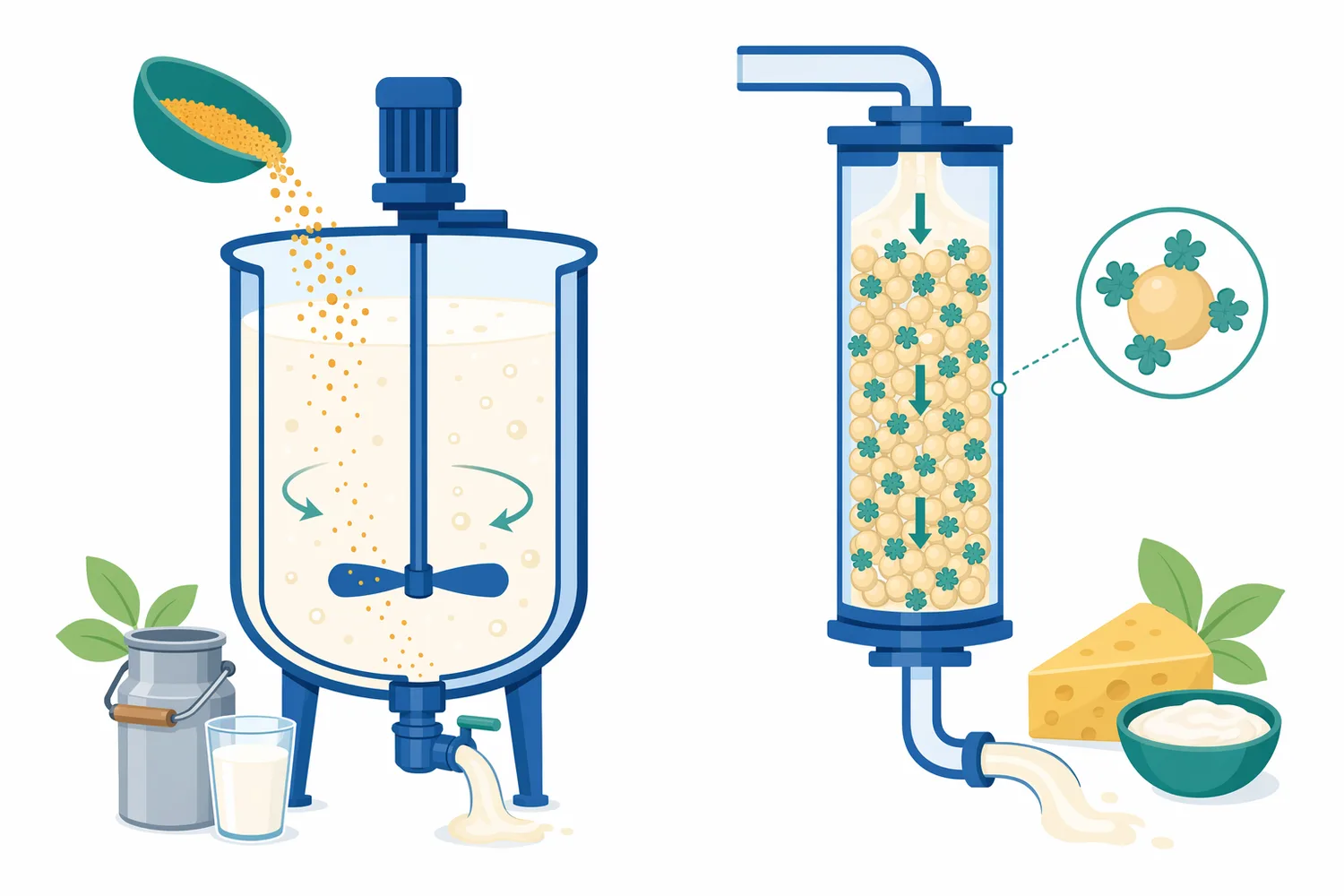
Food-enzyme research also covers immobilized lactase systems, where β-galactosidase is attached to or retained within a support material. Immobilization can improve enzyme reuse, help separate the enzyme from the product stream, and support continuous processing models in certain food applications [8].
For example, immobilized enzyme systems are studied using carriers such as gels, membranes, particles, and other food-compatible structures. The scientific goal is to retain catalytic activity while improving handling, operational stability, or reuse in repeated processing cycles [9].
This is useful context because it shows the maturity of lactase science in dairy processing. However, immobilized systems are not the same as using a soluble enzyme powder in a batch product. A 1 kg lactase enzyme powder is most directly understood as an enzyme preparation for direct addition to suitable dairy or food-processing systems, where lactose hydrolysis occurs during the contact period .
Lactase is a protein enzyme preparation. Like other enzyme powders, it should be handled with care to minimize dust exposure and avoid unnecessary inhalation, skin contact, or eye contact. Enzyme proteins can cause irritation or sensitization in susceptible individuals, especially when airborne dust is generated during handling [6].
For workplace use, follow the Safety Data Sheet supplied with the order and apply normal enzyme-handling precautions appropriate for powdered processing aids. Keep containers closed when not in use, avoid creating dust clouds, and use handling practices suitable for food-processing enzyme materials .

Because enzymes are catalysts, only a small amount of active protein can transform a much larger amount of substrate under suitable conditions. That catalytic nature is what makes lactase valuable in food processing, but it also means the material should be treated as an active processing ingredient rather than an inert powder [2].
Enzymes.bio supplies 1 Kg Lactase Enzyme Powder CAS 9031-11-2 directly through its online product page. The buyer can purchase the 1 kg unit online, pay at checkout, and the order is then processed and shipped. A Certificate of Analysis and Safety Data Sheet are included with the order documentation .
The product is positioned for dairy and food-processing applications where lactose hydrolysis is the desired function. Typical use cases include lactose-reduced milk, yogurt, ice cream, milk powder, bakery formulations containing dairy ingredients, and other lactose-containing dairy systems .
Lactase Enzyme Powder CAS 9031-11-2 is a well-established dairy-processing enzyme for converting lactose into glucose and galactose. The core value is biochemical specificity: lactase targets the lactose bond directly, reducing intact lactose while changing sweetness, solubility, crystallization behavior, and fermentation substrate availability [1].
For food producers using dairy ingredients, those changes translate into practical benefits across low-lactose milk, cultured dairy, frozen desserts, milk powders, bakery products, and whey valorization. The enzyme’s effect is strongest where the product challenge is clearly linked to lactose itself: digestibility for lactose-sensitive consumers, low sweetness of lactose, lactose crystallization, or limited utility of lactose-rich streams [4].
Enzymes.bio supplies the 1 kg Lactase Enzyme Powder CAS 9031-11-2 product online for buyers who need a lactase preparation for dairy and related food-processing applications, with the order processed and shipped after online purchase and documentation included with the shipment .
Sold by the 1 kg unit, in stock and ready to ship. Order directly on our store — pay online and we process your order. A Certificate of Analysis and Safety Data Sheet are included with every order.
Buy 1 Kg Lactase Enzyme Powder Cas 9031-11-2 →Numbered in order of first citation. Open-access sources, each verified reachable at publication; citation numbers in the text link here.