
Acid Cellulase Enzyme Powder for Bio-Polishing, CAS 9012-54-8, is used in textile finishing to act on exposed cellulose fibrils on cotton and cotton-rich fabrics. Under controlled mildly acidic processing, cellulase weakens and removes loose surface microfibrils, helping reduce fuzz and pilling while improving smoothness, handle, and surface clarity [1].
For buyers working with cotton bio-polishing, denim washing, anti-pilling treatment, and cellulose surface refinement, acid cellulase is a practical enzyme option because it targets cellulose rather than synthetic fibers. Enzymes.bio supplies Acid Cellulase Enzyme Powder for Bio-Polishing directly online by the 1 kg unit; payment is completed through the website, the order is processed and shipped, and a Certificate of Analysis and Safety Data Sheet are provided with the order.
Acid cellulase belongs to the cellulase enzyme family, a group of enzymes that catalyze the hydrolysis of cellulose, the main structural polysaccharide in cotton, linen, hemp, lotus fiber, and many other plant-derived textile fibers. Cellulose is made of long β-1,4-linked glucose chains that assemble into fibrils and microfibrils; cellulase systems act by cleaving these chains at accessible points, producing shorter soluble cellulose fragments and sugars rather than simply “washing off” dirt or oil [1].
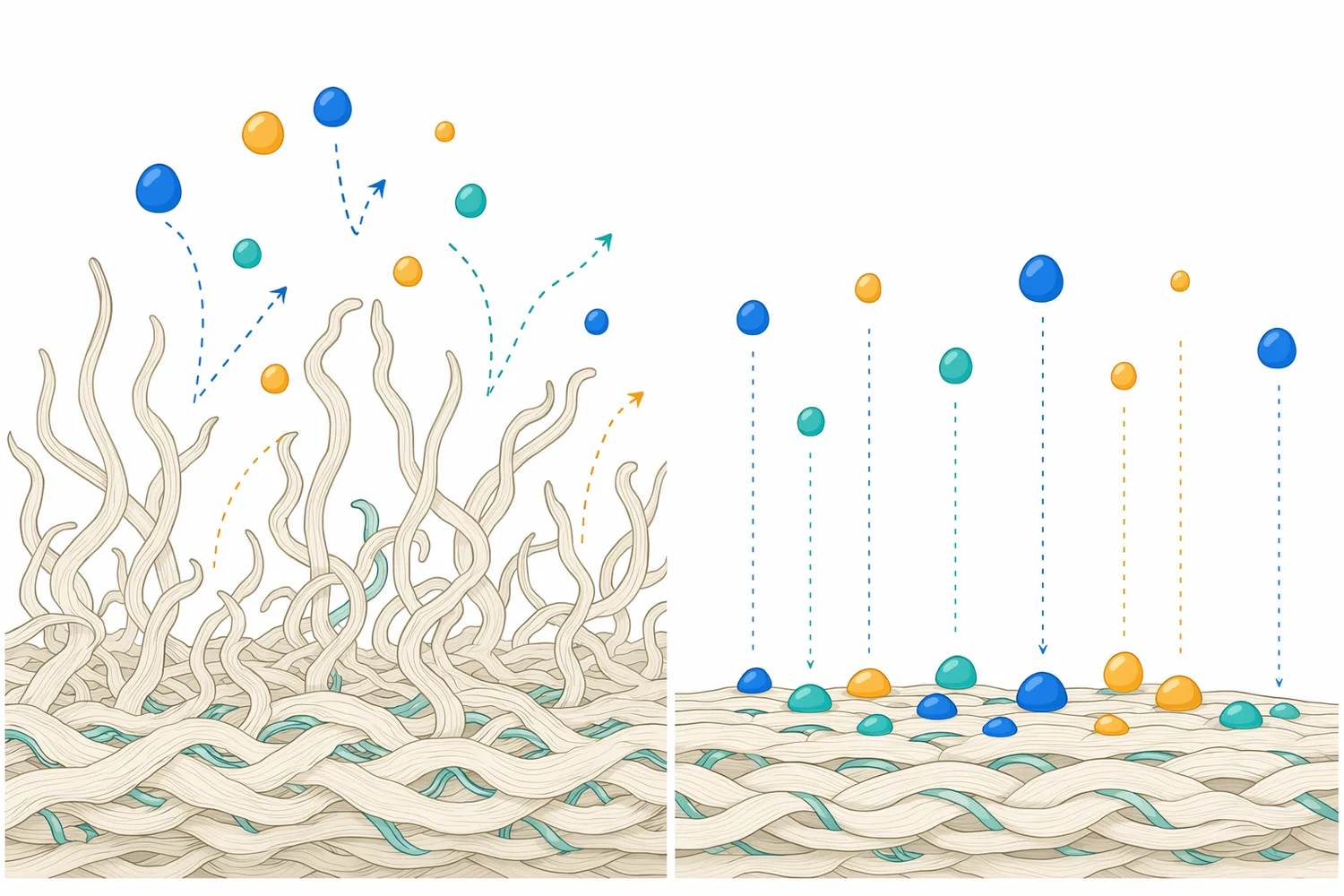
In textile bio-polishing, the objective is deliberately limited: the treatment is designed to modify the outermost fiber surface, not to digest the full fabric structure. Cotton yarns and fabrics contain protruding fibrils created or exposed during spinning, knitting, weaving, dyeing, raising, laundering, and mechanical finishing. These small cellulose projections scatter light, trap lint, contribute to harshness, and can entangle during wear into pills. Cellulase attacks these exposed cellulose chains first because they are more accessible than the compact crystalline regions inside the fiber [2].
The “acid” in acid cellulase refers to the processing environment where this enzyme type is generally used. Acid cellulases are associated with acidic finishing baths, especially in cotton and denim treatments where surface abrasion, softening, and fibril removal are desired. This does not mean the fabric itself becomes acidic as a final property; it means the enzymatic reaction is carried out in an acidic wet-processing window before the fabric is rinsed, neutralized, or otherwise finished according to the textile process [3].
CAS 9012-54-8 is commonly associated with cellulase enzyme preparations. In this product context, Acid Cellulase Enzyme Powder for Bio-Polishing CAS 9012-54-8 refers to a powdered enzyme preparation supplied for industrial use where cellulose surface modification is required, with textile bio-polishing and denim finishing as the core applications.
The practical effect of acid cellulase comes from a molecular event: cleavage of cellulose chains in exposed surface fibrils. Cotton fibers contain both ordered crystalline cellulose and more accessible amorphous regions. The loose fibrils on the surface contain cellulose chains that are easier for cellulase to reach than the dense internal fiber body. When the enzyme hydrolyzes these exposed chains, the fibrils lose mechanical integrity and detach more readily during fabric movement in the bath [1].
This mechanism explains why cellulase can improve surface appearance without needing to dissolve the entire fabric. The outer fibrils are thin, accessible, and mechanically vulnerable. Once enzymatic cutting weakens them, liquor movement, fabric-to-fabric contact, and machine action help remove the loosened material. The fabric surface becomes cleaner because there are fewer protruding fiber ends to scatter light or trap lint [4].
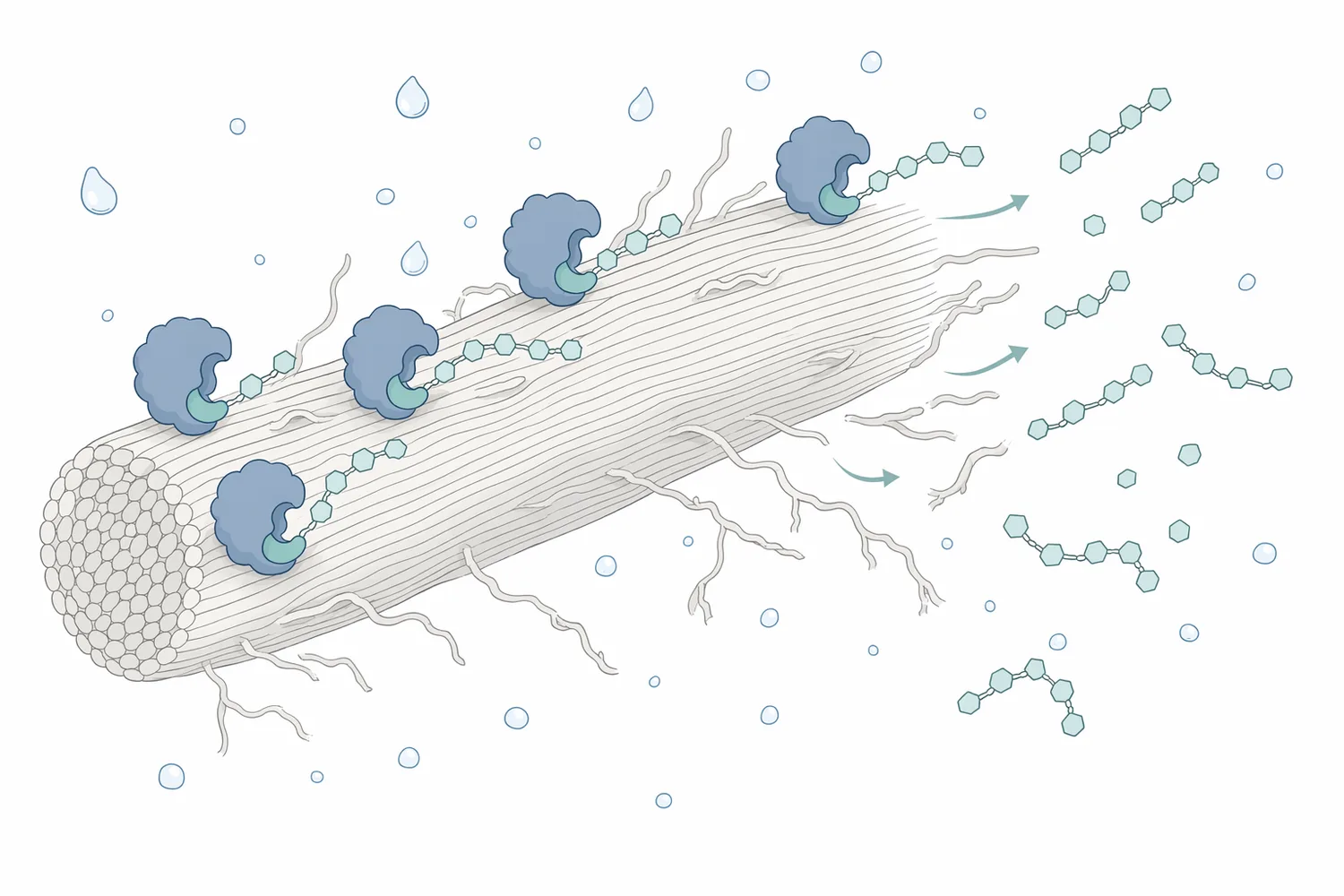
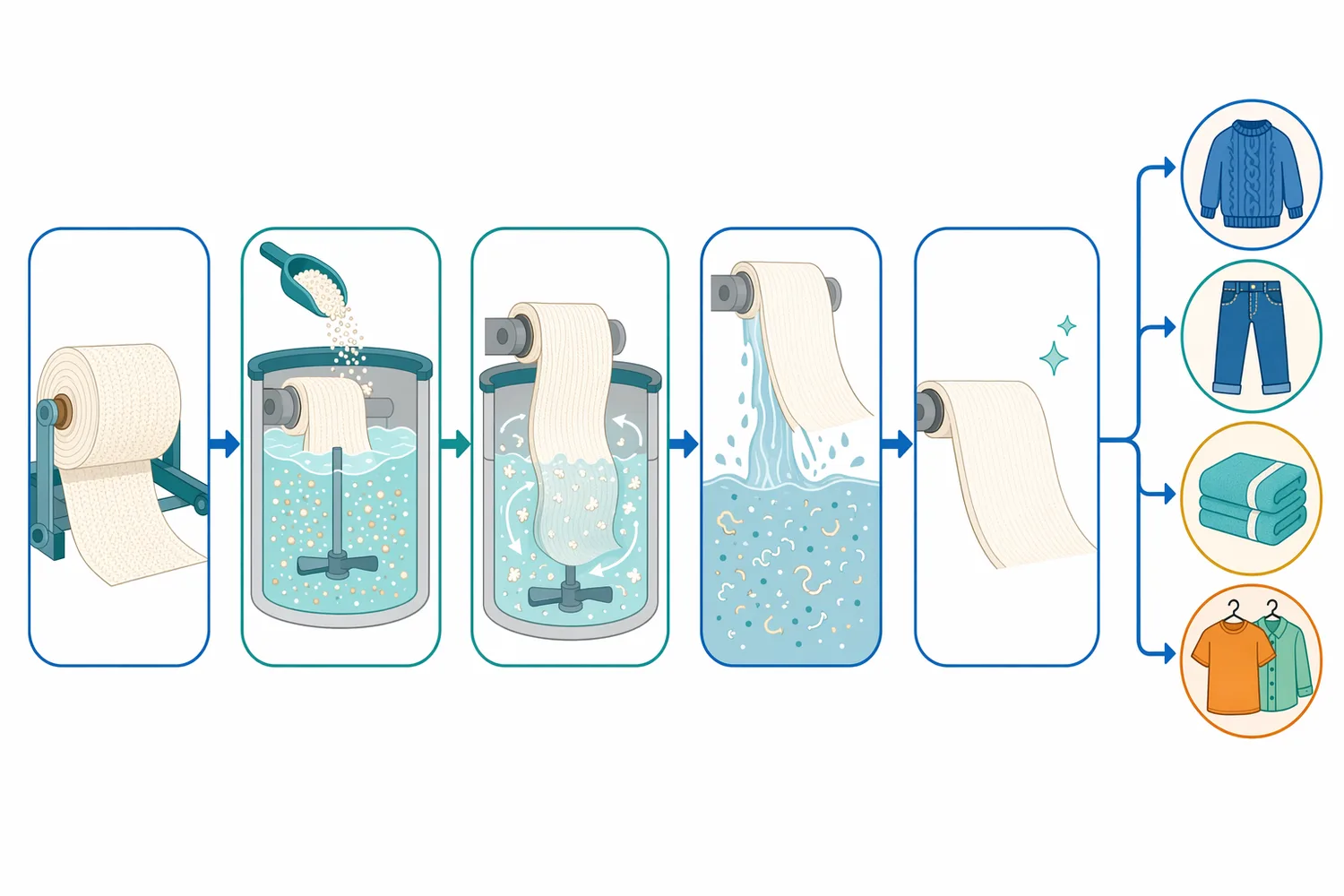
Bio-polishing is therefore not only a chemical reaction; it is an enzyme-assisted surface removal process. The enzyme performs selective hydrolysis at accessible cellulose points, and the finishing equipment supplies the physical movement needed to separate weakened fibrils from the yarn surface. This is why textile literature often discusses cellulase treatment together with machine type, agitation, fabric construction, and finishing conditions rather than treating it as a static soak [4].
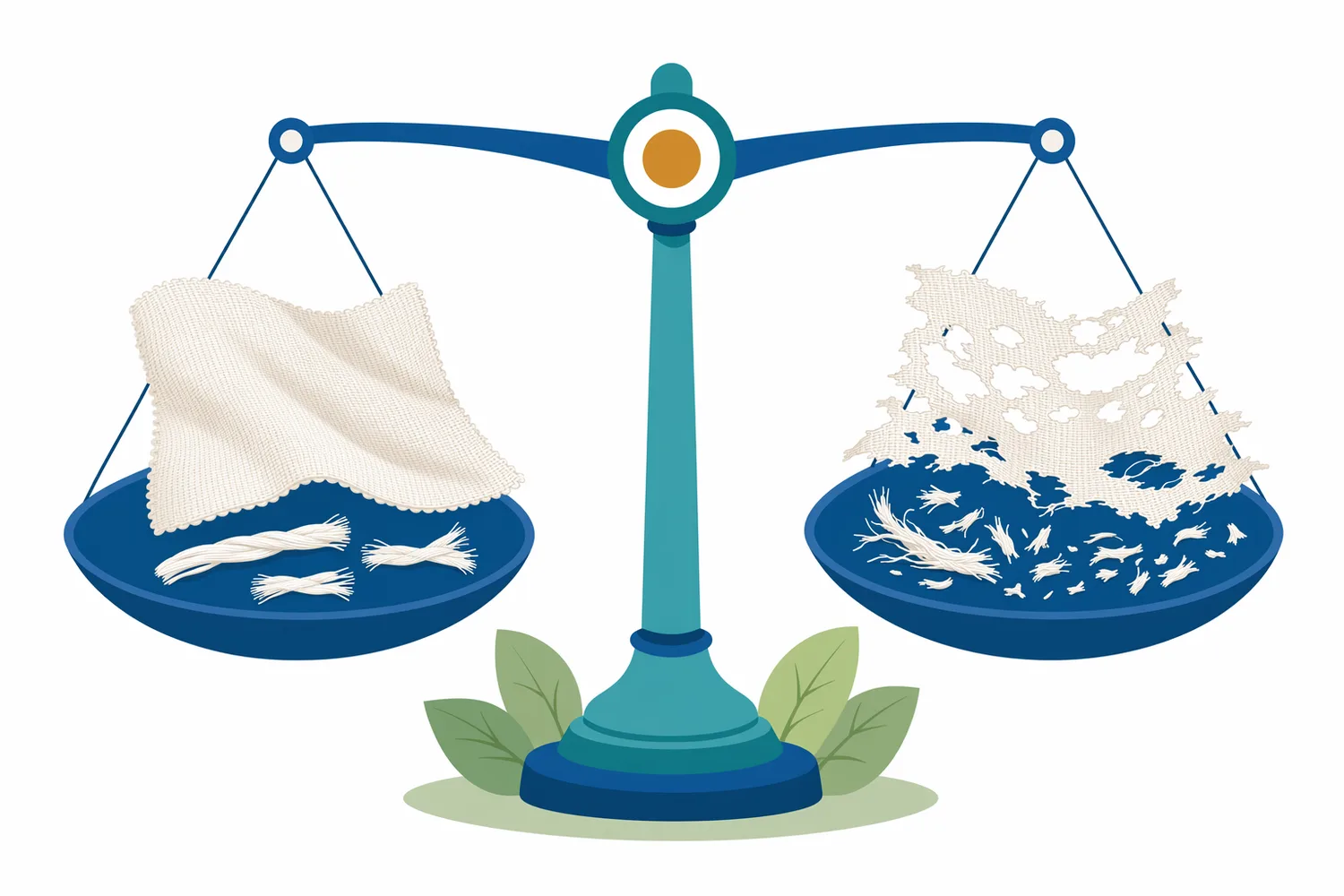
The same mechanism also explains the main limitation. If cellulase action is allowed to go too far, the enzyme can continue hydrolyzing accessible cellulose beyond unwanted fuzz, leading to unnecessary weight loss, reduced strength, or over-softening. Effective bio-polishing is a balance: enough cellulose surface hydrolysis to remove fuzz and reduce pilling, but not so much that the main fiber structure is weakened beyond the intended finish [3].
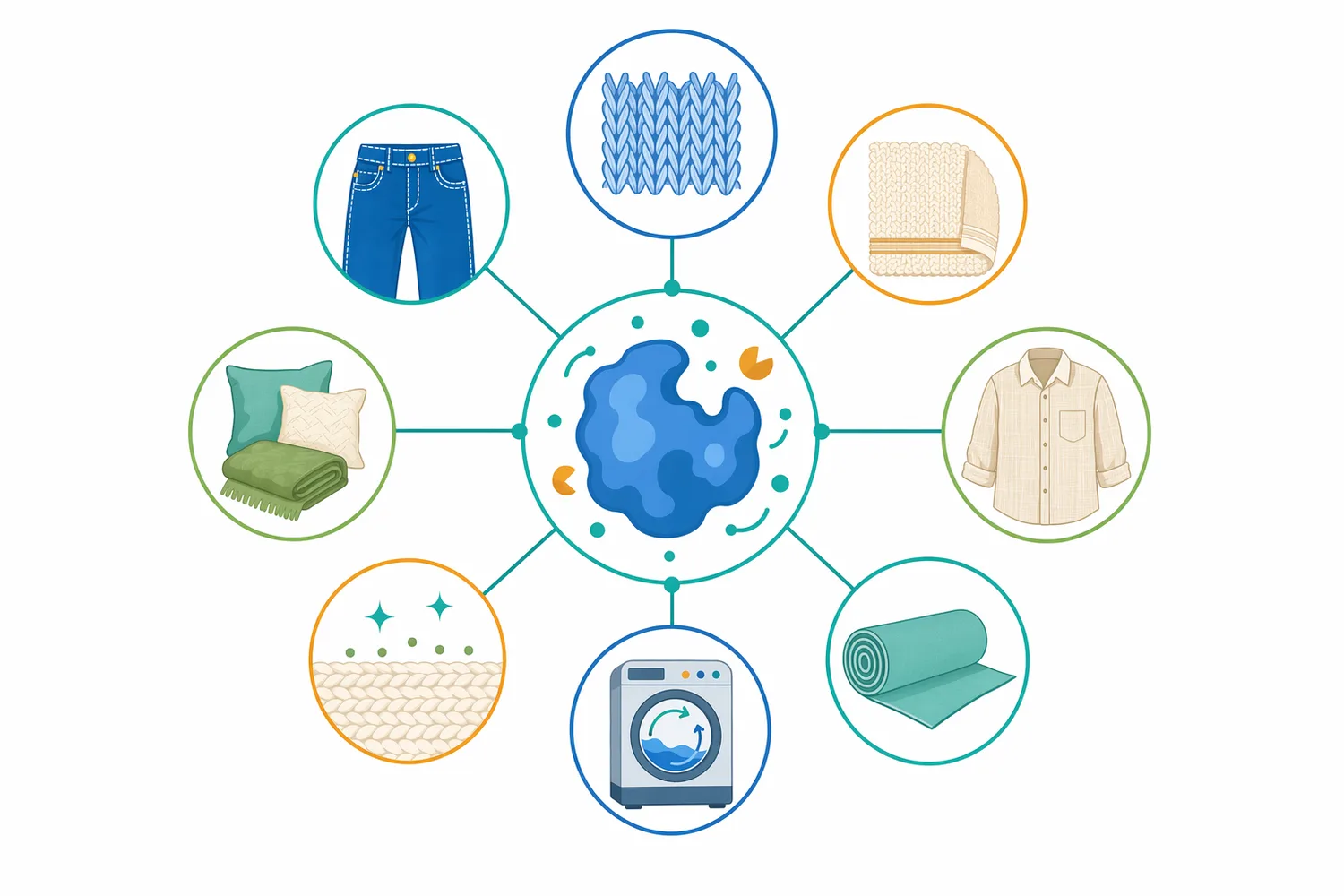
Cotton bio-polishing is one of the most established uses of cellulase in textile finishing. The enzyme removes or weakens microfibrils on the cotton surface, reducing fuzz and giving the fabric a smoother, cleaner appearance. This is especially relevant for cotton knits, shirting, T-shirts, casualwear, towels, and other cotton articles where surface clarity and touch are part of perceived quality [2].
A smoother cotton surface can improve the way dyed fabric reflects light. Fibrils scatter light irregularly, which may make a dyed cotton surface appear hazier or less clean. By reducing those surface projections, cellulase finishing can support a brighter, clearer visual impression, provided the treatment is not severe enough to damage the fabric or strip too much surface material [3].
The effect is particularly valuable after dyeing or garment processing because those steps can raise or expose fibrils. A fabric may look acceptable immediately after production but become fuzzy after finishing, washing, or repeated handling. Bio-polishing addresses the cellulose elements that create that fuzz, rather than masking the problem with film-forming finishes alone [5].
Pilling begins when loose surface fibers are pulled out, entangle, and remain attached to the fabric surface as small balls. Cotton pills may eventually break away more easily than synthetic pills, but the visible surface deterioration can still reduce garment appeal. Cellulase reduces the supply of loose cellulose fibrils available to initiate pill formation, which is why it is widely discussed as an anti-pilling tool in enzyme-based finishing [3].
The anti-pilling effect is mechanical as well as biochemical. Enzymatic hydrolysis weakens the fibrils at the points where they attach to the yarn or fabric surface. When the fabric moves in the bath, those weakened fibrils break away before they can form larger entangled pills during consumer use. The resulting surface is less prone to developing a fuzzy, worn appearance after repeated handling and laundering [2].
Cotton-rich blends can also benefit when the visible fuzz comes from the cellulosic component. Cellulase does not hydrolyze polyester in the way it hydrolyzes cotton cellulose, so its direct substrate effect is concentrated on the cotton portion of polyester/cotton fabrics. Research on enzymatic treatment of blended fabrics supports the practical importance of cellulase for modifying the cotton-containing surface fraction rather than acting equally on all fibers in a blend [6].
Acid cellulase is strongly associated with denim processing because denim is a cotton fabric whose appearance depends heavily on controlled surface abrasion. In indigo denim, most of the dye is concentrated near the yarn surface rather than fully penetrating the fiber. When cellulase weakens and removes surface cellulose fibrils, the surface layer changes physically, helping create a washed-down or worn appearance [2].
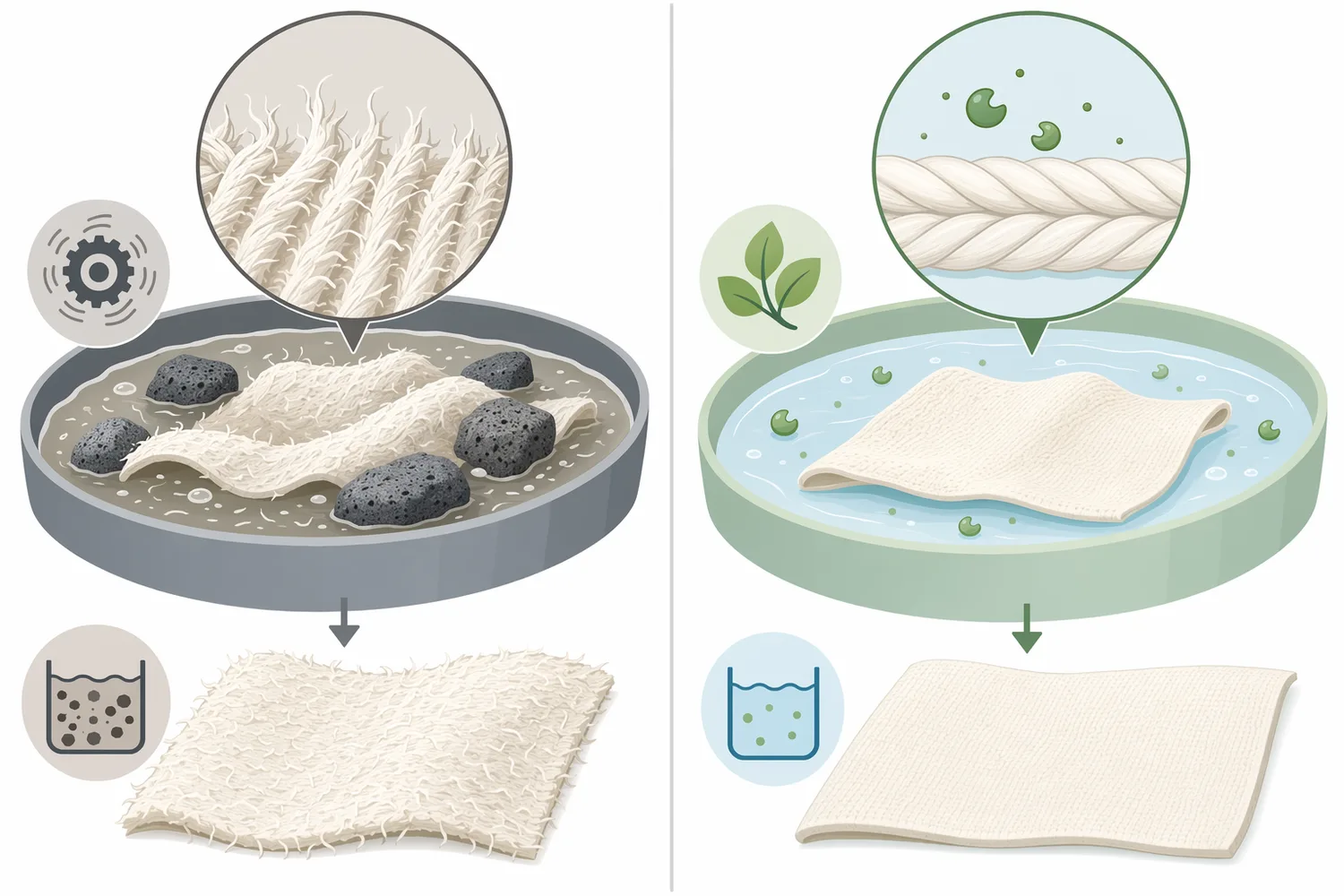
Traditional stonewashing relies on pumice stones to abrade the denim surface. Cellulase-based washing can contribute to a similar visual direction by weakening surface cotton fibers enzymatically, so mechanical action can remove small amounts of surface material more controllably. The result can include a softer hand, reduced surface harshness, and localized color contrast depending on the garment, dyeing method, wash process, and machine action [3].
The reason cellulase works in denim is not that it attacks indigo dye directly as its primary substrate. Its main action is on the cotton cellulose holding the surface layer. As surface fibrils are hydrolyzed and detached, the appearance of the dyed yarn changes because the upper dyed material and fuzzy surface are altered. This substrate-specific mechanism is what makes cellulase useful in denim finishing while still requiring careful process control [5].
Although cotton is the central commercial substrate for bio-polishing, cellulase can also be relevant to other plant-based fibers. Linen, for example, is rich in cellulose and has a naturally crisp handle that can feel harsh depending on yarn, weave, and finishing history. Research on enzymatic softening of linen fabrics and garments supports cellulase use as a way to alter cellulosic textile surfaces and improve comfort-related properties [7].
In linen softening, the underlying concept is similar to cotton bio-polishing: exposed cellulosic fibrils and surface irregularities are modified by enzymatic hydrolysis. However, linen has a different fiber morphology from cotton, so the fabric response is not identical. The process must respect the natural strength, stiffness, and appearance expectations of linen rather than treating it as simply another cotton fabric [7].
Other cellulosic textile materials, including lotus fabric, have also been studied with cellulase-based wet pretreatment. In one study, cellulase pretreatment of lotus fabric was used to improve subsequent antimicrobial finishing with Azadirachta indica extract and enhance natural dyeing, illustrating that cellulase can increase surface accessibility for later functional treatments as well as smooth the fabric itself [8].
Cellulase products are often described by the pH region where they perform best. Acid cellulase, neutral cellulase, and alkaline cellulase all hydrolyze cellulose, but they are used differently because enzyme structure, activity, stability, and fabric effects vary with processing environment. In textile terms, the distinction is practical: the cellulase must remain active long enough to modify the surface while fitting the wet process where it is applied [1].
| Cellulase type | Typical textile relevance | Main surface effect | Common process fit | Practical consideration |
|---|---|---|---|---|
| Acid cellulase | Cotton bio-polishing, denim washing, acidic finishing windows | Hydrolyzes exposed cotton fibrils; supports fuzz reduction, softening, and worn denim effects | Processes run in acidic wet-finishing conditions | Strong surface action can be useful, but over-treatment may increase fabric weight or strength loss |
| Neutral cellulase | Cotton bio-polishing where gentler surface refinement is desired | Removes accessible fibrils with a generally milder finishing profile | Processes closer to neutral pH conditions | Often discussed where reduced back-staining or lower fabric damage is important in denim and cotton finishing |
| Alkaline cellulase | Specialized textile or detergent-related cellulose modification | Acts on accessible cellulose under alkaline conditions | Alkaline systems where compatible cellulase activity is needed | Must be matched to chemistry because many cellulases are not stable or active under strong alkaline conditions |
This comparison is conceptual rather than a product specification. The important point for textile users is that “cellulase” is a functional enzyme class, while “acid cellulase” describes a cellulase preparation intended for acidic processing conditions. The same cellulose-hydrolysis mechanism applies, but the finishing outcome depends on bath chemistry, temperature, time, textile construction, agitation, dyeing history, and reaction stopping [3].
Cellulase is well established in the scientific literature as a textile enzyme because it modifies cellulose under comparatively mild wet-processing conditions. Reviews of sustainable textile processing describe enzymes as tools for replacing or reducing harsher chemical steps in selected applications, with cellulase specifically linked to bio-polishing, denim washing, softening, and surface modification of cellulosic fabrics [2].
A broad review of cellulase distribution, production, characterization, and industrial uses identifies textile processing as one of the important industrial application areas for cellulase. The same review explains cellulase as an enzyme system rather than a single reaction type, which is relevant to textile performance because different cellulase components contribute to opening cellulose chains, cutting internal bonds, and producing smaller soluble fragments [1].
Research on woven cotton fabrics treated in jet and winch machines is especially relevant because it connects cellulase finishing to equipment used in wet textile operations. The study focus on cellulase finishing in these machines reflects the industrial reality that fabric movement, liquor circulation, and mechanical action influence fibril removal and final surface properties [4].
Cellulase-based treatment has also been explored as part of multifunctional textile finishing. A fungal cellulase/xylanase enzyme preparation from Penicillium sp. SAF6 was studied for potential textile application, showing how microbial enzyme systems can be developed and evaluated for textile-relevant effects beyond a single purified enzyme action [6].
More recent work continues to connect enzyme treatment with surface modification and downstream finishing. For example, a study combining pre-enzyme treatment with dielectric barrier discharge plasma investigated surface modification of cellulosic textile polymer, demonstrating that cellulase pretreatment can be part of hybrid processing strategies for altering fiber surface accessibility and reactivity [9].
Cellulase bio-polishing is often discussed for smoothness and anti-pilling, but the same surface mechanism can influence later finishing steps. By partially removing outer fibrils and modifying accessible cellulose regions, cellulase can change how the fabric surface interacts with dyes, plant extracts, antimicrobial agents, softeners, or other functional finishes. This does not mean cellulase replaces those treatments; it can prepare the surface so later treatments contact a cleaner, more accessible cellulosic layer [8].
The lotus fabric study using cellulase wet pretreatment is a useful example. Cellulase treatment was applied before antimicrobial finishing with A. indica extract and natural dyeing. The reported purpose was to improve finishing and dyeing outcomes through a more sustainable textile route, illustrating how enzymatic surface modification can support functional finishing beyond standard cotton fuzz removal [8].
Dyes and finishes can also affect how cellulose fibers behave later in environmental or laundering contexts. Research on cotton textile fibers and microfibers released during laundering found relationships between enzyme adsorption, enzyme activity, and biodegradation rates, and examined how dyes and finishes affect aquatic biodegradability. This reinforces an important point: textile surface chemistry matters, and enzymatic access to cellulose is influenced by what has already been applied to the fiber [10].
From a processing perspective, cellulase is best understood as a surface-access enzyme. It does not act equally on all cellulose in a fabric at once. Its highest practical effect is where cellulose is exposed, swollen, damaged, fibrillated, or otherwise accessible. That is why fabric history—scouring, bleaching, dyeing, mechanical raising, garment washing, and finishing—can all influence the observed result of bio-polishing [3].
Textile finishing has traditionally relied on mechanical abrasion, chemical softening, and high-impact wet processes to create surface effects. Enzymes offer a different route because they are catalytic and substrate-specific: cellulase acts on cellulose bonds rather than broadly attacking every component in the bath. Reviews of microbial enzyme applications in sustainable textile processing describe enzymes as important tools for lowering environmental burden when they replace harsher or less selective treatments in appropriate applications [5].
For cotton bio-polishing, the environmental argument is not that cellulase makes a process impact-free. The advantage is specificity. Instead of using aggressive chemical conditions to strip or modify a surface, cellulase works on accessible cellulose under milder conditions. This can help reduce reliance on harsher treatments, provided the bath is controlled and the wastewater from removed fibers and finishing auxiliaries is managed appropriately [2].
In denim washing, cellulase can reduce dependence on stone-only abrasion routes. Pumice stones can create sludge, machine wear, fabric damage, and reproducibility challenges. Enzyme-assisted denim finishing can contribute surface abrasion through biochemical weakening of cotton fibrils, allowing the wash process to achieve worn effects with a different balance of mechanical and enzymatic action [3].
The sustainability benefit also depends on avoiding over-processing. Excess cellulase action can generate unnecessary fiber loss, lowering yield and potentially increasing microfiber release during processing. For this reason, responsible enzyme use is about controlled surface modification rather than maximum cellulose breakdown [10].
The central technical challenge in cellulase bio-polishing is that the desired benefit and the main risk come from the same reaction. Hydrolyzing exposed cellulose fibrils improves smoothness and reduces pilling. Continuing hydrolysis beyond the required surface effect can reduce fabric mass or tensile properties. This is why cellulase finishing is typically treated as a controlled time-and-condition process rather than a simple additive step [3].
Fabric construction strongly affects the outcome. A loosely constructed knit with many exposed fiber ends may respond quickly because the enzyme has many accessible sites. A compact woven fabric may show slower visible surface change because fewer fibrils are exposed. Raised, brushed, or heavily abraded fabrics may present more accessible cellulose than smooth fabrics, increasing the potential for rapid surface modification [4].
Mechanical action also matters. Cellulase can weaken fibrils chemically, but movement helps remove them physically. In jet, winch, drum, or garment-washing systems, fabric-to-fabric contact and liquor flow determine how weakened material separates from the surface. A gentle bath with limited movement may show less fibril removal than a process with stronger agitation, even when enzymatic hydrolysis occurs [4].
Stopping the enzyme reaction after the intended finish is also important. Once the target surface effect is reached, textile processes typically use downstream controls such as rinsing, thermal treatment, or pH change to reduce or stop cellulase activity. The key principle is that cellulase should remain active during the intended finishing window, then be prevented from continuing to act on the cellulose substrate beyond that window [1].
Many commercial fabrics are not 100% cotton. Polyester/cotton, elastane-containing cotton knits, and other blended structures are common in apparel and home textiles. In these materials, acid cellulase acts primarily on the cotton or other cellulosic fraction. It does not hydrolyze polyester or elastane as cellulose because those polymers do not contain the β-1,4-glucan structure that cellulase recognizes [1].
The visible result on a blend depends on where the cellulosic fibers are located. If cotton fibers dominate the fabric surface, cellulase may produce a strong bio-polishing effect. If polyester is more exposed on the surface, the apparent change may be less pronounced because the enzyme’s substrate is less available. This is why the same cellulase treatment can look different across yarn blends, knit structures, and woven constructions [6].
In polyester/cotton fabrics, cellulase can still be useful for removing cotton fuzz, improving surface clarity, and reducing pilling associated with cellulosic fiber ends. However, pills in blends can be more persistent when synthetic fibers anchor them strongly. The cellulase contribution is therefore most effective where the pilling mechanism involves accessible cotton fibrils that can be weakened and removed enzymatically [3].
Acid Cellulase Enzyme Powder for Bio-Polishing CAS 9012-54-8 is supplied by Enzymes.bio for direct online purchase by the 1 kg unit. The buying process is straightforward: the product is purchased through the website, payment is completed online, and the order is processed and shipped.
A Certificate of Analysis and Safety Data Sheet are provided with the order. These documents support routine receiving, handling, and internal documentation needs without requiring a separate quote or sample request process.
Enzymes.bio is a supplier of enzyme products and does not present itself as the manufacturer or a textile testing laboratory. This article is intended to give practical, evidence-based context on acid cellulase as an enzyme category for textile bio-polishing, denim finishing, and cellulose surface modification.
Acid cellulase is used because cotton fuzz, pills, and harshness are rooted in exposed cellulose microfibrils. The enzyme hydrolyzes accessible cellulose chains on those protruding fibrils, weakening them so wet-processing movement can detach them from the fabric surface. The visible result can be smoother cotton, lower fuzz, reduced pilling tendency, a cleaner dyed appearance, and a softer hand [2].
The enzyme is especially relevant to cotton bio-polishing and denim finishing. In denim, the same surface hydrolysis helps create washed and worn effects by altering the dyed cotton surface rather than by acting primarily on the dye molecule. In cotton knits and woven fabrics, it supports surface refinement and anti-pilling performance by reducing the loose cellulose material that initiates fuzz and pills [3].
The main technical limit is over-treatment. Because cellulase hydrolyzes cellulose, excessive reaction severity can cause unnecessary weight loss or strength reduction. Good bio-polishing practice therefore treats cellulase as a controlled surface-modification tool: enough action to remove exposed fibrils, followed by process steps that stop the reaction once the desired finish is reached [1].
For buyers who need Acid Cellulase Enzyme Powder for Bio-Polishing CAS 9012-54-8 in a practical package size, Enzymes.bio offers direct online purchase by the 1 kg unit, with order processing and shipment after online payment and documentation supplied with the order.
Sold by the 1 kg unit, in stock and ready to ship. Order directly on our store — pay online and we process your order. A Certificate of Analysis and Safety Data Sheet are included with every order.
Buy Acid Cellulase Enzyme Powder For Bio-Polishing Cas 9012-54-8 →Numbered in order of first citation. Open-access sources, each verified reachable at publication; citation numbers in the text link here.