
Acid cellulase enzymes for animal feed additives help break cellulose-rich plant cell walls into smaller, more accessible carbohydrate fragments. In practical feed use, that matters most when diets include fibrous plant ingredients, forage, cereal co-products, agricultural residues, fermented substrates, or other materials where nutrients are physically trapped inside cell-wall structures. Enzymes.bio supplies Acid Cellulase Enzymes for Animal Feed Additives for direct online purchase by the 1 kg unit, with the order processed and shipped after checkout and product documentation supplied with the order .
Acid cellulase is a carbohydrase feed enzyme used to hydrolyze cellulose and related plant cell-wall polysaccharides. The Enzymes.bio product page identifies the product as an acid cellulase enzyme for animal feed additive applications and describes its role in breaking down cellulose into smaller sugars that are more accessible in feed systems . For a buyer using fibrous raw materials, the practical value is not that cellulase “adds nutrients” to the ration; it helps expose nutrients already present in plant tissues by weakening the cell-wall structures that can limit digestion or fermentation.
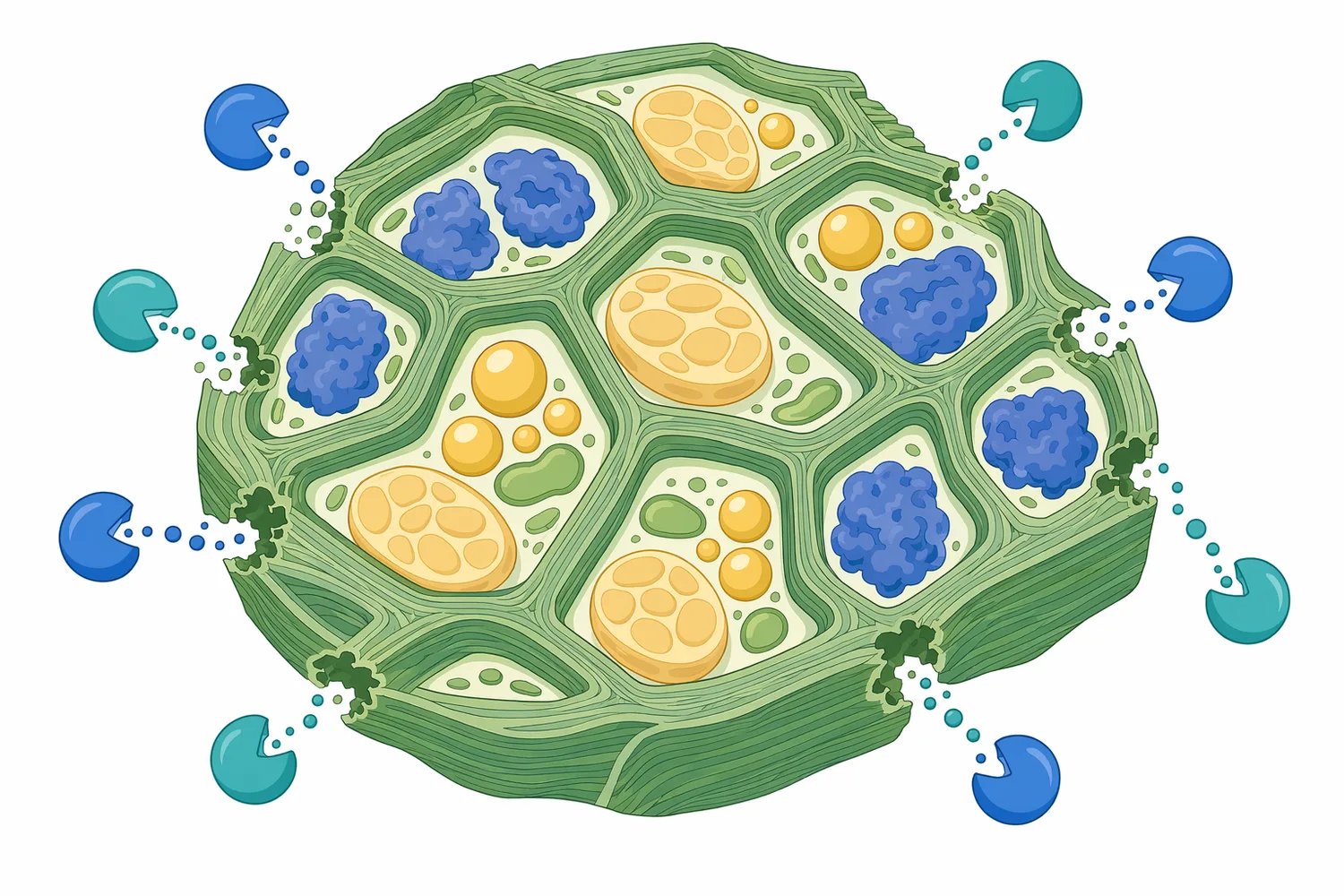
Plant cell walls are built from cellulose microfibrils embedded with hemicellulose, pectin, lignin-associated structures, proteins, and phenolic crosslinks. Starch, protein, oil, minerals, and other nutrients may sit behind or within that architecture. When feed passes through the animal or enters a silage fermentation, intact cell walls can slow water penetration, limit contact with digestive enzymes, and reduce microbial access to fermentable substrate. Cellulase targets one important part of that barrier: the β-1,4-linked glucose chains of cellulose.
Acid cellulase is especially relevant because many animal-feed environments and feed-processing systems pass through acidic or mildly acidic phases. The stomach or proventriculus–gizzard region in monogastrics, the acidic trajectory of silage fermentation, and some fermented feed systems all create conditions where an acid-oriented cellulase can be functionally appropriate. That does not mean every diet responds the same way; it means the enzyme’s biochemical target aligns with a common limitation in fibrous plant-based feed materials.
Enzymes.bio is a supplier of this enzyme product, not a feed manufacturer, animal-performance laboratory, or veterinary service. The product is available directly online in 1 kg units, so a buyer can purchase through the product page without a separate quotation process or sample-request workflow .
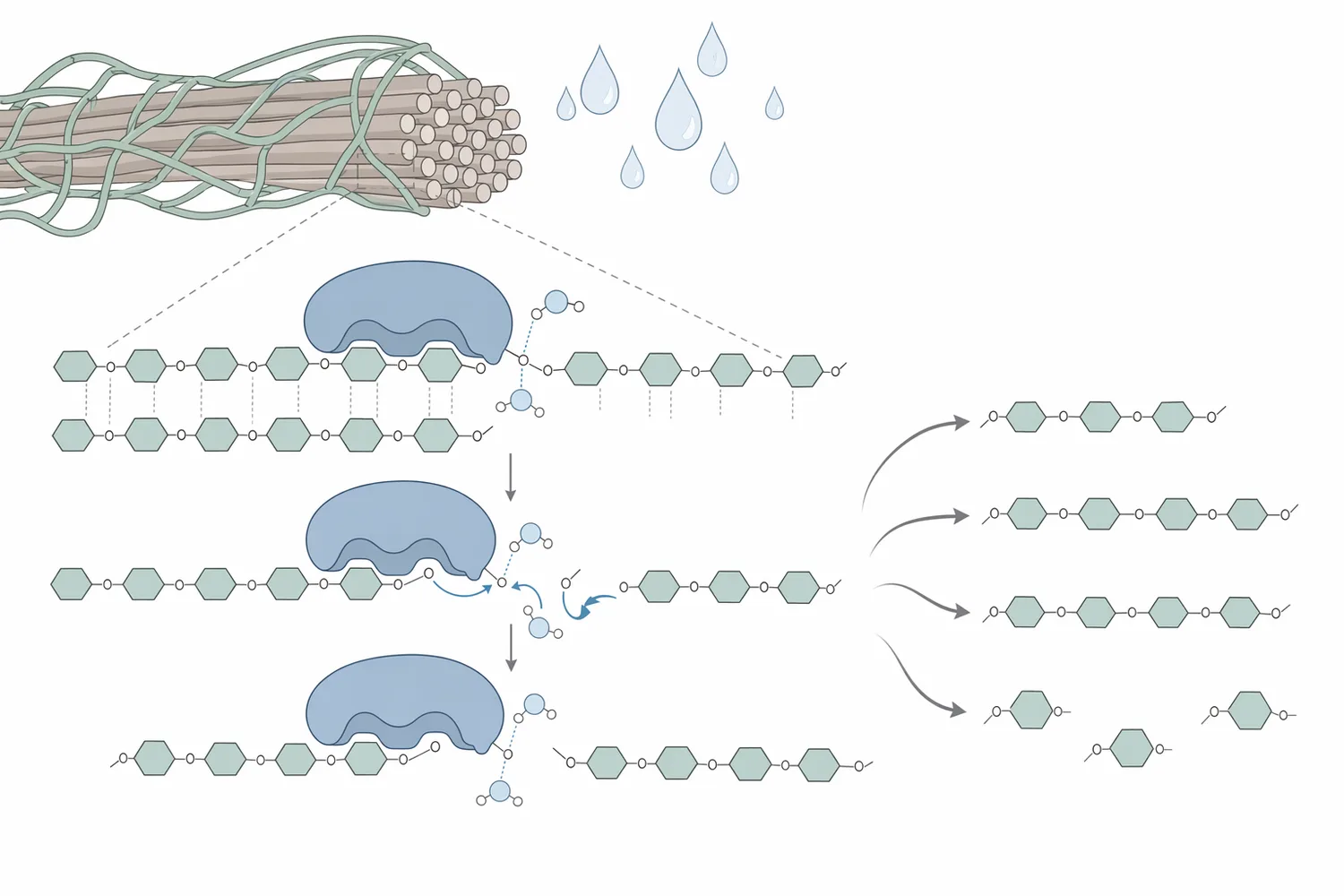
Cellulose is a linear polymer of glucose units connected by β-1,4-glycosidic bonds. Those chains pack tightly through hydrogen bonding, forming crystalline and semi-crystalline fibers that resist simple hydration and digestion. Many animals do not produce enough endogenous cellulase activity to open this structure effectively, especially monogastric animals such as poultry and pigs. Ruminants have microbial fermentation capacity, but even in the rumen, forage digestibility depends heavily on the accessibility of cellulose to microbes and their enzymes.
A cellulase system acts in stages. Endo-acting cellulase cuts internal points along cellulose chains, creating shorter fragments and new chain ends. Exo-acting cellulase works progressively from accessible chain ends, releasing soluble cellodextrins and cellobiose. β-glucosidase-type activity then converts cellobiose into glucose, reducing product inhibition and increasing soluble carbohydrate availability. The product description for Acid Cellulase Enzymes for Animal Feed Additives presents this cooperative breakdown of cellulose into smaller sugars as the core functional basis of the product .
The visible change in the feed matrix is structural rather than cosmetic. As cellulose chains are cleaved, the plant cell wall becomes more porous. Nutrients inside botanical cells become easier for digestive enzymes, rumen microbes, or silage microbes to reach. In fermented feed or silage, released soluble sugars can support lactic acid-producing organisms, accelerating the drop in pH that helps preserve the crop. In mixed diets, cellulase can also reduce the encapsulation effect of fiber, allowing enzymes such as amylases, proteases, and lipases to contact starch, protein, and fat more effectively.
This mechanism is different from simply grinding feed more finely. Milling reduces particle size, but it does not necessarily cleave the chemical bonds in cellulose. Cellulase works at the molecular level: it hydrolyzes the polymer itself. That is why cellulase is commonly discussed together with other non-starch-polysaccharide enzymes in animal nutrition, including xylanase, β-glucanase, mannanase, pectinase, and related carbohydrases. Each enzyme attacks a different part of the plant cell-wall network, and the best biological effect depends on which wall components are limiting nutrient access in the actual feed material.
Acid cellulase is one tool within the broader category of exogenous feed enzymes. It is not interchangeable with phytase, protease, or xylanase, because those enzymes act on different substrates and solve different feed limitations. Reviews of poultry nutrition describe exogenous enzymes as a major strategy for improving the use of feed components that animals do not digest efficiently on their own, with carbohydrases used to target non-starch polysaccharides in plant ingredients [1].
| Enzyme type | Main substrate in feed | What changes in the feed matrix | Typical relevance |
|---|---|---|---|
| Acid cellulase | Cellulose and cellulose-like β-glucan structures | Cleaves cellulose chains, opens plant cell-wall barriers, releases smaller soluble carbohydrates | Fibrous plant materials, forage, silage, cereal co-products, agro-industrial residues |
| Xylanase | Arabinoxylans and xylans in hemicellulose | Reduces hemicellulose-related encapsulation and viscosity effects; improves access to nutrients in cereal cell walls | Wheat, rye, corn by-products, brans, monogastric diets with arabinoxylan limitations |
| β-glucanase | β-glucans in cereals such as barley and oats | Breaks soluble and insoluble β-glucans that can affect viscosity and nutrient diffusion | Barley- or oat-containing poultry and swine diets |
| Phytase | Phytate-bound phosphorus and minerals | Releases phosphorus and reduces phytate’s mineral-binding effects | Cereal–oilseed meal diets for poultry, swine, and aquaculture |
| Protease | Feed proteins and proteinaceous antinutritional factors | Hydrolyzes proteins into peptides and amino-acid-rich fragments | Diets where protein digestibility or antinutritional proteins limit performance |
The practical point is that acid cellulase is strongest where cellulose is part of the limiting structure. In a diet where the primary constraint is phytate-bound phosphorus, cellulase is not the direct solution. In a diet where the issue is high arabinoxylan content, xylanase may be more central. But in feed materials with meaningful cellulose-rich cell walls—corn stover, straw-based substrates, forage, fibrous co-products, hull-containing meals, or fermented plant residues—cellulase has a clear biochemical target.
Fibrous plant materials are increasingly used in animal feed because they can reduce cost, support circular use of agricultural biomass, and broaden the raw-material base. However, ingredients such as straw, stover, bran, hulls, forage residues, and some agro-industrial co-products contain structural carbohydrates that reduce digestibility. A study on agricultural waste-based complete feed silage specifically evaluated cellulase enzyme treatment for improving fermentation and in vitro digestibility characteristics, showing why cellulase is frequently considered for lower-value fibrous feed resources [2].
In these materials, nutrients are not absent; they are often locked away. For example, a cereal by-product may contain residual starch and protein, but the surrounding bran layer and cell-wall matrix can make those nutrients harder to access. A forage may have useful energy potential, but cellulose crystallinity and lignin association can reduce the fraction that rumen microbes can ferment. A fermented total mixed ration based on straw or stover may benefit when added cellulase releases sugars that help microbial fermentation proceed in a more favorable direction.
Cellulase also has a role in improving the consistency of fibrous feed use. Agricultural co-products vary by crop, harvest maturity, processing history, and storage. The cellulose and hemicellulose fractions can differ widely even when the ingredient name is the same. Cellulase does not eliminate this variability, but it provides a targeted biochemical action against one of the main structural limitations: cellulose.
In poultry diets, acid cellulase is most relevant when the formulation contains plant materials with non-starch polysaccharides that limit nutrient access. Broilers and layers do not have a large fermentative foregut, so intact fiber can pass through with limited degradation. Enzymes that open cell-wall structures may improve the exposure of starch, protein, and fat to the bird’s digestive secretions. A 2024 study specifically evaluated the addition of Trichoderma reesei cellulase to broiler chicken diets over a 21-day period, reflecting current research interest in cellulase as a poultry feed enzyme rather than only as an industrial biomass enzyme [3].
The mechanism in poultry is mainly physical and biochemical. Cellulase hydrolyzes the cellulose framework that contributes to nutrient encapsulation. As plant particles hydrate and pass through the crop, proventriculus, gizzard, and small intestine, enzyme action can make the structure more permeable. This can allow endogenous digestive enzymes to contact substrates they otherwise reach less efficiently. In diets containing cereal by-products, fibrous oilseed meals, or alternative plant ingredients, that improved access can matter more than in highly digestible low-fiber corn–soy formulations.
Cellulase is often discussed alongside xylanase and β-glucanase in poultry because cereal cell walls contain multiple polysaccharides. Xylanase research in monogastric digestibility has shown how targeting hemicellulose fractions can improve the accessibility of nutrients in plant-based feeds, while cellulase addresses the cellulose component of the same broader cell-wall problem [4]. Where both cellulose and hemicellulose contribute to the matrix, combined carbohydrase approaches may be more relevant than relying on one enzyme type alone.
Swine diets frequently include fibrous cereal fractions, oilseed co-products, distillers grains, brans, and other ingredients whose cell-wall content can reduce nutrient digestibility. Growing pigs have more hindgut fermentation than poultry, but most amino acid and energy absorption still depends on digestion before or within the small intestine. If nutrients are trapped inside cellulose-rich plant cell walls, they may escape efficient digestion and shift toward lower-value fermentation later in the tract.
A 2025 study on growing pigs evaluated a fiber-degrading enzyme in diets with a high level of corn distillers dried grains with solubles, focusing on ileal digestibility of amino acids and fiber and total-tract digestibility of energy and fiber [5]. That type of work is directly relevant to cellulase use because DDGS and similar co-products can carry substantial non-starch-polysaccharide structures that make nutrient release less predictable than in refined grain ingredients.
In swine applications, acid cellulase should be understood as a substrate-directed enzyme. Its value is highest where cellulose-containing cell walls are part of the digestibility limitation. If a ration uses highly digestible ingredients with low fiber inclusion, the practical response may be smaller. If the ration includes fibrous co-products or fermented plant materials, cellulase has a more obvious role: weakening cell walls, reducing encapsulation, and improving the chance that the pig’s own digestive enzymes can reach protein and energy substrates earlier in the digestive tract.
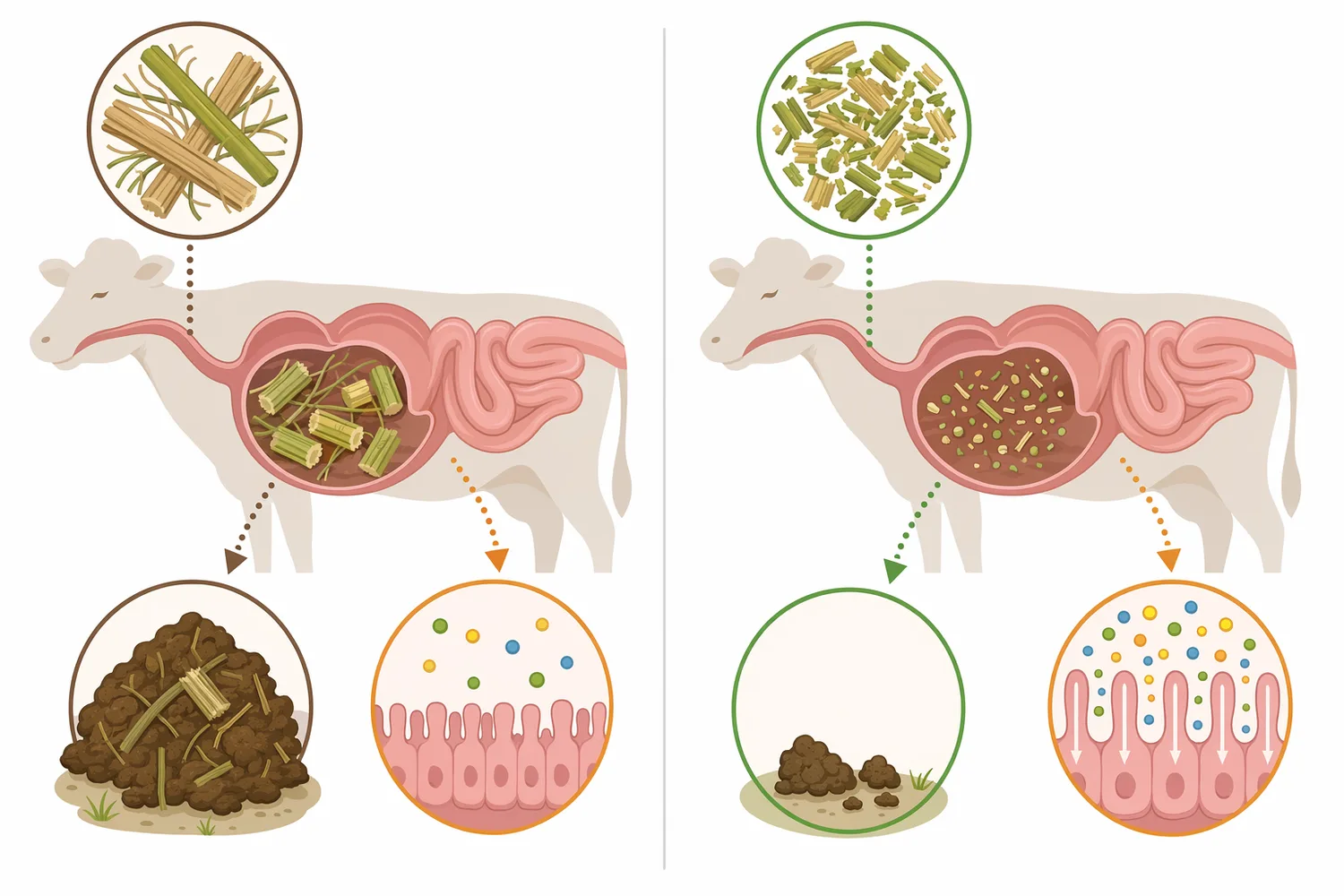
Ruminants already depend on microbial cellulases in the rumen, so the role of added cellulase is not to introduce an entirely new pathway. Instead, exogenous cellulase may help begin structural breakdown before or during early rumen fermentation, increasing the surface area and accessibility of forage particles. This can be useful when diets contain mature forage, straw, corn stover, or other roughages with low natural digestibility.
Recent cattle research has examined corn straw-based fermented total mixed rations supplemented with exogenous cellulase, with outcomes focused on growth performance, digestibility, and rumen fermentation in growing beef cattle [6]. The significance is that cellulase is being studied not just as a laboratory hydrolysis tool, but as part of practical ruminant feed systems where crop residues and fermented roughages are used as ration components.
Goat research also supports the connection between fermented fibrous substrates, cellulase activity, rumen fermentation, and digestibility. A 2025 study reported that fermented corn straw increased cellulase activity, improved rumen fermentation, and increased nutrient digestibility in Yichang White Goats [7]. While that study is not the same as adding a standalone acid cellulase product to every goat ration, it reinforces the biological principle: when cellulolytic activity in a fibrous substrate or rumen system increases, fiber fermentation and nutrient recovery can improve.
For dairy and beef diets, cellulase is most naturally aligned with forage treatment, fermented total mixed rations, and roughage-heavy systems. It may also be relevant in diets using by-products where fiber is not simply “bulk” but a partially available energy source. A feedlot cattle study on exogenous enzymes evaluated impacts on physiology, rumen fermentation, digestibility, and fatty acid profile, showing that enzyme use in ruminants is studied across both digestive and product-quality endpoints [8].
Silage is one of the clearest application areas for cellulase because the mechanism is easy to connect to the fermentation outcome. During ensiling, lactic acid bacteria need fermentable sugars to produce lactic acid. Lactic acid lowers pH, suppresses undesirable microbes, and stabilizes the feed. In fibrous crops and agricultural residues, a portion of the carbohydrate is locked in cellulose and hemicellulose, so cellulase can help release sugars that support the desired fermentation pathway.
In agricultural waste-based complete feed silage, cellulase treatment has been studied for improving fermentation and in vitro digestibility characteristics [2]. The practical interpretation is that cellulase can make low-digestibility fibrous materials more usable by partially hydrolyzing their cell-wall carbohydrates before the animal consumes them. This is not the same as converting straw into grain; rather, it is a controlled improvement in substrate accessibility.
Corn stover silage research has also evaluated cellulase together with Lactobacillus plantarum and xylanase, examining nutritional quality and microbial community structure [9]. That combination makes biological sense: cellulase attacks cellulose, xylanase attacks hemicellulose, and lactic acid bacteria convert released sugars into organic acids. The result can be a more favorable fermentation environment when the crop material has enough enzyme-accessible carbohydrate and the ensiling conditions support microbial growth.
Spent mushroom substrate and other fungal-treated residues are another area where cellulase fits the broader trend of upgrading fibrous biomass for feed. Research on cooperative fermentation using multiple microorganisms and enzymes has explored ways to enhance the nutritional value of spent mushroom substrate [10]. These systems are highly substrate-specific, but they illustrate why cellulase is useful beyond conventional compound feed: it can help convert difficult plant residues into more digestible or fermentable feed materials.
Aquafeed increasingly uses plant proteins, cereal fractions, oilseed meals, and alternative raw materials to reduce reliance on fishmeal and fish oil. Many of these plant ingredients contain cell-wall polysaccharides that fish and shrimp digest poorly. Acid cellulase can be relevant where cellulose-containing structures limit nutrient release, particularly in feeds using plant meals or co-products.
The Enzymes.bio product page lists aquafeed among the application areas for Acid Cellulase Enzymes for Animal Feed Additives . In aquafeed, the mechanism remains the same: hydrolysis of cellulose-containing structures to improve access to nutrients inside the plant matrix. However, aquatic species vary widely in digestive physiology. Carnivorous fish, omnivorous fish, and shrimp differ in how much fiber they tolerate and how well they use carbohydrate fractions. For this reason, cellulase should be viewed as a functional aid for plant-cell-wall disruption, not a universal performance guarantee.
Alternative feed ingredients such as insect meals, microbial biomass, crop residues, and fermented co-products are also changing how feed developers think about enzyme use. Insect-based feed strategies, for example, are evaluated in relation to digestibility, functionality, safety, and regulation, showing that novel raw materials require careful attention to how nutrients are made available in the animal’s digestive system [11]. Although insect meals are not cellulose-rich in the same way as plant residues, the broader trend is clear: as feed ingredients diversify, enzyme tools become more important for matching substrate chemistry to digestive capacity.
The strongest evidence for acid cellulase is the biochemical mechanism. Cellulase hydrolyzes cellulose, and cellulose is a major structural barrier in plant-based feed materials. That mechanism is well established across feed, fermentation, and biomass applications. The Enzymes.bio product information describes acid cellulase as acting on cellulose to release smaller sugars, which is the central reason it is used in feed additive applications .
The application evidence is strongest where cellulose breakdown can be directly linked to measurable substrate changes. Silage and fermented feed studies are good examples because researchers can observe fermentation quality, digestibility indicators, fiber fractions, and microbial community shifts. Agricultural waste-based complete feed silage treated with cellulase has been studied for improved fermentation and in vitro digestibility, and corn stover silage research has evaluated cellulase in combination with lactic acid bacteria and xylanase [2].
Animal performance outcomes are more context-dependent. Broiler, pig, rabbit, cattle, and goat studies all show active research interest in cellulase or fiber-degrading enzyme systems, but live-animal response depends on diet composition, inclusion of fibrous ingredients, animal age, gut health, processing conditions, and the presence of other enzymes. For example, rabbit research has evaluated enzyme and yeast-based feed additives for growth, nutrient digestibility, meat quality, and intestinal morphology, illustrating that feed enzyme effects are often assessed across multiple biological endpoints rather than a single digestibility number [12].
The responsible conclusion is that acid cellulase has a clear role where cellulose-containing structures limit nutrient access or fermentation. It should not be presented as a guaranteed way to increase growth rate, milk yield, egg output, or feed conversion in every ration. Its practical value is strongest when the feed material actually contains cellulose barriers that the enzyme can reach and hydrolyze.
In compound feed, acid cellulase is typically incorporated as a functional additive within a broader formulation. It is most relevant in diets that include fibrous plant ingredients, cereal co-products, forage meals, hull-containing materials, or other cellulose-bearing substrates. The enzyme does not replace balanced nutrition; it supports the release of nutrients from plant structures already present in the feed.
In fermented total mixed rations and silage, cellulase can act before feeding by changing the substrate during storage. As cellulose begins to hydrolyze, soluble carbohydrate availability can increase, helping beneficial fermentation organisms produce acids. This is why cellulase is often studied with microbial inoculants such as lactic acid bacteria. The enzyme opens carbohydrate structures; the microbes convert accessible sugars into fermentation products.
In ruminant systems, cellulase may be used where roughage digestibility is a limiting factor. The potential benefit is not simply “more fiber,” but more accessible fiber. When plant cell walls are partially opened, rumen microbes can attach more effectively, ferment structural carbohydrates more completely, and produce volatile fatty acids that the animal can use as energy. Studies in cattle and goats continue to evaluate these links between cellulolytic activity, rumen fermentation, digestibility, and performance outcomes [6].
In monogastric systems, the value is usually tied to nutrient encapsulation. Poultry and pigs do not rely on rumen fermentation, so the key question is whether cellulase helps expose nutrients early enough in the digestive tract to improve access to endogenous enzymes. Research in broilers over a 21-day feeding period and in pigs fed high co-product diets reflects this practical interest [3].
Acid Cellulase Enzymes for Animal Feed Additives can be described as supporting cellulose breakdown in plant-based feed materials. That claim follows directly from the enzyme’s substrate specificity and from the product’s stated feed-additive purpose .
It can also be described as helping improve access to nutrients enclosed by plant cell walls. The mechanism is concrete: cellulase cleaves cellulose chains, loosens the wall structure, increases porosity, and allows digestive enzymes or microbes to contact starch, protein, and other nutrients more effectively.
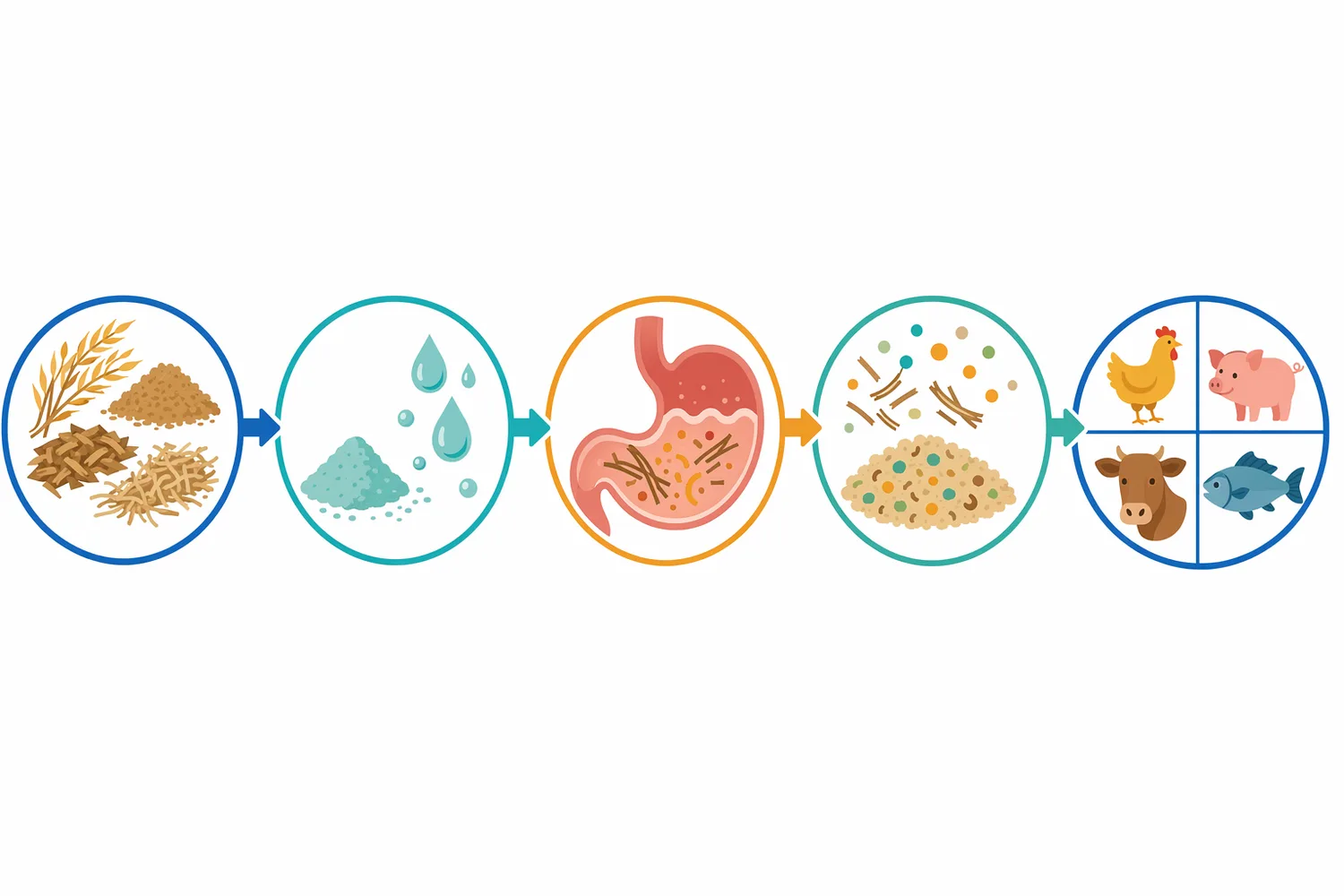
For silage and fermented feeds, cellulase can support fermentation by releasing soluble carbohydrates from fibrous substrates. Studies on agricultural waste-based complete feed silage and corn stover silage support this application area, especially where cellulase is paired with compatible microbial fermentation [9].
For ruminant diets, cellulase is relevant to forage and roughage utilization. Research on corn straw-based fermented total mixed rations in growing beef cattle and fermented corn straw in goats demonstrates the continuing focus on cellulase activity, rumen fermentation, and nutrient digestibility in fiber-based feeding systems [7].
For poultry and swine, cellulase belongs to the broader group of non-starch-polysaccharide enzymes used to improve the nutritional value of plant-based diets. Its relevance increases when the diet contains fibrous co-products or cell-wall-rich ingredients, and it may be used alongside other carbohydrases where multiple polysaccharide barriers are present.
Enzymes.bio supplies Acid Cellulase Enzymes for Animal Feed Additives as a product available for direct online purchase by the 1 kg unit. The buyer completes the order online, payment is made through the checkout process, and the order is then processed and shipped. A Certificate of Analysis and Safety Data Sheet are supplied with the order documentation .
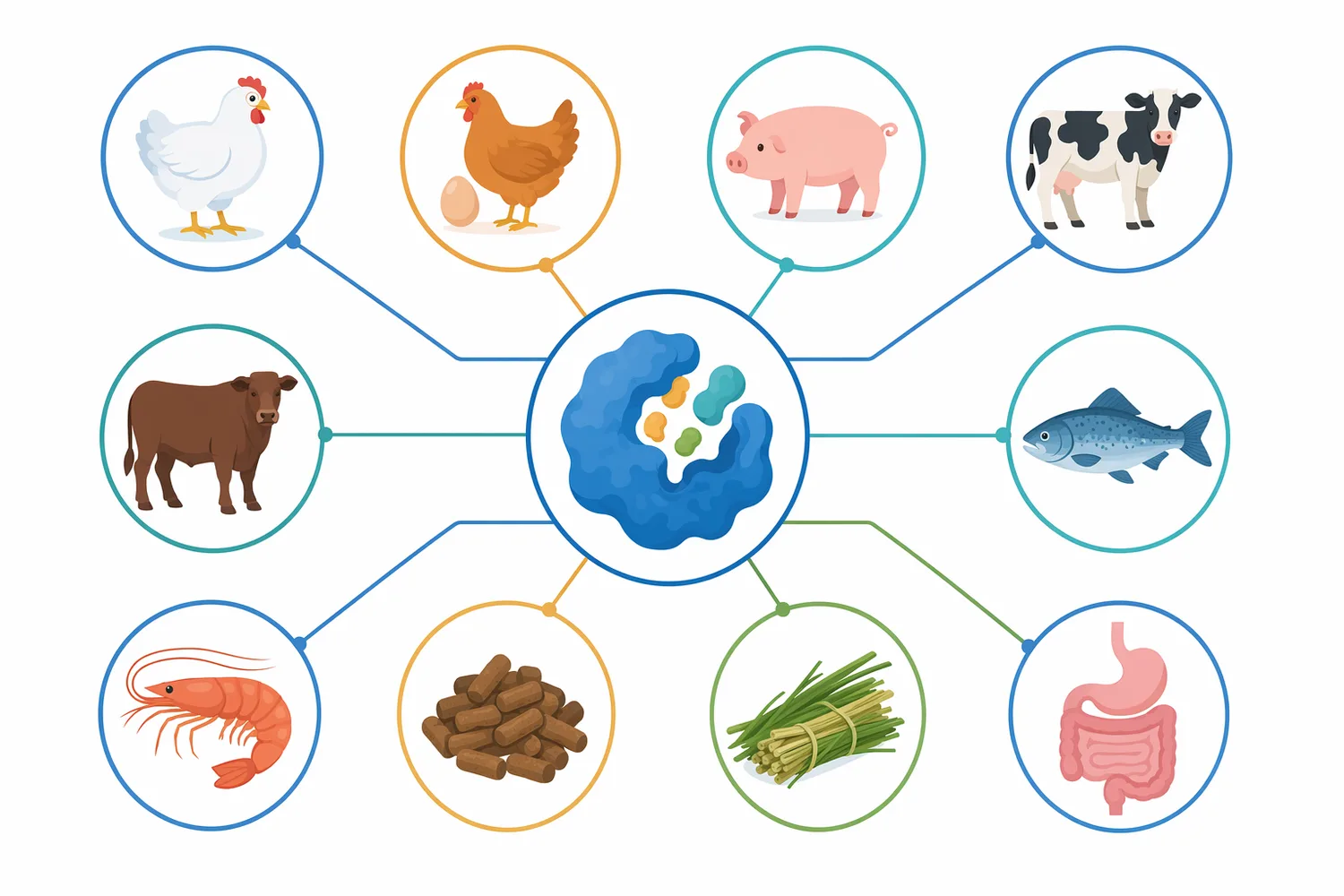
This purchasing model is suited to buyers who already know they need an acid cellulase product for feed additive, feed-processing, research, or development use and want a straightforward online transaction. The product page identifies applications including poultry feed, swine feed, dairy feed, layer feed, and aquafeed, which aligns with the enzyme’s broad relevance to plant-cell-wall breakdown in animal nutrition .
Acid cellulase enzymes for animal feed additives are best understood as targeted plant-cell-wall enzymes. They hydrolyze cellulose, weaken fibrous botanical structures, and help release nutrients or fermentable sugars that may otherwise remain less accessible. The strongest scientific basis is the enzyme mechanism itself; the most direct application evidence is in silage, fermented substrates, forage systems, and diets containing fibrous plant co-products.
In practical feed use, acid cellulase is most relevant where cellulose-rich ingredients create a structural barrier to nutrient access. That includes forage, straw, stover, cereal by-products, agricultural waste-based silage, fibrous co-products, and plant-heavy feeds for poultry, pigs, ruminants, rabbits, aquaculture, and other animal systems. Used responsibly, it is a focused enzyme tool for improving the usability of plant-based feed resources—not a substitute for sound formulation, but a way to make the cellulose fraction less of a barrier to digestion and fermentation.
Sold by the 1 kg unit, in stock and ready to ship. Order directly on our store — pay online and we process your order. A Certificate of Analysis and Safety Data Sheet are included with every order.
Buy Acid Cellulase Enzymes For Animal Feed Additives →Numbered in order of first citation. Open-access sources, each verified reachable at publication; citation numbers in the text link here.