
Acid Cellulase for Tobacco Processing is used to partially hydrolyze cellulose in hydrated tobacco leaf, stem, fines, and reconstituted fiber systems under acidic or mildly acidic processing conditions. By cutting β-1,4 linkages in cellulose, it loosens the plant cell-wall matrix, which can improve softening, liquid penetration, extraction access, and fermentation support without aiming to completely digest the tobacco fiber. Enzymes.bio supplies Acid Cellulase for Tobacco Processing directly online by the 1 kg unit; after online payment, the order is processed and shipped with a Certificate of Analysis and Safety Data Sheet included with the order .
Tobacco is a structured plant material, not a uniform chemical substrate. Leaves, stems, midribs, scraps, and reconstituted tobacco fractions contain cell-wall networks built from cellulose, hemicellulose, pectin-like polysaccharides, lignified material, proteins, phenolics, soluble sugars, alkaloids, and many minor metabolites. Cellulose contributes strongly to rigidity because glucose units are linked into long β-1,4-glucan chains that aggregate into microfibrils; those microfibrils reinforce the cell wall and restrict the movement of water, casing liquids, extractants, enzymes, and microorganisms through the material [1].
Acid cellulase is useful because it acts on that structural cellulose fraction. It does not need to dissolve the entire tobacco matrix to create a processing effect. Partial hydrolysis can be enough to weaken fiber bundles, open cell-wall pores, expose intracellular or wall-associated compounds, and make the material respond more evenly to conditioning, fermentation, extraction, blending, or sheet-forming steps. In tobacco work, this is best understood as controlled cell-wall modification, not as complete biomass conversion.
The “acid” designation matters because many tobacco conditioning and fermentation environments are not strongly alkaline. An acid cellulase is selected for processing systems where the substrate environment is on the acidic side, so the enzyme can remain relevant while tobacco is hydrated, warmed, conditioned, or held for biochemical transformation. This is one reason cellulase has been studied alongside tobacco-origin microorganisms and tobacco fermentation processes, including Bacillus subtilis strains with potential application in tobacco fermentation [2].
Cellulase is usually discussed as an enzyme system rather than a single isolated action. A practical cellulase system can include endoglucanase-type activity that cuts inside cellulose chains, cellobiohydrolase or exoglucanase-type activity that works from chain ends, and β-glucosidase-type activity that converts short cellulose fragments into glucose. The combined effect is progressive weakening of cellulose microfibrils: internal cuts create new chain ends, chain-end enzymes shorten the fragments, and smaller soluble carbohydrates move out into the surrounding water phase [1].
In tobacco, this matters because cell walls act as both a mechanical skeleton and a diffusion barrier. When cellulase cleaves cellulose, the wall does not simply “lose cellulose” in an abstract way; its physical network becomes less continuous. Fibers hydrate more readily, the matrix becomes less resistant to bending and swelling, and channels open for liquid movement. This can support more uniform casing uptake, extraction contact, heat transfer, microbial access, or enzymatic co-treatment.
The most visible processing effect is often softening. Stems and midribs resist hydration because dense vascular and supporting tissues contain cellulose-rich structures. When cellulase partially cuts the reinforcing cellulose chains, the same moisture and mechanical handling can produce a more pliable substrate. In reconstituted tobacco or sheet-related systems, that fiber modification may affect dispersion, slurry behavior, drainage, and distribution of soluble fractions, although the final material properties still depend on the whole formulation and process history.
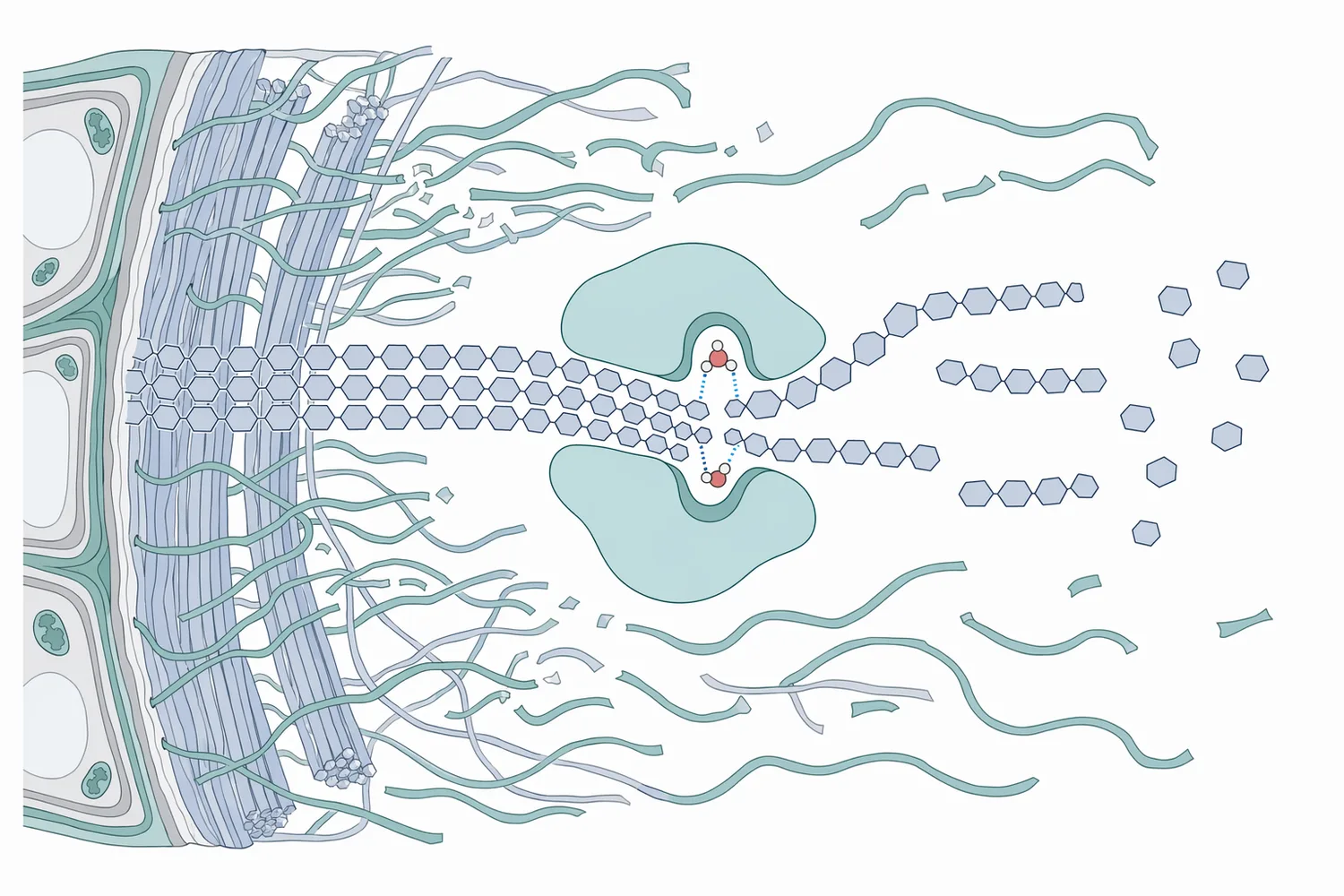
The second important effect is mass-transfer improvement. Many tobacco constituents are not chemically bound to cellulose, but they are physically enclosed within cells or trapped in compact wall networks. By opening those structures, cellulase can help water, extractants, microorganisms, and other enzymes reach material that would otherwise be less accessible. Similar cell-wall opening principles are used across plant-material processing, including cellulase-assisted biotransformation of okara, where cellulase and hemicellulase treatment helped alter the release and transformation of plant components [3].
Different cellulase preparations are commonly described by the pH environment where they are most useful. The distinction is practical: cellulase proteins have charged amino-acid groups at the active site and on their surface, and those charges influence substrate binding, enzyme folding, and catalytic performance. A cellulase that performs well in an acidic tobacco conditioning environment may not behave the same way in a neutral or alkaline process.
| Cellulase type | Conceptual processing environment | How it relates to tobacco substrates | Typical practical emphasis |
|---|---|---|---|
| Acid cellulase | Acidic to mildly acidic hydrated plant material | Relevant where tobacco leaf, stem, fines, or fiber blends are conditioned or fermented under acidic-side conditions | Cell-wall loosening, softening, extraction support, fermentation support |
| Neutral cellulase | Near-neutral plant or fiber systems | More relevant where the process must avoid acidic treatment conditions | Mild fiber modification where neutral compatibility is preferred |
| Alkaline cellulase | Alkaline cleaning, textile, or detergent-style systems | Less aligned with most tobacco conditioning concepts unless the process itself is alkaline | Surface fibril removal, cleaning support, alkaline fiber treatment |
This comparison should not be read as a rigid rule for every facility or every tobacco type. Tobacco matrices vary widely by cultivar, curing style, stalk or leaf fraction, particle size, moisture history, and prior heat treatment. The practical point is that acid cellulase is positioned for tobacco processes where acidic-side hydration and cell-wall modification are compatible with the intended operation.
Tobacco fermentation is driven by a combination of residual plant enzymes, microbial metabolism, oxidation-reduction chemistry, Maillard-type reactions, moisture movement, heat history, and slow transformation of leaf constituents. Cellulase does not replace those processes. Its role is more physical and biochemical: it can open the plant wall, release small carbohydrates, and make wall-protected compounds more accessible to the microorganisms and enzymes already shaping the tobacco matrix.
Recent tobacco-specific studies support the broader relevance of biological and enzymatic approaches in fermentation. A 2024 metabolomics-based study examined cellulase additives derived from a tobacco-origin Bacillus subtilis and their impact on tobacco sensory attributes, showing that cellulase-linked biological inputs are being investigated directly in the tobacco quality context [4]. Another study reported extracellular amylase and cellulase production from Bacillus subtilis ZIM3 and a recombinant strain with potential application in tobacco fermentation, connecting carbohydrate-active enzymes with tobacco bioprocessing rather than only with unrelated biomass conversion [2].
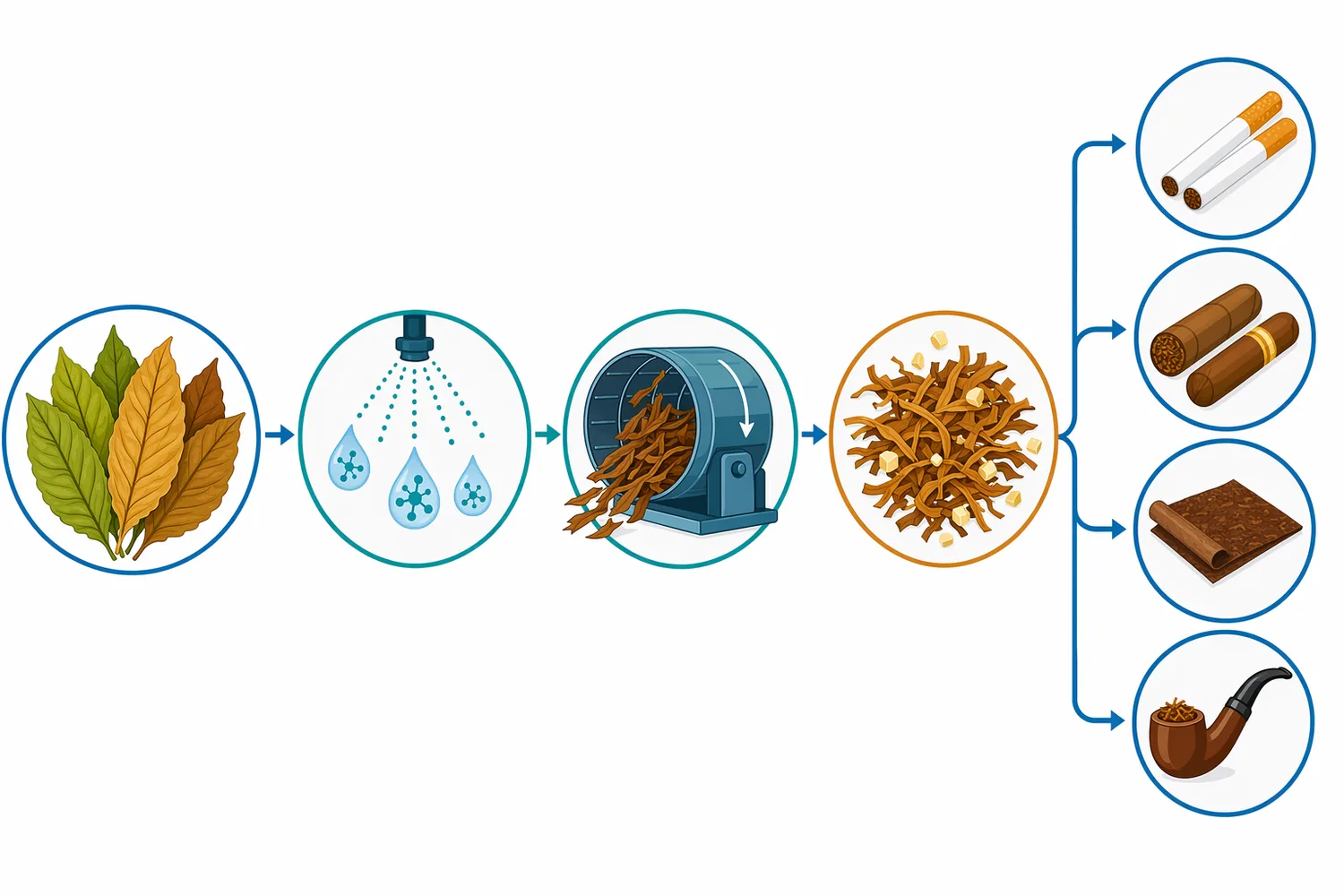
Cellulase can influence fermentation indirectly by changing the substrate that microbes experience. If cellulose fragments and soluble carbohydrates become more available, microbial growth patterns and metabolite formation can shift. In low-grade tobacco, microbial-enzyme co-fermentation has been studied with metagenomic and metabolomic methods to understand flavor formation, reinforcing the idea that enzymes and microbial communities interact during tobacco upgrading processes [5].
A more targeted enzyme example is exocellobiohydrolase CBHA, a cellulase-family enzyme evaluated for effects on tobacco leaf fermentation. Exocellobiohydrolases act from cellulose chain ends and release short cellulose-derived units, so their study in tobacco leaves is mechanistically consistent with the idea that cell-wall carbohydrate conversion can affect fermentation behavior [6].
Stems and midribs are usually more fibrous and more mechanically resistant than lamina. They contain vascular tissues and supporting structures designed to move water and hold the plant upright. That makes them valuable but challenging substrates in tobacco processing: they can be harder to soften, harder to extract uniformly, and harder to incorporate smoothly into reconstituted or blended materials.
Cellulase addresses this by weakening the cellulose component of the structural wall. The effect is not a simple surface coating; the enzyme must diffuse into hydrated fiber zones, bind accessible cellulose, and cleave glycosidic bonds. As hydrolysis progresses, the fiber network swells more easily, mechanical resistance decreases, and water can enter spaces that were previously compact. This is especially relevant for tobacco stems and stalk-derived materials, where pretreatment and accessibility strongly influence downstream conversion or utilization.
Tobacco stalk research illustrates the importance of opening the lignocellulosic matrix. A 2021 study on tobacco stalk integrated dilute sulfuric acid presoaking and steam explosion pretreatment to improve nicotine removal and ethanol fermentability, showing that tobacco stalk is a lignocellulosic substrate whose processability changes when the structure is disrupted [7]. Although that work used physicochemical pretreatment rather than only acid cellulase, the mechanistic lesson is relevant: cellulose-rich tobacco residues respond when the wall architecture is made more accessible.
Tobacco stem cell-wall degradation has also been investigated through microbe-enzyme synergistic fermentation. A 2026 study reported enhanced degradation of tobacco stem cell walls by modulating enzymatic activity and microbial community structure, directly linking tobacco stems, enzyme action, and microbial ecology in a high-fiber tobacco substrate [8].
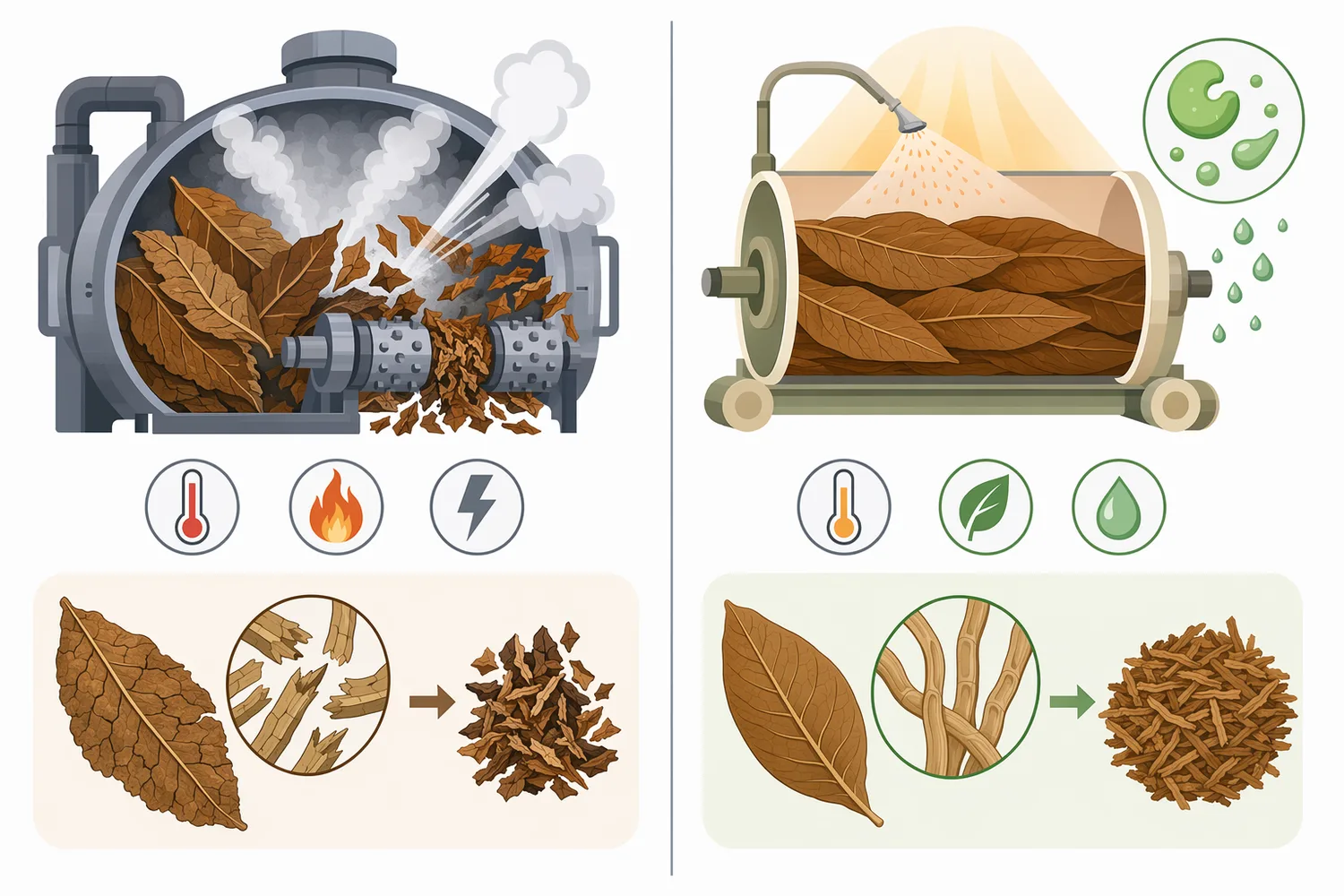
Reconstituted tobacco processes depend on the behavior of plant fibers in water. Fibers must disperse, interact with soluble tobacco extracts or binders, form a sheet or web, and retain acceptable integrity after drying. Cellulase can be relevant where a controlled reduction in fiber rigidity improves wet processing or distribution, but the treatment must be balanced because excessive fiber weakening can reduce structural performance.
The closest industrial analogy is not flavor chemistry but fiber engineering. Cellulase has long been studied for lignocellulosic and fiber-based processing because it can alter the surface and internal accessibility of cellulose-containing materials. In tobacco-based cellulose nanofiber work, a feruloyl esterase/cellulase integrated biological system was reported for high-efficiency, toxic-chemical-free isolation of cellulose nanofibers from tobacco, demonstrating that enzyme combinations can substantially alter tobacco-derived cellulosic fiber structure [9].
That nanofiber application is more intensive than typical tobacco conditioning or reconstitution support. Still, it proves an important point: tobacco-derived cellulose is susceptible to enzymatic modification when the substrate is properly hydrated and accessible. For reconstituted tobacco, the intended effect is usually milder—improved fiber opening, hydration, and dispersion rather than full fibrillation or nanofiber isolation.
In botanical extraction, plant cell walls often limit yield and kinetics. Soluble compounds may be present inside cells, associated with vacuoles, bound to proteins or phenolic networks, or located behind walls that swell slowly. Cellulase treatment can improve extraction by creating more routes for liquid penetration and diffusion.
For tobacco, this can be relevant before extraction of soluble tobacco constituents, aroma precursor fractions, or other plant-derived compounds. The enzyme’s direct target remains cellulose, but the practical result can be broader: once the wall is loosened, non-cellulosic compounds can move more readily into the processing liquid. This mechanism is consistent with other plant materials where cellulase-containing systems are used to improve release and transformation of constituents during bioprocessing [3].
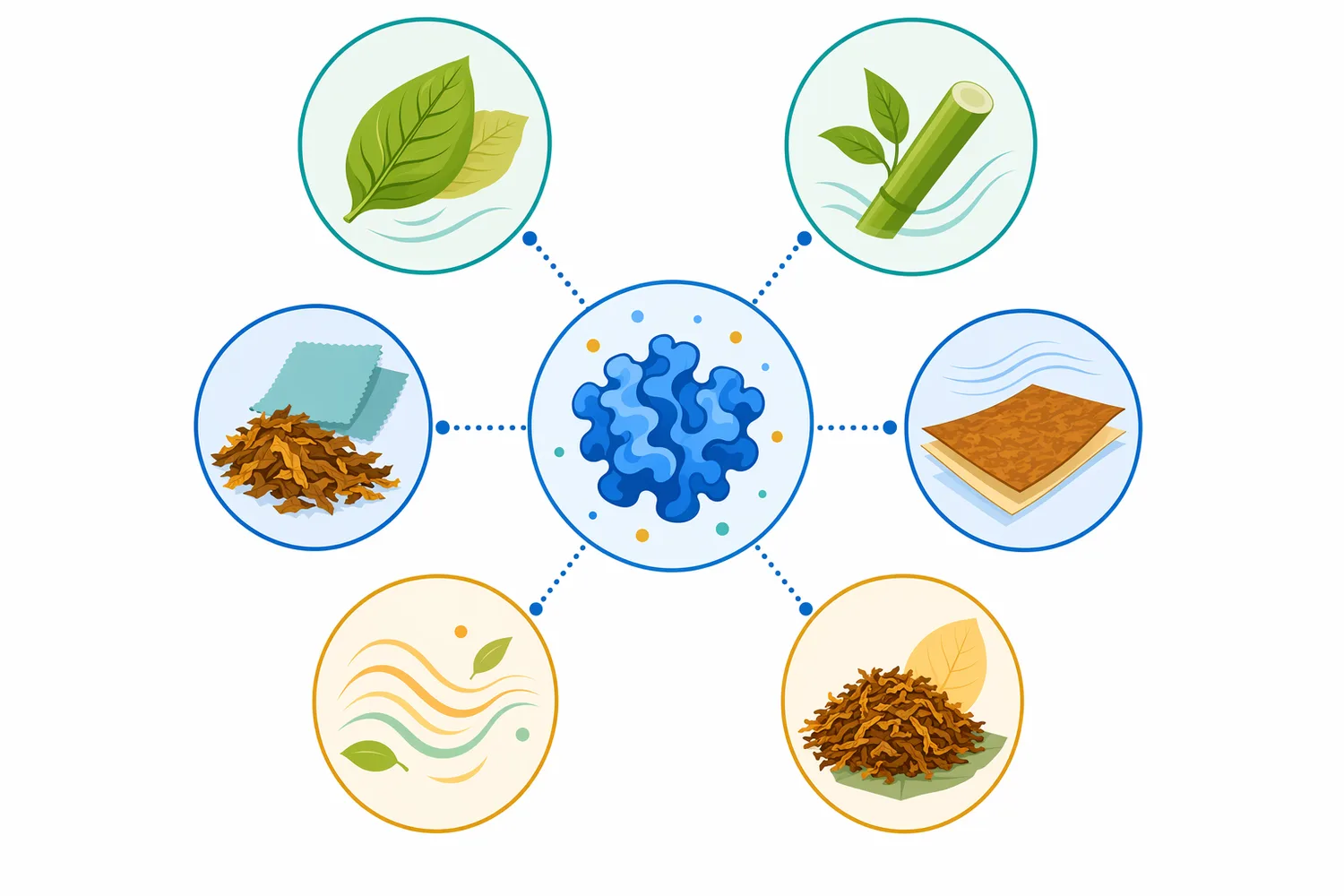
Tobacco waste and residue streams are also being explored as sources of valuable plant compounds and materials. Waste tobacco residues remaining after polyphenol and nicotine extraction have been investigated as substrates for cellulase production after bacterial pretreatment, which highlights the cellulose-rich character of tobacco residues and the broader circular-use context for tobacco biomass [10].
The evidence for acid cellulase in tobacco should be interpreted in layers. The biochemical foundation is strong: cellulase hydrolyzes cellulose, and cellulose is a major structural component of plant cell walls. This makes the enzyme mechanistically relevant to tobacco leaf, stem, stalk, and reconstituted fiber systems.
The tobacco-specific evidence is developing and increasingly direct. Studies have examined cellulase-related biological additives from tobacco-origin Bacillus subtilis, cellulase-producing Bacillus strains with tobacco fermentation potential, exocellobiohydrolase effects on tobacco leaves, microbial-enzyme co-fermentation of low-grade tobacco, and microbe-enzyme enhancement of tobacco stem cell-wall degradation [4]. Together, these studies support the idea that cellulose-active enzymes are not merely borrowed from unrelated industries; they are being evaluated in tobacco matrices where fiber structure, fermentation chemistry, and sensory attributes are connected.
The related plant-substrate evidence is broader. In silage systems, cellulase is often used to help break down plant fiber and increase fermentable carbohydrate availability. Studies on Caragana korshinskii silage evaluated cellulase with lactic acid bacteria and reported effects on ensiling performance and bacterial community structure, showing how fiber-active enzymes can interact with microbial fermentation in woody or fibrous plant materials [11]. Another study examined cellulase with Lactiplantibacillus plantarum and reported effects on fermentation quality, microbial diversity, predicted gene function, and in vitro rumen fermentation parameters [12].
Synergy with other wall-degrading enzymes is also well supported in plant biomass. Research on Broussonetia papyrifera ensiling studied ferulic acid esterase-producing lactic acid bacteria together with cellulase and xylanase, reporting synergistic effects on fermentation characteristics, fiber and nitrogen components, and microbial community structure [13]. This matters for tobacco because cellulose does not exist alone in the wall; it is surrounded by hemicellulose, phenolic cross-links, pectin-like materials, and lignified structures.
Food and mushroom processing provide additional evidence that cellulase hydrolysis can alter plant or fungal material quality. A 2024 study on shiitake mushrooms evaluated combined drying techniques and cellulase hydrolysis for effects on nutritional value and sensory properties, illustrating that cellulase treatment can influence both composition and sensory-relevant properties in hydrated biological materials [14]. Tobacco is a different matrix, but the common principle is enzymatic opening and transformation of structured biomass.
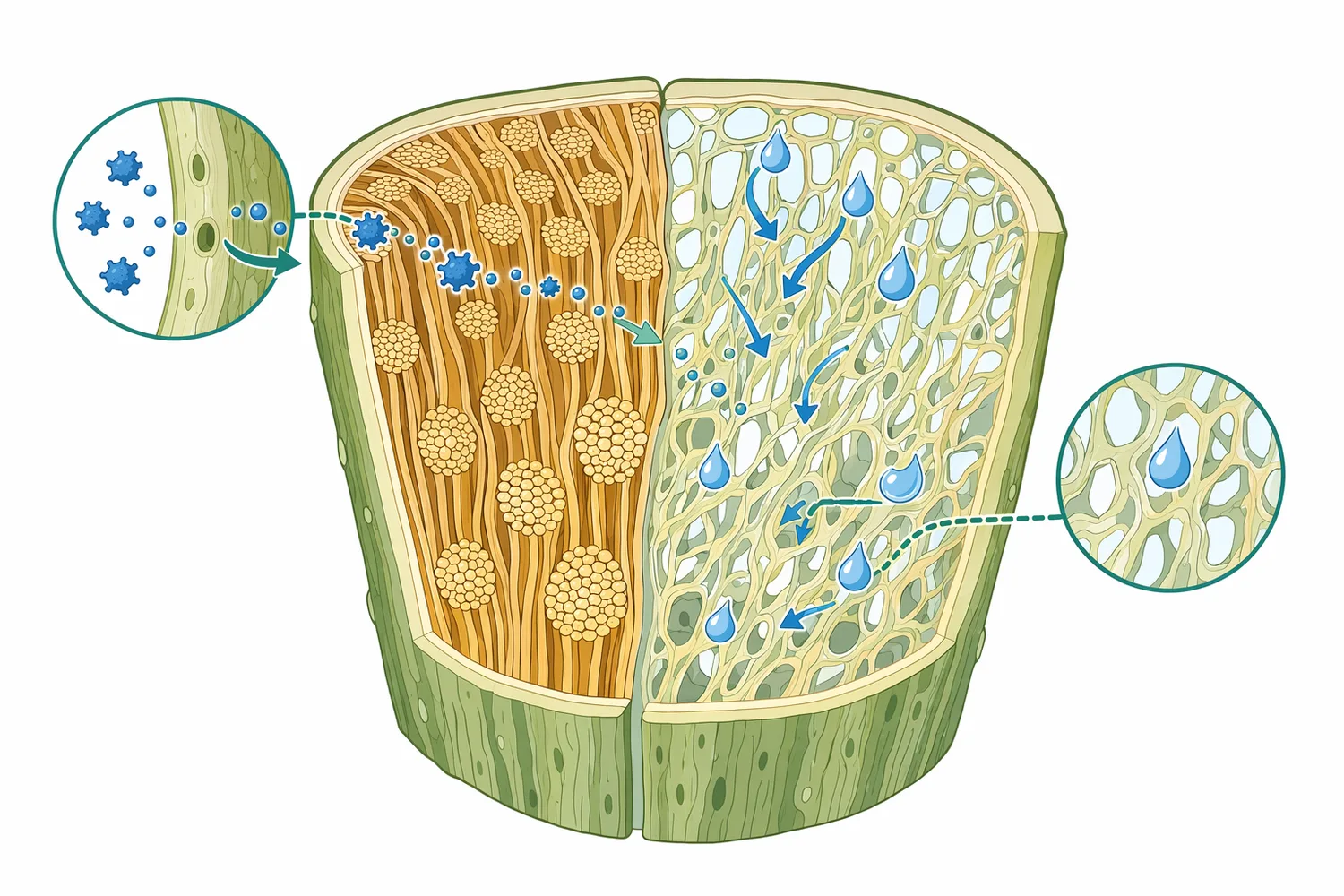
In tobacco processing, “more hydrolysis” is not automatically better. Tobacco fiber must often retain enough structure for cutting, blending, sheet formation, handling, drying, or smoking-material integrity. A useful cellulase treatment therefore aims for partial, selective modification: enough cellulose cleavage to improve softness and accessibility, but not so much that the material loses mechanical identity.
This balance is especially important for stems and reconstituted fibers. If the fiber network is barely modified, water penetration and extract release may remain limited. If it is overmodified, the material may become weak, mushy, or difficult to handle. The desired processing window depends on the tobacco fraction and the intended downstream operation, which is why cellulase should be viewed as a controllable aid rather than a universal correction for tobacco quality issues.
The same caution applies to flavor and aroma expectations. Cellulase can help release substrates and modify the physical environment for fermentation, but tobacco aroma development depends on many variables: curing history, sugar and nitrogen balance, microbial ecology, oxygen exposure, moisture migration, heat, storage time, and reactions among carbonyls, amino compounds, phenolics, and alkaloids. Multi-omics work on tobacco inoculated with Bacillus velezensis HJ-16 underscores that tobacco quality shifts involve complex metabolic networks rather than one enzyme acting in isolation [15].
Plant cell walls are composite materials. Cellulose microfibrils are embedded in hemicellulose and pectin-like networks, often cross-linked with phenolic compounds and associated with proteins and lignified structures. Because of that, cellulase may work more effectively when the surrounding wall is also being loosened by other biological actions.
Xylanase can target hemicellulose-rich xylan regions, pectinase can loosen pectin-associated wall domains, and feruloyl esterase can help release phenolic cross-links that restrict wall mobility. The tobacco cellulose nanofiber study using feruloyl esterase with cellulase is a clear tobacco-based example of this concept: the esterase helps address phenolic linkages while cellulase acts on cellulose, producing a more complete wall-disassembly effect than either action would typically provide alone [9].
Microorganisms add another layer. During fermentation, bacteria and fungi may produce their own enzymes, consume released sugars, transform nitrogen-containing compounds, and generate metabolites that affect aroma and sensory perception. Studies of cellulase additives derived from tobacco-origin microbes and microbial-enzyme co-fermentation of low-grade tobacco show why the enzyme should be considered part of an interacting biochemical system rather than as a stand-alone flavor ingredient [5].
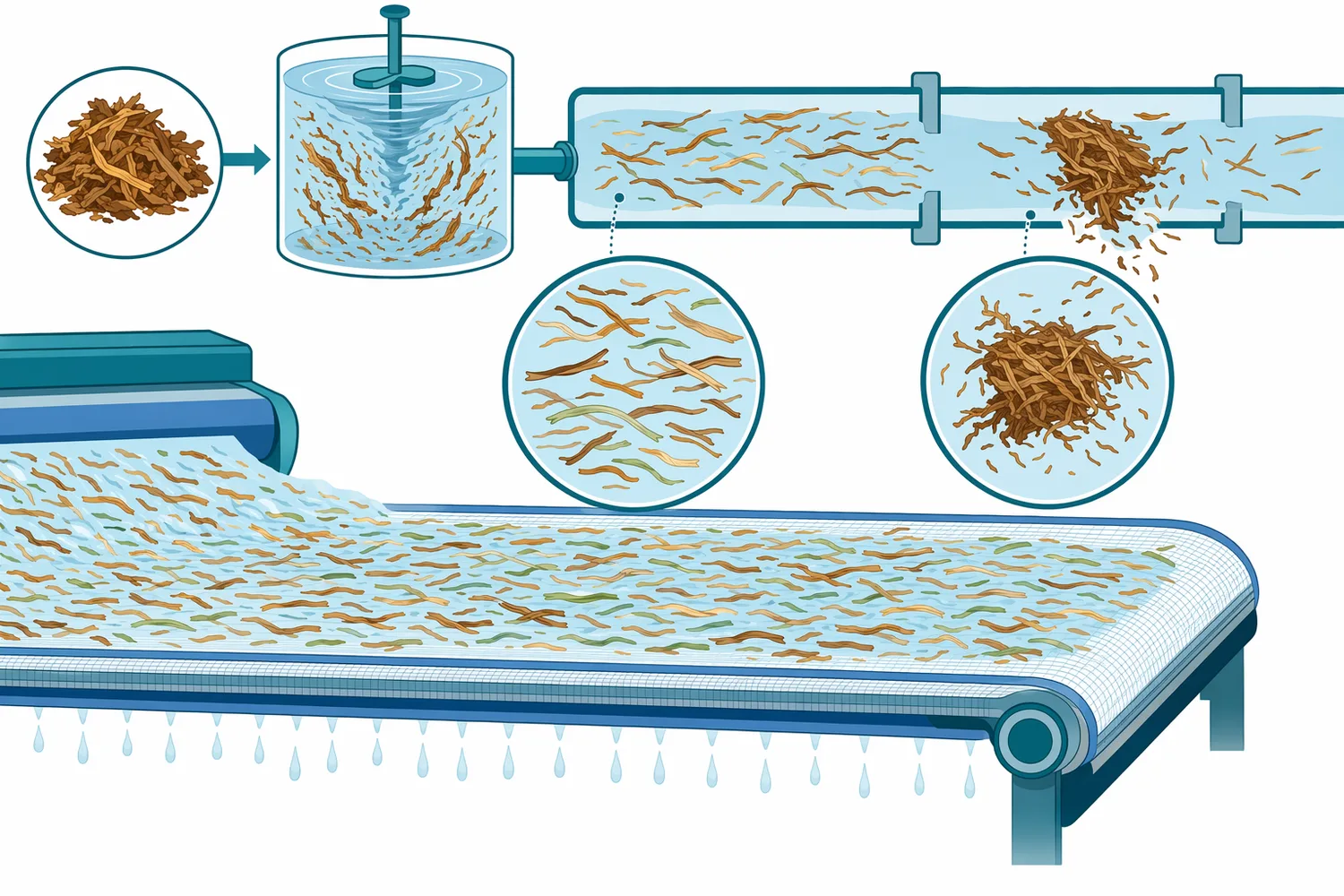
A buyer using acid cellulase in tobacco processing can reasonably think in terms of process effects rather than guaranteed sensory claims. The most defensible expected outcomes are improved softening of fibrous tobacco fractions, improved hydration of dense material, better access to soluble compounds, more uniform interaction between liquids and plant tissue, and support for fermentation systems where microbial access and carbohydrate availability matter.
For leaf strips, this may mean more even conditioning and cell-wall opening. For stems and midribs, it may mean reduced rigidity and improved wet handling. For fines, dust, or reconstituted blends, it may mean improved fiber dispersion and extract distribution. For tobacco residues, it may support value-added conversion or extraction by making the lignocellulosic structure more accessible.
It is also reasonable to expect variation. Bright leaf, burley, oriental tobacco, cigar tobaccos, stems, stalks, and reconstituted materials differ in chemistry and structure. Curing and storage change the wall and soluble fraction before cellulase is ever applied. Prior cutting, shredding, steaming, moistening, and extraction can all change accessibility. These variables explain why the same enzyme mechanism can produce different processing results across different tobacco materials.
The strongest claim for acid cellulase is not that it automatically improves tobacco flavor. The strongest claim is that it hydrolyzes cellulose and can therefore modify the physical structure of cellulose-containing tobacco materials. From that structural change, several processing benefits may follow: softening, permeability improvement, release of soluble components, and support for controlled fermentation or extraction.
Tobacco-specific studies make the case more relevant. Research on exocellobiohydrolase CBHA in tobacco leaves, cellulase-producing Bacillus subtilis for tobacco fermentation, metabolomics of tobacco-origin cellulase additives, and microbial-enzyme co-fermentation of low-grade tobacco all point toward active scientific interest in cellulose-active enzymes for tobacco quality and process development [6]. However, those studies should be read as support for the mechanism and application area, not as a guarantee that any one tobacco lot will produce a fixed sensory result.
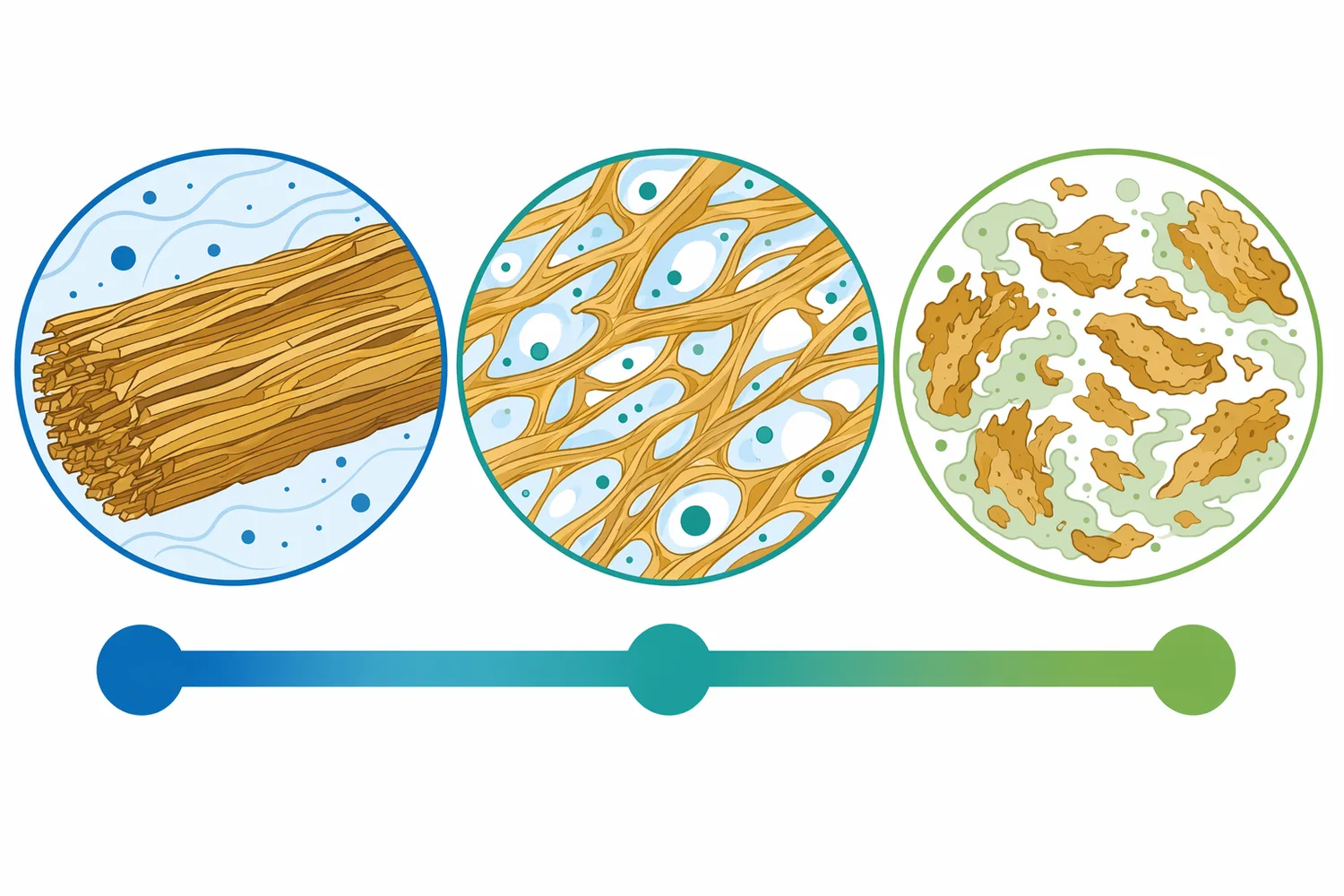
This balanced view is important because tobacco quality is multifactorial. Cellulase can help open the plant matrix, but it does not replace curing discipline, moisture control, controlled fermentation, appropriate storage, or the user’s own quality checks. It is best positioned as one practical tool for modifying plant fiber under suitable processing conditions.
Enzymes.bio supplies Acid Cellulase for Tobacco Processing as a professional enzyme product available for direct online purchase by the 1 kg unit. Buyers can place the order online, complete payment, and the order is then processed and shipped. A Certificate of Analysis and Safety Data Sheet are included with the order, supporting routine receiving and internal documentation needs .
Enzymes.bio is a supplier of enzyme products, not a tobacco processor or a laboratory service provider. This document is intended to explain the science behind acid cellulase in tobacco applications so buyers can understand what the enzyme does, why it is relevant to cellulose-rich tobacco materials, and how its role fits within broader tobacco processing.
Acid Cellulase for Tobacco Processing is best understood as a controlled cell-wall modification enzyme for hydrated tobacco materials. Its direct action is the hydrolysis of cellulose β-1,4 linkages; its practical value comes from loosening the plant matrix, softening fibrous structures, improving liquid penetration, and supporting access to compounds or substrates involved in extraction and fermentation.
The evidence base is strongest at the biochemical and plant-fiber processing level, and increasingly relevant at the tobacco-specific level through studies on tobacco fermentation, tobacco stem cell-wall degradation, tobacco-origin cellulase additives, and cellulase-assisted tobacco-derived fiber processing. Used with realistic expectations, acid cellulase can be a useful processing aid for leaf, stem, fines, residue, and reconstituted tobacco systems where partial cellulose modification is beneficial.
Sold by the 1 kg unit, in stock and ready to ship. Order directly on our store — pay online and we process your order. A Certificate of Analysis and Safety Data Sheet are included with every order.
Buy Acid Cellulase For Tobacco Processing →Numbered in order of first citation. Open-access sources, each verified reachable at publication; citation numbers in the text link here.