
Acid protease supports ethanol fermentation by hydrolyzing grain and co-product proteins into smaller peptides and amino acids that yeast can use more readily during growth and sugar conversion. It does not make ethanol on its own; its value is in improving the fermentation environment, especially in protein-containing starch feedstocks such as corn, rice, wheat, sorghum, and mixed agricultural mashes.
For buyers using Enzymes.bio, Acid Protease Enzyme for Effective Ethanol Fermentation is available directly online by the 1 kg unit. Payment is completed online, and the order is then processed and shipped with a Certificate of Analysis and Safety Data Sheet included.
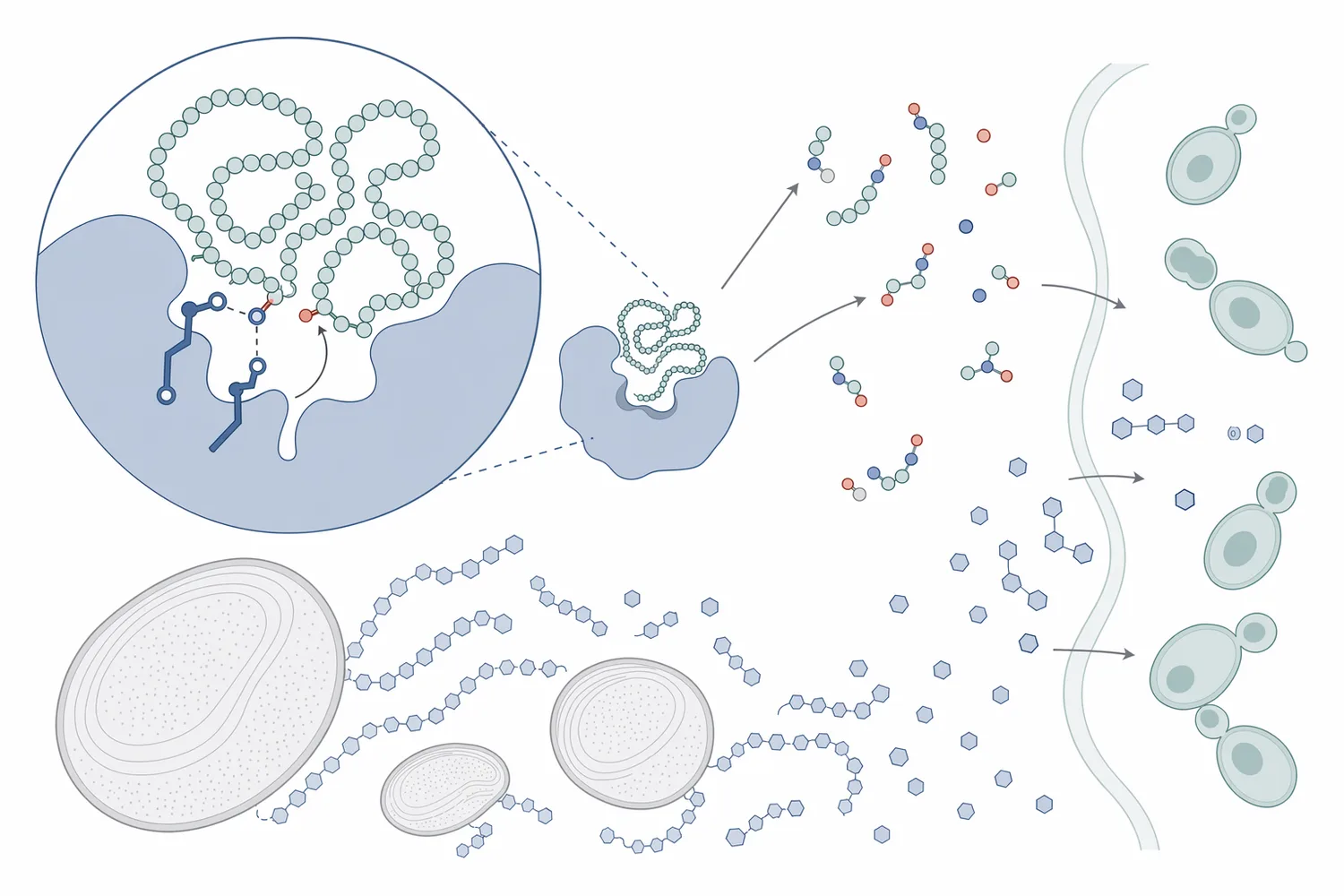
Acid protease is a protein-degrading enzyme that cleaves peptide bonds in proteins under acidic process conditions. In practical fermentation terms, that means it converts large, insoluble, or poorly accessible proteins in the mash into shorter peptides and amino acids. Acid proteases from microbial sources are widely studied because they remain useful in acidic environments where many fermentation processes operate, and research on acid protease production and characterization shows their relevance in food, feed, and bioprocessing systems where protein hydrolysis is required [1].
In ethanol fermentation, the main ethanol producer is still the microorganism—most commonly Saccharomyces cerevisiae in starch- and sugar-based systems. Yeast converts fermentable sugars into ethanol and carbon dioxide, but its performance depends on more than sugar availability alone: nitrogen supply, ethanol stress, osmotic pressure, pH, temperature, and the composition of the mash all influence fermentation efficiency and completion [2].
Acid protease is therefore best understood as a fermentation-support enzyme. Amylases and glucoamylases act primarily on starch and dextrins to create fermentable sugars; acid protease acts on the protein fraction of the raw material. When these enzyme functions are combined appropriately in a starch-based process, starch is converted into sugar while native proteins are partially converted into yeast-available nitrogen compounds.
Grain mashes are not made of starch alone. Corn, rice, wheat, sorghum, and similar feedstocks contain starch granules embedded in a plant matrix that includes proteins, fiber, lipids, minerals, and minor compounds. During ethanol fermentation, the starch fraction supplies the carbon source, but the protein fraction can influence how well yeast grows and how efficiently enzymes access starch.
Yeast cannot use intact storage proteins as efficiently as it can use smaller nitrogen compounds. Acid protease cuts long protein chains into shorter fragments, increasing soluble peptides and amino acids. In fermentation science, this is important because nitrogen availability is tied to yeast biomass formation, stress response, enzyme production, and the ability to continue fermenting as ethanol accumulates [2].
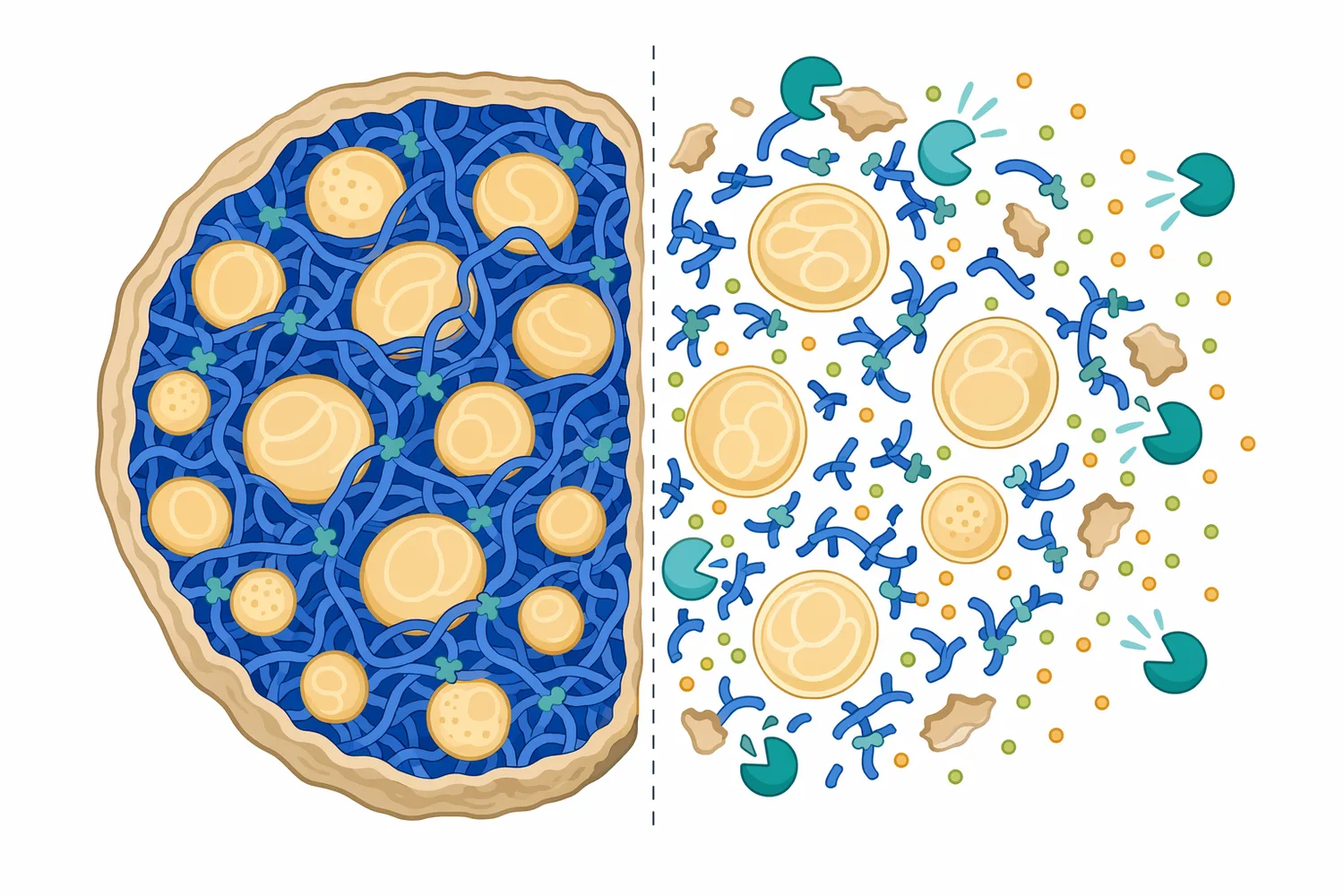
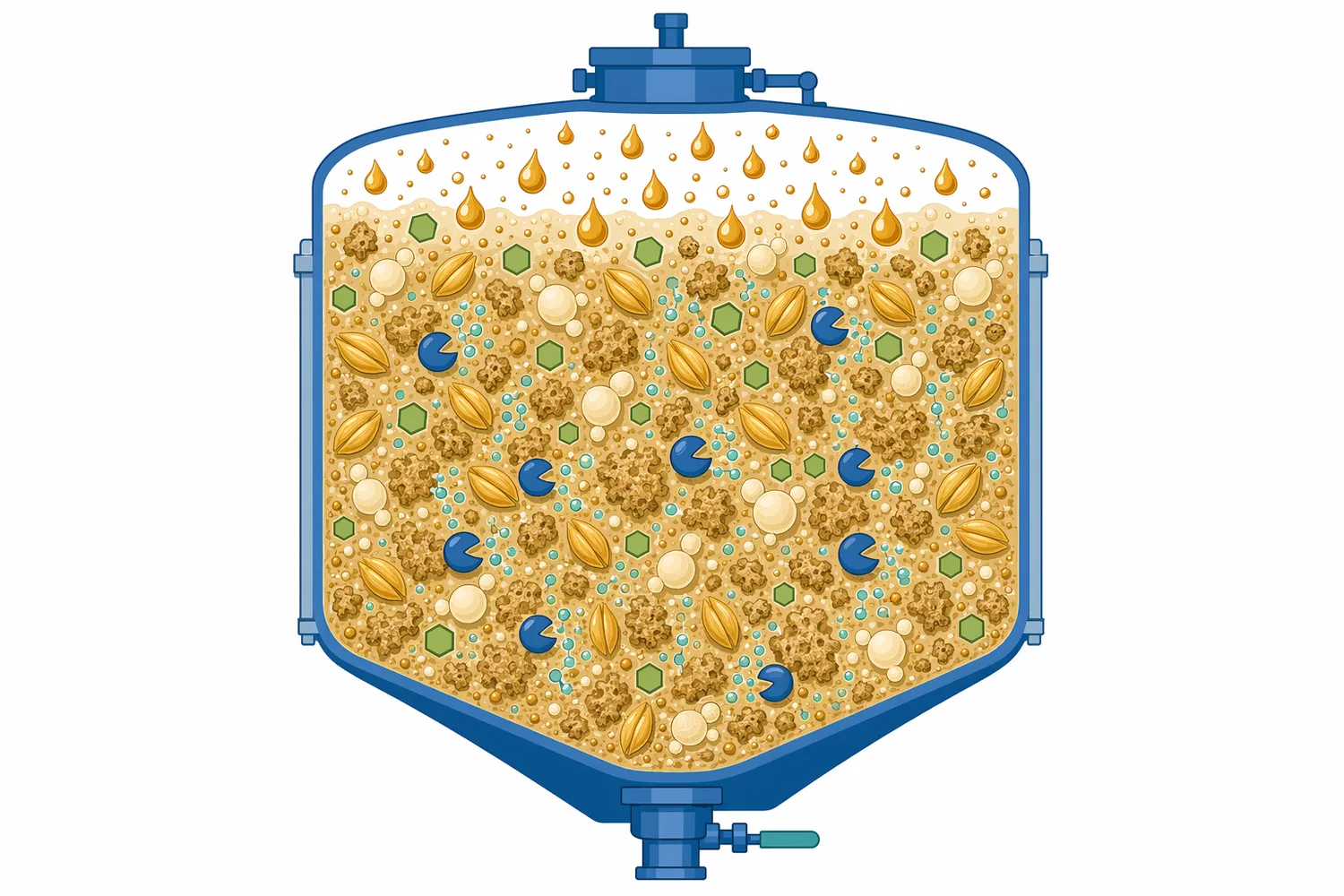
The physical structure of the substrate also matters. In cereal grains, proteins can surround or associate with starch granules. When protease hydrolyzes those proteins, the mash structure can become more open: starch surfaces are less shielded, starch-degrading enzymes can contact more substrate, and soluble nutrients become easier for yeast to access. This is especially relevant in high-solids, low-temperature, or no-cook style processes where the raw material is not completely opened by heat.
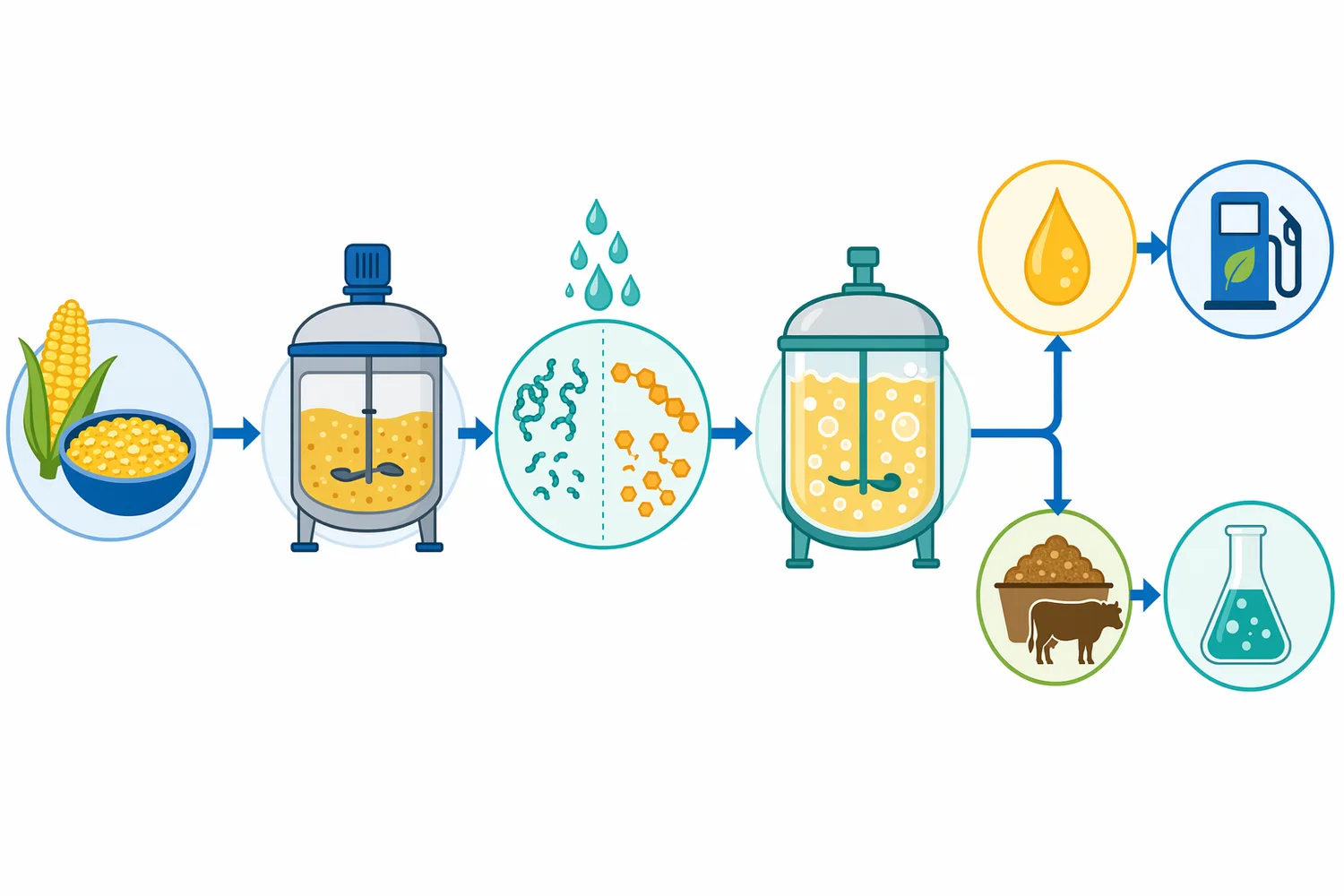
Fermentation is a biological conversion, not just a chemical reaction. Studies on fruit, grain, and biomass fermentations consistently show that medium composition and operating conditions affect whether yeast can convert sugars efficiently. For example, work on tamarillo cider fermentation evaluated how dilution ratio, medium pH, total soluble solids, and yeast ratio affected the ability of Saccharomyces cerevisiae to ferment the substrate, demonstrating the practical importance of the fermentation environment around the organism [3].
The action of acid protease can be described in three connected changes: protein solubilization, nitrogen release, and matrix loosening.
First, acid protease attacks susceptible peptide bonds within feedstock proteins. Instead of large protein molecules remaining suspended, aggregated, or bound into the mash structure, the enzyme produces smaller peptides and amino acids. These hydrolysis products are more soluble and more accessible to yeast than intact proteins. Research on proteolysis during fermentation of protein-rich materials, including soybean meal solid-state fermentation, shows that protease-driven breakdown is directly associated with increased peptide formation [4].
Second, those peptides and amino acids contribute to the yeast’s usable nitrogen pool. Yeast uses nitrogen to build cellular proteins, nucleic acids, enzymes, transporters, and stress-protection molecules. When fermentation begins with high sugar or high solids, yeast may face a mismatch: abundant carbon but insufficient easily assimilable nitrogen. Acid protease helps narrow that mismatch by converting nitrogen already present in the raw material into forms the yeast can metabolize.
Third, the enzyme can alter the physical relationship between protein and starch. In a grain particle, starch is often embedded in a proteinaceous matrix. Proteolysis does not “digest starch,” but it can remove part of the barrier that prevents amylolytic enzymes from reaching starch surfaces. This is why protease can be useful alongside amylase and glucoamylase: it supports access, while the starch enzymes perform the saccharification.
This mechanism is most relevant when the substrate contains meaningful protein. A sugar-only syrup with little protein will not provide much substrate for acid protease. A corn, wheat, rice, sorghum, or mixed mash, by contrast, contains enough grain protein for proteolysis to affect both nutrition and mash structure.
Proteases are not interchangeable simply because they all hydrolyze proteins. Their usefulness depends on the process environment and the material being treated. Acid protease is particularly relevant to ethanol fermentation because yeast fermentations commonly run under acidic or mildly acidic conditions, while alkaline proteases are more often associated with detergent, leather, and other alkaline applications. Studies on alkaline proteases from Bacillus species, for instance, emphasize properties aligned with alkaline and detergent-compatible uses rather than acidic yeast fermentation [5].
| Protease type | Conceptual operating environment | Typical process fit | Relevance to ethanol fermentation |
|---|---|---|---|
| Acid protease | Acidic to mildly acidic systems | Fermented foods, beverage processes, starch ethanol mashes, protein hydrolysis in acidic media | Strong practical fit where yeast fermentation and grain proteins coexist |
| Neutral protease | Near-neutral systems | Food processing, some protein modification steps, mixed enzyme processes | May be useful in upstream or separate treatment steps, depending on process design |
| Alkaline protease | Alkaline systems | Detergents, leather processing, some waste and protein treatment applications | Usually less aligned with the acidic conditions preferred in many yeast ethanol fermentations |
The purpose of this comparison is conceptual. In ethanol production, acid protease is valued because its protein-hydrolyzing function is compatible with the acidic side of fermentation, where yeast activity and contamination control are typically managed together.
Ethanol fermentation becomes harder for yeast as ethanol accumulates. Ethanol affects cell membranes, protein stability, nutrient transport, redox balance, and stress-response pathways. A review of yeast ethanol tolerance and fermentation efficiency describes these as multi-factorial limitations, meaning that no single additive or enzyme solves every fermentation constraint [2].
Acid protease helps with one important part of that system: nutrient availability. By increasing soluble peptides and amino acids, it can support yeast growth and metabolic resilience. Better nutrition can help yeast establish a healthy population earlier in fermentation, maintain sugar uptake, and reduce sluggishness caused by nitrogen limitation.
This does not mean acid protease replaces yeast nutrients in every process. Rather, it gives the process access to nitrogen already present in the substrate. In a grain mash, that is a practical distinction: instead of relying only on external nitrogen additions, the process can make better use of the native protein fraction.
Research also shows that yeast physiology can be influenced by internally produced metabolites. For example, work on self-produced hydrogen sulfide found that it improved ethanol fermentation by Saccharomyces cerevisiae and other yeast species, illustrating that yeast performance is tightly linked to its biochemical stress-response environment [6]. Acid protease fits into this broader picture by affecting the nutrient side of the environment rather than directly changing the yeast’s genetics or metabolism.
In starch ethanol, fermentable sugar comes primarily from starch hydrolysis. Liquefaction and saccharification enzymes reduce starch into dextrins and sugars that yeast can ferment. Acid protease complements this system by acting on proteins that may limit nutrient release or restrict starch accessibility.
This complementarity is particularly important in simultaneous saccharification and fermentation approaches, where substrate breakdown and yeast fermentation occur in an overlapping process window. Research on covalent immobilization of enzymes and yeast for continuous simultaneous saccharification and fermentation in cellulosic ethanol highlights the broader principle that combining enzymatic hydrolysis with microbial fermentation can improve process integration [7].
In lignocellulosic ethanol, the substrate challenge is different—cellulose, hemicellulose, and lignin are the main barriers rather than grain protein. Even so, the same engineering principle applies: fermentation improves when polymers are broken down into forms the organism can use. An industrial second-generation yeast strain engineered to secrete multiple lignocellulolytic enzymes was reported to enable ethanol production from multiple polymeric substrates, demonstrating the value of matching enzymatic depolymerization to fermentable substrate release [8].
For grain ethanol, acid protease’s depolymerization target is protein. It does not replace cellulases in biomass ethanol or amylases in starch ethanol. It adds a separate function: hydrolyzing the protein fraction so yeast nutrition and starch accessibility improve together.
Acid protease is most relevant in ethanol fermentations that contain a substantial protein fraction. This includes cereal-based mashes, high-solids starch fermentations, and processes using grain or agricultural co-products. Sweet sorghum, for example, has been studied as a fermentation substrate using immobilized Saccharomyces cerevisiae, showing the broader interest in adapting yeast ethanol systems to different plant-derived feedstocks [9].
In corn-based ethanol, the protein fraction is part of the mash and can contribute to yeast nutrition once hydrolyzed. In rice-based systems, proteins may be less abundant than starch but can still influence starch accessibility and nitrogen release. In wheat and sorghum mashes, protein structure can also affect mash behavior, viscosity, enzyme access, and fermentation dynamics.
The strongest practical fit is usually found where three conditions overlap: the substrate contains hydrolysable protein, yeast performance is sensitive to nitrogen availability, and starch enzymes benefit from a more open substrate matrix. In those cases, acid protease works as a process aid that converts a native component of the mash into a useful fermentation resource.
High-gravity and very-high-gravity fermentations are attractive because they can increase final ethanol concentration and reduce water handling per unit of ethanol produced. However, they also increase stress on yeast. Higher dissolved solids can create osmotic stress at the beginning of fermentation, while higher ethanol concentrations create toxicity toward the end.
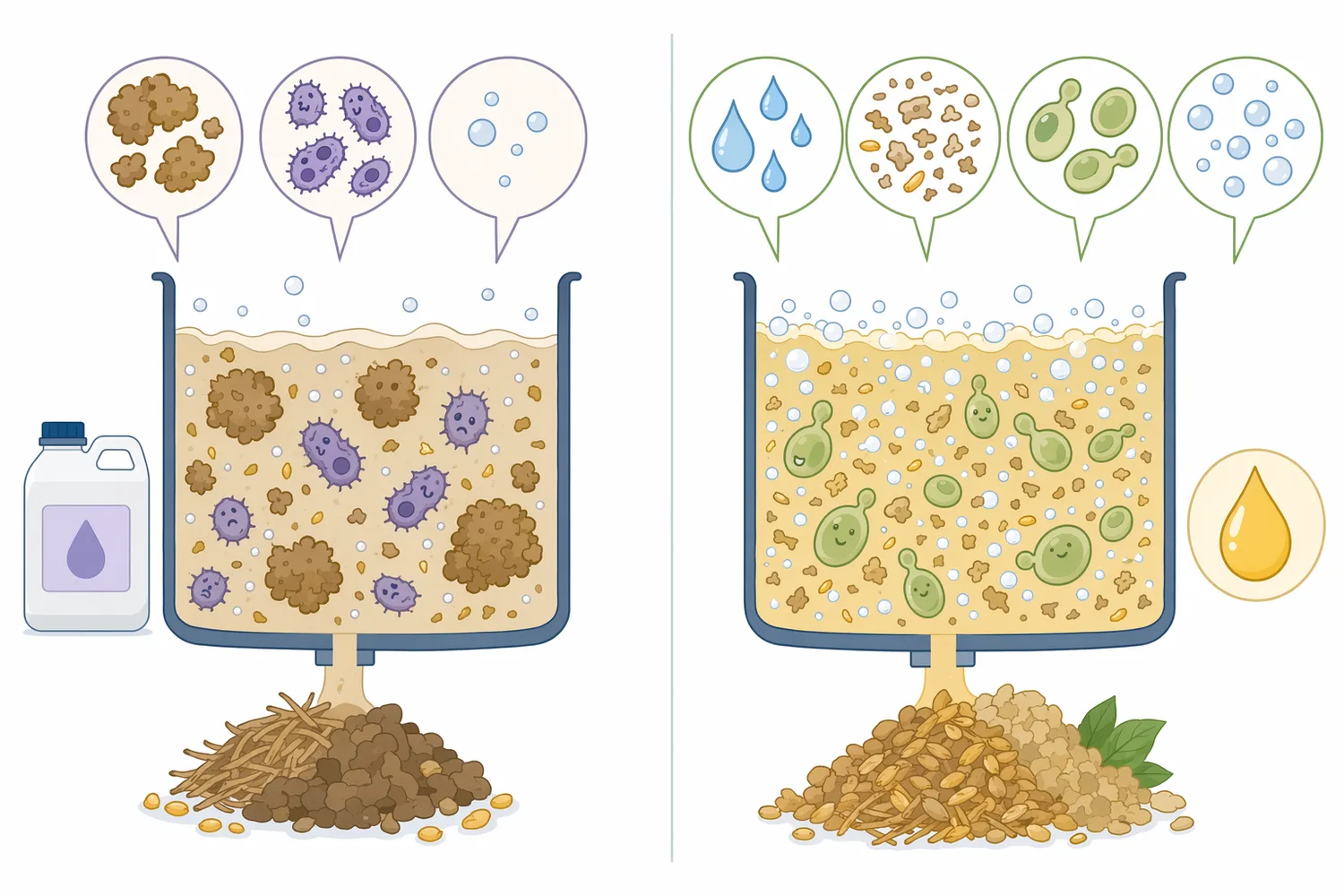
Under these conditions, nutrient availability becomes more important. Yeast must build enough biomass and maintain enough metabolic activity to ferment a concentrated sugar stream, but it may face restricted nitrogen availability if the mash protein remains largely intact. Acid protease helps by converting part of that intact protein into shorter nitrogen compounds that yeast can assimilate more readily.
The relationship between fermentation conditions and ethanol outcome is not theoretical. Studies of fermentation systems show that changing medium composition, sugar content, yeast ratio, and pH can materially affect fermentation performance [3]. Acid protease is one way to improve the composition of a protein-containing mash without changing the basic role of yeast as the ethanol-producing organism.
Modern ethanol production often uses enzyme combinations rather than single-enzyme solutions. Starch ethanol typically relies on enzymes that reduce viscosity, liquefy starch, saccharify dextrins, and support fermentation. Acid protease contributes by acting on protein, which is a separate substrate class from starch.
Research specifically addressing enzyme complexes for activating yeast generation and ethanol fermentation reflects the continued interest in using enzyme systems to improve yeast activity and ethanol output [10]. This is consistent with how acid protease is applied: not as an isolated “ethanol maker,” but as part of a biochemical environment that supports microbial conversion.
The value of an enzyme combination comes from dividing the substrate into its major barriers. Starch enzymes address carbohydrate availability. Protease addresses protein hydrolysis. In some processes, fiber-acting enzymes may also be used to improve solids handling or release entrapped material. The more complex the feedstock, the more useful it becomes to think in terms of matched enzyme functions rather than a single universal enzyme.
For a buyer considering Acid Protease Enzyme for Effective Ethanol Fermentation, the most realistic benefits are process-support benefits: improved yeast nutrition, better use of native substrate protein, and potentially smoother or faster fermentation where protein-related limitations exist. These benefits are strongest in starch-based mashes rather than protein-poor sugar streams.
A practical benefit is increased availability of peptides and amino acids from the raw material. Proteolysis in fermented protein-rich substrates is widely associated with peptide release, and the same biochemical principle applies when acid protease is introduced into a grain mash [4]. More soluble nitrogen can support yeast growth, especially when the original substrate has enough protein to make hydrolysis meaningful.
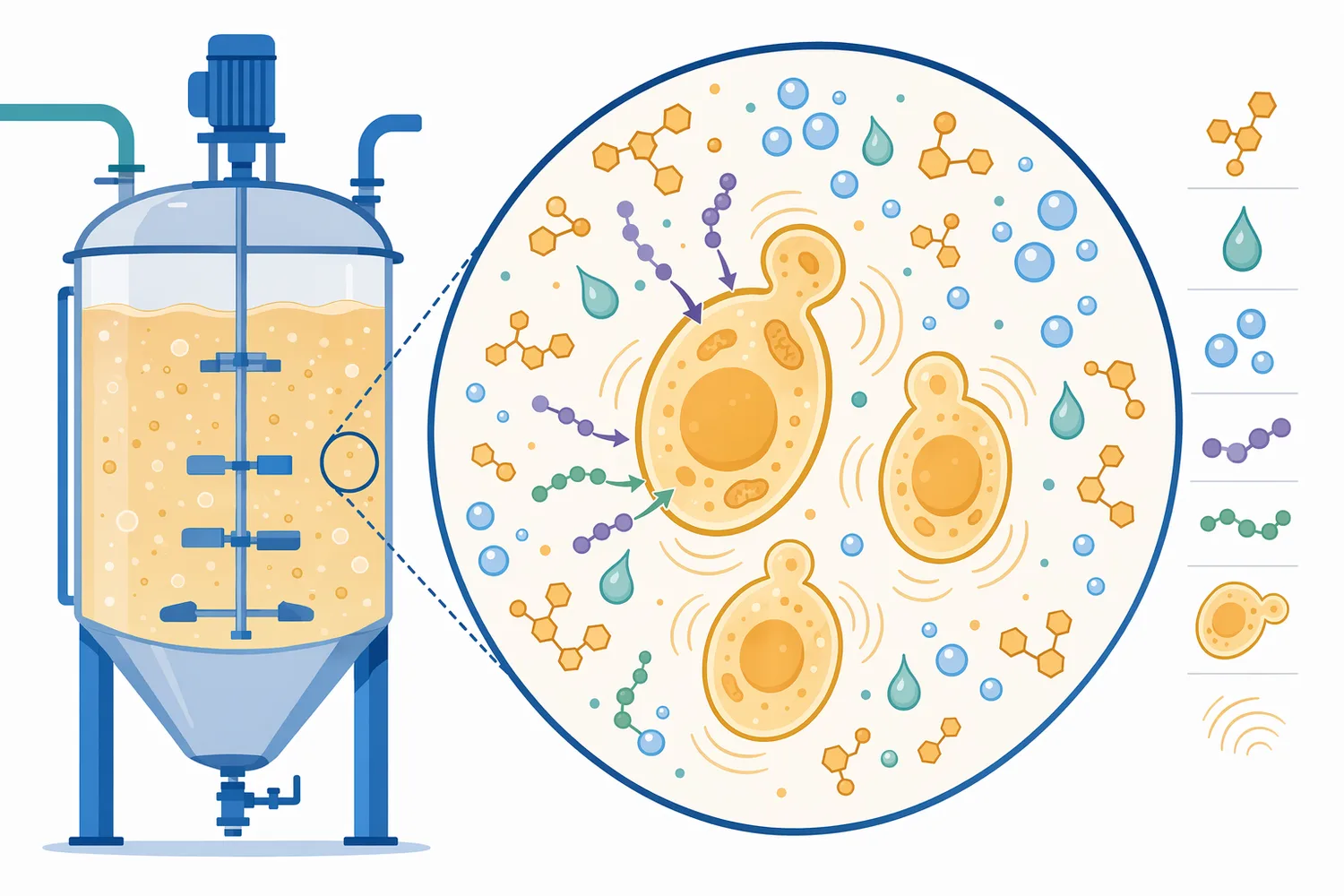
Another benefit is improved access to starch. When proteins are part of the structure surrounding starch granules, acid protease can partially dismantle that structure. This can make it easier for amylase and glucoamylase to contact starch and dextrins, supporting the sugar supply needed for fermentation.
A third benefit is process consistency. Fermentations can vary because raw materials vary. Grain lots differ in protein content, kernel hardness, storage history, and milling behavior. Acid protease cannot remove all variability, but it can help reduce one source of inconsistency by hydrolyzing proteins that would otherwise remain less available.
Acid protease does not ferment glucose, maltose, or other sugars into ethanol. That remains the work of yeast or another ethanologenic microorganism. It also does not directly liquefy starch, saccharify dextrins, remove contamination, or overcome severe ethanol toxicity by itself.
It is also not a universal fix for every sluggish fermentation. If the main limitation is poor yeast viability, inadequate sugar release, contamination, extreme osmotic stress, or an unsuitable fermentation regime, protease alone will not correct the problem. Yeast ethanol tolerance is governed by multiple interacting factors, including membrane adaptation, stress response, nutrient transport, and intracellular protection mechanisms [2].
The benefit of acid protease is therefore context-dependent. It is most defensible when the feedstock contains protein that can be hydrolyzed and when the fermentation would benefit from more soluble nitrogen or a more open starch-protein matrix. In substrates with little protein, its effect will naturally be more limited.
A healthier yeast fermentation can influence more than final ethanol concentration. Yeast stress can affect residual sugar, fermentation time, and by-product formation. While acid protease is not a flavor enzyme or a contaminant-control agent, its role in nutrient release can indirectly support a more orderly fermentation.
Fermentation studies across food and bioethanol systems demonstrate that microbial community behavior, proteolysis, and process temperature can affect biochemical outcomes. For example, research on Harbin dry sausages linked fermentation temperature with bacterial community, flavor characteristics, and proteolysis, showing how protein breakdown and fermentation conditions interact in real biological systems [11].
In ethanol production, the target is not flavor development but conversion efficiency. Still, the underlying lesson is useful: proteolysis changes the pool of soluble nitrogen compounds, and those compounds affect microbial metabolism. Acid protease gives the process a controlled enzymatic route to create those compounds from feedstock protein.
Although corn is a major ethanol feedstock, acid protease can be relevant wherever plant proteins coexist with fermentable or hydrolysable carbohydrates. Rice, wheat, sorghum, and mixed grain substrates each have different protein structures and processing behavior, but all can present some combination of yeast nutrition and substrate-access challenges.
Fermentation of plant substrates also changes nutritional and chemical availability. Work on maize fermentation, soaking, and germination showed that fermentation can reduce phytate and improve iron and zinc bioavailability, illustrating how biochemical processing can alter the accessibility of nutrients locked inside cereal matrices [12]. Acid protease targets a different component—protein rather than phytate—but the principle is similar: enzymatic and microbial processing can make bound or inaccessible components more available.
In mixed agricultural systems, acid protease may be especially useful when co-products increase protein load. Soy-containing streams, grain stillage fractions, or other protein-rich materials can alter nitrogen release and mash rheology. In those cases, protease helps manage the protein component so it becomes a contributor to fermentation rather than only a structural or nutritional bottleneck.
Low-temperature and no-cook ethanol processes aim to reduce energy input, but they place greater importance on enzymatic access because heat is not doing as much to gelatinize starch or denature proteins. In these systems, substrate structure remains more intact, so enzymes must do more of the opening work.
Acid protease can contribute by hydrolyzing proteins that remain associated with starch granules. As the protein network is cut into smaller fragments, starch becomes less physically shielded. This can help the starch enzymes contact their substrate and can release peptides and amino acids at the same time.
This role aligns with the broader direction of enzyme-enabled bioethanol systems. Research on cellulosic ethanol has explored enzyme-and-yeast integration to make continuous simultaneous saccharification and fermentation more practical, showing that process efficiency often depends on how well polymer breakdown is coupled to microbial conversion [7]. In starch mashes, acid protease supports the same integration concept on the protein side of the substrate.
Enzymes.bio supplies Acid Protease Enzyme for Effective Ethanol Fermentation as a direct online product sold by the 1 kg unit. Buyers place the order online, pay online, and the order is then processed and shipped.
A Certificate of Analysis and Safety Data Sheet are included with the order. These documents support routine receiving, handling, and internal documentation needs without requiring a separate quotation or sampling process.
This purchasing model is designed for customers who already know they need an acid protease for ethanol-related fermentation work and want a straightforward way to buy a 1 kg unit online.
Acid protease is a practical enzyme for starch-based ethanol fermentation because it converts feedstock proteins into smaller peptides and amino acids while helping loosen protein structures that can restrict starch access. Its strongest fit is in protein-containing mashes—corn, rice, wheat, sorghum, and mixed agricultural substrates—where yeast nutrition and starch accessibility can influence fermentation speed and completion.
It should be viewed as a support enzyme, not a replacement for yeast, amylase, glucoamylase, or sound fermentation control. Used in the right substrate context, acid protease helps the process make better use of the raw material already present in the mash: starch for sugar, and protein for yeast-available nitrogen.
Sold by the 1 kg unit, in stock and ready to ship. Order directly on our store — pay online and we process your order. A Certificate of Analysis and Safety Data Sheet are included with every order.
Buy Acid Protease Enzyme For Effective Ethanol Fermentation →Numbered in order of first citation. Open-access sources, each verified reachable at publication; citation numbers in the text link here.