
Acid Protease Enzyme Powder for Protein Cleaning CAS 9025-49-4 is used to break protein residues into smaller peptides under acidic to mildly acidic conditions. In cleaning and residue-management applications, that matters because large, denatured, surface-bound proteins are often difficult to rinse away, while partially hydrolyzed protein fragments disperse more readily in water. Enzymes.bio supplies acid protease powder directly online by the 1 kg unit, with the order processed and shipped after online payment; a Certificate of Analysis and Safety Data Sheet are included with the order.
Acid protease is a proteolytic enzyme preparation: its job is to hydrolyze proteins. “Protease” means it cuts peptide bonds, the chemical links connecting amino acids into long protein chains. “Acid” means the enzyme is intended for use in lower-pH environments than neutral or alkaline proteases. Proteases are among the most widely used industrial enzymes because protein hydrolysis is relevant to cleaning, food processing, feed ingredient treatment, fermentation support, leather and waste processing, and other protein-rich systems [1].
In a protein-cleaning application, acid protease does not behave like a solvent, caustic cleaner, oxidizer, or disinfectant. Its action is narrower and more specific: it attacks the protein part of a soil, film, deposit, or suspended residue. This is useful because proteins can form cohesive networks that hold deposits together, bind to surfaces, trap fats or minerals, increase viscosity, and reduce rinseability. Once the protein network is cut into shorter fragments, the deposit often becomes less structurally intact and easier for water flow, surfactants, or an acid cleaning step to remove.
Protein cleaning is especially challenging after heating, drying, concentration, fermentation, filtration, or long hold times. Many proteins unfold under heat or chemical stress, exposing hydrophobic and reactive regions that stick to stainless steel, membranes, plastic surfaces, or other proteins. In dairy, plant protein, fermentation, meat extract, brewing, and feed-related streams, the visible residue may look like a simple film, but at the molecular level it can be a compacted layer of denatured protein, carbohydrate, mineral, and fat. Acid protease addresses the protein fraction by cutting the peptide backbone rather than merely lifting the deposit from the outside.
The “acid” in acid protease is not just a label. Enzyme structure and protein substrate behavior are both pH-dependent. At lower pH, amino acid side chains in proteins gain or lose charge, salt bridges shift, and some protein structures loosen or partially unfold. That can make peptide bonds more accessible to an acid-active protease. Acidic conditions can also fit processes where mineral management or product chemistry already favors a lower-pH step, so protein hydrolysis can occur without moving the system into a strongly alkaline environment.
Many acid proteases used industrially are aspartic proteases, a class of enzymes whose catalytic machinery is well suited to acidic environments. At the active site, acidic residues help position water and polarize the peptide bond so that hydrolysis can occur. The practical result is cleavage of large protein molecules into shorter peptide fragments. Research on an aspartic protease from Aspergillus niger demonstrated efficient degradation of soy protein, showing how an acid-active fungal protease can break down compact plant storage proteins rather than simply dispersing them physically [2].
The cleaning relevance is direct. Soy, milk, cereal, yeast, and other processing proteins contain folded structures that can become less soluble after heat or drying. A protease that clips the backbone in many places reduces molecular size and disrupts the interactions holding the film together. Hydrolysis can expose new charged groups, reduce aggregation, and change the way protein fragments hydrate. Instead of one large proteinaceous layer adhering to equipment, the system contains smaller fragments that can be carried away during circulation and rinsing.
Proteases are not interchangeable across every process. Their useful behavior depends on pH, substrate access, and the chemistry around them. Acid protease is most relevant when protein cleaning needs to occur under acidic or mildly acidic conditions. Neutral proteases are generally associated with near-neutral environments, while alkaline proteases are often used where alkaline detergency is already part of the cleaning approach. Thermostable alkaline proteases, for example, have been investigated for eco-friendly and industrial applications under alkaline conditions, illustrating how different protease families are matched to different chemical environments [3].
| Protease type | Conceptual operating environment | Cleaning relevance | Typical fit in protein-soil removal |
|---|---|---|---|
| Acid protease | Acidic to mildly acidic | Hydrolyzes proteins where lower pH is preferred or already present | Protein films, residues, and process streams where alkaline conditions are not desired |
| Neutral protease | Near-neutral | Supports protein hydrolysis without strongly acidic or alkaline conditions | Mild process streams and mixed formulations where neutral pH is maintained |
| Alkaline protease | Alkaline | Works with alkaline detergency and soil swelling | Proteinaceous soils in cleaning programs that already rely on alkaline pH |
This comparison is conceptual rather than a universal ranking. A strongly alkaline protease may be highly effective in an alkaline detergent, but that does not make it the right enzyme for a lower-pH process. Likewise, acid protease is valuable because it gives protein-hydrolyzing capability in an acidic cleaning or processing window. That can be important where equipment compatibility, process chemistry, mineral deposits, or product conditions make acid operation more practical than caustic treatment.
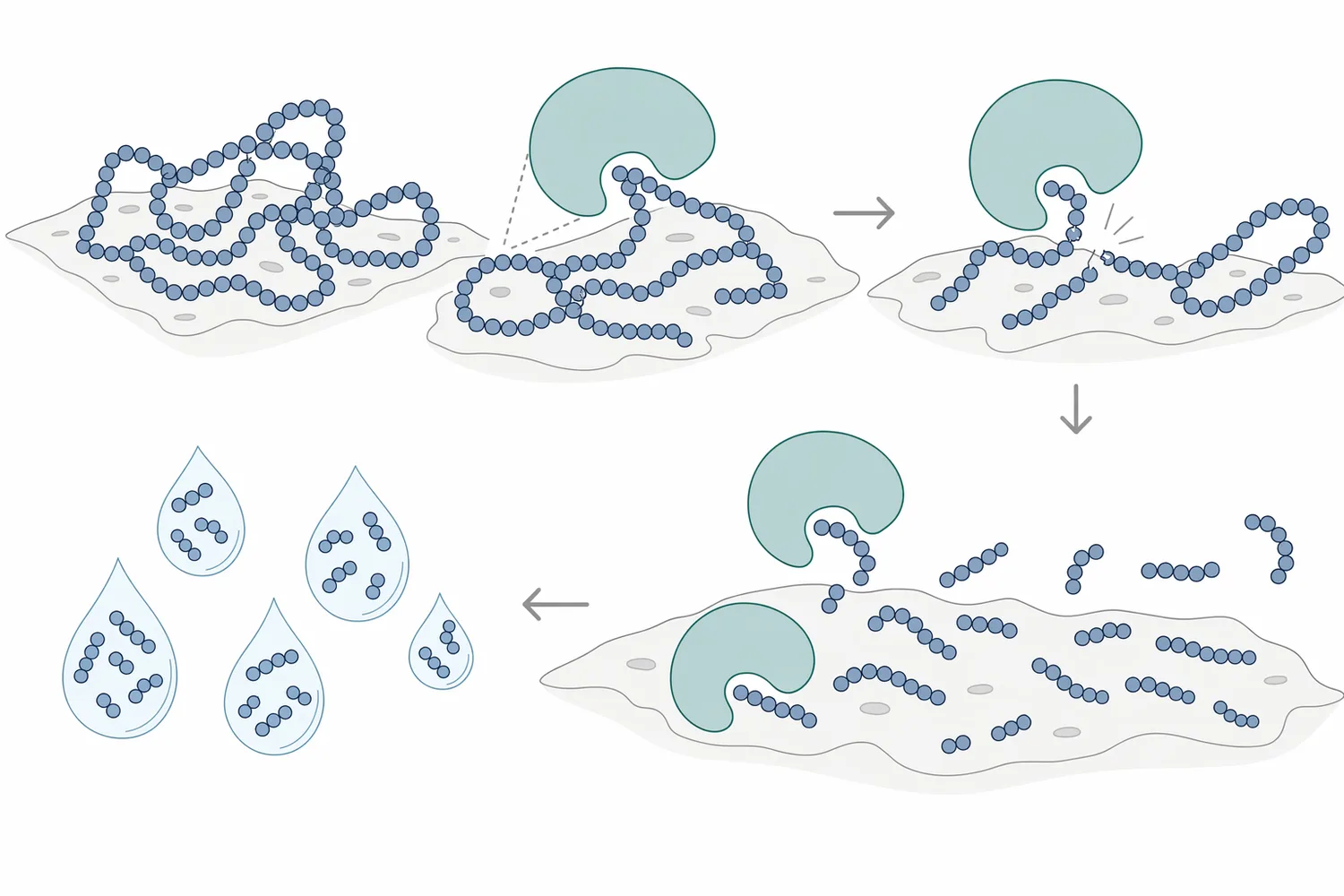
A protein residue starts as long chains of amino acids folded into compact structures. When exposed to heat, shear, drying, salts, acids, minerals, or other process stresses, these chains can unfold and stick together. Hydrophobic regions associate with other hydrophobic regions; charged groups form bridges; calcium or other minerals may help cross-link proteins; and fats or carbohydrates can become trapped in the matrix. This is why a protein film can remain after water rinsing even when it appears thin.
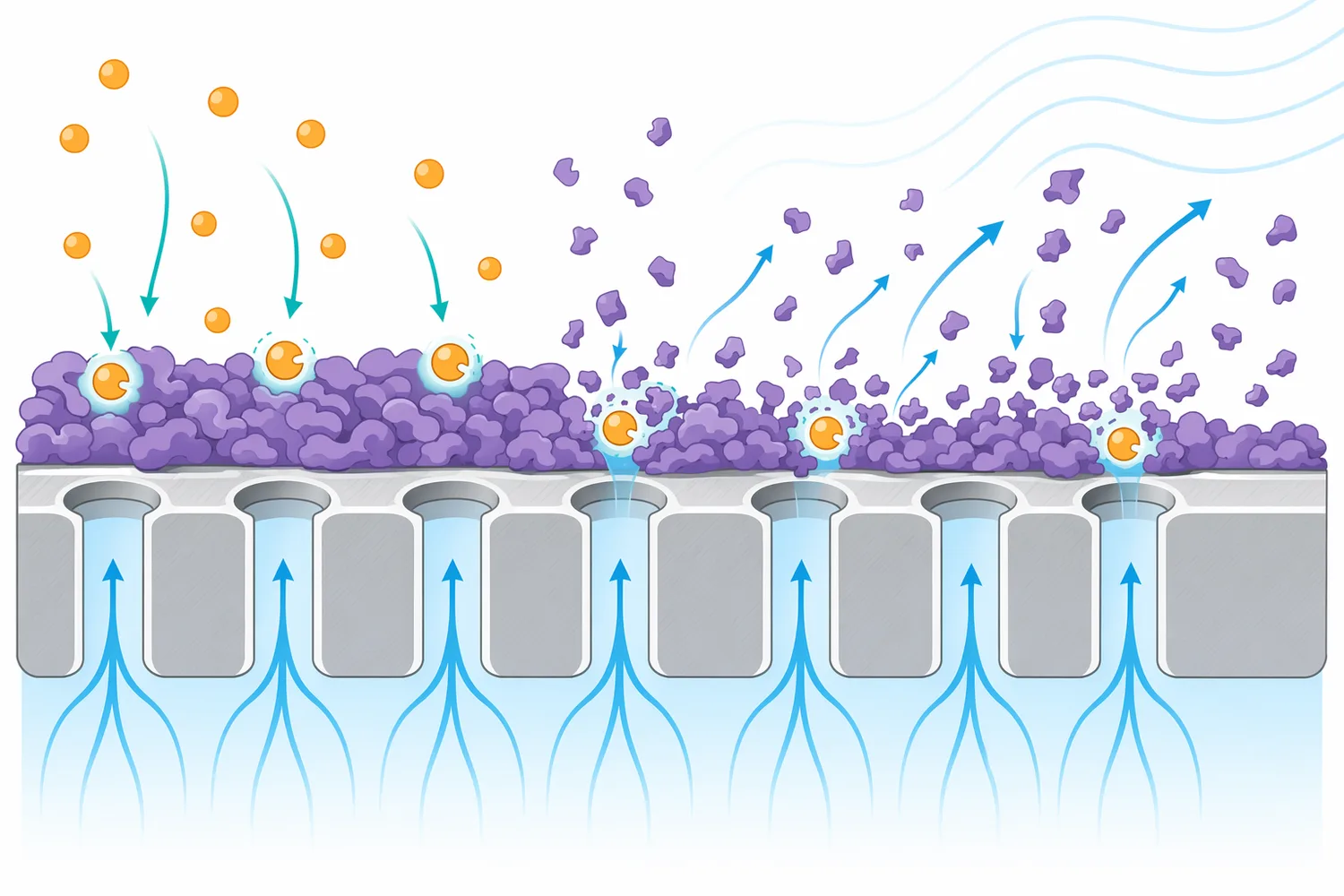
Acid protease changes that structure chemically. It does not merely soften the outside of the soil. The enzyme binds accessible regions of the protein and catalyzes hydrolysis of peptide bonds. Each cleavage shortens the chain and weakens the protein’s ability to maintain a continuous film. Enough cleavages turn large, adhesive macromolecules into smaller peptides with different solubility, charge distribution, and hydration behavior. Studies of enzymatic protein hydrolysis in food proteins repeatedly show that protease treatment alters functional properties and secondary structure, which is the same underlying chemistry that makes protein residues easier to disrupt [4].
As hydrolysis proceeds, three practical changes matter in cleaning. First, molecular size drops, so fragments move more easily into the liquid phase. Second, the protein network loses mechanical strength because the chains that bridged the film together are cut. Third, newly exposed peptide ends and side chains increase interaction with water, improving dispersion. In a circulating cleaning step, those changes allow flow and wetting agents to penetrate the deposit more effectively instead of simply passing over a compacted layer.
This is why enzyme cleaning can look slower than aggressive chemical cleaning at first but become effective over contact time. The enzyme needs access to substrate, moisture, suitable pH, and temperature. Once it begins cutting exposed protein, new surfaces are created and additional protein becomes accessible. Pretreatment research on pumpkin seed protein showed that changes in protein structure can influence protease action, hydrolysis kinetics, and functional properties, reinforcing the practical point that substrate accessibility strongly affects how quickly hydrolysis proceeds [5].
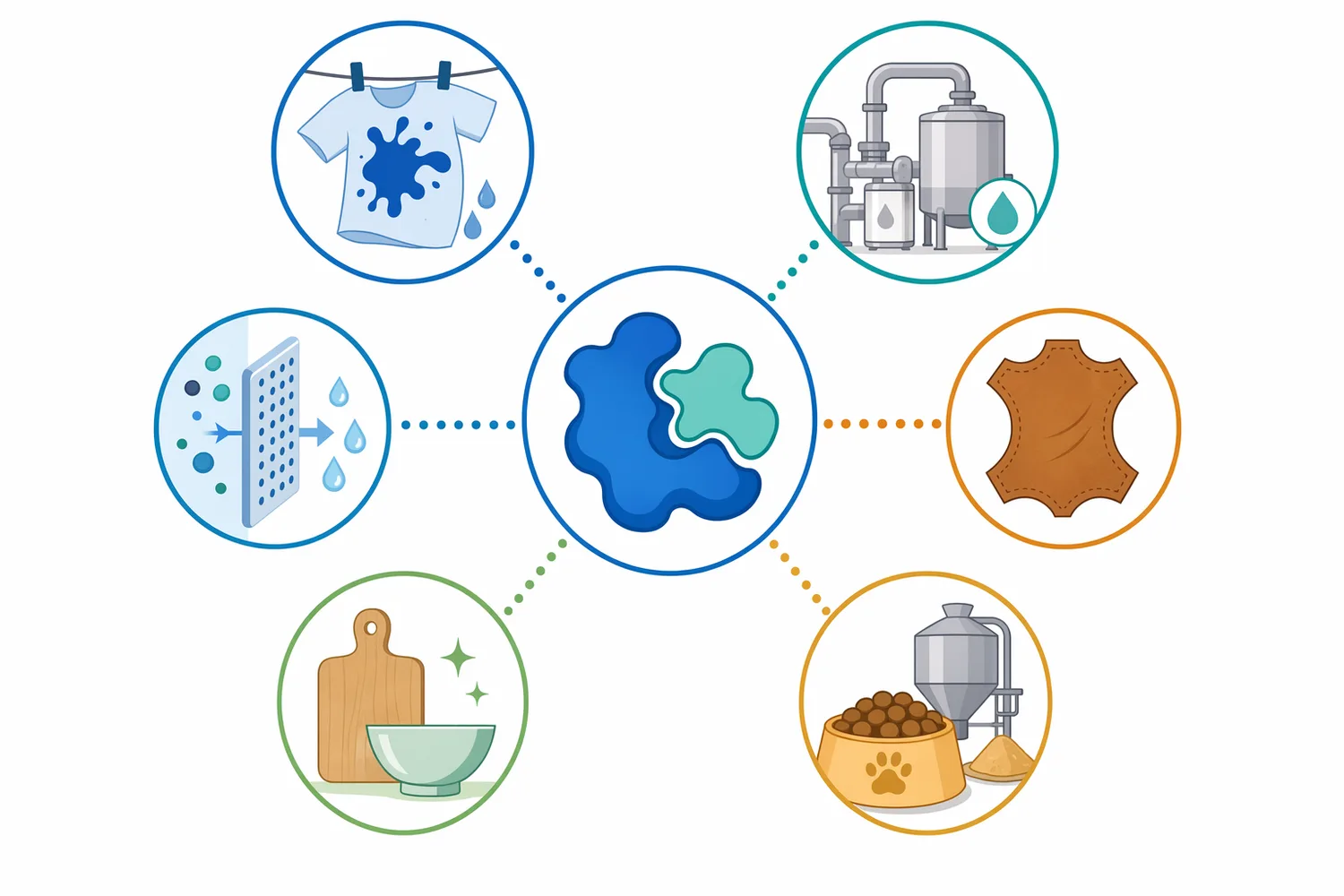
Acid protease powder is best understood as a protein-focused cleaning and processing aid. It is most relevant when the target soil contains a meaningful protein fraction and when acidic or mildly acidic conditions are suitable for the step. Common use contexts include food and beverage processing residues, plant protein processing, fermentation solids, brewing and distilling streams, proteinaceous wastewater pretreatment, and mixed organic deposits where protein acts as a binding matrix.
In food and beverage operations, protein films may come from milk, soy, pea, cereal, yeast, gelatin, egg, meat extracts, or protein-fortified formulations. Acid protease can help break the protein backbone in these residues, reducing film cohesion and improving removability. The same mechanism is relevant whether the residue is on a tank wall, in a transfer line, in a heat-exposed contact area, or suspended as fine proteinaceous solids. Research on soybean meal protein degradation by acid protease demonstrates that acid-active proteases can reduce complex plant protein materials, which is directly relevant to plant-protein processing residues [6].
In fermentation and brewing-related environments, proteins and peptides coexist with yeast solids, cell debris, polyphenols, carbohydrates, and minerals. Acidic conditions are common in many of these process streams, so an acid protease can fit naturally where protein breakdown is desired without shifting to alkaline pH. The benefit is not limited to visual cleanliness; breaking protein networks can reduce haze-forming or deposit-forming tendencies in some systems and can make downstream solids easier to manage.
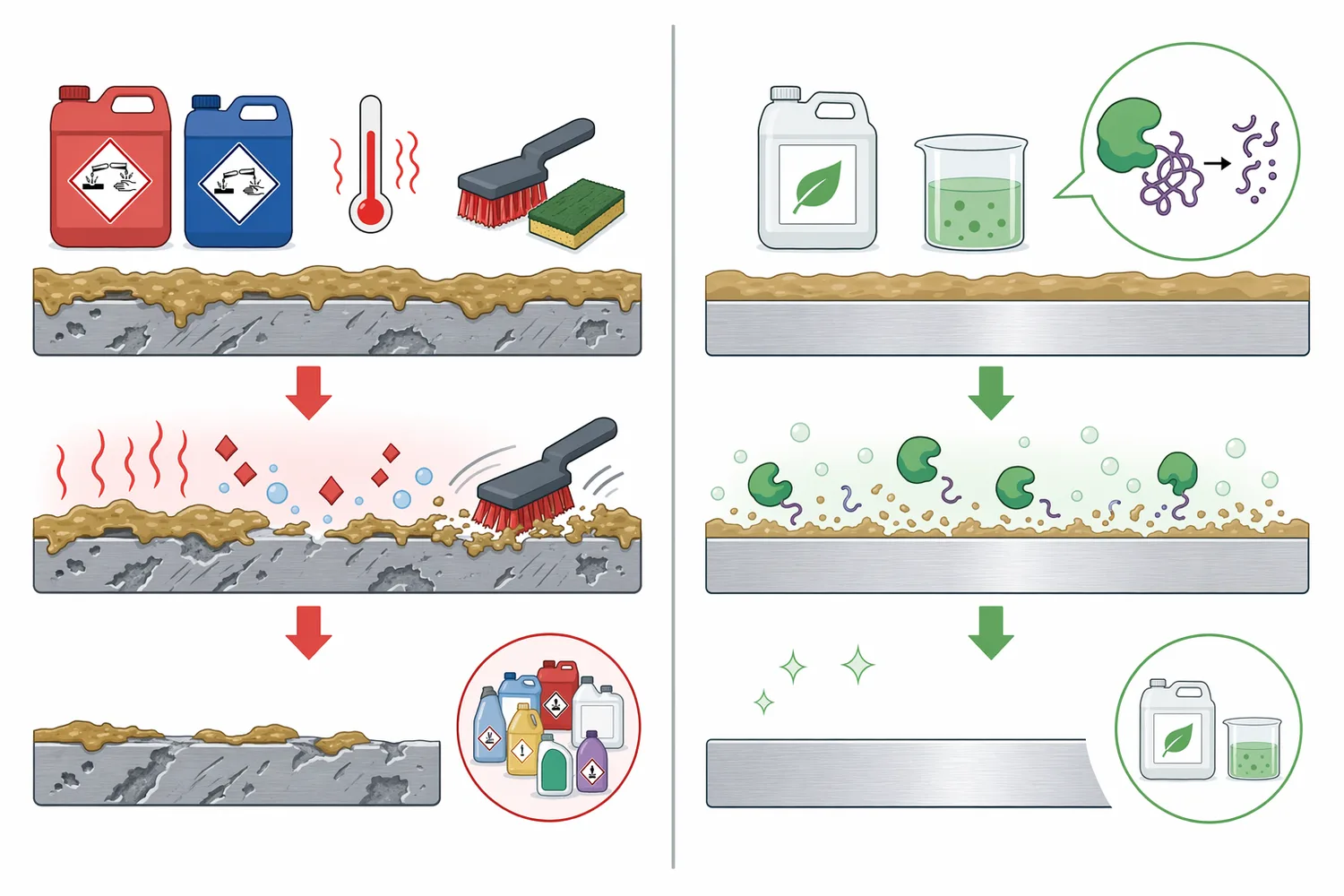
In residue-management and waste pretreatment, protein hydrolysis can reduce the size and structure of proteinaceous material before further treatment. A study on untanned proteinaceous wastes from the tanning industry specifically examined enzyme-accelerated acid hydrolysis, showing the relevance of protease-supported hydrolysis in protein-rich industrial waste streams [7]. This does not mean an enzyme replaces wastewater treatment, but it explains why acid protease can be valuable before separation, digestion, or other downstream handling.
Protease treatment has also been studied for simultaneous hydrolysis of multiple protein-rich industrial wastes. That type of research is important because real industrial residues are rarely pure proteins; they are mixed materials with different structures and degrees of accessibility. A naturally evolved protease from tannery wastewater microbiota was investigated for hydrolyzing varied protein-rich wastes, supporting the broader principle that proteases can act across different protein substrates when the environment allows enzyme access [8].
Protein fouling in membranes and filters is one of the clearest examples of why protease-based cleaning can be useful. Proteins can adsorb to membrane surfaces, enter pores, compact under pressure, and form gel-like layers. Once fouling develops, water flux declines, pressure requirements rise, and cleaning becomes more difficult. Even when the membrane is not permanently damaged, the protein layer can shield underlying material and reduce the effect of simple rinsing.
A protease helps by attacking the protein component of the fouling layer. Instead of trying to detach the entire foulant layer intact, enzymatic hydrolysis cuts protein chains inside the layer. That can reduce gel strength, loosen adsorption, and generate smaller soluble fragments that move out with cleaning flow. This is why protease-containing cleaning approaches are discussed in protein-cleaning guidance for pharmaceutical and biotech manufacturing, where residues may include proteins that are difficult to remove by ordinary rinsing alone [9].
For acid protease specifically, the fit is strongest when the membrane, process residue, and cleaning sequence tolerate acidic or mildly acidic conditions. The enzyme’s role remains protein hydrolysis, not mineral removal or membrane sanitization. If mineral scale is also present, acid chemistry may address the mineral fraction while acid protease addresses the protein fraction. If fats, polysaccharides, or strongly oxidized residues dominate, protease alone may only partially improve removal because the main binding matrix is not protein.
The same chemistry that supports cleaning also explains why proteases are used in protein processing. Hydrolysis changes solubility, emulsification behavior, foaming, viscosity, antioxidant peptide release, and other functional properties depending on the substrate and the extent of hydrolysis. In bighead carp protein hydrolysates, enzymatic hydrolysis using Flavourzyme affected functional characteristics, secondary structure, and antioxidant properties, illustrating that protease treatment does not simply “dissolve” protein; it changes the molecular population present in the system [4].
For cleaning, this matters because functional changes translate into physical handling changes. A film made from intact or aggregated protein can behave like a cohesive skin. After hydrolysis, the mixture may behave more like dispersed peptides and small fragments. Smaller peptides are less able to form the same continuous network, and their altered charge and hydration can improve suspension in the cleaning liquid. That is the practical mechanism behind improved rinseability.
Research on microalgae protein extract also shows that enzyme hydrolysis can improve functional and structural properties of proteins, a useful reminder that protein source matters [10]. Microalgae, soy, dairy, fish, and seed proteins differ in amino-acid composition, folding, hydrophobicity, and interactions with minerals or polysaccharides. Acid protease can act on peptide bonds across many proteins, but the speed and visible effect depend on how accessible those bonds are in the real residue.
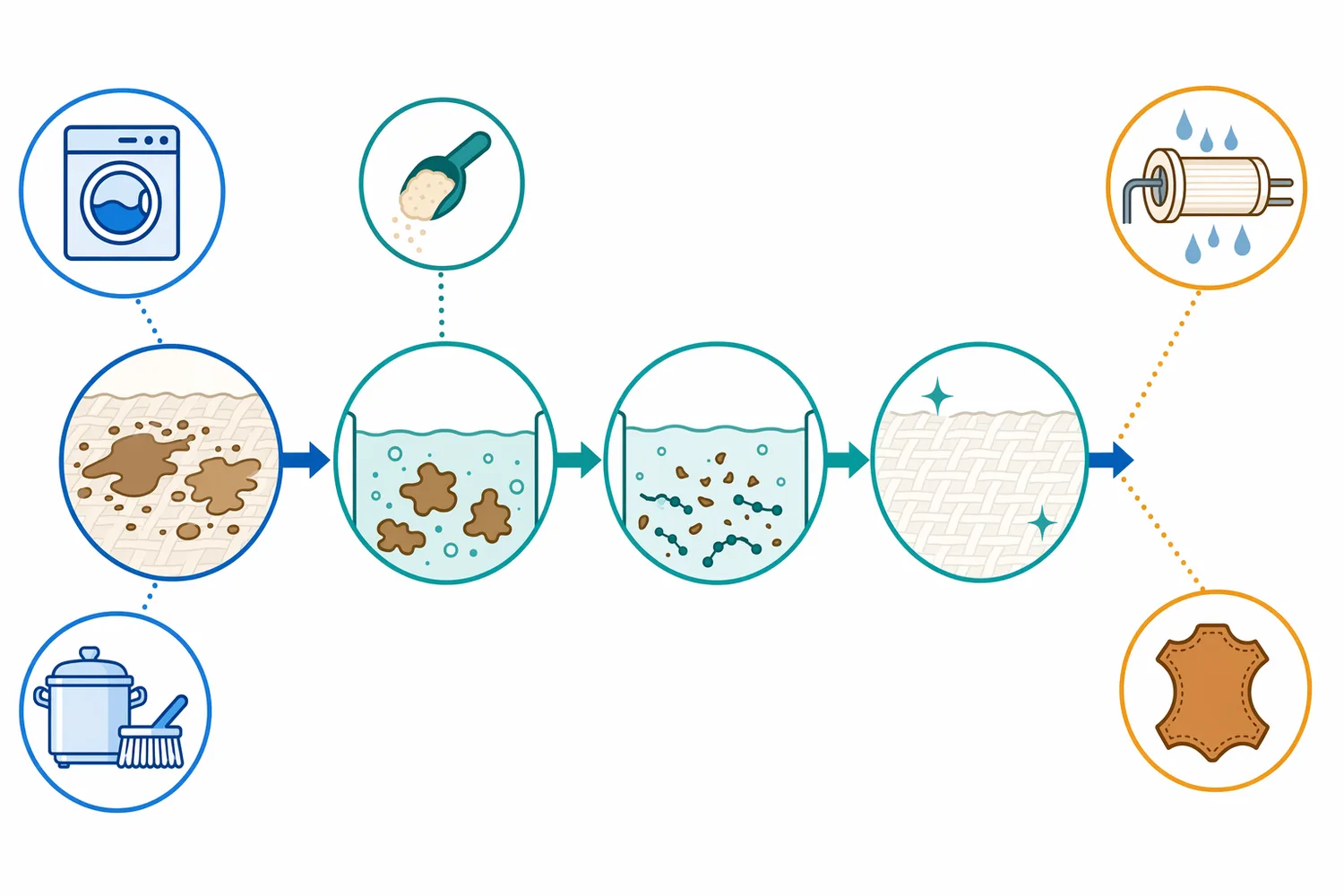
During an acid protease cleaning step, the first requirement is contact between enzyme and protein. If the protein film is dry, mineral-sealed, heavily fat-coated, or embedded in a dense mixed deposit, the enzyme may initially reach only the outer surface. Hydration and circulation help expose more substrate. As hydrolysis begins, the outer protein layer becomes more porous and less cohesive, allowing the enzyme solution to penetrate further.
The second change is molecular fragmentation. Large proteins become a distribution of shorter peptides. This reduces the ability of the residue to remain as a continuous film. The deposit may soften, detach in smaller pieces, or gradually disperse. At the same time, acid conditions may help disrupt mineral-protein interactions or maintain compatibility with an acid cleaning step, while the protease specifically targets peptide bonds.
The third change is improved removal by physical flow. Enzymes do not eliminate the need for circulation, rinsing, or surface contact. They make the protein soil easier to remove by changing its chemistry. In practical terms, the cleaning liquid still carries fragments away. This is why protease performance is tied to wetting, contact time, temperature, pH, and flow, even though the enzyme’s specific reaction is peptide-bond hydrolysis.
Acid protease is not a universal cleaner. It is a targeted tool for proteinaceous material. If a deposit is mainly mineral scale, acid chemistry may be more important than protease. If the soil is mainly fat or oil, lipolytic or surfactant action may dominate. If the residue is mostly starch or gum, carbohydrase chemistry may be more relevant. If the issue is microbial contamination, a cleaning and hygiene program must address that separately; protease hydrolysis is not the same as disinfection.
This distinction is important because many real soils are mixed. A protein matrix may bind mineral particles, fats, pigments, and carbohydrates together. In that case, protease can still be helpful because cutting the protein scaffold can open the deposit and make other cleaning actions more effective. Enzymatic processing research on protein-rich substrates consistently shows that hydrolysis outcomes depend on substrate structure and the surrounding process environment, not just the presence of an enzyme [11].
Acid protease also has normal enzyme limitations. Enzymes are proteins themselves, so they can lose function if exposed to incompatible chemical conditions or excessive heat. Very harsh oxidizing environments, extreme pH outside the enzyme’s useful region, or conditions that denature protein structure can reduce performance. This is not unusual; it is a general feature of enzyme use and one reason enzyme cleaning is best treated as a controlled chemical step rather than a brute-force cleaner.
The strongest evidence for using acid protease in protein cleaning is the fundamental mechanism: proteases hydrolyze proteins. Industrial enzyme reviews describe proteases as major biocatalysts for converting proteins into peptides and amino-acid fragments across multiple sectors [1]. That mechanism directly supports their use where the unwanted residue is protein-based.
More specific evidence comes from acid protease studies on food and feed proteins. The Aspergillus niger aspartic protease study demonstrated efficient soy protein degradation, which is relevant because soy proteins are structured plant storage proteins that can form stubborn residues in processing systems [2]. Another study on high-level secretory expression and characterization of acid protease reported application in soybean meal protein degradation, again supporting the ability of acid protease to act on complex plant protein materials [6].
Evidence from industrial waste treatment also supports the same principle under more complex conditions. Enzyme-accelerated acid hydrolysis of untanned proteinaceous tanning wastes shows protease relevance in protein-rich industrial residues, not only purified laboratory proteins [7]. Simultaneous hydrolysis work on varied protein-rich industrial wastes further reinforces the point that protease chemistry can be useful when the substrate is heterogeneous and operationally challenging [8].
Related protein-hydrolysis studies provide useful context even when they are not cleaning studies. Fish protein, pumpkin seed protein, and microalgae protein research all show that enzymatic hydrolysis changes protein structure, functionality, and peptide distribution [4]. For cleaning, the same structural changes are valuable because the goal is to weaken protein films and convert them into smaller, more mobile fragments.
Protease-based cleaning can support milder process strategies because enzymes accelerate specific reactions that would otherwise require more severe chemistry, longer exposure, or harsher conditions. This does not mean an enzyme is automatically the lowest-impact choice in every facility. It means that when the limiting soil is protein, targeted hydrolysis can reduce the need to rely only on aggressive pH, heat, or mechanical force.
The broader industrial trend toward enzymatic intervention is visible beyond protein cleaning. In papermaking, enzymatic approaches are discussed as ecofriendly interventions because enzymes can modify specific biomass components under comparatively controlled conditions [12]. The same logic applies to protease use: rather than attacking all organic matter indiscriminately, the enzyme focuses on a defined bond type in a defined substrate class.
Enzymatic hydrolysis can also be more selective than conventional hydrolysis. Work on cellulose-degrading enzymes for agro-industrial by-products highlights the broader advantage of hydrolytic enzymes over conventional hydrolysis where selective bond cleavage and preservation of useful products matter [13]. For acid protease cleaning, selectivity means the enzyme is aimed at peptide bonds in protein soils, not at every material in the system.
Enzymes.bio supplies Acid Protease Enzyme Powder for Protein Cleaning CAS 9025-49-4 as an online product sold by the 1 kg unit. Buyers can place the order directly online, pay online, and the order is then processed and shipped. The product belongs to the acid protease category supplied through Enzymes.bio .
A Certificate of Analysis and Safety Data Sheet are included with the order. These documents support routine receipt, handling, and internal documentation for the purchased product. The role of this article is educational: it explains what acid protease does, why it is relevant to protein cleaning, and what the scientific literature supports about protease-based protein hydrolysis.
The best expectation for acid protease powder is targeted protein breakdown under suitable acidic or mildly acidic conditions. The enzyme helps convert protein films, residues, and suspended protein materials into smaller peptide fragments. It is most useful when protein is a significant part of the soil and when the cleaning or processing step gives the enzyme enough contact with hydrated substrate.
Visible cleaning improvement may depend on how the protein deposit formed. Fresh, hydrated protein residues are generally more accessible than old, dried, heat-set, mineral-encrusted, or fat-coated deposits. In mixed soils, protease may weaken the protein matrix even if other components require separate cleaning chemistry. This is why the most realistic view is not “enzyme instead of cleaning,” but “enzyme-assisted protein removal.”
For buyers who need a protein-focused enzyme in a convenient powder format, acid protease offers a practical route to enzymatic hydrolysis without moving into alkaline conditions. Its value comes from a clear mechanism: peptide-bond cleavage reduces protein size, disrupts deposit structure, improves hydration, and supports rinse removal. That mechanism is supported by acid protease research on soy and soybean meal protein degradation, broader protease work on protein-rich wastes, and protein hydrolysis studies showing measurable changes in protein structure and function [2].
Acid Protease Enzyme Powder for Protein Cleaning CAS 9025-49-4 is a targeted enzyme product for hydrolyzing protein residues in acidic to mildly acidic cleaning or processing environments. It works by cutting peptide bonds in proteins, turning large, adhesive, film-forming molecules into smaller peptide fragments that are easier to disperse and rinse away. The strongest evidence is the established protease mechanism, supported by acid protease studies on soy-based proteins and broader industrial research on protease hydrolysis of protein-rich residues [6].
Enzymes.bio supplies the powder directly online by the 1 kg unit. After online purchase, the order is processed and shipped, with a Certificate of Analysis and Safety Data Sheet included.
Sold by the 1 kg unit, in stock and ready to ship. Order directly on our store — pay online and we process your order. A Certificate of Analysis and Safety Data Sheet are included with every order.
Buy Acid Protease Enzyme Powder For Protein Cleaning Cas 9025-49-4 →Numbered in order of first citation. Open-access sources, each verified reachable at publication; citation numbers in the text link here.