
Food-grade acid protease helps acidic or acid-developing fermentations break soybean, grain, seed, and other food proteins into peptides and amino acids. In soy sauce and savory seasoning processes, that protein breakdown supports amino nitrogen formation, umami precursor release, microbial nutrition, and fuller use of protein-rich raw materials. In vinegar production, acid protease is best viewed as a supporting enzyme for protein-containing substrates or pre-fermentation mashes—not as the enzyme responsible for converting ethanol into acetic acid, which is carried out by acetic acid bacteria [1].
Enzymes.bio supplies food-grade acid protease directly online in 1 kg units. Buyers purchase the product through the website, pay online, and the order is processed and shipped; a Certificate of Analysis and Safety Data Sheet are provided with the order.
Acid protease is a protein-hydrolyzing enzyme preparation intended for use where the food matrix is acidic, becomes acidic during fermentation, or benefits from proteolysis before acid fermentation continues. Its practical role is not to add flavor directly, but to cut large food proteins into smaller nitrogen-containing compounds that the rest of the fermentation system can use. Microbial proteases are widely used in food and biotechnology because they catalyze peptide-bond hydrolysis under process conditions that would otherwise require harsher chemical treatment [2].
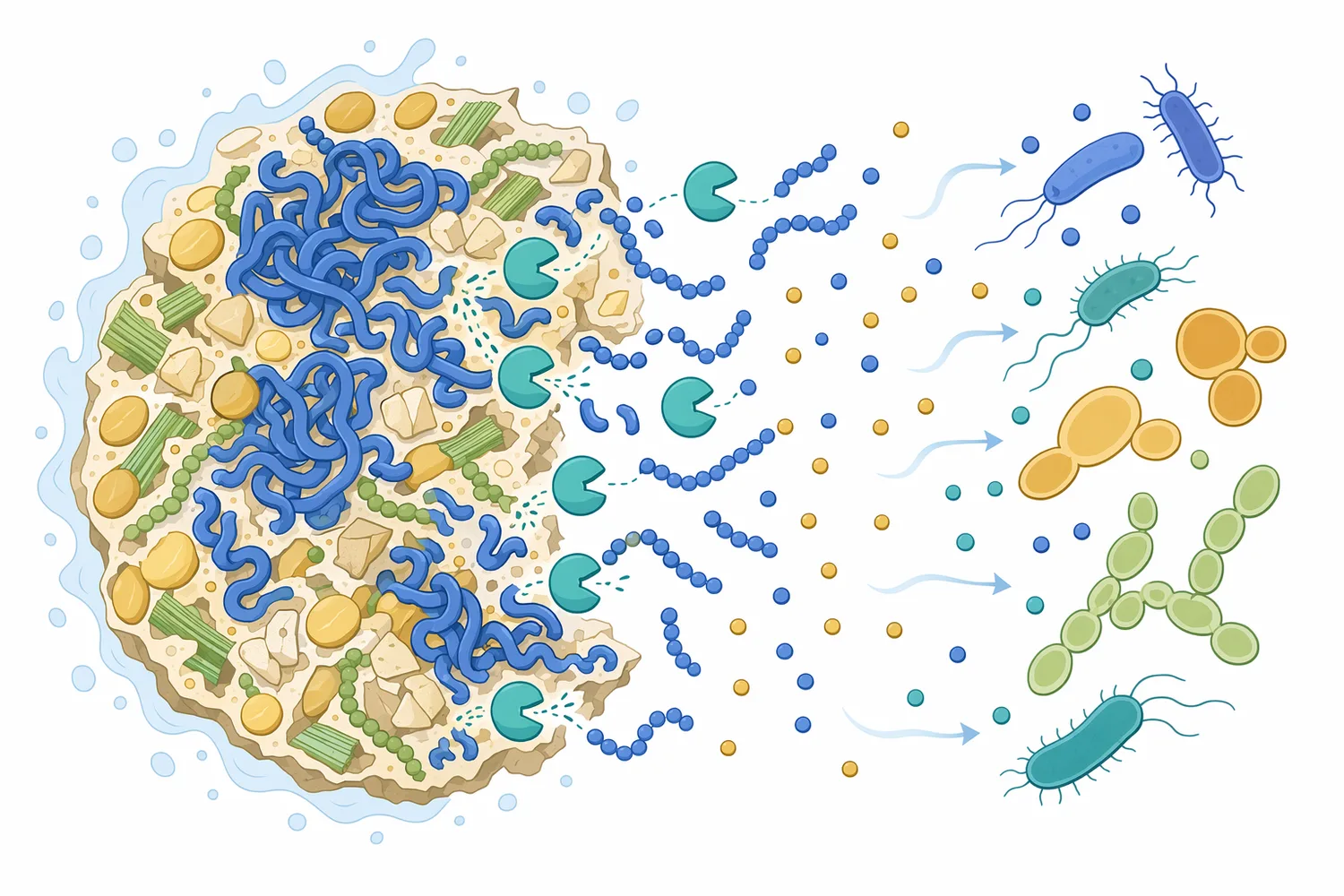
In soy sauce, fermented vegetable protein sauces, grain-based acidic seasonings, and some vinegar-adjacent substrates, proteins are often present as dense, folded, or matrix-bound structures. Soybean proteins, wheat proteins, oilseed press-cake proteins, legume proteins, rice wine lees proteins, or other plant proteins may be physically trapped in cooked starch, fiber, cell-wall fragments, or insoluble meal particles. Acid protease improves access to those proteins by cleaving peptide bonds, which increases the pool of soluble peptides and free amino acids available for flavor chemistry and microbial metabolism [3].
This makes acid protease particularly relevant in fermentations where acidity develops as lactic acid bacteria, yeasts, acetic acid bacteria, or mixed microbial communities progress. Neutral or alkaline proteases may be highly effective in other food-processing contexts, but acid protease is chosen when the hydrolysis step needs to remain compatible with acidic food systems. Aspartic proteases, a major class of acid proteases, are well known in food applications because they catalyze protein cleavage effectively under acidic conditions and can generate peptides that influence texture, flavor, and downstream processing behavior [4].
Proteins are long chains of amino acids joined by peptide bonds and folded into three-dimensional structures. In a cooked soybean-wheat mash, for example, those proteins may be denatured by heat yet still remain too large to dissolve fully or too complex for microorganisms to use directly. Acid protease attacks accessible peptide bonds along the chain, reducing high-molecular-weight proteins into shorter fragments; this changes the substrate from a mass of largely intact proteins into a more soluble mixture of peptides, amino acids, and residual protein fractions [5].
That molecular change matters because smaller nitrogen compounds behave differently in food fermentations. Peptides dissolve more readily than intact proteins, diffuse more easily through mash liquid, and can be further trimmed by other enzymes into amino acids. Free amino acids then become direct taste compounds, yeast and bacterial nutrients, or precursors for aroma reactions during aging and heating. Reviews of food enzymes emphasize that proteases are used not simply to “soften” proteins, but to convert protein structure into functional, soluble, and fermentable nitrogen pools [6].
In soy sauce-style fermentation, this proteolysis supports the formation of amino nitrogen, a key marker of protein degradation and seasoning maturity. Amino acids such as glutamate contribute directly to savory taste, while other amino acids and small peptides influence sweetness, bitterness, kokumi-like mouthfulness, and overall complexity. Proteins and peptides are strongly involved in sensory perception because they affect taste, aroma binding, mouthfeel, and the release of flavor compounds in the food matrix [7].
The effect is also biochemical, not only sensory. Fermentation microbes do not all utilize intact proteins efficiently; many require amino acids or small peptides as nitrogen sources. When acid protease increases soluble nitrogen, it can support microbial growth and metabolism in stages where nitrogen availability limits fermentation vigor or flavor formation. Fermented legume protein research shows that enzymatic hydrolysis and microbial fermentation can reshape protein composition, structure, and functional properties in ways that influence the final fermented food system [3].
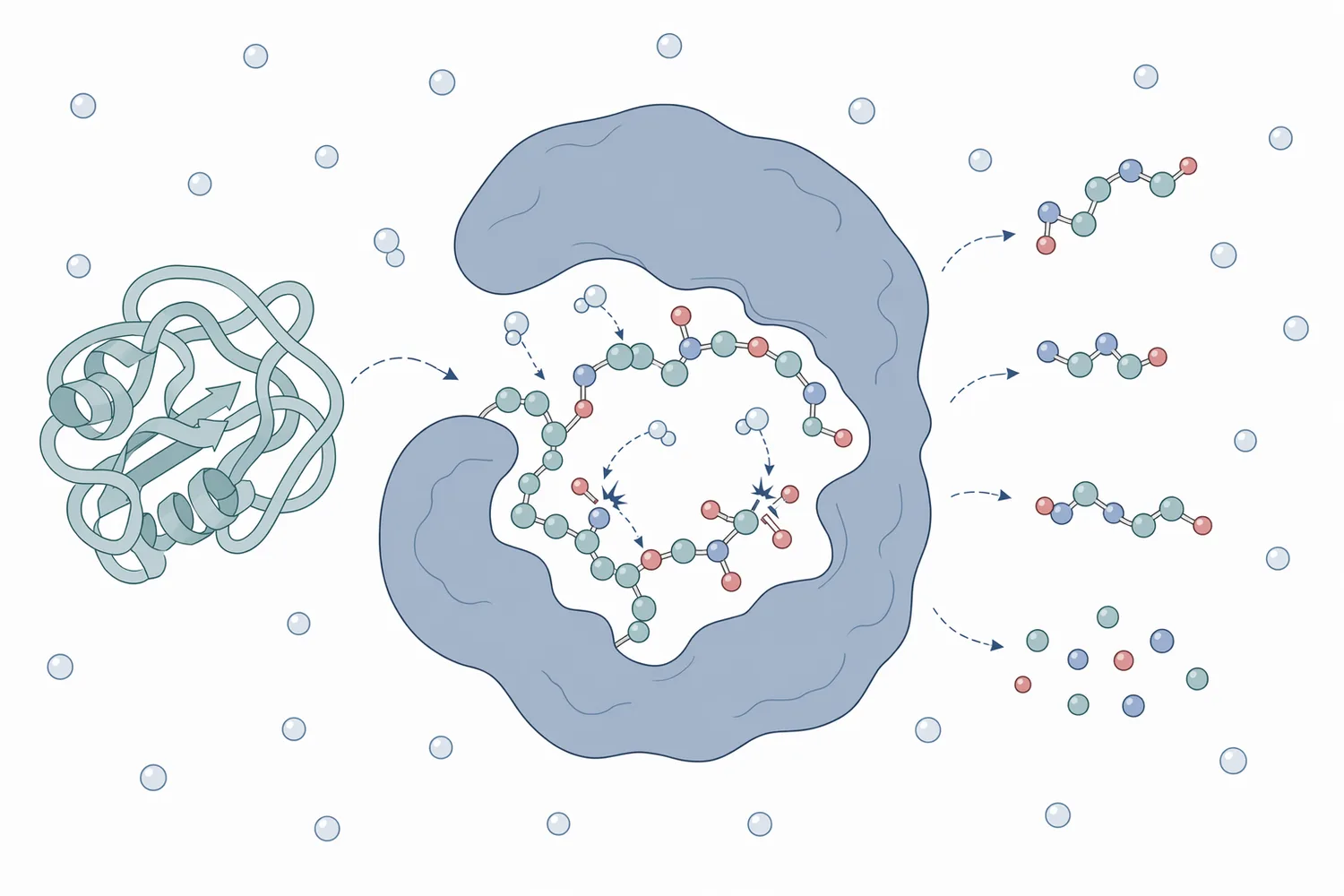
Traditional soy sauce fermentation is built on the enzymatic breakdown of soybean and wheat components. The early mold-driven stage produces a broad enzyme system that hydrolyzes proteins, starches, and other macromolecules; the later mash fermentation then converts these products into organic acids, alcohols, esters, aldehydes, and other flavor compounds. Commercial acid protease fits this logic because it reinforces one of the central transformations in soy sauce production: the conversion of raw-material protein into soluble peptides and amino acids [8].
Soybean proteins are especially important because they are the major source of nitrogen in soy sauce. During hydrolysis, acid protease opens protein chains and creates peptide ends that other proteases and peptidases can further process. This staged breakdown is important: a single protease does not normally convert all protein directly into free amino acids. Instead, endoprotease action produces peptide fragments, and additional enzymes trim those fragments toward smaller peptides and amino acids.
The practical outcome is a richer pool of amino acid nitrogen and flavor precursors. Amino acids can contribute directly to taste, while reducing sugars from carbohydrate breakdown react with amino compounds during heating or aging to form brown color and roasted, malty, caramel-like, or complex savory aroma notes. Enzymatic hydrolysis and Maillard-type reactions are closely connected in food systems because proteolysis supplies the amino compounds that participate in flavor-generating reactions [9].
Acid protease is also useful because soy sauce mash becomes chemically demanding as fermentation develops. Salt, acidity, water activity, substrate particle size, and microbial competition all influence how much protein hydrolysis continues over time. Acid protease does not remove the need for a well-managed fermentation, but it provides targeted catalytic support for the protein fraction under acidic or acidifying conditions.
Vinegar production is fundamentally different from soy sauce fermentation. The defining step in vinegar is the oxidation of ethanol into acetic acid by acetic acid bacteria. These bacteria use their own oxidation systems to convert alcohol through acetaldehyde to acetic acid; protease does not perform that conversion. Modern reviews of vinegar fermentation describe acetic acid bacteria as the core organisms driving acetification, with process outcome shaped by microbial ecology, ethanol availability, oxygen transfer, acidity, and substrate composition [1].
Where acid protease can help is upstream or alongside acetification when the vinegar substrate contains meaningful protein. Examples include grain-based vinegar mashes, rice wine lees, fruit or cereal substrates with proteinaceous solids, legume-containing formulations, or functional vinegars made from fermentation by-products. In these systems, acid protease can release peptides and amino acids that support microbial nutrition or contribute to flavor complexity, but the acetic acid yield itself still depends on acetic acid bacteria and their fermentation environment [10].
This distinction is important for realistic process expectations. If a vinegar process is limited by poor alcohol oxidation, oxygen transfer, excessive acidity, or weak acetic acid bacterial performance, acid protease is not the primary corrective tool. If the process is limited by poor nutrient release from protein-containing raw material, incomplete extraction from grain or lees, or thin flavor development from a protein-rich base, acid protease may be relevant as part of substrate preparation. Research on aromatic vinegar shows that microbial community dynamics and flavor metabolites change throughout acetic acid fermentation, confirming that vinegar quality is a community-and-substrate outcome rather than a single-enzyme result [11].
Protein hydrolysis can still be meaningful in specialty vinegar production. Rice wine lees, for example, contain residual nutrients that can be converted during serial fermentations into functional components such as γ-aminobutyric acid when lactic and acetic acid bacteria are used in sequence. This illustrates how nitrogen-rich by-products can become valuable fermentation substrates when microbial metabolism and substrate preparation are aligned [10].
Different proteases are used for different processing environments. The table below is conceptual rather than a specification sheet; it shows why an acid protease is selected for soy sauce, vinegar-related substrates, and other acidic food hydrolysis applications.
| Protease type | Best process fit at a conceptual level | What it tends to support | Where it is less suitable |
|---|---|---|---|
| Acid protease | Acidic or acid-developing food systems, including soy sauce-style mashes, acidic seasonings, and protein-containing vinegar substrates | Hydrolysis of proteins into peptides under acidic conditions; amino nitrogen and flavor precursor release | Processes where the intended hydrolysis stage is clearly neutral or alkaline |
| Neutral protease | Mild food systems where the hydrolysis step is near neutral conditions | Controlled protein breakdown with broad use in food protein modification | Strongly acidic systems where enzyme performance may drop |
| Alkaline protease | Detergent, leather, some protein-processing, and alkaline industrial applications | Rapid protein degradation in alkaline environments | Acidic fermented foods where pH compatibility and flavor control are central |
Protease families differ in catalytic chemistry, substrate preference, and environmental tolerance. Food-industry reviews describe microbial proteases as versatile tools because different classes can be matched to different substrates and processing conditions, but the enzyme must be compatible with the food matrix and the intended transformation [5].
Amino nitrogen formation is one of the most important reasons protease is used in soy sauce and related savory fermentations. Amino nitrogen reflects the release of amino groups from proteins into soluble compounds such as amino acids and small peptides. In practical flavor terms, higher protein hydrolysis usually means more material is available for umami, sweetness, bitterness balance, yeast metabolism, and aroma development.
Acid protease begins this process by cleaving internal peptide bonds. Once proteins are fragmented, other enzymes and microorganisms can continue converting peptides into free amino acids. This matters because glutamate and other amino acids do not appear in high amounts unless the protein structure is broken down. Legume protein fermentation research shows that lactic acid bacteria and enzymatic hydrolysis can alter protein fractions, increase peptide formation, and change the functional behavior of the fermented protein system [3].
The same principle applies to alternative protein seasonings. Work on amino nitrogen-enriched seasonings from protein-rich biomass shows why hydrolysis and fermentation are combined: hydrolysis releases nitrogenous compounds, while fermentation develops taste, acidity, aroma, and stability. Such studies support the broader concept that enzymatic protein breakdown can help transform nontraditional protein substrates into savory fermentation bases [12].
However, more hydrolysis is not always automatically better. Very extensive proteolysis may generate bitter peptides, especially from hydrophobic regions of proteins. The best sensory result comes from balanced protein breakdown: enough hydrolysis to release savory amino acids and fermentation nutrients, but not so much uncontrolled peptide accumulation that bitterness dominates. This is why acid protease works best as part of a coherent fermentation process rather than as a stand-alone shortcut.
Protein hydrolysis contributes to flavor in several connected ways. First, it releases amino acids that have their own taste profiles: glutamate and aspartate are associated with savory notes, glycine and alanine can contribute sweetness, and some branched-chain or hydrophobic amino acids may influence bitterness or complexity. Second, it produces peptides that can add mouthfulness or kokumi-like depth even when they do not have a strong taste alone. Third, it supplies nitrogen compounds that react during aging, heating, or pasteurization.
These later reactions are important in dark sauces and aged acidic seasonings. Amino compounds can react with reducing sugars through Maillard pathways, generating color and volatile flavor compounds. Enzymatic hydrolysis of food proteins is therefore often linked to flavor development not because the enzyme “makes” roasted flavor directly, but because it releases the amino precursors that later participate in thermal and aging chemistry [9].
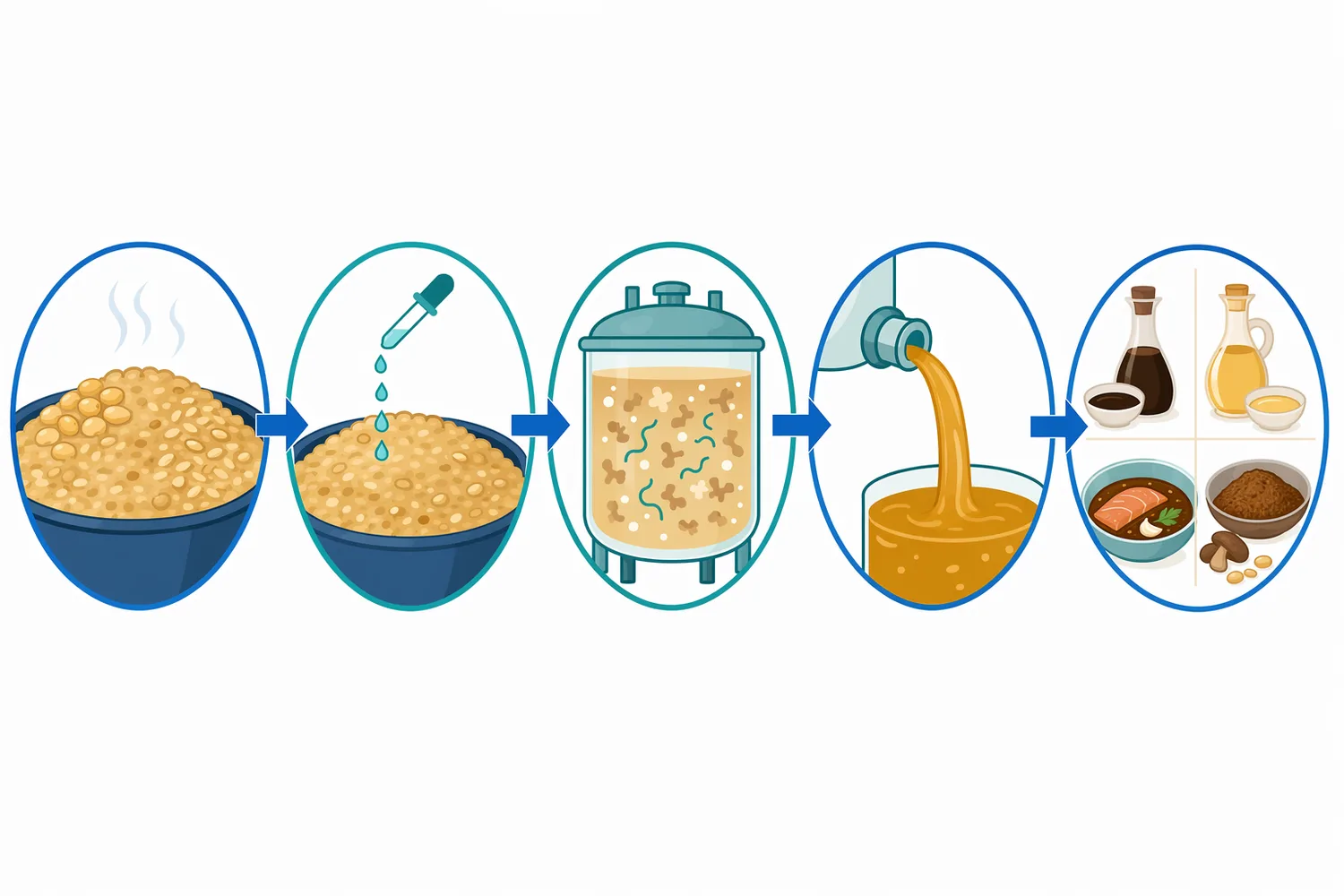
In vinegar, the flavor role is more indirect but still useful in protein-containing systems. Amino acids and peptides can support microbial metabolism and contribute background savory, cereal, or aged notes, while acetic acid bacteria and associated microbial communities generate organic acids and volatile compounds. Reviews of acetic acid bacteria emphasize that vinegar quality depends on interactions among microbes, metabolites, and raw-material composition [13].
Food processors increasingly work with protein-rich materials beyond the classic soybean-wheat base: defatted soybean meal, oilseed press cakes, legume fractions, cereal by-products, seed meals, and fermentation residues. Many of these materials contain valuable protein but do not release it efficiently without enzymatic or microbial treatment. Acid protease helps convert those proteins into soluble fractions that are easier to extract, ferment, and incorporate into a liquid seasoning or acidified food base.
Research on enzymatic treatment and fermentation of oil press cakes shows how protease-assisted processing can change soluble proteins and phenolic compounds in plant by-products. The key lesson is that enzyme treatment can unlock material that would otherwise remain underused in insoluble residues, improving the functional potential of agricultural side streams [14].
This is highly relevant for fermented seasonings because flavor yield depends on accessible substrate. If protein remains trapped in coarse particles or insoluble aggregates, it contributes less to amino nitrogen, taste, and fermentation nutrition. By cutting proteins into smaller fragments, acid protease shifts part of the raw material from an insoluble structural fraction into a soluble biochemical fraction. That is the real value of enzyme-assisted hydrolysis: not simply faster processing, but better conversion of raw material into usable fermentation chemistry.
Acid protease should be understood as one component in a biological system. In soy sauce, molds, yeasts, and bacteria work sequentially and simultaneously; in vinegar, yeasts or alcoholic fermentation organisms may first produce ethanol, followed by acetic acid bacteria that oxidize it. Protease affects this ecology by changing nutrient availability, not by replacing the organisms responsible for fermentation.
When proteins become peptides and amino acids, microbes can assimilate nitrogen more easily. Yeasts may use amino acids during alcoholic fermentation, lactic acid bacteria may metabolize peptides and amino acids during acid development, and acetic acid bacteria may benefit from a more balanced nutrient environment depending on the substrate. Reviews of microbial proteases emphasize their broad importance in fermentation because they generate soluble nitrogen that supports downstream biological activity [2].
Microbial ecology also determines final flavor. In vinegar, acetic acid bacteria interact with yeasts, lactic acid bacteria, and other organisms in ways that affect acid production, aroma, and stability. A protease can improve the substrate available to that ecology, but it does not control the whole ecosystem. This is why acid protease is best positioned as a substrate-conditioning and protein-hydrolysis aid rather than a complete fermentation-control solution [1].
In soy sauce-style production, acid protease is most logically used where protein hydrolysis is desired and the matrix is compatible with acidic enzyme action. That may be during early mash preparation, during an acidifying hydrolysis stage, or in a protein-rich seasoning base before longer microbial maturation. The goal is to expose soybean, wheat, or other proteins to enzyme action while the material still contains accessible moisture and before later steps make hydrolysis less efficient.
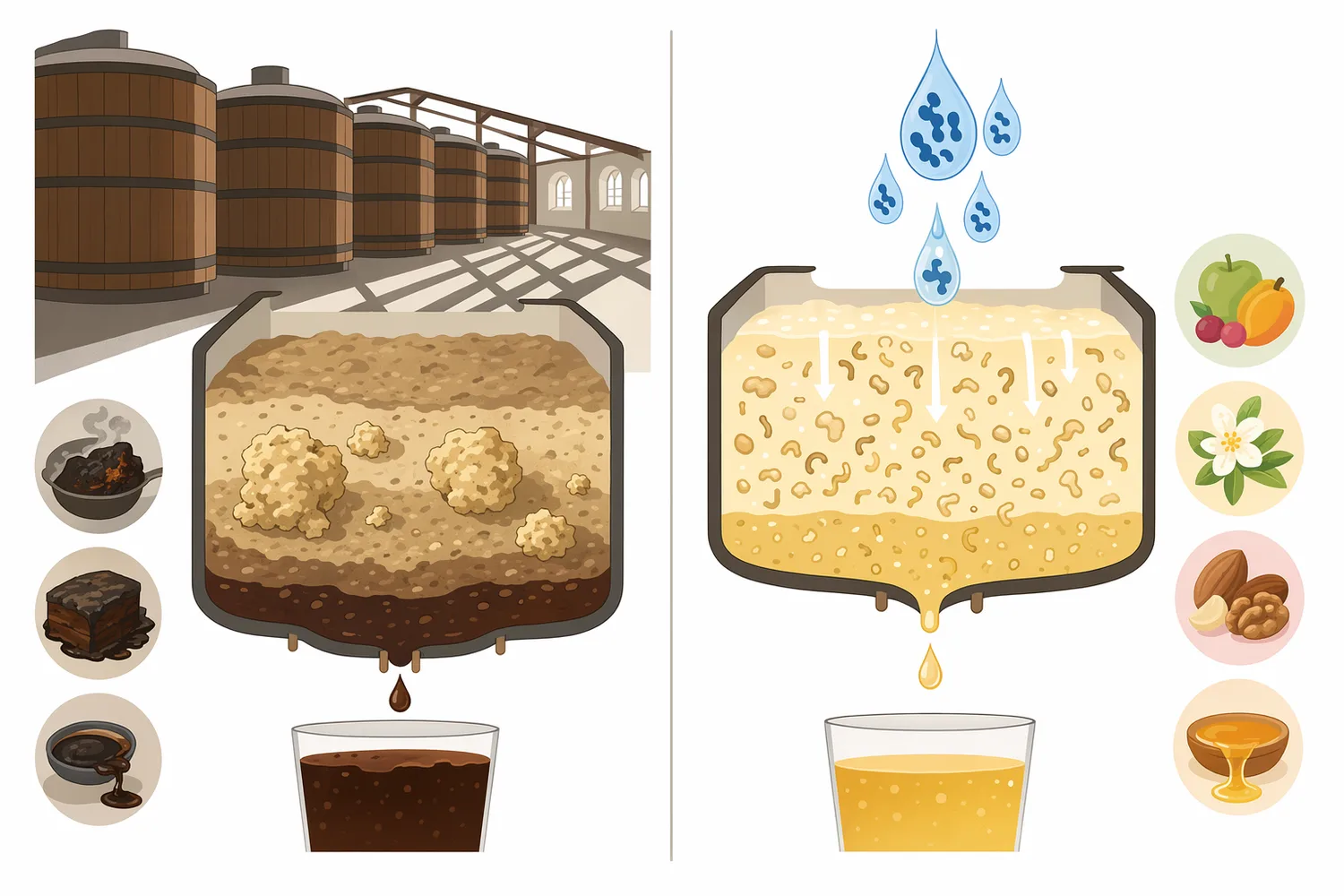
Heat timing is important in a general sense. Like other enzymes, acid protease is a protein catalyst, so excessive heat can unfold and deactivate it. If a process includes steaming, roasting, cooking, sterilization, or pasteurization, enzyme addition is normally considered at a point where the substrate is no longer hot enough to destroy the enzyme immediately, while still being warm and hydrated enough for hydrolysis to occur. This is a general food-enzyme principle rather than a product-specific instruction [6].
Salt timing can also influence protein hydrolysis. Soy sauce mashes often contain significant salt, which shapes microbial safety and fermentation ecology but can also make enzymatic reactions more demanding. Acid protease can be useful in such systems, yet it should not be viewed as eliminating the normal effects of salt, acidity, substrate particle size, or maturation time on hydrolysis.
For vinegar, the best conceptual placement is usually before or alongside the stage where protein-containing raw materials are converted into a fermentable liquid. In grain vinegar, rice wine lees vinegar, cereal-based vinegar, or other nutrient-rich substrates, acid protease can help release soluble nitrogen before acetic acid bacteria complete acetification. This can be particularly relevant when the substrate is more complex than a clarified alcoholic liquid.
Once acetification is underway, the main conversion is ethanol oxidation to acetic acid. Acetic acid bacteria require oxygen and suitable fermentation conditions to perform this conversion. Reviews of vinegar and acetic acid bacteria consistently describe acetification as a microbial oxidation process, not a proteolytic one [13].
That distinction prevents unrealistic expectations. Acid protease may improve the background nutrient profile or flavor potential of a proteinaceous vinegar substrate, but it should not be expected to compensate for insufficient ethanol, poor oxygenation, weak acetic acid bacterial culture, or process inhibition. Its value is in making the substrate more fermentable and flavor-active when protein is part of the raw material.
When acid protease is used appropriately, the sensory changes are usually not a single dramatic note but a broader shift in depth and balance. More soluble peptides can improve body and mouthfeel. More amino acids can strengthen savory taste and increase the pool of aroma precursors. Better protein utilization can make a sauce taste fuller because more of the raw material is chemically represented in the finished liquid.
At the same time, the enzyme does not guarantee a specific flavor profile by itself. Sensory perception depends on the types of proteins being hydrolyzed, the degree of hydrolysis, microbial metabolism, salt level, acidity, sugars, heating, aging, and filtration. Proteins and peptides influence taste and aroma perception in complex ways, including direct taste effects and interactions with volatile compounds [7].
For soy sauce, that complexity is desirable when controlled: savory amino acids, peptides, organic acids, alcohols, esters, and browned reaction products combine to create the expected rounded profile. For vinegar, the desired profile may be sharper and acid-forward, but nitrogenous compounds can still add background complexity in grain, rice, malt, or functional vinegar styles.
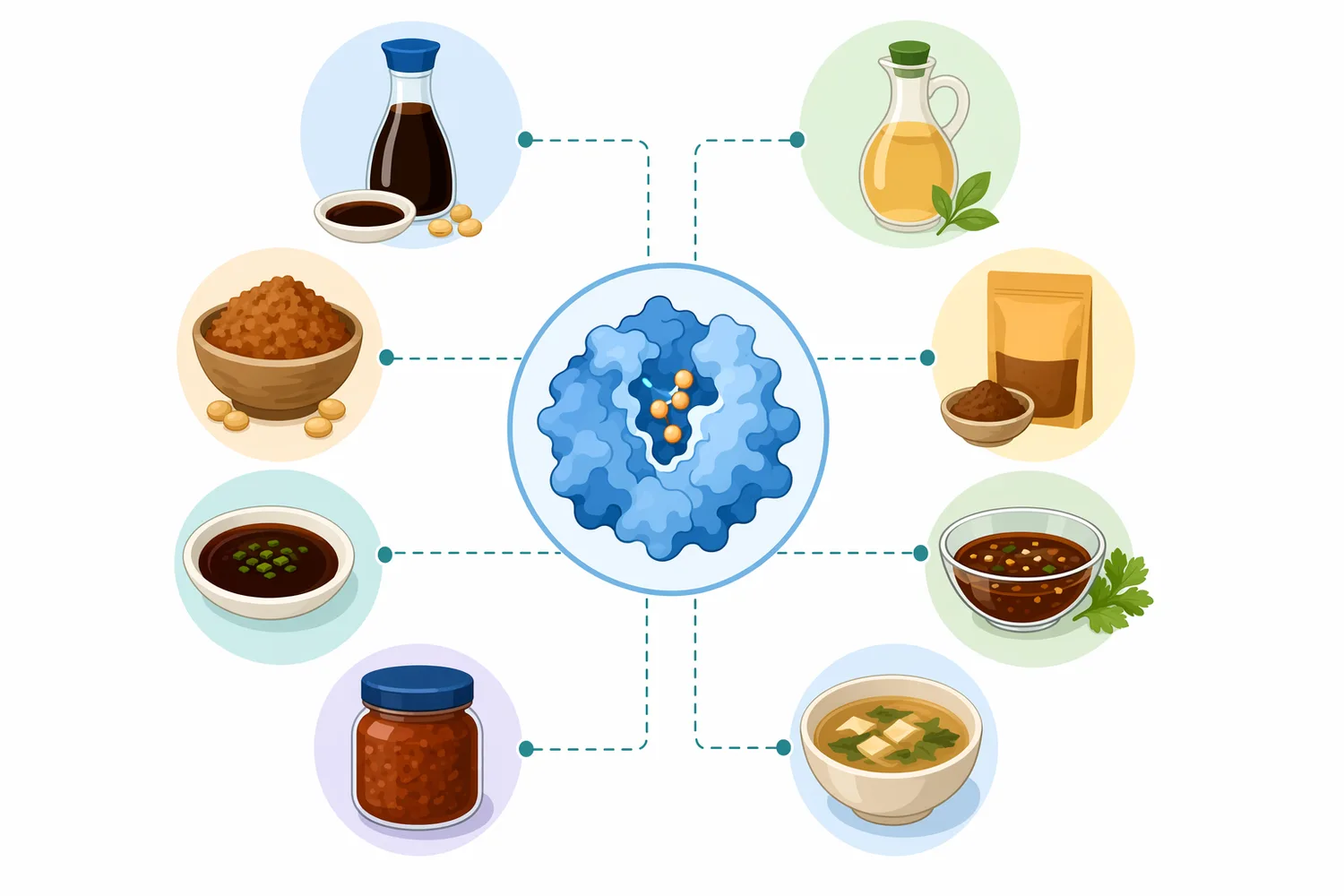
Acid protease is a specialized tool for protein hydrolysis in acidic food systems. It can support amino nitrogen formation, improve soluble peptide release, help unlock protein-rich raw materials, and contribute to the biochemical foundation of savory flavor. These effects are well aligned with the established role of proteases in food fermentation and commercial enzyme applications [8].
It does not replace the microorganisms that define the fermentation. In soy sauce, the enzyme does not replace koji quality, microbial succession, brine management, maturation, or heat finishing. In vinegar, it does not replace acetic acid bacteria, ethanol oxidation, oxygen management, or acid-tolerance control. The clearest way to understand acid protease is as a hydrolysis aid: it changes the protein fraction so the fermentation system has more soluble nitrogen to work with.
It also does not act as a flavor additive in the usual sense. The enzyme does not contribute a seasoning taste of its own; it generates taste and aroma precursors from the food substrate. The final sensory result still depends on the raw material and the full process. This is why acid protease is most valuable in formulations where protein is genuinely present and where the released peptides and amino acids can be used by the process.
Enzymes.bio offers this food-grade acid protease product for buyers who want a direct online ordering route rather than a quotation-based purchasing process. The product is sold by the 1 kg unit through the website: the buyer places the order online, pays online, and the order is then processed and shipped. A Certificate of Analysis and Safety Data Sheet are included with the order.
For buyers making soy sauce, fermented savory bases, grain seasonings, or protein-containing vinegar substrates, the key value is straightforward: acid protease helps convert food proteins into soluble peptides and amino acids under acidic or acid-developing conditions. That supports the nitrogen foundation behind umami, microbial nutrition, and flavor precursor formation while preserving the essential role of the fermentation organisms themselves.
Food-grade acid protease is best suited to applications where protein breakdown is a meaningful part of the process. In soy sauce and related savory fermentations, that makes it directly relevant because proteolysis is central to amino nitrogen formation, umami development, and raw-material utilization. In vinegar, its role is more specific: it can support protein hydrolysis and nutrient release in protein-containing substrates, while acetification remains the work of acetic acid bacteria [1].
Used with realistic expectations, acid protease is a practical processing aid for acidic fermentation systems. It changes the substrate at the molecular level by cutting proteins into peptides and amino acids, giving the wider fermentation process more soluble nitrogen and flavor-building material to work with.
Sold by the 1 kg unit, in stock and ready to ship. Order directly on our store — pay online and we process your order. A Certificate of Analysis and Safety Data Sheet are included with every order.
Buy Acid Protease (Food Grade, 100,000 U/G) – Specialized Enzyme For Soy Sauce And Vinegar Fermentation →Numbered in order of first citation. Open-access sources, each verified reachable at publication; citation numbers in the text link here.