
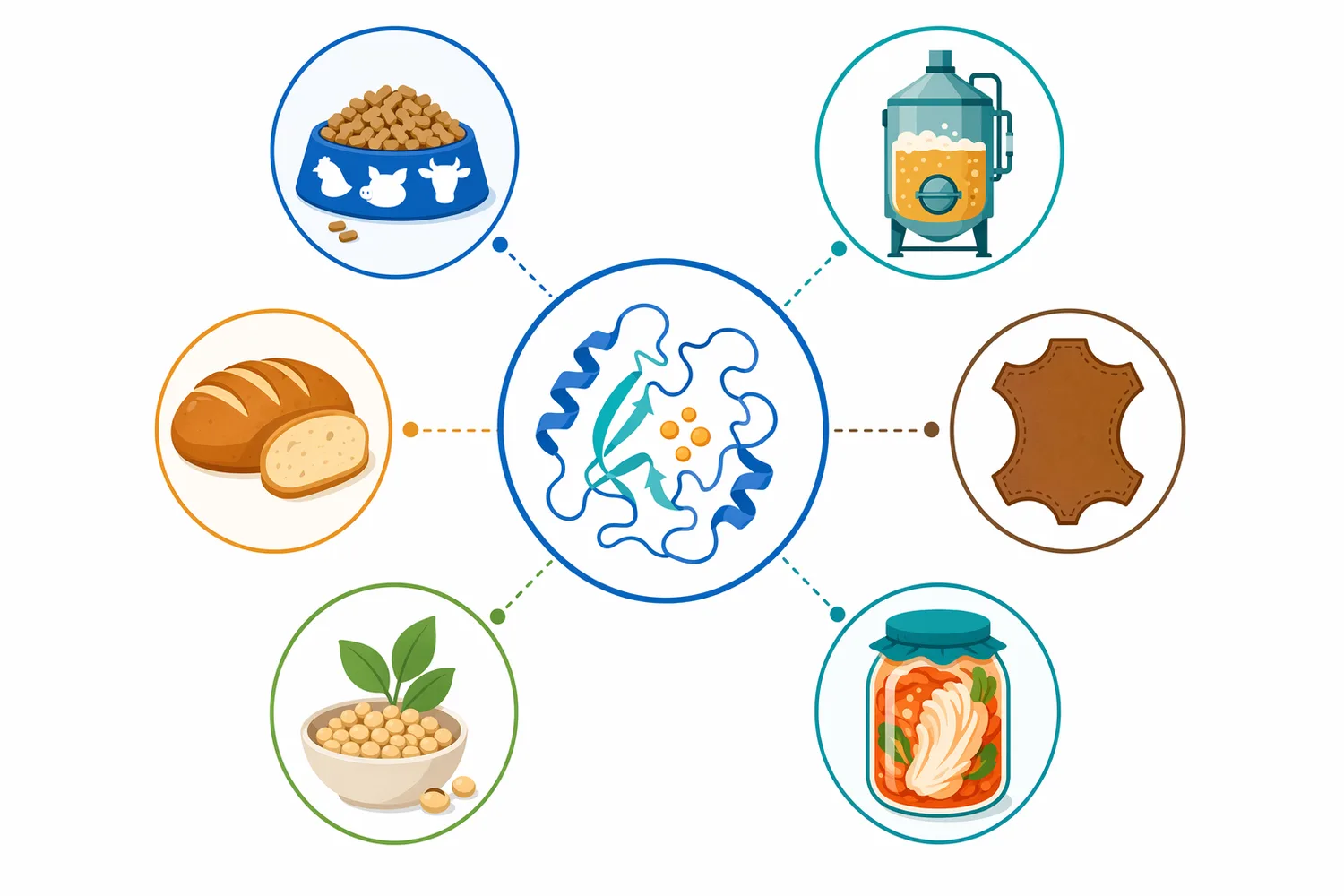
Acid Protease is an acid active protease enzyme that hydrolyzes proteins into smaller peptides and amino acids in low-pH systems. In practical processing terms, it is used where acidity is already present or desirable: gastric-style feed digestion support, brewing and fermentation, soy and plant protein hydrolysis, sourdough and dough conditioning, and acidic leather bating.
An acid stable protease is a protease that keeps useful catalytic structure and activity under acidic conditions rather than losing function as many neutral or alkaline enzymes would. Enzymes.bio supplies Acid Protease for direct online purchase by the 1 kg unit; the buyer pays online, the order is processed and shipped, and a Certificate of Analysis and Safety Data Sheet are supplied with the order .
Acid protease is not a single molecule but a functional category: proteases that cleave peptide bonds under acidic conditions. Many acid protease examples belong to the aspartic protease family, and the best-known biological reference point is pepsin, the gastric enzyme that works in the stomach’s hydrochloric acid environment; this is why searches for “acid stable protease and pepsin” or “acid stable protease pepsin” often lead to the same processing idea—protein breakdown at low pH [1].
The related question “which organ secretes hydrochloric acid and protease” points to the stomach: acid is secreted into the gastric lumen and pepsinogen is converted into pepsin under acidic conditions. Industrial Acid Protease is not simply “pepsin in a bag,” but the comparison is useful because it explains why low pH can be an advantage rather than a problem: acid can unfold or loosen many proteins, exposing peptide bonds that an acid active protease blend can access more readily [1].
For a buyer using Acid Protease, the practical value is controlled protein modification. Large proteins can be reduced into peptides that dissolve differently, contribute nitrogen differently, relax dough differently, pass through filters differently, or separate from collagen matrices differently, depending on the substrate and process conditions [2].
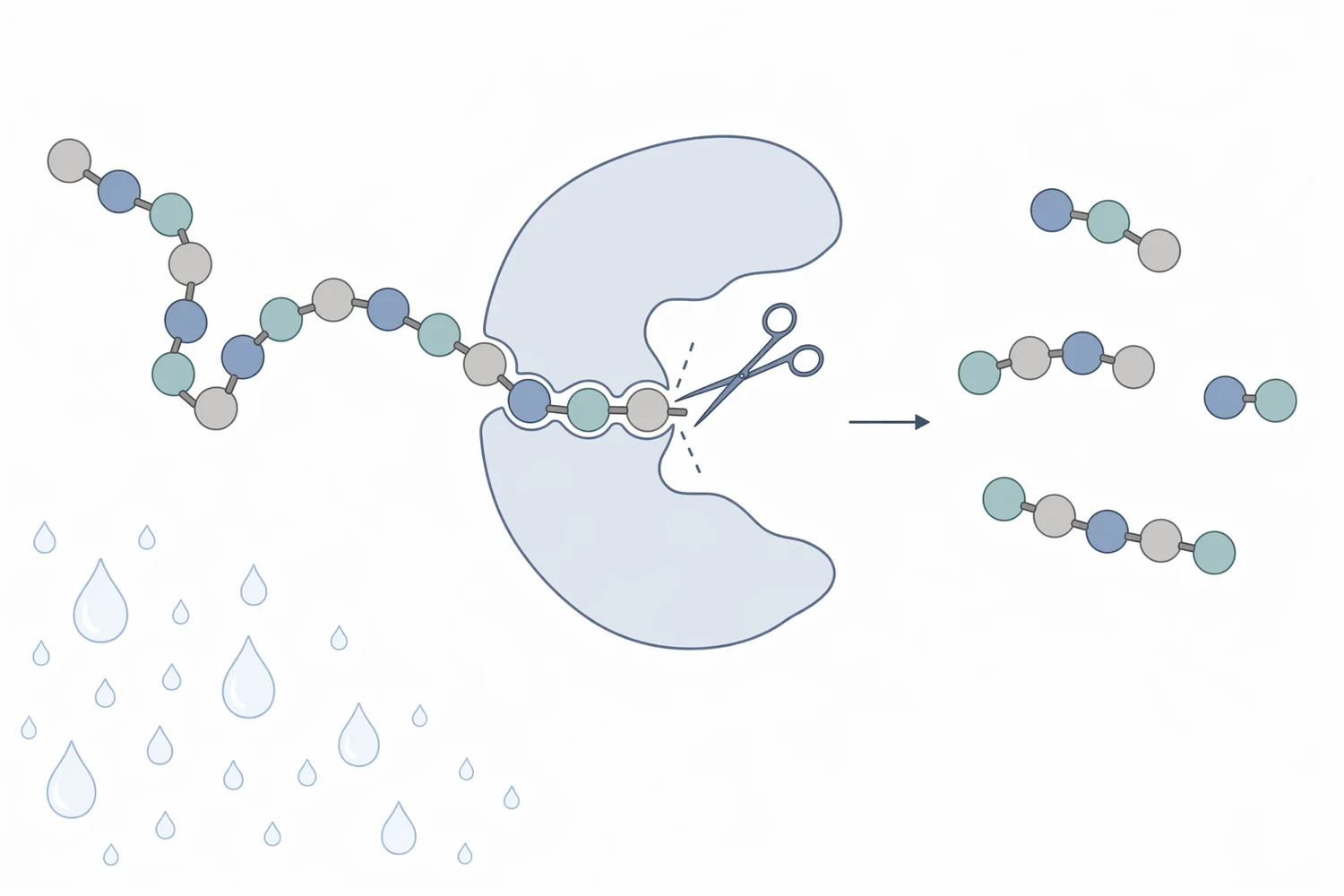
Proteases catalyze peptide-bond hydrolysis: water is used to split the amide linkage between amino acids. The result is not a vague “softening” effect but a chemical change in the protein chain: molecular size decreases, new amino and carboxyl ends are formed, charge distribution changes, buried hydrophobic areas can become exposed, and the protein’s ability to aggregate, gel, foam, bind water, or remain soluble can shift [1].
The aspartic acid protease mechanism is especially relevant to many acid protease enzymes. In this mechanism, two acidic residues in the active site position and activate water while polarizing the peptide bond; water attacks the carbonyl carbon of the peptide linkage, the intermediate collapses, and the protein chain is cut without forming the covalent acyl-enzyme intermediate typical of serine proteases [1].
Some acid protease examples outside the aspartic family include glutamic acid protease enzymes, which use a different acidic active-site chemistry but serve the same broad processing purpose: peptide-bond cleavage under low-pH conditions. For an end user, the key distinction is less the enzyme family name and more the practical behavior on the substrate—how far the protein is hydrolyzed, whether peptides remain functional, and whether the texture or filtration outcome improves [1].
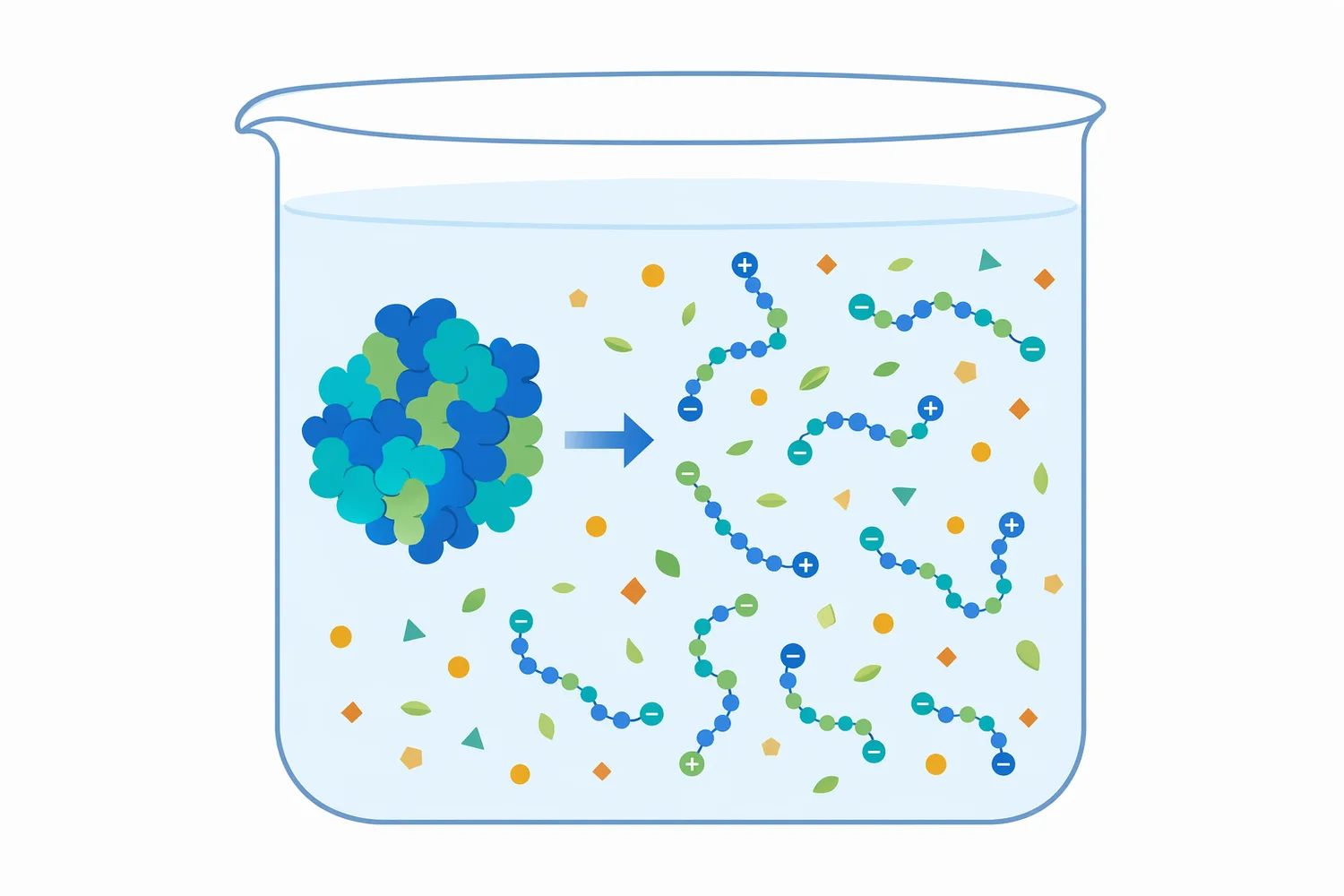
Acidic pH can also help the enzyme by changing the substrate. Many proteins become partially denatured or loosened when pH moves far from their native environment; electrostatic repulsion, altered salt bridges, and changes in hydration can expose regions that were previously buried inside the folded protein. Acid Protease then attacks accessible peptide bonds, generating smaller fragments rather than simply dissolving the original intact protein [3].
Different protease categories are not interchangeable. Acid protease is useful where the process itself is acidic; alkaline protease is common in alkaline bating, detergency, and some industrial hydrolysis systems; neutral protease is often used where mild pH avoids excessive structural damage. Leather research illustrates this distinction clearly because bating enzymes have been studied across acid, neutral, alkaline, papain, keratinase, and bacterial protease systems [4].
| Protease type | Typical process fit | What changes in the substrate | Practical caution |
|---|---|---|---|
| Acid protease | Acidic protein hydrolysis, brewing/fermentation, sour systems, wet blue or acidic leather steps | Cleaves accessible proteins at low pH; can release peptides and amino nitrogen while operating where acid is already present | Over-hydrolysis can weaken texture, foam, dough, or collagen-associated structures |
| Neutral protease | Mild protein modification where near-neutral pH is needed | Cuts proteins without requiring strong acidity or alkalinity | May be less suitable when the process is already strongly acidic |
| Alkaline protease | Alkaline leather bating, detergency-style protein removal, alkaline protein processing | Hydrolyzes proteins under high-pH conditions; often aggressive on non-collagen proteins | Not ideal for processes that cannot tolerate alkaline pH shifts |
| Specialized proteases such as keratinase or papain | Targeted applications such as keratin-rich substrates or plant-derived proteolysis | Can act on specific protein structures and improve softness, removal, or texture | Substrate specificity and process pH must match the desired outcome |
Alkaline bating enzymes remain important in leather, and studies on Bacillus alkaline proteases report high-quality bating potential, but that does not make alkaline protease a substitute for Acid Protease in a low-pH process. The value of acid stable protease is that it can work without forcing the processor to move the entire system into an alkaline range [5].
Leather is one of the clearest applications for explaining what Acid Protease is used to do. The goal in bating is not to digest collagen indiscriminately; the valuable collagen fiber network must remain intact. The enzyme’s job is to remove or loosen unwanted proteinaceous materials, open the fiber structure, improve softness and handle, and support more uniform downstream finishing [4].
Research on acid protease in the wet blue bating process specifically examined the mechanism and effect of acid protease during leather production. Wet blue material has already undergone chrome tanning and remains in an acidic processing environment, so an acid protease can operate without a strong pH reversal that would otherwise add chemical load and process complexity [4].
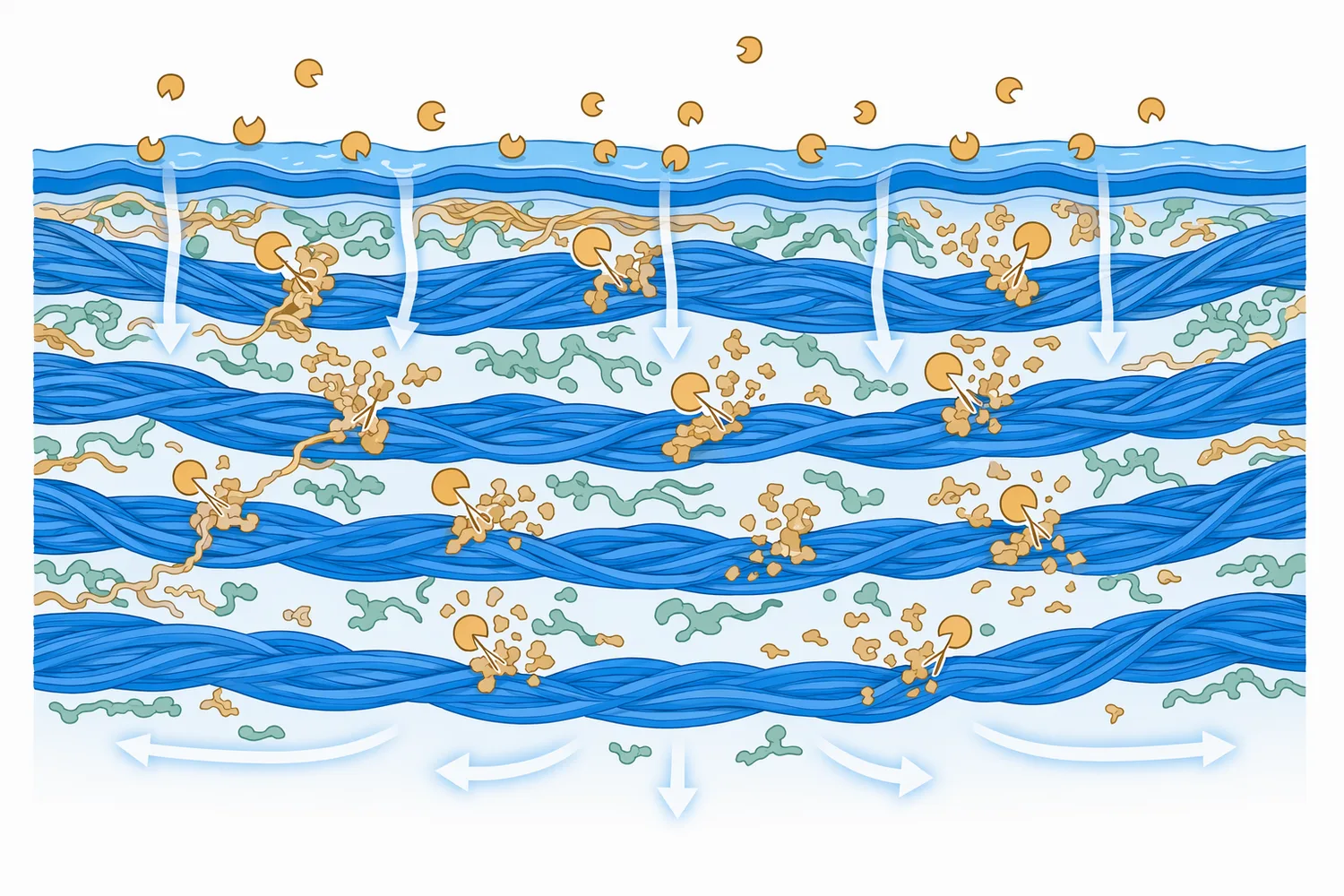
At the substrate level, the enzyme acts on non-collagenous proteins and accessible protein regions associated with the hide matrix. As those proteins are clipped into smaller fragments, interfibrillar spaces can open, water movement improves, and the leather can become cleaner and softer; the process depends on controlled hydrolysis rather than total protein removal [4].
Electrostatic interaction is especially important in leather because collagen and enzymes carry pH-dependent surface charges. A 2023 study on collagen–enzyme electrostatic interaction showed that charge relationships affect how protease permeates into the pelt, which helps explain why bating performance is not only about enzyme activity but also about whether the enzyme can physically reach the target proteins inside the structure [6].
Surface charge also affects acid protease performance directly. Research on acid protease surface charge and leather bating performance indicates that enzyme charge influences penetration and interaction with the leather matrix; in practical terms, two proteases with similar protein-hydrolyzing ability may behave differently if one remains near the surface while another distributes more evenly through the pelt [7].
Acid protease has also been studied as an eco-friendly pretreatment for goat skin to improve antimicrobial finishing with herbal natural extracts. Mechanistically, this makes sense: partial enzymatic removal of obstructing proteinaceous materials can improve access for finishing agents, allowing the finish to interact with a more open and receptive fiber structure [8].
Stability in tanning environments is another research theme. Work on stabilizing acid proteases through interaction with polyvalent metal ions connects enzyme stability to classical leather tanning theory, which is relevant because leather liquors contain salts and metal-associated chemistry that can affect protein conformation and enzyme durability [9].
Other bating enzyme studies help define the boundary of Acid Protease. Keratinase from Bacillus tequilensis has been evaluated for leather bating potential, and protease from the jute endophyte Micrococcus luteus has also been studied as a bating agent, showing that leather processing can benefit from multiple protease types depending on the specific protein targets and pH environment [10].
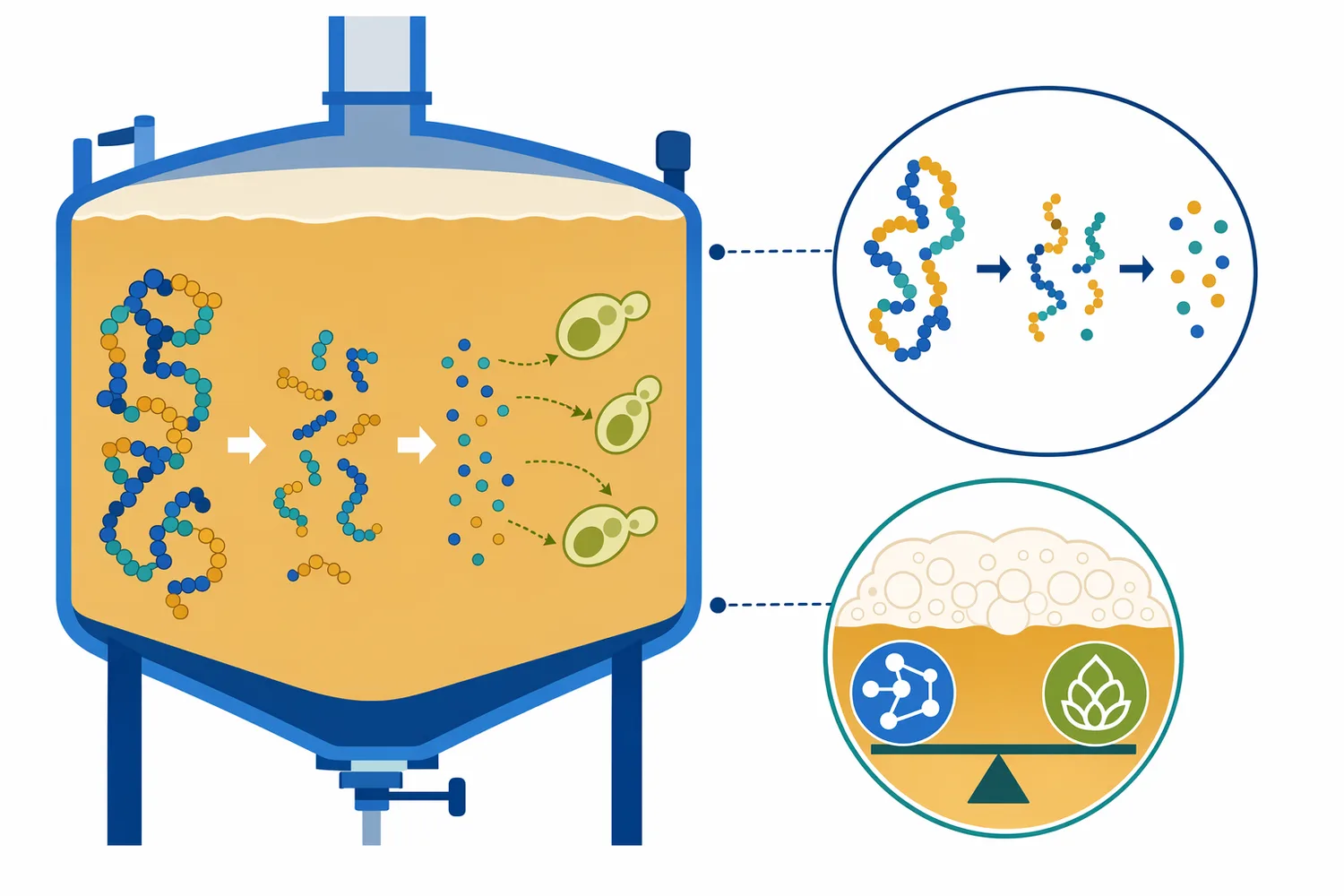
In brewing and alcoholic fermentation, proteins play two opposing roles. Some peptides and amino acids are essential nutrients for yeast, while larger proteins and protein–polyphenol complexes can contribute to haze, filtration resistance, or instability. Acid Protease can help by hydrolyzing grain proteins into smaller nitrogen compounds in acidic mash or fermentation-adjacent conditions [11].
Yeast nutrition depends strongly on amino acid availability. A brewing review on amino acid production and utilization by brewer’s yeast describes how yeast uses amino acids during fermentation, which is why controlled proteolysis is commercially meaningful: it can increase the pool of assimilable nitrogen compounds rather than leaving nitrogen locked in larger storage proteins [11].
Mechanistically, Acid Protease cuts barley, wheat, corn, rice, or adjunct proteins into peptides and amino acids. Smaller peptides diffuse more readily, can be taken up or further degraded by yeast systems, and may reduce the burden of haze-forming intact proteins, although the actual outcome depends on the grist, process timing, and degree of hydrolysis [11].
The main caution in brewing is foam. Beer foam depends partly on foam-positive proteins and polypeptides, so excessive or poorly timed proteolysis can reduce desirable foam structure. Research on hop alpha acids and proline-specific endoprotease treatments shows that protease interventions can affect beer foam quality, reinforcing the need for controlled rather than maximal protein breakdown [12].
Acid protease uses in fermentation also extend to soy sauce, vinegar-style fermentation, and other acidic protein-rich systems. In these processes, proteolysis releases peptides and amino acids that influence flavor, nitrogen content, and maturation behavior; the enzyme changes the chemical pool available to microbes and downstream flavor reactions rather than acting only as a clarification aid .
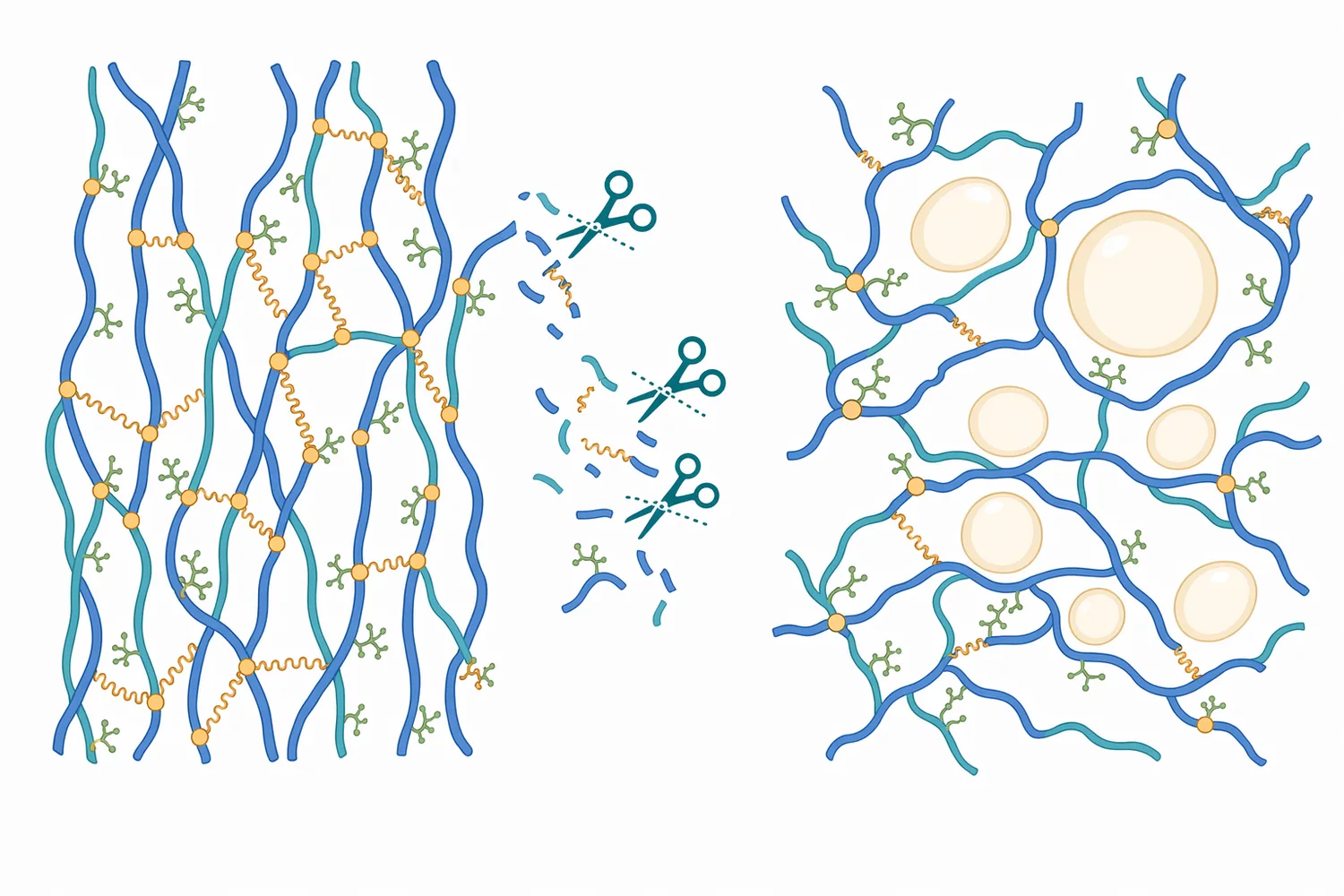
In baking, protease is used for a very different reason: it modifies gluten. Wheat dough strength comes from a viscoelastic gluten network formed mainly by glutenin and gliadin proteins; when protease clips those proteins, the dough relaxes, resistance to extension decreases, and mixing or sheeting behavior can change [2].
The effect is concrete. Cutting gluten proteins reduces average chain length and disrupts network continuity; fewer long protein strands are available to carry elastic stress, so dough becomes more extensible and less tight. A study on wheat flour dough shear stress relaxation examined additions including protease, glucose oxidase, ascorbic acid, and potassium bromate, showing that enzyme and redox systems can measurably change dough relaxation behavior [13].
Acid Protease is especially relevant where dough or batter systems are acidic, such as sourdough-style products or formulations containing acidifying ingredients. Sourdough research shows that lactic acid bacteria influence redox status and proteolytic activity in buckwheat sourdoughs, illustrating how acidity and proteolysis can work together to reshape cereal protein behavior [14].
Protease use in bread must be controlled because the target is partial modification, not collapse. Too little hydrolysis may leave a tight dough that resists machining; too much may weaken gas retention, reduce loaf volume, or create sticky handling. Reviews of clean-label-friendly dough conditioners describe proteases as part of the enzyme toolbox for dough development, alongside amylases, xylanases, lipases, and oxidoreductases [3].
Lupin sourdough studies also show that adding fermented protein-rich ingredients can alter dough properties and bread quality. For Acid Protease use, this matters because non-wheat proteins are not passive fillers: they can be hydrolyzed into peptides that affect water binding, flavor, and dough structure, especially in high-protein or composite flour systems [15].
Plant proteins are often structurally compact, aggregated, or poorly soluble at certain pH values. Acid Protease can be used to reduce molecular size and expose charged peptide ends, which can improve dispersion, reduce sedimentation, or create hydrolysates with different flavor and functional properties .
In soy sauce and related fermentations, proteolysis is central to flavor development because amino acids and peptides contribute taste, Maillard precursors, and microbial nitrogen sources. Acid Protease accelerates the conversion of soybean and cereal proteins into smaller nitrogen compounds when the system is already acidic or becoming acidic through fermentation .
The same principle applies to plant protein hydrolysates. When intact proteins are too large or poorly soluble, controlled enzymatic hydrolysis creates shorter peptides with different solubility and interfacial behavior. The benefit is not simply “more digestion”; it is a change in how the protein behaves in water, heat, acid, and mixed food matrices [2].
Sprouting studies on minor millets show that biological processing can change dough mixing behavior, protein and starch digestibility, and antinutritional profile. Although sprouting is not the same as adding Acid Protease, it supports the broader processing principle that controlled enzymatic changes in grains and pulses can alter both nutrition and functionality [16].
Acid Protease is also relevant in feed because monogastric digestion includes an acidic gastric phase. The comparison with pepsin is useful here: pepsin is the natural acid stable protease in the stomach, and supplemental acid protease is used with the same general aim—helping convert feed proteins into peptides that can be further digested downstream [1].
At substrate level, the enzyme can begin attacking accessible peptide bonds in soybean meal, grain proteins, fishmeal, or other protein ingredients when moisture, pH, and contact time allow. Hydrolysis can increase the amount of soluble peptides and amino nitrogen available for later digestion, although the result depends strongly on the feed matrix and processing history .
Acid protease benefits in this context are best understood as support for protein utilization, not a replacement for good formulation. Heat-damaged, cross-linked, or poorly accessible proteins can be harder for any enzyme to attack, while properly hydrated and acid-exposed proteins may present more accessible cleavage sites [1].
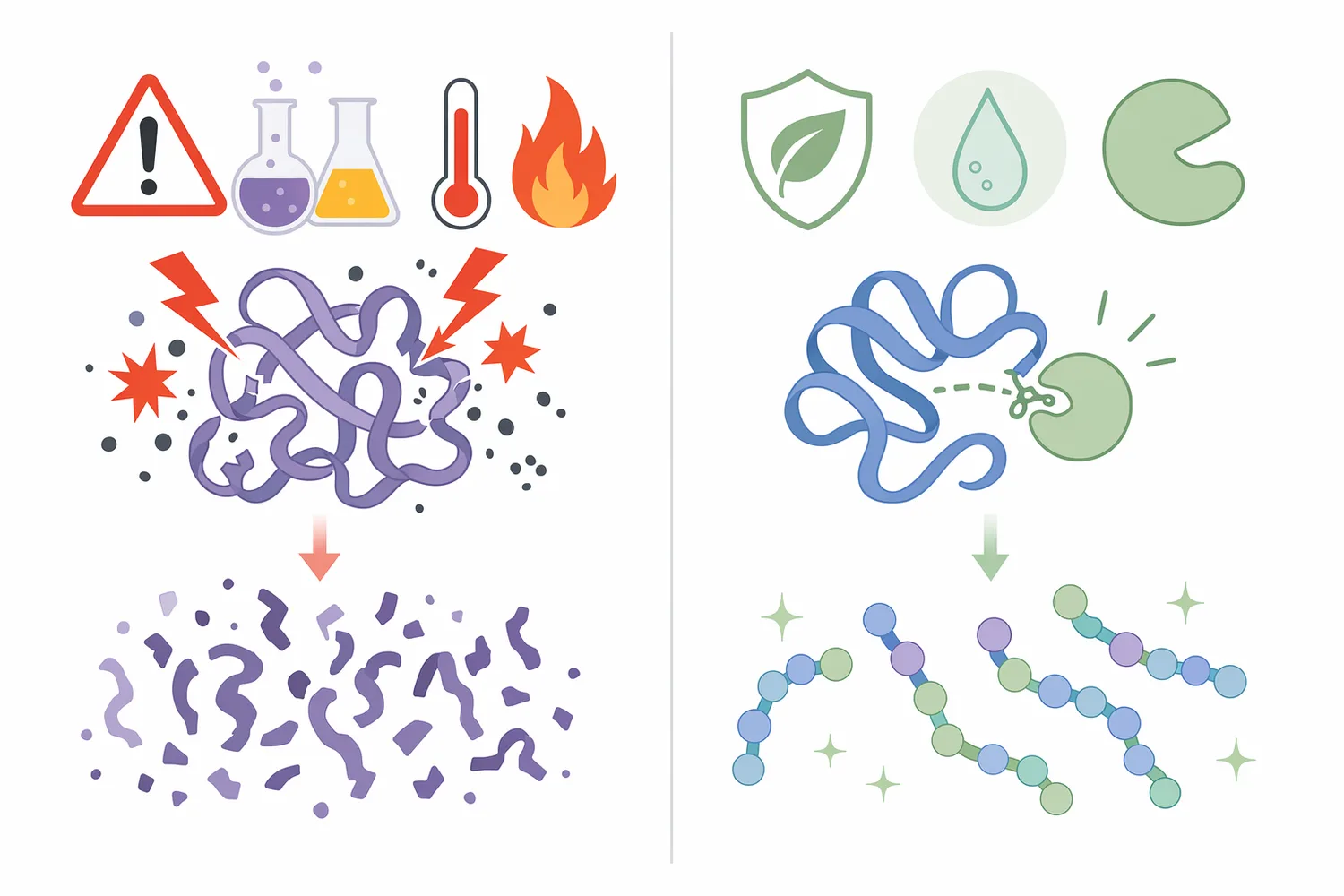
Many proteins and many industrial processes operate outside the comfort zone of neutral enzymes. If a protease unfolds at low pH, its active site loses the geometry required to bind the peptide bond and activate water; it may still be present in the mixture, but it is no longer doing useful catalytic work. Acid stable protease is valuable because its folded structure remains compatible with acidic processing [1].
This matters in real systems because changing pH to suit an enzyme can be expensive or damaging. In leather, pH shifts affect collagen charge, swelling, and tanning chemistry; in brewing, pH affects yeast, flavor, and haze; in dough, pH affects gluten behavior and fermentation; in plant protein hydrolysis, pH affects solubility and aggregation [6].
Acid stability also affects process timing. An enzyme that remains active in the acidic stage can be added where the substrate is naturally accessible, instead of waiting for a later neutralization step when the protein may have re-aggregated or become less available. That is one reason acid protease used to support low-pH hydrolysis can be more direct than using a neutral or alkaline protease in a reconditioned process stream [4].
The central control variable is degree of hydrolysis: how many peptide bonds are cut. Low hydrolysis may soften a dough, open leather fibers, or increase yeast-accessible nitrogen while preserving desirable protein function. High hydrolysis can produce many small peptides and amino acids but may also create bitterness, reduce foam, weaken gel strength, or damage texture [12].
Protein accessibility is equally important. A tightly folded protein, a heat-aggregated protein, and a collagen-associated interfibrillar protein do not present peptide bonds in the same way. Acid can help expose sites, but salts, metals, polyphenols, fats, and prior heat treatment can still restrict enzyme contact or change the hydrolysis pattern [9].
In leather, the “right” hydrolysis pattern means removing or loosening nonessential protein materials while preserving collagen strength. In baking, it means relaxing gluten without destroying gas retention. In brewing, it means increasing useful nitrogen and reducing problematic proteins without stripping foam-positive polypeptides. In plant protein processing, it means improving solubility or flavor precursor formation without creating excessive bitterness [3].
Enzymes.bio supplies Acid Protease as an online product for buyers who want a straightforward purchase path. The product is sold directly online by the 1 kg unit: add the product to cart, pay online, and the order is processed and shipped; a Certificate of Analysis and Safety Data Sheet are included with the order .
This purchasing model is intended for customers who already know they need Acid Protease for protein hydrolysis in acidic conditions. The product page provides the ordering route, while the included documentation supports routine receiving, handling, and internal quality records without turning the purchase into a custom development project .
Acid Protease is most useful when the protein substrate is already in an acidic process or when acid treatment is part of the desired transformation. In those settings, it can hydrolyze proteins without forcing a major pH change, which is valuable in fermentation, brewing, acidic plant protein hydrolysis, sour dough systems, gastric-style feed applications, and leather processes such as wet blue bating [4].
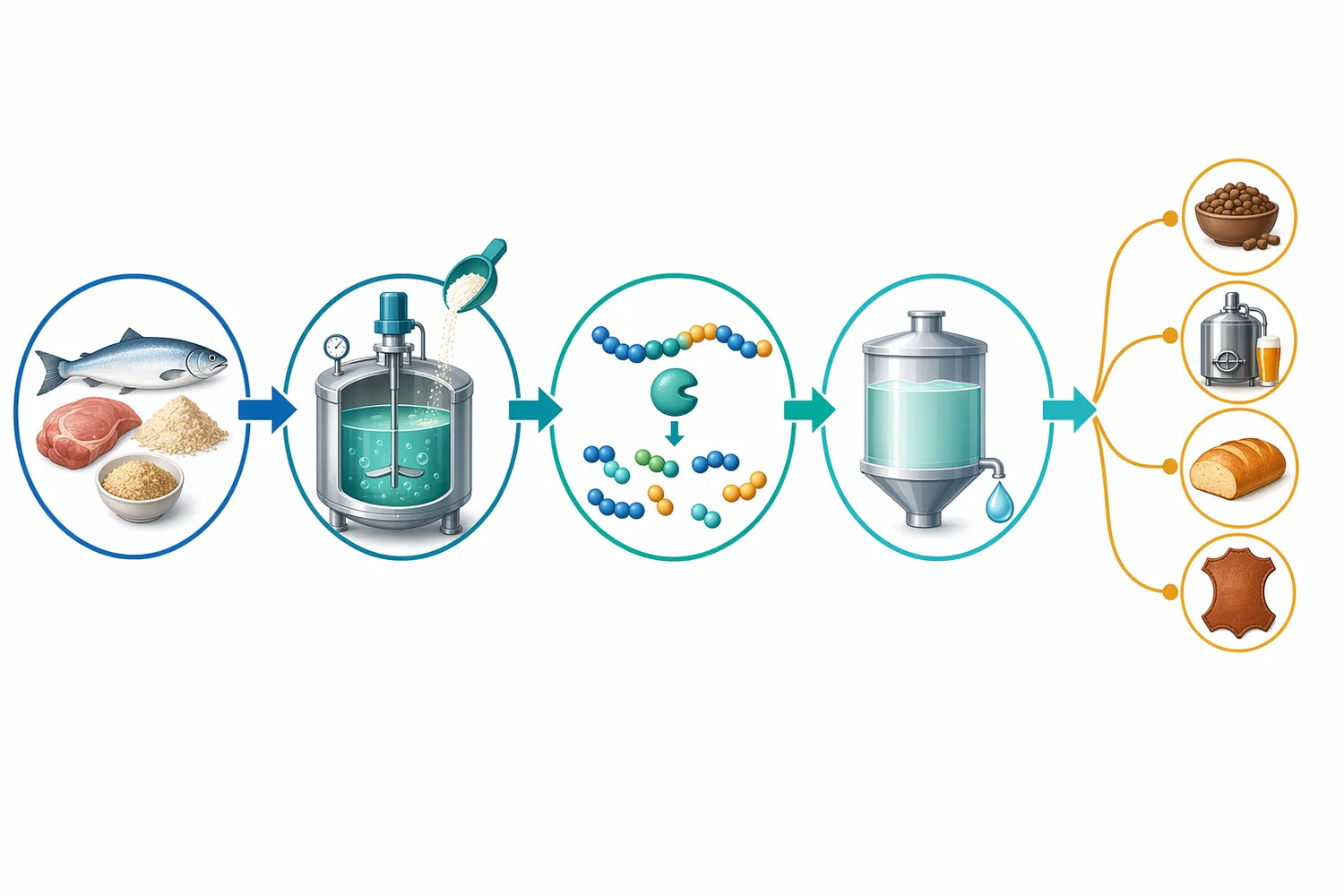
The enzyme’s effects are substrate-specific. On gluten, it changes viscoelastic structure; on grain proteins, it can increase yeast-available nitrogen; on soy and plant proteins, it can create soluble peptides and flavor precursors; on hides, it can remove or loosen proteinaceous materials around the collagen fiber structure [13].
A useful way to think about acid protease uses is “controlled protein redesign.” The enzyme does not merely remove protein; it changes protein size, charge exposure, solubility, mobility, and interaction with the surrounding matrix. Those changes are why the same enzyme category can be relevant across food, brewing, baking, leather, and feed [2].
Acid Protease is a practical enzyme for hydrolyzing proteins where low pH is part of the process. Its value comes from acid stability, peptide-bond cleavage, and the downstream changes that follow: smaller peptides, increased amino nitrogen, altered solubility, relaxed gluten, improved leather fiber opening, and modified plant protein functionality [1].
For buyers using Enzymes.bio, Acid Protease is available for direct online purchase in 1 kg units, with the order processed and shipped after online payment and documentation supplied with the shipment . The best results come from treating the enzyme as a controlled processing aid: powerful enough to change the protein substrate, but most effective when hydrolysis is matched to the desired texture, clarity, digestibility, fermentation, or leather-handling outcome.
Sold by the 1 kg unit, in stock and ready to ship. Order directly on our store — pay online and we process your order. A Certificate of Analysis and Safety Data Sheet are included with every order.
Buy Acid Protease →Numbered in order of first citation. Open-access sources, each verified reachable at publication; citation numbers in the text link here.