
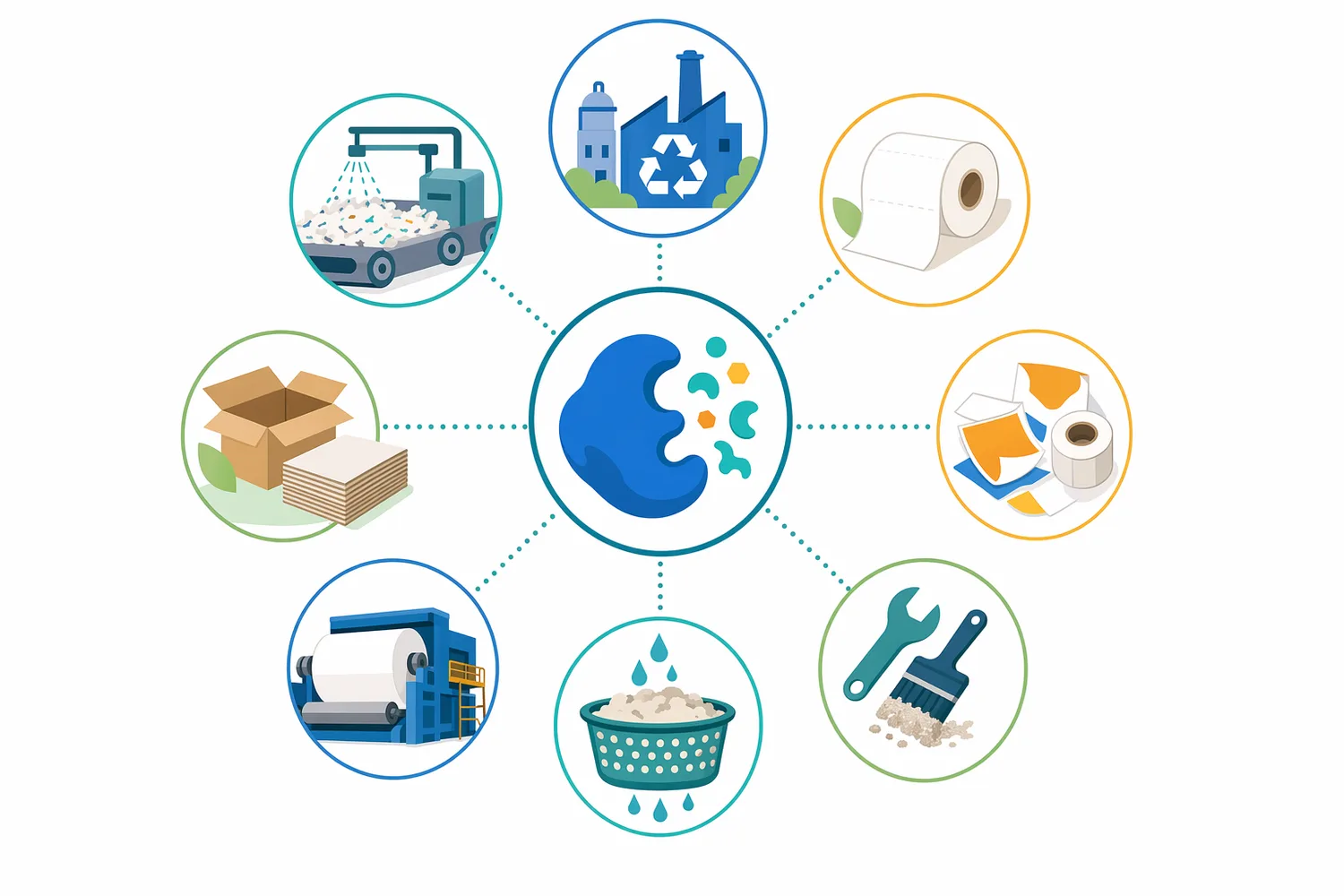
Adhesive-Contaminant Control Enzyme is used to help manage sticky residues, glue films, label adhesive, binder soils, and “stickies” in water-based industrial cleaning and processing systems. Its value is not that it behaves like a solvent, but that enzyme-catalyzed hydrolysis can weaken susceptible organic components so normal washing, agitation, screening, filtration, or rinsing removes them more effectively.
Enzymes.bio supplies Adhesive-Contaminant Control Enzyme directly online by the 1 kg unit. Orders are placed and paid for online, then processed and shipped; a Certificate of Analysis and Safety Data Sheet are provided with the order .
Adhesive contamination is difficult because it is not ordinary particulate dirt. Label glues, hot-melt residues, pressure-sensitive adhesive fragments, starch binders, protein glues, resinous soils, oils, plasticizers, paper fibers, and coating fragments can combine into tacky deposits that smear instead of dispersing. Once those deposits attach to screens, rolls, belts, tanks, filters, pipes, or fiber surfaces, they can trap more solids and grow into operational deposits.
Adhesive-Contaminant Control Enzyme is best understood as a process aid for organic residue weakening and release. It supports the breakdown or surface modification of enzyme-accessible adhesive components, especially where the contaminant contains hydrolysable bonds or is embedded in a mixed organic matrix. Recent research specifically addressing enzyme-catalyzed polyurethane adhesive degradation reflects the broader technical interest in using enzymes against adhesive and polymer-associated materials, although industrial performance remains dependent on the actual contaminant chemistry and process environment [1].
The practical objective is usually not complete disappearance of every adhesive particle. A more realistic outcome is reduced tack, lower cohesive strength, partial fragmentation, easier detachment from a surface, or improved dispersibility in a wash liquor. These changes matter because downstream physical operations—rinsing, mechanical shear, flotation, screening, clarification, filtration, or sludge removal—work better when residues are no longer strongly bonded to each other or to equipment surfaces.
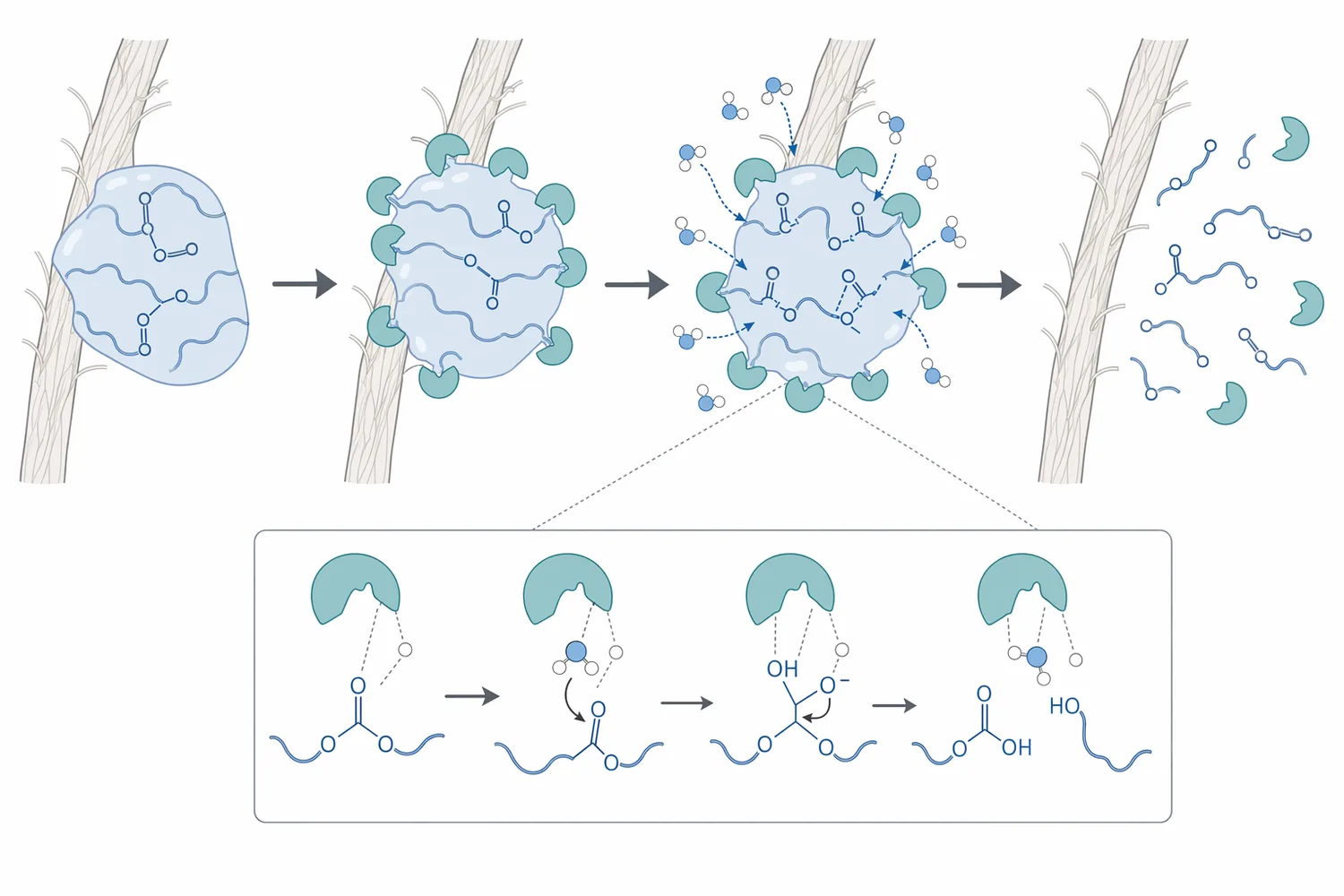
Most adhesive-control enzyme action is based on hydrolysis, a reaction in which water is used to split susceptible chemical bonds. In adhesive residues, relevant bonds may include ester bonds in certain resins, tackifiers, plasticizers, polyesters, or polyurethane-related structures; amide or peptide bonds in proteinaceous binders and soils; and glycosidic bonds in starches, gums, cellulosic fines, or polysaccharide-based matrices. Enzyme-assisted plant extraction literature uses the same core principle: enzymes open or modify biological polymer networks by breaking defined bonds in polysaccharides and related structures under comparatively mild aqueous conditions [2].
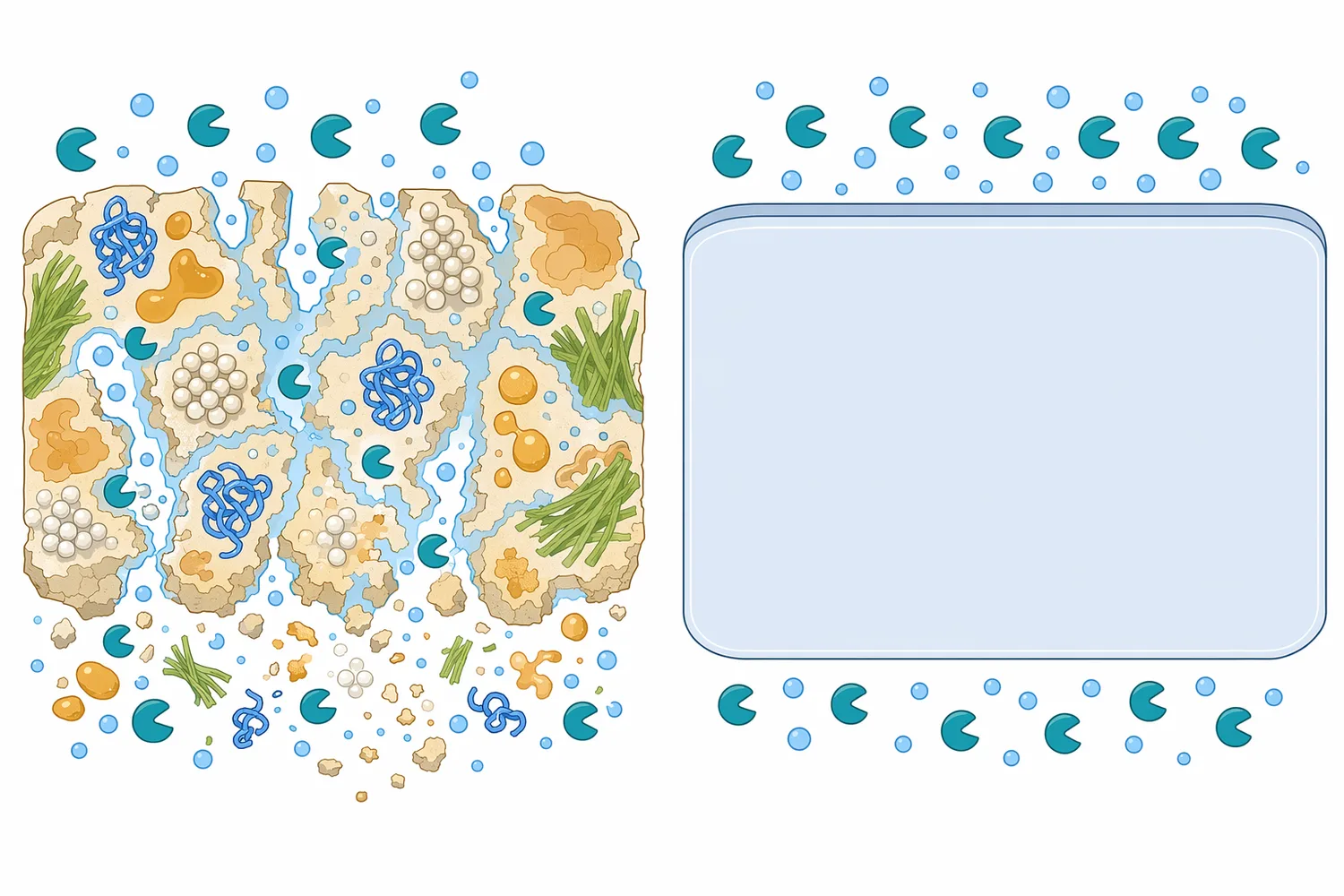
At the material level, this bond cutting changes how the contaminant behaves. Long, cohesive molecules can become shorter fragments; crosslinked or entangled networks can lose strength; hydrophobic films can develop more polar end groups at the surface; and adhesive particles can lose the deformable, tacky character that makes them smear. Even partial hydrolysis can be useful because a sticky deposit often fails once its weakest organic binder phase is disrupted.
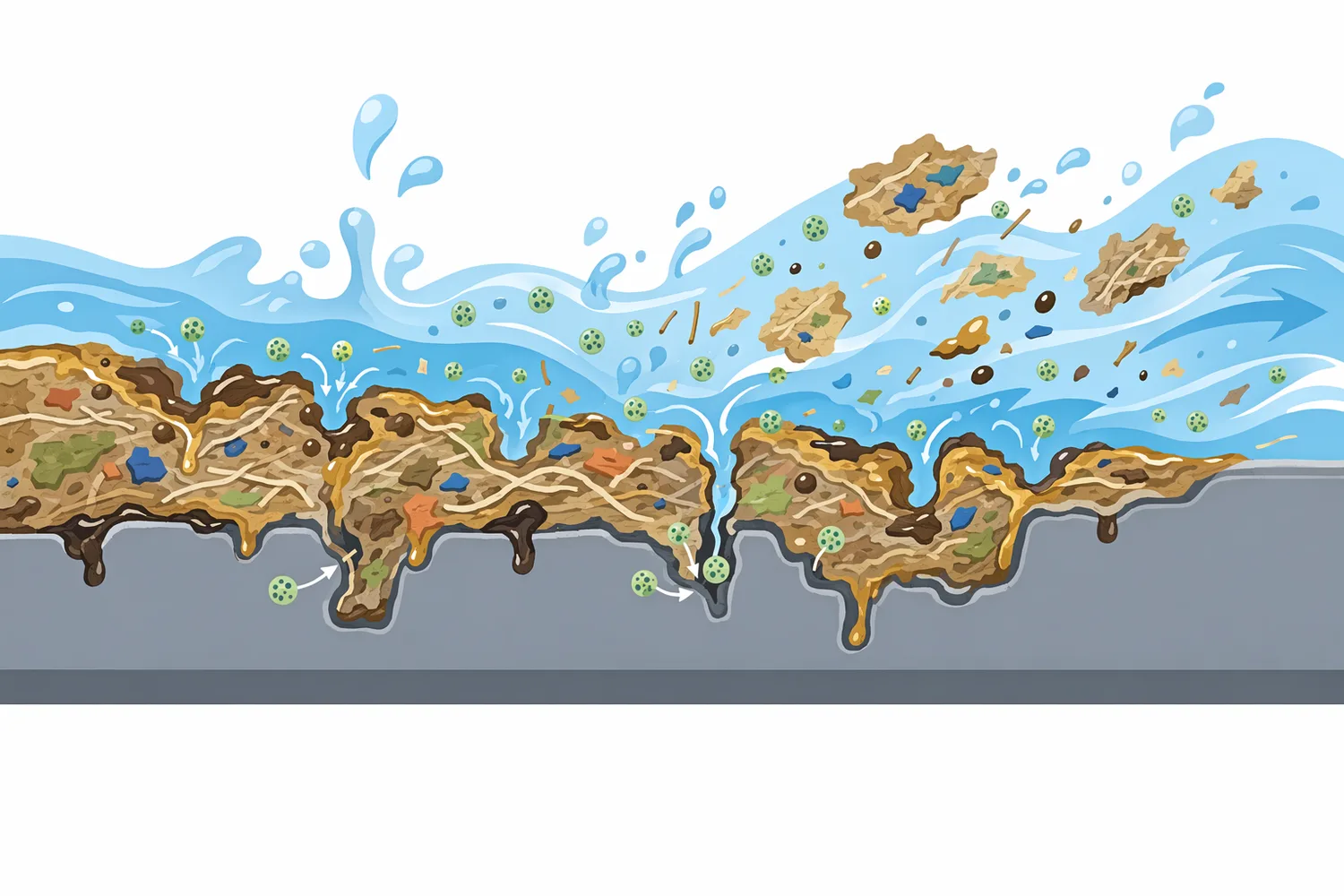
The enzyme does not have to penetrate an entire adhesive mass instantly. It can act at exposed surfaces, cracks, interfaces, or swollen regions where water has entered. As susceptible bonds are cleaved near the interface, the adhesive layer can lose grip on the underlying surface. Mechanical energy from flow, agitation, brushing, spray impact, or screening then removes weakened material that would otherwise remain attached.
This is why enzyme treatment is often most effective in aqueous systems with mixing and contact time. Water participates directly in hydrolysis, while circulation continually brings fresh enzyme and water to the contaminant surface. Work on waste paper has long connected physical or chemical pre-weakening with subsequent enzymatic hydrolysis, illustrating that enzyme action is often strongest when the substrate has been made more accessible [3].
Industrial adhesive deposits are rarely pure. A pressure-sensitive adhesive particle in a recycled fiber stream may carry paper fibers, coating pigments, starch, latex, oils, waxes, and plasticizers. A label residue on a container may include adhesive polymers, paper, ink, wet-strength chemistry, and detergent-resistant organic soil. A roll deposit in converting may include binders, process lubricants, coating fragments, dust, and microbial film.
Enzymes act only where the contaminant contains bonds or structures that fit the enzyme’s catalytic function. For adhesive-contaminant control, the most relevant substrate families are starch-based adhesives, proteinaceous binders, ester-containing tackifiers or polymers, lipid-like soils, polysaccharide gums, and fiber-associated organic matrices. Highly inert synthetic polymers with few enzyme-accessible bonds may be less responsive unless the problem deposit also contains enzyme-susceptible additives, binders, or surface soils.
The table below summarizes the mechanism at a practical level. It is conceptual rather than a specification of this product’s composition.
| Adhesive or deposit component | Enzymatic mechanism that can help | What changes in the residue | Practical process effect |
|---|---|---|---|
| Starch-based glues and dextrin binders | Hydrolysis of glycosidic bonds in starch chains | Viscosity and cohesive strength decrease; films swell and fragment more easily | Residues release more readily during soaking, washing, pulping, or rinsing |
| Protein glues and proteinaceous soils | Cleavage of peptide bonds | Protein networks lose structure and binding strength | Deposits become easier to detach from surfaces and fibers |
| Ester-containing resins, tackifiers, plasticizers, or polyester-like regions | Hydrolysis of ester linkages at accessible surfaces | Surface chemistry and molecular weight distribution shift; tack and film strength may decline | Adhesive particles become less smear-prone and easier to disperse or separate |
| Lipid, oil, grease, or wax-associated adhesive deposits | Enzymatic cleavage of ester-containing lipids where accessible | Hydrophobic binding phases are disrupted into smaller, more mobile components | Washing and surfactant-assisted removal can improve |
| Fiber-associated polysaccharide matrices | Modification of cellulosic or hemicellulosic networks where appropriate | Entrapped adhesive particles may be released from fines and fiber mats | Screening, washing, and drainage can become more effective |
Dental and biomedical adhesive research is not the same as packaging, paper, or equipment-cleaning work, but it provides useful mechanistic evidence that adhesive interfaces can be vulnerable to enzymatic degradation. Studies on resin-based composites and adhesives describe enzymatic degradation pathways involving esterases, oxidative enzymes, and other biological mechanisms acting at adhesive interfaces [4]. The key transferable point is chemical: adhesive performance depends on interfacial polymer networks, and those networks can weaken when enzyme-accessible bonds are hydrolyzed.
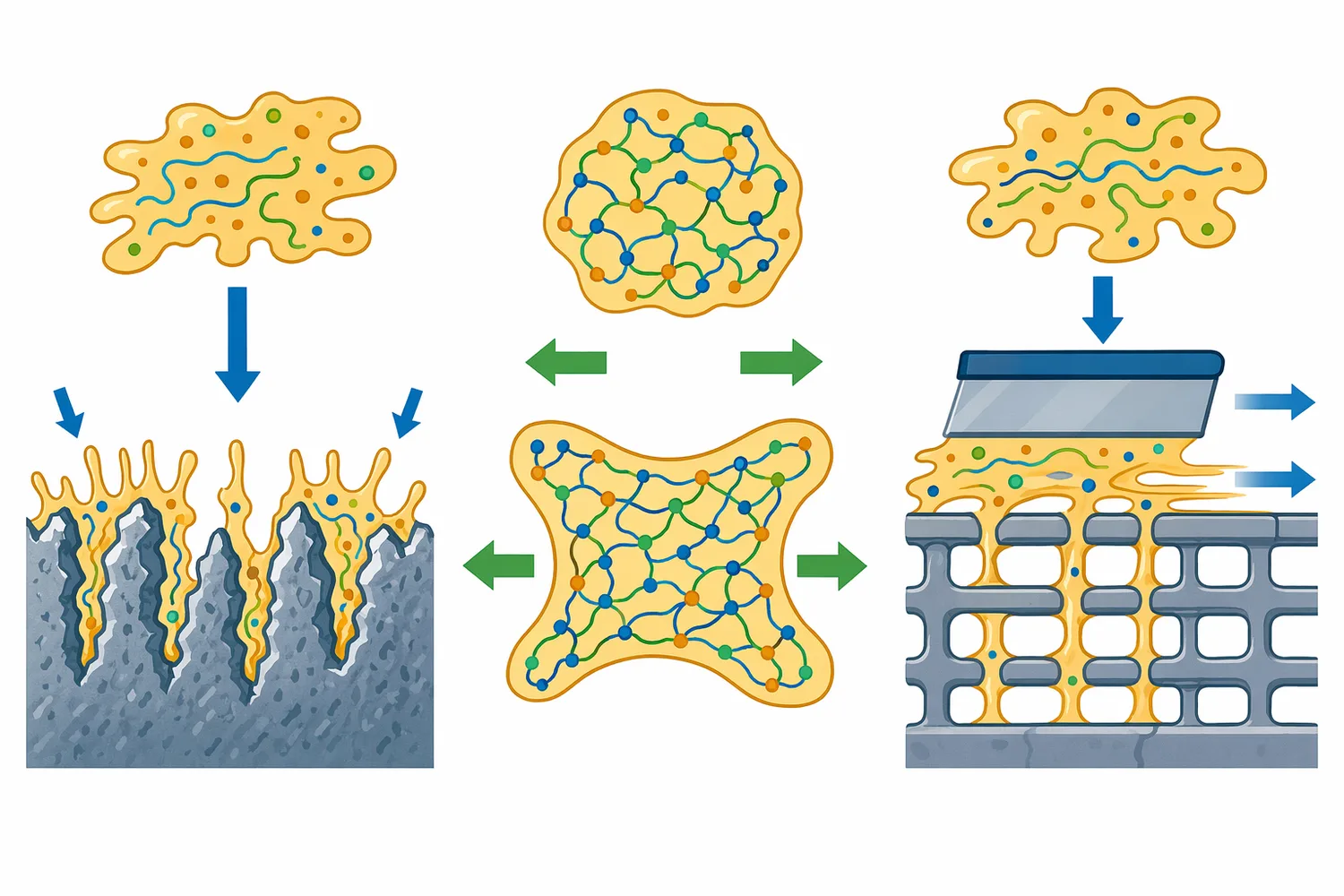
Adhesive contaminants cause problems because they combine adhesion, cohesion, and deformability. Adhesion is the grip between the contaminant and a surface such as stainless steel, polymer belts, fibers, or filter media. Cohesion is the internal strength of the adhesive mass. Deformability allows the contaminant to smear into pores, fibers, and surface roughness instead of breaking away cleanly.
Mechanical cleaning alone can move the problem rather than solve it. A scraper may spread a tacky film. High shear may divide a large sticky into many smaller sticky particles. Filtration may concentrate adhesive fines into a blinding layer. In recycled-fiber processing, small tacky particles can pass through early separation stages and then redeposit later when temperature, pH, charge balance, or solids concentration changes.
Enzymatic treatment addresses the organic binding function rather than only the visible deposit. If the enzyme reduces the strength of a starch, protein, ester, lipid, or polysaccharide phase that holds the deposit together, mechanical action becomes more productive. Instead of smearing intact adhesive, the process can release weakened fragments that disperse, float, rinse away, or separate with other solids.
This mechanism is consistent with broader contaminant-control science: different contaminant classes require different removal mechanisms. Adsorbents, hydrogels, electrocoagulation, permeable reactive barriers, and engineered biochars are all studied because no single method removes every contaminant in every environment [5]. Enzyme treatment occupies a distinct role in this landscape because it chemically modifies selected organic structures rather than simply capturing or coagulating them.
Adhesive contamination is often managed through a combination of temperature, surfactants, alkalinity, mechanical action, filtration, and downtime cleaning. Enzymes do not replace all of these measures. They are most useful when they make the contaminant easier for existing operations to remove.
| Control route | Primary mode of action | Strengths | Limitations for adhesive residues |
|---|---|---|---|
| Mechanical scraping, shear, brushing, or high-pressure washing | Physical force detaches or breaks deposits | Immediate action; simple to understand; useful for exposed surfaces | Can smear tacky materials, create smaller sticky particles, or miss residues in pores and fiber mats |
| Strong caustic or oxidizing cleaning | Chemical attack on soils and organic films | Effective against many soils; common in heavy-duty cleaning | May be harsh on materials, require careful handling, and can be more aggressive than needed for mixed organic deposits |
| Solvent-based removal | Solubilization or swelling of hydrophobic adhesives | Can work quickly on compatible adhesive chemistries | Compatibility, odor, flammability, regulatory, and wastewater considerations may limit routine use |
| Adsorption or coagulation-based contaminant control | Captures, aggregates, or separates contaminants | Useful for many dissolved or dispersed pollutants; widely studied in water treatment [6] | Does not necessarily weaken the adhesive film before it deposits or smears |
| Enzyme-assisted adhesive-contaminant control | Catalytic hydrolysis or surface modification of susceptible organic components | Targets specific bond types under aqueous, comparatively mild conditions; supports existing washing and separation | Depends on adhesive chemistry, water access, contact time, and compatibility with the process environment |
Electrocoagulation and adsorbent technologies are important for many inorganic and organic pollutants, especially in water and wastewater applications, but their main function is removal or capture rather than selective cleavage of adhesive binders [6]. Enzyme-assisted adhesive control is therefore best viewed as a pre-release or weakening strategy that can complement physical separation.
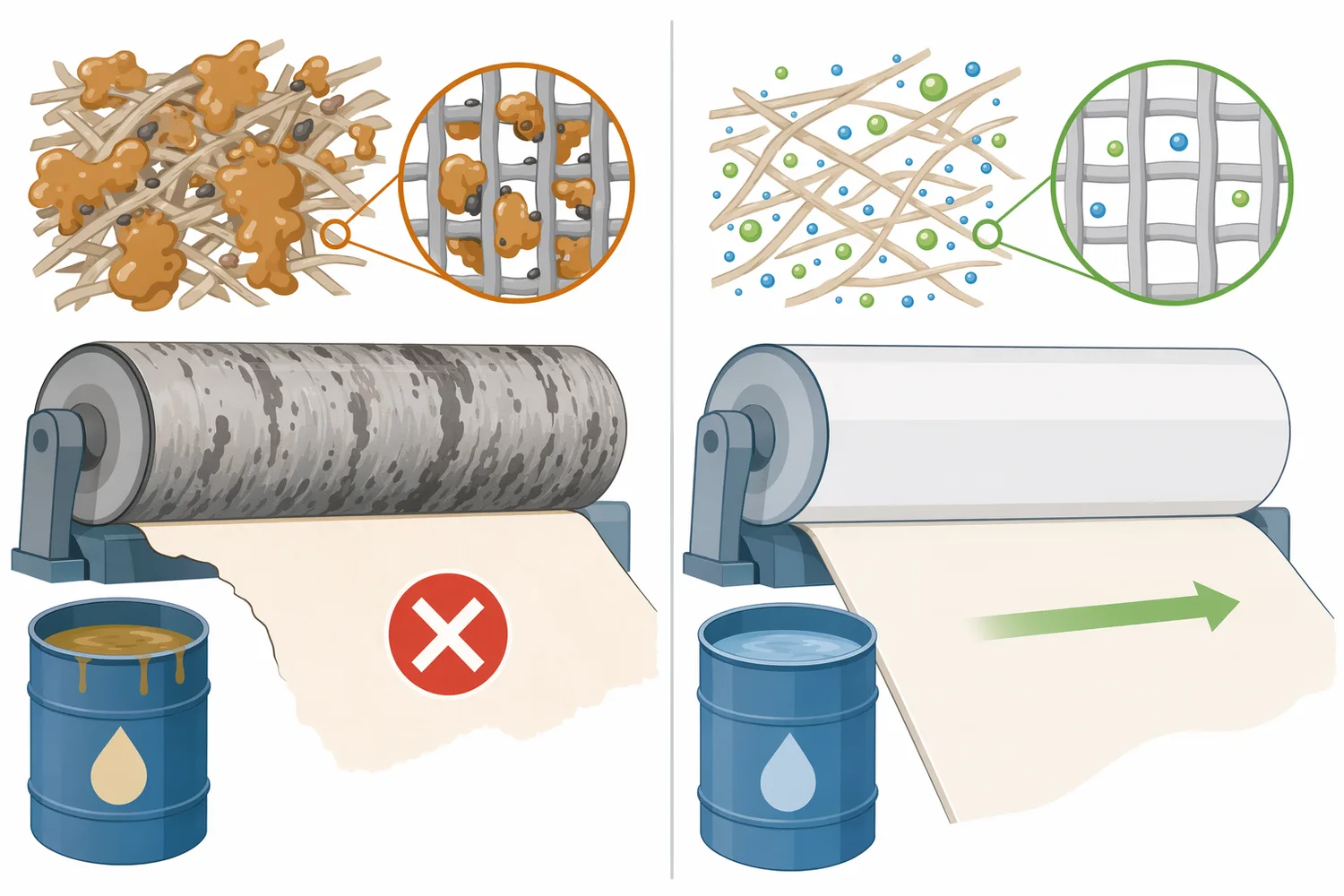
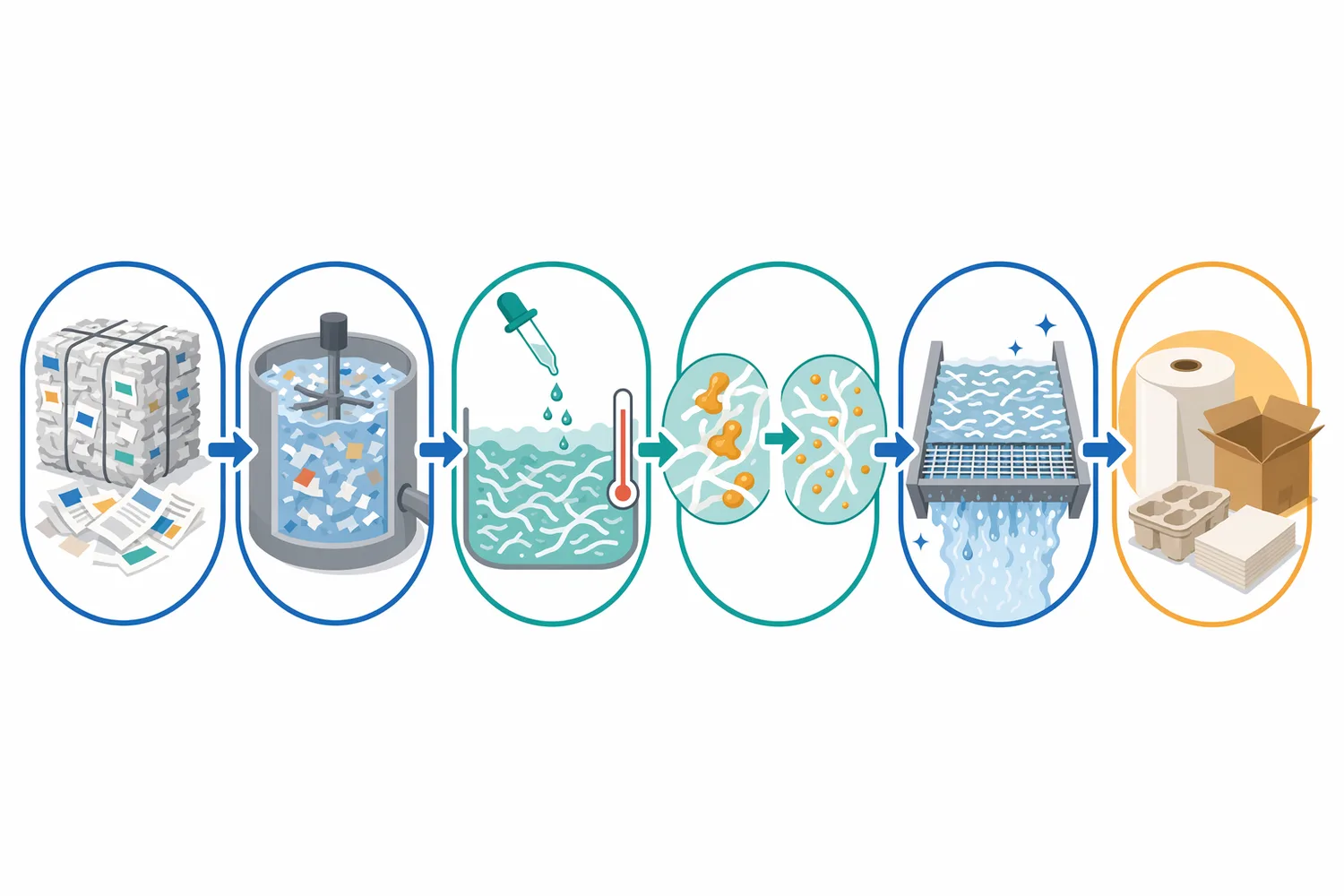
Recycled fiber systems are a natural fit for adhesive-contaminant control because recovered paper and board bring in labels, tapes, coatings, hot melts, pressure-sensitive adhesives, starch, latex, and inks. These materials can become “stickies” that affect screens, wires, felts, rolls, drainage, sheet appearance, and converting performance. Enzymatic treatment can help when the deposit includes starch, protein, ester-containing, or fiber-associated organic phases that are susceptible to hydrolysis.
The value in recycled fiber is often interfacial. Adhesive particles can be trapped in fiber fines or coated with paper additives, making them behave as composite particles rather than pure adhesive. Enzymatic modification of the surrounding organic matrix may help release or de-tackify the contaminant so washing, flotation, screening, or cleaning stages have a better opportunity to remove it. Studies on enzymatic hydrolysis of waste papers support the broader idea that paper-derived substrates can be made more accessible to enzymatic action after structural weakening or pretreatment [3].
Bottle washing, crate washing, container reuse, packaging recovery, and label-removal systems often face adhesive residues that persist after ordinary soaking. A label adhesive may be only one part of the problem: paper fibers, wet-strength additives, printing inks, coating binders, and oils can remain attached to the adhesive layer. Enzyme action can weaken the biodegradable or hydrolysable parts of this composite residue so surfactants and water flow can remove more of the material.
This is especially relevant where residue removal must occur without relying entirely on high-severity chemistry. Enzymes are widely studied and used because they can catalyze specific reactions under milder aqueous conditions than many conventional chemical treatments, a theme repeated across industrial biocatalysis and sustainable processing literature [7].
In tanks, circulation loops, screens, rollers, belts, nozzles, and filters, adhesive residues often appear as mixed deposits. They may begin as a thin tacky film, then accumulate fibers, dust, pigments, microbial material, and oils. Over time, the deposit becomes more resistant because each layer protects the one beneath it.
Enzyme-assisted cleaning can help by attacking the organic binder phases that hold the deposit together. When the matrix weakens, flow and rinsing can remove material layer by layer rather than requiring complete chemical dissolution. This is similar in principle to detergent enzyme use, where enzymes selectively degrade specific soil types so the rest of the cleaning system can lift and remove them.
Textile, nonwoven, coating, laminating, and converting operations may use adhesives, binders, sizes, backings, and process aids that later contaminate equipment or intermediate materials. When those residues include starches, proteins, gums, ester-containing resins, oils, or fiber-derived matrices, enzyme treatment can provide a way to reduce deposit strength without treating every surface as though it were coated with an inert plastic.
The important point is that the enzyme acts on chemical susceptibility, not on the industry label. A “binder deposit” in a nonwoven line and a “label glue residue” in packaging recovery can both respond if the exposed organic chemistry is enzyme-accessible.
Adhesive deposits often contain polymer-associated contaminants: resins, latex particles, plasticized films, coatings, or composite particles. Enzymes are increasingly studied for polymer and microplastic-related applications, including systems where enzymes are placed at contaminated material surfaces to support degradation or removal [8]. These advanced studies should not be read as a direct promise for every industrial adhesive, but they demonstrate why surface-active enzymatic treatment is a serious area of materials research.
For routine adhesive-contaminant control, the most practical expectation is partial modification of accessible or mixed organic components. Even if the main polymer backbone is resistant, additives, surface oxidation products, ester-containing side groups, starch carriers, protein soils, or entrained biomass may be more responsive.
Enzymes are proteins, and their catalytic behavior depends on the environment. In adhesive-contaminant control, the most favorable systems are typically aqueous, mixed well enough to bring enzyme into contact with the contaminant, and mild enough that the enzyme remains functional long enough to act. This does not mean conditions must be delicate; industrial enzymes are used precisely because they can function in practical process environments when matched to the job.
Water availability is central because hydrolysis consumes water at the bond being cleaved. Dry adhesive films, thick hydrophobic masses, or deposits shielded by oils may respond slowly until water and wetting agents reach the surface. Swelling, soaking, circulation, or mechanical opening of the deposit can therefore increase the exposed area available for enzymatic action.
Temperature affects both reaction speed and enzyme stability. Warmer aqueous systems can increase molecular motion and substrate accessibility, but excessive heat can unfold enzyme structure and reduce activity. Research on engineered and thermostable enzymes illustrates why stability is a continuing focus in industrial biocatalysis: useful enzymes must retain functional structure long enough to perform under process-relevant conditions [7].
pH also changes enzyme structure and substrate chemistry. Some adhesive-control situations occur near neutral conditions, while others are mildly acidic or alkaline depending on the process. The practical implication is simple: enzyme performance is strongest when the surrounding environment allows the enzyme’s active site to maintain the shape and charge pattern needed for catalysis.
Chemical compatibility matters because strong oxidizers, harsh disinfectants, certain solvents, and some aggressive cleaning chemistries can denature proteins or modify catalytic groups. Mild surfactants, by contrast, may help in some systems by wetting hydrophobic adhesive surfaces and exposing more area to water and enzyme. The best conceptual model is cooperative action: surfactants wet and lift, mechanical energy exposes and removes, and enzymes weaken selected organic bonds.
The evidence supporting adhesive-contaminant enzymes comes from several adjacent but relevant areas: industrial biocatalysis, enzymatic hydrolysis of organic substrates, degradation of adhesive interfaces, polymer-surface enzyme research, and contaminant-control engineering. The combined evidence strongly supports the mechanism, while still leaving performance application-specific.
The most direct category is adhesive and polymer-interface research. Work on enzyme-catalyzed polyurethane adhesive degradation shows that adhesives themselves can be treated as enzyme-relevant substrates under the right chemical conditions [1]. Dental adhesive literature also shows that resin-based adhesive interfaces can degrade through enzyme-associated pathways, particularly where ester-containing resin matrices, collagen, water, and biological enzymes interact [9].
Those dental studies should be interpreted carefully. Oral conditions, dentin bonding, saliva, collagen, and clinical aging are not the same as industrial adhesive removal. However, they provide a clear mechanistic lesson: adhesive systems are not always chemically inert, and hydrolysis at the interface can reduce bond integrity over time. Research evaluating surface treatments, aging, and enzymatic degradation of zirconia-resin bond strength reinforces the point that enzymatic exposure can be relevant to adhesive bond durability [10].
A second evidence category is enzymatic processing of plant and paper materials. Enzyme-assisted extraction research describes the use of enzymes to open plant cell wall matrices by acting on structural polysaccharides, which is closely related to releasing contaminants trapped in fiber-rich deposits [2]. Waste-paper studies similarly connect enzymatic hydrolysis with paper substrate modification [3].
A third category is contaminant-removal technology more broadly. Modern contaminant-control research includes adsorbents, hydrogels, electrocoagulation, chitosan-based materials, biochar, and reactive barriers, each with different mechanisms and limitations [11]. Enzymes add a distinct catalytic route: instead of only capturing contaminants after they are dispersed, they can help convert selected sticky organic structures into less cohesive, more removable forms.
The main boundary is specificity. Enzymes are not universal adhesive solvents. They work best when the contaminant contains enzyme-accessible chemical bonds, water can reach those bonds, and the surrounding process does not inactivate the protein before useful hydrolysis occurs. A highly inert, water-impermeable synthetic adhesive film may respond slowly or only at exposed additive-rich surfaces, while a mixed starch/protein/ester/fiber deposit may be much more responsive.
The first practical benefit is lower tackiness. When an adhesive particle loses cohesive strength or develops a modified surface, it is less likely to smear, agglomerate, or redeposit. This can support cleaner equipment, smoother flow, and more predictable downstream separation.
The second benefit is easier release from surfaces and fibers. Adhesive deposits often persist because organic binders anchor them into roughness, pores, or fiber mats. Hydrolysis at these interfaces can reduce adhesion enough that ordinary flow, agitation, or rinsing removes material that previously resisted cleaning.
The third benefit is support for milder process design. Enzymes are attractive in industrial processing because they catalyze defined reactions without requiring the same severity as many chemical routes. That does not eliminate the need for cleaning chemistry or mechanical action, but it can reduce reliance on the most aggressive parts of a deposit-control program where the substrate is enzyme-responsive.
The fourth benefit is compatibility with existing separation logic. Enzyme treatment does not need to be the final removal step. It can operate before screening, washing, flotation, filtration, or routine cleaning, converting a sticky contaminant into a form those existing steps can handle more effectively.
Enzymes.bio supplies Adhesive-Contaminant Control Enzyme as a B2B enzyme product available for direct online purchase by the 1 kg unit. The buyer places the order online, pays online, and the order is then processed and shipped; the order includes a Certificate of Analysis and Safety Data Sheet .
Enzymes.bio is a supplier of this product, not a laboratory or manufacturer. The product information is intended to help buyers understand the technical purpose and mechanism of adhesive-contaminant control enzymes so they can use the material as an informed process aid within their own operating context.
Adhesive-Contaminant Control Enzyme is most useful where sticky deposits contain hydrolysable organic components such as starch, protein, ester-containing materials, lipid-like soils, polysaccharide matrices, or mixed fiber-associated binders. Its action is catalytic and surface-driven: it weakens susceptible adhesive structures, reduces cohesive strength, changes interfacial behavior, and makes residues easier to remove through normal aqueous processing and cleaning steps.
The science supports the approach, but not as a universal promise for every adhesive. Enzymatic degradation of adhesive and resin interfaces is documented in adjacent materials research, enzyme-catalyzed polyurethane adhesive degradation is an active topic, and broader contaminant-removal literature confirms that different contaminants require mechanism-specific control strategies [1]. The most reliable expectation is practical: when adhesive chemistry and process conditions allow enzyme access, Adhesive-Contaminant Control Enzyme can help convert difficult sticky residues into material that is easier to wash, disperse, screen, filter, or rinse away.
Sold by the 1 kg unit, in stock and ready to ship. Order directly on our store — pay online and we process your order. A Certificate of Analysis and Safety Data Sheet are included with every order.
Buy Adhesive-Contaminant Control Enzyme →Numbered in order of first citation. Open-access sources, each verified reachable at publication; citation numbers in the text link here.