
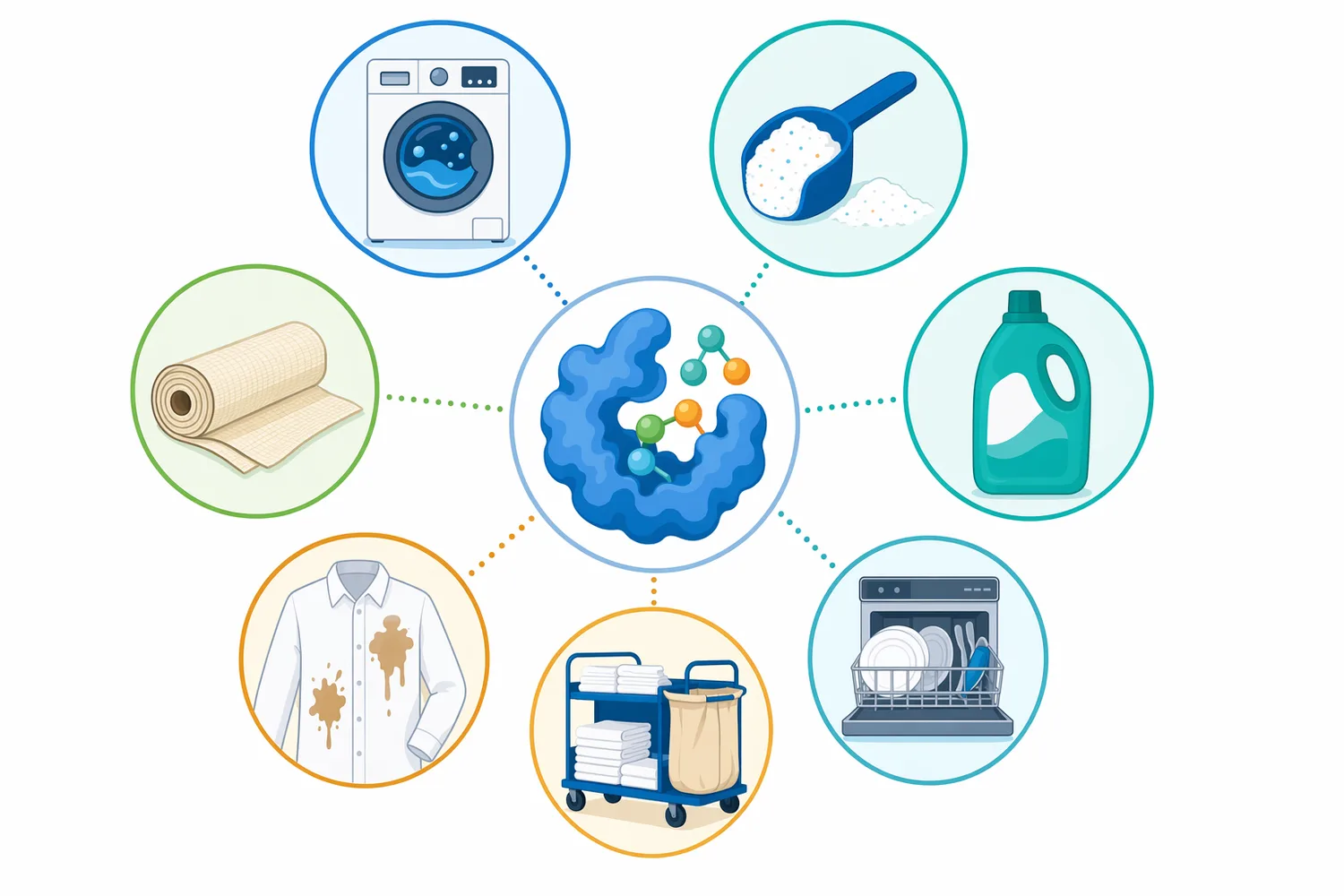
Alkaline Amylase Detergent Enzyme breaks starch-based soils into smaller, more water-dispersible carbohydrate fragments so they can be released during washing, rinsing or textile pretreatment. It is especially useful where starch acts as a sticky binder in food residues, laundry stains, dishwashing soils or woven-fabric sizing. Enzymes.bio supplies Alkaline Amylase Detergent Enzyme directly online in 1 kg units; after online payment, the order is processed and shipped with a Certificate of Analysis and Safety Data Sheet.
Alkaline amylase is a starch-degrading enzyme used where the cleaning environment is alkaline and the soil contains starch, gelatinized starch or starch-derived residues. In practical cleaning terms, it helps convert sticky starch films from foods such as rice, pasta, potatoes, cereal thickeners, sauces and gravies into shorter dextrins and sugars that are easier for the wash liquor to disperse and carry away. α-Amylases are widely described in the literature as industrial enzymes for starch hydrolysis, with applications spanning detergents, textiles, food processing and other carbohydrate-processing sectors [1].
The term “alkaline” is important because many laundry detergents, automatic dishwashing detergents and textile pretreatment baths operate above neutral pH. A conventional starch-degrading enzyme may work well in a food-processing or neutral aqueous system but lose effectiveness when exposed to an alkaline detergent matrix. Research focused specifically on alkaline amylase production and improvement reflects this industrial need for amylases that remain useful under alkaline process conditions [2].
In a finished cleaning system, alkaline amylase does not replace surfactants, builders, alkalinity, dispersants or mechanical action. Its role is narrower and more targeted: it attacks the carbohydrate structure of starch soils, reducing the molecular size and adhesive strength of the starch phase. This targeted biochemical action is why α-amylase continues to be studied as a functional industrial enzyme rather than simply as a generic cleaning additive [3].
Starch is mainly built from glucose units linked into long-chain carbohydrates. Amylose is mostly linear, while amylopectin is highly branched; both contain α-glycosidic bonds that determine how starch swells, thickens, gels and adheres to surfaces. α-Amylase acts internally along starch chains, cleaving accessible α-1,4 linkages and converting high-molecular-weight starch into shorter fragments with lower viscosity and weaker film-forming behavior [4].
That chemical change has a very practical cleaning effect. A dried starch stain can behave like a glue: it binds pigments, fats, protein particles and fine dirt to a fabric yarn or hard surface. Once the enzyme cuts the starch network into shorter dextrins, the residue loses part of its cohesive structure; it hydrates more easily, breaks apart under mechanical action and becomes easier for surfactants and rinse water to remove. Studies on enzymatic starch hydrolysis consistently show that amylase treatment changes starch structure and digestibility by breaking down carbohydrate chains rather than merely softening the surface [5].
The same mechanism matters in dishwashing. Cooked rice, pasta, potato, cereal sauces and baked-on gravies often contain gelatinized starch, which has already absorbed water and swollen during cooking. When this material dries on plates, pans or utensils, it forms a tenacious film. Alkaline amylase helps open and fragment that film by hydrolyzing the starch backbone, so the remaining detergent ingredients can wet, lift and disperse the loosened residue.
Textile desizing follows the same underlying chemistry. Starch sizing is applied to yarns to strengthen them during weaving, but that starch must be removed before dyeing, printing or finishing. Amylase desizing works because the enzyme reduces the size polymer into soluble or dispersible fragments that can be washed out of the fabric structure, avoiding the harshness of purely chemical starch removal routes. Recent work on α-amylase textile applications continues to connect enzymatic starch breakdown with fabric processing benefits [6].
Starch is not simply another water-soluble food residue. Depending on the source and processing history, it may be granular, swollen, gelatinized, retrograded or dried into a film. Potato, rice, cassava, corn and wheat starches do not behave identically: amylose content, granule structure and prior heating all affect how readily water and enzymes can penetrate the residue. Research on potato starch has shown that enzymatic hydrolysis affects multiscale structure and retrogradation behavior, illustrating how strongly starch performance depends on its physical state [5].
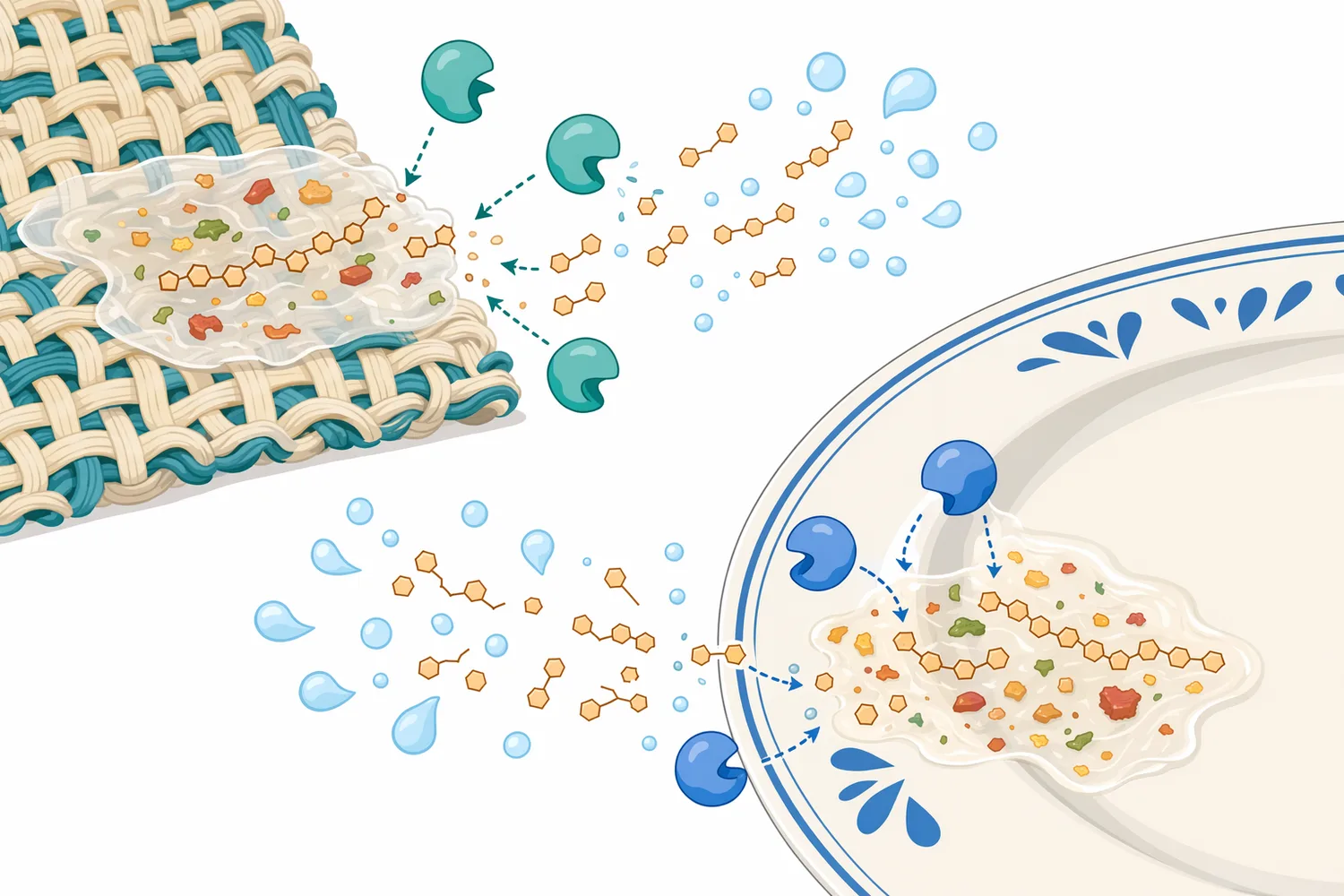
In laundry, starch-rich stains can appear pale or nearly invisible at first but still reduce fabric cleanliness by binding other soil. A sauce or gravy stain is rarely pure starch; it may include oils, proteins, color bodies, minerals and spices. If the starch portion remains intact, it can hold the mixed stain in the fiber network even after surfactants have removed some greasy material. Alkaline amylase improves this situation by degrading the carbohydrate “scaffold” that helps the mixed soil stay attached.
In dishwashing, starch soils can become more difficult after heating and drying. Rice, pasta and potato residues thicken during cooking because starch granules swell and leach polymers into the surrounding water. On cooling or drying, those polymers can form a more organized film, which is why a cooked starch residue may resist simple rinsing. Enzymatic hydrolysis directly reduces the chain length responsible for that viscosity and film strength.
Industrial and institutional cleaning environments add another challenge: starch residues may be distributed over stainless steel, plastic, ceramic or conveyor surfaces, often mixed with proteins, oils or particulate material. Enzymatic hydrolysis has been studied in complex organic residues such as kitchen wastes, where carbohydrate breakdown is one part of making heterogeneous material more processable [7]. Although detergent cleaning is not the same as waste hydrolysis, the shared principle is that amylase reduces carbohydrate polymer size and changes how the material disperses in water.
The most important distinction for a detergent enzyme is not whether it can hydrolyze starch in ideal conditions; it is whether the enzyme can still perform in the actual cleaning environment. Acid, neutral and alkaline amylases may all act on starch, but their best-fit applications differ because pH changes enzyme structure, substrate swelling and formulation compatibility. α-Amylase reviews describe broad industrial use, while alkaline amylase research addresses the narrower need for starch hydrolysis under alkaline operating conditions [1].
| Amylase type | Typical process environment | Main practical fit | Why it matters for buyers using detergent or cleaning products |
|---|---|---|---|
| Acid amylase | Acidic aqueous processes | Certain food, fermentation or starch-conversion steps | Useful where the process itself is acidic, but not naturally aligned with alkaline detergents |
| Neutral amylase | Near-neutral processing water | General starch hydrolysis in mild systems | Relevant for many carbohydrate processes, but may not be the best match for alkaline washing |
| Alkaline amylase | Alkaline detergent, dishwashing or textile baths | Starch stain removal, automatic dishwashing, desizing and alkaline cleaning | Designed for the pH direction commonly used in detergent systems, so starch breakdown can occur while the rest of the cleaning chemistry is active |
This comparison is conceptual rather than a product specification. In practice, enzyme behavior also depends on the starch source, the formulation matrix, exposure time, temperature and the presence of other cleaning ingredients. Research on alkaline amylase stability and improvement continues because maintaining catalytic function under industrial conditions is a central requirement for useful detergent enzymes [8].
Alkaline amylase works best when it can physically reach the starch substrate. In a laundry wash, this means water must wet the fiber and penetrate the soil. In dishwashing, it means dried-on food residues must hydrate enough for the enzyme to access starch chains. In textile desizing, the enzyme-containing bath must reach starch size distributed through the yarn and fabric structure.
Temperature affects both the enzyme and the starch. Warmer conditions can improve swelling and diffusion in many starch soils, making the polymer more accessible, but excessive heat can reduce enzyme stability if the enzyme is pushed beyond its tolerance. The literature includes thermostable α-amylases from industrially relevant microorganisms, demonstrating the importance of temperature robustness in practical starch hydrolysis applications [9].
pH affects the ionization and three-dimensional structure of the enzyme. In alkaline detergent systems, an enzyme must keep enough of its active conformation to bind starch and catalyze bond cleavage. This is why alkaline amylase is treated as a distinct industrial enzyme category, with research addressing alkaline production, optimization and stability rather than simply assuming that any amylase will tolerate detergent pH [10].
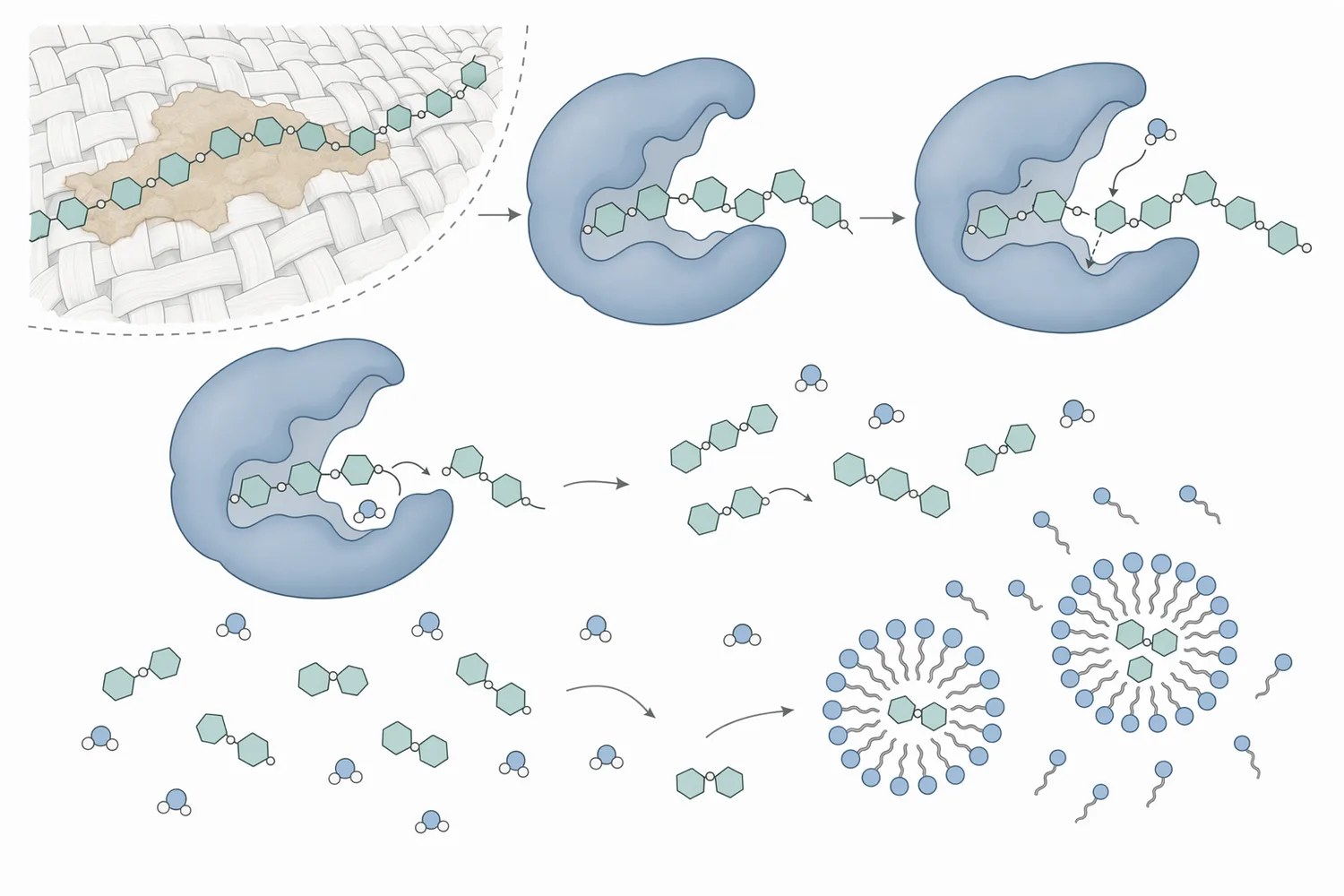
The physical state of starch also matters. Native granules, cooked starch pastes, dried films and chemically modified starches present different accessibility. Work on starch hydrolysis under alkaline conditions shows that alkaline environments can be part of starch modification and hydrolysis behavior, changing how starch structures respond to enzymatic treatment [11]. For cleaning, this means the same enzyme mechanism may produce different visible results depending on whether the soil is fresh, cooked, baked-on, dried, aged or embedded in a textile matrix.
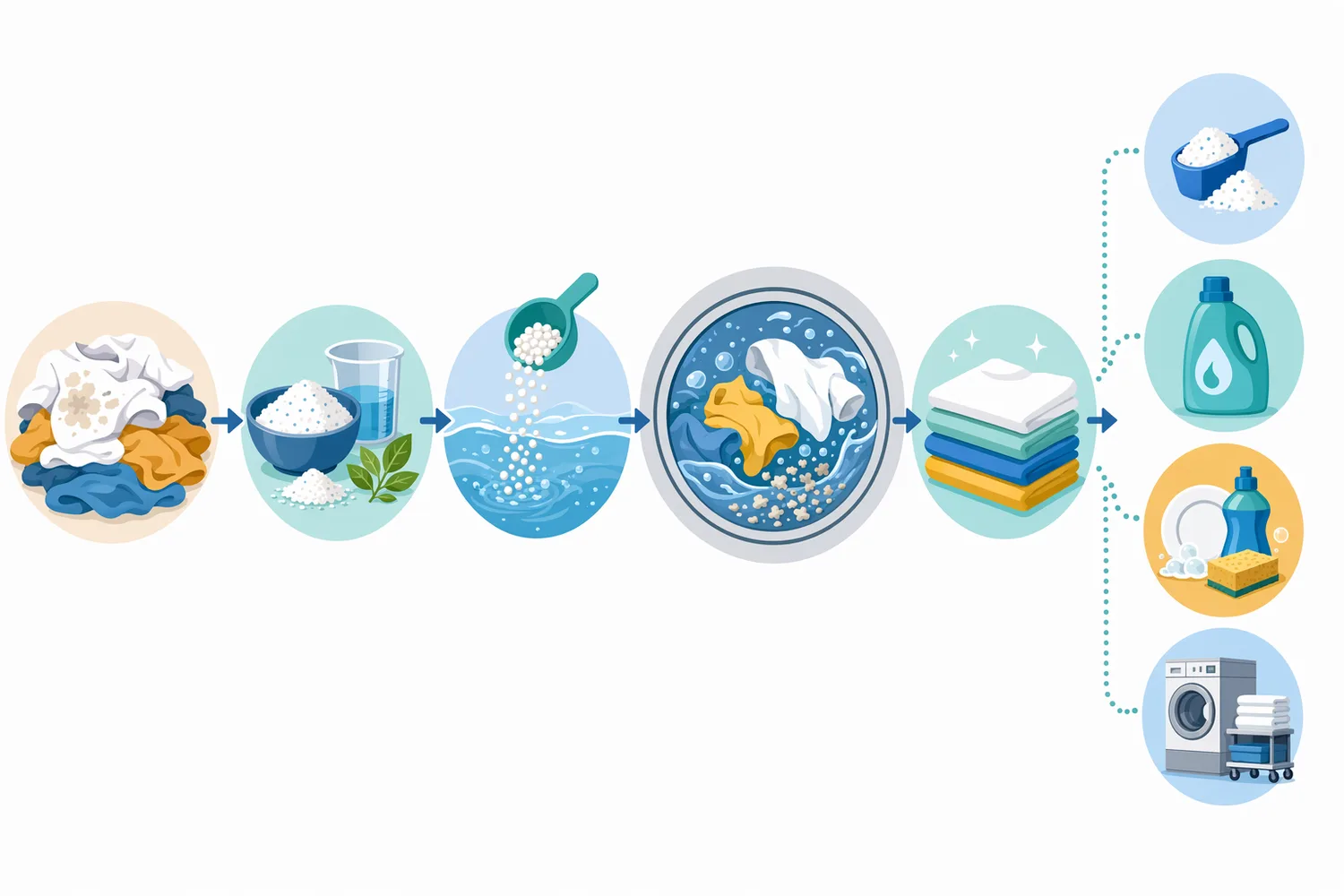
In laundry detergents, alkaline amylase targets starch-containing stains from foods and household residues. Common examples include cereal, rice, pasta water, potato, sauces, custards, gravies and starch-thickened foods. These stains may not always look dark, but they can affect fabric feel and whiteness by holding fine soil on cotton, polyester-cotton blends and other washable textiles.
The enzyme acts during the wash by reducing the starch fraction of the stain. As the starch polymer is cut, the stain loses viscosity and adhesion; agitation then helps detach the fragments from the yarn surface. Surfactants and builders can keep loosened material dispersed in the wash liquor, while the amylase continues to expose more of the starch network.
This is particularly useful for mixed food stains. A gravy stain, for example, may contain starch thickener, fat droplets, proteins, pigments and salts. Protease may help with protein, surfactants may help with grease, and alkaline amylase helps remove the starch binder. The combined effect can be better than treating the stain as purely oily or purely particulate because the underlying adhesion mechanism is partly carbohydrate-based.
From a formulation perspective, alkaline amylase belongs to a family of detergent enzymes used because each enzyme class attacks a different soil chemistry. α-Amylase addresses starch; proteases address proteinaceous materials; cellulases are used in some alkaline cleaning and fiber-related systems; and each enzyme contributes through a different catalytic mechanism. Reviews of alkaline proteases and alkaline cellulases illustrate how enzyme choice follows the chemistry of the target substrate rather than a one-enzyme-cleans-all model [12].
Automatic dishwashing is one of the clearest applications for alkaline amylase because dish soils often contain cooked starch and dishwashing detergents commonly operate in alkaline conditions. Rice grains dried on bowls, pasta starch baked onto pans, potato films on plates and cereal residues on utensils are all examples of substrates where the enzyme’s starch-hydrolyzing action is relevant.
In dishwashing, the benefit is not only stain lightening but physical disintegration of residue. Dried starch films can be smooth, glassy or rubbery, depending on how they were cooked and dried. When alkaline amylase hydrolyzes the polymer network, the film becomes less continuous and more susceptible to water jets, detergent wetting and mechanical shear inside the machine.
The timing of hydration is important in real dishwashing conditions. Early in the wash, water and alkalinity start to swell and loosen the residue. As the starch becomes more accessible, amylase can cut internal bonds and accelerate fragmentation. This helps explain why enzyme-based dishwashing is often most valuable against residues that are not fully removed by alkalinity and surfactant action alone.
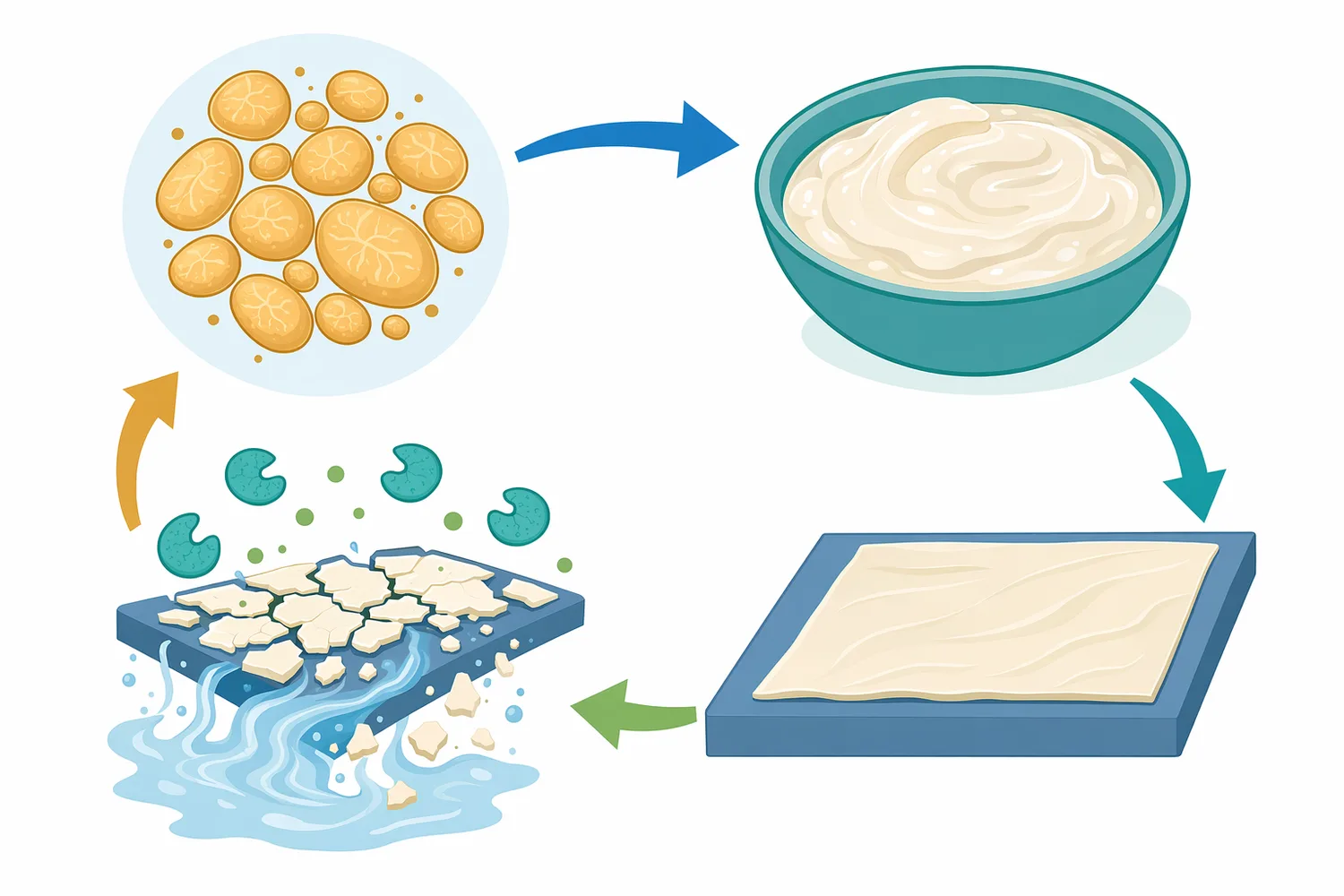
Research on α-amylase production and industrial applications repeatedly identifies amylase as a major enzyme group because starch is abundant in everyday materials and industrial streams [1]. Dishwashing is a practical extension of that same substrate reality: cooked starch is common, sticky and better addressed by hydrolysis than by simple dispersion.
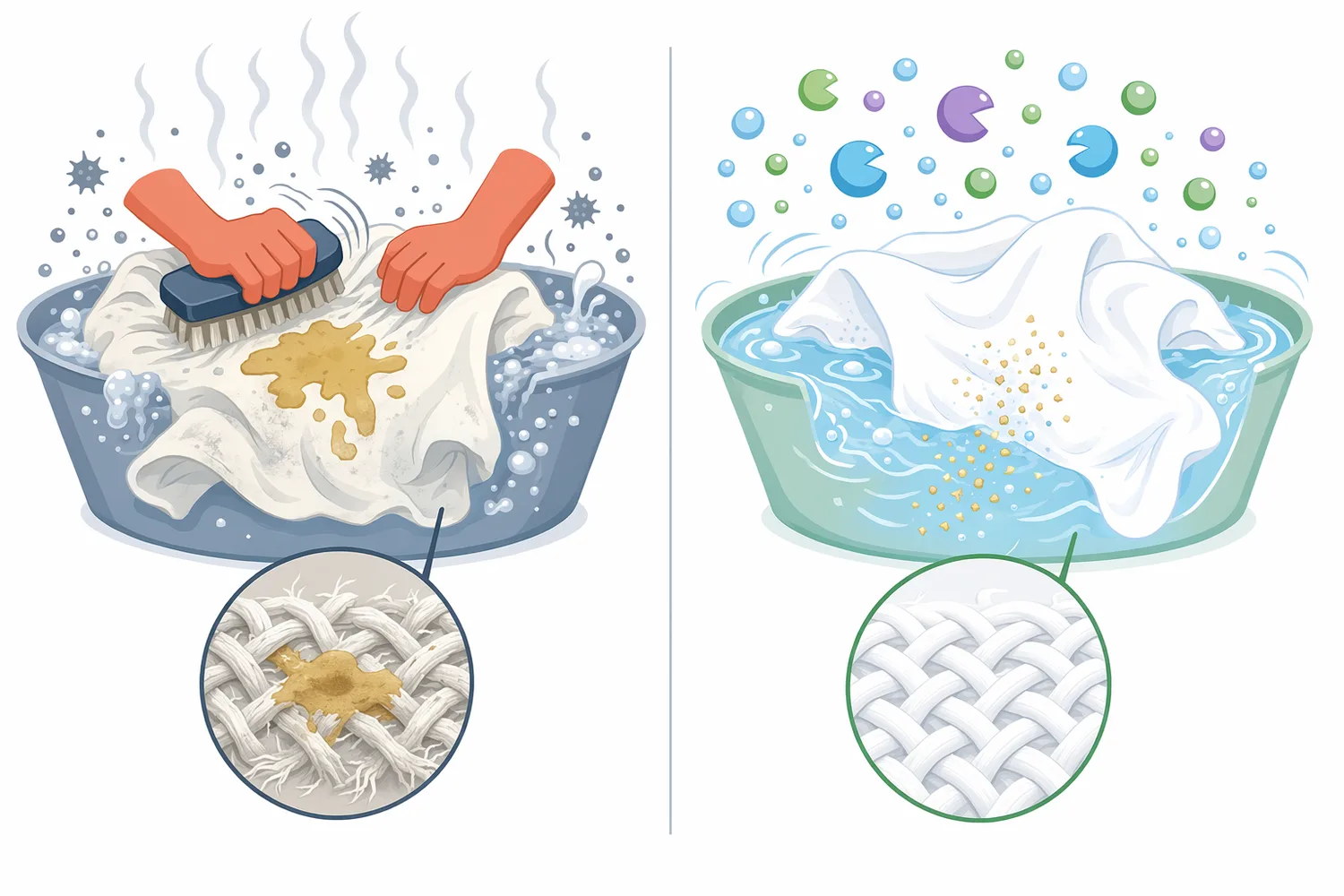
Textile desizing uses amylase to remove starch-based size applied to warp yarns before weaving. Sizing improves weaving efficiency by reducing yarn breakage, but leftover starch interferes with later wet processing. If not removed, size can reduce absorbency, interfere with dye penetration, create uneven finishing and leave fabric with an undesirable handle.
Alkaline amylase is attractive where desizing is integrated with alkaline textile pretreatment steps. Instead of relying on severe chemical degradation, the enzyme hydrolyzes starch size into smaller fragments that can be washed away. This can support cleaner fabric preparation while reducing unnecessary attack on the fiber itself, especially when the main material to be removed is starch rather than cellulose.
The mechanism is again molecular. Starch size forms a coating and partial film around yarns. Amylase cuts the starch chains in that film, lowering molecular weight and reducing film integrity. Once the size is fragmented, rinsing and mechanical movement remove it from the fabric. Research describing α-amylase textile applications supports this use of amylase as a processing aid where starch removal is central to fabric preparation [6].
Textile processes vary widely by fiber, size recipe, fabric construction and pretreatment sequence. For that reason, alkaline amylase should be understood as a starch-removal tool within the broader desizing process, not as a universal replacement for all pretreatment chemistry.
Beyond household detergents, alkaline amylase can be useful in institutional kitchens, catering operations, food-service cleaning and industrial cleaning systems where starch-containing residues are frequent. Starch thickeners, cooked cereal solids, potato residues and rice or pasta deposits can form films on hard surfaces and equipment. The enzyme’s value is highest when starch is a meaningful part of the soil load.
On hard surfaces, starch films can reduce the effectiveness of rinse water by holding onto particulate material and forming a continuous layer. Alkaline amylase breaks the carbohydrate network so that the residue loses cohesion. Once the film is weakened, surfactants, alkalinity, flow and wiping or spray action can remove it more efficiently.
In complex residues, amylase may work alongside other enzyme classes. Protein-rich residues require proteolytic action; fibrous plant materials may involve cellulolytic or hemicellulolytic mechanisms; fatty soils require surfactant and, in some systems, lipolytic support. Research into enzymatic treatment of carbohydrate-rich by-products such as processed rice residues and corn fiber shows how different carbohydrate fractions may require targeted enzymatic approaches rather than one broad chemical treatment [13].
The same logic applies to cleaning formulation design: the enzyme should match the soil chemistry. For starch-rich soils, alkaline amylase provides a specific hydrolysis route that general alkalinity alone does not provide.
A detergent enzyme works inside a formulated chemical environment. Surfactants wet surfaces and emulsify soils; builders control water hardness and support alkalinity; dispersants help prevent redeposition; bleaches oxidize color bodies; and enzymes hydrolyze specific biological polymers. Alkaline amylase contributes when starch is present, but the complete cleaning result depends on the whole system.
Surfactants can improve enzyme access by wetting the soil and fabric or hard surface. However, detergent ingredients can also stress proteins, and enzymes are proteins with folded structures that must remain intact to function. This is one reason enzyme stability is a major research theme for industrial α-amylases, including structural approaches aimed at improving alkaline amylase thermal stability [8].
Builders and alkaline salts can also influence performance by changing pH, ionic strength and mineral availability. Some starch-degrading enzymes are sensitive to the chemical environment around them because the active site and supporting structural regions depend on precise folding. The literature on computational and structural features of α-amylases reflects the importance of connecting enzyme structure with industrial behavior [3].
Oxidizing systems create another consideration. Bleach chemistry may help remove colored soils but can also challenge enzyme stability. In practical detergent development, enzyme function is therefore balanced with the rest of the formulation. For the buyer using a ready enzyme ingredient, the key point is straightforward: alkaline amylase is valuable because it provides targeted starch hydrolysis, but it performs as part of a cleaning matrix rather than in isolation.
Not all starches respond identically to amylase. Cassava, rice, potato, corn, wheat and chestnut starches differ in granule size, amylose-to-amylopectin ratio, crystalline structure and how they change after heating. A starch that is easily hydrolyzed after cooking may behave differently when raw, retrograded or embedded in a dried mixed-soil film.
Research on cassava starch hydrolysis to glucose by amylase demonstrates the broader industrial importance of controlling enzymatic conditions for different starch substrates [14]. While detergent cleaning is not glucose production, the substrate principle is the same: enzyme access and starch structure govern the rate and extent of hydrolysis.
Porous starch research provides another useful illustration. Enzymatic hydrolysis can create pores and alter starch granule morphology, showing that amylase action is not just a theoretical bond-cleavage event but a physical restructuring of the material [15]. In cleaning, that restructuring translates into swelling, cracking, weakening and dispersal of starch residues.
This is why visible cleaning can improve even before all starch is completely converted to small sugars. Once enough internal bonds are cut, the residue may lose the mechanical strength that kept it attached. The remaining fragments are then easier to rinse away.
The first benefit is specificity. Alkaline amylase targets starch directly, whereas surfactants mainly lower surface tension and help disperse soils. When the cleaning problem is a carbohydrate film, targeted hydrolysis can address the cause of adhesion more effectively than simply increasing mechanical action or alkalinity.
The second benefit is support for mixed-soil removal. Many real stains are composites: starch holds oil droplets, proteins, pigments and particles in place. By dismantling the starch fraction, alkaline amylase can make the overall stain more removable even when other ingredients are responsible for removing the non-starch components.
The third benefit is process compatibility in alkaline systems. Detergent and textile environments often rely on alkaline conditions for soil swelling, saponification support, water-hardness control and general cleaning performance. An alkaline amylase is aligned with that environment because it is intended to function where neutral or acid enzymes may be less suitable. Research on alkaline amylase production using Bacillus species reflects ongoing industrial interest in enzymes adapted to alkaline use [10].
The fourth benefit is the potential to support milder cleaning strategies. Enzymes can reduce the need to rely solely on aggressive chemical or thermal conditions because they attack specific bonds in the soil. This does not eliminate the need for appropriate detergent chemistry, but it can make cleaning more efficient where starch is the limiting soil.
Alkaline amylase is best understood alongside other enzyme types used in cleaning, because each enzyme has a different substrate. This table is not a formulation recipe; it shows how enzyme function follows soil chemistry.
| Enzyme class | Primary substrate in cleaning | What the enzyme changes | Typical relevance |
|---|---|---|---|
| Alkaline amylase | Starch, cooked cereal residues, starch size | Cuts starch chains into shorter dextrins and sugars, reducing viscosity and adhesion | Laundry starch stains, dishwashing residues, textile desizing |
| Alkaline protease | Proteins such as egg, blood, dairy or food proteins | Hydrolyzes peptide bonds, weakening protein films and deposits | Protein stain removal and industrial cleaning; alkaline proteases are widely reviewed for multiple industries [12] |
| Alkaline cellulase | Cellulosic fibers or cellulose-containing deposits | Modifies cellulose surfaces or helps release microfibrillar material, depending on application | Textile, pulp, paper and some cleaning-related processes; alkaline cellulases are reviewed in pulp and paper recycling [16] |
| Multi-enzyme systems | Mixed soils containing starch, protein, fiber and other components | Uses complementary hydrolysis mechanisms | Useful where soil is chemically diverse rather than dominated by one material |
For starch-rich cleaning, alkaline amylase is the relevant enzyme because the target bonds are in carbohydrate chains rather than proteins or cellulose. The distinction matters: adding more of the wrong enzyme class does not efficiently solve a starch adhesion problem.
Industrial enzymes should be handled with care because enzyme powders and aerosols can present sensitization or respiratory exposure concerns if mishandled. This is not unique to alkaline amylase; it is a general consideration for concentrated enzyme products. Buyers should follow the Safety Data Sheet supplied with the order and use the handling controls appropriate to their workplace.
Enzymes.bio supplies Alkaline Amylase Detergent Enzyme online in 1 kg units. Each order is processed and shipped after online payment, and the Certificate of Analysis and Safety Data Sheet are included with the product. The supplied documentation should be used as the governing handling and product-information reference for the delivered lot.
Alkaline Amylase Detergent Enzyme is a good fit when the process problem is starch: food stains on fabrics, cooked starch residues on dishes, carbohydrate films in cleaning operations or starch size on textiles. Its value comes from a clear mechanism—hydrolysis of starch chains—rather than from a vague “boosting” effect. When the starch matrix is cut into smaller fragments, residues lose viscosity, lose adhesion and become easier to remove during normal washing or rinsing.
It is also useful where alkaline conditions are already part of the cleaning or pretreatment process. Rather than forcing the process toward a neutral or acidic environment, alkaline amylase is intended for the pH direction commonly associated with detergents and textile pretreatment. This alignment is the reason alkaline amylases remain an active research and application area in industrial enzyme technology [2].
At the same time, it should be viewed accurately. Alkaline amylase is not a universal cleaner and does not replace the rest of the detergent system. It performs best when starch is present and accessible, and its visible contribution depends on the soil type, surface, formulation and washing conditions.
Enzymes.bio supplies Alkaline Amylase Detergent Enzyme directly online by the 1 kg unit. Buyers can place the order and pay online; the order is then processed and shipped. A Certificate of Analysis and Safety Data Sheet come with the order, providing the delivered-lot documentation and safety information needed for routine product receipt and handling.
For detergent, dishwashing, institutional cleaning and textile desizing applications where starch removal matters, alkaline amylase provides a targeted enzymatic route: it breaks the starch structure that makes residues sticky, viscous and difficult to rinse away. That mechanism is the foundation of its value in alkaline cleaning systems.
Sold by the 1 kg unit, in stock and ready to ship. Order directly on our store — pay online and we process your order. A Certificate of Analysis and Safety Data Sheet are included with every order.
Buy Alkaline Amylase Detergent Enzyme →Numbered in order of first citation. Open-access sources, each verified reachable at publication; citation numbers in the text link here.