
Alkaline Lipase Enzyme for Detergents Alp01 is a liquid industrial enzyme supplied by Enzymes.bio for detergent and cleaning applications where oily, greasy, and lipid-based soils need to be broken down. In a wash system, alkaline lipase hydrolyzes ester bonds in triglycerides and related fats, converting water-resistant oily residues into smaller, more dispersible fragments that surfactants can lift away more effectively. Alp01 is sold directly online by the 1 kg unit, with the order placed and paid for online before processing and shipment .
Oily soils are among the most persistent residues in laundry and hard-surface cleaning because they are hydrophobic: they repel water, spread into thin films, and can bind strongly to textile fibers, skin-contact areas, or smooth surfaces. Typical examples include body sebum on collars and pillowcases, cooking oil, butter, sauces, dairy fat, cosmetic oils, skincare residues, food-service grease, and industrial oily residues. These soils do not behave like simple particulate dirt; they can penetrate fabrics, trap pigments or odor compounds, and re-deposit if the wash liquor does not keep them dispersed [1].
Conventional detergent systems use surfactants, alkalinity, builders, temperature, and mechanical action to loosen and emulsify soils. That chemistry remains essential, but lipid stains often need an additional mode of attack because intact triglycerides and fat films can be slow to disperse under mild wash conditions. A lipase adds a catalytic step: rather than only surrounding the oil droplet with surfactant, it chemically cuts fat molecules at ester bonds, changing the soil itself so it becomes easier to emulsify and rinse away [2].
Alp01 is positioned for applications where that lipid-specific action is useful, including liquid laundry detergents, detergent gels or capsules, powder detergent systems, commercial laundry, textile pre-treatment, and hard-surface cleaners that target oily residues. Enzymes.bio supplies it as a liquid alkaline lipase preparation in a 1 kg bottle for direct online purchase, making it suitable for buyers who need a ready-to-order enzyme ingredient for detergent-related use rather than a custom development program .
Alkaline Lipase Enzyme for Detergents Alp01 is not a complete detergent on its own. It is a functional enzyme ingredient intended to be used as part of a broader cleaning formulation that also contains surfactants, builders, water conditioners, pH control components, stabilizing chemistry, and, where appropriate, other enzymes. Its specific contribution is the hydrolysis of lipid soils, particularly triglyceride-rich residues that otherwise remain oily and poorly water-dispersible .
The term “alkaline lipase” is important because detergent systems commonly operate in neutral-to-alkaline conditions rather than the acidic conditions found in some food, beverage, or digestive applications. Alp01 is described for detergent cleaning and is associated with an operating pH range of 6.5–9.5 and a working temperature range of 25–95°C, with performance expected to decline outside the suitable range. Those values should be understood as application guidance from the product source, not as a guarantee that every finished detergent will perform identically under all wash conditions .
In practical formulation language, Alp01 supports detergents that need stronger performance on oily stains without relying only on harsher chemistry or high-temperature washing. The enzyme changes the chemical structure of the fat fraction, while surfactants and wash action remove the loosened material. This makes lipase especially relevant in multi-component detergents where stain removal depends on the combined action of enzyme catalysis, emulsification, soil suspension, and rinsing [2].
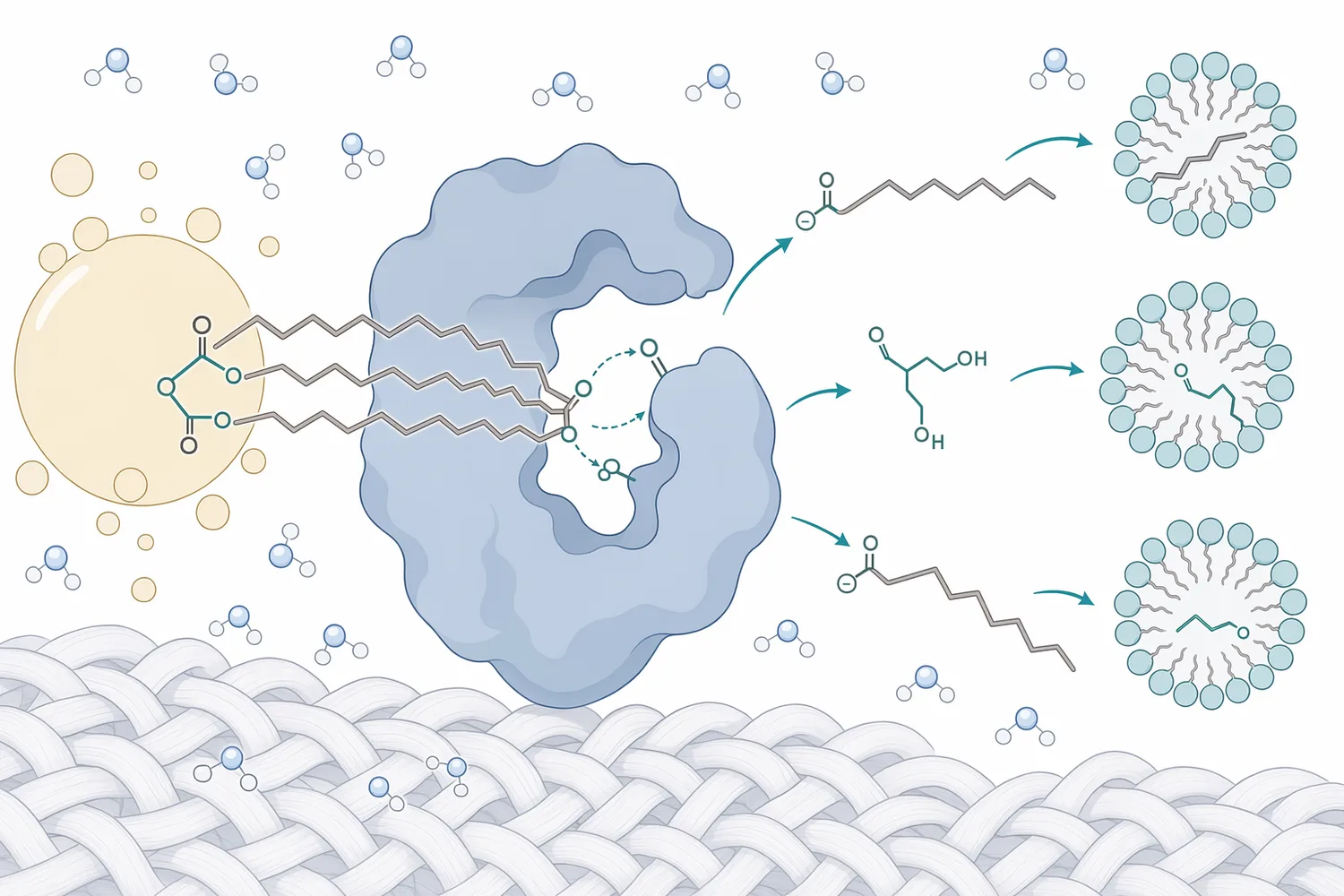
Many common fats and oils are rich in triglycerides. A triglyceride molecule consists of a glycerol backbone connected to three fatty acid chains through ester bonds. Those long fatty acid chains make the molecule strongly hydrophobic, which is why oils bead on water, cling to fabric fibers, and resist removal by water alone. Lipase catalyzes hydrolysis at the oil-water interface, using water to break ester bonds and split triglycerides into smaller products such as diglycerides, monoglycerides, glycerol, and free fatty acids [1].
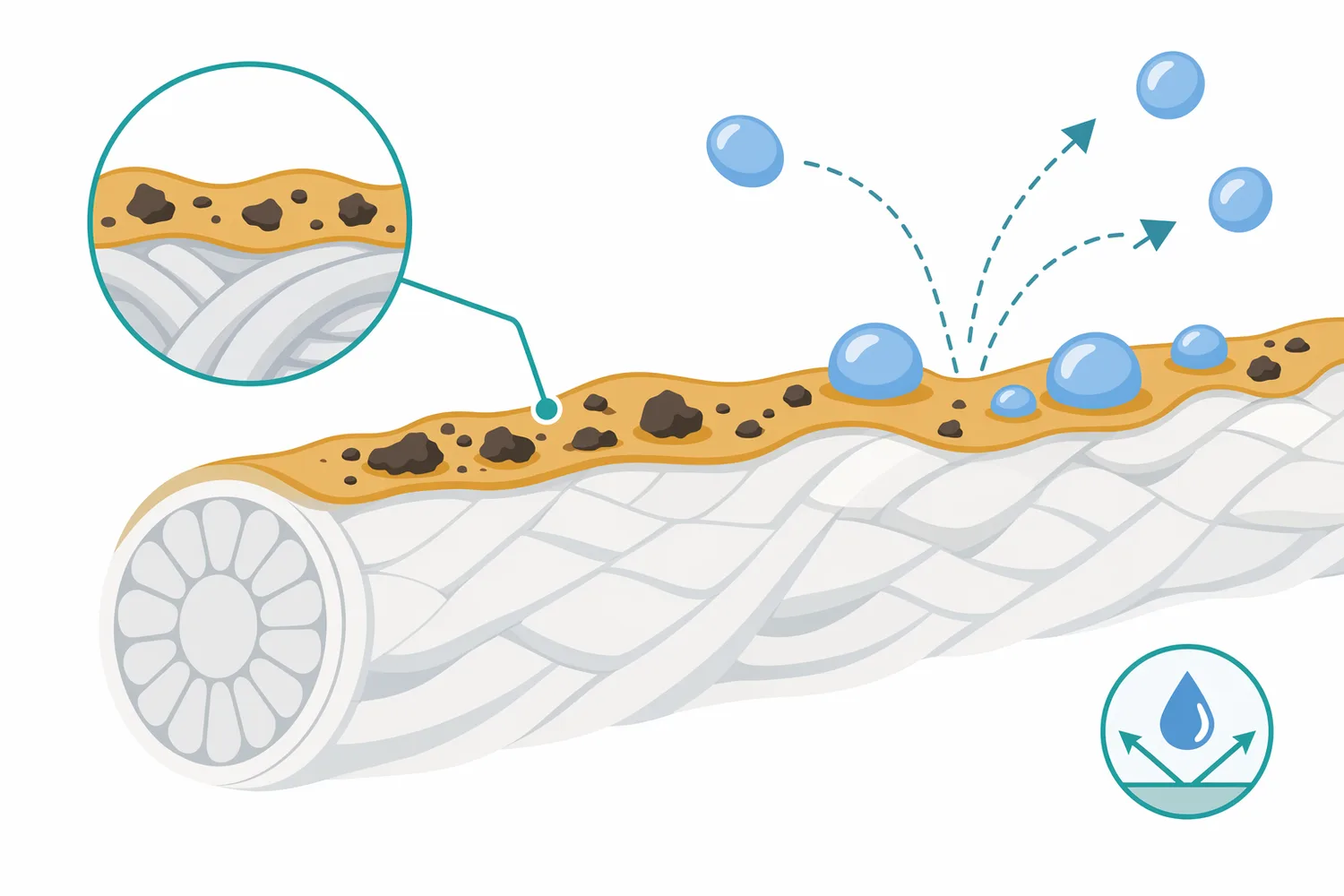
That chemical change matters because the breakdown products do not behave exactly like the original intact fat. Diglycerides and monoglycerides have more polar character than the parent triglyceride, glycerol is highly water-compatible, and fatty acids can be more readily incorporated into surfactant micelles under detergent conditions. In a wash bath, this means the oily film can lose cohesion, become easier to fragment, and present more surface area for surfactants to emulsify [2].
The mechanism is interfacial rather than purely dissolved-phase chemistry. Lipase acts where water, surfactant, and oil meet; it does not need the whole fat stain to dissolve before it begins working. As surfactants loosen and disperse the surface of an oil droplet or film, the enzyme can access ester bonds in exposed lipid molecules. Hydrolysis then generates smaller and more surface-active fragments, which further helps the detergent system disrupt the stain and keep released soil suspended in the wash liquor [1].
This is why lipase can be valuable even when a detergent already contains strong surfactants. Surfactants mainly reduce surface tension and surround oily material so it can disperse; lipase changes part of the oily material by cutting the lipid molecules. The two actions are complementary: surfactants improve enzyme access to the fat-water interface, and enzymatic hydrolysis makes the fat easier for surfactants to carry away [2].
Real stains are rarely made of one chemical class. A pasta sauce stain, for example, may contain vegetable oil, tomato pigments, starch, protein fragments, and hydrocolloid thickeners. A shirt collar may contain sebum, skin proteins, sweat salts, cosmetic residues, and particulate dirt. Lipase is valuable because it addresses the lipid fraction, but detergent performance is often strongest when enzyme types are matched to different soil components within the same formulation [2].
| Enzyme type used in detergents | Main soil fraction targeted | What changes in the stain | Where lipase fits alongside it |
|---|---|---|---|
| Lipase | Fats, oils, triglycerides, sebum, grease | Hydrolyzes ester bonds in lipids; oily films become smaller, more dispersible fragments | Primary enzyme for lipid-based stain removal |
| Protease | Protein soils such as blood, egg, dairy protein, sweat-related residues | Breaks peptide bonds so protein films and particles loosen | Complements lipase on mixed body-soil and food stains |
| Amylase | Starch residues from foods, sauces, grains, and thickeners | Cuts starch polymers into smaller soluble fragments | Helps where oily stains also contain starch binders |
| Cellulase | Cotton surface microfibrils and some cellulose-associated soil effects | Modifies surface fibrils, supporting fabric appearance and soil release in suitable systems | Does not replace lipase; addresses fabric-surface effects rather than fat hydrolysis |
| Mannanase | Mannan gums and certain thickened food or personal-care residues | Breaks gum-like polysaccharides that can bind mixed stains | Useful where oily residues are held in gelled or thickened matrices |
Alp01 is described as compatible with multi-enzyme detergent systems including protease, amylase, cellulase, and mannanase. In a finished detergent, that matters because the lipase can weaken the fatty phase while other enzymes open up protein, starch, cellulose-related, or gum-based structures that may be holding the stain together. The result is not one universal enzyme doing everything, but a division of labor across soil chemistries .
Laundry soils accumulate through repeated wear and contact with skin, food, cosmetics, and work environments. Body sebum is a major lipid contributor: it can migrate into collars, cuffs, underarm zones, pillowcases, sheets, towels, uniforms, and sportswear. Once absorbed into textile fibers, oily residues can hold odor molecules and particulate dirt, making fabric appear dull or feel incompletely washed even when visible staining is modest [1].
Alp01 is relevant because it is intended for detergent conditions and lipid soils rather than for a narrow laboratory substrate. The product source identifies body oils, food grease, sebum, sauces, makeup residues, and other oily stains as target applications. In laundry, these are exactly the residues that can persist when wash temperature, contact time, or detergent harshness is reduced .
Liquid laundry detergents can particularly benefit from enzyme functionality because consumers and industrial users increasingly expect effective cleaning in milder wash programs. Lipase supports that goal by contributing a catalytic reaction rather than depending only on heat-driven melting and emulsification of fats. When the enzyme has sufficient contact with the lipid phase under suitable conditions, it can help convert stubborn fatty material into fragments that are easier to remove [2].
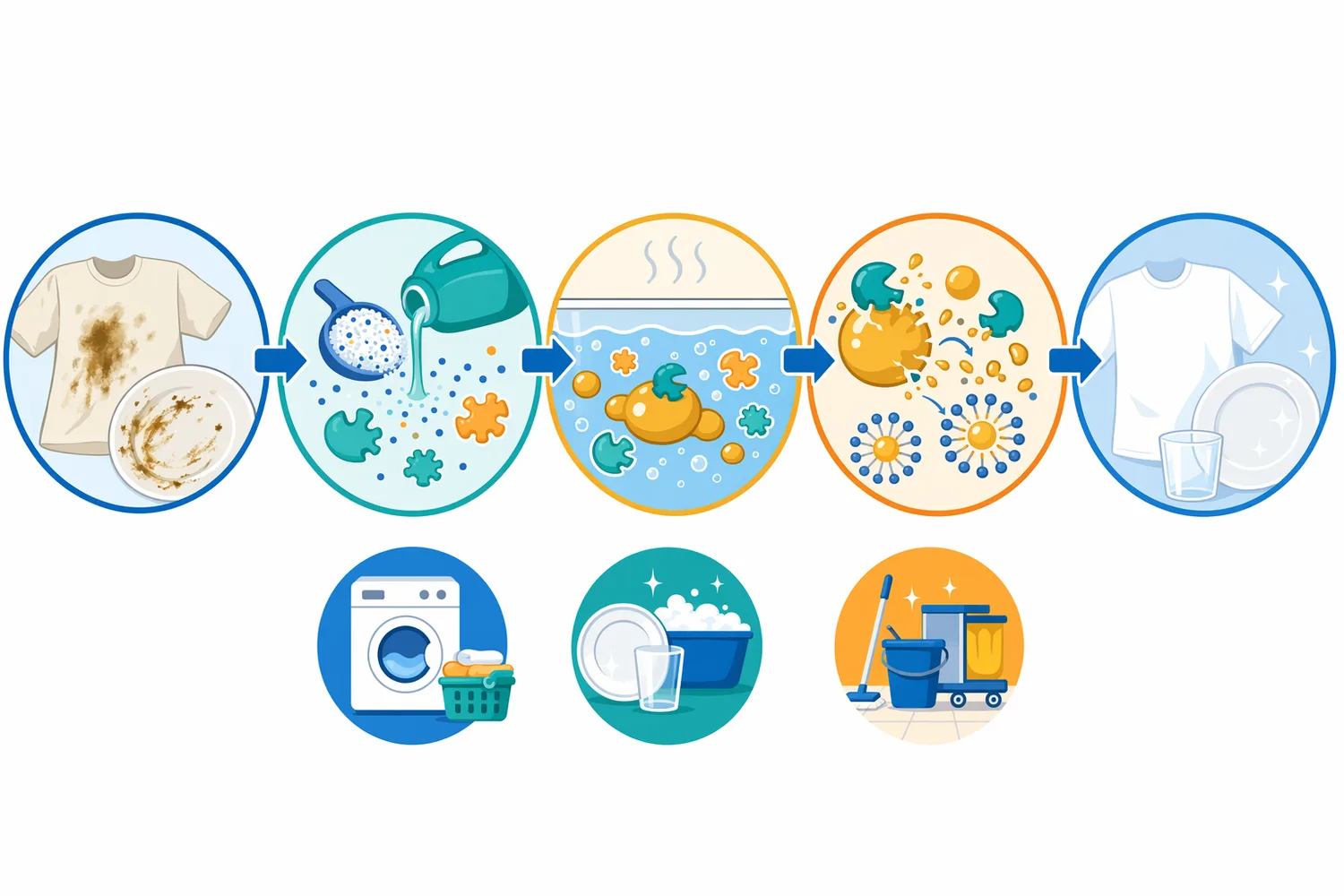
Powder detergents and compact formats can also use lipase as part of a broader stain-removal system. In powders, tablets, pods, or concentrated gels, the available formulation space is limited, so each functional ingredient must contribute a clear mechanism. Alp01’s role is focused: it targets the fat fraction of a stain, while the rest of the detergent system provides alkalinity, surfactancy, water conditioning, bleaching where used, and other enzymatic effects .
Commercial laundry operations often handle textiles with repeated, heavy, or aged lipid exposure: hotel linens, restaurant uniforms, kitchen towels, healthcare-adjacent linens, spa towels, workwear, and professional cleaning cloths. These fabrics may contain a mixture of body oils, food fats, cosmetic oils, massage oils, and airborne grease. Because lipid films can penetrate fibers and accumulate across laundering cycles, fat-specific hydrolysis can be a useful part of the cleaning strategy [1].
Alp01 is listed for industrial and commercial laundry cleaning systems, including hotel linens, uniforms, and professional cleaning operations. In those settings, the enzyme’s role is not to replace mechanical wash action or detergent design, but to improve the breakdown of greasy residues during the wash process. The practical advantage is the ability to address the lipid fraction directly rather than treating all soils as if they were only particulate or surfactant-removable .
Textile pre-soak and pre-treatment are also logical uses for alkaline lipase because contact time is a major factor in enzymatic cleaning. Grease that has dried, oxidized, or migrated into fibers may benefit from a staged process in which the enzyme begins hydrolyzing lipid molecules before the main wash. Alp01 is described for textile pre-soak or pre-treatment solutions, where its fat-hydrolyzing action can help loosen oily residues ahead of full detergent removal .
The mechanism in pre-treatment is straightforward. Instead of immediately diluting the soil into a full wash bath, the enzyme remains in closer contact with the stain for longer. As triglycerides are hydrolyzed at the surface of the oily deposit, the stain becomes less cohesive and more accessible to surfactants during the following wash. This can be especially relevant for restaurant linens, uniforms, and household fabrics exposed to cooking oils or greasy sauces [2].
Although lipase is often discussed in laundry, the same chemistry is relevant to hard surfaces where fats form films. Food-preparation areas, floors near cooking zones, equipment-adjacent surfaces, and general industrial cleaning environments can accumulate thin oily layers. These residues are difficult because they spread easily, attract particulate dirt, and can leave a slick film if only partially emulsified [1].
Alp01 is listed for hard-surface cleaners targeting oily residues. In this use, the enzyme acts on lipid films at the surface, while surfactants, alkalinity, and wiping or rinsing remove the hydrolyzed material. The value is most apparent where the soil contains natural fats and triglyceride-based oils rather than only mineral oils or synthetic hydrocarbon residues, because lipase is specific to ester-linked lipid chemistry .
On a hard surface, the detergent does not have to penetrate a textile fiber, but it must still disrupt a hydrophobic film. Lipase can help by breaking that film into smaller chemical components, reducing the persistence of greasy residues. As with laundry, the enzyme works as part of the cleaning system: water provides the hydrolysis medium, surfactants help wet and emulsify the soil, and mechanical wiping or rinsing removes loosened material [2].
The product source presents Alp01 as a liquid alkaline lipase with a general application level of 0.2%–1% of the detergent formula, an optimal pH range of 6.5–9.5, and a working temperature range of 25–95°C. These values are useful as broad application guidance for detergent-related use, while the actual result in a finished product will depend on the full formulation, wash process, storage exposure, soil type, textile or surface, and contact time .
Temperature affects both enzyme catalysis and fat behavior. Warmer conditions can soften or mobilize certain fats, improving access for surfactants and enzymes, but excessive heat exposure can reduce enzyme stability depending on time and formulation environment. The practical point is that alkaline lipase contributes a catalytic cleaning pathway within its suitable use conditions; it should not be treated as a heat-proof chemical additive with unchanged performance under every process condition [2].
pH also matters because enzymes have three-dimensional active sites that depend on charge distribution and protein structure. A detergent pH within the enzyme’s suitable range can support catalytic activity, while conditions outside that range may reduce activity by changing active-site chemistry or destabilizing the enzyme structure. Alp01’s alkaline detergent positioning reflects the fact that many laundry and cleaning systems operate around neutral-to-alkaline pH rather than acidic conditions .
The surrounding ingredients also influence performance. Surfactants can help present oily substrates to the enzyme, but formulation chemistry must still preserve enough enzyme activity during storage and use. Builders, solvents, oxidizing components, preservatives, and water hardness can all affect the overall detergent environment. For the buyer, the most important expectation is realistic: lipase improves the lipid-removal function of a suitable detergent system, but it does not override every limitation of formulation, process, or soil chemistry [2].
Enzymes are widely used in detergent systems because they can provide specific chemical transformations under comparatively mild cleaning conditions. Lipase targets fats directly, which may support detergents designed to perform with lower wash temperatures or less aggressive chemistry than would otherwise be needed for the same lipid soil. This does not mean an enzyme automatically makes a detergent sustainable, but it does give the formulation a catalytic tool that can reduce dependence on purely thermal or harsh chemical removal mechanisms [1].
Alp01’s product source highlights its role in improving removal of oily stains and supporting eco-friendlier detergent approaches. The scientifically grounded interpretation is that enzymatic hydrolysis can help a detergent do more of the cleaning work through substrate-specific catalysis. The final environmental profile of a detergent still depends on the complete formulation, packaging, wash temperature, dosage, wastewater fate, and cleaning performance, but lipase is a credible part of lower-impact detergent design when used appropriately .
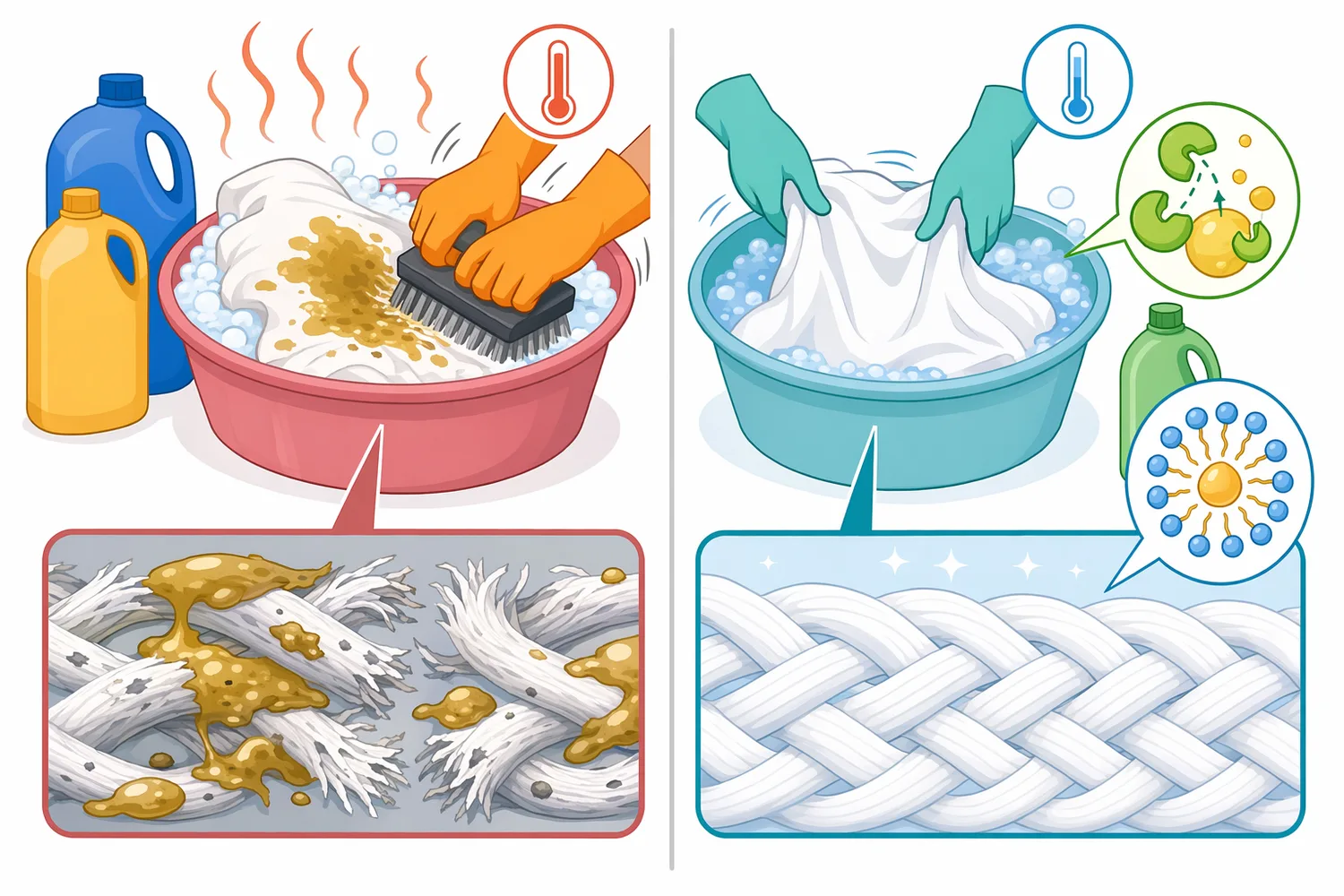
For textile care, milder washing conditions can also matter because high alkalinity, high temperature, and aggressive chemistry may shorten fabric life or affect colors and finishes. By attacking lipid soils at the molecular level, lipase can help shift some cleaning effort away from brute-force conditions and toward targeted stain breakdown. That is particularly relevant for fabrics repeatedly exposed to sebum, cosmetic oils, kitchen grease, and food residues [2].
The strongest technical basis for Alp01 is the established function of lipases: they hydrolyze ester bonds in fats and oils, especially triglycerides, producing smaller molecules that are easier for detergent systems to disperse. That mechanism is directly relevant to oily laundry stains, greasy food residues, sebum, and hard-surface lipid films. It explains why a lipase belongs in detergent applications where fat removal is a priority [1].
The product-specific source supports Alp01’s intended use in detergent and cleaning applications, including laundry detergents, concentrated gels or capsules, powder detergent blends, commercial laundry systems, textile pre-treatment, and hard-surface cleaning products. It also identifies the product as a liquid industrial enzyme supplied in a 1 kg bottle and sold online by Enzymes.bio .
At the same time, responsible expectations are important. The supplied product information does not provide a universal stain-removal percentage, a guaranteed comparison against non-enzymatic detergents, or a promise that every formulation will perform the same way. Enzyme benefits depend on how the finished detergent is built and used, including pH, temperature, contact time, storage exposure, soil composition, and the presence of compatible surfactants and other formulation components [2].
That makes the correct claim precise rather than exaggerated: Alp01 is a lipid-targeting enzyme ingredient that can strengthen the fat-and-oil removal function of suitable detergent systems. It is not a universal cleaner, not a replacement for surfactants, and not a substitute for a complete detergent formulation. Its value is the specific biochemical conversion of oily soil into more removable fragments .
Enzymes.bio supplies Alkaline Lipase Enzyme for Detergents Alp01 as a liquid industrial enzyme product in a 1 kg bottle. The product is sold directly online by the 1 kg unit: the buyer places the order, pays online, and the order is then processed and shipped. A Certificate of Analysis and Safety Data Sheet come with the order for responsible business use and handling documentation .
The product source describes Alp01 as a dark brown, clear liquid enzyme preparation. It should be stored cool and dry, between 5–25°C, and protected from prolonged heat or direct sunlight. Under proper storage conditions, the product source describes stable activity for up to 12 months .
Alp01 is intended for industrial detergent and cleaning-related use, not for human consumption. Buyers using enzyme ingredients should handle them responsibly and follow the documentation supplied with the order, especially because enzymes are proteins that can require appropriate workplace handling practices in concentrated form .
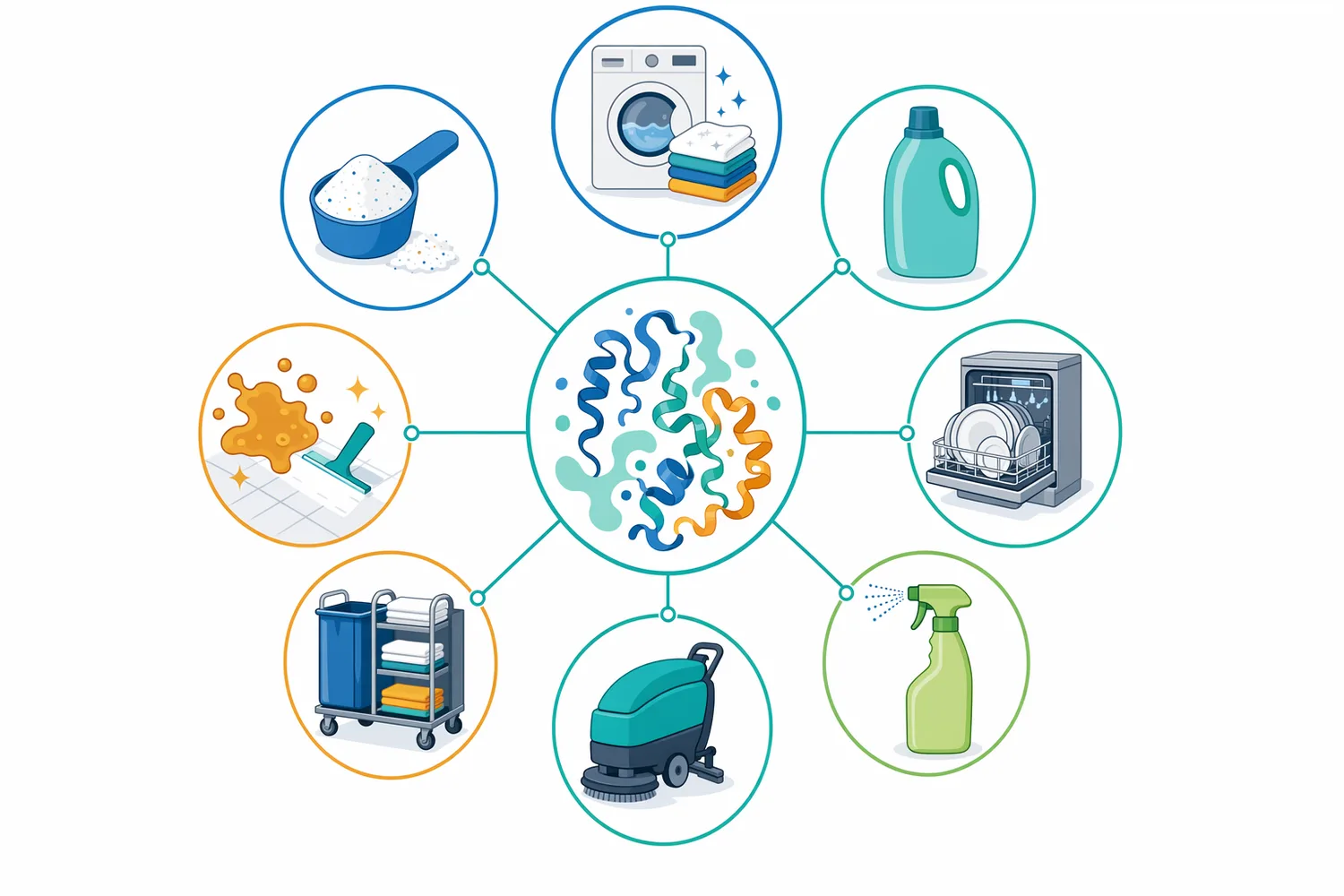
Alp01 fits best where the cleaning challenge includes fats, oils, sebum, greasy food residues, cosmetic oils, or similar lipid-based soils. In laundry, that includes collars, cuffs, linens, towels, uniforms, sportswear, food-service textiles, and garments exposed to body oils or greasy stains. In cleaning products, it is relevant to hard-surface formulations aimed at lipid films and oily residues .
Its clearest technical role is in detergent systems that already provide wetting, emulsification, pH control, and soil suspension, because lipase and surfactants work together. The enzyme hydrolyzes lipid molecules; surfactants disperse the resulting fragments; mechanical action and rinsing remove them from the fabric or surface. This combined mechanism is more realistic and more useful than expecting lipase to behave as a stand-alone degreaser [2].
Alp01 is also well aligned with multi-enzyme detergent concepts. Lipase handles the lipid fraction, while protease, amylase, cellulase, and mannanase can address other stain components when present in the formulation. That division of function is important for real-world stains, which are usually mixtures rather than single pure substances .
Alkaline Lipase Enzyme for Detergents Alp01 is a liquid enzyme ingredient supplied by Enzymes.bio for detergent and cleaning applications where oily and fatty soils are a key problem. Its mechanism is concrete: it hydrolyzes ester bonds in triglycerides and related lipid residues, turning water-resistant fat films into smaller, more dispersible breakdown products that detergent surfactants can remove more effectively [1].
The product is positioned for laundry detergents, concentrated detergent formats, powder blends, commercial laundry, textile pre-treatment, and hard-surface cleaners for oily residues. It is sold directly online by the 1 kg unit, with online payment, order processing, shipment, and accompanying Certificate of Analysis and Safety Data Sheet .
For buyers using enzyme-enabled detergent systems, Alp01 should be understood as a targeted fat-and-oil stain removal ingredient—not a complete detergent and not a universal stain remover. Used under suitable detergent conditions, it adds a biochemical cleaning pathway that complements surfactants and other enzymes by changing the lipid soil itself, making greasy residues easier to disperse, suspend, and rinse away [2].
Sold by the 1 kg unit, in stock and ready to ship. Order directly on our store — pay online and we process your order. A Certificate of Analysis and Safety Data Sheet are included with every order.
Buy Alkaline Lipase Enzyme For Detergents Alp01 →Numbered in order of first citation. Open-access sources, each verified reachable at publication; citation numbers in the text link here.