
Alkaline Protease Detergent Enzyme – Protein Stains Remover Enzyme is used in alkaline washing and cleaning systems to break down protein-based stains such as blood, egg, milk, sweat, and food residues. It works by hydrolyzing peptide bonds in stain proteins, turning tough, film-like deposits into smaller peptide fragments that are easier for surfactants, water, and mechanical action to remove.
Enzymes.bio supplies this product directly online by the 1 kg unit. The buyer places and pays for the order online, after which the order is processed and shipped; a Certificate of Analysis and Safety Data Sheet are included with the order .
Alkaline protease is a protein-degrading enzyme designed for cleaning environments above neutral pH. In detergent use, its job is not to act as a complete detergent on its own, but to add a targeted biochemical function: it attacks the protein portion of a stain while the rest of the cleaning system supplies wetting, alkalinity, soil suspension, emulsification, and rinse-away action. Reviews of Bacillus alkaline proteases describe this enzyme class as one of the most important industrial proteases, with detergents among the major application areas because alkaline wash conditions match the operating environment of many proteases from alkaliphilic and industrial microbial sources [1].
Protein stains are difficult because proteins can form coherent films, bind to textile fibers, trap pigment or fat, and become less removable after drying or heating. Blood, for example, contains hemoglobin and plasma proteins; milk contains caseins and whey proteins; egg contains albumen proteins; sweat and body soils contain skin proteins and other biological residues. A detergent without protease must mostly detach these materials as intact deposits, whereas alkaline protease chemically cuts the protein network into smaller pieces before or during removal. Studies on alkaline proteases from industrially relevant microbes repeatedly evaluate them for cleaning or broad industrial use because this peptide-bond cleavage is useful wherever proteinaceous material must be reduced, dispersed, or removed [2].
In practical terms, alkaline protease helps convert a stain from a structured, sticky protein matrix into a mixture of shorter peptides and amino-acid-containing fragments. Those fragments are generally less able to cling together as a film, and they expose more charged and hydrophilic groups to water. That change makes the soil easier for surfactants to wet and detach, easier for agitation to break apart, and easier for the wash liquor to carry away. Research on enzymatic hydrolysis of food proteins shows the same underlying transformation: alkaline protease treatment changes large protein substrates into hydrolysates with altered structure, solubility, and biological or functional properties [3].
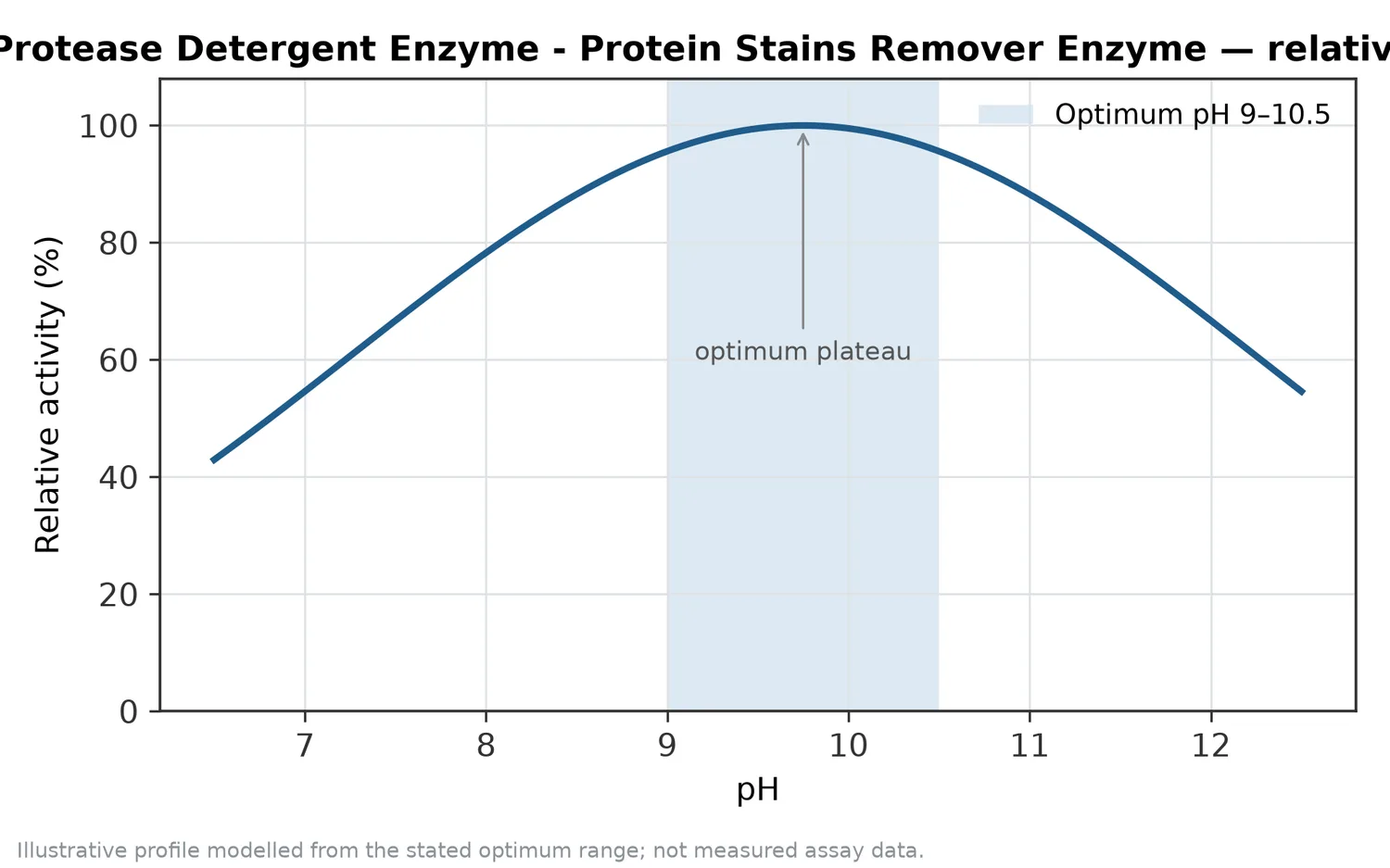
The alkaline operating environment is central to detergent relevance. Many laundry powders, liquid detergents, institutional wash systems, and cleaning formulations are built around alkaline builders because alkalinity helps swell fibers, neutralize acidic soils, improve surfactant performance, and loosen organic residues. A protease used in this type of system must therefore continue to function under alkaline conditions rather than losing structure immediately. The detergent value of alkaline proteases is closely tied to their ability to remain active in this pH environment, which is why industrial studies often focus on alkaline stability, thermostability, and compatibility with demanding process conditions [4].
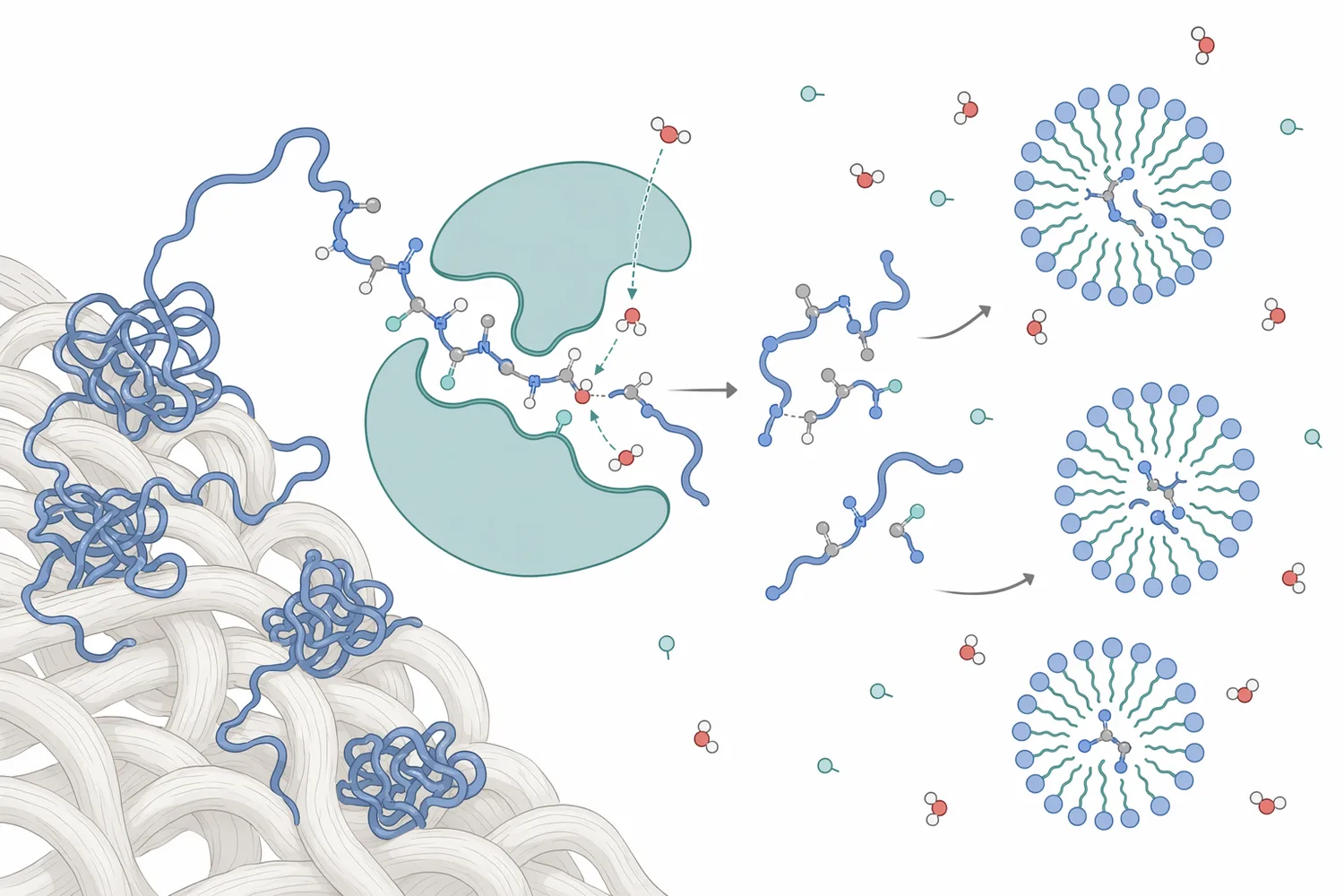
Alkalinity also changes the substrate. Protein stains are not inert blocks; their shape and charge distribution respond to pH. Under alkaline conditions, many protein side chains become more negatively charged, internal salt bridges can weaken, and dense protein deposits can become more hydrated. That partial unfolding or swelling exposes peptide bonds that were previously buried inside the stain matrix. The enzyme can then access more cut points, and each cut further loosens the structure. Work on selective enzymatic hydrolysis of soybean protein isolate shows that protease treatment can change protein structure and downstream gel properties, illustrating how cleavage of protein chains causes material-level changes rather than merely “cleaning” in a superficial way [5].
A useful way to understand alkaline protease is to compare it with other protease classes. Proteases are not interchangeable simply because they all hydrolyze proteins; their useful application depends heavily on the pH environment in which the protein substrate, detergent system, and enzyme structure are stable.
| Protease type | Typical operating concept | Where it tends to fit | Detergent relevance |
|---|---|---|---|
| Acid protease | Protein hydrolysis under acidic conditions | Acidic food processing, some fermentation or specialty processes | Usually not the first fit for alkaline laundry detergents |
| Neutral protease | Protein hydrolysis near neutral pH | Mild protein modification, food and biotechnology processes | Can be useful in milder systems, but less aligned with high-alkaline detergents |
| Alkaline protease | Protein hydrolysis above neutral pH | Laundry detergents, protein stain removers, leather, waste treatment, protein-rich residues | Strong conceptual fit because many detergent systems are alkaline |
This comparison is conceptual rather than a product specification. The practical point is that alkaline protease aligns with detergent chemistry because both the enzyme and the cleaning system are intended to work in alkaline water. Reviews covering Bacillus alkaline proteases emphasize that this pH fit, combined with industrial robustness, is the reason the enzyme class is widely studied for detergent and cleaning-related uses [1].
A protein molecule is a chain of amino acids linked by peptide bonds. In a stain, many such chains may be folded, cross-associated, dried onto fibers, mixed with fats or pigments, or trapped in a fabric weave. Alkaline protease catalyzes hydrolysis of peptide bonds: water is used to split the bond, producing shorter peptide fragments. The enzyme is not consumed in the reaction; it repeatedly binds accessible regions of protein, performs cleavage, releases the fragments, and moves on to another accessible site.
That cutting action has visible cleaning consequences. A dried blood or egg stain is not removed all at once; the enzyme first weakens the protein network at many microscopic points. As large proteins are shortened, the stain loses cohesion. The fragments hydrate more readily, detach more easily, and become more compatible with the detergent solution. Studies of specific alkaline protease cleavage in casein demonstrate that proteases can release defined peptide fragments by cutting at particular sequence environments, reinforcing that the mechanism is chemical bond cleavage rather than simple soaking or softening [6].
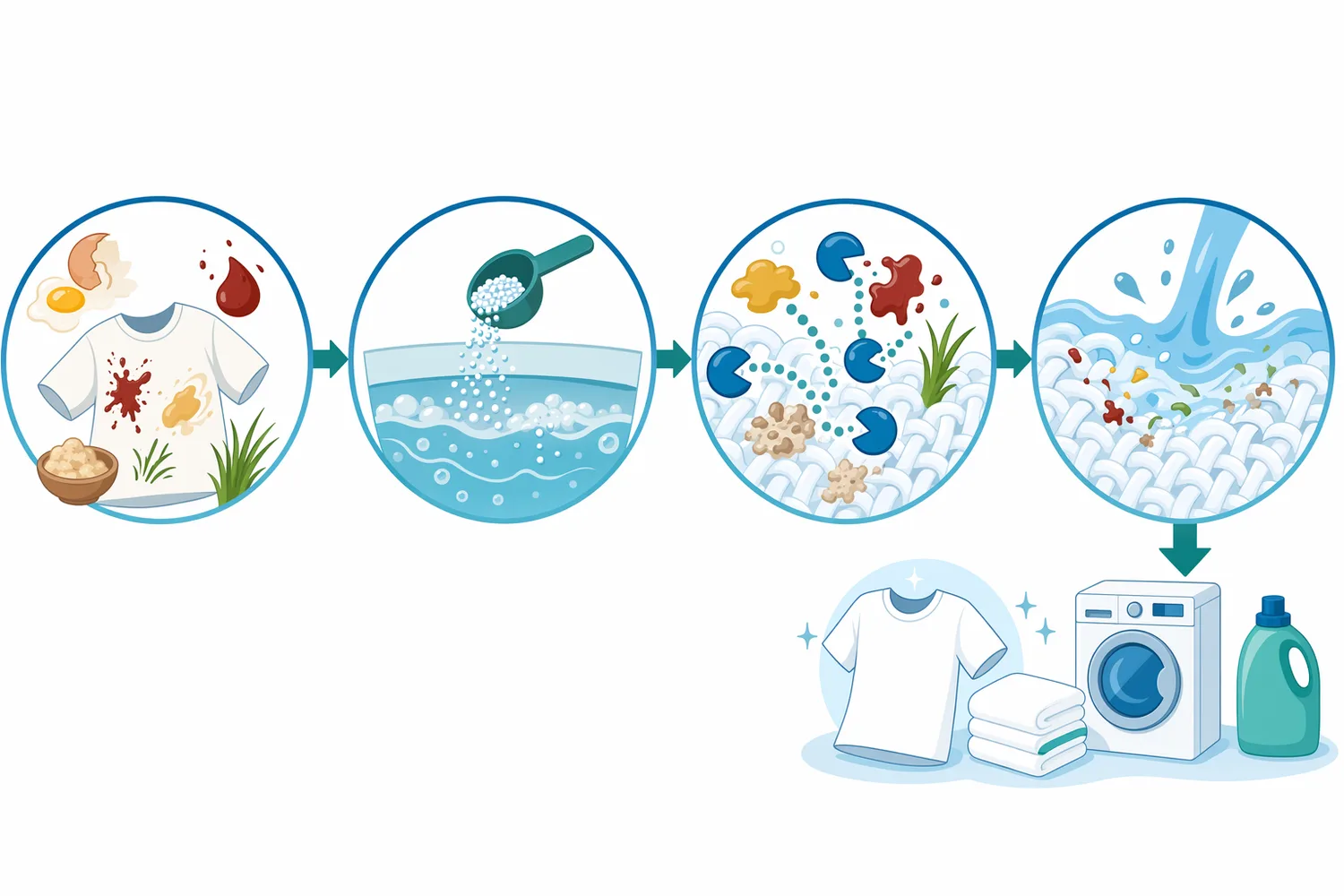
The substrate also changes in ways that matter for cleaning. When a compact protein is hydrolyzed, buried hydrophilic and charged groups can become exposed, molecular size drops, and the balance between aggregation and dispersion shifts. In food-protein research, alkaline protease hydrolysis of soybean β-conglycinin and other protein substrates has been studied because the resulting peptides show changed antigenicity, structure, or functional behavior compared with the intact protein [7]. For detergent use, the same structural principle supports stain removal: once the original protein architecture is broken, it is less able to behave as a stubborn, continuous deposit.
Protein stains often contain more than protein. A sauce stain may contain fat, pigment, starch, and protein; grass-associated stains may include chlorophyll, waxes, and plant proteins; sweat soils contain salts, lipids, and skin-derived material. Alkaline protease addresses the protein fraction, which can act like a binder holding the mixed stain together. Once that binder is hydrolyzed, other detergent components can act more effectively on the remaining oily, particulate, or colored material. This is why alkaline protease is best understood as a targeted stain-removal enzyme, not as a universal treatment for every soil type.
Although detergent performance must always be judged in the full wash system, the underlying science of alkaline protease is supported by a large body of protein hydrolysis research. In soybean β-conglycinin hydrolysis, alkaline protease from Bacillus subtilis was used to break down a storage protein and alter the antigenicity of the hydrolysates, showing that enzymatic cleavage can materially change how a protein behaves after treatment [7]. For cleaning, that matters because the stain is also a protein substrate whose structure and surface behavior change after hydrolysis.
Other substrate studies show similar material transformations across very different proteins. Poultry by-products, for example, contain complex animal proteins, connective tissue components, and heterogeneous raw material; research comparing protease choices and protease combinations in poultry by-product hydrolysis highlights that different proteases generate different hydrolysate profiles from the same broad substrate category [8]. The detergent implication is that “protease” is a functional category, but alkaline protease choice and formulation context influence how quickly and extensively a stain protein is opened and fragmented.
Whey protein hydrolysis provides another useful analogy because whey proteins are globular and can resist breakdown when folded or aggregated. Optimization work on yak whey protein concentrates evaluated enzymatic hydrolysis and peptide fractions, showing that controlled proteolysis can convert intact dairy proteins into smaller fractions with measurable functional differences [9]. In laundry, milk and dairy stains similarly contain proteins that may dry onto fabrics; hydrolysis helps move those proteins away from intact, adherent deposits and toward smaller soluble or dispersible fragments.
Gelatin and collagen-rich materials also demonstrate how proteases affect protein networks. Research comparing acid, alkaline, and enzymatic hydrolysis methods for cattle bone gelatin examined how different hydrolysis routes change physicochemical and functional properties [10]. While gelatin extraction is not laundry, the protein chemistry is relevant: collagen-derived protein networks are strong because chain length and intermolecular associations matter, and enzymatic cleavage reduces that network integrity.
Eggshell membrane research is especially illustrative because eggshell membranes are fibrous, protein-rich biological materials that resist simple dissolution. Combined alkaline and enzymatic hydrolysis has been studied for obtaining ingredients from eggshell membranes, showing how alkalinity and protease action can work together to open and degrade resilient proteinaceous structures [11]. In a stain-removal context, the same combination—alkaline water plus protease—helps make dried egg or protein films less cohesive and easier to remove.
Industrial alkaline protease research often focuses on enzyme sources, stability, and application breadth. Studies on alkaline protease from Bacillus cereus strain S8 explicitly discuss industrial applications, reflecting the continued importance of alkaline proteases in commercial processing environments where protein degradation must occur under non-neutral conditions [2]. This supports the general use of alkaline protease as a practical industrial enzyme class rather than a laboratory curiosity.
Thermostable alkaline proteases are also studied because many cleaning and processing environments are warm. A seaweed-associated Nocardiopsis dassonvillei strain was reported as producing a thermostable alkaline protease, with purification, structural elucidation, and industrial applications investigated [4]. For detergent users, the key lesson is that temperature tolerance is one of the recurring research themes because wash and cleaning systems rarely operate under a single ideal laboratory condition.
Solvent tolerance and broad robustness are further research themes. A 2025 study described a thermostable and solvent-tolerant alkaline protease from Galium aparine and evaluated industrial applications [12]. Detergent systems contain surfactants, builders, and other chemical components, so the wider industrial literature’s emphasis on tolerance helps explain why alkaline protease development is strongly linked with real cleaning and processing environments.
Microbial alkaline proteases are particularly prominent. Reviews and studies of Bacillus, Brevibacillus, Alkalihalobacillus, and related organisms show continued interest because these microbes can secrete extracellular proteases that function outside the cell, where industrial substrates are present [13]. In a detergent, the enzyme must also act outside any living system, directly on proteins deposited on fabric or surfaces, so extracellular alkaline proteases are a natural fit for application development.
Screening studies add another layer of evidence. A serine alkaline protease from kitchen-wastewater bacteria was screened, characterized, and evaluated for nutraceutical production, showing that alkaline proteases can be discovered from protein-rich environments where natural selection favors breakdown of organic residues [14]. Detergent stains are different from wastewater, but the biochemical problem—degrading complex proteins in water—is closely related.
The most direct use for Alkaline Protease Detergent Enzyme – Protein Stains Remover Enzyme is in laundry detergents, pre-soak systems, and stain-removal formulations that target protein soils. In these applications, the enzyme is commonly paired with surfactants and alkaline builders. The enzyme cuts protein; surfactants reduce interfacial tension and help suspend loosened soil; mechanical action exposes fresh stain surfaces; rinsing removes the resulting fragments. Industrial reviews of alkaline proteases consistently identify detergent use as a major application because this division of labor is effective for proteinaceous stains [1].
Blood stains are a classic example. Hemoglobin and plasma proteins can bind into a tough deposit, and heat can further denature them into a more persistent film. Alkaline protease does not “bleach” blood in the way an oxidant might; instead, it reduces the protein structure that anchors the stain. Once the protein network is cut, colored components and trapped material are more easily dispersed by the rest of the detergent system. This enzymatic logic is why industrial alkaline proteases are repeatedly evaluated for stain removal and related cleaning uses [15].
Egg, milk, and food-protein stains respond to the same principle. Egg white proteins can dry into a glossy film; milk proteins can combine with fats; meat and sauce residues can contain proteins embedded in complex food soils. Alkaline protease attacks the protein framework, while other detergent ingredients address fat, starch, pigment, or particulate matter. Research on peanut protein hydrolysis with alkaline protease and flavor protease illustrates how protein substrates can be progressively broken down by enzymatic treatment, with hydrolysis characteristics depending on the enzyme system and substrate [16].
Institutional and commercial laundry settings often encounter repeated protein stains from linens, uniforms, towels, food-service textiles, and healthcare-adjacent materials. In these environments, the value of alkaline protease is consistency of biochemical action against recurring protein soils. The enzyme contributes a specific mechanism that water temperature and surfactant chemistry alone may not provide. Industrial evaluations of alkaline protease, including recent work on environmental isolates such as Bacillus tropicus, reflect the ongoing search for enzyme systems that remain useful under practical process conditions [17].
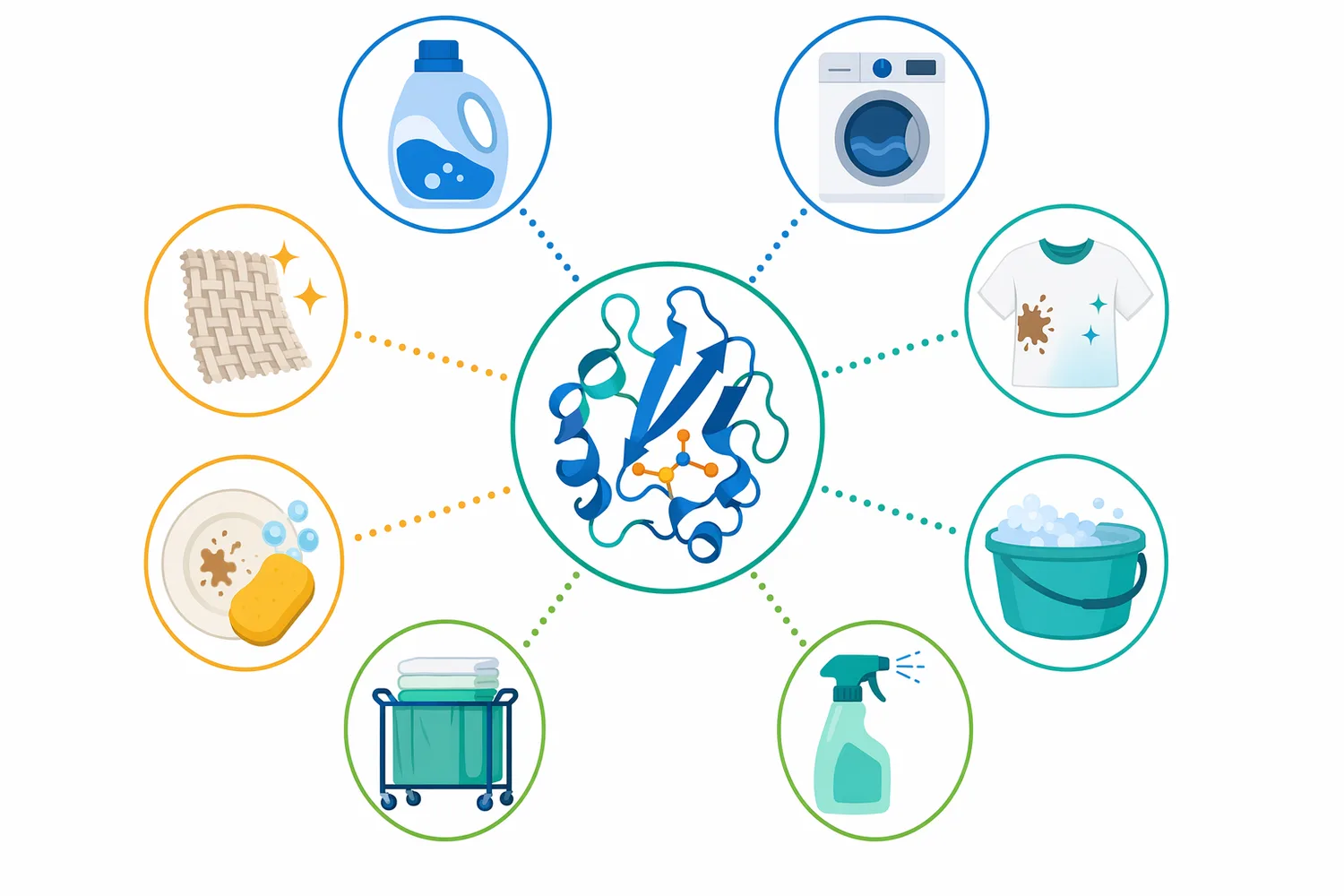
Alkaline protease can also be relevant beyond fabric. Protein films can form on hard surfaces, equipment, containers, drains, and processing-contact areas where biological residues accumulate. The same hydrolysis mechanism can help weaken organic films before rinsing or surfactant removal. However, claims should stay grounded: evidence for laundry and general industrial protein degradation supports the mechanism, while each hard-surface cleaning system still depends on its full formulation and application conditions. Broad reviews of alkaline proteases include detergents, leather, food, feed, waste treatment, and other sectors because protein hydrolysis is useful across many substrates [1].
Leather and hide processing demonstrate alkaline protease action on dense biological materials. Dehairing, bating, and related steps involve controlled removal or modification of protein-rich structures. Studies of alkaline proteases for industrial applications often include leather-related uses because keratin, collagen-associated proteins, and other animal-derived materials require targeted proteolysis under alkaline or near-alkaline process conditions [4]. While laundry stains are much thinner than hides, the enzymatic principle—controlled cleavage of structural proteins—is the same.
Protein-rich waste and by-product processing provide another comparison. Enzymatic hydrolysis of poultry by-products, fish wastes, and other residues is studied because proteases can convert low-value proteinaceous material into peptide-rich hydrolysates or assist deproteinization [8]. In cleaning, the desired endpoint is not ingredient recovery but detachment and removal; still, the chemical transformation from insoluble or aggregated protein to smaller fragments is closely aligned.
Eggshell membrane hydrolysis is also useful as an analogy for resilient protein films. Combined alkaline and enzymatic treatment has been used to obtain food and cosmetic ingredients from eggshell membranes, which are difficult to break apart without changing the protein network [11]. Dried egg stains on textiles are much less complex than whole membranes, but they benefit from the same sequence: alkalinity hydrates and opens the protein matrix, and protease cuts it into smaller pieces.
Food-protein studies further show that enzymatic hydrolysis can change solubility and functional behavior. Rice protein hydrolysis work reported enhanced solubility after enzymatic treatment and connected those changes with structural and functional characteristics of the hydrolysates [3]. For stain removal, improved dispersibility is one of the most important outcomes: a protein fragment that stays suspended in wash water is less likely to redeposit on fabric.
Alkaline protease needs water, contact with the protein stain, and conditions that keep the enzyme folded and active long enough to work. In a wash liquor, the enzyme must diffuse into the stained area, bind accessible protein regions, catalyze cleavage, and release fragments. If the stain is very old, heavily heat-set, buried under oily soil, or shielded by fabric structure, access can be slower. This is why protease performance is not only a matter of enzyme chemistry; it is also affected by stain age, fabric construction, water movement, detergent composition, and contact time.
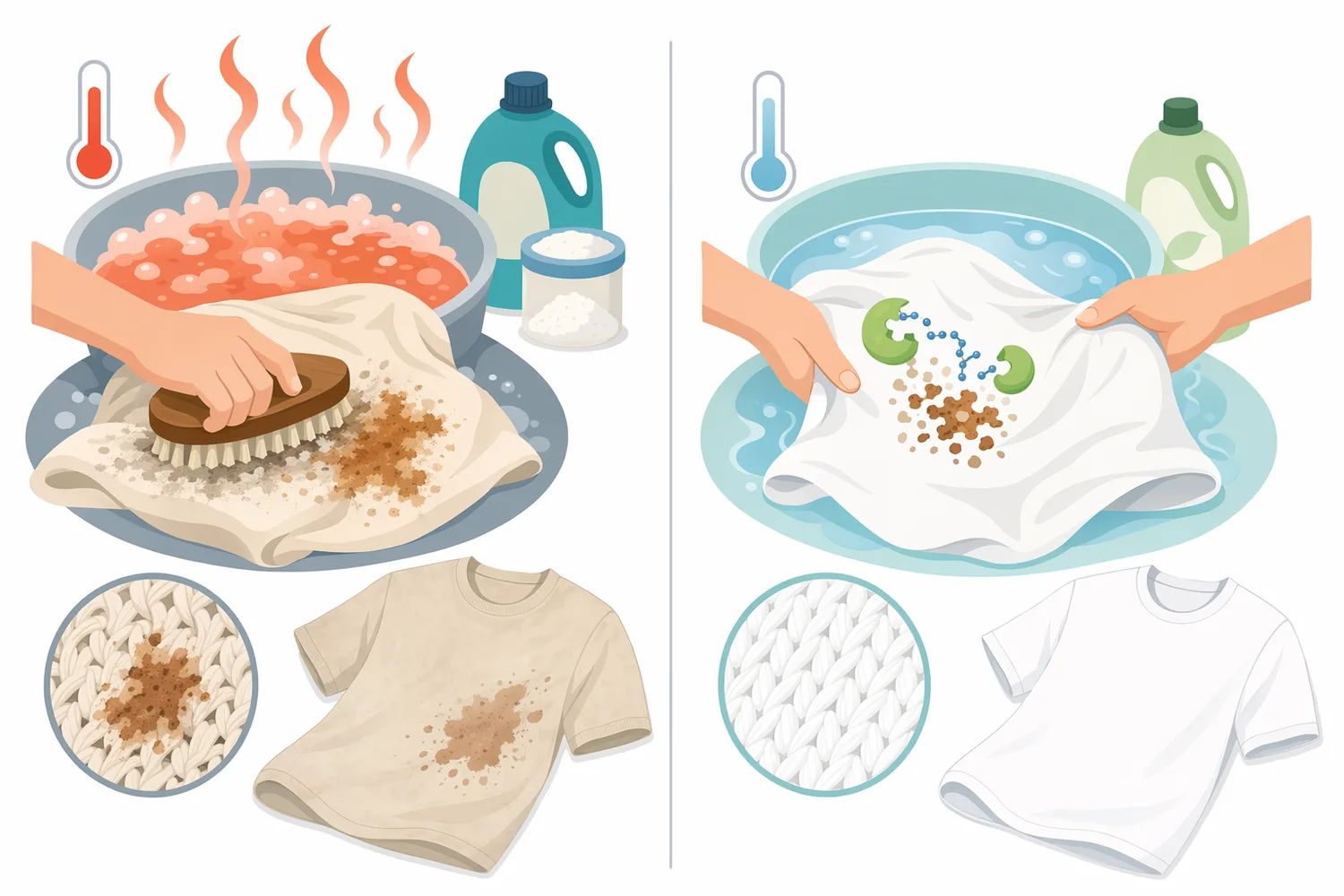
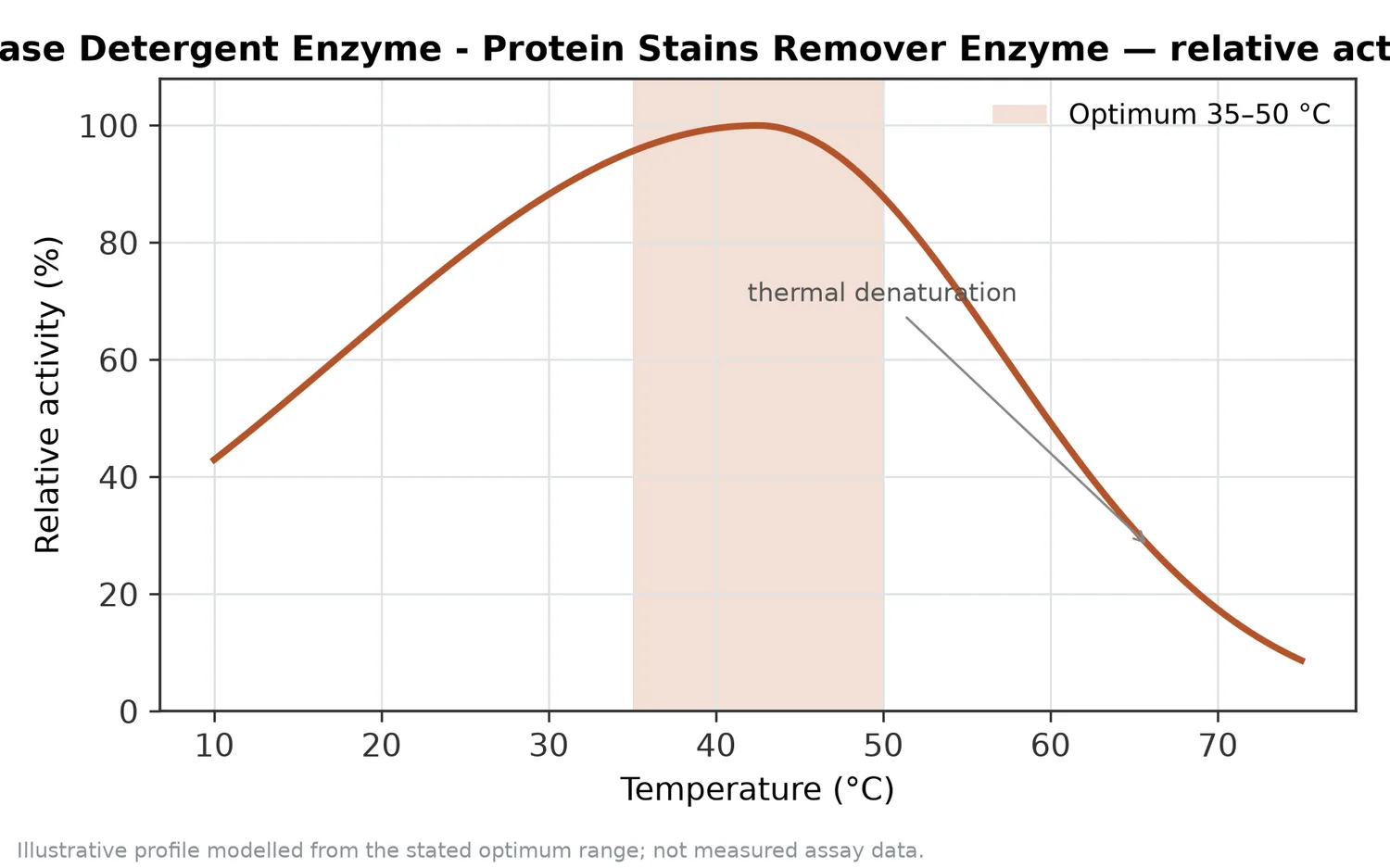
Temperature has two opposing effects. Warmer water generally increases molecular motion and can speed enzyme-substrate interactions, but excessive heat can destabilize proteins, including enzymes, and can also set some stains before hydrolysis has progressed. This explains why thermostable alkaline proteases are an important research topic rather than a minor detail. Studies on thermostable alkaline proteases for industrial applications show that maintaining function under warmer process conditions is valuable, but the useful temperature behavior depends on the enzyme system and formulation [4].
pH has a similar dual role. Alkalinity helps open protein stains and matches the operating environment of alkaline proteases, but extreme conditions can eventually damage enzyme structure or alter other formulation components. Alkaline proteases are therefore used where the overall cleaning system is alkaline but still compatible with enzymatic function. Research on alkaline protease production and applications repeatedly focuses on pH behavior because industrial usefulness depends on activity under the process conditions where the substrate is actually present [18].
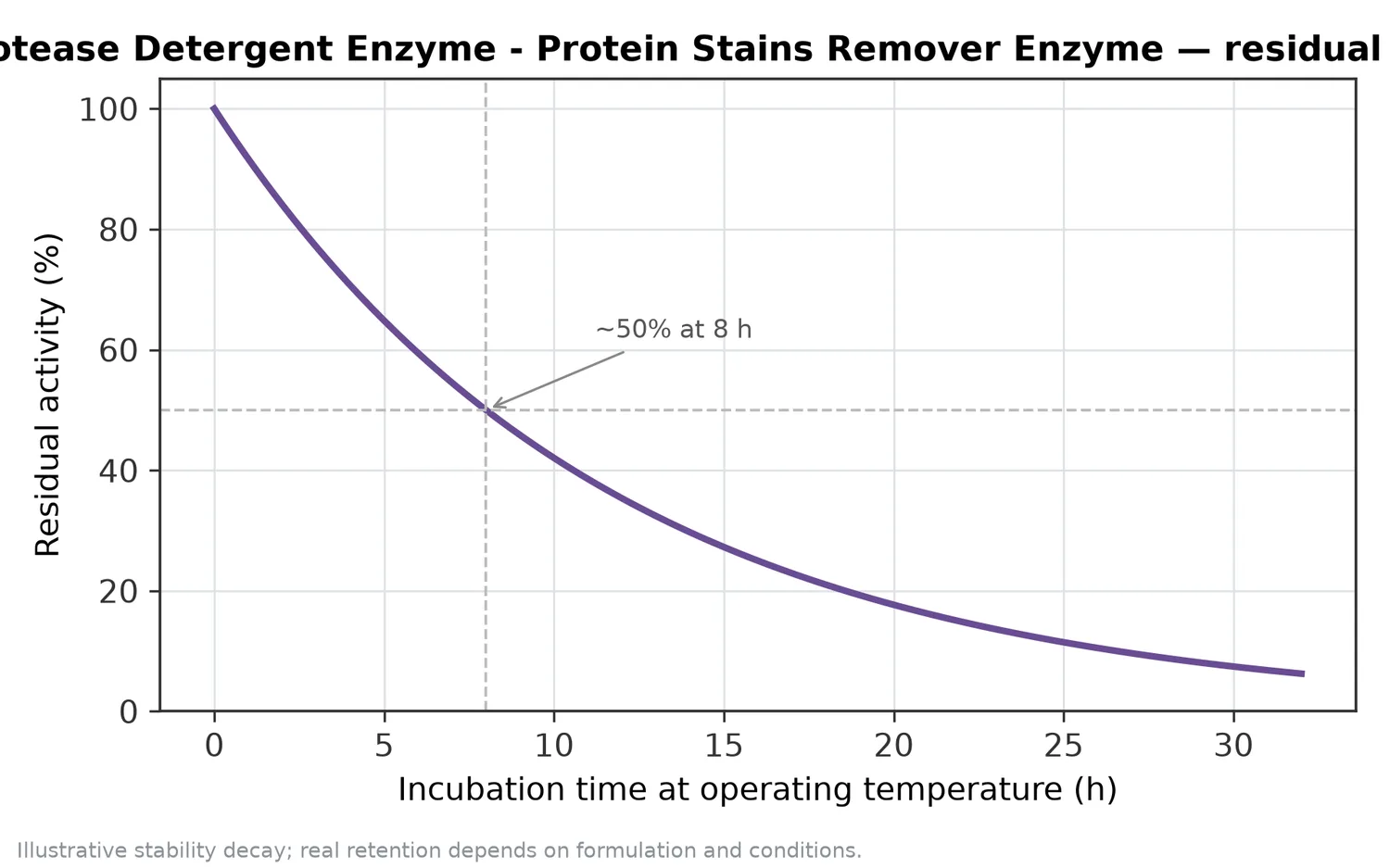
Formulation compatibility also matters. Detergents may contain surfactants, builders, chelants, oxidants, fragrances, preservatives, and other components. Some ingredients help by wetting the stain and dispersing fragments; others may challenge enzyme stability depending on concentration and exposure. The industrial literature’s attention to thermostability, solvent tolerance, and protein engineering reflects this reality: alkaline proteases are valuable, but they must remain structurally intact long enough to act in chemically complex systems [12].
The main benefit is targeted removal of protein stains. Instead of relying only on alkalinity and surfactants to detach an intact protein film, alkaline protease deconstructs the stain at the molecular level. This is especially useful for blood, egg, dairy, sweat, body soils, and food residues in which proteins act as adhesive binders. Studies across many protein substrates show that alkaline protease hydrolysis changes protein structure and function, supporting the practical expectation that proteinaceous stains become less cohesive after enzymatic treatment [5].
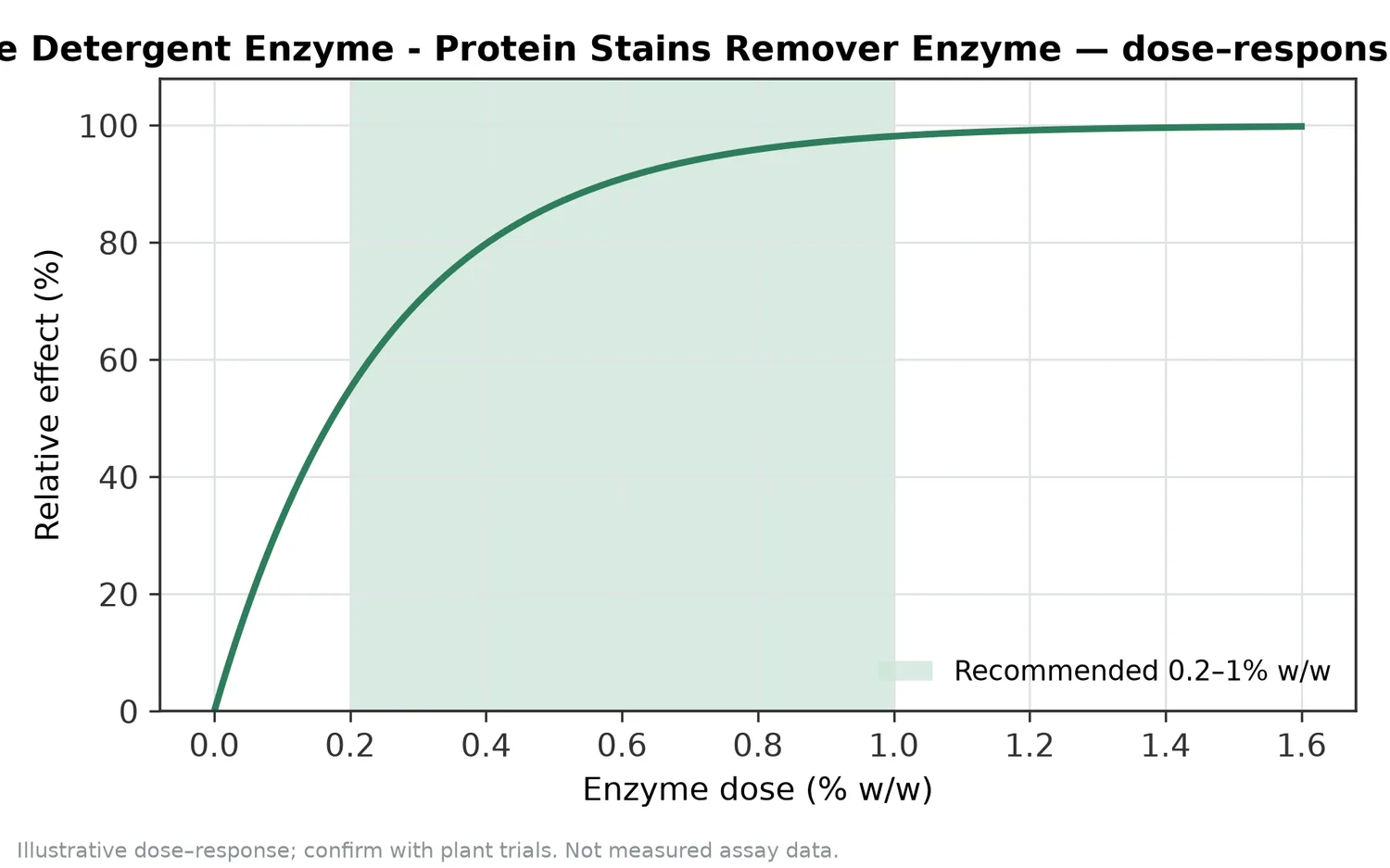
A second benefit is performance support under moderate washing conditions. Because enzymes catalyze specific reactions, they can contribute stain-removal action without requiring the harshest possible chemical environment. This does not mean an enzyme makes every formula mild or low-temperature by itself; it means protease supplies a mechanism that can complement detergent chemistry. Research into alkaline proteases from diverse organisms continues partly because industry values enzymes that can work effectively under practical, energy-conscious conditions [13].
A third benefit is selectivity. Alkaline protease acts primarily on proteins, so it can be paired with other cleaning mechanisms rather than replacing them. Lipases address fats, amylases address starches, cellulases modify cellulose surfaces in certain textile applications, and oxidants or optical systems address color in different ways. Protease occupies the protein-removal role in this broader cleaning toolbox. Reviews of industrial alkaline proteases highlight this role within detergents and other sectors where protein hydrolysis is the desired transformation [1].
A fourth benefit is broad relevance across protein-rich residues. The same enzyme class that helps with laundry stains is also studied in food protein hydrolysis, leather processing, nutraceutical ingredient generation, and waste valorization. That breadth matters because it confirms the underlying chemistry across substrates rather than limiting alkaline protease to one isolated stain test. For example, silver carp protein hydrolysis with alkaline protease has been used to generate peptide fractions with characterized structural and biological properties, again showing that protease treatment materially changes protein substrates [19].
Alkaline Protease Detergent Enzyme – Protein Stains Remover Enzyme is best understood as a functional enzyme ingredient for protein stain breakdown. It is not a finished laundry detergent by itself, not a bleach, and not a universal cleaner for every stain chemistry. Its strongest role is in systems where proteinaceous soils are present and the wash or cleaning environment is compatible with alkaline protease activity.
It should also be understood as an application-dependent ingredient. A fresh milk stain on cotton, a dried blood stain on a blended fabric, and a cooked egg residue on a hard surface do not present the same substrate access or removal challenge. The enzyme’s biochemical action is consistent—peptide-bond hydrolysis—but the visible outcome depends on the whole cleaning situation. This balanced view is consistent with alkaline protease research, where individual studies often focus on specific substrates, organisms, and process conditions rather than claiming identical performance everywhere [14].
For buyers ordering from Enzymes.bio, the commercial path is straightforward: the product is sold directly online by the 1 kg unit, with online payment followed by order processing and shipping. The order includes a Certificate of Analysis and Safety Data Sheet, providing product documentation for quality and safe handling review .
Alkaline protease is a detergent-relevant enzyme because it directly attacks the protein structure of stains. Under alkaline cleaning conditions, it helps convert blood, egg, milk, sweat, and food-protein residues from tough, adherent deposits into smaller peptide fragments that are easier for water, surfactants, and mechanical action to remove. The mechanism is concrete: peptide bonds are hydrolyzed, protein networks lose strength, fragments become more dispersible, and the remaining soil is easier to lift.
The scientific evidence behind this use is strong at the enzyme-class level. Alkaline proteases are widely studied for detergent and industrial applications, and protein hydrolysis research across soybean, dairy, rice, poultry, gelatin, fish, and membrane substrates shows how protease treatment changes protein structure and functionality [1]. For cleaning applications, that same chemistry explains why alkaline protease is a practical ingredient for protein stain removal when used as part of a compatible alkaline detergent or cleaning system.
Enzymes.bio supplies Alkaline Protease Detergent Enzyme – Protein Stains Remover Enzyme online in 1 kg units. Orders are placed and paid for online, then processed and shipped with the accompanying Certificate of Analysis and Safety Data Sheet .
Sold by the 1 kg unit, in stock and ready to ship. Order directly on our store — pay online and we process your order. A Certificate of Analysis and Safety Data Sheet are included with every order.
Buy Alkaline Protease Detergent Enzyme - Protein Stains Remover Enzyme →Numbered in order of first citation. Open-access sources, each verified reachable at publication; citation numbers in the text link here.