
Alkaline protease is a protein-degrading enzyme that works in alkaline conditions, cutting peptide bonds so large proteins become smaller, more soluble peptides. In practical processing, that alkaline protease function helps loosen protein stains, reduce protein films, hydrolyze food or feed proteins, support enzymatic leather steps, and improve treatment of protein-containing residues. Enzymes.bio supplies alkaline protease online in 1 kg units for industrial and food-processing use; the order is paid for online, processed, and shipped with a Certificate of Analysis and Safety Data Sheet.
An alkaline protease is a protease enzyme that catalyzes protein hydrolysis under alkaline pH conditions. A simple alkaline protease definition is: an enzyme that breaks peptide bonds in proteins most effectively in alkaline environments. The term covers a broad functional class rather than one single molecule. Published work describes alkaline proteases from bacteria, actinomycetes, fungi, and plant sources, with many studies emphasizing their relevance to detergent, leather, food-processing, waste-treatment, and other industrial systems [1].
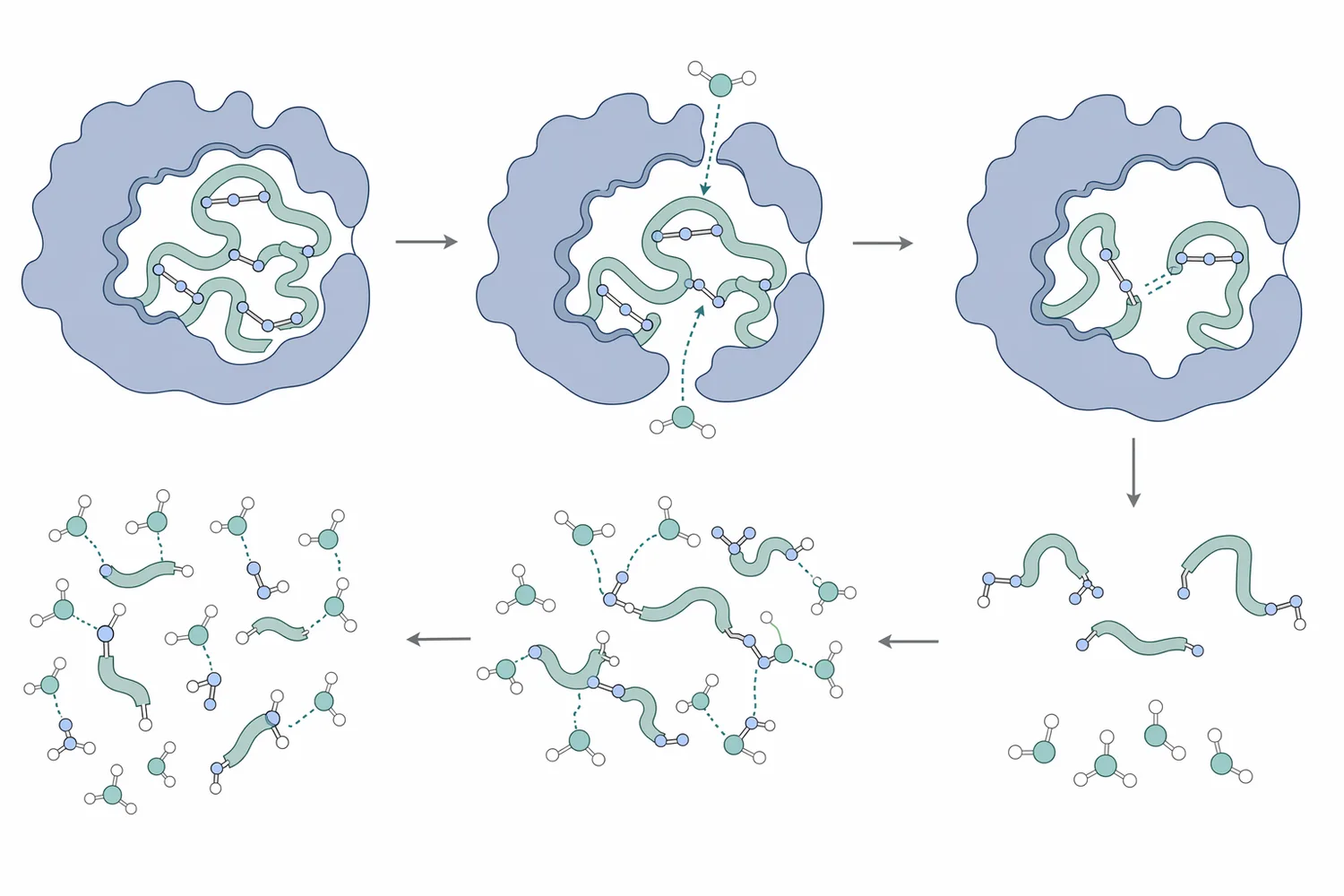
At the substrate level, the enzyme works by using water to cleave peptide bonds inside a protein chain. Proteins such as blood proteins, milk proteins, egg proteins, gluten, soy proteins, collagen-associated residues, fish proteins, and other food or biological residues are long amino-acid polymers folded into compact structures. When an alkaline protease enzyme cuts those chains at multiple points, the original protein loses part of its folded structure, its molecular size drops, and the resulting fragments can disperse, dissolve, detach from surfaces, or become easier for downstream microbes or process steps to handle [2].
This is why the phrase “protease alkaline” appears across several industrial contexts. The enzyme is not merely “cleaning” a surface in a physical sense; it changes the protein soil chemically. In a detergent wash, for example, a dried blood or egg stain contains protein networks that adhere to fibers and trap other soils. Alkaline protease attacks peptide bonds within those networks, weakening the stain matrix so surfactants, builders, mechanical agitation, and rinse water can remove it more effectively [3].
Proteases are grouped partly by the pH environment in which they perform best. Acid proteases are associated with acidic systems, neutral proteases with near-neutral conditions, and alkaline proteases with high-pH systems such as detergent liquors, alkaline cleaning baths, leather-processing steps, and certain protein-hydrolysis workflows. The distinction matters because pH affects both the protein substrate and the enzyme’s active-site geometry [1].
In alkaline conditions, many proteins unfold or swell more readily than they do at lower pH. Charged groups on amino-acid side chains change state, weakening interactions that held the protein compact. That partial unfolding exposes more peptide bonds to the enzyme. Alkaline protease then cuts those exposed bonds, converting a large, cohesive protein mass into smaller peptides that hydrate and disperse more easily. This combination—alkaline swelling plus enzymatic cleavage—is one reason alkaline protease uses are so common in detergents and high-pH industrial cleaning [3].
| Protease type | Typical process environment | Main practical fit | What changes in the protein substrate |
|---|---|---|---|
| Acid protease | Acidic systems | Acid food processing, some fermentation contexts | Proteins are hydrolyzed where low pH is compatible with the material and process |
| Neutral protease | Near-neutral aqueous systems | Mild hydrolysis where alkaline or acidic pH would be undesirable | Protein chains are cut with less pH-driven swelling or denaturation |
| Alkaline protease | Alkaline systems | Detergents, alkaline cleaning, leather steps, selected food/feed hydrolysis, protein-rich waste treatment | Protein structure loosens under alkaline pH, then peptide bonds are cleaved into smaller, more soluble fragments |
This comparison is conceptual rather than a product specification. Individual enzymes within each group still differ in stability, substrate preference, and formulation compatibility. For example, studies on bacterial alkaline protease, alkaline serine protease, thermostable alkaline protease, and salt-tolerant proteases show that performance depends strongly on the enzyme source and the application environment [4].
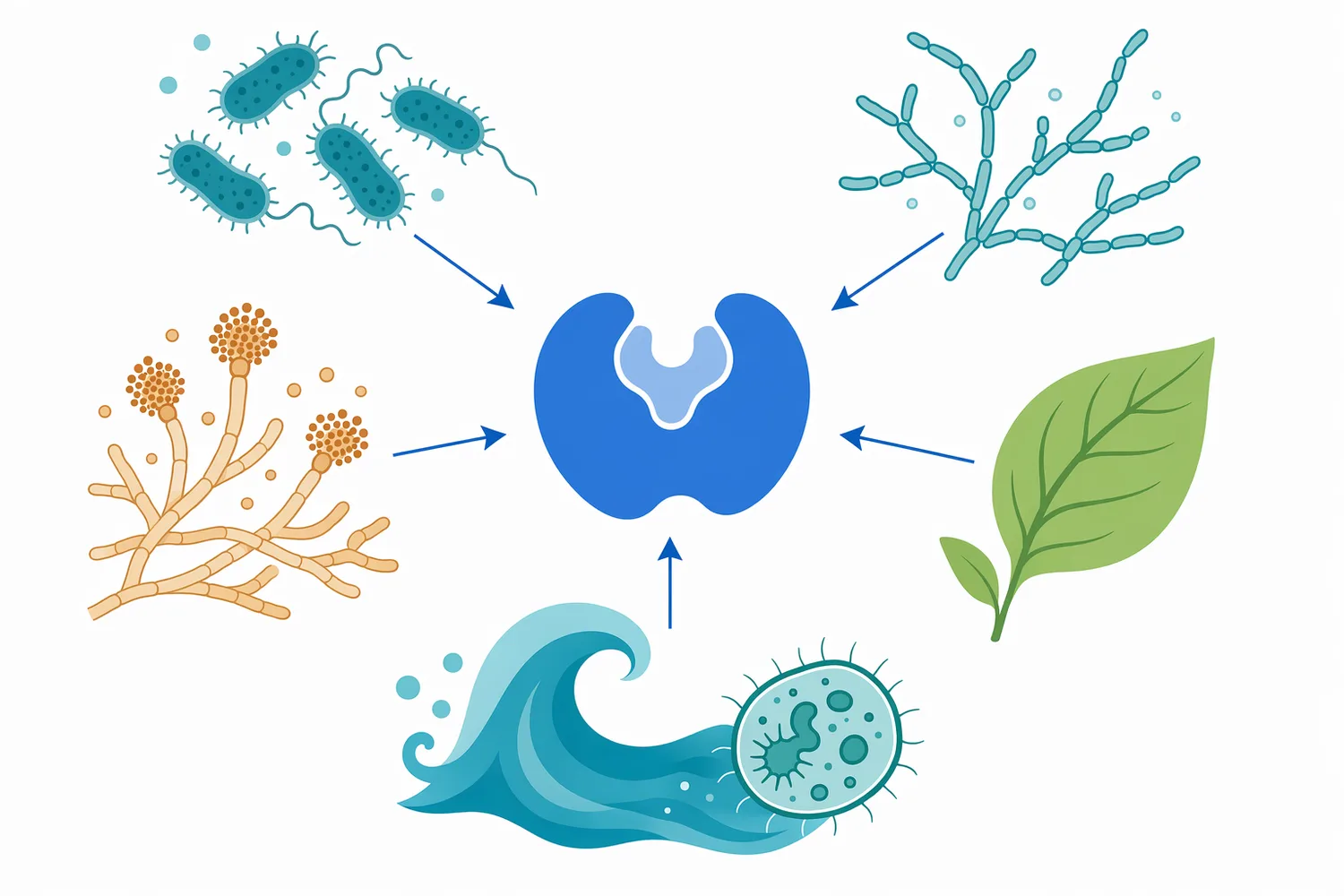
Many alkaline protease enzyme examples come from microorganisms because microbes can secrete extracellular enzymes into their surroundings. Bacillus species are especially common in the literature. A review focused on Bacillus species alkaline protease production and industrial applications highlights the importance of this genus for protease alkaline applications, including detergents and other processing uses [1].
Other bacterial alkaline protease examples include Staphylococcus aureus alkaline protease studied as a detergent additive, Bacillus acquimaris from a halotolerant bacterium, Bacillus circulans producing a thermostable detergent-compatible enzyme, and Bacillus atrophaeus protease used to hydrolyze sheep placenta for antioxidant peptide preparation [3], [5]. These studies are not interchangeable product claims; they show the breadth of alkaline protease function across protein stains, saline environments, heated processes, and protein hydrolysate production.
Actinomycetes and marine-associated organisms are also represented. A thermostable alkaline protease from seaweed-associated Nocardiopsis dassonvillei was purified, characterized, structurally studied, and evaluated for industrial applications, while Streptomyces alkaline protease production has also been reported [6], [7]. These organisms are relevant because enzymes from marine, alkaline, thermophilic, or halotolerant environments often attract attention for processing conditions that include salt, heat, surfactants, or alkaline pH.
Fungal and plant proteases broaden the picture. Penicillium chrysogenum alkaline protease production has been improved through mutation and optimization work, while alkaline protease from Galium aparine has been described as thermostable and solvent-tolerant with industrial applications [8], [9]. For a customer reading this as a practical product note, the key point is that “alkaline protease” is a functional category supported by many enzyme sources, not a single organism-specific enzyme.
Protein stains are difficult because proteins do not behave like simple dirt. Blood, egg, milk, and meat residues can dry into films, bind to fibers, crosslink with other components, and become less soluble over time. Alkaline detergent chemistry helps hydrate and loosen those materials, but surfactant alone may leave behind protein fragments that remain attached. Alkaline protease cuts those protein networks into smaller pieces, reducing their ability to hold together and adhere [3].
A detergent-focused alkaline protease study from Staphylococcus aureus described the enzyme as a promising additive for industrial detergents, which aligns with the long-standing role of proteases in stain removal [3]. The practical mechanism is direct: peptide-bond cleavage breaks the stain’s structural framework. Once the protein matrix is fragmented, surfactants can emulsify associated fats, builders can support soil suspension, and agitation can remove loosened material from fabric or hard surfaces.
Some alkaline proteases are specifically described as alkaline serine proteases or serine alkaline proteases. “Serine” refers to the catalytic residue used in the enzyme’s active site. In broad terms, a serine alkaline protease uses a serine-containing catalytic mechanism to attack peptide bonds, forming and resolving a transient enzyme–substrate intermediate so the protein chain is split. This type of protease is common in industrial literature and is especially relevant to detergent-oriented enzyme development [10].
In food and feed processing, the goal is often not simply to remove protein, but to transform it. Alkaline protease can convert large proteins into peptide mixtures with different solubility, water-binding, viscosity, and functional behavior. When a protein particle or slurry is treated, the enzyme first acts at accessible surface regions; as cleavage proceeds, the structure opens, more internal bonds become accessible, and hydrolysis advances through the material [2].
Wheat gluten research illustrates the mechanism clearly. Protease modification can change gluten conformation and molecular interactions, improving solubilization by disrupting the strong network that normally makes gluten cohesive and relatively difficult to disperse [2]. In practical terms, the enzyme does not “dissolve gluten” by physical mixing alone; it cuts the protein backbone, weakens intermolecular associations, and creates shorter fragments with different hydration and solubility behavior.
Other protein-hydrolysis applications focus on peptide generation. A marine Bacillus atrophaeus protease was applied to sheep placenta hydrolysis for antioxidant peptide preparation, showing how protease treatment can release smaller bioactive peptide fractions from a complex animal protein substrate [5]. A study on peanut allergen Ara h 1 evaluated alkaline protease treatment in relation to protein structure and allergenicity, again showing that enzymatic hydrolysis can alter protein architecture and biological recognition properties [11].
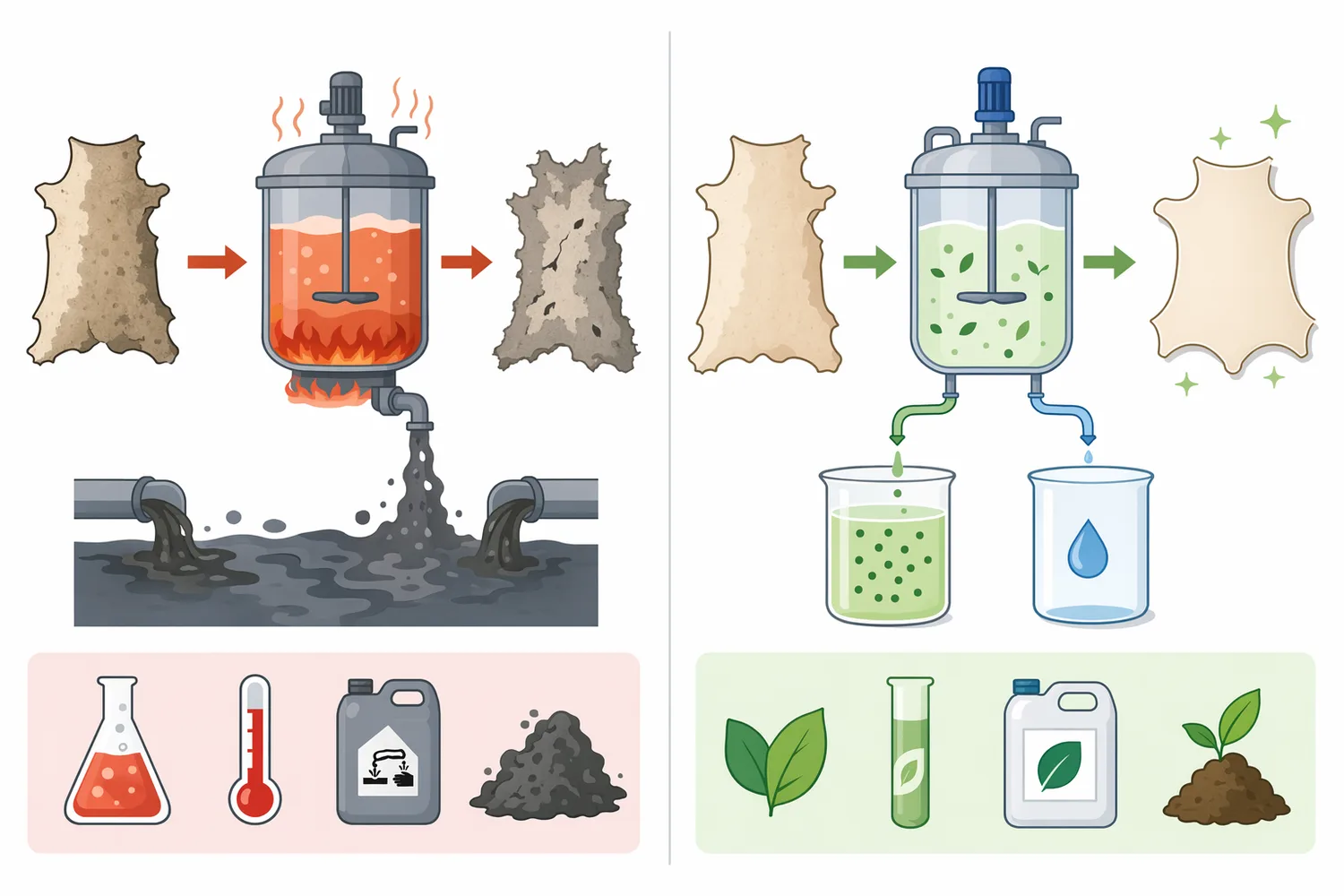
Leather processing involves structured animal tissue, not a simple dissolved protein solution. Hair attachment and hide preparation are affected by keratin-associated structures, non-collagenous proteins, interfibrillar materials, and surface residues. Alkaline protease can help degrade selected proteinaceous components around hair roots and within the hide matrix, supporting dehairing or bating steps when the process is designed for enzymatic action [1].
The value is selective biochemical weakening. Instead of relying only on aggressive chemical breakdown, alkaline protease attacks susceptible peptide bonds in non-target proteins and associated materials. As those structures are hydrolyzed, hair loosening and hide softening can become easier. The enzyme must be controlled because leather quality depends on preserving the desired collagen structure while removing or modifying unwanted protein fractions [1].
Protein-rich residues also cause problems in wastewater, sludge, and clogging systems. Proteins can increase viscosity, contribute to suspended solids, bind with polysaccharides or microbial extracellular material, and slow downstream biological treatment. Alkaline protease pretreatment can break those proteins into smaller soluble fragments, making them more available for microbial conversion or easier to remove in subsequent process steps [12].
A study on anaerobic co-digestion of food waste and dewatered sludge examined thermal, ultrasonic, alkaline technologies integrated with protease pretreatment to enhance methane production [12]. The underlying logic is that protein hydrolysis is often a limiting step: complex macromolecules must be solubilized before microbes can ferment and convert them. Protease pretreatment increases the pool of smaller nitrogen-containing organics available for the digestion community.
A separate laboratory study applied lysozyme, alkaline protease, and sodium hypochlorite to reduce bioclogging during managed aquifer recharge [13]. In that context, alkaline protease contributes by attacking protein components of biological clogging material. It is not a universal stand-alone answer for every clogging problem, but it can participate in a multi-component treatment strategy where proteinaceous extracellular material is part of the blockage.
Detergent use is one of the most familiar alkaline protease applications. Laundry detergents, institutional cleaning systems, and some industrial cleaners operate at alkaline pH because alkalinity helps swell soils, saponify fatty components, and improve surfactant performance. Alkaline protease adds a targeted biochemical action against proteins that otherwise resist removal [3].
The enzyme’s contribution is most visible on proteinaceous stains and films: blood, egg, dairy residue, food soils, and other biological materials. After hydrolysis, the stain loses cohesion. Smaller peptides and amino-acid fragments are more readily suspended in wash liquor and less able to maintain a film on fabric or equipment surfaces. This is why detergent studies frequently evaluate compatibility with detergent systems and performance on protein stains [14].
The term “alkaline protease solution function” is often used by buyers trying to understand how a liquid or dissolved preparation behaves in use. Functionally, once the enzyme is hydrated in the process water, it must contact the protein substrate, maintain an active conformation at the working pH, and remain active long enough to cleave a meaningful number of peptide bonds. The visible result is easier soil release, not because the enzyme acts like bleach, but because it dismantles the protein scaffold holding the stain together [10].
In food-processing workflows, alkaline protease is used where controlled protein breakdown is useful and alkaline conditions are compatible with the material. Examples include plant protein modification, protein hydrolysate preparation, by-product valorization, and functional property adjustment. The enzyme can reduce molecular size, improve dispersion, and expose or release peptide sequences that were buried in the original protein [2].
The mechanism is especially important for plant proteins. Many plant protein systems contain tightly associated storage proteins that are difficult to hydrate evenly. Alkaline protease can cut those proteins, lowering average chain length and weakening hydrophobic or ionic associations. This can help transform an insoluble or high-viscosity protein slurry into a more workable hydrolysate, depending on the process design and the intended end use [2].
Research on peanut Ara h 1 demonstrates that alkaline protease treatment can change protein structure and allergenicity-related properties [11]. That does not mean every alkaline protease product is intended for allergen control, but it does show the depth of structural change possible when peptide bonds in a defined food protein are hydrolyzed. For food-processing users, the relevant takeaway is that protease treatment can alter both physical and biological protein behavior.
Feed-related protein hydrolysis uses the same chemistry: large proteins are cut into smaller peptides. In fermented soybean meal, fish meal, animal by-products, or other protein-rich inputs, protease treatment can support breakdown before or during feed processing. The enzyme does not create protein; it changes the accessibility and form of protein already present [5].
By-product valorization is a strong fit for protease chemistry because many food-processing side streams contain valuable but underutilized proteins. Enzymatic hydrolysis can convert these proteins into peptide-rich materials that are easier to formulate or process. The Bacillus atrophaeus study on sheep placenta hydrolysis is one research example showing protease use for generating antioxidant peptides from a protein-rich animal material [5].
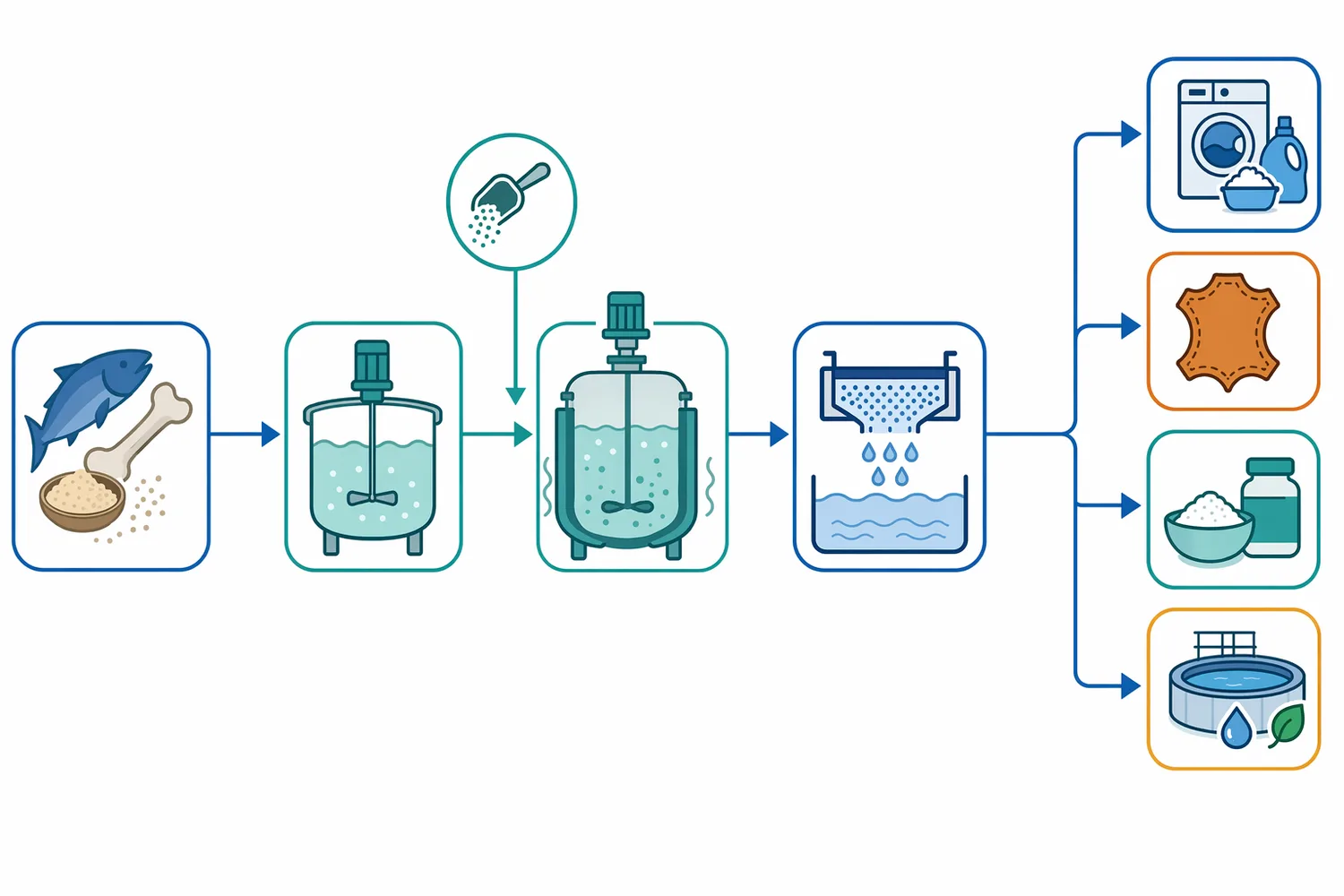
Alkaline protease use in leather is based on targeted degradation of unwanted proteins under alkaline bath conditions. Dehairing and bating are not identical steps, but both involve modification or removal of proteinaceous components that affect the hide surface, fiber opening, and final leather properties. Enzymatic processing can support these effects while reducing dependence on purely chemical action when the process is controlled [1].
The practical value is not just “faster processing.” It is more specific substrate modification. Hair-loosening depends on weakening proteins involved in hair anchoring; bating depends on controlled removal of non-collagenous proteins and interfibrillar materials. Alkaline protease can contribute to both because peptide-bond cleavage changes the tissue matrix at the molecular level [1].
Protein-containing effluents from food, dairy, slaughter, fermentation, and mixed organic streams may contain suspended protein particles, films, and microbial extracellular materials. Alkaline protease can be used as a pretreatment or process aid to hydrolyze those proteins before downstream treatment. Smaller soluble fragments are often more accessible to microbial communities than intact protein particles [12].
In anaerobic digestion, hydrolysis is commonly a critical early step because complex polymers must be converted into smaller molecules before fermentation and methanogenesis. Protease pretreatment directly addresses the protein fraction of that hydrolysis barrier. The 2024 co-digestion study combining protease pretreatment with thermal, ultrasonic, and alkaline technologies shows how enzymatic protein breakdown can be integrated with other treatment approaches rather than viewed in isolation [12].
The production of alkaline protease is widely studied because commercial relevance depends on reliable extracellular enzyme generation. Many alkaline protease producing bacteria secrete proteases into the fermentation medium, which is advantageous because the enzyme does not need to be extracted from inside the cell. Bacillus species are repeatedly studied for this reason, and reviews connect Bacillus alkaline protease production with industrial application potential [1].
Research on alkaline protease production includes organism screening, fermentation condition optimization, mutation, metabolic engineering, and regulatory biology. Pseudomonas aeruginosa production conditions have been investigated, Penicillium chrysogenum production has been improved through physical and chemical mutation, and Bacillus amyloliquefaciens has been engineered through surfactin-mediated mechanisms to enhance alkaline protease production [15], [16].
More recent work goes deeper into cellular regulation. Studies on Bacillus licheniformis 2709 describe the DegS/DegU two-component system and the regulator DegU as important in alkaline protease AprE biosynthesis [17], [18]. In practical language, the cell must decide when to allocate resources to protease secretion; regulatory systems control that decision by linking environmental signals and growth state to enzyme synthesis.
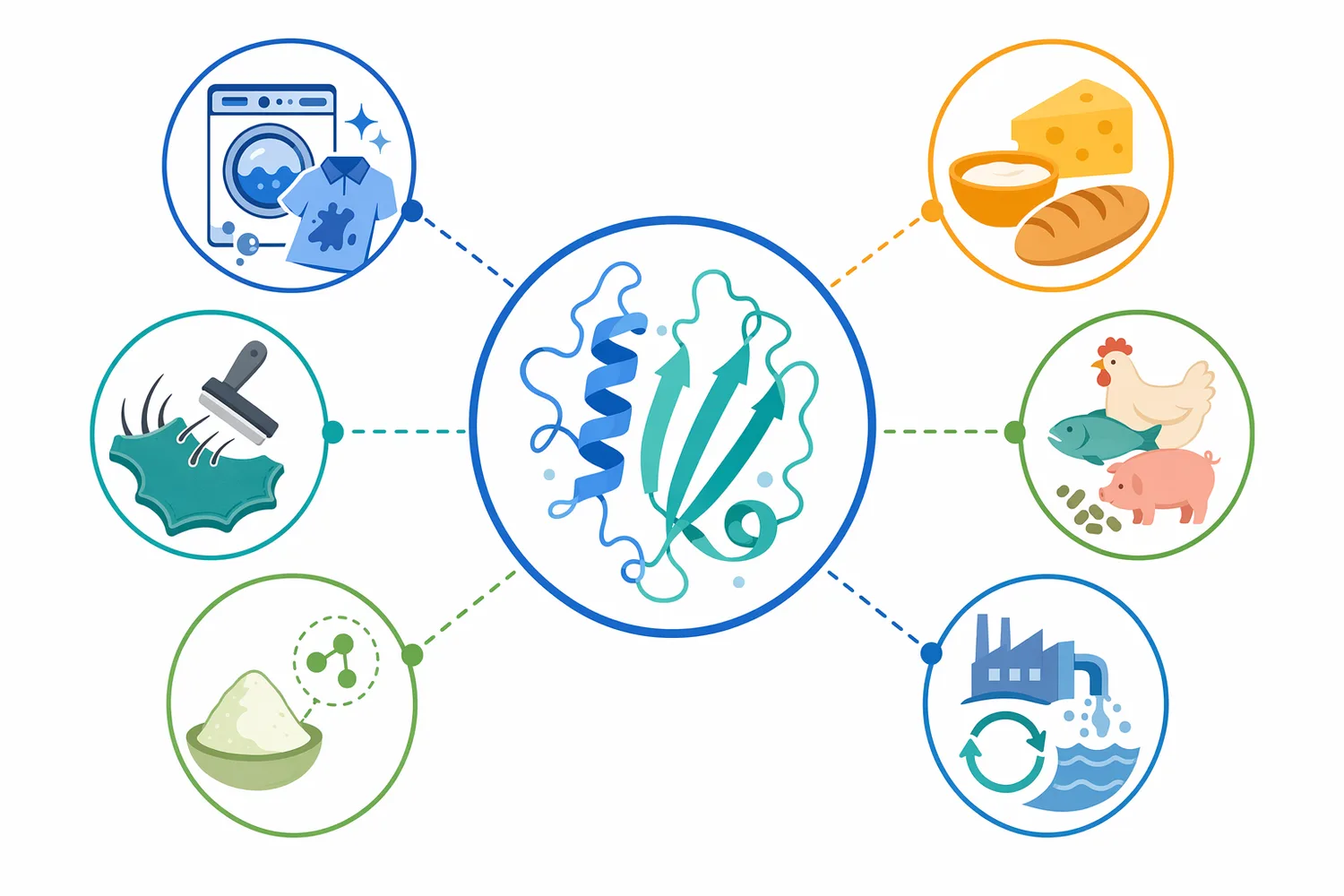
Growth-rate effects have also been studied using combined omics and computational modeling in Bacillus licheniformis [19]. This matters because protease production is not only a recipe issue; it is tied to metabolism, nutrient flow, stress response, secretion capacity, and cellular regulation. For users, these studies explain why alkaline protease is a mature industrial enzyme category: the science covers not only what the enzyme does, but also how organisms produce it efficiently.
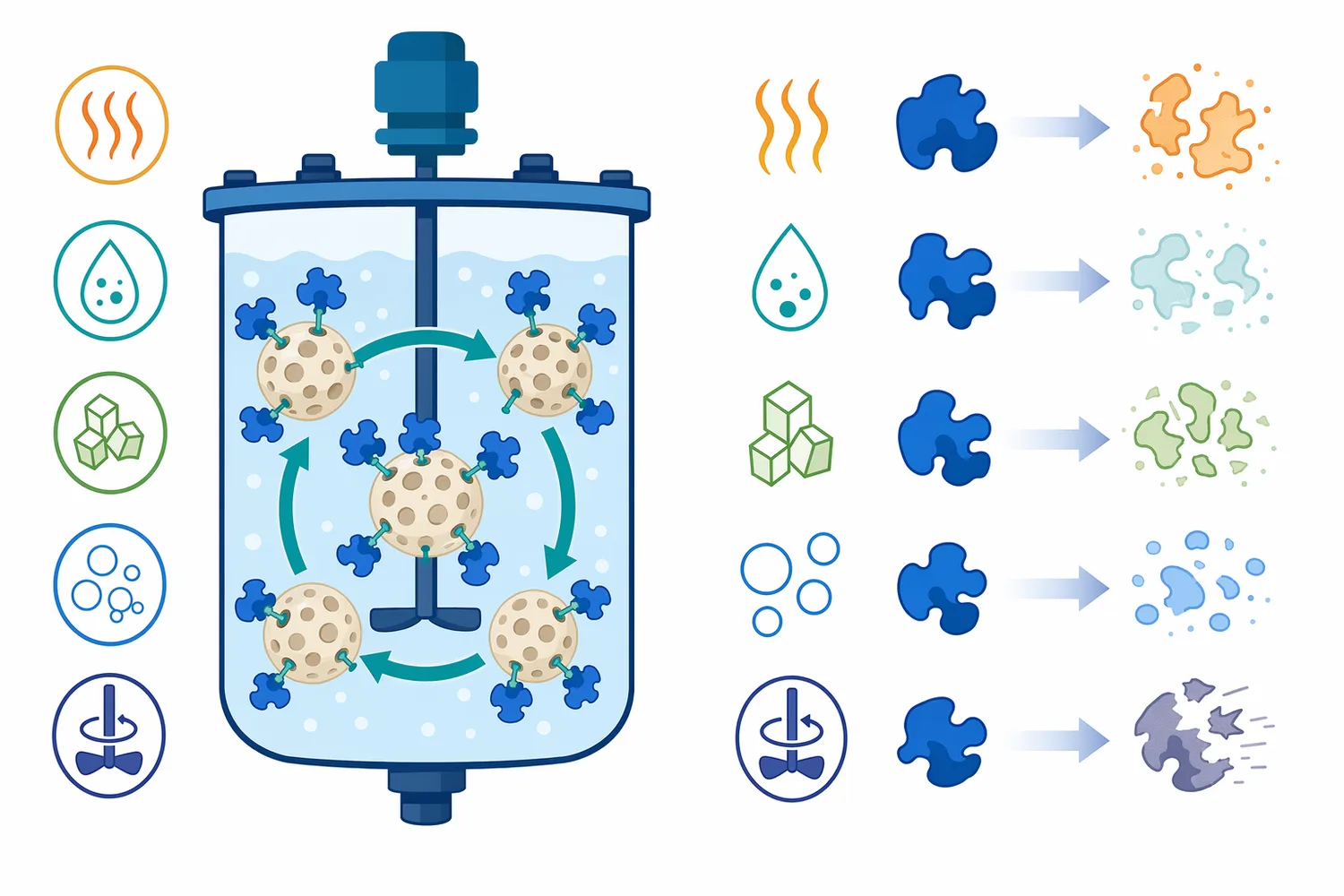
Industrial processes can be harsh for enzymes. Temperature, alkaline pH, surfactants, salts, shear, oxidants, and long contact times can all affect activity. Alkaline proteases used in detergents or industrial processing are therefore often studied for stability under relevant stress conditions. A thermostable alkaline protease from Streptomyces and detergent-compatible alkaline protease from Bacillus circulans are examples of research focused on robustness for practical applications [7], [14].
Immobilization is one engineering strategy for improving usability in selected systems. Immobilized alkaline protease is attached to or entrapped within a support material so it can be recovered, reused, or better stabilized against heat and environmental stress. A study on alkaline protease from Conidiobolus macrosporus specifically evaluated immobilization for reuse and improved thermal stability [20].
Nanobiocatalyst research applies the same logic at smaller scale. A study developing a robust nanobiocatalyst for detergent formulations and other alkaline protease applications reflects the interest in stabilizing enzymes while maintaining access to protein substrates [10]. Immobilization is most relevant where the process design allows contact between the bound enzyme and the protein material; it is less relevant in simple one-pass wash systems where dispersed enzyme action is preferred.
Cold adaptation is another specialized area. Molecular dynamics work on an alkaline protease mutant explored cold-adaptation mechanisms by examining residue interactions and enzyme flexibility [21]. The conceptual lesson is that enzyme performance at low temperature often requires enough molecular flexibility for substrate binding and catalysis, while heat stability generally requires structural rigidity. Different applications may favor different balances, which is why alkaline protease research spans thermostable, cold-active, salt-tolerant, and detergent-compatible variants.
The evidence base for alkaline protease is strong, but it should be interpreted correctly. A study on one bacterial alkaline protease, fungal protease, or plant protease demonstrates what that enzyme did under the reported conditions; it does not automatically prove identical behavior for every alkaline protease solution or powder in every process. Enzyme source, formulation, substrate, pH, temperature, mixing, and exposure time all influence results [4].
This matters when reading search results for terms such as “what is alkaline protease,” “alkaline protease application,” “alkaline protease enzyme examples,” or even product-associated phrases such as “foodpro alkaline protease.” The shared concept is protein hydrolysis under alkaline conditions, but individual products and individual studies may differ in performance profile. The most reliable way to understand the category is to focus on the mechanism: the enzyme cleaves peptide bonds, and that cleavage changes protein size, structure, solubility, and adhesion [2].
Some research areas are promising but application-specific. For example, alkaline protease treatment has been studied in relation to allergen structure, antioxidant peptide production, managed aquifer recharge bioclogging, and anaerobic digestion enhancement [11], [13]. These studies broaden the scientific context, but they should not be read as universal claims for all commercial alkaline protease products or all operating conditions.
Alkaline protease is a biologically active industrial enzyme. Like other enzyme preparations, it should be handled to avoid unnecessary inhalation, dust or aerosol exposure, and direct eye or skin contact. The Safety Data Sheet supplied with the order provides the handling and safety information for the product received.
Because proteases are proteins themselves, they can lose activity if exposed to unsuitable conditions. Excessive heat, incompatible pH, prolonged exposure to aggressive chemistry, or conditions that encourage enzyme self-degradation may reduce performance. Research into stability, immobilization, and enzyme robustness exists precisely because maintaining an active enzyme structure is essential for practical protease function [20].
The enzyme should also be understood as a process aid for professional industrial and food-processing contexts, not as a consumer supplement. Its role is to modify protein-containing materials in controlled systems such as cleaning, hydrolysis, leather processing, or waste treatment. Enzymes.bio supplies alkaline protease for these professional uses through direct online purchase in 1 kg units, with order processing and shipment after payment .
Enzymes.bio supplies alkaline protease online by the 1 kg unit. Buyers place the order directly through the website, pay online, and the order is then processed and shipped. A Certificate of Analysis and Safety Data Sheet are included with the order.
Enzymes.bio is a supplier, not the manufacturer or a testing laboratory. This article is provided to explain the science behind alkaline protease uses and the practical logic for applying an alkaline protease enzyme to protein removal, protein hydrolysis, detergent cleaning, leather processing, and selected waste-treatment workflows. The core value is consistent across these applications: alkaline protease cuts protein chains under alkaline conditions, turning large, persistent protein materials into smaller fragments that are easier to remove, transform, or process.
Sold by the 1 kg unit, in stock and ready to ship. Order directly on our store — pay online and we process your order. A Certificate of Analysis and Safety Data Sheet are included with every order.
Buy Alkaline Protease →Numbered in order of first citation. Open-access sources, each verified reachable at publication; citation numbers in the text link here.