
Alpha-acetolactate decarboxylase, commonly called ALDC, is a brewing enzyme used to reduce diacetyl risk by converting the diacetyl precursor alpha-acetolactate directly into acetoin before buttery diacetyl can form. In brewery operations, that means ALDC is primarily a preventive diacetyl-control tool, not a corrective treatment for beer that already contains elevated diacetyl. Enzymes.bio supplies Alpha-Acetolactate Decarboxylase for brewing as a 1 kg online-order product, with the order processed and shipped after online payment; a Certificate of Analysis and Safety Data Sheet are provided with the order .
Diacetyl is one of the most familiar and operationally disruptive flavor faults in brewing. It is associated with buttery, butterscotch-like, or rancid-butter notes, and even when gravity has reached its expected endpoint, a beer may still require additional time before packaging if diacetyl remains perceptible. This is why many breweries build a warm diacetyl rest, extended maturation, or additional sensory clearance time into their production schedule, especially for clean lagers and neutral ales where a buttery note is not stylistically acceptable.
The biochemical issue begins upstream of diacetyl itself. During fermentation, yeast produces alpha-acetolactate as part of the pathway used to synthesize valine. Some of that alpha-acetolactate leaves the yeast cell and enters the fermenting beer. If it is left to follow the normal chemical route, alpha-acetolactate can undergo oxidative decarboxylation to form diacetyl; yeast must then take up diacetyl and reduce it into less flavor-active compounds as fermentation and maturation continue [1].
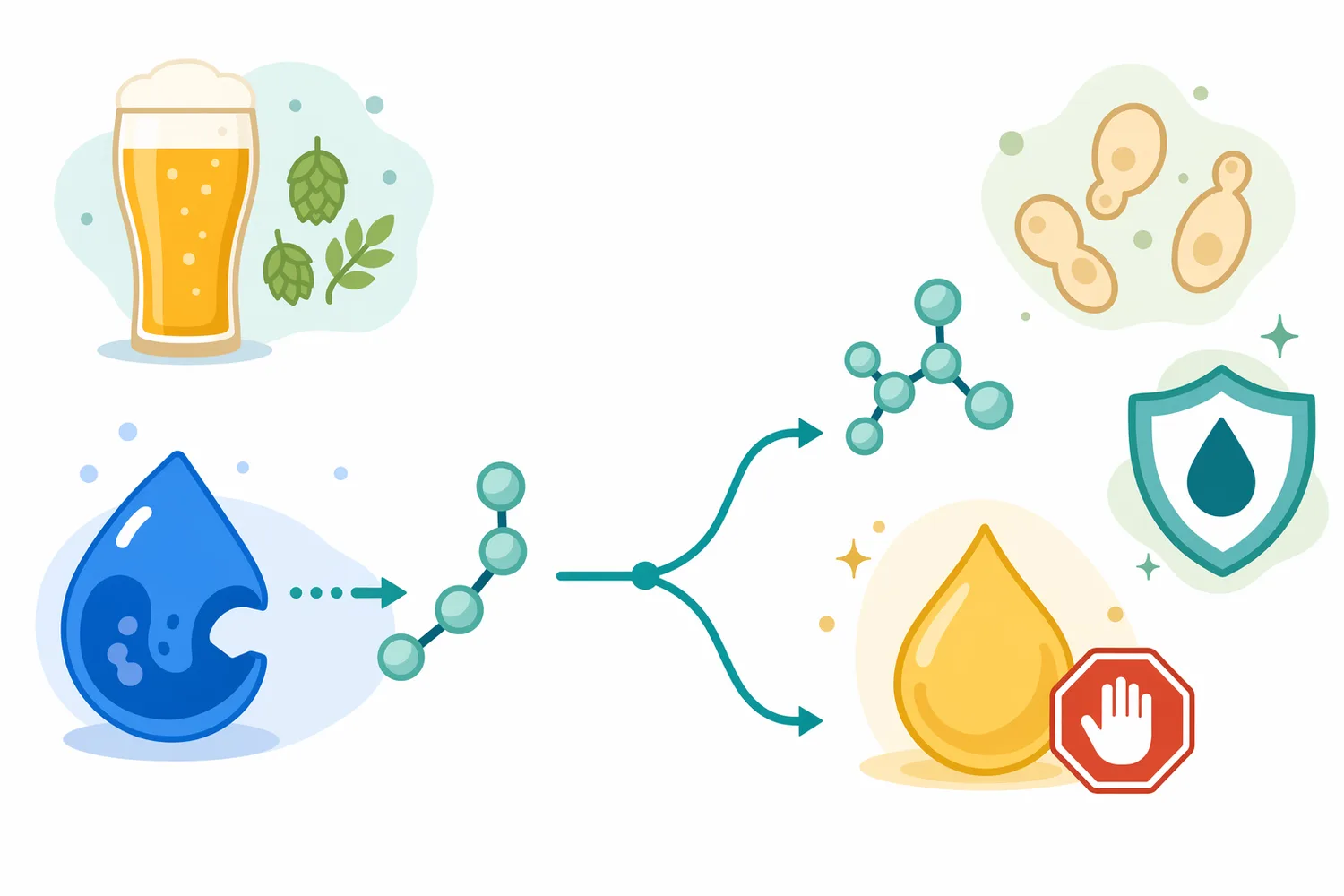
ALDC changes that route at the precursor stage. Instead of waiting for alpha-acetolactate to become diacetyl and then relying on yeast to clean it up, ALDC catalyzes the direct decarboxylation of alpha-acetolactate into acetoin. Brewing enzyme suppliers describe acetoin as flavorless or flavor-inactive in beer, so the practical effect is to reduce the formation of the buttery compound rather than to mask it or remove it after the fact.
That distinction matters for process expectations. ALDC is most useful when it is present early enough to intercept alpha-acetolactate while yeast is producing and excreting it. It is not best understood as a “diacetyl removal enzyme” for finished beer; industry guidance specifically notes that ALDC does not remove diacetyl already present, because its substrate is the precursor alpha-acetolactate, not diacetyl itself.
In a conventional fermentation without ALDC, the route can be simplified as:
Alpha-acetolactate → diacetyl → yeast reduction products
The problem is that the middle compound, diacetyl, has a very low sensory threshold in many beer contexts and produces the characteristic buttery note. Once diacetyl forms, the brewery is dependent on yeast vitality, temperature, time, and beer conditions for reabsorption and reduction. If the beer is chilled too early, yeast is stressed, or the fermentation has been pushed aggressively, cleanup can be slow or incomplete.
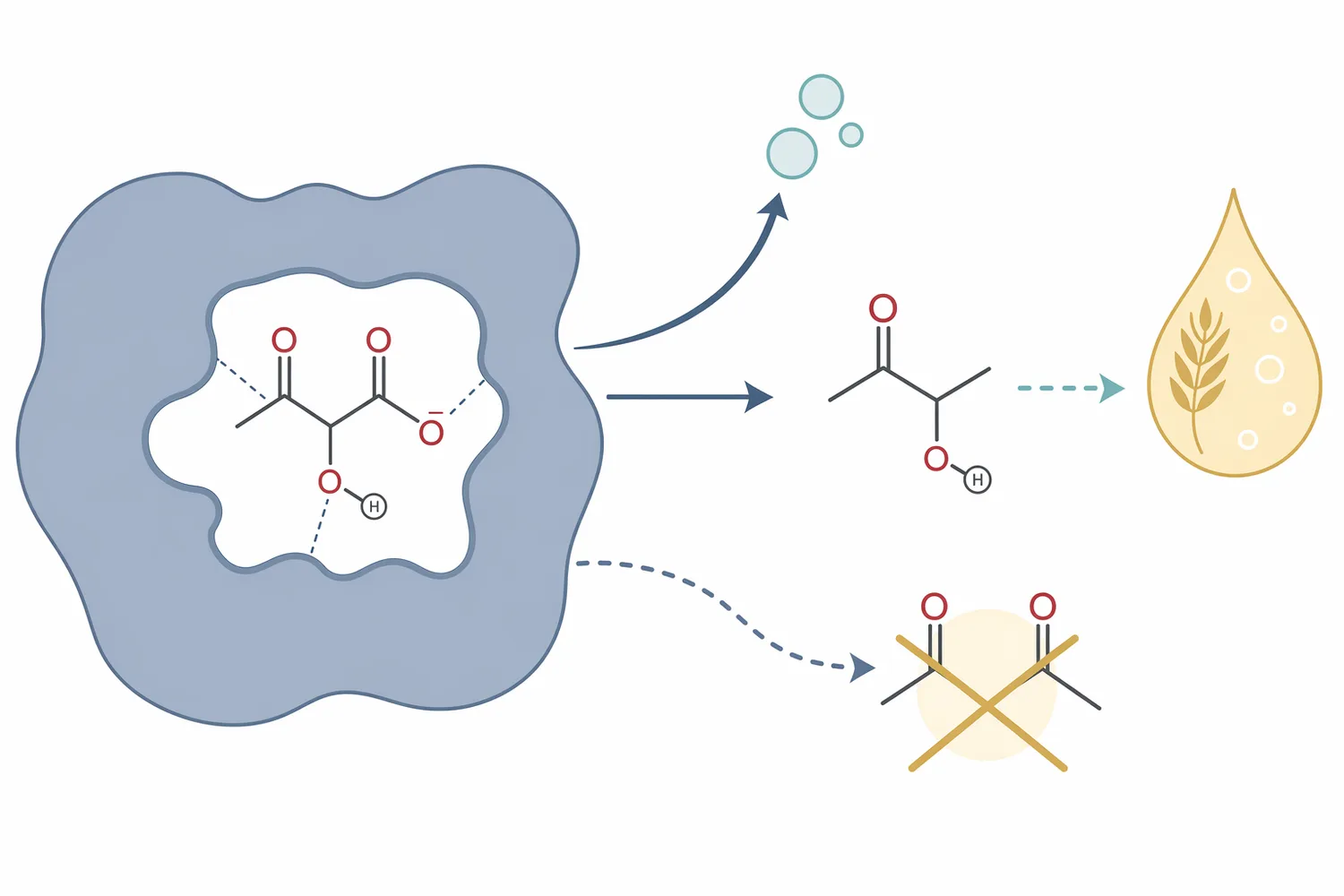
With ALDC present, the preferred route becomes:
Alpha-acetolactate → acetoin
Mechanistically, the enzyme acts before the oxidative conversion to diacetyl. ALDC decarboxylates alpha-acetolactate directly, releasing carbon dioxide and forming acetoin. Because acetoin is far less flavor-active in beer than diacetyl, the beer avoids a major cause of buttery flavor development. The enzyme therefore shortens the path around the sensory problem rather than waiting for the sensory problem to appear [1].
The timing of this conversion is central to the value of ALDC. Alpha-acetolactate is produced during active yeast metabolism, so the enzyme is typically used around cooled wort transfer, yeast pitching, or early fermentation. In that window, ALDC can encounter the precursor while it is being generated. Once alpha-acetolactate has already converted to diacetyl, the enzyme no longer has the same target available.
The pathway also explains why ALDC can affect maturation time. In normal production, diacetyl cleanup can be a rate-limiting step: gravity may be stable, but beer release is delayed while diacetyl falls. By reducing the amount of diacetyl formed in the first place, ALDC can reduce dependence on a long yeast-driven cleanup phase, which supports shorter and more predictable fermentation/maturation schedules when the rest of the brewing process is well controlled [2].
The traditional solution to diacetyl is to manage yeast and time. Brewers maintain healthy yeast, allow sufficient warm contact time, perform a diacetyl rest where appropriate, and avoid chilling or crashing the beer before diacetyl has been reduced. These practices remain important, but they are reactive in the sense that they handle diacetyl after the precursor has already moved into the diacetyl route.
ALDC-assisted control is preventive. It does not remove the need for good fermentation management, but it reduces the load placed on yeast for late-stage diacetyl cleanup. For many brewers, the practical value is not only lower diacetyl risk but also reduced uncertainty: fewer batches sitting in tank at terminal gravity while sensory checks or diacetyl testing delay the next production step [1].
| Aspect of diacetyl control | Conventional yeast-driven approach | ALDC-assisted approach |
|---|---|---|
| Main target | Diacetyl after it forms | Alpha-acetolactate before it becomes diacetyl |
| Core mechanism | Yeast reabsorbs and reduces diacetyl during maturation or rest | Enzyme decarboxylates alpha-acetolactate directly to acetoin |
| Typical process effect | Requires sufficient time, temperature, and yeast health for cleanup | Reduces formation of diacetyl and can shorten the cleanup bottleneck |
| Best fit | Any fermentation with robust time allowance and healthy yeast | Clean beers, lagers, faster schedules, high-gravity production, and diacetyl-sensitive styles |
| Key limitation | Can delay release if diacetyl persists | Does not remove diacetyl that has already formed |
This comparison is especially relevant in lager brewing. Lagers are commonly associated with cooler fermentation and a clean flavor target, both of which make diacetyl control more visible in the production schedule. Lallemand describes ALDC as a tool for clean lager production because it helps prevent the formation of diacetyl, a buttery compound frequently linked with lagers and cold fermentation programs.
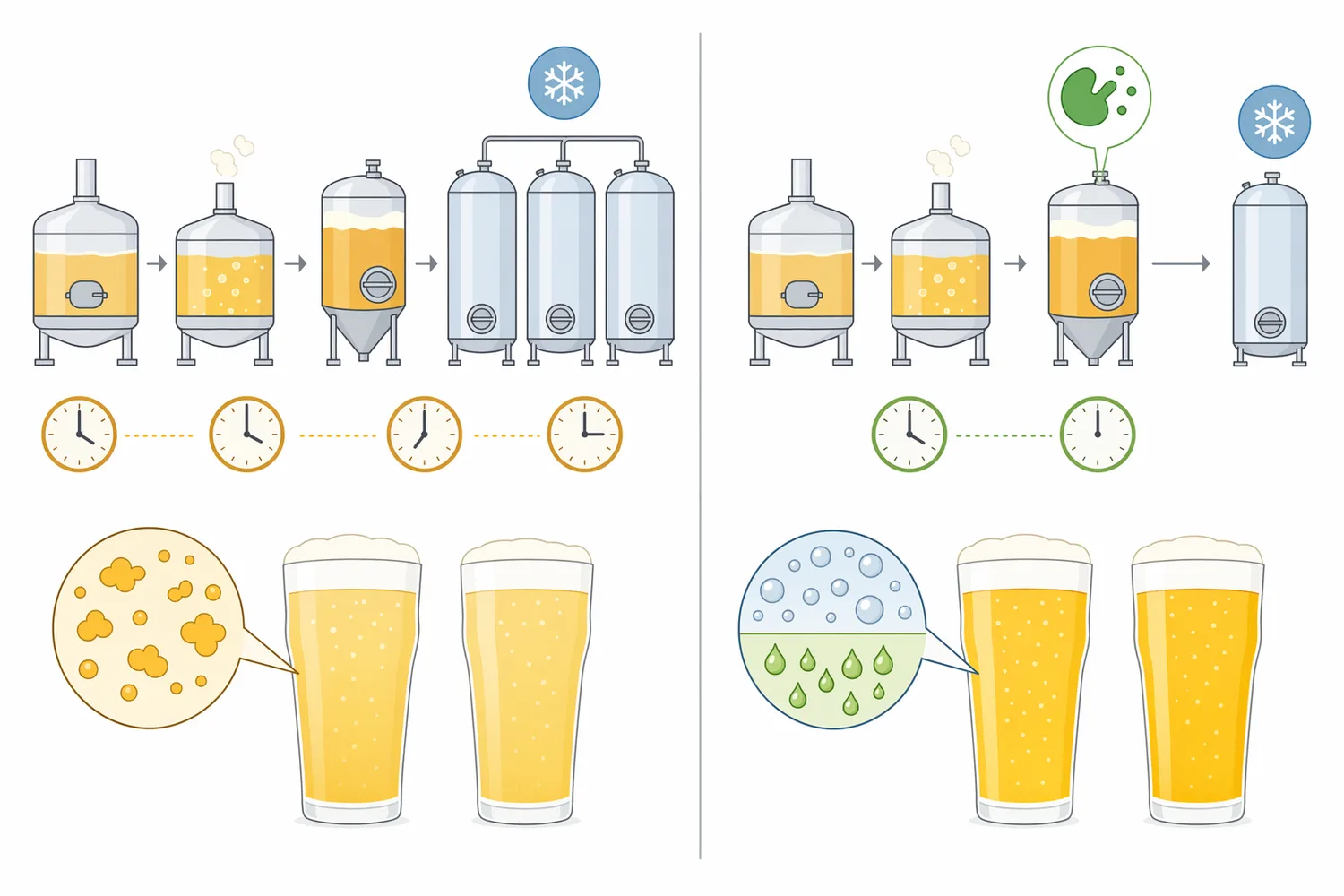
The scientific basis for ALDC in brewing is not simply theoretical. A peer-reviewed paper indexed on PubMed, titled Improved performances and control of beer fermentation using encapsulated alpha-acetolactate decarboxylase and modeling, describes diacetyl elimination as a rate-limiting step in beer fermentation/maturation and reports that ALDC accelerates fermentation/maturation by shunting diacetyl formation [2].
That research is useful because it focuses on the same process bottleneck brewers face in production: the relationship between alpha-acetolactate, diacetyl, and maturation time. The authors modeled alpha-acetolactate and diacetyl profiles during beer fermentation and found that the simulated profiles were consistent with literature data. They also compared encapsulated ALDC with free ALDC and reported that the encapsulated enzyme accelerated fermentation as efficiently as the free enzyme [2].
For a brewery, the important point is not that every operation needs immobilized or encapsulated enzyme technology. The larger takeaway is that the enzyme’s biochemical action—diverting alpha-acetolactate away from diacetyl—has been studied in the context of beer fermentation and linked to faster maturation control. That supports the practical use of ALDC as a process aid when diacetyl is a limiting factor in beer release [2].
Commercial brewing sources describe the same mechanism in operational language. Brewing Science Institute explains that ALDC converts alpha-acetolactate directly to acetoin and identifies the resulting benefits as cleaner-tasting beer, faster turnaround, and greater control over flavor stability. This aligns closely with the research view that ALDC reduces the diacetyl bottleneck rather than acting as a broad flavor modifier [1].
Supplier guidance from Murphy and Son also positions ALDC as a way to prevent diacetyl formation and reduce maturation time, particularly where fermentations are under pressure from factors such as high gravity, rapid production schedules, or yeast that may be less efficient at diacetyl reabsorption. This industry consensus is important because it reflects how the enzyme is actually used in brewing environments, not only how it behaves in a simplified pathway.
A small-scale brewing trial published by Brülosophy tested the impact of ALDC in a Festbier and illustrates how brewers are evaluating the enzyme in practical beer production. Such trials should not be treated as a replacement for controlled production data, but they are useful as real-world evidence that ALDC is of active interest to brewers seeking to manage lager-style flavor timelines and diacetyl risk [3].
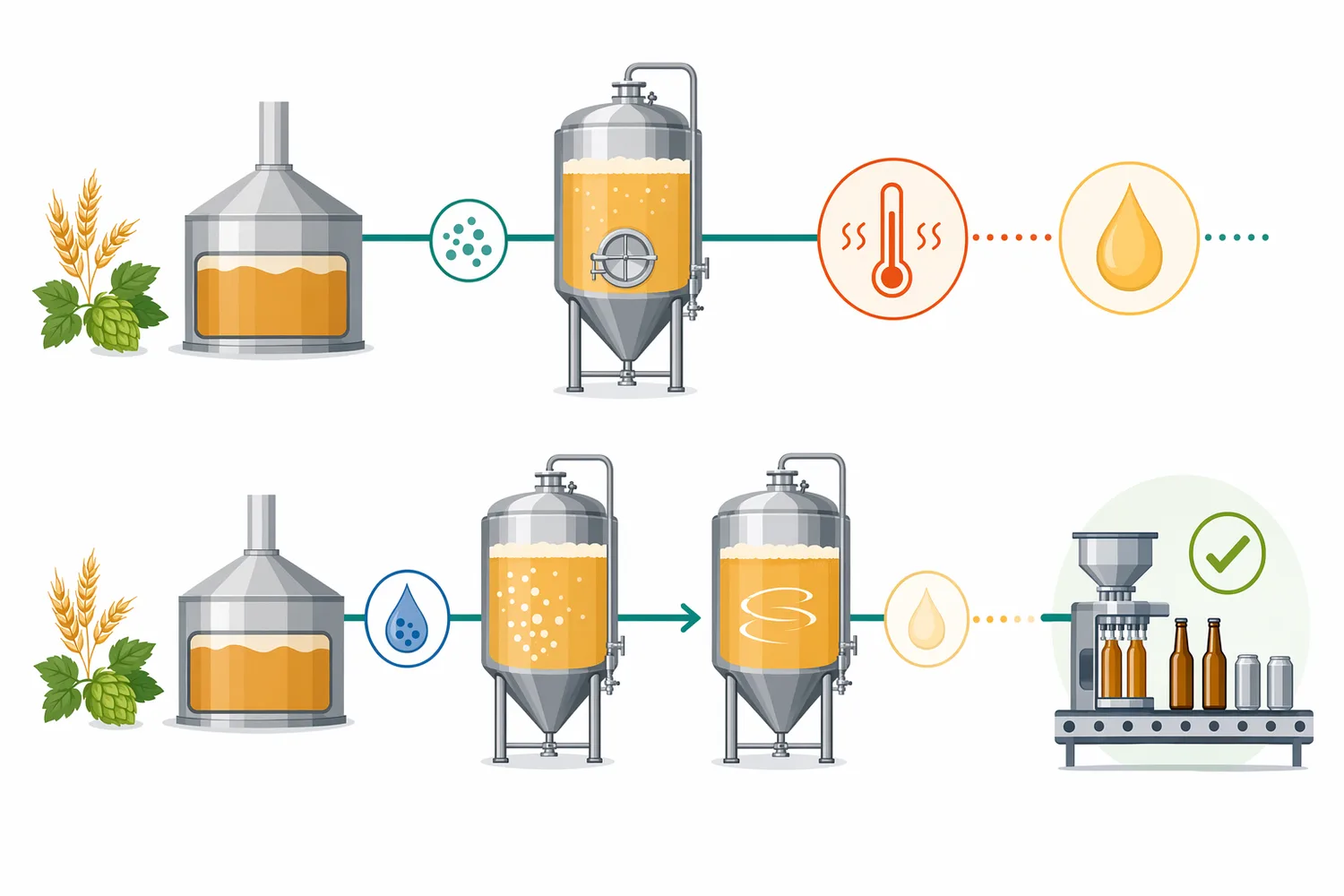
The most straightforward use case for ALDC is addition at or near the start of fermentation, when cooled wort has entered the fermenter and yeast is beginning active metabolism. This timing gives the enzyme access to alpha-acetolactate as it is produced. Brewing Science Institute lists ALDC for use before or during yeast pitch, which reflects the preventive logic of the enzyme’s action [1].
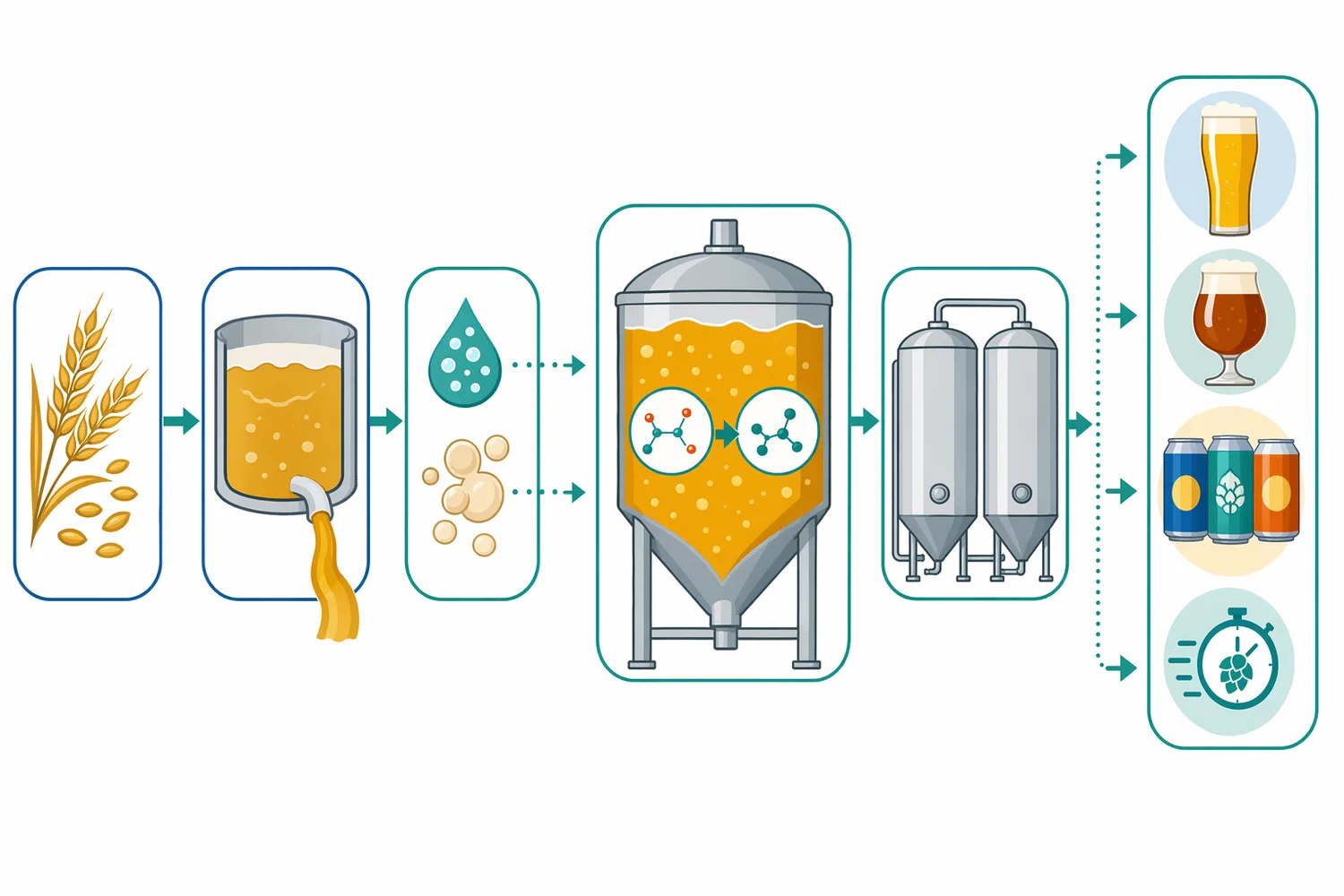
In this early-fermentation role, ALDC works alongside normal yeast metabolism rather than replacing it. Yeast still ferments sugars, produces alcohol and carbon dioxide, builds the beer’s fermentation character, and contributes to other maturation reactions. ALDC simply reduces the need for yeast to resolve one specific problem later: diacetyl formed from alpha-acetolactate.
Industry guidance commonly places ALDC activity within fermentation-compatible conditions. Brewing Science Institute describes a broad temperature range of about 10–40°C and a pH range of about 4.0–7.0 for the enzyme, which overlaps many ale and lager fermentation environments. Those values should be understood as general process context rather than a substitute for the handling information supplied with the specific product order [1].
Post-fermentation use is more conditional. Once beer pH is lower and much of the precursor-to-diacetyl chemistry may already have occurred, ALDC has less opportunity to intercept alpha-acetolactate. Lallemand notes that ALDC is pH-dependent and does not work as effectively at lower beer pH, which is why early use is generally the clearer application.
This does not mean ALDC has no relevance after primary fermentation. Some industry guidance discusses ALDC in relation to dry hopping and hop-creep-associated diacetyl risk, but the mechanism remains the same: ALDC can only help where alpha-acetolactate is available and conditions allow the enzyme to act. It does not stop hop-derived enzymes from generating additional fermentable extract, nor does it solve carbonation, gravity, alcohol, or package-stability effects associated with hop creep.
Lager production is one of the clearest applications for ALDC. Lagers are expected to be clean, crisp, and free from overt fermentation faults, and the buttery character of diacetyl is often especially obvious in pale or malt-balanced lager styles. Cooler fermentation can also make maturation slower, so the cost of waiting for diacetyl cleanup may be more noticeable in tank planning.
By acting on alpha-acetolactate early, ALDC helps reduce the chance that a lager will require a long diacetyl rest or extended warm hold simply to reach an acceptable sensory profile. The result is not a different style of beer; rather, it supports the intended clean profile by preventing a common off-flavor pathway from becoming dominant [1].
Breweries using faster production schedules have less margin for slow diacetyl reduction. Gravity may finish on schedule, but if diacetyl persists, the beer still cannot move forward confidently. Murphy and Son identify ALDC as useful in rapid fermentation schedules because it helps prevent diacetyl formation and can reduce maturation time.
The mechanism is especially relevant in rapid schedules because ALDC reduces the amount of work that must be completed after diacetyl appears. Instead of relying on a compressed yeast cleanup window, the enzyme reduces precursor conversion into diacetyl while fermentation is active. This makes process timing more predictable, provided the underlying fermentation remains healthy [2].
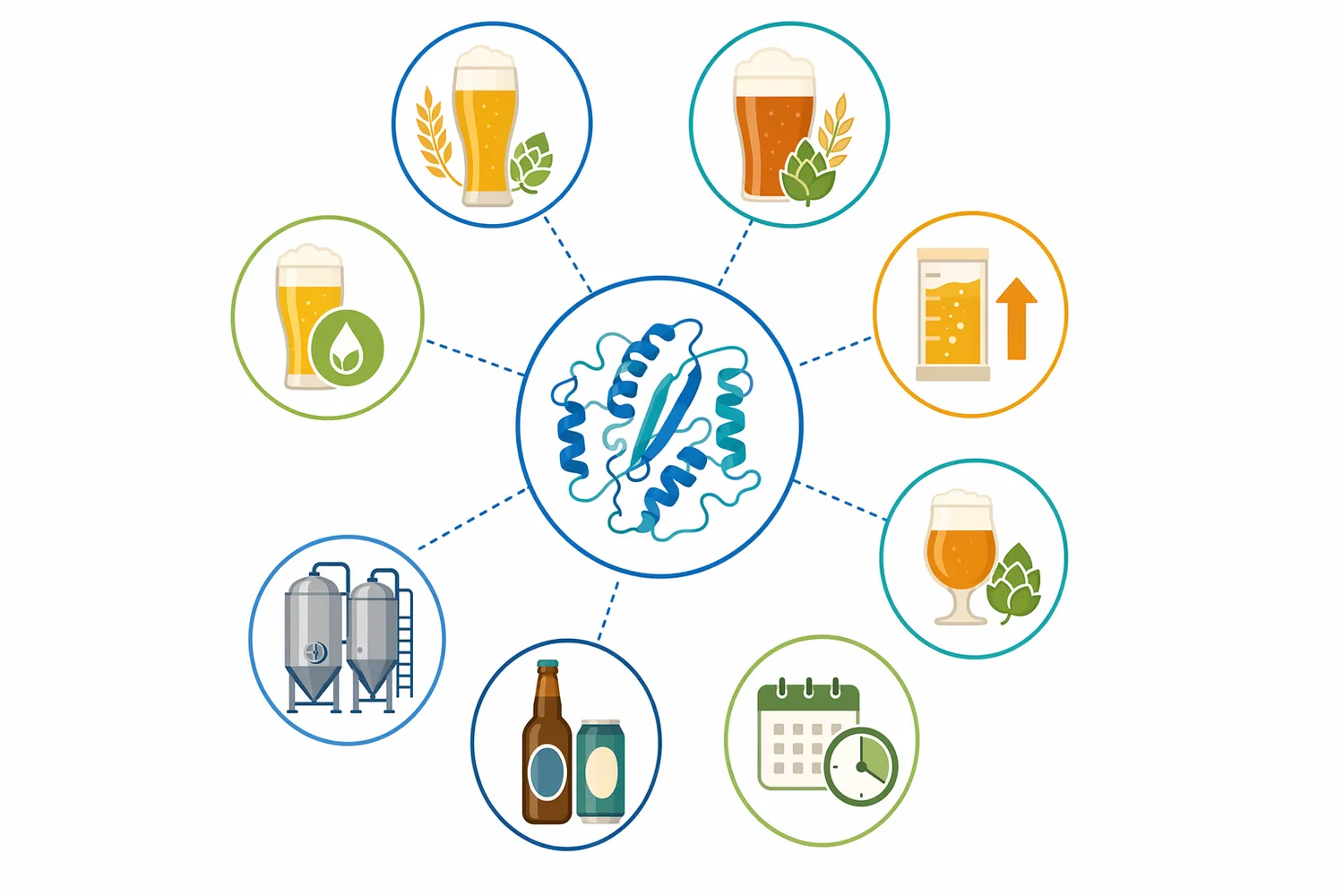
High-gravity brewing can improve brewhouse efficiency, but it can also place yeast under greater physiological stress. Stress can influence yeast metabolism, nutrient balance, and the speed with which yeast completes maturation reactions, including diacetyl reabsorption. Murphy and Son note ALDC as beneficial in high-gravity fermentations and in situations where yeast may struggle to reabsorb diacetyl effectively.
In high-gravity production, ALDC should be understood as one part of the flavor-control system. It does not replace oxygen management, sufficient yeast vitality, nutrient control, temperature control, or hygienic operation. Its contribution is narrower and more precise: reduce the formation of diacetyl from alpha-acetolactate so that the beer is less dependent on later cleanup under already demanding fermentation conditions.
Repeated yeast use is common in brewing, but yeast performance can vary with generation, handling, storage, pitching practice, and stress history. If yeast becomes less efficient at reducing diacetyl late in fermentation, the brewery can experience more variability in maturation time. Industry guidance identifies ALDC as useful where reused yeast may have reduced ability to reabsorb diacetyl after fermentation.
ALDC helps by lowering the precursor flow into diacetyl, not by restoring yeast health. That distinction is important. If a reused yeast crop is underperforming, the brewery still needs sound yeast management; ALDC simply reduces the burden associated with one specific maturation compound.
Dry-hopped beers can develop renewed fermentation activity when hop-derived enzymes convert dextrins into fermentable sugars, a phenomenon commonly called hop creep. Renewed fermentation can create fresh conditions for precursor formation and later diacetyl risk. Lallemand states that ALDC can help prevent hop-creep-related problems when pH conditions are suitable.
The practical interpretation should be precise. ALDC may reduce diacetyl formation associated with alpha-acetolactate during renewed fermentation, but it is not a complete hop-creep control strategy. Hop creep can also affect final gravity, alcohol, carbonation, sweetness, and package pressure; ALDC addresses the diacetyl precursor route only.
Any beer style where buttery flavor is undesirable can be a candidate for ALDC-supported diacetyl prevention. Brewing Science Institute lists applications including lagers, cream ales, dry-hopped beers, rapid fermentation schedules, and high-gravity brewing, all of which share a need for controlled flavor and predictable release timing [1].
In neutral ales, cream ales, and delicate malt-forward beers, ALDC can be helpful because the desired profile leaves little room for fermentation faults. The enzyme does not add a new flavor signature; instead, it reduces the likelihood that alpha-acetolactate will become a flavor-active buttery compound [1].
The first benefit is cleaner flavor. Because ALDC diverts alpha-acetolactate to acetoin, it reduces the formation of diacetyl from that precursor. In sensory terms, this means a lower risk of the butter-like note that can obscure malt precision, soften hop expression, and make a clean beer seem immature or flawed.
The second benefit is more predictable maturation. Diacetyl is frustrating because it can be out of sync with apparent fermentation completion: extract and gravity may be stable while the beer still needs time. Research identifies diacetyl elimination as a rate-limiting step in beer fermentation/maturation, and ALDC addresses that limitation by shunting the precursor away from diacetyl [2].
The third benefit is better use of tank time. If a beer no longer requires the same length of diacetyl rest or conditioning period, a brewery can reduce idle time between terminal gravity and downstream processing. Industry sources describe ALDC as supporting faster turnaround and reduced maturation time, which is especially relevant where cellar capacity is a practical production constraint [1].
The fourth benefit is reduced reliance on energy-intensive temperature movements in some production models. Lallemand describes ALDC as helping reduce energy associated with cold maturation or warm diacetyl stands. The magnitude of that benefit will depend on the brewery’s process design, but the direction is clear: preventing diacetyl can reduce the need for extended temperature-based correction.
The fifth benefit is consistency across challenging fermentations. Rapid fermentation, high-gravity wort, reused yeast, and dry-hop refermentation can all create more variable diacetyl behavior. ALDC does not make these processes risk-free, but it reduces one major biochemical source of variability by intercepting alpha-acetolactate before it becomes diacetyl.
ALDC is specific. Its primary brewing value comes from acting on alpha-acetolactate, the diacetyl precursor. If diacetyl has already formed, the enzyme does not convert that diacetyl into something else; yeast-driven reduction and process time remain the normal route for resolving existing diacetyl. Lallemand’s guidance explicitly states that ALDC will not remove diacetyl already present.
ALDC also does not correct contamination. Diacetyl-like flavor can be associated not only with normal yeast metabolism but also with bacterial problems and poor yeast health. If buttery flavor comes from infection or a severely compromised fermentation, ALDC cannot substitute for sanitation, stable cellar practice, or yeast management.
Conditions still matter. Enzyme performance depends on whether the substrate is present, whether the enzyme is added at a useful stage, and whether the beer environment allows activity. Brewing Science Institute’s general activity context of approximately 10–40°C and pH 4.0–7.0 explains why early fermentation is usually a better fit than late addition to lower-pH finished beer [1].
ALDC should therefore be described as a preventive control point, not an insurance policy against every buttery note. Used in the correct part of the process, it can materially reduce diacetyl formation from alpha-acetolactate. Used too late, or in a beer where diacetyl has already accumulated, it cannot deliver the same result because the relevant substrate has already moved down the pathway.
Enzymes.bio supplies Alpha-Acetolactate Decarboxylase for brewing as a food-grade enzyme product sold directly online by the 1 kg unit. The buying process is simple: the product is added to the cart, paid for online, then processed and shipped. A Certificate of Analysis and Safety Data Sheet are provided with the order .
This product is intended for brewers who want a practical enzyme option for reducing diacetyl risk through the alpha-acetolactate pathway. The strongest use case is early fermentation, where ALDC can convert alpha-acetolactate into acetoin before diacetyl forms, supporting cleaner flavor and reducing the maturation bottleneck associated with yeast-driven diacetyl cleanup [2].
For breweries producing lagers, neutral ales, cream ales, dry-hopped beers, high-gravity beers, or faster-turnaround fermentations, ALDC offers a focused way to improve diacetyl control without changing the fundamental character of the beer. It works because it changes the fate of a specific precursor: alpha-acetolactate is enzymatically routed to acetoin instead of chemically progressing toward buttery diacetyl [1].
In practical terms, ALDC is valuable when the goal is prevention. It helps keep diacetyl from becoming a release-limiting problem, supports more consistent sensory outcomes, and can reduce dependence on extended rests or maturation time. For brewers seeking that specific process benefit, Alpha-Acetolactate Decarboxylase is a well-established enzyme tool for modern fermentation control.
Sold by the 1 kg unit, in stock and ready to ship. Order directly on our store — pay online and we process your order. A Certificate of Analysis and Safety Data Sheet are included with every order.
Buy Alpha-Acetolactate Decarboxylase For Brewing Industry →Numbered in order of first citation. Open-access sources, each verified reachable at publication; citation numbers in the text link here.