
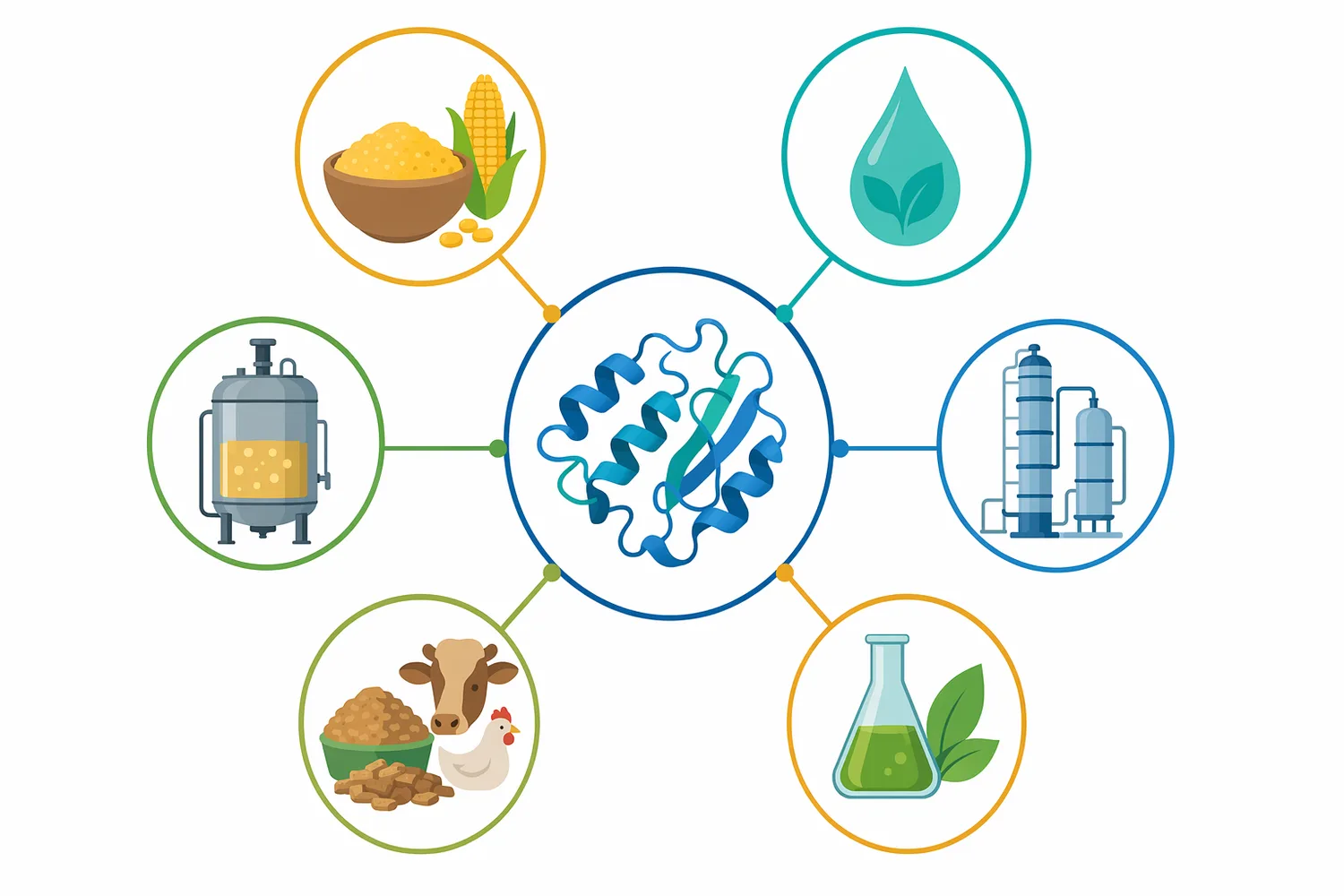
Alpha Amylase Distillers’ Enzyme helps convert cooked or hydrated starch-rich mash into shorter soluble carbohydrates before fermentation. In a distillery or starch-fermentation workflow, its main role is liquefaction: cutting long starch chains into dextrins and smaller sugars so the mash becomes less viscous and easier for downstream saccharification and yeast fermentation to process.
Enzymes.bio supplies this alpha-amylase product directly online in 1 kg units for buyers who need an industrial enzyme for starch conversion in distilling, brewing, and related fermentation processes. Orders are placed and paid for online, then processed and shipped; a Certificate of Analysis and Safety Data Sheet come with the order .
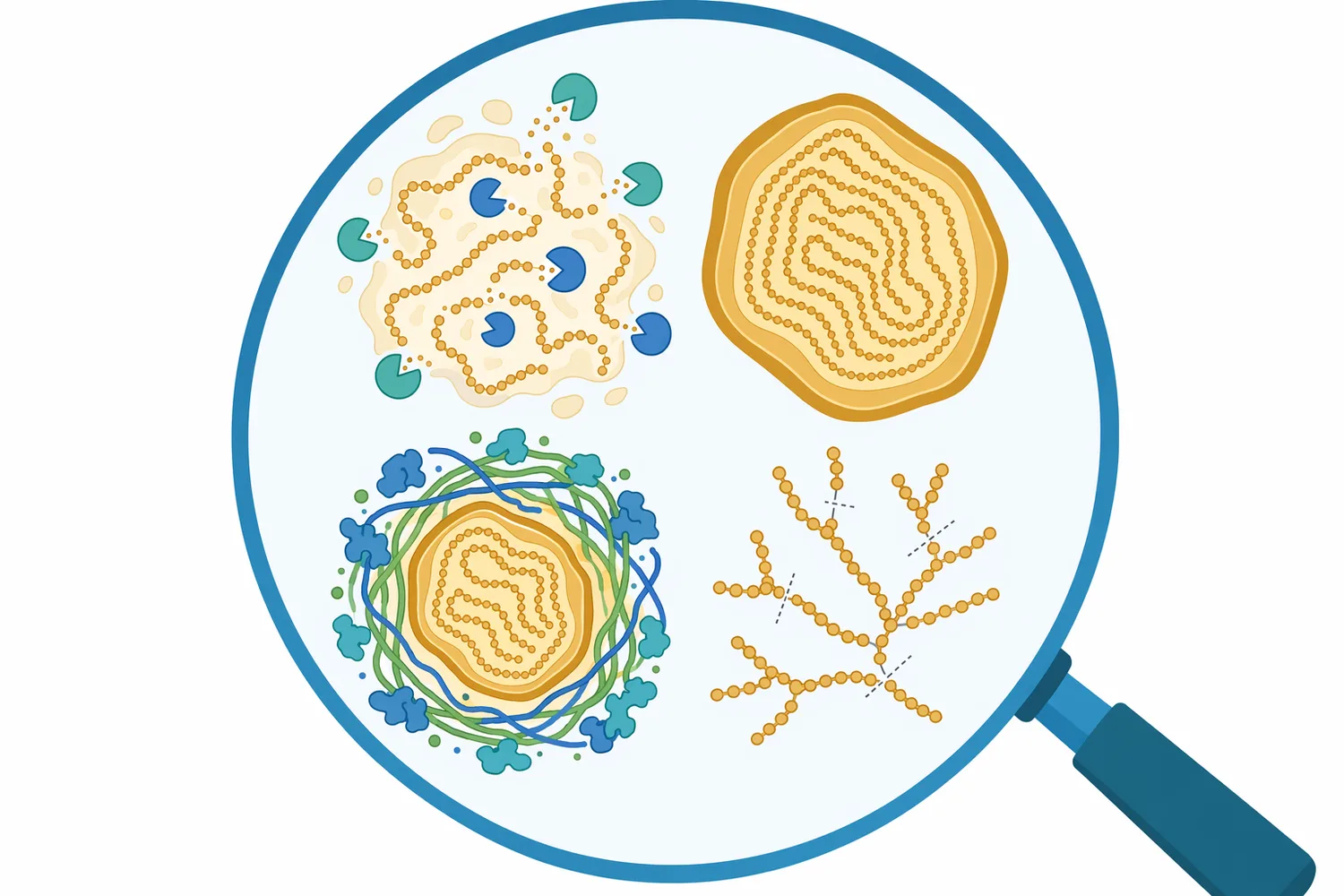
Alpha-amylase is a starch-degrading enzyme that hydrolyzes internal α-1,4 glycosidic bonds in starch polymers. Starch is mainly made from amylose, a mostly linear glucose polymer, and amylopectin, a branched glucose polymer with α-1,4 chain segments and α-1,6 branch points; alpha-amylase attacks the α-1,4 segments inside these chains, producing shorter dextrins, maltose-type sugars, and other soluble oligosaccharides rather than simply clipping off one glucose unit at a time [1].
That internal cutting pattern is why alpha-amylase is so useful before fermentation. A grain mash starts as a dense suspension of starch granules, protein, fiber, and other solids; once hydrated and heated, starch granules swell, lose order, and form a thick gelatinized paste. Alpha-amylase reduces the average chain length of the gelatinized starch, so the same mash becomes more fluid, more pumpable, and more accessible to additional enzymes that can continue conversion toward fermentable sugars [2].
For distillers, this distinction matters. Alpha-amylase is not usually the final sugar-releasing enzyme in a high-attenuation process; it is the front-end enzyme that opens the starch structure and converts long polymers into soluble dextrins. Where high glucose availability is required, a saccharifying enzyme such as glucoamylase is commonly used after or alongside alpha-amylase, because glucoamylase can work from chain ends and release glucose more completely from dextrins [3].
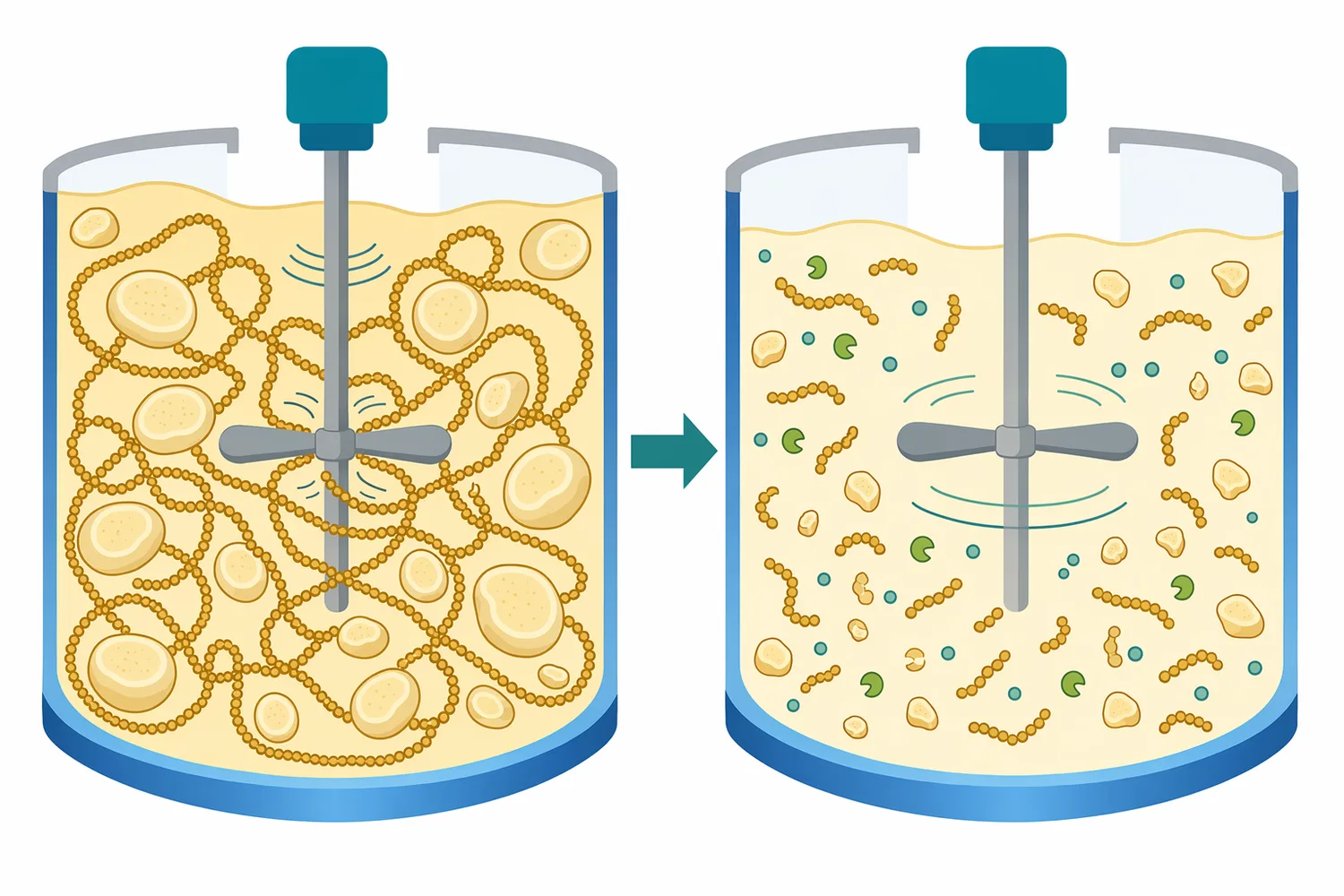
The most visible process change is viscosity reduction. Long gelatinized starch molecules entangle in water and create resistance to mixing; when alpha-amylase cuts those chains at many internal points, the entangled polymer network collapses into shorter fragments. The mash does not become “sugar water” instantly, but it becomes less rope-like at the molecular level, which improves agitation, heat transfer, and contact between the enzyme and remaining starch [4].
The second change is solubilization. Intact or partially swollen starch granules are physically difficult for yeast to use, and large starch molecules diffuse slowly through a mash. Alpha-amylase converts part of that material into soluble dextrins and smaller carbohydrates that remain distributed through the liquid phase, creating a more uniform substrate for the next conversion step [5].
The third change is fermentability potential. Conventional distilling yeast cannot efficiently ferment native starch, and many yeast strains cannot fully ferment longer dextrins. By shifting starch into shorter carbohydrates, alpha-amylase prepares the mash for saccharification, where enzymes that release glucose can create a sugar profile better suited to ethanol production [1].
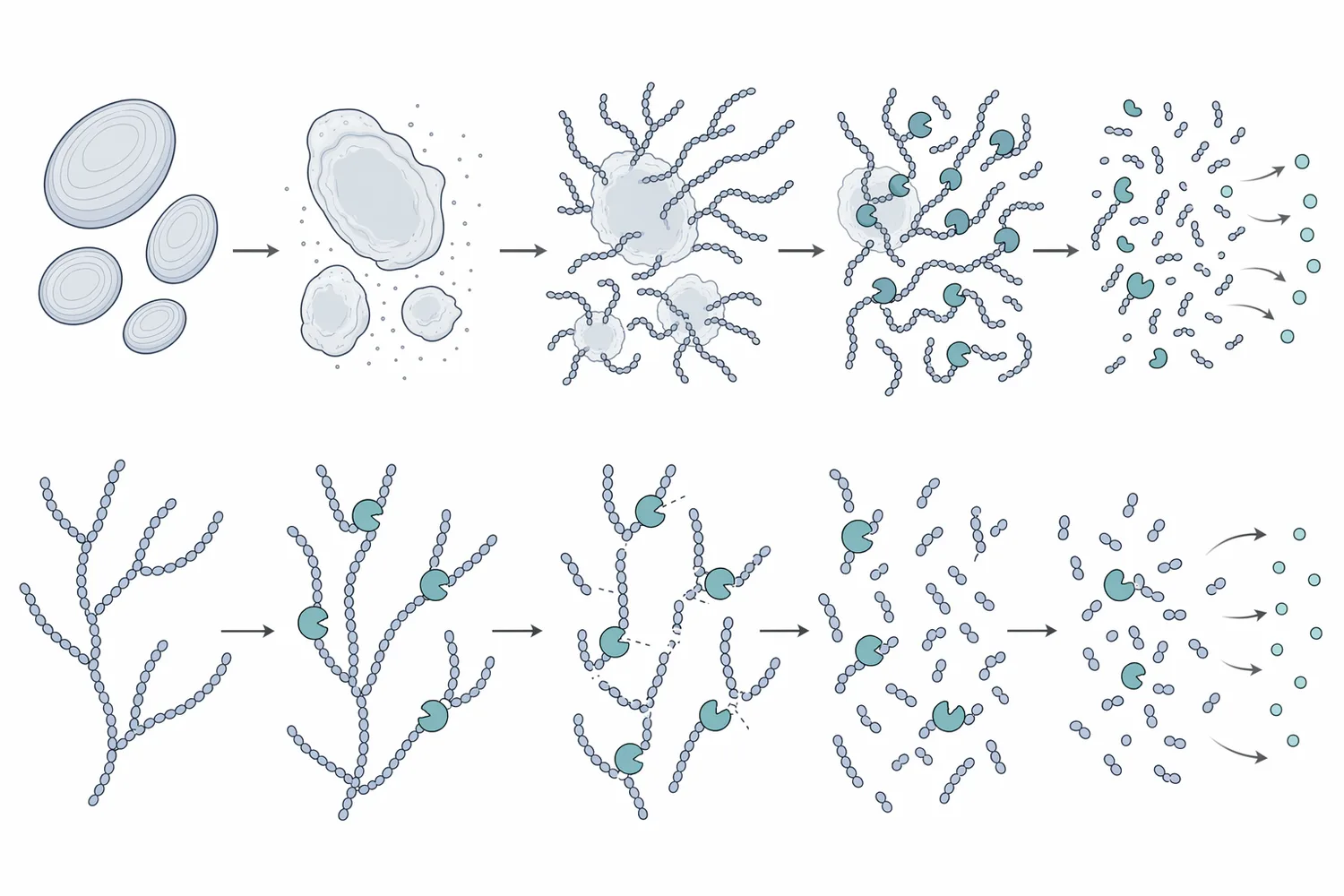
Alpha-amylase works by binding a stretch of starch chain in its active site, positioning one α-1,4 glycosidic bond for hydrolysis, and using catalytic amino acid residues to split that bond with water. Classic active-site research on alpha-amylase identified that catalysis depends on how the enzyme positions the substrate and stabilizes the reaction state, which is why small changes in structure, inhibitors, or processing conditions can affect starch breakdown [6].
Because alpha-amylase is an endo-acting enzyme, it can attack bonds inside the starch chain rather than only at the chain end. This creates a rapid drop in molecular weight early in liquefaction: one cut in a very large starch molecule immediately turns it into two shorter molecules, and many such cuts quickly reduce viscosity even before complete sugar conversion occurs [2].
The enzyme does not normally remove α-1,6 branch points in amylopectin. Those branch points remain in limit dextrins unless other enzymes act on them, which is another reason alpha-amylase is best understood as a liquefaction enzyme rather than a complete saccharification system by itself [1].
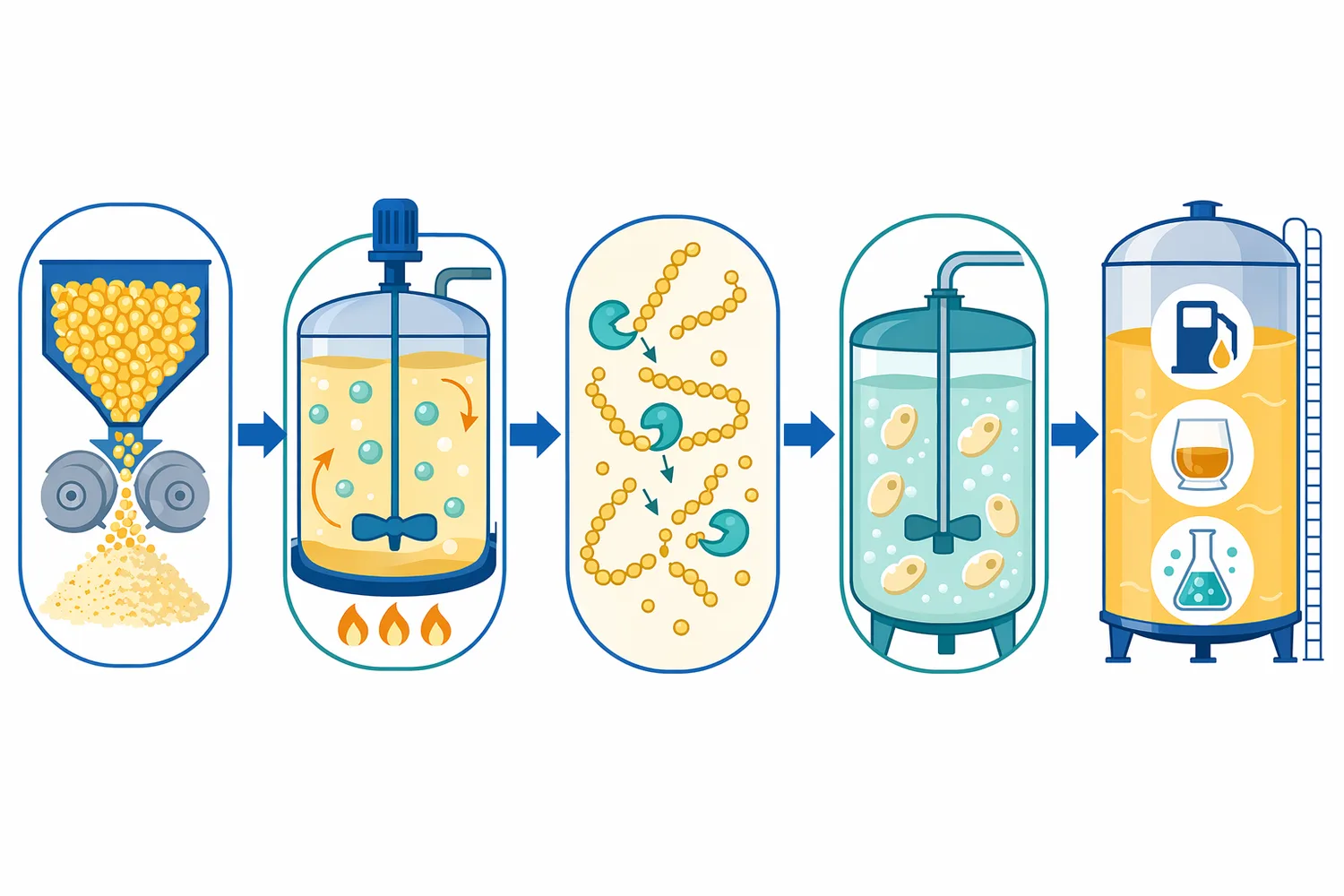
In distilling, alpha-amylase is typically associated with the point where starch has already been made accessible through milling, hydration, and heat. Milling increases surface area, water penetrates the particles, and heat disrupts starch granule order; once the granule structure opens, alpha-amylase can reach many more α-1,4 bonds and hydrolyze the starch faster [4].
If alpha-amylase is applied before starch is adequately hydrated or physically accessible, the reaction can be limited by substrate structure rather than enzyme capability. The enzyme may be present, but the bond it needs to cut is buried inside a granule or protected by surrounding material such as protein, fiber, or ungelatinized starch structure [7].
If the enzyme is exposed to conditions outside its usable processing window, conversion can also slow or stop. Research on thermostable alpha-amylases from Bacillus species emphasizes that temperature behavior, stability, and process conditions are central to industrial use, because heat can accelerate hydrolysis up to a point but can also damage enzyme structure when conditions become too severe [8].
A high-yield fermentation workflow often uses more than one enzyme because starch conversion is not a single chemical event. Alpha-amylase reduces chain length and viscosity; other enzymes can deepen saccharification, attack branch structures, or adjust the carbohydrate profile depending on the process goal [3].
| Enzyme type | Main action on starch | What it changes in the mash | Typical contribution to fermentation preparation |
|---|---|---|---|
| Alpha-amylase | Cuts internal α-1,4 bonds in amylose and amylopectin | Rapidly lowers viscosity and creates soluble dextrins | Liquefies starch and prepares substrate for deeper saccharification |
| Glucoamylase | Releases glucose from non-reducing chain ends and can work through dextrins | Increases glucose availability | Supports higher fermentable sugar levels for ethanol production |
| Debranching enzymes | Act on branch-related linkages in amylopectin-derived dextrins | Reduces branched limit dextrin content | Can improve completeness of conversion where branched dextrins limit sugar release |
| Maltogenic or specialty amylases | Produce particular maltose-rich or modified oligosaccharide profiles | Changes sugar spectrum and dextrin structure | Useful where carbohydrate profile, not only maximum glucose, is important |
This division of labor explains why alpha-amylase is described as central to starch processing even when it is not the only enzyme used. It performs the first large structural shift—turning long, viscous starch into shorter, soluble material—so that downstream enzymes and yeast are working on a more accessible substrate [2].
Alpha-amylase is one of the most widely studied industrial enzyme classes because starch is an abundant raw material in food, beverage, feed, textile, paper, and fermentation industries. Reviews of alpha-amylase structure, evolution, and industrial use describe it as a versatile enzyme family with broad biotechnological relevance, including starch processing applications [1].
Much of the industrial literature focuses on microbial alpha-amylases, especially from Bacillus species, because many bacterial amylases are valued for robustness in heated and process-intensive environments. Studies on Bacillus subtilis and related strains have examined alpha-amylase production under solid-state fermentation and characterized thermostable behavior, reinforcing the importance of microbial alpha-amylases in industrial starch conversion [5].
Research on Bacillus licheniformis alpha-amylase also supports its relevance for industrial applications where thermal stability and starch-hydrolyzing performance are important. Characterization work on thermostable alpha-amylase from B. licheniformis 104.K specifically frames this enzyme type for industrial use, which aligns with why alpha-amylase is so commonly associated with liquefaction of hot starch slurries [4].
Fungal alpha-amylases are also part of the industrial evidence base. Studies on Aspergillus niger alpha-amylase have focused on isolation, characterization, and structural analysis, showing that alpha-amylase functionality is not limited to one microbial source even though different sources can differ in stability, product profile, and process behavior [9].
The scientific rationale for distillers’ use is straightforward: starch-rich feedstocks must be hydrolyzed into fermentable carbohydrate streams before yeast can efficiently generate ethanol. Alpha-amylase provides the early hydrolysis step that turns inaccessible starch into soluble dextrins and smaller sugars suitable for saccharification and fermentation workflows [3].
Studies on thermostable alpha-amylase production and characterization frequently connect enzyme performance with industrial starch hydrolysis, including conditions relevant to food and fermentation processing. This is important because distillery mashes are not purified laboratory starch; they are complex, heated slurries where enzyme stability, substrate access, and reaction time all affect conversion [7].
Alpha-amylase has also been evaluated in biomass and anaerobic-conversion contexts, where the same core mechanism—hydrolyzing starch-like carbohydrate fractions into more accessible molecules—can improve biological conversion. A study using alpha-amylase to increase biogas yield from lucerne pellets and birch leaves pellets reflects the broader principle that enzymatic carbohydrate breakdown can make substrates more available to microbes [10].
The first practical benefit is easier mash handling. A viscous mash is harder to stir evenly, heats less uniformly, and can create pockets where starch conversion is incomplete; alpha-amylase shortens starch molecules and reduces the physical resistance created by gelatinized starch, making the mash more manageable during liquefaction [4].
The second benefit is more consistent substrate preparation. When starch is partially hydrolyzed into soluble dextrins, downstream saccharification enzymes have more accessible chain ends and smaller molecules to work on, which supports a more predictable transition from mash preparation to fermentation [3].
The third benefit is better use of starch-rich raw materials. Corn, wheat, rice, barley adjuncts, sorghum, cassava, and other starch-containing materials all rely on the same basic conversion chemistry: starch must be hydrated, opened, hydrolyzed, and converted into a sugar profile that yeast can metabolize. Alpha-amylase contributes the hydrolysis step that makes this sequence practical at production scale [1].
The fourth benefit is reduced process drag from residual starch. Unconverted starch can increase viscosity, reduce extract recovery, complicate separation, and leave fermentable potential unused; alpha-amylase helps move starch out of the high-molecular-weight fraction and into soluble carbohydrate fractions that the rest of the process can handle [2].
A typical starch-fermentation workflow can be viewed in stages: raw material preparation, hydration and cooking or heating, liquefaction, saccharification, fermentation, and downstream recovery. Alpha-amylase belongs primarily in the liquefaction stage, where the key operational goal is to reduce starch chain length and mash thickness .
During liquefaction, the enzyme’s effect is often noticeable before complete sugar conversion is achieved. This is because viscosity depends strongly on polymer size; cutting a long starch molecule into shorter dextrins can dramatically change flow behavior even if many of those dextrins are not yet fermentable by yeast [6].
After liquefaction, saccharification can convert dextrins toward glucose and other fermentable sugars. In processes targeting high ethanol yield, this second enzymatic phase is important because alpha-amylase alone leaves a mixture of carbohydrate fragments, including dextrins that may require further breakdown before yeast can use them efficiently [3].
Fermentation then depends on the sugar profile, yeast strain, nutrient balance, solids handling, and process conditions. Alpha-amylase improves the starting point for fermentation by changing the starch substrate, but it does not replace broader fermentation control [1].
Although this product is positioned for distillers’ starch-to-sugar conversion, the same enzyme chemistry is relevant across other starch-processing applications. Alpha-amylase is widely described in industrial literature for starch processing, food applications, brewing-related uses, textile desizing, and other processes where starch must be reduced in molecular size [11].
In brewing and cereal beverage production, alpha-amylase can help process starch-containing adjuncts where native malt enzymes may not be sufficient for the desired conversion. Its liquefaction action supports extract development and helps reduce viscosity when adjunct starch contributes to a thick cereal mash [1].
In textile desizing, alpha-amylase hydrolyzes starch-based sizing films applied to yarns. By breaking the starch film into soluble fragments, the enzyme makes it easier to remove the size without relying only on harsh chemical treatment; research on alpha-amylase from Bacillus species includes potential applications such as textile-related starch removal [3].
In food and baking, alpha-amylase can modify starch behavior, crumb structure, and sugar availability. Recent work on gluten-free bread with high-protein rice flour examined the effects of alpha-amylase on bread properties, showing how the same starch-cutting activity can be used for texture and processing outcomes outside fermentation [12].
Real mashes contain more than starch. Grain particle size, protein matrix, fiber, lipids, heat history, and starch damage all influence how easily alpha-amylase can reach α-1,4 bonds. Two mashes with the same nominal starch content can behave differently if one has finer milling, better hydration, or more accessible gelatinized starch [7].
Amylose and amylopectin structure also matters. Amylose can form relatively compact or retrograded structures, while amylopectin contains branch points that alpha-amylase does not fully debranch. As hydrolysis proceeds, some fragments remain as branched dextrins, which may require other enzymes for deeper conversion [2].
Processing temperature history can change starch accessibility. Heating helps gelatinize starch and expose enzyme-accessible chains, but excessive heat exposure can affect enzyme stability or create starch structures that behave differently during cooling. Thermostable alpha-amylase research highlights why both catalytic performance and stability are considered important in industrial starch hydrolysis [4].
Mash solids also shape the visible outcome. In higher-solids systems, viscosity reduction can be especially valuable because small changes in starch chain length can produce large improvements in mixing and flow. The enzyme is acting at the molecular level, but the plant-level result is a mash that is easier to move and process [1].
Alpha-amylase should be expected to liquefy starch and create a more accessible carbohydrate stream, not to guarantee complete conversion of every starch molecule into glucose by itself. Its hydrolysis pattern naturally produces a mixture of dextrins and smaller sugars, and the final fermentable sugar profile depends on the rest of the enzyme system and fermentation process [3].
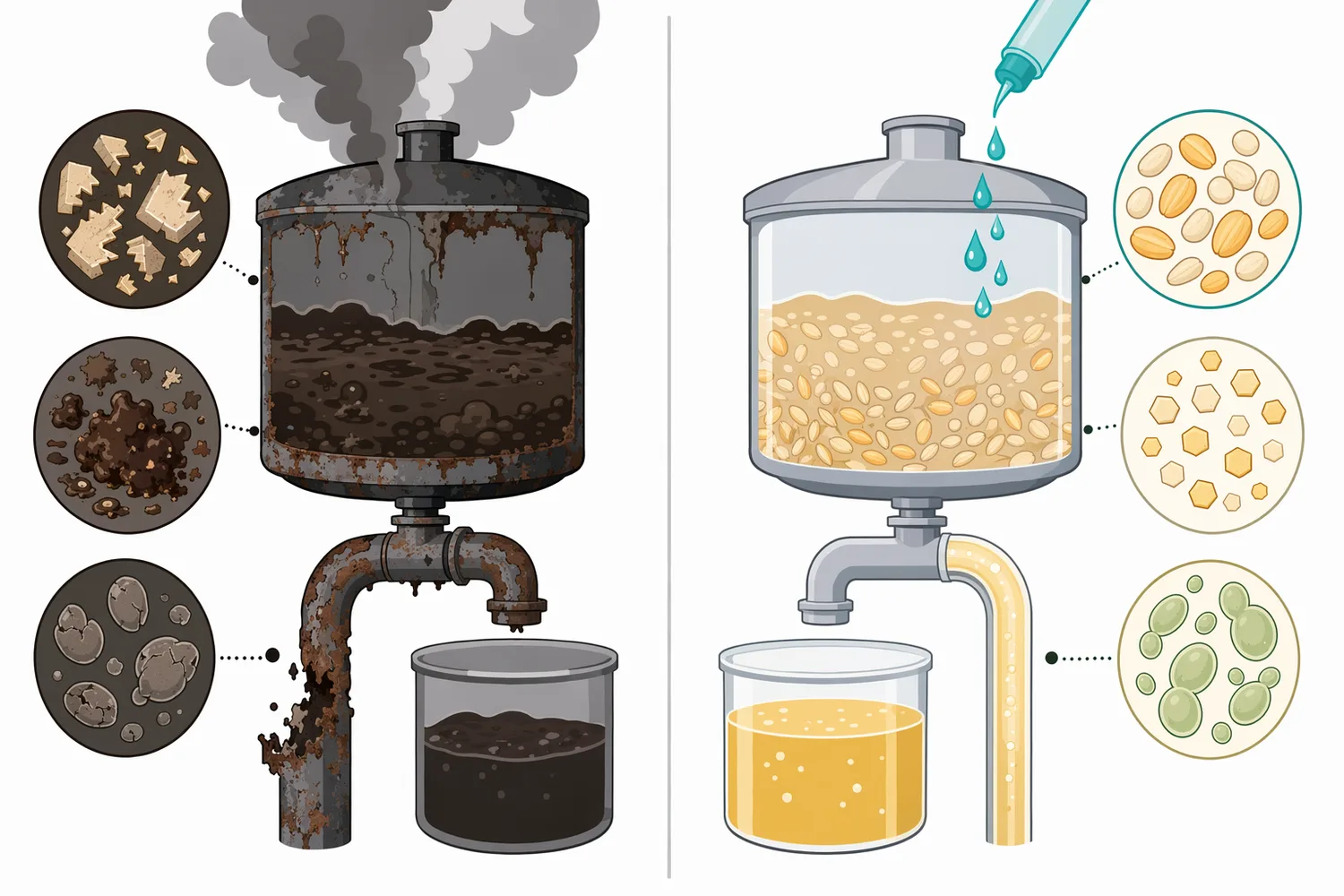
It is also important to recognize that starch conversion is substrate-limited as well as enzyme-limited. If starch is not hydrated, gelatinized, or physically exposed, the enzyme can only act on the bonds it can reach. This is why distilling practice typically treats raw material preparation and liquefaction as connected steps rather than viewing enzyme addition as a standalone fix [7].
Inhibitory or interfering compounds can also affect alpha-amylase behavior. Research into alpha-amylase inhibitors shows that active-site blocking can reduce starch hydrolysis, illustrating that enzyme activity depends on successful substrate binding and catalysis, not merely on the presence of enzyme protein in the mash [13].
Finally, alpha-amylase is a protein preparation and should be handled with appropriate industrial hygiene. Enzyme dusts or aerosols can be sensitizing for some individuals, so normal precautions to avoid unnecessary inhalation, eye contact, and skin contact are appropriate when handling enzyme products .
Enzymes.bio offers Alpha Amylase Distillers’ Enzyme as a direct online purchase for buyers who need a practical enzyme for starch conversion before fermentation. The product is supplied by the 1 kg unit, with online payment, order processing, and shipment through the Enzymes.bio store .
The product’s value is grounded in established enzyme chemistry: alpha-amylase cuts internal starch bonds, reduces mash viscosity, and prepares starch-rich substrates for saccharification and fermentation. That makes it relevant for distillers, brewers, and other processors working with starch-containing materials where conversion efficiency and mash handling matter [1].
Because Enzymes.bio is a supplier, the product information is intended to help customers understand the enzyme’s role and purchase the product online without treating the website as a process-development laboratory. The Certificate of Analysis and Safety Data Sheet supplied with the order provide the accompanying product documentation for the shipped material .
Alpha Amylase Distillers’ Enzyme is best understood as a liquefaction tool for starch-rich fermentation substrates. It cuts internal α-1,4 bonds in gelatinized starch, lowers mash viscosity, and converts long starch polymers into soluble dextrins and smaller carbohydrates that are easier to saccharify and ferment [2].
For high-yield fermentation, its strongest contribution is at the front end of conversion: preparing the mash so downstream saccharification enzymes and yeast receive a more accessible carbohydrate stream. Used in the right part of a starch-processing workflow, alpha-amylase is a well-established and scientifically supported enzyme class for distilling, brewing, and related fermentation applications [3].
Enzymes.bio supplies this alpha-amylase product directly online in 1 kg units, with the order processed and shipped after online purchase. A Certificate of Analysis and Safety Data Sheet come with the order, giving buyers the documentation supplied with the product while keeping the purchase process straightforward .
Sold by the 1 kg unit, in stock and ready to ship. Order directly on our store — pay online and we process your order. A Certificate of Analysis and Safety Data Sheet are included with every order.
Buy Alpha Amylase Distillers' Enzyme For Conversion Of Starch Into Sugar Before High Yield Fermentation →Numbered in order of first citation. Open-access sources, each verified reachable at publication; citation numbers in the text link here.