
Alpha amylase enzyme for bakery use helps convert flour starch into smaller carbohydrates such as dextrins, maltose, and related oligosaccharides. In dough systems, that controlled starch breakdown can support yeast fermentation, loaf volume, crumb softness, crust color, and more consistent performance when flour quality varies. The core mechanism is well established: alpha amylase hydrolyzes internal α-1,4 glycosidic bonds in starch-type substrates, changing large starch molecules into shorter, more functional carbohydrate fragments [1].
Enzymes.bio supplies food-grade alpha amylase powder for bakery industry use directly online by the 1 kg unit. Buyers can place and pay for the order online; the order is then processed and shipped, with a Certificate of Analysis and Safety Data Sheet included.
Alpha amylase is a starch-converting enzyme. In bakery formulas, its value comes from acting on the starch already present in flour rather than adding bulk carbohydrate solids to the recipe. Wheat flour, rice flour, composite flours, and other cereal-based systems contain abundant starch, but most of that starch is not immediately available to yeast or browning reactions in its intact granular form. Alpha amylase changes part of that reserve into shorter molecules that behave differently during mixing, fermentation, proofing, and baking [1].
The product is a food-grade powder form of alpha amylase, identified under CAS 9001-19-8. For the baker or food processor, the most important practical point is not the CAS number itself, but the biochemical function behind it: the enzyme catalyzes starch hydrolysis. It does this by attacking internal α-1,4 linkages in amylose and amylopectin regions of starch, generating dextrins and smaller oligosaccharides; because alpha amylase acts internally along chains, it can rapidly reduce the size and physical behavior of starch molecules compared with simple end-point trimming [2].
Alpha amylases are widely used across food processing because starch is one of the most common plant-derived raw materials in industrial foods. Reviews of food enzyme applications describe microbial enzymes, including amylases, as major tools in baking, brewing, starch processing, and other sectors where controlled carbohydrate transformation improves process efficiency or product quality [3]. Bakery is one of the clearest examples: a small amount of catalytic activity can influence fermentation supply, dough handling, and final eating quality without changing the flour base of the product.
Flour starch is mainly a mixture of amylose and amylopectin. Amylose is relatively linear, while amylopectin is highly branched; both contain α-1,4 glycosidic bonds along their chains, and amylopectin also contains branch points. Alpha amylase acts primarily on the internal α-1,4 bonds, so it cuts long starch chains into shorter fragments while leaving branch architecture to be further handled by other enzymes if present in the system [1].
That molecular cutting has visible bakery consequences. Long starch polymers strongly influence viscosity, water binding, and gel formation. When alpha amylase shortens part of those polymers, the dough and crumb contain more dextrins and fermentable or partially fermentable carbohydrates. These fragments can be more accessible to yeast metabolism, contribute to reducing-sugar availability for browning, and affect how starch gels firm during cooling and storage [1].
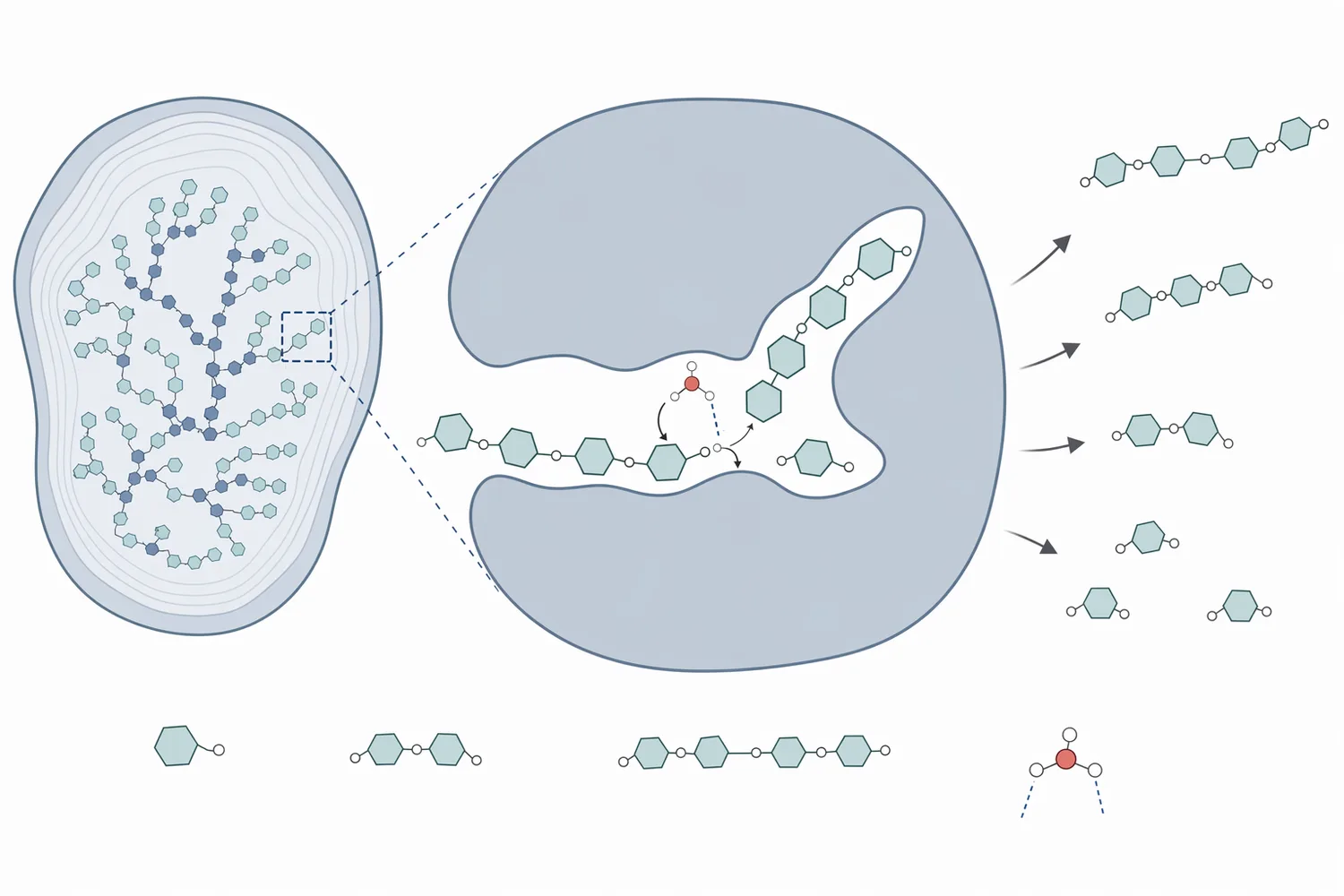
The enzyme’s action is especially relevant because not all flour starch is equally accessible. Damaged starch from milling, hydrated starch at the surface of granules, and starch that becomes more open during heating are more available for enzymatic attack than tightly packed intact granules. During the early baking phase, starch swelling and gelatinization can expose more chain regions, allowing alpha amylase to continue working until heat progressively reduces activity [4].
This is why alpha amylase can influence both the dough stage and the oven stage. During mixing, resting, and proofing, it gradually increases the pool of smaller carbohydrates. During early baking, as starch becomes more hydrated and mobile, the enzyme may briefly have improved access before thermal inactivation limits further hydrolysis. The final result depends on the balance between starch availability, time, moisture, dough acidity, heat exposure, and the amount of active enzyme present in the formula [4].
Yeast cannot efficiently ferment intact starch granules. It depends on simple sugars and, in many dough systems, maltose released from flour starch through amylase activity and related carbohydrate enzymes. Alpha amylase helps create the starch-derived fragments that can feed into this sugar pool, supporting carbon dioxide generation during fermentation and proofing [1].
In practical terms, this can help when flour has low natural amylase activity. A dough with insufficient available sugars may ferment slowly, show weak proof, or bake with less volume and a paler crust. Alpha amylase does not replace yeast management, water control, or fermentation discipline, but it helps make part of the flour’s starch reserve more available during the time window in which yeast needs fermentable carbohydrate [3].
Research on breadmaking systems has repeatedly used alpha amylase as a functional tool to improve dough and bread outcomes. Studies involving baker’s yeast engineered to secrete Aspergillus oryzae alpha amylase, for example, demonstrate the same application logic from another angle: generating amylase activity within the dough system can support breadmaking performance because starch conversion is closely tied to fermentation and final loaf quality [5].
Loaf volume depends on gas production, gas retention, gluten or structure-forming networks, starch gelatinization, and oven spring. Alpha amylase mainly contributes from the starch-conversion side: by increasing soluble carbohydrates and altering starch behavior, it can support fermentation strength and the physical setting of the crumb. Breadmaking studies with microbial alpha amylases report application benefits linked to bread quality, reinforcing the practical relevance of this enzyme in bakery formulas [6].
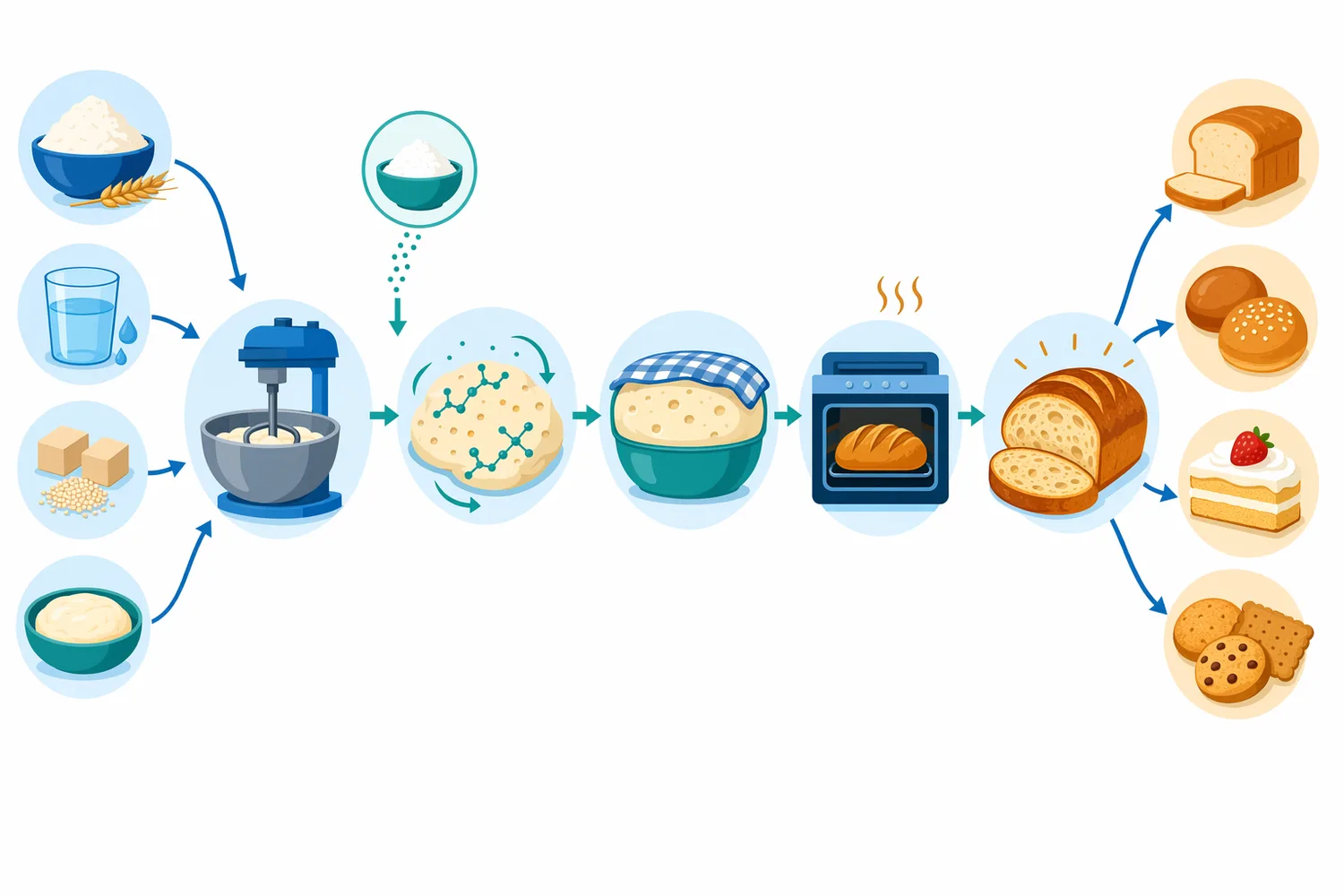
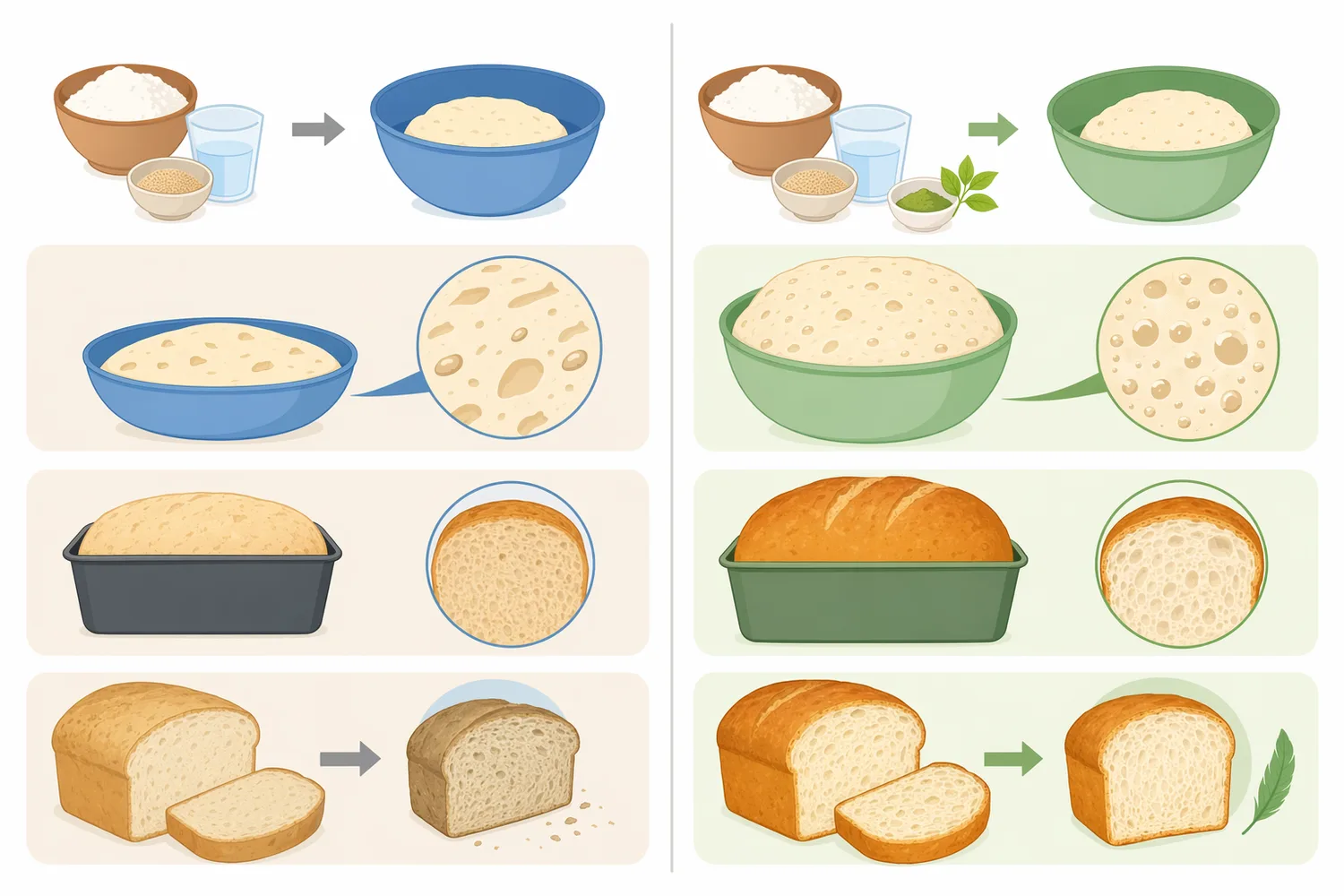
The mechanism is concrete. If the dough has enough fermentable carbohydrate at the right time, yeast can generate gas more steadily. If starch is partially hydrolyzed in a controlled way, the crumb matrix can set with a finer, softer structure rather than becoming overly dry or tight. However, the effect is not unlimited: too little activity may be unnoticeable, while excessive starch breakdown can weaken crumb structure and produce tacky or gummy textures because too many long starch chains have been converted into smaller, more soluble fragments [1].
Whole-grain and high-fiber systems can be especially challenging because bran particles, non-starch polysaccharides, and altered water distribution affect dough development and gas retention. Research on enzyme-treated whole wheat flour doughs shows that enzyme use can modify breadmaking qualities in such systems, although alpha amylase is only one part of the broader enzyme toolbox available for whole-grain bakery development [7].
Bread firming during storage is strongly associated with starch retrogradation: gelatinized starch chains, especially amylopectin regions, gradually reassociate and crystallize as bread cools and ages. Alpha amylase can reduce firming by creating shorter dextrins that interfere with the formation of a rigid starch network. The crumb does not simply become “wetter”; rather, the starch phase changes so that water distribution and polymer reassociation develop differently over time [1].
This is why amylase is often discussed in relation to softness and shelf-life support in bread and packaged bakery products. By cutting starch into smaller fragments, alpha amylase can reduce the tendency of the crumb to become firm and dry-feeling during storage. The benefit is most useful when it is balanced with the full formula: flour protein, emulsifiers if used, fat, sugar, hydration, baking profile, and packaging all affect perceived softness [8].
Combination studies also show that alpha amylase can be used alongside other functional bakery enzymes or improvers. For example, work on glucose oxidase with ascorbic acid and alpha amylase examined dough properties, baking quality, and bread shelf life, illustrating that commercial bakery texture is usually the result of multiple interacting mechanisms rather than one isolated ingredient effect [8].
Crust color develops partly through Maillard reactions between reducing sugars and amino compounds, along with caramelization and other heat-driven pathways. Alpha amylase contributes by increasing the availability of smaller carbohydrates that can feed browning chemistry. When flour has low natural enzyme activity, the dough may not generate enough reducing sugars during fermentation and early baking, leading to a lighter crust than desired [3].
The effect is not simply “more sugar equals darker bread.” Timing matters. Sugars generated early may be consumed by yeast during fermentation, while sugars still available at the surface during baking can participate in browning. Alpha amylase supports the ongoing release of starch-derived fragments, helping maintain a more consistent pool of browning precursors when process conditions are well controlled [1].
This is also why overactivity can cause problems. If too much starch is hydrolyzed, crust color can become too dark, crumb may become sticky, and slicing quality can suffer. Responsible use is therefore about controlled conversion: enough hydrolysis to support fermentation, color, and softness, but not so much that the starch structure needed for a clean crumb is lost [4].
Alpha amylase does not affect every stage of breadmaking in the same way. Its contribution changes as water is absorbed, dough is mixed, yeast begins fermenting, starch becomes more accessible, and baking heat eventually inactivates the enzyme. The table below compares the main bakery stages and what the enzyme is doing at each point.
| Bakery stage | What is happening to the substrate | Alpha amylase contribution | Practical effect in the finished product |
|---|---|---|---|
| Mixing and hydration | Flour particles absorb water; damaged starch hydrates first | Begins hydrolyzing accessible α-1,4 starch linkages | Early formation of dextrins and smaller carbohydrates |
| Resting and bulk fermentation | Yeast consumes available sugars; dough structure develops | Helps replenish starch-derived carbohydrate fragments | More stable fermentation support when native flour amylase is low |
| Proofing | Gas production expands the dough; starch remains largely ungelatinized | Continues limited hydrolysis where substrate is accessible | Supports proof height, gas generation, and consistency |
| Early baking | Starch swells and gelatinizes; access to chains increases | Hydrolysis may briefly accelerate before heat inactivation | Influences oven spring, crumb setting, and browning precursor supply |
| Late baking and cooling | Enzyme activity falls; crumb structure sets; starch retrogradation begins | Residual effect comes from dextrins already formed | Can contribute to softer crumb and slower firming |
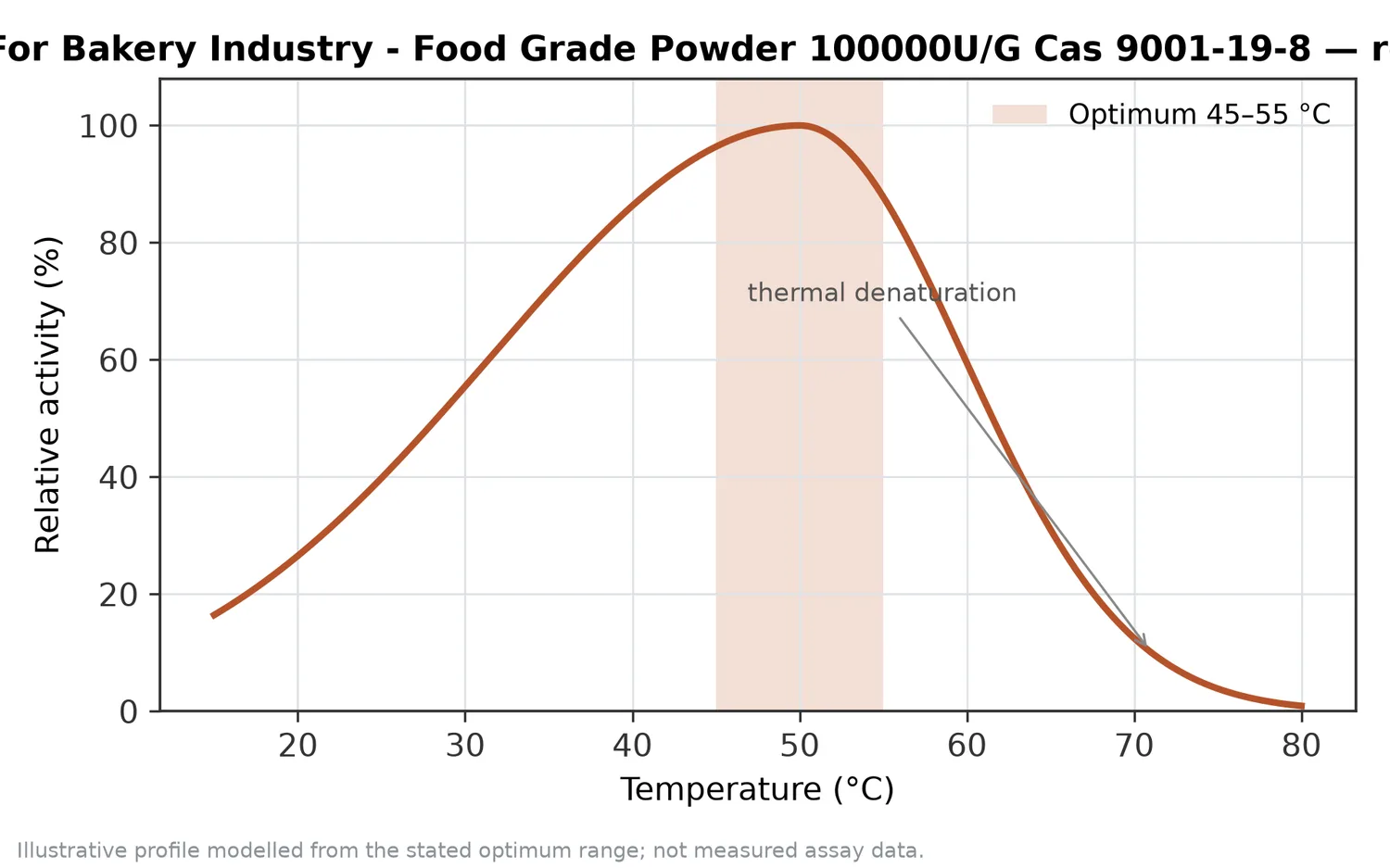
Thermal inactivation is an important part of bakery functionality. Alpha amylase is useful because it works during the dough and early oven stages, but the baked product needs starch to set into a stable crumb. Studies on alpha amylase inactivation data show that enzyme loss during heat processing is governed by time-temperature exposure, which is why baking conditions help define the endpoint of enzymatic action [4].
“Amylase” is sometimes used loosely, but different starch-converting enzymes do different jobs. Alpha amylase is an endo-acting enzyme: it cuts internal α-1,4 bonds in starch chains. That makes it particularly useful when the desired effect is rapid viscosity reduction, dextrin formation, and broad starch modification rather than only end-by-end sugar release [1].
| Enzyme type | Main action on starch-type substrates | Typical product tendency | Bakery relevance |
|---|---|---|---|
| Alpha amylase | Cuts internal α-1,4 bonds in starch chains | Dextrins, maltose, and oligosaccharides | Supports fermentation, crumb softness, loaf volume, and crust color through controlled starch breakdown |
| Beta amylase | Removes maltose units from non-reducing chain ends | Maltose-rich products | Can contribute fermentable sugar but does not open starch chains as broadly as alpha amylase |
| Glucoamylase | Releases glucose units from chain ends and can act on certain branch-related structures | Glucose-rich products | More associated with high sugar release in starch conversion; use effects differ from bakery alpha amylase |
| Debranching enzymes | Act on branch linkages in amylopectin-type structures | More linearized starch fragments | Relevant in starch processing; not the same primary role as alpha amylase in standard bread dough |
This distinction matters because alpha amylase’s bakery value is not only the creation of fermentable sugar. Its internal cutting changes the size distribution of starch fragments and therefore changes water interaction, crumb texture, and starch retrogradation behavior. A purely sugar-releasing enzyme would not necessarily produce the same dough and crumb effects because it would modify the starch network in a different pattern [1].
The strongest evidence for alpha amylase begins with its biochemical function. Alpha amylase family enzymes are well characterized as starch-active hydrolases that cleave α-1,4 glycosidic bonds and produce smaller carbohydrate fragments. This mechanism explains why the enzyme is repeatedly used in cereal processing, where starch structure drives viscosity, fermentation, texture, and product stability [1].
Breadmaking studies provide application-level support. Research on acid-stable alpha amylase isoforms from a Bacillus subtilis strain included breadmaking application, showing that microbial alpha amylases can be evaluated not only as isolated enzymes but also for their effect in baked products [6]. The relevance to bakery is direct: the enzyme’s performance is judged by how starch hydrolysis translates into dough and bread quality.
Another line of evidence comes from yeast systems designed to secrete alpha amylase during breadmaking. Studies using baker’s yeast strains expressing Aspergillus oryzae alpha amylase demonstrated that amylase activity generated in the dough environment can be used in bread production [5]. A related study combining Aspergillus nidulans endoxylanase and Aspergillus oryzae alpha amylase in industrial baker’s yeast further shows that alpha amylase can function as part of a multi-enzyme strategy in breadmaking [9].
Evidence also extends beyond conventional wheat bread. In gluten-free bread made with high-protein rice flour, alpha amylase has been studied for its effects on bread properties, reflecting the importance of starch management in systems where gluten structure is absent or reduced [10]. In such formulas, starch gelatinization, hydrolysis, and retrogradation are even more central to texture because the elastic gluten network is not available to provide the same structure.
Whole wheat and composite breads provide additional context. Enzyme treatment of whole wheat flour dough has been studied because bran, fiber, and non-starch components can interfere with standard dough behavior [7]. Orange-fleshed sweet potato composite bread research, while not centered only on alpha amylase, illustrates the broader bakery reality that alternative starch-rich ingredients change dough and crumb behavior and may require more careful starch and water management [11].
Flour is not a uniform industrial chemical; it is an agricultural ingredient. Wheat variety, growing season, sprouting history, milling conditions, damaged starch level, flour extraction, storage, and blending all influence how a dough behaves. Natural flour amylase activity can vary, and that variation affects fermentation speed, crust color, and crumb texture because the dough’s sugar supply changes [3].
When native amylase activity is too low, fermentation may depend mainly on sugars already present in flour or added in the formula. That can be enough for some products, but in lean breads or formulas with long fermentation, the yeast benefits from continued generation of maltose and related carbohydrates. Alpha amylase helps provide that continuing conversion by acting on starch during the process window before baking heat ends activity [1].
When native amylase activity is already high, the risk shifts in the opposite direction. Too much starch breakdown can make dough sticky and crumb gummy because starch polymers that should help set the crumb are overly fragmented. This is why alpha amylase should be viewed as a precision functional ingredient: its benefits come from balance, not from maximum hydrolysis [4].
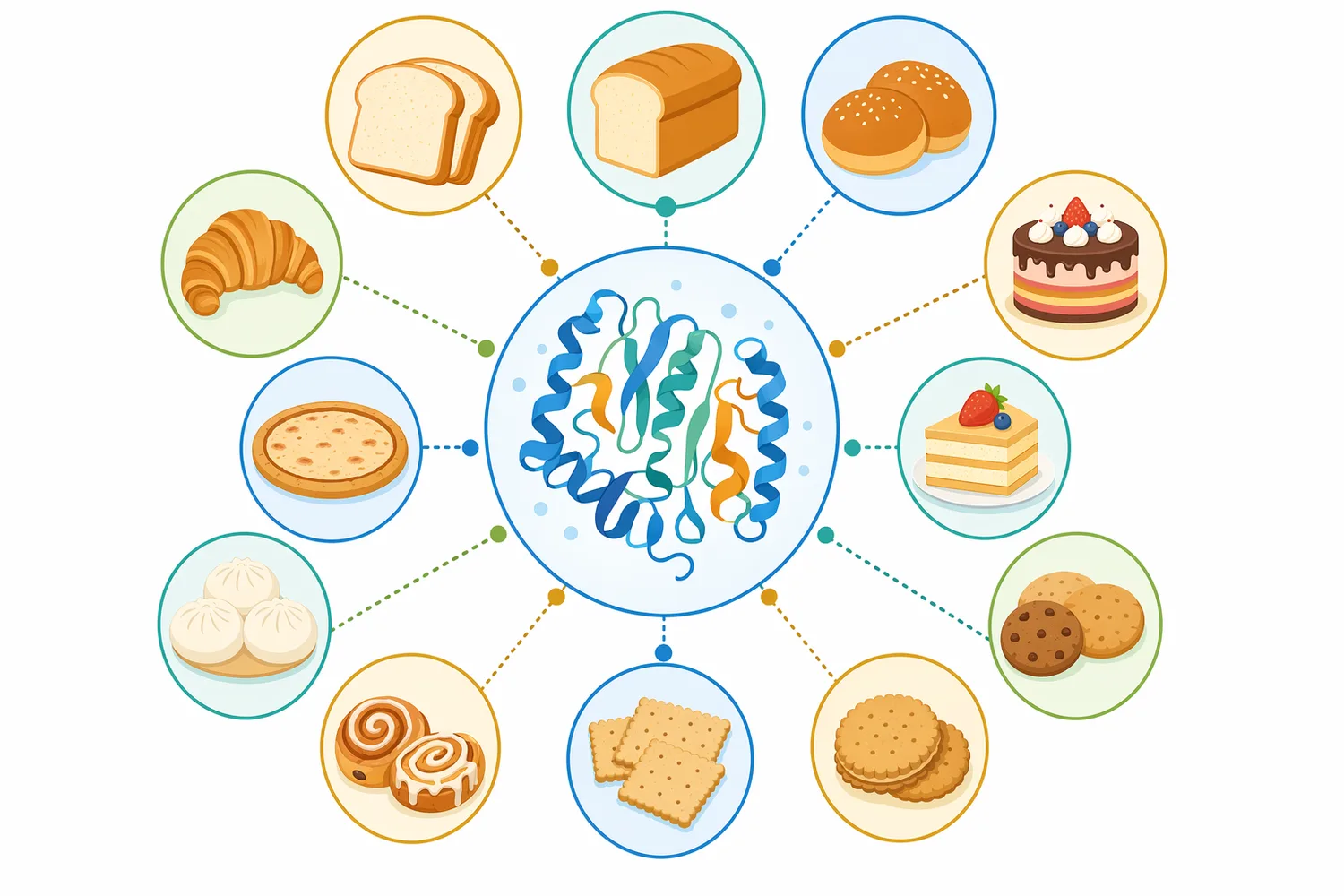
In pan breads and sandwich loaves, alpha amylase is commonly valued for fermentation support, volume, crumb softness, and more consistent crust color. These products often require a soft eating texture and predictable slicing quality, so controlled starch hydrolysis can be useful when it supports crumb tenderness without making the crumb tacky [8].
Buns and rolls often have shorter process times than traditional long-fermentation breads, and their formulas may contain sugar, fat, milk solids, or other enriching ingredients. Alpha amylase can still contribute by improving starch-derived carbohydrate availability and supporting the softness expected in these products. Its role remains catalytic: it modifies part of the flour starch so the dough system has a more favorable carbohydrate profile during proofing and early baking [3].
Whole wheat and multigrain breads present additional challenges because bran and fiber alter water absorption, physically interrupt dough structure, and change eating texture. Alpha amylase can help on the starch side by generating dextrins and smaller carbohydrates, but it does not remove the structural effects of bran or replace gluten development. Studies on enzyme-treated whole wheat flour show that bakery enzyme use can improve specific breadmaking qualities, while outcomes depend on the full flour matrix [7].
For high-fiber breads, crumb softness is often harder to maintain because fiber competes for water and can make the crumb feel drier. Alpha amylase-generated dextrins may help reduce firming by modifying the starch phase, but formula hydration, mixing, proofing, and bake profile remain decisive. The most reliable results come when starch hydrolysis supports—not overwhelms—the intended dough structure [1].
In gluten-free bread, starch functionality becomes even more important because the elastic gluten network is absent. Rice flour, maize starch, tapioca starch, potato starch, and other gluten-free ingredients depend heavily on gelatinized starch and hydrocolloid or protein systems to set structure. Alpha amylase can influence loaf volume, crumb openness, and softness by changing how starch breaks down and firms after baking [10].
The mechanism is the same as in wheat dough, but the consequences can be more visible. Without gluten, excessive starch degradation can quickly lead to weak structure, while insufficient starch modification may leave a dense or firm crumb. Research on high-protein rice flour gluten-free bread confirms that alpha amylase is relevant in this category because bread properties are strongly tied to starch behavior [10].
Sweet doughs contain sugar, fat, eggs, dairy ingredients, or other enrichments that influence yeast activity and dough structure. Added sugar may reduce the apparent need for starch-derived sugars, but alpha amylase can still affect crumb tenderness and browning by modifying starch during processing. In enriched systems, its contribution is often more about texture and consistency than simply feeding yeast [3].
Because enriched doughs can be slower to ferment or more sensitive to process variation, controlled starch hydrolysis may help maintain predictable performance. The enzyme’s action also interacts with formula sugar: reducing sugars generated from starch can add to browning potential, while overall color still depends on baking temperature, surface moisture, proteins, and recipe composition [1].
Frozen and refrigerated dough systems undergo delayed fermentation, cold storage stress, and changes in yeast activity. Alpha amylase may support final bake quality by helping restore carbohydrate availability during thawing, proofing, and early baking. However, cold-chain doughs are complex: yeast strain, storage time, ice damage, dough strength, and proof conditions all influence the finished product [3].
In these systems, the enzyme’s value remains linked to controlled activity over time. If activity proceeds too far before baking, the dough may become sticky or weak; if activity is too limited, the finished product may not show the desired softness or color support. Heat inactivation during baking remains the final boundary that stops ongoing starch hydrolysis [4].
Alpha amylase works inside a complete dough system, not in isolation. Flour protein builds structure, water controls mobility, yeast consumes sugars, salt moderates fermentation, and baking heat sets the crumb. The enzyme changes starch, but the final bread quality is the sum of starch conversion, gas production, dough strength, and thermal setting [3].
Other enzymes may be used alongside alpha amylase in some bakery systems. Xylanases act on arabinoxylans, glucose oxidase can strengthen dough through oxidative effects, and lipase-type enzymes may influence emulsification and crumb structure. Studies combining alpha amylase with glucose oxidase and ascorbic acid show that bread quality and shelf-life outcomes can reflect synergy between different mechanisms rather than the effect of starch hydrolysis alone [8].
Sourdough and fermentation biology add another layer. Microbial fermentation can change dough acidity, protein fragments, carbohydrate availability, and bioactive components. Research on sourdough fermentation has shown degradation of wheat alpha-amylase/trypsin inhibitors and reduced pro-inflammatory activity, which is a different subject from adding alpha amylase enzyme, but it illustrates how fermentation systems can substantially change cereal biochemistry [12].
Alpha amylase is a protein enzyme, and powdered enzyme products should be handled in a way that minimizes dust and unnecessary airborne exposure. In practical bakery or food-processing environments, that means opening containers carefully, avoiding vigorous dust generation, keeping the material contained during weighing and addition, and following the Safety Data Sheet supplied with the order.
The Safety Data Sheet and Certificate of Analysis are included with Enzymes.bio orders for internal records and safe handling. These documents support routine use of the product in a food-processing setting, while the practical application remains straightforward: the product is purchased online in a 1 kg unit, paid for online, then processed and shipped.
Food enzyme products are commonly produced through microbial biotechnology, and the food enzyme sector is subject to quality and safety oversight. Market surveillance research on alpha amylase food enzyme products has examined detection strategies for genetically modified production-organism contamination, underscoring that enzyme products are part of a regulated food-ingredient environment where documentation and traceability matter [13].
Alpha amylase should be expected to improve starch conversion, not to correct every dough issue. If a bread has poor volume because of weak gluten, under-mixing, yeast damage, or incorrect proofing, starch hydrolysis alone will not solve the root cause. Its strongest contribution is in formulas where controlled carbohydrate release and starch modification can support fermentation, softness, browning, and consistency [1].
The most noticeable benefits are often seen when flour has low native amylase activity, when crumb softness over storage is important, or when process consistency is difficult because flour lots vary. In these cases, alpha amylase can help reduce dependence on the flour’s natural enzyme level by providing a more predictable starch-converting function [3].
At the same time, the enzyme must be respected because its mechanism is powerful. It keeps converting accessible starch while moisture, time, and temperature allow. If the dough system permits excessive hydrolysis before the enzyme is inactivated, the same chemistry that improves softness can produce sticky dough, gummy crumb, excessive browning, or weak slice structure [4].
Alpha amylase enzyme for bakery industry use is a food-grade starch-converting powder that helps transform part of the flour starch into dextrins, maltose, and related oligosaccharides. By hydrolyzing internal α-1,4 glycosidic bonds, it changes the carbohydrate profile of dough and supports fermentation, loaf volume, crust color, crumb softness, and shelf-life-related texture [1].
The scientific foundation is strong: alpha amylase structure and function are well studied, and its role in starch hydrolysis is central to food processing. Bakery studies, including work with microbial alpha amylases, engineered amylase-secreting yeast, gluten-free rice bread, whole wheat doughs, and enzyme combinations, support its practical relevance in bread and related cereal products [6].
For buyers who need a straightforward supply route, Enzymes.bio offers this food-grade alpha amylase powder directly online by the 1 kg unit. Orders are paid online, processed, and shipped, with a Certificate of Analysis and Safety Data Sheet included for the order.
Sold by the 1 kg unit, in stock and ready to ship. Order directly on our store — pay online and we process your order. A Certificate of Analysis and Safety Data Sheet are included with every order.
Buy Alpha Amylase Enzyme For Bakery Industry - Food Grade Powder 100000U/G Cas 9001-19-8 →Numbered in order of first citation. Open-access sources, each verified reachable at publication; citation numbers in the text link here.