
Alpha-amylase is a starch-processing enzyme that cuts internal alpha-1,4 glycosidic bonds in amylose and amylopectin, turning long starch polymers into shorter dextrins, malto-oligosaccharides and other soluble carbohydrate fragments. In practical processing, that action reduces viscosity, improves starch accessibility, and prepares starch-rich materials for fermentation, brewing, baking, glucose syrup production or further enzymatic conversion. Enzymes.bio supplies alpha-amylase for direct online purchase by the 1 kg unit; orders are paid online, processed and shipped, with a Certificate of Analysis and Safety Data Sheet included.
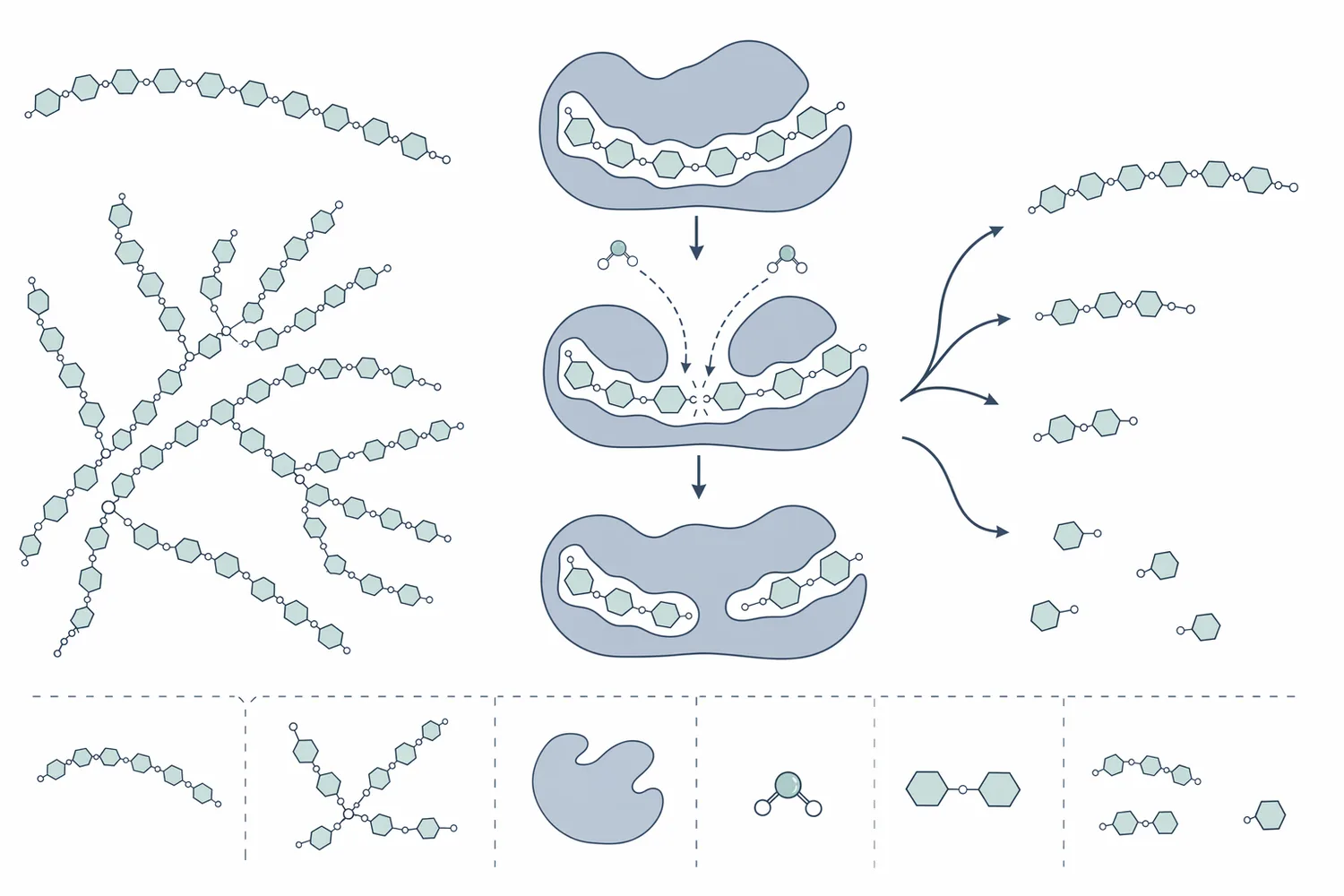
Alpha-amylase, also written as alpha amylase or α-amylase, is an endo-acting amylase: instead of nibbling only from the end of a starch chain, it cleaves bonds inside the molecule. That distinction is important because internal cleavage rapidly shortens the average chain length of starch polymers, which is why an alpha-amylase enzyme is often associated with liquefaction, dextrinization and viscosity reduction rather than complete conversion to glucose in one step [1].
Starch consists mainly of amylose and amylopectin. Amylose is mostly linear, while amylopectin is highly branched; both contain alpha-1,4 linked glucose chains, and amylopectin also contains alpha-1,6 branch points. Alpha-amylase attacks accessible alpha-1,4 linkages, creating breaks along the chain and producing a mixture of shorter carbohydrates whose exact profile depends on the enzyme source, substrate structure, gelatinization state and reaction conditions [2].
For a buyer using starch-rich raw materials, the value is mechanical as much as chemical. Long hydrated starch chains can make a mash, slurry or dough phase thick, elastic or difficult to pump; once alpha-amylase cuts those chains into smaller fragments, the same solids content can become easier to mix, heat, transfer, filter or ferment. Reviews of microbial amylases consistently describe alpha amylase enzymes as major industrial biocatalysts because starch conversion sits at the center of food, beverage, textile, feed and bio-based processing [1].
Enzymes.bio supplies alpha-amylase as an online product in 1 kg units for straightforward purchase and shipment. The product is intended for buyers who already know they need alpha-amylase for a starch-related process and want a direct supply route rather than a lengthy quotation cycle .
The alpha amylase protein is folded into an active structure that binds segments of starch and positions a glycosidic bond for hydrolysis. In simple terms, the enzyme holds part of the starch chain in a catalytic groove, uses water to break an alpha-1,4 bond, and releases shorter carbohydrate fragments; the enzyme itself is not consumed in the reaction, so one enzyme molecule can catalyze many bond-cleavage events under suitable conditions [3].
This is why alpha-amylase can change the physical behavior of starch so quickly. A long amylose chain contributes more to viscosity than several shorter dextrins of the same total mass because long chains entangle, hydrate and resist flow. When alpha-amylase cuts those chains internally, the molecular weight distribution shifts downward, entanglement decreases, and the slurry or mash becomes more mobile [4].
Amylopectin responds differently because it is branched. Alpha-amylase can cut the alpha-1,4 segments between branch points, but it does not simply erase the branched structure in one uniform reaction. Comparative work on corn starch granules showed that different amylolytic enzymes—including porcine pancreatic alpha-amylase, maltogenic alpha-amylase, glucan 1,4-alpha-maltotriohydrolase and amyloglucosidase—produce different hydrolysis profiles, confirming that enzyme mode of action strongly shapes the carbohydrate fragments generated from the same starch substrate [2].
Raw starch granules are also not equivalent to fully gelatinized starch. In ungelatinized granules, crystalline and semi-crystalline regions limit enzyme access; after heat, hydration and swelling, chains become more exposed and easier for alpha-amylase to bind. Recent in vitro work on starch structure and enzyme binding showed that starch architecture changes during enzymatic hydrolysis, reinforcing the practical point that substrate accessibility—not just enzyme presence—affects conversion behavior [5].
Searches for alpha vs beta amylase or alpha amylase vs beta amylase usually come from the same process question: which enzyme changes starch in the way the process needs? The key distinction is where the enzyme cuts and what products it tends to create; alpha-amylase is primarily a liquefying, endo-acting enzyme, while beta-amylase and glucoamylase act more from chain ends [1].
| Enzyme type | Main action on starch | Typical product tendency | Practical processing role |
|---|---|---|---|
| Alpha-amylase | Cuts internal alpha-1,4 bonds within starch chains | Dextrins and malto-oligosaccharides | Rapid viscosity reduction, liquefaction, starch opening |
| Beta-amylase | Removes maltose units from non-reducing chain ends | Maltose-rich profile | Maltose development in cereal and brewing contexts |
| Glucoamylase / amyloglucosidase | Releases glucose from non-reducing ends and can act deeper over time | Glucose-rich profile | Saccharification after liquefaction |
| Maltogenic alpha-amylase and related amylases | Specialized cleavage patterns depending on enzyme type | Specific malto-oligosaccharide profiles | Texture control, syrup profile adjustment, specialty carbohydrate modification |
The comparison matters because alpha-amylase alone is not always the final sugar-making step. In glucose syrup or starch-based fermentation, alpha-amylase often prepares the substrate by lowering viscosity and creating soluble dextrins, after which other enzymes can continue hydrolysis toward glucose or other fermentable sugars. The 2025 comparative study on corn starch granules illustrates this broader principle: amylolytic enzymes differ in how they attack starch and therefore in the product patterns they create [2].
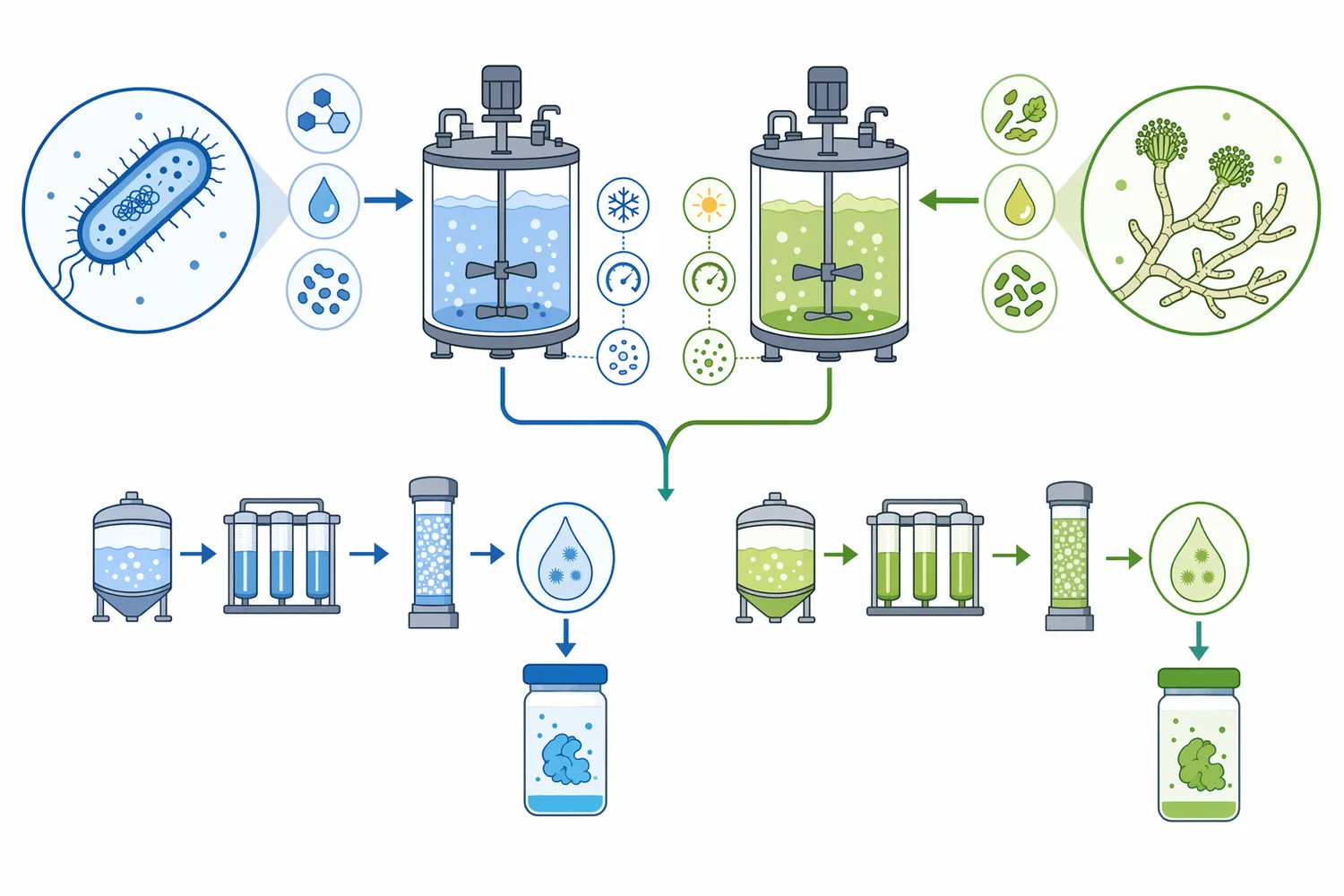
Industrial alpha-amylase is commonly associated with microbial sources because bacteria and fungi can produce useful extracellular amylases and because microbial enzyme systems can be adapted to different process environments. Reviews of amylase production describe microorganisms as central to industrial amylase supply, with applications spanning food, fermentation, textiles, detergents, paper and biofuel-related processes [1].
Bacterial alpha-amylases are especially associated with robust starch liquefaction. Work on Bacillus licheniformis alpha-amylase, including cloning, purification and biochemical characterization, reflects the long-standing interest in Bacillus enzymes for high-performance starch processing because Bacillus species are well-known amylase producers [6]. More recent research continues to investigate Bacillus strains and alternative substrates for alpha-amylase production, including studies using pomelo albedo or banana peels as low-cost fermentation substrates [7].
Fungal alpha amylase is also widely studied, especially from Aspergillus oryzae. A study on production of alpha-amylase from Aspergillus oryzae for several industrial applications shows why fungal alpha-amylase remains important: it is relevant to food and fermentation processes where moderate process conditions and established food-enzyme traditions matter [8].
The practical takeaway is not that one source is universally “better.” Bacterial and fungal alpha-amylases may differ in temperature behavior, pH behavior, stability and product pattern. For the buyer, the important point is that alpha-amylase is not a vague commodity term: it refers to a family of enzymes with the same core starch-cleaving function but different process personalities [3].
The strongest evidence for alpha-amylase is direct starch hydrolysis. In corn starch granule research, alpha-amylase was compared with other starch-active enzymes to evaluate how different catalytic actions change hydrolysis outcomes. Studies of this type are valuable because they move beyond the statement “amylase breaks starch” and show that the enzyme’s cleavage pattern determines whether the process mainly opens granules, produces dextrins, or proceeds toward smaller sugars [2].
Potato amylopectin work using quartz crystal microbalance techniques adds another useful mechanistic insight: enzyme action can be tracked as starch films lose mass or change binding behavior during hydrolysis. For industrial readers, the relevance is that amylopectin is not simply dissolved all at once; alpha-amylase progressively weakens and fragments the structure as accessible alpha-1,4 linkages are cleaved [4].
Recent work on gadung (Dioscorea hispida) starch hydrolysis to glucose using alpha-amylase further reflects the broad substrate range of starch conversion research. Different botanical starches have different granule sizes, amylose-to-amylopectin ratios and crystalline patterns, so studies on non-corn starches are useful reminders that conversion behavior can vary by raw material even when the same general enzyme class is used [9].
Cassava starch is another relevant example because it is widely used in tropical starch and fermentation industries. A 2024 study on glucose syrup production from waste cassava starch using alpha-amylase shows the enzyme’s role in upgrading starch-containing residues into soluble carbohydrate streams, demonstrating both the conversion chemistry and the sustainability interest around waste starch utilization [10].
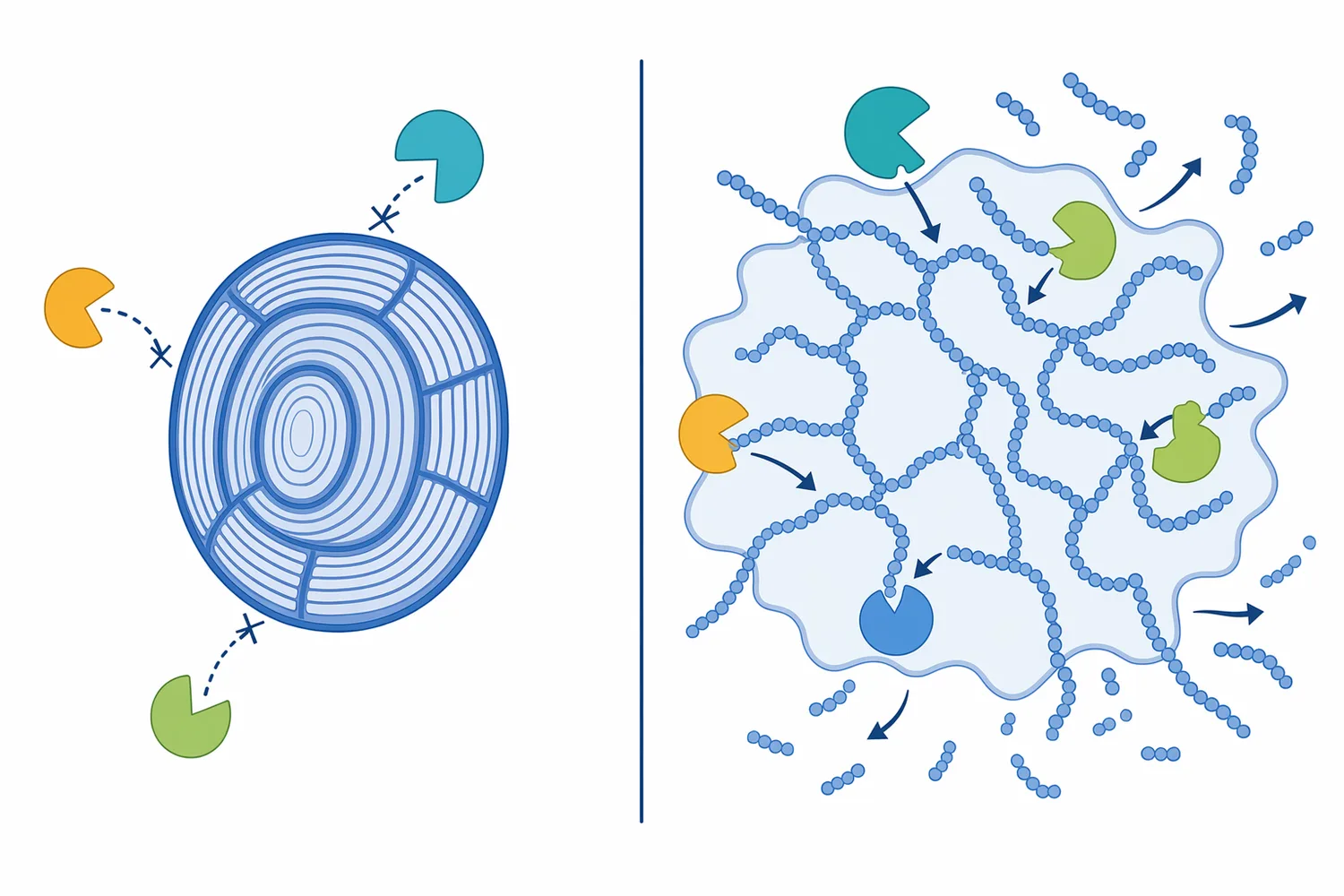
Liquefaction is one of the most common uses of alpha-amylase. When a heated starch slurry gelatinizes, swollen granules and leached starch chains can create a highly viscous mass. Alpha-amylase cuts internal alpha-1,4 linkages, shortening those chains and reducing the network-like behavior responsible for high viscosity [1].
This is especially valuable before filtration, concentration, saccharification or fermentation. A lower-viscosity starch stream transfers heat more evenly, mixes more predictably and exposes more substrate surface to downstream enzymes. The chemistry is simple but powerful: fewer long chains means less entanglement, less gel strength and better process flow [4].
Research on ultrasound-assisted alpha-amylase hydrolysis also shows how physical processing can influence enzyme performance. A comparative study asked whether ultrasound improves alpha-amylase activity for tailored starch hydrolysis, reflecting the wider industrial interest in combining mechanical or physical pretreatment with enzymatic conversion to improve mass transfer and substrate accessibility [11].
Another study investigated calcium and ultrasound effects on alpha-amylase stability and catalytic efficiency after structural modification. Without turning that into a universal recipe, it supports a broader point: the alpha amylase protein is sensitive to its physical and chemical environment, and changes that stabilize structure or improve enzyme-substrate contact can affect observed hydrolysis performance [12].
In glucose syrup production, alpha-amylase is usually associated with the first major conversion stage: liquefaction of starch into dextrins. Those dextrins can then be further converted by saccharifying enzymes toward glucose-rich syrups, depending on the target carbohydrate profile. The cassava waste starch study is a clear example of alpha-amylase being used to convert a starch-containing raw material into a glucose syrup pathway [10].
For ethanol and alcohol fermentation, the same principle applies. Yeast does not efficiently ferment intact starch polymers; the starch must first become soluble dextrins and then fermentable sugars. Alpha-amylase helps open the starch structure and reduce mash viscosity, improving the conditions under which later saccharification and fermentation can proceed [1].
This is why alpha-amylase is used in starch-based alcohol processes involving corn, wheat, rice, cassava or other cereals and tubers. The enzyme does not “make ethanol” by itself; it prepares the carbohydrate feedstock so that fermenting organisms can access sugars generated from starch. That distinction is important because it keeps the role of alpha-amylase clear: it is a starch-converting biocatalyst, not a fermentation organism [3].
Brewing and cereal mashing rely on controlled starch breakdown. During mashing, starch from malted or adjunct grains must be solubilized and converted into a mix of fermentable sugars and dextrins that influence both alcohol production and beverage body. Alpha-amylase contributes by cutting internal alpha-1,4 bonds, generating shorter dextrins and increasing the pool of carbohydrates available to other amylolytic enzymes [1].
In brewing contexts, alpha-amylase is valued because it can continue acting under mash conditions where starch gelatinization and enzyme stability must overlap. If starch becomes available but enzyme activity is lost too early, extract development can suffer; if starch is not accessible, even active enzyme has less to attack. This is why cereal structure, mash temperature profile and enzyme behavior are linked in practice [5].
Rice wine and other cereal fermentations follow the same biochemical logic, even if the raw materials and traditional processes differ. Rice starch must be opened, hydrolyzed and converted into fermentable carbohydrates; alpha-amylase supports the dextrinization and liquefaction side of that conversion. In these applications, the enzyme helps create a more manageable mash and a more accessible carbohydrate pool [1].
In baking, alpha-amylase acts on damaged or gelatinizing starch in flour systems, producing smaller dextrins and sugars that can influence dough fermentation and crumb properties. The goal is controlled starch modification, not aggressive liquefaction. Too little starch conversion may limit available fermentable carbohydrates, while excessive hydrolysis can produce stickiness or weaken the desired baked structure [1].
Fungal alpha-amylase is often discussed in bakery and food-processing contexts because fungal enzymes can fit moderate-temperature food processes. Research on Aspergillus oryzae alpha-amylase production for industrial applications supports the broader relevance of fungal alpha-amylase in food and fermentation systems [8].
Mechanistically, the baking effect comes from changing the starch fraction of flour. Alpha-amylase releases smaller carbohydrates that yeast can use directly or indirectly, and it changes how starch participates in crumb setting and moisture movement during baking and storage. The same endo-cleavage that reduces viscosity in a slurry can, in a carefully controlled bakery context, help tune dough and crumb behavior [3].
Plant materials often contain several polysaccharides at once: starch, pectin, cellulose, hemicellulose, gums and mucilages. Alpha-amylase is specific to starch-like alpha-glucans, so its value in plant extraction is strongest where starch is a source of viscosity, cloudiness or filtration resistance. It does not replace pectinase or cellulase when pectin or fiber is the main barrier [1].
A 2025 study on alpha-amylase hydrolysis of Cissus populnea gum illustrates that amylase treatment can change physicochemical properties of plant-derived hydrocolloid systems. For process users, that kind of evidence is relevant because viscosity, flow, swelling and filtration behavior often depend on how polysaccharide chains are structured and whether enzyme treatment shortens or modifies them [13].
Mucilages and plant polysaccharides can also have biological roles in water retention and drought response, as shown in work on Ziziphus species. While that research is not an industrial alpha-amylase application by itself, it reinforces the diversity of plant polysaccharide structures and why enzyme choice must match the actual carbohydrate causing the processing issue [14].
In animal feed, alpha-amylase is used for the same core reason: starch polymers are more useful when enzymatically converted into smaller carbohydrates during digestion or processing. Reviews of microbial amylases describe feed among the industrial areas where amylase enzymes are applied, particularly when starch-rich ingredients are part of the formulation [1].
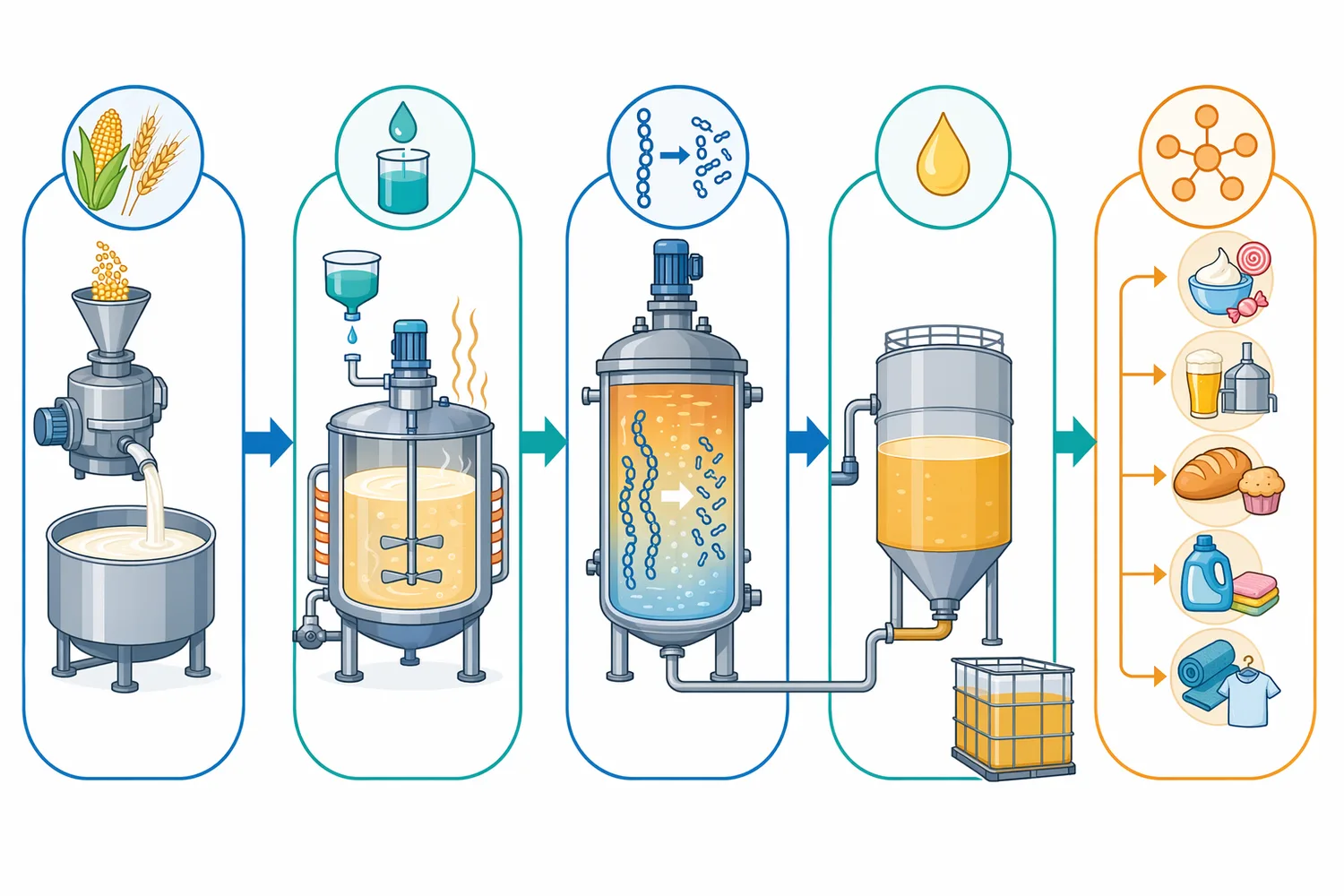
In textiles, amylases are used in desizing, where starch-based sizing agents must be removed from fabric. Alpha-amylase hydrolyzes the starch size into soluble fragments that can be washed away more easily, reducing the need for harsher chemical treatment. This is a direct industrial example of alpha-amylase turning a film-forming starch layer into smaller, removable dextrins [15].
Other industrial uses follow the same substrate rule. If the processing problem is caused by starch or related alpha-glucans, alpha-amylase may be relevant; if the problem is protein, cellulose, pectin, oil or mineral scale, another chemistry is involved. This substrate specificity is one reason enzymes are valuable: each enzyme changes a defined class of bonds rather than attacking everything indiscriminately [3].
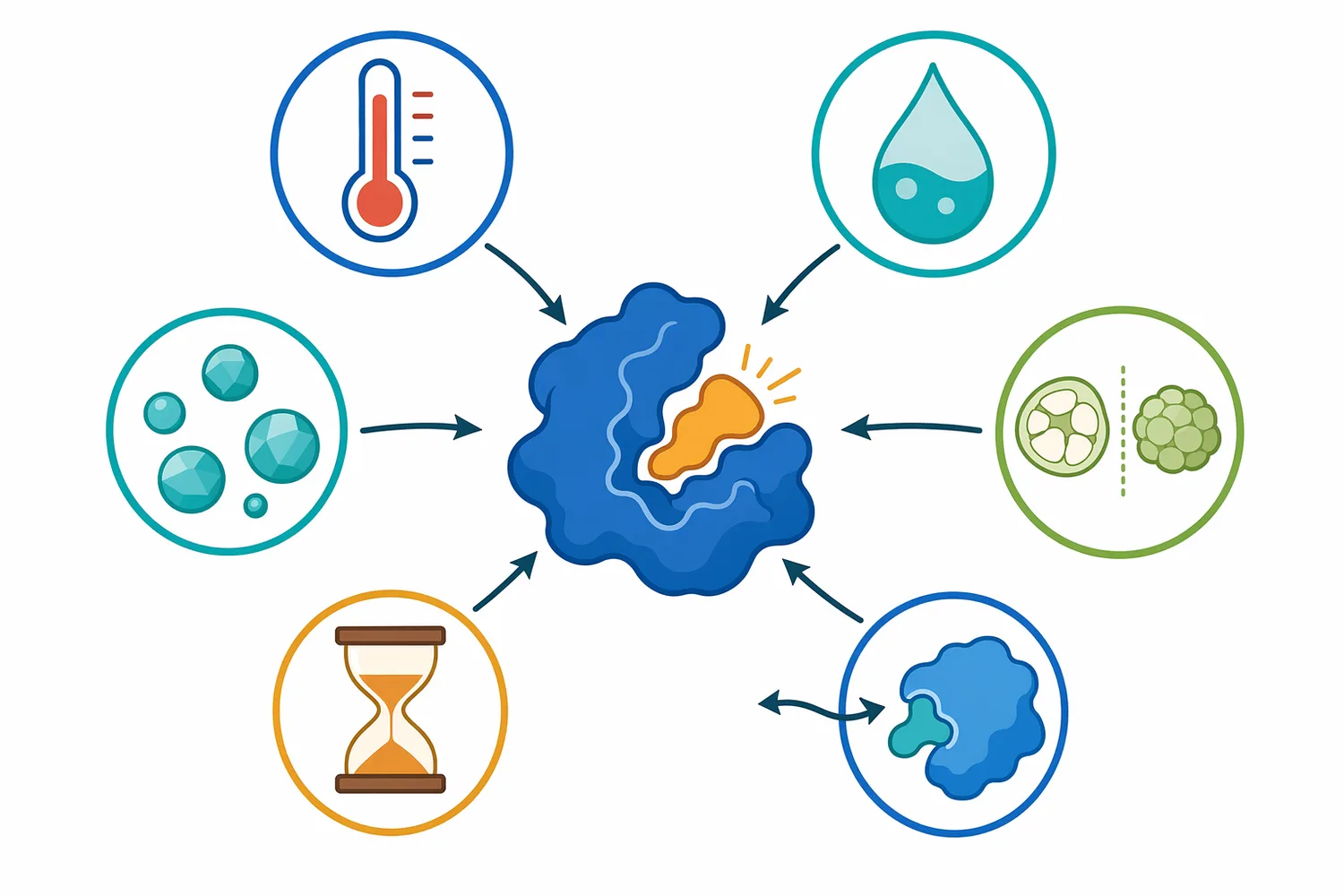
Alpha-amylase performance depends on the three-dimensional stability of the enzyme and the accessibility of starch. Temperature can increase reaction rate up to a point, but excessive heat can unfold the protein and reduce catalytic function. Different bacterial and fungal alpha-amylases are studied precisely because their stability profiles are not identical [3].
pH also matters because catalytic amino acids in the active site must be in the right ionization state for hydrolysis. If the environment is too acidic or too alkaline for a particular alpha-amylase, substrate binding or bond cleavage can decline. This is one reason research continues on alpha-amylases from different microbial sources and engineered variants for industrial applications [16].
Minerals can influence structure as well. Calcium is frequently discussed in alpha-amylase research because some alpha-amylases contain calcium-binding features that support stability. Studies examining calcium and physical treatment effects on alpha-amylase highlight the relationship between protein structure, catalytic efficiency and operating environment [12].
Substrate access is just as important as enzyme stability. A starch granule with intact crystalline regions may resist hydrolysis, while gelatinized starch presents more accessible chains. In vitro studies of starch structure during enzymatic hydrolysis show that enzyme binding and starch architecture change together as digestion proceeds [5].
Time and enzyme pairing determine the final carbohydrate profile. Alpha-amylase may quickly reduce viscosity, but a glucose-rich endpoint usually requires further saccharification. Comparative enzyme studies on starch granules demonstrate that alpha-amylase, maltogenic alpha-amylase, maltotriohydrolase and amyloglucosidase do not behave identically, so the final sugar spectrum depends on the enzyme system, not only the starch source [2].
Many people first encounter alpha-amylase through human biology: salivary alpha amylase, also called alpha-amylase in saliva or alpha amylase saliva, begins starch digestion in the mouth. When starchy food is chewed, salivary alpha-amylase starts cutting alpha-1,4 bonds before the food reaches later digestive stages. This is the same broad bond-cleavage concept used in industry, although industrial enzymes are selected for processing needs rather than oral digestion [5].
The analogy is helpful because it makes the mechanism intuitive. A cracker or cooked starch can taste sweeter after chewing because starch chains are being broken into smaller carbohydrates. Industrial alpha-amylase applies the same type of chemistry at process scale: long starch chains become shorter dextrins and sugars, changing viscosity, solubility and fermentability [17].
At the protein level, alpha-amylase is still a structured biocatalyst, whether it comes from saliva, pancreas, bacteria or fungi. Research on interactions between polystyrene nanoplastics and alpha-amylase used multidimensional analysis to study binding and structural effects, showing that the alpha amylase protein can be affected by molecules and surfaces in its environment [18].
Alpha-amylase is a powerful starch-processing enzyme, but it is not a universal processing additive. It does not hydrolyze cellulose like a cellulase, does not break down pectin like a pectinase, and does not digest proteins like a protease. Its main substrate logic is starch and related alpha-glucans containing hydrolysable alpha-1,4 linkages [3].
It is also different from alpha-amylase inhibition research. Some nutrition studies focus on reducing digestive carbohydrate release by inhibiting alpha-amylase or related enzymes, but that is the opposite of industrial starch conversion. For example, research on egg white protein-derived peptides investigated inhibition of alpha-glucosidase, reflecting a nutritional enzyme-inhibition context rather than the use of alpha-amylase as a processing aid [19].
Emerging research sometimes investigates alpha-amylase under unusual physical or material conditions, such as nanoparticle interactions, low-level laser irradiation, ultrasound or immobilized carriers. These studies are scientifically useful because they reveal how enzyme structure and activity can respond to environment, but the most established commercial use remains starch hydrolysis for viscosity reduction, liquefaction and carbohydrate conversion [20].
Enzymes.bio supplies alpha-amylase for customers who want a direct online purchase route. The product is sold by the 1 kg unit; the buyer pays online, and the order is processed and shipped. A Certificate of Analysis and Safety Data Sheet are included with the order.
For starch-rich materials, alpha-amylase is best understood as a practical enzyme for making starch easier to handle and convert. It cuts internal alpha-1,4 bonds, reduces the size of starch molecules, lowers viscosity, creates soluble dextrins and prepares the material for fermentation, brewing, baking, syrup production or further saccharification [1].
The evidence base is strongest where the substrate is clearly starch: corn, cassava, potato, rice, wheat, barley and other cereal or tuber starches. Across these materials, the same mechanism applies, while the exact processing outcome depends on the raw material structure, enzyme type and process environment [2].
For buyers working with starch conversion, brewing, baking, fermentation or desizing, alpha-amylase remains one of the most established and useful industrial enzymes. Its value comes from a concrete molecular action: it changes long, viscosity-building starch polymers into shorter, more processable carbohydrates.
Sold by the 1 kg unit, in stock and ready to ship. Order directly on our store — pay online and we process your order. A Certificate of Analysis and Safety Data Sheet are included with every order.
Buy Alpha-Amylase →Numbered in order of first citation. Open-access sources, each verified reachable at publication; citation numbers in the text link here.