
Alpha galactosidase enzyme for dogs helps break down selected plant-derived oligosaccharides—especially raffinose-family carbohydrates associated with beans, peas, soy, legumes, and other plant ingredients. Its practical value is reducing the amount of intact, gas-forming carbohydrate that reaches the large intestine, where bacterial fermentation can contribute to flatulence, bloating, stool odor, and digestive discomfort.
Enzymes.bio supplies Alpha Galactosidase Enzyme for Dogs for direct online purchase by the 1 kg unit. The buyer places and pays for the order online, and the order is then processed and shipped; a Certificate of Analysis and Safety Data Sheet are provided with the order .
Alpha galactosidase is a carbohydrase: an enzyme that acts on carbohydrates rather than proteins or fats. Its specific function is the hydrolysis of alpha-galactosidic bonds, the chemical links found in certain plant oligosaccharides such as raffinose and stachyose. In practical terms, the enzyme clips off galactose-containing sugar units from larger carbohydrates that dogs may not fully digest with their own endogenous enzyme system .
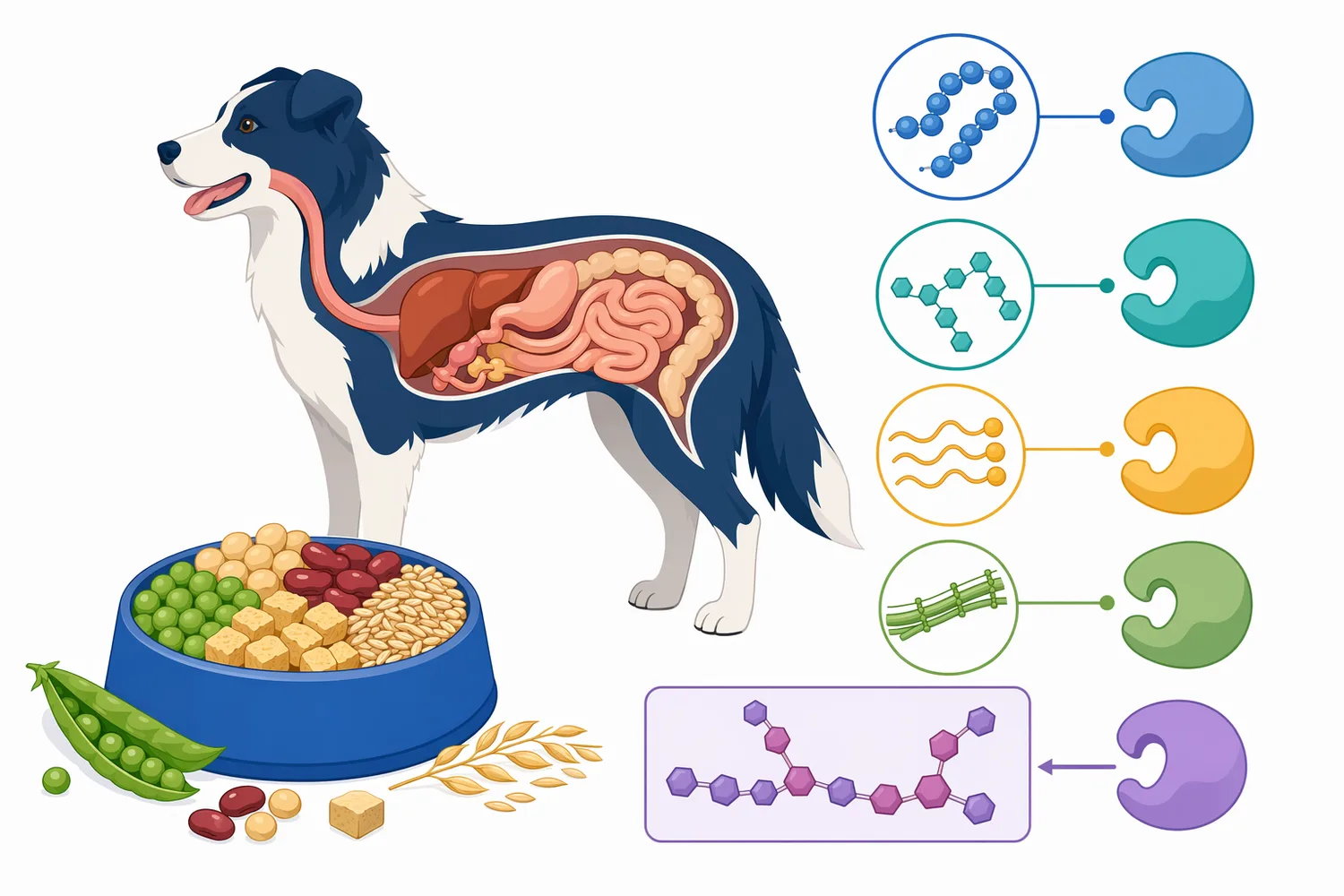
Dogs naturally rely on digestive enzymes released mainly from the pancreas, including enzymes that help digest proteins, starches, and fats. Canine digestive-enzyme discussions commonly describe proteases for protein digestion, amylase for starch digestion, and lipase for fat digestion, while also noting that dogs do not naturally produce every enzyme needed to break down all plant materials efficiently [1]. Alpha galactosidase fits into this supplemental category because it targets a narrow plant-carbohydrate fraction that is not the main job of the dog’s own pancreatic enzymes.
The key point is specificity. Alpha galactosidase is not a general “gut health” ingredient and should not be described as a cure for digestive disease. It is best understood as a targeted digestive-support enzyme for plant oligosaccharides that can otherwise pass into the hindgut and become fermentation substrate for intestinal microbes .
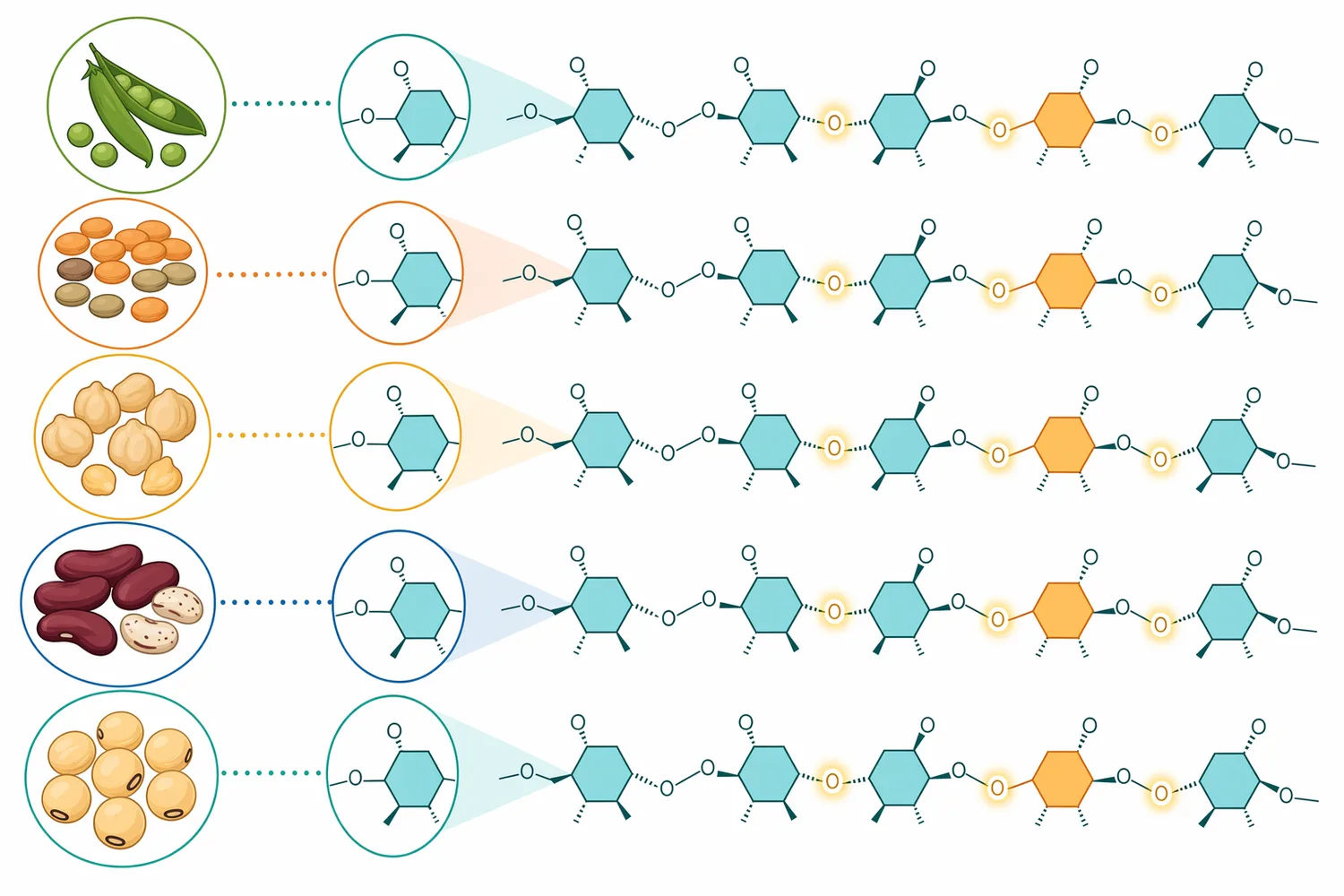
Many modern dog foods and canine supplements include plant ingredients for protein, texture, fiber, starch, palatability, or nutritional balance. Peas, lentils, chickpeas, beans, soy-derived ingredients, grains, vegetable powders, and botanical ingredients may all contribute useful nutrients, but they can also carry oligosaccharides that are not fully digested in the small intestine. Among the most relevant are raffinose-family oligosaccharides, including raffinose, stachyose, and related compounds .
These molecules are small chains of sugars. Raffinose, for example, can be thought of as a sucrose-like core with an additional galactose residue attached through an alpha-galactosidic bond. Stachyose has additional galactose units. The dog’s own digestive system is well adapted to many common nutrients, but these alpha-galactosidic linkages are a different structural problem from ordinary starch digestion, which is why a specific enzyme such as alpha galactosidase is relevant .
When these oligosaccharides remain intact through the upper digestive tract, they can reach the colon. There, intestinal bacteria ferment them. Fermentation is normal, but when a diet supplies more fermentable substrate than a dog handles comfortably, the visible outcome may be gas, abdominal rumbling, stool odor, bloating, or inconsistent stool quality. General canine digestive-enzyme education commonly discusses gas, bloating, diarrhea, constipation, foul-smelling stool, and undigested food in stool as signs that lead owners to consider digestive support [1].
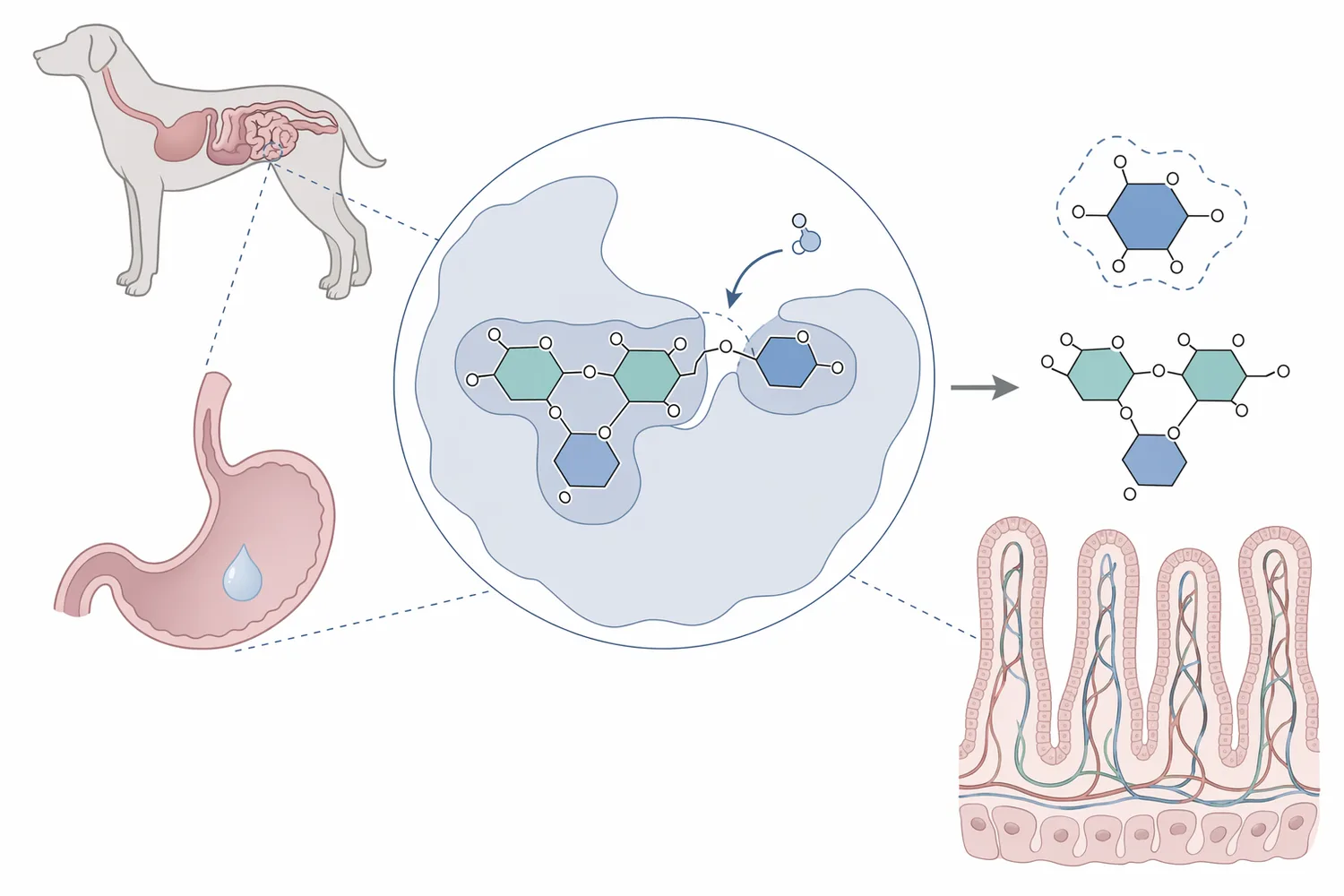
Alpha galactosidase works by hydrolysis, meaning it uses water to split a specific chemical bond. In the case of raffinose-family oligosaccharides, the enzyme attacks alpha-galactosidic bonds and releases smaller sugar units from the parent molecule. This changes the physical and nutritional behavior of the carbohydrate: instead of one intact oligosaccharide moving downstream to be fermented, the molecule is partially broken into smaller components that are more manageable within the digestive process .
That change matters because bacteria ferment intact oligosaccharides readily. If less intact raffinose-family carbohydrate reaches the large intestine, there is less substrate available for gas-producing fermentation. The expected benefit is not that all fermentation stops—fermentation is part of normal gut ecology—but that one specific fermentable input may be reduced before it reaches the hindgut .
This is also why alpha galactosidase is different from broad fiber claims. Fiber can have many effects depending on solubility, fermentability, viscosity, and inclusion level. Alpha galactosidase is narrower: it does not “digest all fiber,” and it does not replace cellulase, amylase, protease, or lipase. Its value comes from acting on a defined bond type in selected plant oligosaccharides [1].
Digestive-enzyme products for dogs are often blends because dog diets are mixed substrates: meat proteins, rendered proteins, fats, starches, vegetable fractions, fibers, and minor plant carbohydrates may all be present in a single bowl. Each enzyme type has a different target. Alpha galactosidase contributes a specific function that is complementary to, not interchangeable with, other digestive enzymes [1].
| Enzyme type | Main substrate in dog diets | What changes during digestion | Practical relevance |
|---|---|---|---|
| Protease | Dietary proteins | Large proteins are cut into smaller peptides and amino-acid fragments | Supports protein breakdown in mixed animal- and plant-protein diets |
| Amylase | Starches from grains, potatoes, legumes, or other carbohydrate sources | Starch chains are broken into smaller carbohydrate units | Supports starch digestion in kibble, cooked, or starch-containing diets |
| Lipase | Fats and oils | Triglycerides are broken into smaller lipid components | Supports fat digestion as part of normal digestive physiology |
| Cellulase | Cellulose and some plant cell-wall material | Plant fiber structures are partially degraded | Relevant to plant-containing diets because dogs are commonly described as lacking endogenous cellulase [1] |
| Alpha galactosidase | Raffinose-family oligosaccharides from legumes, soy, beans, peas, and related plant materials | Alpha-galactosidic bonds are hydrolyzed, reducing intact gas-forming oligosaccharides | Targeted support for plant carbohydrate fractions associated with fermentation and gas |
This comparison helps keep claims accurate. Alpha galactosidase is not a replacement for pancreatic enzymes in a medical condition, and it does not digest every carbohydrate in the diet. It contributes a precise activity that is most relevant when the diet contains plant ingredients with alpha-galactoside oligosaccharides .
Dogs can digest and use many plant-derived nutrients, especially when ingredients are cooked or processed into commercial foods. However, dogs are not herbivores, and their digestive enzyme profile does not cover every plant structure equally. Canine enzyme education commonly notes that dogs produce important digestive enzymes for major nutrients but may lack certain enzymes needed for specific plant components, such as cellulase [1].
Alpha galactosidase is relevant for a similar reason. Legumes and pulses are common in modern dog foods because they can provide protein, starch, fiber, and formulation functionality. Yet the same ingredient family may also contain raffinose-family oligosaccharides. A formula can be nutritionally useful and still present a digestive-comfort challenge for some dogs if fermentable oligosaccharides reach the lower gut .
For canine products positioned around digestive comfort, alpha galactosidase offers a concrete explanation: it helps break down selected plant carbohydrates before gut bacteria ferment them. That is more precise than a generic “supports digestion” claim and easier to connect to owner-observed concerns such as gas and stool odor [1].
The strongest evidence for alpha galactosidase is biochemical. The enzyme’s function is defined by its substrate: alpha-galactosidic bonds in oligosaccharides such as raffinose and stachyose. Feed-enzyme applications commonly describe alpha galactosidase as a preparation used to degrade these oligosaccharide anti-nutritional factors in plant materials .
The broader concept of digestive enzymes for dogs is also supported by basic digestive physiology. Dogs use digestive enzymes to convert food molecules into smaller forms that can be absorbed or otherwise processed during digestion. General canine enzyme guidance describes the roles of protease, amylase, lipase, and other enzymes in breaking down proteins, starches, fats, and plant-derived components [1].
At the same time, responsible communication should acknowledge that dog-specific outcomes depend on the diet, the dog, and the overall formulation. Published canine work on enzyme supplementation has evaluated enzyme use in real dogs, but such studies may involve multi-enzyme products and whole-diet digestibility rather than alpha galactosidase alone. That means the evidence supports the category and mechanism more strongly than it supports sweeping claims for every individual dog [2].
The practical conclusion is straightforward: alpha galactosidase can be described as supporting breakdown of gas-forming plant oligosaccharides. It should not be described as preventing all gas, curing bloating, treating gastrointestinal disease, or guaranteeing stool improvement in every dog. Those stronger claims go beyond the most defensible evidence base [2].
Alpha galactosidase is commonly most useful as part of a multi-enzyme digestive support concept. A dog’s meal may contain animal protein, plant protein, fat, starch, fiber, and minor oligosaccharides. Because each enzyme acts on a different substrate, alpha galactosidase can complement protease, amylase, lipase, cellulase, and other carbohydrases rather than replacing them [1].
In this context, the enzyme’s role is easy to communicate: protease supports protein breakdown, amylase supports starch breakdown, lipase supports fat breakdown, cellulase supports selected plant fiber breakdown, and alpha galactosidase supports breakdown of selected plant oligosaccharides. The benefit is a more complete digestive-support story for mixed modern diets [1].
Kibble, cooked diets, canned diets, and meal toppers often contain plant-derived fractions. These may include legumes, starches, vegetable fibers, gums, botanical powders, or grain ingredients. Alpha galactosidase is particularly relevant where peas, beans, lentils, soy-derived materials, or similar ingredients contribute raffinose-family oligosaccharides .
The mechanism is the same regardless of format: if the substrate is present and conditions allow enzyme activity, alpha galactosidase can hydrolyze alpha-galactosidic bonds and reduce intact oligosaccharides before they become fermentation substrate. This makes the enzyme a logical inclusion in products intended to support comfortable digestion of plant-containing meals .
Pet owners quickly notice flatulence, stool odor, stool inconsistency, abdominal rumbling, and signs of digestive discomfort. General canine enzyme education lists many of these signs as reasons people consider digestive support for dogs [1]. Alpha galactosidase is not a universal answer to all of these signs, but it addresses one plausible nutritional driver: undigested plant oligosaccharides reaching the lower gut.
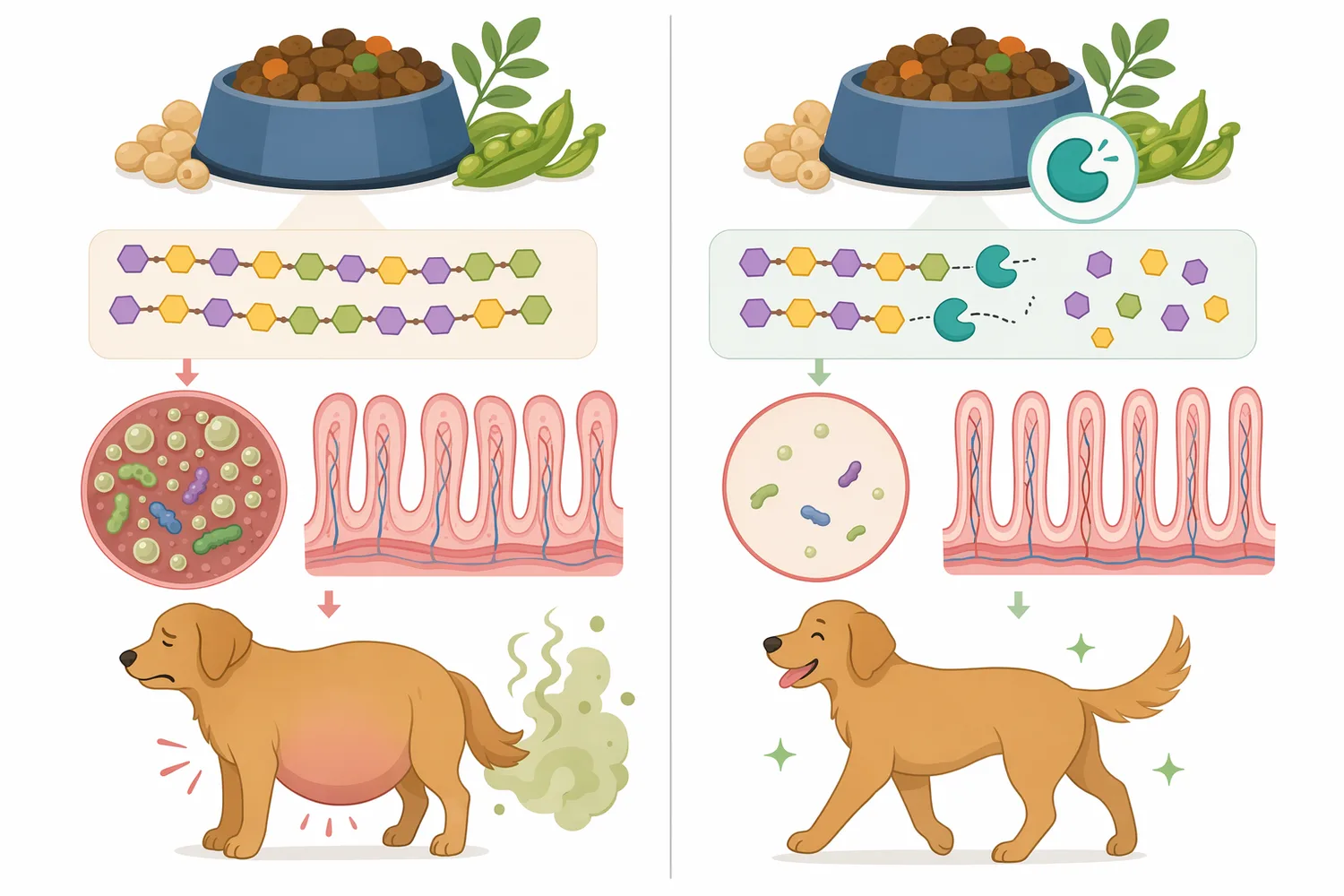
This distinction is important. Gas can arise from diet change, eating speed, microbiome shifts, food intolerance, illness, swallowed air, or other causes. Alpha galactosidase is most relevant when gas is plausibly connected to fermentable plant carbohydrate load, especially from legumes, beans, soy, peas, or related ingredients .
Senior dogs are often included in digestive-support discussions because appetite, diet tolerance, stool quality, and digestive resilience can become more visible concerns with age. Enzyme support is commonly discussed for dogs eating cooked, kibble, or plant-containing diets, which are common across life stages [1].
For senior-focused products, alpha galactosidase should still be positioned narrowly and accurately. It supports digestion of selected plant oligosaccharides; it does not treat age-related disease, pancreatic insufficiency, inflammatory bowel disease, or chronic malabsorption. If a senior dog has persistent vomiting, chronic diarrhea, weight loss, appetite change, or recurrent discomfort, veterinary evaluation is appropriate [2].
Alpha galactosidase is a digestive-support enzyme, not a drug. The most accurate language centers on substrate breakdown: “helps break down selected plant-derived oligosaccharides,” “supports digestion of raffinose-family carbohydrates,” and “may reduce the amount of intact gas-forming carbohydrate reaching the lower gut.” These statements describe mechanism without promising a medical outcome .
Claims should avoid disease language. Alpha galactosidase should not be positioned as a treatment for exocrine pancreatic insufficiency, pancreatitis, inflammatory bowel disease, chronic diarrhea, food allergy, or malabsorption syndromes. Those conditions require veterinary diagnosis and management, and they involve physiological issues far broader than alpha-galactoside digestion [2].
The same caution applies to consumer-facing benefit language. It is reasonable to explain that undigested oligosaccharides can be fermented by bacteria and that fermentation can produce gas. It is not responsible to promise that alpha galactosidase will eliminate all flatulence, normalize all stools, or work identically for every dog. Digestive response depends on the full diet, individual tolerance, feeding pattern, health status, and microbial ecology [1].
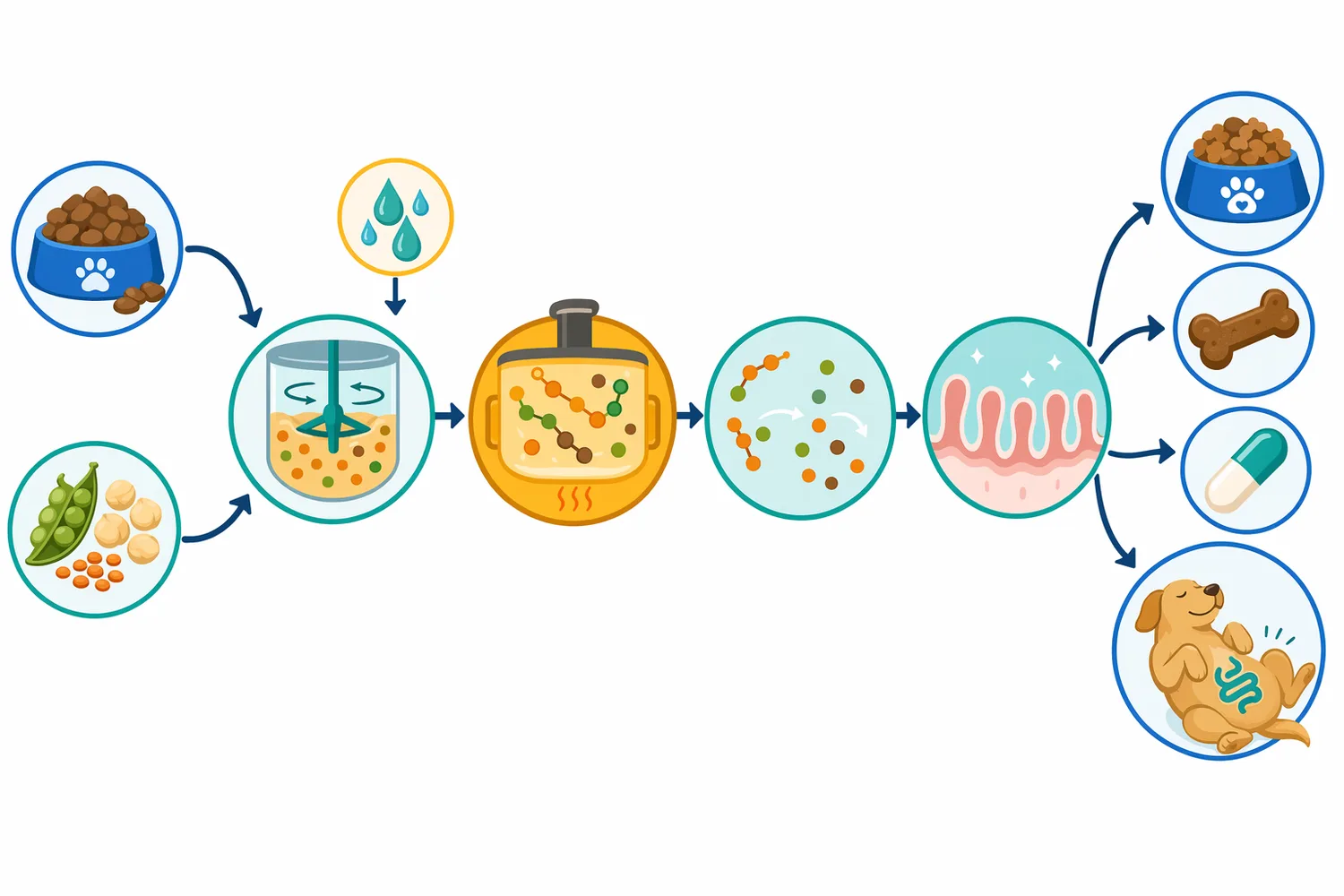
Alpha galactosidase has a practical communication advantage: its function can be explained clearly without resorting to vague wellness language. The customer does not need to understand enzymology in depth to grasp the point. Plant ingredients can contain complex sugars; some dogs do not fully digest those sugars; gut bacteria ferment what remains; alpha galactosidase helps break selected sugars down earlier .
That explanation is especially useful for products containing legumes or plant-forward ingredients. If a formula uses peas, lentils, chickpeas, soy ingredients, bean powders, or similar materials, alpha galactosidase provides a credible way to address a known nutritional challenge associated with that ingredient class. It supports the formulation story without implying that the plant ingredients are inherently unsuitable .
For product pages, labels, and educational copy, the strongest wording is concrete: “supports breakdown of raffinose-family oligosaccharides found in selected plant ingredients.” This is more technically accurate than broad statements such as “improves gut health,” and it is more defensible than medical-style promises [2].
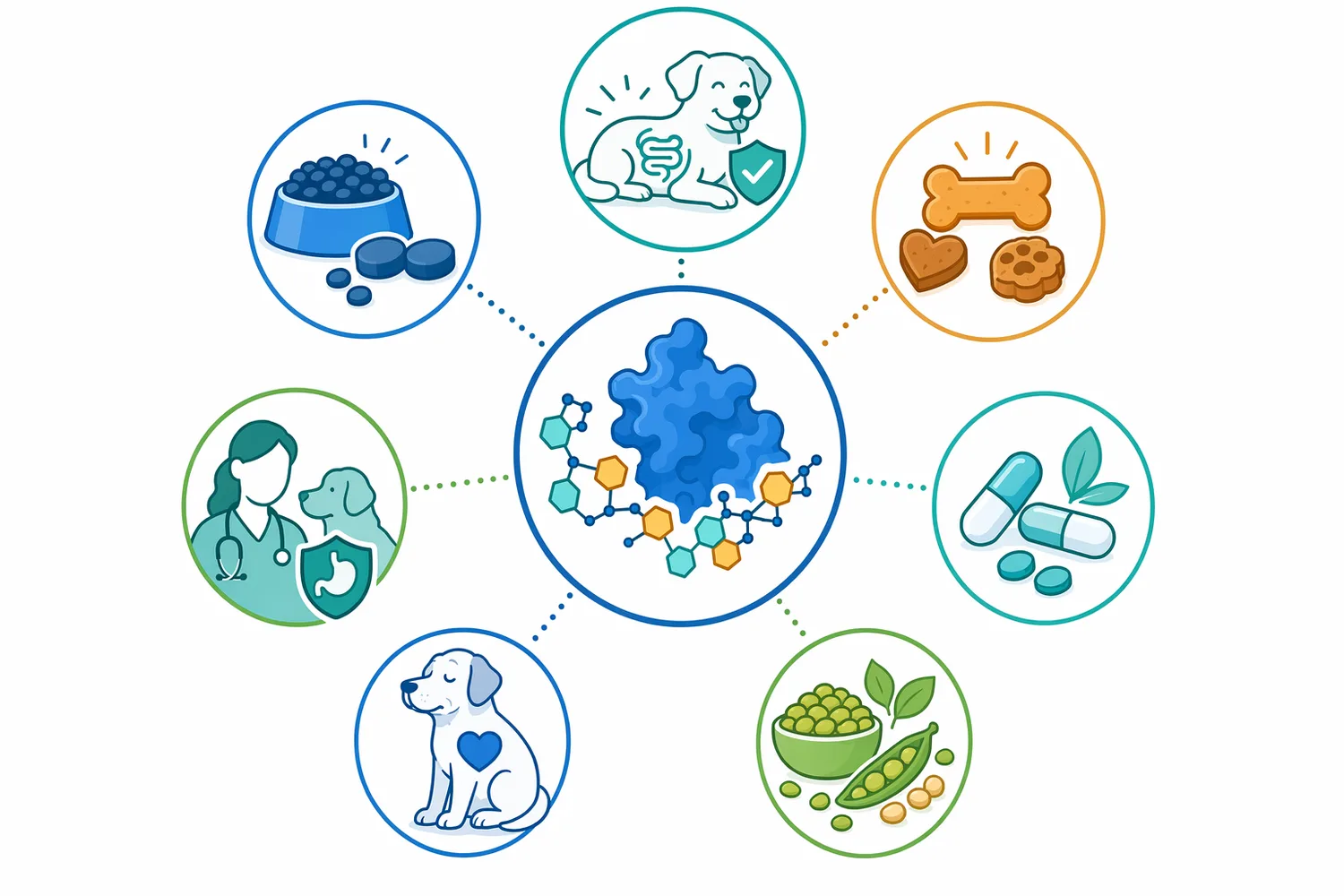
In real products, alpha galactosidase may appear in powders, toppers, digestive-support blends, or other canine nutrition formats where plant carbohydrate digestion is part of the benefit story. It can be used alongside other digestive enzymes when the product concept addresses a broad mixed meal rather than one substrate alone [1].
The educational emphasis should remain on what the enzyme does to the substrate. Alpha galactosidase hydrolyzes alpha-galactosidic bonds. That reduces intact raffinose-family oligosaccharides. Reduced intact oligosaccharide load may mean less fermentable material reaches the large intestine. Less fermentable substrate can support digestive comfort in formulas where plant oligosaccharides are a concern .
This mechanism-based framing also avoids overstating what any single enzyme can accomplish. A dog with gas after eating may be reacting to total diet composition, rapid diet transition, feeding volume, fat level, protein source, microbiome changes, or an underlying health issue. Alpha galactosidase is relevant when the issue involves fermentable alpha-galactosides, but it is not a universal digestive fix [2].
Enzymes.bio supplies Alpha Galactosidase Enzyme for Dogs as a direct online product sold by the 1 kg unit. Buyers can place and pay for the order online; the order is then processed and shipped. A Certificate of Analysis and Safety Data Sheet are provided with the order .
This supply format is intended to be straightforward: review the product, purchase the 1 kg unit online, and receive the accompanying documentation with the shipment. The role of this article is to support informed use of the ingredient by explaining the digestive mechanism, relevant substrates, application context, and appropriate non-medical positioning.
Alpha galactosidase enzyme for dogs is best understood as a targeted digestive-support enzyme for plant-derived alpha-galactoside oligosaccharides. It works by hydrolyzing specific bonds in carbohydrates such as raffinose and stachyose, reducing the amount of intact gas-forming substrate that may reach the lower gut for bacterial fermentation .
Its strongest support is biochemical and nutritional: the enzyme has a defined substrate and a clear mechanism. Broader canine digestive-enzyme education supports the general role of enzymes in breaking food into smaller components, while published canine enzyme research also reinforces the need for measured, diet-aware claims rather than universal promises [1].
For dog nutrition products that include legumes, soy, beans, peas, vegetable materials, or other plant carbohydrate sources, alpha galactosidase provides a precise and explainable function: helping dogs handle selected plant oligosaccharides more comfortably. Used and communicated responsibly, it strengthens digestive-support positioning without crossing into disease-treatment claims.
Sold by the 1 kg unit, in stock and ready to ship. Order directly on our store — pay online and we process your order. A Certificate of Analysis and Safety Data Sheet are included with every order.
Buy Alpha Galactosidase Enzyme For Dogs →Numbered in order of first citation. Open-access sources, each verified reachable at publication; citation numbers in the text link here.