
Asparaginase, also written as L-asparaginase or l asparaginase, is an enzyme that converts free L-asparagine into L-aspartic acid and ammonia. In food processing, that reaction is valuable because free asparagine is a key precursor for acrylamide formation when carbohydrate-rich foods are baked, roasted, or fried at high temperatures, especially above about 120°C [1].
For Enzymes.bio buyers, the practical point is simple: asparaginase is used before the high-heat step to reduce available L-asparagine in suitable doughs, batters, potato systems, cereal preparations, or other hydrated food matrices. Enzymes.bio supplies Asparaginase directly online by the 1 kg unit; buyers pay online, the order is processed and shipped, and a Certificate of Analysis and Safety Data Sheet are included with the order.
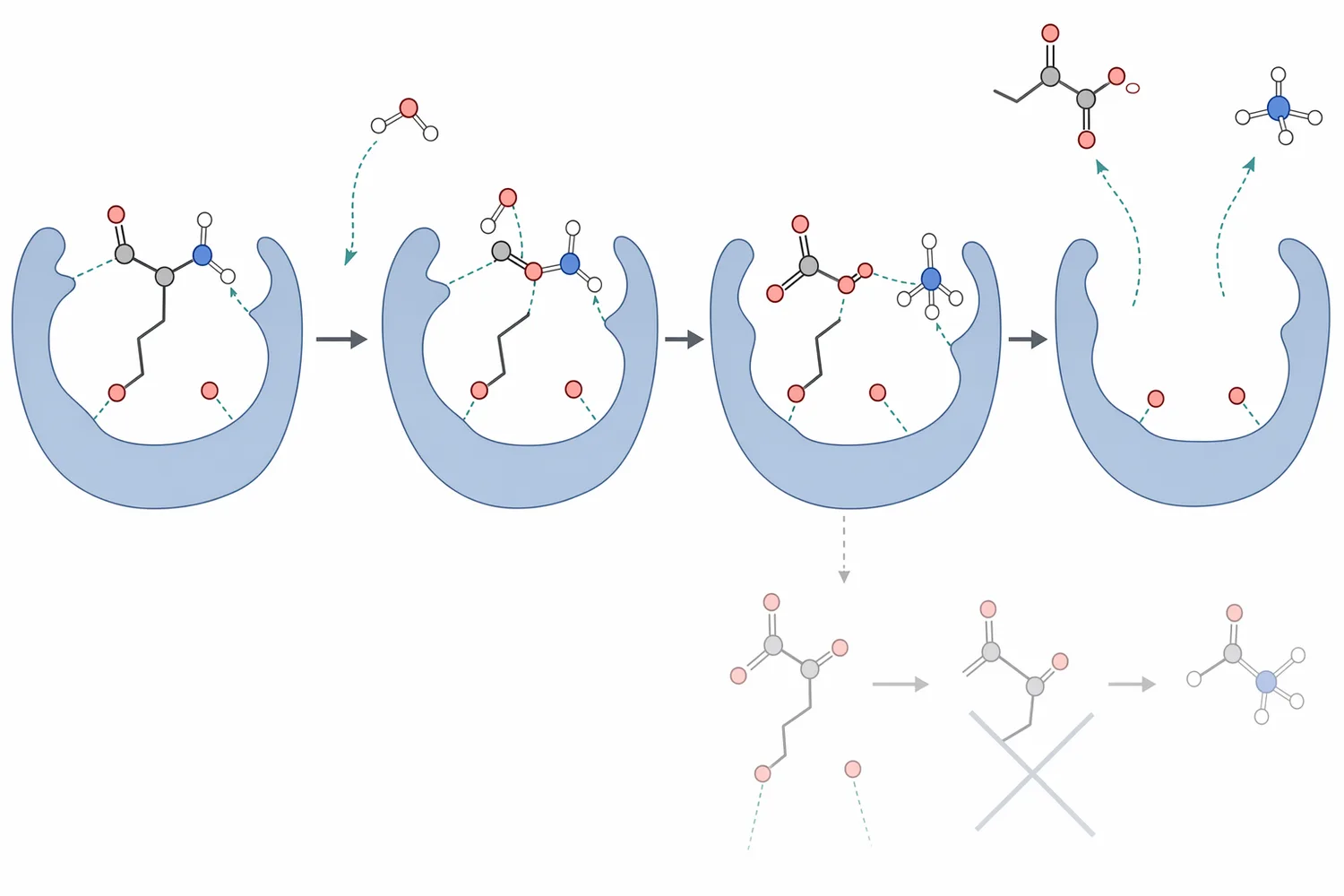
Asparaginase is an amidohydrolase enzyme: it hydrolyzes the amide group of L-asparagine using water. The core reaction is:
L-asparagine + water → L-aspartic acid / L-aspartate + ammonia
This is the same fundamental asparaginase mechanism of action—often searched as asparaginase MOA—behind its major industrial and biomedical relevance: the enzyme lowers the amount of free L-asparagine available for downstream reactions or biological use [2].
In food systems, the substrate is the free amino acid L-asparagine naturally present in cereal grains, potatoes, and many plant-derived ingredients. When asparaginase contacts that substrate in a moist matrix, it changes the side-chain amide of asparagine into a carboxylate group, producing aspartic acid/aspartate. That structural change matters because aspartic acid does not behave like asparagine in the same acrylamide-forming pathway during high-temperature processing [1].
The word “asparaginase” is sometimes encountered in clinical searches—such as pegylated asparaginase, cal peg-asparaginase, cal asparaginase, asparaginase Erwinia chrysanthemi, or Erwinia asparaginase—because selected pharmaceutical asparaginases are important oncology drugs. Those medical products are specialized regulated medicines, distinct from a general industrial enzyme product used for food or processing applications [3].
For pronunciation, technical buyers commonly say as-PAR-a-jin-ase, with emphasis often placed on the “PAR” syllable. The spelling variants L-asparaginase, l-asparaginase, and l asparaginase all refer to the same substrate-specific enzyme class when used in a general biochemical sense [4].
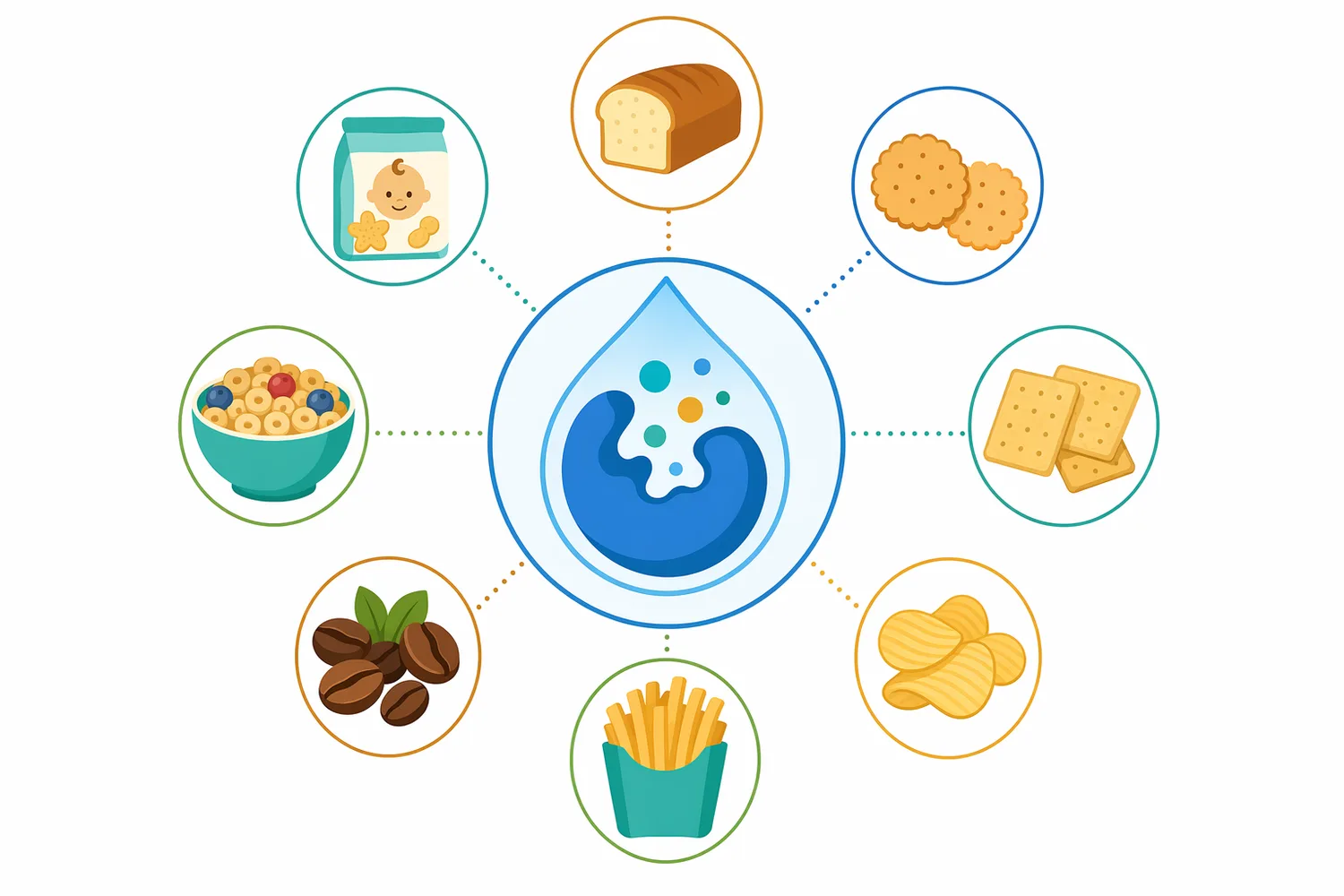
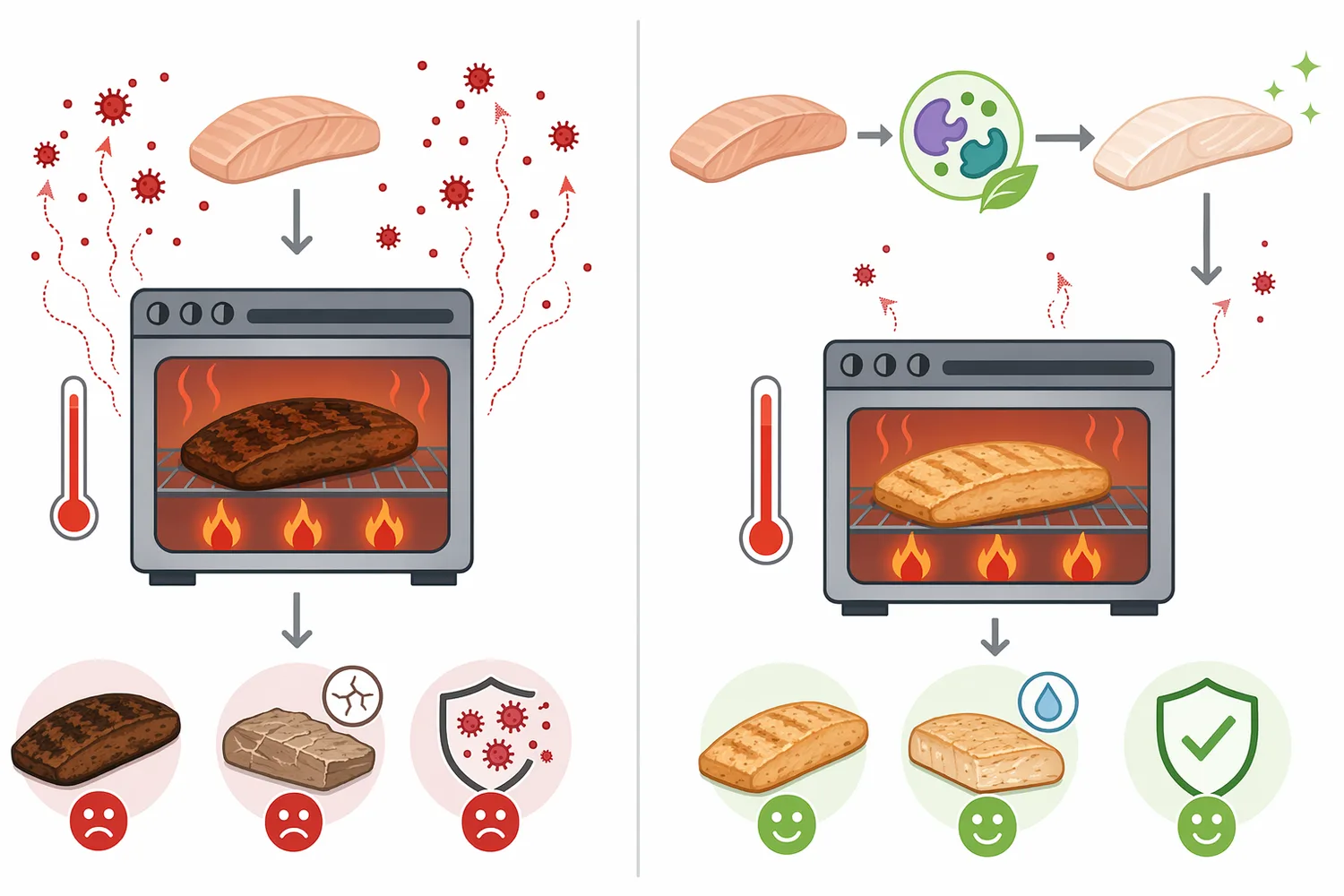
The strongest food-processing use case for asparaginase is acrylamide reduction in carbohydrate-rich foods that contain free L-asparagine and are cooked at high temperatures. Reviews of L-asparaginase describe its use in the food industry for products such as bread, cereal products, and fried potato-based foods, where heating above about 120°C can support acrylamide formation [1].
Acrylamide formation is associated with the Maillard reaction network, the same broad chemistry responsible for desirable browning, roasted notes, and crust development. In simplified terms, free asparagine reacts with carbonyl compounds from reducing sugars during heating; through a sequence of condensation, decarboxylation, and fragmentation reactions, part of the asparagine backbone can be converted into acrylamide. Asparaginase acts upstream of that chemistry by converting the precursor before the oven, fryer, roaster, or other high-temperature step has the chance to drive the reaction [1].
This is different from trying to remove acrylamide after it has formed. Once acrylamide is present in a finished food, removal without damaging quality can be difficult. Asparaginase instead changes the precursor pool in the dough, batter, slurry, soak, or prepared ingredient, so less free asparagine remains available when the product later reaches acrylamide-forming temperatures [2].
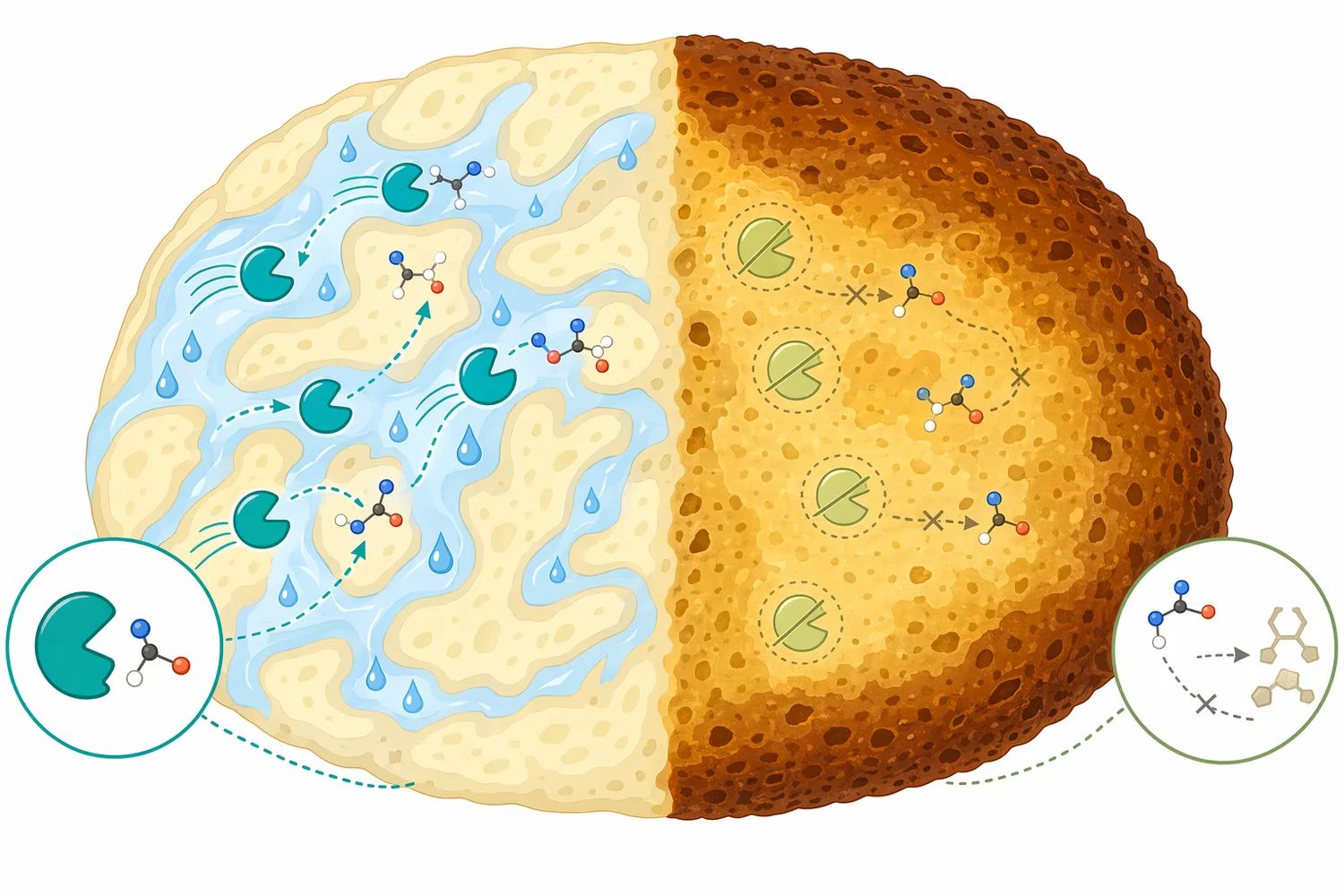
The enzyme therefore fits best where the process provides three practical conditions: water for hydrolysis, mixing or contact between enzyme and substrate, and time before high heat. In a hydrated dough or potato preparation, the enzyme can diffuse toward soluble L-asparagine and catalyze deamidation; in very dry or extremely short-contact systems, the same chemistry may be limited simply because enzyme and substrate cannot meet effectively before heat inactivation [4].
The useful chemistry of asparaginase is highly specific. L-asparagine contains an amide side chain; asparaginase catalyzes the hydrolysis of that amide, replacing it with a carboxylic acid/carboxylate function and releasing ammonia. The product, L-aspartic acid or L-aspartate depending on pH, remains an amino acid but is no longer L-asparagine [2].
That small molecular change has a large processing consequence. Acrylamide formation in many heated foods is strongly linked to the presence of free asparagine, not simply to the presence of any amino acid. When asparagine is converted into aspartate, the molecule’s side-chain chemistry and heat-reaction behavior change, so it is much less available to participate in the same acrylamide-generating route [1].
In practical food terms, asparaginase is not “bleaching,” masking, binding, or filtering acrylamide. It is not a flavor additive and does not create browning by itself. It is a catalyst that changes a specific precursor before the browning process begins, helping reduce acrylamide risk while allowing the main baking, frying, or roasting process to remain conceptually intact [2].
The reaction also explains why timing matters. If asparaginase is added after the product is already at high temperature, the enzyme may be inactivated and acrylamide formation may already be underway. If it is added earlier, while the matrix still contains sufficient water and accessible free asparagine, the enzyme has a window to lower the precursor concentration before thermal chemistry dominates [1].
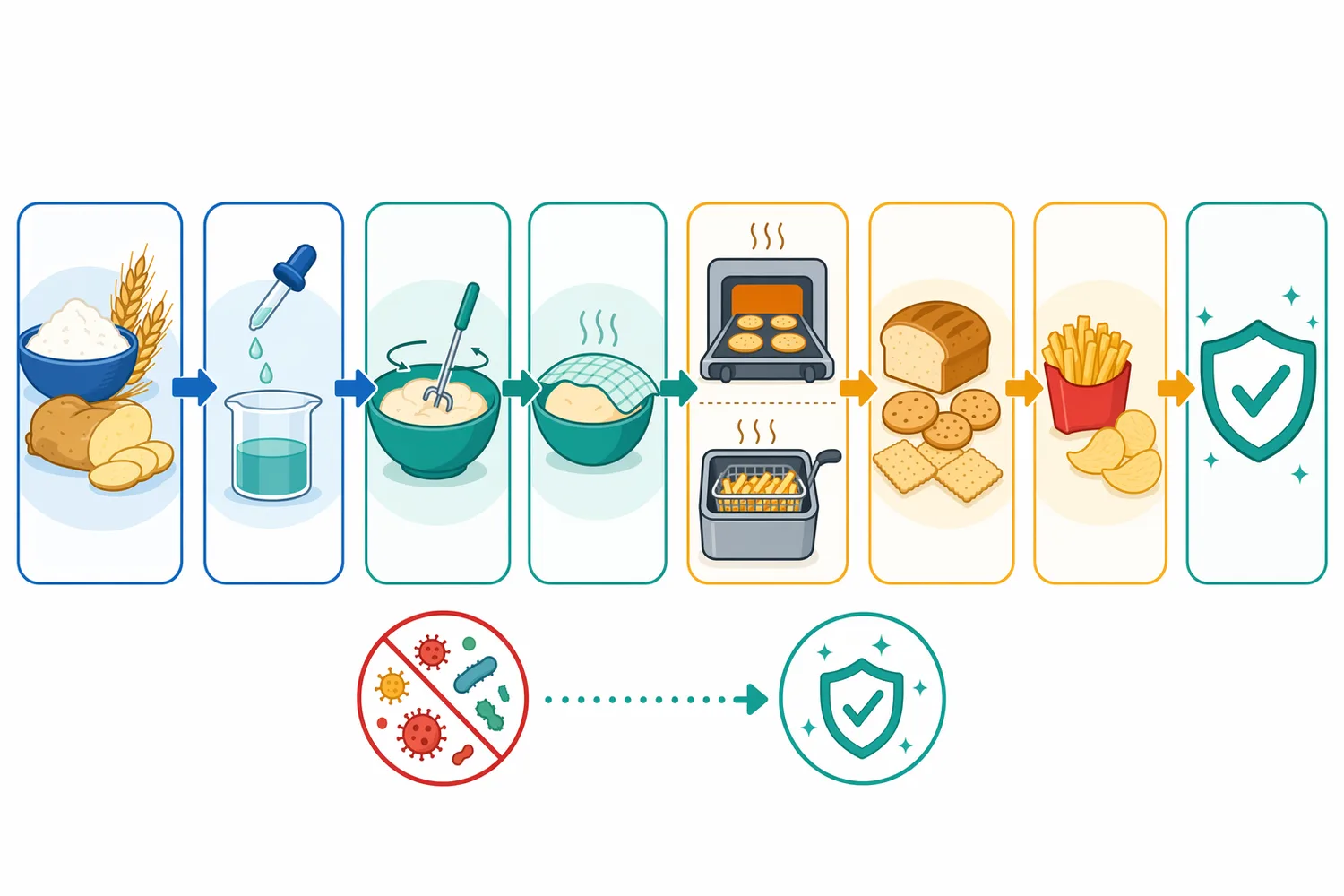
Bakery products are a natural fit for asparaginase because cereal flours can contain free asparagine, and baking exposes the product surface and crust region to temperatures that support Maillard browning. Reviews identify bread and cereal products as important food categories for L-asparaginase use in acrylamide mitigation [1].
In dough-based systems, the enzyme can be incorporated before baking, when water is present and mixing has distributed soluble components. During this stage, asparaginase can act on accessible L-asparagine in the aqueous phase of the dough. Later, as the dough heats, starch gelatinizes, proteins set, water activity changes, and enzyme activity declines, but by then part of the precursor pool may already have been converted [2].
The most relevant zone for acrylamide concern in baked foods is often the browned surface, where heat exposure is strongest and moisture is lower near the end of baking. Acting before that stage is important: asparaginase works while the matrix is still wet enough for enzymatic hydrolysis, not after the crust has dried and the high-temperature Maillard network is already advanced [1].
Cereal-based foods, including crispbreads, cereal snacks, crackers, and similar baked or toasted products, share the same broad risk chemistry: cereal-derived L-asparagine plus carbohydrates plus high-temperature processing. L-asparaginase is discussed in food-industry literature as a tool for cereal products where acrylamide precursor management is desired [1].
For these products, the enzyme’s role is not to change the cereal into something else, but to alter a small fraction of the free amino acid profile before heat treatment. This makes the approach especially relevant where developers want to keep the characteristic baked, toasted, or roasted process while reducing the availability of a known acrylamide precursor [2].
Extruded or low-moisture snack systems can be more challenging because residence times may be short and water availability may be limited. The enzyme still has the same mechanism, but the process must provide a pre-heat stage where asparaginase, water, and free asparagine can interact before the material reaches enzyme-inactivating temperatures [4].
Potatoes are another major application area because they naturally contain free asparagine and reducing sugars, and products such as French fries, chips, formed potato snacks, and baked potato pieces can experience intense surface heating. Food-application reviews specifically include fried potato products among the categories where asparaginase is used for acrylamide reduction [1].
In potato systems, the enzyme can only act where it can physically contact soluble L-asparagine. That contact may be easier in cut, soaked, blanched, mashed, or slurry-based preparations than in completely intact tissue with limited diffusion. The key mechanism remains the same: convert accessible free asparagine into aspartate before frying or baking drives acrylamide formation [2].
Because potato products vary widely in cut size, surface area, solids content, sugar level, and pre-treatment sequence, practical outcomes can differ. The enzyme is best understood as a targeted precursor-reduction tool, not as a universal guarantee that every fried product will respond identically [1].
Asparaginase can also be relevant when a specific ingredient contributes free asparagine to a later high-temperature process. In that case, the enzyme may be used conceptually as an ingredient pre-treatment step: act on the asparagine while the ingredient is hydrated and accessible, then carry the treated material into the final process [2].
This approach is consistent with the underlying science because the enzyme does not need to be active during the final high-temperature step. Its value is created earlier, when it lowers the amount of L-asparagine entering the heat-driven Maillard reaction environment [1].
Asparaginase is unusual because the same core reaction is important in both food processing and medicine, but the products, controls, and intended uses are completely different. The table below separates these contexts so buyers do not confuse an industrial enzyme ingredient with a regulated injectable drug.
| Context | Main purpose | What the enzyme changes | Common terms encountered | Important distinction |
|---|---|---|---|---|
| Food processing | Acrylamide precursor reduction | Converts free L-asparagine in food matrices into L-aspartic acid/aspartate before high heat | asparaginase, L-asparaginase, l asparaginase | Used as a processing enzyme for suitable food systems, especially carbohydrate-rich products heated above about 120°C [1] |
| Industrial biotechnology research | Biocatalysis and enzyme development | Uses the same hydrolysis reaction, often with attention to source organism, stability, and substrate specificity | microbial L-asparaginase, fungal asparaginase | Literature covers many microbial sources and production approaches, but not all enzymes are interchangeable [4] |
| Human oncology medicines | Asparagine depletion in blood and tissues | Lowers extracellular L-asparagine to stress susceptible leukemic cells | pegylated asparaginase, cal peg-asparaginase, cal asparaginase, Erwinia asparaginase | These are regulated drug products with clinical dosing, monitoring, and adverse-event management [3] |
| Veterinary oncology references | Treatment protocols in animals | Same general biological depletion concept in a veterinary medical context | l-asparaginase dogs, l asparaginase dog, l-asparaginase for dogs | Searches using these terms relate to veterinary medicine; an industrial enzyme product should not be used as a veterinary drug |
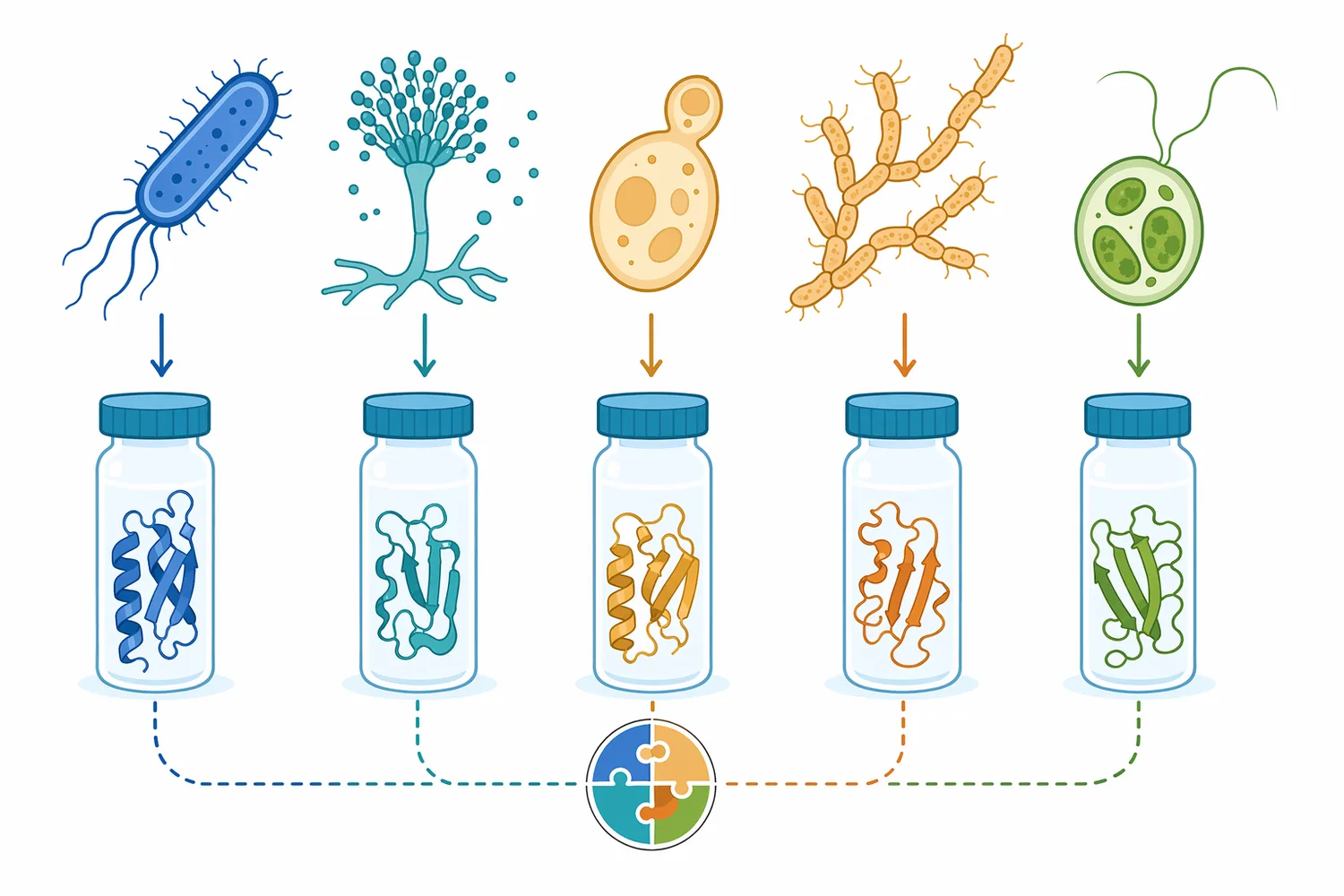
Commercial and research literature describes L-asparaginase from a wide range of biological sources, particularly microorganisms. Reviews discuss bacterial, fungal, yeast, actinomycete, and algal sources, with microbial production receiving substantial attention because microorganisms can be cultivated and optimized for enzyme production [4].
Historically, many clinical asparaginases have been associated with bacterial sources such as Escherichia coli and Erwinia species. The phrase asparaginase Erwinia chrysanthemi, often shortened in searches to asparaginase Erwinia or Erwinia asparaginase, refers to one clinically important source lineage, not to a general statement that every asparaginase product has the same formulation or use [3].
Food-industry asparaginases may be discussed differently from pharmaceutical enzymes because the application environment is different. A food enzyme must act in a food matrix before heat treatment; a drug enzyme must persist in the body long enough to deplete circulating asparagine while meeting strict pharmaceutical requirements. Both rely on L-asparagine hydrolysis, but their acceptable characteristics and regulatory contexts are not the same [1].
This distinction is especially important when reading biomedical literature. A paper describing antileukemic activity, immune response, half-life extension, or treatment toxicity is not evidence that a general enzyme supplied for processing is suitable for injection, oral therapy, animal treatment, or any other medical use [5].
The core catalytic reaction of asparaginase is well established across decades of biochemical and applied literature: L-asparagine is hydrolyzed into L-aspartic acid/aspartate and ammonia. This reaction is consistently described in reviews covering industrial, food, and therapeutic applications [2].
The food-use rationale is also well supported. L-asparaginase has been reviewed as a food-industry enzyme for reducing acrylamide formation in heat-processed carbohydrate-rich products, especially where free L-asparagine and reducing sugars are present before baking or frying [1].
The temperature context is important. Acrylamide concern is typically associated with high-temperature processing, and food literature describes asparaginase use in preparations cooked above about 120°C, including bread, cereal products, and fried potato products [1].
Evidence from microbial biotechnology further supports the availability of L-asparaginase as an industrial biocatalyst. Reviews describe many microbial sources and discuss production, characterization, and applications, reinforcing that the enzyme is not a narrow laboratory curiosity but a broadly studied applied biocatalyst [4].
At the same time, the literature does not support treating all asparaginases as identical. Source organism, structure, substrate preference, stability, and formulation can influence practical behavior, which is why food, research, and pharmaceutical contexts should remain clearly separated [3].
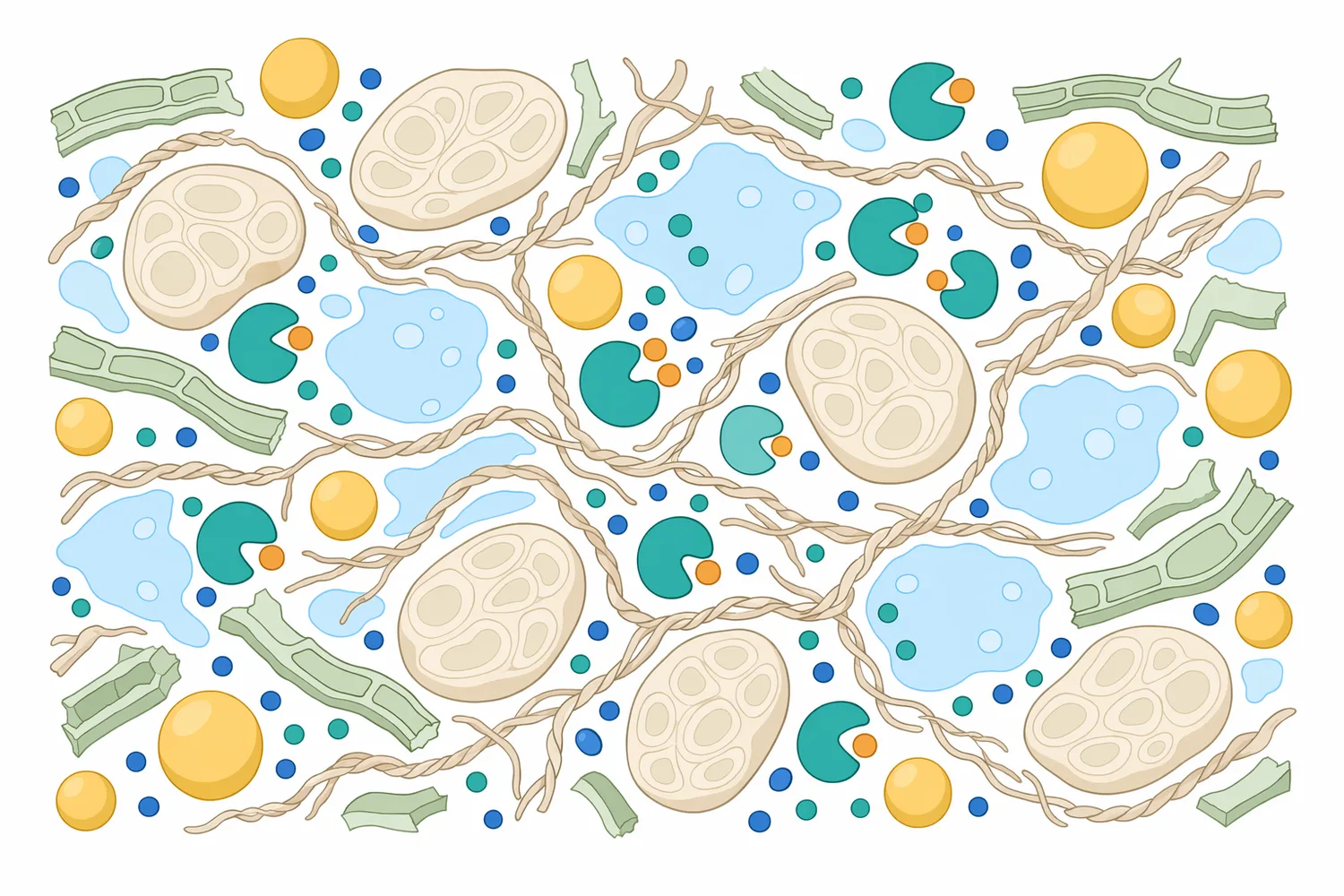
In a hydrated food matrix, free L-asparagine is dissolved or partly mobile in the aqueous phase. Asparaginase must reach that molecule, bind it in the active site, and catalyze hydrolysis. The enzyme is not acting primarily on starch, sugars, fats, gluten, or intact cell walls; its defining substrate is L-asparagine [2].
When the reaction proceeds, the immediate compositional change is a reduction in free L-asparagine and a corresponding increase in aspartic acid/aspartate and ammonia. In the context of acrylamide mitigation, the key result is the lower level of asparagine available for heat-driven reaction with reducing sugars [1].
This is why moisture and mixing are so central to the concept. Enzymes are large proteins compared with small food molecules, and they do not act at a distance. If asparagine is trapped in regions the enzyme cannot access, or if the food is too dry for diffusion and hydrolysis, conversion will be limited even though the biochemical reaction itself is favorable [4].
High heat changes the picture. Baking, frying, and roasting reduce water availability and eventually denature most enzymes, including asparaginase. That is not necessarily a problem, because the enzyme’s job is usually completed before or during the early heating phase, prior to the strongest acrylamide-forming conditions [1].
The main benefit of asparaginase is targeted precursor reduction. Instead of broadly changing the recipe or suppressing browning chemistry across the whole product, the enzyme focuses on L-asparagine, one of the most important acrylamide precursors in many cereal and potato systems [1].
This targeted action can be attractive where product identity matters. Changes to baking temperature, frying time, sugar composition, pH, or color endpoint may affect flavor, texture, crust, throughput, or consumer perception. Asparaginase offers a different route: modify the precursor before the high-temperature step while leaving the basic process concept in place [2].
The enzyme also fits well with an upstream process-control mindset. Acrylamide is not treated as a contaminant to remove after manufacture; instead, one of its chemical starting points is reduced before formation. That makes the approach especially relevant for products where high-temperature processing is essential to safety, texture, or sensory quality [1].
Because asparaginase acts catalytically, its value is based on chemical conversion rather than bulk addition. It is not used to contribute mass, sweetness, color, or preservative function. Its role is specific: reduce the free L-asparagine pool in a suitable processing window [4].
Asparaginase has major medical significance, particularly in acute lymphoblastic leukemia, where pharmaceutical preparations deplete extracellular asparagine and can inhibit protein synthesis in susceptible malignant lymphoblasts. Early clinical literature established both therapeutic potential and toxicity concerns, and modern reviews continue to describe asparaginase as a specialized antileukemic agent [5].
Modern oncology discussions include terms such as pegylated asparaginase, cal peg-asparaginase, and cal asparaginase. PEGylation and related formulation strategies are used in medicines to alter properties such as circulation time and immune recognition, but those terms belong to regulated pharmaceutical products and clinical protocols, not to ordinary food-processing enzyme use [6].
Clinical literature also describes important adverse effects and monitoring needs associated with therapeutic asparaginase, including hypersensitivity, pancreatitis, coagulation-related effects, hepatic effects, and other treatment-limiting toxicities. Those risks are part of why medical asparaginase products are handled as medicines under professional care [7].
Searches such as l-asparaginase dogs, l asparaginase dog, l-asparaginase dog, l-asparaginase for dogs, or l asparaginase for dogs generally relate to veterinary oncology information. Enzymes.bio Asparaginase supplied as an online 1 kg enzyme product is not positioned as a human or veterinary drug, and this document should not be used to guide treatment decisions for people or animals.
Research continues to improve asparaginase properties for different applications. Scientific reviews discuss engineering strategies aimed at changing enzyme stability, substrate specificity, immunogenicity, or performance in demanding environments [3].
In medicine, one major development path has been modified enzymes designed to improve therapeutic behavior. For example, studies and reviews discuss PEGylated asparaginase and other conjugated forms intended to extend persistence or reduce immune complications in leukemia treatment [8].
Other work explores engineered L-asparaginase variants with enhanced therapeutic properties, particularly for childhood acute lymphoblastic leukemia. These studies are scientifically important, but they address pharmaceutical performance and should not be read as specifications for food-processing products [9].
For food and industrial readers, the useful takeaway is broader: “asparaginase” is an enzyme class, not a single universal material. Different source organisms and modifications can influence how an enzyme behaves, but the defining reaction remains hydrolysis of L-asparagine to aspartate and ammonia [4].
Asparaginase is most logical when free L-asparagine is a meaningful acrylamide precursor in the product. In cereal and potato systems, that condition is often relevant because the raw materials naturally contain asparagine and are commonly processed under high heat [1].
The enzyme is less meaningful when acrylamide is not driven by asparagine availability, when the matrix does not allow enzyme contact, or when the process has no practical pre-heat stage. The biochemical reaction may be well established, but the process must still give the enzyme access to water and substrate before thermal inactivation [4].
It is also important to recognize that acrylamide formation is multifactorial. Reducing sugars, pH, moisture, time-temperature exposure, product geometry, and browning intensity can all influence the final result. Asparaginase addresses the asparagine side of the chemistry, which is powerful in many products but not the only variable in the Maillard reaction system [1].

Used responsibly, asparaginase is best understood as a targeted processing aid for precursor management. Its role is concrete and measurable in principle: reduce free L-asparagine before high heat, thereby lowering the opportunity for acrylamide-forming reactions during baking, frying, or roasting [2].
Enzymes.bio supplies Asparaginase directly online by the 1 kg unit. Buyers can place the product in the online cart, pay online, and the order is then processed and shipped.
A Certificate of Analysis and Safety Data Sheet are included with the order. Enzymes.bio is a supplier, not a manufacturer or testing laboratory, and this article is intended to explain the enzyme’s science and common application context rather than replace the buyer’s own regulatory, safety, or process validation work.
Asparaginase is a well-characterized enzyme that converts L-asparagine into L-aspartic acid/aspartate and ammonia. In food processing, that reaction is valuable because it reduces a key precursor for acrylamide formation before carbohydrate-rich foods encounter high-temperature baking, roasting, or frying conditions [1].
The strongest application evidence supports use in categories such as bread, cereal products, and fried potato products, where L-asparagine, carbohydrates, and temperatures above about 120°C can coincide. The enzyme works upstream: it changes the precursor profile before acrylamide forms, rather than trying to remove acrylamide afterward [1].
Medical terms such as pegylated asparaginase, Erwinia asparaginase, and cal asparaginase refer to specialized regulated drugs and should be kept separate from food or industrial enzyme use. For Enzymes.bio buyers, Asparaginase is best viewed as a targeted processing enzyme for suitable food and industrial applications where reducing available L-asparagine is the goal.
Sold by the 1 kg unit, in stock and ready to ship. Order directly on our store — pay online and we process your order. A Certificate of Analysis and Safety Data Sheet are included with every order.
Buy Asparaginase →Numbered in order of first citation. Open-access sources, each verified reachable at publication; citation numbers in the text link here.