
Bacterial alpha-amylase enzyme powder is a feed additive enzyme used to help hydrolyze starch in grain- and by-product-based rations, converting large starch polymers into smaller dextrins and soluble carbohydrate fragments that animals can digest more efficiently. Its most direct value is in starch-rich feed systems—such as corn-, wheat-, sorghum-, barley-, cassava-, or rice-based diets—where improving access to feed energy is a practical goal. Enzymes.bio supplies bacterial alpha-amylase powder directly online by the 1 kg unit, with the order processed and shipped after online purchase.
Animal feed increasingly has to deliver consistent nutrition from raw materials that vary in starch level, processing history, particle size, anti-nutritional factors, and digestibility. Cereal grains and starch-rich co-products are valuable because starch is a dense energy source, but starch is only useful when it is physically accessible and enzymatically broken down fast enough within the animal’s digestive system. Feed enzymes are used because animals do not always extract the full nutrient value from plant materials on their own, and industry guidance identifies amylases as carbohydrases that hydrolyze starch into simpler sugars to increase energy availability from feed ingredients [1].
Bacterial alpha-amylase is not a complete feeding program, a growth promoter, or a substitute for proper diet formulation. It is a targeted digestive aid: it acts on starch. When the feed matrix contains starch granules, gelatinized starch, damaged starch from grinding, or partially accessible starch in cereal by-products, alpha-amylase helps cut those large carbohydrate structures into smaller molecules that can move further through digestion. This makes the enzyme most relevant in feeds where starch is a significant energy contributor and where additional hydrolysis can support more complete nutrient use [1].
For buyers ordering from Enzymes.bio, the product format is straightforward: bacterial alpha-amylase enzyme powder is sold online in 1 kg units. A Certificate of Analysis and Safety Data Sheet are included with the order, and the product is supplied for feed-additive use without positioning Enzymes.bio as a manufacturer or laboratory. The purpose of this article is to explain the enzyme’s function, evidence base, and practical relevance so that a technically informed buyer can understand what the product is intended to do.
Alpha-amylase is a starch-degrading enzyme. Starch is built mainly from glucose units connected through alpha-glycosidic bonds, especially alpha-1,4 linkages in amylose and in the linear segments of amylopectin. Alpha-amylase is an endo-acting enzyme, meaning it cuts inside the starch chain rather than removing one glucose unit at a time from the end. That internal cutting rapidly reduces the average chain length of starch molecules and produces shorter dextrins, maltodextrins, maltose, and other soluble fragments that can be further digested by other enzymes in the animal’s digestive tract [2].
The word “bacterial” refers to the microbial source category. Industrial alpha-amylases are widely associated with bacterial genera such as Bacillus, including strains reported in the literature such as Bacillus subtilis and Bacillus amyloliquefaciens. A fermentor-based production study specifically examined alpha-amylase from two bacterial strains, B. subtilis and B. amyloliquefaciens, reflecting the long-standing use of bacterial organisms as practical enzyme producers for industrial applications [3].
Bacterial alpha-amylases are important commercially because microbial enzymes can be produced at scale and because bacterial enzymes are often selected for robustness in demanding processing environments. Recent reviews of alpha-amylase production describe microbial alpha-amylases as central to industrial enzyme use, with research continuing around production efficiency, structural properties, and application fit [2]. In feed use, this matters because enzymes may encounter moisture, mixing shear, storage time, stomach acidity, intestinal conditions, and in some cases heat exposure during feed processing.
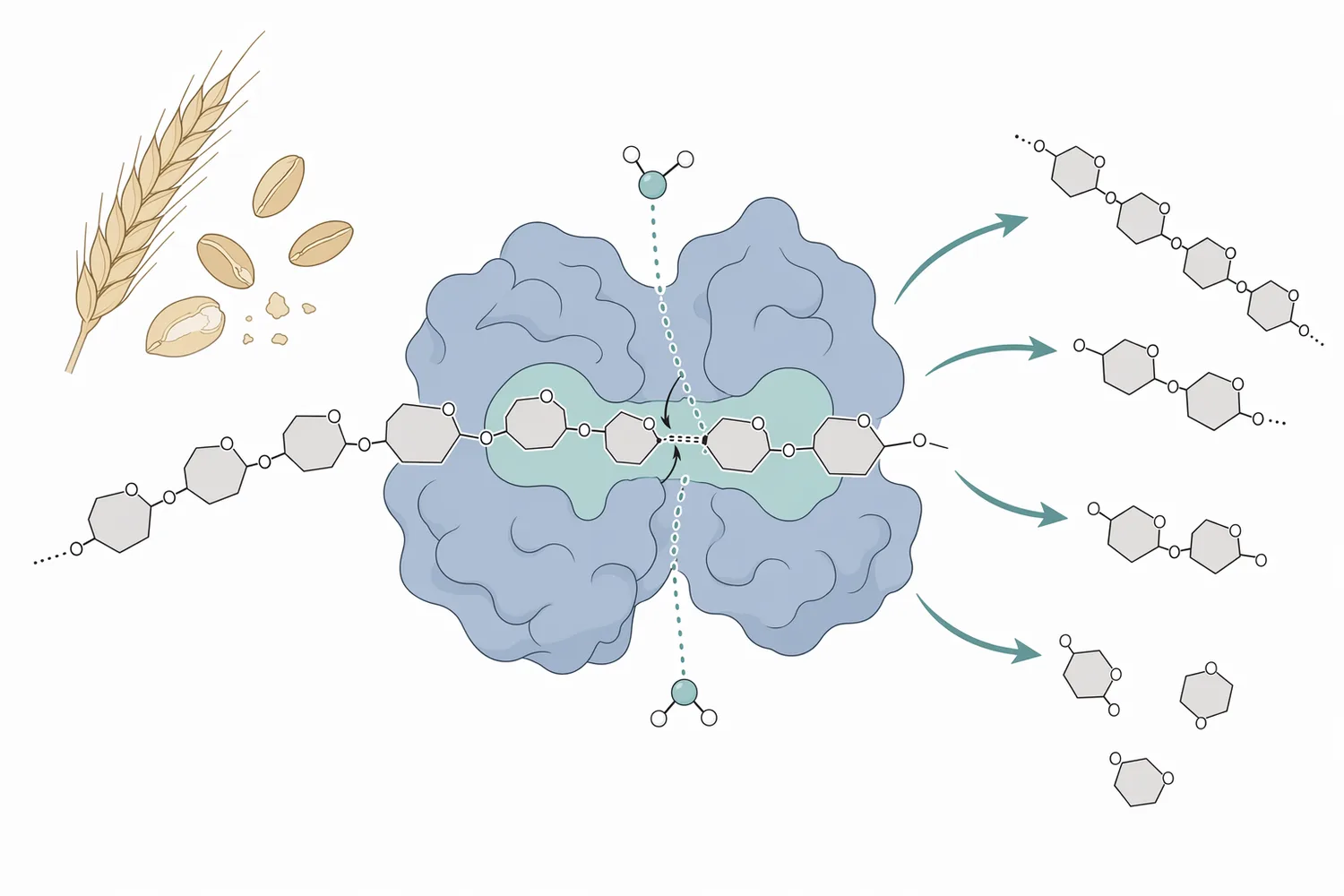
The most important mechanism is concrete: alpha-amylase reduces the size and structure of starch molecules. Native starch in grains is stored in granules. Depending on the grain and processing method, those granules may be intact, cracked, gelatinized, or embedded in a protein or fiber matrix. When alpha-amylase reaches accessible starch, it binds to the starch chain and hydrolyzes internal alpha-1,4 bonds. Each cut creates shorter carbohydrate chains with new chain ends and lower molecular weight than the original starch polymer [2].
This structural change matters for digestion. Large starch molecules and intact granules are relatively slow to disperse and digest. Smaller dextrins dissolve and diffuse more easily in digestive fluids, giving the animal’s own enzymes and brush-border digestive processes more accessible substrate. In practical terms, alpha-amylase helps move starch from “stored energy in a grain particle” toward “digestible carbohydrate fragments in the gut lumen.” That is why amylase is grouped with carbohydrase feed enzymes used to improve the availability of energy from starch-containing feed ingredients [1].
Alpha-amylase also changes viscosity and flow behavior when starch is gelatinized or hydrated. Long starch chains can thicken water because they occupy volume and interact with one another; cutting them into shorter fragments lowers the average molecular size and reduces the ability of the starch phase to hold a viscous network. This viscosity-reducing effect is widely recognized in starch-processing contexts and explains why alpha-amylase is valuable wherever hydrated starch must be broken down into more manageable dextrins [2].
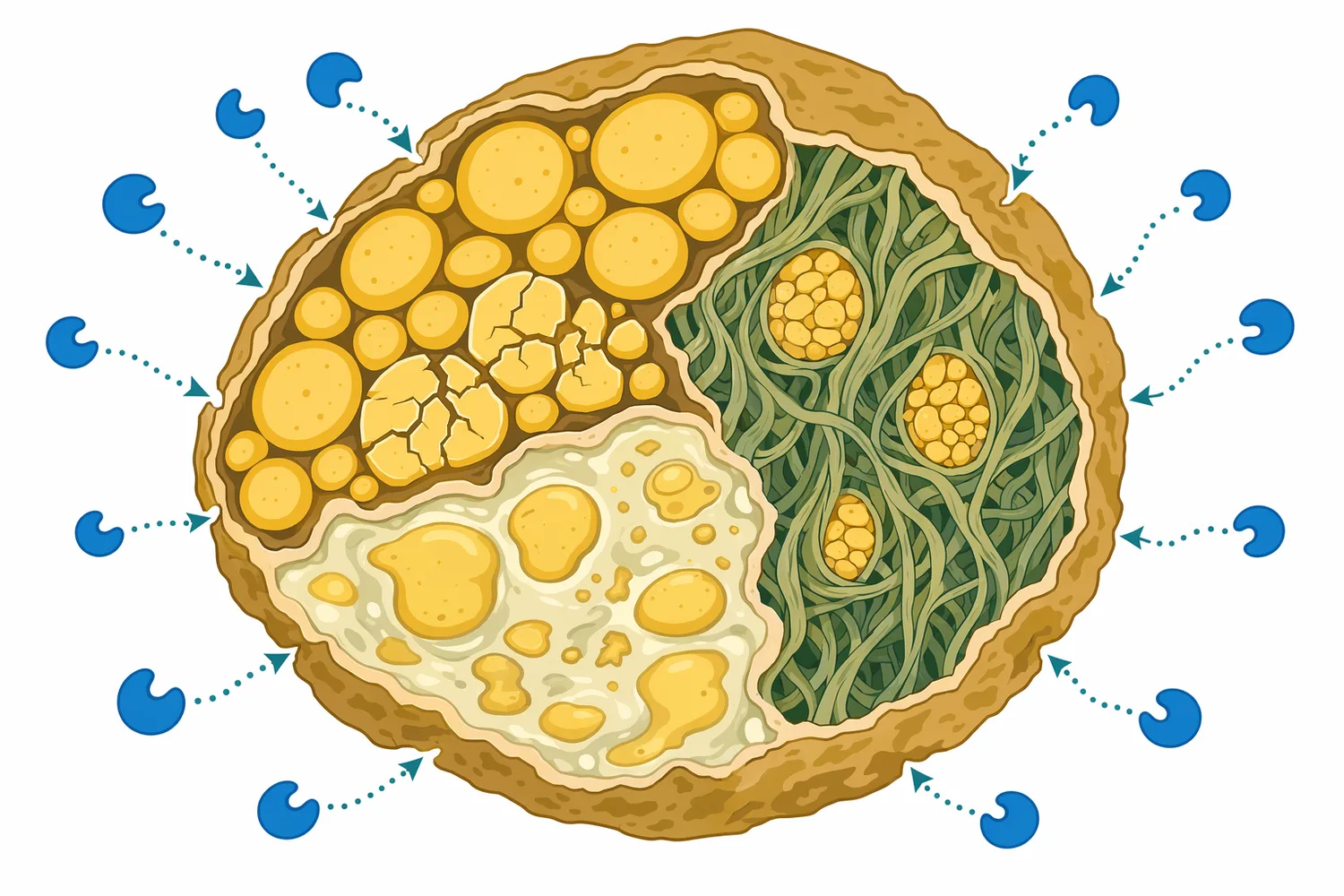
In animal feed, the substrate is not purified starch. It is a complex mixture of grain particles, protein, fiber, fat, minerals, and other additives. That means alpha-amylase can only act where starch is physically reachable. Grinding, steam conditioning, pelleting, extrusion, and cooking can change starch accessibility by damaging granules or gelatinizing starch, while intact hulls, dense protein matrices, and resistant starch fractions may limit contact. The enzyme’s role is therefore specific: it supports hydrolysis of accessible starch, not complete digestion of every carbohydrate in the ration [1].
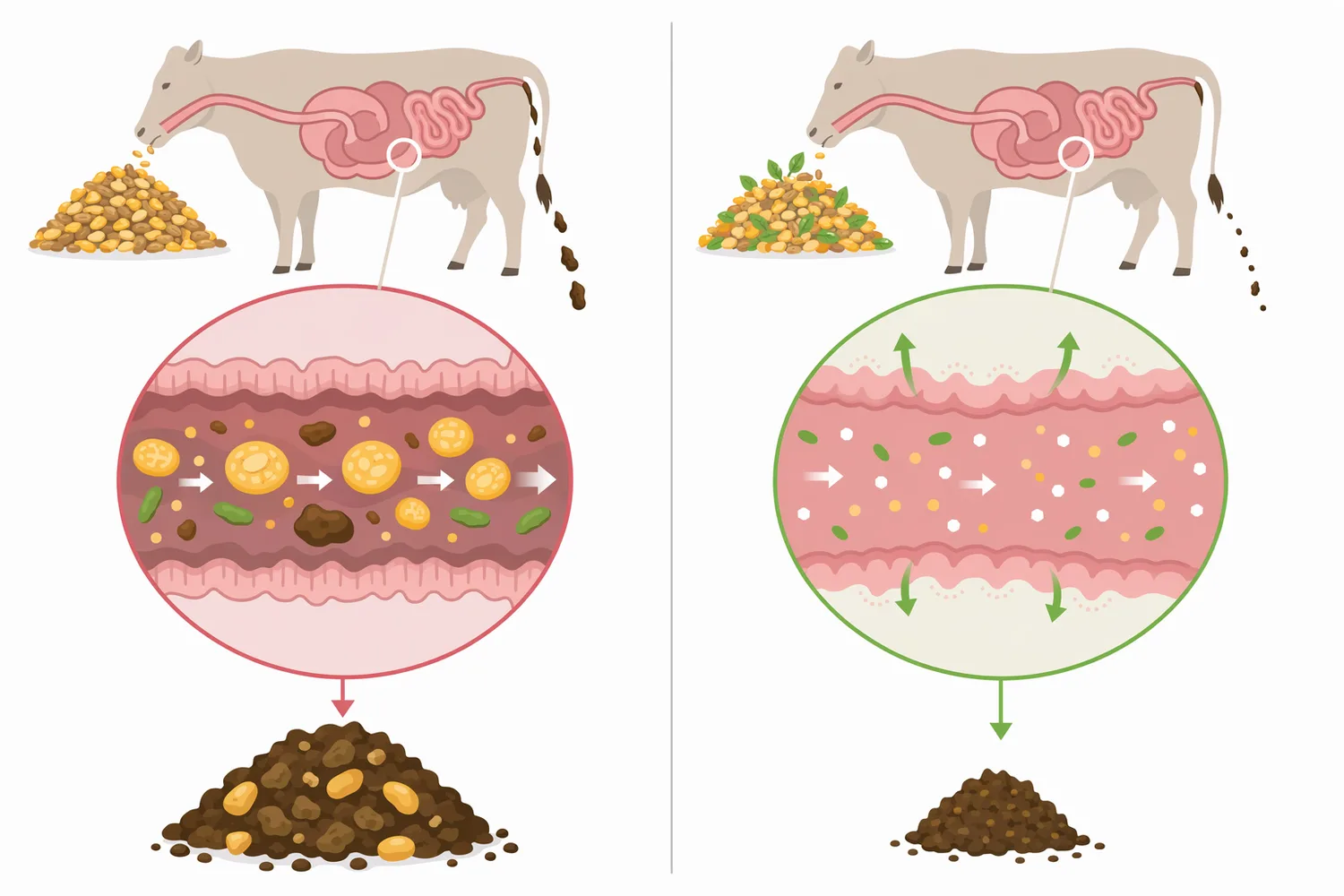
Bacterial alpha-amylase fits animal feed because many livestock diets are built around cereal grains. Corn, wheat, barley, sorghum, and other grains are included largely for energy, and much of that energy is present as starch. If starch is incompletely hydrolyzed before it passes through the animal, some potential feed energy is lost or shifted into hindgut fermentation rather than absorbed as digestible carbohydrate in the intended digestive region. Feed enzyme guidance identifies amylases as enzymes used to hydrolyze starch and increase available energy, especially in poultry and swine nutrition [1].
The enzyme is especially relevant where animals face a high starch load, rapid feed passage, variable grain quality, or diets containing co-products with inconsistent nutrient availability. Young animals, fast-growing animals, and high-intake systems may all create situations where endogenous digestion is under pressure. Alpha-amylase does not override biology, but it can add catalytic capacity at the substrate level: more starch-chain cleavage events can occur during the limited time feed remains in the digestive tract [1].
The bacterial origin also aligns with the broader industrial enzyme trend. Studies on bacterial alpha-amylase production continue to evaluate locally isolated Bacillus strains, alternative substrates, production optimization, and application performance, showing ongoing interest in bacterial amylases for industrial and agricultural uses [4]. This research context supports the enzyme category as technically mature while still improving in production efficiency and application understanding.
Alpha-amylase is one member of the feed enzyme toolkit. It is best understood by comparing its substrate and action with other common enzyme classes. This prevents overexpectation: an amylase does not release phytate phosphorus, digest protein, or break down arabinoxylans in the same way xylanase does. It acts primarily on starch.
| Enzyme class | Main feed substrate | What changes in the substrate | Practical feed relevance |
|---|---|---|---|
| Alpha-amylase | Starch from grains and starch-rich by-products | Cuts internal starch chains into shorter dextrins and soluble carbohydrate fragments | Supports access to starch-derived energy |
| Xylanase / glucanase | Non-starch polysaccharides in cereal cell walls | Breaks fiber-like polysaccharide structures that can trap nutrients or increase viscosity | Supports nutrient release from fibrous cereal fractions |
| Protease | Feed proteins and peptides | Cleaves proteins into shorter peptides and amino-acid-accessible fragments | Supports protein digestibility where protein breakdown is limiting |
| Phytase | Phytate-bound phosphorus in plant ingredients | Hydrolyzes phytate to release phosphorus and reduce phytate’s nutrient-binding effects | Supports phosphorus availability and lower phosphorus waste |
| Lipase | Dietary fats and oils | Cleaves triglycerides into fatty acids and glycerol-related products | Supports fat digestion where lipid hydrolysis is limiting |
This comparison matters because multi-enzyme feed systems are often built around the limiting substrates in the diet. A corn-based diet with high available starch has a different substrate profile than a wheat- or barley-based diet rich in soluble non-starch polysaccharides, and a high-phytate plant diet presents a different challenge again. Industry guidance places amylases within the carbohydrase category, separate from phytase, protease, and other enzyme classes that act on different feed components [1].
The strongest evidence for bacterial alpha-amylase is mechanistic and biochemical: alpha-amylase hydrolyzes starch. That mechanism is not speculative; it is the defining activity of the enzyme class. Reviews of alpha-amylase structure, production, and applications describe alpha-amylases as industrially important starch-hydrolyzing enzymes, with research attention on microbial sources, enzyme properties, and application performance [2].
Feed-specific evidence supports the use of amylase as a digestibility improvement factor. In poultry, a study on broiler chickens fed a corn-based diet evaluated supplementation with an alpha-amylase-producing bacterial culture and measured outcomes including performance, nutrient use, and gut morphology. The important practical point is that the study design placed amylase activity directly into a starch-rich, corn-based broiler feeding context rather than a purified laboratory starch system [5].
Ruminant and beef systems have also been studied. Research on exogenous alpha-amylase in a concentrate supplement for beef heifers grazing tropical pasture reflects interest in amylase where forage-based systems are supplemented with starch-containing concentrates. In that setting, the enzyme is not acting in isolation; it enters a rumen ecosystem where starch fermentation, microbial populations, and passage dynamics all influence the animal response [6].
Finishing lamb research has compared essential oils alone or combined with exogenous amylase against virginiamycin supplementation, measuring performance, dietary energetics, carcass traits, and nutrient digestion. This type of work is useful because it evaluates amylase within a realistic additive framework rather than treating the enzyme as a single-variable laboratory reagent [7].
High-concentrate beef cattle diets are another relevant area because they can contain substantial starch. Studies in crossbred dairy beef bulls have examined dietary alpha-amylase enzyme supplementation in high-concentrate diets, including comparisons involving pellet or mash feed form and outcomes such as growth performance, eating pattern, and carcass quality. Those designs reflect practical questions around how amylase behaves in commercial-style high-starch feeding systems [8].
Environmental assessment work also supports the broader rationale for feed enzymes. A Brazilian intensive chicken production assessment considered amylase as a digestibility improvement factor, linking enzyme use to the efficiency with which feed resources are converted into animal output. For a buyer, the significance is not that every farm will see the same environmental result, but that amylase is recognized in sustainability analysis as a tool connected to digestibility and feed-use efficiency [9].
The production literature helps explain why bacterial alpha-amylase is widely available as an industrial enzyme. Microbial production allows enzyme output to be optimized through strain selection, fermentation conditions, and substrate choice. A study focused on Bacillus subtilis and Bacillus amyloliquefaciens in fermentor production illustrates how bacterial strains have been characterized for alpha-amylase production and enzyme properties, supporting the industrial role of bacterial sources [3].
Recent research continues to explore cost-effective and sustainable production substrates. Studies have investigated alpha-amylase production from indigenous bacterial species using banana peels, from local Bacillus isolates, and from agricultural by-products such as pomelo albedo. These studies are not feed-use trials, but they show why alpha-amylase remains an active industrial biotechnology category: producers and researchers are continually looking for efficient ways to generate useful starch-degrading enzymes [10].
Scale-up research is also relevant because feed enzymes must be available in practical commercial quantities, not only in small laboratory preparations. Reviews of bacterial alpha-amylase production through solid-state fermentation discuss scale-up considerations for bacterial strains, reflecting the wider industrial interest in producing amylase efficiently using microbial systems [11].
This production context should not be confused with product-specific claims. Enzymes.bio supplies the product; it does not present itself as the enzyme manufacturer or as a testing laboratory. The research literature helps explain the enzyme category and its biological function, while the buyer receives the ordered 1 kg product with order documentation included.
Poultry feed is one of the clearest application areas because broiler and layer diets commonly contain high levels of starch-rich grains. Corn-based diets are especially relevant: corn provides energy primarily through starch, and alpha-amylase can help hydrolyze accessible starch during digestion. The broiler study using an alpha-amylase-producing bacterial culture in corn-based diets is directly aligned with this application context because it evaluated performance, nutrient use, and gut morphology under a grain-based feeding model [5].
The mechanism in poultry is straightforward. After feed is consumed, starch must be hydrated, exposed, and hydrolyzed before the resulting carbohydrate fragments can be absorbed or further metabolized. Poultry have rapid digestive passage compared with larger animals, so the time window for enzymatic action is limited. Adding alpha-amylase contributes additional starch-cleaving activity in that window, potentially supporting more complete use of the grain energy already present in the ration [1].
Swine diets also rely heavily on cereal grains and starch-rich ingredients. In pigs, the small intestine is a major site of enzymatic starch digestion, while undigested starch can continue into the hindgut and alter fermentation patterns. Alpha-amylase supports the upstream conversion of starch into shorter carbohydrate fragments, making it most relevant where the diet contains a meaningful starch fraction and where improved carbohydrate digestion is desirable [1].
Research in pigs also shows that amylase can be biologically active beyond a simple laboratory starch reaction, although claims must be kept proportionate. In a pig model of exocrine pancreatic insufficiency, supplementation with microbial-derived alpha-amylase was studied in relation to intestinal features, including small-intestinal wall structure and brush-border characteristics. Because that model involved pancreatic insufficiency rather than standard healthy commercial pigs, it should be read as mechanistic and physiological evidence rather than a guarantee of gut-health outcomes in ordinary feeding programs [12].
Ruminant use is more complex because starch is exposed first to rumen microbial fermentation before post-ruminal digestion. In high-concentrate diets, rapidly fermentable starch can influence rumen pH, microbial populations, and volatile fatty acid patterns. Exogenous amylase may interact with this system by altering the rate or extent of starch breakdown and by changing the carbohydrate fragments available to rumen microbes [7].
Studies in beef heifers, finishing lambs, and crossbred dairy beef bulls show that alpha-amylase has been investigated in practical ruminant feeding contexts rather than only in monogastric diets. These include concentrate supplementation for beef heifers grazing tropical pasture, finishing lamb diets with additive comparisons, and high-concentrate beef bull diets evaluated in pellet or mash form [6].
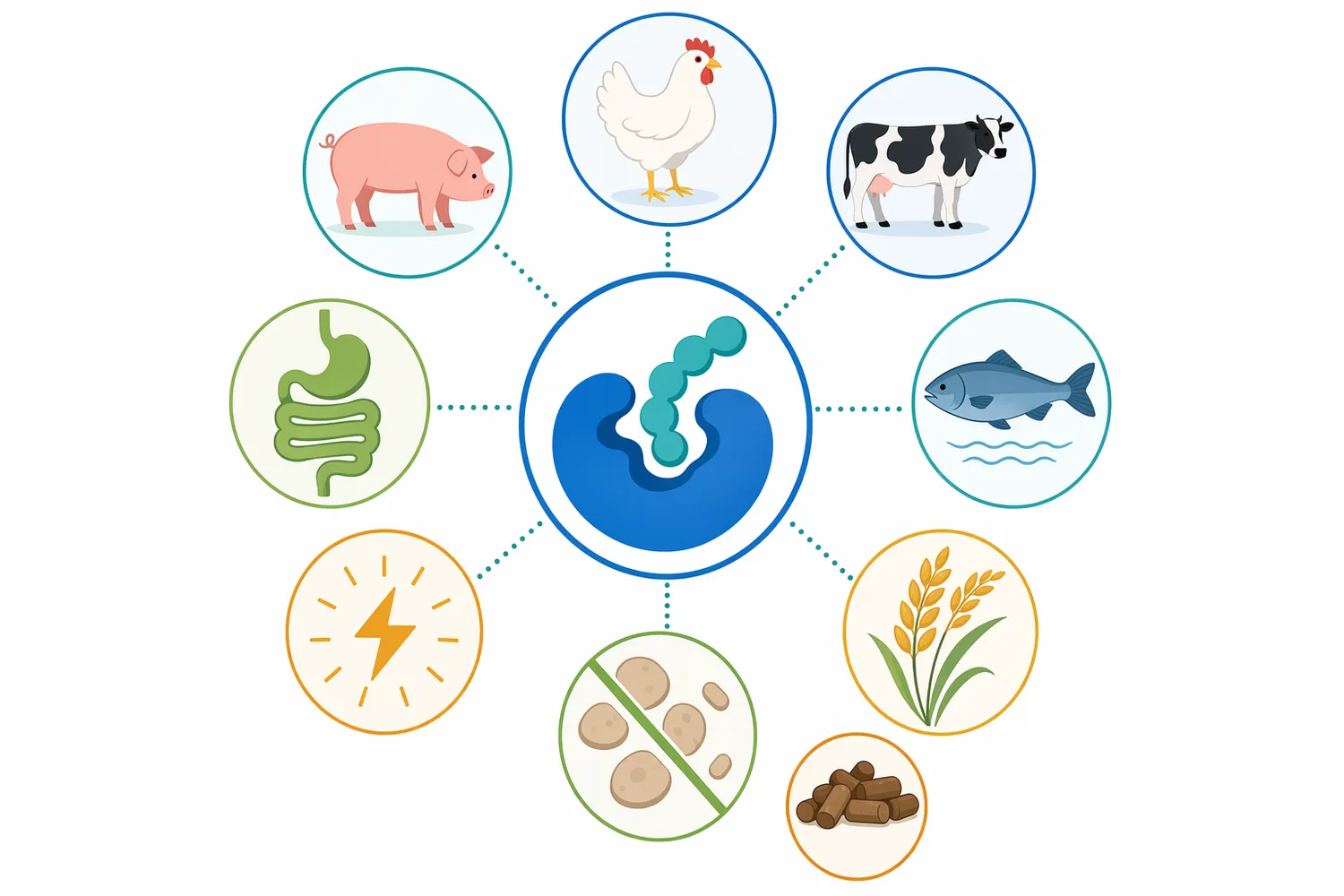
For ruminants, the expected action should be described carefully. Alpha-amylase does not simply “increase sugar” in a linear way; it changes starch-chain size and accessibility, which can affect microbial fermentation and downstream nutrient digestion. The animal response depends on diet composition, concentrate level, forage quality, feed processing, and rumen conditions, which is why ruminant studies often measure multiple outcomes such as dietary energetics, eating pattern, digestion, and carcass traits [13].
Although the main use discussed here is as an animal feed additive enzyme, amylase-related enzyme systems also appear in forage and silage research. A study on grass silage evaluated molasses, bacterial inoculant, and enzyme plus bacterial inoculant additions, measuring silage characteristics, in vitro organic matter digestibility, and metabolizable energy content. Such work illustrates the broader role of enzymes and bacteria in feed preservation and digestibility contexts [14].
In silage or fermented feed systems, the logic differs from direct digestive supplementation. Enzymes may help make fermentable substrates available to beneficial microbes, which can influence acid production, preservation, and digestibility. Alpha-amylase would be relevant only where starch or starch-like accessible carbohydrate is part of the substrate; it is not the main enzyme for breaking down structural plant fiber [14].
Feed ingredients are not chemically uniform. Corn from different growing regions, heat-treated grains, dried distillers grains, bakery by-products, rice fragments, cassava meals, and other starch-containing materials can differ in how much starch is present and how accessible it is to enzymes. Processing can improve accessibility by damaging starch granules, but excessive heat or complex matrices can also reduce digestibility by embedding starch within protein or fiber structures.
This is where alpha-amylase has a practical role: it acts on the starch fraction that becomes available in the feed and digestive environment. The enzyme cannot correct every type of ingredient variability, but it can support a more complete hydrolysis pathway for starch that would otherwise require only endogenous animal enzymes. Feed enzyme guidance frames this as improving feed utilization and nutrient availability, not as replacing feed quality control or balanced formulation [1].
Some ingredients also contain natural inhibitors that can interfere with digestive enzymes. A study of underutilized legumes examined the impact of processing methods on trypsin, chymotrypsin, and alpha-amylase inhibitors, showing that alpha-amylase inhibition is a real nutritional consideration in some plant materials. This does not mean every diet has an amylase-inhibitor problem, but it reinforces the point that starch digestion depends on both enzyme activity and the surrounding feed matrix [15].
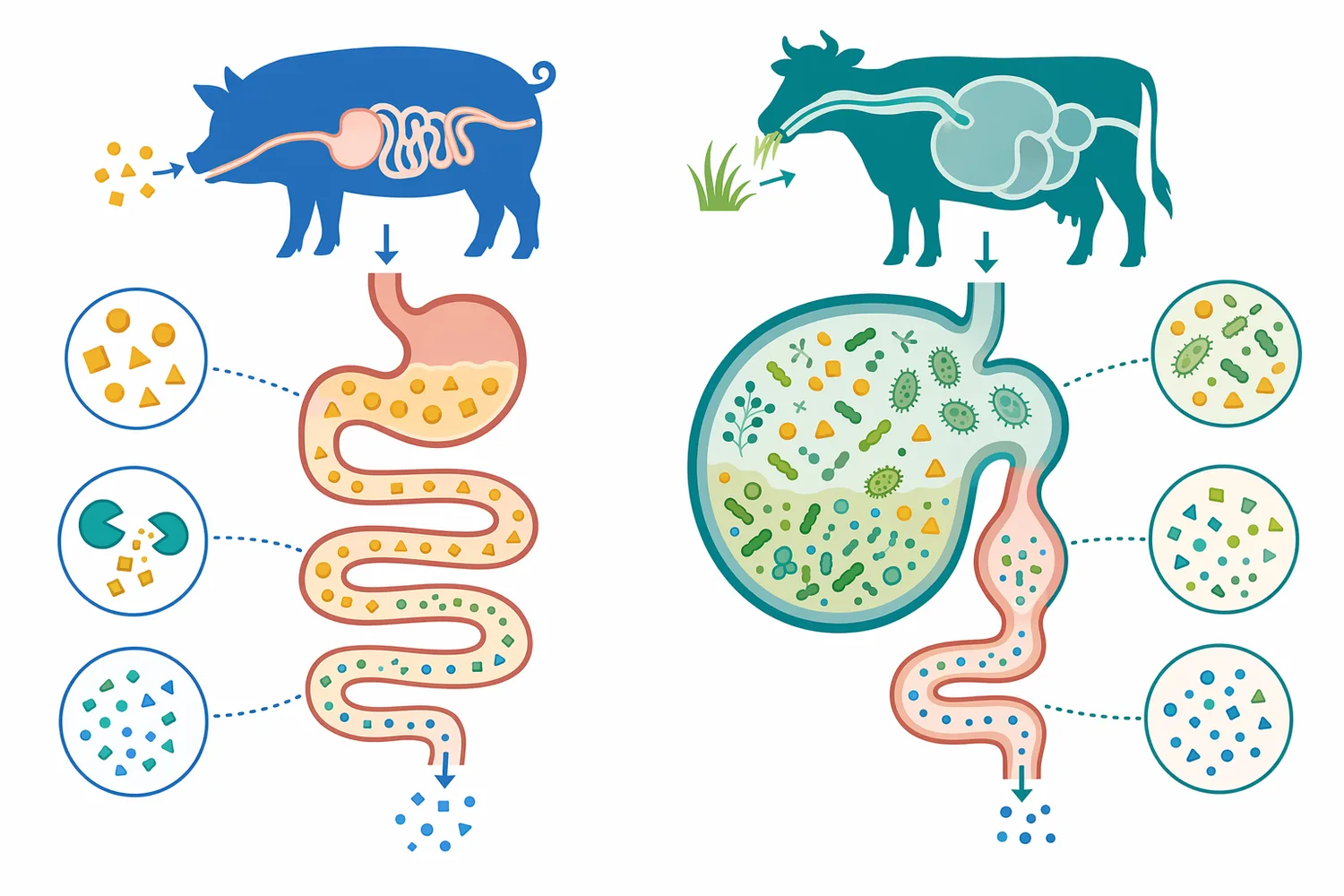
The primary expected benefit is improved starch availability. Alpha-amylase breaks large starch molecules into smaller fragments, supporting the conversion of grain starch into digestible carbohydrate forms. In feed terms, this can contribute to improved energy extraction from starch-rich ingredients when the enzyme remains active in the relevant digestive environment [1].
A second benefit is support for feed efficiency goals. Enzymes are used in animal feed to increase nutrient availability and improve utilization of feed resources. When nutrients are used more completely, less undigested material is wasted, and the same feed ingredients can contribute more effectively to animal nutrition [1].
A third benefit is compatibility with broader sustainability thinking. Environmental assessment of amylase use in intensive chicken production has considered amylase as a digestibility improvement factor, connecting enzyme use with resource efficiency in animal production systems. The sustainability logic is strongest when enzyme use helps animals obtain more value from feed already being grown, transported, milled, and fed [9].
The boundaries are just as important. Alpha-amylase does not digest cellulose, release phytate phosphorus, hydrolyze protein, or emulsify fat. It is a starch-directed enzyme, so its impact is tied to starch content, starch accessibility, animal species, feed processing, and overall diet design. The evidence base supports its biochemical function and its use in animal nutrition research, but it should not be presented as producing identical outcomes across every ration or production system [1].
As a powder enzyme, bacterial alpha-amylase is designed for practical incorporation into feed-related workflows. In general, enzymes should be handled as biological proteins: avoid unnecessary exposure to harsh conditions, excessive moisture, and avoidable heat stress before use. These principles are not unique to alpha-amylase; they reflect the fact that enzyme activity depends on maintaining a functional protein structure capable of binding and hydrolyzing its substrate [2].
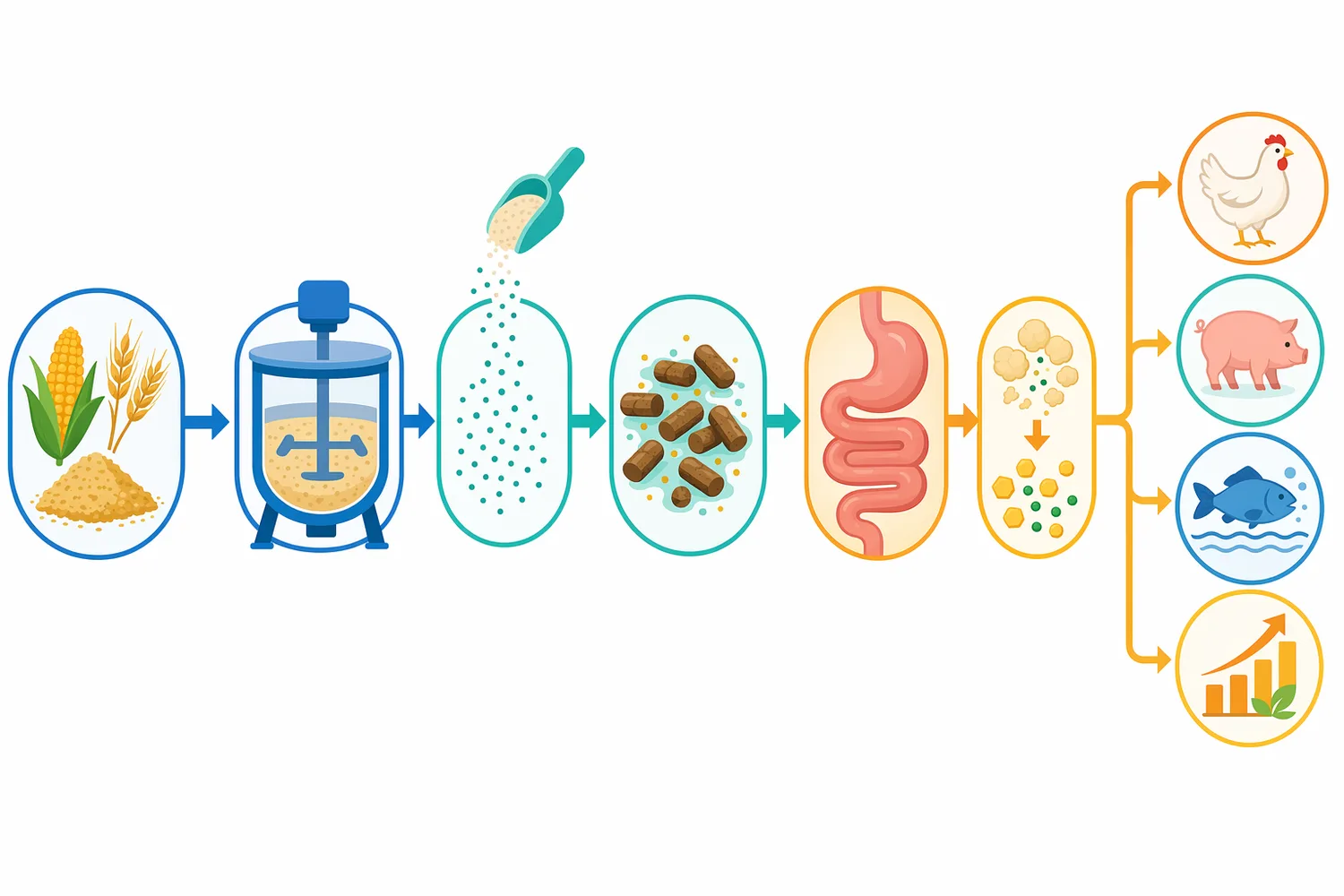
Feed processing can affect enzyme performance. Mixing distributes the enzyme through the ration; conditioning and pelleting may expose it to heat and moisture; storage can expose it to time, humidity, and temperature variation. The key concept is that alpha-amylase must reach accessible starch while still structurally active enough to catalyze hydrolysis. Bacterial alpha-amylases are widely studied partly because microbial enzymes can be selected and characterized for industrially useful behavior [3].
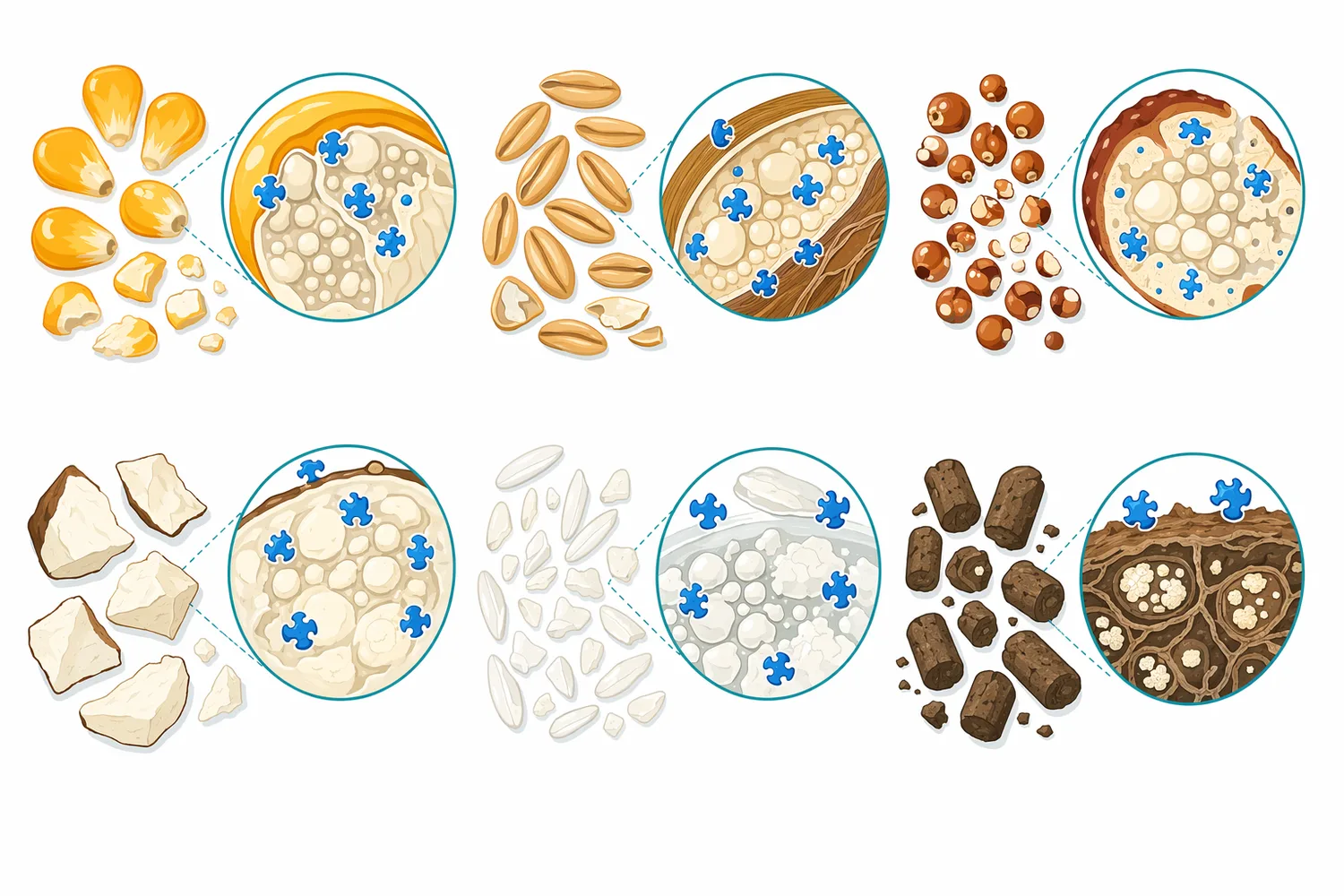
In digestion, the enzyme encounters changing pH, water availability, competing feed components, and endogenous animal enzymes. Alpha-amylase functions by substrate contact: without accessible starch, there is nothing meaningful for it to hydrolyze. With accessible starch, the enzyme can repeatedly cleave internal bonds, producing progressively smaller carbohydrate fragments until conditions or substrate availability limit further action [2].
For many buyers, a 1 kg powder format is practical because it is easy to order, receive, store, and incorporate into feed-related use without arranging bulk supply discussions. Enzymes.bio sells bacterial alpha-amylase enzyme powder directly online by the 1 kg unit. The buyer places the order and pays online; the order is then processed and shipped, with a Certificate of Analysis and Safety Data Sheet included.
This online model is useful when the buyer needs a defined enzyme powder product rather than a custom development project. Enzymes.bio is positioned as a supplier, not as the enzyme manufacturer and not as a laboratory service provider. That distinction matters: the product page and order documentation support purchase and use, while the scientific role of the enzyme is understood from the established literature on alpha-amylase function and feed enzyme application .
Bacterial alpha-amylase enzyme powder is best understood as a starch-focused feed additive enzyme. It helps convert large starch polymers in cereal grains and starch-rich by-products into smaller dextrins and soluble carbohydrate fragments, supporting access to starch-derived energy in poultry, swine, and selected ruminant feeding contexts. Its strongest evidence is the well-established biochemical mechanism of starch hydrolysis, supported by animal nutrition studies that evaluate amylase or amylase-producing cultures in corn-based broiler diets, beef heifer supplementation, finishing lamb systems, and high-concentrate beef cattle diets [5].
Used responsibly, bacterial alpha-amylase supports the goal of getting more usable energy from the starch already present in the ration. It should be viewed as one targeted enzyme within a broader feed strategy, not as a universal solution for all nutrient limitations. Enzymes.bio supplies the product directly online in 1 kg units for buyers who want a straightforward source of bacterial alpha-amylase powder for animal feed additive applications.
Sold by the 1 kg unit, in stock and ready to ship. Order directly on our store — pay online and we process your order. A Certificate of Analysis and Safety Data Sheet are included with every order.
Buy Bacterial Alpha-Amylase Enzyme Powder - Animal Feed Additive Enzymes →Numbered in order of first citation. Open-access sources, each verified reachable at publication; citation numbers in the text link here.