
Beta-glucanase is a carbohydrate-processing enzyme that hydrolyzes beta-glucans: glucose-based polymers found in barley, oats, wheat, rye, yeast, fungi and some plant cell-wall materials. In practical processing, the main beta glucanase benefits are lower viscosity, better filtration, improved clarification, easier cell-wall breakdown and improved access to nutrients or extractable solids in beta-glucan-rich substrates.
Enzymes.bio supplies Beta-Glucanase as a professional enzyme ingredient available for direct online purchase by the 1 kg unit. Buyers pay online, the order is processed and shipped, and a Certificate of Analysis and Safety Data Sheet are supplied with the order.
Beta-glucanase is not one single enzyme with identical behavior in every process. The term covers a group of beta-glucan-degrading enzymes that act on beta-linked glucose polymers, especially linkages described as beta-1,3, beta-1,4 and beta-1,6 depending on the substrate. Cereal beta-glucans are typically mixed-linkage polymers, while fungal and yeast glucans are often built around beta-1,3 structures with beta-1,6 branching; that structural difference is why a beta-glucanase enzyme used for brewing is not always conceptually identical to one used for wine glucan degradation or microbial cell-wall modification [1].
For anyone searching “what is beta glucanase,” the simplest answer is: beta-glucanase cuts specific bonds inside beta-glucan chains. Those chains can behave like long, water-binding, viscosity-building molecules. When the enzyme shortens them, the liquid or hydrated mass often becomes easier to pump, filter, clarify, extract or digest because the large entangled polymers are converted into smaller fragments [2].
The most familiar industrial setting is cereal processing. Barley, oats and related grains contain beta-glucans in cell-wall structures, and those polymers can dissolve into mash, wort, extracts or feed digestive fluids. In brewing and cereal extraction, the problem is not that beta-glucans are “bad” compounds; the issue is that high-molecular-weight beta-glucans can create viscosity and filtration resistance at the wrong point in the process [3].
A second important setting is fungal or yeast glucan degradation. The International Organisation of Vine and Wine describes beta-glucanase preparations for degrading beta-glucans present in wine, especially glucans associated with Botrytis cinerea or yeast sources, with hydrolysis of beta-1,3 and beta-1,6 bonds in beta-D-glucans [4]. This is a different practical problem from brewing: instead of mainly managing cereal wort viscosity, the objective is often to improve clarification and filterability in wines where glucans interfere with separation.
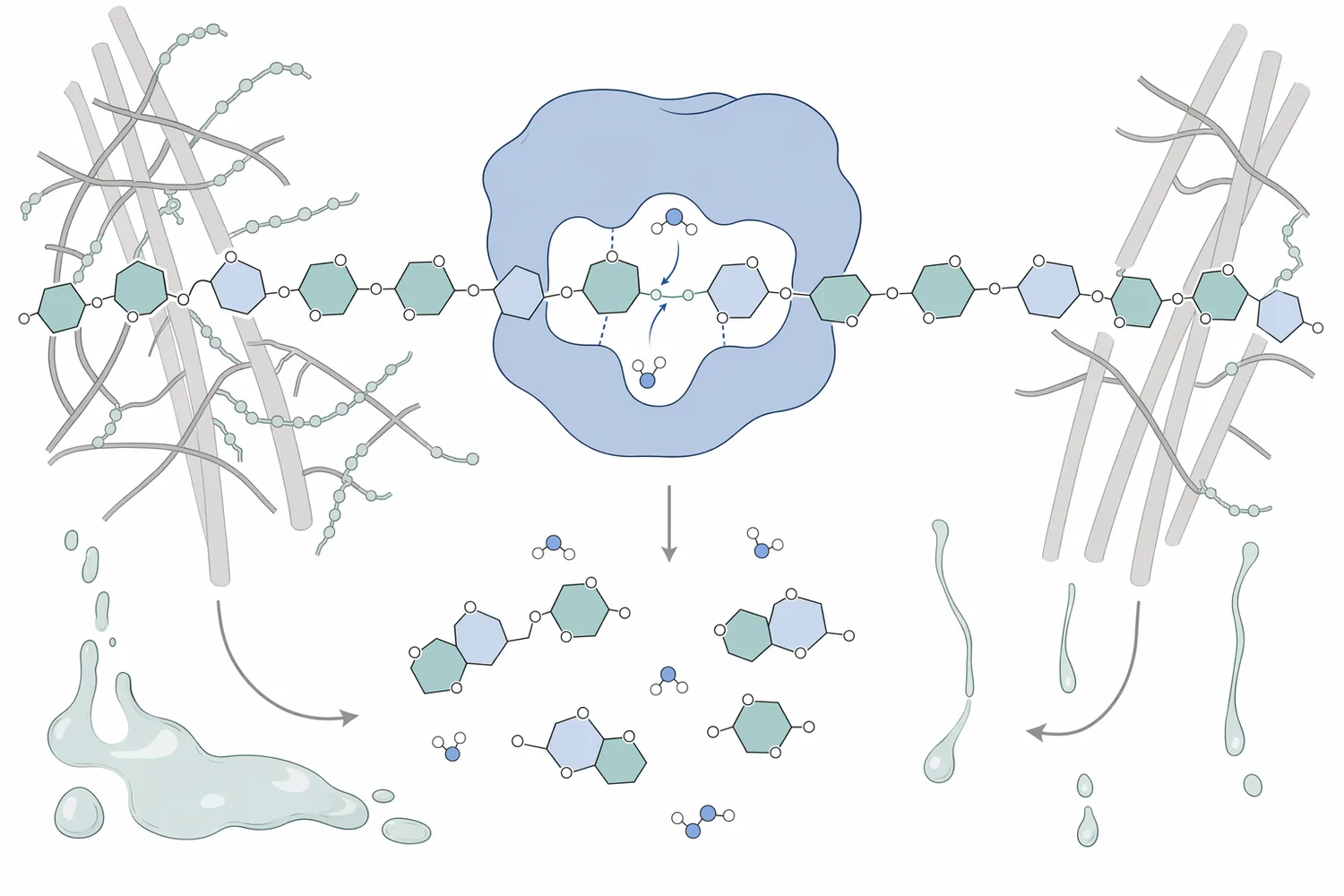
The beta-glucanase function is hydrolysis: the enzyme uses water to cleave glycosidic bonds in beta-glucan polymers. In an endo-type action, the enzyme cuts within the chain rather than only nibbling from the ends. That matters because a few internal cuts can rapidly reduce the effective size of a large polymer, even before it is fully converted to very small sugars [2].
In cereal mixed-linkage beta-glucans, beta-1,3 linkages interrupt stretches of beta-1,4-linked glucose units. This irregular architecture keeps the polymer more soluble and flexible than crystalline cellulose, but it also allows it to hold water and increase viscosity. Historical work on barley beta-D-glucan and malt beta-glucanase specificity focused on how the enzyme recognizes this mixed-linkage structure rather than treating every glucose polymer the same way [3].
Endo-1,4 beta glucanase activity is especially relevant where the substrate contains beta-1,4-linked regions that are accessible within a soluble or partially hydrated glucan. Biochemical characterization of endo-1,4-beta-glucanase from Trichoderma reesei examined action on beta-1,4 oligomers and polymers derived from D-glucose and D-xylose, illustrating that substrate structure controls how the enzyme acts and what fragments are produced [2].
For fungal and yeast glucans, beta 1 3 glucanase and beta-1,6-glucanase activities are more directly relevant. Fungal cell walls use beta-glucans as structural materials, so enzymatic attack weakens or modifies a network rather than merely thinning a cereal extract. Research on beta-1,6-glucanase from myxobacteria, for example, connects beta-1,6-glucan cleavage with antifungal properties because the enzyme targets a structural feature of fungal outer-wall glucans [5].
The practical result is a change in polymer architecture. Beta-glucanase does not make glucose disappear, and it does not automatically remove all carbohydrate material from a process. It reduces chain length, changes solubility, lowers water-binding behavior, opens cell-wall structures and can convert a difficult high-molecular-weight glucan load into fragments that cause less filtration resistance [1].
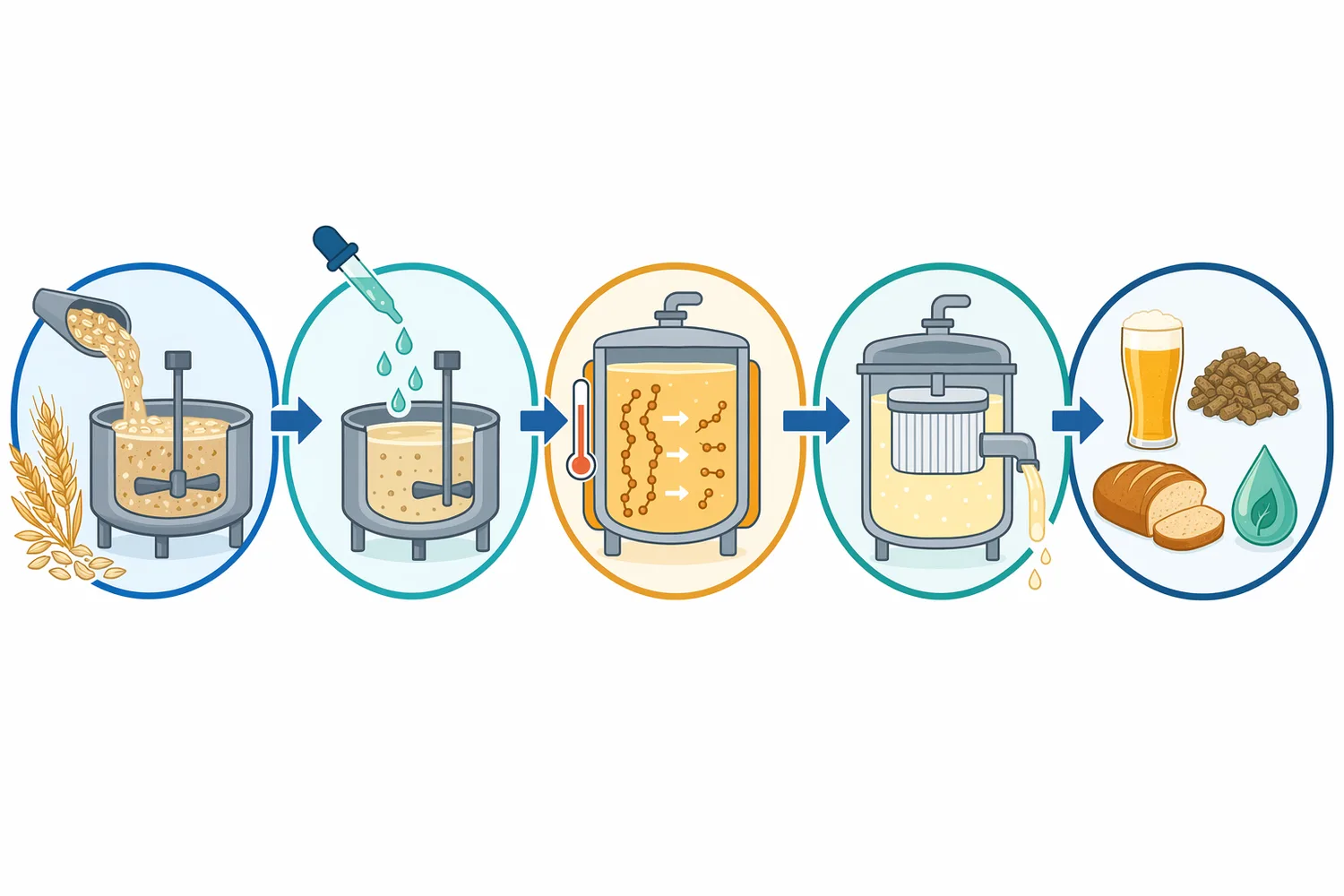
Beta-glucans become troublesome when their size, solubility and concentration create a physical barrier to processing. A long hydrated beta-glucan molecule occupies a large volume in water; many such molecules overlap, entangle and slow liquid movement. That is why beta-glucan-related issues often show up as slow runoff, blocked filter beds, hazy liquids, poor clarification or unusually high viscosity rather than as a simple chemical impurity [3].
In barley-based brewing, beta-glucans may survive malting and mashing if the grain, process or modification level leaves enough high-molecular-weight material intact. Those polymers can pass into wort and interfere with lautering or filtration. The beta glucanase enzyme brewing role is therefore concrete: it cuts mixed-linkage beta-glucans into shorter chains that no longer build the same viscosity or form the same filtration barrier [3].
In wine, the mechanism is similar in outcome but different in substrate. OIV’s beta-glucanase monograph focuses on beta-glucans found in wines, including those from Botrytis-affected grapes and yeast sources, and describes beta-glucanase action on beta-1,3 and beta-1,6 bonds [4]. When those glucans remain intact, they can make clarification and final filtration difficult even when pectin-related haze has been addressed.
In cereal feed and grain-derived ingredients, beta-glucans are part of the non-starch polysaccharide matrix that encloses nutrients inside cell-wall structures. Hydrolyzing beta-glucans helps disrupt that matrix, making proteins, starch and other components more accessible to water, endogenous enzymes or added enzyme systems. Feed additive evaluations commonly discuss beta-glucanase together with xylanase because cereal cell walls contain multiple non-starch polysaccharides, not beta-glucan alone [6].
The best-known beta-glucanase enzyme brewing application is viscosity and filtration control in barley-based processes. During mashing and wort separation, the process depends on liquid moving through a grain bed and later through filtration systems. High-molecular-weight beta-glucans can make the liquid more viscous and can contribute to filter blockage or slow separation; enzymatic hydrolysis reduces the size of these polymers and improves flow behavior [3].
This is why “beta-glucanase enzyme brewing” is often searched together with terms such as mash viscosity, lautering and wort filtration. The enzyme’s value is not a generic “performance boost”; it acts on a defined cereal cell-wall polymer. When beta-glucan is the limiting factor, cutting the mixed-linkage glucan chains directly addresses the physical cause of slow filtration [1].
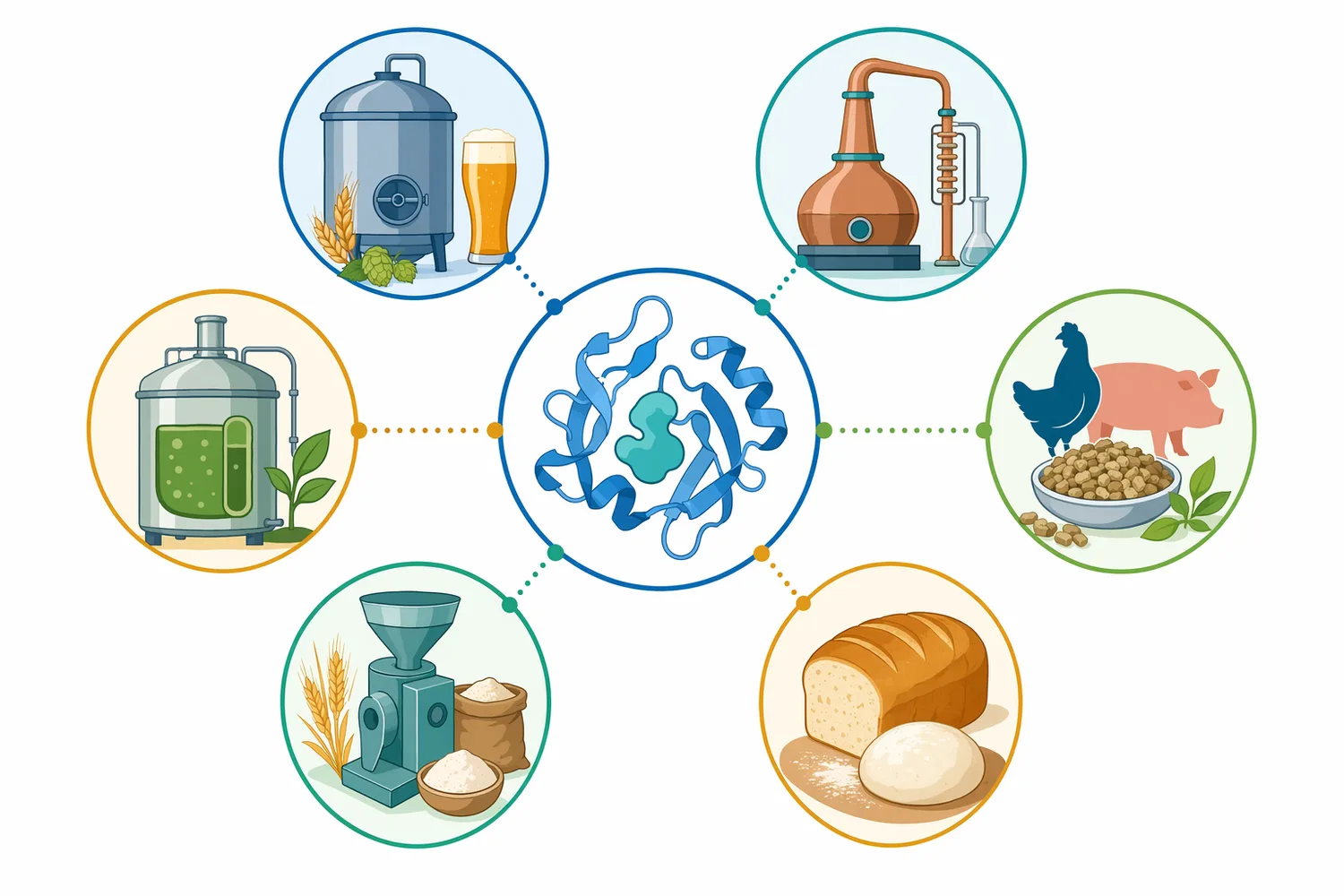
In winemaking, beta-glucanase is associated with difficult-to-filter wines, particularly where Botrytis cinerea infection or yeast-derived glucans create filtration resistance. OIV describes beta-glucanase preparations for degradation of beta-glucans in wine and specifically identifies hydrolysis of beta-1,3 and beta-1,6 bonds in beta-D-glucans [4].
The mechanism is practical: glucans from Botrytis or yeast can behave as high-molecular-weight colloidal materials that resist normal clarification. By shortening or dismantling those glucans, beta-glucanase reduces their ability to obstruct filtration media and helps the wine move through clarification and filtration steps more predictably [4].
Oat, barley, rye and wheat systems can contain beta-glucans that influence texture, viscosity, mouthfeel and extractability. In some products, beta-glucan is a valued dietary fiber; in others, it is a processing obstacle. Beta-glucanase allows controlled reduction of polymer size where the target is lower viscosity or easier separation rather than preservation of intact high-molecular-weight fiber [3].
This distinction is important for cereal beverages and grain extracts. If a process needs a smooth, pumpable liquid, beta-glucanase can make hydrated cereal solids easier to handle. If the product is marketed around intact oat or barley beta-glucan fiber, excessive hydrolysis may be counterproductive because molecular size is part of the ingredient’s functional profile [1].
Beta-glucanase is widely represented in animal feed enzyme systems, especially for cereal-rich diets. EFSA opinions have evaluated combinations containing endo-1,4-beta-xylanase and endo-1,3(4)-beta-glucanase or endo-1,4-beta-glucanase for poultry, piglets, pigs or sows, reflecting the established role of carbohydrases in digestibility-focused feed additives [6].
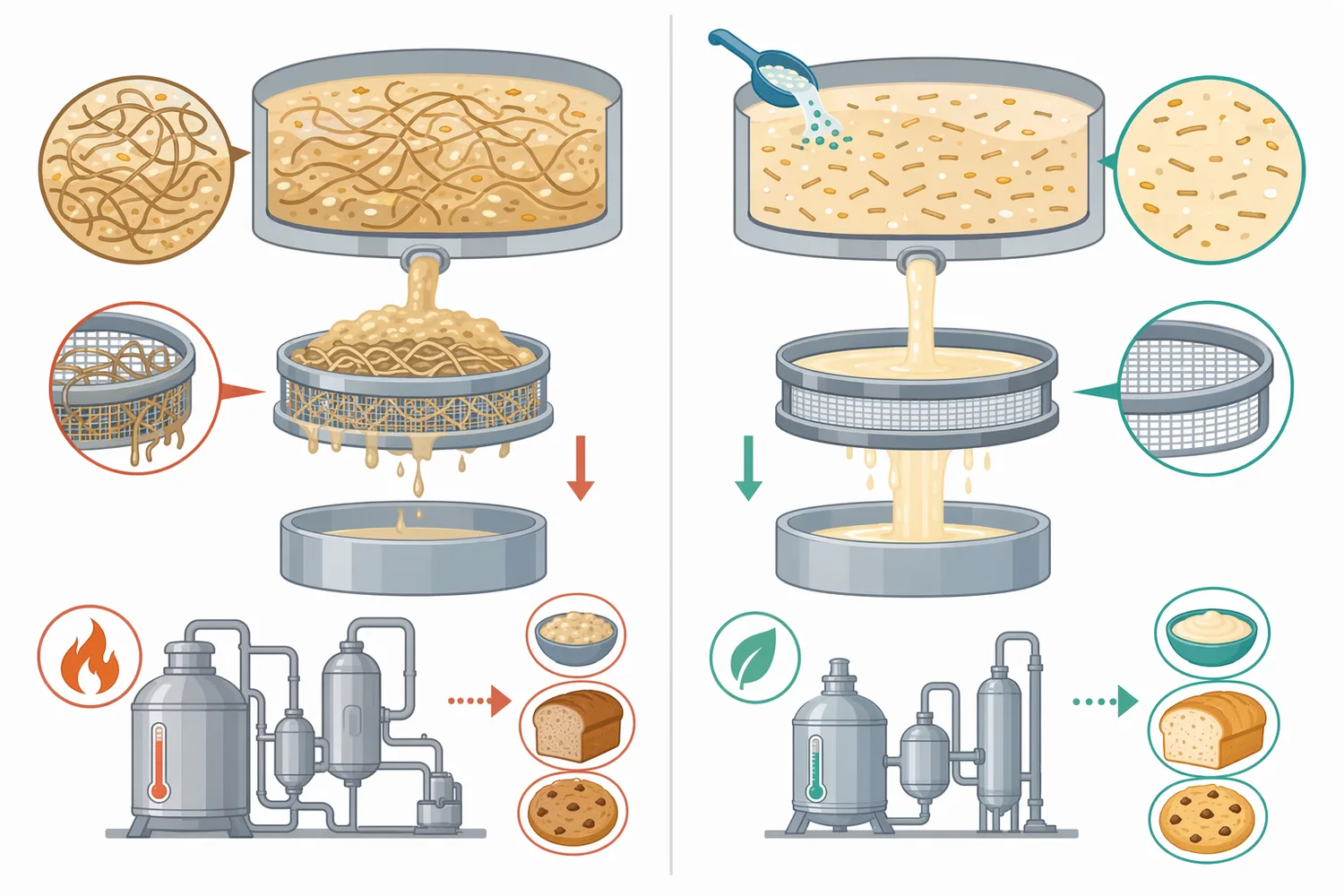
The mechanistic logic is straightforward: cereals contain cell-wall non-starch polysaccharides that can encapsulate nutrients and influence viscosity in the gut. Beta-glucanase cuts beta-glucan portions of that matrix, while xylanase targets arabinoxylan-related structures; together, these enzymes can improve access to nutrients that would otherwise remain partly shielded by grain cell walls [7].
Recent EFSA-related feed additive assessments continue to address enzyme combinations containing beta-glucanase activities produced by organisms such as Trichoderma citrinoviride, Talaromyces versatilis and Aspergillus niger, showing that beta-glucanase remains relevant in modern feed enzyme formulations [8]. These evaluations are specific to feed additive contexts, species and authorised uses, but they support the broader industrial understanding of beta-glucanase as a cereal cell-wall carbohydrase.
Beyond brewing, wine and feed, beta-glucanase-related enzymes are useful wherever beta-glucan structures contribute to cell-wall strength or material behavior. Plant, fungal and microbial walls contain glucan networks that can be modified enzymatically. Research on glucanase inhibitor proteins in plant pathogens, for example, underscores that beta-glucanase activity is biologically important enough for pathogens to evolve counterdefense mechanisms against plant glucanases [9].
Biocontrol studies also show why glucanase activity matters in microbial and plant-pathogen systems. Bacillus halotolerans work against Botrytis cinerea in strawberry fruit and Paenibacillus polymyxa work against pear Valsa canker both connect microbial antagonism with cell-wall-degrading enzyme mechanisms, including glucanase-related action against fungal pathogens [10]. These are not the same as commercial processing applications, but they illustrate the real structural role of beta-glucan cleavage in biological materials.
Different beta-glucan substrates call for different expectations. The same word, “beta-glucan,” may refer to a soluble cereal polymer, a wine filtration problem from Botrytis, a yeast cell-wall component or a fungal structural glucan. The table below gives a conceptual comparison without turning the choice into a technical specification checklist.
| Beta-glucan source | Main structural features discussed in literature | Relevant beta-glucanase action | Typical processing effect |
|---|---|---|---|
| Barley, oats and other cereals | Mixed-linkage beta-glucans containing beta-1,3 and beta-1,4 patterns | Endo cleavage of mixed-linkage glucan chains, including endo 1 4 beta glucanase-type activity where beta-1,4 regions are accessible | Lower viscosity, improved wort or extract handling, easier filtration |
| Wine glucans from Botrytis or yeast | Beta-D-glucans involving beta-1,3 and beta-1,6 bonds | Hydrolysis of beta-1,3 and beta-1,6 bonds as described in oenological use | Better clarification and filterability in glucan-affected wines |
| Fungal cell walls | Structural beta-glucan networks, including beta-1,3 backbones and beta-1,6 components | Beta 1 3 glucanase and beta-1,6-glucanase actions can weaken or modify wall structures | Cell-wall modification, antifungal or biocontrol-related effects in research contexts |
| Cereal-based feed materials | Non-starch polysaccharide cell-wall matrix surrounding nutrients | Beta-glucanase often used with xylanase to hydrolyze cereal NSP structures | Improved nutrient accessibility and digestibility support |
The table shows why beta-glucanase function should be understood through the substrate. A brewing process dealing with barley beta-glucan is mostly concerned with mixed-linkage cereal polymers, while a wine process dealing with Botrytis glucans requires activity against beta-1,3 and beta-1,6 structures identified in oenological guidance [4].
The strongest evidence for beta-glucanase benefits is in applications where beta-glucans are a known physical cause of processing difficulty. Brewing and cereal processing are supported by decades of enzyme and substrate-specific work, including studies on barley beta-D-glucan structure and malt beta-glucanase specificity [3]. The evidence is mechanistically persuasive because the substrate, the bond pattern and the process problem are directly connected.
Biochemical research also supports why not all glucanases behave identically. A lichenase-like family 12 endo-(1→4)-beta-glucanase from Aspergillus japonicus was studied for substrate specificity and mode of action on beta-glucans in comparison with other glycoside hydrolases, highlighting the importance of enzyme family and substrate structure [1]. In practice, this explains why “beta glucanase” is a useful category name but not a guarantee of identical action on every glucan-containing raw material.
Feed applications have a substantial regulatory and applied literature base. EFSA assessments have evaluated multiple enzyme products containing beta-glucanase and xylanase activities for poultry, piglets, pigs for fattening, sows and minor species, including products produced with Talaromyces versatilis, Trichoderma citrinoviride and Aspergillus niger [11]. These documents are feed-additive evaluations rather than brewing or wine studies, but they reinforce the practical role of beta-glucanase in cereal NSP breakdown.
The evidence for fungal or biocontrol-related applications is more application-specific. Research on beta-1,6-glucanase from myxobacteria links glucanase activity to antifungal properties, while plant-defense studies examine beta-1,3-glucanase and associated cell-wall defense mechanisms [5]. These studies support the biological importance of glucan cleavage, but commercial processing outcomes depend on the exact substrate and process environment.
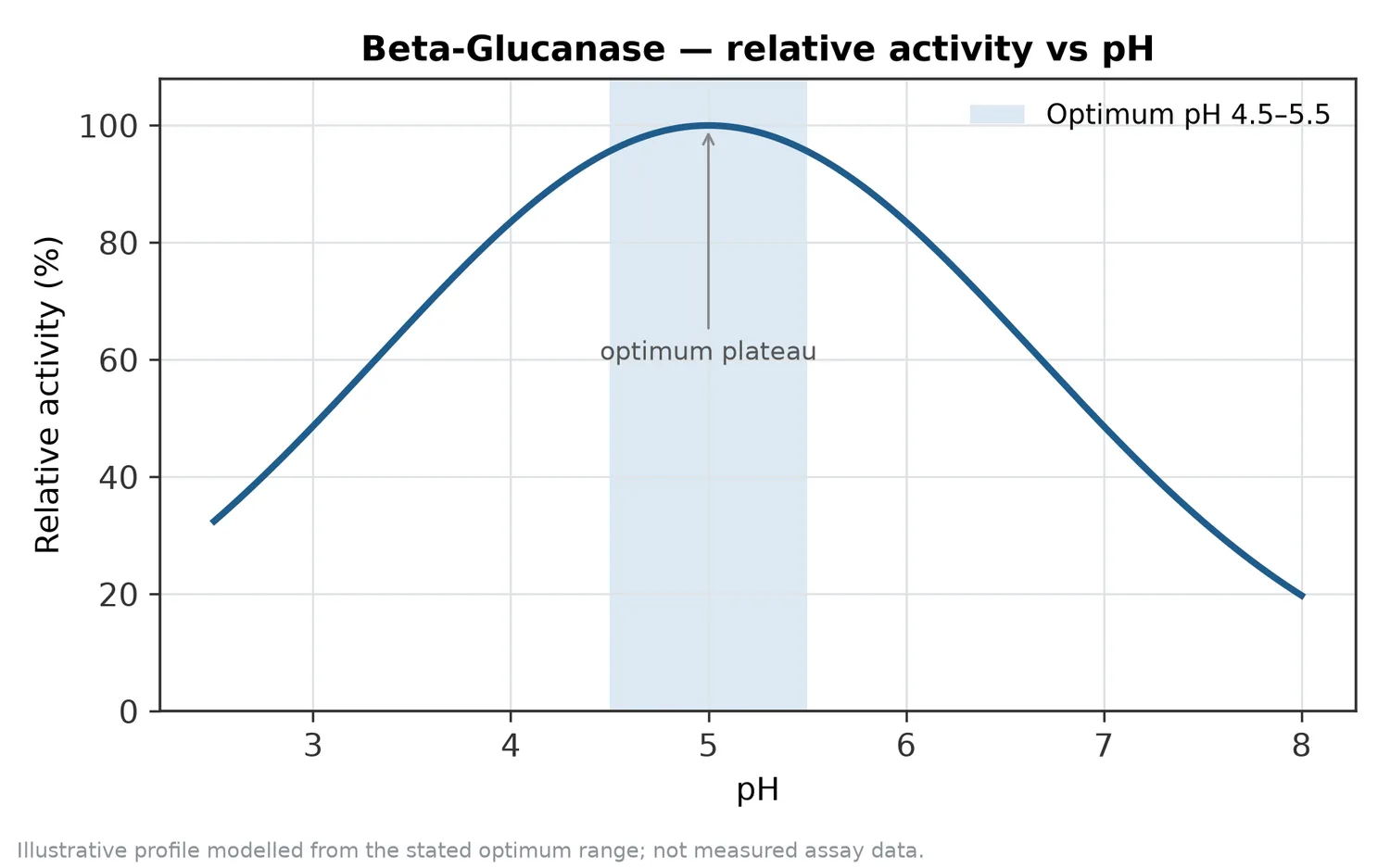
Beta-glucanase works only when the substrate is accessible. Dry grain, compact cell walls or insoluble glucan networks need hydration, process mixing or prior processing steps before the enzyme can efficiently contact the bonds it hydrolyzes. This is why beta-glucanase is normally used in aqueous or moisture-containing systems such as mash, wort, wine, grain slurries, feed matrices or hydrated biomass streams [2].
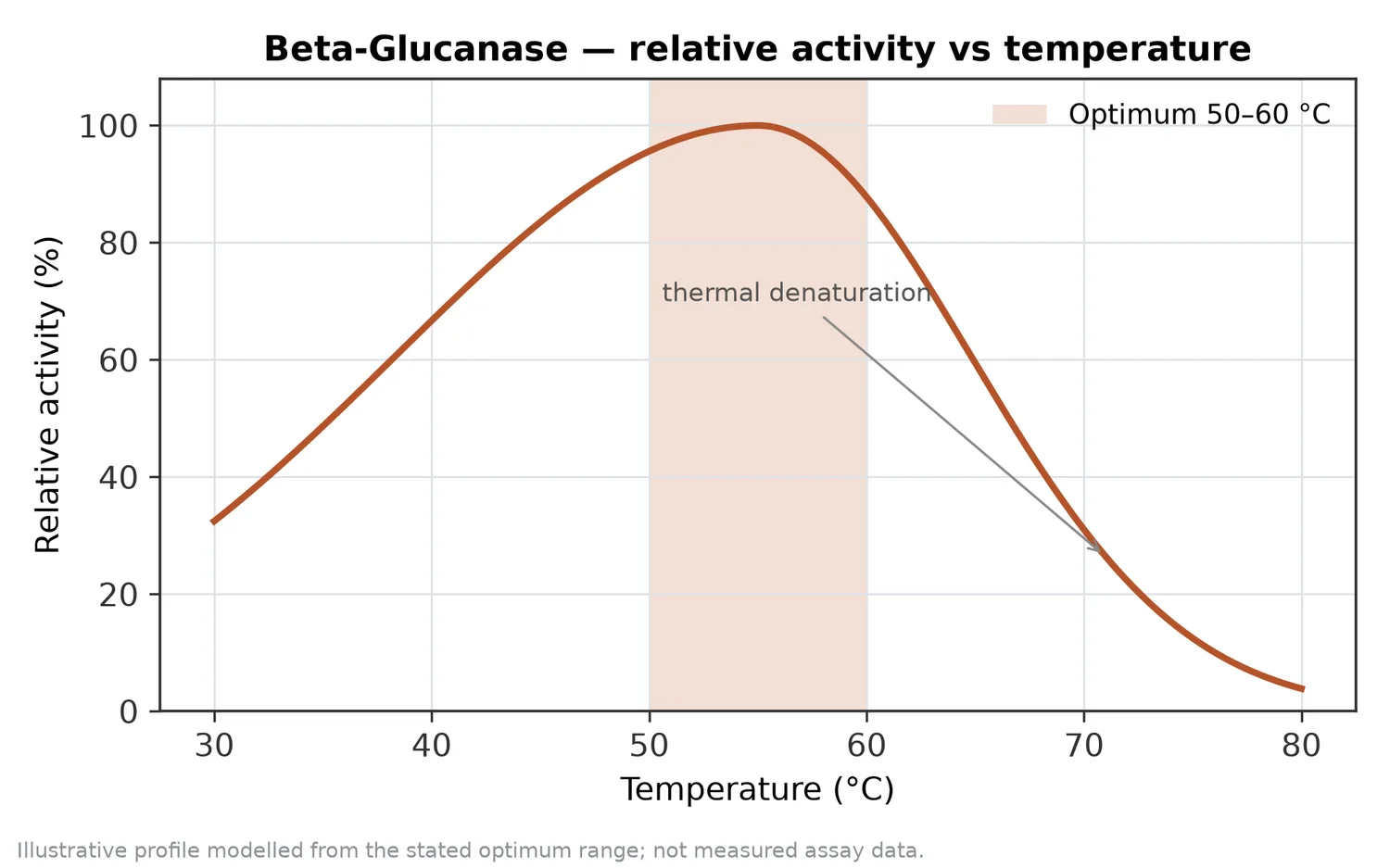
The beta-glucanase temperature range is not universal. Published enzymes come from different microbial sources, and their temperature behavior depends on enzyme structure and formulation. For example, endo-1,4-beta-glucanase from Trichoderma reesei, lichenase-like glucanase from Aspergillus japonicus and acid-stable exo-beta-1,3-glucanase from Rhizoctonia solani represent different enzyme types studied under different biochemical contexts [12].
pH behavior is also enzyme-dependent. The phrase “acid-stable exo-beta-1,3-glucanase” in the Rhizoctonia solani study already shows that some glucanases are investigated specifically for performance under acidic conditions, while feed and cereal systems may involve different environments [12]. For buyers, the practical message is that beta-glucanase performance is tied to the process environment, but the core mechanism remains hydrolysis of accessible beta-glucan bonds.
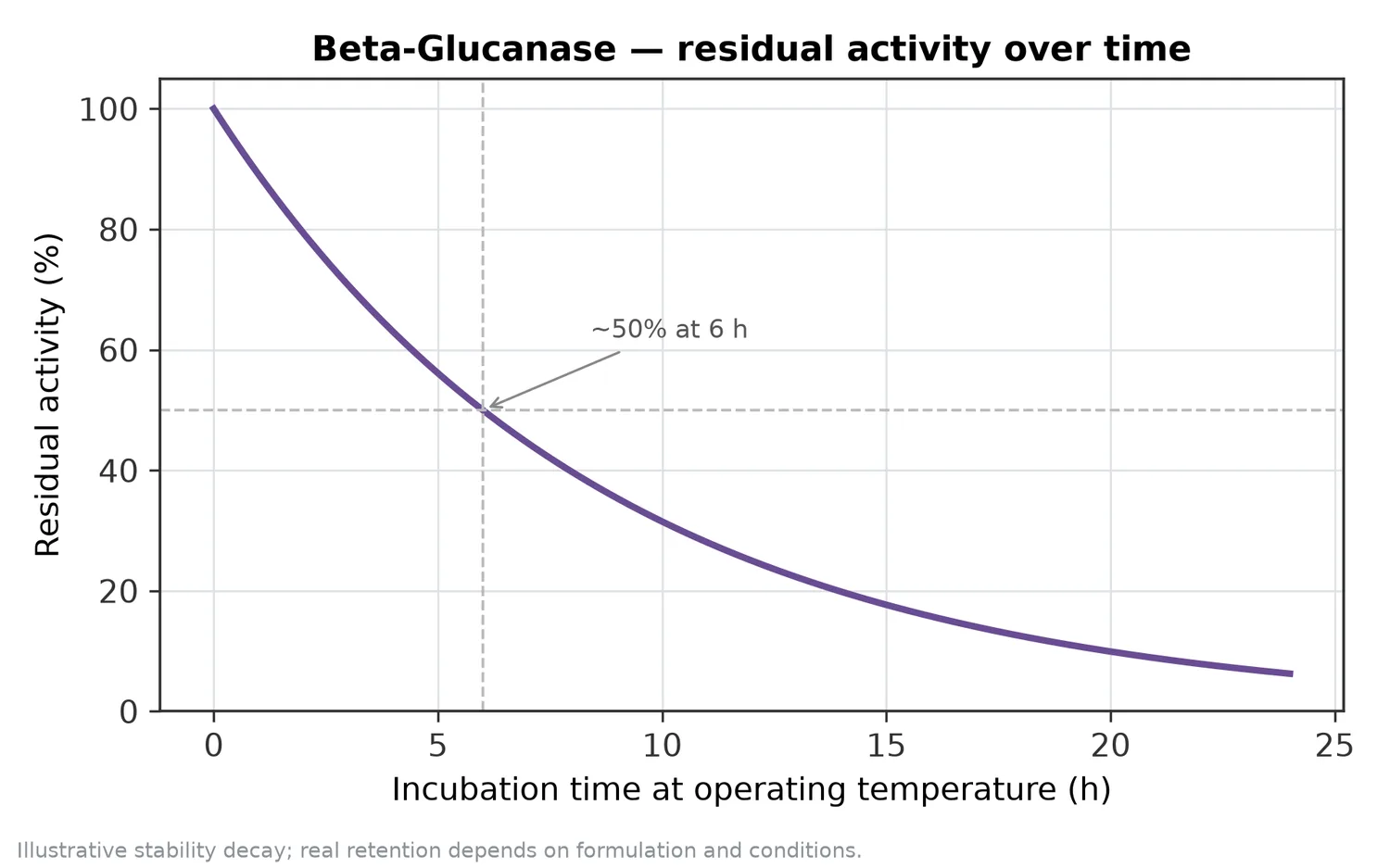
Time is another important variable. Because endo-type enzymes can reduce polymer size through internal cuts, process improvement may occur before complete conversion to glucose or very small oligosaccharides. In viscosity-driven applications, reducing the population of large chains can matter more than total hydrolysis, because the biggest polymers contribute disproportionately to flow resistance [1].
Beta-glucanase and beta-glucan are often confused because their names are similar. Beta-glucan is the polysaccharide—the fiber or structural carbohydrate found in oats, barley, yeast, fungi and other biological sources. Beta-glucanase is the enzyme that breaks or modifies that polysaccharide [3].
This distinction matters for anyone searching terms such as “beta glucanase supplement,” “beta glucanase side effects” or “beta glucanase enzyme uses.” Enzymes used for industrial processing are not the same as finished dietary beta-glucan ingredients, and this article does not position Beta-Glucanase as a consumer health supplement. Health effects, tolerability and regulatory claims depend on the final product, its intended use and the applicable market rules, not simply on the presence of an enzyme name [6].
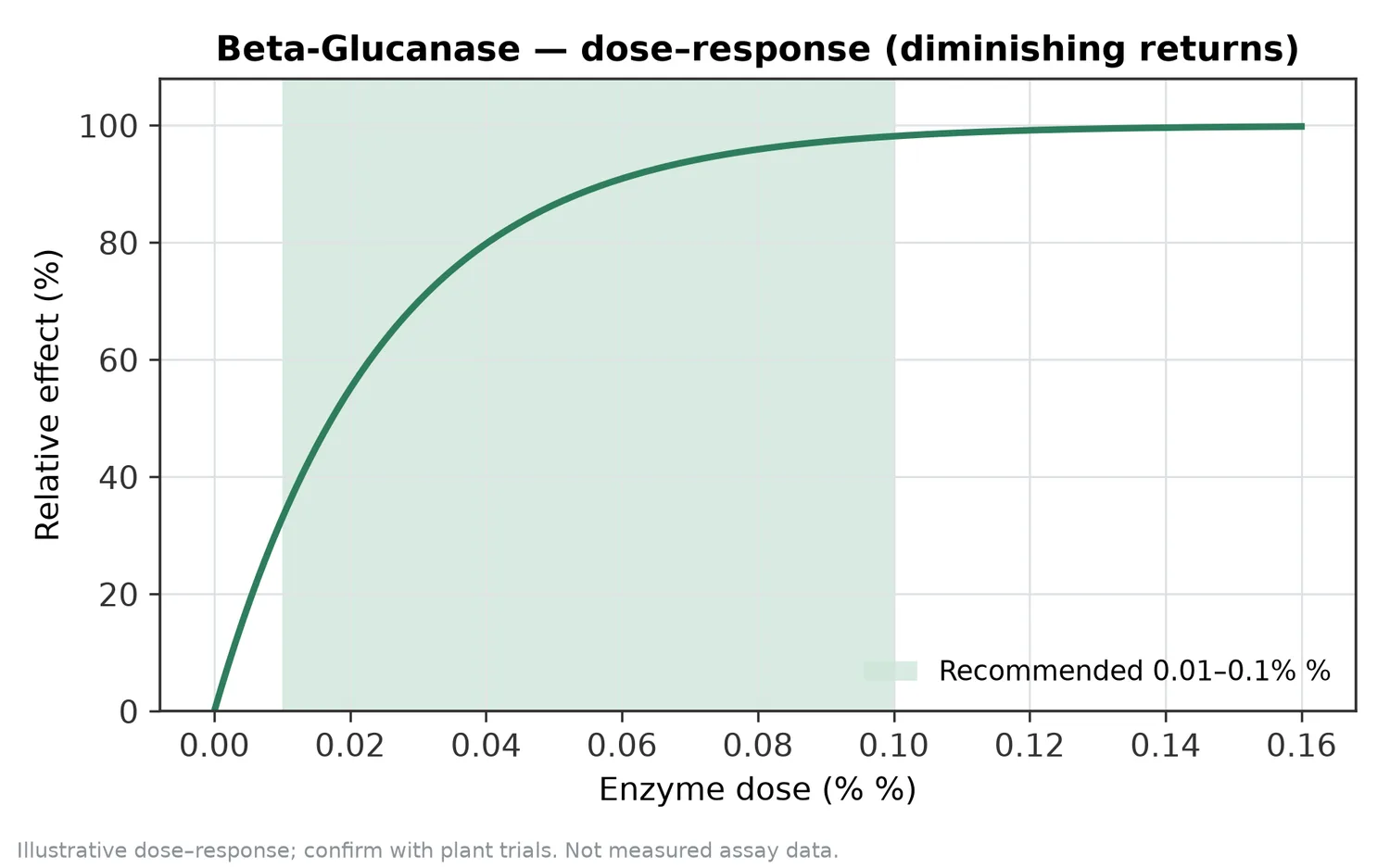
In some food and ingredient contexts, preserving beta-glucan molecular weight may be valuable because intact or high-molecular-weight beta-glucans can contribute to fiber functionality. In other contexts, reducing molecular weight is exactly the goal because the polymer is causing viscosity or filtration problems. Beta-glucanase is therefore a process tool: it changes the structure of beta-glucan-containing material so the material behaves differently in production [1].
Beta-glucanase should be handled as a professional enzyme ingredient, with attention to the supplied Safety Data Sheet and the intended application. Enzyme materials are biologically active proteins, and good industrial hygiene is important when handling powders or concentrates. The appropriate use category also matters: an enzyme used in wine processing, feed, brewing or another application must fit the buyer’s own regulatory and process requirements [4].
For wine, the OIV monograph provides a useful example of application-specific expectations: beta-glucanase preparations are described for oenological use in degrading beta-glucans, especially those from Botrytis or yeast sources, and the monograph frames the enzyme in the context of wine suitability [4]. That kind of application-specific framing is important because the same enzyme class can be used in very different industries.
For feed, EFSA opinions evaluate defined additive combinations, target species and use contexts. Several assessed products combine beta-glucanase with xylanase, reflecting that feed performance is usually tied to the whole cereal non-starch polysaccharide profile rather than beta-glucan alone [13]. These regulatory evaluations should not be generalized into medical or supplement claims, but they are relevant evidence for beta-glucanase as a digestibility-oriented carbohydrase in feed systems.
Enzymes.bio supplies Beta-Glucanase directly online by the 1 kg unit. The buying process is simple: add the product to the cart, complete payment online, and the order is processed and shipped. A Certificate of Analysis and Safety Data Sheet are included with the order.
This online model is designed for buyers who need straightforward access to a professional enzyme ingredient without quote-based or sample-based purchasing steps. Enzymes.bio is a supplier, so the product page and accompanying order documents are the right place to confirm the supplied item and handle it according to its intended professional use.
Beta-glucanase is best understood as a targeted polymer-modifying enzyme. It hydrolyzes beta-glucan chains, reducing the size and process impact of polymers that otherwise increase viscosity, obstruct filtration, protect cell-wall nutrients or complicate clarification. The most established applications are beta glucanase enzyme brewing, wine filterability improvement, cereal processing and feed enzyme systems [6].
The strongest practical value appears where the problem is clearly beta-glucan-related: barley wort that filters poorly, wine affected by Botrytis or yeast glucans, cereal extracts with excess viscosity, or feed matrices where cereal non-starch polysaccharides limit nutrient access. In those settings, beta-glucanase does not work by vague “improvement”; it changes the substrate itself by cutting beta-1,3, beta-1,4 or beta-1,6 glucan linkages into smaller, less obstructive fragments [4].
For professional buyers looking to beta-glucanase buy options, Enzymes.bio offers Beta-Glucanase in a direct 1 kg online format with order documentation supplied. The science behind the enzyme is well established: when accessible beta-glucan polymers are the cause of viscosity, filtration or cell-wall limitations, beta-glucanase provides a practical enzymatic route to change how those materials behave in processing.
Sold by the 1 kg unit, in stock and ready to ship. Order directly on our store — pay online and we process your order. A Certificate of Analysis and Safety Data Sheet are included with every order.
Buy Beta-Glucanase →Numbered in order of first citation. Open-access sources, each verified reachable at publication; citation numbers in the text link here.