
Bone Protein Hydrolyzing Enzyme is a protease-based processing enzyme used to break bone-associated proteins—especially collagen-rich matrix proteins—into smaller soluble peptides and hydrolysates. In animal bone processing, it helps convert dense, hard-to-use bone by-products into more manageable protein streams for peptide ingredients, savory bases, pet nutrition, feed ingredients, gelatin-like fractions, and research-driven functional hydrolysates.
Enzymes.bio supplies Bone Protein Hydrolyzing Enzyme for direct online purchase by the 1 kg unit. Buyers place and pay for the order online; the order is then processed and shipped with a Certificate of Analysis and Safety Data Sheet.
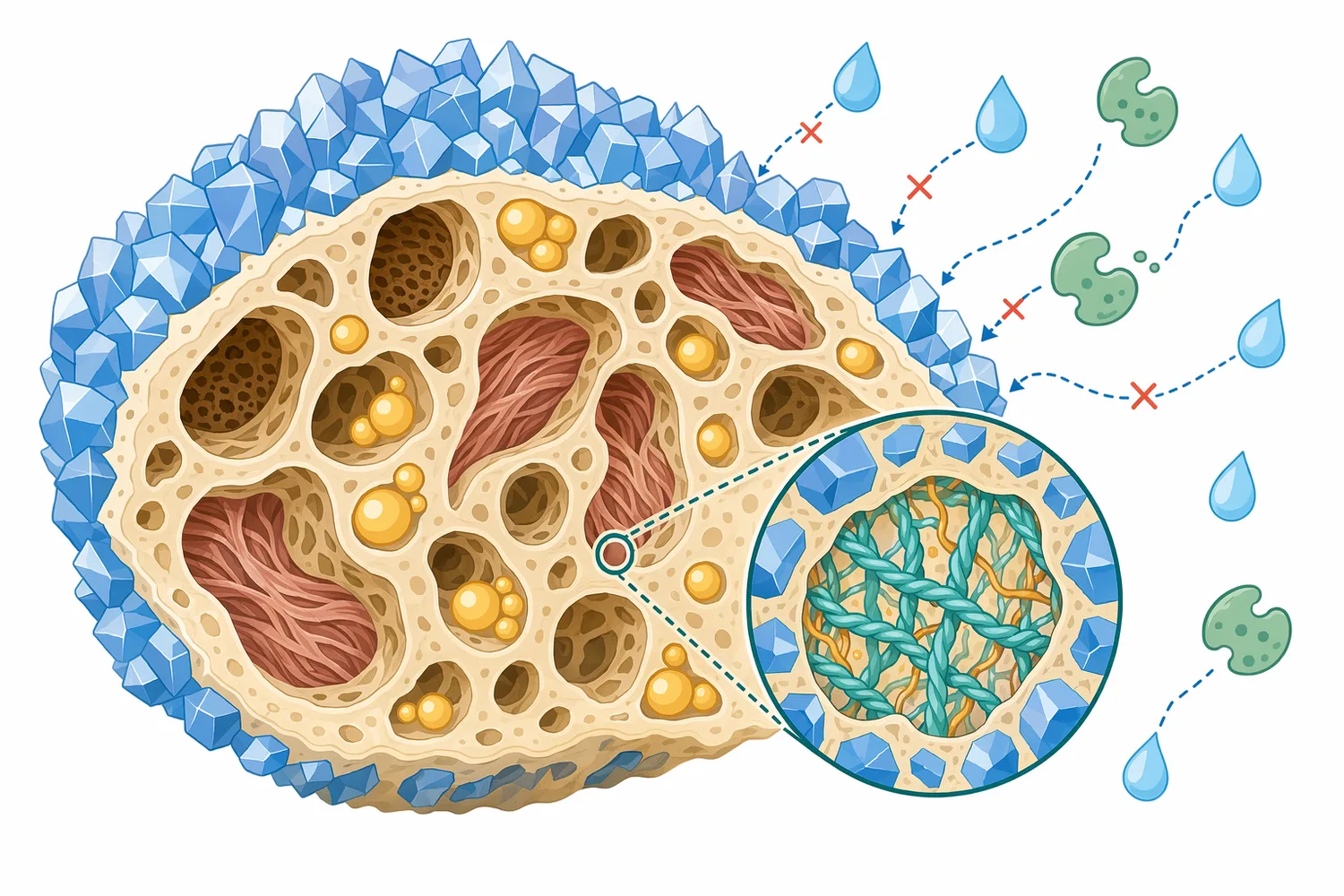
Animal bones are composite materials: they contain mineral, fat, residual meat, connective tissue, marrow components, and a protein matrix dominated by collagen. Collagen is not a simple soluble protein; it is organized into strong fibrils and stabilized by intermolecular interactions and crosslinks, while mineral deposits physically restrict access to the protein network. That structure is why bone protein is often underused compared with muscle, skin, or soluble protein streams.
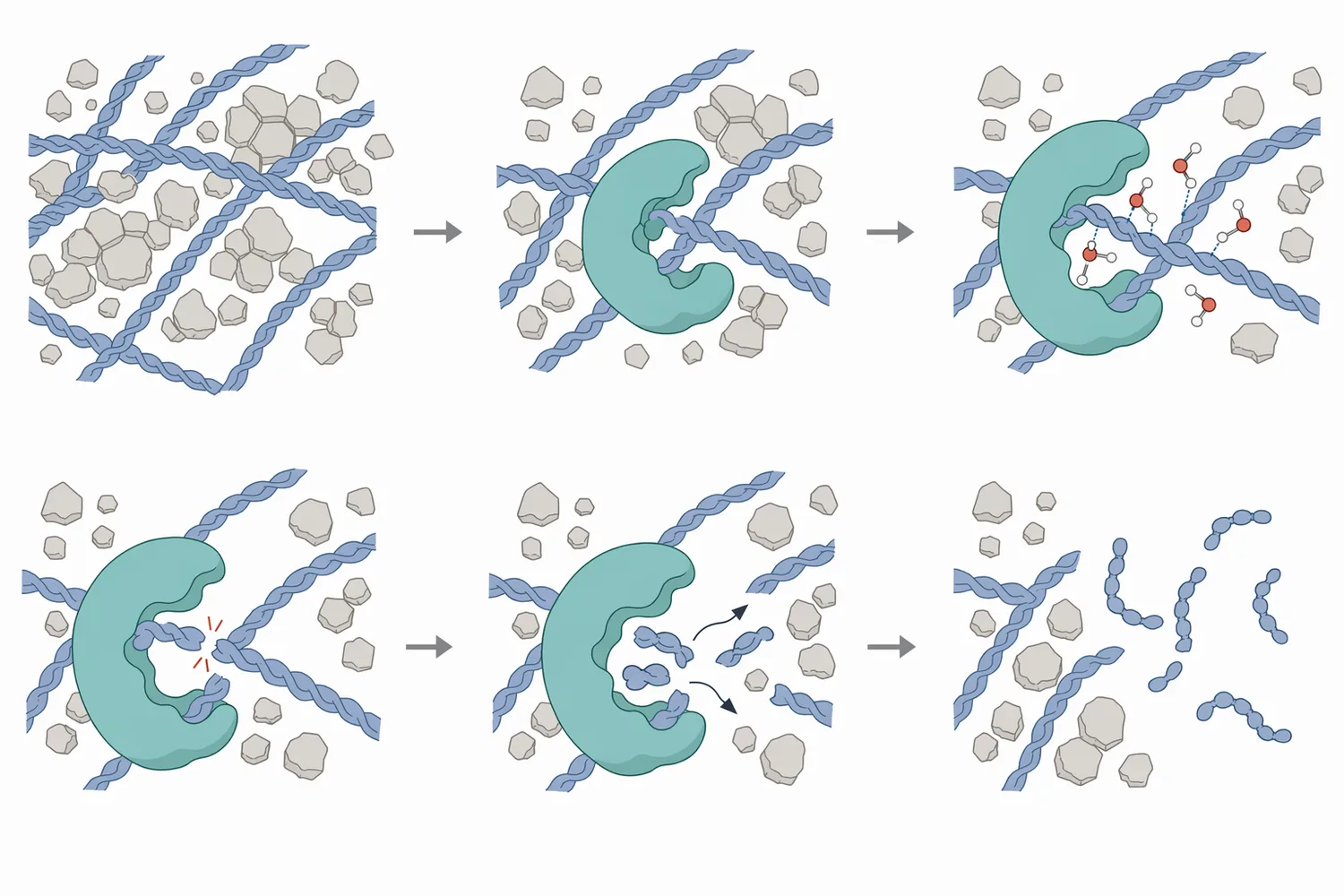
Bone Protein Hydrolyzing Enzyme addresses the protein fraction of this structure. As a protease preparation, it cleaves peptide bonds in collagen and other bone-associated proteins, reducing large protein structures into shorter peptides. The practical change is measurable in the process stream: more protein moves into the aqueous phase, viscosity and dispersion behavior can change, insoluble residues may separate more cleanly, and the resulting hydrolysate can be concentrated, dried, blended, or further fractionated depending on the intended use.
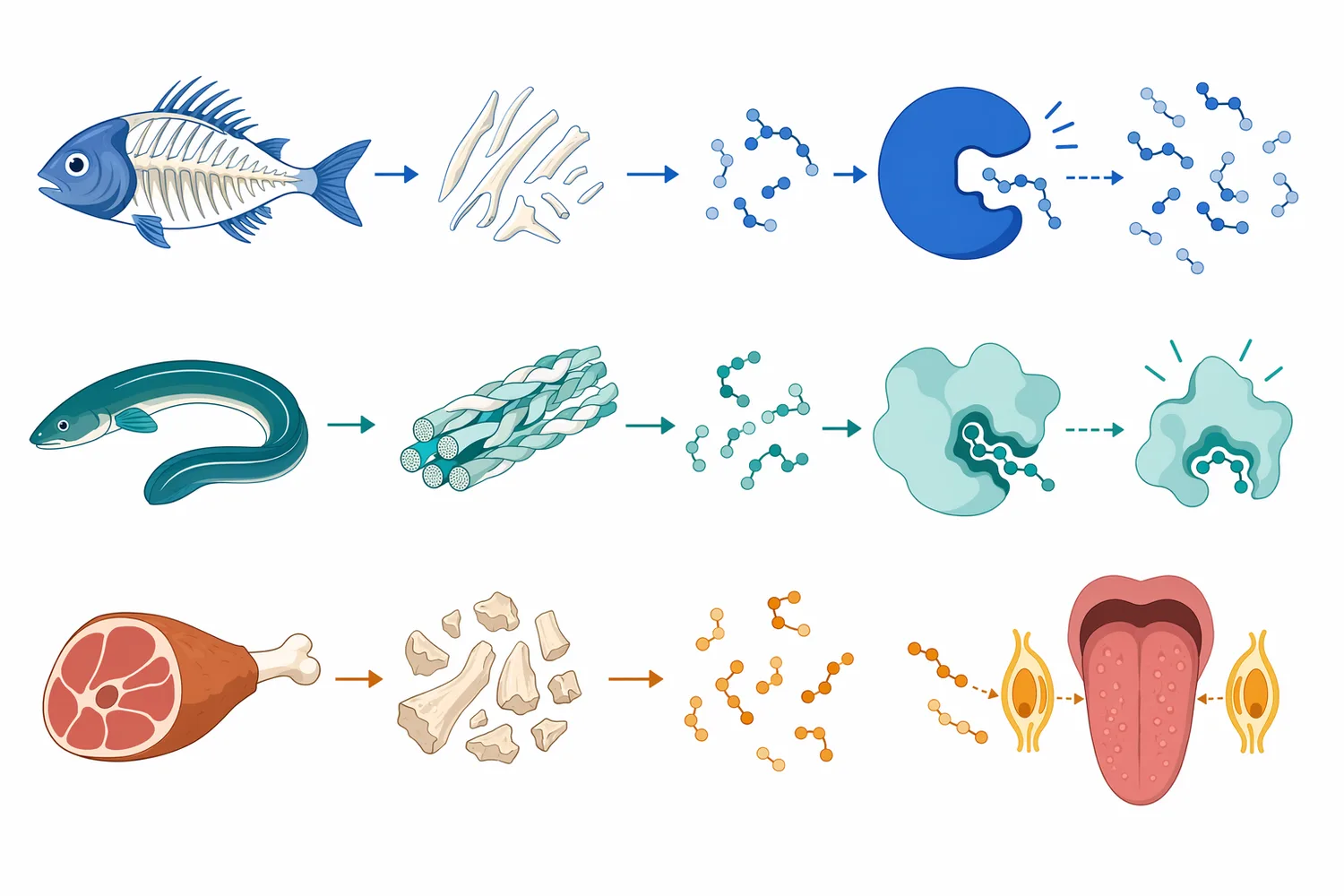
The scientific basis for this approach is supported by studies on bone-derived substrates. Trypsin hydrolysis of salmon bone proteins has been used to generate angiotensin I-converting enzyme inhibitory peptides, showing that fish bone protein can be converted into defined bioactive peptide fractions under enzymatic treatment [1]. Eel bone collagen has also been enzymatically prepared into ACE-inhibitory peptides, with identification and molecular docking used to examine peptide–enzyme interaction behavior [2]. Pork bone has been investigated as a source of umami peptides, connecting enzymatic or peptide-processing routes with savory taste functionality and receptor-level mechanisms [3].
The most important transformation is molecular size reduction. Native collagen and associated connective-tissue proteins are long chains arranged into ordered structures; a protease cuts those chains into smaller fragments. As peptide length decreases, more terminal amino and carboxyl groups are exposed, the water-binding surface changes, and formerly inaccessible charged or polar residues become available for interactions with minerals, taste receptors, enzymes, or other food-system components.
This is not simply “digestion” in a vague sense. Protease action changes the physical and chemical behavior of the material. Shorter peptides generally disperse more readily than intact collagen fibers, and hydrolyzed protein fractions are easier to separate from mineral-rich insoluble solids than untreated dense bone tissue. In processing terms, enzymatic hydrolysis can turn a heterogeneous bone slurry into a more useful split between soluble peptide liquor and residual mineral/fat/insoluble fractions.
Hydrolysis also changes functionality. Some peptides become candidates for biological or sensory activity because their amino acid sequence and size allow them to bind to a target surface. In salmon bone protein research, the relevant outcome was an ACE-inhibitory peptide produced from trypsin hydrolysates, while eel bone collagen research similarly focused on prepared peptides, molecular docking, and protective function in endothelial-cell models [1]. In pork bone research, peptide discovery was linked to umami taste perception, where the mechanism depends on how peptide structures interact with taste receptors rather than merely on total protein content [3].
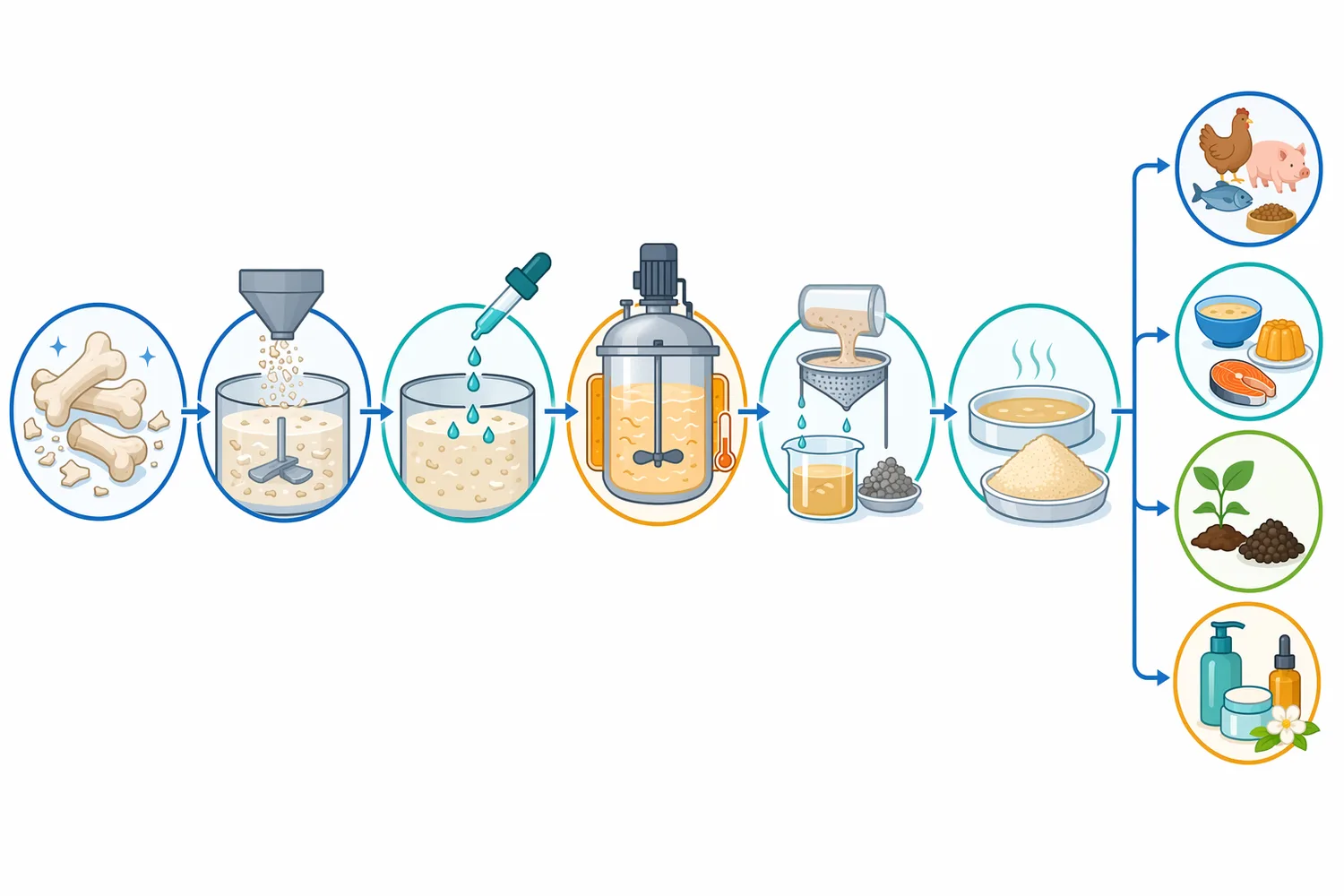
Bone is a difficult substrate because the protein is embedded in a mineralized and often fatty matrix. Mineral limits water penetration; fat can coat surfaces and interfere with enzyme contact; heat history may denature proteins or create aggregation; and large particle size reduces the exposed surface area available to the enzyme. For this reason, industrial bone hydrolysis is usually built around substrate preparation as well as enzymatic action.
Pretreatment does not replace the enzyme; it makes enzyme access more effective. Size reduction exposes more surface area. Heating can loosen tissue, but excessive heat may also make proteins less accessible. Degreasing improves contact between the aqueous enzyme phase and protein surfaces. Demineralization, where used, can open collagen-rich structures by removing the mineral phase that protects or traps the protein network.
A beef bone protein extraction study illustrates the importance of upstream preparation. The work used lipase pretreatment as part of a method for extracting beef bone protein and then applied the extracted material in Maillard reaction systems, showing that the handling of fat and matrix components can materially affect downstream protein utilization [4]. For Bone Protein Hydrolyzing Enzyme users, the practical takeaway is that the enzyme acts on accessible peptide bonds; any upstream step that exposes protein surfaces can influence the amount and character of hydrolysate produced.
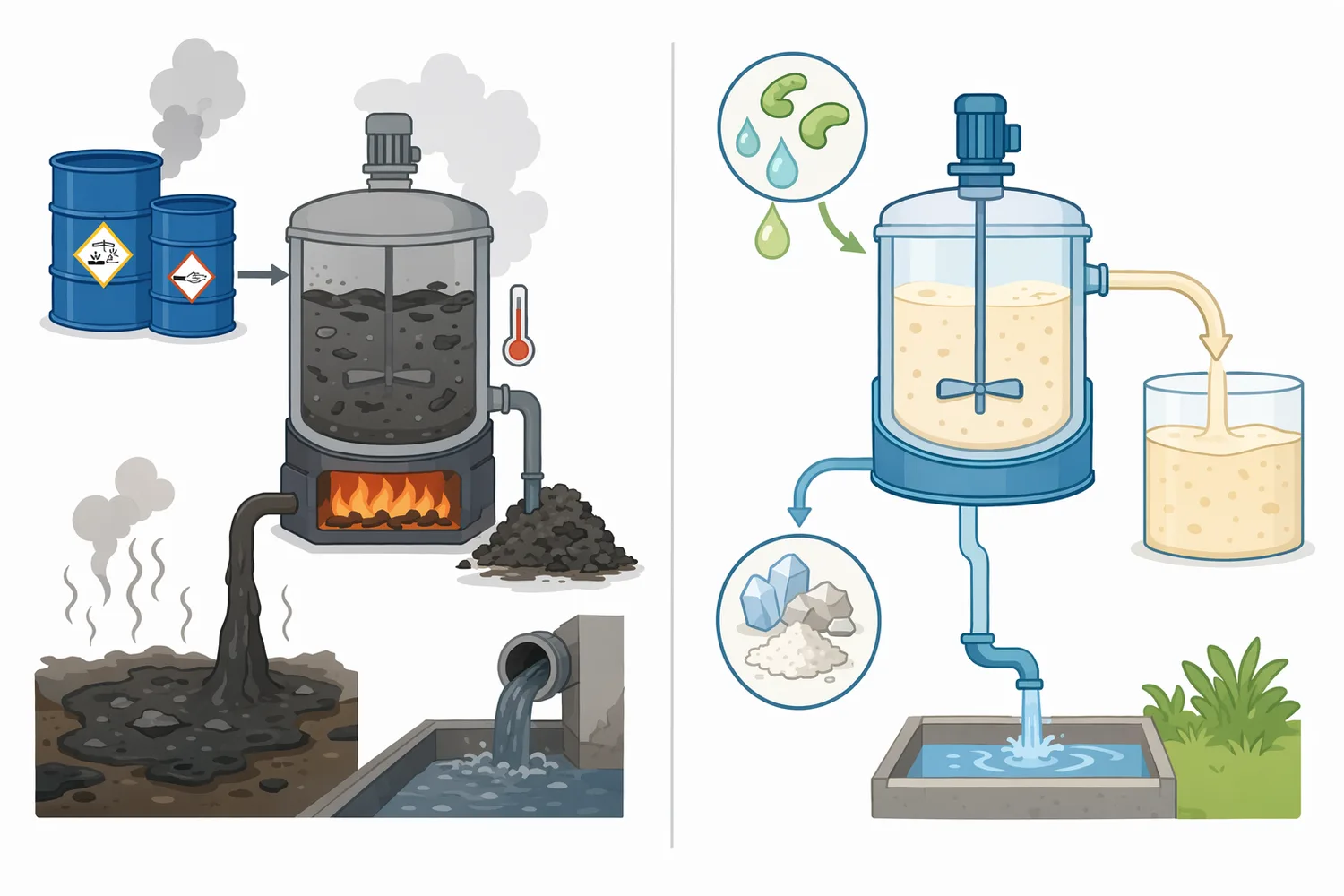
Proteases differ in how they behave around pH, temperature, and peptide-bond preference. A bone hydrolysis process may use acid, neutral, or alkaline proteolytic behavior depending on substrate condition and downstream goals. The distinction matters because collagen swelling, mineral solubility, fat behavior, peptide release, and enzyme stability all change with processing environment.
The table below gives a conceptual comparison. It is not a product specification and should not be read as a fixed processing recipe; it is a practical way to understand why different protease systems produce different hydrolysates.
| Protease environment | Conceptual role in bone protein processing | What changes in the substrate | Typical practical implication |
|---|---|---|---|
| Acidic protease conditions | Useful where proteins are already acid-treated or where collagen swelling/demineralization has occurred | Acid exposure can open matrix structure, while acid-active proteases cut accessible protein regions | Can support collagen breakdown in acid-compatible processes; peptide profile depends strongly on pretreatment |
| Neutral protease conditions | Often associated with milder hydrolysis where extreme pH is undesirable | Protein chains are cut without strong acid or alkali exposure | Can help preserve certain sensory or functional attributes, depending on raw material |
| Alkaline protease conditions | Commonly used for stronger protein solubilization and extensive hydrolysis | Charged groups become more exposed; proteins may unfold more readily, improving protease access | Can increase hydrolysate formation but may also change taste, color, or peptide profile |
Aspartic proteases from microbial sources are examples of proteases studied for efficient protein hydrolysis under acidic conditions, while trypsin-type hydrolysis is a well-established route for generating defined peptides from bone-derived fish proteins [5]. The key mechanism is the same—peptide-bond cleavage—but the processing environment changes which bonds are accessible, how quickly the substrate opens, and which peptide sizes dominate the hydrolysate.
Fish processing by-products are a strong example of where bone protein hydrolysis can create value. Salmon processing generates heads, frames, skin, viscera, and bones; these streams contain collagen and proteins that can be converted into hydrolysates rather than treated only as low-value waste. Reviews of Atlantic salmon waste describe salmon by-products as sources of biofunctional protein hydrolysates while also emphasizing production challenges and the need to manage variability in raw materials [6].
In salmon bone protein work, trypsin hydrolysates were used to identify an ACE-inhibitory peptide. That finding is important for two reasons. First, it shows that bone-associated protein is not simply inert structural residue; it can be a source of sequence-defined peptides. Second, it shows that enzymatic specificity matters: the peptide profile depends on how the protease cuts the parent protein, which determines whether the resulting fragments have the size and amino acid arrangement needed for target interaction [1].
Eel bone collagen research provides another relevant bone-derived example. The study prepared ACE-inhibitory peptides from eel bone collagen, identified peptide candidates, used molecular docking to explore binding behavior, and examined protective function in HUVECs, a human endothelial cell model [2]. For industrial readers, the appropriate interpretation is not that every bone hydrolysate becomes a health ingredient automatically; rather, enzymatic hydrolysis can create peptide mixtures from which defined functional peptides may be identified under controlled research conditions.
Bone protein hydrolysis is not limited to nutrition-oriented bioactivity. Pork bone has been investigated as a source of umami peptides, with research connecting peptide discovery to molecular mechanisms of umami taste perception [3]. This is highly relevant for savory applications because hydrolyzed proteins and peptides contribute to brothiness, mouthfeel, and flavor depth in ways that intact structural proteins usually cannot.
The mechanism is concrete. During hydrolysis, protein chains are cut into peptides that may expose glutamic acid, aspartic acid, hydrophobic residues, or sequence motifs able to interact with taste receptors. Some peptides do not taste strongly on their own but can enhance or modify umami perception when present with salts, nucleotides, or thermally generated flavor compounds. Pork bone peptide research is significant because it treats bone not merely as a mineral or stock base, but as a peptide source with receptor-level sensory relevance [3].
Bone hydrolysates may also feed into thermal flavor systems. Once proteins are hydrolyzed, peptides and free amino groups become more available for Maillard chemistry, which can create roasted, meaty, bouillon-like, or browned flavor notes depending on the formulation. Beef bone protein extraction research that applied extracted bone protein in Maillard reaction work supports this broader connection between bone protein recovery and savory ingredient development [4].
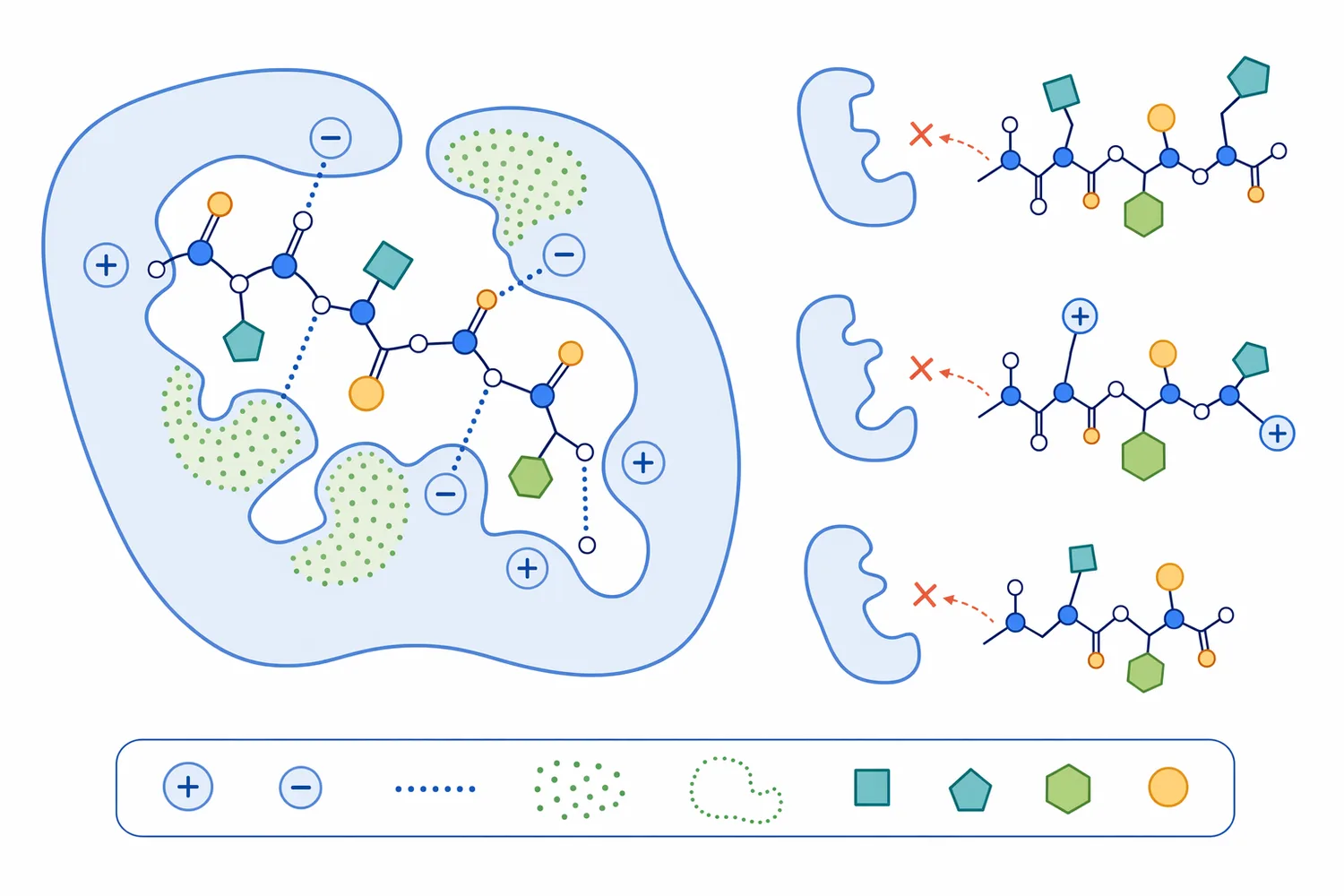
The value of enzymatic hydrolysis often lies in the peptide mixture, but peptide functionality is sequence-dependent. Two hydrolysates with the same total protein content can perform very differently if their peptide-size distribution and amino acid sequences differ. A peptide capable of binding ACE, a calcium ion, or a taste receptor must have the right arrangement of charged, hydrophobic, aromatic, or polar residues in the right three-dimensional presentation.
ACE-inhibitory peptide research illustrates this sequence-dependence clearly. In salmon bone protein hydrolysates and eel bone collagen peptides, the studies focused on identifying specific peptide structures and examining how those structures relate to inhibitory behavior, rather than assuming that all hydrolyzed bone protein has the same biological effect [1]. Similar mechanism-focused peptide studies in other marine materials show that peptide affinity and target binding are governed by molecular interactions such as hydrogen bonding, electrostatic attraction, hydrophobic contacts, and fit within the target protein’s binding region [7].
This is why Bone Protein Hydrolyzing Enzyme should be understood as an enabling processing aid. It helps generate hydrolysates and peptide pools; it does not guarantee a fixed biological claim in a finished product. Any claim about antioxidant effect, ACE inhibition, mineral binding, taste enhancement, or other functionality belongs to the characterized final ingredient and its intended regulatory category, not to the enzyme alone.
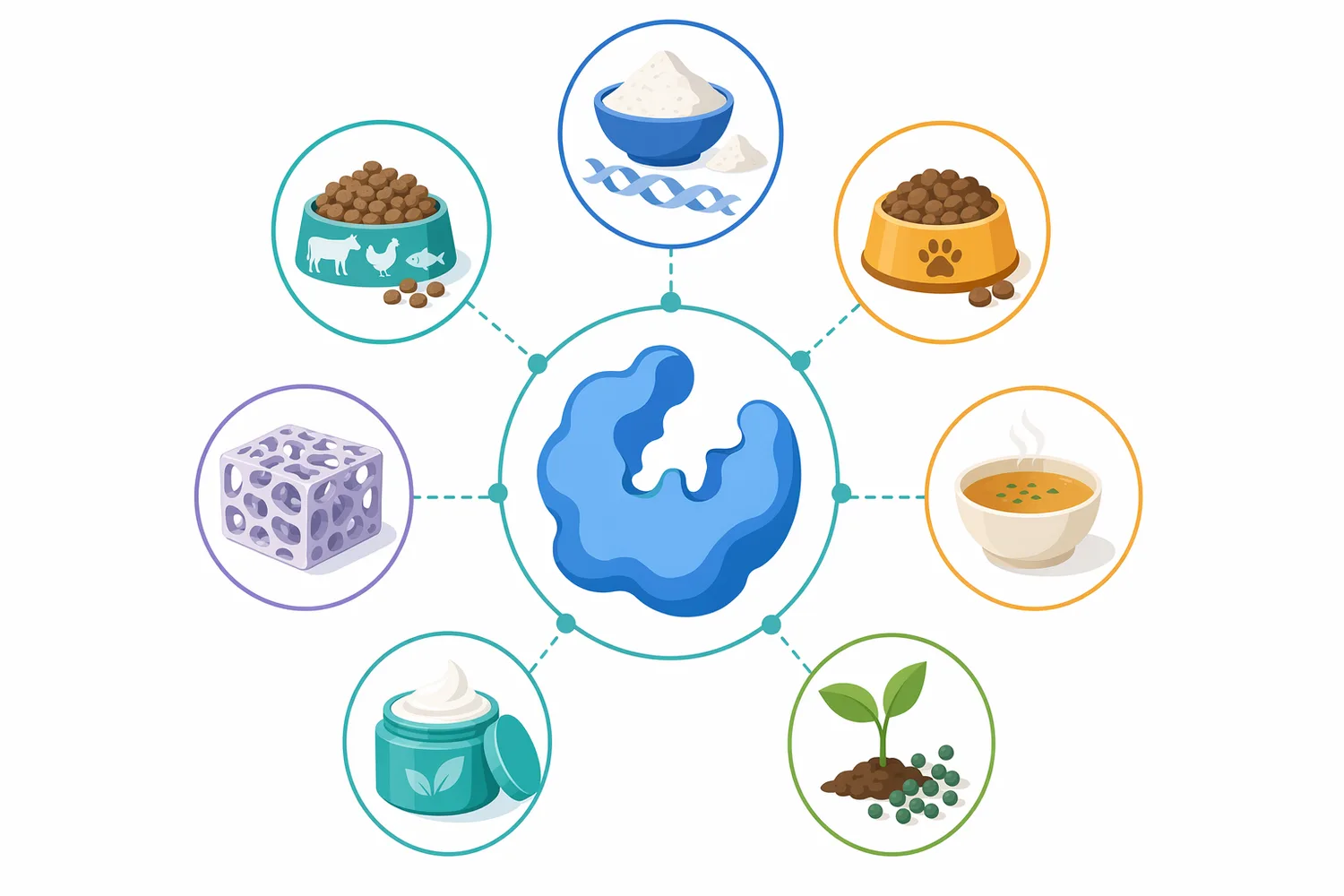
In food ingredient development, bone protein hydrolysates can support broths, soups, sauces, seasonings, meat analog flavor bases, collagen-derived ingredients, and peptide-containing blends. Their value comes from solubility, savory impact, peptide content, and the ability to carry nitrogen into formulations where intact bone protein would be insoluble or texturally unsuitable. Pork bone umami peptide research is especially relevant to savory systems because it connects bone-derived peptides with the perception mechanism behind umami taste [3].
In pet food and feed systems, hydrolysates may be useful where digestibility, palatability, and by-product utilization are important. Hydrolysis reduces large structural proteins into smaller peptides, which can improve dispersion and potentially support more uniform mixing in wet or dry systems. The same scientific caution applies: palatability and nutritional performance depend on the finished formulation, animal species, inclusion context, and processing history.
In peptide ingredient development, enzymatic hydrolysis allows bone by-products to be explored as sources of defined peptide fractions. Salmon, eel, and pork bone studies all show different functional directions—ACE inhibition, endothelial-cell model protection, and umami taste perception—arising from the same broad concept of converting bone proteins into smaller peptides [1]. These are not interchangeable outcomes; they demonstrate the breadth of what can be studied and developed from bone-derived hydrolysates.
Bone collagen is a major industrial target because collagen-derived materials can form gelatin-like or peptide-rich fractions after appropriate processing. When collagen is partially denatured and hydrolyzed, the triple-helical structure opens and the protein becomes more dispersible. Further proteolysis reduces molecular size and changes gelation, viscosity, water binding, and clarity.
For applications that need gelatin-like behavior, hydrolysis must be controlled; too little cleavage leaves insoluble or weakly extractable collagen, while too much cleavage may reduce gel strength and shift the product toward a collagen peptide hydrolysate rather than a gelatin fraction. For applications that need soluble peptides rather than gel-forming fractions, more extensive hydrolysis may be desirable. The difference is not the presence or absence of protein—it is the degree to which collagen’s long chains have been shortened and reorganized.
Fish by-products are often discussed in this context because they provide collagen-containing streams with valorization potential. Atlantic salmon waste reviews emphasize that salmon by-products can be converted into biofunctional hydrolysates, but they also note challenges such as raw-material variability and process control [6]. Bone Protein Hydrolyzing Enzyme fits into this wider valorization strategy as the proteolytic step that turns exposed collagenous protein into more usable soluble material.
Because bone contains mineral and fat as well as protein, hydrolysis outcomes are shaped by more than enzyme action alone. Mineral can buffer pH and physically shield protein. Fat can reduce wetting and create emulsified phases that complicate separation. Residual marrow and connective tissue can introduce color, odor, and oxidative stability challenges. These effects influence not only yield but also flavor, clarity, drying behavior, and the downstream usability of the hydrolysate.
Lipase pretreatment in beef bone protein extraction is a useful example of addressing matrix interference before or alongside protein recovery. By focusing on the fat component, the process improved the ability to extract and use beef bone protein in subsequent Maillard reaction applications [4]. In an industrial hydrolysis context, this reinforces a practical principle: protease works on protein, but non-protein components determine how easily that protein is reached and how cleanly the hydrolysate can be recovered.
Mineral can also be a feature rather than only a challenge. Bone-derived streams may contain calcium and phosphate alongside peptides. Depending on the intended application, processors may separate the mineral-rich residue, retain some mineral association, or develop peptide–mineral systems. However, any mineral-related performance depends on the final composition and processing route, not simply on the enzyme step.
After enzymatic hydrolysis, the process stream usually contains soluble peptides, suspended mineral particles, residual fat, insoluble connective tissue, and inactive or remaining enzyme protein. Downstream handling converts that mixed slurry into a usable ingredient or intermediate. Common operations include heating to stop enzymatic action, coarse separation of insoluble solids, clarification, concentration, drying, and blending into a finished format.
The enzyme’s role is upstream of these operations: it changes the protein so the downstream steps have a different material to work with. A slurry containing intact collagen and bone particles behaves very differently from a hydrolysate liquor containing smaller peptides. Filtration resistance, foaming tendency, bitterness, browning behavior, and powder hygroscopicity can all be affected by the extent of hydrolysis and the composition of the peptide fraction.
Research workflows on bone-derived peptides often continue beyond hydrolysis into identification, purification, docking, or functional testing. Eel bone collagen peptide work, for example, moved from preparation to peptide identification and mechanistic evaluation, demonstrating that hydrolysis is the starting point for a deeper peptide-development chain rather than the entire value-creation step [2].
Bone-derived peptide studies are useful, but they must be interpreted carefully. ACE inhibition, antioxidant behavior, cell-model protection, and taste-receptor interaction are different types of evidence. They are not equivalent to approved health claims, and they do not mean that any bone hydrolysate made with any protease will have the same performance.
For example, salmon bone and eel bone studies support the feasibility of generating ACE-inhibitory peptides from bone protein or collagen, but the reported effects are tied to identified peptides and experimental conditions [1]. Pork bone umami research supports the discovery of taste-active peptides, but taste performance in a finished broth, seasoning, or pet food depends on concentration, salt level, thermal history, matrix interactions, and competing flavors [3].
It is also important to separate industrial bone protein hydrolysis from medical bone regeneration. Literature on enzyme-based biomaterials, osteogenic differentiation, or regenerative bone systems belongs to a different field than converting animal bone by-products into hydrolysates. Those studies may involve bone biology, mineralized scaffolds, or cell signaling, whereas Bone Protein Hydrolyzing Enzyme is used as a processing enzyme for protein cleavage in raw-material valorization [8].
The primary benefit is value recovery. Bones that might otherwise be rendered, discarded, or used only as low-value mineral streams can become sources of soluble protein, collagen peptides, savory bases, or peptide-rich intermediates. This supports more complete use of animal raw materials and can reduce waste in fish, meat, poultry, and mixed animal-processing chains.
A second benefit is processability. Enzymatic hydrolysis can make bone protein easier to disperse, separate, pump, concentrate, and dry. Instead of trying to formulate insoluble collagenous fragments, the processor works with a liquid hydrolysate or dried peptide powder. This is particularly useful where the desired output is a liquid flavor base, soluble peptide ingredient, or powder blend.
A third benefit is functional optionality. Depending on substrate and process design, hydrolysates may be directed toward savory taste, collagen peptide positioning, bioactive peptide research, animal nutrition, or mineral-associated ingredient systems. The literature does not support treating these outcomes as automatic, but it does show that animal bone proteins can be a legitimate peptide source when enzymatically processed [6].
Enzymes.bio supplies Bone Protein Hydrolyzing Enzyme as an online B2B enzyme product sold directly by the 1 kg unit. The ordering model is straightforward: the buyer selects the product online, pays online, and the order is processed and shipped.
A Certificate of Analysis and Safety Data Sheet accompany the order. These documents support routine receiving, internal quality review, and safe handling procedures without turning the purchase into a custom development project.
Enzymes.bio is a supplier of enzyme products, not a manufacturer or testing laboratory. This article is intended to explain the enzyme’s industrial role, the mechanisms behind bone protein hydrolysis, and the evidence base for bone-derived peptide valorization in clear technical language.
Bone Protein Hydrolyzing Enzyme helps convert collagen-rich animal bone protein into smaller soluble peptides and hydrolysates. Mechanistically, it cleaves peptide bonds in exposed bone proteins, reducing molecular size, improving dispersion, and creating peptide mixtures that can be used in downstream ingredient, flavor, pet food, feed, or peptide-development applications.
The strongest relevant evidence shows that animal bone proteins can be enzymatically converted into functional peptide fractions: salmon bone proteins have yielded ACE-inhibitory peptides after trypsin hydrolysis, eel bone collagen has produced identified ACE-inhibitory peptides, and pork bone has been studied as a source of umami peptides with taste-perception mechanisms [1]. For commercial use, the value is not a guaranteed bioactivity claim; it is the practical ability to unlock protein from dense bone raw materials and turn it into a more usable hydrolysate stream.
Sold by the 1 kg unit, in stock and ready to ship. Order directly on our store — pay online and we process your order. A Certificate of Analysis and Safety Data Sheet are included with every order.
Buy Bone Protein Hydrolyzing Enzyme →Numbered in order of first citation. Open-access sources, each verified reachable at publication; citation numbers in the text link here.