
Invertase is a sucrose-converting enzyme used to make invert sugar syrup: it hydrolyzes table sugar into glucose and fructose, changing the syrup’s sugar profile without relying on harsh acid inversion. For bee-feeding syrup, invertase is relevant because it can pre-convert sucrose into simpler sugars before feeding, while the final syrup remains a prepared feed syrup rather than honey.
Enzymes.bio supplies invertase powder directly online by the 1 kg unit. Buyers purchase through the website, pay online, and the order is processed and shipped with the accompanying Certificate of Analysis and Safety Data Sheet.
CAS 9001-57-4 identifies invertase, an enzyme also known in scientific literature as β-fructofuranosidase or sucrose-hydrolyzing invertase. Its primary commercial function is straightforward: it acts on sucrose in water and cleaves the glycosidic bond that joins glucose and fructose, producing an invert sugar mixture rather than a sucrose-only syrup [1].
In syrup applications, that conversion matters because sucrose is a disaccharide, while glucose and fructose are monosaccharides with different behavior in solution. Once sucrose is hydrolyzed, the syrup is no longer simply dissolved table sugar; it becomes a glucose-fructose syrup whose sweetness perception, crystallization tendency, and handling characteristics can differ from the starting sucrose solution [2].
Invertase is widely discussed in food enzyme technology because sucrose conversion is a high-value, practical reaction in sweetener systems, confectionery, bakery, beverage, and related food applications. Reviews of enzyme technology in the food industry describe enzymes such as invertase as tools for more targeted processing, where the enzyme changes a specific substrate under comparatively mild conditions [3].
For Enzymes.bio customers, the product positioning is intentionally simple: this is a food-additive enzyme powder supplied in a 1 kg unit for buyers who need invertase for sucrose inversion, including preparation of sugar syrup for feeding bees. Enzymes.bio is a supplier, not a manufacturer or analytical laboratory, and product documentation is provided with the order for the purchased item.
Plain sugar syrup for bees is typically based on sucrose dissolved in water. Invertase changes that syrup by converting part or all of the sucrose into glucose and fructose, depending on processing conditions and contact time; this is the same fundamental hydrolysis reaction investigated in sucrose-invertase studies across food and bioprocessing literature [4].
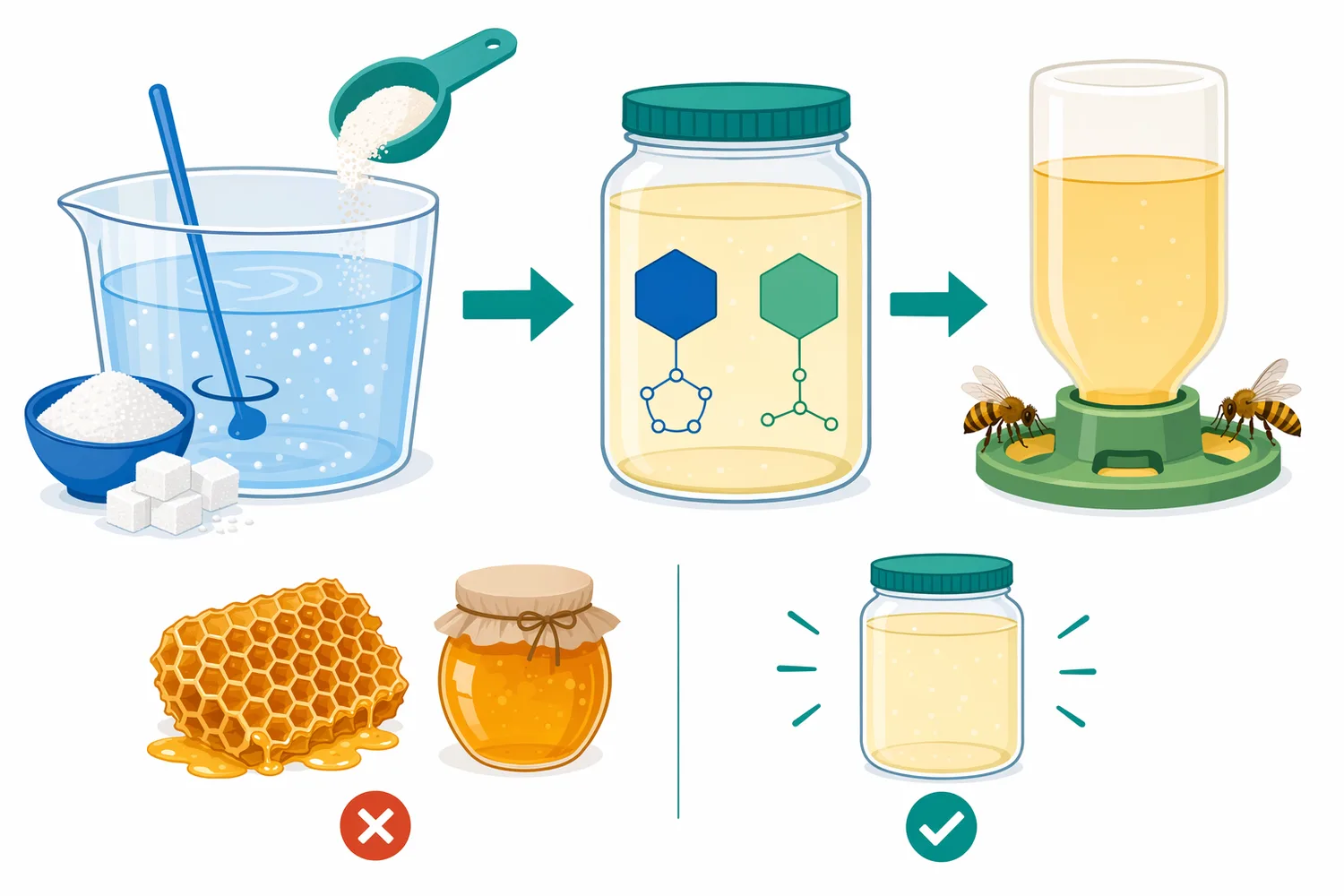
For bee-feeding use, the practical idea is not to create honey. Honey contains many components beyond simple sugars, including organic acids, minerals, aroma compounds, enzymes, and plant-derived constituents. Invertase-treated sugar syrup should be understood as a prepared feed syrup whose main difference from ordinary sucrose syrup is the pre-hydrolyzed sugar profile.
Scientific work on adult honeybees commonly uses sugar syrup as a feeding vehicle, which reflects its established role as a controllable carbohydrate feed in bee studies. For example, research on adult Apis mellifera has used sugar syrup as the base feed when evaluating supplemented feeding treatments, showing that syrup feeding is a recognized experimental and practical format even when the study focus is not invertase itself [5].
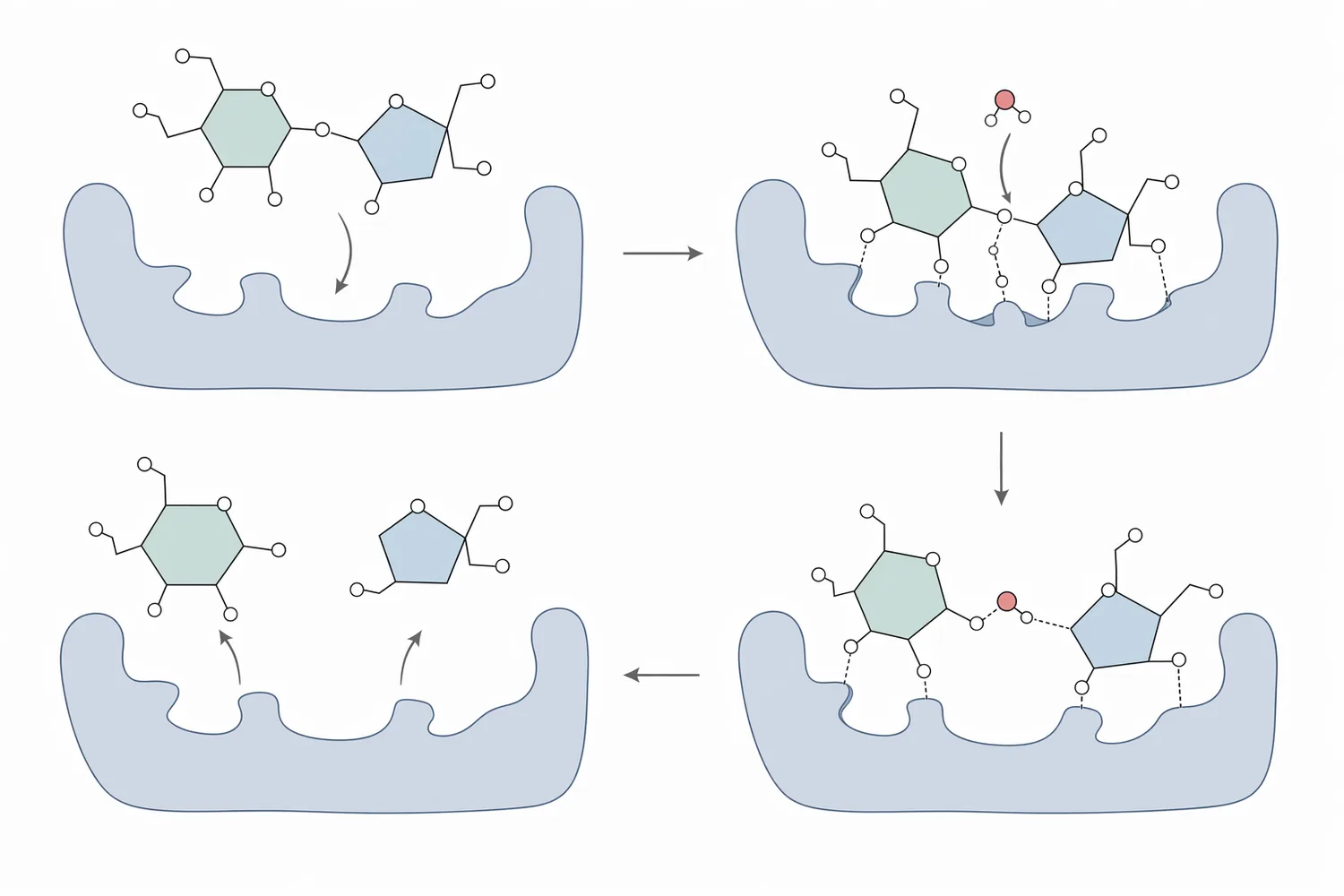
The advantage of using invertase in this context is biochemical specificity. Instead of depending only on any later biological conversion after feeding, the syrup maker can create an inverted syrup beforehand by letting the enzyme act on dissolved sucrose. The actual change is molecular: the sucrose molecule is split into its two component sugars, glucose and fructose, through an enzyme-catalyzed reaction with water [6].
Sucrose is built from one glucose unit and one fructose unit linked through a glycosidic bond. Invertase recognizes sucrose as a substrate and catalyzes cleavage at that bond, using water to complete the hydrolysis reaction; the products are free glucose and free fructose [7].
A simplified reaction is:
sucrose + water → glucose + fructose
The reason this reaction needs a catalyst in practical syrup making is that sucrose hydrolysis without a catalyst is slow under mild conditions. Acid can accelerate hydrolysis, but acid inversion is a chemical route that can be harder to control and may introduce unwanted side reactions. Invertase provides a biological catalyst whose active site is shaped to bind sucrose and promote cleavage of the fructosyl linkage more selectively [7].
Mechanistically, invertase belongs to the broader class of glycoside hydrolases. These enzymes lower the energy barrier for breaking sugar bonds by positioning the substrate correctly and using catalytic amino-acid residues in the active site to assist bond cleavage and product release. Computational work on GH32 cell-wall invertase has examined sucrose hydrolysis as a defined catalytic pathway, reinforcing that the reaction is not a vague “sugar breakdown” but a specific enzyme-substrate transformation [7].
Once hydrolysis proceeds, the physical syrup changes because the dissolved carbohydrate population changes. Sucrose molecules are replaced by smaller glucose and fructose molecules; this increases the number of dissolved sugar molecules and alters sweetness, osmotic behavior, and crystallization dynamics. In confectionery literature, these changes are the reason invertase is useful for transforming sucrose-rich systems into softer or less crystallization-prone sugar phases over time [2].
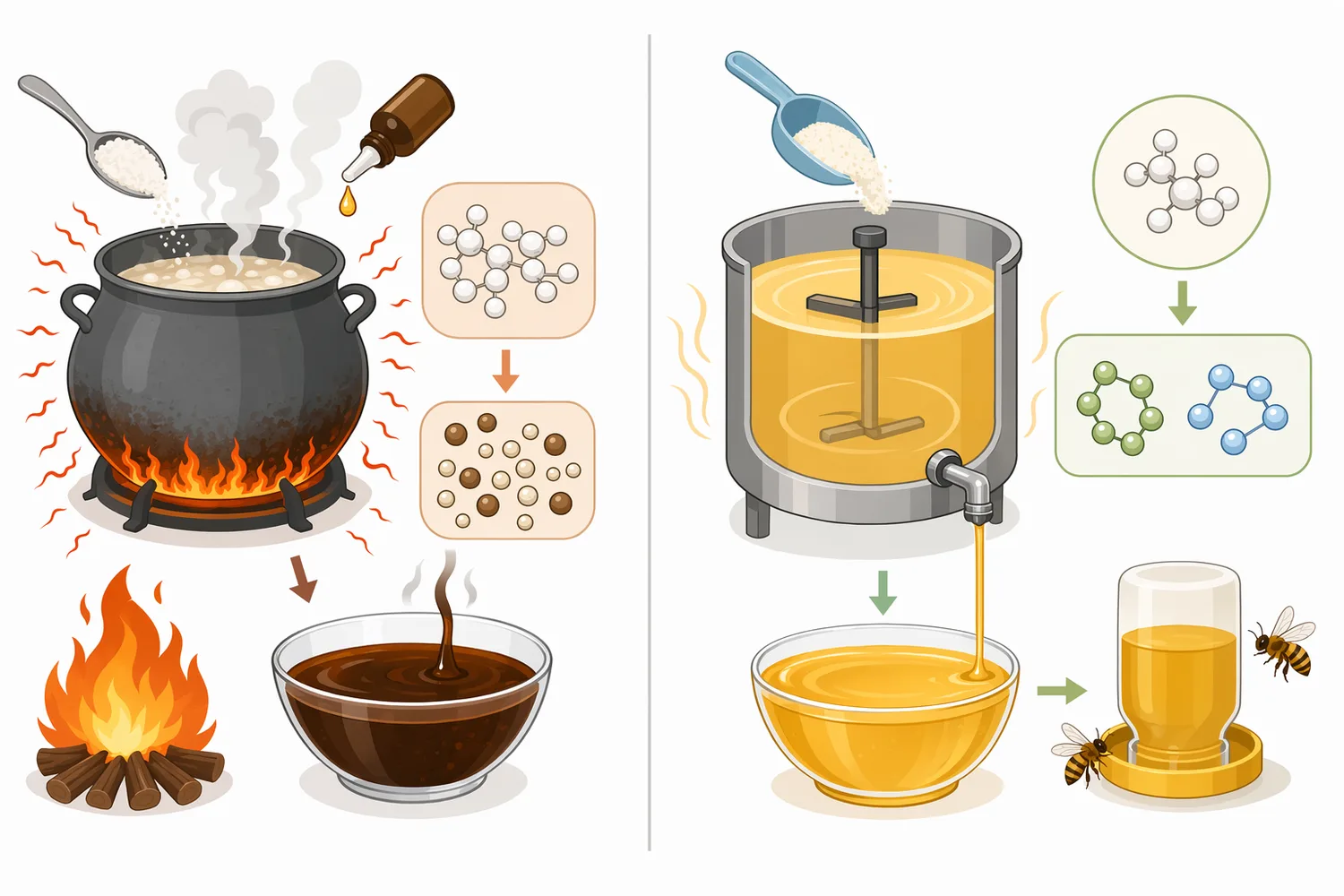
Sucrose can be inverted by acid, by heat under acidic conditions, or by invertase. The end target—glucose plus fructose—may look similar on paper, but the process route affects controllability and the risk of side effects in syrup quality.
Acid inversion works by exposing sucrose to acidic conditions strong enough to catalyze bond cleavage. That can be effective, but it is less selective than an enzyme-catalyzed route and can be accompanied by color development, flavor changes, or formation of degradation products if conditions become too severe. Enzyme-based food processing is often valued because it can achieve targeted molecular changes under milder conditions than traditional chemical treatments [3].
Invertase acts more specifically on sucrose. In normal syrup use, its practical value comes from targeting the sucrose bond without requiring aggressive acid treatment. The result is a gentler route to invert sugar syrup, especially useful where the buyer wants a controlled carbohydrate conversion rather than a broader chemical modification of the syrup matrix [1].
| Route to invert sugar | What drives sucrose cleavage | Practical character | Main consideration |
|---|---|---|---|
| Acid inversion | Acid-catalyzed hydrolysis | Chemical route; can be fast under strong conditions | Less selective and more dependent on acidity, heat, and exposure time |
| Enzymatic inversion with invertase | Enzyme active site catalyzes sucrose hydrolysis | Mild biological route; targeted to sucrose conversion | Requires conditions that preserve enzyme activity during the reaction |
| No pre-inversion | Sucrose remains the main dissolved sugar | Simplest syrup preparation | Syrup is not pre-converted into glucose and fructose |
This comparison does not mean acid inversion is never used. It means invertase is preferred when the desired change is specific sucrose hydrolysis and the process goal is to avoid unnecessary harshness. In food technology, enzymes are frequently used for exactly this reason: they allow a defined transformation of a food substrate while preserving other quality attributes as much as practical [8].
The key syrup change is the replacement of sucrose by glucose and fructose. This matters because fructose is perceived as sweeter than sucrose in many food systems, while glucose behaves differently from both sucrose and fructose in crystallization and water-binding contexts. Invert sugar’s practical value in confectionery and syrup systems is therefore not just that it is “broken-down sugar,” but that the product mixture behaves differently from the original sucrose solution [2].
Crystallization control is one of the major reasons invert sugar is used in food applications. Sucrose molecules can align into crystals under suitable concentration and temperature conditions; when a portion of sucrose is converted into glucose and fructose, the mixed sugar composition disrupts uniform sucrose crystal growth. This is why invertase has long been associated with confectionery applications such as soft centers, where controlled sucrose breakdown changes texture after production [2].
In syrup handling, glucose-fructose mixtures can also influence viscosity, water activity behavior, and sweetness balance. The exact outcome depends on concentration and processing history, but the mechanism is concrete: the dissolved solids are no longer one dominant disaccharide, and the monosaccharides interact with water differently. Research on sucrose hydrolysis by invertase consistently treats the reaction extent and product formation as central performance outcomes [6].
For bee-feeding syrup, the most relevant point is the sugar profile rather than confectionery texture. Invertase allows the syrup maker to start with economical sucrose and transform it into a more inverted syrup before use. That can be useful when the desired feed syrup is not a plain sucrose solution but a mixture containing glucose and fructose produced by enzymatic hydrolysis [4].
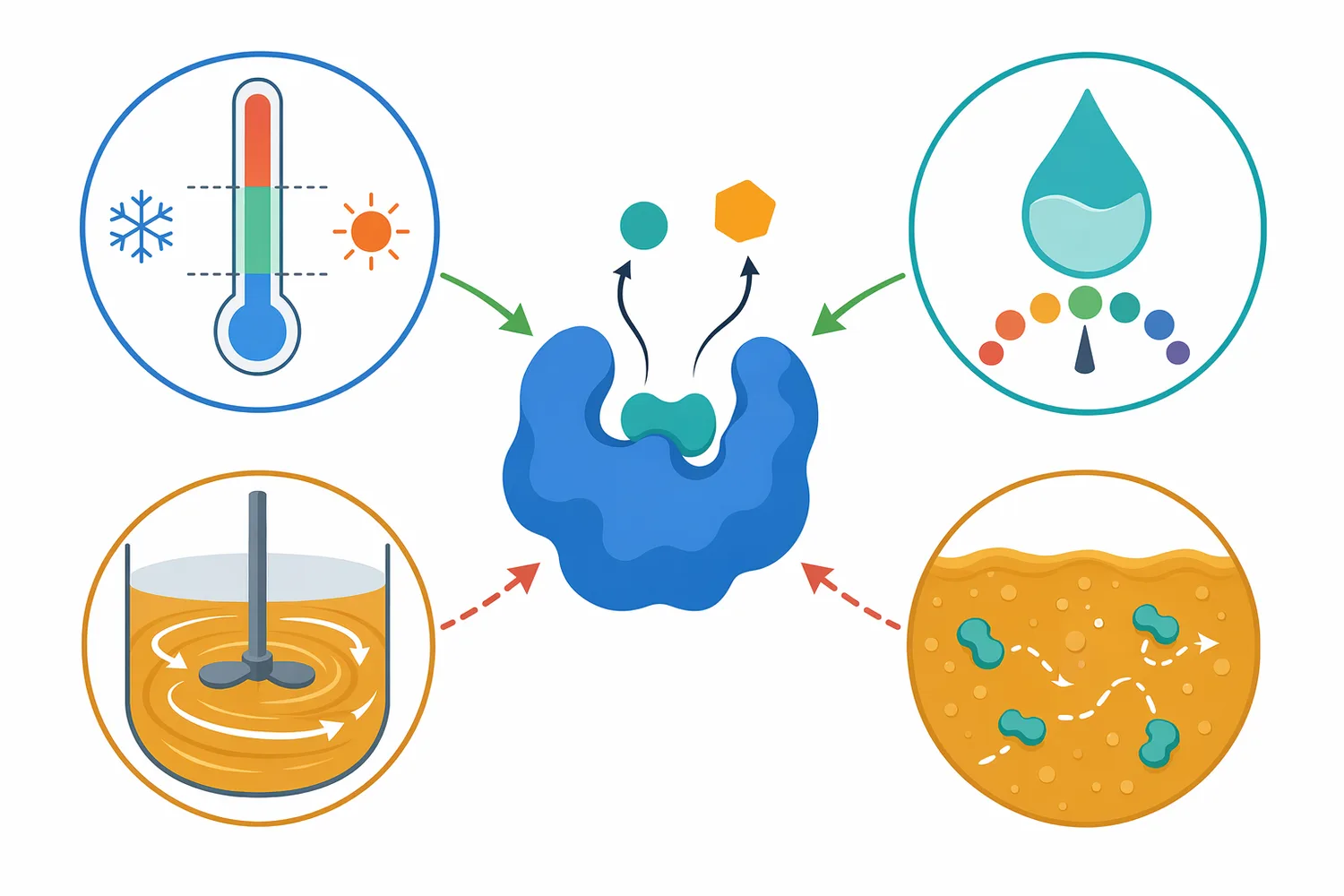
Invertase performance depends on the surrounding syrup environment because enzymes are folded proteins. Their catalytic sites work best when temperature, acidity, water availability, and substrate concentration allow the enzyme to remain properly structured and allow sucrose molecules to diffuse into the active site. Studies of invertase-catalyzed sucrose hydrolysis routinely evaluate factors such as substrate concentration, enzyme behavior, and kinetic response because these variables change how quickly glucose and fructose appear [1].
Temperature is important because warming generally increases molecular motion and can speed up reaction rates up to a point. Beyond the enzyme’s tolerance, however, heat disrupts the protein structure and reduces catalytic function. Work on invertase hydrolysis has examined activation energy, half-life, and yield, demonstrating that the reaction is temperature-sensitive rather than a simple mixing step [6].
Acidity also matters because invertase active-site residues must be in the right chemical state to catalyze sucrose cleavage. If the syrup is too far outside the enzyme’s workable pH environment, the active site can bind or react less effectively, and the folded enzyme may become less stable. This is one reason invertase is commonly treated as a process enzyme rather than as an ordinary dry ingredient: it acts only when the solution environment supports catalysis [9].
Substrate concentration influences both contact frequency and syrup properties. More sucrose gives the enzyme more substrate, but very concentrated syrups can become viscous, reducing diffusion and slowing how readily sucrose molecules reach the enzyme. Research on ultrasound-assisted invertase hydrolysis explicitly investigated substrate and enzyme parameters because mass transfer and reaction kinetics can affect observed conversion [1].
Impurities can also interfere. Studies on sugar beet molasses have investigated inhibitory factors affecting sucrose hydrolysis with yeast and invertase, which is relevant because real sugar streams may contain minerals, non-sugar solids, colorants, or other components that differ from refined sucrose syrup [10]. For buyers preparing syrup from clean table sugar, this is usually less complex than molasses processing, but it explains why enzyme performance can vary across sugar sources.
Invertase acts at the molecular level in an aqueous environment. Dry sucrose crystals and dry enzyme powder do not provide the same molecular mobility as dissolved syrup; water is required both as the reaction medium and as a reactant in the hydrolysis reaction. In membrane-reactor research on sucrose hydrolysis, invertase performance is studied in solution because dissolved sucrose must reach the enzyme for glucose and fructose to be generated [4].
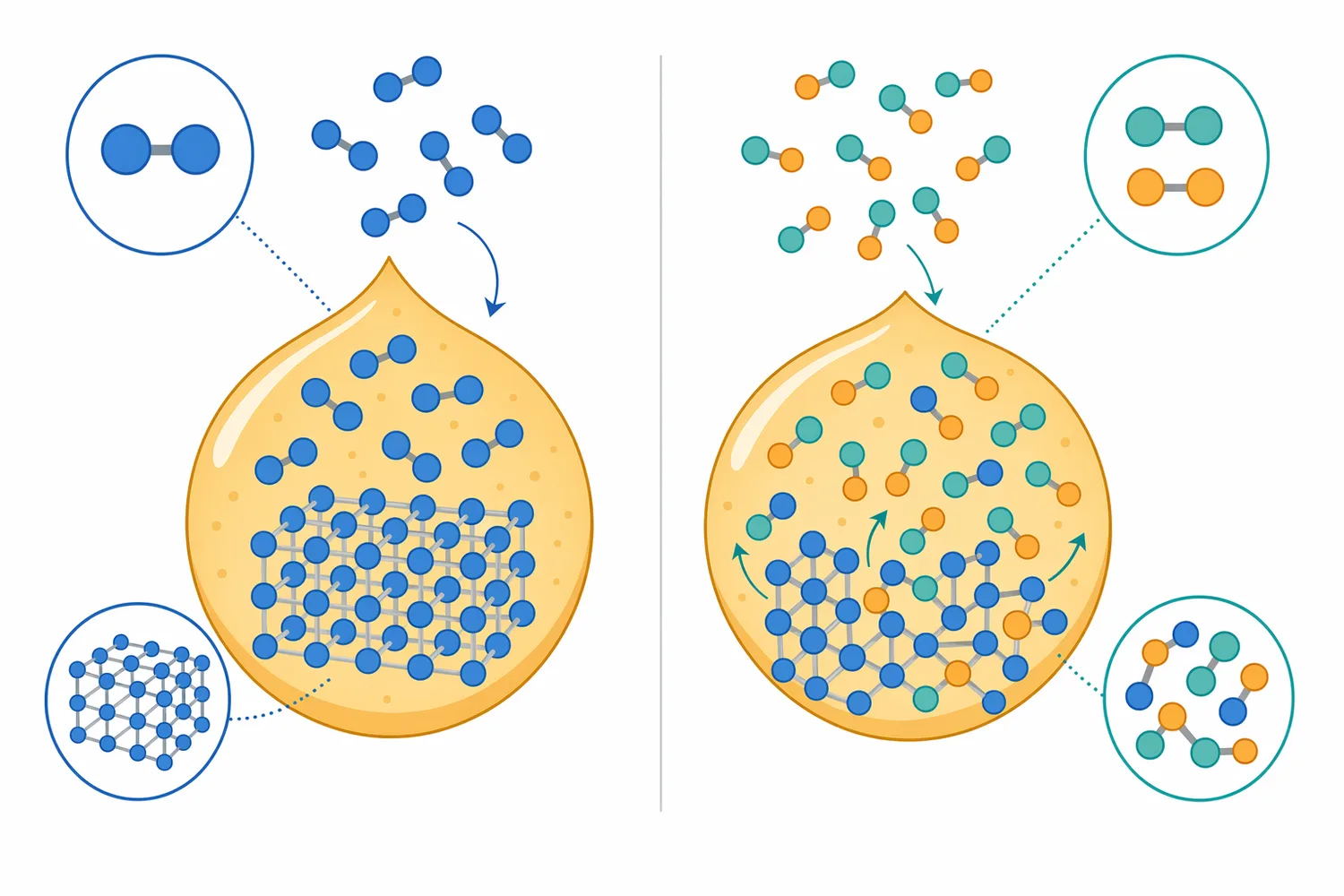
In a properly dissolved syrup, sucrose molecules are dispersed in water and can repeatedly encounter the enzyme’s active site. The enzyme is not consumed in the reaction; instead, it catalyzes many sucrose-cleavage events until conditions, available substrate, or enzyme stability limit the process. Educational work using invertase as a model enzyme highlights this catalytic nature, where reaction rate depends on substrate availability and enzyme behavior rather than on the enzyme being a stoichiometric ingredient [9].
This is also why mixing can matter in practice. The enzyme has to be distributed through the syrup so that localized high-sugar or low-enzyme zones do not slow conversion. The underlying mechanism is not mysterious: better distribution improves contact between dissolved sucrose molecules and active enzyme sites, helping the reaction proceed more uniformly throughout the syrup.
The strongest evidence for invertase use is the repeated experimental focus on sucrose hydrolysis. Studies have examined invertase-catalyzed hydrolysis in batch systems, ultrasound-assisted systems, and membrane reactor configurations, all centered on the conversion of sucrose into glucose and fructose [1].
Membrane-reactor work is especially useful for understanding the enzyme as a practical biocatalyst. In that setting, researchers studied sucrose hydrolysis by invertase while evaluating how reactor configuration affected enzyme performance. The key point for syrup users is that invertase is not merely described theoretically; it has been tested in engineered systems designed around continuous or controlled sucrose conversion [4].
Kinetic and stability studies add another layer of confidence. Research on activation energy, half-life, and yield for invertase-catalyzed sucrose hydrolysis shows that investigators can quantify how the enzyme behaves under defined conditions and how process variables affect conversion. That is important because it frames invertase as a controllable processing aid rather than an undefined sweetener additive [6].
Mechanistic studies further support the same conclusion from a molecular perspective. Computational investigation of GH32 invertase hydrolysis describes the enzyme’s catalytic role in carbohydrate metabolism and models how sucrose is transformed through the enzyme pathway. For technical buyers, this connects observed syrup conversion with a plausible molecular mechanism [7].
Invertase is most familiar in confectionery because it can gradually liquefy or soften sucrose-rich fillings. In products such as fondant-centered chocolates, sucrose breakdown increases the proportion of glucose and fructose, changing the internal texture after the product has been formed. Review literature on invertase in confectionery identifies this as one of the enzyme’s important food industry uses [2].
The same reaction supports invert sugar syrup production. Although a bee-feeding syrup is not a confectionery filling, both applications rely on the identical biochemical event: sucrose hydrolysis. The difference is the product goal. In confectionery, the goal may be texture and mouthfeel; in bee-feeding syrup, the goal is a pre-inverted carbohydrate feed syrup.
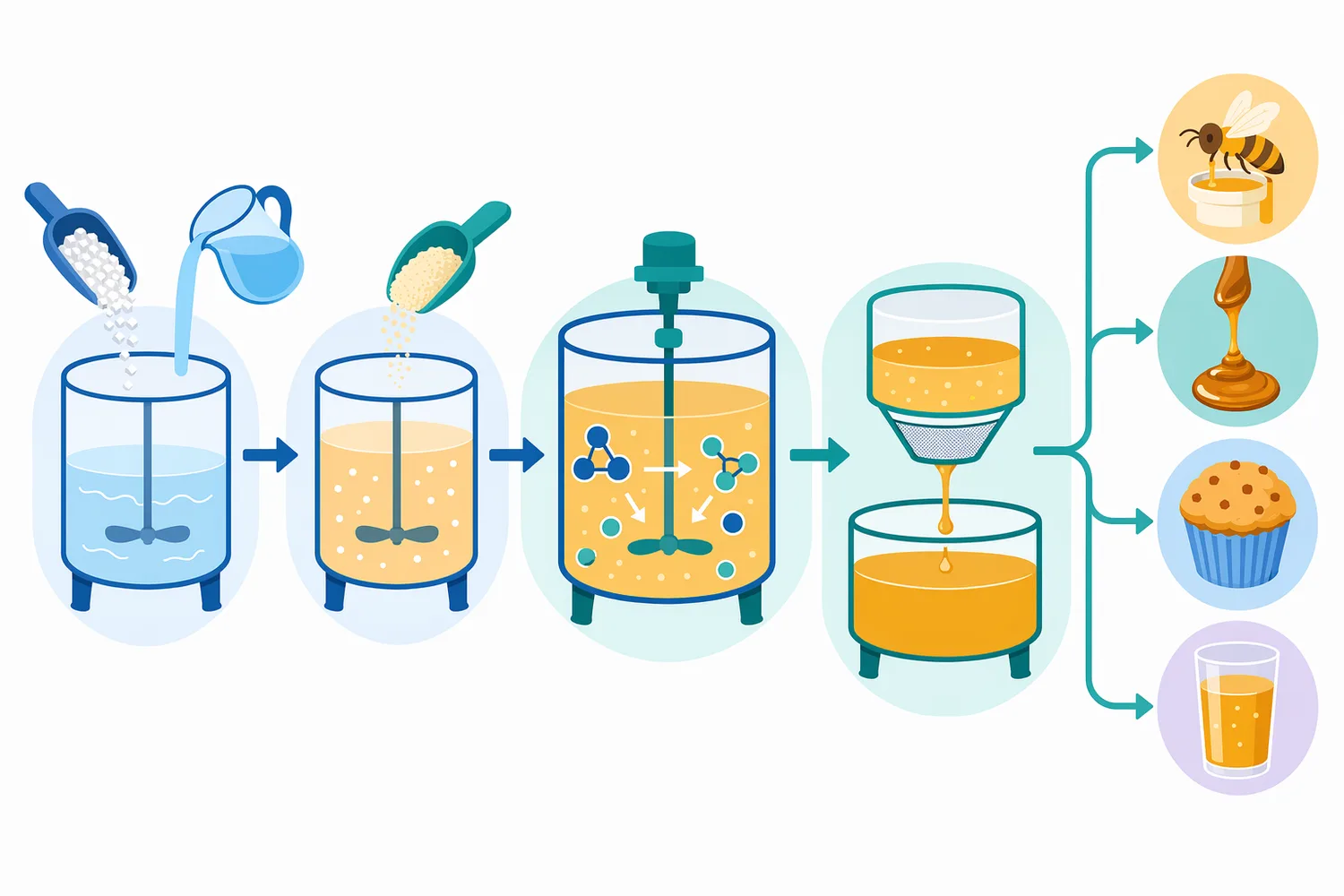
Invertase also appears in broader food enzyme discussions because it is part of a larger shift toward enzyme-assisted processing. Food enzyme technology uses catalysts to transform carbohydrates, proteins, and lipids more selectively than many purely chemical processes. Invertase fits that model because it performs a defined carbohydrate reaction with a well-understood substrate [3].
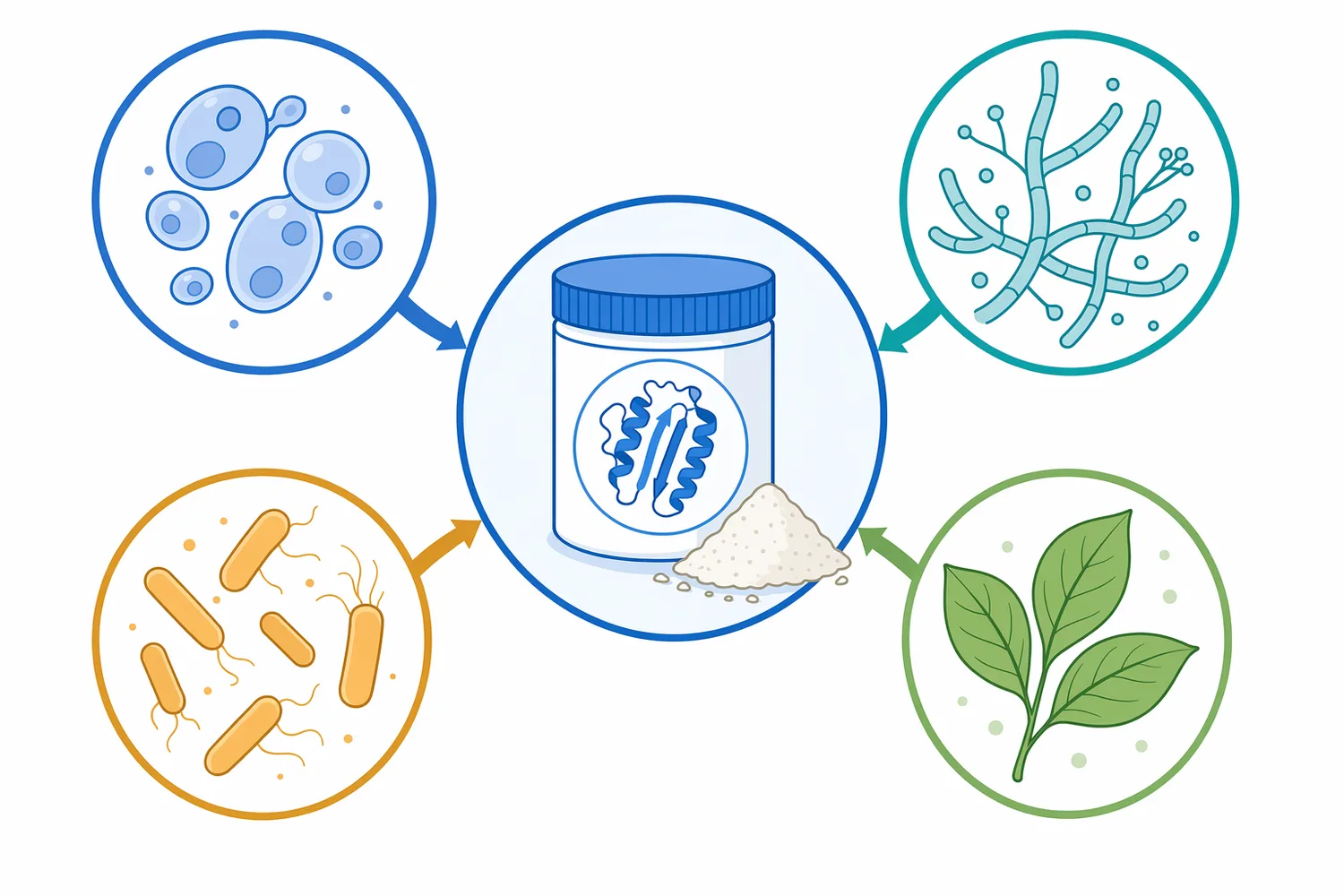
Microbial invertases are also widely studied for food industry utilization. Comparative work on Bacillus and Enterobacter has examined invertase production for food industry use, while fungal systems such as Aspergillus niger have also been investigated as sources of invertase activity [11]. These studies support the broader point that invertase is an established enzyme category in food biotechnology.
Invertase occurs naturally in many organisms, including yeasts, fungi, bacteria, and plants. Different sources can produce enzymes with different stability and performance characteristics, but the central commercial function remains sucrose hydrolysis. Research on a xerophilic Aspergillus niger strain, for example, describes an invertase gene and production of the enzyme in a recombinant system, illustrating how microbial invertases are studied for practical enzyme supply [12].
Yeast invertase is historically important because yeast systems were among the earliest sources connected with sucrose inversion. Modern studies continue to use yeast invertase as a model for enzyme kinetics and hydrolysis behavior, which is why it often appears in educational and applied biochemistry research [9].
Fungal invertases are also significant in industrial enzyme literature. Studies of invertase biosynthesis during fermentation by Aspergillus niger strains reflect the continuing interest in microbial production routes for food-relevant enzymes [13]. For the customer buying a supplied powder, the operational takeaway is simply that invertase is a well-established enzyme class with multiple biological sources.
Some advanced applications immobilize invertase on supports so the enzyme can be reused or integrated into controlled reactors. Immobilized enzyme technology is widely explored in the food industry because attachment to a support can improve handling, separation, and reuse in engineered processes [14]. That is more relevant to industrial process design than to simple syrup preparation, but it shows the depth of applied invertase research.
Invertase-treated syrup can be useful in bee-feeding preparation because it pre-converts sucrose into glucose and fructose. That is the justified technical claim. It should not be overstated as a claim that the syrup becomes honey, prevents disease, improves colony performance, or replaces good beekeeping practice.
The bee-feeding relevance is best understood as carbohydrate preparation. Sugar syrup is a common feeding matrix in honeybee studies, and controlled syrup composition allows researchers and beekeepers to provide energy in a consistent liquid form [5]. Invertase changes that matrix by altering the carbohydrate species present before feeding.
This distinction is important for responsible use. Bees encounter and process sugars biologically, but prepared syrup is still a human-made feed. Invertase helps with sucrose inversion; it does not add pollen nutrients, micronutrients, antimicrobial systems, or the botanical complexity of nectar and honey.
For buyers purchasing invertase powder for this purpose, the value is therefore process-based: it supports preparation of an inverted sugar syrup from sucrose. The enzyme is a tool for hydrolysis, not a complete nutrition system or a veterinary treatment.
Invertase is sometimes grouped broadly with food enzymes, but its role is narrower than many buyers assume. It does not digest starch like amylases, and it does not break proteins like proteases. Its relevant substrate is sucrose.
| Enzyme type | Main substrate | Main reaction | Typical syrup relevance |
|---|---|---|---|
| Invertase | Sucrose | Splits sucrose into glucose and fructose | Produces invert sugar syrup from table sugar |
| Amylase | Starch and dextrins | Breaks starch chains into smaller carbohydrates | Used in grain or starch-based syrup production |
| Glucoamylase | Starch-derived dextrins | Releases glucose from chain ends | Used where starch hydrolysate is converted toward glucose |
| Protease | Proteins | Breaks peptide bonds | Not a sucrose-inversion enzyme |
This comparison helps prevent misapplication. If the starting material is ordinary sucrose, invertase is the enzyme that directly addresses the sucrose bond. If the starting material is grain starch, a different enzyme system would be required before glucose-rich syrup can be produced; studies on malt-based syrup production, for example, focus on enzymatic hydrolysis of malted grains rather than sucrose inversion [15].
The same distinction applies to biomass-derived syrups. Research on rice husk or wheat bran syrup production involves carbohydrase systems acting on complex plant materials, not simply invertase acting on refined sucrose [16]. Invertase is therefore best matched to sucrose-based syrup preparation.
After invertase treatment, the central measurable change is the ratio of sucrose to glucose and fructose. As hydrolysis proceeds, sucrose decreases and the two monosaccharides increase. This change is the defining feature of invert sugar syrup and the basis for its use in food applications [2].
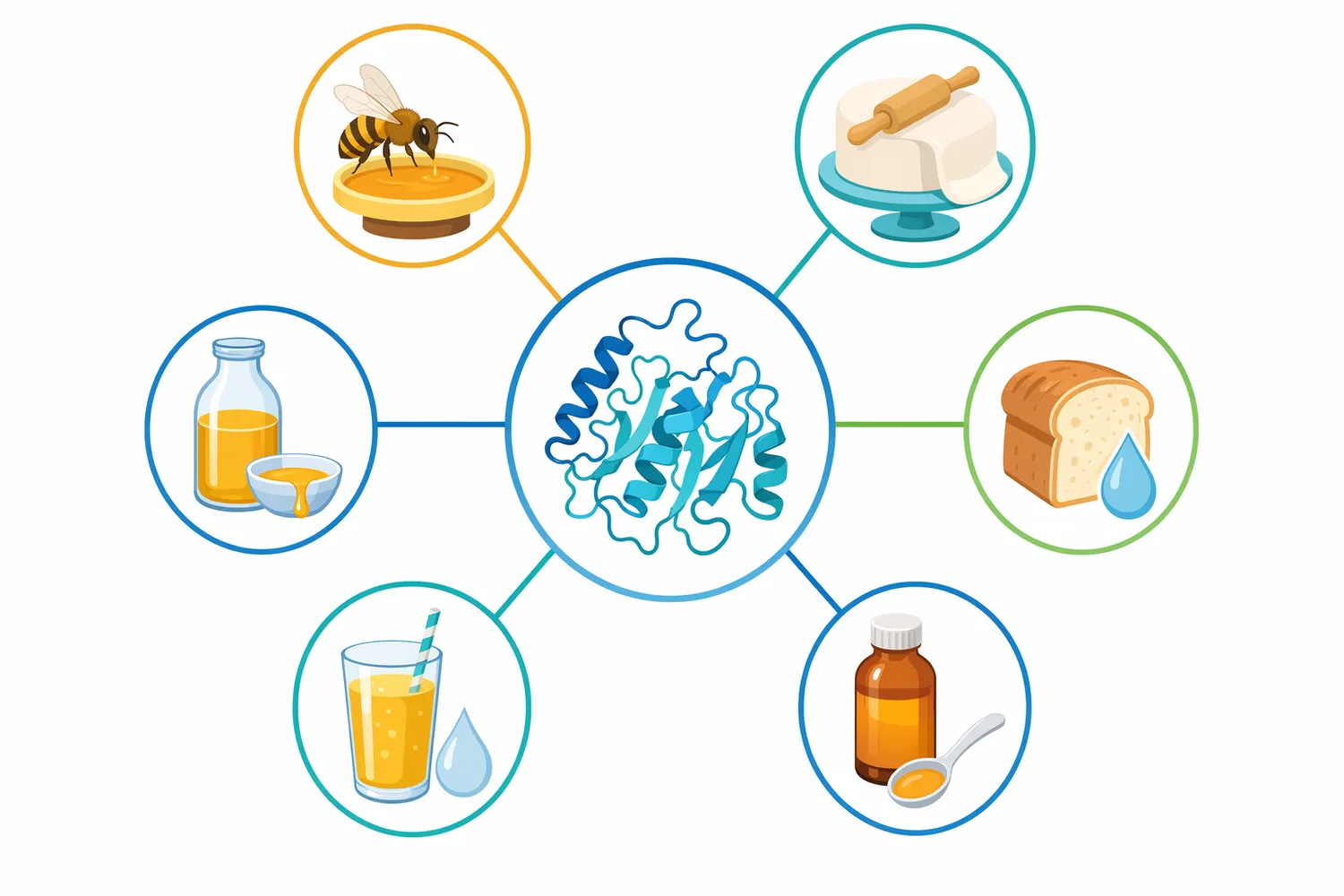
What does not automatically change is equally important. Invertase does not remove contaminants from poor-quality sugar, sterilize syrup, add minerals, or correct unsuitable storage. It does not transform syrup into nectar or honey. It only catalyzes a specific carbohydrate reaction.
Syrup color and flavor are typically influenced by sugar quality, heat exposure, acidity, concentration, and storage conditions. Enzymatic inversion can help avoid the harsher conditions associated with strong acid inversion, but the final syrup still depends on how the syrup is prepared and handled. Food enzyme technology emphasizes that enzymes are processing tools used within a broader process, not substitutes for overall process control [3].
If the syrup is heated excessively after enzyme addition, the enzyme may lose functionality because its protein structure can be damaged. If the syrup is too concentrated to mix well, contact between enzyme and sucrose can be limited. If the sugar source contains inhibitory materials, hydrolysis can be affected, as shown by research into inhibitory factors in sugar beet molasses [10].
Enzymes.bio supplies this invertase powder in a 1 kg online-purchase format. The buyer adds the product to the cart, pays online, and the order is processed and shipped. The Certificate of Analysis and Safety Data Sheet are included with the order documentation.
This article is intended to explain the enzyme’s function, not to replace product documentation or prescribe a universal syrup recipe. Sucrose inversion depends on the syrup environment, and the same enzyme can behave differently when sugar concentration, temperature history, acidity, mixing, and reaction time differ. Controlled studies of invertase hydrolysis show that these process variables influence reaction rate and conversion [1].
For straightforward sucrose syrup preparation, the core principle is to let invertase contact fully dissolved sucrose under enzyme-compatible conditions. The reaction then progresses as sucrose molecules enter the enzyme’s active site and are hydrolyzed to glucose and fructose. Kinetic studies of invertase use the same principle: product formation reflects the interaction among substrate concentration, active enzyme, and process conditions [9].
The result buyers are seeking is an inverted syrup suitable for their intended feed or food-related application. For bee-feeding syrup, that means a prepared carbohydrate syrup with a glucose-fructose component created from sucrose. The enzyme supports that conversion; the buyer remains responsible for preparing and using feed syrup appropriately for their own beekeeping context.
The evidence for invertase as a sucrose-hydrolyzing enzyme is strong. Multiple research directions—kinetic studies, reactor studies, mechanistic modeling, and food application reviews—treat sucrose-to-glucose/fructose conversion as the defining invertase reaction [4].
The evidence for invertase in food applications is also strong. Confectionery use, invert sugar production, and broader enzyme-assisted food processing are well documented in reviews and applied studies. These uses all depend on the same biochemical conversion, even when the final products differ [2].
The bee-feeding application should be described more narrowly. Sugar syrup is a recognized feeding medium for honeybee research and practice, and invertase can alter sucrose syrup by pre-hydrolyzing sucrose. However, the provided evidence does not support broad health or performance claims for every colony, season, climate, or feeding program [5].
That balanced view is the most reliable way to understand the product. Invertase powder is not a general-purpose “bee health” additive; it is a specific enzyme for converting sucrose into glucose and fructose. Used for that purpose, it is supported by a deep body of food enzyme and sucrose hydrolysis literature.
CAS 9001-57-4 invertase powder is used to make invert sugar syrup by catalyzing the hydrolysis of sucrose into glucose and fructose. In bee-feeding syrup preparation, this allows sucrose syrup to be pre-inverted before use, creating a glucose-fructose sugar profile rather than leaving the syrup as plain dissolved table sugar.
Enzymes.bio supplies invertase powder directly online by the 1 kg unit. After online payment, the order is processed and shipped, and the Certificate of Analysis and Safety Data Sheet are provided with the order.
Sold by the 1 kg unit, in stock and ready to ship. Order directly on our store — pay online and we process your order. A Certificate of Analysis and Safety Data Sheet are included with every order.
Buy Cas 9001-57-4 Food Additives 1Kg Enzyme Invertase Powder Bulk Invertase Enzyme 30,000 U/G - Making Sugar Syrup For Feeding Bees →Numbered in order of first citation. Open-access sources, each verified reachable at publication; citation numbers in the text link here.