
Catalase enzyme for wastewater treatment is used to decompose residual hydrogen peroxide in industrial effluent into water and oxygen. For facilities that use hydrogen peroxide in bleaching, sterilization, cleaning, oxidation, or disinfection steps, catalase provides a targeted way to reduce residual oxidant load without adding sulfite, thiosulfate, or salt-based neutralizer residues. The core reaction is:
[ 2H_2O_2 \rightarrow 2H_2O + O_2 ]
Enzymes.bio supplies catalase enzyme for industrial peroxide-removal applications, including wastewater-related use, with direct online ordering by the 1 kg unit. After online purchase, the order is processed and shipped, and the product is supplied with a Certificate of Analysis and Safety Data Sheet .
Hydrogen peroxide is widely used because it is a strong oxidizing agent that can bleach, disinfect, sterilize, and oxidize organic contaminants under comparatively clean conditions. The same property that makes it useful upstream can create problems downstream: if residual hydrogen peroxide remains in wastewater, it can continue reacting with organic matter, treatment chemicals, dyes, microbial biomass, and sensitive process streams.
In a wastewater context, hydrogen peroxide is not simply a dissolved impurity. It is an active oxidant. Residual peroxide can affect biological treatment systems, interfere with downstream chemical control, and create avoidable variability in effluent quality. Catalase is relevant because it targets that specific oxidant and converts it into products that are already compatible with water-based systems: water and oxygen [1].
Peroxide-containing wastewater can come from textile bleaching, pulp and paper bleaching, food and beverage sanitation, dairy-related peroxide treatment in applicable markets, pharmaceutical cleaning, aseptic packaging operations, hospital disinfection streams, chemical oxidation, and general industrial cleaning. Across these applications, the common issue is not the original reason for using peroxide, but the need to remove it once its useful work is complete.
Catalase is an oxidoreductase enzyme classified as EC 1.11.1.6. Its defining biochemical function is the catalytic decomposition of hydrogen peroxide into water and oxygen, which is why it is used wherever peroxide must be removed without introducing a stoichiometric chemical reducing agent [1].
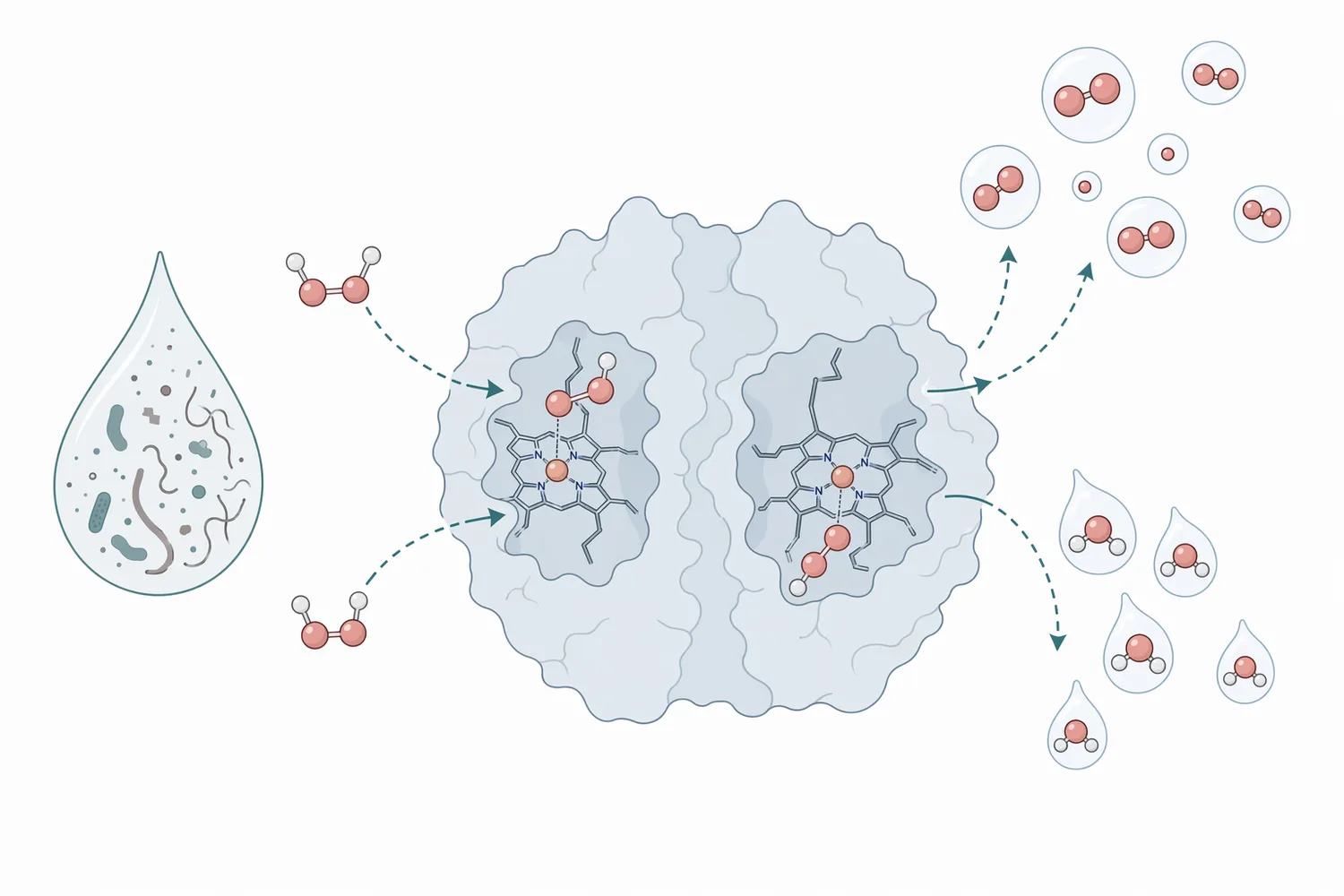
At the molecular level, catalase works by cycling its active site between oxidation states. In simplified terms, one hydrogen peroxide molecule oxidizes the catalase active site and is reduced to water; a second hydrogen peroxide molecule then reduces the active site back to its starting state while oxygen gas is released. The net result is that two peroxide molecules are converted into two water molecules and one oxygen molecule [1].
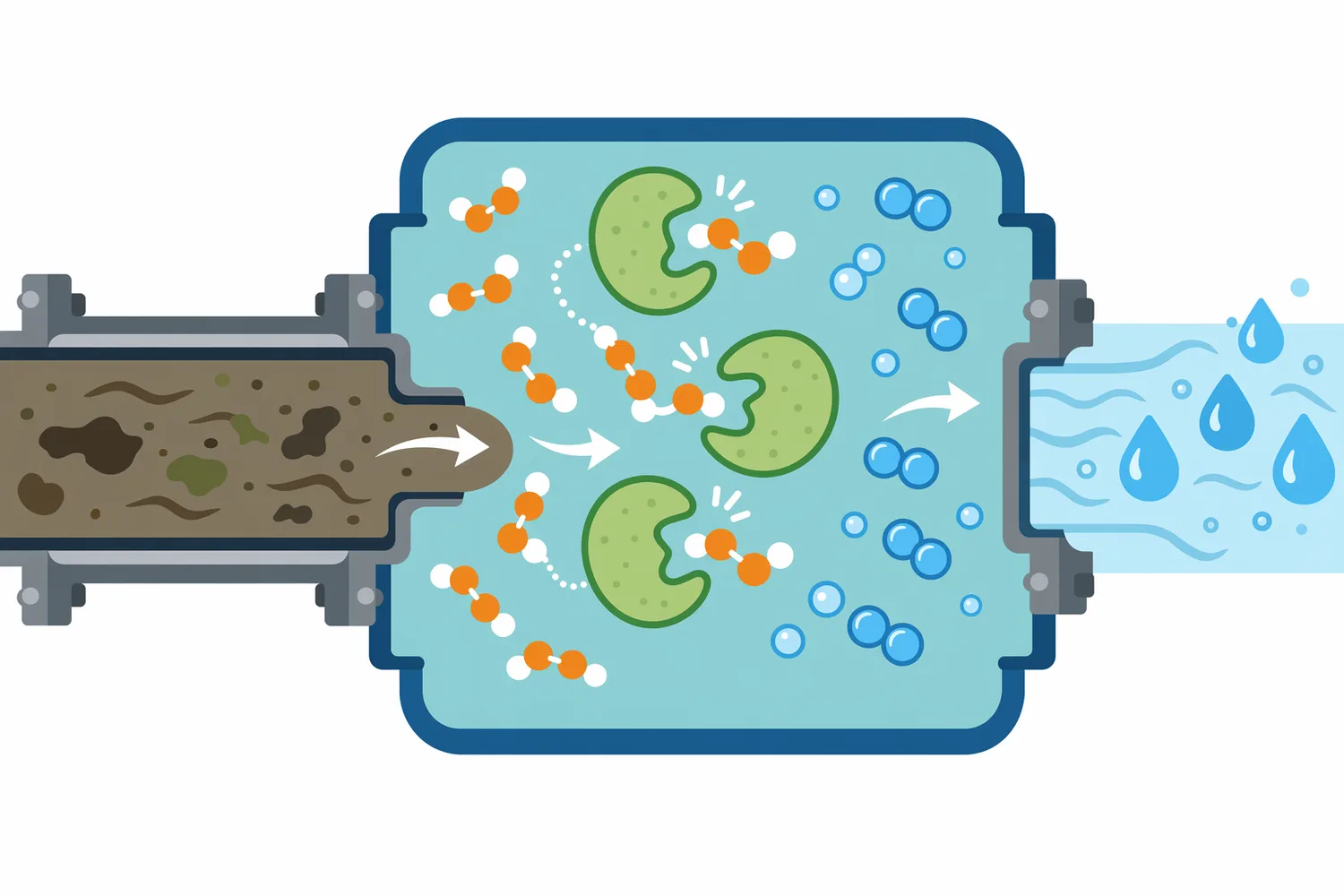
This mechanism matters in wastewater treatment because catalase does not “mask” peroxide or convert it into a different dissolved salt. It changes the peroxide molecule itself. The peroxide’s reactive oxygen–oxygen bond is broken through the enzyme’s catalytic cycle, and the oxidizing capacity is discharged as molecular oxygen while the hydrogen atoms become part of water [1].
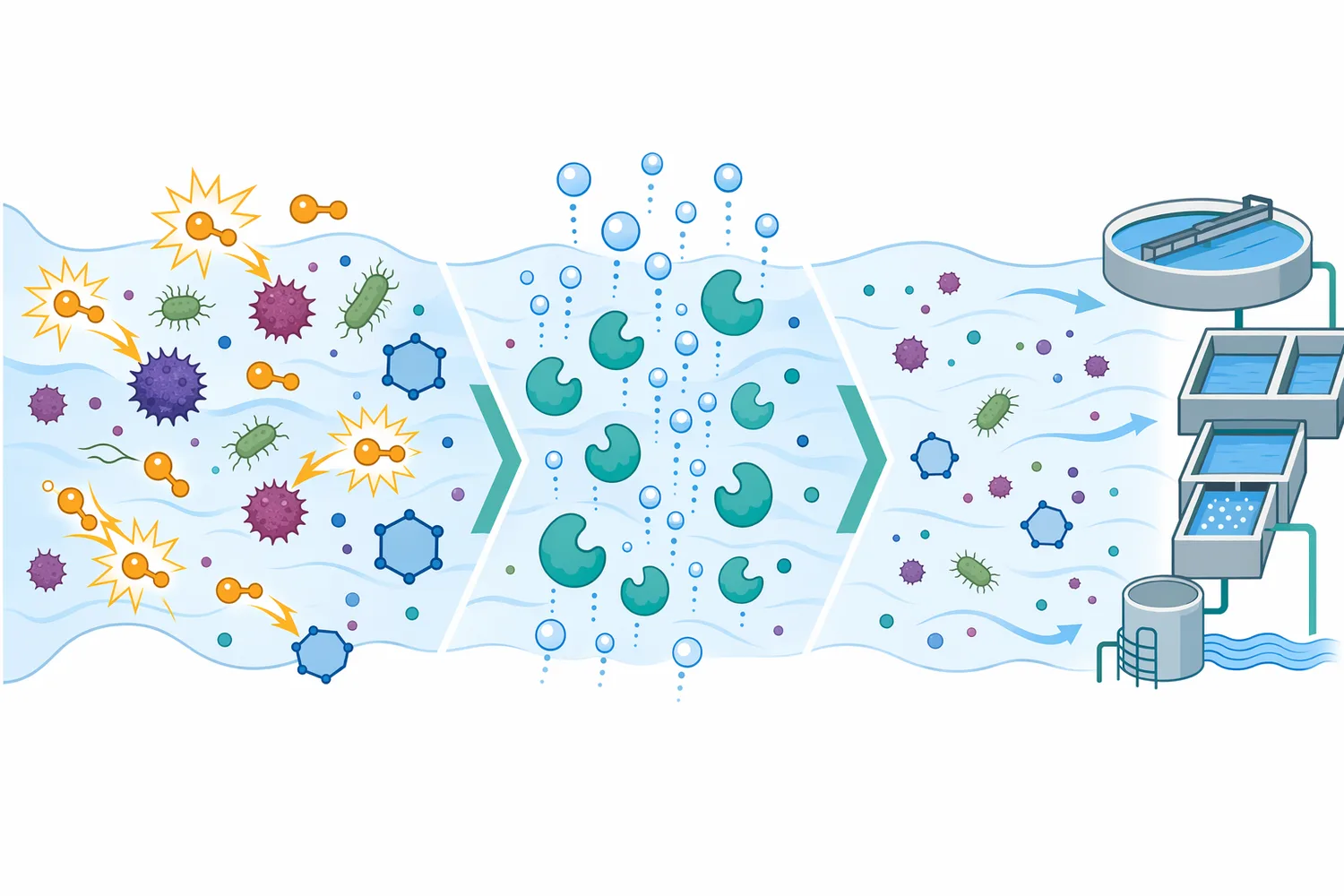
The visible sign of the reaction is often bubbling or foaming as oxygen is released. In a controlled process stream, that gas evolution is not a separate contaminant; it is the expected product of peroxide decomposition. Proper mixing helps expose peroxide-containing water to the enzyme so the reaction can proceed consistently throughout the treated volume.
Because catalase is a catalyst, it is not consumed in the same direct stoichiometric way as sulfite-type neutralizers. However, it is still a protein and can lose activity when exposed to unsuitable conditions such as excessive heat, extreme pH, strong incompatible chemicals, or inhibitory contaminants. In real wastewater, the enzyme’s useful performance depends on the stream conditions as well as the peroxide load.
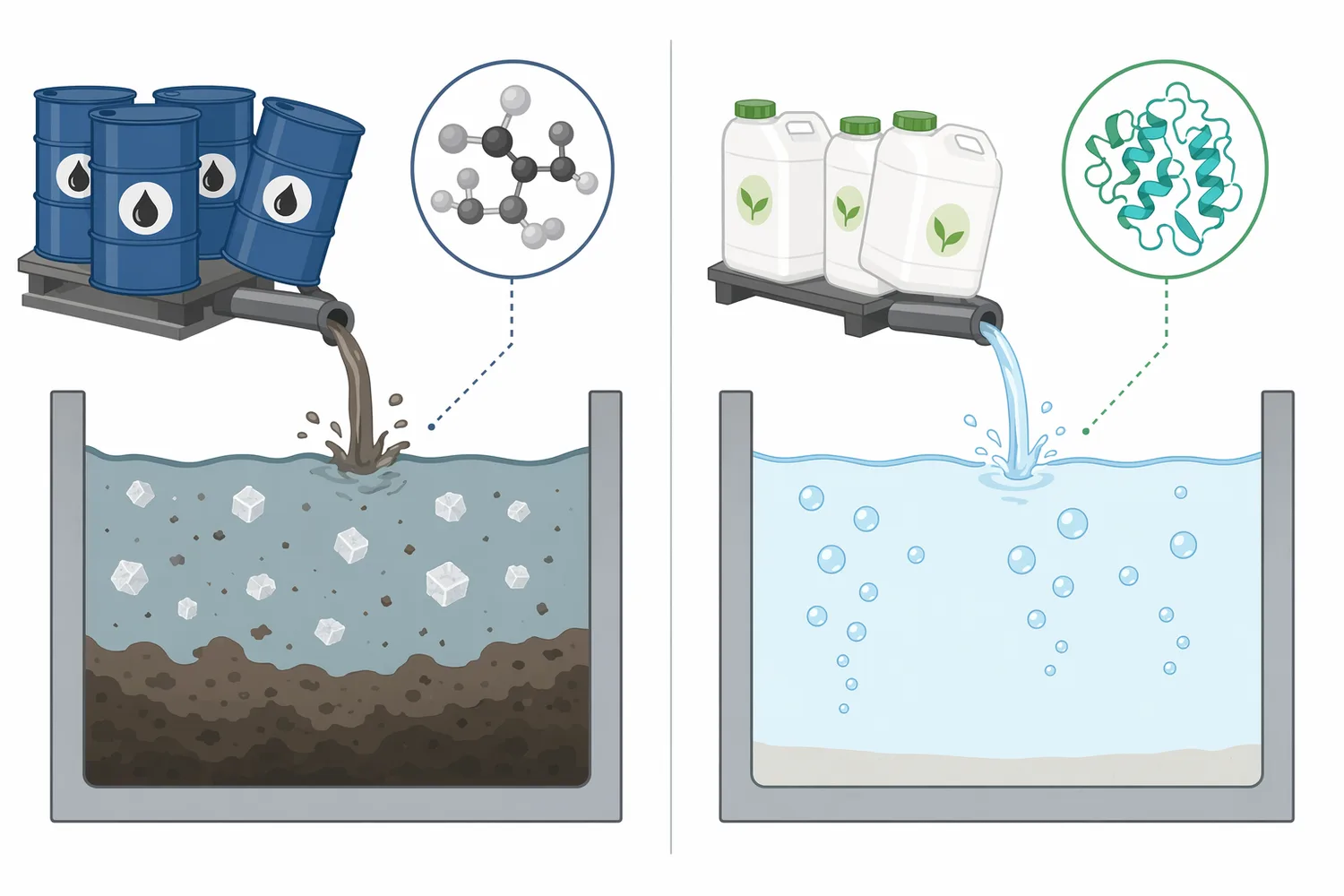
Traditional peroxide neutralization often uses reducing chemicals. These can be effective, but they introduce their own reaction products into the wastewater. Depending on the chemistry used, those byproducts may contribute to dissolved solids, sulfate or sulfite-related load, or other secondary wastewater constituents.
Catalase follows a different logic. It accelerates the natural decomposition pathway of hydrogen peroxide into water and oxygen, so the neutralization step does not add a chemical reducing agent that later has to be managed as part of the effluent. This is the central reason catalase is often described as a cleaner or lower-residue peroxide-removal method [1].
| Peroxide-control approach | What happens to hydrogen peroxide | Main products or residues | Practical wastewater implication |
|---|---|---|---|
| Catalase enzyme | Hydrogen peroxide is enzymatically decomposed through the catalase catalytic cycle | Water and oxygen | Reduces residual oxidant without adding neutralizer-derived salts [1] |
| Sulfite or related reducing agents | Hydrogen peroxide is chemically reduced by a stoichiometric reagent | Dissolved reaction products such as sulfate-related species, depending on reagent | Effective, but can add to dissolved solids or secondary chemical load |
| Passive decomposition | Hydrogen peroxide breaks down naturally over time | Water and oxygen | May be too slow or unpredictable for production wastewater flows |
| Heat or harsh chemical destruction | Peroxide is accelerated toward decomposition under stronger conditions | Depends on process conditions and chemicals used | May be unsuitable for sensitive streams or routine effluent handling |
The table does not mean catalase is the right answer for every stream. It means catalase is specifically attractive when the treatment goal is peroxide removal with minimal introduction of new dissolved residues. For wastewater systems where salt load, sulfate load, biological treatment stability, or downstream reuse matters, that distinction can be operationally important.
Textile bleaching is one of the clearest industrial examples. Hydrogen peroxide is commonly used to bleach cotton and other fibers, but residual peroxide can interfere with subsequent dyeing because it can oxidize dyes or create uneven shade development. Catalase is used to remove that residual peroxide after bleaching, reducing oxidant carryover into dyeing or wastewater streams.
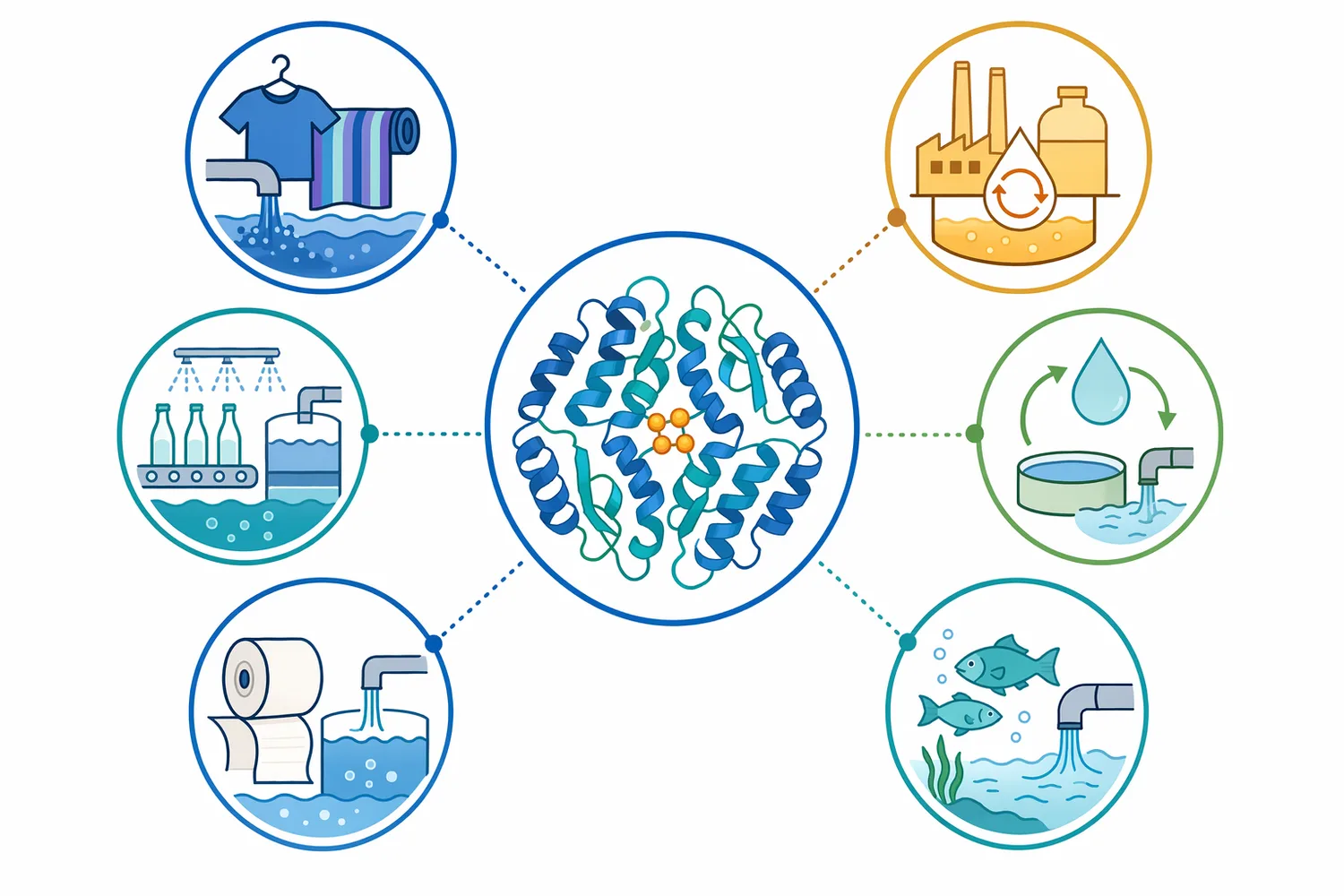
From a wastewater perspective, catalase can reduce the amount of active peroxide entering mill effluent. It can also reduce reliance on chemical reducing agents that would otherwise add dissolved residues. The practical benefit is not that catalase removes dyes or replaces the full effluent treatment plant; its role is narrower and more precise: it decomposes leftover peroxide before that peroxide affects later process or treatment steps.
Food and beverage operations may use hydrogen peroxide in equipment sanitation, surface treatment, aseptic packaging, or controlled antimicrobial steps. After the peroxide has served its purpose, residual oxidant may need to be removed before fermentation, discharge, reuse, or other handling steps. Catalase is used in these peroxide-removal contexts because its reaction products are water and oxygen.
In wastewater from food operations, avoiding unnecessary chemical residues can be valuable because many plants rely on biological treatment. Residual oxidants can stress treatment biology, while reducing chemicals can shift the effluent’s dissolved load. Catalase addresses the peroxide directly rather than adding a second chemical burden to solve the first one.
In some markets and historical applications, hydrogen peroxide has been used in dairy-related preservation or cold-treatment contexts. Where residual peroxide must be removed after treatment, catalase is relevant because it decomposes peroxide without leaving a chemical neutralizer residue in the treated stream.
For wastewater and side streams, the same chemistry applies. Catalase does not make a dairy wastewater stream “treated” in the broader sense; it does not remove fat, protein, lactose, nutrients, or total organic load by itself. Its value is in eliminating residual hydrogen peroxide that could otherwise interfere with product handling, fermentation, biological treatment, or discharge management [1].
Hydrogen peroxide is also used in bleaching operations in pulp and paper processing. Where peroxide-containing water leaves a bleaching stage, residual peroxide may continue oxidizing materials or interfere with downstream process control. Catalase can be applied as a peroxide-decomposition step when that oxidant is no longer wanted.
This is especially relevant in operations that want to reduce oxidant carryover rather than add further chemical reducing load. The enzyme’s function remains the same regardless of whether the upstream peroxide came from textile bleaching, pulp bleaching, or another oxidation process: catalase converts hydrogen peroxide into water and oxygen [1].
Pharmaceutical, hospital, and chemical manufacturing streams may contain peroxide from sterilization, cleaning, disinfection, or oxidation steps. These wastewater streams can be chemically complex, so catalase should be understood as a targeted peroxide-removal tool rather than a complete wastewater-treatment solution.
In these applications, the surrounding wastewater matrix matters. Other disinfectants, solvents, strong oxidants, metals, surfactants, or extreme pH conditions may affect enzyme performance. Where the stream is compatible with enzymatic treatment, catalase offers a focused route to reduce hydrogen peroxide before the water proceeds to the next treatment stage.
The most important change is the loss of residual oxidizing capacity from hydrogen peroxide. Before treatment, peroxide can continue reacting with organic compounds, dyes, microorganisms, and treatment additives. After catalase treatment, the peroxide molecule has been decomposed into water and oxygen, so that specific oxidant is no longer present as hydrogen peroxide [1].
The second change is gas formation. Oxygen is released as the peroxide decomposes. Depending on the peroxide concentration and the way the stream is mixed, this may appear as visible bubbles, foam, or increased dissolved oxygen before oxygen equilibrates with the surrounding environment. That oxygen evolution is an expected consequence of the reaction, not a separate chemical additive.
The third change is what does not happen. Catalase does not add sodium, sulfate, chloride, or other salt ions as part of peroxide destruction. That distinguishes it from many chemical neutralization methods and is the reason catalase is often preferred where secondary residue formation is a concern.
The fourth point is scope. Catalase does not directly remove suspended solids, heavy metals, nutrients, dyes, surfactants, solvents, oils, fats, or total COD as a general treatment claim. If those materials are present, they still require the appropriate treatment steps. Catalase’s job is specifically the decomposition of hydrogen peroxide.
Catalase is generally used under mild aqueous conditions because it is a protein enzyme. In practical wastewater handling, that means performance is influenced by the condition of the water stream: temperature, pH, mixing, peroxide concentration, and the presence of incompatible chemicals all affect how quickly and completely peroxide is decomposed.
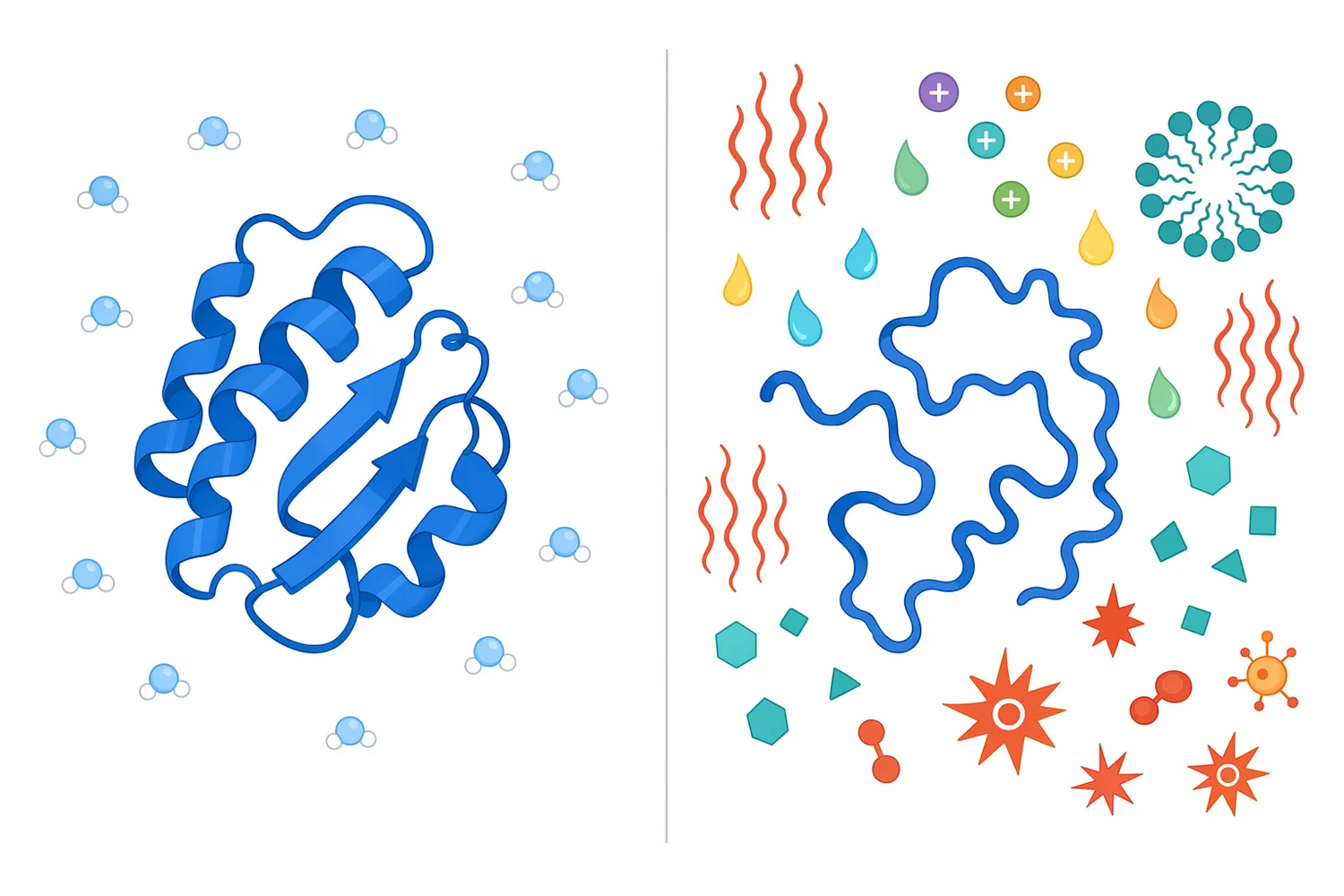
A near-neutral, moderate-temperature stream is usually more enzyme-friendly than a hot, highly acidic, highly alkaline, or chemically aggressive stream. This is not unique to catalase; most enzymes have a range of conditions where their folded structure and active site remain stable enough to function. If the protein structure is disrupted, the catalytic cycle slows or stops [1].
Mixing is important because the enzyme can only act where it contacts hydrogen peroxide. In a tank, pipe, or side-stream treatment arrangement, uneven mixing can leave pockets of residual peroxide even when the average conditions appear suitable. Good contact between catalase and the peroxide-containing water supports more predictable decomposition.
Contact time depends on the stream. Higher peroxide levels, colder water, poor mixing, or inhibitory contaminants can increase the time needed for peroxide reduction. Conversely, compatible water chemistry and effective mixing allow the enzyme’s rapid peroxide-decomposition function to be expressed more efficiently [1].
Wastewater composition can also influence performance. Metals, strong oxidants other than hydrogen peroxide, aggressive disinfectants, surfactants, solvents, and extreme pH can reduce enzyme activity or stability. For that reason, catalase should be applied where the main treatment target is residual hydrogen peroxide and where the broader wastewater chemistry is not strongly hostile to enzymes.
Verification remains part of responsible operation. Facilities that discharge, reuse, dye, ferment, or otherwise process water after peroxide removal should confirm that residual peroxide has been reduced according to their own process controls and regulatory requirements. Catalase supports peroxide destruction, but it does not replace the need for normal wastewater monitoring.
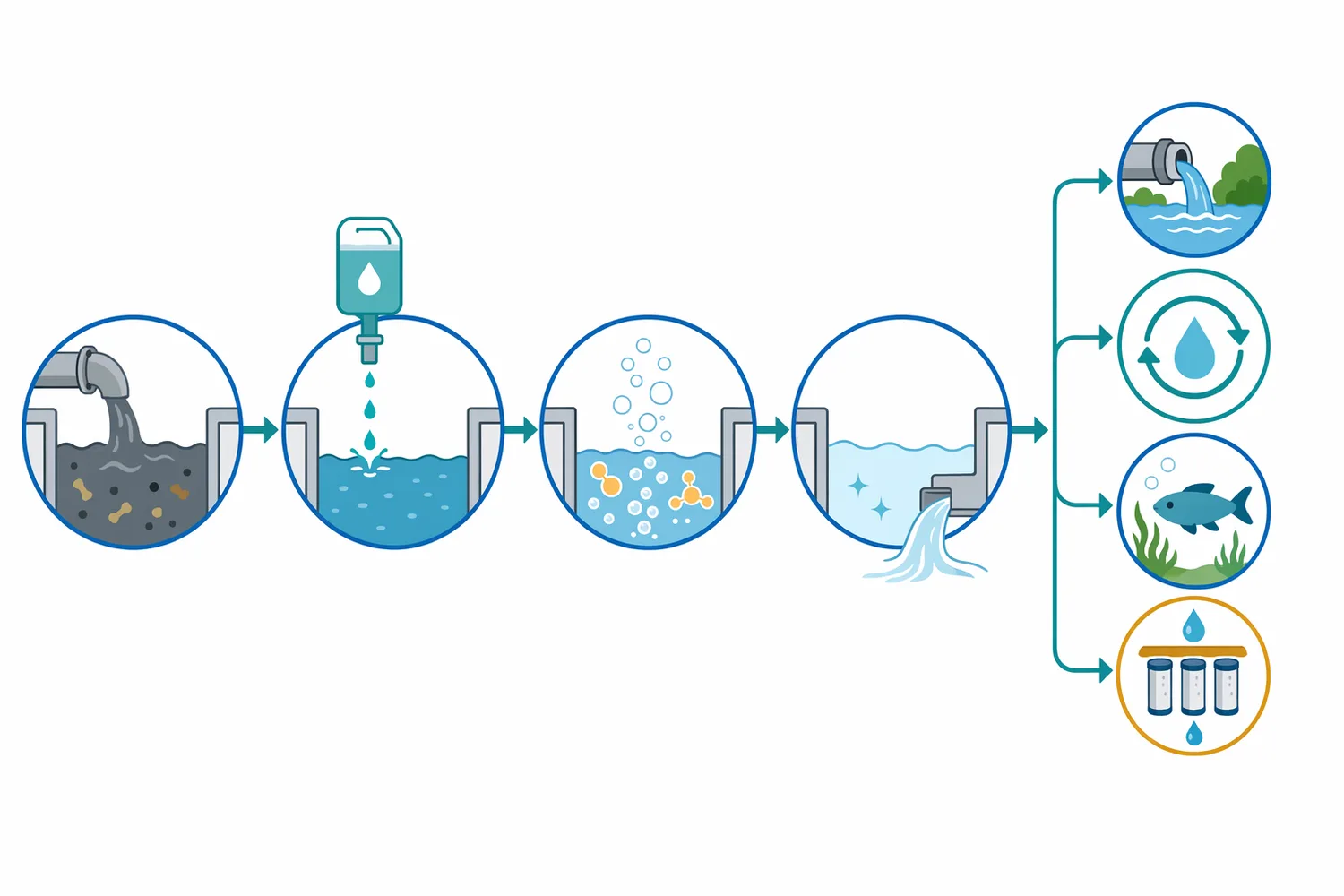
The clearest environmental advantage is residue-free reaction chemistry. Catalase converts hydrogen peroxide into water and oxygen, which means the peroxide-removal step itself does not introduce a new stoichiometric neutralizing chemical into the effluent [1].
A related advantage is lower secondary pollutant formation compared with chemical quenching routes that add dissolved residues. Where facilities are managing total dissolved solids, sulfate load, or chemical inventory, avoiding extra neutralizer-derived salts can be valuable.
Catalase can also support downstream biological treatment by reducing the oxidant stress associated with residual peroxide. Biological systems depend on active microbial communities, and unnecessary oxidants entering those systems can create operational stress. Removing peroxide before biological treatment can therefore be a practical step in maintaining stable treatment conditions.
For process operations, catalase can shorten the transition between a peroxide-using step and the next step that is peroxide-sensitive. In textiles, that next step may be dyeing; in food and beverage operations, it may be fermentation, packaging, or wastewater handling; in chemical processing, it may be a downstream reaction or discharge stage. In each case, the enzyme removes the leftover oxidant rather than waiting for slow natural decomposition.
Another advantage is process specificity. Catalase targets hydrogen peroxide with a well-defined biochemical reaction. That specificity is useful when the objective is not broad chemical reduction of the whole wastewater stream, but selective elimination of a residual oxidant that has become undesirable after its original process function is complete [1].
Catalase should not be treated as a universal wastewater treatment enzyme. It does not replace primary clarification, biological treatment, filtration, nutrient removal, pH control, metals treatment, or advanced oxidation where those processes are required. Its specific function is peroxide decomposition.
It also does not guarantee discharge compliance by itself. Wastewater compliance depends on the complete effluent profile, including local limits and site-specific parameters such as organic load, solids, pH, nutrients, toxicity, color, and regulated chemicals. Catalase can reduce hydrogen peroxide, but it does not certify the overall wastewater stream as compliant.
Performance can be reduced by harsh conditions. Because catalase is a protein, conditions that damage protein structure or block the active site can reduce activity. Strongly incompatible wastewater chemistry may require process adjustment or a different peroxide-control strategy, depending on the situation [1].
The oxygen released during reaction should also be anticipated. In most wastewater contexts, oxygen formation is an advantage or neutral outcome, but in enclosed systems it may need to be managed through normal venting and process design. The bubbling is a sign of peroxide decomposition, but gas release should still be considered in routine handling.
Finally, peroxide removal should be understood as a controlled process step. Catalase is fast and specific, but the result depends on contact between the enzyme and the peroxide-containing water. Industrial wastewater streams are variable, so operating practices should be based on the actual stream and the facility’s normal monitoring procedures.
The strongest evidence is the enzyme chemistry itself. Catalase is defined by its ability to decompose hydrogen peroxide into water and oxygen, and this reaction is the basis for its use in peroxide removal across environmental, food, textile, and industrial contexts [1].
The second strong evidence category is the residue profile. Because the reaction products are water and oxygen, catalase does not create the neutralizer-derived dissolved residues associated with many chemical quenching methods. This follows directly from the reaction equation and is a central reason catalase is used in lower-residue peroxide control.
The applied evidence is broad rather than limited to one industry. Reviews and application discussions describe catalase use in bioremediation, food processing, peroxide detoxification, industrial effluent treatment, and adjacent process streams where hydrogen peroxide must be removed after use.
The evidence is more site-specific for claims such as lower cost, improved compliance, or better total plant performance. Those outcomes depend on the wastewater matrix, current neutralization method, peroxide concentration, process flow, treatment system, and discharge requirements. Catalase supports peroxide control, but broader operational benefits should be evaluated within the facility’s own process reality.
Enzymes.bio supplies catalase enzyme for sale online for industrial peroxide-removal applications. The product is available for direct online purchase by the 1 kg unit; after payment, the order is processed and shipped .
A Certificate of Analysis and Safety Data Sheet are supplied with the order. This supports routine receiving, handling, and internal documentation without positioning Enzymes.bio as a testing laboratory or manufacturer .
For buyers who already know they need catalase for peroxide control, the online model is straightforward: purchase the 1 kg unit directly, complete payment online, and receive the shipped product with the accompanying documentation. The product’s role in wastewater treatment is educationally clear: it is a targeted enzyme for hydrogen peroxide decomposition, not a full effluent-treatment system .
Catalase enzyme for wastewater treatment is a focused solution for decomposing residual hydrogen peroxide in industrial effluent. Its biochemical reaction is simple and well established: two molecules of hydrogen peroxide are converted into water and oxygen, reducing residual oxidant without adding neutralizer-derived salts [1].
The strongest applications are streams where hydrogen peroxide has already been used for bleaching, sterilization, disinfection, oxidation, cleaning, or sanitation and must then be removed before discharge, reuse, dyeing, fermentation, biological treatment, or further processing. Textile, food and beverage, dairy-related, pulp and paper, pharmaceutical, hospital, and chemical operations all illustrate the same underlying need: peroxide is useful upstream but often undesirable downstream.
Catalase is not a universal wastewater cure, and it does not replace the rest of an effluent treatment plant. Used appropriately, however, it provides a clean, specific, and practical route for hydrogen peroxide removal in industrial wastewater streams. Enzymes.bio supplies catalase directly online by the 1 kg unit for buyers who need an enzyme-based peroxide-decomposition product with order documentation included .
Sold by the 1 kg unit, in stock and ready to ship. Order directly on our store — pay online and we process your order. A Certificate of Analysis and Safety Data Sheet are included with every order.
Buy Catalase Enzyme For Wastewater Treatment →Numbered in order of first citation. Open-access sources, each verified reachable at publication; citation numbers in the text link here.