
Catalase Enzyme Liquid for Residual Hydrogen Peroxide Removal in Textile Industry is used after hydrogen peroxide bleaching to decompose leftover peroxide into water and oxygen before dyeing, printing, finishing, or discharge. For textile processors, its practical value is that it removes an active oxidant without introducing the salt residues associated with many chemical reducing agents, helping the process move from bleaching to dyeing with fewer peroxide-related risks.
Enzymes.bio supplies this catalase enzyme liquid as a direct online product sold by the 1 kg unit. Buyers place and pay for the order online; the order is then processed and shipped, with a Certificate of Analysis and Safety Data Sheet provided with the order.
Hydrogen peroxide is widely used in wet processing because it is an effective oxidative bleaching agent for cotton and other cellulosic textiles. In alkaline bleaching, peroxide generates reactive bleaching species that attack natural colored impurities, seed-coat residues, and chromophoric structures on the fiber, improving whiteness and preparing the fabric for subsequent coloration or finishing. The same oxidative strength that makes peroxide useful during bleaching becomes a problem after bleaching is complete: any residual peroxide remaining in the bath, on the fabric surface, or inside the fiber structure can continue to behave as an oxidant in the next process step [1].
Catalase fits into the sequence after peroxide bleaching has done its job. It is not a bleaching enzyme, dyeing auxiliary, softener, or finishing resin. Its function is narrower and more controlled: it decomposes the remaining hydrogen peroxide so the textile material enters dyeing or finishing with a lower oxidant load. This targeted role is one reason catalase is commonly discussed in enzyme-based textile processing alongside amylases, cellulases, pectinases, laccases, and other biocatalysts that replace or reduce harsher wet-processing steps [2].
The reaction is chemically simple but operationally important:
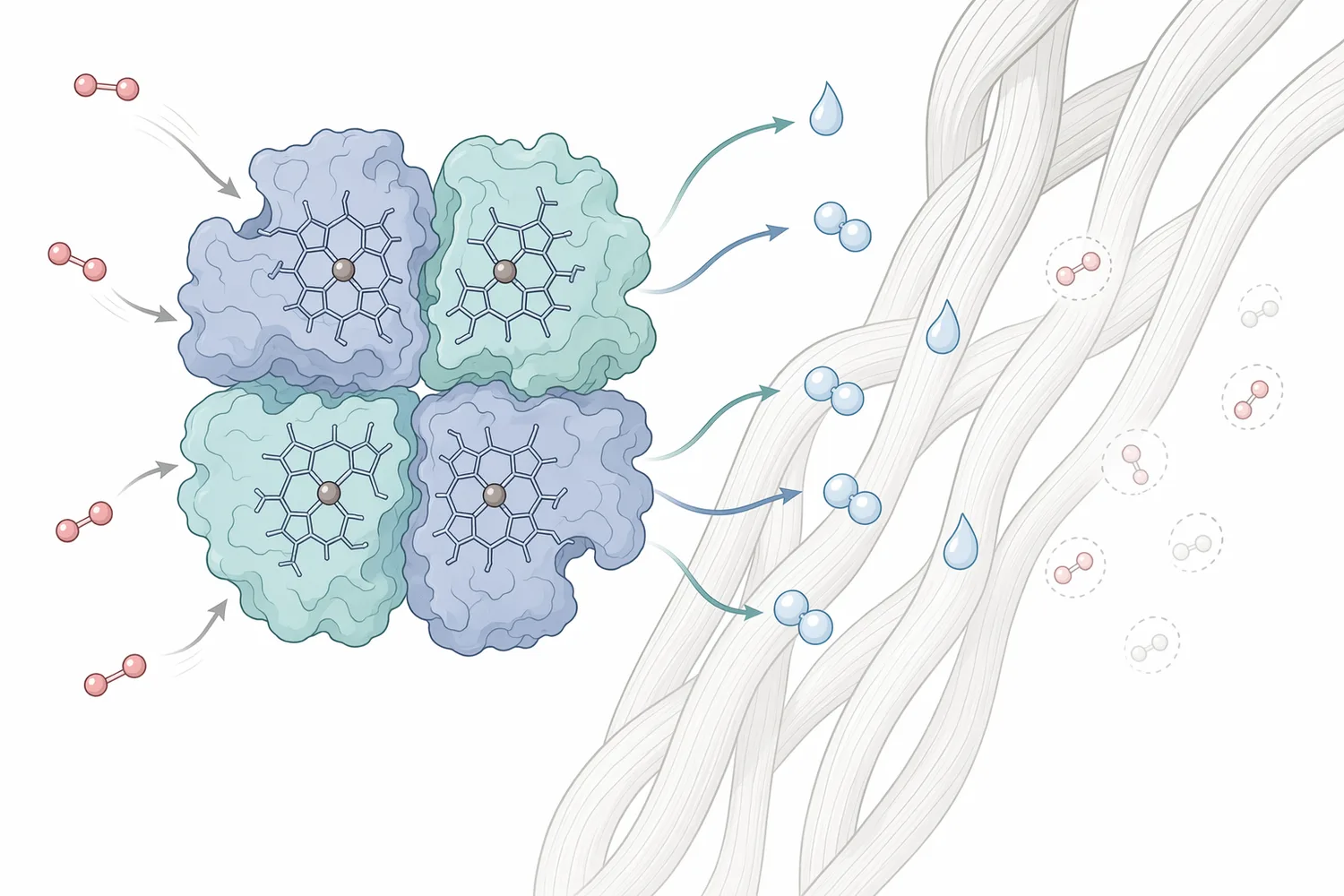
2 H2O2 → 2 H2O + O2
Two molecules of hydrogen peroxide are converted into two molecules of water and one molecule of oxygen. That stoichiometry matters in textile processing because the peroxide is not merely masked or diluted; it is chemically transformed into non-bleaching products. The oxygen may appear as fine bubbling in a process bath, but the useful process outcome is the disappearance of active peroxide from the liquor and textile substrate [3].
Residual hydrogen peroxide is undesirable because many dyeing systems require controlled reduction-oxidation conditions. If peroxide remains after bleaching, it can oxidize dye molecules, interfere with dye-fiber reactions, or disturb auxiliary chemistry. In reactive dyeing of cellulosics, for example, the process depends on dye diffusion into the fiber and chemical fixation with cellulose under controlled alkaline conditions. Carryover peroxide can compete with or damage sensitive dye chromophores, contributing to shade variation, lower reproducibility, or the need for corrective reprocessing [4].
The effect is not limited to visible color loss. A peroxide-contaminated dye bath can create uneven local chemistry: sections of fabric that retain more peroxide may experience a different oxidation environment from sections that have been more thoroughly rinsed. This can show up as patchiness, barre-like unevenness, or inconsistent depth across the load. In high-throughput production, the main cost is often not just the chemical loss; it is the lost machine time, additional washing, shade correction, and quality uncertainty that follow an unstable transition from bleaching to dyeing [5].
Residual peroxide also complicates wastewater and downstream treatment. Hydrogen peroxide itself decomposes to oxygen and water, but in actual textile effluent it coexists with alkali, salts, surfactants, stabilizers, dyes, finishing chemicals, and degraded organic matter. Textile wastewater treatment studies often use hydrogen peroxide in advanced oxidation processes, which highlights both its usefulness as an oxidant and the need to monitor or control peroxide residues after oxidation-based treatments [6].
Catalase is an oxidoreductase enzyme built to handle hydrogen peroxide. At its active site, catalase contains a metal-centered catalytic system that cycles through oxidation states as it reacts with peroxide. One hydrogen peroxide molecule oxidizes the enzyme intermediate; another hydrogen peroxide molecule then reduces it back, releasing water and oxygen. The enzyme is not consumed in the ideal catalytic cycle, which is why small amounts of catalase can rapidly convert many peroxide molecules under suitable process conditions [3].
This mechanism is different from chemical reduction. A chemical neutralizer reacts stoichiometrically: each portion of reducing agent is consumed as it reduces peroxide, and the reaction products remain in the bath as dissolved residues. Catalase acts catalytically and leaves the peroxide as water and oxygen. For textile wet processing, that difference is practical: the bath is not loaded with extra salt-forming byproducts from the peroxide-removal step, which can be helpful before dyeing where electrolyte level, ionic strength, and auxiliary balance already affect dye behavior [7].
Catalase is also highly specific. It targets hydrogen peroxide rather than broadly attacking cellulose, dyes, or finishing polymers. That specificity is one of the reasons enzymes are attractive in textile processing: a properly matched enzyme changes a defined substrate while leaving the bulk textile material intact. In this case, the “substrate” is not the fiber itself but the residual oxidant left by bleaching [8].
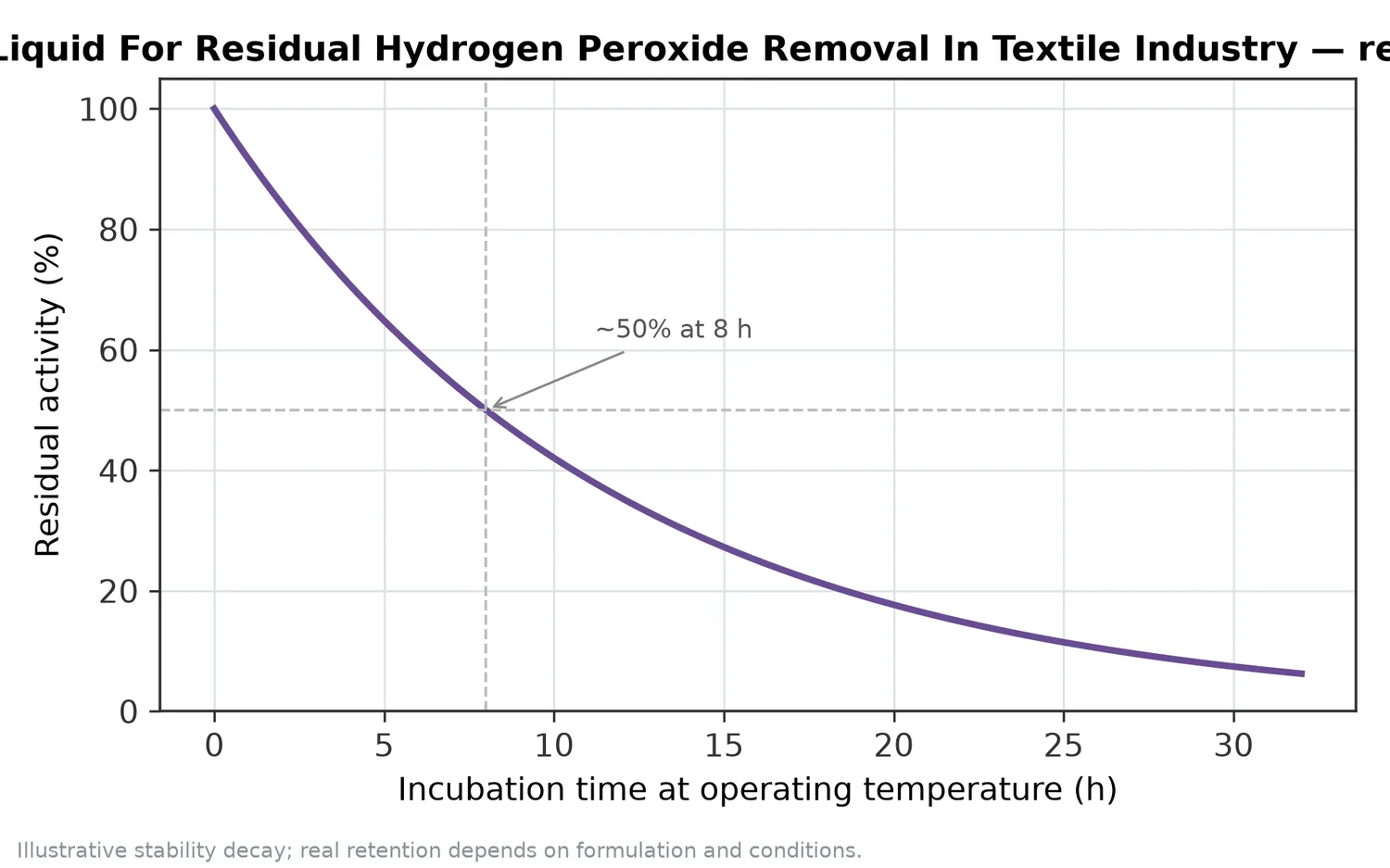
Specificity does not mean indestructibility. Catalase is still a protein, so its folded structure and active site can be affected by unsuitable pH, excessive heat, incompatible chemicals, or very harsh oxidizing conditions. Hydrogen peroxide is both the substrate and a potential inactivating agent at high oxidative stress. That is why catalase is best understood as a process biocatalyst for a defined post-bleach stage, not as an unlimited chemical scavenger that can be added under any conditions.
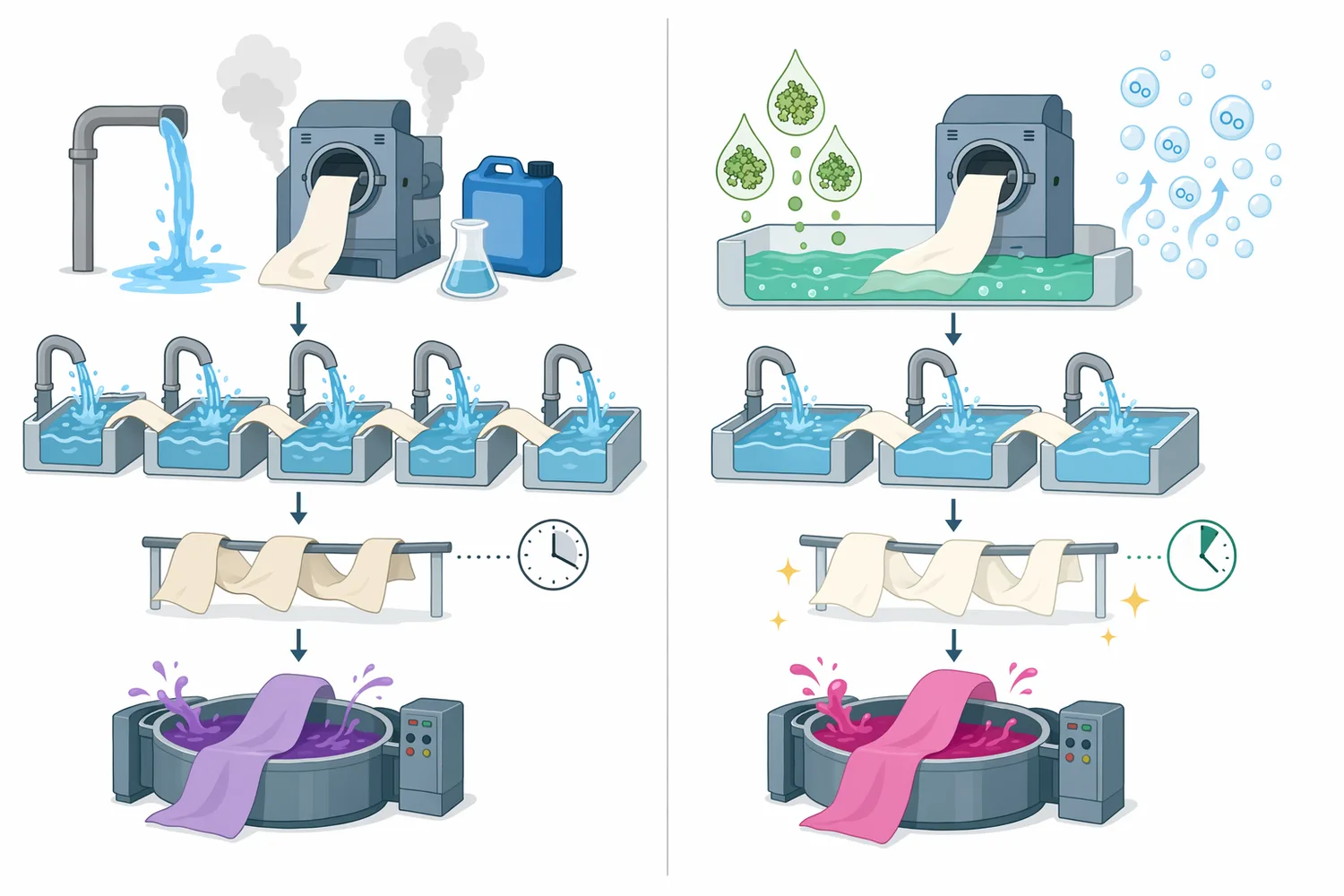
Textile processors have traditionally reduced residual peroxide through rinsing, chemical neutralization, or a combination of both. Each approach can work, but they behave differently in the process bath. Catalase is valuable because it destroys peroxide directly rather than relying only on dilution or adding a reducing chemical residue.
| Peroxide-removal approach | What happens to residual peroxide | Main process implication | Typical limitation |
|---|---|---|---|
| Repeated rinsing | Peroxide is diluted and physically removed from fabric and liquor | Simple concept; no added neutralizing chemistry | Uses more water, time, and energy, and may still leave trapped peroxide in fabric folds or dense constructions |
| Chemical neutralization | Peroxide is reduced by a chemical reagent | Can be fast and familiar in conventional wet processing | Reaction byproducts remain in the system and can affect bath chemistry if not controlled |
| Catalase treatment | Peroxide is enzymatically decomposed to water and oxygen | Removes the active oxidant without adding salt-forming neutralization residues | Requires enzyme-compatible process conditions and is used after bleaching is complete |
The comparison is especially important where fabric moves directly from bleaching toward dyeing. Rinsing lowers peroxide concentration by removing contaminated liquor, but it does not chemically change peroxide that remains inside the textile structure. Catalase changes the peroxide molecule itself, so once the enzyme contacts residual peroxide in the liquor or on the fiber, the oxidant is converted into non-oxidizing products [4].
Chemical neutralization can also be effective, but it introduces its own chemistry. Reducing agents can leave salts or other residues, and over- or under-neutralization may create downstream variability. Catalase avoids that particular issue because the decomposition products are water and oxygen, although the process still needs sensible control of the textile bath and sequence [7].
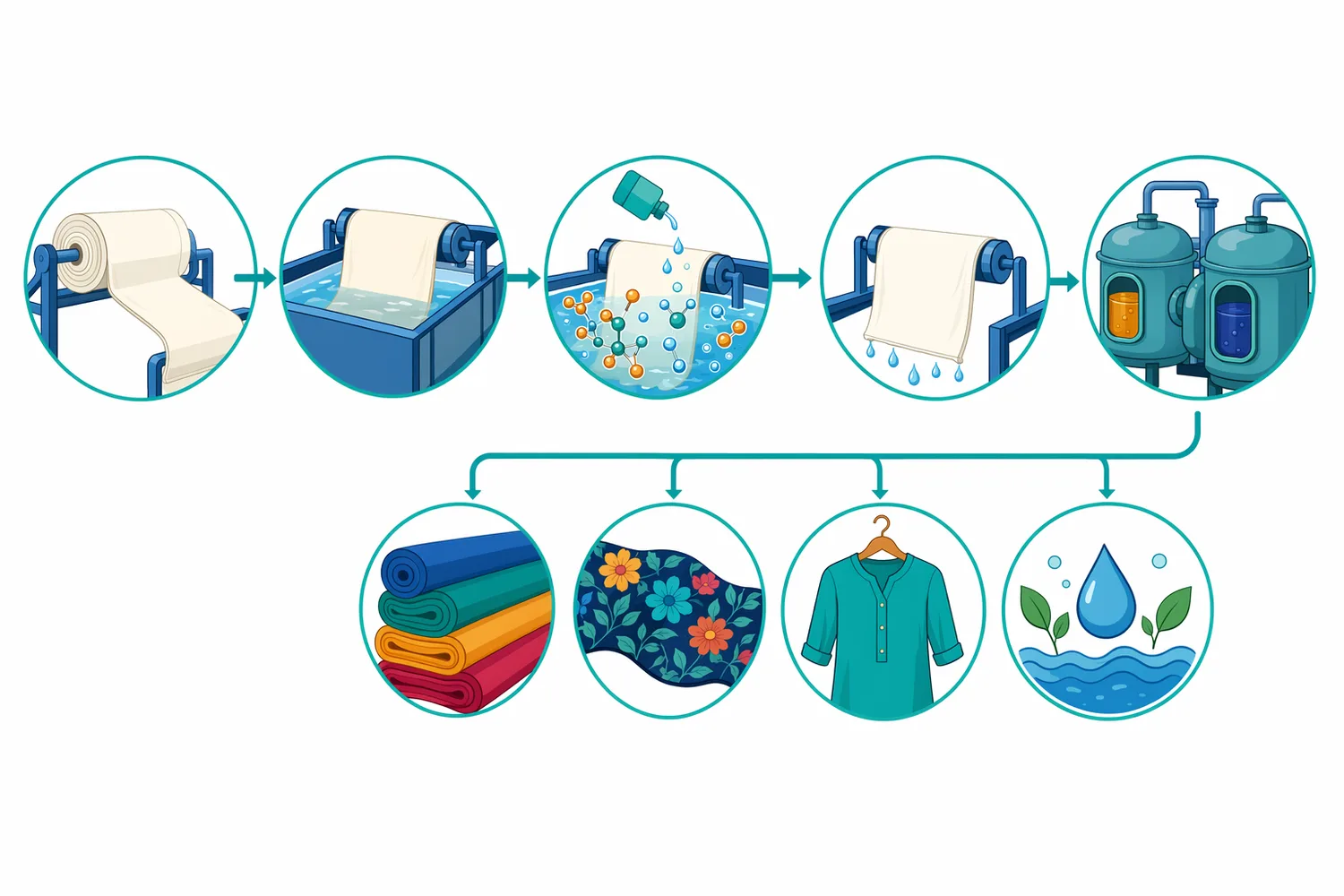
The core application is peroxide cleanup after cotton or cellulosic bleaching. Once target whiteness and absorbency have been achieved, catalase is introduced into the aqueous system so it can contact residual peroxide in the bath and on the fabric. As peroxide decomposes, the bleaching stage is effectively “switched off,” reducing the chance that oxidant carryover will interfere with the following operation [1].
In practical wet processing, this step is often placed between bleaching and dyeing. The catalase stage can help shorten the transition because the operation is not forced to rely only on repeated dilution cycles. Where a process has historically needed several rinses to reduce peroxide to an acceptable level, enzymatic decomposition provides a route to reduce the active peroxide burden more directly [5].
Reactive dyeing of cotton and other cellulosics is sensitive to the chemical condition of the substrate and bath. Residual peroxide can oxidize dye structures or disturb the expected dye-fiber reaction environment. Catalase treatment before dye addition helps create a cleaner starting point by removing a known oxidant that does not belong in the dyeing stage [4].
The benefit should be framed accurately: catalase does not guarantee a particular shade, fixation level, or fastness result by itself. Final dyeing performance still depends on the fabric, pre-treatment quality, dyestuff, alkali, electrolyte, liquor movement, temperature profile, and machine conditions. Catalase supports consistency by eliminating one important source of interference—residual hydrogen peroxide [8].
Research on combined pretreatment and dyeing has examined ways to reduce separate wet-processing stages and make cotton processing more efficient. In such concepts, peroxide management becomes especially important because bleaching chemistry and dyeing chemistry are brought closer together in time. If peroxide is not removed or controlled, the dyeing stage can inherit oxidative conditions from pretreatment [4].
Catalase is relevant to these integrated processes because it provides a biochemical stop point for peroxide activity. Instead of extending rinsing until peroxide is sufficiently diluted, the enzyme can convert peroxide into water and oxygen under compatible conditions. This supports the broader direction of textile research that aims to reduce process length, water use, and chemical intensity without compromising textile quality [2].
Catalase can also be used where residual peroxide in process liquor is undesirable before wastewater treatment or discharge handling. Hydrogen peroxide may be intentionally used in textile wastewater oxidation, and monitoring residual peroxide is important because remaining oxidant can affect subsequent biological or chemical treatment steps [6].
It is important to keep the role precise. Catalase decomposes hydrogen peroxide; it does not remove dyes, dissolved salts, surfactants, heavy metals, finishing resins, or total organic load by itself. In wastewater terms, catalase is a peroxide-control tool, not a complete effluent-treatment program. Enzyme technology can contribute to lower-impact textile finishing and pollution control, but each enzyme acts on a specific substrate or class of substrates [7].
The strongest evidence for catalase begins with the enzyme’s fundamental reaction. Catalase is widely recognized as a hydrogen peroxide-decomposing enzyme in biological systems, where it protects cells from oxidative stress by converting peroxide into water and oxygen. That same reaction is the basis for industrial peroxide removal in aqueous processes [3].
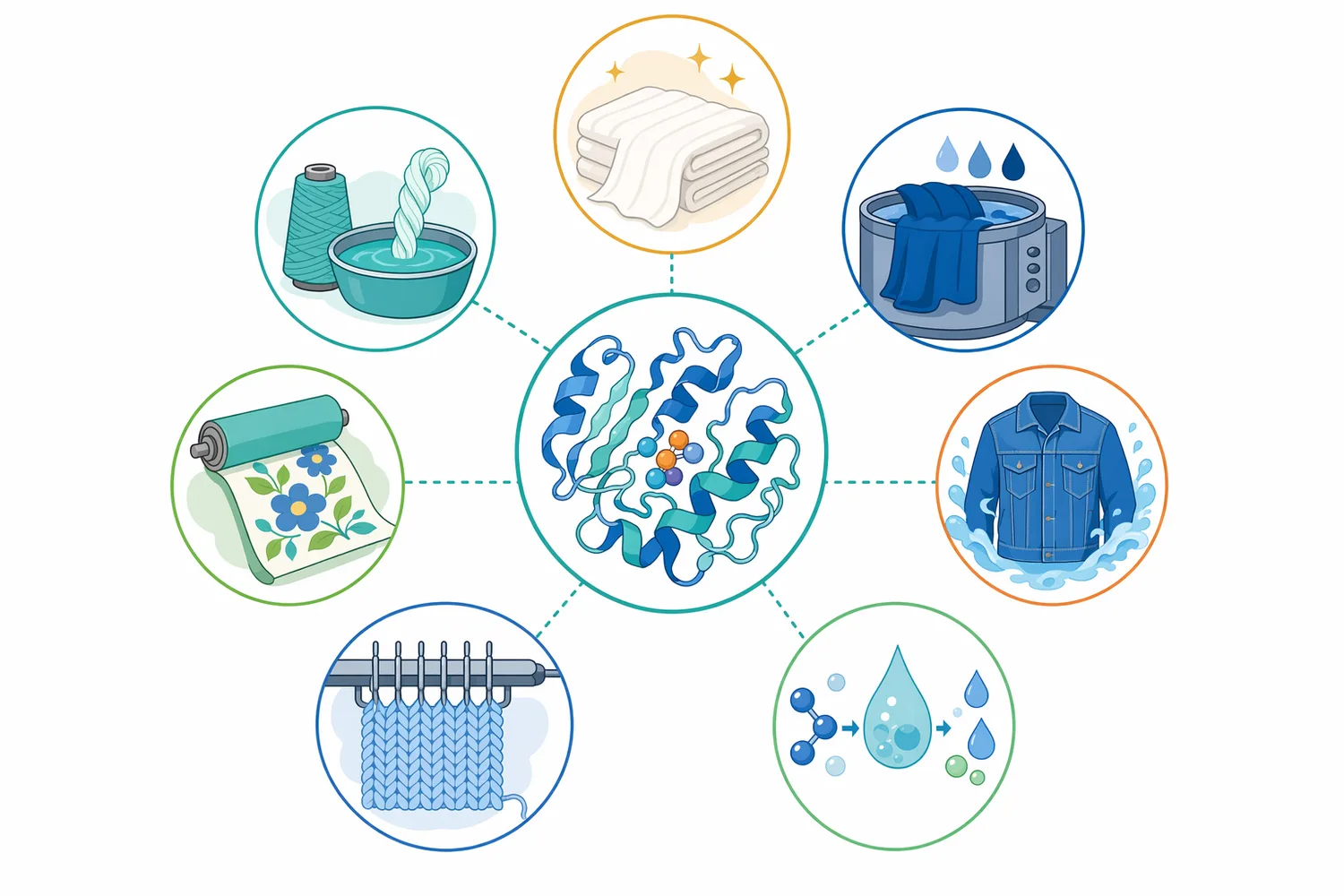
Textile-focused enzyme literature identifies catalase as part of the portfolio of enzymes used in wet processing. Reviews of enzyme applications in textiles describe catalase for peroxide removal after bleaching, alongside other enzymes used for desizing, bioscouring, biopolishing, denim finishing, and effluent-related applications. This places catalase within a well-established industrial enzyme context rather than as an experimental curiosity [5].
Sustainable textile processing reviews also support the rationale for enzyme use. Enzymes can operate under milder conditions than many conventional chemical treatments and may reduce water, energy, and chemical demand when integrated correctly. Catalase contributes to that pattern specifically by replacing or reducing peroxide-removal steps that otherwise rely on repeated rinsing or chemical neutralization [2].
Research on textile finishing and pollution control further emphasizes that enzyme technology is not a single solution but a set of targeted tools. Catalase is useful where the target is hydrogen peroxide. Laccases may be relevant for dye oxidation or decolorization, cellulases for surface modification, amylases for starch desizing, and pectinases for bioscouring. The strength of catalase is its narrowness: it solves a defined peroxide carryover problem [7].
Hydrogen peroxide studies in textile wastewater provide additional context. Oxidation processes using peroxide can be effective for color and pollutant degradation, but residual peroxide must be considered because it remains chemically active. This supports the practical need for peroxide monitoring and removal in systems where peroxide has been used as a treatment or bleaching oxidant [9].
Catalase works in water-based systems, which makes a liquid enzyme format convenient for textile wet processing. The enzyme must be dispersed through the bath and brought into contact with peroxide in the liquor and on the textile substrate. Fabric construction, liquor circulation, load density, and mixing all influence how quickly residual peroxide and enzyme meet each other, especially in dense fabrics or tightly packed goods [1].
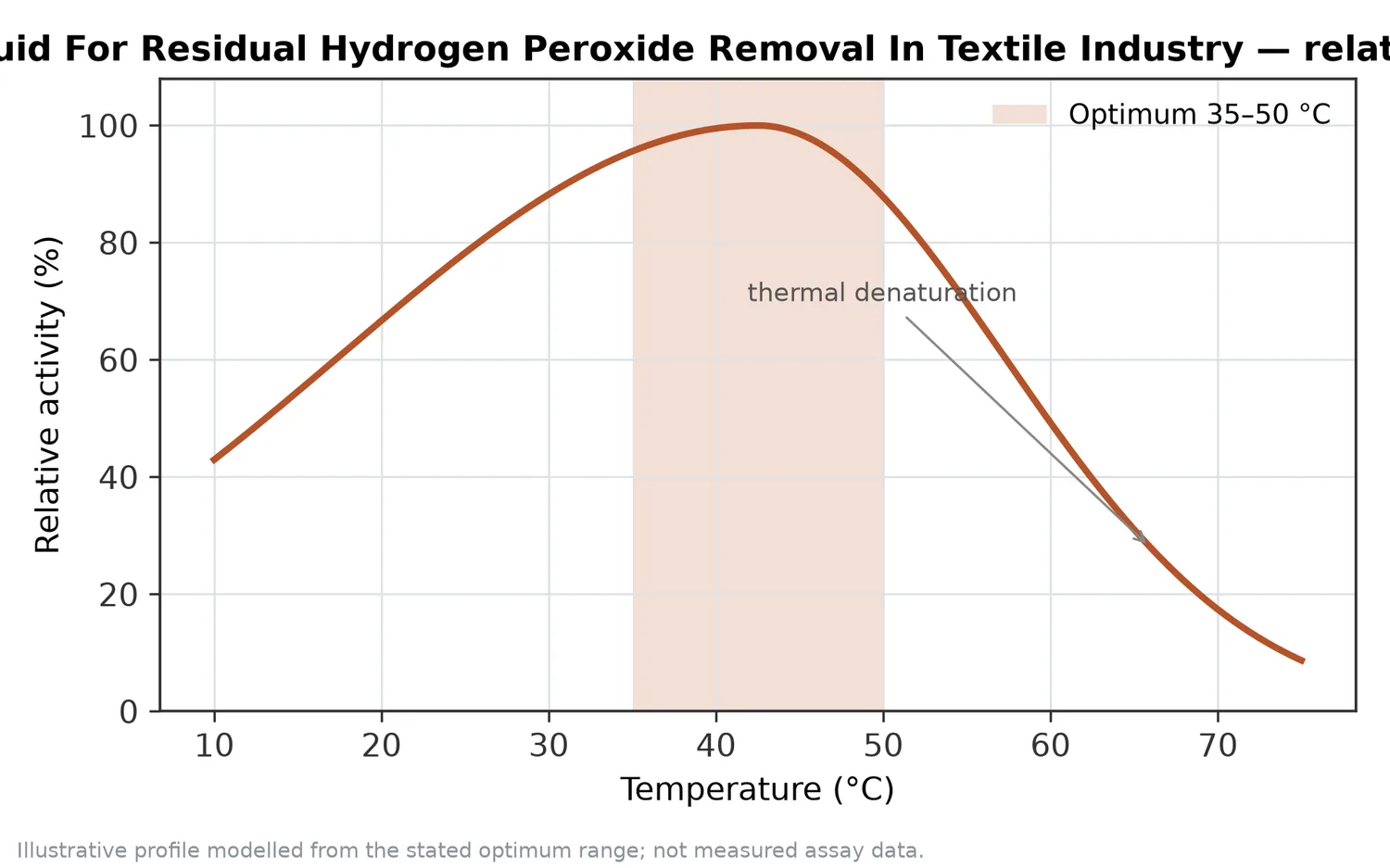
Temperature affects enzyme structure and reaction rate. Within a compatible range, increasing temperature can accelerate molecular movement and enzyme-substrate contact. Beyond the enzyme’s tolerance, heat can disrupt the protein fold and reduce activity. In textile operations, this means catalase is used as a controlled post-bleach step rather than simply added into any hot alkaline bleaching bath.
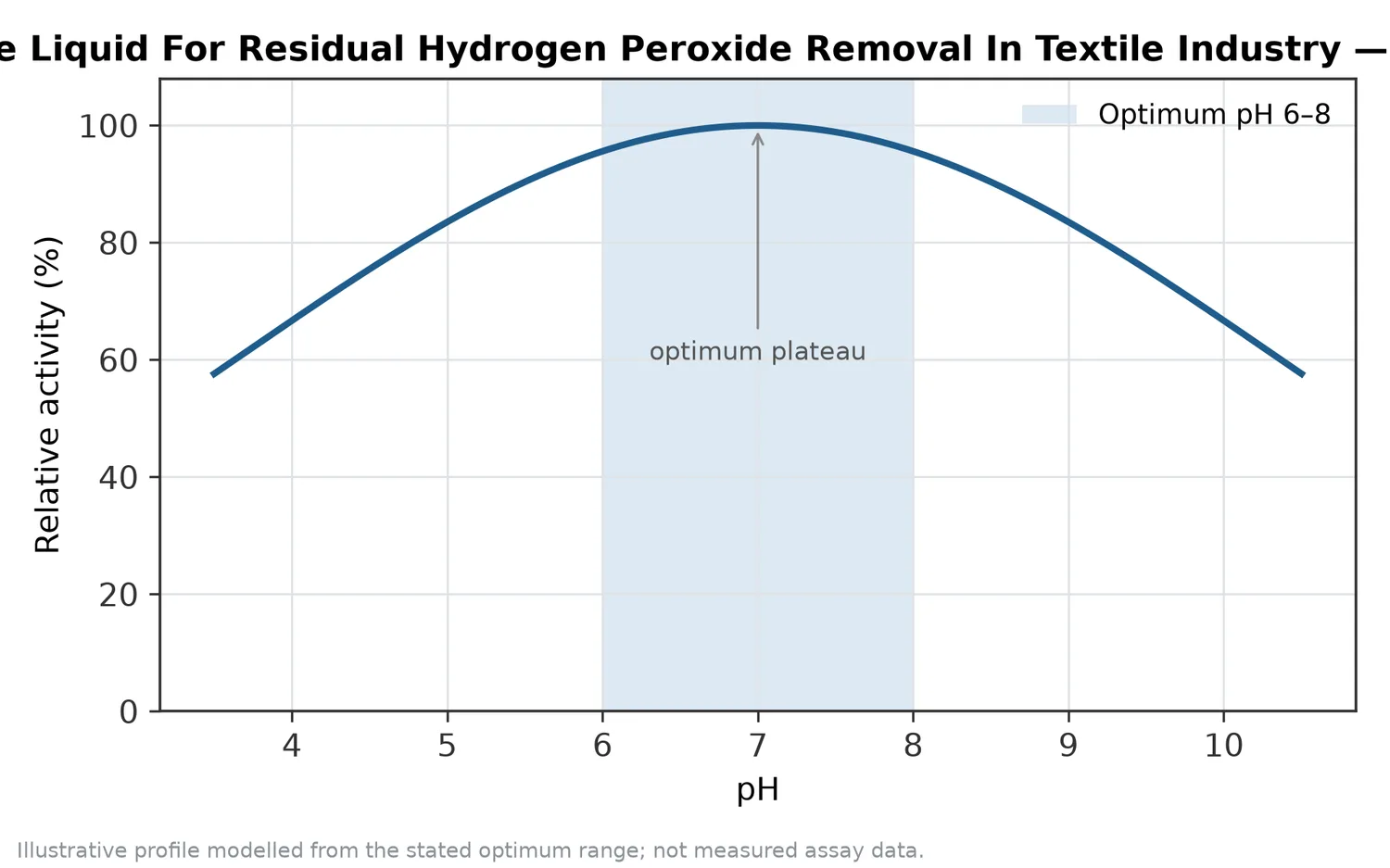
pH also matters because catalase depends on the correct ionization and structure of amino acid residues around its active site. If the bath remains strongly outside the enzyme-compatible range after bleaching, the active site may not function efficiently and the protein may lose stability. This is one reason peroxide removal is treated as its own transition stage: bleaching conditions and enzyme cleanup conditions are related but not identical [3].
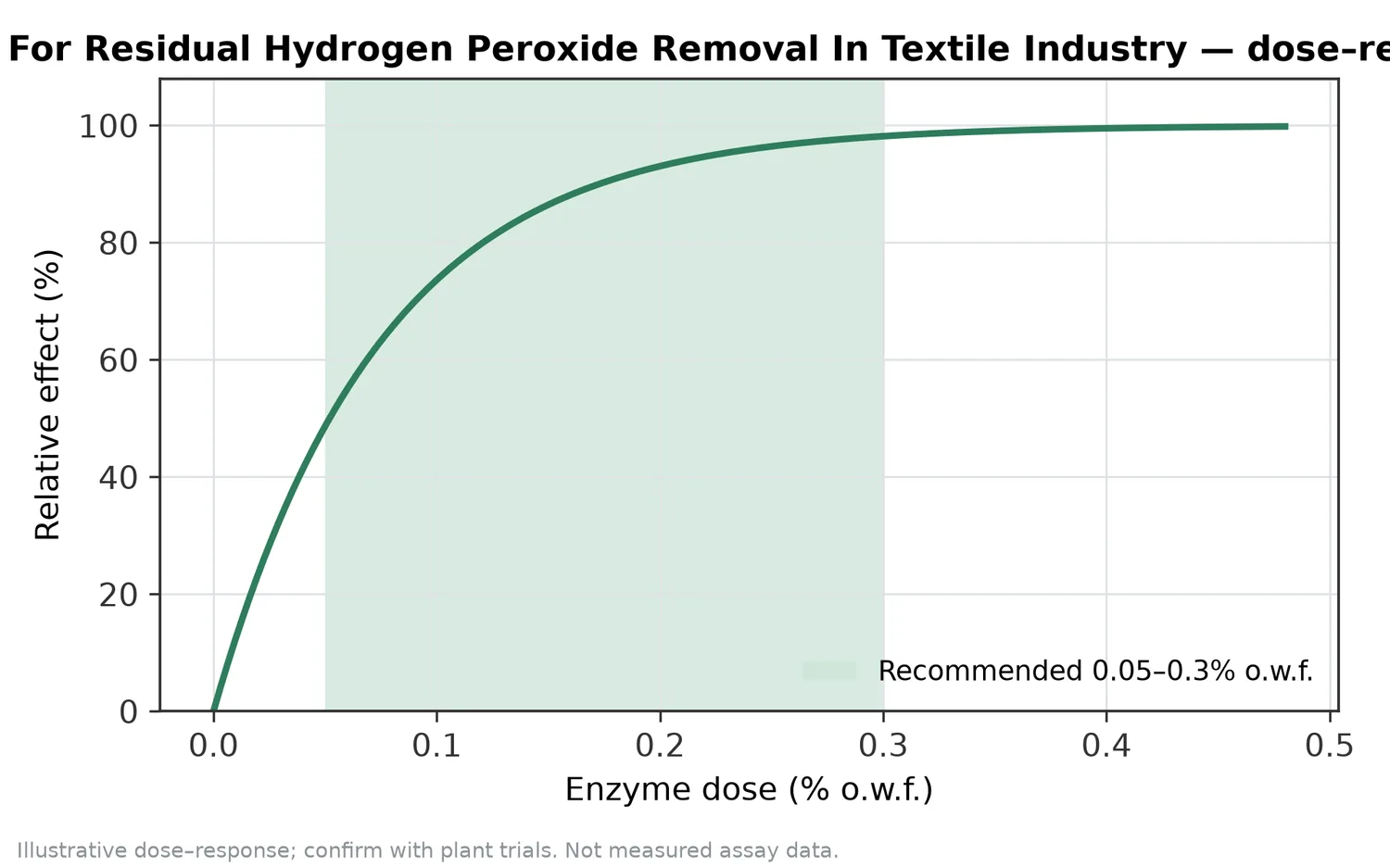
Peroxide level is another factor. Hydrogen peroxide is the target substrate, but high oxidative load can contribute to enzyme inactivation. Mechanistically, excess peroxide can push catalase into inactive or less productive states, so the enzyme performs best when used in a realistic post-bleach cleanup context rather than in uncontrolled concentrated peroxide conditions.
Contact time is the final practical variable. Catalase decomposition is fast when the enzyme, peroxide, pH, temperature, and mixing conditions are favorable, but the textile substrate is not a simple beaker of solution. Peroxide can be held in yarn interstices, fabric folds, and boundary layers near the fiber surface. The process must allow enough circulation and wet contact for the enzyme to reach the peroxide that would otherwise carry into dyeing [5].
Catalase is especially relevant to cotton and regenerated cellulosic processing because hydrogen peroxide bleaching is widely used for these fibers. Cotton contains natural waxes, pectins, pigments, seed-coat fragments, and other impurities that pretreatment and bleaching are designed to remove or decolorize. After those impurities have been addressed, residual peroxide must be controlled before coloration [1].
For cellulosic fabrics, the main advantage of catalase is that its substrate is peroxide, not cellulose. Cellulases modify cellulose surfaces and can affect fibrillation or handle; catalase does not work by hydrolyzing the fiber. Its action is in the surrounding chemical environment, removing an oxidant that could otherwise remain in the liquor or on the textile [10].
In blended materials, the same peroxide-removal principle applies when peroxide bleaching has been used, but the rest of the wet-processing route may differ depending on fiber composition. Catalase should be understood as a peroxide cleanup step that supports the next stage; it does not replace the need for appropriate dyeing chemistry for cotton, viscose, blends, or other textile constructions [11].
Catalase supports lower-impact textile processing in a specific and measurable way: it converts hydrogen peroxide into water and oxygen. This can reduce reliance on repeated rinse cycles or chemical neutralizers in the peroxide-removal stage. Less rinsing may mean lower water demand, lower heating demand for wash baths, and shorter machine occupancy, depending on the process design [2].
The environmental benefit is strongest when catalase is integrated into a well-managed sequence. Enzyme use alone does not make a textile process sustainable if dye losses, salt discharge, poor fixation, or excessive reprocessing remain unresolved. However, targeted enzyme steps are widely recognized as useful components of cleaner textile wet processing because they can reduce harsh chemistry and support more selective reactions [7].
Catalase also avoids adding a new salt burden during peroxide removal. That is important because textile dyeing already uses salts and auxiliaries in many processes, and effluent salinity is difficult to remove with conventional biological treatment. By decomposing peroxide to water and oxygen, catalase removes one oxidant without increasing dissolved inorganic residues from the neutralization reaction [12].
The most immediate benefit is reduced peroxide carryover into dyeing. When peroxide is removed before dyestuff is introduced, the dye bath starts from a more predictable redox condition. That can reduce peroxide-related shade drift, patchiness, or oxidation damage to sensitive dye systems [4].
A second benefit is process simplification. Instead of relying only on multiple rinse-and-drain steps, catalase provides a biochemical conversion step. The peroxide molecule is destroyed rather than chased through repeated dilution. In mills seeking shorter wet-processing routes, that distinction can be valuable because water, time, and temperature all contribute to total processing cost [5].
A third benefit is cleaner downstream chemistry. Chemical neutralizers can be effective, but they add reaction products and may require careful balance to avoid excess reducing conditions. Catalase removes peroxide without changing the bath by adding a stoichiometric load of reducing-agent residues. This is particularly relevant before dyeing, where chemical carryover can be as problematic as peroxide carryover [7].
Finally, catalase aligns with the broader movement toward bio-based auxiliaries and enzyme-assisted textile processing. Current textile research continues to explore enzymes because they can perform selective reactions under comparatively mild conditions and help reduce the environmental footprint of wet processing when used appropriately [13].
Catalase does not bleach fabric. Hydrogen peroxide performs the bleaching; catalase is used afterward to decompose the remaining peroxide. Adding catalase too early would work against the bleaching objective by destroying the oxidant before it has completed its purpose [1].
Catalase does not dye fabric or improve color by acting directly on the dye-fiber bond. Its contribution to dyeing is indirect but important: it removes a chemical interferent from the system. The shade, levelness, fixation, and fastness still depend on the complete dyeing recipe and machine control [4].
Catalase does not replace all washing. Rinsing may still be needed to remove alkali, surfactants, salts, degraded impurities, unfixed materials, or other residues from pretreatment. Catalase specifically targets hydrogen peroxide; it should be considered part of the transition from bleaching to dyeing, not a universal cleaner [8].
Catalase does not solve all wastewater issues. Textile effluent can contain dyes, auxiliaries, high dissolved solids, organic load, and other contaminants. Catalase can reduce residual hydrogen peroxide where peroxide is the concern, but other pollutants require other treatment strategies [9].
| Claim | Evidence strength | What the evidence supports |
|---|---|---|
| Catalase decomposes hydrogen peroxide into water and oxygen | Strong | The core enzymatic reaction is well established and directly matches the target residue after peroxide bleaching [3] |
| Catalase is relevant to textile wet processing | Strong | Textile enzyme reviews identify catalase among enzymes used for peroxide removal and cleaner processing [5] |
| Catalase helps prepare bleached cotton for dyeing | Strong | Residual peroxide after bleaching can interfere with subsequent coloration, and catalase removes that oxidant before dyeing [4] |
| Catalase can reduce reliance on repeated rinsing or chemical neutralization | Moderate | The mechanism supports this benefit, and enzyme-processing reviews describe reduced water, energy, and chemical demand, but outcomes depend on the full process [2] |
| Catalase alone solves textile wastewater pollution | Limited | It removes hydrogen peroxide only; textile wastewater contains many other contaminants requiring separate control [9] |
Enzymes.bio offers Catalase Enzyme Liquid for Residual Hydrogen Peroxide Removal in Textile Industry as a direct online purchase by the 1 kg unit. The buying process is straightforward: the product is ordered and paid for online, then the order is processed and shipped. A Certificate of Analysis and Safety Data Sheet are provided with the order for receiving and safe-handling documentation .
This format is practical for textile users who need a focused peroxide-removal enzyme without a custom quotation process. The product is intended for the defined wet-processing application described here: enzymatic decomposition of residual hydrogen peroxide after bleaching and before downstream textile operations.
Catalase enzyme liquid is a targeted solution for a specific textile problem: residual hydrogen peroxide left after bleaching. Its mechanism is direct and well understood—catalase converts hydrogen peroxide into water and oxygen—so the oxidant is destroyed rather than merely diluted or chemically reduced into salt-forming residues.
In textile processing, that matters because residual peroxide can interfere with dyeing, contribute to uneven shade development, and complicate the transition from bleaching to coloration or finishing. Catalase is most useful as a post-bleach cleanup step for cotton and other peroxide-bleached textile materials, supporting more predictable dyeing conditions and reducing reliance on repeated rinsing or conventional neutralization chemistry.
The strongest support for catalase comes from its established hydrogen peroxide decomposition reaction, its recognition in textile enzyme literature, and its fit within sustainable wet-processing strategies. It is not a bleach, dye, softener, or complete wastewater treatment. It is a focused biocatalyst for peroxide removal—and that focused role is exactly why it remains valuable in modern textile wet processing.
Sold by the 1 kg unit, in stock and ready to ship. Order directly on our store — pay online and we process your order. A Certificate of Analysis and Safety Data Sheet are included with every order.
Buy Catalase Enzyme Liquid For Residual Hydrogen Peroxide Removal In Textile Industry →Numbered in order of first citation. Open-access sources, each verified reachable at publication; citation numbers in the text link here.