
Catalase Enzyme Liquid for Textile is a post-bleaching “peroxide killer” used to decompose residual hydrogen peroxide in textile baths and on fabric before dyeing, finishing, or wastewater treatment. It does not bleach the textile itself; instead, it converts leftover hydrogen peroxide into water and oxygen, helping reduce oxidant carryover after peroxide bleaching. Enzymes.bio supplies this liquid catalase product directly online in 1 kg units, with a Certificate of Analysis and Safety Data Sheet supplied with the order.
Hydrogen peroxide is widely used in cotton and cellulosic textile preparation because it can destroy natural pigments and improve whiteness before dyeing or finishing. Modern reviews of cotton bleaching describe peroxide bleaching as a central route for preparing cotton, while also noting the continued pressure on textile wet processing to reduce water, energy, and chemical burden where possible [1].
Once bleaching has done its work, remaining hydrogen peroxide becomes a process contaminant rather than a useful reagent. It can remain in the liquor, in the textile structure, and in the carried-over moisture entering the next bath. Catalase is used at this stage because it targets hydrogen peroxide directly, decomposing it by the well-known dismutation reaction:
[ 2H_2O_2 \rightarrow 2H_2O + O_2 ]
That reaction is why textile catalase products are often described as peroxide killer enzymes: they do not mask peroxide or dilute it; they catalytically break it down into water and oxygen [2].
The practical value is the transition from “bleached but still oxidizing” fabric to fabric that is better prepared for dyeing, finishing, or discharge management. In textile operations, this is especially relevant after peroxide bleaching of cotton, cotton-rich blends, towels, knits, wovens, and other cellulosic goods where residual peroxide can otherwise force repeated rinsing or create risk in the dyeing stage [3].
Catalase is an oxidoreductase enzyme built to handle hydrogen peroxide. In biological systems, hydrogen peroxide is a reactive oxygen species: useful in controlled contexts but damaging when it accumulates. Catalase protects cells by converting hydrogen peroxide into less reactive products, and industrial use takes advantage of that same catalytic function [2].
At the molecular level, hydrogen peroxide enters the enzyme’s active site, where the catalytic center transfers oxygen equivalents through a rapid redox cycle. One peroxide molecule is reduced toward water while another is oxidized toward molecular oxygen. The net effect is the simple stoichiometry textile operators care about: two molecules of hydrogen peroxide become two molecules of water and one molecule of oxygen [2].
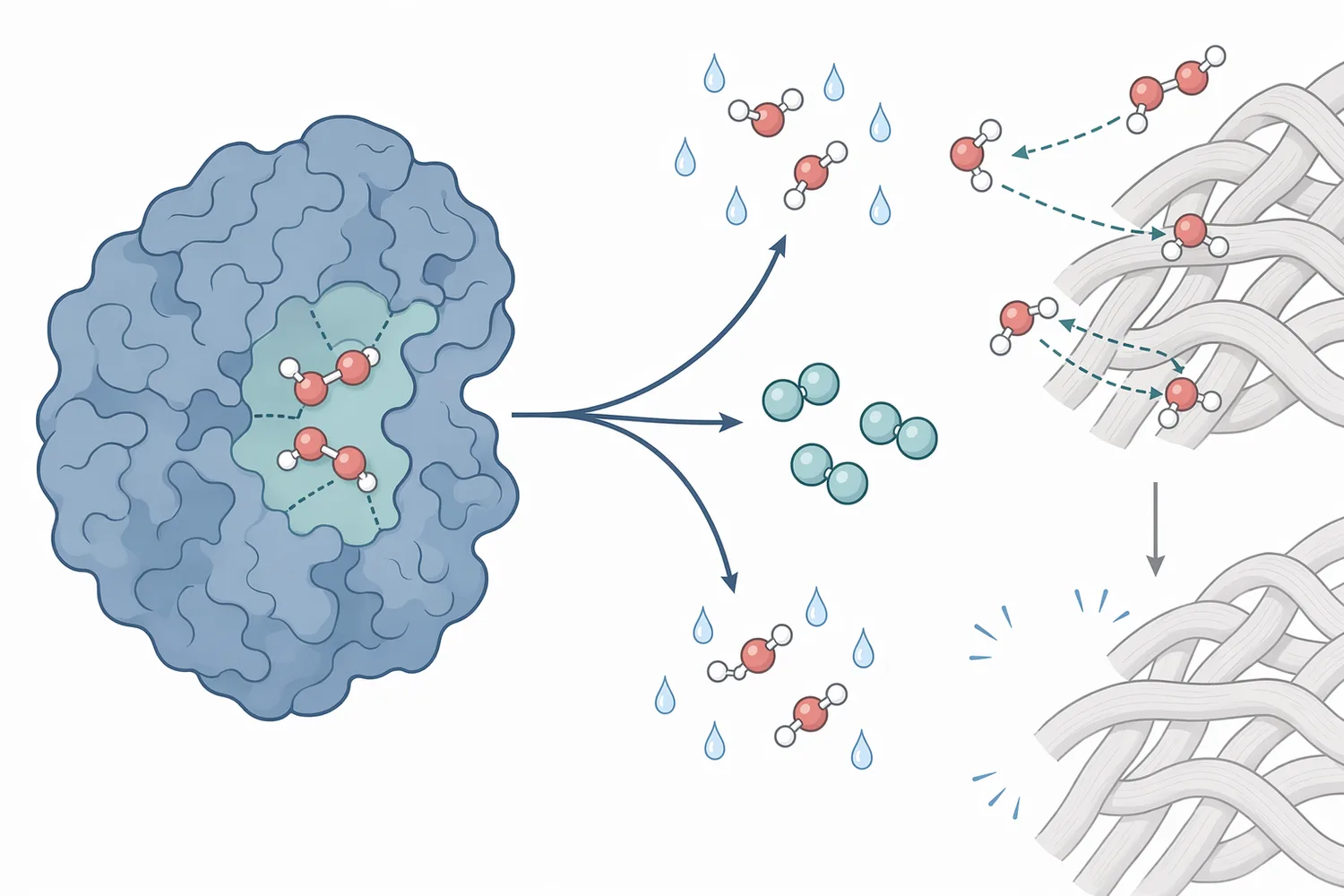
In a textile bath, the visible sign may be fine oxygen release, depending on residual peroxide concentration, agitation, liquor volume, and fabric loading. The more important process change is chemical: the oxidizing species that remained from bleaching is being consumed. As the peroxide level falls, the bath becomes less oxidative, which is why catalase is placed between peroxide bleaching and dyeing rather than before or during the bleaching stage [3].
Catalase is not a dyeing auxiliary, leveling agent, scouring agent, or bleaching agent. Its substrate is hydrogen peroxide. That specificity is a strength: the enzyme is used when peroxide is the problem, and it is not expected to remove waxes, pectins, starch sizes, dyestuffs, salts, surfactants, or particulate contamination [4].
Peroxide bleaching is valuable because it oxidizes colored impurities in cotton. The same oxidizing character becomes undesirable if it follows the fabric into dyeing. Residual peroxide can disturb the chemical environment in which dyes are expected to dissolve, diffuse, react, and fix. Textile biotechnology literature treats catalase-based peroxide removal as a practical enzymatic operation because this post-bleach oxidant carryover is a real process issue, not a theoretical one [3].
For reactive dyeing of cotton, the fabric enters a controlled sequence involving wetting, electrolyte, alkali, temperature management, dye diffusion, and covalent fixation. If peroxide remains, it can create an unintended oxidative side reaction environment. Depending on dye class and shade, this can contribute to weaker shade, uneven results, altered hue, or unnecessary correction work because the dyeing bath is no longer governed only by the intended dyeing chemistry [5].
Catalase helps by removing the oxidant before the dyeing chemistry begins. The enzyme does not force dye into the fiber and does not guarantee shade matching by itself. What it does is reduce one avoidable source of chemical interference: leftover hydrogen peroxide from bleaching [3].
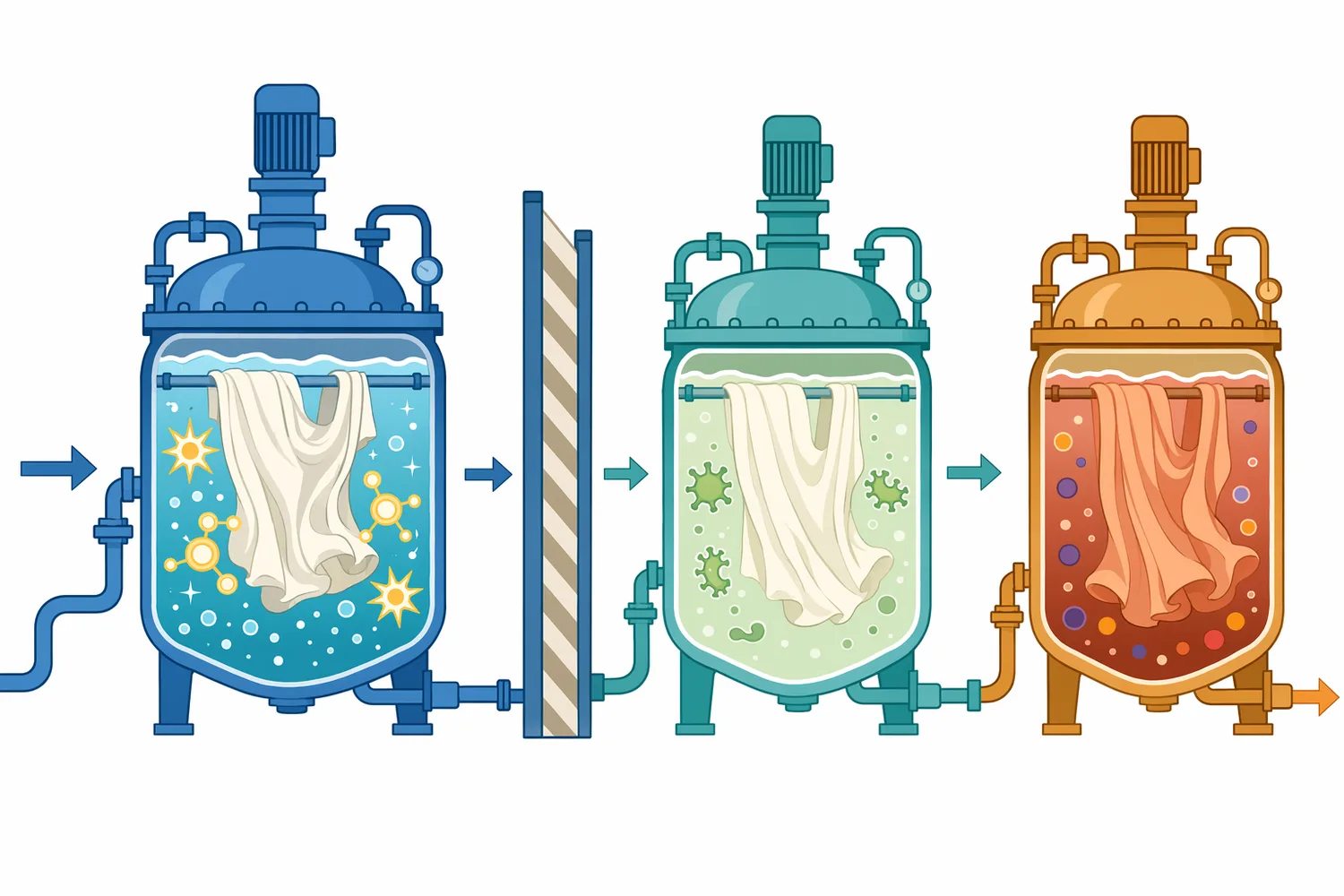
A typical cotton preparation route may include desizing, scouring, peroxide bleaching, rinsing or neutralization, dyeing, washing-off, and finishing. Enzyme applications already have an established place in several of these stages, including amylase desizing, cellulase finishing, and catalase peroxide removal after bleaching [4].
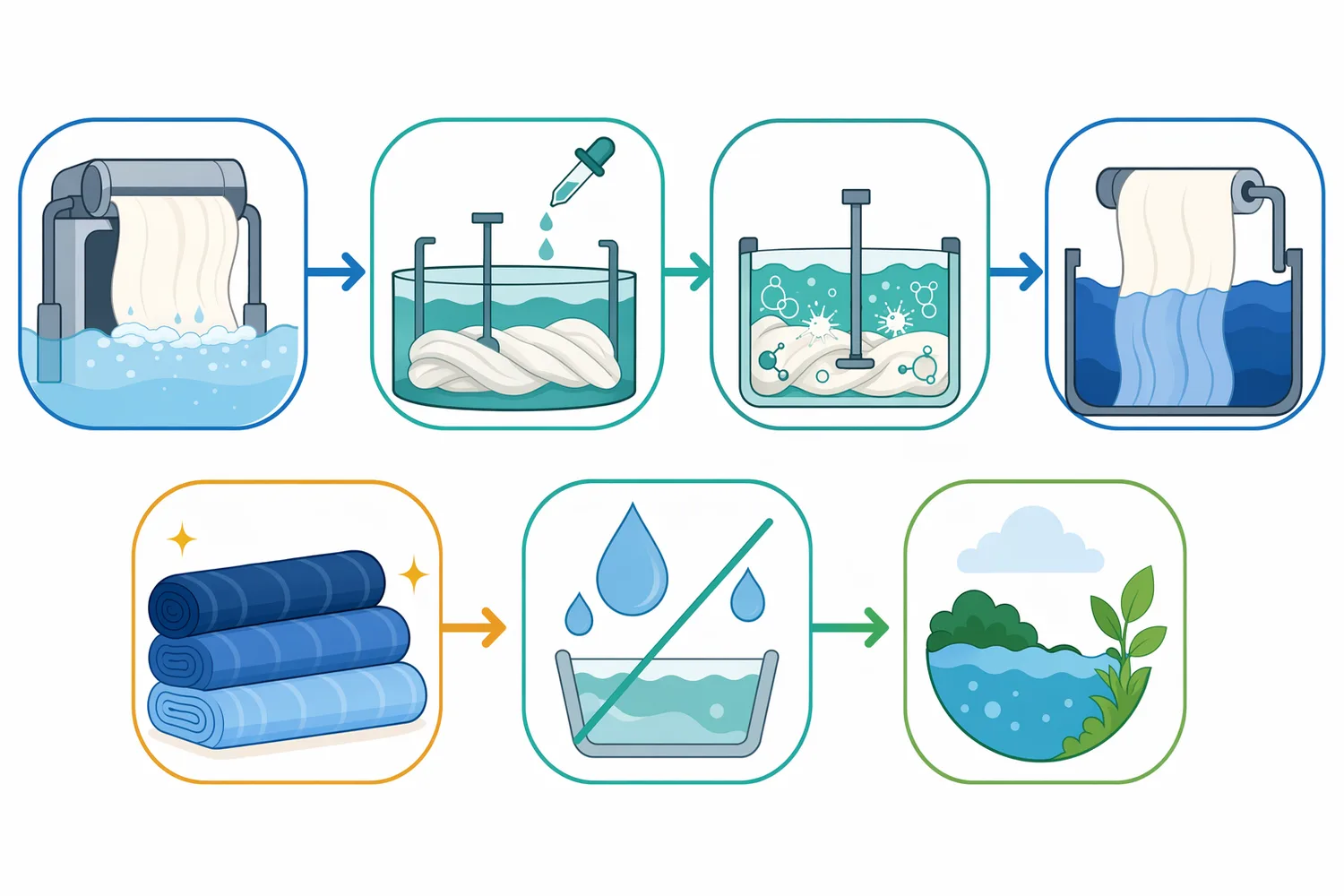
Catalase is used after peroxide has completed the bleaching step. The bleaching bath is normally too aggressive for many enzymes during its main action because peroxide bleaching is commonly associated with elevated temperature, alkaline conditions, stabilizers, and strong oxidant concentration. Catalase is therefore applied after the whitening stage, when the goal changes from oxidation of impurities to removal of remaining oxidant [1].
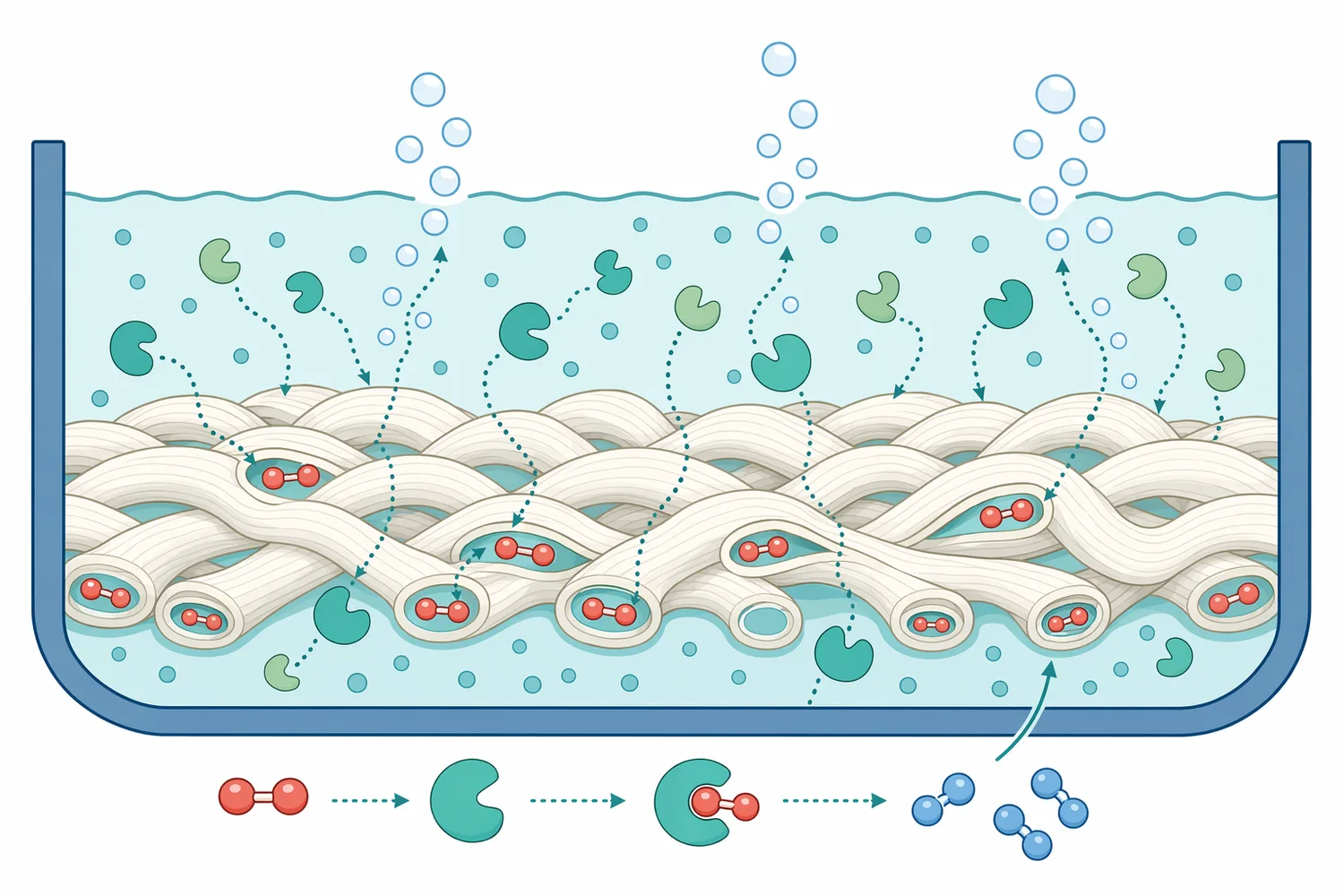
In practical terms, the fabric or bath is brought into conditions compatible with enzyme action, then the liquid catalase is introduced and mixed through the load or liquor. Contact allows the enzyme to encounter peroxide in the bath and in the moisture retained within the textile structure. As peroxide decomposes, the process can proceed toward dyeing or finishing with lower oxidant carryover [3].
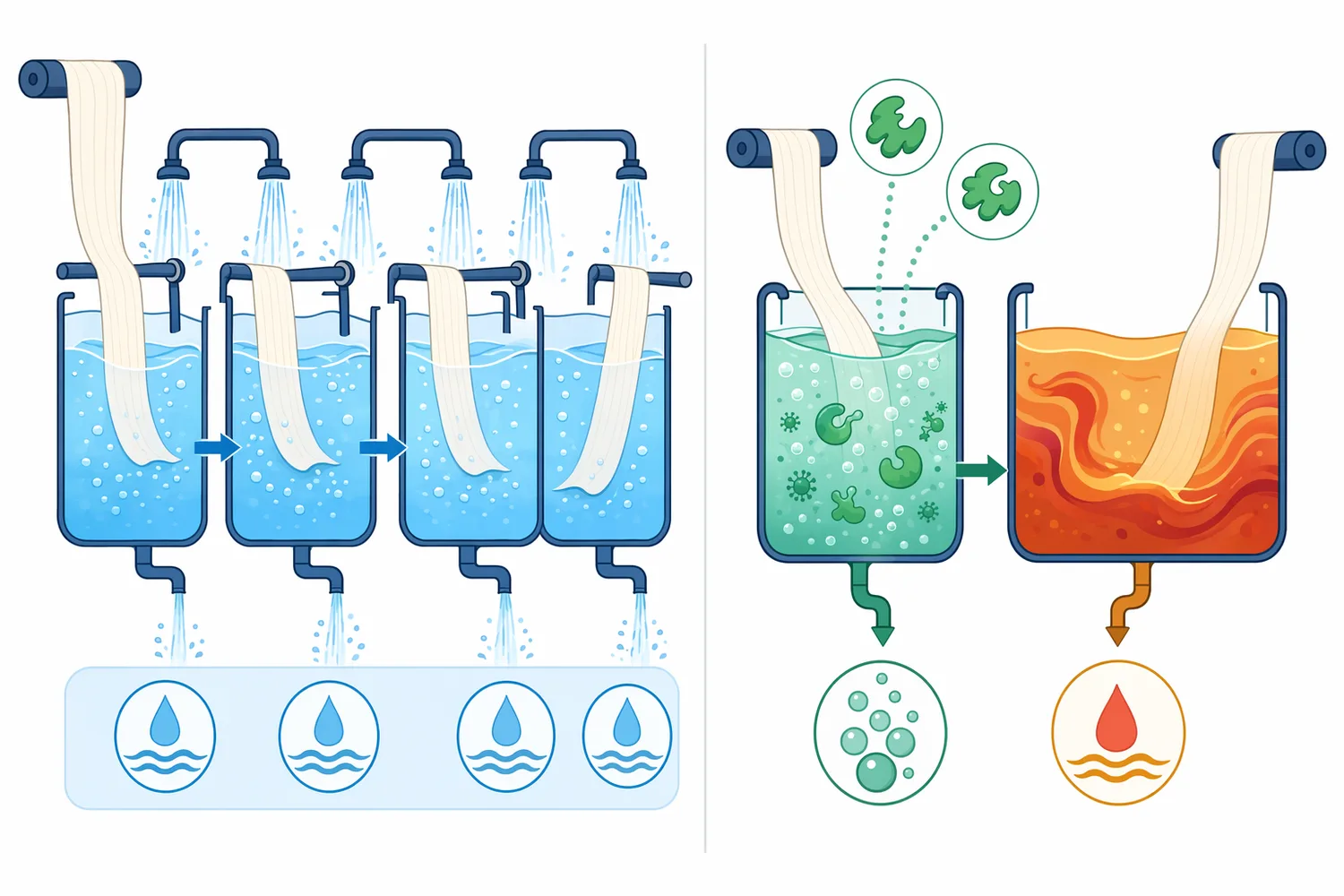
This is also why catalase is sometimes used to reduce dependence on repeated dilution rinses. Rinsing removes peroxide by physically replacing liquor; catalase removes peroxide chemically by decomposing it. In many plants, these approaches can be combined so the enzyme reduces the peroxide load that would otherwise need to be removed only by water exchange [6].
Textile processors have traditionally managed post-bleach peroxide by rinsing, chemical reduction, or process waiting time. Catalase offers a more targeted enzymatic route. The comparison below is conceptual rather than a prescription, but it shows why catalase is attractive where the specific issue is residual hydrogen peroxide.
| Approach | What changes in the bath | Main practical advantage | Main limitation |
|---|---|---|---|
| Repeated rinsing | Peroxide concentration falls mainly by dilution and liquor exchange | Simple and familiar | Can consume significant water, time, and heating or pumping capacity |
| Chemical reducing agents | Peroxide is chemically reduced by added reagents | Fast peroxide destruction when properly controlled | May add salts or byproducts and can complicate downstream bath chemistry |
| Catalase peroxide killer enzyme | Hydrogen peroxide is decomposed into water and oxygen | Targeted peroxide removal with minimal chemical residue from the reaction | Works only on peroxide and requires enzyme-compatible process conditions |
| Waiting or holding | Peroxide slowly decomposes over time | No extra chemical addition | Usually too slow or inconsistent for controlled production flow |
The distinguishing feature of catalase is the reaction product profile. Because the peroxide is converted to water and oxygen, the peroxide-removal step does not depend on adding a reducing salt to consume the oxidant. Reviews of bio-based auxiliaries in textile wet processing identify enzymes as part of the broader shift toward lower-impact processing routes, with catalase fitting especially well where hydrogen peroxide has already served its purpose [6].
Catalase does not significantly modify cellulose the way cellulase can, and it does not digest starch size the way amylase does. Its main effect is on the bath chemistry surrounding the textile. By lowering residual hydrogen peroxide, catalase reduces oxidative carryover and helps the next process begin under more predictable chemical conditions [4].
On cotton or cotton-rich substrates, peroxide can be held in retained liquor inside yarn interstices, fabric capillaries, and surface moisture. Merely draining a machine does not remove all of that carried liquor. Catalase works where water and peroxide are present, so effective mixing and fabric-liquor contact allow the enzyme to act not only in the bulk bath but also in the moisture associated with the textile structure [3].
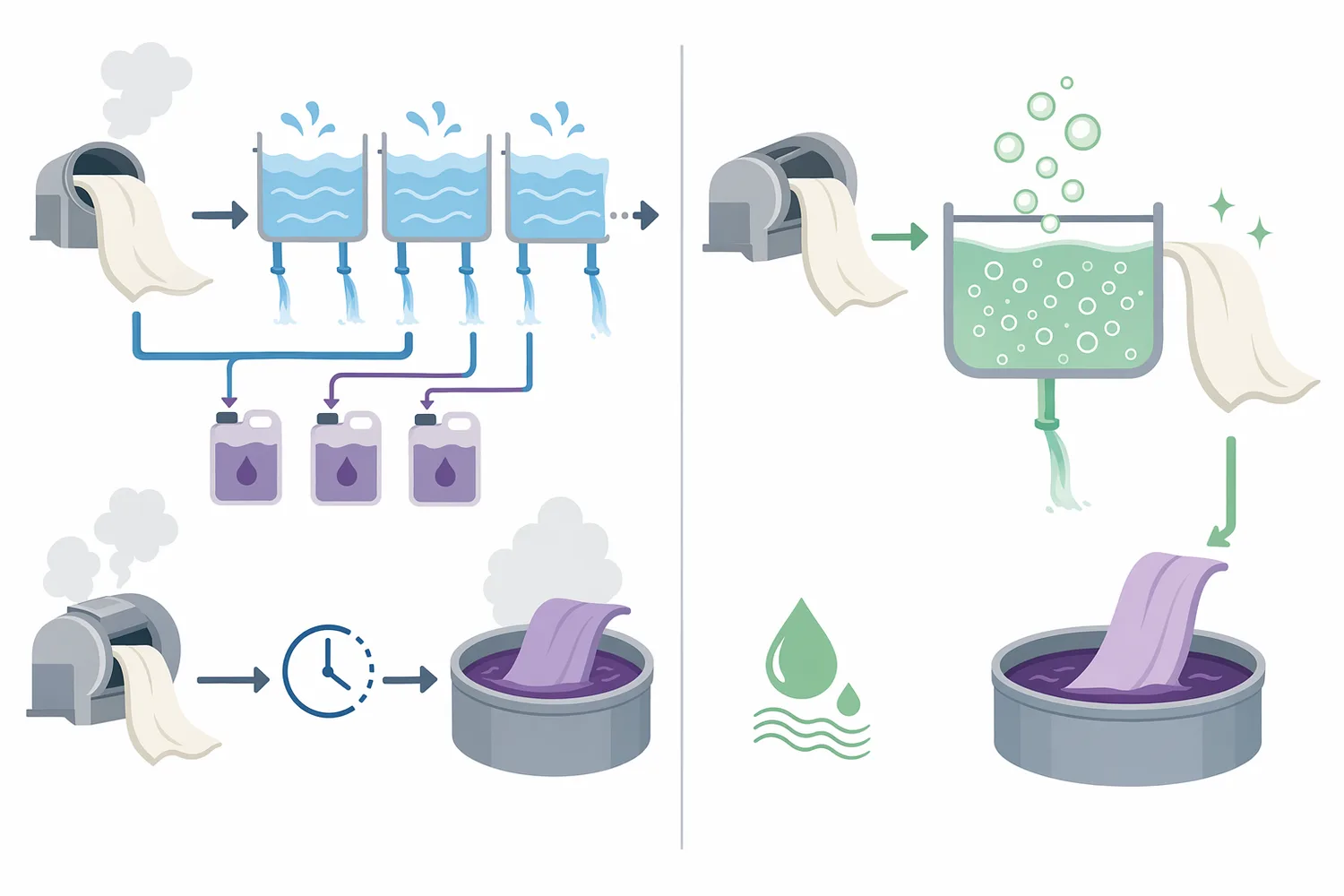
The oxygen formed during decomposition leaves the system as dissolved or released gas. The water remains part of the liquor. This is a major difference from neutralization routes that can leave additional ionic load behind. For dyeing operations that are already sensitive to electrolyte, pH adjustment, and auxiliary interactions, avoiding unnecessary extra residues can be operationally valuable [6].
The result is best described as a cleaner chemical handoff. Bleaching remains an oxidative preparation step; catalase then shuts down the remaining peroxide chemistry before coloration or finishing begins. That separation of functions is one reason catalase has become one of the more practical enzyme applications in textile wet processing [4].
Cotton bleaching is one of the clearest application areas because hydrogen peroxide is a common bleaching agent for cotton and other cellulosic materials. The purpose of bleaching is to remove natural coloration and create a uniform substrate, but the same peroxide must be managed before dyeing or finishing [1].
For reactive dyeing, peroxide removal is particularly important because reactive dyes depend on controlled reaction with cellulose under alkaline fixation conditions. Any residual oxidant represents chemistry that was not intended to be part of the dyeing stage. Catalase does not replace the need for normal dye-house control, but it reduces the chance that peroxide from the previous process becomes a hidden variable in the next one [5].
For pale shades, residual oxidant may contribute to subtle shade shifts or reproducibility issues. For deeper shades, the concern may be unevenness, dullness, or rework where peroxide carryover is not uniformly distributed across the fabric. The exact outcome depends on dye selection, fabric construction, processing route, and machine conditions, so catalase should be understood as a control tool rather than a universal correction for every dyeing defect [3].
Catalase can also be relevant in continuous or semi-continuous preparation systems where peroxide carryover into subsequent boxes or washing zones must be managed efficiently. In those systems, the benefit is often not only peroxide destruction but also better control of what chemistry moves forward with the fabric [6].
One reason catalase is valued in textile processing is that it can reduce reliance on rinse-only peroxide removal. If peroxide is present after bleaching, repeated rinsing lowers its concentration by dilution. That can be effective, but it may require multiple bath exchanges, water use, heating or cooling, pumping, and production time [4].
Catalase changes the removal mechanism. Instead of moving peroxide out of the textile through repeated dilution, the enzyme destroys the peroxide molecule itself. Where residual peroxide is a major reason for extended rinsing, this can support shorter transitions between bleaching and dyeing. The extent of the benefit depends on the process layout and how the bleaching-to-dyeing sequence is currently operated [6].
This is part of the wider sustainability case for enzymes in textile wet processing. Enzyme-based processes are often discussed because they can operate under milder conditions than conventional chemical treatments and may reduce water, energy, and chemical consumption when integrated properly [4].
The claim should be kept practical: catalase can help reduce avoidable rinsing and chemical neutralization associated with peroxide removal. It does not, by itself, eliminate the water required for scouring residues, dye washing-off, finishing preparation, or machine cleaning. Its contribution is specific to residual hydrogen peroxide management [3].
Hydrogen peroxide may also be present in textile wastewater streams after bleaching or oxidation-based treatments. While peroxide can decompose, residual concentrations may interfere with downstream biological treatment or with the interpretation of oxidative treatment steps. Catalase is relevant because it decomposes peroxide without introducing the same type of reducing-agent residues that some chemical quenching routes may add [2].
Textile wastewater treatment often deals with a complex mixture: dyes, salts, surfactants, auxiliaries, suspended solids, and oxidants. Research on textile wastewater oxidation, including Fenton-type treatment, shows that peroxide chemistry is an important part of many advanced oxidation routes, but managing residual oxidant after treatment remains part of process control [7].
Catalase should therefore be understood narrowly in effluent use. It can remove hydrogen peroxide. It does not decolorize all dyes, reduce total dissolved solids, remove heavy metals, or replace wastewater-treatment operations designed for COD, color, sludge, or biological performance. Where oxidative wastewater treatments are used, catalase may be one tool for peroxide control after the oxidation step, not a complete effluent-treatment system [8].
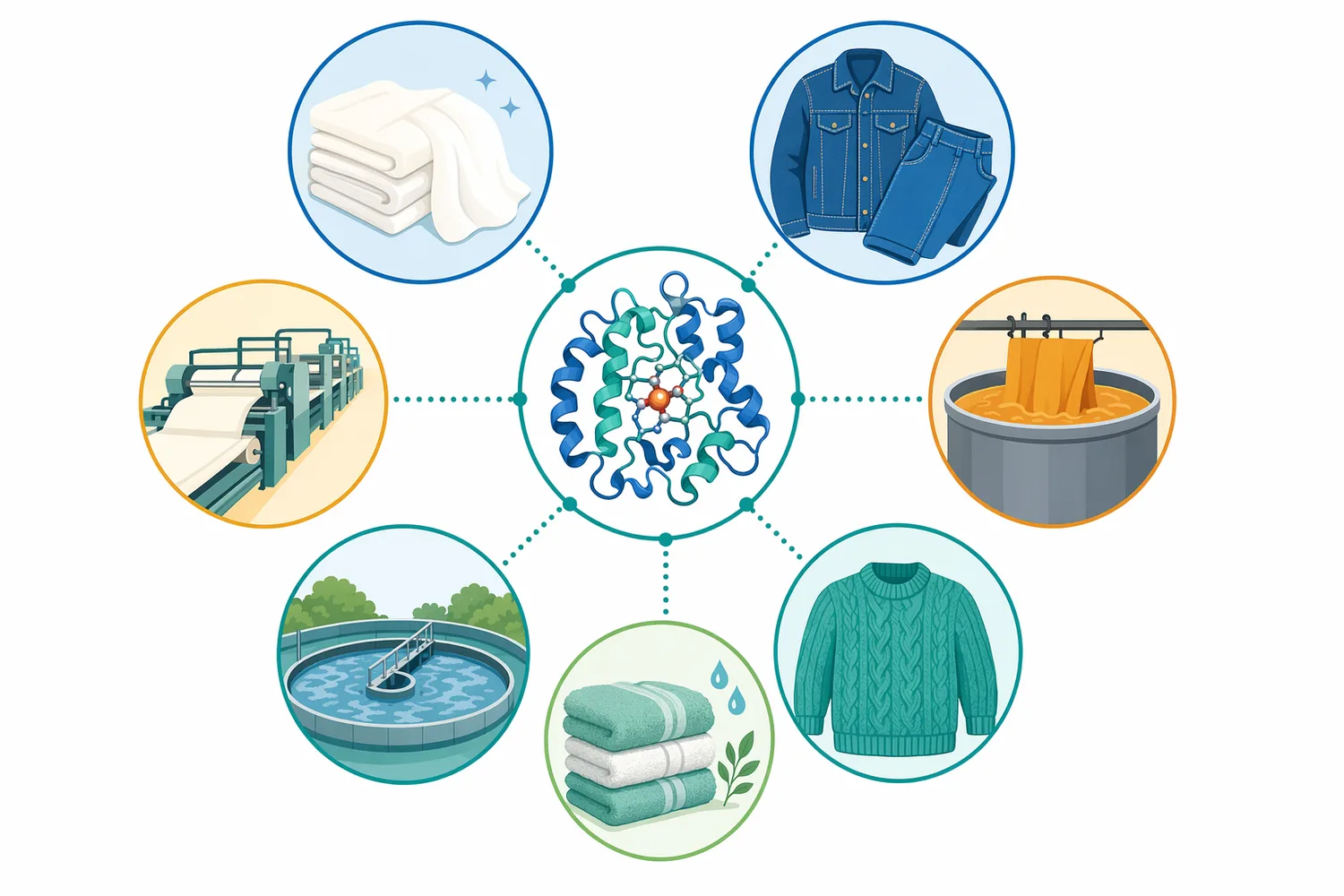
The core chemistry of catalase is well established: it decomposes hydrogen peroxide into water and oxygen. Recent reviews of catalase immobilization and applications describe catalase as a widely studied enzyme because of this specific ability to remove hydrogen peroxide in industrial and environmental contexts [2].
The textile-specific evidence is also direct. A study on recombinant alkaline catalase explicitly evaluated its application for hydrogen peroxide removal after cotton fabric bleaching, showing that catalase use in this context is not merely borrowed from food or analytical chemistry but has been studied for the textile sequence itself [3].
Broader reviews of sustainable textile processing include catalase among the enzyme systems used in wet processing, alongside amylases for desizing, pectinases for bioscouring, cellulases for surface modification, and laccases or peroxidases for oxidative color-related applications. This matters because catalase has a defined place in the enzyme toolbox rather than being presented as a general-purpose textile cure-all [4].
The larger shift toward bio-based auxiliaries also supports the relevance of catalase. Textile wet processing has been moving toward auxiliaries and process aids that can reduce environmental impact while maintaining industrial practicality. Catalase fits that trend because the substrate is common, the reaction is specific, and the products of peroxide decomposition are simple [6].
Catalase is easiest to understand when placed beside other textile enzymes. Each enzyme class acts on a different substrate. Amylase attacks starch size; cellulase acts on cellulose surfaces; pectinase targets pectic substances in natural fibers; laccases and peroxidases are associated with oxidative transformations of phenolic or dye-related structures. Catalase acts on hydrogen peroxide [4].
That substrate specificity is why catalase is normally a post-bleach enzyme rather than a desizing or biopolishing enzyme. If a fabric has residual starch size, catalase will not hydrolyze it. If the problem is surface fuzz, catalase will not polish the fiber. If the problem is residual peroxide, catalase is the enzyme designed for that molecule [9].
This distinction helps prevent unrealistic expectations. A textile process may use several enzyme types across different stages, but they are not interchangeable. Catalase’s value is strongest when the process problem is specifically the presence of hydrogen peroxide after bleaching or oxidation treatment [3].
Like all enzymes, catalase works best when the surrounding conditions allow the protein structure to remain active. Very harsh conditions can reduce enzyme performance because enzymes depend on their folded three-dimensional structure. Textile enzyme literature consistently emphasizes that enzyme processes require appropriate control of the treatment environment for reliable action [10].
In peroxide bleaching, the main bleaching stage is intentionally oxidative and often alkaline. That is not the same environment as a controlled enzymatic peroxide-removal stage. The usual logic is therefore sequential: first bleach with peroxide; then, after the bleaching function is complete and the bath is no longer being driven as a strong bleaching system, use catalase to decompose what remains [1].
The enzyme also needs contact with the residual peroxide. In fabric processing, this means the bath must circulate or mix sufficiently for liquor exchange between the bulk solution and the liquid held in the fabric. If peroxide is trapped in poorly exchanged areas, the reaction can be slower or less uniform. The mechanism is still chemical decomposition, but the physical movement of liquor determines how quickly enzyme and substrate meet [3].
Catalase is also limited by the amount of peroxide present. Extremely high residual oxidant loads can be harsher on enzyme proteins and may require process control before an efficient enzymatic cleanup step. This is a general enzyme-use principle rather than a product specification: catalase performs a precise function, but it is not intended to compensate for an uncontrolled bleaching stage [10].
The first benefit is dyeing readiness. By removing residual peroxide, catalase helps the next bath begin with less unwanted oxidative chemistry. That supports more controlled shade development, especially where peroxide bleaching is followed by reactive dyeing on cotton or cellulosic blends [5].
The second benefit is process efficiency. Because catalase decomposes peroxide directly, it can reduce the need to rely only on rinsing and dilution. This can support shorter process transitions and lower water use where peroxide removal is a major reason for repeated washing [6].
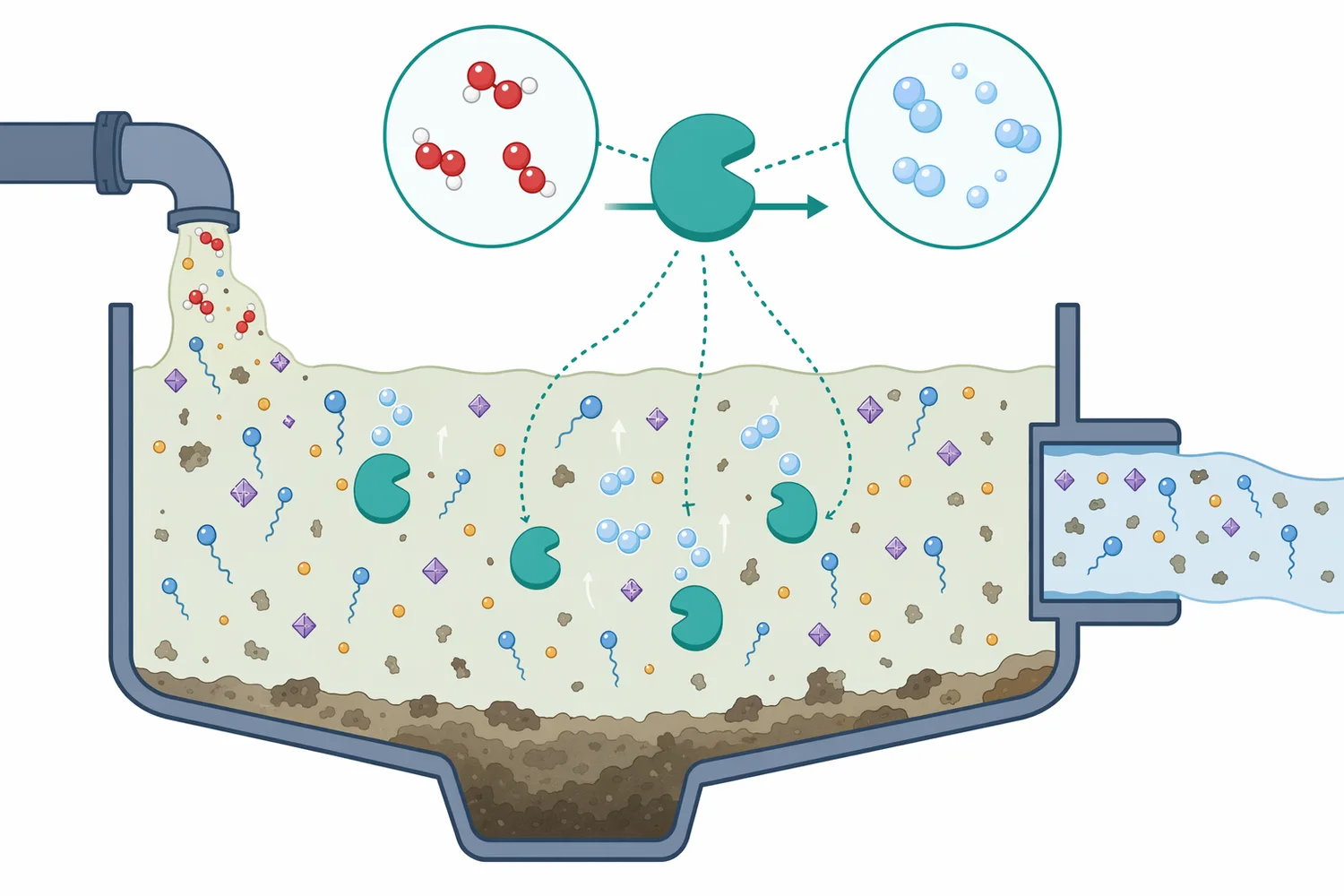
The third benefit is cleaner chemistry. Unlike some peroxide quenching routes that introduce additional reducing salts or byproducts, catalase’s target reaction produces water and oxygen. That can simplify the post-bleach chemical profile before dyeing or finishing [2].
The fourth benefit is alignment with sustainable wet processing. Enzymes are widely discussed in textile sustainability because they can replace or reduce harsher chemical steps in defined applications. Catalase is one of the more straightforward examples because its function is narrow, measurable in principle, and directly tied to a common textile oxidant [4].
Catalase does not replace hydrogen peroxide bleaching. It is added after bleaching because its role is to remove peroxide, not to create whiteness. If catalase is introduced while peroxide is still needed for bleaching, it will work against the bleaching chemistry by decomposing the active oxidant [3].
Catalase does not correct inadequate scouring or desizing. Poor absorbency, residual waxes, uneven size removal, or inconsistent fiber preparation can still cause dyeing problems even if peroxide has been removed. Those issues require the appropriate preparation chemistry or enzyme class for the substrate involved [4].
Catalase does not remove dye color from wastewater in the broad sense. Dye degradation and color removal are more often associated with oxidative enzyme systems such as laccases and peroxidases, or with advanced oxidation treatments. Catalase’s role in wastewater is peroxide decomposition, not full effluent decolorization [8].
Catalase does not eliminate the need for safe peroxide handling. Hydrogen peroxide remains an oxidizing chemical during storage, bleaching, and process transfer. The enzyme is a post-use removal tool, not a substitute for safe chemical management or site-specific operating controls [7].
Enzymes.bio supplies Catalase Enzyme Liquid for Textile – Peroxide Killer Enzyme as a professional textile enzyme product sold directly online by the 1 kg unit. The purchase is completed online, after which the order is processed and shipped. A Certificate of Analysis and Safety Data Sheet are supplied with the order .
This product is intended for textile peroxide-removal applications after hydrogen peroxide bleaching, especially where lowering peroxide carryover before dyeing, finishing, or wastewater handling is important. The key functional expectation is specific and practical: catalase decomposes residual hydrogen peroxide into water and oxygen [2].
Enzymes.bio is a supplier, not a manufacturer or testing laboratory. The value of this product information is to explain the enzyme’s role, mechanism, and application context clearly so professional buyers can understand where catalase fits in textile wet processing.
Catalase Enzyme Liquid for Textile is a focused post-bleaching enzyme for residual hydrogen peroxide removal. Its core reaction is simple and industrially useful: hydrogen peroxide is decomposed into water and oxygen, reducing oxidant carryover after peroxide bleaching [2].
For cotton and other cellulosic textile processing, catalase is most relevant between bleaching and dyeing. It supports a cleaner transition into reactive dyeing or finishing by reducing leftover peroxide that can otherwise disturb dye chemistry, increase rinse demand, or complicate process control [3].
As part of modern enzyme-assisted textile wet processing, catalase is not a universal textile auxiliary; it is a specific peroxide killer enzyme. That specificity is exactly why it is useful: when the problem is residual hydrogen peroxide after bleaching, catalase provides a targeted biochemical route for removing it.
Sold by the 1 kg unit, in stock and ready to ship. Order directly on our store — pay online and we process your order. A Certificate of Analysis and Safety Data Sheet are included with every order.
Buy Catalase Enzyme Liquid For Textile - Peroxide Killer Enzyme →Numbered in order of first citation. Open-access sources, each verified reachable at publication; citation numbers in the text link here.