
Cellulase enzyme for the paper and pulp industry is used to modify cellulose-rich fibres in a controlled way, especially in recycled paper processing, drainage improvement, enzymatic deinking, refining support, and fibre-rich waste conversion. Rather than “digesting” pulp completely, the practical value of cellulase is selective action on accessible fibre surfaces, fines, fibrils, and amorphous cellulose regions so that downstream mechanical, washing, flotation, or dewatering steps can work more efficiently [1].
Enzymes.bio supplies Cellulase Enzyme for Paper and Pulp Industry directly online by the 1 kg unit. Buyers can place and pay for the order online; the order is then processed and shipped, with a Certificate of Analysis and Safety Data Sheet included.
Cellulase is a group of enzymes that hydrolyse cellulose, the main structural polysaccharide in wood pulp, plant fibres, recycled paper furnish, and many paper-mill residues. In papermaking applications, cellulase is valuable because cellulose is both the strength-forming material in paper and the material that can cause handling problems when present as swollen fines, loose fibrils, degraded fibre fragments, or difficult-to-drain fibre networks.
The key is control. Paper and pulp operations generally do not want complete cellulose conversion into sugars. They want surface-level modification: loosening external fibrils, changing fibre swelling, reducing fines-related water retention, helping detach ink particles, or making fibres respond differently to refining. Studies on cellulose substrates show that enzymatic hydrolysis changes structure progressively, with accessibility, crystallinity, molar weight, and hemicellulose content influencing how readily cellulase can act [2].
In a pulp fibre, cellulose chains are arranged in ordered crystalline domains and less ordered amorphous regions. Cellulase attacks the more accessible regions first because the enzyme protein must physically contact the cellulose chain before it can cleave the β-1,4-glycosidic bonds. Multimodal microscopy work on cellulosic substrates has visualised structural changes during enzymatic hydrolysis, supporting the practical observation that cellulase action is not uniform through a fibre wall but begins where the substrate is accessible [3].
For a paper mill or recycled-fibre operation, this means cellulase behaves differently from a mineral acid, oxidising bleach chemical, or mechanical refiner. It does not randomly attack everything in solution. It binds, acts locally on accessible carbohydrate surfaces, and gradually changes the fibre surface and fines fraction. That is why the same enzyme family is studied for very different cellulose-rich systems, including eucalyptus pulp, dissolving pulp, recycled paper, paper sludge, and agricultural pulps [4].
Cellulase preparations may contain several complementary activities. Endoglucanases cut internal bonds in accessible cellulose chains, creating shorter chains and new chain ends. Cellobiohydrolase-type activities can work from chain ends, while β-glucosidase converts small soluble cellulose fragments such as cellobiose into glucose in full hydrolysis systems. In paper processing, the endoglucanase-type surface action is often especially relevant because it can loosen fibrils and modify fibre surfaces without requiring total fibre breakdown; endoglucanases have been specifically studied for cellulose nanocrystal production from eucalyptus dissolving pulp [5].
At the fibre level, controlled cellulase treatment can produce several practical effects. External fibrils may be trimmed or loosened. Very small fibre fragments and fines may become less problematic because their surface chemistry and size distribution change. Fibre walls may become more open or more susceptible to subsequent mechanical action. In high-consistency enzymatic hydrolysis research, treatment and subsequent defibration/drying were shown to affect cellulose fibre pore characteristics, demonstrating that enzyme action can influence the internal pore structure as well as the outer surface [6].
These changes matter because water in pulp is held not only between fibres but also within swollen fibre walls and within the fines-rich network around fibres. When cellulase reduces excessive fibrillation or alters accessible fibre surfaces, drainage and freeness can improve in suitable systems. A 2023 study focused specifically on reducing fines in recycled paper white water using cellulase enzymes, which is directly relevant to mills dealing with recirculating fines and suspended fibre fragments [1].
Cellulase action is also substrate-dependent. Research comparing sisal pulp, filter paper, and microcrystalline cellulose found that average molar weight, crystallinity, and hemicellulose content affect enzymatic hydrolysis. For paper applications, this explains why hardwood kraft pulp, softwood mechanical pulp, office wastepaper, and sludge fibres do not respond identically: the enzyme “sees” a different physical and chemical surface in each furnish [2].
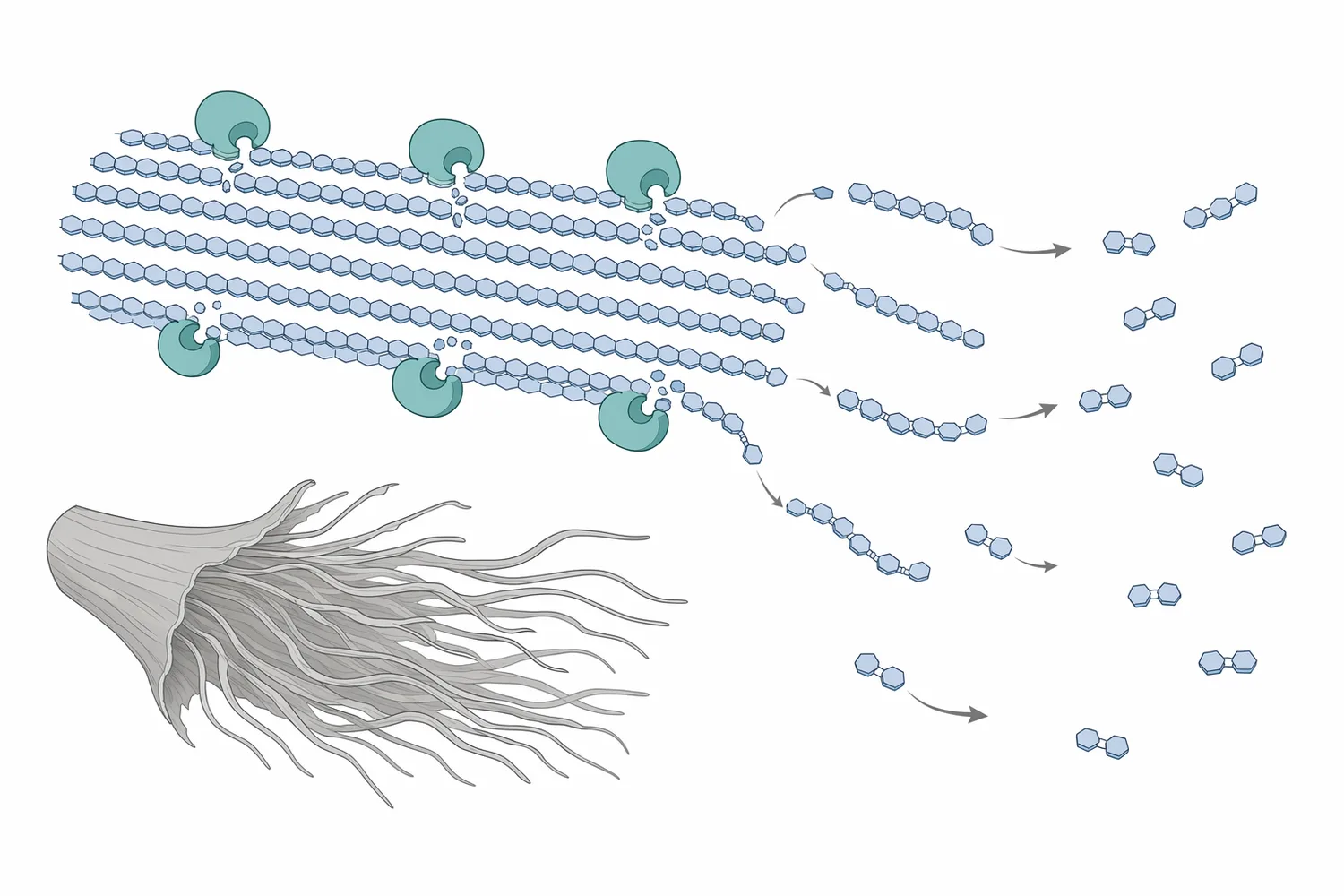
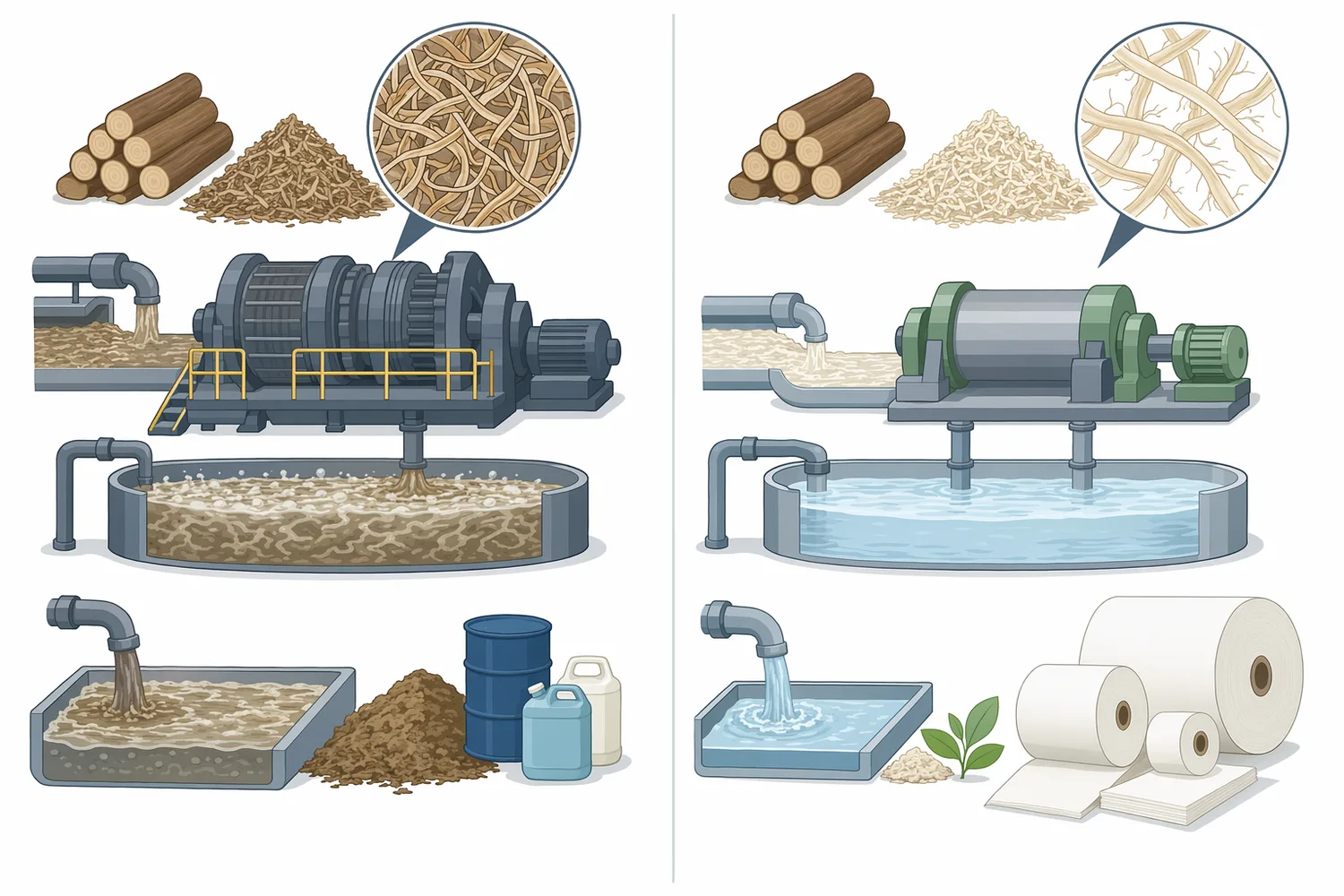
A useful way to understand cellulase in papermaking is to separate controlled fibre modification from intensive cellulose hydrolysis. Both rely on the same broad enzyme chemistry, but the process objective is very different.
| Use pattern | Main purpose | What cellulase changes | Typical paper-industry relevance |
|---|---|---|---|
| Controlled fibre-surface modification | Improve handling, drainage, refining response, or deinking | Accessible surface cellulose, fibrils, fines, fibre swelling | Recycled pulp, deinking lines, white-water fines control, refining support |
| Partial hydrolysis for functional cellulose materials | Produce smaller cellulose structures or change morphology | Amorphous cellulose regions and accessible chain segments | Cellulose nanocrystals, nanocellulose preparation, speciality fibre modification |
| Intensive hydrolysis for sugar release | Convert cellulose-rich residues into soluble sugars | Larger fraction of cellulose chains, depending on accessibility | Paper sludge valorisation, bioethanol or biochemical platforms |
| Enzyme-assisted biobleaching systems | Support cleaner pulp processing with carbohydrate-active enzymes | Fibre-associated carbohydrates and surface-accessible components | Selected pulp bleaching or pre-bleaching strategies |
This distinction is important because benefits in papermaking usually come before excessive fibre damage. If cellulase action continues too far, fibre shortening and cellulose loss can reduce strength or yield. Research on mechanical pulp fibre morphology has examined how incubation conditions affect cellulase hydrolysis outcomes, reinforcing that time, temperature, furnish structure, and treatment intensity can shift the result from useful modification to over-treatment [7].
The same principle appears in nanocellulose research. Compound enzymatic hydrolysis of eucalyptus pulp has been used to prepare morphology-controlled cellulose nanocrystals, where the objective is deliberately to break down selected cellulose regions to obtain nanoscale structures. That is a more intensive use than routine drainage or deinking support, but it helps explain the mechanism: cellulase preferentially opens and cleaves accessible cellulose domains, allowing fibre morphology to be steered by treatment conditions [8].
For everyday pulp and paper operations, cellulase should therefore be viewed as a precision biological processing aid. It is not a substitute for the entire refining system, deinking chemistry, or papermachine wet end. It is a tool that can change fibre behaviour enough to make existing unit operations work differently.
Recycled paper contains ink particles attached to or trapped within fibre surfaces, coating layers, fillers, binders, starches, and fines. Conventional deinking relies on chemical, mechanical, washing, and flotation steps to detach and separate ink. Cellulase contributes by weakening the fibre-surface material that helps hold ink in place, especially where ink is associated with fibrils, damaged fibre surfaces, or fines.
The mechanism is physical as well as chemical. By hydrolysing accessible cellulose at or near the fibre surface, cellulase can loosen microfibrils and reduce the attachment points that retain ink particles. Once released, ink particles can be more effectively removed by washing or flotation, provided the rest of the deinking system is suitable. Stabilized cellulase in chitosan–polyvinyl alcohol biopolymer beads has recently been studied for sustainable enzymatic deinking of recycled paper, showing continuing research interest in cellulase-based deinking systems [9].
Enzymatic deinking is particularly attractive because recycled furnish is variable and often contains a high load of fines and surface contaminants. Cellulase does not need to dissolve all contaminants to be useful; it can make the fibre surface less able to hold them. This is why cellulase-based deinking is often described as a support technology rather than a stand-alone replacement for all deinking chemistry and separation equipment.
There is also interest in making cellulase use more recyclable or recoverable in wastepaper treatment. A 2024 study described a UCST-type soluble immobilized cellulase strategy for degradation and improved recycling performance of wastepaper cellulose. Although immobilized systems are a research direction rather than a universal mill setup, the work reflects a broader trend: applying cellulase to wastepaper in ways that improve process efficiency while managing enzyme use more sustainably [10].
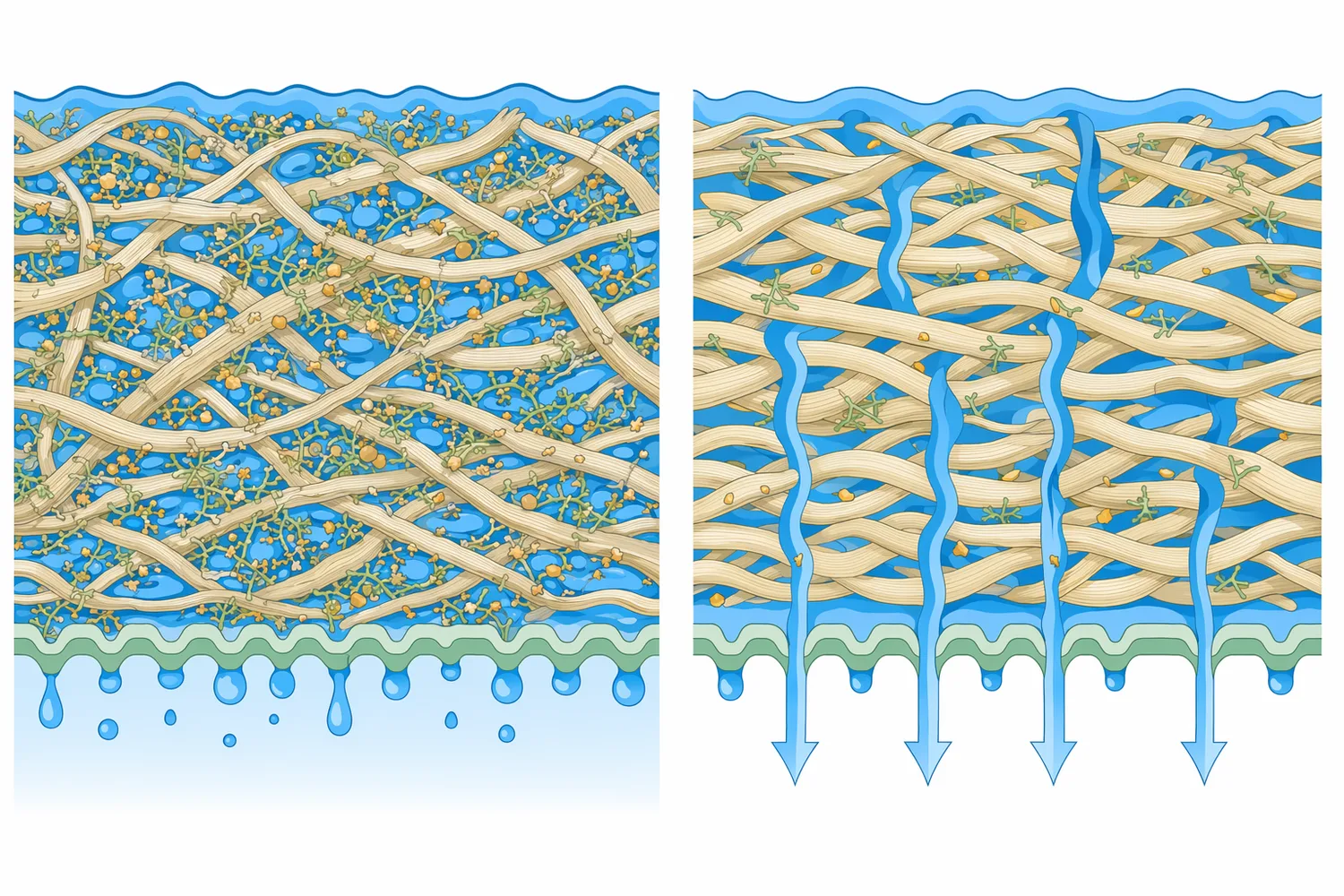
Drainage limitations are common in recycled fibre and high-fines systems. Fines and fibrils create a dense network that traps water, slows dewatering, and can contribute to deposits or instability in white-water loops. Cellulase can help by acting on the cellulose-rich portion of these fines and fibrils, changing their ability to bind water and remain suspended.
A direct example is the 2023 work on reduction of fines in recycled paper white water via cellulase enzymes. The focus of that study is highly practical: white water contains fibre fragments and fines that recirculate through the process, and enzymatic reduction or modification of those particles can support cleaner water circuits and better fibre handling [1].
In pulp, “freeness” is often a practical indicator of how readily water drains from a fibre suspension. Cellulase can increase or decrease freeness depending on furnish and treatment severity. Light surface trimming may improve drainage; stronger treatment combined with refining can create more fibrillation and reduce freeness. This dual behaviour is not a contradiction—it reflects the fact that cellulase changes the fibre structure, and the direction of the mill result depends on how that changed fibre is subsequently processed.
Pore structure also matters. High-consistency enzymatic hydrolysis and defibration drying have been shown to affect cellulose fibre pore characteristics, which helps explain why cellulase-treated fibres can show different water-retention and drying behaviour. When fibre-wall pores open, collapse, or redistribute, the pulp’s interaction with water changes at a structural level rather than only at the surface [6].
Refining develops pulp fibres by mechanical compression, shear, and fibrillation. It increases bonding potential but consumes energy and can also shorten fibres or generate excessive fines. Cellulase treatment can make fibres more responsive to refining because it weakens selected accessible cellulose regions before mechanical action is applied.
At the microscopic level, cellulase can loosen external fibrils and create vulnerable points in the fibre wall. During refining, those points can open more readily, producing internal or external fibrillation with less mechanical resistance. That is why cellulase is often discussed as a refining aid: it can change the fibre’s response to the refiner rather than replace the refiner.
Recent work on cellulase hydrolysis and mechanical pulp fibre morphology confirms that incubation conditions influence the morphology of treated fibres. This is relevant because mechanical pulps contain fibres with different lignin content, stiffness, and surface accessibility than bleached chemical pulps; the same cellulase action can therefore produce a different balance of fibrillation, shortening, and fines generation [7].
Research on virgin mixed hardwood pulp treated with cellulase and chemicals has also evaluated recycling potential. This type of work is important because recycled fibre quality is not determined only by one pass through a paper machine; fibre history, drying, hornification, chemical exposure, and enzymatic treatment all influence how well fibres can be reused [11].
Cellulase is not primarily a lignin-removing enzyme, so it should not be described as a direct replacement for oxidative bleaching chemistry. Its main substrate is cellulose, while bleaching targets chromophores and lignin-derived structures. However, cellulase can still be relevant in enzyme-assisted pulp processing because fibre-surface carbohydrates influence chemical penetration, washing, and the accessibility of residual coloured materials.
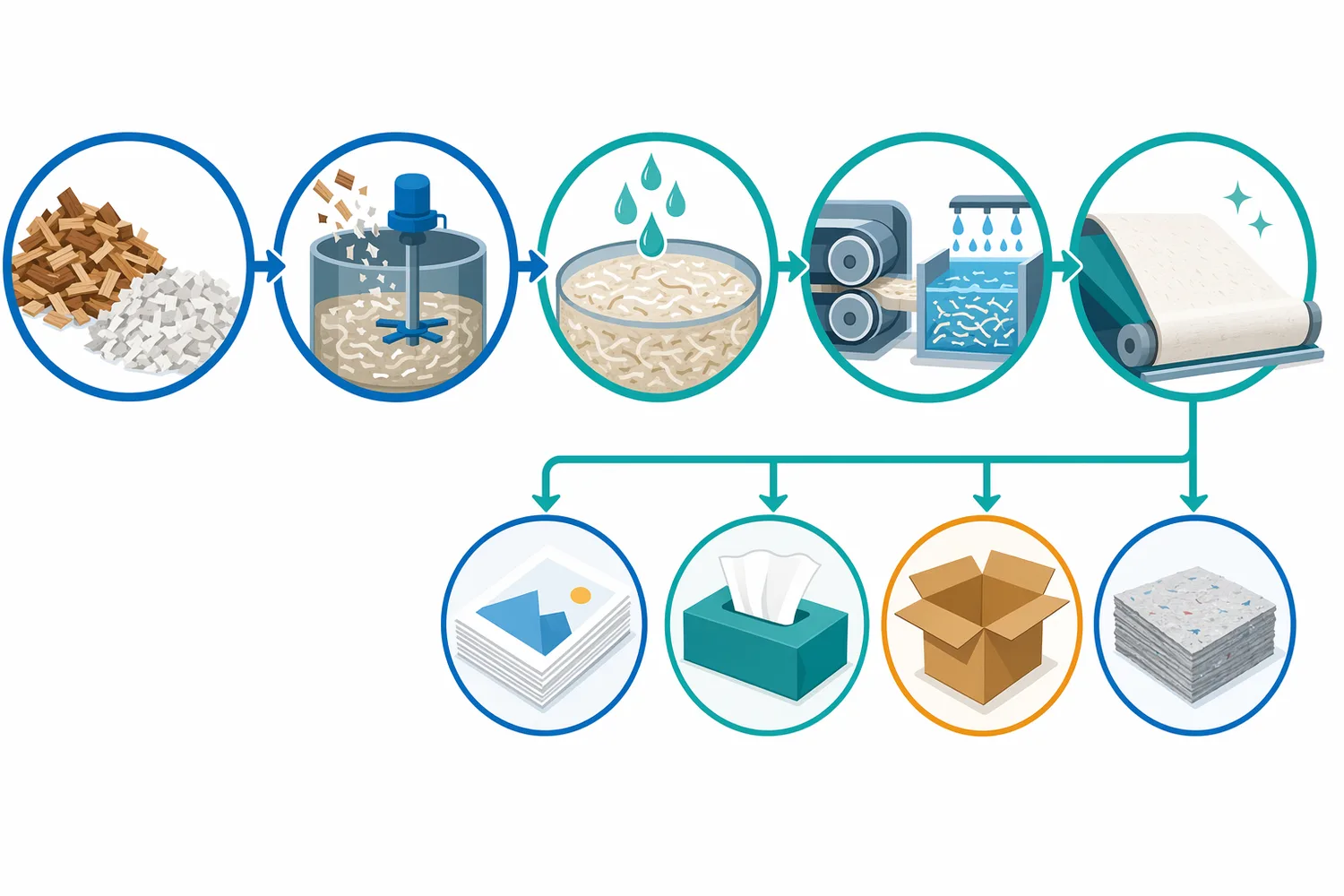
A 2021 study investigated a novel fungal enzymatic cocktail as an eco-friendly alternative for cellulose pulp biobleaching. The phrase “enzymatic cocktail” matters: in biobleaching, cellulase may work alongside other carbohydrate-active enzymes rather than acting alone. Such systems can modify surface polysaccharides and help improve the effectiveness of downstream treatment steps [12].
The practical interpretation is balanced. Cellulase can support selected cleaner-processing strategies when controlled carbohydrate modification improves fibre accessibility or removes interfering surface material. It should not be expected to oxidise lignin the way dedicated oxidative bleaching chemistry does.
This is also why cellulase dosage and exposure must be moderated in bleaching-related use. Too little action may not change accessibility enough to matter; too much action may weaken cellulose fibres. The best-supported role is targeted modification in a broader process, not uncontrolled cellulose degradation.
Beyond conventional papermaking, cellulase is studied for producing cellulose nanocrystals and nanocellulose from pulp. These applications are more intensive than normal drainage or deinking support, but they provide valuable evidence about how cellulase acts on pulp-derived cellulose.
An economic assessment examined conversion of bleached eucalyptus kraft pulp into cellulose nanocrystals using acid and enzymatic hydrolysis. This shows that enzymatic routes are being considered not only scientifically but also in process and cost contexts for higher-value cellulose materials [4].
Another study integrated cellulose nanocrystal production into a biochemical sugar platform process via enzymatic hydrolysis at high solid loading. High-solids work is important because industrial cellulose processing often cannot rely on very dilute systems; water handling, mixing, and solids content affect both economics and enzyme–substrate contact [13].
Compound enzymatic hydrolysis of eucalyptus pulp has also been used to prepare morphology-controlled cellulose nanocrystals. Mechanistically, this confirms that enzyme treatment can influence particle dimensions and morphology by preferentially hydrolysing more accessible cellulose regions while leaving more resistant crystalline regions behind [8].
Ultrasound-assisted bio-enzyme heat treatment has been studied for nanocellulose preparation with different pectinase/cellulase ratios and pretreatment times. While this is not a standard paper-machine application, it illustrates how cellulase can be combined with physical treatment and other enzymes to alter fibre structure in a controlled way [14].
Paper sludge and fibre-rich residues contain cellulose that may still have value. In conventional papermaking, sludge is often treated as a waste or low-value by-product. In biorefinery-style applications, cellulase can hydrolyse residual cellulose into fermentable sugars or smaller carbohydrate streams.
Research on valorising recycled paper sludge by a bioethanol production process with cellulase recycling demonstrates this direction clearly. The process goal is different from papermaking: instead of preserving fibre strength, the objective is to convert cellulose into soluble sugars that can be fermented [15].
Kinetic modelling of cellulase recycling in paper sludge-to-ethanol fermentation has also been studied. Modelling matters because enzyme retention, reuse, and hydrolysis rate influence whether fibre-rich residues can be converted efficiently at process scale [16].
Paper waste has also been used as a substrate in studies on producing biomass and cellulase enzyme with local bacterial isolates. This is a circular concept: cellulose-containing waste can serve both as a feedstock and as a target for enzyme-enabled recycling pathways [17].
These residue applications should be separated from normal papermaking objectives. In sludge valorisation, cellulose breakdown is desired. In papermaking, cellulose preservation is usually essential. The same enzyme family can serve both purposes because the outcome depends on how far hydrolysis is allowed to proceed.
Cellulase performance in paper and pulp systems is governed by accessibility. Cellulose locked inside a highly crystalline, hornified, lignified, or chemically shielded fibre wall is harder for an enzyme to attack than loose fibrils or amorphous surface material. That is why recycled fibres, bleached kraft fibres, mechanical pulp, dissolving pulp, and agricultural pulps can show different responses.
A study on cellulose from potato pulp found that physicochemical properties of cellulose affect enzymatic hydrolysis by cellulase. Although potato pulp is not wood pulp, the principle transfers directly: cellulose structure, surface area, and associated non-cellulosic components determine how efficiently cellulase reaches and cleaves its substrate [18].
Hemicellulose content is another factor. Hemicelluloses can either increase accessibility by disrupting crystallinity or block cellulase contact depending on how they are arranged in the fibre wall. Comparative work on sisal pulp, filter paper, and microcrystalline cellulose specifically identified hemicelluloses content, crystallinity, and molar weight as important variables in enzymatic hydrolysis [2].
In recycled paper, the substrate is even more complex. Fibres may have been dried, printed, coated, chemically treated, and mechanically damaged. This history changes swelling, surface area, pore structure, fines generation, and ink attachment. Cellulase can still be useful, but its effect is mediated by the actual condition of the furnish, not only by the nominal fibre source.
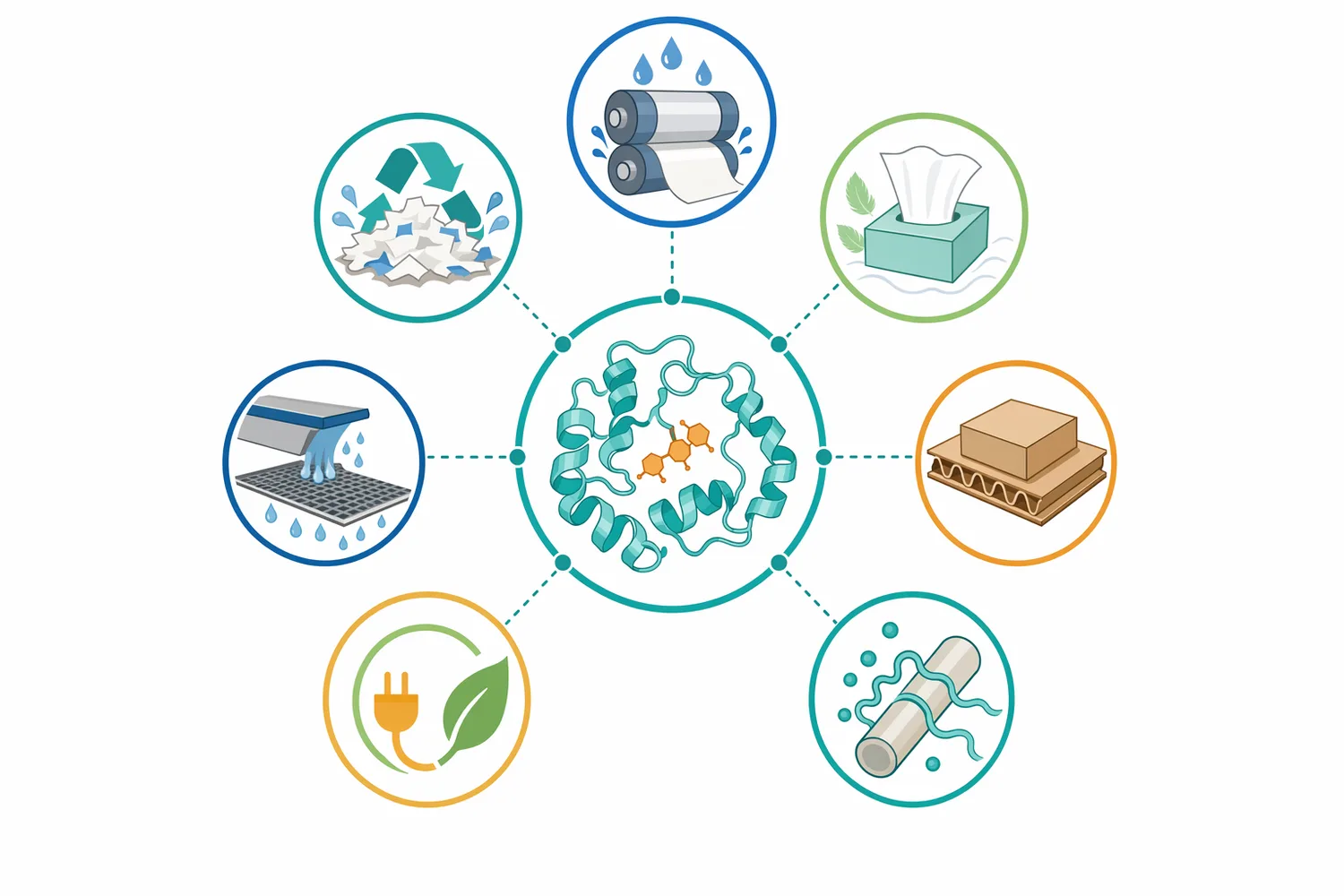
| Application area | What the enzyme is doing | Practical process value |
|---|---|---|
| Recycled paper deinking | Loosens cellulose-rich surface material and fibrils that help retain ink | Supports ink release before washing or flotation |
| White-water fines control | Hydrolyses or modifies cellulose-rich fines and fibrils | Helps manage suspended fibre fragments in recycled systems |
| Drainage and dewatering support | Changes fibre swelling, fines behaviour, and pore structure | Can improve water release in suitable furnishes |
| Refining support | Makes selected fibre regions more responsive to mechanical action | May alter refining response and fibre development |
| Biobleaching support | Modifies carbohydrate surfaces in enzyme-assisted pulp treatment | Can support cleaner processing in selected enzyme-cocktail systems |
| Nanocellulose and cellulose nanocrystals | Hydrolyses accessible cellulose to steer morphology | Produces speciality cellulose materials from pulp |
| Paper sludge valorisation | Converts residual cellulose toward soluble sugars | Supports bioethanol or biochemical routes from fibre-rich residues |
This range of applications is possible because cellulose is present throughout the paper value chain: in virgin pulp, recycled furnish, fines, broke, sludge, and speciality cellulose streams. What changes is the intended endpoint—preserved fibre performance for papermaking, or deeper hydrolysis for conversion processes.
The best expectation for cellulase in paper and pulp processing is incremental process support, not a universal transformation. In the right fibre system, cellulase can help with deinking, drainage, fines management, refining response, and cleaner processing. In the wrong context or with excessive treatment, the same hydrolysis chemistry can reduce fibre length, weaken bonding potential, or lower usable yield.
This is why current research spans both practical mill problems and advanced cellulose conversion. Studies cover recycled paper white water, wastepaper cellulose recycling, mechanical pulp morphology, pulp biobleaching, cellulose nanocrystals from eucalyptus pulp, high-solid enzymatic hydrolysis, and paper sludge fermentation. Together, they show that cellulase is technically credible across the paper and pulp sector, but also that outcomes depend on the fibre structure and the process objective [19].
For buyers using Cellulase Enzyme for Paper and Pulp Industry, the most realistic value proposition is controlled biological modification of cellulose-rich material. It can assist existing process steps by changing what happens at the fibre surface: ink releases more readily, fines behave differently, water drains differently, or fibres respond differently to mechanical action.
Enzymes.bio supplies this cellulase product online in 1 kg units. Orders are placed and paid for online, then processed and shipped with the accompanying Certificate of Analysis and Safety Data Sheet.
Cellulase enzyme is a practical processing aid for cellulose-containing streams in the paper and pulp industry. Its value comes from selective hydrolysis of accessible cellulose, especially at fibre surfaces, fines, fibrils, and amorphous regions, rather than from complete fibre destruction.
The strongest application areas are recycled paper deinking, drainage and fines management, refining support, controlled fibre modification, selected biobleaching support, speciality cellulose production, and paper sludge valorisation. Published research supports cellulase action across these areas, including recycled paper white-water fines reduction, wastepaper cellulose recycling, pulp biobleaching, cellulose nanocrystal preparation, and paper sludge-to-ethanol processes [1].
Used with the right process objective, cellulase helps make cellulose fibres behave differently: cleaner surfaces, altered swelling, changed pore structure, modified fines, and improved accessibility for downstream operations. That controlled fibre-level change is the reason cellulase remains one of the most relevant enzyme tools for modern paper and pulp processing.
Sold by the 1 kg unit, in stock and ready to ship. Order directly on our store — pay online and we process your order. A Certificate of Analysis and Safety Data Sheet are included with every order.
Buy Cellulase Enzyme For Paper And Pulp Industry →Numbered in order of first citation. Open-access sources, each verified reachable at publication; citation numbers in the text link here.