
Cellulase enzyme powder for animal feed additives helps break down cellulose-rich plant cell walls so nutrients trapped inside fibrous feed ingredients become more accessible during digestion. In practical feed use, it is most relevant for diets containing forages, brans, hulls, crop residues, silage materials, distillers grains, palm kernel cake, corn stover, sugarcane tops, or other higher-fiber plant inputs. Enzymes.bio supplies Cellulase Enzyme Powder for Animal Feed Additives directly online by the 1 kg unit; buyers pay online, the order is processed and shipped, and a Certificate of Analysis and Safety Data Sheet accompany the order .
Cellulase should be understood as a substrate-targeted feed enzyme, not as a universal growth promoter. Its value comes from a clear biochemical function: it hydrolyzes cellulose-type β-linked glucan structures in plant cell walls, weakening the fiber barrier that can otherwise limit access to starch, protein, lipids, minerals, and fermentable carbohydrate fractions.
Modern animal diets often contain plant ingredients that are nutritionally useful but physically protected by cell-wall architecture. Cereal grains, oilseed meals, forage meals, silages, straw-based feeds, agro-industrial by-products, and distillers grains all contain varying proportions of structural carbohydrate. Some of this fiber is valuable for rumen function or gut health, but part of it also acts as a physical barrier that limits the contact between endogenous digestive enzymes, microbial enzymes, and the nutrients inside plant cells.
Cellulose is one of the main load-bearing polymers in plant cell walls. It is built from glucose units joined through β-1,4 linkages, forming long chains that associate into resistant fibrils. Animals do not generally produce enough of their own cellulase to hydrolyze this structure efficiently. Ruminants depend heavily on rumen microbes for fiber degradation, while monogastric animals such as poultry, pigs, and fish have more limited capacity to extract nutrients from cellulose-rich material. This is why exogenous fiber-degrading enzymes are studied across livestock and aquaculture diets, including cattle, goats, pigs, broilers, ducks, rabbits, and fish [1].
The practical issue is not only “fiber percentage” on a feed label. Two ingredients with similar crude fiber values may behave differently depending on lignification, particle size, heat history, fermentation status, soluble versus insoluble fiber composition, and the degree to which nutrients are trapped inside the cell-wall matrix. For example, studies in ruminants have examined enzyme-treated sugarcane tops, fermented corn straw, corn stover silage, and agro-industrial waste-based complementary feeds because these materials can provide useful nutrients but are constrained by fibrous structure [2].
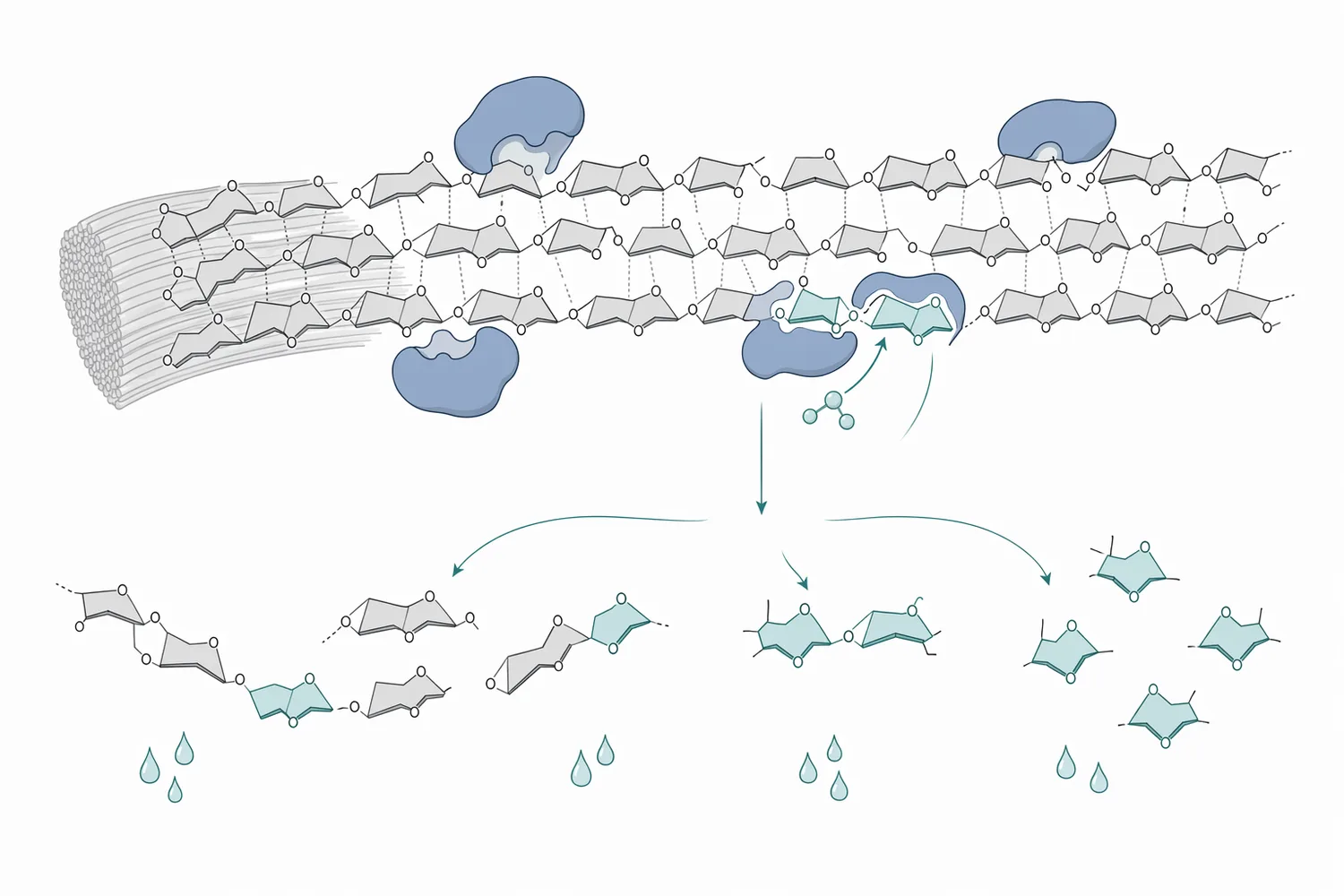
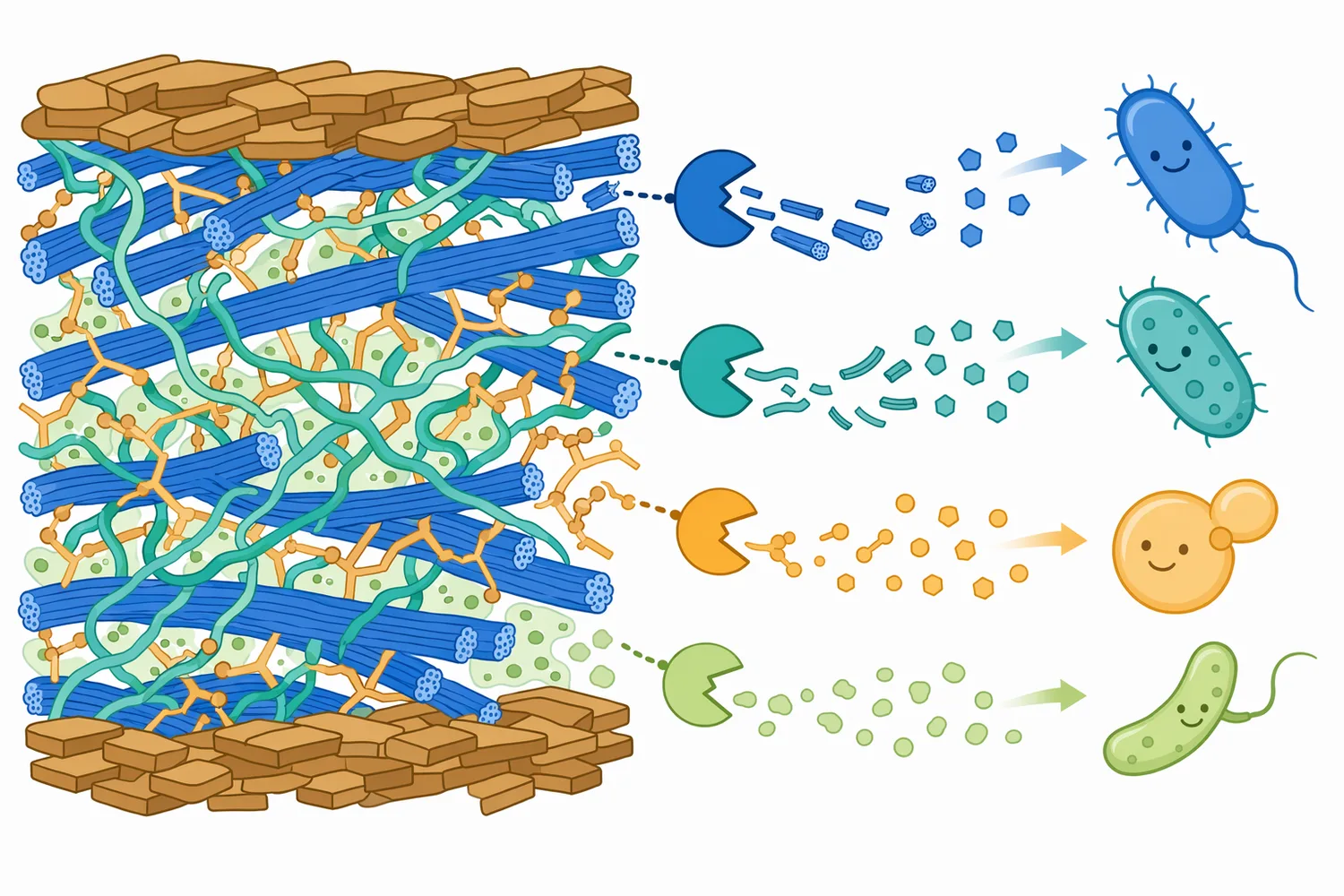
Cellulase is not a single mechanical grinder or acid treatment. It is an enzyme system that catalyzes hydrolysis: water is used to cleave specific chemical bonds in cellulose-like polysaccharides. In practical feed terms, cellulase attacks the β-linked glucan chains that help plant cell walls maintain strength. As those chains are cut into shorter fragments, the wall structure becomes less intact, surface area increases, and nutrients previously shielded by the wall become more reachable by digestive enzymes and microbes.
A useful way to picture the mechanism is to imagine plant cellulose as bundled rope embedded in a wall. Endo-acting cellulase activity cuts within the rope, creating new exposed ends. Exo-acting activity works from those ends and releases shorter soluble units such as cellobiose. β-glucosidase activity can then split cellobiose into glucose. Complete conversion of all cellulose to glucose is not normally the practical target in feed; the more important effect is partial deconstruction of the cell wall so digestion and fermentation can proceed more effectively.
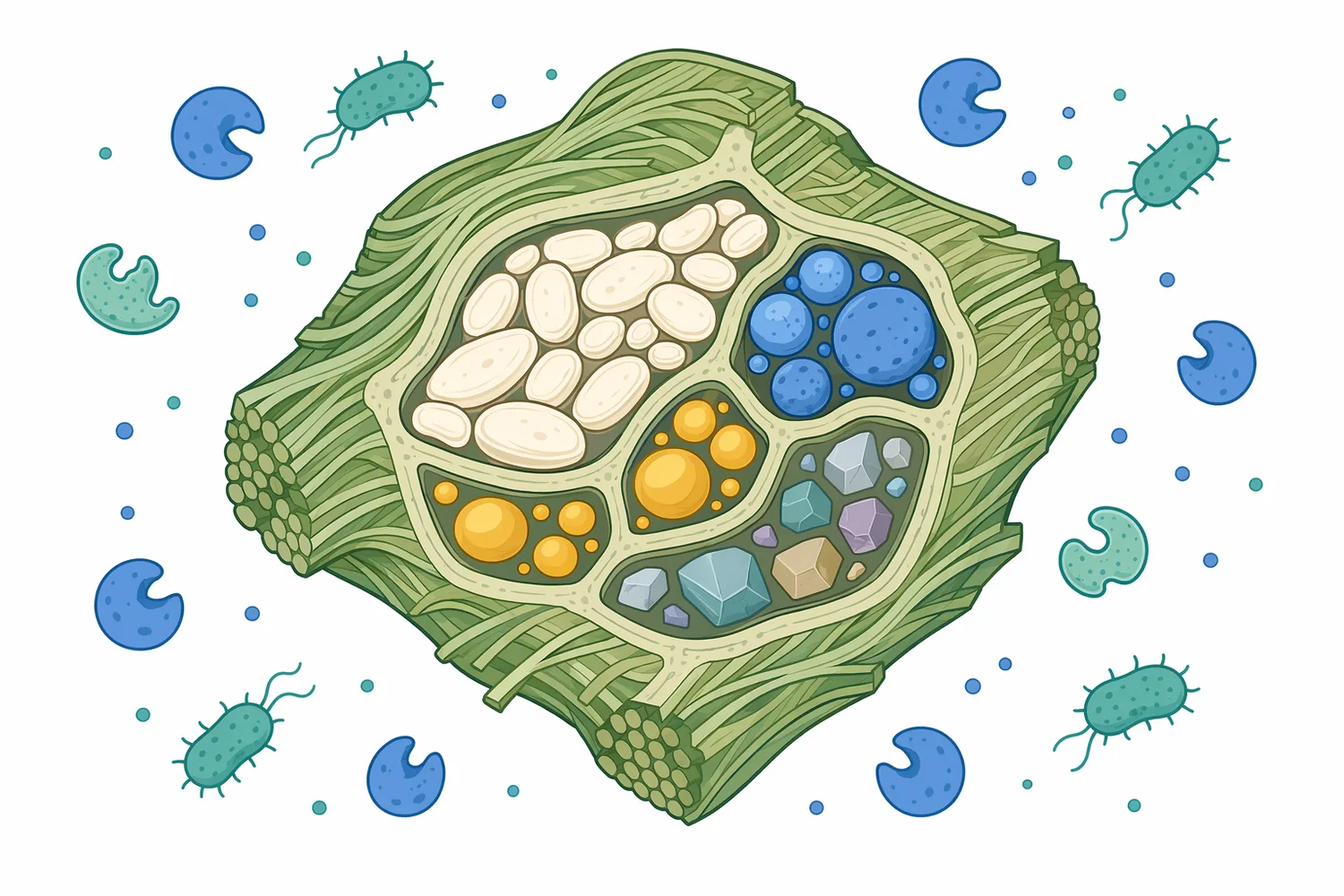
This mechanism matters because the “nutrient release” effect is physical as well as chemical. When cellulose is hydrolyzed, plant tissue can soften, encapsulated protein and starch can become more exposed, and microbial attachment sites can increase. In ruminant feeds, this may support rumen fermentation of fibrous material. In monogastric diets, it can reduce the nutritional penalty of some plant by-products by making a portion of cell-wall-bound nutrients more accessible before they leave the digestive tract.
Cellulase also fits into a wider group of feed enzymes that target different substrates. Xylanase acts mainly on arabinoxylans and other hemicellulose fractions, β-glucanase on cereal β-glucans, β-mannanase on mannans, phytase on phytate-bound phosphorus, and protease on protein. Cellulase is specifically relevant when cellulose-rich cell-wall structure is a meaningful limitation in the diet, which explains why multi-enzyme systems are frequently studied in diets built around complex plant ingredients rather than purified starch-protein formulations [3].
| Enzyme type | Main feed substrate | What changes in the feed matrix | Typical relevance in animal diets |
|---|---|---|---|
| Cellulase | Cellulose and cellulose-like β-linked glucan structures in plant cell walls | Weakens structural fiber, opens plant tissue, improves access to nutrients trapped inside fibrous particles | Higher-fiber plant diets, forages, straw, silage, brans, hulls, crop residues, some agro-industrial co-products |
| Xylanase | Arabinoxylans and related hemicellulose fractions | Reduces hemicellulose barriers and can lower viscosity associated with some cereal fractions | Wheat-, barley-, rye-, and co-product-containing poultry and swine diets |
| β-glucanase | Cereal β-glucans | Hydrolyzes soluble and insoluble β-glucans that can interfere with digesta flow and nutrient access | Barley- and oat-containing monogastric diets |
| β-mannanase | Mannans and galactomannans | Breaks down mannan-rich non-starch polysaccharides that may affect energy use and gut environment | Diets containing soybean meal, palm kernel meal, and other mannan-containing ingredients |
| Phytase | Phytate | Releases phytate-bound phosphorus and can reduce mineral-binding effects | Widely used in poultry, swine, and aquaculture plant-based diets |
| Protease | Feed proteins and resistant protein fractions | Hydrolyzes peptide bonds to improve protein breakdown and amino acid availability | Protein-rich diets, variable-quality meals, and young-animal feeds |
This comparison is important because feed enzymes are substrate-specific. A cellulase enzyme powder is most logically applied where cellulose-rich plant cell walls are part of the nutritional bottleneck. It should not be expected to perform the role of phytase in phosphorus release or protease in protein hydrolysis, although cellulase may indirectly support access to protein if that protein is physically trapped within plant cell-wall material.
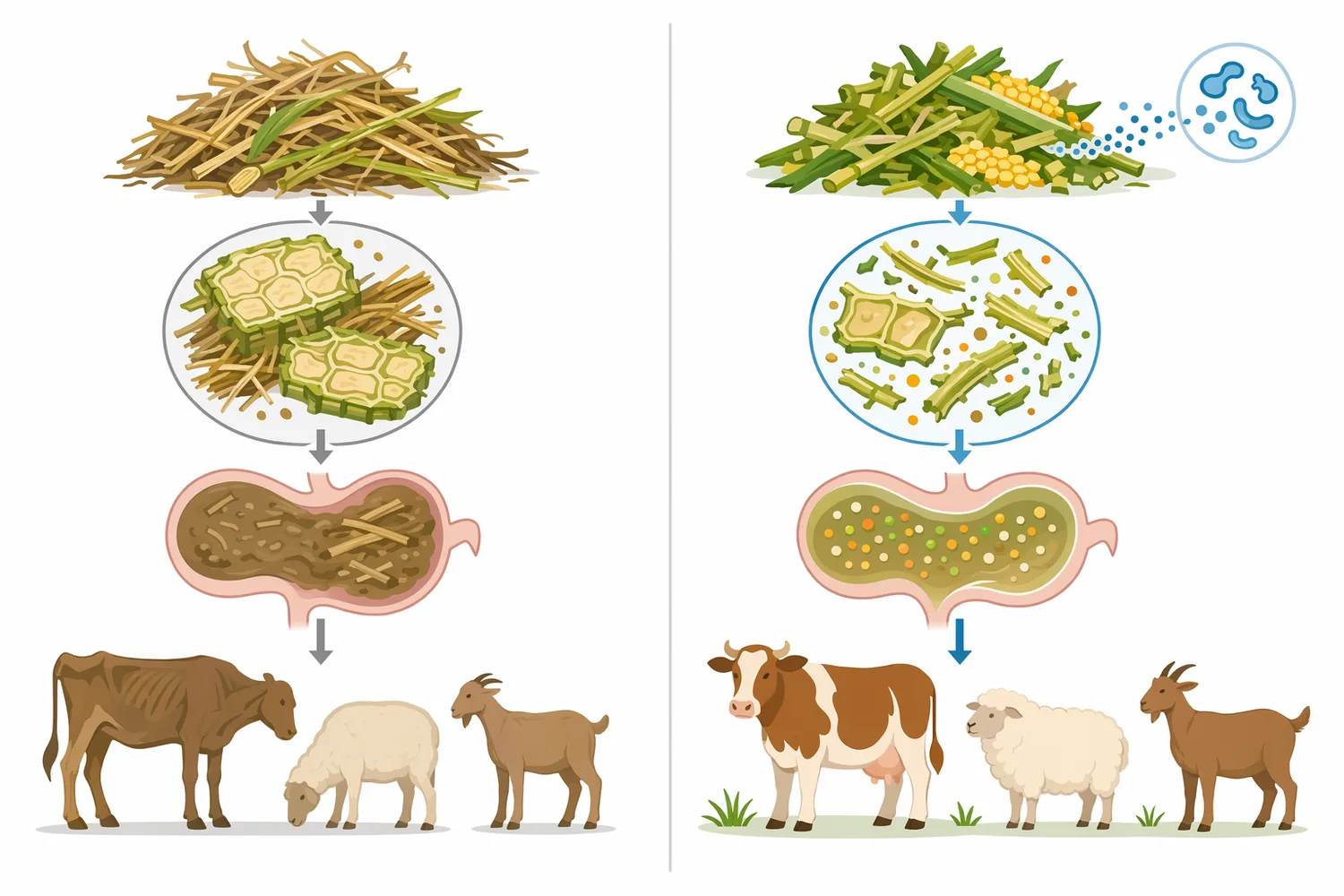
Ruminants have a natural microbial system for fiber digestion, but forage quality and by-product composition still strongly influence nutrient availability. Enzyme supplementation is therefore studied not because rumen microbes are absent, but because fibrous substrates can be difficult to degrade completely or consistently. Work on fermented corn straw in Yichang White goats reported increased cellulase activity, improved rumen fermentation, and increased nutrient digestibility, showing the close connection between cellulase activity, rumen function, and the utilization of fibrous crop residues [4].
Sugarcane tops are another example of a fibrous agricultural material with feed potential. A 2023 beef cattle study examined ensiling sugarcane tops with bacteria-enzyme inoculants and evaluated growth performance, nutrient digestibility, and the associated rumen microbiome. The design is relevant because ensiling and enzyme use both act on plant cell-wall material before and during digestion, potentially changing how cattle access nutrients from a residue that would otherwise be limited by structural fiber [2].
Corn stover silage has also been studied with combinations of Lactobacillus plantarum, cellulase, and xylanase. This is a realistic feed context because corn stover contains cellulose, hemicellulose, and lignin in a tightly associated structure. Cellulase targets the cellulose fraction, while xylanase targets hemicellulose; together with fermentation organisms, these treatments can change nutritional quality and microbial community structure during ensiling [5].
Whole-plant corn silage research further supports the role of cellulase as a silage-related feed enzyme. A 2024 study evaluated additive cellulase with a Bacillus inoculant and tracked fermentation quality and dynamic microbial community changes during ensiling. In this setting, cellulase is not acting only inside the animal; it can also affect the substrate during preservation by releasing soluble carbohydrates that microorganisms can use during fermentation [6].
For goats fed agro-industrial waste-based complementary feed, a 2025 study on eco-enzyme application evaluated nutrient intake, fiber composition, and feed digestibility. The relevance to cellulase buyers is the feed context: agro-industrial by-products are often attractive but variable, and their value depends on whether fiber-associated nutrients become available rather than passing through underutilized [7].
Buffalo feeding studies also show why fibrolytic enzyme approaches remain relevant in large ruminants. Research on lactating Murrah buffaloes evaluated enzyme supplementation in relation to nutrient utilization and production performance, while another study examined exogenous fibrolytic enzymes with or without urea-treated wheat-straw-based rations in Murrah buffalo calves. These studies reflect a common practical target: improving the feeding value of straw- or forage-heavy diets where fiber is the dominant constraint [8].
Swine diets frequently include corn, wheat, barley, soybean meal, distillers dried grains with solubles, brans, and other plant co-products. Pigs can ferment some fiber in the hindgut, but substantial fiber can still dilute dietary energy, encapsulate nutrients, and reduce digestibility. For this reason, fiber-degrading enzymes are studied in nursery, growing, and finishing pigs, especially when diets contain higher levels of cereal co-products.
A 2025 study in growing pigs examined a fiber-degrading enzyme in diets with a high level of corn distillers grains with solubles and measured ileal digestibility of amino acids and fiber, as well as total-tract digestibility of energy and fiber. This is directly relevant to the cellulase concept because distillers grains contain residual cell-wall material that can limit access to nutrients, and the study design focused on where digestion occurs and how much energy and fiber are recovered [9].
Additional work on corn distillers dried grains with solubles-based diets has evaluated multi-enzyme supplementation and dietary energy values in growing pigs. These studies are useful because high-co-product diets are exactly where plant cell-wall deconstruction can matter: the enzyme does not create nutrients from nothing, but it may improve the animal’s ability to access energy and amino acids already present in the ingredient matrix [10].
A 2024 study on a novel multi-enzyme feed additive in weanling pigs fed corn–wheat or wheat–barley-based diets evaluated growth performance, nutrient digestibility, and gut microbiome. Although multi-enzyme studies cannot isolate cellulase effects unless specifically designed to do so, they reflect how feed enzymes are often used in practice: complex plant diets contain multiple non-starch polysaccharides, so cellulase may be paired with other enzymes that target hemicellulose, β-glucans, or protein fractions [11].
A systematic review and meta-analysis published in 2025 assessed exogenous fiber enzymes in weanling pigs, focusing on growth performance and nutrient digestibility. The existence of a meta-analysis is important because individual enzyme trials can vary by diet, pig age, ingredient composition, and housing conditions; reviewing the evidence across studies helps clarify that fiber enzyme responses are best interpreted in relation to the substrate present in the ration [12].
Broiler and layer diets are often formulated with highly digestible grains and oilseed meals, but cost and availability can encourage the use of higher-fiber plant ingredients. Poultry have limited endogenous capacity to degrade cellulose, so exogenous enzymes are used to reduce the nutritional impact of cell walls and non-starch polysaccharides. In broiler research, encapsulated enzyme cocktails have been evaluated as feed additives for improving efficiency and nutrient digestibility, reflecting continued interest in enzyme stability and digestive delivery in pelleted or processed feed systems [13].
Palm kernel cake is one poultry-relevant co-product where fiber-degrading enzymes and fermentation approaches are especially relevant. A 2025 broiler study compared diets incorporating unfermented or fermented palm kernel cake and measured growth performance, digestibility, biochemical indices, digestive enzyme activity, and nutrient-transporter gene expression. Palm kernel cake contains structural carbohydrates that can limit digestibility, so fermentation and enzyme-related changes are studied as ways to improve its feeding value [14].
Broiler gut morphology and microbiome studies also help explain why enzyme effects are not limited to simple “more sugar released” outcomes. Research on next-generation probiotics in broilers evaluated growth performance, gut morphology, microbiome, nutrient digestibility, and enzyme production by Bacillus spp. in vitro. The connection is that enzyme activity, microbial community structure, and intestinal morphology interact: changing the carbohydrate fractions reaching the gut can influence microbial fermentation patterns and nutrient absorption conditions [15].
For ducks and other poultry, digestion is shaped by ingredient composition, fat source, and enzyme activity. A Pekin duck study on fat pre-emulsification measured growth performance, serum biochemical indices, digestive enzyme activities, nutrient utilization, and standardized ileal digestibility of amino acids. While this study was not a cellulase trial, it illustrates the broader point that poultry nutrient utilization is measured through multiple digestive and metabolic endpoints, not feed conversion alone [16].
Aquaculture diets increasingly contain plant ingredients, which can introduce fiber and anti-nutritional structural components into feeds for fish species with limited cellulolytic capacity. A study on juvenile crucian carp evaluated dietary cellulase addition in relation to growth performance, nutrient digestibility, and digestive enzyme activities. This is one of the more direct examples of cellulase as a named feed additive in a non-ruminant animal, and it supports the relevance of cellulase where plant material is part of the diet [1].
The mechanism in fish is similar in principle to that in pigs and poultry: cellulase acts on the feed substrate, not on the animal as a hormone or drug. By hydrolyzing a portion of cellulose-rich material, it can help expose nutrients and may influence the profile of carbohydrates entering the intestine. Actual feeding responses still depend on species, ingredient quality, feed processing, and the proportion of plant material in the formulation.
Aquaculture evidence should be interpreted with species specificity. Nile tilapia, crucian carp, salmonids, and other fish differ greatly in digestive anatomy, gut transit time, temperature environment, and tolerance for plant-derived ingredients. For example, phytase supplementation in Nile tilapia has been studied for growth performance, intestinal morphology, and metabolism, showing how enzyme tools are increasingly evaluated in fish feeds, but each enzyme must still be matched to its own substrate and purpose [17].
Many fibrous feed ingredients are not made of cellulose alone. A plant cell wall is a composite: cellulose fibrils are embedded in hemicellulose, pectin, lignin, proteins, minerals, and phenolic compounds. Because of this, cellulase may be used alongside xylanase, β-glucanase, β-mannanase, or microbial fermentation systems when the goal is broader cell-wall deconstruction. This is why many animal studies evaluate “fiber-degrading enzymes” or “multi-enzyme” products rather than cellulase alone.
The synergy is mechanical and biochemical. Xylanase can loosen hemicellulose surrounding cellulose fibrils, which may increase cellulase access to cellulose. Cellulase can then cut cellulose chains and open the wall further. Fermentation organisms can consume released sugars and produce organic acids, changing preservation quality in silage or modifying the microbial ecology of the feed. A 2025 study on synergistic effects of multi-enzyme supplementation examined nutrient digestion and absorption in the foregut and hindgut, which reflects this multi-substrate reality in animal nutrition [3].
This does not reduce the importance of cellulase; instead, it clarifies its role. Cellulase is the enzyme in the system that directly targets cellulose-like structures. Where cellulose is a limiting barrier, it provides a defined function. Where the primary limitation is phytate phosphorus, resistant protein, soluble arabinoxylan viscosity, or mannan-associated effects, other enzymes may carry more of the response.
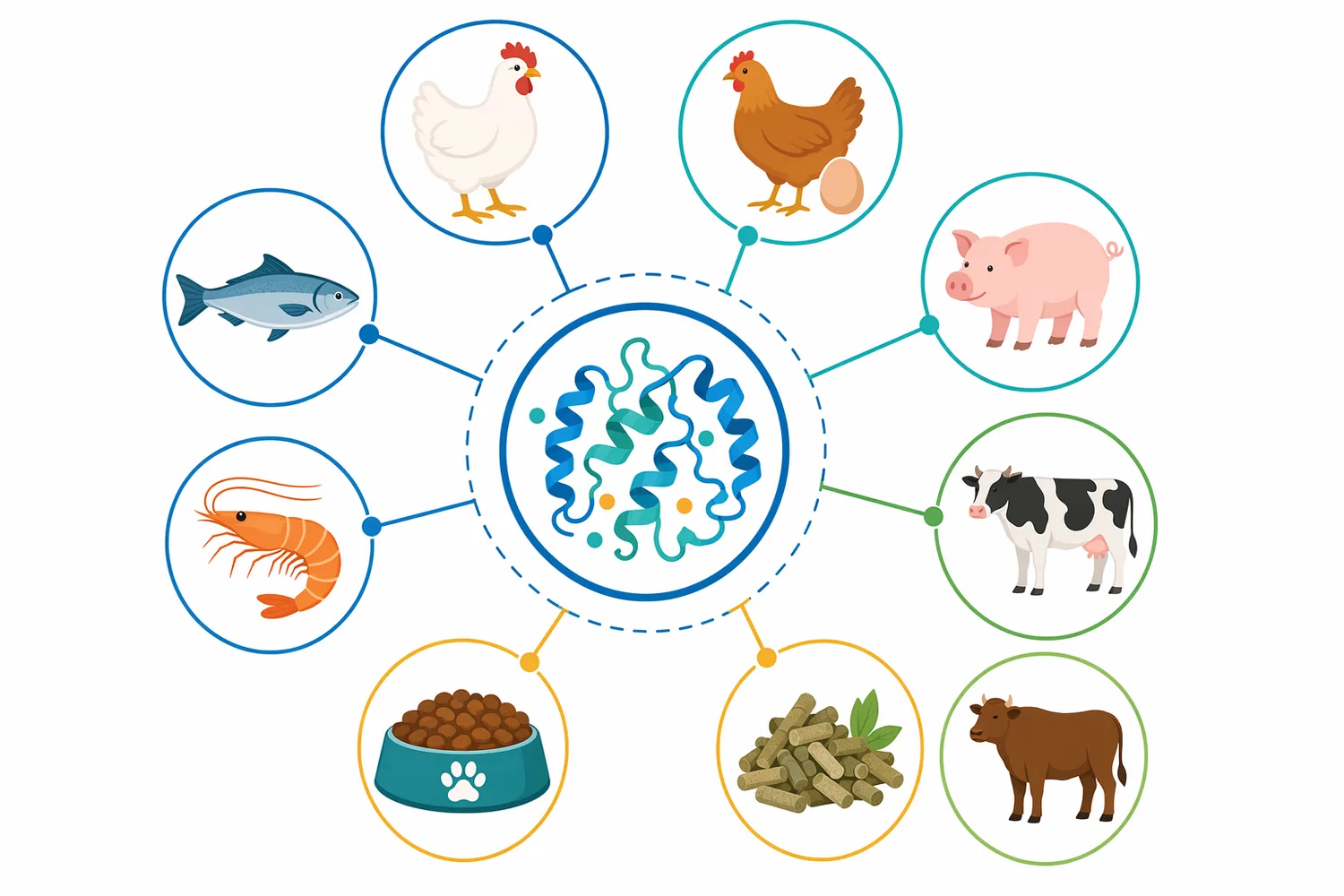
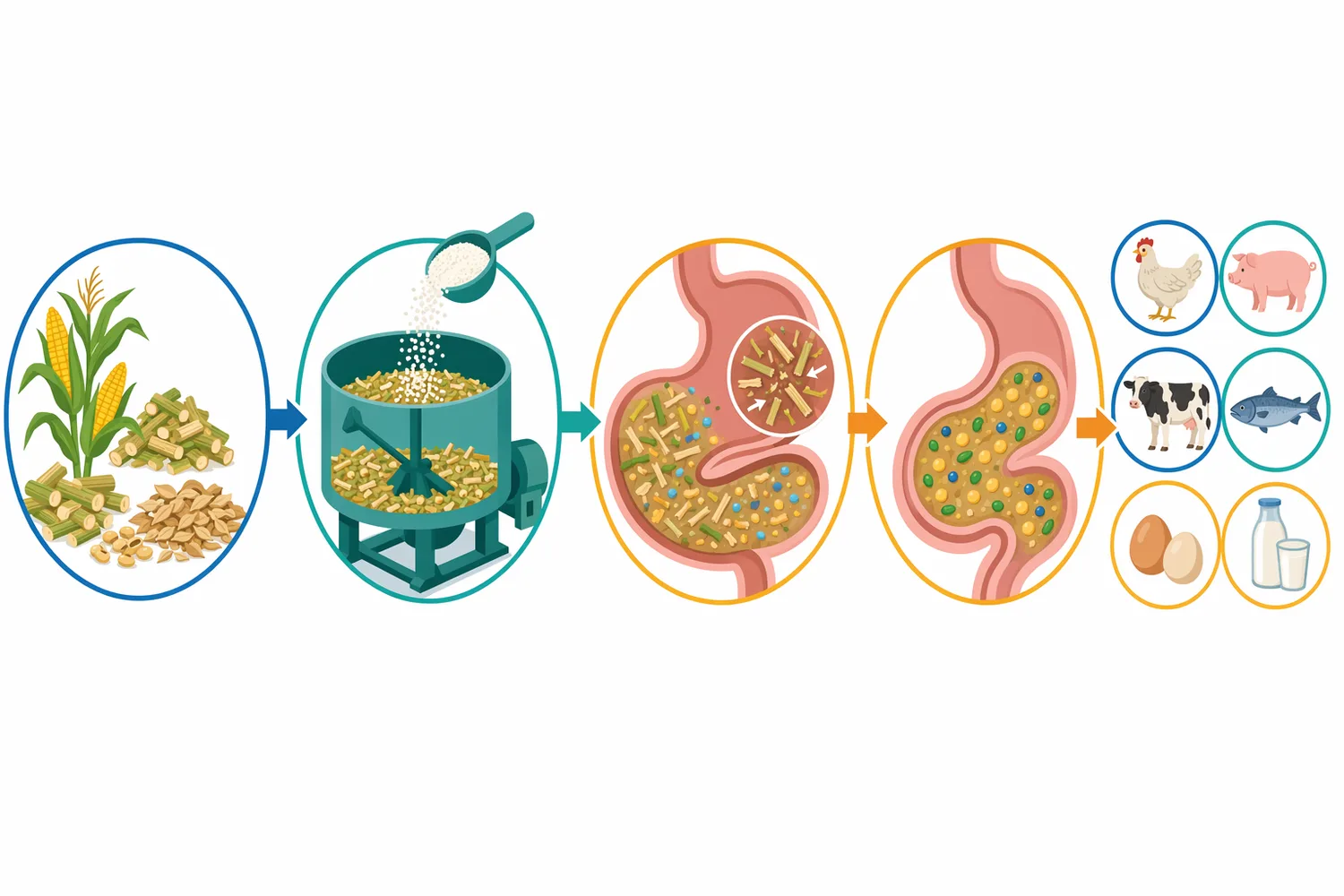
Cellulase enzyme powder is most logically used in feed systems where plant fiber affects nutrient availability. In poultry and swine diets, this may include rations containing cereal by-products, brans, hulls, distillers grains, wheat-barley blends, or palm kernel cake. In ruminant systems, it may be relevant to forage-heavy diets, straw-based feeds, silages, sugarcane tops, corn stover, and agro-industrial waste-based complementary feeds. In aquaculture, it is relevant where plant ingredients contribute structural carbohydrate to the formulation.
In feed manufacturing, the enzyme’s contribution is not visual in the way a pigment or pellet binder may be. Its effect is biochemical: hydrolysis of specific bonds in the substrate. The expected practical change is improved accessibility of nutrients within fibrous particles, potentially supporting digestibility, energy utilization, gut fermentation patterns, and consistency when higher-fiber ingredients are included.
The same principle applies to pre-treated or fermented ingredients. If cellulase is present during ensiling or fermentation, released sugars can become available to beneficial microbes. If it is included in finished feed, it acts during hydration and digestion as conditions allow. Studies involving sugarcane tops, corn straw, corn stover, and whole-plant corn silage demonstrate the continued interest in using cellulase-containing systems to improve the feeding value of fibrous materials [5].
The most defensible expectation for cellulase is improved degradation of cellulose-rich plant cell-wall material under suitable diet conditions. From that primary action, secondary outcomes may follow: better nutrient digestibility, improved energy release, altered fermentation, improved gut environment, or better growth or production performance. However, those outcomes are conditional. They depend on species, age, gut physiology, feed composition, processing, and the amount and type of fiber present.
This is why the evidence is strongest when cellulase is connected to the substrate. A high-fiber diet based on crop residues or co-products gives cellulase something meaningful to act on. A very low-fiber, highly digestible diet may show little response because cellulose is not the main nutritional bottleneck. Similarly, multi-enzyme studies can show performance or digestibility effects, but the result may reflect combined action from cellulase, xylanase, protease, amylase, or other enzymes rather than cellulase alone.
Animal performance data are also influenced by what endpoint is measured. Some studies focus on growth rate or feed conversion, while others measure apparent nutrient digestibility, ileal digestibility, total-tract digestibility, rumen fermentation, digestive enzyme activity, gut morphology, microbiome composition, or gene expression of nutrient transporters. These endpoints are complementary: digestibility changes may occur even when growth response is modest, particularly if the diet is already nutrient-dense or the trial conditions are short.
Enzymes.bio supplies Cellulase Enzyme Powder for Animal Feed Additives as an online product sold by the 1 kg unit. The buyer places the order and pays online; the order is then processed and shipped. A Certificate of Analysis and Safety Data Sheet are included with the order for product documentation and handling reference .
The product is intended for feed-additive and industrial feed-use contexts, not for human consumption. As an enzyme powder, it should be handled with normal care for enzyme-containing materials: avoid generating airborne dust, avoid unnecessary skin or eye contact, and follow the documentation supplied with the shipment. Enzyme proteins can be irritating or sensitizing to susceptible individuals, so controlled handling is part of responsible feed-ingredient use.
Cellulase Enzyme Powder for Animal Feed Additives is a practical fiber-degrading enzyme for plant-based animal diets where cellulose-rich cell walls limit nutrient access. Its mechanism is concrete: cellulase hydrolyzes β-linked cellulose structures, weakens plant cell walls, increases exposure of encapsulated nutrients, and can support digestion or fermentation of fibrous feed particles.
The strongest scientific rationale is substrate-based. Research across goats, cattle, buffaloes, pigs, poultry, and fish shows sustained interest in cellulase, fibrolytic enzymes, silage enzyme systems, and multi-enzyme feed additives for improving nutrient digestibility and the use of fibrous plant materials [9]. Performance outcomes should be viewed as diet-dependent rather than automatic, especially where studies use enzyme blends or fermented treatments.
For buyers using fibrous feed ingredients, cellulase offers a clear functional role: improving the usability of cellulose-containing plant materials. Enzymes.bio makes the product available for direct online purchase in 1 kg units, with order documentation supplied with shipment, so it can be incorporated into feed-additive purchasing without a quotation or sample-request process .
Sold by the 1 kg unit, in stock and ready to ship. Order directly on our store — pay online and we process your order. A Certificate of Analysis and Safety Data Sheet are included with every order.
Buy Cellulase Enzyme Powder For Animal Feed Additives →Numbered in order of first citation. Open-access sources, each verified reachable at publication; citation numbers in the text link here.