
Cellulase Enzyme Powder for Stone Washing Process is used in denim washing to create a worn, faded, stone-washed appearance by acting on the cotton cellulose at the garment surface. In an aqueous wash with tumbling or other mechanical action, cellulase weakens and removes tiny surface fibrils that carry or expose indigo, helping produce localized fading, a cleaner surface, and a softer hand feel [1].
For buyers who want an enzyme-assisted denim wash rather than a pumice-heavy process, Enzymes.bio supplies Cellulase Enzyme Powder for Stone Washing Process directly online by the 1 kg unit. The order is paid for online, then processed and shipped; a Certificate of Analysis and Safety Data Sheet are included with the order.
Cellulase is an enzyme system that acts on cellulose, the structural carbohydrate that gives cotton fibers their strength and shape. Cotton denim is therefore a practical substrate for cellulase: the enzyme does not need to dissolve the entire fiber to be useful; it only needs to act at accessible surface regions, especially loose fibrils and exposed microfibrillar areas created during spinning, weaving, dyeing, garment construction, and washing [2].
In denim finishing, the target is not complete cellulose breakdown. The target is controlled surface modification. A denim warp yarn is commonly dyed so that indigo is concentrated toward the outside of the yarn and fiber surface rather than uniformly throughout the fiber core. When cellulase loosens the outermost cellulose fibrils and the wash drum provides abrasion, small dye-bearing fragments are removed from high-contact areas such as seams, edges, thighs, pockets, and raised fabric surfaces [1].
This is why cellulase stone washing produces a visual effect rather than simply “cleaning” the garment. The process changes the outer surface of the cotton yarn: protruding fibrils are weakened, surface fuzz is reduced, indigo-rich material is released into the bath, and high-friction areas become lighter than protected areas. The garment can then show the familiar contrast associated with stone-washed denim while relying less heavily on pumice abrasion [3].
Cellulase enzyme powder is therefore best understood as a textile finishing aid for denim and other cellulosic fabrics. It is related to biopolishing, where cellulase is used to reduce fuzz and improve surface smoothness, but stone washing places more emphasis on controlled color removal and localized contrast. Reviews of textile enzyme processing consistently describe cellulases as established tools for cotton finishing, denim washing, and more sustainable textile processing routes [2].
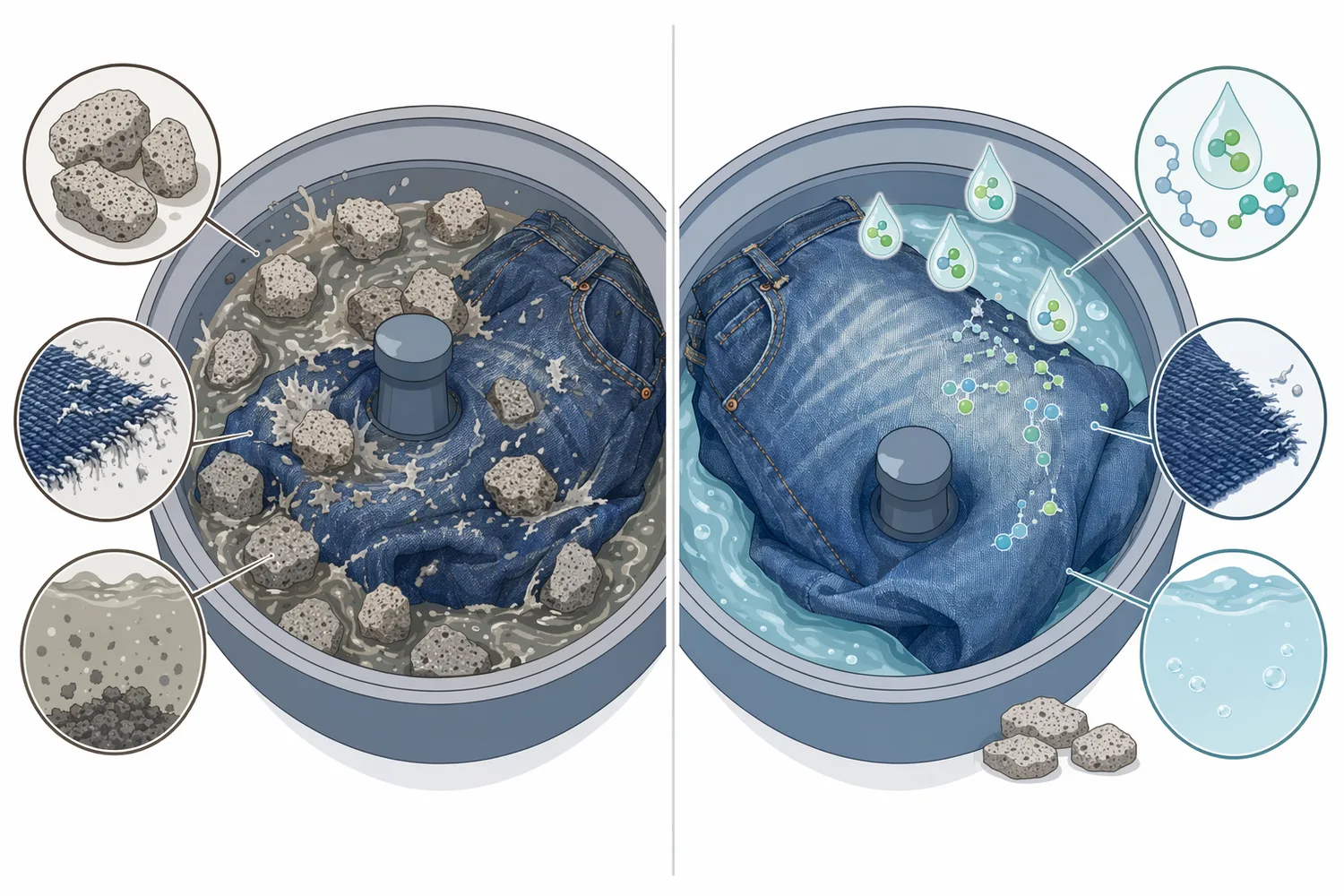
Traditional stone washing relies on pumice stones to abrade the denim surface. Pumice can create attractive aging effects, but it also introduces operational burdens: stones must be handled, loaded, separated from garments, removed from pockets and seams, and managed as abrasive residue. Pumice fragments can also increase wear on machines and contribute to drainage or wastewater handling issues in stone washing operations [4].
Cellulase changes the balance of the process. Instead of depending only on hard mineral abrasion, the wash combines biochemical action at the fiber surface with mechanical movement inside the drum. The enzyme weakens accessible cellulose fibrils; tumbling, fabric-to-fabric contact, and liquor movement then help detach those weakened fibrils and the associated dye-containing material [1].
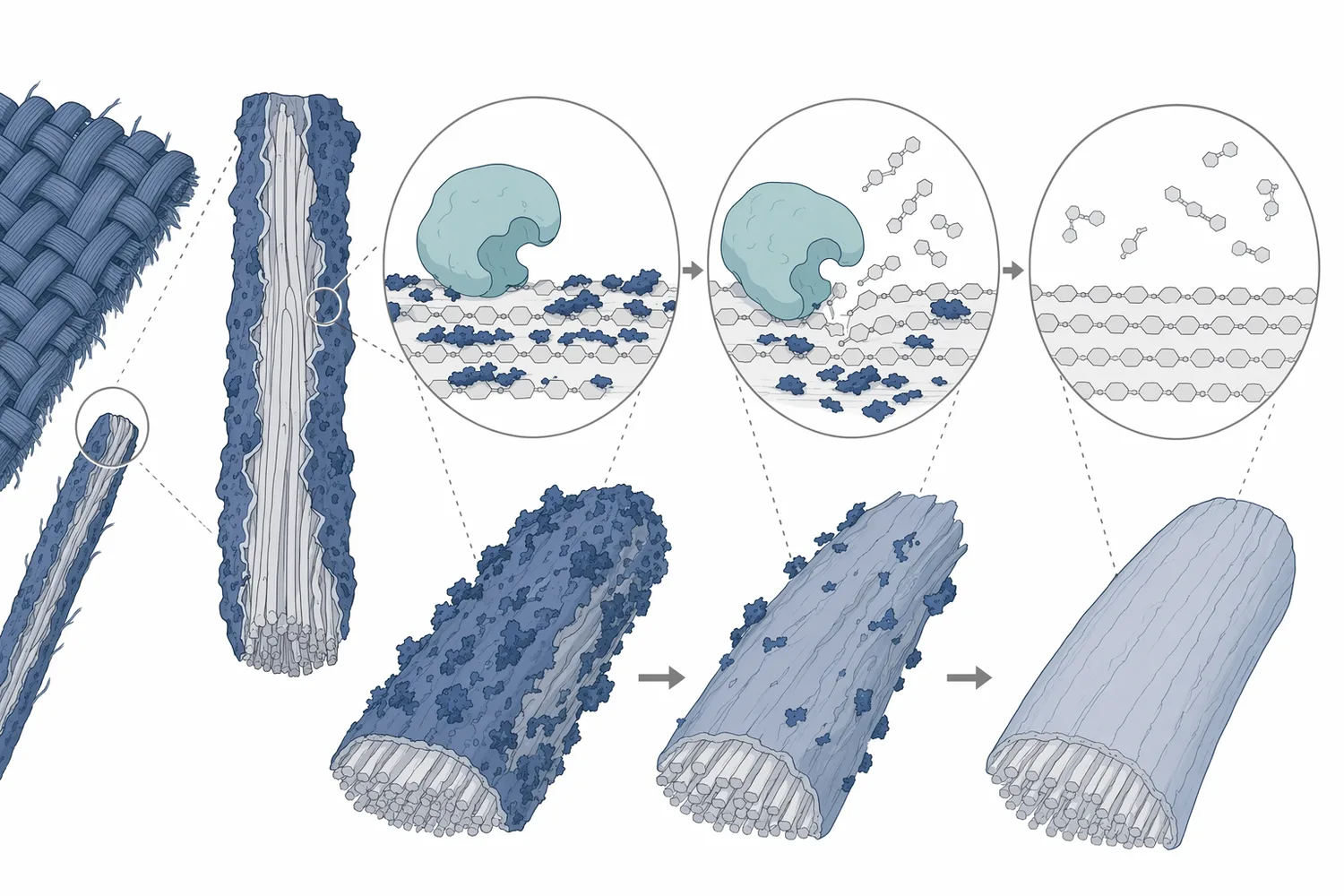
The result is not identical to throwing stones into a washer, because the mechanism is different. Pumice scratches and abrades mechanically. Cellulase selectively hydrolyzes accessible cellulose structures at the surface, then mechanical agitation removes what has been loosened. In many finishing concepts, that difference is valuable because it can reduce grit, lower fabric damage from hard stones, and make the wash cleaner to run [3].
Cellulase also supports more flexible aesthetic development. By changing the wash concept around enzyme action, fabric movement, and finishing sequence, laundries can develop looks ranging from mild surface cleanup to stronger worn-down contrast. The scientific and industrial literature on enzymatic denim washing frames this as part of a broader move toward greener finishing routes that reduce reliance on harsh mechanical or chemical treatments where possible [1].
Cellulose is built from glucose units connected in long chains, packed into microfibrils that form the cotton fiber wall. Cellulase enzymes hydrolyze susceptible bonds in cellulose chains, especially where the structure is accessible to water and enzyme protein. In a finished denim garment, the most accessible targets are not the protected crystalline interior of the cotton fiber but the surface fuzz, fibrils, and mechanically stressed zones exposed during washing [5].
During stone washing, the garment absorbs water and swells slightly. This swelling opens some surface structures and allows enzyme molecules to contact the outer cellulose. The wash drum then bends, compresses, and rubs the fabric repeatedly. Areas with more contact receive more mechanical stress, so the enzyme-assisted removal is not perfectly uniform; this is part of how localized fading and worn contrast develop [1].
Indigo behavior is central to the effect. Indigo dye is famous for ring-dyeing behavior on cotton yarns, meaning much of the color effect is concentrated near the yarn surface. When the outer cellulose layer is loosened, the visible color changes because the dark indigo-bearing surface is partially removed and lighter underlying fiber becomes more visible. Cellulase is not bleaching the indigo in the way an oxidant would; it is helping remove dye-associated fiber material from the surface [2].
This distinction matters for process expectations. A cellulase wash can create a natural worn appearance because it follows the physical structure of the garment: raised surfaces, seams, edges, and high-friction points are affected more strongly than recessed or protected zones. If the treatment is too mild, the garment may show little change. If it is too severe, the same cellulose hydrolysis that creates fading can reduce fabric strength or cause excessive surface wear [3].
Textile finishing literature often discusses cellulases by the general conditions under which they perform: acid cellulases, neutral cellulases, and alkaline-tolerant cellulases. These categories are useful because pH affects enzyme shape, substrate binding, activity, dye release, and backstaining behavior. A comparative study specifically examined acid and neutral powder enzyme effects in denim garments, reflecting how important enzyme type can be in real washing outcomes [6].
The table below is conceptual. It explains how the categories are generally understood in denim processing without turning them into a product specification or an operating recipe.
| Cellulase category | General denim-finishing concept | Typical practical emphasis | Main process caution |
|---|---|---|---|
| Acid cellulase | Historically common in denim biostoning and strong surface fading concepts | Can give pronounced abrasion-like effects when paired with mechanical action | May increase risk of backstaining or strength loss if the wash is pushed too far |
| Neutral cellulase | Often associated with controlled fading and cleaner contrast development | Useful where balanced surface effect and fabric preservation are important | Still requires control because it continues to act on cotton cellulose |
| Alkaline-tolerant cellulase | Developed for compatibility with more alkaline textile or detergent-like environments | Can fit processes where the bath chemistry is less acidic | Compatibility does not remove the need to manage surface hydrolysis and garment quality |
The practical lesson is that “cellulase” is not a single universal behavior. Enzyme origin, protein composition, wash chemistry, denim construction, and mechanical action all influence how the garment responds. Research on detergent-compatible fungal cellulases also shows why compatibility with other wash components is an active area of enzyme development rather than an assumption that every cellulase behaves the same way in every bath [7].
For a buyer using Cellulase Enzyme Powder for Stone Washing Process, the useful expectation is therefore mechanism-based: the product is intended to support controlled surface action on cotton denim during a wet mechanical wash. The exact garment look still depends on the fabric, dyeing, garment construction, washer loading, wash sequence, and finishing target, because these factors determine how much surface cellulose and indigo are accessible [1].
Cellulase use in denim finishing is not a speculative application. Textile enzyme reviews identify cellulases among the important enzyme classes used in fabric processing, especially for cotton biopolishing and denim washing. These reviews place cellulase alongside other industrial textile enzymes such as amylases, pectinases, catalases, laccases, and peroxidases, each acting on a different substrate or finishing problem [2].
Denim-specific research also supports cellulase as a practical finishing tool. Work on the physico-mechanical properties of denim garments treated by stone-enzymatic methods reflects the core industrial question: how to obtain the desired washed appearance while maintaining acceptable garment performance. That balance between appearance and fabric integrity is central to responsible cellulase use [3].
Studies comparing acid and neutral powder enzyme treatments in denim garments further show that cellulase finishing is process-sensitive. The liquor environment, garment movement, and enzyme type can shift the final balance of fading, surface smoothness, and physical properties. This supports the practical view that cellulase is powerful because it acts directly on the cotton substrate, but it must be used as part of a controlled finishing process [6].
Broader enzyme research continues to expand the cellulase toolbox. Recombinant cellulases and cellulases from microbial sources have been studied for potential textile applications, including denim and other cellulosic processes. This ongoing research is important because textile washing environments can be demanding: enzymes must contact an insoluble fiber surface while tolerating water chemistry, temperature, auxiliaries, dyes, and mechanical shear [5].
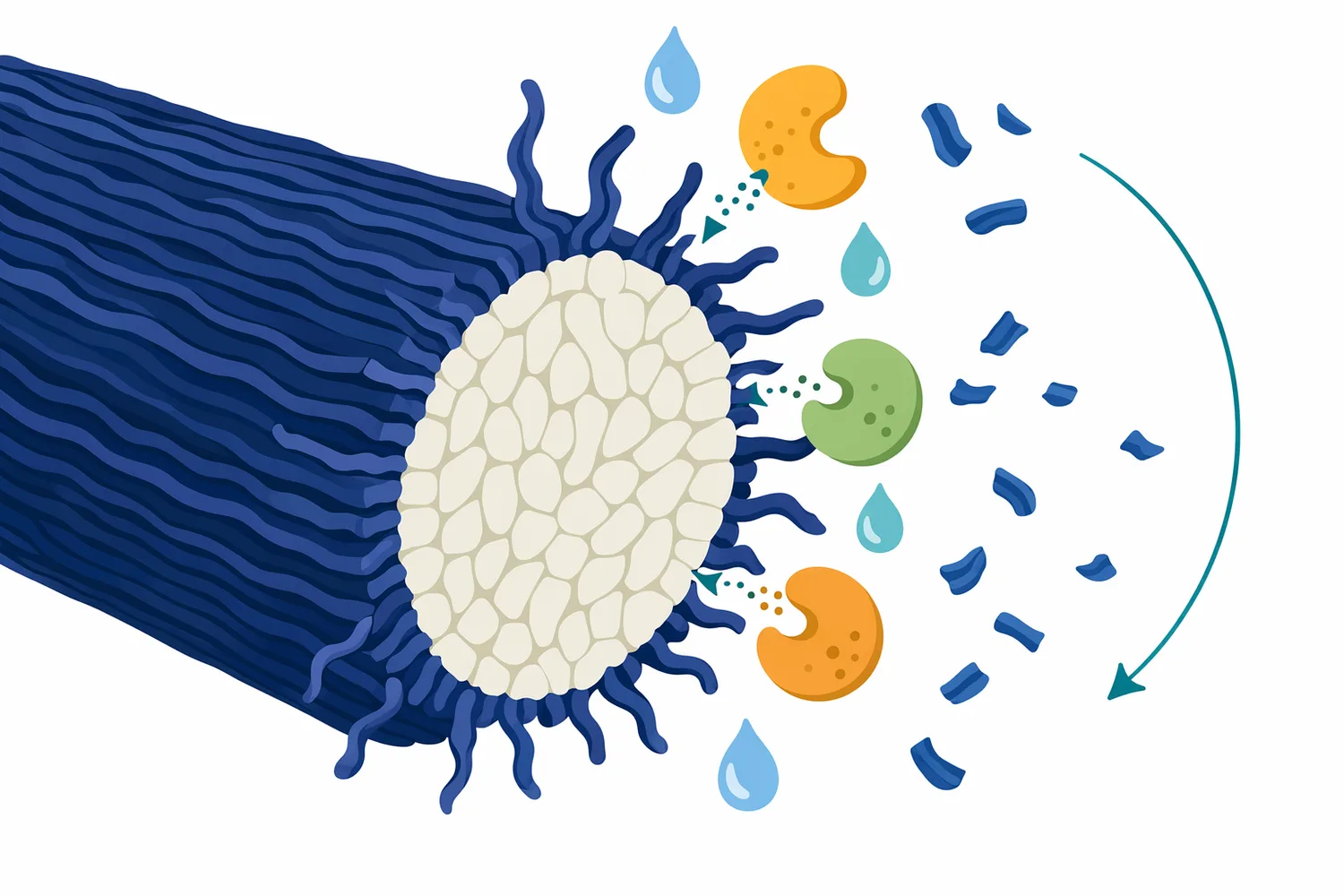
Research into sustainable lignocellulolytic enzyme cocktails is also relevant because cotton is a cellulosic material and denim finishing often benefits from coordinated surface modification rather than indiscriminate fiber attack. While not every lignocellulolytic enzyme system is intended for denim, the work reinforces the larger principle that enzyme combinations can be designed to act on plant-derived fiber structures under milder processing conditions [8].
The first visible change is shade reduction on exposed areas. Raised fabric zones experience more contact, so enzyme-assisted fibril removal and mechanical release occur faster there. As indigo-bearing surface material is removed, those areas become lighter, while recessed zones remain darker. This produces the high-low contrast associated with stone-washed jeans [1].
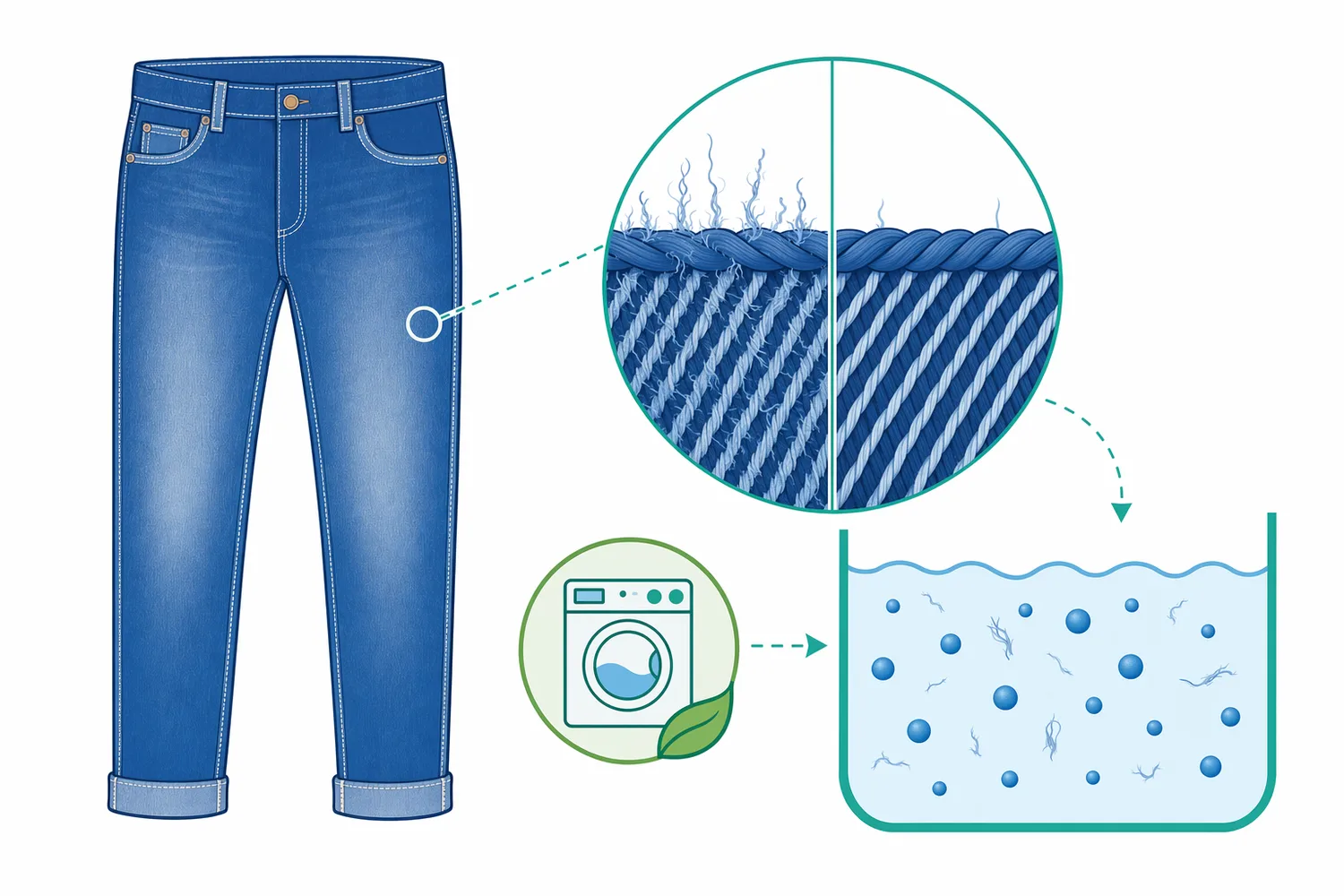
The second change is surface smoothness. Cotton fabrics often develop fuzz because small fiber ends and fibrils protrude from the yarn surface. Cellulase can hydrolyze and weaken these protruding structures so they break away during agitation. The garment can feel softer and look cleaner because fewer loose fibrils scatter light from the surface [2].
The third change is handle. Denim can feel harsh after weaving, dyeing, desizing, and garment construction. Enzyme washing can contribute to a more relaxed hand because surface fibers are modified and the garment is repeatedly flexed in the wet state. The hand-feel improvement is not only chemical; it comes from the combination of enzymatic surface action, hydration, mechanical movement, and removal of loose material [3].
The fourth change is the wash bath itself. Detached cellulose fines, indigo-containing particles, auxiliary residues, and suspended soils can enter the liquor. This is one reason rinsing and downstream handling matter in enzymatic denim processing. Pumice used in stone washing has also been studied in relation to dye removal from textile wastewater, showing how stone washing materials and dye residues intersect with effluent considerations [4].
A cellulase stone washing step is normally a wet garment process. Denim garments are contacted with an enzyme-containing bath and moved mechanically so the enzyme can reach the fiber surface and loosen accessible cellulose. The washing machine supplies repeated flexing and friction; without that movement, surface fibrils may be weakened but not efficiently removed from the garment [1].
The bath environment affects the enzyme because enzymes are folded proteins. If the pH or temperature environment moves far away from what the enzyme can tolerate, the active structure can become less efficient or unstable. If the bath is too harsh mechanically or chemically, the garment itself can also suffer, so enzymatic denim washing is always a balance between desired surface effect and preservation of fabric performance [6].
Auxiliaries may be present in denim washing systems, but compatibility matters because surfactants, salts, dispersants, wetting agents, anti-backstaining agents, and residual chemicals from earlier steps can influence how the enzyme contacts the fiber or how released dye behaves in the bath. Research interest in detergent-compatible cellulases reflects the practical need for enzymes that remain useful in complex washing environments [7].
The process is usually stopped by moving the garment out of favorable enzyme conditions and rinsing away loosened material. From a mechanism standpoint, this is important because cellulase does not “know” when the desired fashion effect has been reached. It continues acting on accessible cellulose as long as conditions allow, so finishing practice must limit exposure to avoid unnecessary fiber weakening [3].
The desired fading comes from selective surface removal. Cellulase does not normally create a flat, uniform color reduction like a simple bleaching step. Instead, it supports a worn look that follows garment topology: seams, hems, whisker-prone areas, and other exposed locations lighten more strongly because they experience more friction and surface contact during tumbling [1].
Backstaining is the unwanted redeposition of released indigo or dye-associated particles onto lighter areas such as weft yarns, pocketing, or already-faded zones. Enzyme treatment can contribute to dye release, so the bath must also keep released color from dulling the contrast. The issue is not that cellulase “stains” the fabric directly; rather, cellulase helps release surface material, and that released color must be managed by the washing and rinsing system [2].
Strength retention is the main technical boundary. Cellulase acts on cellulose, and cotton strength comes from cellulose. Properly controlled surface hydrolysis can improve appearance and hand feel, but excessive hydrolysis can reduce tensile or tear performance, create over-abrasion, or shorten garment life. Denim studies that examine physico-mechanical properties after stone-enzymatic treatment highlight this balance between aesthetics and durability [3].
Hand feel and smoothness are usually positive drivers for cellulase use. When protruding fibrils are reduced, the surface can feel cleaner and less fuzzy. This is closely related to biopolishing, where the aim is not dramatic denim fading but a smoother, better-looking cellulosic fabric surface. In denim, biopolishing and stone washing often overlap because both depend on controlled cellulase action at the cotton surface [2].
Enzyme washing is often discussed as a greener route because enzymes are catalytic biological processing aids that work under comparatively mild aqueous conditions. In denim finishing, cellulase can reduce dependence on pumice stones and severe mechanical abrasion while still delivering a worn visual effect. Reviews of enzymatic denim washing describe this as part of a wider shift toward more sustainable fashion finishing practices [1].
Reduced pumice use can simplify housekeeping in the wash process. Less stone load can mean less grit, less manual removal from garments, and lower risk of abrasive mineral residues in equipment. Pumice is not only a production material; it also becomes part of wastewater and solids-management discussions in stone washing, which is why studies have examined pumice associated with dye removal from textile wastewater [4].
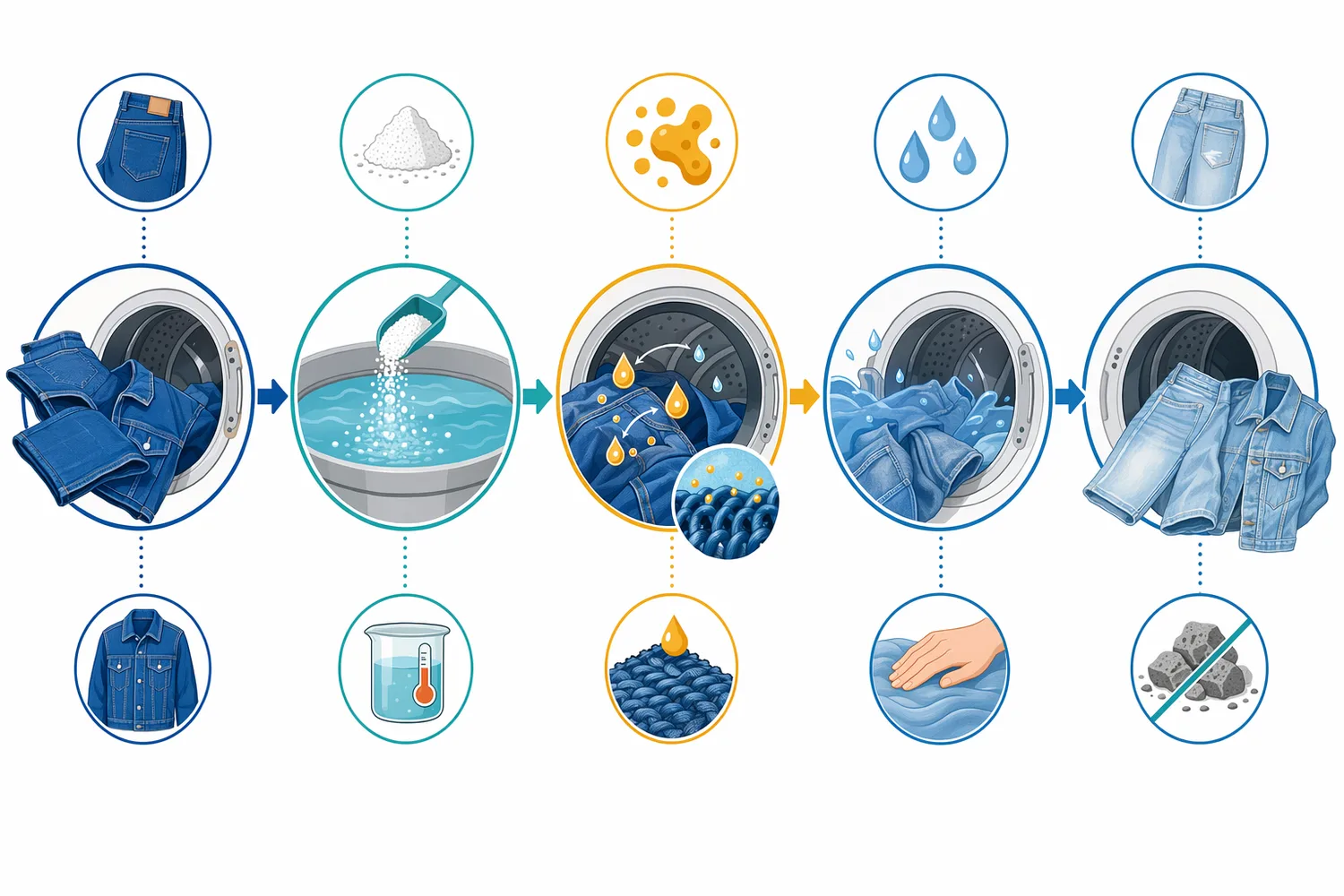
Cellulase also aligns with the broader textile-enzyme principle of substrate specificity. Instead of applying a harsh general chemical treatment, the process uses an enzyme that targets a defined substrate: cellulose. That specificity is valuable because it allows process designers to focus the effect on cotton surface modification rather than relying only on broad chemical attack [2].
Sustainability should still be stated responsibly. A cellulase process consumes water, energy, and finishing auxiliaries, and it still releases dye-containing material that must be rinsed and handled. The environmental advantage is not automatic in every plant or every recipe; it comes from thoughtful replacement or reduction of more burdensome steps, especially heavy pumice abrasion and repeated grit-removal washes [1].
The most direct use is enzyme-assisted denim stone washing for jeans, jackets, skirts, shirts, and other indigo-dyed cotton garments. The goal is a worn appearance with surface contrast, softer handle, and reduced reliance on abrasive stones. Cellulase supports this by weakening surface cellulose fibrils so wash action can remove them along with associated indigo [3].
A second use is reduced-stone finishing. Some wash concepts may still use stones for a particular fashion effect, but cellulase can carry part of the surface-modification load. This can help reduce the intensity or duration of purely mechanical abrasion while preserving a natural worn look. The practical value is a cleaner, more controllable balance between abrasion and fabric protection [1].
A third use is biopolishing of cotton-rich garments and fabrics. In this case, the emphasis is less on dramatic shade change and more on reducing fuzz, improving surface clarity, and producing a smoother hand. The same enzyme mechanism applies: exposed cellulose fibrils are hydrolyzed at the surface and removed during wet mechanical processing [2].
A fourth use is in development of modern finishing concepts that combine enzyme washing with other denim effects. Enzyme stone washing may be paired within broader finishing sequences that include desizing, softening, tinting, ozone, laser, resin effects, or other treatments, depending on the desired garment. The cellulase step contributes a specific substrate-based effect: controlled modification of cotton cellulose at the surface [1].
Cellulase Enzyme Powder for Stone Washing Process is a practical product for buyers who already understand their denim washing workflow and want an enzyme-based aid for cotton surface modification. Enzymes.bio sells the product directly online by the 1 kg unit: the buyer places the order, pays online, and the order is processed and shipped. A Certificate of Analysis and Safety Data Sheet are included with the order.
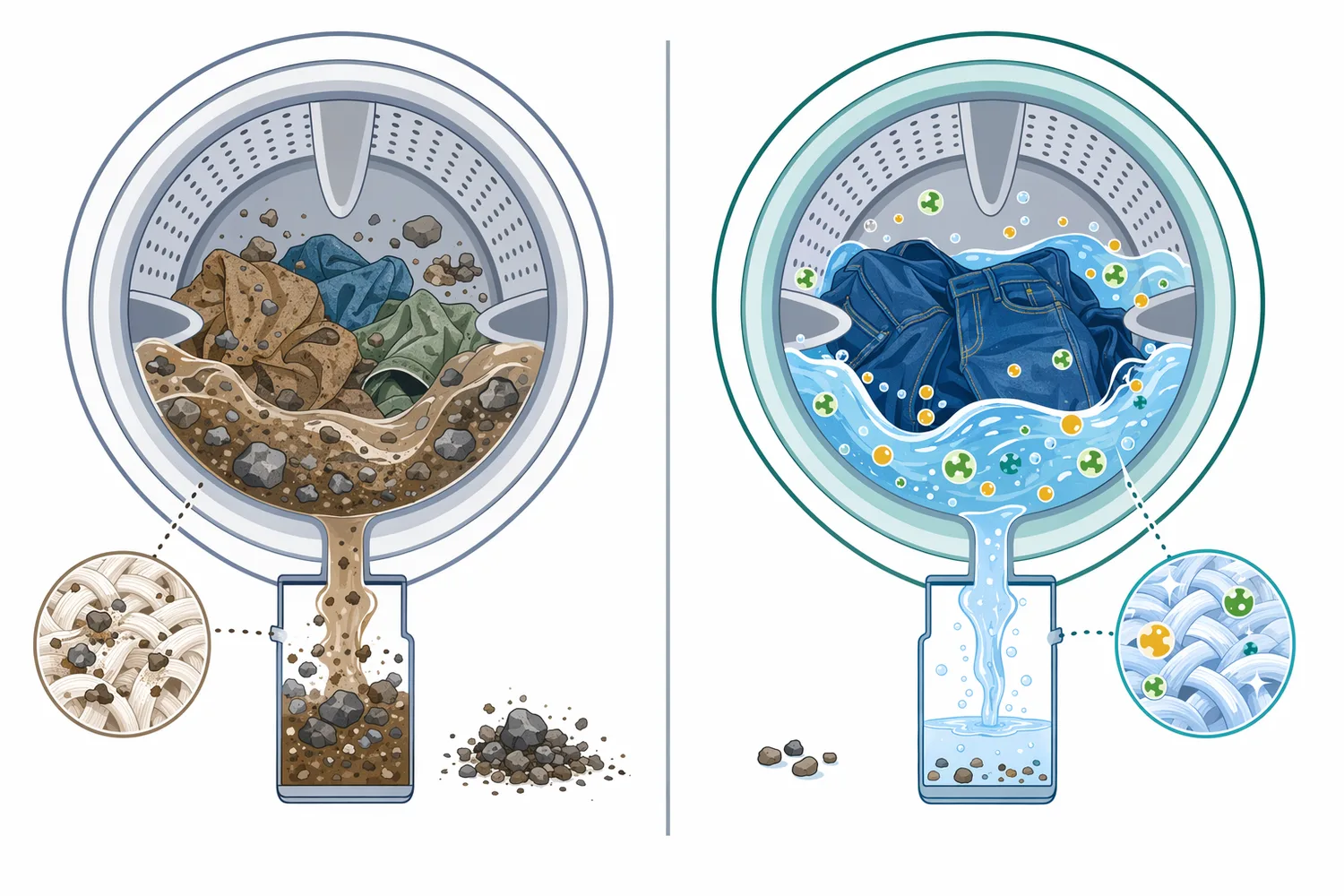
The product should be treated as a functional enzyme powder, not as a universal fade guarantee. Different denim fabrics respond differently because yarn count, weave density, fabric weight, dye penetration, sulfur topping, garment construction, previous desizing, and finishing history all affect how much cellulose and indigo are accessible at the surface. These textile variables strongly influence the final appearance of enzyme-washed denim [6].
The most reliable expectation is mechanism-based rather than promise-based. Where cotton cellulose is accessible and the wash provides suitable wet mechanical action, cellulase can help loosen surface fibrils and release indigo-associated material. Where the fabric surface is protected, heavily treated, poorly wetted, or insufficiently agitated, the visual response may be more limited [1].
Responsible use also means respecting the fact that cellulase acts on the same polymer that gives cotton its strength. The process should aim for the desired surface effect while avoiding unnecessary over-processing. Research on stone-enzymatic denim treatment keeps returning to this same balance: achieving wash-down and improved handle without unacceptable loss of physico-mechanical performance [3].
The scientific case for cellulase in stone washing rests on three connected facts. First, denim is largely cotton, and cotton is cellulose. Second, cellulase hydrolyzes accessible cellulose at the fiber surface. Third, denim’s visual character depends heavily on surface indigo distribution, so controlled surface removal can create visible fading and contrast [5].
The industrial case rests on process value. Pumice-only washing can be abrasive, messy, and operationally burdensome, while enzyme-assisted washing can shift part of the finishing effect to a targeted biochemical mechanism. This does not make mechanical action unnecessary; it makes mechanical action more productive because the enzyme has already weakened the surface structures that need to be removed [1].
The quality case rests on control. A good cellulase wash is not the most aggressive wash possible; it is the wash that reaches the desired look while preserving garment integrity. That is why denim enzyme studies evaluate not only appearance but also physical and mechanical properties after treatment [3].
The sustainability case rests on substitution and moderation. Cellulase can support reduced pumice use, milder processing concepts, and cleaner surface finishing, but the full environmental result depends on the entire wash system. Enzyme-based textile processing is best viewed as a tool for improving process design, not as a standalone guarantee of sustainability in every situation [2].
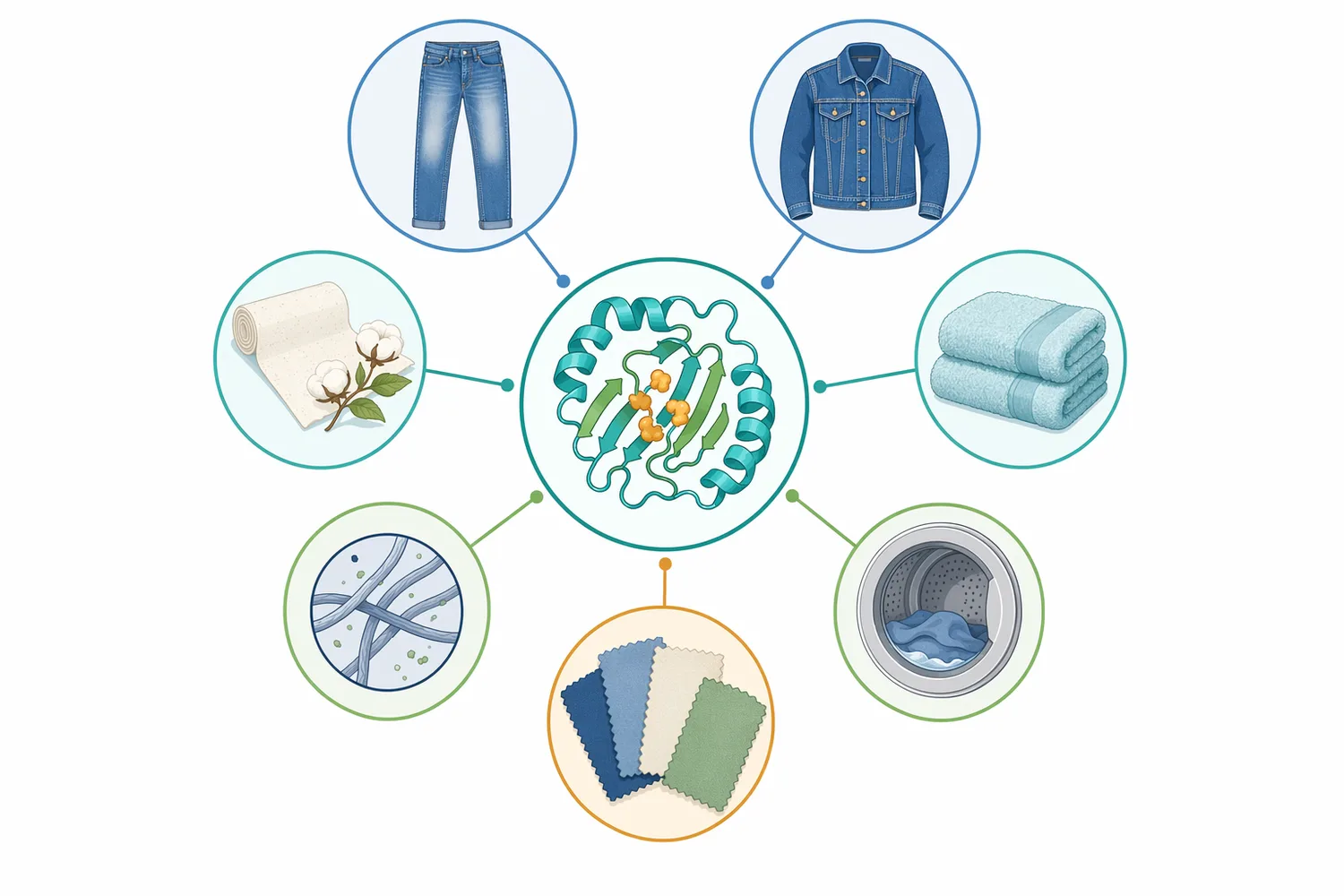
Enzymes.bio supplies Cellulase Enzyme Powder for Stone Washing Process as an online 1 kg product for buyers who need a cellulase powder for denim finishing and related cotton surface-treatment applications. Purchase is handled directly through the website: select the 1 kg unit, pay online, and the order is processed and shipped.
A Certificate of Analysis and Safety Data Sheet are provided with the order. This article is intended to explain the application science and practical relevance of cellulase in denim stone washing; the product label, Certificate of Analysis, and Safety Data Sheet remain the documents to follow for the supplied item.
Cellulase is a well-established enzyme class in textile processing, especially where cotton surface modification is required. In denim stone washing, its value comes from a clear mechanism: it acts on accessible cellulose fibrils at the garment surface, and mechanical washing removes the loosened material to create fading, smoother handle, and a worn appearance [1].
Cellulase Enzyme Powder for Stone Washing Process helps create stone-washed denim effects by modifying the outer cotton cellulose surface rather than by bleaching the entire garment. The enzyme weakens exposed fibrils; wash agitation removes those fibrils and associated indigo-rich material; the garment develops localized fading, cleaner surface character, and improved hand feel [2].
The evidence base supports cellulase as an established tool for denim washing, cotton biopolishing, and greener textile finishing concepts. Its practical value is strongest when used as part of a controlled wet mechanical wash that aims for surface-level modification, not excessive cellulose degradation [3].
For buyers who want a straightforward online purchase, Enzymes.bio offers Cellulase Enzyme Powder for Stone Washing Process by the 1 kg unit, with online payment, order processing, shipment, and the accompanying Certificate of Analysis and Safety Data Sheet included with the order.
Sold by the 1 kg unit, in stock and ready to ship. Order directly on our store — pay online and we process your order. A Certificate of Analysis and Safety Data Sheet are included with every order.
Buy Cellulase Enzyme Powder For Stone Washing Process →Numbered in order of first citation. Open-access sources, each verified reachable at publication; citation numbers in the text link here.