
Cellulase is an enzyme system that breaks the β-1,4 bonds in cellulose, the main structural polymer in plant cell walls. In practical processing, cellulase helps loosen, cut, or partially solubilize cellulose-rich materials so that cotton, pulp, fruit tissues, crop residues, and lignocellulosic biomass become easier to finish, extract, refine, or convert. Enzymes.bio supplies Cellulase directly online by the 1 kg unit; buyers pay online, and the order is processed and shipped with a Certificate of Analysis and Safety Data Sheet.
A concise cellulase definition is: cellulase is an enzyme, or more accurately a group of cellulase enzymes, that hydrolyze cellulose into shorter cellulose fragments, cellobiose, and glucose. If you are searching “is cellulase an enzyme” or “what does cellulase do,” the answer is yes: cellulase is an enzyme system whose core function is to attack cellulose, the tough, insoluble carbohydrate that gives plant cell walls and cotton fibers much of their strength [1].
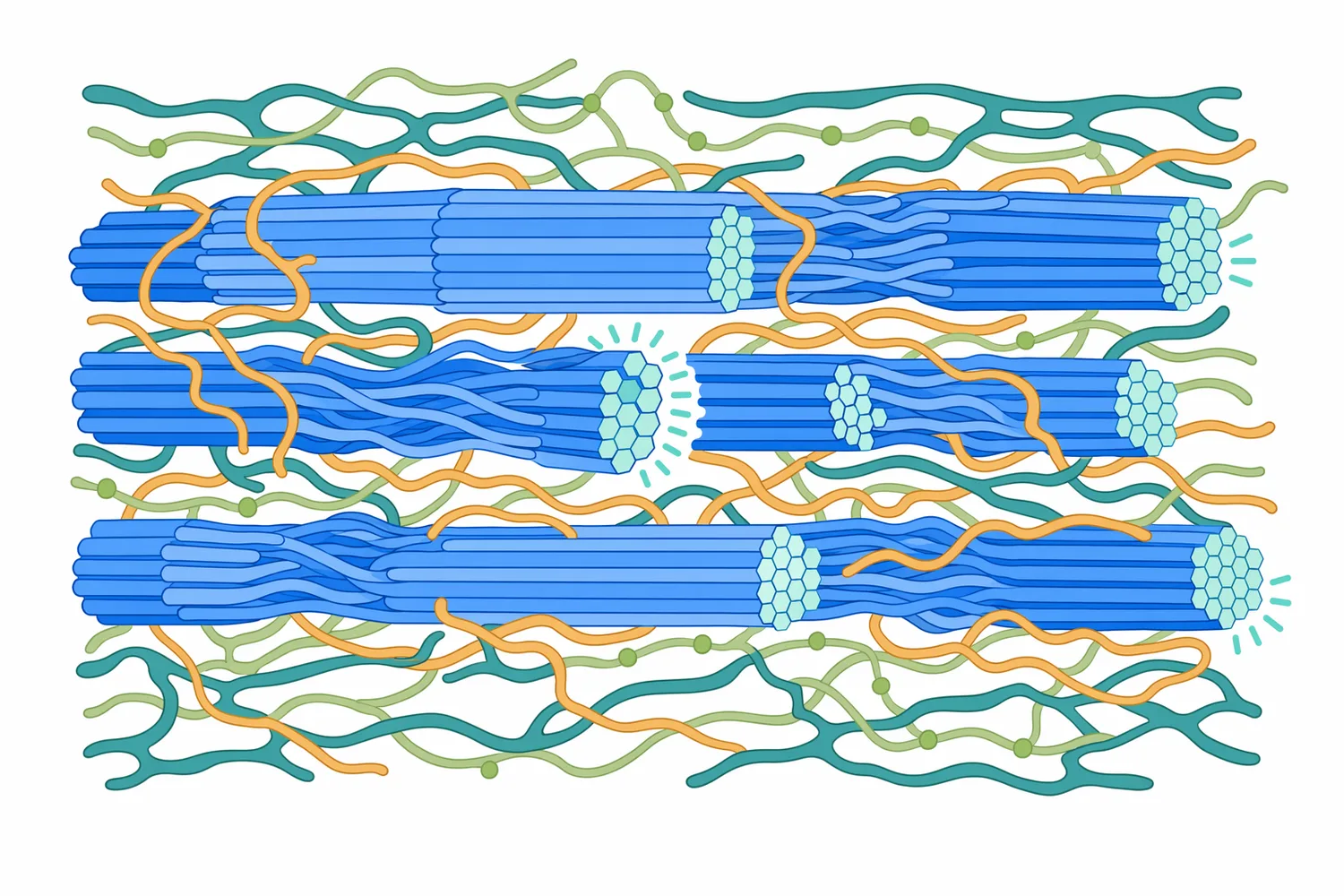
Cellulose is abundant because plants use it as a load-bearing material. Its glucose chains are arranged in long, linear β-1,4-linked polymers that pack into microfibrils through hydrogen bonding. Those microfibrils contain more ordered crystalline regions and more accessible amorphous regions, and they are often embedded with hemicellulose, pectin, lignin, proteins, waxes, pigments, and other plant-wall components depending on the raw material [2].
That structure is why cellulose-containing materials are useful—and also why they are hard to process. Cotton fabric resists wear because cellulose fibers are strong. Paper pulp can form durable sheets because cellulose fibers bond with one another. Agricultural residues persist because cellulose is protected inside a mixed lignocellulosic matrix. Cellulase provides a biological way to modify that structure under comparatively mild aqueous processing conditions, rather than relying only on high mechanical energy or aggressive chemistry [3].
For industrial and commercial use, “cellulase” rarely means one single protein doing all the work. It usually refers to a coordinated enzyme system with different activities acting at different points on the cellulose chain. This is why literature often discusses cellulase enzyme mixtures, microbial cellulases, and cellulase enzyme technology as systems rather than as one uniform molecule [1].
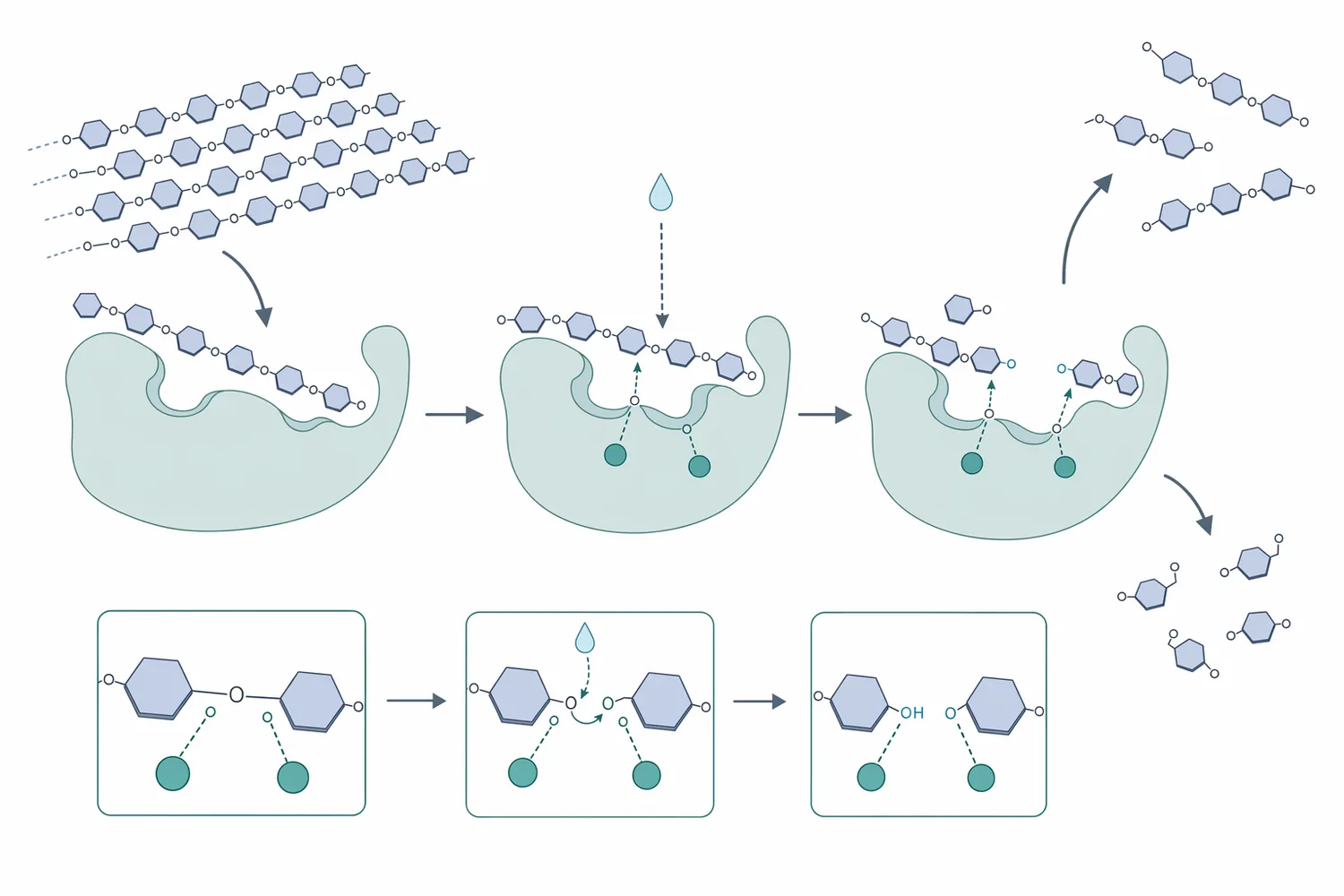
Cellulase function is best understood as a sequence of access, cutting, and finishing steps. The enzyme does not “melt” cellulose. Instead, it binds to accessible cellulose surfaces, disrupts local chain organization, hydrolyzes specific glycosidic bonds, and produces shorter, more soluble carbohydrate fragments [1].
The first important action is internal chain cutting. Endoglucanase-type cellulase activity attacks accessible β-1,4 bonds inside cellulose chains, especially in less ordered or amorphous regions. This opens the fiber structure, reduces chain length, creates new chain ends, and makes the substrate more accessible for other cellulase components [1].
The second action is chain-end processing. Exoglucanases, also called cellobiohydrolases in many descriptions, work from exposed chain ends and remove small soluble fragments, commonly cellobiose. This step is important because cellulose is not only chemically bonded but also physically packed; once internal cuts create chain ends, chain-end enzymes can continue the breakdown more efficiently [1].
The third action is conversion of small fragments. β-Glucosidase-type activity hydrolyzes cellobiose and short oligosaccharides into glucose. That final conversion matters in fermentation-oriented processes because glucose is easier for microbes to use than insoluble cellulose or cellobiose, and it also helps relieve accumulation of intermediate products that can slow overall hydrolysis [4].
| Cellulase component or function | Where it acts on cellulose | What physically changes in the material | Why the change is useful |
|---|---|---|---|
| Endoglucanase-type activity | Internal accessible points in cellulose chains | Long chains are cut into shorter chains; new chain ends appear; amorphous zones open up | Improves accessibility and starts fiber loosening or hydrolysis |
| Exoglucanase / cellobiohydrolase-type activity | Exposed chain ends | Cellulose chains are shortened from the ends, often releasing cellobiose | Converts opened cellulose into smaller soluble fragments |
| β-Glucosidase-type activity | Cellobiose and short oligosaccharides | Small soluble fragments are converted further, commonly toward glucose | Supports downstream fermentation and reduces buildup of intermediate sugars |
| Cellulose-binding regions in some cellulases | Cellulose surface | Enzyme is held close to the insoluble substrate, improving local contact | Helps the catalytic domain act on a solid, water-insoluble polymer |
The structure of cellulase is part of the reason it can act on an insoluble solid. Many cellulases are described in terms of catalytic domains, which perform hydrolysis, and carbohydrate-binding modules, which help position the enzyme on cellulose. Molecular-dynamics work on a thermostable cellulase reported cooperative motions between catalytic and binding domains at high temperature, supporting the idea that cellulase structure influences how efficiently the enzyme contacts and acts on cellulose surfaces [5].
Cellulase behavior also depends on the surrounding matrix. In fruit tissue, cellulose is intertwined with pectin and hemicellulose, so cellulase alone may loosen part of the cell wall while pectinase and xylanase address other polymers. In lignocellulosic biomass, lignin and hemicellulose can physically block cellulose, which is why combined enzyme systems and pretreatment are often discussed together in biomass conversion literature [4].
Many industrially relevant cellulases come from microorganisms because bacteria, fungi, actinobacteria, and other microbes naturally degrade plant biomass. Reviews describe microbial cellulases as important industrial biocatalysts with applications across textiles, detergents, pulp and paper, food processing, animal feed, agriculture, and biofuel-related biomass conversion [2].
Different microbial environments produce different cellulase traits. Thermophilic bacteria from hot spring sediments have been investigated for amylase and cellulase production, reflecting interest in enzymes that remain useful under warmer processing conditions [6]. Cold-active cellulase from polar Nocardiopsis has also been studied for improved cellulose hydrolysis efficiency at lower temperatures, showing that cellulase technology is not limited to one operating style [7].
Actinobacteria, fungi, rumen microbes, insect gut microbes, rhizobacteria, and marine microorganisms are all represented in cellulase research. For example, enzyme-producing insect gut microbes have been described as an underexplored biotechnology resource, while marine actinobacteria have been reviewed for cellulase potential in biofuel applications [8], [9]. This diversity helps explain why cellulase enzymes are discussed across so many process categories rather than in only one industry.
White-rot basidiomycetes are another important biological group because they naturally degrade plant cell-wall materials, including lignocellulose. A mini-review on regulation of cellulase enzymes in these fungi highlights how cellulase production is controlled in organisms adapted to breaking down woody biomass [10].
Textiles are one of the clearest practical uses for cellulase. Cotton is mostly cellulose, but the commercial goal in textile processing is usually controlled surface modification, not complete fiber degradation. Cellulase can remove or weaken tiny protruding fibrils on cotton surfaces, reduce fuzz, improve fabric smoothness, support bio-polishing, and contribute to denim finishing effects [3].
Mechanistically, cellulase acts on exposed cellulose at the fiber surface. Endoglucanase-type action can nick surface fibrils; mechanical movement during washing or finishing then helps detach weakened microfibrils. This combination of enzyme action and shear is why cellulase can improve surface appearance while the bulk fabric remains intact when processing is controlled [11].
This is also the basis for many searches around “laundry detergent with cellulase,” “cellulase laundry detergent,” and “cellulase washing powder.” In detergent contexts, cellulase is associated with cotton fiber care because it can help remove damaged surface cellulose and loosen particulate soil attached to fibrils. The useful action is surface renewal, not aggressive digestion of the garment [3].
In industrial fabric finishing, cellulase can reduce the need for harsh chemical treatment and excessive abrasion. The effect comes from specificity: cellulase targets β-1,4-linked cellulose rather than indiscriminately reacting with all components in the bath. However, the same specificity that makes it useful also means the outcome depends on fabric construction, dyeing history, mechanical action, and process environment [11].
In pulp and paper applications, cellulase can modify fiber surfaces and improve how fibers respond to refining. Paper pulp performance depends on fiber flexibility, fibrillation, bonding, drainage, and final sheet strength. Controlled cellulase treatment can open fiber surfaces and alter fibrillation behavior, helping mechanical refining proceed differently than it would with untreated pulp [3].
The practical mechanism is similar to textiles but applied to pulp fibers. Cellulase weakens selected cellulose-rich surface regions, increases local accessibility, and can change how fibers swell and separate during mechanical action. If the treatment is too severe for the intended paper grade, fiber strength can be reduced, so the industrial value lies in controlled modification rather than maximum hydrolysis [1].
Cellulase is often discussed in pulp and paper alongside xylanase and other hemicellulases. This is because pulp fibers contain more than cellulose alone, and hemicellulose can affect fiber bonding, bleaching response, and drainage. Reviews on cellulase and xylanase synergism emphasize that combined enzyme action can be important when the substrate is a mixed plant-wall material rather than purified cellulose [4].
In fruits, vegetables, grains, and botanical materials, valuable compounds are often trapped inside or behind plant cell walls. Cellulase helps by weakening the cellulose skeleton of the wall, allowing juice, pigments, phenolics, flavors, sugars, and other soluble materials to move into the liquid phase more readily [12].
Cellulase rarely works alone in these matrices. Pectin creates gel-like wall structures in many fruits, xylan and other hemicelluloses crosslink with cellulose, and starch or proteins may also be present depending on the material. A study on juice yield and clarification evaluated pectinase in combination with xylanase and cellulase for various culinary juices, illustrating the practical logic of using complementary enzymes against different wall polymers [12].
Cellulase-assisted extraction is also relevant for botanical compounds. Research on Polygonum cuspidatum used thermostable cellulase for enzyme-assisted extraction and conversion steps involving polydatin and resveratrol, showing how cellulase can help release plant-associated compounds by disrupting the cell-wall barrier [13]. The enzyme’s role is not to create the target molecule by itself; it improves access to plant tissue and can be paired with other biocatalytic steps.
Fermented grain products provide another example. Research on black glutinous rice tape reported cellulase-assisted enhancement of phenolics, and related work on fermented rice cake used germinated black glutinous rice, probiotic yeast, and enzyme technology to improve functional properties [14], [15]. In these cases, cellulase can help expose or release bound compounds by changing the structure of the plant matrix during processing.
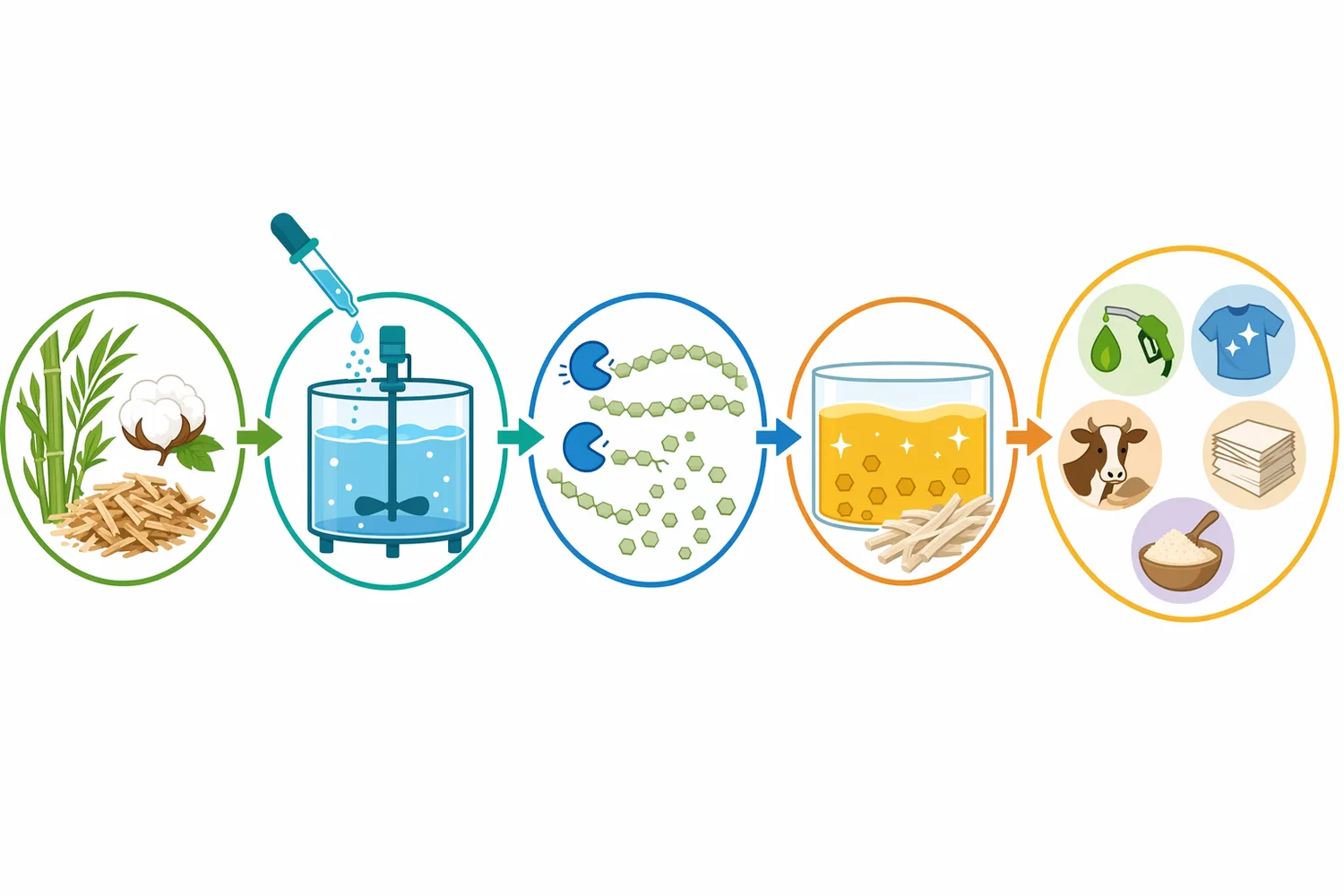
Cellulase is central to lignocellulosic biomass conversion because cellulose is a major carbohydrate fraction in crop residues, fruit peels, woody materials, and other plant wastes. When cellulase hydrolyzes cellulose into soluble sugars, those sugars can support fermentation, biogas production, or conversion into other biobased products [9].
Passion fruit peel waste is one example from the research literature. A study on cellulase production for obtaining biogas from Passiflora edulis peel waste hydrolysate reflects the broader strategy: convert an underused cellulose-containing residue into a more biodegradable hydrolysate, then use that hydrolysate in an energy-oriented biological process [16].
Banana peel waste has also been explored as a substrate for microbial cellulase production, including work discussing antimicrobial applications. Such studies show two linked ideas: plant-processing residues can be both a source of cellulose-rich material and a feedstock for producing or applying enzymes in biotechnological processes [17].
Biofuel applications are a major reason cellulase remains a research focus. Reviews on marine actinobacteria and microbial cellulases describe cellulase as a key enzyme class for converting cellulose-rich biomass into fermentable carbohydrates. The limiting factor is not whether cellulose contains glucose—it does—but whether the process can make that glucose accessible at useful rates and costs [9].
Cellulase is also relevant in agricultural and environmental contexts because cellulose turnover is central to plant residue decomposition. Soil enzyme studies often track cellulase-related activity as part of organic matter transformation, residue breakdown, and microbial response to amendments [18].
Rhizobacteria associated with Hippophae rhamnoides have been reported to exhibit diversified cellulase and pectinase activities. That kind of finding matters because plant-associated microbes can contribute to degradation of cell-wall polymers in the rhizosphere and may have broader biotechnology relevance [19].
In composting and soil systems, cellulase activity reflects the biological breakdown of plant residues. Biochar-amended compost research has examined selected enzyme activities in soils, reinforcing that cellulase-related processes are part of the larger microbial cycling of carbon-rich plant material [18].
These agricultural examples should be interpreted as ecosystem and processing evidence rather than as a single universal performance claim. Cellulase activity in soil, compost, or rhizosphere environments depends on microbial community, moisture, temperature, organic matter composition, and the physical accessibility of cellulose [19].
Cellulase has a logical role in feed and silage because many agricultural by-products contain cellulose-rich fiber. By partially hydrolyzing cellulose or loosening fiber structure, cellulase may help expose carbohydrates to fermentation microbes or improve processing of fibrous materials [2].
The mechanism is again substrate access. In chopped or hydrated plant material, cellulase can attack exposed cellulose surfaces, creating shorter chains and soluble sugars that lactic acid bacteria or other fermentation organisms may use. This can influence fermentation behavior in silage-type systems, especially when cellulase is used alongside microbial inoculants or other cell-wall enzymes [4].
The result is not universal across all feeds or animals. Cellulose may be protected by lignin, cutin, silica, or intact tissue structure, and animal digestive systems differ sharply in how they handle fiber. Ruminants rely on microbial fermentation in the rumen, while monogastric animals have more limited fiber fermentation capacity [2].
Searches for “cellulase digestive enzymes,” “cellulase supplement,” or “cellulase supplements” often come from nutrition contexts rather than industrial processing. In the human body, cellulose is generally treated as dietary fiber; discussions of cellulase enzyme in human body contexts usually relate to supplemental enzyme products or microbial digestion rather than a broad industrial enzyme application [1].
Cellulase in detergents is conceptually connected to textile finishing. Cotton fabrics accumulate damaged surface fibrils during wear and washing. These fibrils can trap soil, scatter light, contribute to greying, and make fabric feel rougher. A laundry detergent with cellulase is designed to act on those exposed cellulose fibrils during washing [3].
The mechanism is selective surface hydrolysis. Cellulase weakens microscopic cellulose hairs on the fabric surface. Agitation in the wash then helps detach loosened fragments and associated soil. This is why cellulase laundry detergent and cellulase washing powder are often described in relation to brightness, smoothness, and appearance maintenance for cotton-rich fabrics [11].
Detergent use also demonstrates why cellulase stability matters. Laundry systems can contain surfactants, builders, oxidants, salts, and variable temperatures, and the enzyme must remain sufficiently active long enough to act on the fabric surface. Research interest in thermostable, alkali-tolerant, and cold-active cellulases reflects the diversity of real processing environments where cellulase may be useful [20].
Plant materials are composite structures, so cellulase often performs best conceptually as part of a broader cell-wall enzyme approach. Cellulose provides tensile strength, xylan and other hemicelluloses link or coat cellulose, and pectin contributes gel-like structure in many fruit and vegetable tissues. Removing only one component can improve access, but coordinated enzyme action can change the wall more completely [4].
Cellulase and xylanase synergism is especially important in lignocellulosic and agro-industrial substrates. Xylanase can reduce hemicellulose barriers that limit cellulase access to cellulose microfibrils, while cellulase then hydrolyzes the exposed cellulose. The combined effect can be greater than treating the polymers as isolated materials [4].
Pectinase combinations are more common in fruit and juice processing. When pectinase reduces viscosity and breaks down pectin networks, cellulase can act more effectively on the cellulose framework of the tissue. The result can be improved juice release or clarification because the plant tissue loses both gel structure and fibrous support [12].
β-Glucosidase is also important because cellulase hydrolysis can generate cellobiose, which may need to be converted further. In biomass conversion and botanical extraction systems, β-glucosidase activity can help complete hydrolysis steps and support downstream conversion of soluble intermediates [13].
Cellulase performance depends on enzyme origin, formulation, substrate accessibility, water availability, pH, temperature, contact time, mixing, and the presence of substances that either assist or inhibit enzyme action. The reason is straightforward: cellulase must physically reach cellulose surfaces and remain structurally active long enough to hydrolyze bonds [2].
Temperature affects both reaction speed and enzyme structure. Thermostable enzyme research has expanded because higher-temperature processes can improve solubility, reduce contamination risk in some settings, or match existing process streams. At the same time, excessive heat can unfold enzymes that are not adapted to those conditions [20].
Cold-active cellulases are valuable in a different way. A cold-active cellulase from polar Nocardiopsis was reported with increased cellulose hydrolysis efficiency, illustrating why low-temperature enzymes are investigated for processes where heating is undesirable or where materials are treated under cooler conditions [7].
pH also shapes cellulase activity because the amino acids in the catalytic site must be in the right protonation state to hydrolyze glycosidic bonds. Some cellulases are studied for acidic, neutral, or alkaline environments depending on their biological source and intended use. Thermophilic bacteria, alkaline soil isolates, fungi, and marine organisms are all explored because different habitats select for different enzyme behavior [6].
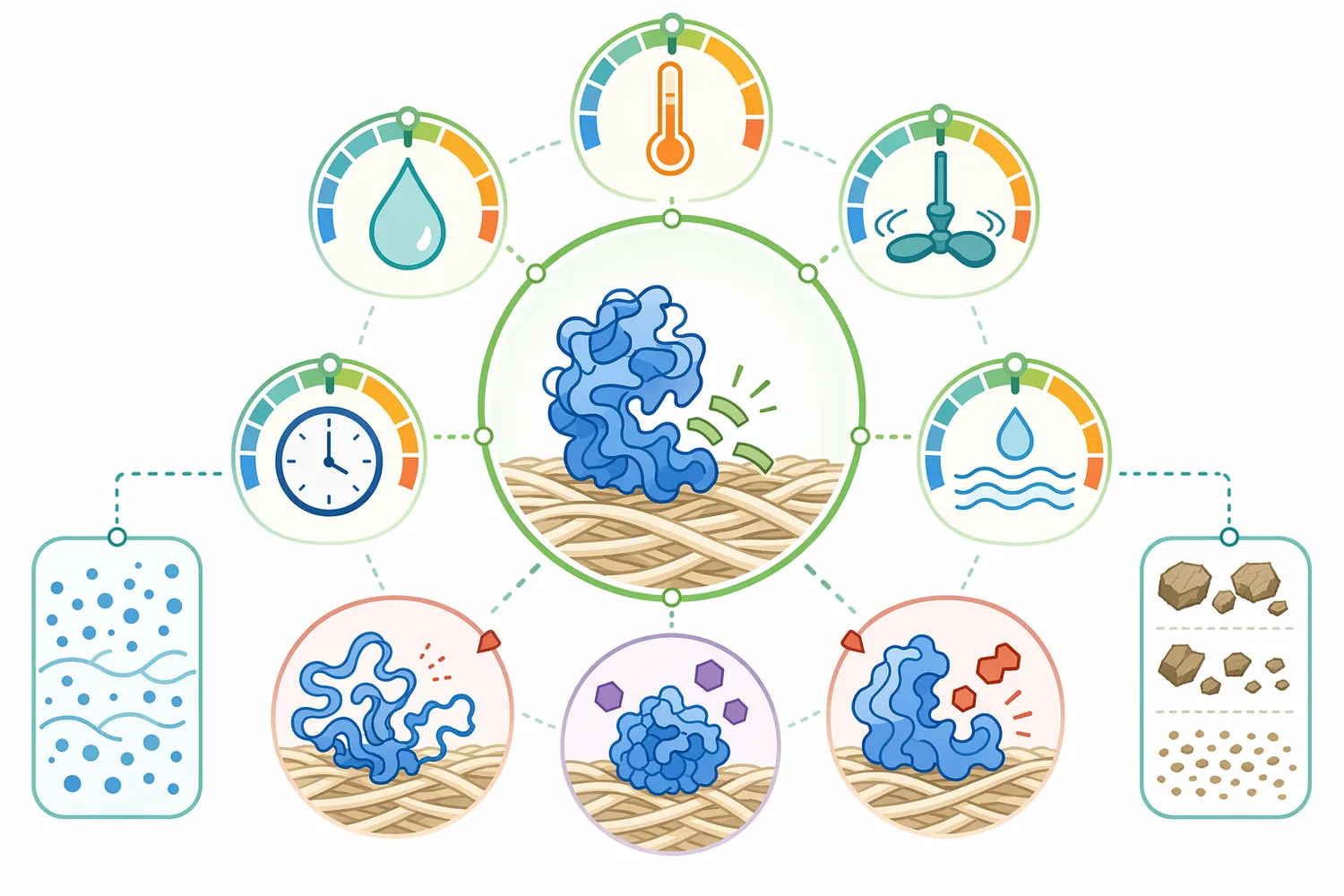
Physical pretreatment and mixing can be just as important as chemistry. Cellulase acts at solid-liquid interfaces, so particle size, fiber swelling, agitation, and shear affect how much cellulose surface the enzyme can reach. In textiles, shear helps remove enzyme-weakened fibrils; in biomass, size reduction and pretreatment expose cellulose that would otherwise remain blocked by lignin and hemicellulose [11].
The evidence for cellulase is strongest at the biochemical level: cellulase enzymes hydrolyze cellulose, and the multi-component mechanism is well established. The industrial evidence is also strong in textiles, detergents, biomass hydrolysis, and plant-material processing, where the substrate is clearly cellulose-rich and the desired effect follows directly from cellulose modification [2].
| Application area | Evidence base | Main substrate change | Practical outcome |
|---|---|---|---|
| Textile finishing and denim processing | Strong industrial and mechanistic support | Surface cellulose fibrils are weakened or removed | Smoother hand, reduced fuzz, controlled worn effects |
| Laundry detergents for cotton fabrics | Strong conceptual and commercial support | Damaged cotton microfibrils are hydrolyzed at the surface | Improved appearance maintenance and soil release support |
| Pulp and paper | Strong but process-sensitive | Fiber surfaces and fibrillation behavior change | Refining support and fiber modification |
| Fruit, juice, and botanical extraction | Strong when combined with other wall enzymes | Plant cell walls loosen; soluble compounds release more readily | Improved extraction, clarification, or release of target compounds |
| Biomass, biogas, and biofuel conversion | Strong research and industrial relevance | Insoluble cellulose becomes soluble sugars and hydrolysates | Fermentation feedstock generation |
| Feed, silage, and agricultural by-products | Promising but context-dependent | Fiber structure is partially opened or hydrolyzed | Fermentation support or improved use of fibrous residues |
The main caution is that cellulase is not a universal “plant material dissolver.” Cellulose accessibility is often the limiting factor. Highly lignified biomass, tightly woven cotton, dried botanical tissue, and mixed agricultural residues may all respond differently because the enzyme can only act where cellulose is exposed and conditions support enzyme activity [9].
Another important point is that more hydrolysis is not always better. In biomass conversion, deeper hydrolysis may be desirable because soluble sugars are the target. In textile finishing, pulp treatment, and fabric care, excessive cellulose attack can weaken the material. The commercial value often lies in controlled, partial modification [11].
The practical cellulase benefits are clearest when described as material changes rather than broad claims. Cellulase can make fibers smoother, loosen plant tissue, increase access to intracellular compounds, release soluble sugars, support clarification, and reduce reliance on purely mechanical or harsh chemical processing in suitable applications [3].
For textiles and detergents, the benefit is surface management. Cellulase acts on protruding or damaged cellulose, helping reduce fuzz, improve fabric feel, and support appearance. This is why cellulase appears in both industrial finishing discussions and consumer-facing searches about cellulase washing powder [11].
For extraction and food processing, the benefit is cell-wall opening. Cellulase helps break part of the structural network that traps juice, phenolics, pigments, or bioactive compounds. When paired with pectinase or xylanase, it can address multiple wall polymers and improve release from complex plant tissues [12].
For biomass and residues, the benefit is conversion. Cellulose is a glucose polymer, but the glucose is locked in an insoluble structure. Cellulase turns that polymer into shorter soluble carbohydrates that can enter fermentation, biogas production, or other bioprocessing pathways [16].
Enzymes.bio supplies Cellulase as a 1 kg online product for buyers who want a straightforward purchasing route. The product is purchased directly online, payment is completed online, and the order is then processed and shipped.
Each order includes a Certificate of Analysis and Safety Data Sheet. These documents accompany the supplied material and support appropriate handling and use in the buyer’s own process environment.
Cellulase is most useful when the application involves cellulose-rich materials: cotton, pulp, fruit and vegetable tissue, grains, agricultural residues, plant extracts, detergents, or lignocellulosic biomass. Its value comes from a clear biochemical function—selective hydrolysis and modification of cellulose—translated into practical process effects such as fiber surface finishing, extraction support, clarification, and biomass conversion [2].
Sold by the 1 kg unit, in stock and ready to ship. Order directly on our store — pay online and we process your order. A Certificate of Analysis and Safety Data Sheet are included with every order.
Buy Cellulase →Numbered in order of first citation. Open-access sources, each verified reachable at publication; citation numbers in the text link here.