
Chicken Liver Hydrolysis Enzyme is a protease-based processing aid used to convert chicken liver proteins into smaller peptides, amino acids, and soluble protein fractions. In practice, it helps transform a nutrient-dense but difficult-to-use poultry by-product into hydrolysates for savory flavor systems, pet food, feed ingredients, protein hydrolysate powders, and further ingredient development. Patent and food-processing literature support the central mechanism: controlled protease hydrolysis breaks peptide bonds in liver proteins under aqueous, moderately heated conditions, changing the substrate from intact tissue into a more soluble, peptide-rich material [1].
Enzymes.bio supplies Chicken Liver Hydrolysis Enzyme directly online by the 1 kg unit. Buyers can purchase online, pay at checkout, and the order is processed and shipped; a Certificate of Analysis and Safety Data Sheet are provided with the order.
Chicken Liver Hydrolysis Enzyme is best understood as a protease preparation for chicken liver protein hydrolysis. “Hydrolysis” means that water is used to split peptide bonds in protein chains, and the enzyme accelerates that reaction under controlled processing conditions. Instead of relying on harsh chemical breakdown, the process uses biological specificity: proteases cut proteins at accessible points in the chain, producing smaller peptides, free amino acids, and soluble nitrogen-containing fractions [1].
Chicken liver is a complex substrate. It contains structural tissue proteins, soluble cellular proteins, enzymes, membrane-associated proteins, lipids, minerals, heme-containing compounds, and flavor-active precursors. Chicken liver has been investigated as an ingredient for improving iron-related nutritional value in formulated foods, showing why it is attractive from a nutrient-utilization standpoint even when its direct use may be limited by flavor, color, or formulation challenges [2].
The enzyme does not create new protein. It changes the physical and molecular form of protein already present in the liver. As peptide bonds are cleaved, large protein molecules unfold further, tissue particles soften, insoluble protein networks loosen, and more material transfers into the liquid phase. This is why hydrolysis can turn minced liver slurry into a liquid hydrolysate, concentrated paste, or dried protein hydrolysate depending on downstream processing [1].
Chicken liver is valuable because it is protein-rich and contains nutrients and flavor precursors associated with meat and organ ingredients. At the same time, intact liver can be hard to use consistently in finished products. Its strong organ note, dark color, lipid content, oxidative sensitivity, and variable raw-material condition can make it difficult to incorporate directly into foods, feeds, or palatability systems at higher value [1].
Enzymatic hydrolysis addresses this by changing the substrate before formulation. A slurry of cleaned, minced liver can be treated with protease so that the protein fraction becomes smaller, more soluble, and easier to separate from coarse insoluble residues. Patent-described chicken liver hydrolysis processes include aqueous slurry preparation, protease treatment, heat inactivation, centrifugation or filtration, and concentration or drying of the hydrolysate [1].
This conversion is important for by-product valorization. Poultry side streams often contain useful protein but require processing to become standardized, transportable, and formulation-friendly ingredients. Related work on chicken viscera proteins shows that enzymatic hydrolysis is used to generate hydrolysates with antioxidant properties, supporting the broader technical case for converting poultry internal-organ proteins into higher-value peptide materials [3].
Proteases work by attacking peptide bonds, the chemical links that connect amino acids in proteins. In intact chicken liver tissue, many proteins are folded, embedded in membranes, associated with lipids, or trapped inside cellular structures. Mincing and water addition expose more surface area, while pH and moderate heat help proteins loosen enough for enzymes to reach cleavage sites [1].
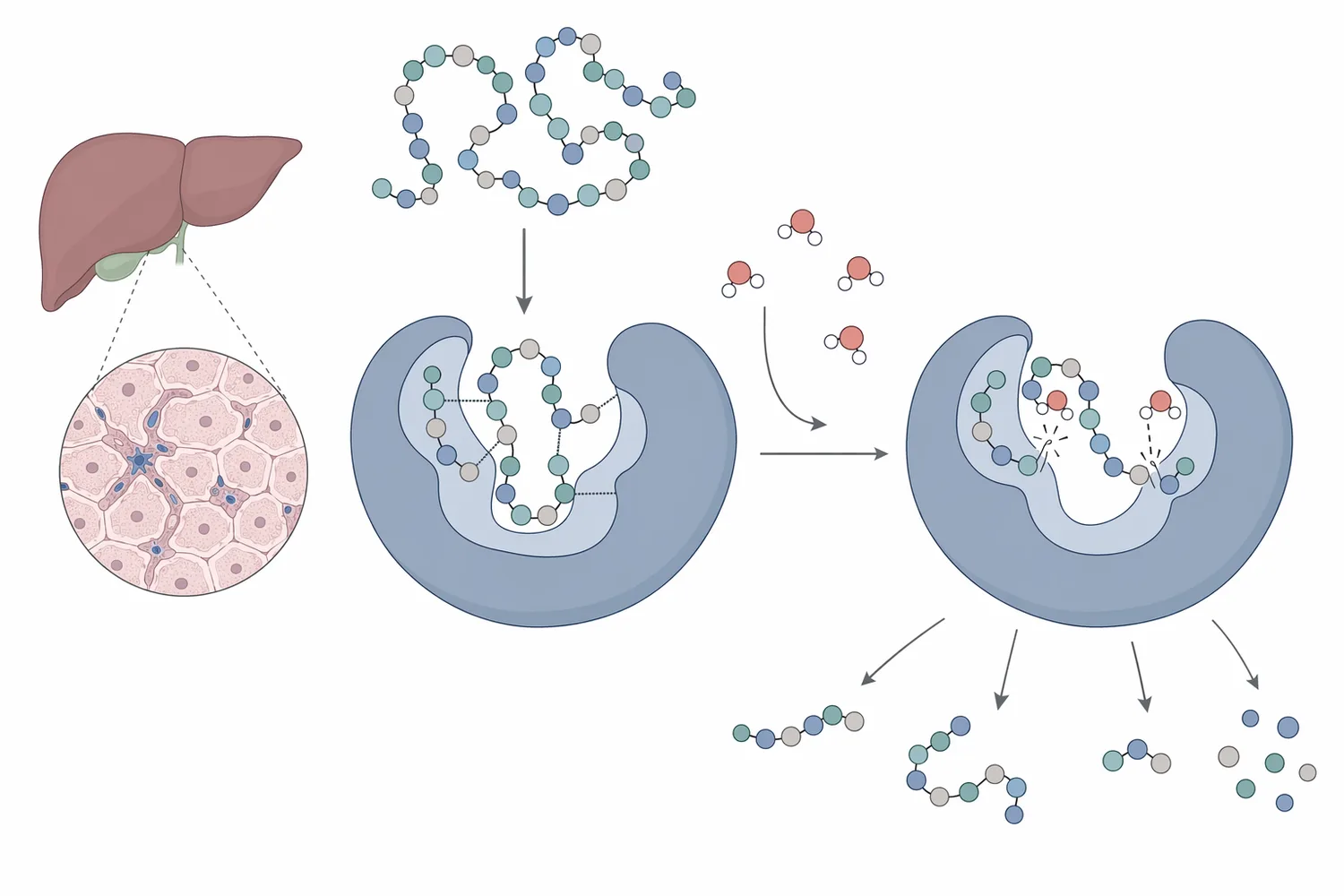
Once the enzyme begins cutting, three practical changes occur. First, protein molecular size decreases, which improves solubility because shorter peptides are less likely to remain locked in insoluble tissue networks. Second, the slurry viscosity and particle structure change as tissue integrity weakens. Third, flavor chemistry changes because amino acids and short peptides are released; these compounds can contribute directly to savory taste or serve as precursors for downstream thermal reaction flavors [1].
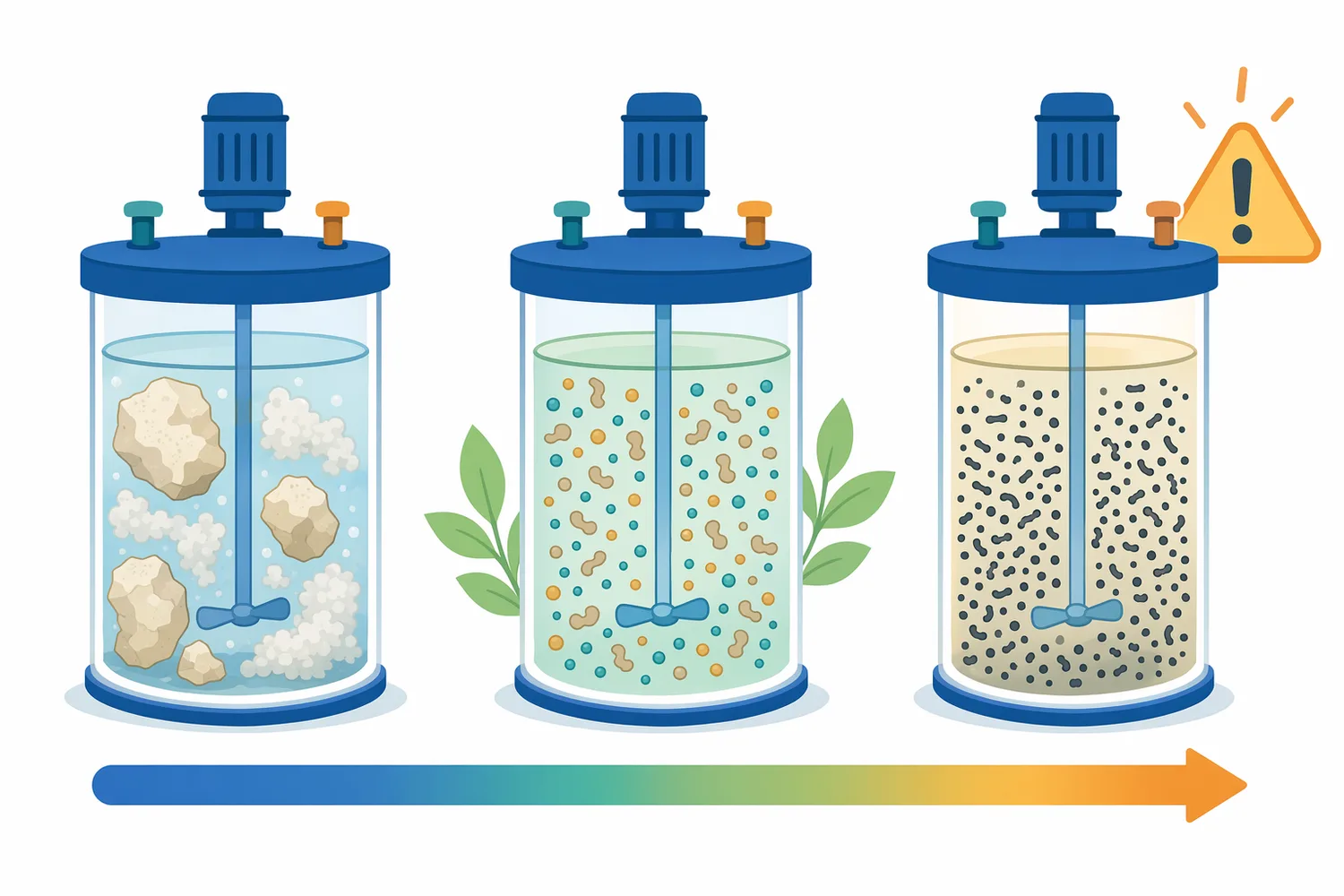
Hydrolysis depth matters. Limited hydrolysis can improve solubility and release savory precursors while retaining some body. More extensive hydrolysis can increase free amino acids and smaller peptides, but it can also increase bitterness if hydrophobic peptide fragments accumulate. This is why published chicken liver hydrolysis work emphasizes controlled pH, temperature, time, and enzyme system rather than simply “more hydrolysis is better” [1].
The liver matrix also contains lipids and membrane materials. Protease treatment can help release or separate these fractions indirectly by breaking the protein structures that hold tissue together. This principle is also seen in liver-processing studies outside poultry; enzymatic hydrolysis has been investigated for extracting oil from fish liver, comparing free and immobilized biocatalyst approaches to improve access to liver lipids [4].
Published chicken liver hydrolysis work describes the use of different protease categories, including alkaline protease, neutral protease, compound protease, flavor-oriented protease systems, and papain-type enzymes. These categories differ in their preferred processing environment and the peptide patterns they tend to generate, which is why combinations or sequential steps are often studied for liver hydrolysates [1].
| Protease environment | Conceptual processing character | Typical effect on liver protein hydrolysis | Practical implication for hydrolysate profile |
|---|---|---|---|
| Mildly acidic protease conditions | Useful where lower pH supports the selected enzyme system | Can release peptides while limiting some alkaline reactions | Often considered when flavor balance and compatibility with acidic slurries matter |
| Neutral protease conditions | Operates near the natural range of many food slurries | Can hydrolyze accessible proteins without strongly shifting pH | Often associated with balanced hydrolysis and moderate process impact |
| Alkaline protease conditions | Uses a higher-pH environment suitable for alkaline protease activity | Can strongly open protein structures and increase cleavage access | Can support high protein breakdown, but flavor and downstream neutralization must be managed |
| Compound or multi-protease systems | Combines different cleavage preferences | Can broaden peptide release and reduce dependence on one cleavage pattern | May improve nitrogen recovery, hydrolysis degree, or sensory profile in optimized processes |
| Flavor-oriented exopeptidase-containing systems | Designed to release smaller terminal amino acids and taste-active fractions | Can modify bitterness and increase free amino acid formation | Often relevant where the hydrolysate is intended for savory flavor applications |
The table is conceptual rather than a formula. Chicken liver hydrolysis performance depends on the actual substrate, pretreatment, pH control, heat history, enzyme exposure time, downstream separation, and the final application. Patent literature on chicken liver hydrolyzed protein reports that two-enzyme approaches can improve hydrolysis degree and nitrogen recovery compared with single-enzyme treatment under optimized conditions, while also affecting bitterness and delicate flavor [1].
The most directly relevant evidence is patent literature on enzymatic preparation of chicken liver hydrolyzed protein. That work describes converting poultry liver material into hydrolysate by selecting proteases, controlling hydrolysis temperature and pH, and then inactivating the enzyme before separation and drying. Reported processing examples fall broadly within moderate food-processing temperatures, approximately 50–60 °C, with pH adjusted from mildly acidic through alkaline depending on the protease system, and hydrolysis carried out over several hours [1].
The same patent describes hydrolysis products as containing amino acids, small peptides, and flavor-related compounds. It also reports that controlled double-enzyme hydrolysis can improve the degree of hydrolysis and nitrogen recovery relative to single-enzyme treatment, while producing a hydrolysate described as stronger in delicate flavor and without bitter taste under the tested conditions [1].
Related poultry by-product research supports the broader principle that enzymatic hydrolysis can generate functional peptide-rich materials from chicken internal organs. A study on chicken viscera proteins examined enzymatic hydrolysis to obtain hydrolysates with antioxidant properties, showing that poultry viscera proteins can be converted into value-added hydrolysates rather than remaining as low-value side streams [3].
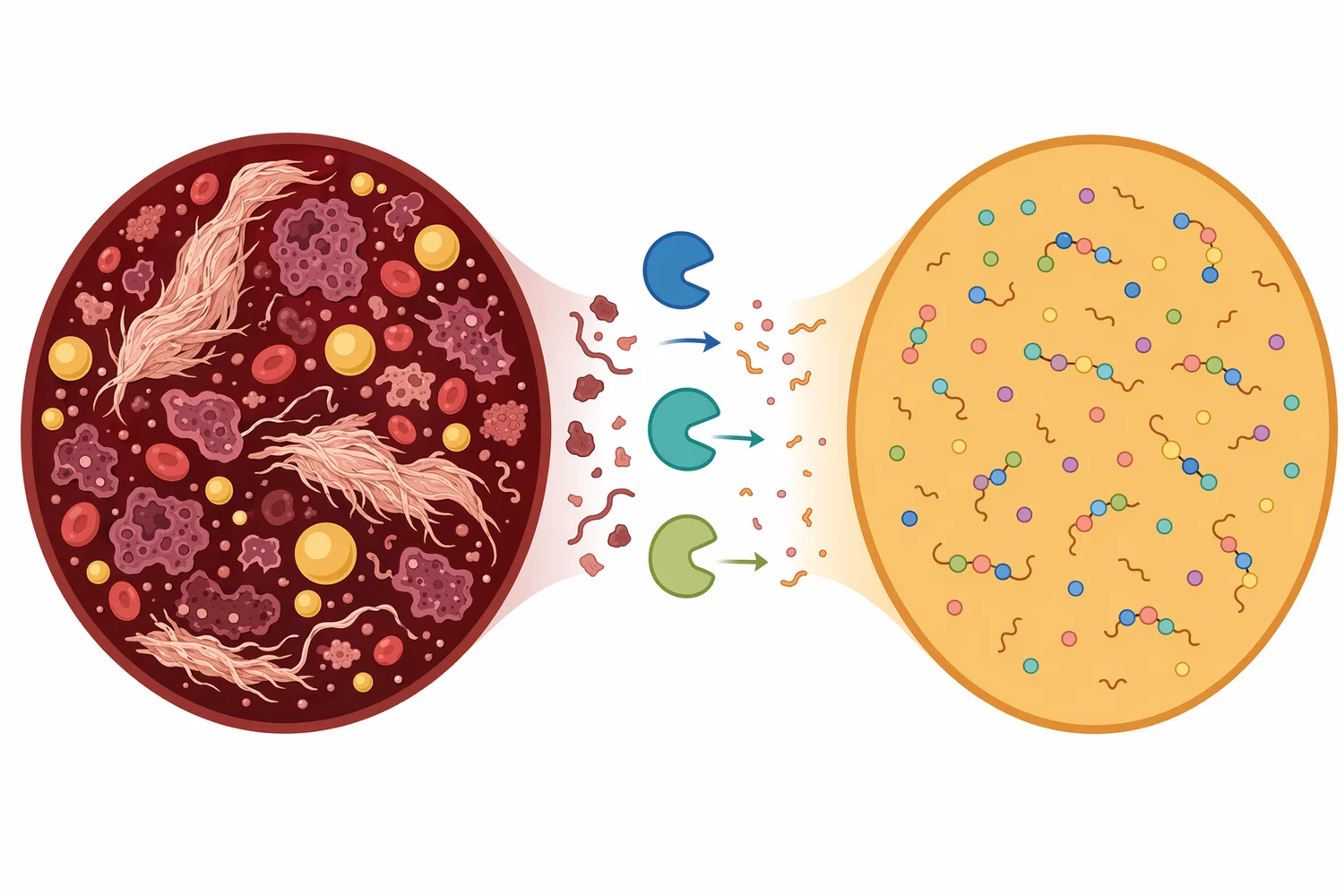
Additional work on chicken viscera proteins found that hydrolysis in the presence of an ionic liquid enhanced antioxidant properties of the resulting hydrolysates. Although this is not a standard chicken liver production process, it reinforces the mechanism that changing protein structure and peptide profile through enzymatic treatment can change functional properties of poultry-derived protein hydrolysates [5].
Liver-specific work in other species also supports the relevance of protease treatment for organ substrates. Sequential enzymatic hydrolysis and ultrasound pretreatment of pork liver have been studied for generating bioactive and taste-related hydrolysates, showing that liver matrices can be processed into peptide-rich fractions where both functionality and flavor-related compounds are important [6].
A companion pork liver study compared pretreatments and hydrolysis conditions for generating taste-related substances. This is useful context for chicken liver because both substrates are organ tissues rich in proteins, lipids, and flavor precursors; however, the exact sensory outcome cannot be transferred directly from pork liver to chicken liver without process-specific validation [7].
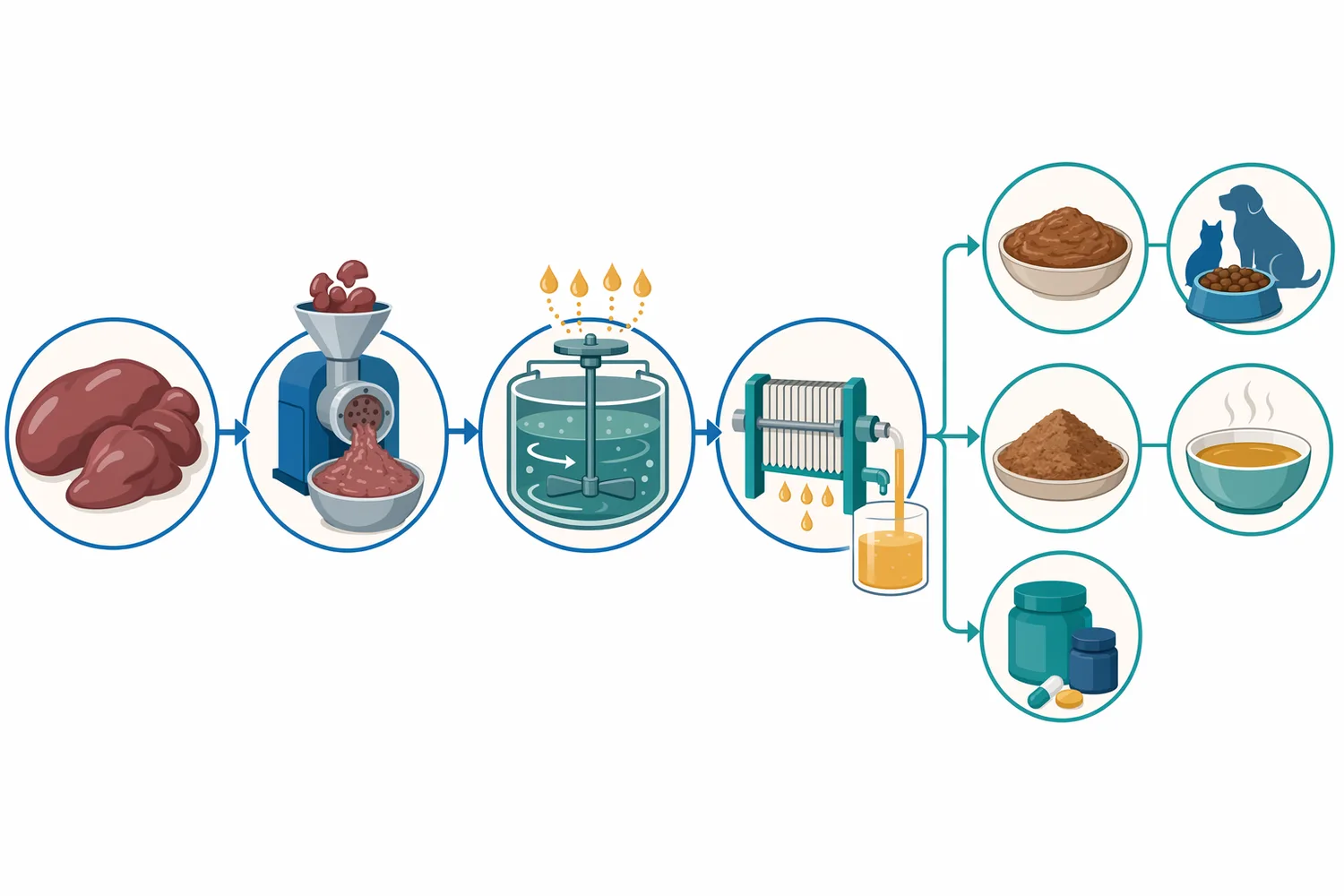
Chicken liver hydrolysis is normally described as an aqueous slurry process. The liver is cleaned, minced or homogenized, mixed with water, and adjusted to the pH and temperature suitable for the chosen protease system. Literature examples for chicken liver hydrolyzed protein describe moderate heating rather than extreme thermal treatment, with hydrolysis generally occurring over several hours before the enzyme is stopped by heat [1].
After hydrolysis, the material is usually separated into liquid and insoluble fractions. Coarse residues can be removed by centrifugation or filtration, and the liquid hydrolysate may then be concentrated, spray-dried, freeze-dried, or used in liquid form. This finishing step is important because the same hydrolysis reaction can support different commercial ingredient forms: liquid flavor base, concentrated paste, soluble powder, or intermediate hydrolysate for further formulation [1].
Pretreatment can influence hydrolysis. Studies on liver and other poultry by-products show that ultrasound, sequential hydrolysis, or combined processing can improve protein accessibility and alter peptide release. For example, sequential ultrasound and enzymatic steps have been used to improve hydrolysis of chicken feathers, a different but protein-rich poultry side stream, demonstrating how physical pretreatment can make resistant protein structures more accessible to enzymes [8].
The practical lesson is that chicken liver hydrolysis is not only an enzyme-addition step. It is a controlled conversion of a biological raw material: particle size, water addition, pH adjustment, temperature, mixing, time, heat inactivation, and separation all shape the final hydrolysate. The enzyme is the biochemical driver, but the process environment determines how completely and cleanly it can act [1].
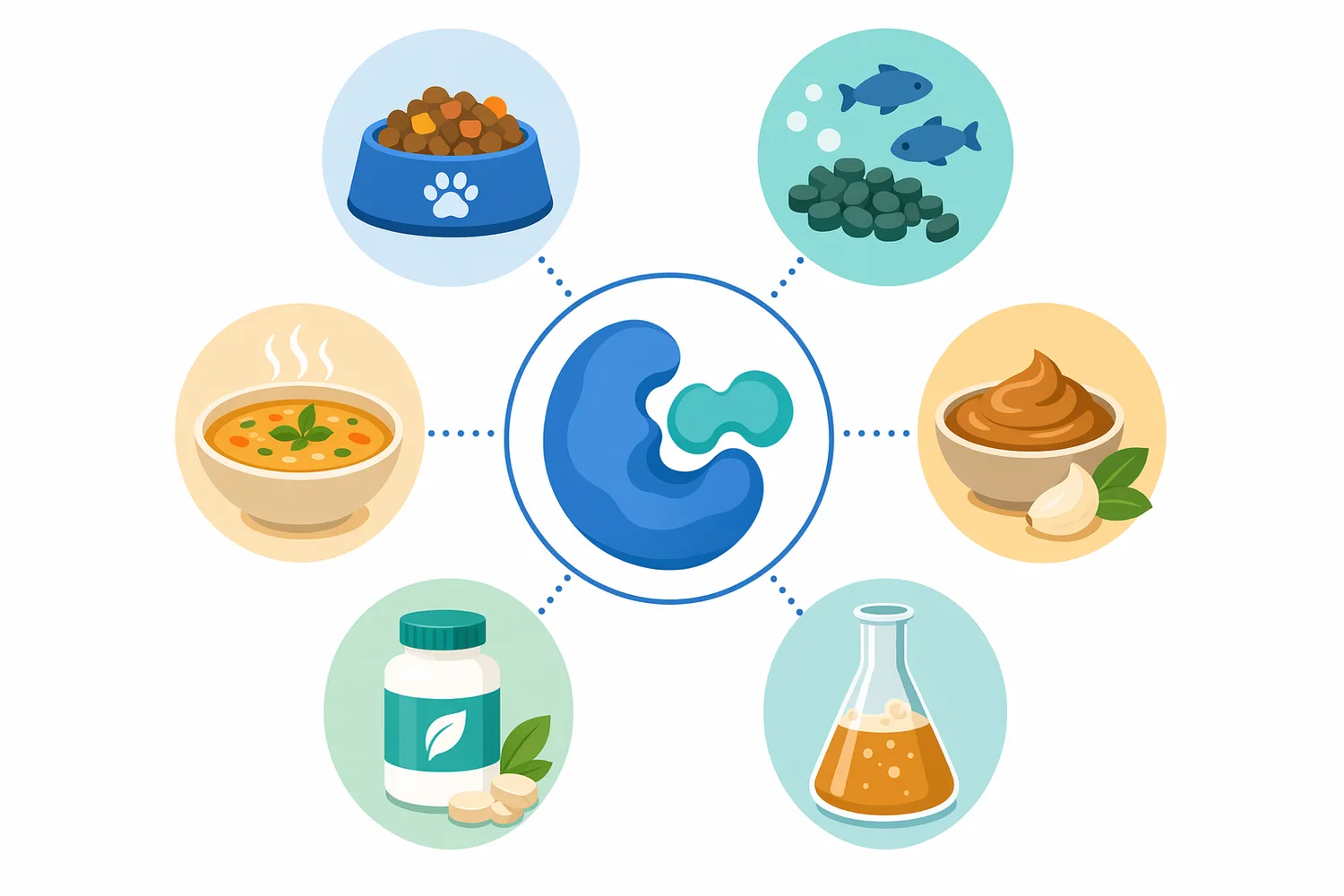
One of the most natural uses for chicken liver hydrolysate is savory flavor development. Protease hydrolysis releases amino acids and short peptides that can contribute umami, brothy, meaty, liver-like, roasted, or kokumi-type taste impressions depending on the full formulation and any downstream heating. Patent-described chicken liver hydrolysates include amino acids, small peptides, and flavor-related compounds, which explains why the technology is relevant to soup bases, sauces, bouillons, gravies, meat seasonings, and pet-food palatants [1].
The key mechanism is precursor release. Intact liver tissue contains proteins, nucleotides, minerals, and reducing compounds, but many are locked inside tissue structures. Hydrolysis frees soluble nitrogen compounds into the liquid phase. When those fractions are later blended with salt, sugars, yeast extracts, fats, spices, or thermal reaction systems, they can participate more evenly in flavor formation than coarse liver tissue would [1].
Flavor improvement is not automatic. Over-hydrolysis can increase bitter peptides, while under-hydrolysis may leave heavy organ notes and poor solubility. The chicken liver patent’s report of improved flavor and no bitterness under optimized double-enzyme conditions is encouraging, but it should be read as evidence that controlled enzyme systems can manage flavor—not as a guarantee that every hydrolysate will have the same sensory profile [1].
Chicken liver hydrolysate can also be processed into soluble protein ingredients. After hydrolysis and separation, the liquid fraction may be concentrated or dried to create a powder or paste with smaller peptides and amino acids than the starting material. Patent examples describe concentrated and dried hydrolyzed protein materials, which aligns with common ingredient formats used in food, feed, and flavor applications [1].
Hydrolyzed proteins are often easier to disperse than intact tissue proteins because smaller peptides hydrate faster and remain suspended or dissolved more readily. This can matter in liquid seasonings, instant powders, nutritional blends, pet-food coatings, and feed premixes where even dispersion is important. Research on enzymatic hydrolysis of sweet lupine protein for food ingredients similarly shows how hydrolysis is used to tailor protein functionality, even though the substrate differs from chicken liver [9].
For chicken liver specifically, the soluble peptide fraction may be more manageable than raw liver for blending, pumping, concentration, or drying. The transformation from tissue to hydrolysate reduces dependence on intact organ texture and allows the protein fraction to be incorporated in forms more compatible with industrial processing [1].
Chicken liver is already familiar in pet-food systems because of its strong aroma and animal-derived flavor profile. Hydrolysis can make it easier to distribute those flavor-active compounds in coatings, gravies, soft treats, or dry-food palatability systems. The mechanism is straightforward: protease treatment releases soluble peptides and amino acids that can diffuse, coat, and interact with other flavor materials more uniformly than minced liver particles [1].
In feed applications, hydrolysis can support upcycling of poultry by-products into protein-rich ingredients. Research on poultry viscera hydrolysates and restaurant food-waste bioconversion illustrates the wider movement toward enzyme-assisted conversion of low-value organic streams into feed-related materials, although each substrate and final use requires its own process controls [10].
It is important not to overstate palatability or nutritional performance. The provided literature supports the formation of hydrolysates and functional peptide fractions, but finished feed or pet-food performance depends on inclusion level, formulation, heat processing, animal species, and regulatory category. The enzyme enables the hydrolysis step; the final product outcome belongs to the complete formulation and process [3].
Protein hydrolysis can generate peptides with antioxidant or other bioactivities, depending on amino-acid sequence, molecular size, charge, hydrophobicity, and processing history. Chicken viscera hydrolysate research reports antioxidant properties, and chicken liver patent literature also describes antioxidant activity in hydrolysis products, supporting interest in this direction [3].
The mechanism behind peptide antioxidant activity is not mystical. Certain peptides can donate electrons, chelate metals, interrupt radical reactions, or expose amino-acid side chains that interact with oxidative pathways. Hydrolysis changes which peptide sequences are present and whether they are soluble enough to participate in those interactions. However, antioxidant behavior is strongly method- and formulation-dependent, so it should be treated as a potential property rather than a universal outcome [5].
Other animal-protein hydrolysate studies point in the same direction. Chicken bone proteins have been hydrolyzed to prepare antioxidant peptides, with compositional characteristics influencing activity. Although bone and liver differ substantially, the study reinforces a general peptide-science principle: the biological or functional behavior of a hydrolysate is tied to the peptide profile created by enzymatic cleavage [11].
Chicken liver hydrolysis is a practical example of protein upcycling. Instead of using chicken liver only as a low-value raw by-product, hydrolysis converts it into a more versatile intermediate. The resulting liquid or dried hydrolysate can be used where soluble nitrogen, savory taste, or animal-derived peptide fractions have value [1].
This fits a broader pattern across food and feed ingredient development. Enzymatic hydrolysis has been applied to chicken feathers to create enhanced protein sources with bioactive peptides, and to chicken slaughterhouse waste for peptide antioxidant activity and feed-additive potential. These studies show how enzyme processing can shift poultry processing streams from waste management toward ingredient recovery [8].
Chicken liver is especially suitable for this logic because it already contains flavor-active and nutrient-dense material. The challenge is not whether the substrate has value; it is how to make that value usable in a controlled, consistent, and process-compatible form. Protease hydrolysis helps by breaking down the protein matrix and producing a soluble fraction that can be handled more like an ingredient than an organ tissue [1].
The strongest supported claim is that protease treatment can hydrolyze chicken liver proteins into smaller peptides, amino acids, and soluble protein fractions under controlled aqueous conditions. The evidence is direct for chicken liver in patent literature and supported by related research on poultry viscera, pork liver, and other animal-protein hydrolysates [1].
Moderately supported claims include improved solubility, better ingredient handling, potential flavor development, and possible antioxidant properties. These are plausible and literature-supported, but the magnitude depends on raw-material quality, process conditions, hydrolysis extent, heat treatment, separation, and drying. For example, pork liver hydrolysate studies show that pretreatment and hydrolysis conditions influence taste-related substances, which is directly relevant to how process conditions shape flavor outcomes [7].
Claims that require caution include specific health benefits, guaranteed digestibility improvements, guaranteed palatability, or guaranteed antioxidant performance in a finished product. Peptide hydrolysates can be promising, but finished-product claims depend on the complete formulation, regulatory context, and product-specific evidence. The enzyme should be viewed as a processing aid for generating hydrolysates, not as a finished functional claim by itself [3].
Chicken Liver Hydrolysis Enzyme from Enzymes.bio is supplied as an online product for buyers who need a protease-based enzyme for chicken liver hydrolysis work. The product is sold directly by the 1 kg unit: purchase online, pay online, and the order is processed and shipped. A Certificate of Analysis and Safety Data Sheet come with the order.
The product’s role is the hydrolysis step. It is not a finished flavor, not a supplement, and not a complete processing line. Its value is in enabling the controlled biochemical conversion of chicken liver protein into smaller, more soluble peptide and amino-acid fractions that can then be separated, concentrated, dried, blended, or formulated according to the buyer’s own process [1].
For process engineers and ingredient developers, the key benefit is practical: enzymatic hydrolysis can make chicken liver more usable. It changes a variable organ substrate into a hydrolysate stream with improved processability and broader application potential. That is the foundation for its use in savory flavor bases, pet-food palatability systems, feed ingredients, hydrolysate powders, and poultry by-product valorization [1].
Chicken Liver Hydrolysis Enzyme is a protease-based tool for converting chicken liver proteins into soluble peptides, amino acids, and hydrolysate fractions. The strongest direct evidence comes from chicken liver hydrolyzed-protein patent literature describing aqueous slurry hydrolysis under controlled pH, moderate heat around 50–60 °C, several-hour reaction times, enzyme inactivation, separation, and concentration or drying [1].
The industrial value is not just “protein breakdown” in the abstract. The enzyme physically and chemically changes the liver matrix: tissue structure loosens, insoluble proteins become more soluble, peptide size decreases, savory precursors are released, and the resulting hydrolysate becomes easier to formulate than intact liver. Related research on poultry viscera and liver hydrolysates supports the broader use of enzymatic hydrolysis for value-added peptide ingredients, flavor-related fractions, and by-product upcycling [3].
Enzymes.bio supplies Chicken Liver Hydrolysis Enzyme online by the 1 kg unit, with order processing and shipment after online payment. For buyers working with chicken liver hydrolysates, savory bases, pet-food systems, feed ingredients, or poultry by-product valorization, it provides a practical enzyme route for turning nutrient-rich liver material into a more usable hydrolyzed ingredient stream.
Sold by the 1 kg unit, in stock and ready to ship. Order directly on our store — pay online and we process your order. A Certificate of Analysis and Safety Data Sheet are included with every order.
Buy Chicken Liver Hydrolysis Enzyme →Numbered in order of first citation. Open-access sources, each verified reachable at publication; citation numbers in the text link here.