
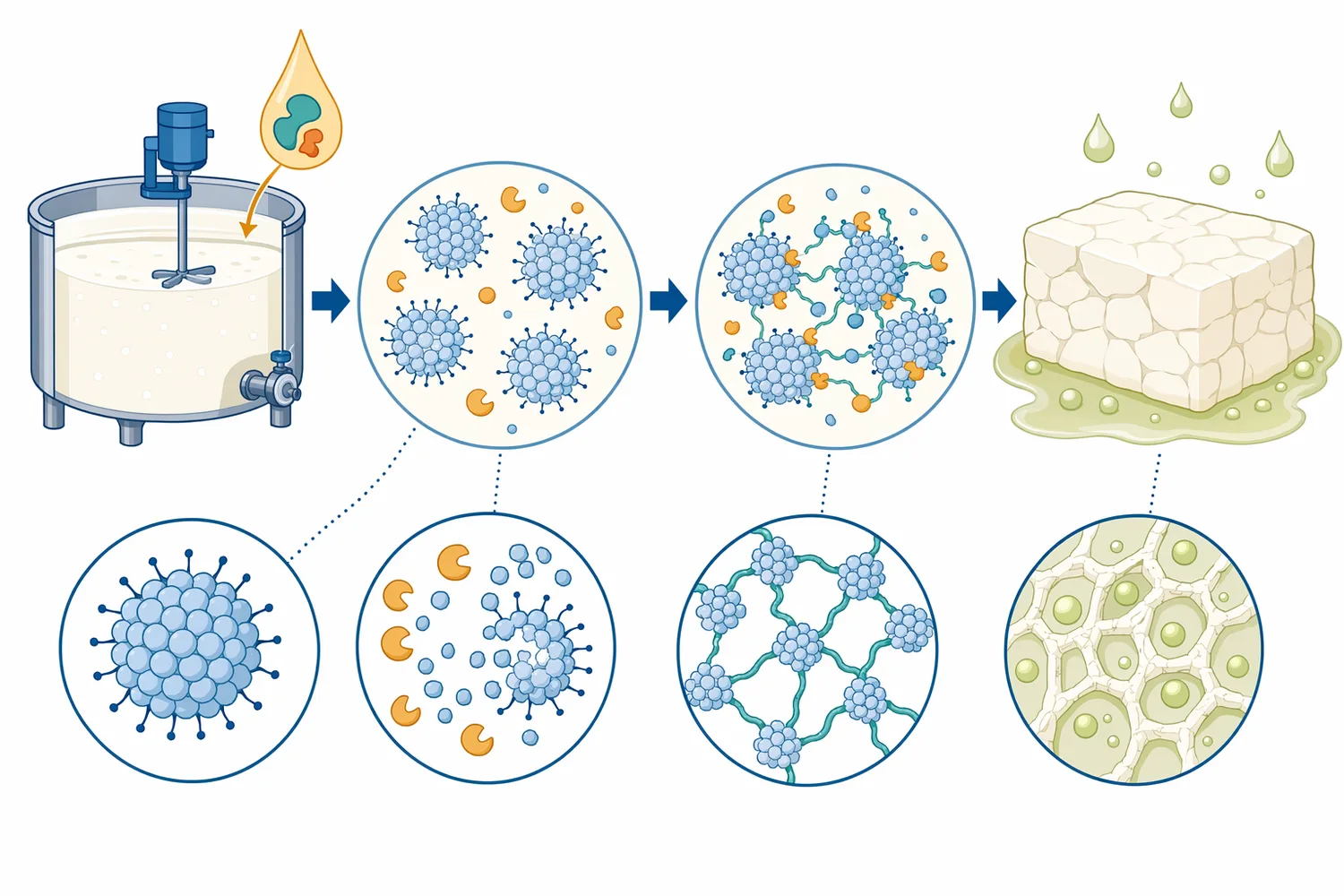
Chymosin is the milk-clotting enzyme used to start curd formation in cheese production. It works by cleaving κ-casein on the surface of casein micelles, releasing glycomacropeptide and removing the stabilizing layer that keeps milk proteins dispersed; in the presence of calcium, the destabilized micelles aggregate into a gel that becomes curd [1].
For buyers searching “what is chymosin,” “define chymosin,” or “chymosin rennet,” the practical answer is straightforward: chymosin is a specialized aspartic protease used primarily in cheesemaking, not a broad protein-degrading enzyme. Enzymes.bio supplies Chymosin for direct online purchase by the 1 kg unit; after online payment, the order is processed and shipped, with a Certificate of Analysis and Safety Data Sheet included with the order.
Chymosin, historically called rennin in the context of calf rennet, is an aspartic protease associated with milk digestion in young ruminants and with commercial cheese manufacture. In traditional cheesemaking, “rennet” referred to enzyme preparations from the abomasum of young calves; chymosin was the key milk-clotting component because it could initiate curd formation efficiently by acting on milk casein rather than simply degrading proteins at random [2].
In modern dairy language, “chymosin,” “rennin chymosin,” and “chymosin enzyme” usually point to the same functional concept: an enzyme that converts fluid milk into a coagulated casein gel. The enzyme’s value is its selectivity. Instead of extensively hydrolyzing many milk proteins, chymosin’s cheese-relevant action is concentrated on κ-casein, the casein fraction that stabilizes the micelle surface and prevents premature aggregation [1].
This specificity is why chymosin in cheese is different from a general protease addition. A broad protease may cut many peptide bonds across casein fractions, which can soften protein structure, increase soluble peptides, and alter flavour development. Chymosin, by contrast, is used because a single early cleavage event can start coagulation while keeping uncontrolled proteolysis comparatively limited during the make process [3].
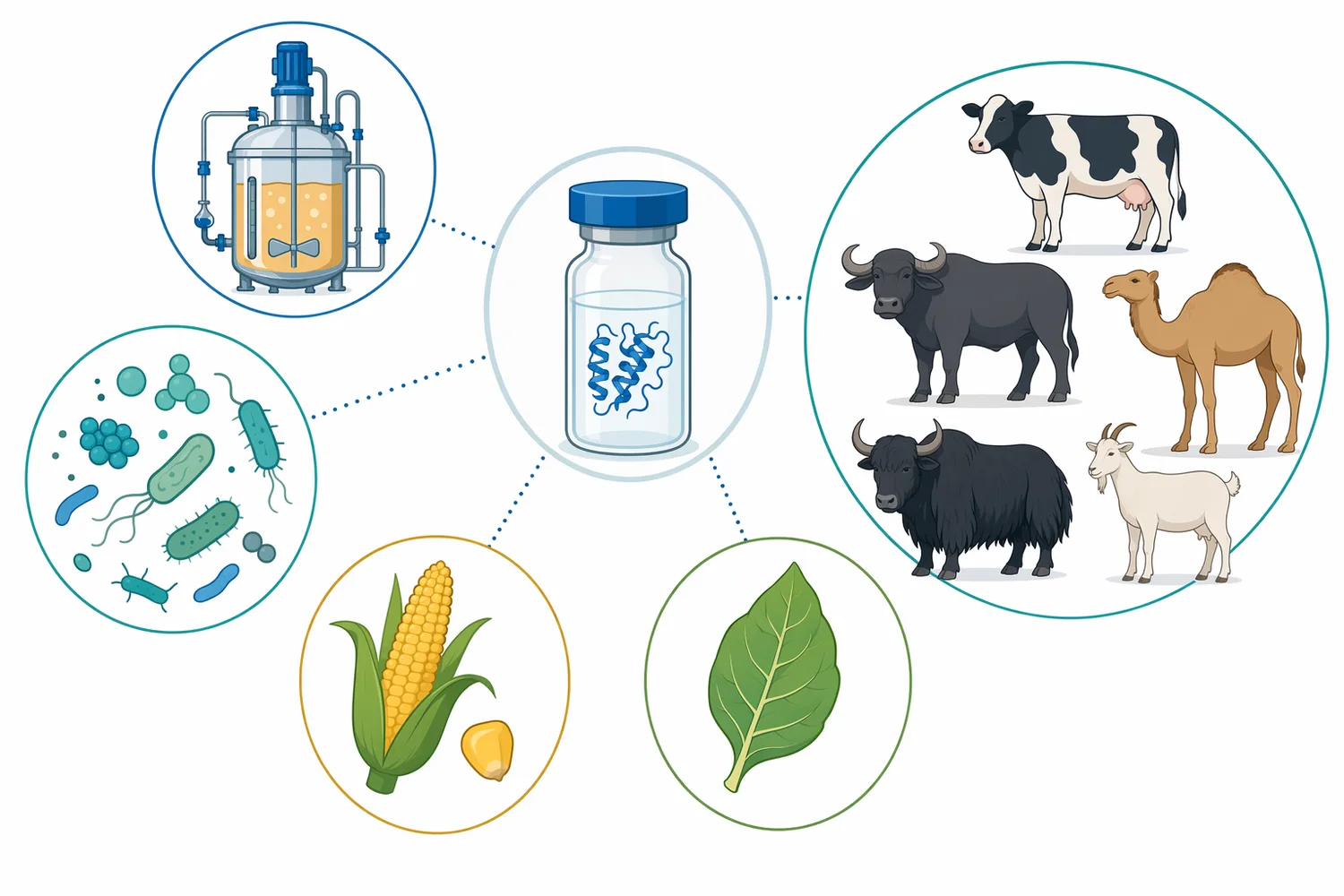
When people ask “where is chymosin found,” the classical answer is the stomach of milk-fed young ruminants, where it helps coagulate milk proteins during digestion. Commercially, however, chymosin is no longer limited to extraction from animal rennet; recombinant DNA technology has been used for decades to produce chymosin for the dairy industry by fermentation [2].
Fermentation-produced chymosin, often written as fermentation produced chymosin, is produced by expressing a chymosin gene in a microbial host and recovering the enzyme for cheesemaking use. Literature on dairy chymosin includes production in yeasts such as Kluyveromyces lactis and Pichia pastoris / Komagataella phaffii, reflecting the shift from animal-only rennet supply toward controlled biotechnological production routes [4].
The term chymosin GMO usually arises because fermentation-produced chymosin is made using recombinant production organisms. The enzyme is produced through biotechnology, but the ingredient used in cheesemaking is the enzyme preparation, not a live culture added to the cheese vat; regulatory treatment and labelling language depend on jurisdiction and product context, so buyers should follow the rules applicable to their own market [2].
Searches for “chymosin Pfizer” usually relate to the early commercial history of recombinant chymosin. The important technical point for today’s buyer is not the brand history but the fact that recombinant chymosin became a foundational dairy enzyme technology, with peer-reviewed literature describing its production for cheese manufacturing as early industrial biotechnology [5].
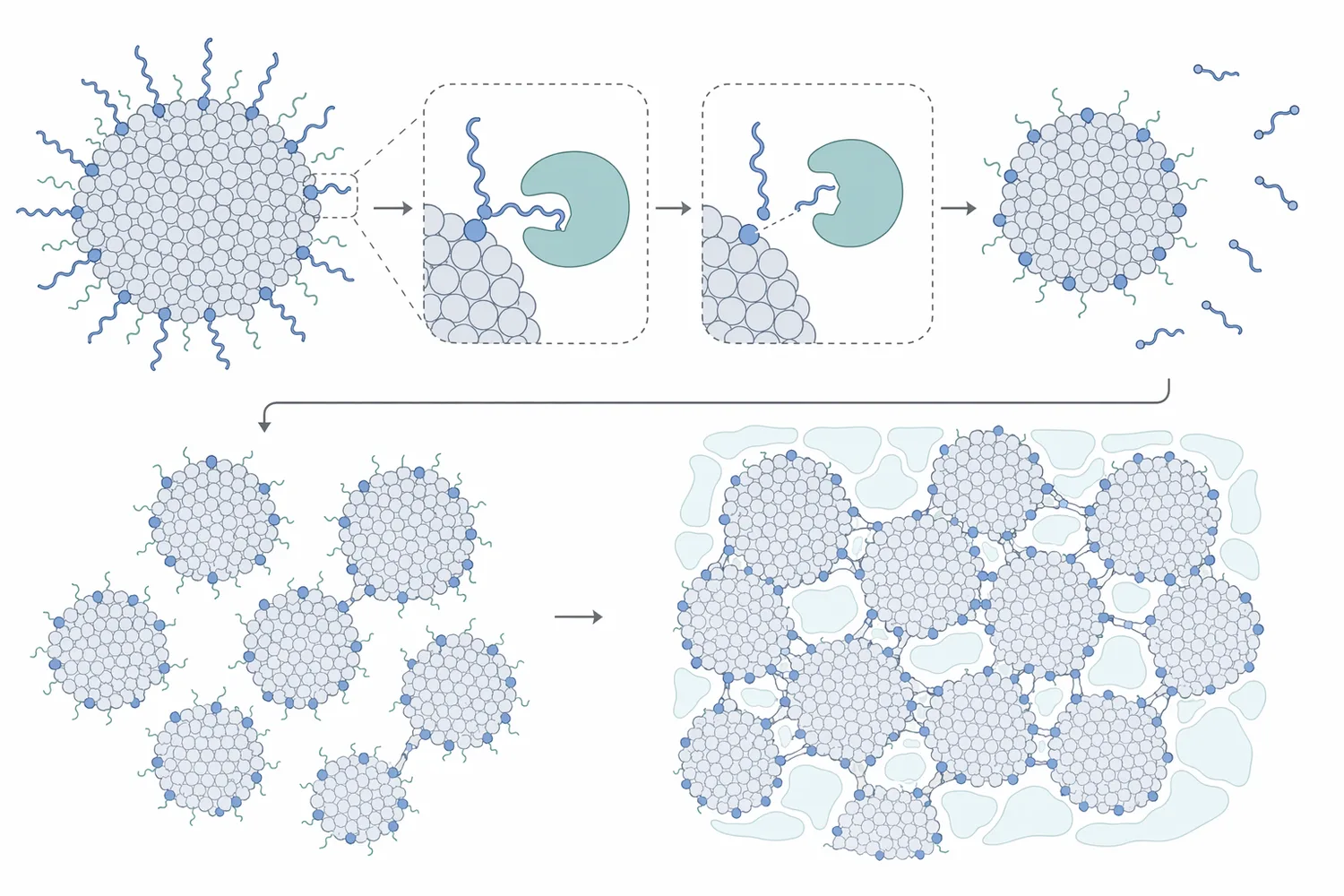
Milk casein exists mainly as casein micelles: colloidal protein-mineral particles containing αs-caseins, β-casein, κ-casein, calcium, and phosphate. κ-casein sits at the micelle surface and acts like a steric and electrostatic stabilizer, helping micelles stay dispersed in milk rather than joining together spontaneously [1].
Chymosin attacks a specific peptide bond in κ-casein, classically described as the Phe105–Met106 bond in bovine κ-casein. This cleavage divides κ-casein into an insoluble para-κ-casein portion that remains associated with the micelle and a soluble caseinomacropeptide/glycomacropeptide fraction that moves into the whey phase [1].
The practical consequence is physical, not just chemical. Before cleavage, the hairy κ-casein layer prevents close micelle-to-micelle contact. After cleavage, that protective layer is shortened or removed, so calcium-mediated interactions between destabilized micelles can occur; the micelles aggregate and form a three-dimensional network that traps fat and water as curd [1].
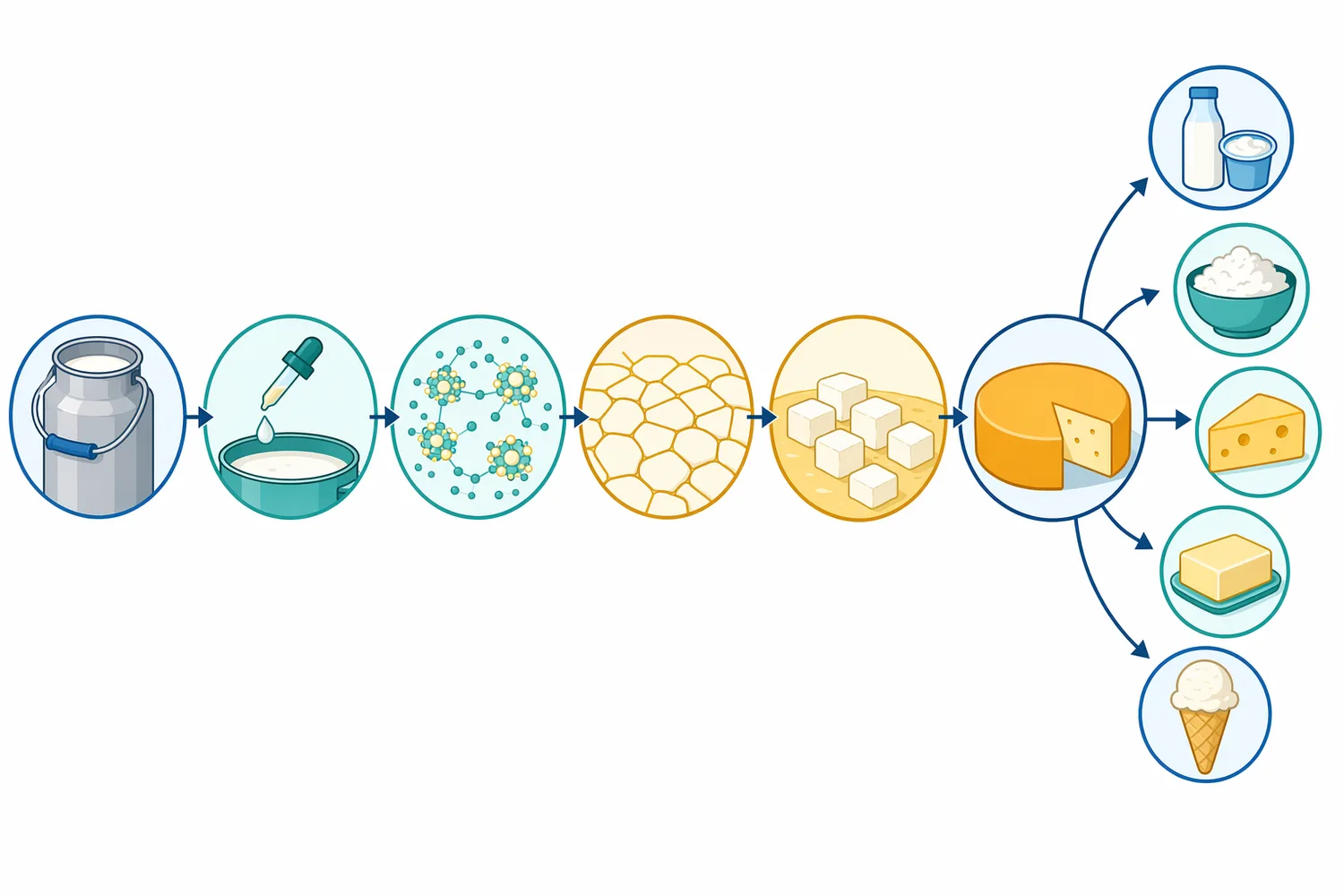
This sequence explains why chymosin rennet is so central to cheese manufacturing. The enzyme does not “thicken” milk in a nonspecific way; it changes the micelle surface so the milk’s own casein system can build a gel. The cheesemaker’s later steps—cutting, stirring, heating, draining, salting, pressing, and ripening—act on the curd structure that begins with this κ-casein cleavage event [3].
The first visible process outcome is coagulation: liquid milk becomes a gel firm enough to cut. A clean coagulation step matters because curd cutting creates surface area for whey release; if the gel is weak or uneven, curd fines, moisture variation, and inconsistent downstream handling can follow [3].
The second outcome is whey separation. Once the gel is cut and stirred, whey drains from the protein-fat network. Chymosin’s role is to create the para-casein matrix that can contract and expel whey under the cheesemaking conditions used for the chosen cheese style [1].
The third outcome is a foundation for ripening. Chymosin remaining in the curd may continue to contribute to proteolysis during maturation, but its reputation in cheese technology rests on a favourable balance between milk-clotting action and controlled proteolysis. Studies comparing chymosin with other coagulants often focus on this balance because excessive or differently targeted proteolysis can affect texture and flavour development [3].
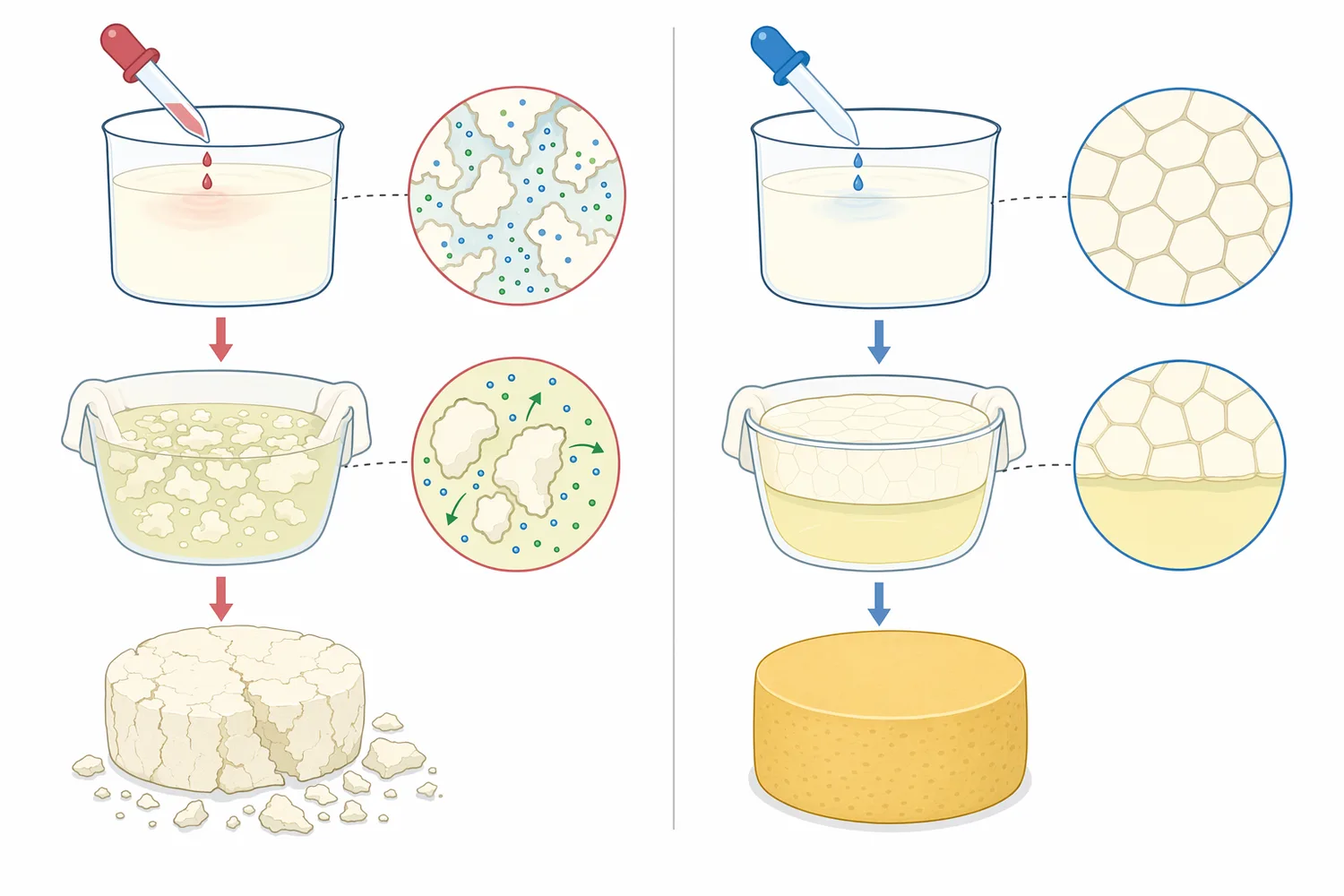
Different coagulation routes can produce a curd, but they do not act on milk in the same way. The comparison below is conceptual: it shows why chymosin is treated as a specialized cheesemaking enzyme rather than simply one option among generic proteases.
| Coagulation approach | Main action on milk proteins | What changes in the vat | Practical relevance in cheese |
|---|---|---|---|
| Chymosin rennet | Selective cleavage of κ-casein, releasing glycomacropeptide | Casein micelles lose surface stabilization and aggregate with calcium | Strong fit for cheeses where a defined enzymatic coagulation step and controlled proteolysis are desired [1] |
| Animal rennet containing chymosin and other proteases | Milk clotting from chymosin plus additional proteolytic activity depending on composition | Coagulation occurs, but broader protease contribution can vary | Traditional route; performance depends on the balance of chymosin and non-chymosin enzymes [2] |
| Vegetable coagulants | Plant proteases can clot milk but may have different specificity from chymosin | Gel formation may occur with a different proteolysis profile | Useful in some cheese concepts, but studied carefully because peptide formation and ripening effects can differ [3] |
| Broad microbial proteases | Less targeted casein hydrolysis | Protein breakdown may extend beyond the κ-casein trigger needed for coagulation | Can create coagulation but may require careful control where bitterness or texture defects are a concern [3] |
| Acid coagulation | pH reduction changes casein charge and mineral balance rather than using κ-casein-specific enzymatic cleavage | Caseins aggregate as acidity increases | Important for acid-set products, but mechanistically different from chymosin-set cheese |
The key distinction is that chymosin creates curd by modifying the micelle surface at κ-casein. Acid coagulation and broad protease coagulation can also produce protein aggregation, but the internal structure, whey release behaviour, and ripening pathway are not identical because the starting biochemical event is different [1].
Fermentation-produced chymosin became important because it allows production of a defined chymosin enzyme without relying solely on animal stomach extraction. Reviews and production-focused papers describe recombinant chymosin as a dairy enzyme made through DNA technology, with the goal of supplying cheesemaking functionality comparable to calf chymosin [2].
Bovine chymosin remains a central reference point because calf rennet established the traditional benchmark for cheese coagulation. Recent research continues to optimize bovine chymosin expression in yeast systems such as Kluyveromyces lactis, showing that production efficiency and enzyme properties remain active areas of industrial biotechnology research [4].
Other ruminant chymosins have also been studied for cheese use. Buffalo chymosin expressed in Pichia pastoris has been investigated for mozzarella cheese application, which is relevant because mozzarella production depends strongly on curd structure, moisture control, and protein functionality during stretching [6].
Yak chymosin has been produced in Pichia pastoris as well, demonstrating that chymosin research is not limited to bovine enzymes. This matters because chymosins from different species can differ in their balance of clotting behaviour and proteolytic profile, although final suitability still depends on the cheese system [7].
Caprine chymosin has been generated in corn seed, and recombinant bovine chymosin has also been explored in tobacco plants. These studies show the breadth of expression platforms investigated for chymosin production, even though commercial supply chains may choose specific routes for practical, regulatory, and economic reasons [8].
Camel chymosin receives particular attention because it is often discussed as a chymosin with useful milk-clotting characteristics, especially in relation to difficult-to-coagulate milks and alternative dairy systems. Research has described cloning and expression of camel pro-chymosin and characterization of the active enzyme, confirming that camel chymosin is a distinct subject within the broader chymosin literature [9].
More recent work has also reported recombinant Camelus dromedarius chymosin production in a Pichia pastoris expression system, followed by purification and enzymatic profiling. For a buyer, the takeaway is that “chymosin” is not a single generic molecule in the research literature; bovine, buffalo, camel, caprine, yak, and other chymosins are studied because small sequence differences can influence how the enzyme behaves on milk proteins [10].
That said, species-specific chymosin research should not be read as a guarantee of a universal processing advantage. Cheese performance depends on the milk source, milk treatment, starter culture, pH development, calcium balance, curd handling, and ripening plan; chymosin provides the coagulation trigger, but the process turns that trigger into a finished cheese [3].
When chymosin cleaves κ-casein, glycomacropeptide is released into the soluble phase. This fragment is not just a theoretical by-product; it is widely discussed in dairy science because it marks the enzymatic conversion of κ-casein during rennet coagulation and is associated with cheese whey [1].
Glycomacropeptide is also relevant to quality control and authenticity research. Casein glycomacropeptide has been used as an indicator in methods designed to detect cheese whey adulteration in milk, because its presence can reflect prior rennet action on κ-casein [11].
For process understanding, GMP helps connect the molecular event to the vat outcome. Chymosin cleavage produces para-κ-casein on the micelle and GMP in the serum phase; that split explains why the curd strengthens while a specific soluble peptide fraction moves toward the whey [1].
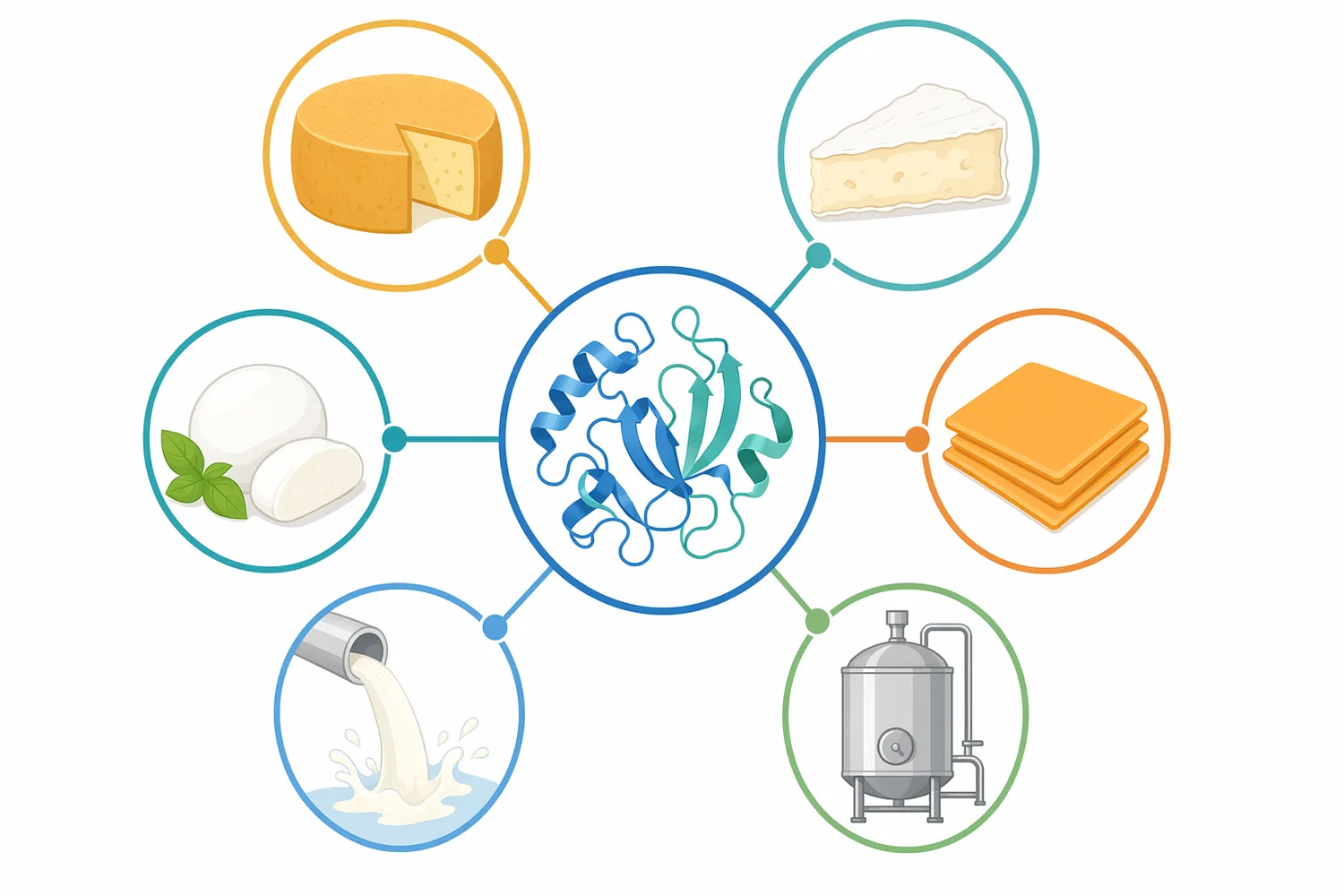
The primary chymosin use is cheese manufacturing, including fresh, soft, semi-hard, hard, and ripened cheese types. The enzyme initiates the curd-forming step needed before whey drainage and curd handling can proceed, so it sits near the beginning of the manufacturing sequence for many rennet-set cheeses [3].
In ripened cheese, chymosin is important because early coagulation and later proteolysis are connected. Proteolysis during ripening helps form texture and flavour, but excessive or poorly controlled proteolysis can create defects; therefore, the specificity and residual action of the coagulant are important parts of cheese design [12].
In mozzarella-style production, chymosin contributes to forming the curd that is later acidified and stretched. Research on buffalo chymosin for mozzarella reflects the importance of matching enzymatic coagulation to curd functionality in pasta filata cheese systems [6].
In research and development, chymosin is also used as a model enzyme for studying milk coagulation, recombinant protein expression, and species-related enzyme differences. Work on bovine, buffalo, yak, camel, and caprine chymosins shows how the same enzymatic function can be explored through different genetic and production platforms [7].
Chymosin starts coagulation, but it does not act in isolation. Milk composition, protein concentration, mineral balance, fat level, heat history, starter culture acidification, and vat temperature all influence how quickly the gel develops and how firm it becomes before cutting [3].
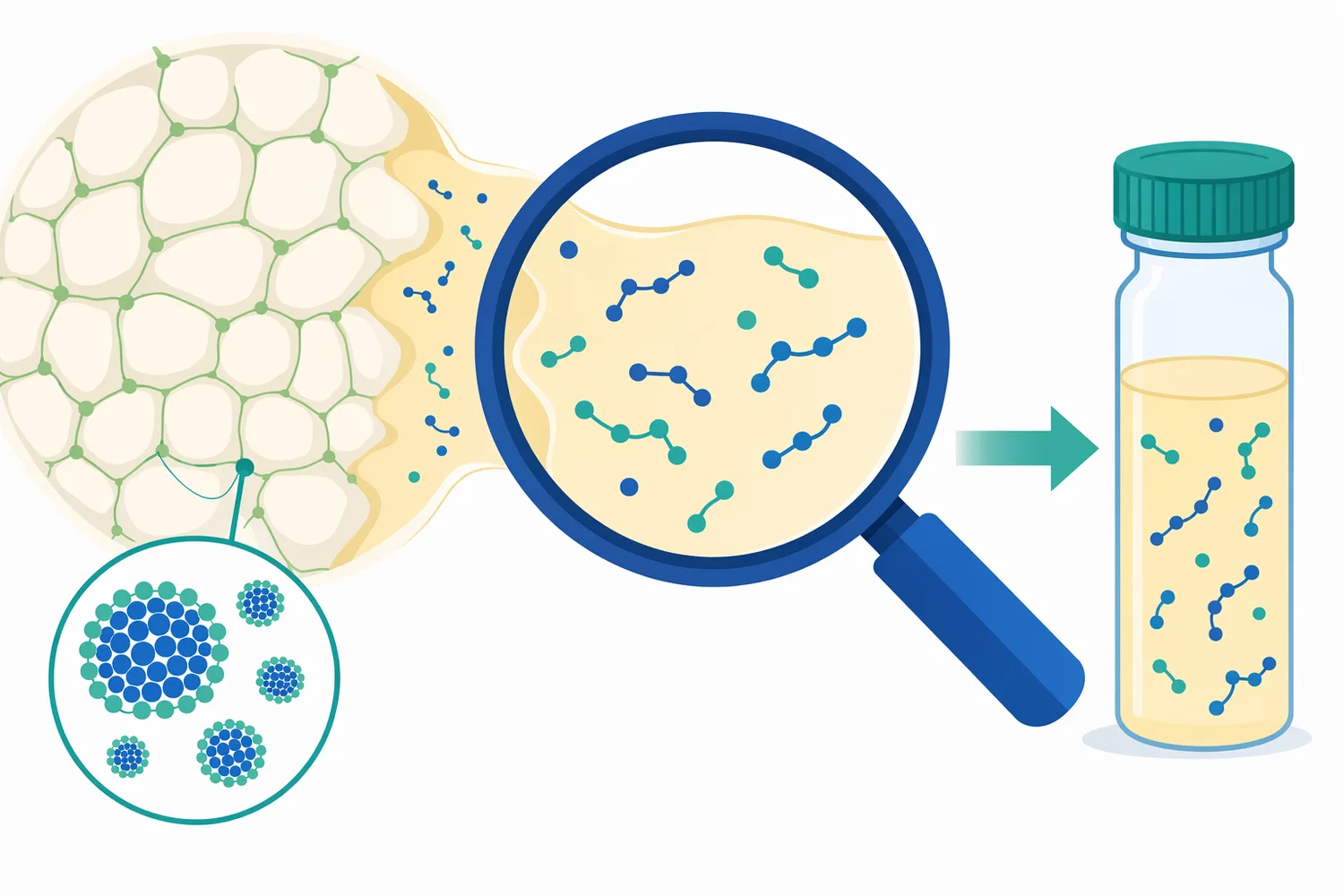
Calcium is especially important because chymosin removes the κ-casein stabilization barrier, while calcium-mediated interactions help the destabilized micelles aggregate. If the milk mineral system has been changed by heat treatment, dilution, seasonal milk variation, or other processing history, the same enzymatic cleavage can translate into a different gel structure [1].
pH also matters because it changes casein charge, mineral solubility, and enzyme-substrate behaviour. In cheesemaking, acid development from starter cultures works alongside chymosin action: the enzyme initiates micelle destabilization, while the acidification profile influences gel firming, whey drainage, and curd texture over time [12].
Mechanical handling then converts biochemical coagulation into a usable curd. Cutting size, stirring intensity, cooking profile, and drainage determine how much whey leaves the gel and how much moisture remains in the cheese; chymosin creates the curd network, but the cheesemaking process controls how that network is shaped [3].
Searches for “chymosin side effects” often mix two different topics: the safety of eating cheese made with chymosin and the handling of concentrated enzyme ingredients. In cheese, chymosin is used as a processing enzyme to coagulate milk; its role is to cleave κ-casein and form curd, not to function as a dietary supplement or medical ingredient [1].
Concentrated enzyme products should be handled with normal workplace care because enzymes are proteins and can be irritating or sensitizing if dusts or aerosols are inhaled. Buyers should follow the Safety Data Sheet supplied with the order and apply the handling practices appropriate to their own facility and use environment.
The phrase “chymosin in humans” can also cause confusion. Chymosin is best known commercially from ruminant milk digestion and cheese production; it should not be confused with human digestive enzymes or with “renin,” the kidney-related hormone-enzyme involved in blood pressure regulation. In this product context, chymosin is a dairy processing enzyme for milk coagulation.
The strongest evidence for chymosin is its well-established κ-casein mechanism. The release of glycomacropeptide from κ-casein and the resulting loss of micelle stability explain the visible cheesemaking outcome: milk changes from a stable dispersion into a calcium-linked casein gel [1].
The industrial evidence base is also mature. Recombinant chymosin production for the dairy industry has been described for decades, and current publications continue to refine expression systems and enzyme production strategies rather than treating chymosin as an experimental concept [2].
At the same time, research continues because different chymosin sources and expression systems may affect production efficiency, enzyme recovery, and functional profile. Comparative work on constitutive expression systems for bovine chymosin in Komagataella phaffii illustrates the ongoing technical interest in improving how chymosin is produced [13].
Studies on plant expression systems, including corn seed for caprine chymosin and tobacco for recombinant bovine chymosin, show that production platform research remains broad. These studies are best understood as evidence of scientific development around chymosin, not as instructions for the end user’s cheese process [8].
Chymosin can determine whether the milk receives the correct enzymatic trigger for rennet-style coagulation. It can influence coagulation timing, gel structure, curd cutting behaviour, and the initial distribution of casein into curd and whey because its action changes the κ-casein layer on micelles [1].
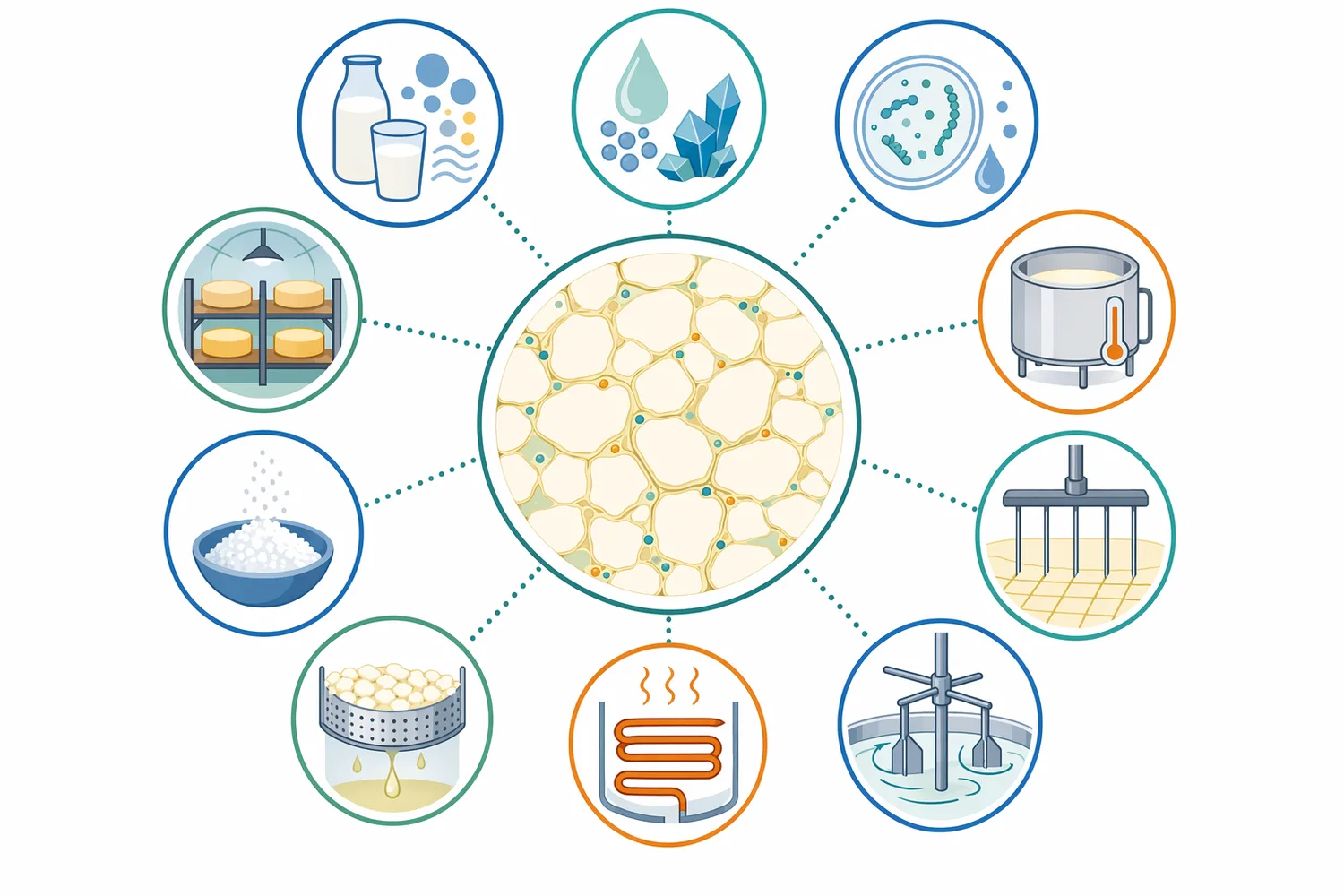
Chymosin alone cannot determine final cheese quality. Finished texture, moisture, flavour, melt, sliceability, and shelf life depend on the entire manufacturing system: milk quality, standardization, heat treatment, cultures, acidification, curd handling, salt, packaging, and ripening temperature all contribute [12].
This distinction is important for realistic expectations. Chymosin is a precise biochemical tool; it starts the casein aggregation pathway. The cheese plant’s process conditions decide whether that pathway becomes a firm hard-cheese curd, a soft fresh curd, a pasta filata curd, or a ripened cheese body with the desired flavour and texture [3].
Enzymes.bio supplies Chymosin as an enzyme ingredient for buyers who want to purchase directly online. The product is sold by the 1 kg unit; the buyer pays online, after which the order is processed and shipped.
A Certificate of Analysis and Safety Data Sheet are included with the order. These documents accompany the supplied product and support responsible receipt, handling, and internal documentation without requiring a separate offline quotation process.
For product-page readers comparing chymosin, chymosin rennet, fermentation-produced chymosin, camel chymosin, or other rennet-related terminology, the central technical point remains the same: chymosin is valued because it performs a specific κ-casein cleavage that enables calcium-mediated curd formation. That specificity is why it remains one of the defining enzymes of cheese manufacture [1].
Sold by the 1 kg unit, in stock and ready to ship. Order directly on our store — pay online and we process your order. A Certificate of Analysis and Safety Data Sheet are included with every order.
Buy Chymosin →Numbered in order of first citation. Open-access sources, each verified reachable at publication; citation numbers in the text link here.