
Cutinase hydrolase is an ester-bond-cleaving enzyme for pulp and paper applications where waxy, fatty, pitch-like, coating-derived, adhesive, or polyester-type residues create process or quality problems. It works by hydrolyzing ester linkages into smaller acid- and alcohol-bearing fragments, which can make hydrophobic materials less cohesive, more dispersible, and easier to remove through normal washing, screening, flotation, or wastewater treatment steps [1].
Enzymes.bio supplies Cutinase Hydrolase Enzyme for Pulp and Paper Industry as a directly orderable 1 kg online product. The buyer pays online, the order is processed and shipped, and a Certificate of Analysis and Safety Data Sheet are included with the order.
Cutinase belongs to the wider esterase family: enzymes that catalyze hydrolysis of ester bonds in lipids, waxes, plant polyesters, and related organic materials. Esterases are widely studied because their catalytic architecture allows them to attack ester-containing substrates with high chemical selectivity under aqueous, relatively mild processing conditions compared with many conventional chemical treatments [1].
In pulp and paper systems, cutinase is best understood as a targeted hydrolase rather than a general-purpose bleaching, refining, or delignification enzyme. Its most relevant targets are ester-rich contaminants and residues: wax esters in extractives, cutin-like plant surface materials, fatty or resinous deposits, certain coating or ink vehicle components, and some recycled-fiber polymer fragments that contain hydrolysable ester bonds [1].
This distinction matters because pulp and paper operations already use or study several different enzyme classes for different substrates. Xylanases act mainly on hemicellulose, cellulases modify cellulose fiber surfaces, laccases oxidize phenolic and lignin-related structures, pectinases degrade pectin-rich non-wood fiber components, and lipases or esterases target fats, oils, waxes, and esterified extractives [2].
Cutinase fits into that enzyme toolbox where the practical issue is not lignin color, cellulose fibrillation, or starch conversion, but the chemical persistence of hydrophobic ester-containing materials. For buyers working with recycled fiber, packaging grades, agricultural residues, non-wood pulps, or deposit-prone furnish, that chemical focus is the reason cutinase can be a useful process-support enzyme.
The defining reaction of cutinase is ester hydrolysis. In chemical terms, an ester bond is split by water into an alcohol-containing fragment and a carboxylic-acid-containing fragment; in process terms, a waxy or polymeric contaminant can become smaller, more polar, less film-forming, and less able to remain attached to fibers, felts, wires, tanks, or pipework [1].
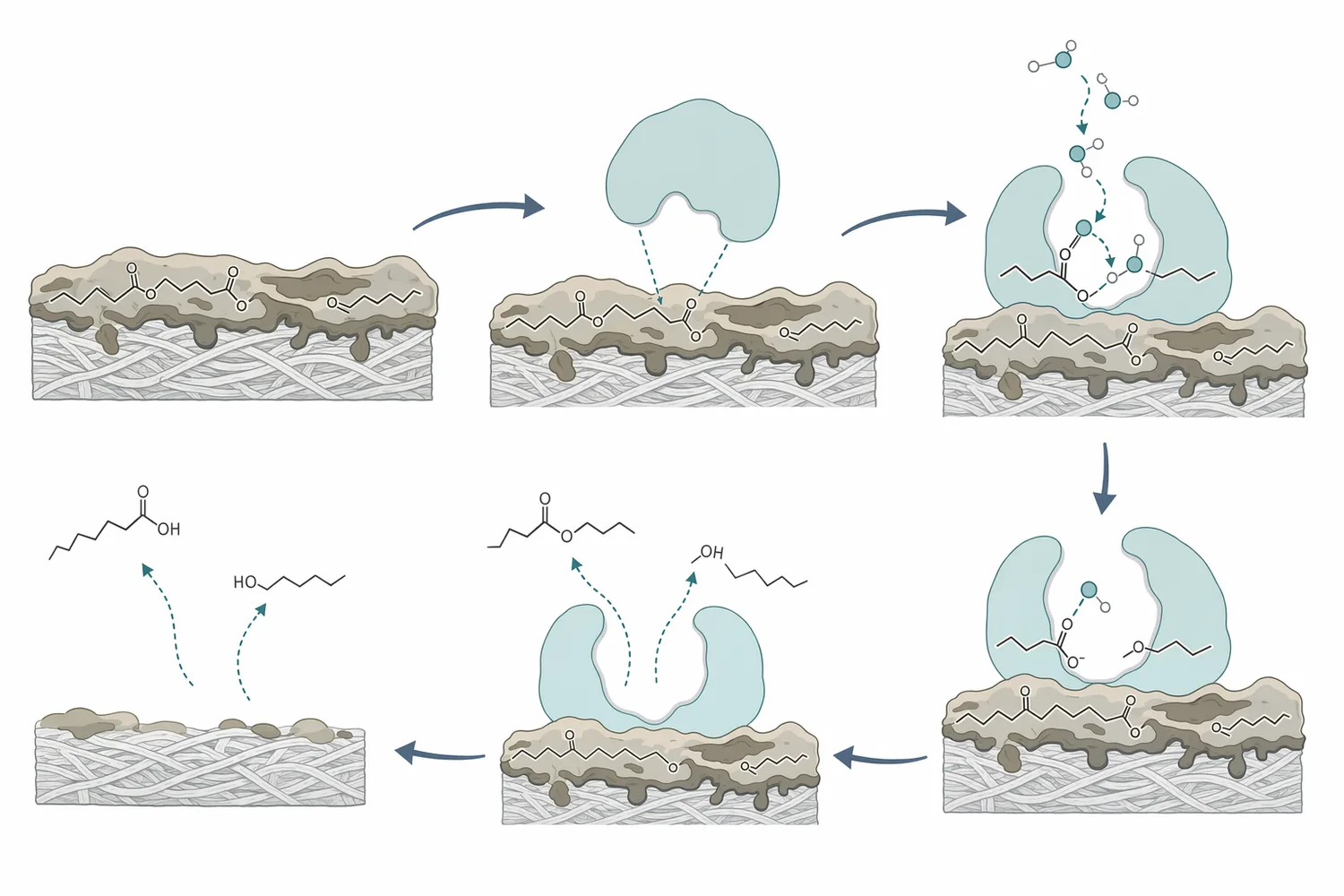
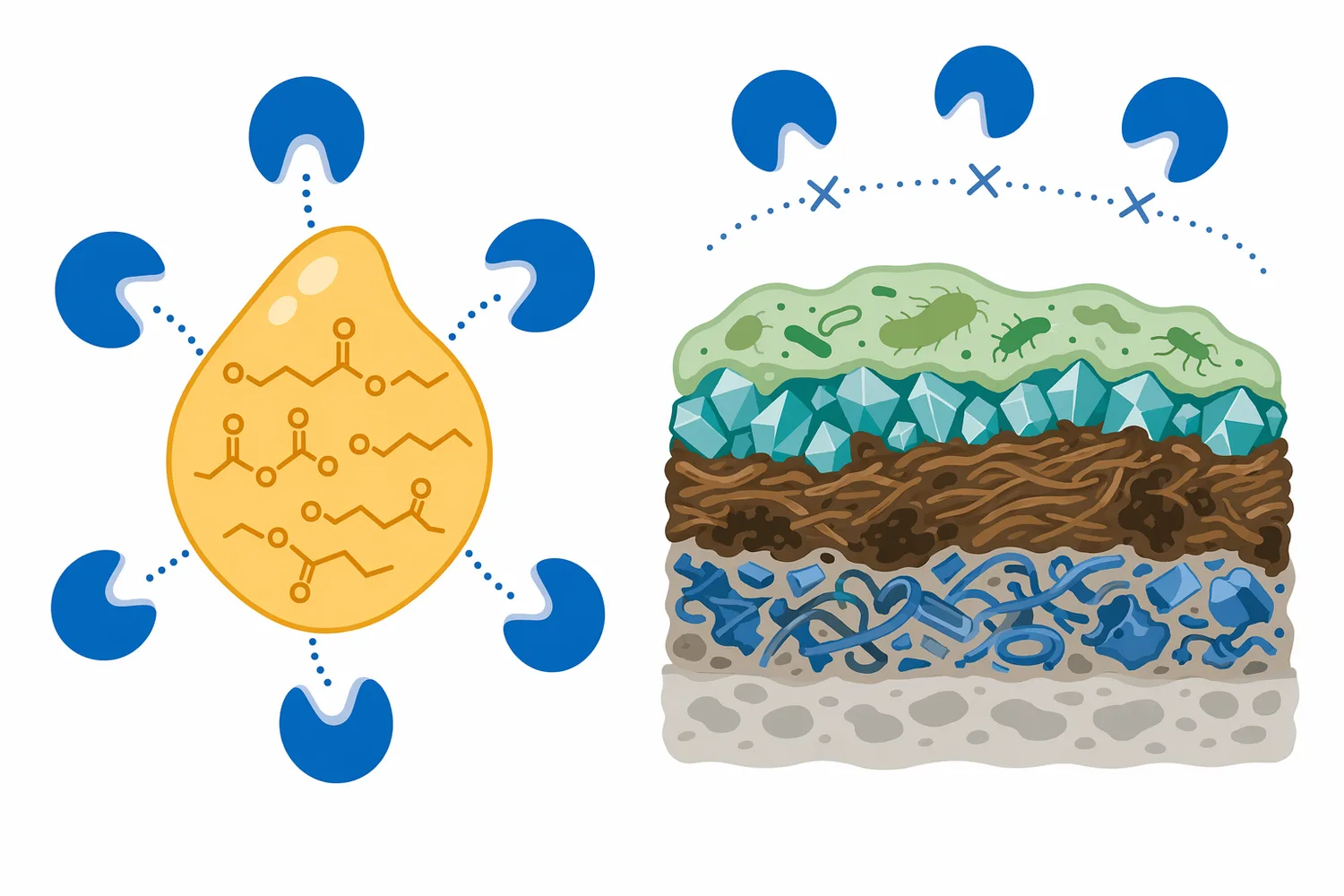
The enzyme’s catalytic mechanism follows the same broad logic as other serine esterases. A nucleophilic serine residue in the active site attacks the carbonyl carbon of the ester bond, assisted by histidine and an acidic residue; this forms a short-lived acyl-enzyme intermediate, after which water completes deacylation and releases the hydrolyzed product [1].
For pulp and paper users, the important point is what changes physically. A hydrophobic ester-rich particle may lose some of its surface cohesion; a waxy film may become less continuous; a polyester-like contaminant may develop polar chain ends; and a fiber-bound lipid residue may become easier to detach or disperse because the enzyme has converted part of the material from a water-repellent ester into more water-compatible hydrolysis products [1].
Cutinase does not “dissolve everything” in a deposit. It can only act where the substrate presents accessible ester bonds and where process conditions allow the enzyme to remain active long enough to contact those bonds. Inorganic scale, mineral fillers, metal soaps, microbial slime, lignin-rich color bodies, and non-ester plastics are not the main chemical targets for cutinase.
Pulp and paper furnish is chemically complex. Virgin wood contains extractives, non-wood fibers can carry waxy cuticular residues, recycled paper introduces adhesives and coatings, and modern packaging streams may contain multilayer materials, polymer fragments, labels, binders, and ink residues. Several of these materials are hydrophobic and can form deposits because they resist simple water washing.
The broader pulp and paper literature shows why enzyme-based pretreatment is attractive in such systems. Enzymatic approaches have been investigated for fiber modification, lower-energy refining, non-wood pulp preparation, tissue pulp treatment, wastewater treatment, and waste valorization because enzymes can target specific chemical structures without applying severe whole-stream chemistry [3].
Cutinase is especially relevant where the troublesome fraction contains ester linkages. Instead of trying to strip or emulsify all hydrophobic matter non-selectively, cutinase attacks the chemical bonds that help hold certain waxes, fatty esters, cutin-like plant polyesters, and polyester-type residues together. That selectivity is the main technical reason to consider it in deposit-prone or recycled-fiber processes [1].
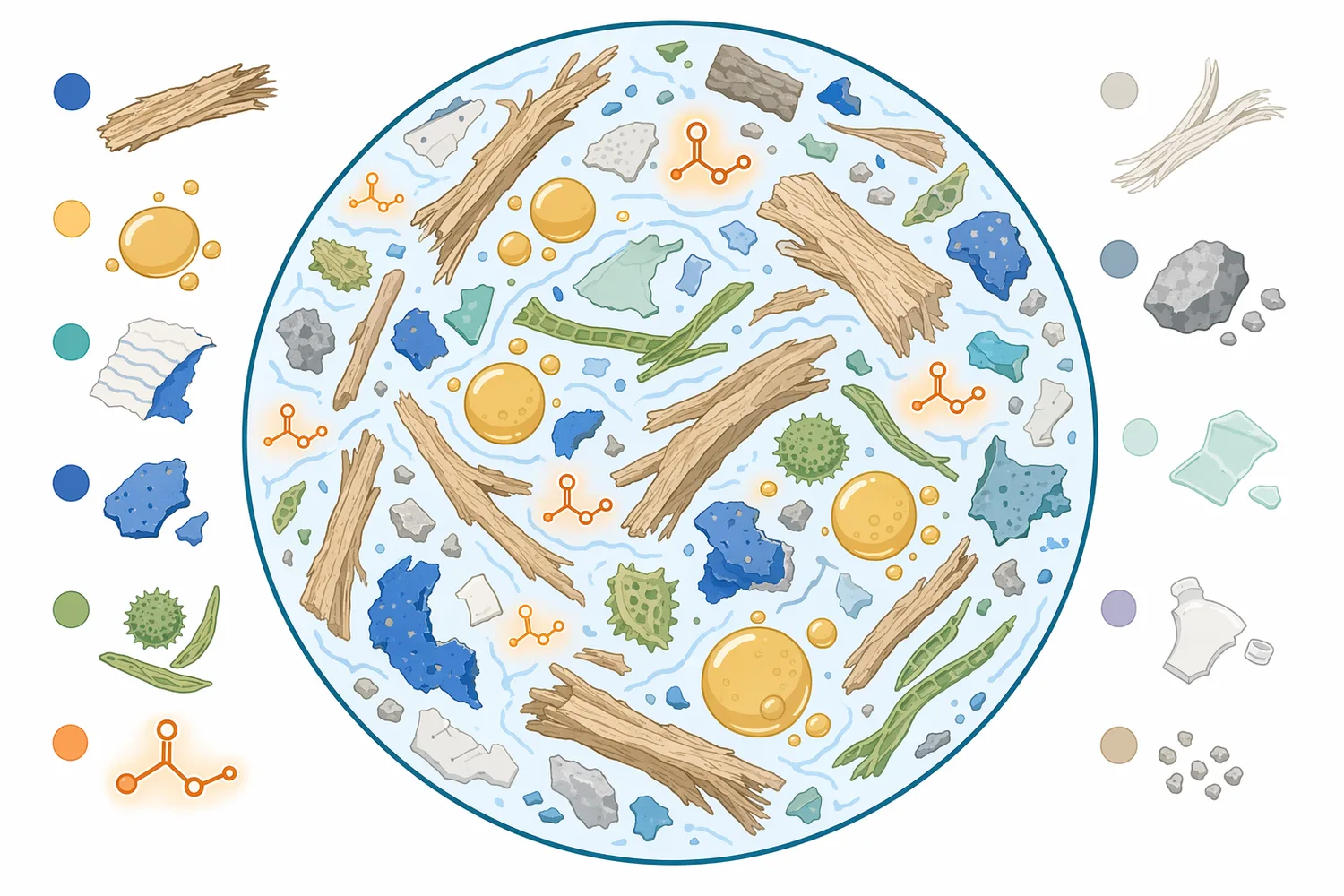
Pitch problems are typically associated with hydrophobic wood extractives, resinous substances, waxes, fatty materials, and their interactions with process chemistry. While not every pitch component is an ester, many extractive fractions include esterified lipids or waxy materials that are chemically closer to cutinase substrates than to cellulose, lignin, or mineral scale [1].
Cutinase can support pitch-control strategies by hydrolyzing susceptible ester bonds in waxy or lipidic fractions. When those bonds are cleaved, the material may become less tacky, less film-forming, or more dispersible, reducing the tendency of hydrophobic droplets or films to agglomerate on equipment surfaces and contribute to sheet defects.
This is a targeted effect, not a blanket promise that all pitch will disappear. Pitch chemistry varies with wood species, pulping conditions, closure of the water loop, temperature history, pH environment, and wet-end additives. Cutinase is most defensible where ester-containing waxes or lipid residues are known or reasonably expected to contribute to the deposit burden.
Recycled fiber systems introduce a different class of challenges: pressure-sensitive adhesives, label residues, coatings, ink binders, laminates, hot melts, and polymeric fragments. Many stickies problems are mixed-chemistry problems, but some adhesive, coating, or film components include ester-containing materials that can be modified by esterases or cutinase-like enzymes [4].
Research on enzymatic recycling of polyester-containing blends shows that enzymes can selectively act on ester-linked polymers under suitable conditions, supporting the broader principle that ester hydrolases can modify synthetic polyester-type substrates rather than only natural plant materials [4]. In a paper mill context, that does not mean cutinase will digest every plastic or adhesive particle; it means the enzyme is chemically relevant when the contaminant includes accessible ester bonds.
The practical value is often surface modification rather than total degradation. A sticky particle that becomes less tacky, less cohesive, or more readily detached from fiber can be easier to remove through screening, flotation, washing, or dispersed handling. Even partial hydrolysis at the contaminant surface can change how the material behaves in the stock preparation system.
Non-wood pulps and agricultural residues can contain pectins, waxes, cuticular layers, extractives, and other non-cellulosic components that complicate fiber separation and paper formation. Enzyme pretreatment has been explored for alternative fiber streams because selective biochemical action can loosen non-cellulosic matrices without relying entirely on harsh chemical extraction [5].
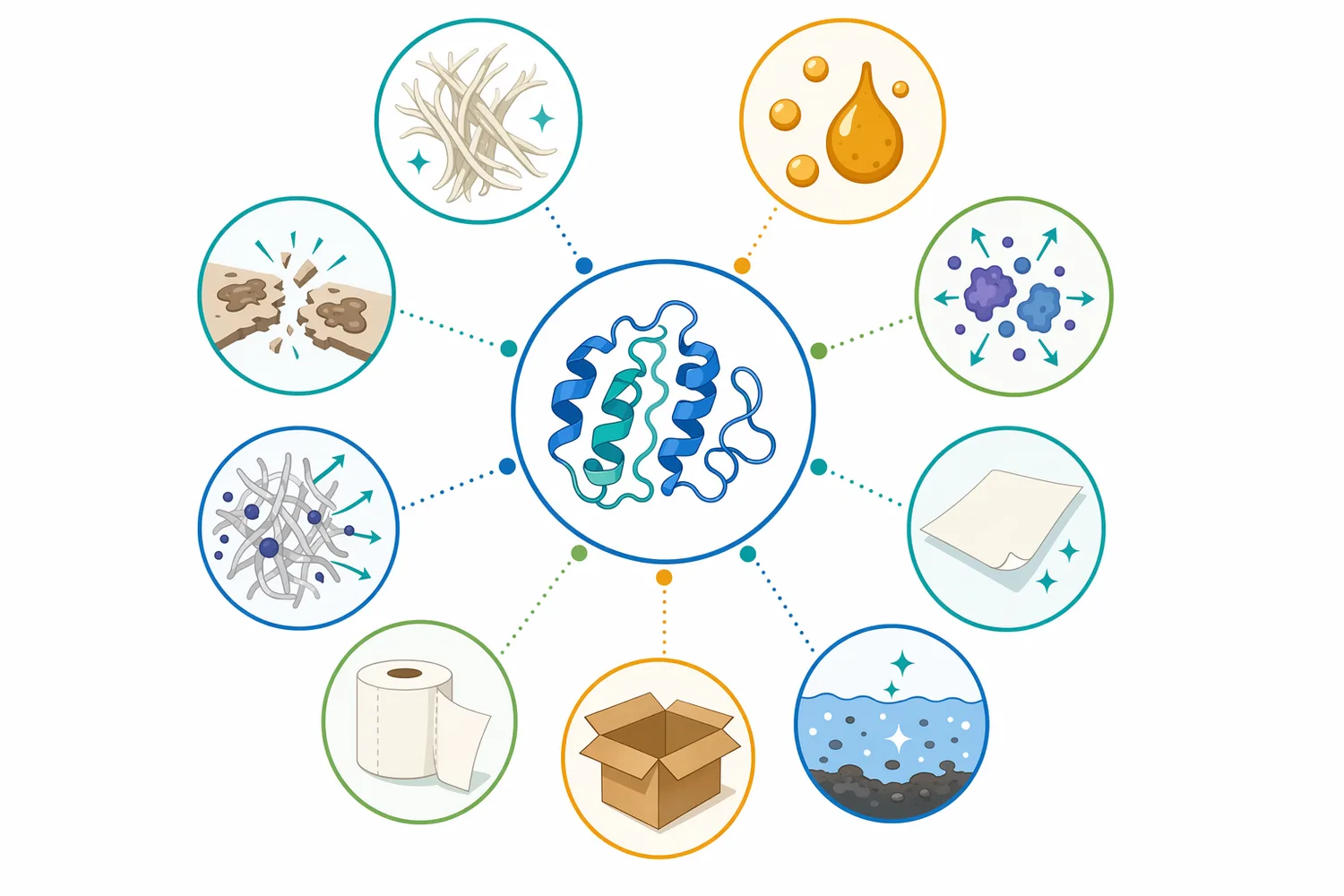
In sugar beet waste, for example, enzymatic pretreatment has been studied as part of a route to cellulose nanofiber gels and paper, showing how biological pretreatment can help convert agricultural residues into paper-related materials [5]. Cutinase is not the primary cellulose-nanofiber enzyme, but its ester-hydrolyzing function is relevant where cuticular waxes or esterified surface components interfere with wetting, dispersion, or fiber accessibility.
Hemp pulp work also illustrates the value of matching enzymes to non-wood fiber chemistry. Laccase–pectinase pretreatment has been investigated for customized hemp pulp extraction and improved waste-pulp papermaking, showing that non-wood fiber processing may benefit from enzyme combinations that address lignin-related and pectin-rich structures [2]. In such a context, cutinase would be the ester-focused component rather than a substitute for pectinase or laccase.
Enzymatic refining research demonstrates that enzymes can change how fibers respond mechanically. Studies on hardwood and softwood pulp have investigated enhanced energy savings in enzymatic refining, reflecting the industry’s interest in using biochemical pretreatment to reduce the intensity of mechanical processing while maintaining useful paper properties [3].
Cutinase should not be described as the main refining enzyme because refining benefits are usually associated with cellulases, hemicellulases, or carefully balanced enzyme systems that affect fiber swelling, fibrillation, bonding, or fines generation. However, cutinase can contribute indirectly when ester-rich surface contaminants or hydrophobic residues interfere with fiber wetting, dispersion, or downstream cleanliness.
Mild enzymatic treatment of bleached pulp for tissue production has also been studied, reinforcing the broader concept that enzyme action can be applied in controlled pulp treatment where softness, drainability, and fiber response are important [6]. Cutinase’s contribution in such settings would be contaminant or surface-residue modification, not direct tissue softness engineering.
Pulp and paper mills increasingly treat process water, sludge, and residual streams as part of broader circular-processing goals. Wastewater recovery using pretreatment integrated with ultrafiltration and reverse osmosis has been studied in agro-based pulp and paper operations, showing the technical importance of managing dissolved and colloidal organics before advanced separation steps [7].
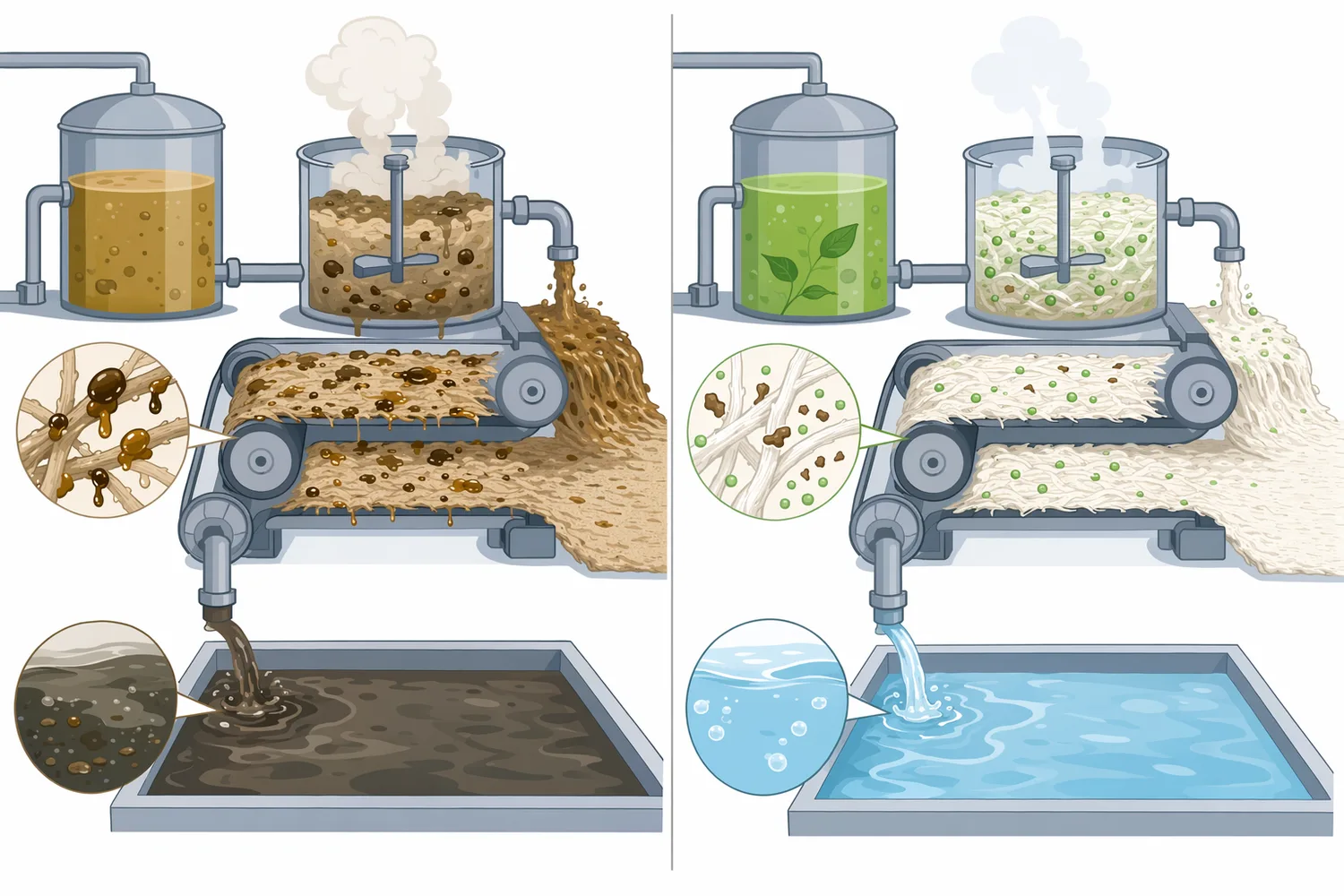
Cutinase can be relevant upstream of separation or biological treatment where ester-rich colloids, waxy residues, or polymeric fragments contribute to fouling potential or persistent organic load. By cleaving susceptible ester bonds, the enzyme may help convert part of the hydrophobic fraction into smaller, more treatable molecules, although performance depends on the actual wastewater composition.
Biological treatment of pulp and paper wastewater has also been investigated using airlift bioreactor systems and specialized bacteria, reflecting the industry’s continued interest in microbial and enzymatic tools for organic-load reduction [8]. Cutinase is not a complete wastewater treatment system, but it can be viewed as one biochemical tool for ester-containing fractions within a larger treatment train.
Industrial pulp and paper sludge has also been examined as a feedstock for bioconversion, including enzymatic pre-hydrolysis strategies for bioethanol production [9]. That research area highlights a wider point: residual paper-industry streams contain chemically diverse organics, and enzymes can be used selectively to unlock, hydrolyze, or transform specific components.
The most reliable way to position cutinase is by substrate chemistry. It is an ester hydrolase, so it should be compared with other enzyme classes by what they actually attack in the furnish or process stream.
| Enzyme class | Main chemical target | Typical pulp and paper relevance | How it differs from cutinase |
|---|---|---|---|
| Cutinase / esterase | Ester bonds in waxes, cutin-like materials, fatty esters, and some polyester-type residues | Pitch-support, waxy residue modification, selected recycled-contaminant treatment, deposit-control support | Focuses on ester hydrolysis rather than cellulose, lignin, or hemicellulose modification [1] |
| Lipase | Triglycerides and lipid esters | Pitch and oil-related deposit control | Often associated with fats and oils; cutinase can also act on cutin-like and some polyester-type surfaces [1] |
| Xylanase | Xylan and hemicellulose | Bleachability support, fiber wall accessibility, pulp pretreatment | Targets hemicellulose, not waxy or polyester-like ester deposits [2] |
| Cellulase | Cellulose surface and microfibril regions | Fiber modification, drainage, refining support, tissue pulp treatment | Acts on cellulose; cutinase is not intended to hydrolyze the fiber backbone [6] |
| Laccase | Phenolic and lignin-related structures by oxidation | Lignin modification, non-wood pulp pretreatment, biobleaching research | Oxidative enzyme; cutinase is hydrolytic and ester-specific [2] |
| Pectinase | Pectin and pectic polysaccharides | Non-wood fiber treatment and agricultural residue processing | Degrades pectin networks; cutinase addresses ester-rich waxy or polyester-like fractions [2] |
This comparison also explains why enzyme combinations are often more realistic than single-enzyme claims. A recycled packaging furnish may contain starch, cellulose fines, synthetic binders, waxes, mineral fillers, and printing residues at the same time; no single enzyme can address all of those chemistries.
When cutinase acts successfully, the most important change is not simply “degradation” but a shift in material behavior. Ester hydrolysis creates new polar end groups, reduces molecular continuity in susceptible materials, and can weaken the hydrophobic associations that make waxes, stickies, or coating residues agglomerate [1].
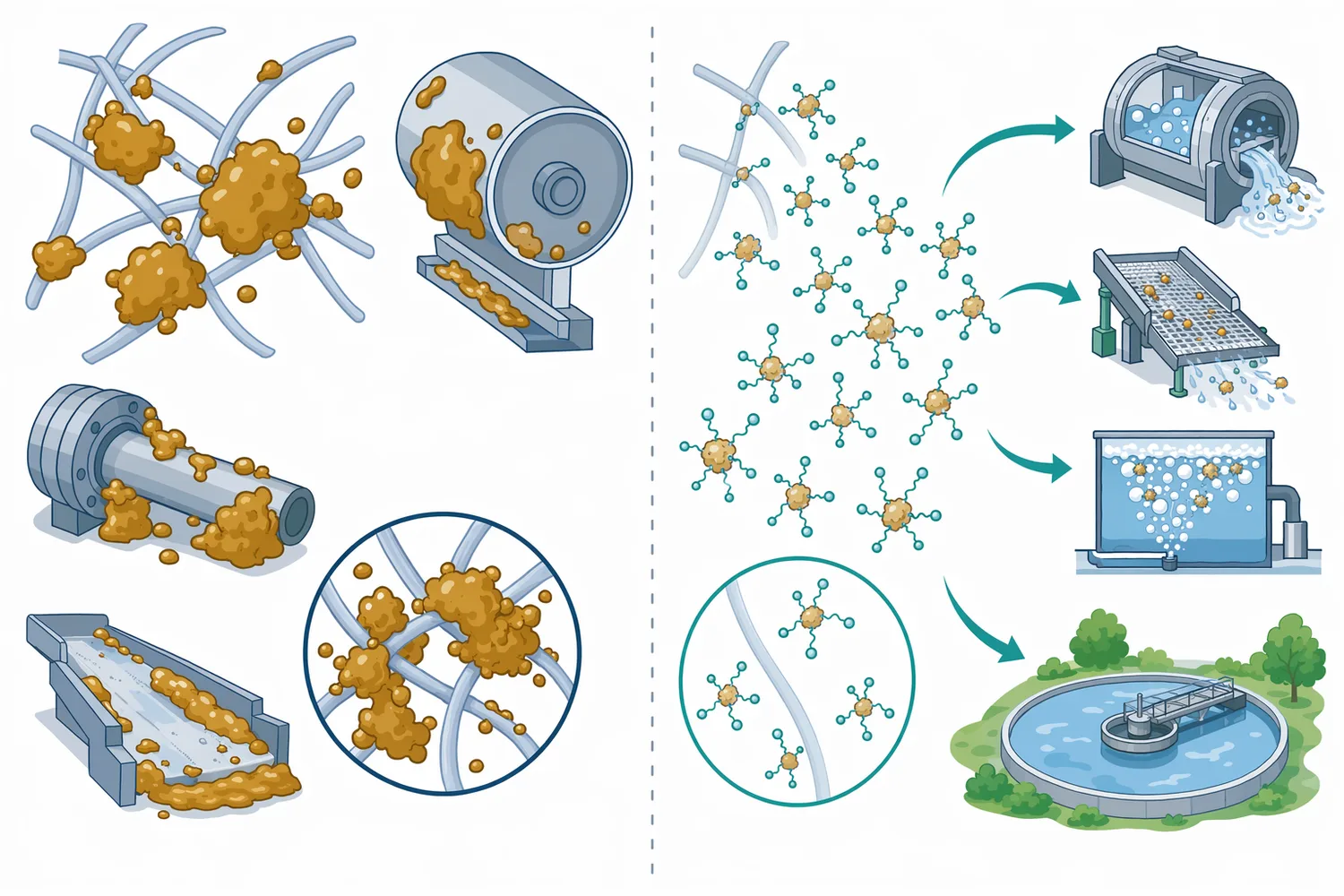
In a pulp slurry, that may translate into smaller or softer contaminant particles, improved detachment from fiber surfaces, reduced tackiness, or improved compatibility with washing and separation stages. In a recycled-fiber line, partial surface hydrolysis may make some adhesive or coating fragments less likely to redeposit on fibers after mechanical disruption.
In a deposit-control context, the enzyme’s benefit is most likely when it reaches the contaminant before it has formed a dense, aged, mixed deposit with mineral fillers, oxidized resin, microbial matter, and wet-end additives. Freshly dispersed or accessible ester-rich residues are generally more realistic targets than hardened multi-component scale.
In water and sludge streams, ester hydrolysis can increase the fraction of smaller organic molecules available for downstream biological treatment or physical separation. Pulp and paper waste streams are already being studied for reuse, recovery, and circular applications, which makes selective transformation of troublesome organic fractions increasingly relevant [10].
Cutinase fits best in wet process zones where the target residue is dispersed, hydrated, and accessible. Examples include recycled fiber preparation, pulp slurry pretreatment, broke handling, non-wood fiber processing, and selected process-water or sludge-conditioning steps where ester-rich organic matter is present.
The enzyme is less likely to be useful when the main problem is dominated by inorganic deposits, calcium carbonate scale, silica, alum, corrosion products, microbial biofilm, or lignin-derived color. Those problems require different controls because cutinase does not oxidize lignin, chelate minerals, sterilize microbial systems, or dissolve mineral scale.
Cutinase performance also depends on contact between enzyme and substrate. Waxy or polymeric contaminants shielded inside large particles, laminated films, dense agglomerates, or highly crystalline plastic fragments may respond weakly because the ester bonds are physically inaccessible. This is why cutinase is best described as a process aid for susceptible ester-containing materials, not as a universal contaminant-removal additive.
The strongest evidence for cutinase is mechanistic: esterases are well-established catalysts for ester-bond hydrolysis, and cutinase-like activity is scientifically aligned with natural waxy polyesters and selected synthetic ester-linked materials [1]. That gives cutinase a clear chemical rationale in pulp and paper systems where ester-rich residues are a meaningful part of the problem.
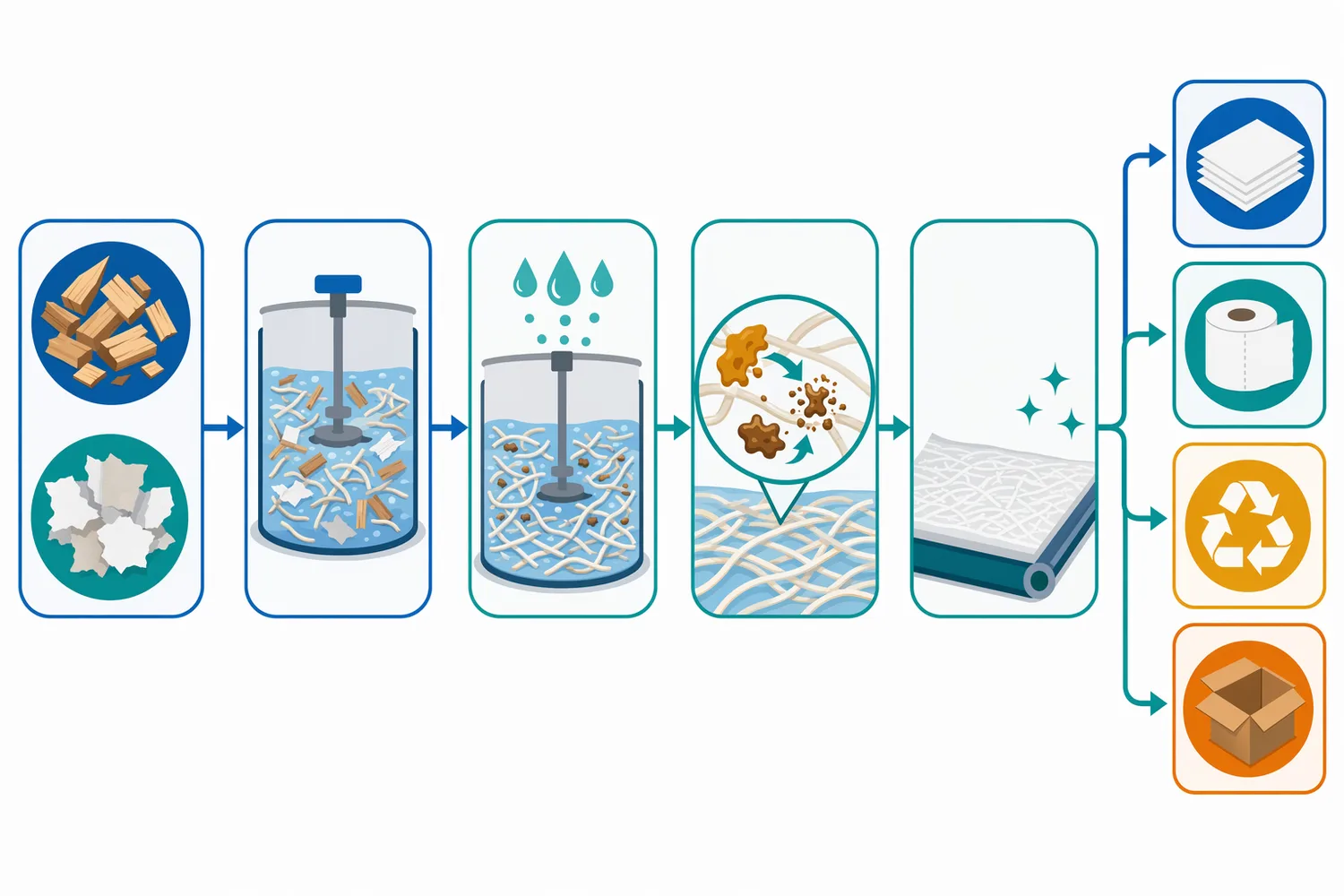
The broader paper-industry enzyme evidence is also strong in showing that enzymes can be used to modify fibers, reduce mechanical intensity, support non-wood pulp processing, and improve treatment of residual streams. Enzymatic refining work on hardwood and softwood pulp, enzymatic pretreatment of agricultural residues, and mild pulp treatments for tissue production all support the principle that targeted enzymes can be integrated into paper-related processes [3].
However, it is important to be precise: cutinase-specific mill-scale evidence is not as extensive as the evidence base for xylanase in bleach support, cellulase in fiber modification, laccase in lignin-related pretreatment, or lipase in conventional pitch-control discussions. Cutinase is therefore best positioned as a specialized ester-hydrolyzing tool for defined contaminant chemistry, not as an all-purpose replacement for established pulp and paper enzymes.
Research on pulp and paper wastewater, sludge, and waste reuse also shows that mill residual streams are heterogeneous and require integrated treatment approaches. Studies of wastewater recovery, biological treatment, sludge bioconversion, microplastics in mill sludges, and agricultural use of paper-industry waste all point to the same reality: paper systems contain mixed organic and inorganic materials, so a single enzyme should be applied with a clear understanding of its chemical scope [11].
Enzymes are attractive in pulp and paper because they can operate selectively under aqueous conditions and may reduce reliance on severe chemical treatments in certain process steps. This aligns with industry work on enzymatic pretreatment, energy-saving refining, wastewater recovery, sludge utilization, and circular use of paper-industry residuals [10].
Cutinase contributes to that sustainability direction only where ester hydrolysis is relevant. Its value is not that it makes a process automatically “green,” but that it can target a class of troublesome organic bonds under milder conditions than many non-selective chemical treatments.
For recycled fiber and packaging-related operations, cutinase also connects to the growing challenge of mixed material streams. Pulp and paper mill sludges can contain microplastics and other complex contaminants, making selective biochemical modification of specific polymer or coating fractions an increasingly important technical topic [11].
Enzymes.bio supplies Cutinase Hydrolase Enzyme for Pulp and Paper Industry as a 1 kg product sold directly online. The buyer completes payment online, after which the order is processed and shipped.
A Certificate of Analysis and Safety Data Sheet are included with the order. The product is intended for buyers who want a practical enzyme option for ester-rich residue, wax, pitch-support, recycled-fiber contaminant, or process-cleanliness applications where cutinase chemistry is relevant.
Cutinase Hydrolase Enzyme for the Pulp and Paper Industry is a specialized ester-cleaving enzyme. Its value lies in modifying waxy, fatty, pitch-like, cutin-like, coating-related, adhesive, or polyester-type residues that contain accessible hydrolysable ester bonds [1].
It should not be treated as a universal bleaching enzyme, lignin-removal enzyme, refining enzyme, scale-control chemical, or complete wastewater treatment. Its best fit is targeted process support: changing the chemistry and behavior of ester-rich organic contaminants so they become less cohesive, less hydrophobic, more dispersible, or easier to remove within existing pulp, paper, recycled fiber, and water-handling operations.
For buyers who need that specific enzyme chemistry, Enzymes.bio provides Cutinase Hydrolase Enzyme in a straightforward 1 kg online purchase format, with the order processed and shipped after online payment.
Sold by the 1 kg unit, in stock and ready to ship. Order directly on our store — pay online and we process your order. A Certificate of Analysis and Safety Data Sheet are included with every order.
Buy Cutinase Hydrolase Enzyme For Pulp And Paper Industry →Numbered in order of first citation. Open-access sources, each verified reachable at publication; citation numbers in the text link here.