
Deaminase is used in yeast extract seasoning to support targeted nucleotide conversion, especially the conversion of adenylate-type compounds toward inosinate-type compounds associated with savory, umami-enhancing flavor systems. In practical terms, it helps yeast-derived materials deliver more value from their natural nucleotide fraction, complementing the peptides and amino acids already present in yeast extract. Enzymes.bio supplies deaminase for food-processing applications as a 1 kg online-purchase product; the buyer pays online, and the order is processed and shipped with a Certificate of Analysis and Safety Data Sheet.
Yeast extract is a concentrated savory ingredient platform because it naturally contains nitrogen-rich compounds: peptides, amino acids, nucleotides, minerals, and other yeast-cell constituents that contribute to broth-like, roasted, meaty, fermented, or rounded umami notes depending on the process. Deaminase addresses one specific part of that chemistry: it modifies selected nitrogen-containing nucleotide substrates by removing an amino group, changing the molecule’s identity and its contribution to the seasoning profile. Food enzyme reviews describe enzymes as highly specific biocatalysts used across food processing to drive targeted reactions under controlled conditions, which is exactly why a deaminase step can be valuable when the goal is biochemical conversion rather than broad chemical degradation [1].
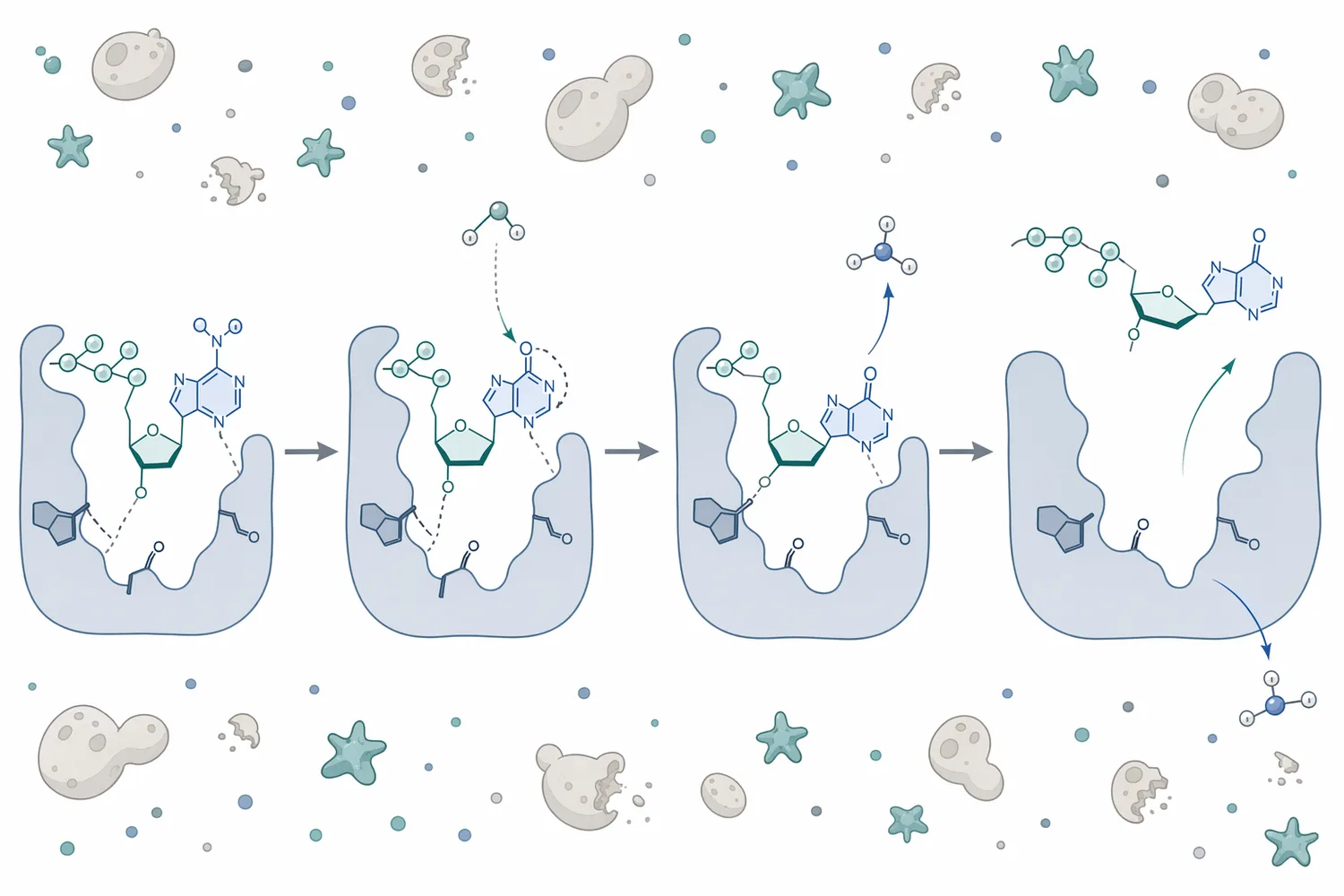
For yeast extract seasoning, the key commercial logic is not that deaminase “adds flavor” as a flavoring substance. The enzyme acts on compounds already present or released in the yeast-derived substrate. When adenylate-type compounds are present, AMP deaminase-type activity can convert AMP toward IMP, releasing ammonia and replacing the amino functionality on the purine ring with a carbonyl oxygen. That structural change matters because inosinate-type compounds are widely associated with savory taste systems and are often considered part of the nucleotide contribution to umami-rich foods; recent food enzyme safety evaluations specifically address AMP deaminase as a food enzyme category, confirming its relevance as a recognized food-processing enzyme type [2].
The result is a more directed route to yeast extract seasoning functionality. Proteolysis can release peptides and amino acids; nuclease or phosphodiesterase-type reactions can help release nucleotide units from RNA; deaminase then adjusts the nucleotide profile by converting selected adenylate compounds. This division of labor is important because yeast extract flavor is multi-component: peptides, free amino acids, nucleotides, volatiles, salts, organic acids, and Maillard-derived compounds all affect the final sensory impression. Studies on enzyme-treated mushroom hydrolysates, for example, show that different enzyme treatments can produce measurable changes in flavor composition, illustrating how targeted enzymatic steps can shift a savory food matrix rather than merely “intensify” it in a generic way [3].
Deamination is the removal of an amino group from a substrate. In nucleotide seasoning chemistry, the practical example is the conversion of adenylate-type structures into inosinate-type structures. AMP contains an adenine base; when AMP deaminase acts, the amino group on adenine is removed and the molecule is converted to IMP. This is not a random breakdown reaction. The enzyme binds the compatible substrate in its active site, positions the reactive group, and catalyzes the chemical transformation so the product is no longer the same nucleotide species. Scientific safety opinions on AMP deaminase from microbial sources treat this as a defined food enzyme function rather than an undefined fermentation effect [4].
That molecular change can influence taste because nucleotide identity affects how the compound interacts with taste receptors and with the wider savory matrix. In yeast extract, glutamate, short peptides, and nucleotides can contribute to a more rounded savory perception than any one component alone. Protein-rich food systems also bind and release flavor compounds differently depending on peptide structure, hydrophobicity, charge distribution, and matrix composition; a recent QSAR study on protein–flavor binding highlights that flavor behavior in protein-rich foods is governed by molecular interactions, not only by the absolute amount of a flavor compound present [5].
A deaminase step therefore has two layers of practical significance. First, it converts a defined substrate into a different molecule with different taste relevance. Second, it changes the balance of soluble nitrogen compounds that coexist in the yeast extract. That balance matters because savory perception is matrix-dependent: amino acids, peptides, nucleotides, salts, and volatiles can reinforce, mask, bind, or release one another during heating, concentration, drying, storage, and final food preparation. Research on dry-cured ham, for instance, shows that processing can alter both free amino acid and volatile compound profiles, reinforcing the broader principle that savory flavor is shaped by the whole chemical system [6].
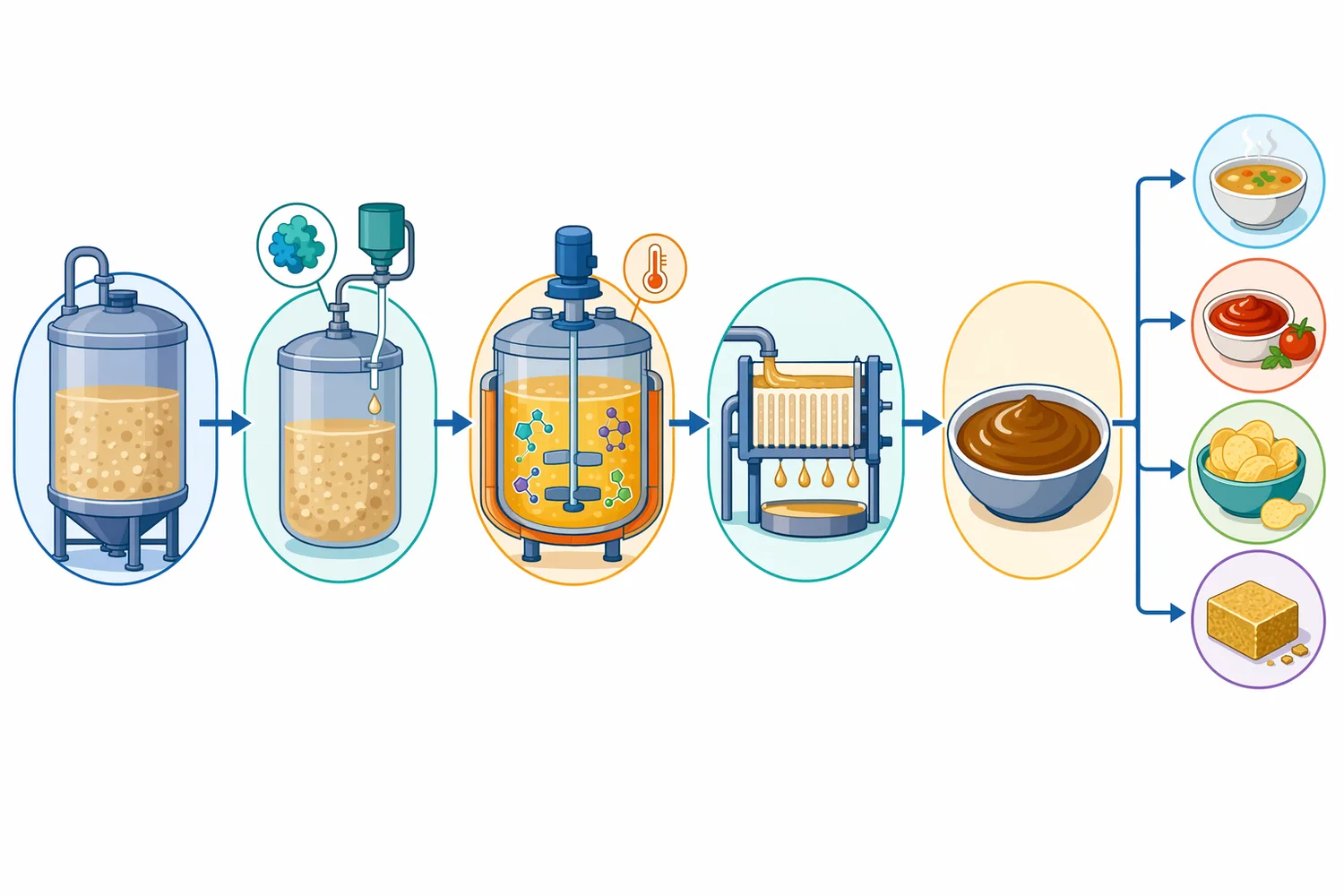
Yeast biomass is rich in protein and nucleic acids, which makes it a logical raw material for savory ingredient production. Autolysis, hydrolysis, extraction, and downstream concentration can release soluble peptides, amino acids, and nucleotides from the yeast cell. Deaminase is relevant when that yeast-derived material contains adenylate-type nucleotide substrates that can be converted toward inosinate-type compounds. This makes the enzyme most useful as a targeted processing aid within a yeast extract or yeast-derived nucleotide workflow, rather than as a standalone “flavor creator.”
The nutritional and functional importance of amino acid profiles across food substrates is well documented in current food research. Studies on seaweed fractionation, for example, show that dry particle-size fractionation can shift protein and amino acid distribution among fractions, demonstrating how physical processing changes the composition and potential use of biological food materials [7]. Although seaweed is not yeast, the broader processing principle is relevant: biological raw materials contain valuable nitrogen fractions, and targeted fractionation or enzyme treatment can improve how those fractions are used.
Fermented marine ingredients provide another useful comparison. In kelp fermented with Monascus purpureus, researchers evaluated antioxidant activity, free amino acid profiles, and flavor properties, showing that microbial or enzymatic transformation of nitrogen-containing substrates can materially change flavor-relevant composition [8]. Yeast extract seasoning follows the same general food-science logic, but deaminase narrows the focus to a defined nucleotide transformation instead of relying on the many reactions that occur during full microbial fermentation.
Plant and fungal proteins show similar matrix complexity. Work on mushroom protein hydrolysis and cooking found that processing affects the amino acid profiles of Agaricus bisporus and Lentinula edodes, while separate studies on mushroom hydrolysates show that enzyme choice influences flavor changes [9]. These examples support an important point for yeast extract users: enzyme treatment is not just about breaking material down. It is about steering the substrate toward a more useful balance of soluble compounds.
Deaminase is sometimes confused with proteases or general “flavor enzymes,” but its function is distinct. Proteases cut peptide bonds in proteins, releasing peptides and amino acids. Nuclease or phosphodiesterase-type enzymes act on nucleic acid polymers and nucleotide linkages. Deaminase modifies the nitrogen chemistry of selected bases or nucleotides. In yeast extract seasoning, these enzyme types can be complementary, but they are not interchangeable.
| Enzyme or process type | Primary substrate in savory ingredient processing | What changes chemically | Main contribution to yeast extract seasoning |
|---|---|---|---|
| Deaminase / AMP deaminase-type activity | Adenylate-type nucleotides such as AMP when present | Removes an amino group and converts the nucleotide identity, commonly discussed as AMP toward IMP | Supports targeted nucleotide conversion associated with savory seasoning functionality |
| Protease | Yeast proteins and larger peptides | Cleaves peptide bonds to form smaller peptides and free amino acids | Builds peptide and amino acid pools that contribute body, umami, kokumi-like depth, bitterness, or broth notes depending on composition |
| Nuclease / phosphodiesterase-type activity | RNA or nucleotide polymers | Releases smaller nucleotide units from nucleic acid chains | Makes nucleotide substrates available for further conversion and flavor contribution |
| Fermentation or autolysis | Whole cells or complex biological materials | Multiple simultaneous reactions involving enzymes, microbes, heat history, and substrate composition | Develops broad savory complexity but with less single-reaction specificity than a purified enzyme step |
| Thermal processing | Sugars, amino acids, peptides, nucleotides, lipids | Promotes Maillard reactions, degradation, volatilization, and concentration effects | Adds roasted, cooked, caramelized, or meaty notes, but may also create harshness if not controlled |
This comparison matters because a buyer using deaminase for yeast extract seasoning is usually looking for a nucleotide-directed function. If the process goal is mainly peptide release, a proteolytic step is the central tool. If the process goal is to adjust adenylate-type nucleotide composition, deaminase is the relevant enzyme. Food enzyme research consistently shows that enzyme applications are substrate-specific and process-specific, which is why the same biological material can produce different flavor outcomes under different enzymatic treatments [1].
The strongest direct evidence for the enzyme category comes from scientific and regulatory treatment of AMP deaminase as a food enzyme. Multiple recent safety evaluations address AMP deaminase produced from different microbial strains, including non-genetically modified Streptomyces murinus, non-genetically modified Aspergillus strains, and other production organisms. These evaluations do not make every commercial product identical, but they do confirm that AMP deaminase is a recognized food enzyme class evaluated in the context of food processing [10].
The publication record also shows that food enzyme safety evaluations distinguish the enzyme function from the production organism. For example, separate evaluations cover AMP deaminase from non-genetically modified Aspergillus pallidofulvus, non-genetically modified Aspergillus sp., non-genetically modified Streptomyces murinus, and genetically modified Bacillus subtilis strains [11]. That distinction is useful for technical readers because the relevant customer-facing takeaway is the enzyme’s processing role, not an assumption that all deaminase products have the same source, preparation route, or application profile.
Food enzyme evaluations are also important because they frame enzymes as processing aids used in defined food applications rather than as nutrients, preservatives, or final flavor additives. AMP deaminase safety evaluations consider the enzyme preparation, production strain, intended use, and exposure context; this reinforces the industry practice of treating enzymes as controlled processing tools within a food manufacturing step [12]. For deaminase in yeast extract seasoning, the practical relevance is that the enzyme performs its conversion during processing, while the finished seasoning system reflects the converted substrate composition.
The broader enzyme-processing literature supports this targeted-use model. A 2024 review of enzyme applications in food processing, preservation, and detection describes enzymes as important tools across food operations because of their reaction specificity and ability to support quality changes that would be less controlled through purely chemical processing [1]. In yeast extract, that specificity is especially valuable because the substrate already contains many reactive compounds; a selective enzyme step helps steer one part of the chemistry without requiring an aggressive treatment that could damage aroma, color, or taste balance.
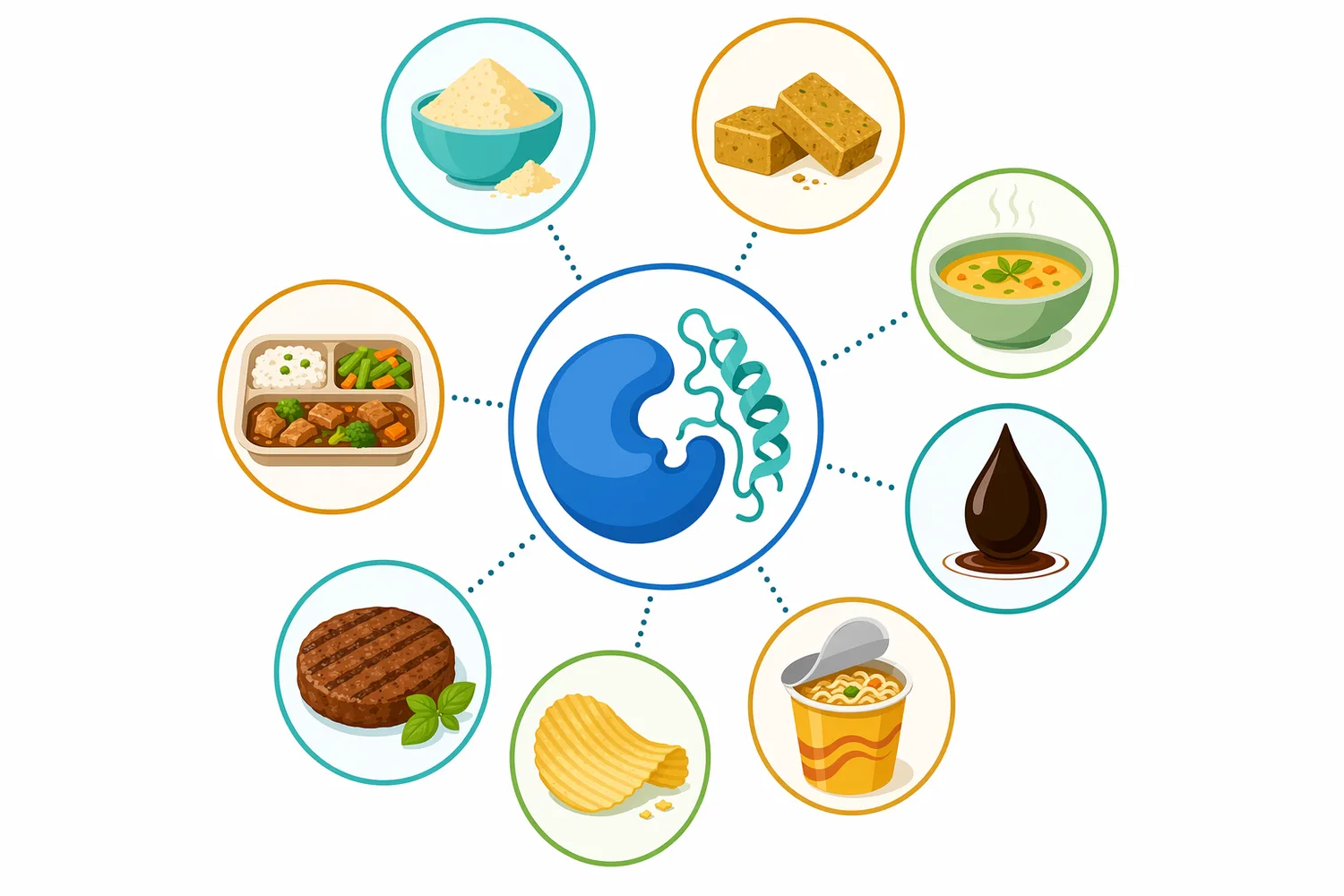
A yeast extract seasoning system is not judged by nucleotide conversion alone. The finished ingredient is used in soups, sauces, bouillons, snacks, noodles, meat alternatives, marinades, and prepared foods where salt, fat, water activity, pH, heat exposure, and other ingredients influence flavor release. Deaminase contributes to the nucleotide side of the system, while peptides and amino acids contribute body, savoriness, and sometimes bitterness. This is why the enzyme should be understood as a precision step that complements other flavor-building reactions.
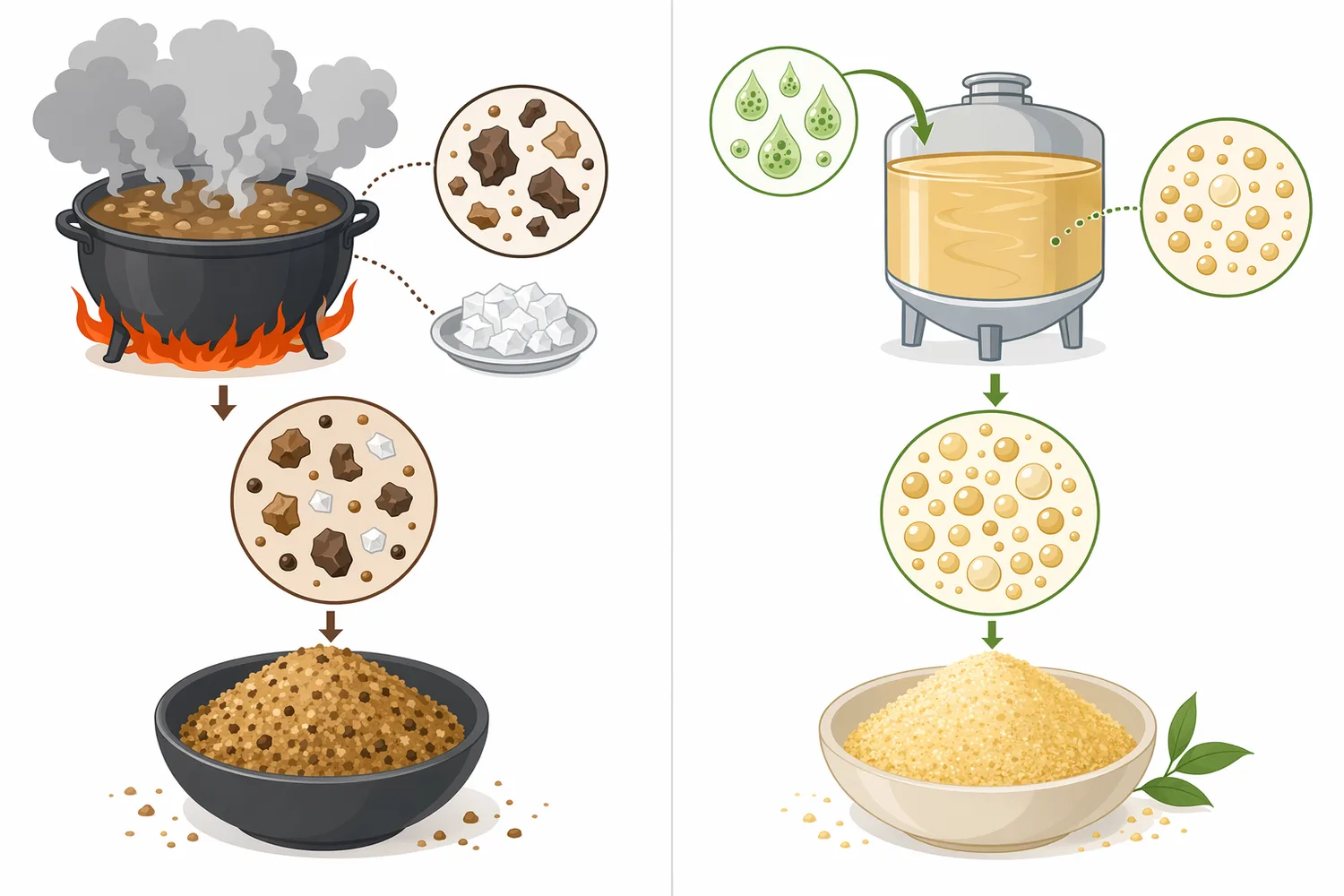
Research across savory foods repeatedly shows that processing changes both nonvolatile and volatile flavor chemistry. High-pressure processing of dry-cured ham, for example, has been studied for its effects on free amino acid and volatile compound profiles at different temperatures, demonstrating that the sensory-active pool in a savory food is sensitive to processing conditions [6]. Yeast extract processing is different from ham processing, but the lesson is directly relevant: the final flavor impression comes from the interaction of multiple chemical families, not from one compound class in isolation.
Enzyme-treated hydrolysates offer a closer analogy. In Huangshan floral mushroom hydrolysates, different enzyme treatments were examined for flavor changes, showing that enzymatic route can affect the profile of savory hydrolysates [3]. For yeast extract, deaminase does not replace proteolytic flavor development; it modifies nucleotide chemistry so that the nucleotide contribution better matches the intended seasoning role.
Plant-based meat analogues provide another modern context. Research on high-moisture extruded plant-based meat analogues has examined how composite enzyme and polysaccharide treatment affects textural and flavor quality, reinforcing the point that enzymes are increasingly used to fine-tune complex food matrices rather than only to increase yield [13]. In yeast extract seasoning, deaminase can be viewed in the same practical way: a food-processing tool used to adjust a specific flavor-relevant fraction inside a larger ingredient system.
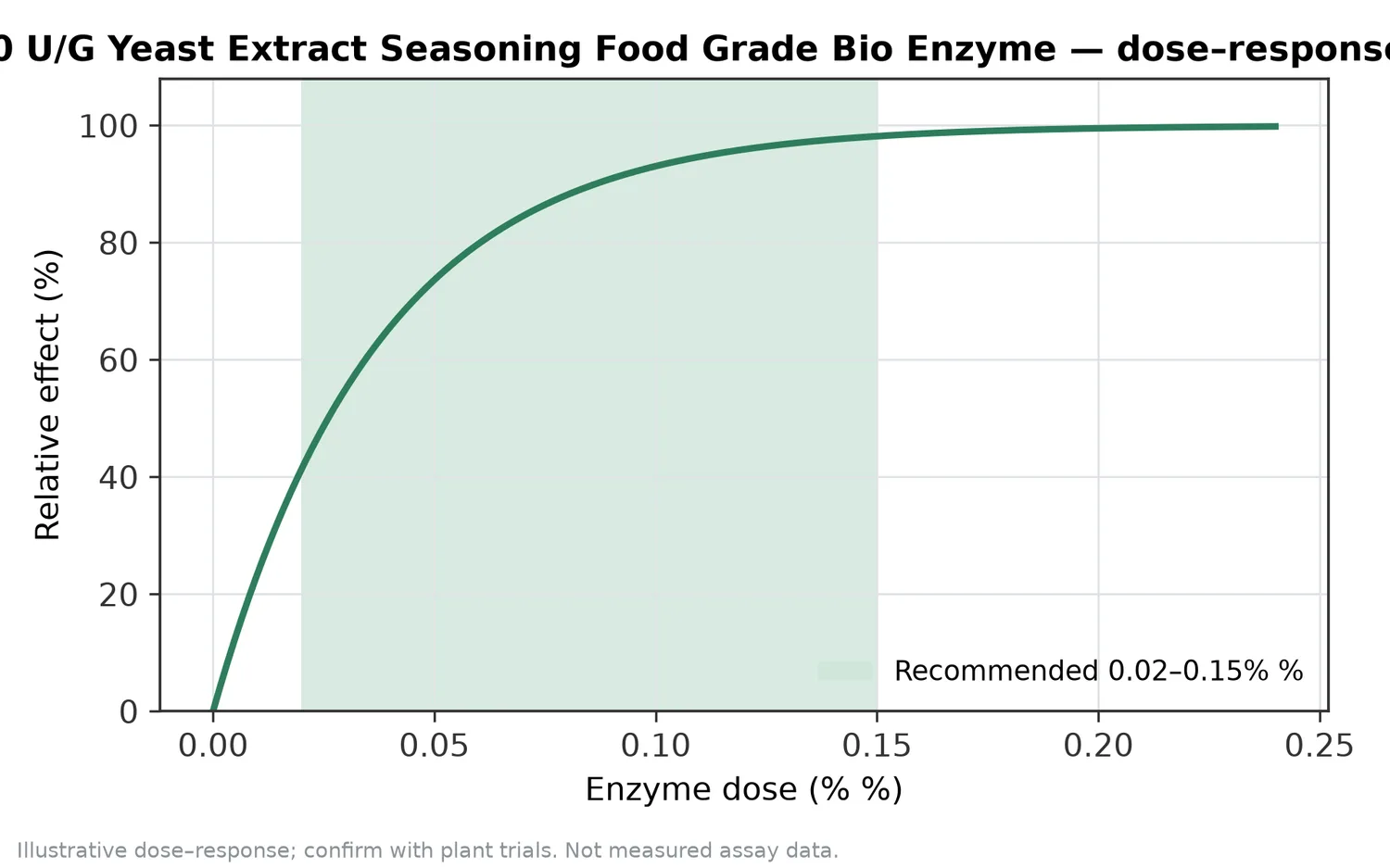
In a typical yeast extract seasoning workflow, deaminase is used in an aqueous phase where the yeast-derived substrate is dispersed, hydrated, or otherwise available for enzymatic contact. The enzyme must contact compatible nucleotide substrates; if those substrates are locked in intact RNA or inaccessible cellular material, upstream processing may be needed to release them. This is why deaminase is often conceptually paired with processes that solubilize yeast components or release nucleotide units before the deamination step.
The reaction itself is substrate-directed. If adenylate-type compounds are present, AMP deaminase-type activity can convert them toward inosinate-type products. If the matrix contains little accessible adenylate substrate, the enzyme has less to transform. This is a mechanistic limitation, not a product weakness: enzymes catalyze compatible reactions; they do not create substrates that are not present. Food enzyme literature emphasizes that enzyme performance depends on the substrate and processing environment, including the macromolecular state of proteins, starches, lipids, and other food components [14].
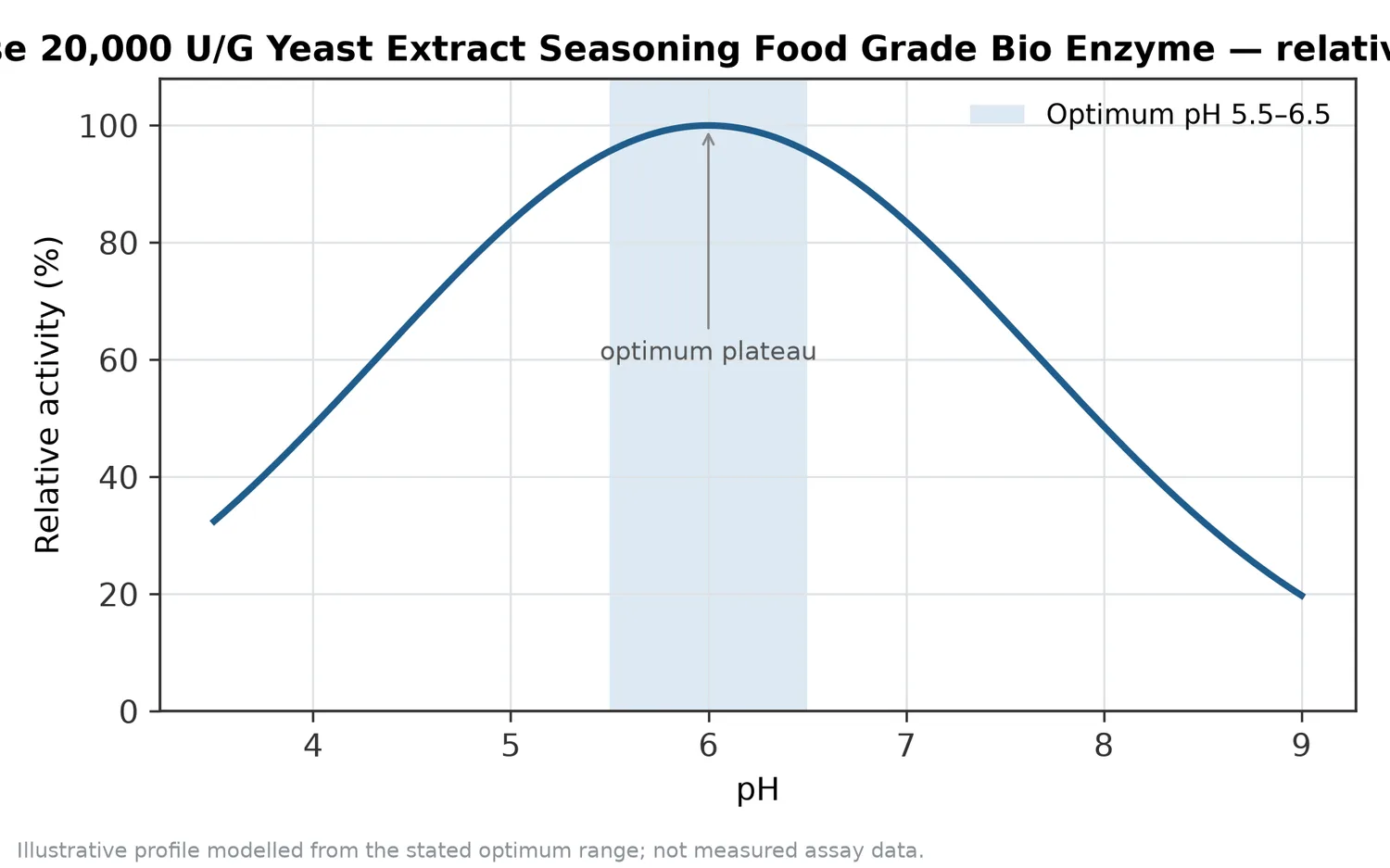
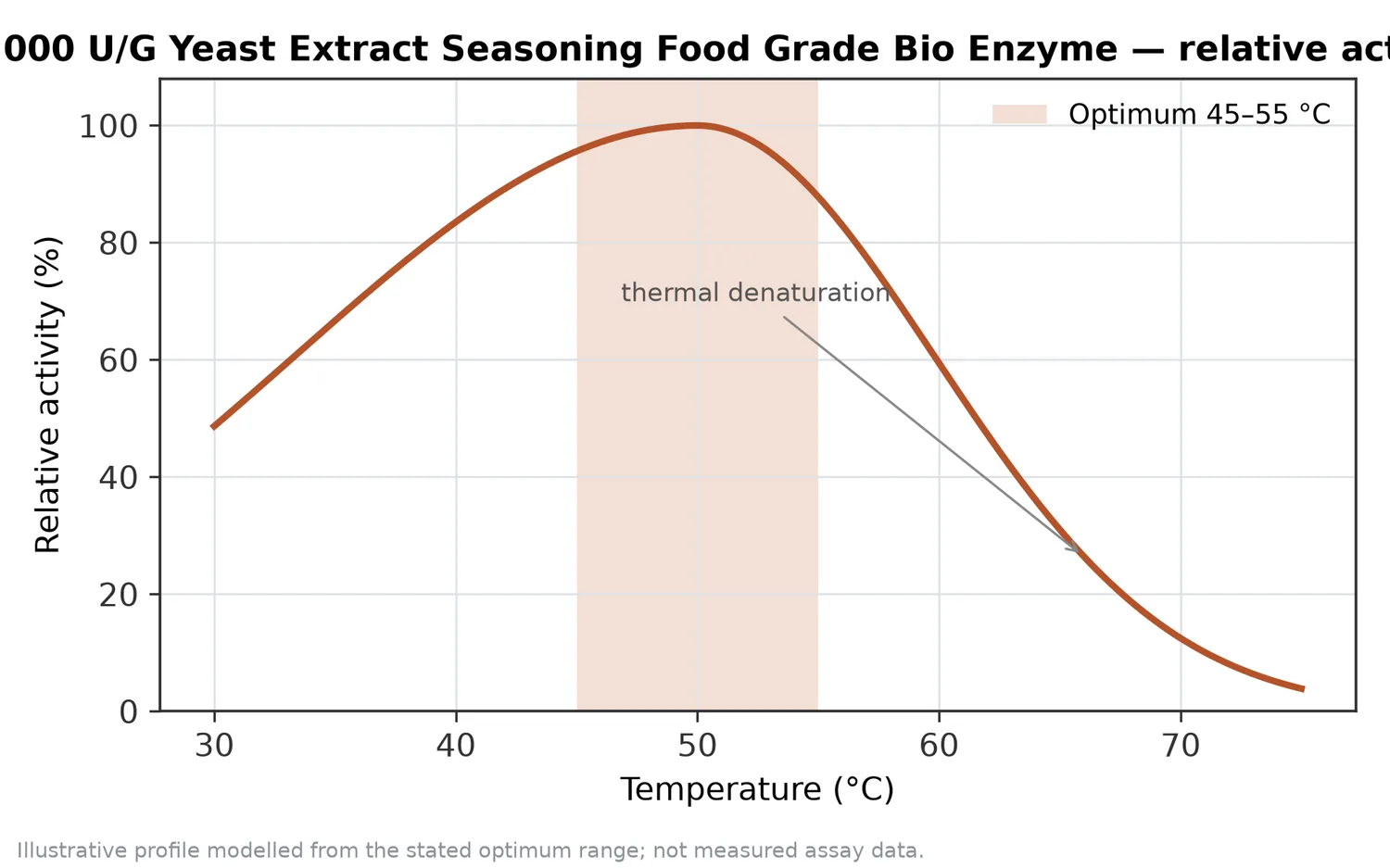
Temperature, pH, solids content, ionic strength, and process time can all influence enzyme reaction behavior in real food matrices. However, the useful way to understand deaminase is not as a universal set of fixed conditions; it is as a catalyst that should be incorporated where adenylate-type nucleotide substrates are soluble enough and process conditions allow the enzyme to act. This customer-facing product information intentionally keeps process guidance general, because actual conversion depends on the buyer’s yeast material, upstream treatment, and finished seasoning design.
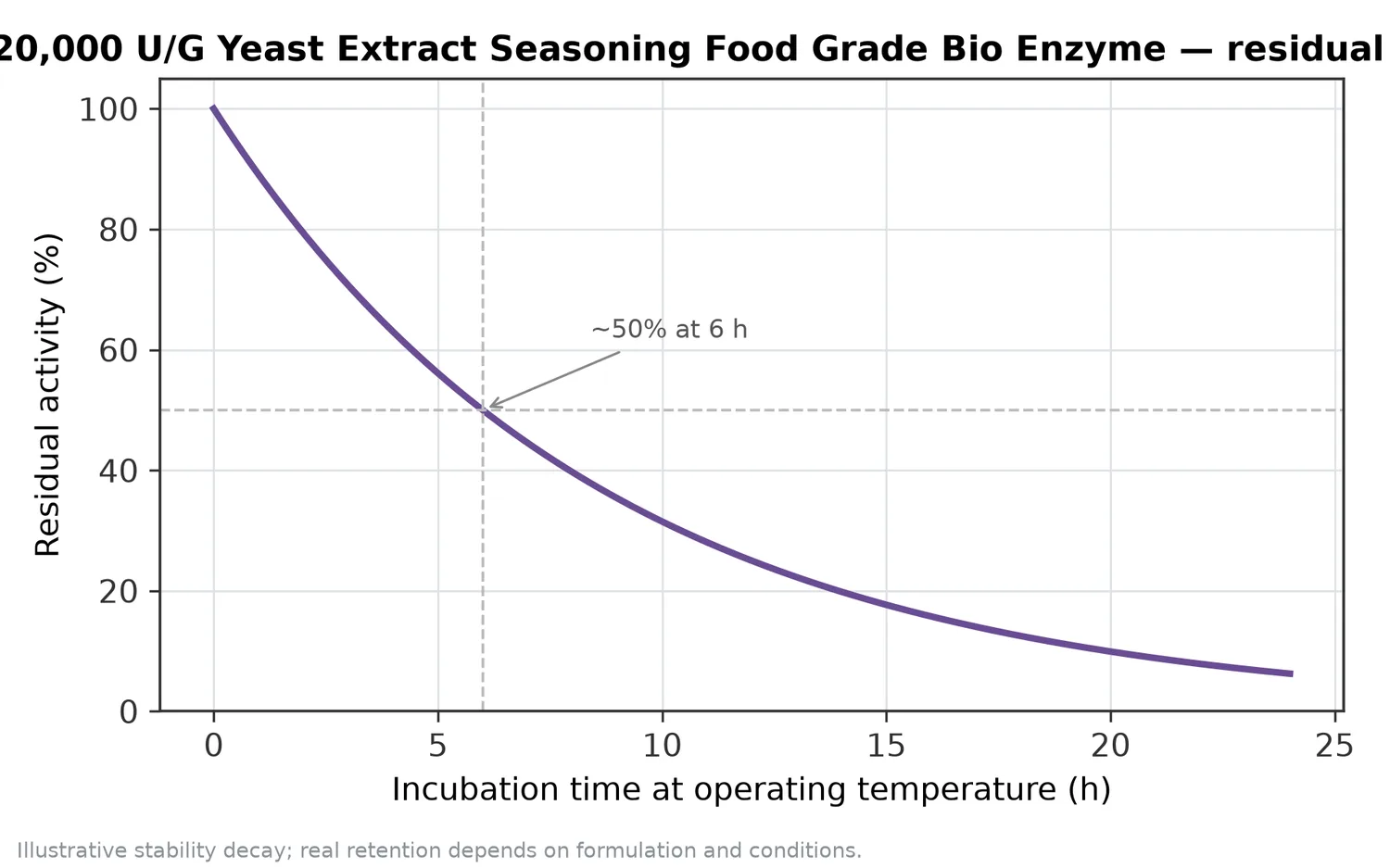
After the enzyme step, the processed yeast extract may be concentrated, blended, heat-treated, spray-dried, vacuum-dried, or otherwise stabilized according to the customer’s existing food process. Heat treatment may inactivate enzyme activity while also affecting aroma and color development through other reactions. Studies on volatile retention and release in stored foods show that matrix structure and processing history can influence how flavor compounds are retained and released over time [15].
Yeast extract is commonly used where a rounded savory base is needed without relying only on meat-derived ingredients. In these applications, deaminase supports the nucleotide contribution of the extract, while peptides and amino acids provide body and mouth-filling taste. This can be useful in powdered bouillons, sauce bases, gravies, instant soups, and broth concentrates where the ingredient must perform after dilution and heating.
In snack seasonings, yeast extract often contributes background savoriness, reduces the need for blunt salt impact, and helps connect top notes such as cheese, roast, barbecue, chicken-style, mushroom, or fermented flavors. Deaminase-modified nucleotide balance can support the savory foundation of those systems, while volatile flavor release still depends on the carrier, oil, salt, acids, and dry-blend structure. Research on food additives and flavor perception highlights that perceived flavor depends on interactions among ingredients, not merely the presence of a single taste-active compound [16].
Plant-based meat systems frequently need savory depth to compensate for the absence of meat-derived extractives. Yeast extract is one of the established tools for that purpose, and deaminase-treated yeast nucleotide fractions can support a more convincing broth-like or cooked-savory background. High-moisture extrusion research shows that plant-protein processing can improve digestibility and amino acid scores, illustrating how modern plant-based foods increasingly rely on controlled processing to tune nutrition and texture as well as flavor [17].
Mushroom, kelp, soy, and fermented-style flavor systems often depend on soluble amino acids, peptides, nucleotides, organic acids, and volatiles. Deaminase can fit naturally into these profiles because its effect is savory-system reinforcement rather than a sweet, fruity, or dairy-specific transformation. Kelp fermentation studies show that changes in free amino acid profiles and flavor properties can be linked during biological processing, supporting the wider use of nitrogen chemistry to build marine, fermented, and umami flavor systems [8].
The practical appeal of deaminase is that it gives food businesses a defined enzyme tool for nucleotide-directed yeast extract seasoning work. Instead of treating yeast-derived material only with heat or broad hydrolysis, the buyer can incorporate a reaction step aimed at changing adenylate-type nucleotide chemistry. This supports cleaner process logic: the enzyme acts on a known class of substrate, produces a chemically different nucleotide profile, and fits into a broader savory ingredient workflow.
The 1 kg online purchasing model is straightforward. Enzymes.bio supplies deaminase through its online enzyme platform, where the buyer can purchase the product directly, pay online, and have the order processed and shipped. A Certificate of Analysis and Safety Data Sheet accompany the order. Enzymes.bio is a supplier, not a manufacturer or testing laboratory, so the product page and accompanying documentation are intended to support routine purchase and safe handling rather than to create a custom development program .
This model suits buyers who already understand where an enzyme step fits in their process and want a practical packaged quantity rather than a long quotation cycle. The product is positioned for food-processing use in yeast extract seasoning applications, and the customer remains responsible for how the enzyme is incorporated into its own substrate, formulation, process controls, and finished-product requirements.
Deaminase is powerful when the right substrate is present, but it is not a complete yeast extract production system by itself. It does not hydrolyze all yeast protein into peptides, does not release all nucleotides from intact RNA, and does not create the full roasted or cooked aroma profile associated with thermal reaction flavors. Its value is in the specific chemical conversion of compatible nitrogen-containing nucleotide substrates.
The flavor outcome also depends on the whole matrix. Protein–flavor binding, peptide composition, salts, acids, lipids, and volatile compounds all influence what the finished product tastes like and how flavor is released during eating. Research on protein-rich food systems shows that molecular binding interactions can affect flavor availability, which means a nucleotide conversion step is one important lever among several rather than the only determinant of sensory performance [5].
A practical expectation is therefore: deaminase can help improve the use of yeast-derived nucleotide fractions and support savory seasoning functionality, but the final result depends on the yeast extract composition and the surrounding process. This is consistent with how food enzymes are used across the industry: as targeted catalysts within controlled food operations, not as universal additives that override raw material differences [1].
Deaminase for yeast extract seasoning is best understood as a nucleotide-conversion enzyme. It removes an amino group from compatible substrates and can shift adenylate-type compounds toward inosinate-type compounds, supporting the savory nucleotide side of yeast extract functionality. This mechanism is concrete, chemically defined, and distinct from protease hydrolysis, fermentation, or heat-driven flavor development.
The evidence base is strongest for the enzyme category and its food-processing relevance: AMP deaminase is repeatedly evaluated in food enzyme safety literature, while broader food research shows that enzymatic treatment can meaningfully alter flavor-relevant compounds in complex savory matrices [2]. For buyers using yeast extract in soups, sauces, snack seasonings, bouillons, plant-based foods, and fermented-style flavor systems, deaminase offers a focused way to make better use of the nucleotide fraction already present in yeast-derived materials.
Enzymes.bio supplies deaminase for this application as a directly purchasable 1 kg online product. The buyer pays online, the order is processed and shipped, and the order includes a Certificate of Analysis and Safety Data Sheet.
Sold by the 1 kg unit, in stock and ready to ship. Order directly on our store — pay online and we process your order. A Certificate of Analysis and Safety Data Sheet are included with every order.
Buy Deaminase 20,000 U/G Yeast Extract Seasoning Food Grade Bio Enzyme →Numbered in order of first citation. Open-access sources, each verified reachable at publication; citation numbers in the text link here.