
Detergent enzymes are biological catalysts used in laundry detergents, dishwashing detergents, stain removers, and cleaning systems to break large stain molecules into smaller fragments that rinse away more easily. In practical terms, enzymes in detergent help target proteins, starches, fats, plant residues, and fiber-trapped soil rather than relying only on heat, alkalinity, surfactants, or mechanical agitation [1].
Enzymes.bio supplies detergent enzymes directly online by the 1 kg unit. Buyers can purchase and pay online; the order is then processed and shipped, with a Certificate of Analysis and Safety Data Sheet provided with the order.
Detergent enzymes are added to washing detergent with enzymes, laundry boosters, dishwasher detergents, and other cleaning products because many everyday soils are biological materials. Food residues, body soils, dairy stains, blood, egg, starch-thickened sauces, sebum, cooking oils, grass, fruit residues, and cotton-fiber fuzz all contain chemical structures that can be attacked by specific enzyme classes [1].
The key point is specificity. A protease does not “clean everything”; it hydrolyzes protein. An amylase does not digest oil; it hydrolyzes starch. A lipase acts on fats and oils. A cellulase acts on cellulose at the surface of cotton fibers. This targeted chemistry is why enzymes laundry detergent systems are commonly built around several enzyme types rather than a single all-purpose ingredient [1].
In a conventional detergent, surfactants help wet the fabric or surface, loosen soil, and emulsify oily material. Builders and chelating agents help manage water hardness and alkalinity. Polymers may help disperse soil and reduce redeposition. Enzymes add a different function: they cut large, adhesive, film-forming stain molecules into smaller pieces so that the rest of the detergent system can lift and carry them away [1].
For a buyer looking at laundry detergent enzymes or dishwasher detergent enzymes, the useful way to think about them is not as a replacement for the detergent base. They are catalytic stain-conversion ingredients that make particular soils easier for the total cleaning formulation to remove.
The phrase “detergent enzymes” usually refers to a group of hydrolase enzymes, each acting on a different soil chemistry. The most common functional categories are proteases, amylases, lipases, cellulases, and sometimes pectinases or other carbohydrate-active enzymes in specialized cleaning systems [1].
| Enzyme class | Main soil or substrate | What the enzyme changes | Cleaning contribution |
|---|---|---|---|
| Protease | Protein soils such as blood, egg, milk, sweat, and many body soils | Cuts peptide bonds in protein chains, reducing a tough protein film into smaller peptides | Helps loosen protein stains and mixed biological soils; protease–amylase combinations have been studied for textile blood-stain removal [2] |
| Amylase | Starch from rice, pasta, sauces, cereals, desserts, and thickeners | Hydrolyzes starch chains into shorter carbohydrates that hydrate and disperse more readily | Helps remove starchy food residues; detergent-resistant α-amylase has been investigated for detergent use [3] |
| Lipase | Triglyceride fats, cooking oils, sebum, butter, sauces, and cosmetic oils | Cleaves ester bonds in fats, generating smaller lipid fragments that surfactants can emulsify | Supports removal of oily and greasy residues; several microbial lipases have been evaluated for detergent compatibility [4] |
| Cellulase | Cotton cellulose microfibrils, fuzz, and fiber-trapped particulate soil | Modifies exposed cellulose fibrils at the fabric surface | Can improve soil release and fabric appearance in cotton-containing textiles; alkaline cellulases are widely studied for industrial fiber-related applications [5] |
| Pectinase and related enzymes | Pectin-rich fruit and vegetable residues | Breaks pectin networks that can bind pigments and particles to fabric | Supports removal of plant-derived soils when included in suitable detergent systems [1] |
This table also answers common search questions such as “what are enzymes in laundry detergent?” and “what enzymes are in laundry detergent?” In most enzyme-containing laundry products, the answer is one or more of the above classes, chosen because stains are chemically different from one another [1].
Proteases are among the most important enzymes in laundry detergent because protein soils are common and often strongly adhesive. Blood, egg, milk, sweat, skin debris, grass-associated residues, and many food films contain proteins that can dry into a network on fabric or dishware. Once dried or heated, protein soils can become especially difficult to remove because the protein chains unfold, aggregate, and bind to fibers or surfaces.
A protease solves a specific part of that problem by hydrolyzing peptide bonds. Instead of trying to lift an intact protein film, the enzyme cuts the protein into shorter peptides. These smaller fragments are generally less cohesive, less film-forming, and easier for surfactants and wash water to disperse. In a laundry cycle, that means the stain matrix becomes weaker and more open; mechanical agitation and surfactants can then detach and rinse away material that was previously bound to the fabric [1].
Scientific work supports the relevance of proteases in detergent-style cleaning. A study on combined enzymatic action used a protease from Pseudomonas pseudoalcaligenes with an amylase from Stutzerimonas xanthomarina for textile blood stain removal, showing the practical logic of targeting both protein and carbohydrate components in a real stain matrix [2].
Proteases are particularly relevant in alkaline detergent systems because many laundry and cleaning formulations operate above neutral pH. Alkaline conditions help swell soils and support surfactant performance, but the enzyme must retain useful structure under those conditions. This is why alkaline and detergent-compatible proteases are widely investigated for bio-detergent applications rather than treating all proteases as interchangeable [2].
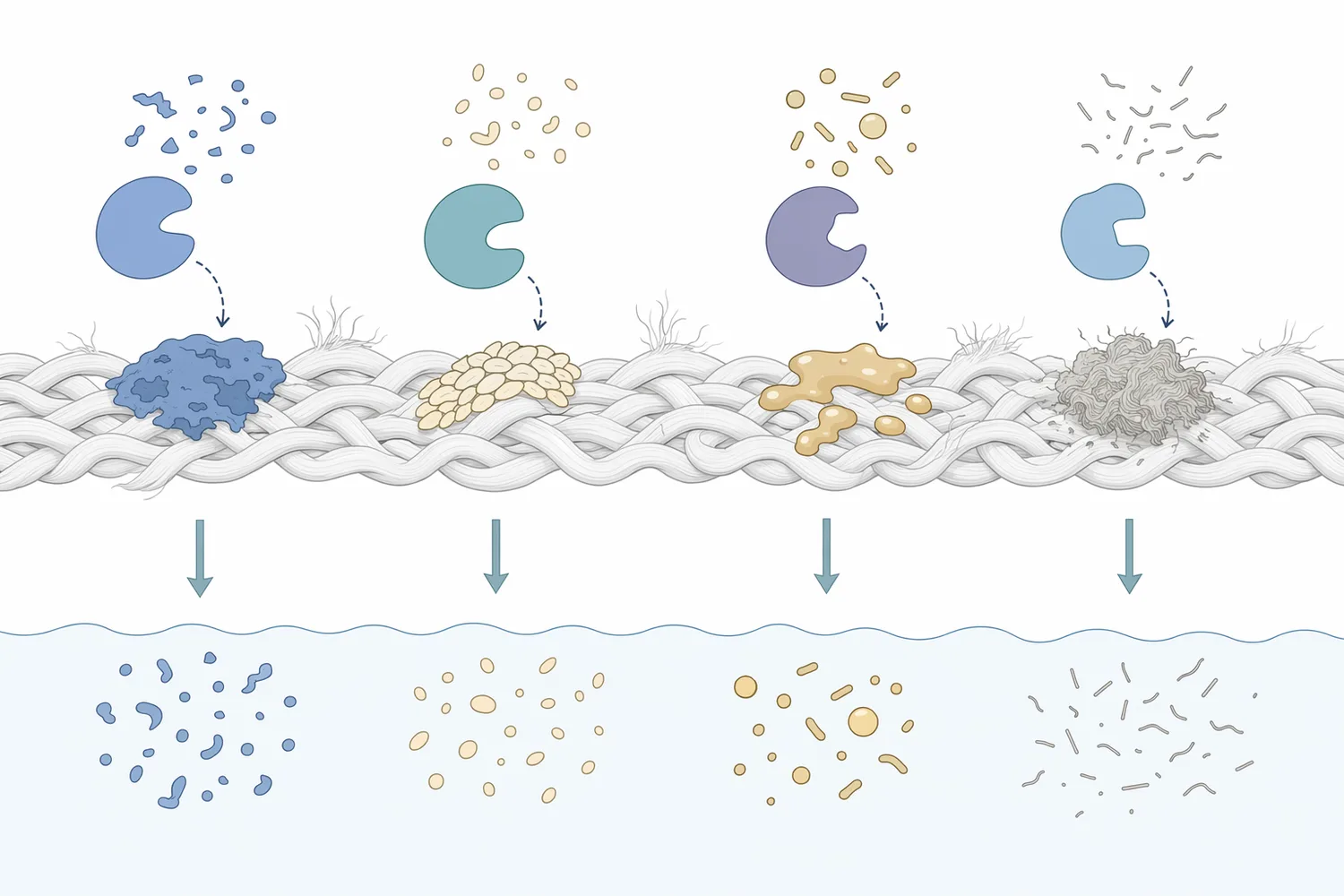
Protease chemistry also explains one formulation challenge: proteases digest proteins, and enzymes themselves are proteins. In multi-enzyme detergents, a protease can potentially damage other enzyme components if the system is not stabilized. Stabilization approaches, including encapsulation and protective matrices, are therefore an important part of enzyme-detergent technology; spray-drying microencapsulation has been studied for lipase and Savinase, a detergent protease, using Arabic gum as wall material [6].
Amylases target starch, one of the most common food residues in laundry, dishwashing, and kitchen cleaning. Starch appears in pasta, rice, potatoes, cereal, baby food, sauces, gravy, puddings, desserts, and many processed foods that use starch as a thickener. When starch dries on fabric or dishware, it can form a sticky film that traps pigments, protein particles, fats, and insoluble food debris.
An α-amylase hydrolyzes starch chains. Starch is built mainly from glucose units linked in long chains; when the amylase cuts those chains, the material loses some of its viscosity, gel strength, and adhesive character. The shorter carbohydrate fragments hydrate, disperse, and rinse more easily than an intact starch paste. That is why amylase is a common answer to the question “what laundry detergent has enzymes for food stains?”—many enzyme detergents include amylase because starchy residues are so frequent [3].
Detergent-focused research continues to examine α-amylases that can tolerate detergent conditions. A 2024 study reported a detergent-resistant α-amylase from Anoxybacillus karvacharensis K1 and discussed production based on whey, illustrating both the performance interest and the microbial-biotechnology route by which detergent amylases are often explored [3].
Amylase is especially useful in mixed stains because starch often acts like a binder. Tomato sauce, for example, may contain starch thickeners, vegetable solids, oil, pigments, and sometimes protein. If the starch phase is broken down, the surrounding stain structure becomes less cohesive, which gives surfactants, builders, and other enzymes better access to the remaining soil layers [2].
The combination of protease and amylase is therefore more than a marketing idea. In textile blood-stain work, combined protease and amylase action addressed a complex biological stain rather than a single purified soil, supporting the practical view that enzyme blends can be more effective than one enzyme where stain chemistry is mixed [2].
Lipases target fatty and oily soils. These include cooking oil, butter, cream, meat fat, salad dressing, sebum, cosmetic oils, and grease-containing food stains. In laundry detergent with enzymes, lipase is useful because oily soils can spread into fibers and hold onto pigments and particulate dirt. In dishwashing systems, fats can coat plates, utensils, filters, and machine surfaces.
A lipase hydrolyzes ester bonds in triglycerides, the main structure of many fats and oils. This reaction converts a large, water-insoluble fat molecule into smaller lipid fragments such as fatty acids, glycerol, and partial glycerides. Those fragments are not automatically “water-soluble” in all conditions, but they are easier for a detergent system to emulsify and detach than a continuous grease film [7].
Several microbial lipases have been studied specifically in detergent contexts. A thermo-alkaline stable lipase from Bacillus coagulans was characterized and evaluated for compatibility with commercially available detergents, which is relevant because laundry and dishwashing systems often combine alkalinity, surfactants, and variable washing temperatures [4].
Other studies reinforce the same application direction. A lipase from Pseudomonas guariconesis has been investigated as an additive in laundry detergents, and detergent-stable alkaline lipase from Bacillus safensis TKW3 has also been reported, showing continued interest in lipases that can remain useful under detergent conditions [8].
Additional work has examined lipase production and use in detergent formulations from Aeribacillus pallidus, while bacterial lipases have also been evaluated for both detergent use and oily wastewater degradation. These studies do not mean every lipase behaves the same way, but they support the technical basis for using lipases where fat and oil soils are recurring cleaning targets [9].
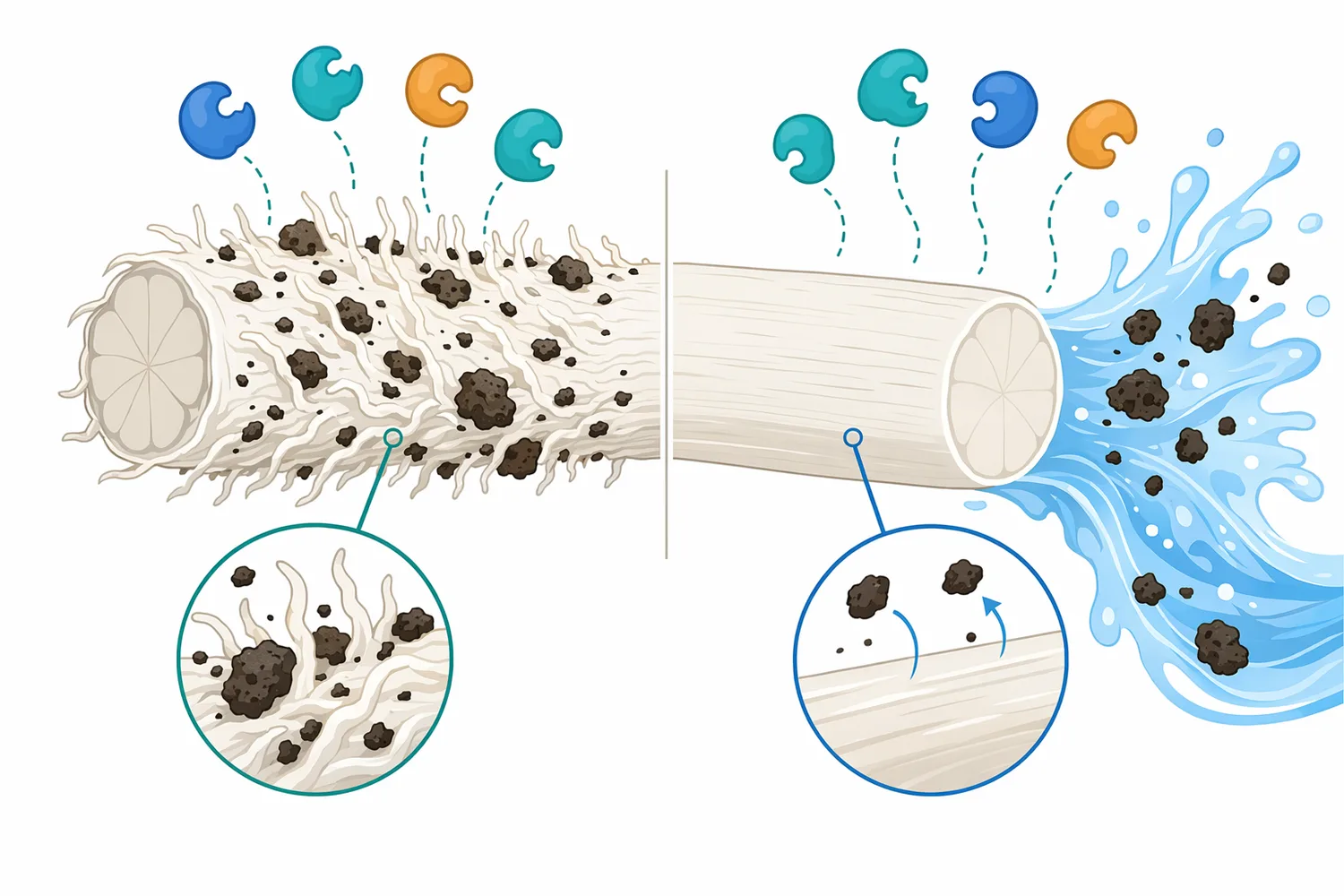
Cellulases act on cellulose, the main structural polymer in cotton. Their role in detergent is different from protease, amylase, and lipase. Instead of digesting a stain molecule directly, cellulase can modify tiny cellulose fibrils and surface fuzz on cotton fibers where particulate soil and dulling residues can become trapped.
At the fiber surface, repeated wear and washing can create microscopic fibrils. These roughened surface structures can hold soil, scatter light, and make fabric look dull. Controlled cellulase action can trim exposed fibrils, helping release trapped particles and improving the visual freshness of cotton-containing textiles. This is a surface-level fabric-care effect, not a general license to digest fabric indiscriminately [1].
Industrial interest in alkaline cellulases is broad because cellulose-rich materials are common in textile, pulp, paper, and biomass applications. Alkaline cellulases have been reviewed for industrial use in pulp and paper recycling, where controlled cellulose-surface modification helps in fiber processing and contaminant release [10].
Cellulase use in detergent requires balance because the substrate is the textile itself when cotton is present. The desired effect is controlled surface modification and soil release, not excessive fiber damage. That is why cellulase-containing detergents are usually formulated as part of a broader system where enzyme exposure, pH environment, surfactants, and wash conditions moderate the final effect [1].
Fruit and vegetable stains often contain pectin, hemicellulose, pigments, sugars, organic acids, and fine plant particles. Pectin is a structural polysaccharide in plant cell walls; in a stain, it can behave like a sticky network that binds colored material to fabric. Pectinase breaks that network into smaller fragments, weakening the stain matrix [1].
This mechanism is useful for residues such as fruit juices, jam, vegetable sauces, baby foods, and plant-based food stains where pigments are not the only problem. The pigment may be trapped in a carbohydrate gel or plant-cell matrix. By breaking down the pectin structure, the enzyme helps expose the stain to surfactants and wash water.
Pectinases are less often discussed by consumers searching for “best laundry detergent with enzymes,” but the industrial logic is the same as for amylase: if a carbohydrate polymer is helping the stain stick, a carbohydrate-active enzyme can make the stain easier to remove. In practice, the value depends on the soil profile and the detergent format [1].
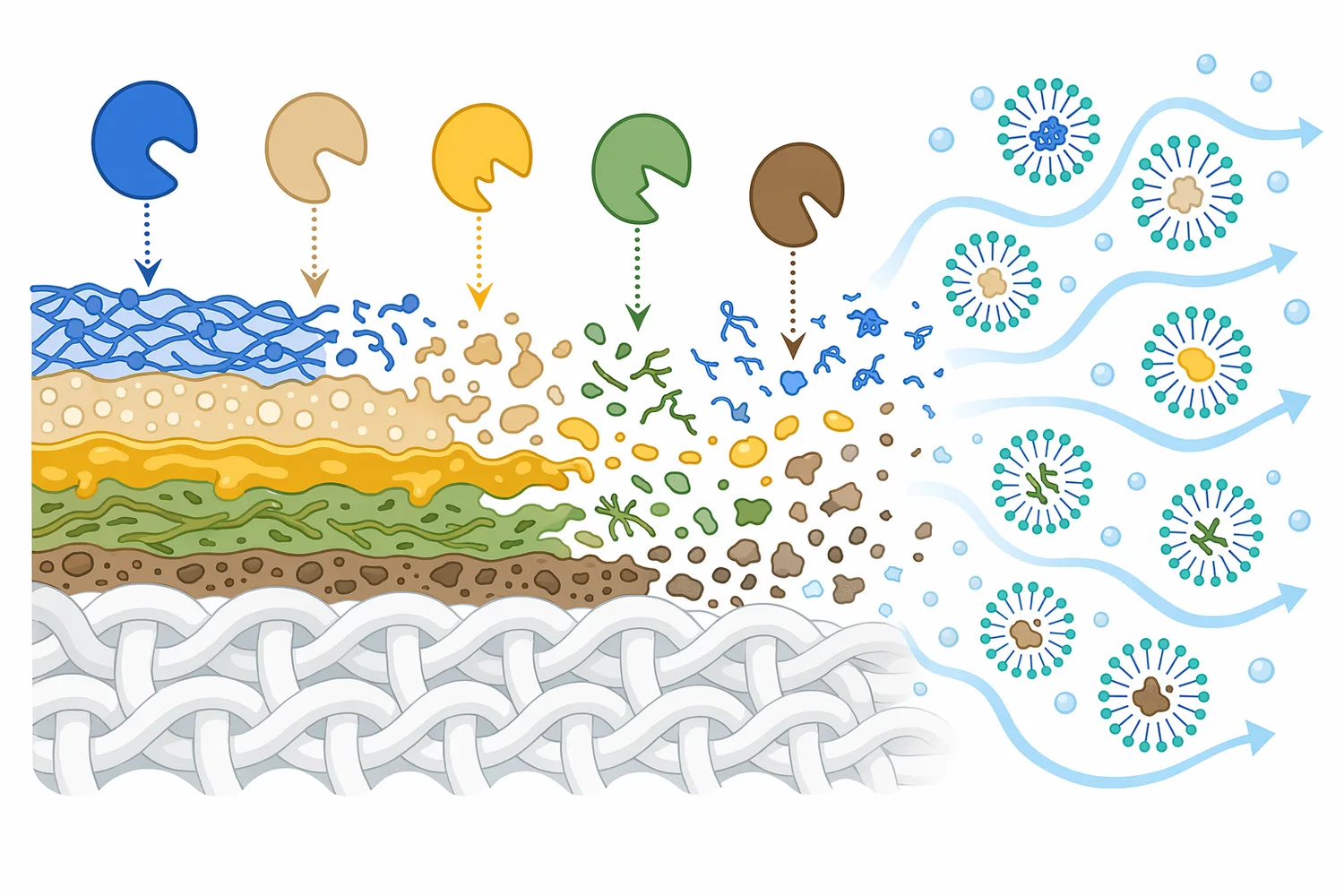
Real stains are usually layered. A food stain may contain starch, oil, protein, pigment, and mineral particles. A shirt collar may contain sebum, sweat proteins, skin debris, cosmetic residues, and airborne dirt. A dishwashing soil may include egg protein, starch-thickened sauce, dairy fat, and baked-on carbohydrates. No single enzyme digests all of these materials [1].
Multi-enzyme detergent systems address this problem by attacking different parts of the stain matrix. Protease opens protein networks. Amylase reduces starch adhesion. Lipase disrupts fat films. Cellulase may release fiber-trapped particles. Pectinase breaks plant gels. As each part of the stain loses structure, the others become more accessible to surfactants and mechanical removal.
The combined protease–amylase study for textile blood stain removal is a useful example because blood on fabric is not just a simple red colorant. It contains proteins and other biological components that can bind to fibers. Combining enzymes allows the system to attack more than one chemical feature of the stain, which is the same principle behind many enzyme detergents for laundry and dishwashing [2].
This is also why the phrase “detergent with enzymes” should be read carefully. A product may contain one enzyme or several. The cleaning profile of a washing detergent with enzymes depends on which enzyme classes are present and whether the finished system allows them to remain active long enough to act on their substrates [1].
Laundry is the most familiar application for detergent enzymes. Proteases help with blood, sweat, egg, milk, and body soils. Amylases help with pasta, rice, cereal, and sauce residues. Lipases help with sebum, cooking oils, salad dressing, and greasy food stains. Cellulases can support cotton fabric appearance and release trapped soil. Together, these actions help explain why enzymes in laundry detergent are now common in modern washing products [1].
The mechanism matters because many laundry stains are not removed by solubilization alone. Dried egg protein, for example, forms a film. Starch-thickened sauce dries into a glue-like residue. Sebum oxidizes and binds to textile fibers. Enzymes convert these persistent materials into smaller, less adhesive fragments so that surfactants and agitation can finish the removal process.
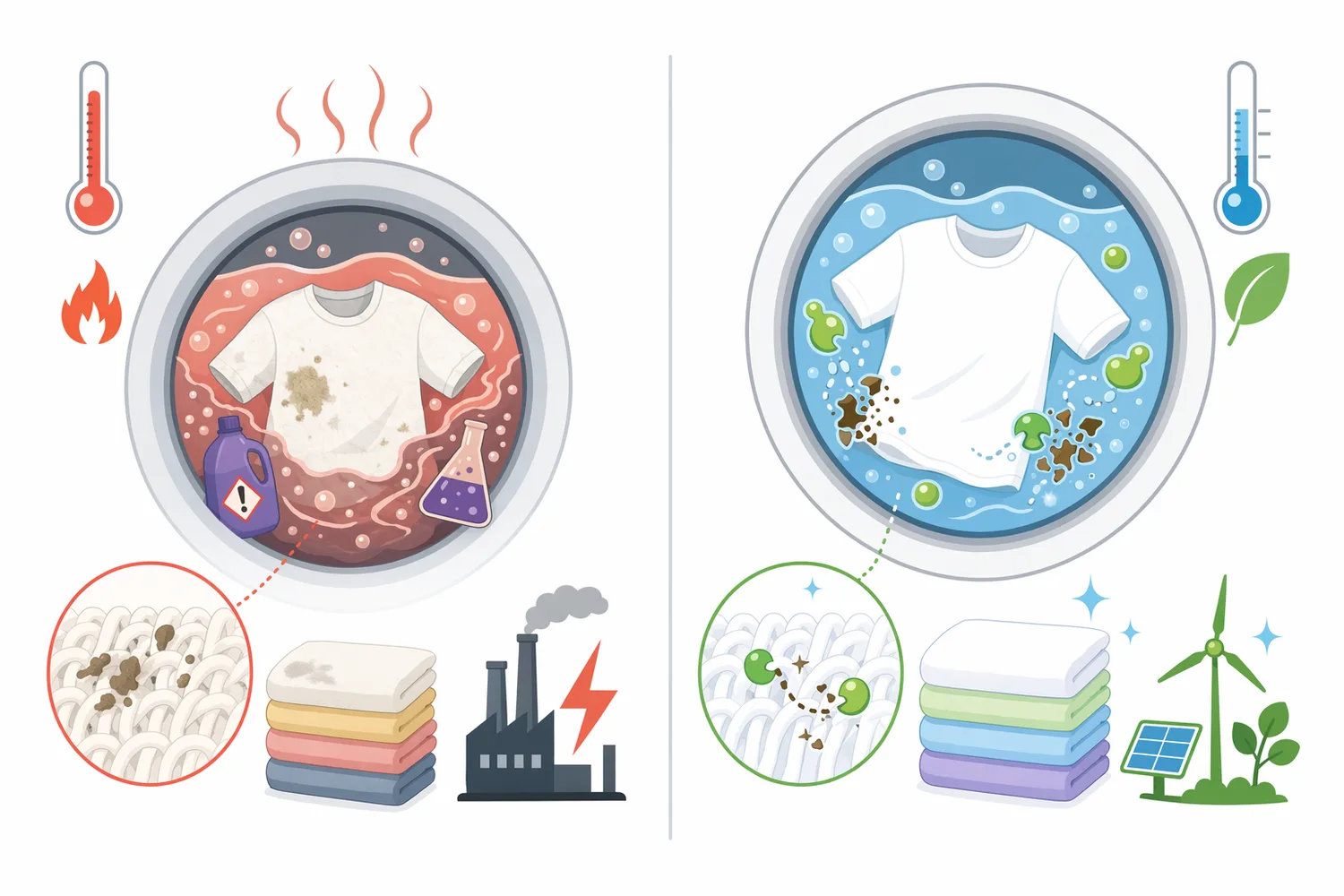
Enzyme detergents are also associated with cleaning at normal or lower wash temperatures. Heat can help remove some soils, but high temperatures can also set protein stains and increase energy use. Enzymes offer another route: targeted chemical breakdown at the stain surface, provided the enzyme remains active during the wash [1].
That does not mean colder water always gives identical results. Enzyme reactions depend on contact time, temperature, soil accessibility, and the surrounding detergent chemistry. However, the reason enzymes are valuable in lower-temperature laundry is clear: they create catalytic reactions that would otherwise proceed slowly under mild wash conditions.
Dishwasher detergent enzymes work on many of the same soil types as laundry enzymes, but the surfaces and wash dynamics differ. Dishware, cookware, glass, and machine parts are exposed to cooked starch, egg, dairy, meat residues, sauces, fats, and plant materials. These soils can dry, bake onto surfaces, or form films that resist surfactant cleaning alone.
Amylase is especially relevant in dishwasher detergent with enzymes because starch residues are common on plates, bowls, utensils, and cookware. When starch gelatinizes during cooking and then dries, it can form a tenacious film. Amylase cuts the starch network, reducing its ability to bind to the surface and hold other food particles [3].
Protease supports removal of egg, milk, meat, and other protein residues. These proteins can denature during cooking or drying, forming films on dishware and utensils. Protease hydrolysis breaks those films into smaller fragments that can be dispersed by the wash liquor [2].
Lipase contributes where grease and fat are recurring problems. In automatic dishwashing, fats can spread over surfaces and redeposit if not emulsified effectively. Lipase activity helps fragment triglyceride soils so that surfactants and alkaline builders can disperse them more effectively [4].
For buyers comparing enzymes in dishwasher detergent with enzymes in laundry detergent, the enzyme classes overlap, but the application environment differs. Dishwashing tends to emphasize food-film removal from hard surfaces, while laundry emphasizes stain release from fibers, body soil removal, and fabric appearance.
Enzymes are proteins, so their catalytic activity depends on maintaining a functional three-dimensional structure. Excessive heat, unsuitable pH, aggressive oxidants, incompatible surfactants, and prolonged exposure to destabilizing ingredients can reduce performance. This is why detergent enzyme research often focuses not only on what substrate an enzyme attacks, but also on whether it remains useful in a detergent-like environment [4].
Lipase studies illustrate this point clearly. Researchers have characterized thermo-alkaline or detergent-stable lipases because a grease-digesting enzyme is only useful in detergent if it tolerates the chemical and thermal conditions of washing. Compatibility with commercially available detergents has therefore been a key experimental theme in lipase work [4].
Amylase research shows the same principle. A detergent-resistant α-amylase is valuable because starch hydrolysis must occur in the presence of detergent ingredients rather than in a pure laboratory buffer. The term “detergent-resistant” reflects the practical requirement that the enzyme survive and function in the cleaning matrix [3].
Stabilization technologies are also important. Microencapsulation research with lipase and Savinase demonstrates one route for physically protecting enzyme proteins before use. In detergent applications, this kind of protection can help separate sensitive enzymes from destabilizing surroundings until the product is diluted in the wash [6].
The first benefit is targeted stain breakdown. Enzymes attack defined chemical bonds in soils, making them highly specific compared with broad chemical cleaning. A protease weakens protein films; an amylase reduces starch adhesion; a lipase disrupts grease; and a cellulase supports fiber-surface soil release [1].
The second benefit is support for milder cleaning conditions. Because enzymes catalyze specific breakdown reactions, detergents can often rely less heavily on high heat or harsh mechanical action for certain organic stains. This is one reason enzyme detergents are important in modern laundry and cleaning formulations [1].
The third benefit is improved performance on mixed soils. Many visible stains persist because one component traps another. A starch film may hold pigment. A fat layer may shield protein. A protein network may bind particulate dirt. Multi-enzyme systems can open the stain structure at several points, allowing surfactants and wash water to remove more of the residue [2].
The fourth benefit is versatility across cleaning formats. Enzymes are used in laundry detergents, stain-removal products, dishwashing detergents, and cleaning systems where organic residues are predictable. The same fundamental substrate logic applies, even though the formulation and surface differ [1].
Detergent enzymes are powerful but not universal. They do not remove mineral scale, rust, insoluble dyes, or every oxidized pigment by themselves. They are most useful where the stain contains enzyme-accessible protein, starch, fat, cellulose-associated soil, pectin, or related organic material [1].
They also need access to the substrate. If a stain is sealed under waxy grease, aged polymerized oil, heavy particulate dirt, or an insoluble coating, the enzyme may work only after surfactants and mechanical action expose the target molecules. This is why enzymes should be understood as part of a complete detergent system rather than as stand-alone cleaning agents.
Wash conditions influence results. Enzymes need enough time to contact the stain and catalyze hydrolysis. Very high heat can unfold the enzyme protein and reduce activity. Strongly incompatible chemistry can also interfere. These limitations are not defects; they reflect the protein nature of enzymes and explain why detergent compatibility is a major theme in enzyme research [4].
In multi-enzyme systems, stability is especially important. Proteases can attack other proteins, including enzymes, if the product environment allows that interaction. Protective formulation approaches such as encapsulation have therefore been studied for detergent-relevant enzymes [6].
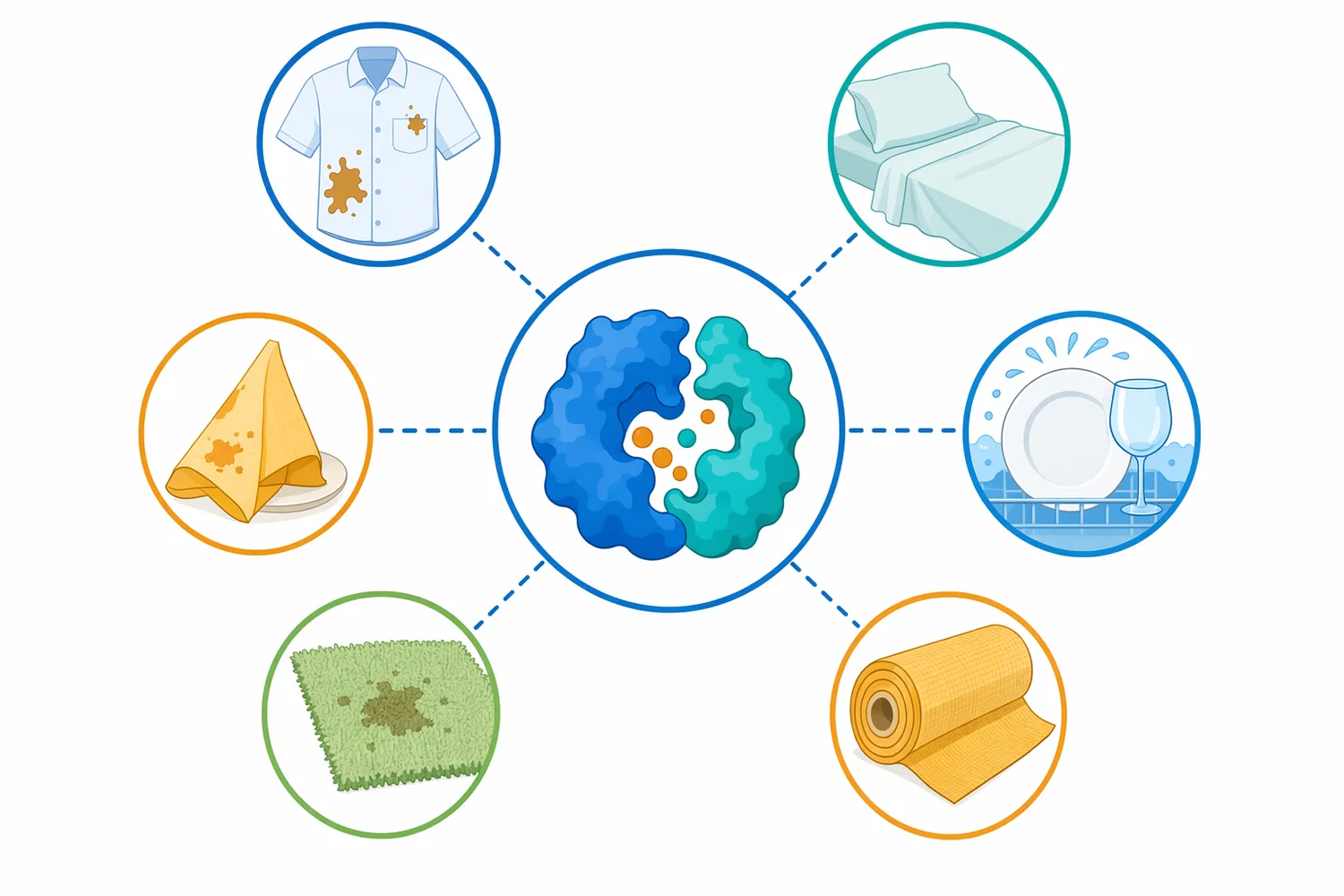
The strongest evidence in the provided literature supports protease and amylase use for protein and starch-containing stains. The combined enzymatic action study using protease and amylase for textile blood stain removal demonstrates the value of attacking more than one stain chemistry in a fabric context [2].
For amylase, detergent-resistant α-amylase from Anoxybacillus karvacharensis K1 provides direct support for the continued search for starch-degrading enzymes that can tolerate detergent conditions. This matters because amylase must work in the presence of surfactants, alkalinity, and other formulation components to be useful in real washing [3].
For lipase, several microbial enzymes have been evaluated in detergent contexts. The Bacillus coagulans lipase study specifically addresses thermo-alkaline stability and compatibility with commercially available detergents, while work on Pseudomonas guariconesis and Bacillus safensis lipases further supports detergent application interest [4].
For cellulase, the evidence base is broader across industrial fiber processing and cellulose modification. Alkaline cellulases are studied for applications involving cellulose-rich materials, including pulp and paper recycling, supporting the general principle that cellulase can modify fiber surfaces and help release bound material when used under controlled conditions [10].
Taken together, these studies support the technical basis for detergent enzymes as a category: different enzymes attack different soil chemistries, and practical performance depends on maintaining enzyme function in the detergent environment.
Enzymes.bio supplies detergent enzymes directly online by the 1 kg unit. The purchase process is simple: the buyer places the order online, pays online, and the order is processed and shipped. A Certificate of Analysis and Safety Data Sheet are provided with the order.
Enzymes.bio is a supplier, not a manufacturer or testing laboratory. This article is intended to give buyers a clear technical understanding of how detergent enzymes work, what stain types they address, and why enzyme-containing detergents are widely used in laundry, dishwashing, and cleaning applications.
Detergent enzymes improve cleaning by converting specific organic soils into smaller, more removable fragments. Proteases act on protein stains, amylases act on starch, lipases act on fats and oils, cellulases support cotton fiber soil release, and pectinases help break plant-based stain matrices [1].
The practical value of enzymes in washing detergent and dishwasher detergent comes from this substrate-specific action. Published studies support detergent-relevant protease–amylase combinations for textile stain removal, detergent-resistant α-amylase for starch soils, and detergent-compatible lipases for greasy residues [2].
For buyers comparing laundry detergent with enzymes, dishwasher detergent with enzymes, or enzyme ingredients for cleaning products, the key takeaway is straightforward: enzyme detergents work because they change the chemistry of the stain itself, making the remaining detergent system more effective at lifting, dispersing, emulsifying, and rinsing soil away.
Sold by the 1 kg unit, in stock and ready to ship. Order directly on our store — pay online and we process your order. A Certificate of Analysis and Safety Data Sheet are included with every order.
Buy Detergent Enzymes →Numbered in order of first citation. Open-access sources, each verified reachable at publication; citation numbers in the text link here.