
Maltogenic Amylase Powder (CAS 9000-92-4) is a starch-modifying bakery enzyme used to help bread, buns, rolls, and related baked goods stay softer for longer after baking. Its main value is anti-staling: it slows crumb firming by modifying gelatinized starch, especially amylopectin, so the crumb network recrystallizes more slowly during storage.
Enzymes.bio supplies Maltogenic Amylase Powder directly online by the 1 kg unit. Buyers can purchase online, pay at checkout, and receive the order with a Certificate of Analysis and Safety Data Sheet included.
Maltogenic amylase is a carbohydrate-hydrolyzing enzyme used in baking systems where starch behavior strongly affects finished-product texture. It is part of the broader amylase family, but in bakery use it is valued less for rapid starch liquefaction and more for controlled starch modification during the heating and early cooling phases of breadmaking. That distinction is important: the goal is not to break down as much starch as possible, but to change enough of the starch structure to reduce firming without making the crumb sticky, gummy, or weak.
In practical bakery language, maltogenic amylase is best described as a freshness and crumb-softening enzyme. It is commonly associated with sandwich bread, packaged pan bread, buns, rolls, toast bread, flatbreads, and other products where softness after storage is commercially important. The enzyme does not replace good flour quality, mixing, fermentation, baking, packaging, or hygiene; it targets one major mechanism behind staling: the way gelatinized starch reassociates after baking.
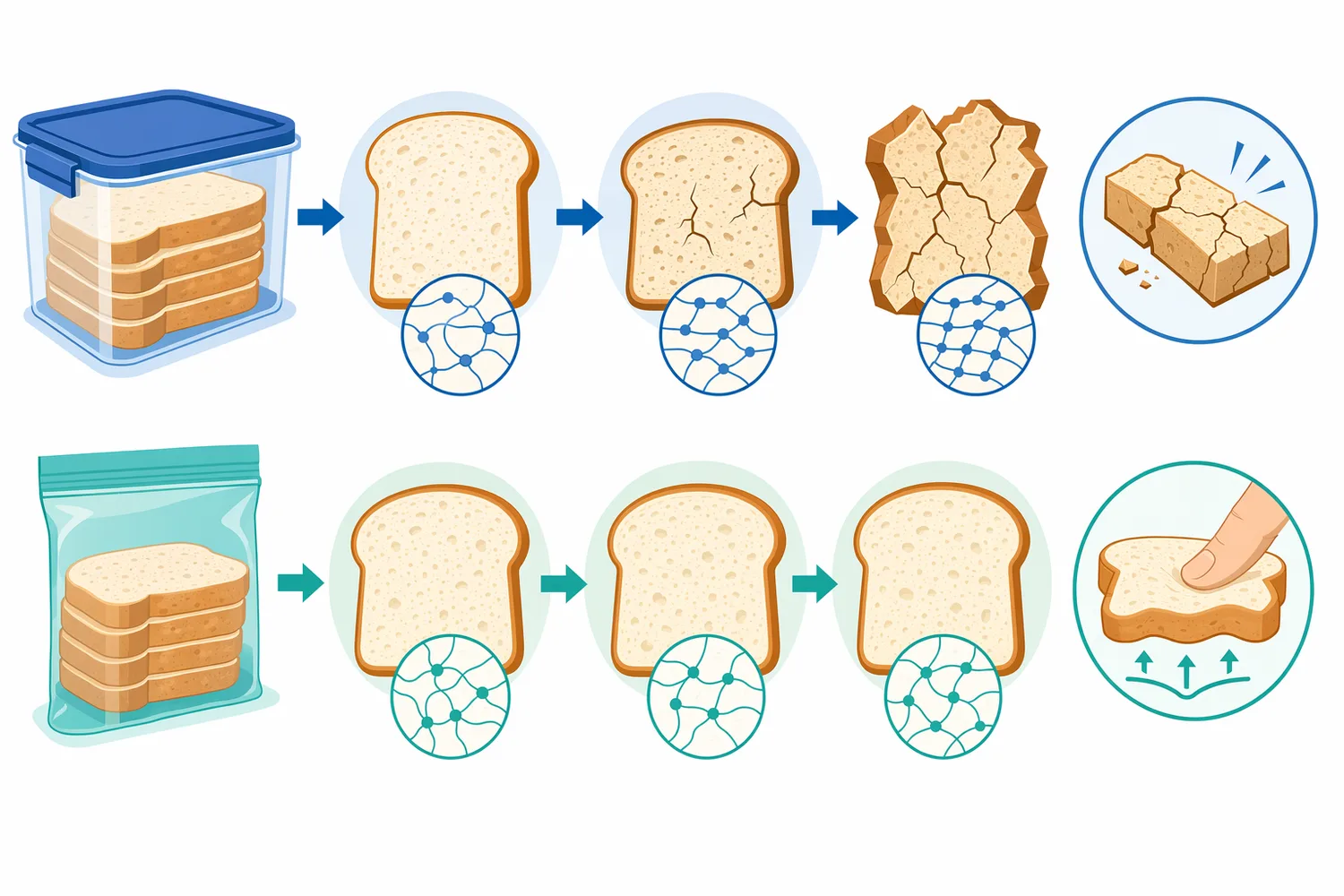
Bread staling is not simply “drying out.” Moisture migration matters, but a major driver of crumb firming is starch retrogradation, especially recrystallization of amylopectin in the cooked starch phase. After bread cools, starch molecules that were swollen and disrupted during baking gradually realign. As this crystalline order increases, the crumb becomes firmer, less elastic, and less pleasant to chew. Maltogenic amylase helps slow that change by trimming starch chains into forms that do not pack back together as efficiently.
During baking, flour starch absorbs water, swells, and gelatinizes as the dough temperature rises. Gelatinization opens the starch granule structure and makes starch polymers more accessible to amylase activity. Maltogenic amylase acts most usefully at this stage because the starch is no longer locked inside intact granules; it is exposed within the setting crumb structure.
The enzyme hydrolyzes starch chains and releases maltose and small starch-derived fragments. The practical effect is concentrated on the starch phase that will become the crumb’s structural background after baking. By shortening selected amylopectin side chains, maltogenic amylase reduces the ability of those chains to line up and form stable crystalline regions during storage. The resulting crumb usually feels softer and more resilient because the starch matrix develops less rigid internal ordering.
This mechanism is different from simply adding water or fat. Added moisture can improve initial softness, and fats or emulsifiers can change mouthfeel, but maltogenic amylase changes the molecular pathway of firming by altering the starch itself. The baked product can therefore show slower crumb hardening even when overall formulation and water level remain broadly similar.
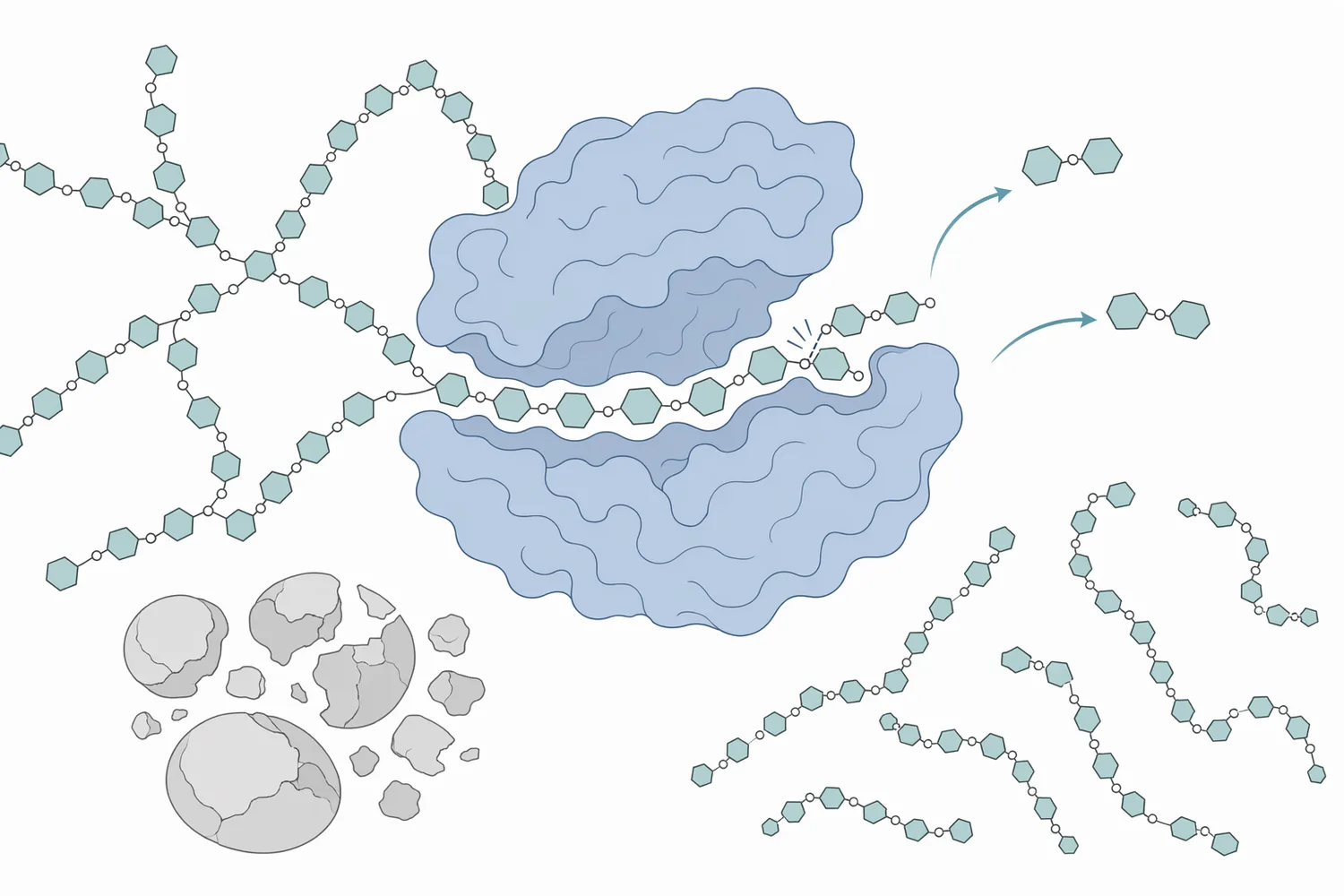
The enzyme’s effect is also different from that of gluten-strengthening improvers. Oxidizing agents, added gluten, or certain hemicellulases can influence dough tolerance, gas retention, and loaf volume. Maltogenic amylase primarily affects the post-bake starch network and the way that network evolves during storage. In a finished bread, that is why its benefits are usually seen most clearly in softness retention, slice feel, chewability, and reduced toughness rather than in dramatic dough-strengthening effects.
Freshly baked bread has a crumb structure made from gelatinized starch, denatured proteins, entrapped gas cells, and redistributed water. As the bread cools, amylose can retrograde relatively quickly, while amylopectin recrystallization continues more gradually over storage and is strongly linked with the familiar increase in crumb firmness. This is why bread can feel noticeably firmer one or two days after baking even when it has not visibly dried out or spoiled.
Amylopectin is a highly branched starch polymer. In the hot, hydrated crumb it is disordered, but over time its branch segments can reassociate into more ordered regions. These ordered regions act like reinforcing points in the crumb structure, increasing resistance when the crumb is compressed or chewed. Maltogenic amylase interferes with that process by producing shorter branch segments and small carbohydrates that are less able to participate in the same firming network.
The result is not an indefinite extension of freshness. All bread continues to change during storage, and microbial shelf life remains governed by water activity, sanitation, packaging, permitted preservatives, and storage conditions. Maltogenic amylase addresses the textural shelf life side: it helps bread remain softer and more elastic for longer before staling becomes objectionable.
Maltogenic amylase is often used alongside other bakery enzymes, but each enzyme class acts on a different substrate and produces a different quality effect. Understanding these differences helps frame maltogenic amylase correctly: it is primarily a starch anti-staling tool, not a universal dough improver.
| Enzyme type | Main bakery substrate | Main physical change | Typical quality contribution | Practical distinction |
|---|---|---|---|---|
| Maltogenic amylase | Gelatinized starch, especially amylopectin regions | Shortens starch chains and reduces recrystallization tendency | Softer crumb during storage, slower firming, improved freshness perception | Strongest value is post-bake anti-staling |
| Conventional alpha-amylase | Damaged and gelatinizing starch | Produces dextrins and fermentable sugars more readily | Can support fermentation, crust color, and volume when balanced | Excessive starch breakdown may create sticky crumb |
| Xylanase | Arabinoxylans in wheat flour cell-wall material | Modifies water-binding pentosans and dough viscosity | Can improve dough handling, gas retention, loaf volume, and crumb structure | Targets non-starch polysaccharides rather than starch retrogradation |
| Lipase-type enzymes | Flour and added lipids | Generates emulsifier-like lipid reaction products | Can support dough strength, crumb structure, and volume | Often used for structure and tolerance rather than direct starch anti-staling |
| Protease | Gluten proteins | Reduces protein network resistance | Can improve extensibility in selected doughs | Useful where relaxation is needed, but not a crumb-firming solution |
This comparison also shows why maltogenic amylase is frequently part of a broader improver system rather than the only functional ingredient. In weak flour, whole-wheat dough, high-fiber bread, or gluten-free formulas, texture depends on several structures at once: starch gel, protein network, fiber or arabinoxylan phase, emulsified fat, and trapped gas cells [1]. Maltogenic amylase contributes strongly to starch-related freshness, while other ingredients may be responsible for dough tolerance, extensibility, or volume.
The most relevant evidence for maltogenic amylase in baking concerns crumb firming and starch retrogradation. Studies of starch-affecting anti-staling agents in bread show that modifying the starch phase is a recognized route for managing firmness in both freestanding and pan-baked formats. This aligns with the practical use of maltogenic amylase in products where the consumer judges quality after the bread has cooled, been packed, stored, and handled.
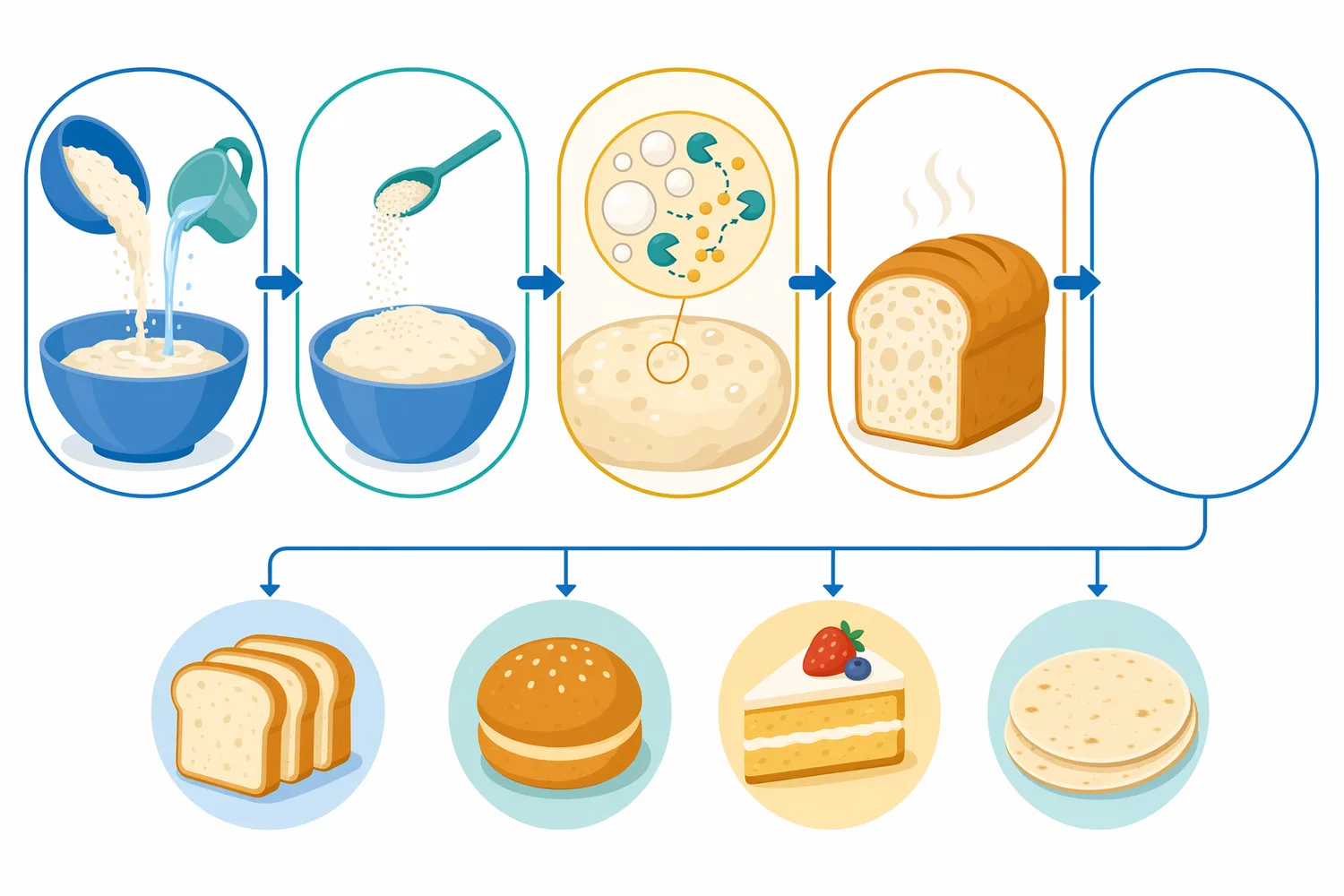
Industry and technical bakery literature consistently describe maltogenic amylase as a freshness enzyme that delays staling by changing starch behavior rather than by acting as an antimicrobial preservative. The distinction matters for product positioning. A loaf treated with maltogenic amylase may retain a softer crumb texture longer, but mold control and microbial shelf life still require appropriate formulation, hygiene, packaging, and storage conditions.
Research on enzyme-based baking systems also supports the idea that different enzymes improve different parts of bread quality. Wheat arabinoxylanase work, for example, shows how modification of arabinoxylans can influence gluten matrix development and bread quality through changes in water distribution and dough structure [1]. That is a separate mechanism from maltogenic amylase, but it supports a broader principle familiar in modern baking: enzyme systems can be designed around specific substrates in flour.
In gluten-free systems, starch plays an even more central role because there is no wheat gluten network to provide elastic structure. Work on amylolytic enzyme treatment in rice-flour-based gluten-free bread found increased accumulation of mono- and disaccharides, support for fermentation-related processes, and improved gas production in dough [2]. That evidence does not mean maltogenic amylase alone creates gluten-like structure; rather, it shows why starch-active enzymes are relevant in gluten-free bread systems where starch gelatinization, gas retention, and crumb setting must be carefully balanced.
Packaged sliced bread is one of the clearest applications for maltogenic amylase because the product is rarely eaten immediately after baking. The softness experienced by the consumer may be judged after cooling, slicing, bagging, transport, and one or more days of storage. Since amylopectin recrystallization is a major contributor to crumb firming during that period, an enzyme that slows starch retrogradation directly addresses a key quality loss pathway.
In pan bread, the desired crumb is usually fine, uniform, compressible, and resilient. Maltogenic amylase supports these qualities by helping the starch phase remain less rigid during storage. The enzyme does not create the crumb cell structure by itself; mixing, proofing, gluten development, and baking still determine the basic architecture. Its contribution is most visible after baking, when treated bread firms more slowly than an untreated equivalent.
Burger buns, hot-dog rolls, dinner rolls, and sandwich carriers must stay soft while also tolerating slicing, bagging, stacking, and filling. A bun that becomes tough or dry-feeling can fail in use even if it remains microbiologically safe. Maltogenic amylase is commonly used in these products because it helps preserve the soft bite and compressibility associated with fresh bread.
In sandwich carriers, resilience matters as much as softness. The crumb must compress when bitten but recover enough to avoid a dense or pasty eating sensation. By reducing starch recrystallization, maltogenic amylase helps limit the transition from soft crumb to stiff crumb during storage. This is especially useful where buns or rolls are baked centrally and consumed later through retail, foodservice, or prepared-meal channels.
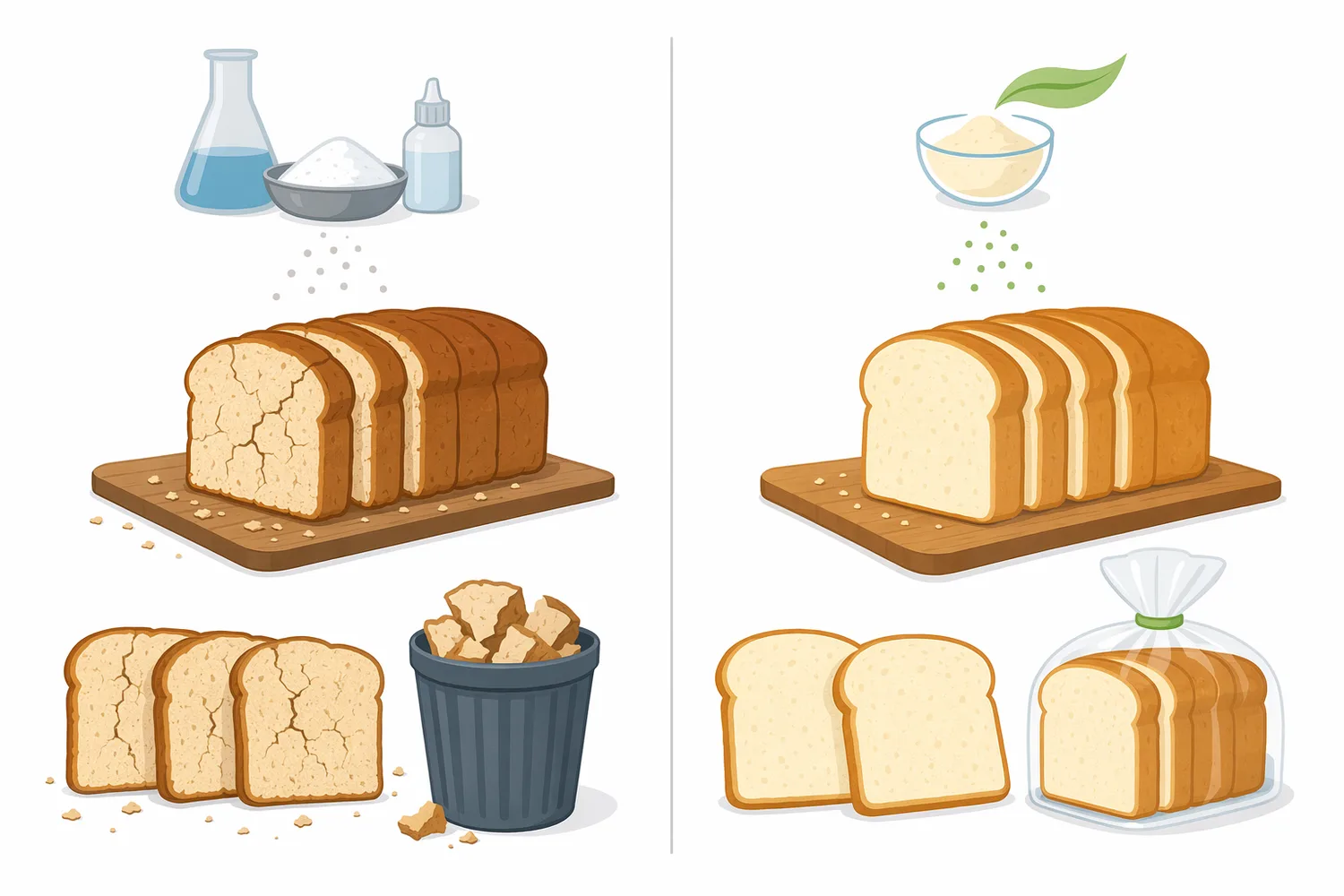
Toast bread and soft rolls often rely on a delicate balance: the crumb should be tender and uniform but still sliceable and not gummy. Maltogenic amylase supports this by controlled modification of the starch network rather than wholesale starch breakdown. The desired outcome is slower firming and a more pleasant bite, not a wet or sticky crumb.
Because these products may be reheated or toasted before consumption, texture perception can shift again at the point of eating. A crumb that has firmed strongly during storage can toast dry and brittle, while a crumb with slower starch retrogradation tends to retain a more balanced bite. Maltogenic amylase contributes to that stored-product quality by acting earlier, during the bake and subsequent cooling stages.
Flatbreads lose quality when they become brittle, crack on folding, or develop a dry, leathery bite. Starch retrogradation and moisture redistribution are central to this loss of pliability. Maltogenic amylase is relevant because it modifies the starch phase that contributes to stiffening after baking.
In flatbread systems, the benefit is usually described as improved flexibility and reduced toughening during storage. The mechanism is still starch-based: shorter starch chains and altered amylopectin behavior reduce the formation of a rigid internal network. Processing, packaging, and moisture control remain important, but maltogenic amylase can help the product remain foldable and softer for longer.
Sweet doughs, enriched breads, cakes, and muffins contain sugar, fat, and other ingredients that already influence softness and water mobility. Maltogenic amylase can still be useful where starch retrogradation contributes to firmness during storage. In these products, the enzyme’s role is not to replace shortening, emulsifiers, or humectants; it adds a starch-modification pathway that can complement those ingredients.
Performance in enriched systems depends on the full formula because sugar competes for water, fats affect crumb tenderness, and emulsifiers interact with starch and protein phases. Even so, the same core principle applies: when starch gelatinizes and later attempts to recrystallize, maltogenic amylase can reduce that recrystallization tendency. The result can be a softer eating texture over the intended holding period.
Gluten-free bread depends heavily on starches, hydrocolloids, proteins, emulsifiers, and process control because it lacks the viscoelastic gluten network of wheat dough. Amylolytic enzymes can support sugar formation and fermentation activity in rice-flour systems, but they must work within a broader structure-building formulation [2]. Maltogenic amylase is therefore best viewed as one useful component, not a complete solution to gluten-free bread quality.
In gluten-free applications, too much starch breakdown can be especially problematic because the starch phase is often the main structural body of the product. Controlled action is the objective. When balanced correctly, starch-active enzymes can help improve gas production, crumb setting, and softness, while other ingredients provide the elastic or gel-like structure that gluten would normally supply [2].
Maltogenic amylase performance depends on the food system around it. Flour type, damaged starch level, water absorption, dough yield, fermentation time, baking profile, sugar level, fat level, and the presence of other enzymes all affect how much starch becomes accessible and how the finished crumb behaves. The enzyme’s practical value appears only after it has access to a suitable starch substrate during heating.
Water distribution is especially important. If starch does not hydrate adequately, gelatinization and enzyme accessibility are limited; if the system is too wet or too heavily hydrolyzed, the crumb can become sticky or weak. Recent dough research continues to show that moisture distribution and temperature history can drive major differences in dough sheet extensibility and final texture [3]. For maltogenic amylase, that reinforces the need to understand its effect as part of the whole baking process rather than as an isolated additive.
Whole-wheat and higher-fiber products add another layer of complexity. Bran and fiber fractions compete for water, interrupt gluten development, and change the physical continuity of the dough. Enzymes such as xylanases may be used to modify arabinoxylans and improve gluten matrix development, while maltogenic amylase addresses starch retrogradation after baking [1]. These functions can complement each other because they target different components of the flour system.
Resting, fermentation, and dough handling can also influence enzyme outcomes. Research on noodle systems has shown that staged resting can regulate product quality through coupled effects involving moisture distribution, stress relaxation, gas elimination, and modulation of enzymatic activity [4]. Although noodles are not bread, the principle is relevant to dough processing: enzyme performance is tied to time, hydration, mechanical history, and the physical state of the substrate.
Maltogenic amylase is not an antimicrobial preservative. It does not prevent mold growth, eliminate the need for hygienic production, or replace appropriate packaging and storage controls. Its primary effect is on textural staling, especially starch-driven crumb firming. A bread can remain soft yet still require separate measures for microbial shelf life.
It is also not primarily a dough-strengthening enzyme. If a formulation needs more mixing tolerance, stronger gas retention, or improved gluten network development, other ingredients or enzymes may be involved. Xylanases, for example, act on arabinoxylans and can influence dough structure and loaf quality through a different substrate pathway [1]. Maltogenic amylase should be understood as a starch freshness tool rather than a universal correction for weak dough.
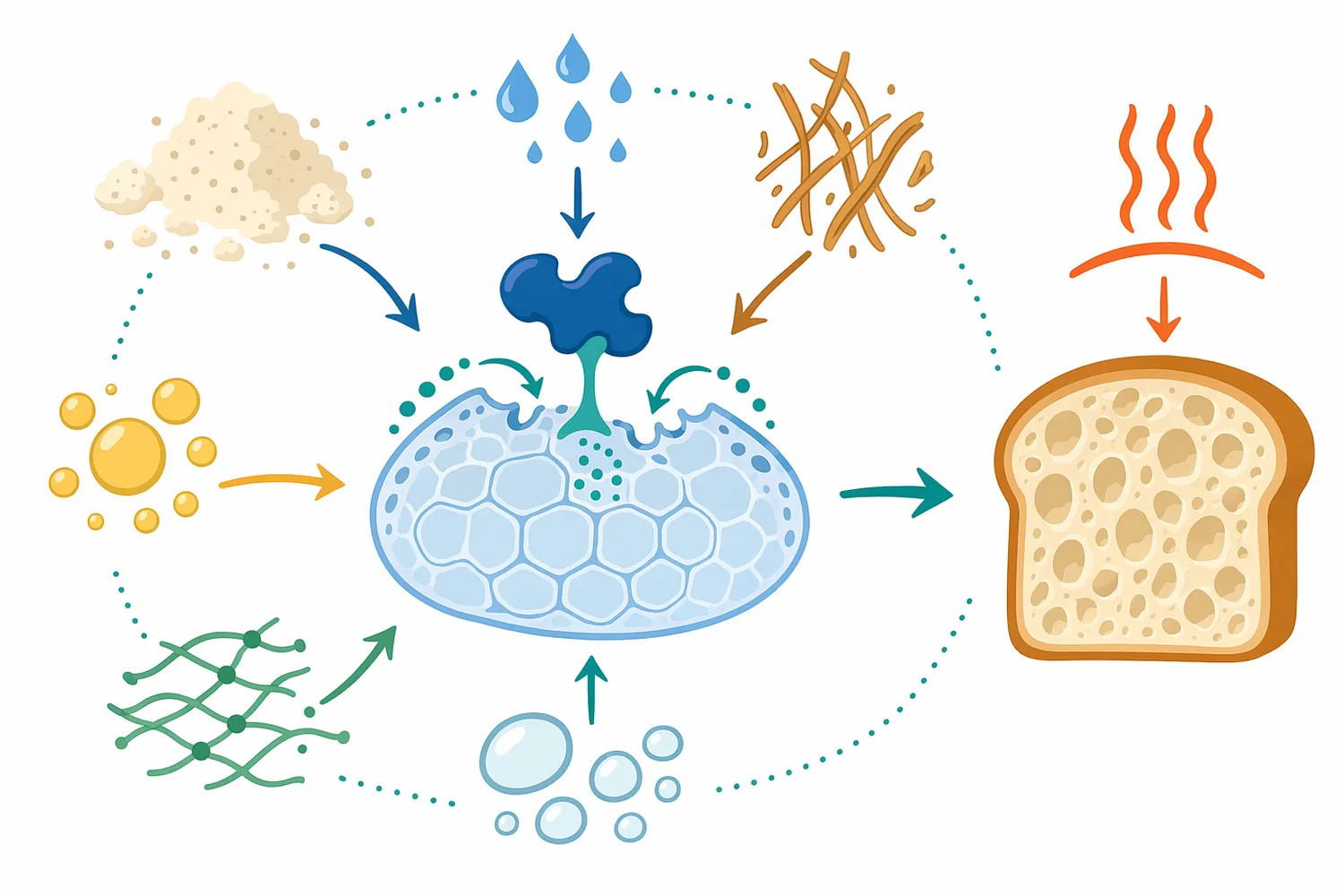
Nor is the objective maximum sugar production. Conventional amylases can be used to increase fermentable sugars and support yeast activity or crust color, but maltogenic amylase is mainly valued for the way it changes starch retrogradation after baking. If starch is degraded too aggressively in a bread system, the crumb may become sticky, gummy, or difficult to slice. The desired effect is controlled modification, not excessive hydrolysis.
The most direct quality benefit is slower crumb firming. In practical terms, the bread compresses more easily, feels less tough, and maintains a fresher bite during storage. This is why maltogenic amylase is commonly associated with “softness retention” rather than immediate oven-spring or dough-handling claims.
A second benefit is improved freshness perception. Consumers often judge freshness by touch, slice flexibility, chew, and the absence of dry or leathery texture. Because maltogenic amylase slows starch recrystallization, it can help preserve those sensory cues even when the product has been stored beyond the first day. This is particularly valuable for packaged bread and buns where distribution time is built into the product model.
A third benefit is reduced texture-related waste. Bread may be discarded because it feels stale before it is microbiologically spoiled. Enzyme-based freshness systems can help reduce that avoidable quality loss by slowing the physical changes that make bread unacceptable to eat. This supports both product consistency and sustainability goals, especially where baked goods move through centralized production and delayed consumption.
Bakery enzymes are widely used because they act during processing and can deliver functional effects at low inclusion levels compared with many traditional chemical conditioners. Enzyme-based systems are also associated with cleaner-label formulation strategies, since enzymes can help replace or reduce certain chemical additives while still supporting product quality. Maltogenic amylase fits this trend because it addresses a specific and well-understood quality problem: starch-driven staling.
Clean-label value, however, should be described carefully. Maltogenic amylase is a processing aid or ingredient depending on market rules and formulation context, and labeling requirements vary by jurisdiction. Its technical benefit remains the same: it modifies starch during baking so the finished crumb firms more slowly. Buyers should interpret clean-label relevance according to their own product category and regulatory market.
Enzyme combinations are common in commercial baking because flour is a complex biological material rather than a single purified substrate. A bread improver system may include enzymes acting on starch, arabinoxylans, lipids, or proteins, each changing a different part of the dough or crumb structure [1]. Maltogenic amylase contributes the starch anti-staling function within that broader toolkit.
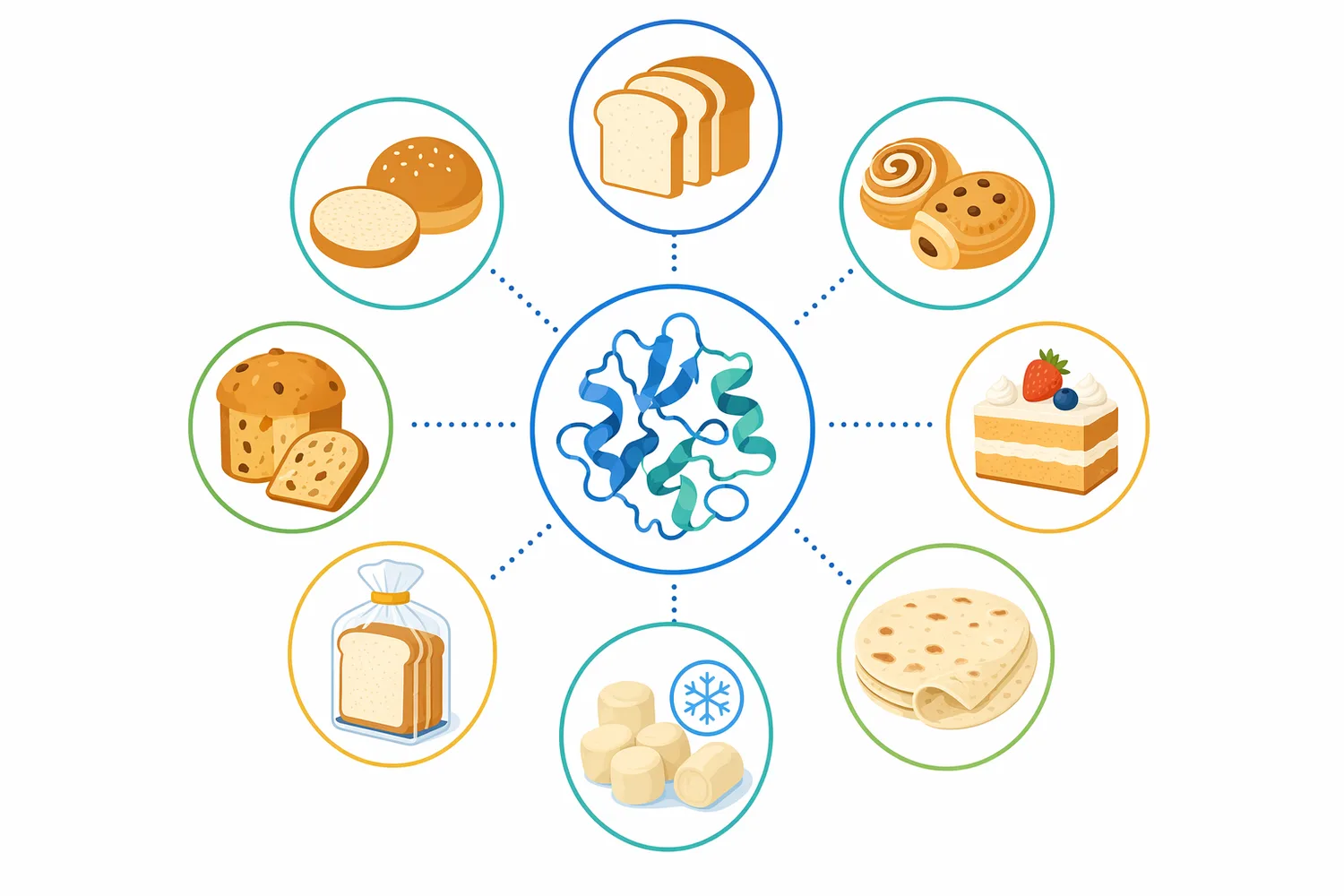
Maltogenic Amylase Powder is most relevant where the finished product contains gelatinized starch and where crumb or sheet softness during storage is important. That includes packaged sliced bread, pan bread, sandwich bread, buns, rolls, soft rolls, toast bread, tortillas, flatbreads, enriched breads, and selected sweet bakery products. It is also relevant to gluten-free development where starch functionality is central, although it must be balanced with the structure-building system used in the formula.
The enzyme is especially useful when the main complaint is “firm too soon,” “dry-feeling crumb,” “loss of softness,” or “reduced foldability after storage.” These are starch-retrogradation symptoms, even when moisture migration and packaging also contribute. Maltogenic amylase addresses the starch side of the problem by reducing the tendency of amylopectin branches to recrystallize into a firmer network.
Where the issue is primarily weak dough, poor gas retention, low volume, tearing, or poor machinability, maltogenic amylase may still be part of the formulation but is not the main mechanism. Those problems often involve gluten quality, fiber interactions, water distribution, or dough rheology [3]. In such cases, the enzyme’s contribution remains softness retention after baking rather than direct correction of all processing defects.
Enzymes.bio supplies Maltogenic Amylase Powder for bakery use directly online by the 1 kg unit. Buyers can add the product to cart, pay online, and the order is processed and shipped. A Certificate of Analysis and Safety Data Sheet are included with the order.
For bakery teams working on bread softness, bun freshness, flatbread flexibility, or improved eating quality after storage, Maltogenic Amylase Powder is best understood as a targeted starch-modifying enzyme. It helps reduce crumb firming by acting on gelatinized starch during baking and slowing amylopectin recrystallization during storage.
The practical takeaway is straightforward: maltogenic amylase is not a preservative, not a universal dough strengthener, and not a substitute for sound processing. It is a specialized anti-staling enzyme for baked goods where controlled starch modification can help the finished product remain softer, more resilient, and more appealing over its intended storage period.
Sold by the 1 kg unit, in stock and ready to ship. Order directly on our store — pay online and we process your order. A Certificate of Analysis and Safety Data Sheet are included with every order.
Buy Dough Improver Enzyme - Maltogenic Amylase Powder 1000,000U/G Cas 9000-92-4 →Numbered in order of first citation. Open-access sources, each verified reachable at publication; citation numbers in the text link here.