
Feed Grade Alkaline Protease for Fermented Soybean Meal is used to help break down soybean meal proteins during fermentation or enzyme-assisted pre-treatment. Its practical value is that it converts part of the large, less accessible soybean protein fraction into smaller peptides and soluble nitrogen compounds, while supporting the reduction of antigenic and anti-nutritional protein components associated with untreated soybean meal.
For buyers using fermented soybean meal in feed production, alkaline protease is best understood as a processing enzyme: it does not replace fermentation management, but it can strengthen the proteolysis step that makes fermented soybean meal different from ordinary soybean meal. Enzymes.bio supplies this feed-grade enzyme directly online by the 1 kg unit; customers purchase and pay online, and the order is processed and shipped with a Certificate of Analysis and Safety Data Sheet included.
Feed Grade Alkaline Protease is a protein-hydrolyzing enzyme intended for feed-related processing where soybean meal is being fermented, partially digested, or upgraded before use in animal diets. “Alkaline protease” describes a protease that performs in neutral-to-alkaline processing environments rather than only under strongly acidic conditions; this matters because many Bacillus-associated and mixed-culture fermentation systems can generate active proteolysis before the substrate becomes more acidic [1].
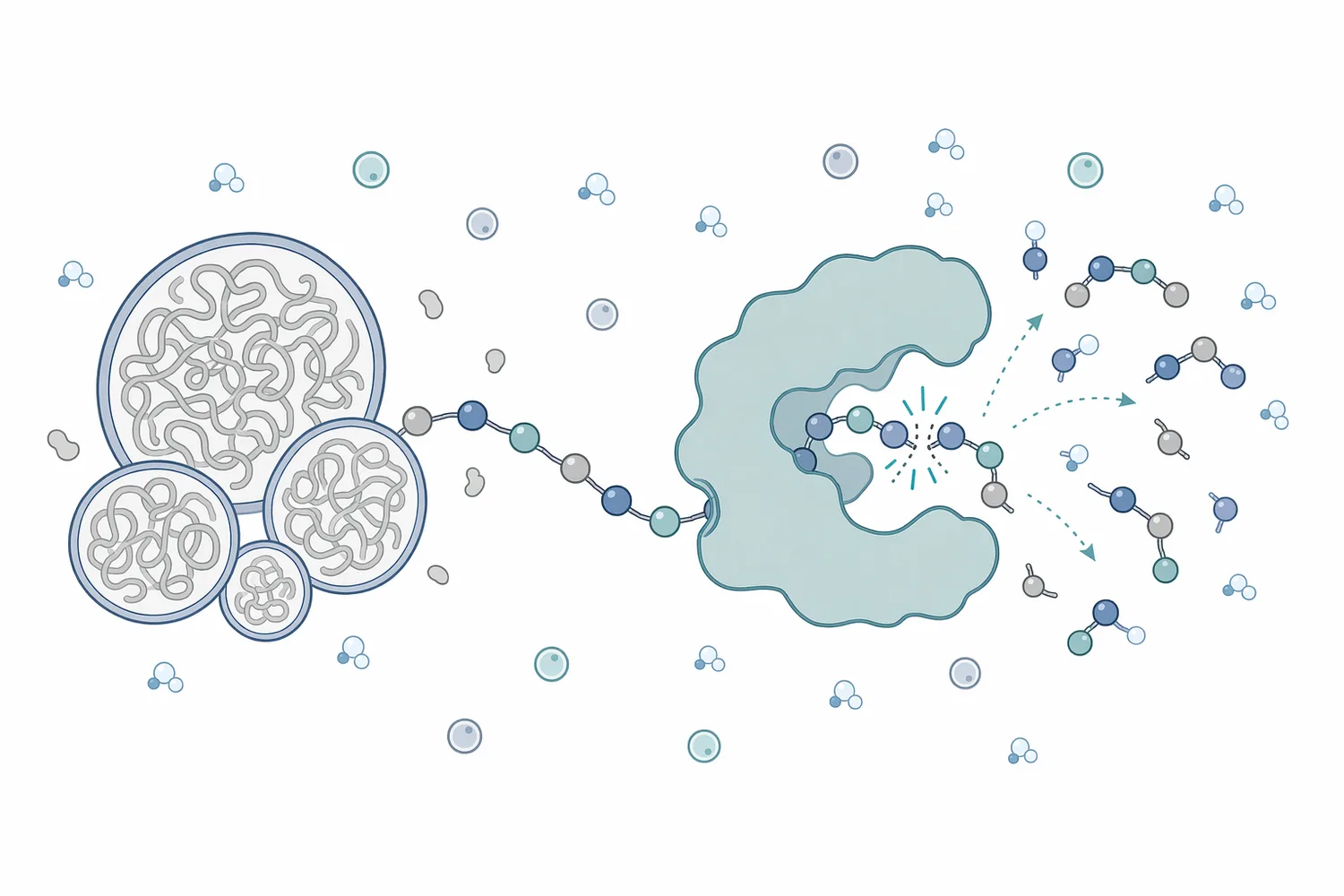
In fermented soybean meal production, the enzyme’s job is not to create protein from nothing or simply “increase crude protein.” Its direct biochemical function is to cleave peptide bonds inside soybean proteins. When those bonds are cut, compact storage proteins and other protein bodies are converted into shorter peptides, more soluble fragments, and amino-acid-containing fractions that are more accessible during subsequent animal digestion.
This is why protease is so relevant to soybean meal. Soybean meal is already protein-rich, but a portion of that protein exists in forms that are difficult for young animals or sensitive species to utilize efficiently. Fermentation and protease-assisted treatment are used because the value of fermented soybean meal depends heavily on what happens to the protein structure, not only on total nutrient analysis.
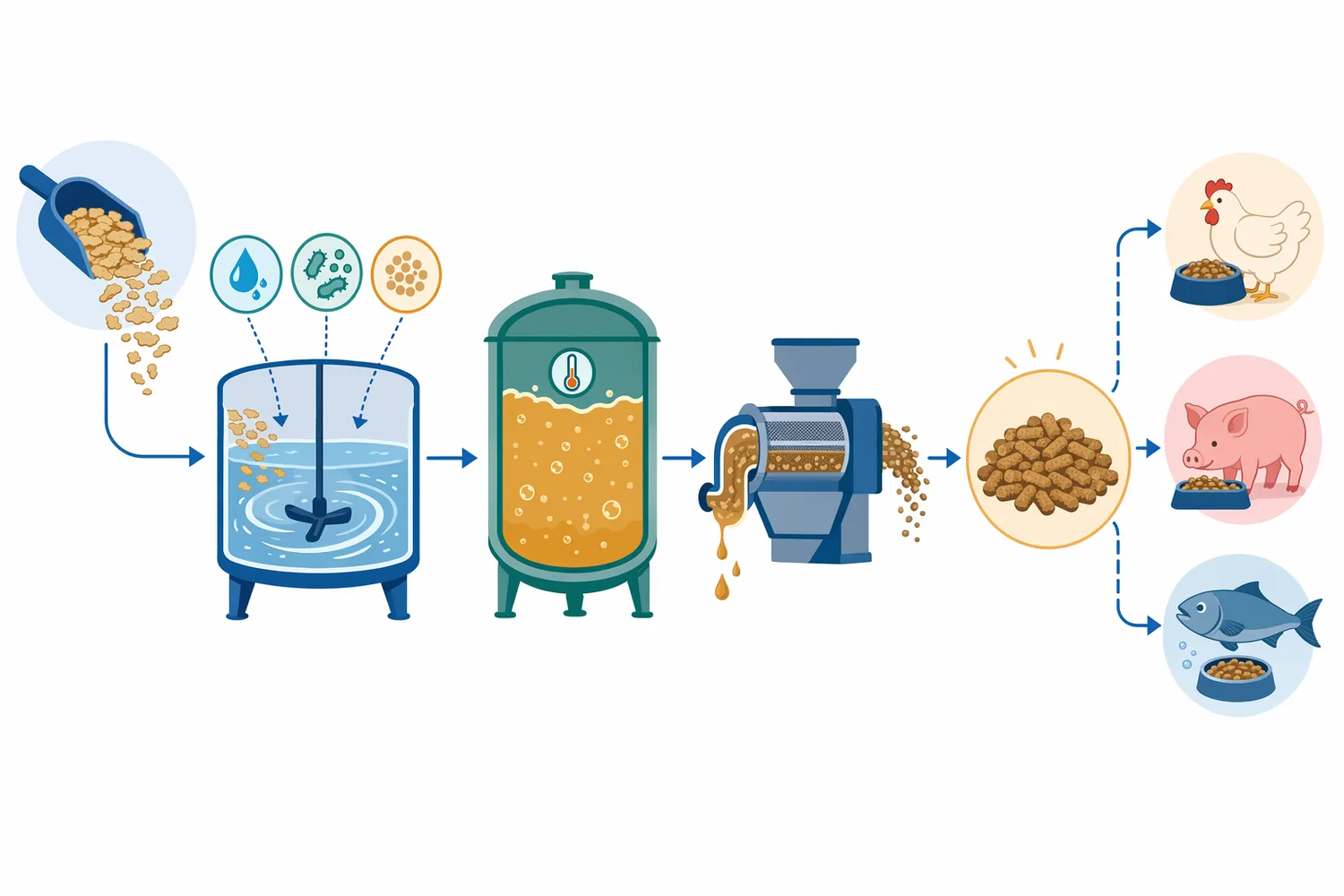
Alkaline protease should therefore be viewed as a functional processing aid within a complete soybean meal fermentation system. It works alongside moisture adjustment, microbial growth, substrate mixing, temperature control, fermentation time, drying, and post-process handling. The strongest fermented soybean meal studies treat protease activity as one of the central drivers behind higher small-peptide content and lower levels of intact anti-nutritional proteins.
Soybean meal is one of the most widely used plant protein ingredients in feed because it is abundant, nutritionally useful, and typically more economical than many animal-derived protein sources. Its limitation is that untreated soybean meal also contains anti-nutritional components, including protease inhibitors, antigenic storage proteins, oligosaccharides, phytate-associated effects, and other compounds that can interfere with digestion or gut comfort depending on species and age.
The protein fraction is especially important. Soybean storage proteins such as glycinin and β-conglycinin are large, structured proteins that can remain partly intact when the material is not sufficiently processed. In sensitive animals, intact antigenic proteins are associated with lower protein digestibility and intestinal stress, which is why many fermented soybean meal processes specifically aim to reduce these fractions rather than simply fermenting the substrate for flavor or preservation.
Protease-assisted fermentation targets this issue at the molecular level. The enzyme opens the protein structure by hydrolyzing peptide bonds, creating more cleavage sites and smaller fragments. As the substrate is transformed, protein that was previously held in larger insoluble or antigenic structures can shift toward soluble protein, peptides, and free amino nitrogen that are easier for endogenous digestive enzymes to access later in the animal.
Fermentation adds another layer to this transformation. Microorganisms can produce their own proteases, consume certain sugars, acidify the substrate, produce metabolites, and change the physical texture of the meal. When exogenous protease is used in a compatible process, it supplements the proteolytic capacity of the fermentation and can help make the protein breakdown step more consistent than relying only on naturally produced microbial enzymes.
The action of alkaline protease can be understood by looking at soybean meal as a dense protein matrix. Before treatment, soybean proteins are arranged in folded structures and aggregates. Some are embedded within particles, associated with carbohydrate and mineral fractions, or protected by the physical structure of the meal. This makes them less immediately accessible to digestive enzymes and to microbial enzymes during fermentation.
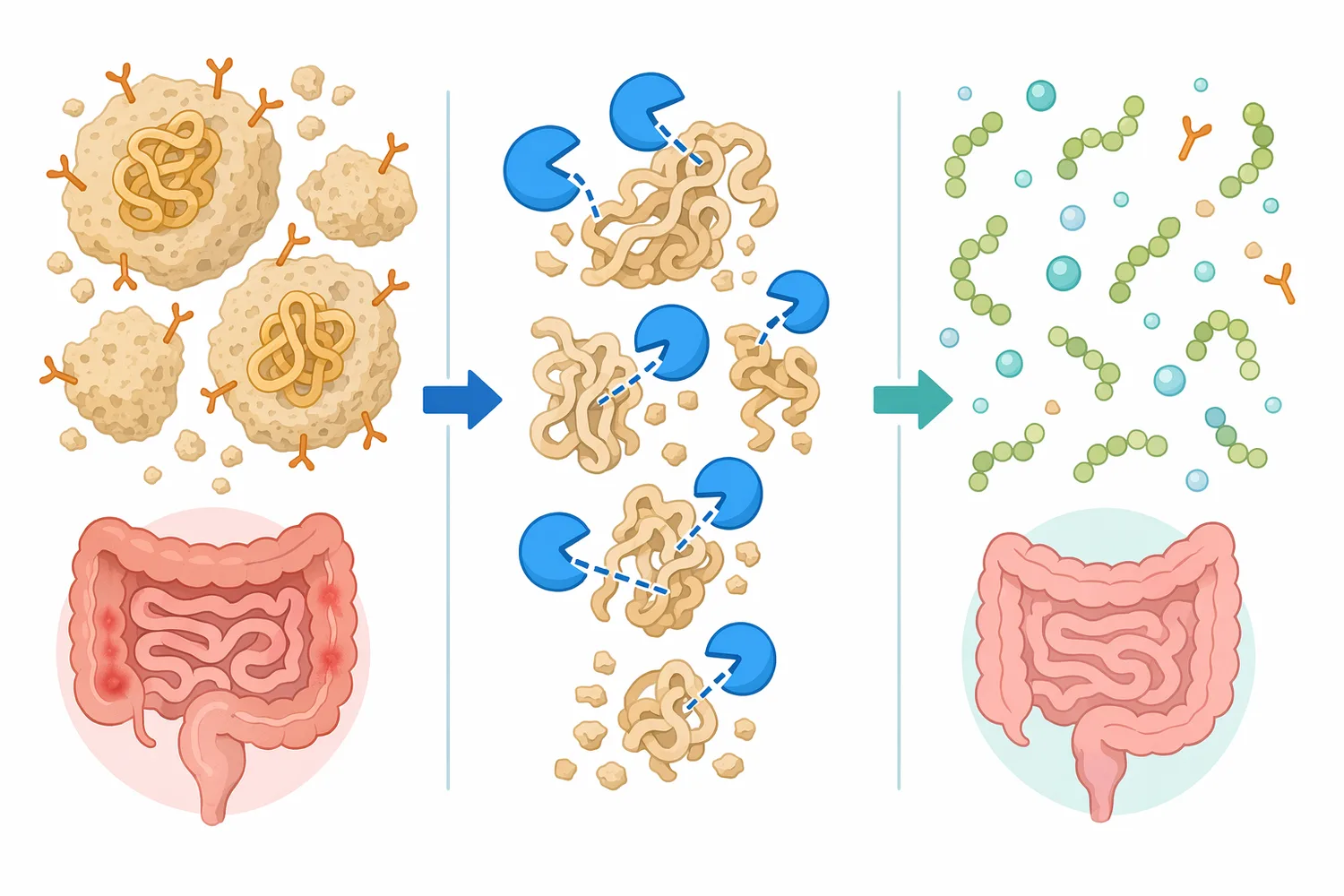
When alkaline protease is added under suitable processing conditions, it attacks exposed peptide bonds on protein surfaces first. These initial cuts loosen the folded structure, exposing additional internal bonds. As hydrolysis proceeds, large proteins are progressively converted into medium-sized peptides, then smaller peptides, and in some cases free amino acids or short nitrogen-containing fragments.
This structural change explains several practical observations in fermented soybean meal. Smaller peptides tend to disperse more easily in the aqueous phase of a moist fermentation substrate. More soluble nitrogen can become available for microbes, which may further influence fermentation kinetics. At the same time, the reduction of intact glycinin and β-conglycinin lowers the amount of antigenic protein that remains in the finished material.
The mechanism is selective in the sense that protease acts on peptide bonds, but it is not selective in the way an antibody or receptor is selective. It does not “recognize” only one soybean allergen and ignore everything else. Instead, the final pattern of hydrolysis depends on the exposed protein structure, enzyme access, pH, water availability, temperature, fermentation time, and the activity of microbial proteases already present in the system.
For feed processing, the target is controlled hydrolysis rather than complete digestion. A useful fermented soybean meal still needs to retain nutritional protein value. The goal is to reduce large, difficult, or antigenic proteins and increase digestible peptide fractions, not to over-degrade the substrate into a poorly controlled nitrogen source with avoidable losses or undesirable sensory changes.
Different proteases can be useful in feed processing, but they are not interchangeable in every fermentation system. The main distinction is the processing environment in which they remain effective and the stage of fermentation where they are most likely to contribute.
| Protease type | Typical processing fit | Practical role in protein hydrolysis | Relevance to fermented soybean meal |
|---|---|---|---|
| Acid protease | More active in acidic environments that may develop after lactic or fungal fermentation progresses | Supports protein hydrolysis when the substrate has already shifted toward lower pH | Useful in processes designed around acid-stage fermentation or acid-producing cultures |
| Neutral protease | Works best around near-neutral conditions | Can support early or moderate hydrolysis before strong acidification | Relevant where fermentation remains close to neutral for a meaningful portion of the process |
| Alkaline protease | Suited to neutral-to-alkaline or mildly alkaline processing windows | Breaks down storage proteins and protein aggregates before or during compatible fermentation stages | Particularly relevant for Bacillus-associated or enzyme-assisted pre-treatment systems where proteolysis occurs before strong acidification [1] |
This comparison helps explain why alkaline protease is often discussed alongside Bacillus fermentation and industrial feed processing. Bacillus species are widely studied for alkaline protease production, and isolates from fermented foods and other environments are often screened specifically for their ability to produce robust proteases under less acidic conditions [1].
It also explains why a protease should be aligned with the intended process concept. A process that depends on early protein hydrolysis before substantial acidification may benefit from alkaline protease activity, while a process driven by late-stage acidic fermentation may rely more heavily on acid protease. In many practical fermentations, microbial ecology changes over time, so the total proteolytic outcome reflects the sequence of conditions rather than a single static pH value.
The strongest application evidence comes from fermented soybean meal research showing that protease activity is closely linked with improved compositional quality. Studies of soybean meal fermentation report increases in small peptides and soluble protein fractions together with reductions in anti-nutritional protein components when microbial proteolysis and added protease are integrated into the process.
One-step mixed-culture fermentation work has specifically emphasized the role of protease activity in converting soybean meal into a more digestible ingredient. In these systems, proteolysis is not a secondary side effect; it is one of the main biochemical routes by which the feed ingredient is upgraded. The reported outcomes include greater small-peptide formation and reduced levels of antigenic soybean proteins.
Research also shows that the finished quality of fermented soybean meal depends on the fermentation design, not on the presence of one enzyme alone. Microbial strains, substrate moisture, fermentation duration, pH development, and post-fermentation treatment all influence how completely proteins are hydrolyzed and how much intact anti-nutritional material remains.
This point is important for responsible use. Alkaline protease can support protein hydrolysis, but it is not a standalone guarantee that every fermented soybean meal batch will have the same peptide profile or animal-response outcome. The enzyme contributes a defined biochemical action; the finished ingredient reflects the total processing system.
Alkaline proteases from Bacillus species are widely studied because they are extracellular enzymes, meaning the microorganism secretes them into the surrounding medium where they can contact protein substrates. This is useful in fermentation and feed processing because the enzyme does not need to remain trapped inside microbial cells to act on soybean meal particles [2].
Bacillus amyloliquefaciens and related Bacillus strains are frequently screened for alkaline protease production in fermented foods and other protein-rich environments. For example, thermotolerant and osmotolerant Bacillus amyloliquefaciens isolated from kinema, a traditional fermented soybean food, has been studied for alkaline protease production, showing why soybean-associated fermentations are a logical source context for protease-active microbes [1].
Other Bacillus alkaline proteases have been evaluated for industrial stability and practical protein-degradation applications. Bacillus licheniformis proteases, for instance, are well known in alkaline protease research because they can function under demanding processing conditions and have been characterized for kinetic and thermodynamic behavior in applied systems [3].
Although not every Bacillus protease study is a fermented soybean meal study, the broader enzyme literature supports the same mechanism: alkaline proteases hydrolyze proteinaceous substrates under process conditions that are often too alkaline for acid proteases. This makes them useful in feed, food-processing, by-product valorization, and other applications where large proteins need to be converted into smaller, more soluble fragments [4].
A major reason for using protease in fermented soybean meal is the reduction of intact proteinaceous anti-nutritional factors. Soybean meal contains protease inhibitors and antigenic proteins that can interfere with normal digestion or create nutritional stress, especially in young animals with less mature digestive capacity.
Plant protease inhibitors are a defense mechanism in many plant seeds and tissues. Their biological role is to inhibit proteolytic enzymes in herbivores and pests, but in feed they can also interfere with digestive protease function if not sufficiently inactivated or reduced by processing [5].
Protease-assisted fermentation addresses a different part of the problem: it breaks down protein structures that remain nutritionally undesirable when intact. Glycinin and β-conglycinin are common targets because they are abundant soybean storage proteins and are frequently used as markers for antigenic protein reduction in fermented soybean meal research.
The mechanism is physical and biochemical rather than vague “detoxification.” When peptide bonds in these proteins are cleaved, the original three-dimensional epitopes and large storage-protein structures are disrupted. As fragments become smaller, they are less likely to behave like the intact antigenic proteins present in untreated soybean meal.
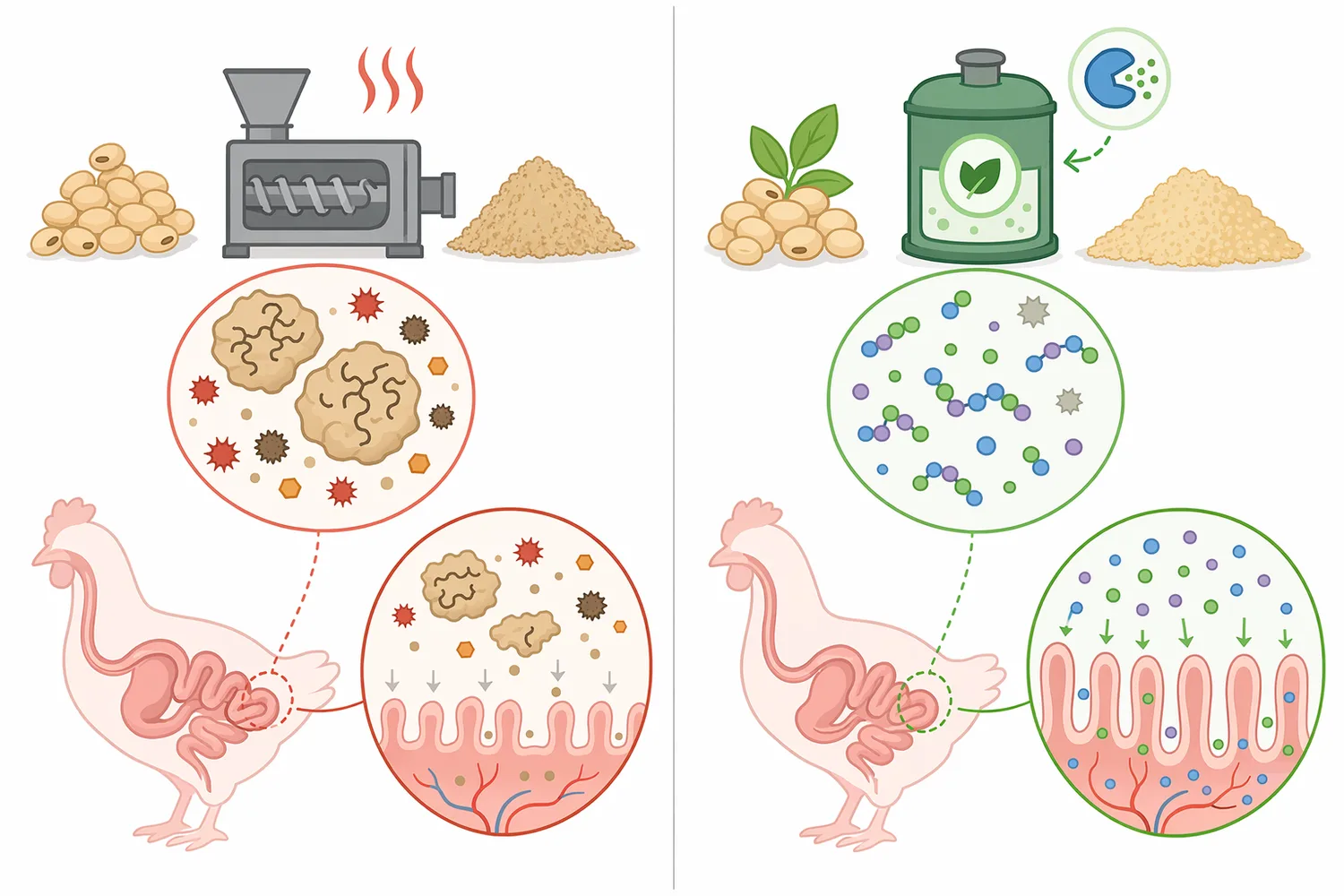
This is why small-peptide formation and antigenic-protein reduction are often evaluated together. A process that produces more small peptides has usually carried hydrolysis further than a process that leaves the large proteins mostly intact. However, complete elimination is not the necessary or realistic goal in ordinary feed processing; the relevant target is meaningful reduction within a controlled nutritional process.
Protease action changes not only the size of protein molecules but also their behavior in water. Intact soybean proteins may be poorly soluble depending on heat history, pH, particle size, and aggregation. Once hydrolyzed, many fragments expose charged and polar groups that interact more readily with water, increasing soluble nitrogen and peptide fractions.
This matters during fermentation because microbial metabolism occurs in the moist phase. If more nitrogen is available as soluble peptides and amino-acid-containing fragments, microbes can access it more readily, which may influence growth and metabolite formation. The substrate becomes less like a dry protein storage matrix and more like a partially hydrolyzed nutrient system.
It also matters during animal digestion. Animals still rely on their own digestive enzymes, but pre-hydrolyzed protein can reduce the amount of work needed to access peptide bonds buried inside intact storage proteins. Dietary protease studies in aquaculture and livestock contexts support the principle that exogenous protease can influence protein digestion and endogenous protease responses, although final outcomes depend on species, diet design, and processing history [6].
Fermented soybean meal is therefore valued not because fermentation magically improves every nutrient, but because it changes the form in which nutrients are present. Protease converts a portion of the protein into a form that is generally more accessible and less antigenic, while the fermentation system can also influence flavor, microbial metabolites, and non-protein anti-nutritional factors.
In practical fermented soybean meal production, alkaline protease may be used during a pre-treatment step before fermentation, during the early fermentation phase, or as part of a mixed enzyme-and-microbe process. The common requirement is that the enzyme has access to hydrated soybean meal protein at a stage when the process environment allows meaningful proteolysis.
Moisture is critical because proteases act in an aqueous phase. Dry soybean meal does not allow enzyme molecules to diffuse efficiently to protein surfaces. Once hydrated, the meal particles swell, soluble fractions mobilize, and the enzyme can contact exposed protein structures. This is why fermentation systems usually begin with controlled water addition or substrate conditioning.
Temperature and time affect hydrolysis because enzymes are proteins with finite stability and reaction rates. Within a compatible processing window, more contact time generally allows more peptide-bond cleavage, but the relationship is not unlimited. After accessible sites are hydrolyzed, further reaction may slow; excessive holding can also allow undesirable microbial or sensory changes if the fermentation system is not well managed.
pH changes are also central. Alkaline protease contributes most when the process remains in a neutral-to-alkaline range long enough for the enzyme to work. If acid-producing organisms rapidly lower the pH, alkaline protease may contribute mainly during the early stage, while acid-tolerant microbial or added proteases may dominate later.
This staged view helps explain why alkaline protease is particularly useful in systems involving Bacillus or enzyme-assisted pre-hydrolysis. Bacillus organisms are associated with extracellular protease production and protein-rich fermentations, including soybean-related fermented foods, and their proteolytic activity is one reason they are studied for feed-substrate upgrading [1].
Fermented soybean meal is used in feed systems where protein digestibility, palatability, and anti-nutritional factor reduction are valuable. This includes young pigs, poultry, aquaculture diets, and other formulations where untreated soybean meal may be nutritionally useful but not optimal at higher inclusion levels or in sensitive life stages.
Protease-assisted processing is especially relevant where the finished ingredient is expected to provide a higher proportion of peptides and a lower proportion of intact antigenic proteins. In such cases, the enzyme supports the biochemical distinction between fermented soybean meal and ordinary heat-treated soybean meal.
Aquaculture is a useful example of why protein form matters. Fish and other aquatic species are often sensitive to plant protein quality, and dietary protease research continues to examine how protease supplementation affects growth, feeding regulation, metabolism, and endogenous enzyme secretion in species such as Chinese perch [6].
Swine research also demonstrates interest in fermented soybean-derived materials beyond conventional soybean meal. Fermented soybean hulls, for example, have been studied in sows for effects on reproductive performance, blood physiology, immune parameters, and fecal microbiota, showing the broader feed-industry interest in biologically processed soybean fractions [7].
The same logic extends to plant protein upgrading beyond soybean meal. Protease treatment has been studied with other food and feed by-products, including insoluble oat byproducts treated with food-grade enzymes, where protease forms part of a broader strategy to modify protein composition and improve the usability of plant-derived fractions [8].
Protease is the primary enzyme for protein hydrolysis, but soybean meal is not made only of protein. It also contains carbohydrates, fiber-associated fractions, oligosaccharides, minerals, and phytate-related components. For this reason, feed-processing systems sometimes combine protease with enzymes that act on non-protein substrates.
The role of each enzyme is different. Protease attacks peptide bonds in proteins. Amylase targets starch. Xylanase and cellulase act on structural carbohydrates. Mannanase works on mannan-rich fractions. Phytase targets phytate-bound phosphorus. These enzymes are not interchangeable; each changes a different part of the feed matrix [9].
In fermented soybean meal, protease is central because the defining quality improvement often involves protein transformation: more peptides, more soluble nitrogen, and less intact antigenic protein. Other enzymes may support complementary goals, such as fiber modification or improved mineral availability, but they do not replace the need for proteolysis when the main target is soybean protein structure.
A useful analogy is to treat soybean meal as a composite material. Protease softens and opens the protein portion of that composite. Carbohydrases may loosen cell wall or fiber-associated barriers. Phytase may reduce mineral-binding effects. Fermentation organisms add biological acidification, metabolic activity, and endogenous enzyme production. The finished ingredient reflects the combined effect of these changes.
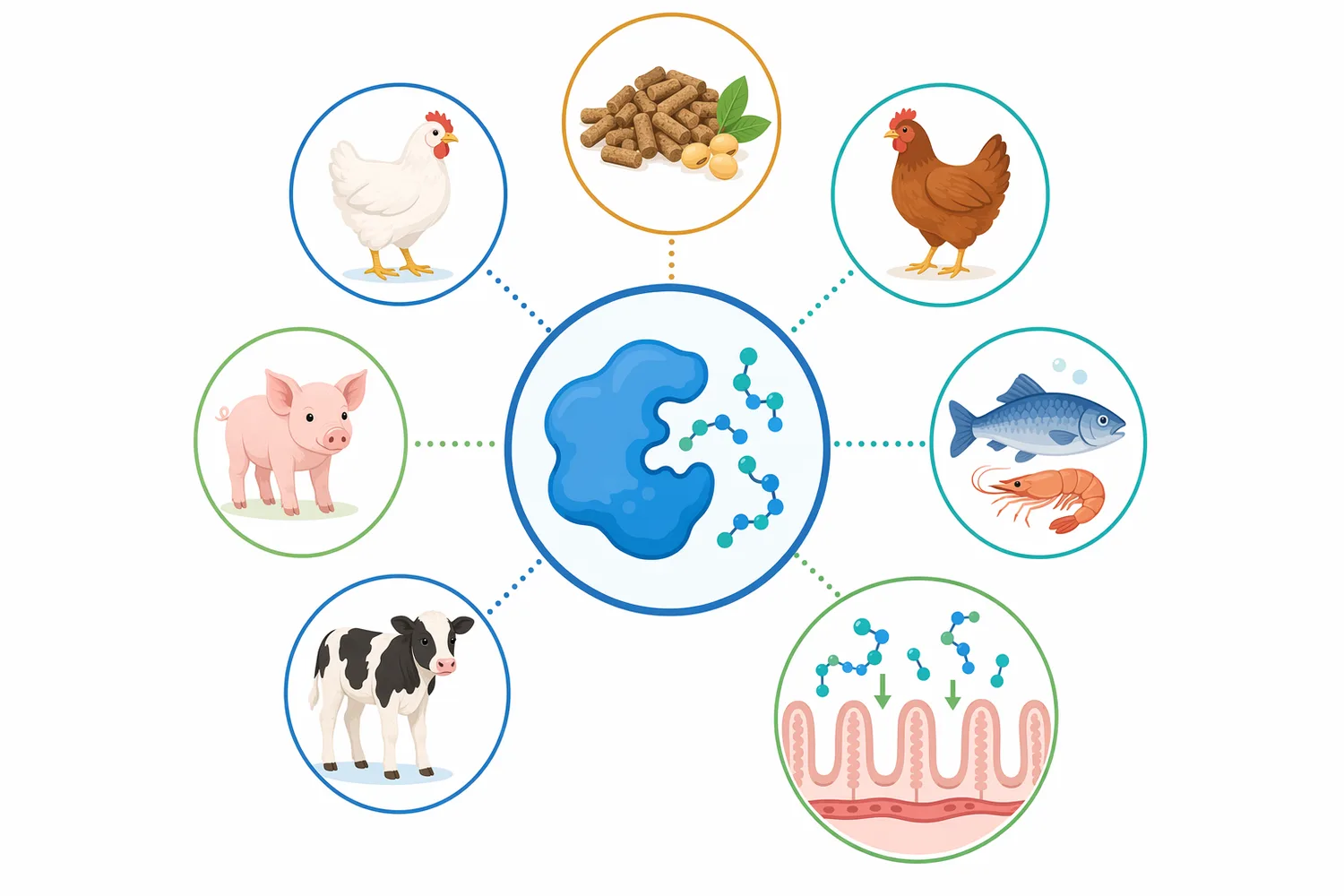
Alkaline protease has a clear and well-supported function: it hydrolyzes proteins. In fermented soybean meal, that function can support higher peptide formation and lower levels of intact antigenic soybean proteins. These are ingredient-quality improvements that can make soybean meal more suitable for feed applications where digestibility is important.
However, animal performance is always multi-factorial. Growth rate, feed conversion, gut morphology, immune status, and manure output can be influenced by diet formulation, animal age, health status, housing, microbiome, processing quality, and many other factors. A protease-treated ingredient can support better nutritional quality, but it should not be treated as the sole explanation for every observed response [6].
It is also important to separate enzyme action from fermentation control. Protease cannot compensate for poor raw material quality, contaminated fermentation, inadequate drying, or uncontrolled process conditions. The enzyme can only act on accessible protein bonds under conditions compatible with its activity.
This responsible interpretation is consistent with broader protease research. Alkaline proteases are widely useful in protein degradation, feed-related hydrolysis, and industrial bioprocessing, but their measured outcomes depend strongly on substrate type and the complete processing environment [3].
Enzymes.bio supplies Feed Grade Alkaline Protease for Fermented Soybean Meal as a 1 kg online product for customers who want an enzyme ingredient for soybean meal fermentation, feed protein hydrolysis, or plant protein upgrading. The purchase is completed directly online: the buyer places the order, pays online, and the order is processed and shipped.
A Certificate of Analysis and Safety Data Sheet are included with the order. This supports routine documentation needs while keeping the buying process straightforward for users who already understand where alkaline protease fits in their feed-processing workflow.
The key reason to use this enzyme is simple: fermented soybean meal quality depends heavily on protein breakdown. Alkaline protease supports that step by cutting soybean proteins into smaller peptides and soluble fragments, helping reduce the intact protein structures that limit the value of untreated soybean meal.
Feed Grade Alkaline Protease for Fermented Soybean Meal is an enzyme tool for controlled protein hydrolysis in feed processing. It supports the conversion of large soybean proteins into smaller peptides and soluble nitrogen fractions, and it aligns with the main scientific rationale for fermented soybean meal: improving protein accessibility while reducing intact antigenic protein components.
It should be used as part of a complete fermentation or enzyme-assisted processing system, not as a standalone substitute for fermentation control. For buyers who need a 1 kg feed-grade alkaline protease product, Enzymes.bio offers direct online purchasing with order documentation included.
Sold by the 1 kg unit, in stock and ready to ship. Order directly on our store — pay online and we process your order. A Certificate of Analysis and Safety Data Sheet are included with every order.
Buy Feed Grade Alkaline Protease For Fermented Soybean Meal →Numbered in order of first citation. Open-access sources, each verified reachable at publication; citation numbers in the text link here.