
Flavour Enzyme Aminopeptidase is used in food and fermentation processes to trim peptides from the amino end, increasing the formation of free amino acids and shorter peptides that can support savoury, matured, fermented, and umami-style flavour profiles. It is especially relevant after primary protein hydrolysis, where larger proteins have already been converted into peptide substrates that aminopeptidase can further refine. Enzymes.bio supplies this product directly online in 1 kg units, with the order processed and shipped after online payment; a Certificate of Analysis and Safety Data Sheet are provided with the order .
Flavour Enzyme Aminopeptidase is best understood as a peptide-finishing enzyme rather than a general protein breakdown tool. In protein-rich foods, intact proteins are often first opened up by endogenous fermentation enzymes, starter-culture enzymes, or added proteases; aminopeptidase then acts on the exposed peptide pool by removing amino acids from the N-terminal end of peptide chains. This distinction matters because flavour development is not only about making proteins smaller—it is about changing the balance between long peptides, short peptides, and free amino acids, each of which can contribute differently to taste and downstream aroma formation [1].
In practical food systems, this N-terminal trimming can shift a hydrolysate or fermented base from a coarse peptide profile toward a more developed flavour profile. Free amino acids can contribute directly to taste, while short peptides may add body, kokumi-like mouthfulness, savoury depth, or, in some cases, bitterness depending on their sequence and concentration. Cheese-flavour research has long emphasized that peptide and amino-acid conversions are central to flavour development, because proteolysis supplies both taste-active compounds and precursors for additional enzymatic and chemical transformations [1].
Aminopeptidase should therefore not be viewed as a finished flavour ingredient by itself. It is a processing aid for protein-containing substrates—dairy, yeast, soy, legume, cereal, meat, seafood, or mixed savoury bases—where controlled peptide conversion is desirable. The enzyme changes the substrate composition over time: peptide ends are cleaved, free amino acids rise, the average peptide profile shifts, and the sensory character can become more rounded when the process is well matched to the matrix [2].
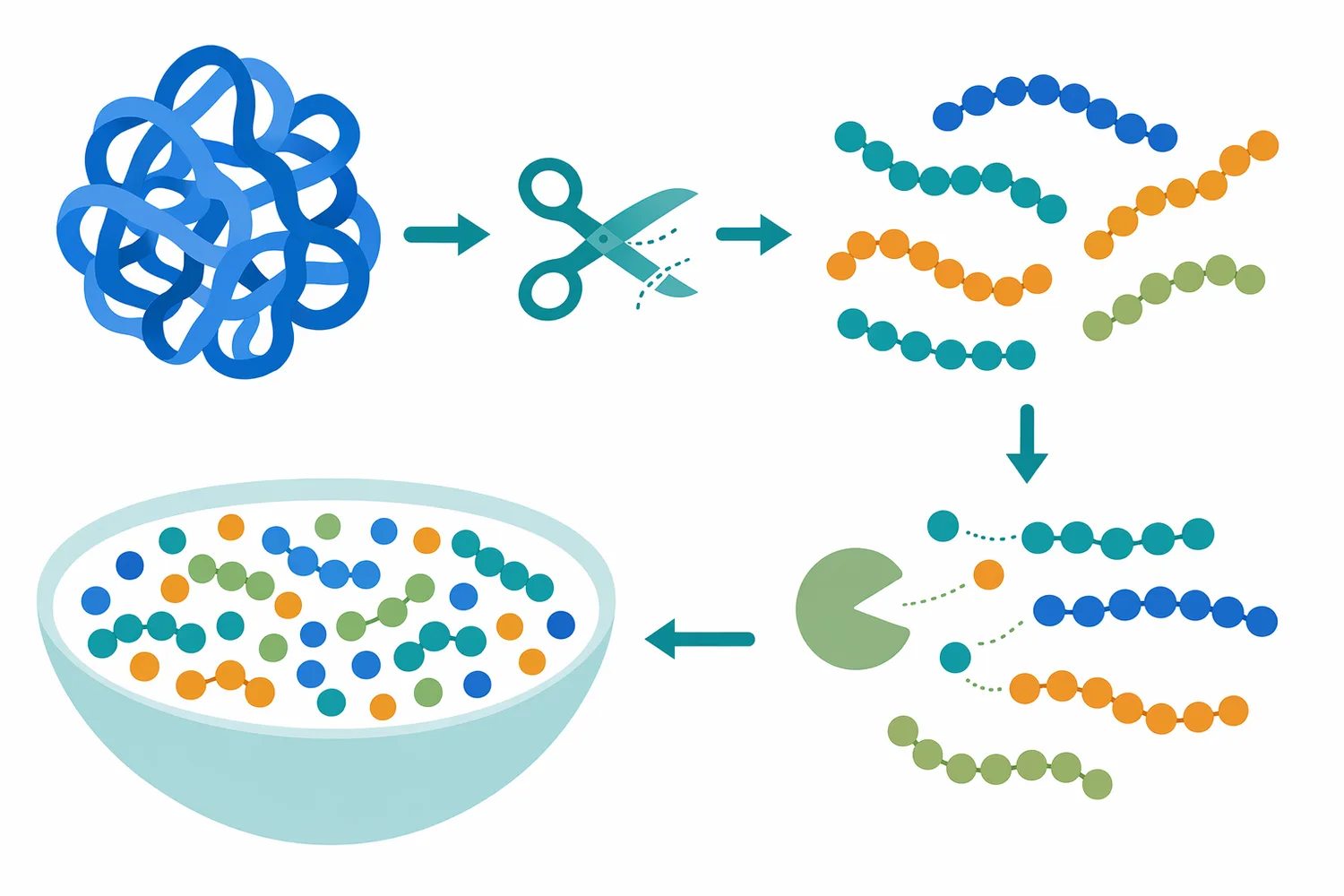
Proteins are long chains of amino acids folded into compact structures. During hydrolysis, those proteins are cut into peptides of different lengths. Some peptides are flavour-neutral, some are savoury, some contribute mouthfeel, and some can taste bitter or harsh—particularly when hydrophobic amino-acid residues are exposed in certain peptide sequences. Aminopeptidase works at the peptide level by repeatedly cleaving amino acids from the N-terminus, producing free amino acids and progressively shorter peptide fragments [3].
A simple process sequence looks like this: a protein substrate is hydrated; primary proteolysis creates peptides; aminopeptidase trims peptide N-termini; the mixture accumulates smaller peptides and free amino acids; and the process is stabilized by the normal downstream steps of the food process. The important point is that aminopeptidase does not need to “destroy” the whole protein system to affect flavour. Small changes in the peptide end groups and free amino-acid pool can be enough to change the sensory impression of a broth base, yeast extract, dairy flavour, or plant-protein hydrolysate [1].
This mechanism also explains why aminopeptidase is often most useful after another proteolytic step. Large intact proteins may present limited accessible peptide ends, especially when they are folded, aggregated, or heat-denatured in ways that restrict enzyme access. Once an endoprotease, microbial fermentation, or food-processing step has generated soluble peptides, aminopeptidase has more available N-terminal sites to act on. Studies of flavour development in cheese systems show that primary proteolysis and later peptide/amino-acid metabolism are linked stages rather than isolated events [4].
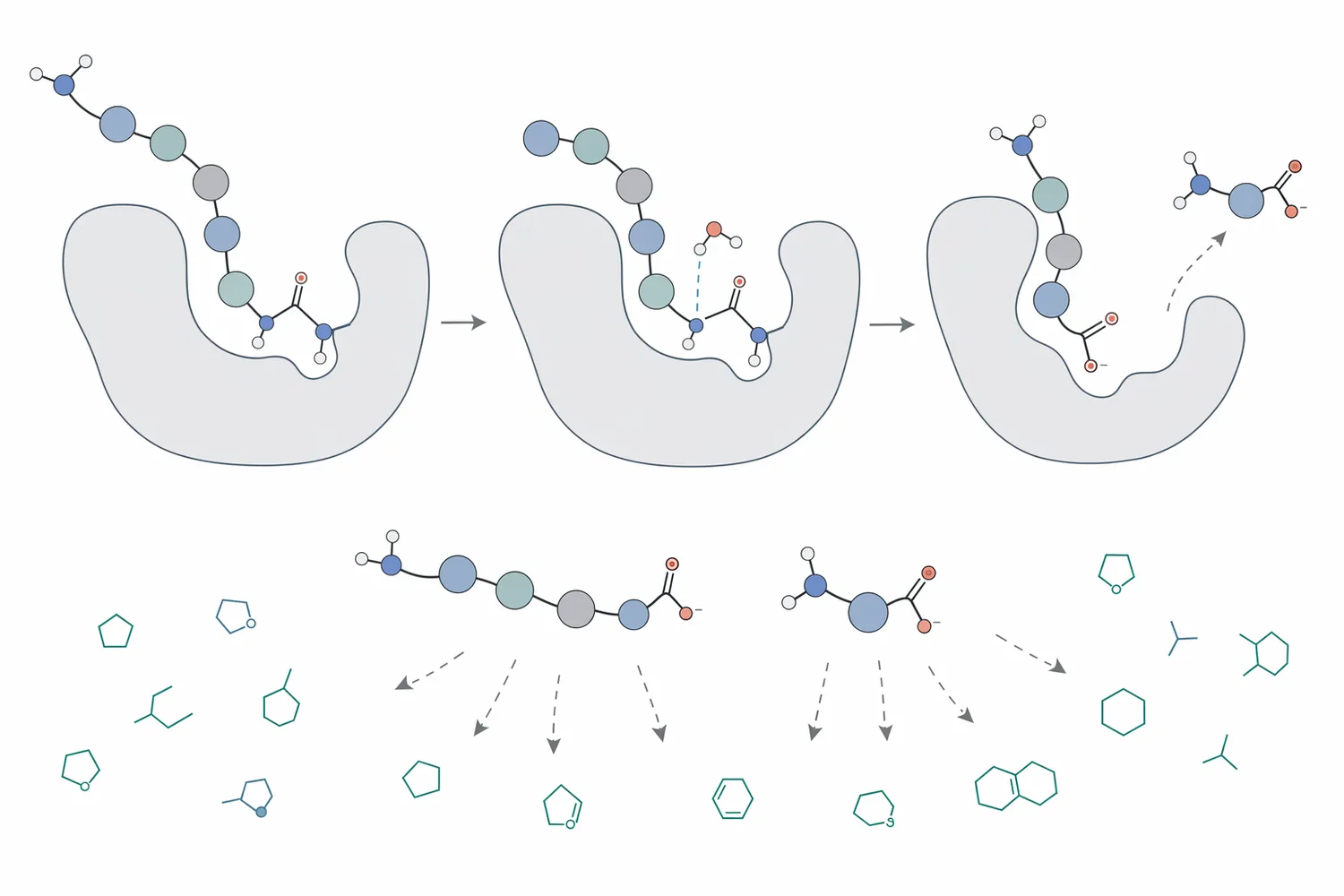
At the molecular level, enzyme action depends on contact between the active site and a compatible peptide terminus. The peptide must diffuse to the enzyme, bind in a productive orientation, and present the terminal amino-acid bond for cleavage. Metallo-aminopeptidases, including well-studied M17-family enzymes, illustrate how aminopeptidases can use a structured active site to catalyse peptide-bond hydrolysis, although individual enzyme families vary in specificity and biological role [5].
Flavour in protein-derived ingredients is not produced by one compound. It comes from a complex mixture of peptides, amino acids, organic acids, salts, sugars, nucleotides, lipids, fermentation metabolites, and heat-reaction products. Aminopeptidase affects one of the most important parts of that network: the peptide and amino-acid fraction. In cheese, for example, enzymatic conversion of peptides and amino acids is a recognized pathway in flavour development, because these compounds contribute directly to taste and also feed later reactions that create aroma-active molecules [1].
Free amino acids have different sensory and chemical roles. Glutamic acid and aspartic acid are associated with savoury and umami-type taste in appropriate matrices; glycine and alanine can contribute sweetness; branched-chain and sulphur-containing amino acids can become aroma precursors during fermentation or heating. Aminopeptidase does not choose the final flavour direction alone, but by increasing the pool of amino acids released from peptides, it can make a substrate more responsive to fermentation, maturation, or thermal flavour generation [2].
Peptide length and sequence also influence bitterness. Many protein hydrolysates become bitter when primary proteases release hydrophobic peptide fragments faster than later enzymes can break them down. Aminopeptidase can help refine such systems by shortening peptides and releasing terminal residues, which may reduce the intensity of certain harsh peptide notes. This effect is not universal—the result depends on the starting protein, prior hydrolysis pattern, and final formulation—but it is one reason aminopeptidase-type preparations are widely discussed in flavourzyme and bioactive peptide generation literature [2].
The same mechanism can support savoury depth in plant-protein systems. Plant proteins from soy, pea, wheat, or mixed legumes can carry beany, grassy, bitter, or astringent notes, some of which are related to non-protein components and some to peptide profiles after processing. Aminopeptidase can only address the peptide side of the system, but that can be valuable when the goal is to develop a smoother savoury base for sauces, seasonings, meat analogues, soups, or fermented plant ingredients [2].
Protein hydrolysates are common building blocks for savoury seasonings, broths, marinades, nutritional bases, and flavour-reaction systems. Primary proteases generate soluble peptides from proteins, while aminopeptidase can further modify those peptides into a mixture with more free amino acids and shorter fragments. This is especially relevant where the hydrolysate is intended to supply savoury body, fermentation-like complexity, or precursors for heated flavour development [2].
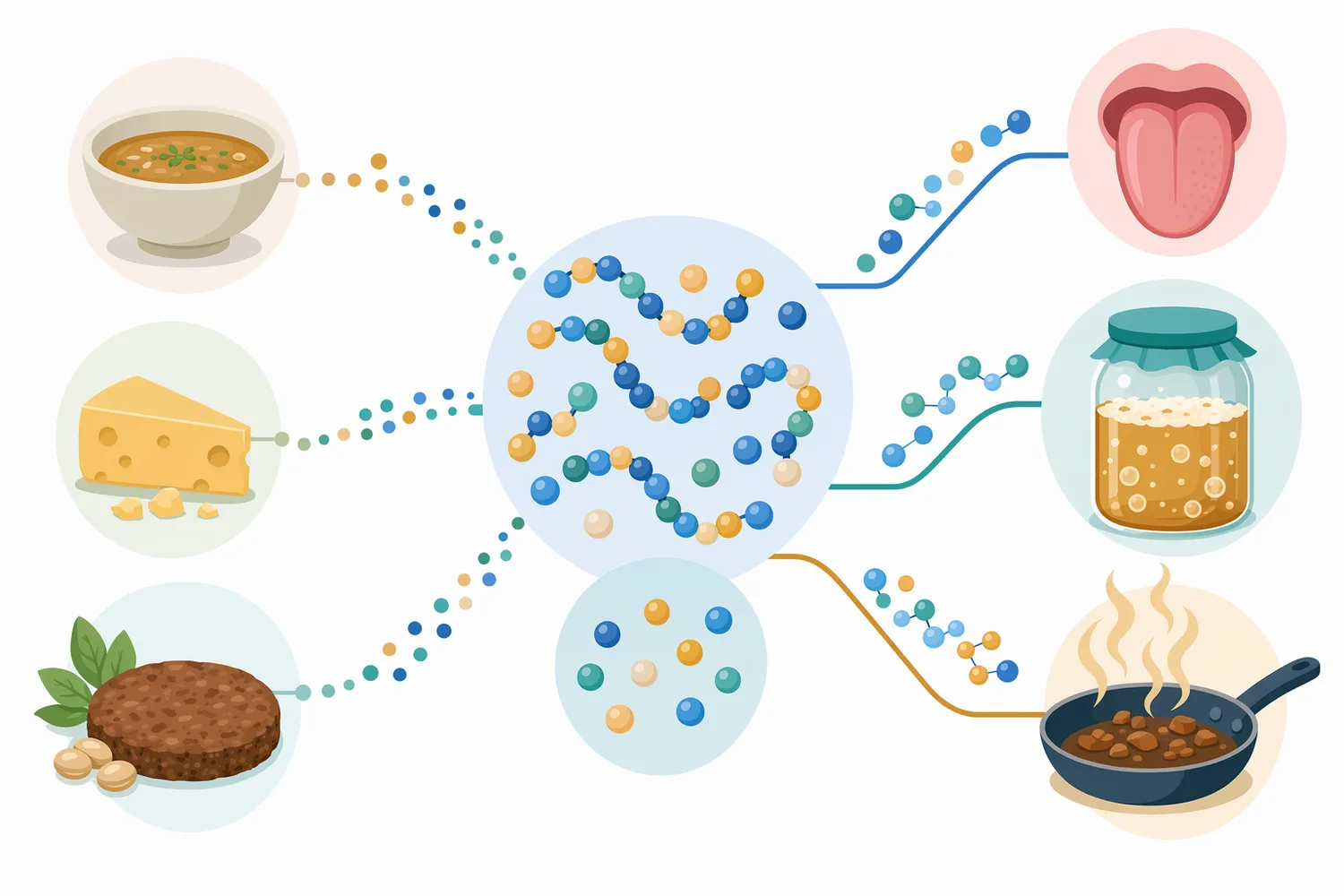
In a reaction flavour base, free amino acids can participate in heat-driven chemistry with reducing sugars and other compounds. Aminopeptidase does not perform the heat reaction itself; it prepares part of the precursor pool. When the treated hydrolysate is later heated under the food process, the changed amino-acid profile can affect the balance of roasted, meaty, brothy, toasted, or fermented notes, depending on formulation and processing conditions [1].
Yeast-derived materials are valued for savoury, brothy, rounded, and umami-like taste profiles. Their flavour depends on nucleotides, peptides, amino acids, cell-wall components, salts, and thermal-processing history. Aminopeptidase can contribute by acting on yeast-derived peptides, increasing free amino acids and changing the peptide profile before concentration, drying, blending, or heat treatment [2].
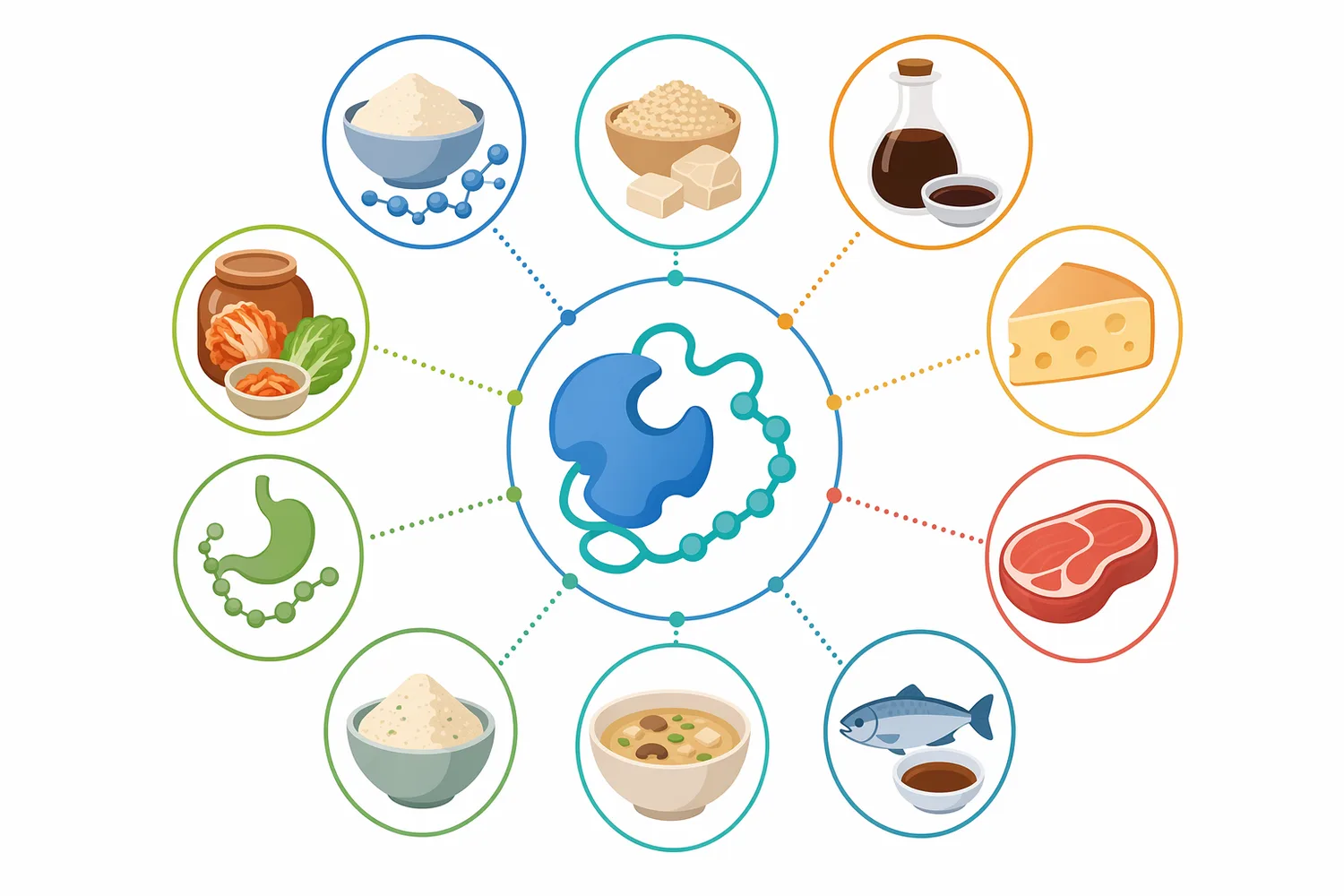
This type of use is not limited to yeast extract alone. Fermented cereal, soy, legume, and mixed vegetable-protein bases also rely on enzymatic protein breakdown as part of flavour formation. Traditional fermentation starters are complex ecosystems that produce proteases, peptidases, amylases, and other enzymes; modern controlled enzyme use can support one defined part of that broader biochemical process, namely peptide-end trimming and amino-acid liberation [6].
Cheese flavour development is one of the clearest food examples of why peptide and amino-acid metabolism matters. During ripening, caseins are broken down into large peptides, small peptides, and amino acids; these compounds influence bitterness, savoury taste, mouthfeel, and aroma precursor formation. Reviews of cheese flavour development describe enzymatic conversions of peptides and amino acids as central to the formation of characteristic cheese flavour [1].
Aminopeptidase can be useful in enzyme-modified cheese, dairy flavour bases, cheese slurry systems, and cultured dairy preparations where controlled flavour acceleration is desired. Research using lactic acid bacteria has shown that enzymatic activities from organisms such as Lactobacillus casei can be relevant to cheese flavour formation, underscoring the role of peptidases in converting ripening peptides into smaller taste-active and aroma-precursor compounds [4].
More applied cheese studies also support the broader principle that increasing proteolysis can accelerate flavour development. Work with Kuflu cheese slurry in a model cheese system reported acceleration of proteolysis, flavour development, and enhanced bioactivity under optimized slurry conditions, showing how enzyme-rich systems can push cheese-like flavour formation beyond slow natural ripening alone [7].
Cell-free lactic acid bacteria extracts have also been investigated as a way to enhance Cheddar cheese flavour. One study used lactic acid bacteria extract entrapped in yeast to support flavour development, illustrating that food systems can benefit from peptidase-rich or enzyme-containing preparations even when the aim is not microbial growth itself but controlled biochemical conversion [8].
Meat and seafood flavour bases depend on a balance of amino acids, peptides, nucleotides, minerals, lipids, and heat-reaction products. Aminopeptidase can support the peptide/amino-acid part of this profile by converting hydrolysed animal or marine proteins into a more flavour-active mixture. The result may be a fuller broth character, improved savoury continuity, or a cleaner hydrolysate profile when the process is well controlled [2].
In seafood and meat extract systems, aminopeptidase is typically not the first enzyme doing the heavy structural breakdown. Connective tissue, muscle proteins, and heat-treated proteins often require earlier denaturation, extraction, or endoprotease activity before smaller peptides become accessible. Once peptide substrates are present, aminopeptidase can act as a finishing step that adjusts the profile before pasteurisation, concentration, drying, or blending [1].
Plant-based foods often need savoury depth without relying entirely on animal-derived flavour systems. Aminopeptidase-treated plant protein hydrolysates can contribute to the base note of plant-based meats, gravies, bouillons, snacks, sauces, and ready meals. The value is not that aminopeptidase masks every plant off-note; rather, it can help create a more useful savoury peptide and amino-acid fraction that fits into a complete flavour system [2].
This application is especially relevant because plant proteins vary widely in solubility, structure, prior heat history, and associated non-protein flavours. Soy, pea, wheat, rice, oat, and mixed legume proteins do not respond identically to enzymatic processing. Aminopeptidase changes peptide composition, but the final sensory result also depends on lipid oxidation control, deodorisation, fermentation metabolites, salt balance, sweetener balance, and thermal processing [6].
Aminopeptidase is part of a larger proteolytic toolkit. Food processes may use endogenous enzymes, microbial enzymes, added proteases, or fermentation-derived enzyme systems. The following comparison is conceptual; actual performance depends on the specific enzyme preparation and food matrix.
| Enzyme type | Main cleavage pattern | Typical contribution in protein-based flavour systems | Practical interpretation |
|---|---|---|---|
| Acid protease | Internal peptide-bond cleavage under acidic process conditions | Generates peptides from proteins in acidified or fermented matrices | Often supports primary protein breakdown where the food system is naturally acidic |
| Neutral protease | Internal peptide-bond cleavage under milder near-neutral conditions | Produces soluble peptides while limiting extreme process conditions | Often used where moderate processing is preferred for taste, colour, or protein functionality |
| Alkaline protease | Internal peptide-bond cleavage under alkaline process conditions | Can produce extensive hydrolysis and high peptide solubilisation | Useful in some hydrolysis systems, but flavour balance must be managed carefully |
| Aminopeptidase | Sequential removal of amino acids from peptide N-termini | Refines peptide mixtures by increasing free amino acids and shortening peptides | Functions as a finishing enzyme after peptides are available |
The main difference is where the enzyme cuts. Endoproteases create peptide fragments by cutting inside the protein chain, while aminopeptidase trims from the end of peptides. In flavour work, those roles can be complementary: an endoprotease creates access and solubility; aminopeptidase then modifies the taste-active peptide pool and releases amino acids [1].
This complementarity is also seen in cheese and fermented foods, where primary protein breakdown and later peptide metabolism are connected. Starter and adjunct cultures may contribute multiple peptidases, and their combined action affects both bitterness and flavour maturity. Studies on lactic acid bacteria enzymatic activity for cheese flavour development illustrate that flavour is shaped by a network of enzymes rather than by one cleavage event alone [4].
Aminopeptidase activity depends on the same practical realities that affect all food enzymes: hydration, substrate accessibility, temperature exposure, pH environment, salts, competing ingredients, and time. The enzyme must remain structurally functional long enough to bind peptide substrates and catalyse cleavage. If the matrix is too dry, too restricted, too aggressively heated, or incompatible with enzyme structure, peptide conversion will be limited [5].
Substrate accessibility is especially important. A finely dispersed, hydrated protein hydrolysate presents far more peptide ends than an intact, compact protein particle. Heat treatment can help by unfolding proteins, but excessive heat can also create aggregates that reduce accessibility or denature the enzyme if it is present during heating. In practice, aminopeptidase is most logical where the process already contains soluble peptides or where a prior hydrolysis or fermentation stage has made peptides available [2].
Time also shapes the result. Short exposure may create a modest increase in free amino acids, while extended exposure can push the peptide profile further toward small peptides and amino acids. More hydrolysis is not automatically better: a highly developed savoury hydrolysate may be ideal for a bouillon base but too intense for a delicate dairy note or plant-based product. The desired endpoint is sensory and functional, not simply maximum breakdown [1].
pH and temperature should be understood as process influences rather than as universal guarantees. Enzymes are proteins with three-dimensional structures, and their active sites must remain correctly folded and flexible enough to catalyse peptide-bond hydrolysis. Food matrices also contain salts, acids, sugars, polyphenols, lipids, and minerals that can affect enzyme access or the perception of the resulting peptides and amino acids [5].
The strongest food-flavour evidence for aminopeptidase use comes from the broader body of work on proteolysis, peptidases, and amino-acid conversion in fermented and protein-rich foods. Cheese is the most established model: research on cheese flavour development describes how enzymatic conversion of peptides and amino acids contributes to sensory maturity, with amino acids serving as both taste compounds and precursors for volatile aroma compounds [1].
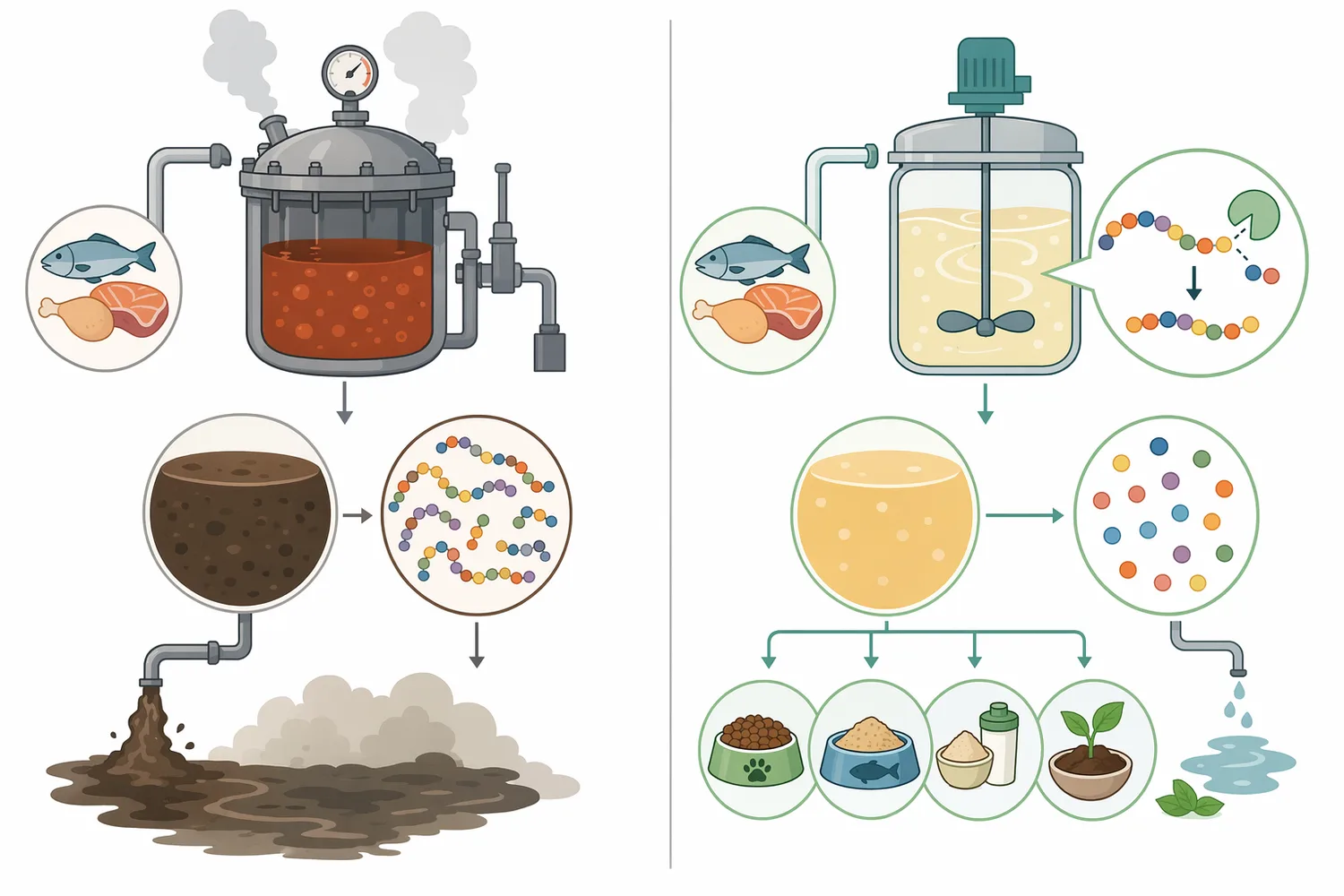
Lactic acid bacteria studies reinforce this point because many dairy cultures carry proteolytic and peptidolytic systems that help convert casein-derived peptides during ripening. A study on Lactobacillus casei subsp. casei IFPL731 examined enzymatic ability for cheese flavour development, reflecting the importance of microbial peptidases in producing ripened dairy character rather than simply acidifying milk [4].
Applied cheese-process research shows that enzyme-rich systems can accelerate flavour formation when used in controlled models. Kuflu cheese slurry work reported accelerated proteolysis and flavour development in a model cheese, while research using lactic acid bacteria extracts entrapped in yeast investigated enhancement of Cheddar cheese flavour. These studies are not product-specific claims for every aminopeptidase preparation, but they strongly support the principle that controlled enzyme-driven peptide conversion can shape flavour outcomes [7].
More recent work on flavourzyme-related peptide generation also connects aminopeptidase-containing hydrolysis systems with bioactive and functional peptide production. Although functional peptide generation is a different endpoint from savoury flavour development, the underlying chemistry is similar: protein substrates are hydrolysed into peptides and amino acids, and the resulting profile depends on enzyme specificity, substrate, and processing conditions [2].
Aminopeptidase can support a more rounded savoury profile when the substrate contains peptides that benefit from terminal trimming. In hydrolysates, this may mean less sharpness, less lingering bitterness, or a more integrated broth-like base. In dairy systems, it may support matured, fermented, or cheese-like depth. In yeast and plant-protein systems, it may help create a fuller savoury background that can be built into sauces, seasonings, soups, snacks, or meat analogues [1].
However, aminopeptidase is not a universal bitterness remover. Some bitterness comes from hydrophobic peptides that may respond to further hydrolysis, but other off-notes come from oxidized lipids, saponins, phenolics, sulfur compounds, microbial metabolites, or heat damage. If those compounds dominate the sensory profile, peptide trimming alone will not solve the issue. The enzyme affects peptide chemistry; it does not erase every non-protein flavour problem [2].
The enzyme also cannot create a finished flavour without an appropriate substrate. A bland protein isolate with limited soluble peptide formation may need primary hydrolysis before aminopeptidase can meaningfully increase amino-acid release. Conversely, an already heavily hydrolysed substrate may become too intense or too salty-tasting if further conversion increases free amino acids beyond the desired sensory balance [1].
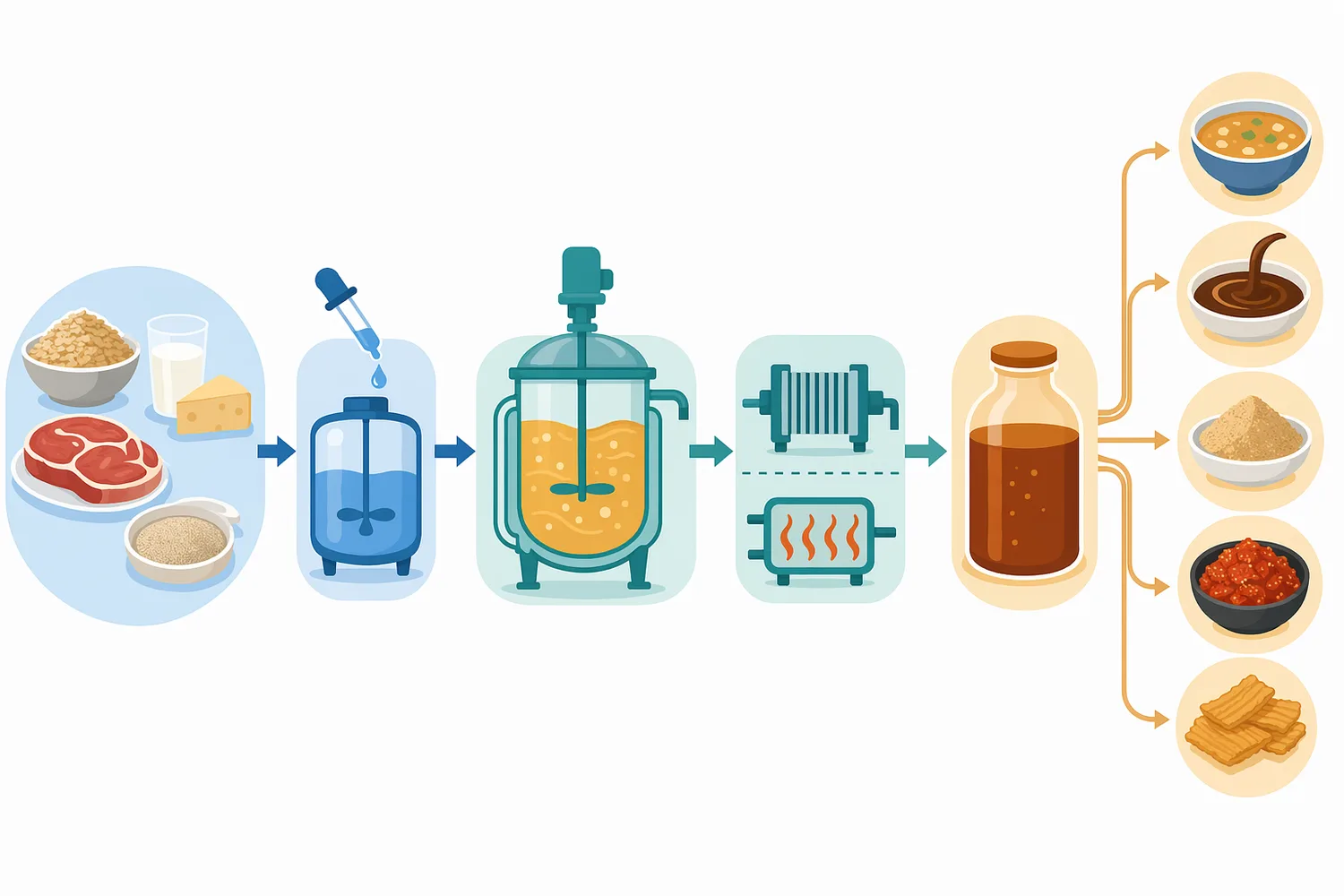
This is why aminopeptidase is most effective when integrated into a coherent food process: protein preparation, hydration, prior hydrolysis or fermentation, enzyme contact time, heat stabilization, and final formulation all contribute to the result. The enzyme supplies a defined biochemical function, but the finished flavour comes from the full matrix [4].
Many food developers use enzymes because they can create flavour complexity through transformation of existing food substrates rather than through direct addition of synthetic flavour notes. Aminopeptidase fits this approach by converting proteins and peptides already present in the formulation into amino acids and smaller peptides. In fermented and traditional foods, similar transformations occur naturally through microbial enzyme systems; added enzyme processing can make that biochemical step more controlled and consistent [6].
Regulatory classification and labelling treatment depend on jurisdiction, application, and how the enzyme is used in the finished process. From a technical standpoint, the important distinction is that aminopeptidase modifies the substrate during processing; it is not intended to be the primary flavouring compound itself. The treated ingredient or food matrix carries the resulting peptide and amino-acid profile [2].
For buyers using Enzymes.bio, the commercial route is straightforward: the product is purchased directly online in 1 kg units, payment is completed online, and the order is processed and shipped. The accompanying Certificate of Analysis and Safety Data Sheet are provided with the order for routine documentation needs .
The biochemical role of aminopeptidases is well established: they act on peptide termini and participate in peptide degradation in many biological and applied systems. Studies on aminopeptidase N activity, M17 metallo-aminopeptidases, and methionine aminopeptidases demonstrate that aminopeptidases are a broad enzyme class with defined peptide-cleaving functions, although individual enzymes vary in substrate preference and biological context [3].
Food-specific evidence is strongest for the broader relationship between proteolysis, peptide metabolism, amino-acid release, and flavour development. Cheese studies, lactic acid bacteria enzyme studies, and flavourzyme-related peptide work all support the use of peptidase activity to shape flavour-active and functional peptide pools. These studies should be read as supporting the enzyme category and application logic, not as universal proof of identical performance in every commercial recipe [1].
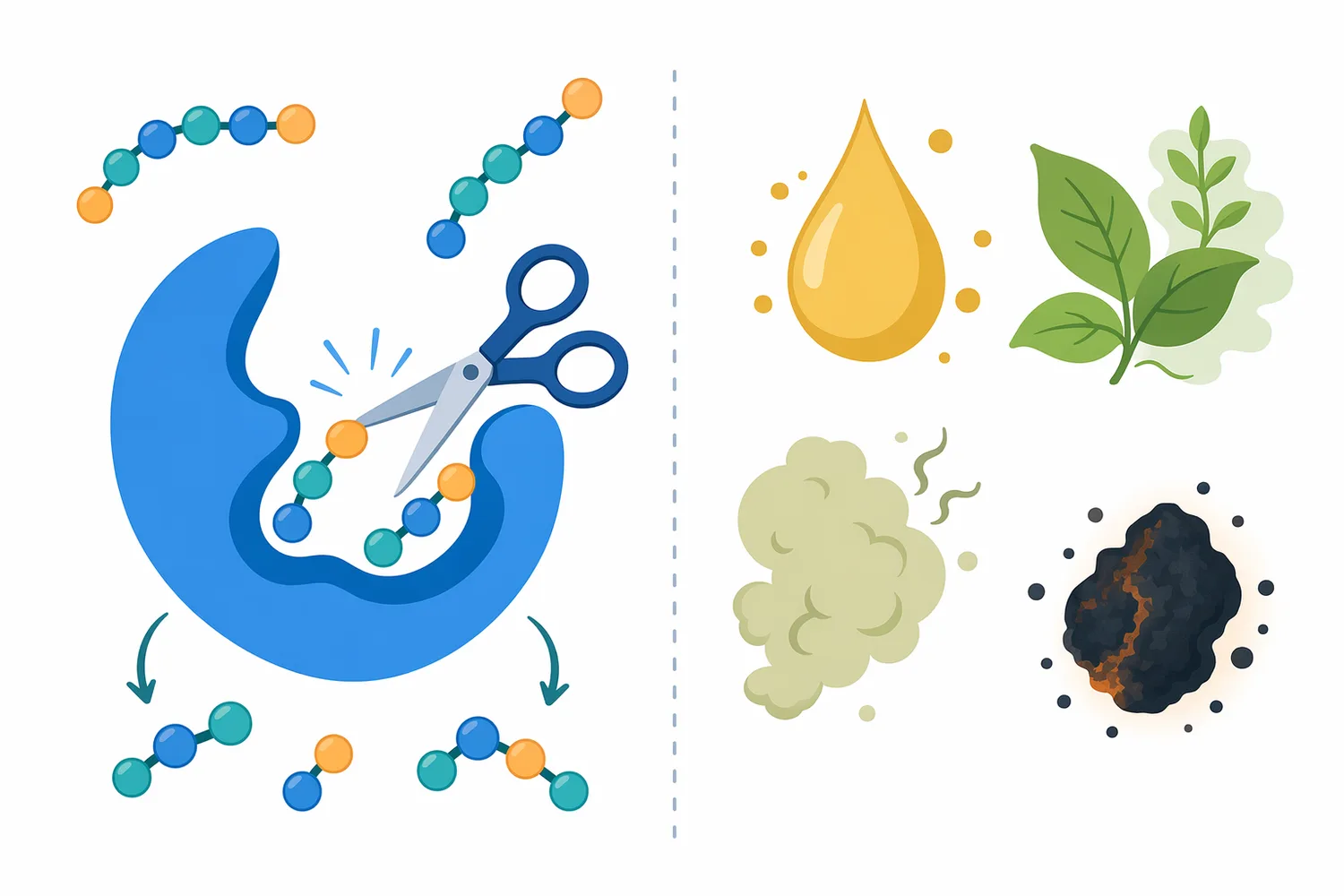
Product-specific sensory results remain application-dependent. A dairy slurry, a yeast extract, a soy hydrolysate, a pea-protein base, and a fish extract will all present different proteins, peptides, minerals, lipids, and off-note chemistry. Aminopeptidase changes peptide-end chemistry in each matrix, but the perceived flavour impact depends on what the substrate offers and how the rest of the process is designed [2].
Enzymes.bio supplies Flavour Enzyme Aminopeptidase CAS 3458-28-4 as a directly purchasable online product in 1 kg units. Buyers place the order through the website, pay online, and the order is then processed and shipped. A Certificate of Analysis and Safety Data Sheet are included with the order .
Enzymes.bio is a product supplier, not the manufacturer or a testing laboratory. This document is intended to explain the enzyme category, its food-processing relevance, and the scientific basis for aminopeptidase use in flavour development so that buyers can understand where the enzyme fits in protein hydrolysis, fermentation, and savoury ingredient workflows.
Flavour Enzyme Aminopeptidase is most valuable where a process already contains protein-derived peptides and the goal is to refine them into a more flavour-active mixture of smaller peptides and free amino acids. Its practical role is peptide finishing: it trims N-terminal amino acids, supports savoury and fermented flavour development, and can help smooth some hydrolysate profiles when the substrate and process are suitable [1].
The best-supported applications are protein hydrolysates, cheese and dairy flavour systems, yeast-derived savoury bases, fermented plant-protein ingredients, meat or seafood extracts, and plant-based savoury products. Across these uses, the enzyme does not replace formulation skill or fermentation complexity; it provides a targeted biochemical step that can make protein-derived flavour development more controlled and reproducible [2].
Sold by the 1 kg unit, in stock and ready to ship. Order directly on our store — pay online and we process your order. A Certificate of Analysis and Safety Data Sheet are included with every order.
Buy Flavour Enzyme Aminopeptidase 50000U/G Cas 3458-28-4 →Numbered in order of first citation. Open-access sources, each verified reachable at publication; citation numbers in the text link here.