
Direct answer: Food-grade low-temperature alpha-amylase is a baking enzyme used to partially break wheat-flour starch into dextrins and fermentable sugars during mixing, resting, and proofing. In bread systems, that controlled starch conversion helps yeast fermentation, loaf expansion, crust browning, crumb softness, and delayed firming when the formula and process are well balanced. Enzymes.bio supplies this fungal alpha-amylase for direct online purchase in 1 kg units, with the order processed and shipped after online payment; a Certificate of Analysis and Safety Data Sheet come with the order.
Low-temperature alpha-amylase is used in flour-based baking because its useful action occurs before and during the early heating stages of baking, rather than being designed for high-temperature starch liquefaction. In practical breadmaking, the enzyme is added to flour or dough so it can act while starch is hydrated, yeast is fermenting, and dough structure is developing. The Enzymes.bio product is presented as a food-grade fungal amylase for baking flour and related food-processing applications, with emphasis on low-temperature dough improvement and controlled starch hydrolysis .
The main substrate is starch, which makes up a large fraction of wheat flour. Wheat starch contains amylose, which is mostly linear, and amylopectin, which is highly branched. Alpha-amylase acts as an endo-acting hydrolase: it cuts internal alpha-1,4 glycosidic bonds in starch chains, rather than removing glucose units one by one from the chain ends. That internal cutting pattern produces shorter carbohydrates such as dextrins, maltose, maltotriose, and related maltooligosaccharides, depending on the enzyme source and process conditions [1].
For bread, the goal is not to convert starch completely into sugar. A small, controlled amount of starch hydrolysis is enough to change dough behavior and finished bread quality. The enzyme creates more fermentable material for yeast, increases the pool of sugars available for browning reactions, and changes the way starch behaves during gelatinization, crumb setting, cooling, and storage. Too little amylase activity can leave dough short of fermentable sugars; too much can over-liquefy starch and lead to sticky dough, gummy crumb, or excessive browning.
In dry flour, starch granules are compact and only partly accessible. When water is added during mixing, the flour hydrates, damaged starch granules absorb water more readily, and enzyme access improves. Alpha-amylase then begins cutting exposed starch chains. Because it attacks inside the chain, one cut can quickly reduce the average molecular size of starch fragments, lowering paste viscosity locally and generating soluble dextrins and smaller sugars [2].
This matters because yeast does not directly ferment intact starch granules. Yeast primarily uses smaller carbohydrates. Wheat flour naturally contains some sugars and native enzymes, but flour lots vary, and fermentation demand can exceed the immediately available sugar supply. Low-temperature alpha-amylase helps bridge that gap by converting a limited portion of flour starch into smaller carbohydrate fragments during the time when yeast is active. The result is a steadier supply of fermentable sugars as dough proofs.
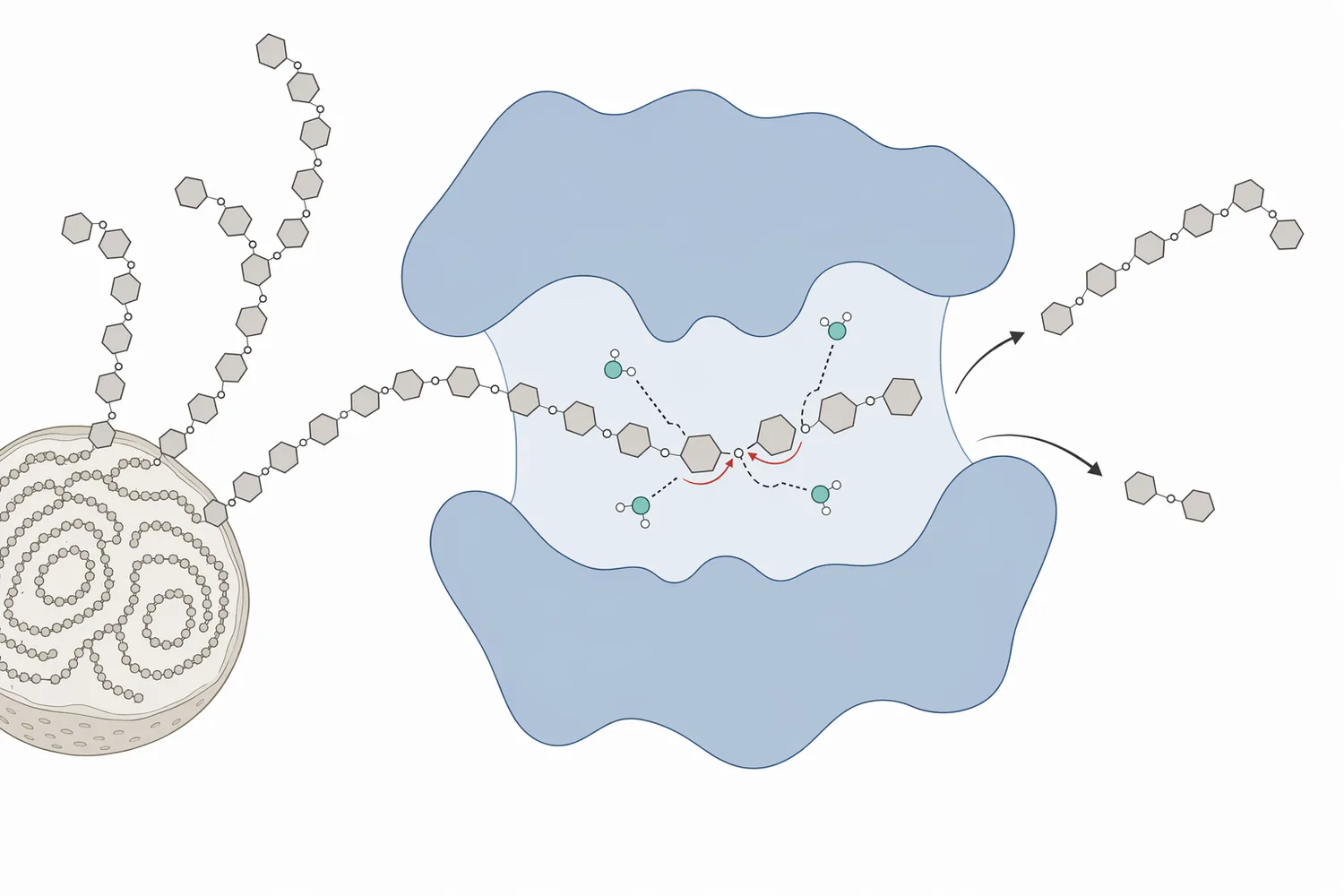
The same hydrolysis products also affect heat-driven changes during baking. As oven temperature rises, starch granules swell and gelatinize, gluten proteins set, gases expand, and the crumb structure becomes fixed. Dextrins and maltooligosaccharides formed before and during early baking influence water binding, crumb tenderness, and the way starch molecules reassociate after cooling. This is why alpha-amylase can influence both fresh bread volume and eating softness after storage, not only proofing speed.
Food-grade fungal alpha-amylase is widely used in baking because it aligns well with the temperature and time profile of dough processing. It is active enough under dough conditions to generate useful sugars, but it is not intended to keep aggressively hydrolyzing starch through the hottest stages of baking. Enzymes.bio describes the product as a fungal alpha-amylase associated with selected Aspergillus oryzae fermentation and positioned for baking, starch conversion, brewing, and pasta-processing uses .
This controlled thermal behavior is important. Bread dough needs starch hydrolysis during mixing, resting, fermentation, and proofing, but the finished loaf needs a stable crumb. If an amylase remains too active too long, it can continue producing dextrins while the crumb is setting. Excess dextrin formation can make the center of the loaf feel wet, sticky, or gummy even when the bread is fully baked. Low-temperature fungal amylase is therefore valued because its effect is concentrated in the useful part of the process.
A useful way to understand the difference is to compare baking-oriented fungal alpha-amylase with other starch-converting alpha-amylase systems used in food and starch industries.
| Alpha-amylase context | Typical processing fit | What it mainly contributes | Baking relevance |
|---|---|---|---|
| Low-temperature fungal alpha-amylase | Dough mixing, resting, proofing, early baking | Controlled dextrin and fermentable-sugar formation | Well suited for bread, flour improvement, crust color, and crumb softness |
| Native wheat alpha-amylase | Naturally present in flour at variable levels | Influences flour pasting behavior, fermentation sugar availability, and functional properties | Helpful when balanced; problematic when flour has excessive endogenous activity |
| Heat-stable alpha-amylase | Higher-temperature starch processing | Liquefaction and viscosity reduction in starch slurries | More relevant to syrup, maltodextrin, and starch-conversion operations than standard bread improvement |
| Immobilized or engineered alpha-amylase systems | Specialized starch-processing designs | Reuse, altered stability, or process robustness | Mainly relevant to industrial starch-based processing rather than ordinary bakery dosing |
The table is conceptual, but it reflects a real processing distinction: alpha-amylase is one enzyme family, yet performance depends strongly on source, stability, and process environment. Heat-stable alpha-amylase, for example, is commonly discussed for maltodextrin and starch-conversion processes where higher-temperature liquefaction is desirable [3]. Baking flour applications usually need a narrower, more self-limiting action window.
The most immediate baking benefit is fermentation support. During proofing, yeast consumes available sugars and produces carbon dioxide. That gas expands the dough, and the gluten-starch network must retain it long enough for oven spring and crumb setting. When flour has limited available sugars or inconsistent native enzyme activity, low-temperature alpha-amylase helps by generating additional maltose and related carbohydrates from starch.
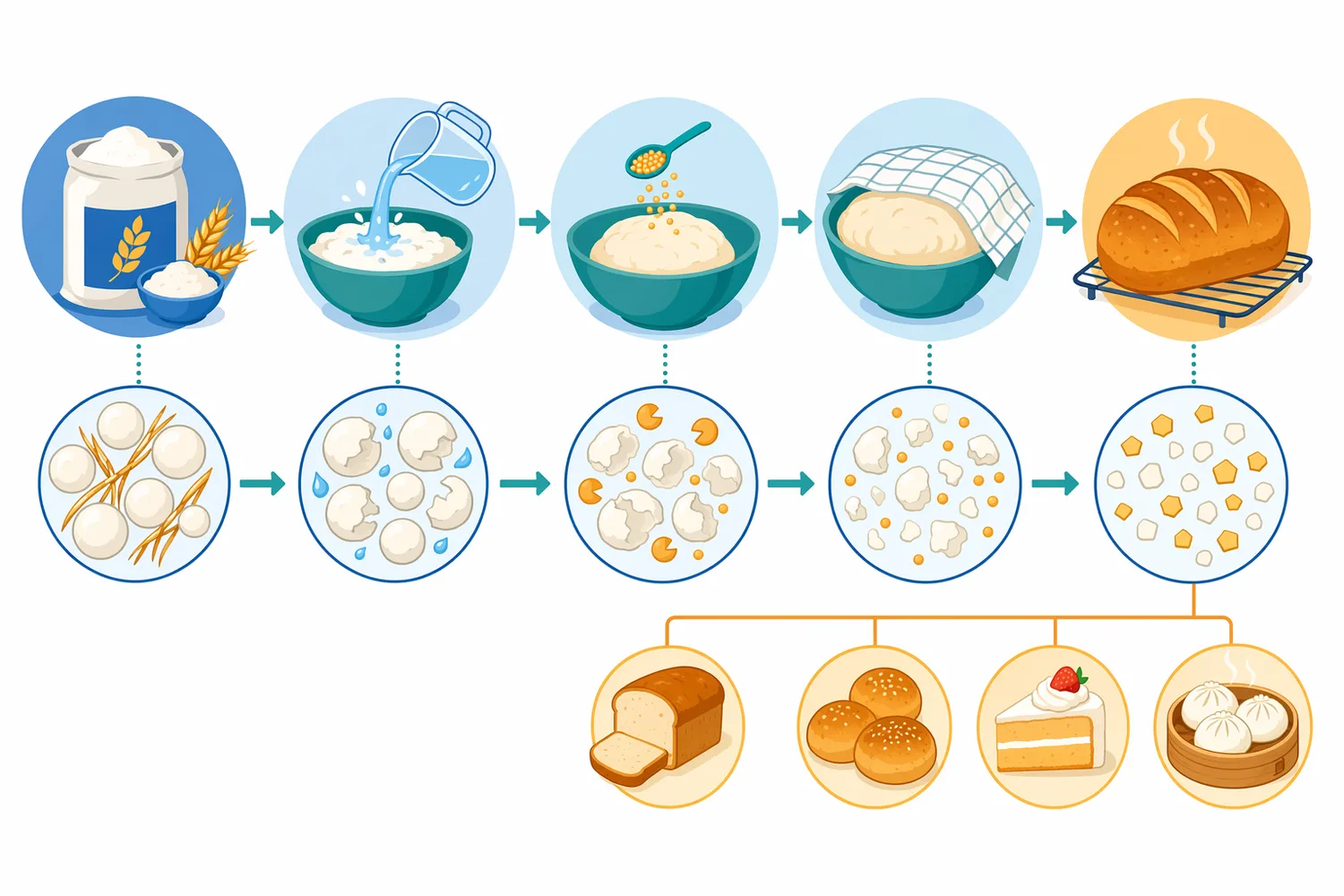
Better sugar availability can improve gas production, but the structural effect is just as important. Gas expansion only improves loaf volume if the dough matrix can stretch and hold bubbles. Controlled starch hydrolysis slightly modifies the dough’s carbohydrate phase, changes viscosity, and contributes to a dough environment that supports expansion. Research on wheat flour has shown that endogenous alpha-amylase activity is closely tied to flour functional properties, which is why flour treatments and native enzyme levels can materially affect baking performance [4].
Alpha-amylase is not a substitute for flour strength, proper mixing, or fermentation control. If dough is underdeveloped, overproofed, low in protein quality, or poorly hydrated, starch conversion alone cannot correct the system. However, when the main limitation is sugar availability and starch functionality, the enzyme can help fermentation proceed more consistently and support improved loaf volume.
Crumb softness depends on the interaction of gluten, starch, water, air cells, and the carbohydrate fragments generated during processing. Alpha-amylase influences this system by reducing a portion of starch molecular size and producing dextrins that remain in the crumb. These smaller carbohydrates can affect water mobility and reduce the tendency of the crumb to firm quickly after cooling.
A bread crumb becomes firm partly because gelatinized starch molecules reassociate over time, a process often described as starch retrogradation. Amylopectin recrystallization is especially important in bread staling. By creating dextrins and maltooligosaccharides, alpha-amylase changes the starch fraction available for reassociation and can interfere with the formation of a firm, ordered starch network. This is one reason baking amylases are used as anti-firming or crumb-softening tools in bread systems.
The effect is formulation-dependent. In a dough system, alpha-amylase interacts with added sugar, fat, emulsifiers, hydrocolloids, fermentation time, baking profile, and flour quality. A 2022 study specifically examined alpha-amylase together with sodium alginate for its effect on bread-dough rheological properties, reflecting the broader point that amylase performance is often evaluated as part of a complete dough system rather than as an isolated ingredient [5].
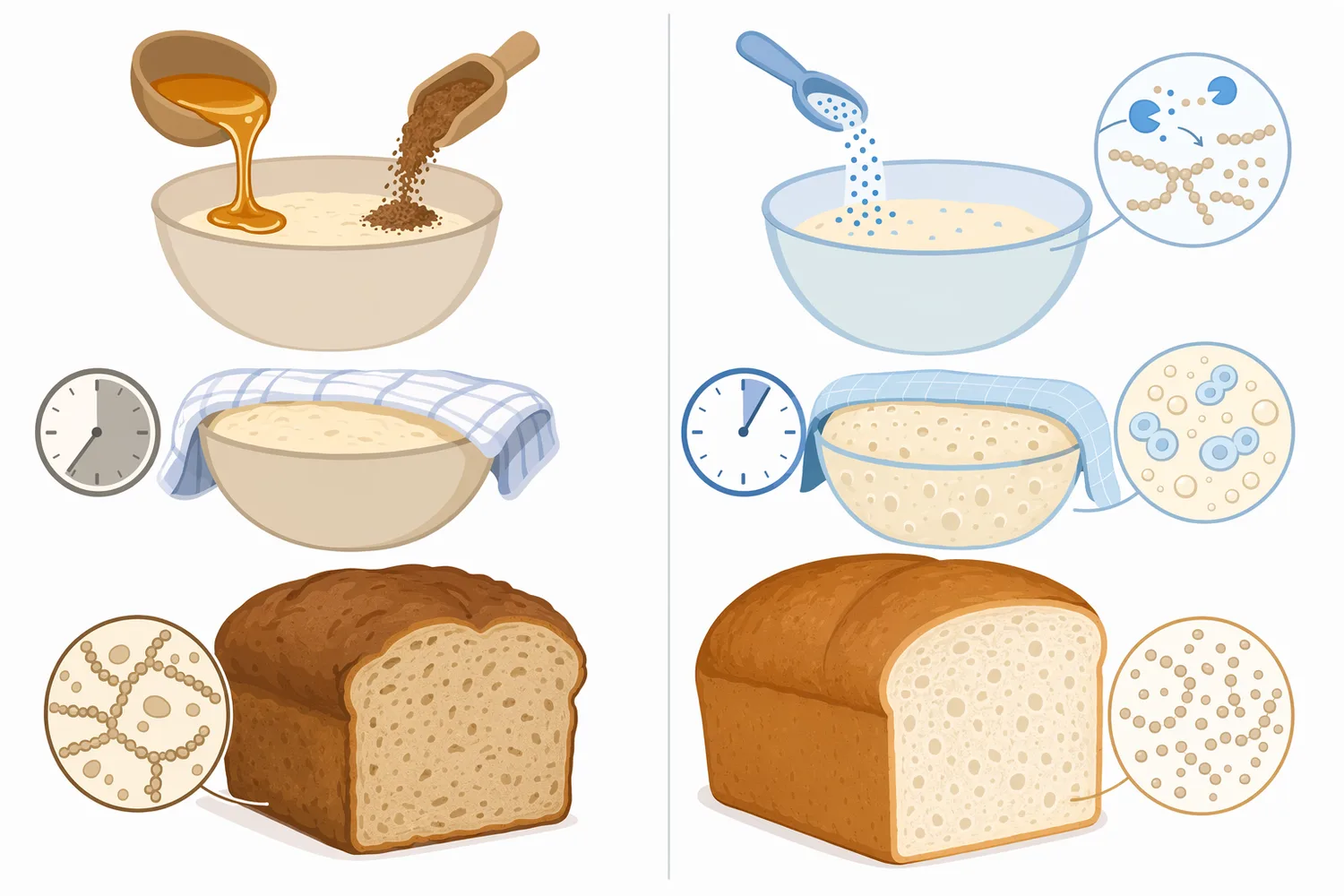
Crust color comes from heat-driven browning reactions, especially reactions involving reducing sugars and amino compounds. Alpha-amylase contributes by increasing the pool of smaller carbohydrates available before the crust reaches browning temperatures. In a lean bread formula with limited added sugar, this can be particularly relevant because the enzyme helps generate sugars from flour starch during fermentation.
The mechanism is straightforward: intact starch is too large and structured to participate directly in browning in the same way smaller sugars do. When alpha-amylase cuts starch into dextrins and fermentable sugars, it increases the amount of carbohydrate material that can feed yeast metabolism and later participate in color and flavor formation. This can help reduce pale crusts and support a more developed baked aroma.
There is a balance, however. More reducing sugar is not always better. Excessive starch breakdown can darken crust beyond the desired color, especially in products with long fermentation, added sugars, or high baking intensity. This is why low-temperature fungal alpha-amylase is valued as a controlled process aid rather than a high-conversion starch-liquefying enzyme.
Alpha-amylase creates value by partial hydrolysis, but the same mechanism can cause defects if the system is pushed too far. When too much starch is converted into soluble dextrins, dough can become tacky, machining can become more difficult, and the baked crumb can feel gummy. This is especially noticeable in pan breads and soft breads where the center crumb is expected to be clean-slicing and resilient.
Wheat affected by unusually high alpha-amylase activity has long been recognized as challenging because starch structure and gelatinization behavior are altered. Research on late-maturity alpha-amylase-affected wheat has examined how cold temperature and elevated amylase activity relate to starch molecular structure and gelatinization, underscoring that amylase effects are not only about sugar formation but also about how starch behaves as it heats and sets [6].
For bakery use, the practical target is enough hydrolysis to support fermentation and softness, not enough to collapse viscosity or weaken crumb integrity. This is why process conditions matter. Longer fermentation, warmer dough, higher hydration, and flour with high native amylase can all increase the total starch conversion effect. A low-temperature fungal alpha-amylase gives bakers a tool that acts in the right part of the process, but it still works within the chemistry of the full dough system.
The scientific basis for alpha-amylase use is strongest at the mechanism level: the enzyme hydrolyzes alpha-1,4 linkages in starch and changes molecular size distribution, viscosity behavior, and soluble carbohydrate formation. Industrial enzyme reviews consistently describe alpha-amylase as one of the major starch-processing enzymes used across food, fermentation, and related industries [1].
In wheat flour, endogenous alpha-amylase activity has measurable effects on functional properties. Pilot-scale steam treatment research has specifically looked at wheat flour functionality in connection with native alpha-amylase activity, which is relevant because baking performance depends on both added enzymes and the enzyme activity already present in flour [4]. This helps explain why two flour lots can respond differently to the same baking process.
Research outside bread also reinforces the underlying starch-modification mechanism. In oat flour, alpha-amylase treatment was reported to increase extractable phenolics and antioxidant capacity, showing that starch hydrolysis can change not only carbohydrate size but also the release or extractability of other food-matrix components [7]. That does not mean bread will show the same nutritional effect, but it demonstrates that alpha-amylase can materially alter flour functionality.
In purple sweet potato flour, alpha-amylase and maltodextrin were studied for their impact on physicochemical, functional, and antioxidant properties in spray-dried flour systems [8]. Again, the matrix is different from wheat bread, but the point is relevant to food processors: alpha-amylase changes the behavior of starch-rich plant materials in ways that can affect viscosity, solubility, drying behavior, texture, and functional performance.
Liquid cereal and grain-based products show the same principle in another format. A 2025 oat milk study examined alpha-amylase type and activation time in relation to sensory and physicochemical properties, which reflects how enzyme source and process exposure affect final food characteristics [9]. For bakery products, the comparable variables are dough time, hydration, fermentation, heating rate, and flour composition.
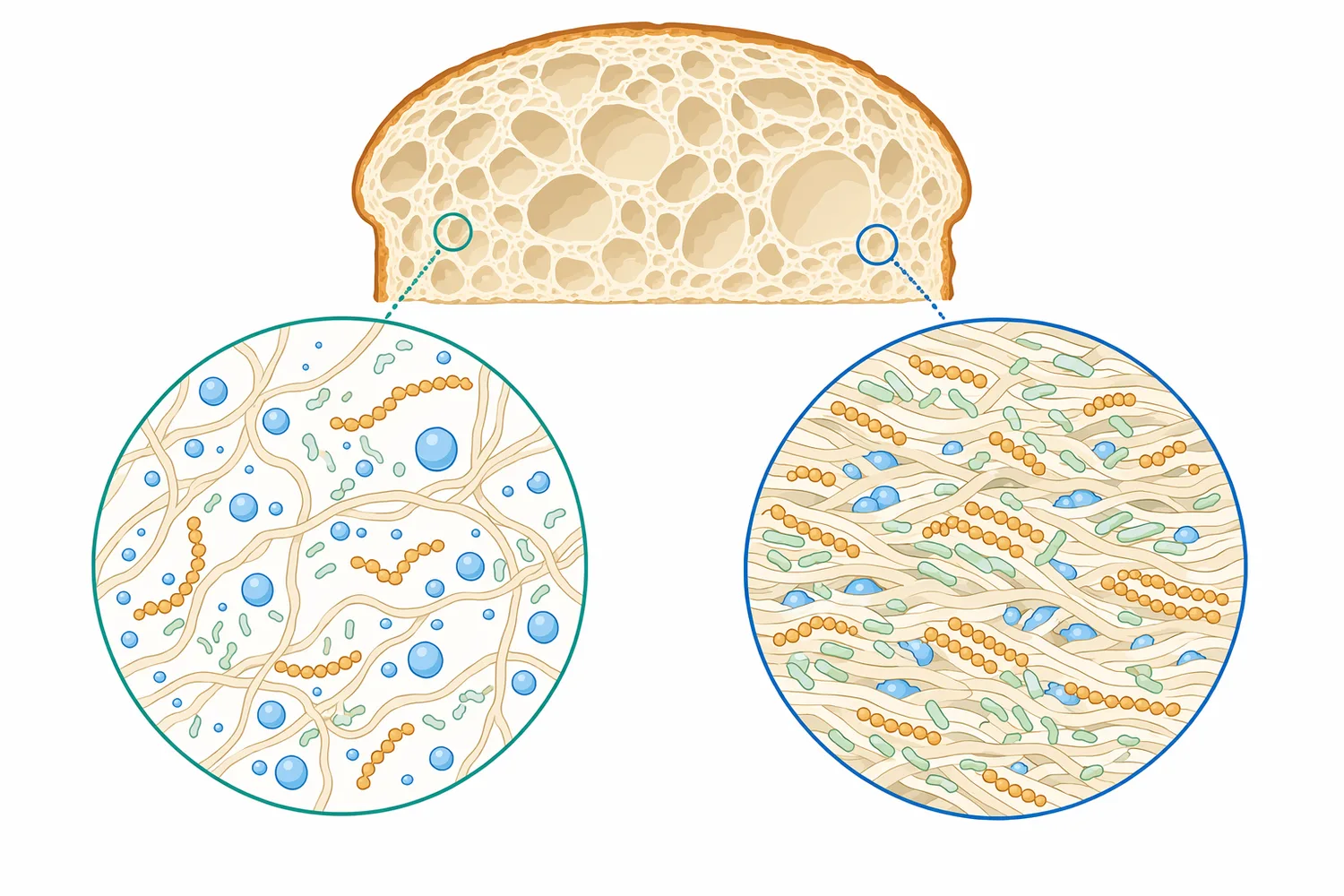
The primary application for this Enzymes.bio product is baking flour improvement. In bread systems, low-temperature alpha-amylase is used to support fermentation, loaf volume, crust color, crumb softness, and eating quality. It is especially relevant in formulas where flour starch is the main carbohydrate reserve and yeast fermentation depends on a steady supply of smaller sugars.
In cakes, cookies, crackers, and related baked goods, the role can differ because yeast fermentation may be absent or less important. The enzyme may still influence starch hydration, batter or dough viscosity, surface color, and texture development. The magnitude of the effect depends on product moisture, baking time, sugar level, fat level, and how much starch is accessible before the enzyme is inactivated.
In pasta and noodle systems, controlled starch modification can influence cooking behavior, bite, surface texture, and rehydration. Enzymatic treatment is also used in broader cereal processing where starch structure affects viscosity and product texture. Enzymes.bio lists pasta-processing and other flour-related uses in the product context for fungal amylase .
Brewing and fermentation applications rely on the same core chemistry: starch must be converted into smaller carbohydrates before microorganisms can use it efficiently. Alpha-amylase contributes to saccharification and fermentability by cutting starch into dextrins and sugars, while other enzymes may further convert those fragments depending on the process. Amylase production and application in food-industry contexts has been studied using microbial sources such as Penicillium species, reflecting the broad role of amylases in food processing [10].
Starch-conversion applications such as dextrin and maltodextrin production use alpha-amylase more directly as a hydrolysis tool. For example, sago flour has been enzymatically converted into maltodextrins using heat-stable alpha-amylase and pullulanase, illustrating how enzyme choice and process design determine the carbohydrate profile of the final ingredient [3]. Baking-flour alpha-amylase works on the same chemical bond type, but the desired outcome is dough and bread performance rather than maximum starch conversion.
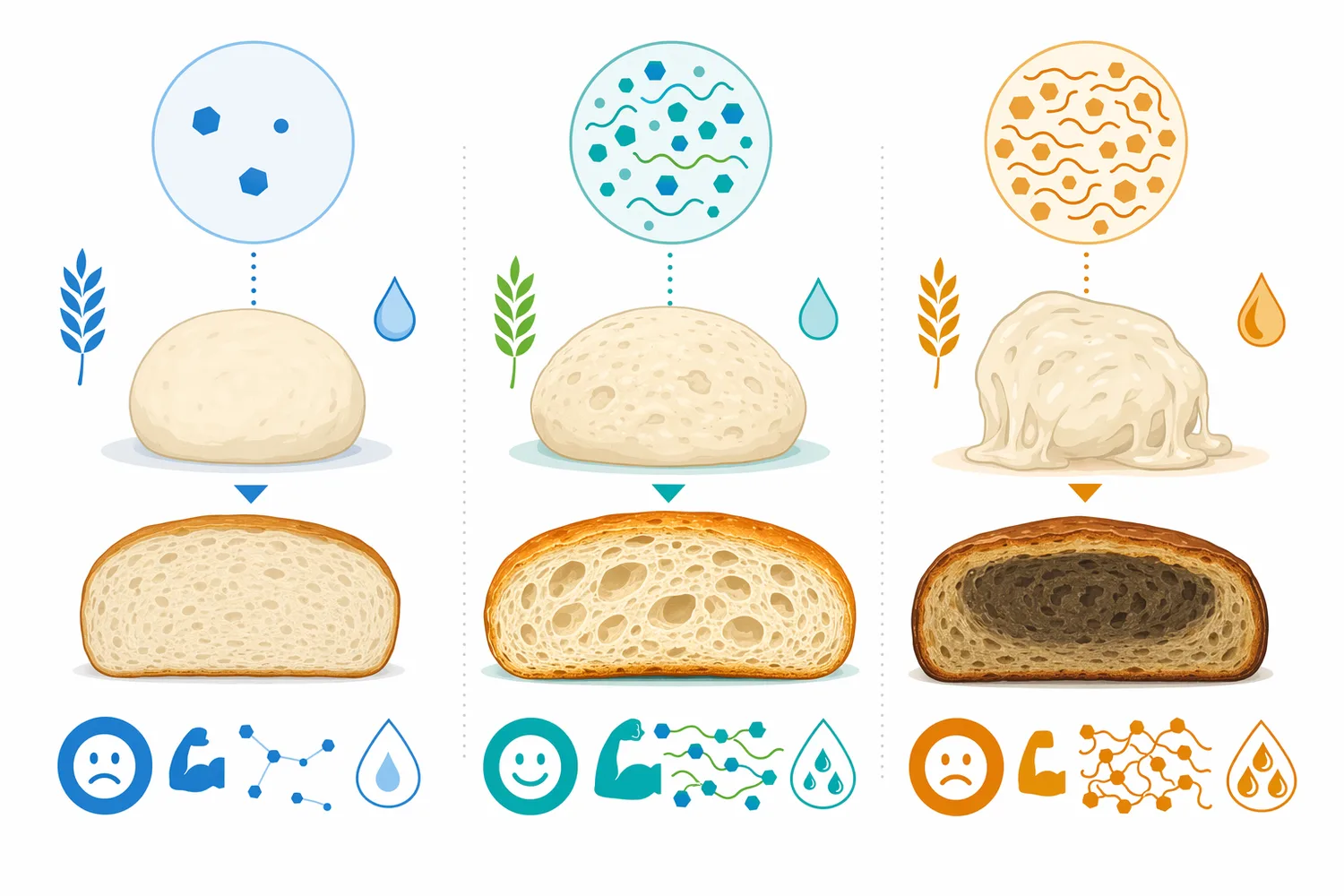
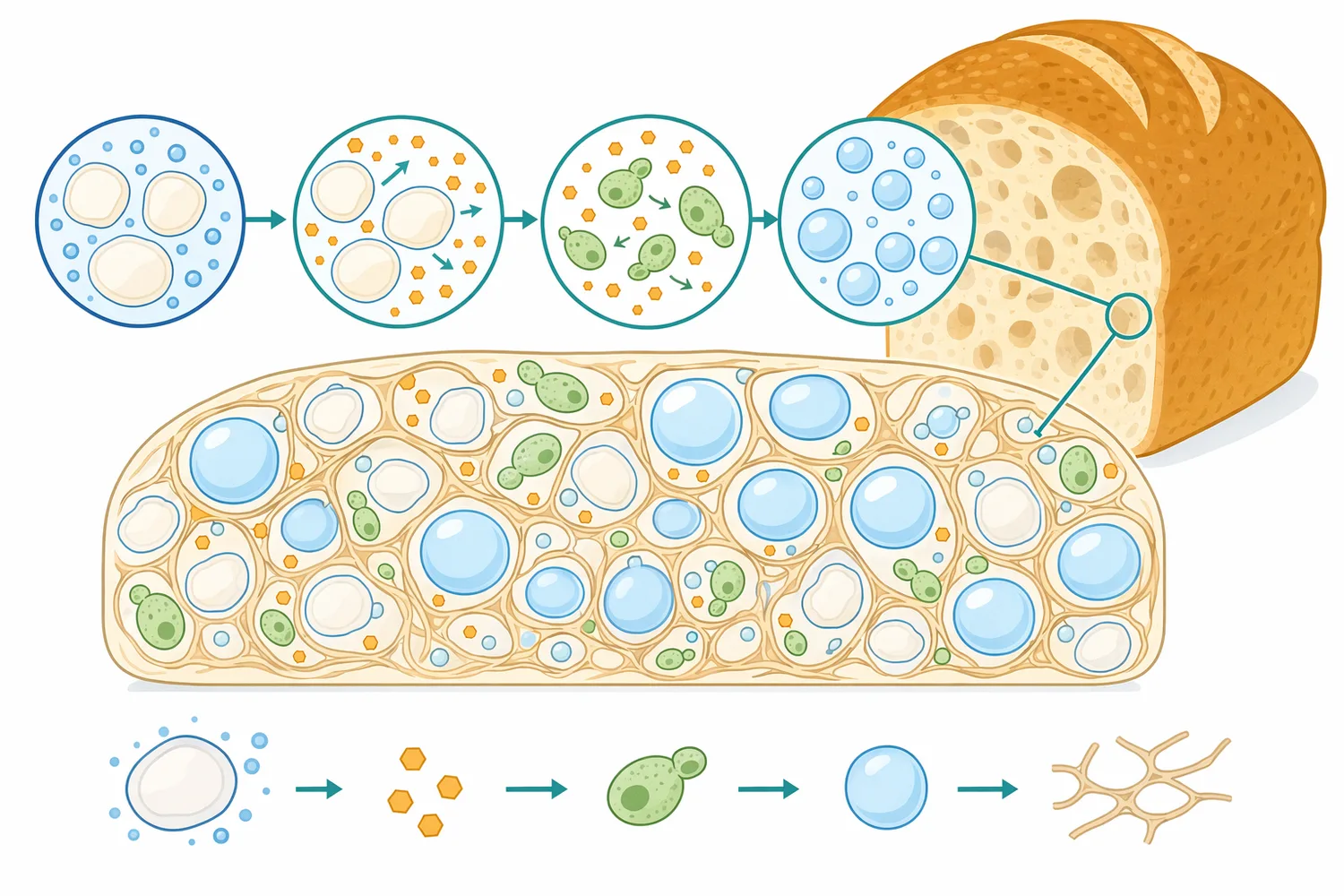
At the molecular level, alpha-amylase shortens starch chains. At the dough level, that means more soluble carbohydrate fragments and a changed balance between intact starch, damaged starch, dextrins, and fermentable sugars. At the bread level, those changes show up as fermentation support, browning potential, crumb texture, and storage softness.
During mixing, hydrated damaged starch becomes an early enzyme target. During bulk fermentation and proofing, the enzyme continues to release smaller carbohydrates that yeast can metabolize. During early baking, starch swelling and gelatinization make additional substrate more accessible for a short time, while the enzyme is progressively inactivated by heat. After baking, the hydrolysis products remain in the crumb and influence water distribution and starch reassociation.
This sequence explains why alpha-amylase has multiple effects from one mechanism. It is not separately “adding volume,” “adding color,” and “adding softness.” It is changing the starch fraction, and that single chemical change influences several process stages. The strongest results occur when the enzyme’s action window matches the dough process: active enough before crumb setting, limited enough after heating to avoid excessive dextrin formation.
Enzymes.bio supplies food-processing enzymes online, including this food-grade low-temperature fungal alpha-amylase for baking flour applications. The product can be purchased directly online by the 1 kg unit; after online payment, the order is processed and shipped. A Certificate of Analysis and Safety Data Sheet come with the order for the buyer’s internal receiving, handling, and documentation records .
This product should be treated as a professional food-processing enzyme, not as a retail food ingredient for direct consumption. As with enzyme powders generally, routine good handling practice matters: avoid creating airborne dust, keep containers closed when not in use, and follow the Safety Data Sheet supplied with the order. The enzyme’s value is in controlled use during food processing, where it modifies flour starch before heat inactivation and final product completion.
Low-temperature alpha-amylase is useful because it works on one of the most important components of flour: starch. By cutting internal alpha-1,4 bonds, it creates dextrins and fermentable sugars that help yeast performance, crust color, crumb tenderness, and storage quality. In a well-managed bread process, the customer sees those molecular changes as more consistent fermentation, better loaf development, a more attractive crust, and a softer eating texture.
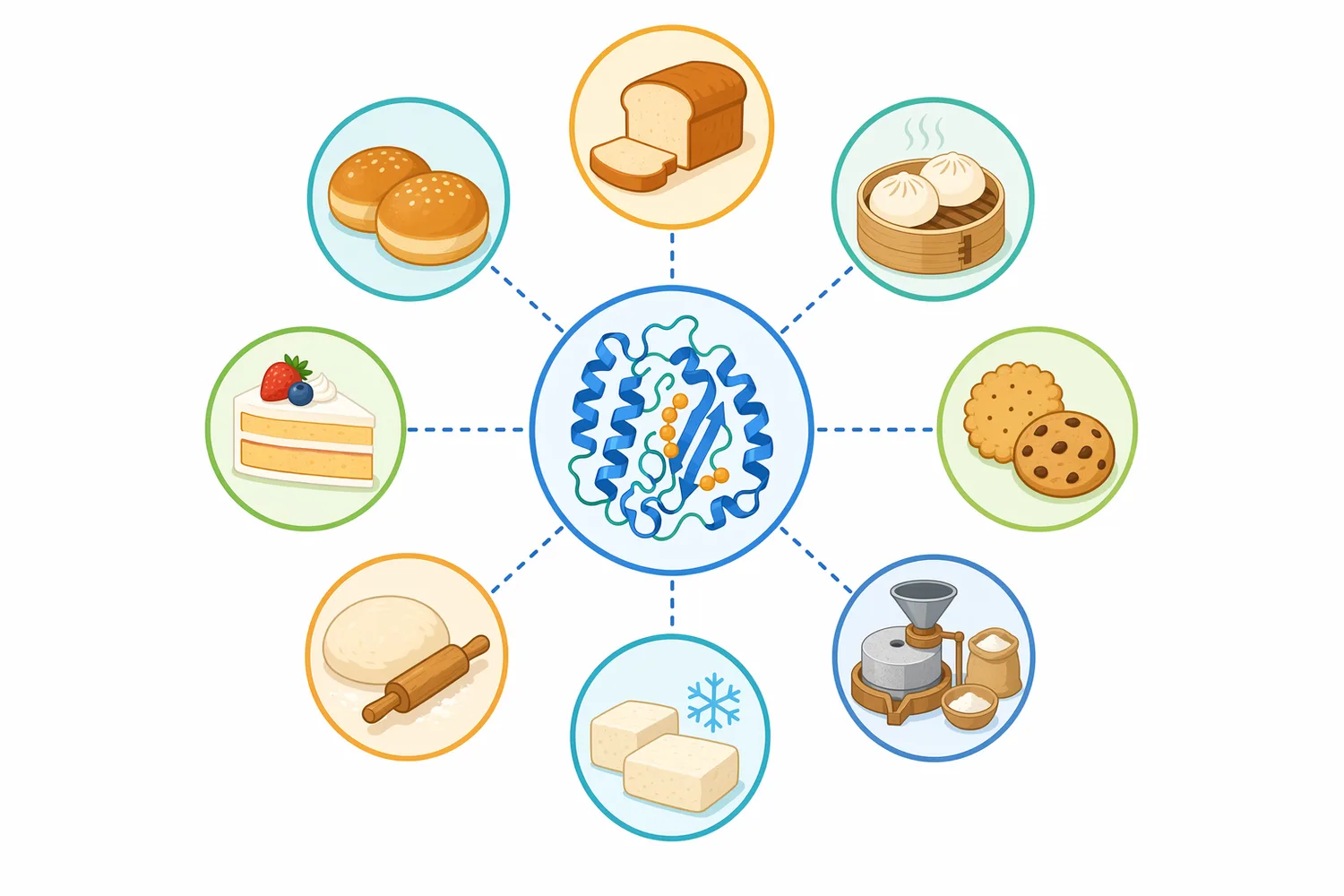
The enzyme is also practical because it fits existing flour-based processing. It does not require the baker to redesign bread chemistry around a new ingredient category; instead, it fine-tunes starch conversion within the normal dough process. The most important point is control. A baking amylase should support the dough early and then stop being a major actor as baking sets the crumb.
Across food research, alpha-amylase repeatedly appears as a core industrial enzyme for starch-rich materials, from wheat flour functionality to oat and sweet-potato flour modification, oat milk processing, maltodextrin production, and broader food-industry applications [1]. For baking flour, the same chemistry is applied with a narrower purpose: improve dough fermentation and finished bread quality without over-hydrolyzing the starch that gives crumb its structure.
Food-grade low-temperature alpha-amylase is a proven starch-modifying enzyme for baking flour and flour-based foods. It works by partially hydrolyzing internal alpha-1,4 bonds in starch, producing dextrins and smaller carbohydrates that support yeast fermentation, browning, crumb softness, and controlled anti-firming effects.
For bread and bakery applications, its value comes from timing: useful activity during dough preparation and proofing, followed by reduced activity as baking heat sets the loaf. Enzymes.bio supplies this fungal alpha-amylase directly online in 1 kg units, with order documentation provided, making it a straightforward option for buyers who need a food-processing enzyme for controlled starch management in baking flour systems.
Sold by the 1 kg unit, in stock and ready to ship. Order directly on our store — pay online and we process your order. A Certificate of Analysis and Safety Data Sheet are included with every order.
Buy Food Grade 100,000 U/G Baking Flour Food Additive Low Temperature Alpha Amylase →Numbered in order of first citation. Open-access sources, each verified reachable at publication; citation numbers in the text link here.