
Food Grade α-Acetolactate Decarboxylase, commonly called ALDC, is used in fermentation to prevent diacetyl formation by converting α-acetolactate into acetoin and carbon dioxide before α-acetolactate can oxidize into buttery-tasting diacetyl. In brewing, that upstream action supports cleaner lager and clean-fermented beer profiles and can reduce reliance on extended maturation for diacetyl cleanup. Enzymes.bio supplies Food Grade α-Acetolactate Decarboxylase directly online by the 1 kg unit; buyers pay online, the order is processed and shipped, and a Certificate of Analysis and Safety Data Sheet are included with the order.
α-Acetolactate decarboxylase is an enzyme in microbial acetoin metabolism. Its substrate, α-acetolactate, is a branched-chain α-hydroxy-β-keto acid formed during microbial metabolism, especially around pathways linked with valine biosynthesis. Instead of allowing α-acetolactate to follow the non-enzymatic route that can generate diacetyl, ALDC catalyzes direct decarboxylation to acetoin, a compound with far lower impact on the buttery off-flavor problem that brewers and fermentation operators try to avoid. ALDC has been characterized in food-relevant and fermentation-relevant microorganisms, including Lactococcus lactis, Streptococcus thermophilus, and Bacillus subtilis systems [1].
In practical brewing language, ALDC is best understood as a precursor-management enzyme. It does not wait for diacetyl to appear and then remove it; it reduces the available α-acetolactate pool before that precursor can become diacetyl. This distinction matters because diacetyl control in beer is often slow when it depends only on yeast reuptake and reduction after diacetyl has already formed. Brewer’s yeast expression work with an α-acetolactate decarboxylase gene showed the value of putting ALDC activity into the fermentation system: diacetyl formation in wort fermentation was substantially reduced when yeast carried and expressed the ALDC function [2].
The food-enzyme relevance of ALDC is also reflected in modern safety and production literature. A recent safety evaluation specifically addressed acetolactate decarboxylase as a food enzyme produced from a Bacillus subtilis strain, while applied production research has described food-enzyme ALDC production from Bacillus subtilis using agro-industrial feedstocks [3]. These publications should not be read as specifications for any individual commercial lot, but they do show that ALDC is an established food-enzyme category rather than a purely academic biochemical curiosity.
Diacetyl is flavor-active at low concentrations and is associated with butter, butterscotch, or slick dairy-like notes. In some fermented foods those notes may be desirable, and in a few beer styles a very low background level may be tolerated, but in most lager, pilsner, light ale, and clean-fermented beverages it is treated as a defect. The challenge is that diacetyl is not only a product of a single fermentation event; it is part of a dynamic precursor pathway in which α-acetolactate leaves yeast or bacteria, undergoes chemical conversion, and then may be reduced again by living cells if process conditions allow. Studies on lactic acid bacteria demonstrate how ALDC activity changes the balance between α-acetolactate, acetoin, and related flavor compounds, confirming that the enzyme sits at an important metabolic branch point [4].
During normal yeast fermentation, α-acetolactate can be formed as an intermediate related to valine biosynthesis. Some of this intermediate can be excreted into the fermenting liquid. Outside the cell, α-acetolactate is chemically unstable compared with the intracellular metabolic intermediate and can undergo oxidative decarboxylation to diacetyl. Once diacetyl forms, yeast can reduce it further to less flavor-active compounds, but that cleanup depends on yeast vitality, time, temperature, and the stage of fermentation. ALDC changes the situation by acting before the chemical oxidation step, so the precursor is enzymatically decarboxylated to acetoin rather than being left to become diacetyl.
This upstream intervention is especially valuable in lager production because the conditions that make lager flavor clean—cool fermentation and controlled maturation—can also make biochemical cleanup slower. Research on improved beer fermentation using encapsulated α-acetolactate decarboxylase treated ALDC as a tool for better fermentation performance and process control, reflecting the long-standing interest in using the enzyme to reduce diacetyl-related maturation constraints [5]. The industrial value is not just sensory; it is also operational, because a tank held for diacetyl reduction is a tank that cannot be used for the next batch.
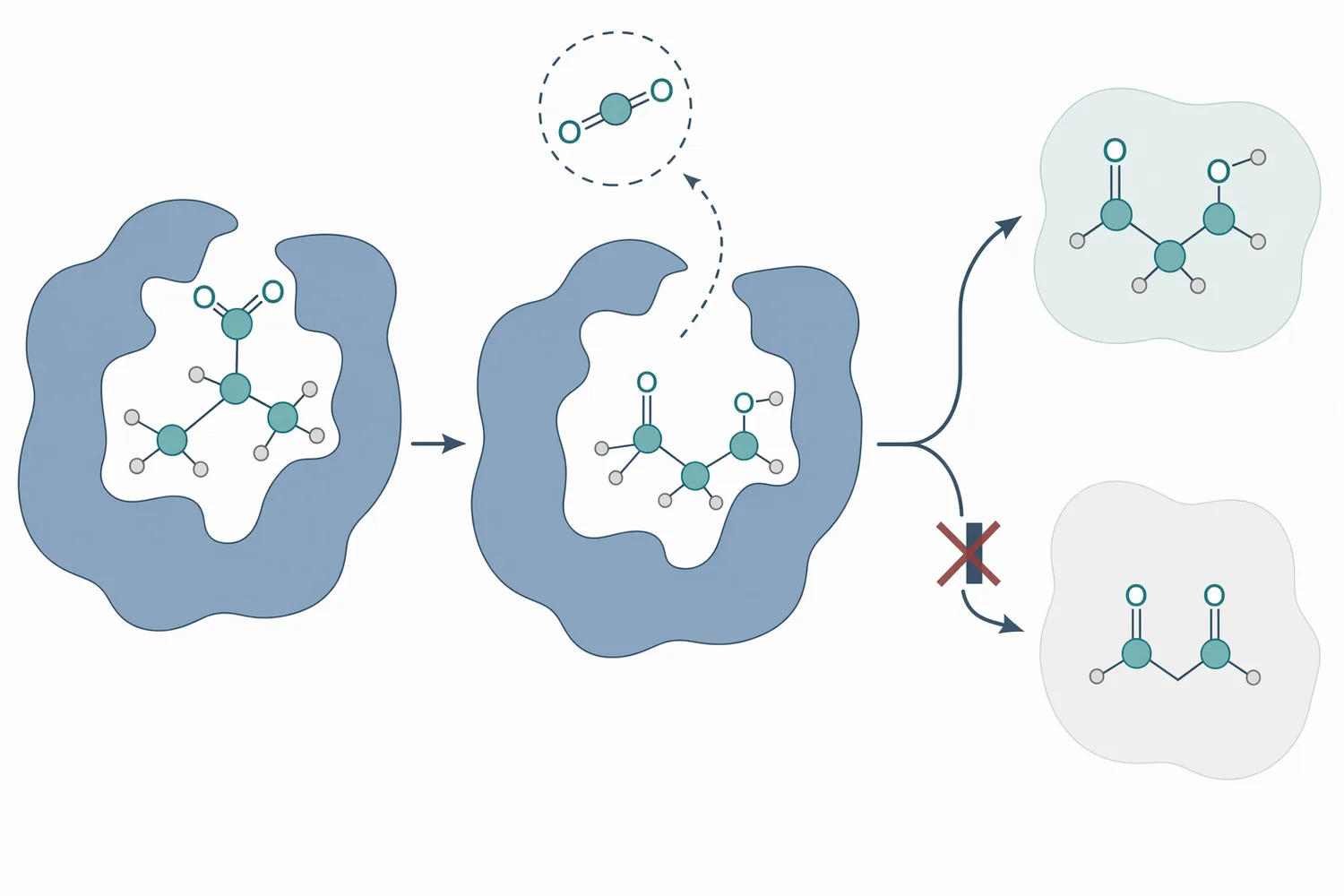
The key reaction is simple but powerful:
α-acetolactate → acetoin + carbon dioxide
ALDC removes the carboxyl group from α-acetolactate as carbon dioxide. By doing so, it converts the α-hydroxy-β-keto acid into acetoin through an enzymatic route. Without this enzyme-catalyzed route, α-acetolactate can instead follow a non-enzymatic oxidative decarboxylation pathway that forms diacetyl. Structural and enzymatic characterization of Bacillus subtilis acetolactate decarboxylase supports this specific catalytic role and has helped explain how the enzyme recognizes α-acetolactate and promotes decarboxylation rather than leaving the substrate to chemical side reactions [6].
Mechanistically, the enzyme’s value is therefore not that it “covers up” butter flavor. It changes the chemical fate of a molecule before the butter-flavor compound accumulates. In a fermenter, that means the substrate pool available for spontaneous diacetyl formation is lowered while acetoin becomes the favored product of the branch. Acetoin still belongs to the same broad family of fermentation carbonyl compounds, but it is much less problematic for the classic diacetyl fault. This is why ALDC is described in both brewing and microbial-metabolism contexts as a way to steer α-acetolactate metabolism toward acetoin [1].
Stereochemistry also matters. α-Acetolactate and related α-hydroxy-β-keto acids can occur as stereochemical forms, and enzyme active sites do not treat all forms equally. Characterization of Streptococcus thermophilus acetolactate decarboxylase showed stereoselectivity in decarboxylation of α-hydroxy-β-keto acids, reinforcing that ALDC is not a nonspecific chemical scavenger but a substrate-recognizing catalyst with defined biochemical preferences [7]. For the process user, the practical lesson is that ALDC performance comes from targeted catalysis at a specific metabolic branch point.
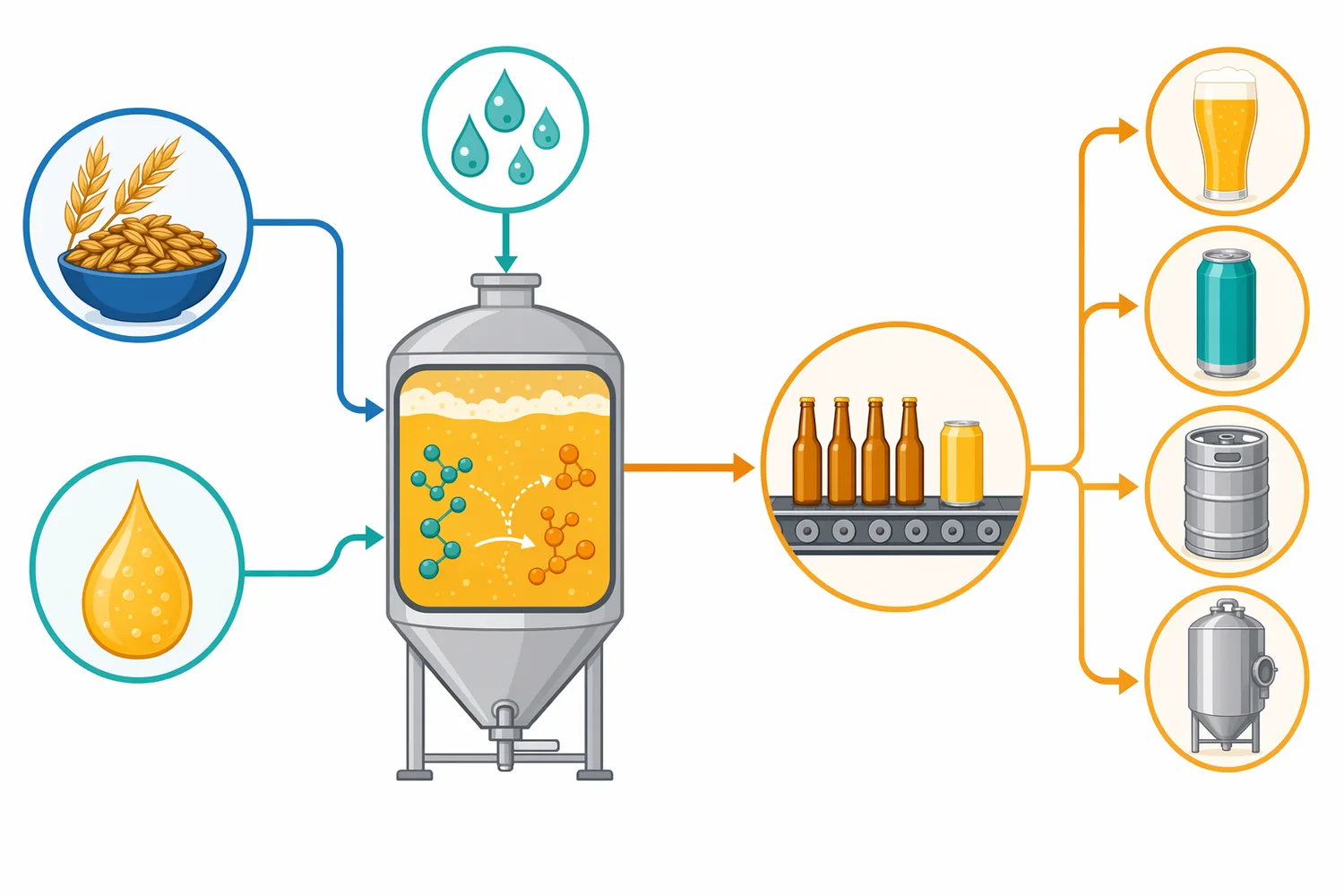
The following table summarizes the practical difference between relying only on the natural fermentation pathway and using ALDC as a preventive process aid.
| Route in fermentation | Main chemical event | Practical sensory result | Process implication |
|---|---|---|---|
| α-Acetolactate left unmanaged | α-Acetolactate can chemically oxidize and decarboxylate to diacetyl | Greater risk of buttery or butterscotch notes | More dependence on time, yeast condition, and maturation for cleanup |
| Yeast cleanup after diacetyl forms | Yeast reduces diacetyl to less flavor-active compounds | Can reduce diacetyl if cells remain active and conditions are favorable | Effective but time-dependent; often contributes to longer conditioning |
| ALDC present early enough | ALDC decarboxylates α-acetolactate directly to acetoin and CO₂ | Less precursor available for diacetyl formation | More preventive control of diacetyl risk; supports cleaner process timing [5] |
This comparison highlights why ALDC is most logically used when α-acetolactate is being produced, rather than after a finished beverage already contains excessive diacetyl. Once diacetyl has accumulated, the process problem has changed: the system now needs reduction of diacetyl rather than diversion of α-acetolactate. ALDC’s primary function remains conversion of the precursor, not removal of the final off-flavor compound. Brewer’s yeast studies expressing α-acetolactate decarboxylase support this timing logic because the benefit came from ALDC activity during fermentation, when precursor was being generated [2].
ALDC’s brewing relevance has been demonstrated through genetic, enzymatic, and process-engineering approaches. Early work expressed the Enterobacter aerogenes α-acetolactate decarboxylase gene in brewer’s yeast and showed reduced diacetyl formation during wort fermentation, proving that ALDC activity can alter the flavor-relevant carbonyl profile in a beer matrix [2]. That work is not the same as adding a commercial enzyme preparation, but the underlying biochemical target is the same: α-acetolactate is redirected away from diacetyl formation.
Process-focused beer research has also examined ways to deploy ALDC in fermentation. The study on encapsulated α-acetolactate decarboxylase and modeling treated the enzyme as a practical lever for improved beer fermentation performance and control, not merely as a reaction observed in purified biochemical systems [5]. Encapsulation research is useful because it shows how seriously ALDC has been considered for real fermentation environments, where enzyme stability, contact with substrate, beer composition, and timing all influence the result.
Microbial physiology research provides additional support for the importance of the ALDC branch point. In Lactococcus lactis subsp. lactis, α-acetolactate decarboxylase has been described as having a dual role, linking it to both acetoin formation and broader metabolic behavior in the organism [1]. That kind of work helps explain why changing ALDC activity can shift fermentation product profiles: the enzyme competes with other fates of α-acetolactate and therefore changes the carbon flow through aroma-relevant pathways.
Studies using ALDC-deficient mutants are especially informative because they show what happens when the enzyme function is impaired. Spontaneous mutants of Streptococcus thermophilus deficient in α-acetolactate decarboxylase were selected and characterized, demonstrating that loss of ALDC activity changes the organism’s metabolic properties [8]. In applied terms, this reinforces the same principle seen in brewing: the presence or absence of ALDC can alter how α-acetolactate-derived compounds accumulate.
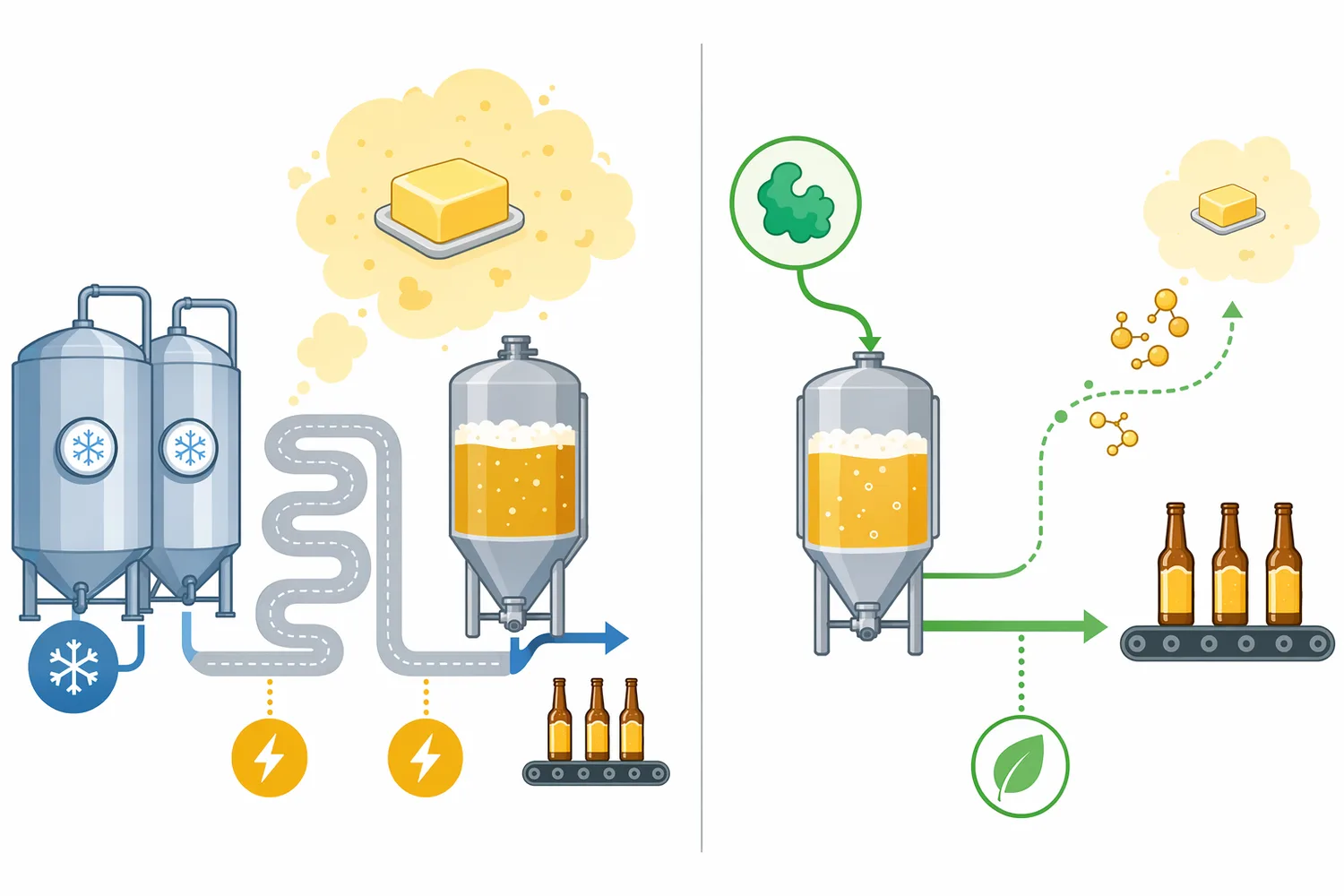
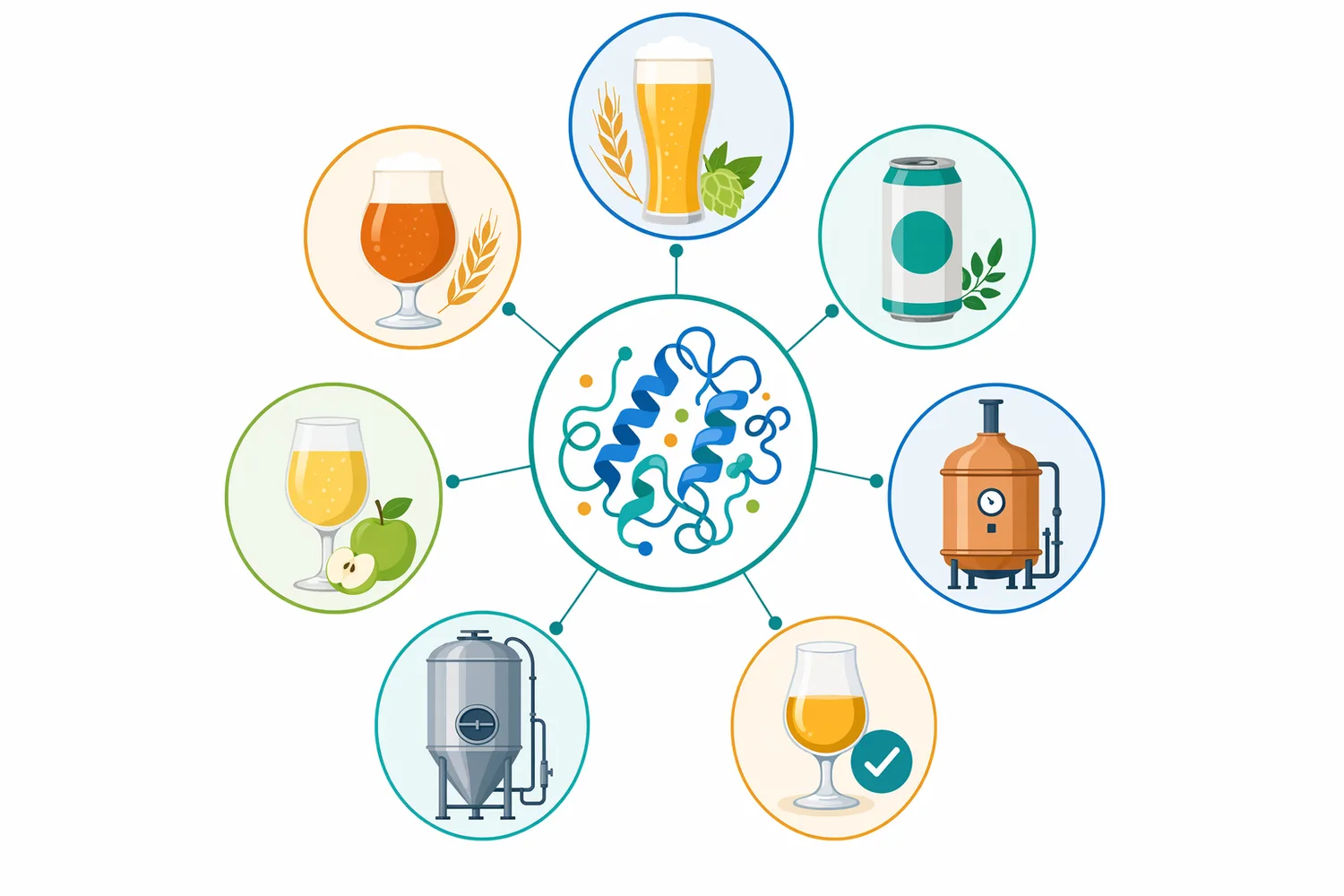
The strongest application fit for Food Grade α-Acetolactate Decarboxylase is beer fermentation where a clean profile is required. Lager, pilsner, light lager, kölsch-style fermentation, clean ale fermentation, and other beverages where buttery notes are undesirable are all examples of process contexts where the ALDC mechanism is relevant. The common factor is not the style name but the presence of α-acetolactate formation and the need to prevent diacetyl accumulation. Beer fermentation research using ALDC has focused on improving control of this exact problem [5].
In lager production, the operational value is particularly clear. Lager fermentation and maturation often place high value on low sulfur defects, low esters, and clean malt expression, which means diacetyl can stand out sharply. If ALDC reduces precursor conversion to diacetyl, the brewer has a more proactive route to flavor control than waiting for yeast to complete late-stage cleanup. The biochemical proof from brewer’s yeast ALDC expression is relevant here because it shows that introducing ALDC activity into wort fermentation can reduce the diacetyl burden generated through the normal precursor route [2].
For clean ales and hybrid fermentation, ALDC can be understood in the same way. The enzyme is not “for lager only”; it is for fermentations where α-acetolactate-derived diacetyl is a sensory risk and where the desired product profile does not benefit from buttery notes. The reason it is most closely associated with lager is that lager process timing often makes diacetyl management more visible. The underlying substrate and reaction remain the same across yeast-driven systems: α-acetolactate is converted enzymatically to acetoin rather than being left to form diacetyl.
ALDC can also be relevant to broader microbial fermentation systems that involve acetoin and 2,3-butanediol metabolism. In Clostridium acetobutylicum, heterologous expression of an acetolactate decarboxylase was studied as a way to enhance production of butanol and acetoin, showing that ALDC can be used as a metabolic-routing tool beyond beer flavor control [9]. For food and beverage users, this broader biotechnology literature is useful mainly because it confirms that ALDC changes pathway flux toward acetoin in living fermentation systems.
ALDC is typically most useful when present early enough to intercept α-acetolactate as it is formed. Because the enzyme acts on the precursor, delayed use after diacetyl has already accumulated is not the same process intervention. In beer, this means ALDC is normally thought of as a fermentation-stage process aid rather than a finished-beer flavor correction. The brewer’s yeast expression studies are again instructive because ALDC activity was integrated into the fermentation itself, where it could act while α-acetolactate was being produced [2].
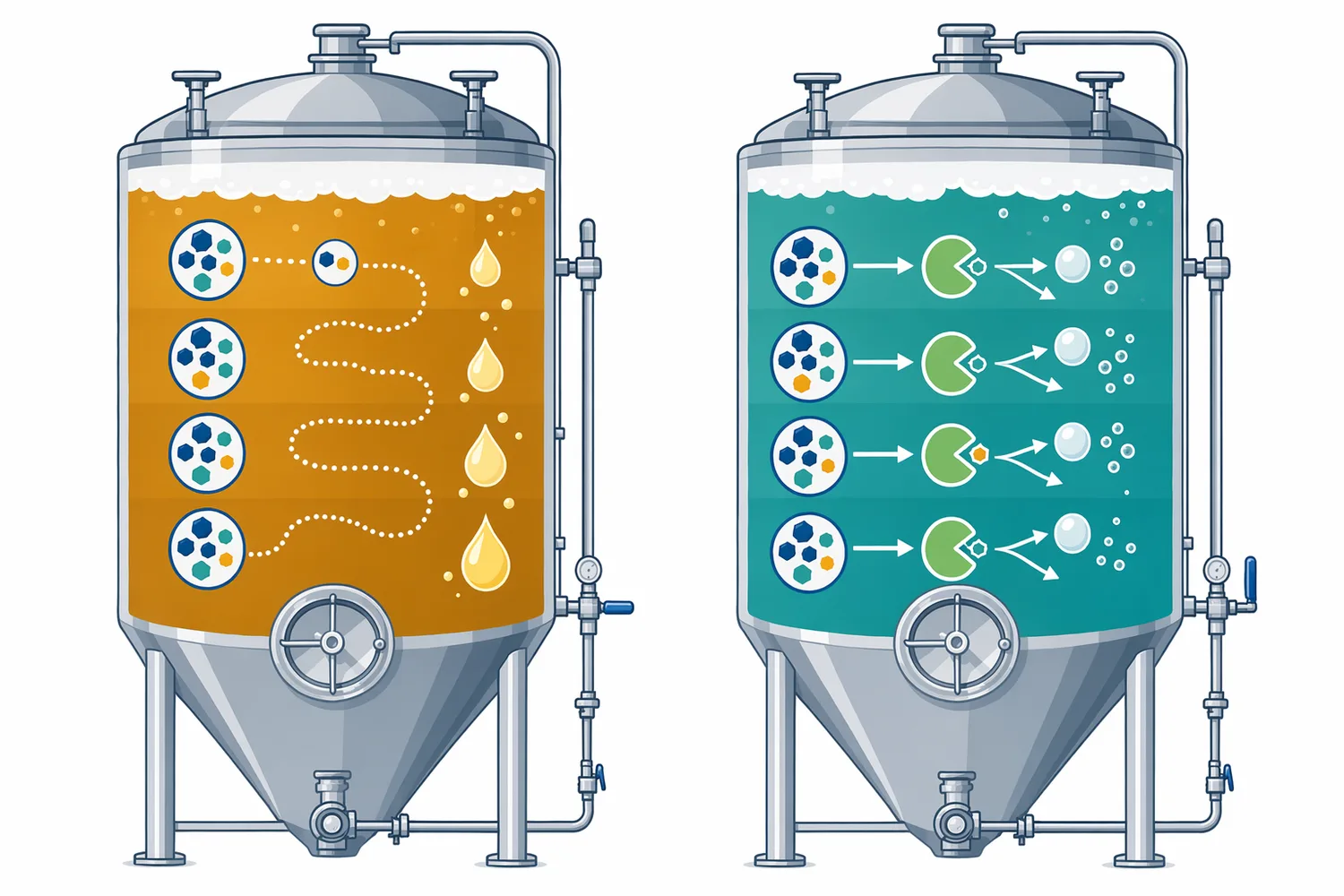
Temperature and pH influence enzyme behavior in every real fermentation, but the practical point should be kept clear: ALDC works as part of a living, changing matrix. Wort becomes beer; pH changes; yeast growth, amino acid metabolism, and redox conditions change; and α-acetolactate production is not constant from start to finish. Structural and enzymatic characterization of Bacillus subtilis ALDC confirms that this is a defined enzyme with catalytic properties, not a general chemical additive, so process conditions naturally affect how much opportunity it has to contact and convert its substrate [6].
Good fermentation practice remains important. ALDC reduces the route from α-acetolactate to diacetyl, but it does not correct every cause of buttery off-flavor. Bacterial contamination, stressed yeast, poor nutrient balance, or premature separation from active yeast can still create sensory and stability issues. Research on lactic acid bacteria with impaired ALDC activity shows that citrate and glucose co-metabolism can strongly influence the balance of aroma compounds, illustrating that diacetyl-related outcomes depend on the whole metabolic environment, not on one enzyme alone [4].
When ALDC has enough access to α-acetolactate during fermentation, the main expected chemical change is a lower tendency for diacetyl to accumulate from that precursor. The process does not require diacetyl to be formed first, which is why the sensory benefit can be cleaner and more predictable than a process relying only on late reduction. In metabolic terms, ALDC increases the enzymatic route to acetoin at the expense of the non-enzymatic route to diacetyl. This product-direction role is consistent with the enzyme’s characterized function in Lactococcus lactis and other microorganisms [1].
From a production standpoint, successful ALDC use can reduce the need to hold beer solely because α-acetolactate may still convert to diacetyl after apparent fermentation completion. That is a common frustration in clean beer production: a beer may look finished by gravity, but flavor maturation is not complete because precursor conversion and diacetyl reduction are still catching up. By lowering the precursor pool, ALDC helps bring chemical flavor risk closer to the timeline of primary fermentation. Beer-process modeling work with encapsulated ALDC reflects this interest in improved fermentation control and more predictable process performance [5].
From a sensory standpoint, the desired outcome is not the creation of a new flavor character. ALDC is not added to make beer taste like acetoin. Its purpose is to prevent a small amount of a highly recognizable off-flavor from dominating a clean profile. Because diacetyl has a distinctive buttery signature, even modest reductions in its formation pathway can be meaningful in styles where crispness, malt cleanliness, hop definition, or neutral fermentation character are important. The practical impact comes from removing a disruptive pathway rather than adding a positive flavor note.
ALDC occurs in multiple microbial systems, and research has characterized genes and enzymes from different organisms. The Bacillus brevis aldB gene was cloned and shown to encode an α-acetolactate decarboxylase described as an exoenzyme, while later work has characterized Bacillus subtilis ALDC structurally and enzymatically [10]. These microbial-source studies are part of why ALDC is well understood as a commercial enzyme category: the enzyme has been studied at the genetic, protein, structural, and applied-process levels.
Food-enzyme production literature has also treated Bacillus subtilis as an important organism for ALDC. A 2022 study described production of the food enzyme acetolactate decarboxylase from Bacillus subtilis using agro-industrial residues as feedstock, indicating ongoing work to produce ALDC efficiently in food-enzyme contexts [11]. For buyers, the main takeaway is that ALDC is an established enzyme type with a substantial scientific record behind its food and fermentation uses.
Safety assessment literature is separate from performance evidence, but it is relevant to confidence in the enzyme category. A published safety evaluation addressed acetolactate decarboxylase as a food enzyme from a genetically modified Bacillus subtilis strain, considering the enzyme in the context of food processing use [3]. This does not replace the documentation supplied with any specific order, but it shows that ALDC has been reviewed within the formal food-enzyme safety literature.
ALDC is a preventive process aid, not a universal cure for all diacetyl problems. If diacetyl is already present at an unacceptable level in finished beer, ALDC cannot be expected to reverse the problem directly because its substrate is α-acetolactate, not diacetyl. The enzyme’s benefit is greatest when it is present while precursor is still being formed and before the chemical route to diacetyl has progressed substantially. The core reaction—decarboxylation of α-acetolactate to acetoin—defines both the benefit and the limitation [6].
ALDC also does not replace sensory control, yeast management, or sanitation. A clean beer process still depends on healthy fermentation, appropriate maturation decisions, and avoidance of contaminating organisms that can produce unwanted carbonyls or alter flavor balance. The literature on ALDC-deficient and ALDC-impaired lactic acid bacteria shows that microbial metabolism can shift aroma compound formation significantly when the ALDC branch is changed, but it also shows that the surrounding metabolic system matters [8].
Finally, ALDC should not be treated as a flavoring ingredient. Its role is pathway management: it changes the fate of a precursor. That is why the enzyme is especially useful in products where the target sensory profile is clean, neutral, crisp, or lager-like. Its value is measured by reduced diacetyl risk, improved process confidence, and less dependence on extended waiting for a compound that could have been prevented upstream. The brewing and microbial studies together support that practical interpretation [5].
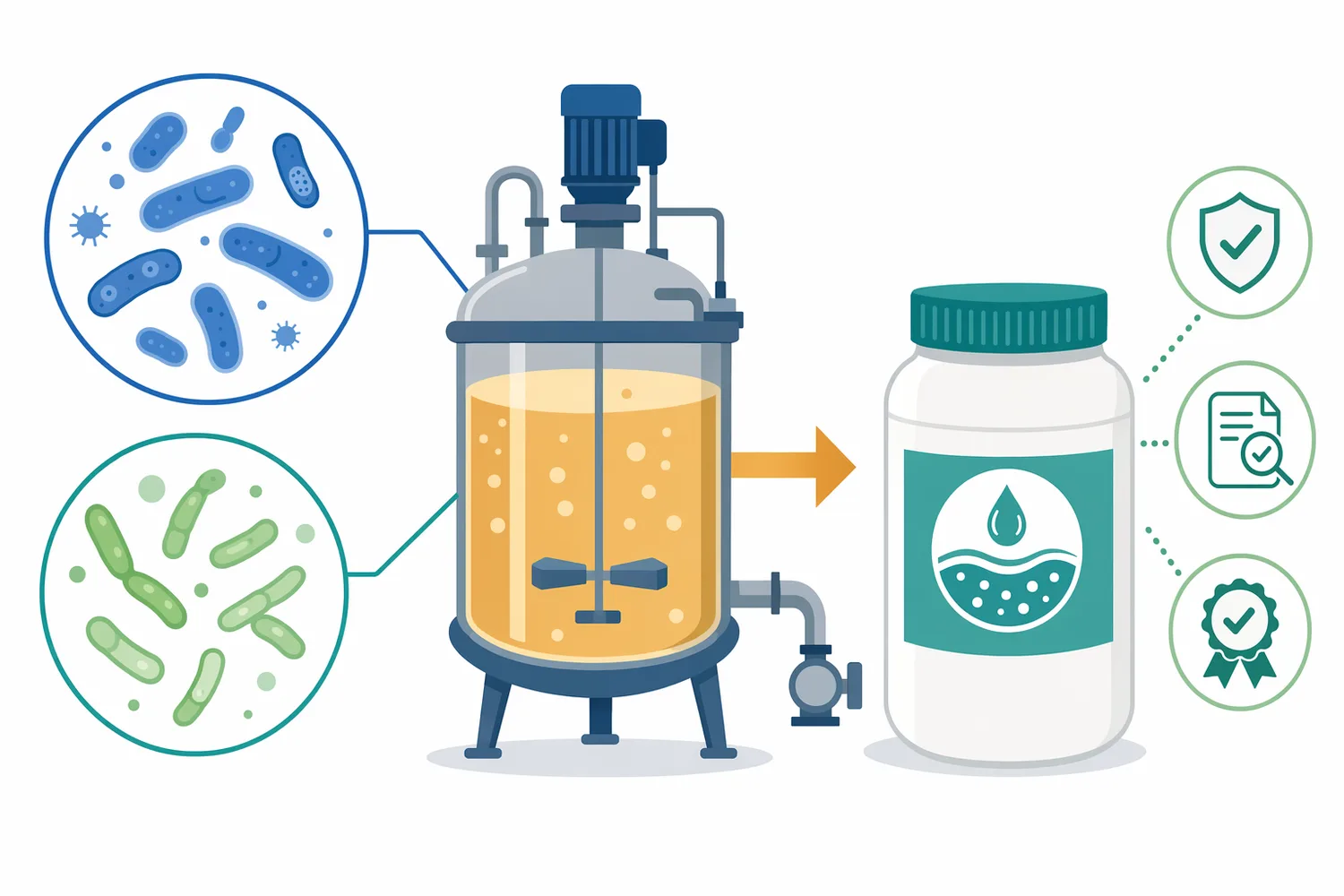
Enzymes.bio supplies Food Grade α-Acetolactate Decarboxylase as a direct online purchase by the 1 kg unit. The buying process is straightforward: add the product to the online order, pay online, and the order is processed and shipped. A Certificate of Analysis and Safety Data Sheet are included with the order, giving buyers the standard documentation that accompanies the supplied product.
Enzymes.bio is a supplier, not a laboratory or manufacturer, so the focus is on making established enzyme products accessible for professional use rather than providing custom fermentation development or in-house testing services. This article is intended to explain how ALDC works, why it is used, what the scientific evidence supports, and where its practical limits are. The research record around ALDC—from brewer’s yeast expression studies to structural characterization and food-enzyme safety evaluation—supports its role as a credible tool for diacetyl prevention in appropriate fermentation processes [3].
Food Grade α-Acetolactate Decarboxylase helps prevent diacetyl formation by converting α-acetolactate into acetoin and carbon dioxide before the precursor can chemically form diacetyl. This makes ALDC most useful as an early fermentation-stage process aid for clean-flavor beer and related fermentations, especially where buttery notes are unacceptable. The enzyme’s mechanism is specific and well supported by microbial physiology, structural enzyme research, and brewing application studies [6].
For brewing, ALDC’s practical value is cleaner flavor control and reduced dependence on late-stage diacetyl cleanup. It works upstream, which is why it should be understood as a prevention tool rather than a treatment for finished beer already containing high diacetyl. Brewer’s yeast ALDC expression and beer-fermentation process studies both support the central claim: when ALDC activity is present during fermentation, the pathway can be redirected away from diacetyl formation [2].
Enzymes.bio offers Food Grade α-Acetolactate Decarboxylase for direct online purchase in 1 kg units, with order processing and shipment after online payment. A Certificate of Analysis and Safety Data Sheet accompany the order, while the scientific basis for ALDC use remains clear: it targets α-acetolactate, diverts it to acetoin, and helps protect clean fermented beverages from the sensory impact of diacetyl.
Sold by the 1 kg unit, in stock and ready to ship. Order directly on our store — pay online and we process your order. A Certificate of Analysis and Safety Data Sheet are included with every order.
Buy Food Grade Α-Acetolactate Decarboxylase →Numbered in order of first citation. Open-access sources, each verified reachable at publication; citation numbers in the text link here.