
Food-grade alkaline protease is used to hydrolyze proteins into smaller peptides and amino acids under alkaline processing conditions. In food and ingredient applications, that controlled cleavage can improve dispersion, reduce viscosity, change emulsification behavior, support peptide-rich ingredient development, and help convert protein-rich side streams into more usable hydrolysates.
Enzymes.bio supplies Food-Grade Alkaline Protease for Protein Hydrolysis as an online product sold by the 1 kg unit. Buyers purchase directly online; the paid order is then processed and shipped, with a Certificate of Analysis and Safety Data Sheet included with the order.
Proteases are enzymes that cleave peptide bonds, the chemical links that connect amino acids into proteins and peptides. An alkaline protease is most useful where the reaction environment is on the alkaline side, commonly described in the scientific literature as the pH region where many industrial alkaline proteases show their strongest activity, often around pH 8–11 depending on the enzyme system and substrate context [1].
In protein hydrolysis, the substrate may be a plant protein isolate, pulse flour slurry, dairy protein concentrate, fish or meat protein stream, collagen-rich material, cereal fraction, seed meal, or other protein-rich material. The product of the reaction is not one single compound; it is a hydrolysate containing a distribution of larger residual proteins, intermediate peptides, short peptides, and free amino acids. That distribution is what changes solubility, viscosity, taste, digestibility, drying behavior, and downstream formulation performance.
Alkaline proteases are widely associated with microbial enzyme systems, including Bacillus, Aspergillus, Brevibacillus, Halobacillus, and other organisms studied for extracellular protease production. Recent work has continued to characterize alkaline proteases from organisms such as Bacillus amyloliquefaciens, halophilic isolates, Brevibacillus agri, and Halobacillus species, reflecting the strong industrial interest in enzymes that remain active in alkaline aqueous processes [2].
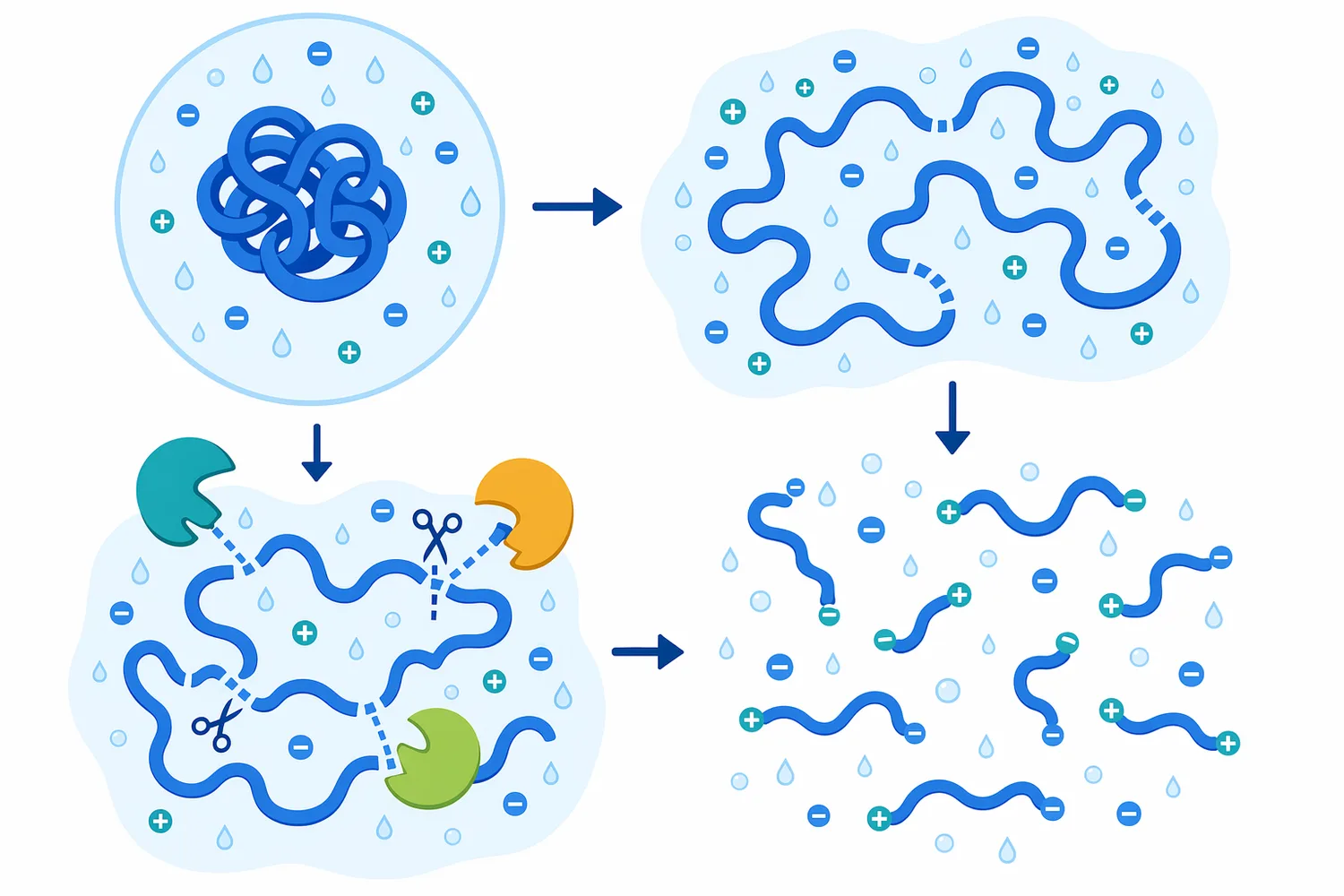
For a food processor or ingredient developer, the important point is not simply that “protein is broken down.” The enzyme changes the physical chemistry of the protein system. Large folded proteins become smaller fragments; buried hydrophobic and charged regions become exposed; particle interactions weaken; water access increases; and the slurry or solution can move from thick, aggregated, and difficult to process toward a more dispersible hydrolysate.
A protein molecule is a folded chain of amino acids. Its shape is held together by hydrogen bonding, hydrophobic interactions, ionic interactions, disulfide bonds in some proteins, and interactions with minerals, lipids, carbohydrates, or polyphenols. In a protein slurry, many molecules may also aggregate with each other, creating poor solubility, high viscosity, sediment, or gritty texture.
Alkaline conditions can increase the net negative charge of many food proteins. That increased charge can push protein molecules apart, swell protein particles, and expose peptide bonds that were less accessible in the native folded state. Once those bonds are exposed, alkaline protease can bind to susceptible regions of the chain and catalyze peptide-bond hydrolysis, converting long chains into shorter fragments [1].
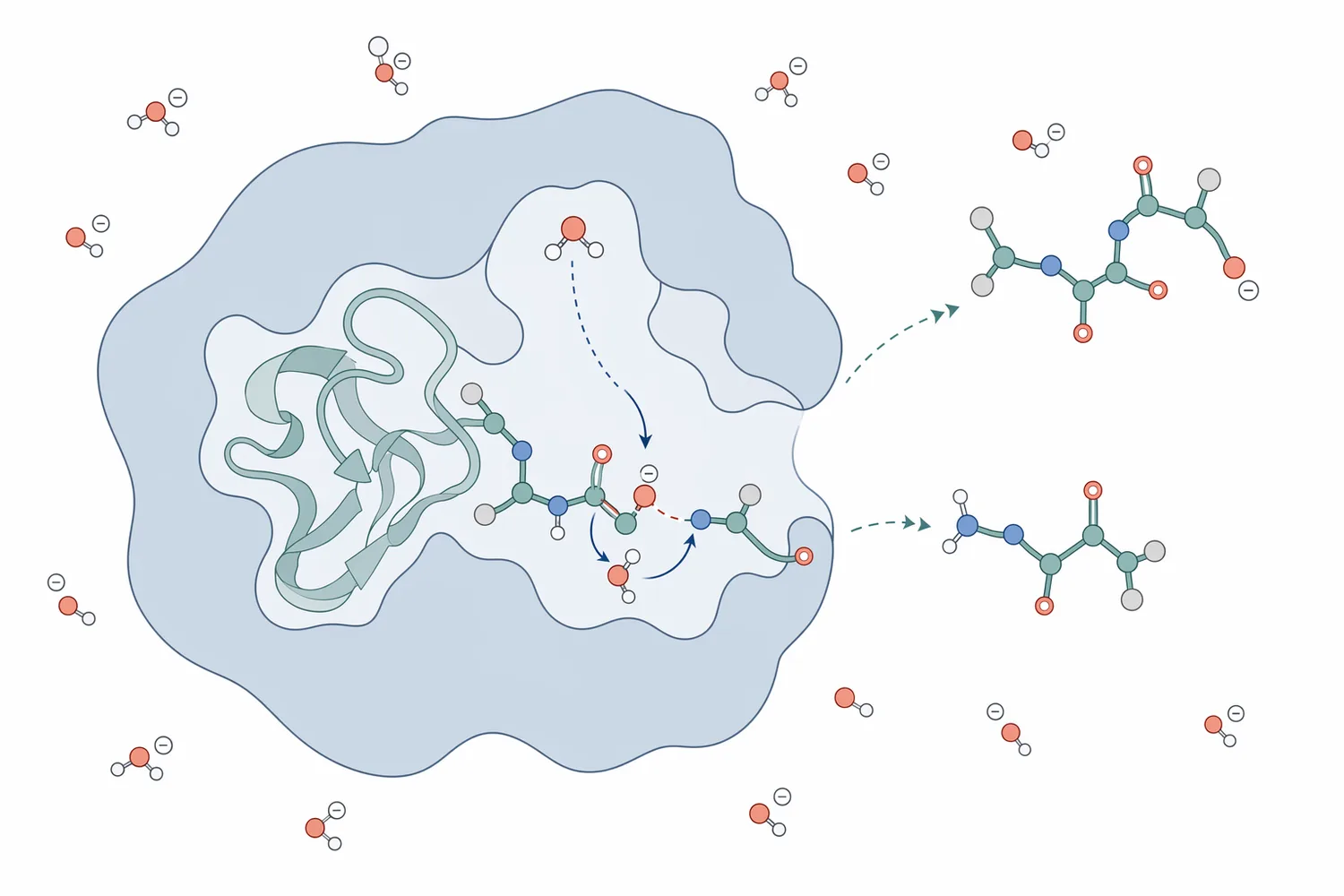
This cleavage has several direct process effects. First, molecular size decreases, so large protein aggregates can become smaller and easier to suspend. Second, new amino and carboxyl end groups are created at the cut sites, increasing the number of charged and water-interacting groups. Third, hydrophobic regions that were hidden inside the folded protein may appear at the peptide surface, which can either help interfacial activity or contribute to bitterness if hydrolysis is pushed too far.
The result is a controlled shift in ingredient behavior. A low or moderate extent of hydrolysis may mainly reduce viscosity and improve dispersibility. A more extensive hydrolysis may generate a peptide-rich ingredient with stronger changes in solubility, taste, and biological activity. Excessive hydrolysis can create very small, hydrophobic peptides that are more likely to taste bitter or interact unpredictably in finished formulations.
Different protease classes are useful in different process environments. The comparison below is conceptual; actual behavior depends on the individual enzyme preparation and the protein substrate.
| Protease type | Typical process environment | Main practical use pattern | What changes in the protein system | Common limitations |
|---|---|---|---|---|
| Acid protease | Acidic systems | Fermented foods, acidic protein slurries, some flavor and digestion-oriented processes | Cleaves proteins where low pH has already changed protein charge and structure | May be less useful where the substrate is extracted or dispersed under alkaline conditions |
| Neutral protease | Near-neutral systems | Gentle hydrolysis where neutral pH is preferred for formulation or substrate stability | Produces peptides while limiting strong pH-driven unfolding | May act more slowly or less completely on tightly folded or aggregated proteins |
| Alkaline protease | Alkaline systems, often around the pH region associated with alkaline protease activity | Plant protein modification, protein extraction-linked hydrolysis, hydrolysate production, side-stream valorization | Combines alkaline protein swelling/unfolding with enzymatic cleavage, often improving access to peptide bonds | Bitterness, over-hydrolysis, and substrate-specific sensory changes require process control |
The advantage of alkaline protease is strongest when alkaline conditions are already helpful for the material being processed. Many plant proteins, for example, disperse or extract more effectively at alkaline pH, and that same environment can improve enzyme access to cleavage sites. This is one reason alkaline protease is often considered for plant-protein hydrolysates and protein-rich by-products.
Plant proteins are often structurally complex. Pulse, oilseed, cereal, and seed proteins may be compact, aggregated, or associated with fiber, starch, lipids, tannins, phytate, or phenolic compounds. Processing choices such as milling, extraction pH, heating, drying, and concentration all influence how accessible the protein is to enzymatic hydrolysis. A review of pulse protein processing emphasizes that both processing route and enzymatic hydrolysis shape ingredient functionality, including solubility and techno-functional behavior [3].
In soy protein systems, differential enzymatic hydrolysis has been studied for its effect on protein structure, functional properties, and soy milk powder performance. The practical mechanism is that proteolysis reduces the size of soy protein subunits and changes surface exposure of hydrophilic and hydrophobic groups, which can influence dispersion, powder reconstitution, emulsification, and mouthfeel in soy-based ingredients [4].
Sweet lupine protein provides another example of why hydrolysis is not only a “breakdown” step but a functional-design step. Research on enzymatic hydrolysis of sweet lupine protein for food ingredients shows that controlled hydrolysis can be directed toward ingredient functionality, with the outcome depending on how the protein is treated and how far hydrolysis proceeds [5].
Seed proteins are also relevant. Grape seed protein hydrolysis has been investigated for in vitro digestibility, functionality, and structural changes as affected by enzyme concentration and hydrolysis time. Mechanistically, increasing hydrolysis time or enzyme exposure changes the peptide-size distribution and exposes different chemical groups, which can improve some properties while potentially weakening others if the protein is cut too extensively [6].
Pumpkin seed protein hydrolysates produced by conventional and ultrasound-assisted enzymatic hydrolysis have likewise been evaluated for physicochemical properties and antioxidant activity. Ultrasound-assisted approaches are studied because physical disruption can improve enzyme access to the protein matrix, but the central biochemical event remains the same: peptide bonds are cleaved, generating a new hydrolysate profile [7].
Dairy proteins are commonly hydrolyzed to produce ingredients with modified digestibility, allergen-management relevance, taste profile, solubility, and peptide composition. Whey proteins such as β-lactoglobulin and α-lactalbumin are compact globular proteins; hydrolysis opens and fragments these structures, producing peptides that differ in solubility, bitterness, and biological activity from the intact protein.
Studies comparing enzymatic hydrolysis of whey protein with protease systems such as Alcalase or Protamex show that hydrolysis changes technological and antioxidant properties. The important practical point is that different protease specificities cut at different amino-acid neighborhoods, so two hydrolysates made from the same whey substrate can have different peptide-size distributions, taste, and functionality [8].
Yak whey protein concentrates have also been hydrolyzed and then evaluated for bioactive peptide fractions after separation. This illustrates a common development path for dairy hydrolysates: first create the peptide mixture enzymatically, then separate or concentrate fractions that show the desired functional or biological properties [9].
Bovine whey protein hydrolysis has been studied for efficient conversion of the whey protein fraction from milk. In practical terms, the efficiency of hydrolysis depends on how accessible the whey proteins are after heating, pH adjustment, and mixing, because folded proteins with buried cleavage sites are less rapidly hydrolyzed than partially unfolded or well-dispersed proteins [10].
Casein behaves differently from whey because it is more open and flexible in structure. A study on A2-type casein showed alkaline protease from Aspergillus oryzae being used to release a defined peptide, CM-12, by cleavage at a specific C-terminal sequence. This demonstrates that alkaline protease can be used not only for general protein breakdown but also, in suitable systems, to favor release of particular peptide fragments [11].
Fish and animal protein streams are important targets for enzymatic hydrolysis because they often contain high-value protein that is difficult to use in its original form. Heads, frames, trimmings, skin, collagen-rich tissues, and other by-products may be converted into soluble hydrolysates for savory bases, nutritional ingredients, pet food, feed, or further peptide processing. Comparative work on salmon heads and Cape hake by-products has evaluated enzymatic hydrolysis against subcritical water extraction for bioactivity properties, showing the continuing interest in enzyme-based conversion of seafood side streams [12].
In fish protein hydrolysis, the enzyme cuts muscle proteins, connective-tissue proteins, and smaller soluble proteins into peptides. That can increase soluble nitrogen, reduce particle size, and create broth-like or seasoning-like fractions. However, marine substrates also contain lipids that can oxidize during processing, so hydrolysis conditions and downstream handling influence not only peptide profile but also aroma and oxidative quality.
Research on enzymatic hydrolysis of seafood industry by-products has specifically examined formation of oxidative compounds during hydrolysis. This is important because proteolysis can expose lipids and heme-associated materials, while warm aqueous processing can accelerate oxidation if the raw material is not well controlled [13].
Silver carp steak hydrolysis with alkaline protease and flavor enzyme has been studied for antioxidant peptides and cytoprotective effects against oxidative stress in cell models. Such work shows how enzymatic hydrolysis can generate peptide mixtures with measurable bioactivity in laboratory systems, while also reinforcing that the final effect depends on substrate, enzyme combination, hydrolysis conditions, and peptide fraction [14].
Collagen-rich substrates are another major category. Enzymatic hydrolysis of porcine collagen has been shown to affect antioxidant activity and traceability identification of collagen peptides. Mechanistically, collagen’s triple-helix structure and crosslinked connective-tissue context make accessibility important; once hydrolyzed, the resulting peptides differ strongly from intact collagen in solubility, gel behavior, and biological testing profile [15].
One of the most common reasons to hydrolyze protein is to improve its ability to disperse in water. Large intact proteins can aggregate and settle because hydrophobic surfaces interact with each other or because the protein is near its isoelectric region. Alkaline hydrolysis adds cleavage points, creates new charged end groups, and reduces the size of insoluble aggregates, often making the material easier to suspend or dissolve.
For plant materials, this can be especially valuable because protein is often locked in a complex matrix. In alfalfa protein processing, postharvest handling and protease inactivation have been studied as part of stabilizing and extracting protein, illustrating how endogenous and added proteolysis can strongly influence protein recovery and quality [16].
Protein slurries can become thick because long protein chains and aggregates create a network that traps water. When alkaline protease cuts those chains, the network weakens. The slurry may become easier to pump, mix, heat, filter, concentrate, or spray dry.
This mechanism is not the same as dilution. The solids may remain the same, but the molecular architecture changes. Instead of large, water-holding aggregates, the system contains smaller peptides and fragments that interact less strongly. That is why controlled hydrolysis can sometimes improve handling of concentrated protein streams without simply adding more water.
Protein hydrolysis can improve or reduce emulsification depending on the extent of cleavage. Moderate hydrolysis may create flexible peptides that move quickly to oil-water interfaces and expose hydrophobic regions that anchor at the interface while charged regions remain in water. Excessive hydrolysis can produce fragments that are too small to form a strong interfacial film.
Peanut protein isolate studies combining enzymatic hydrolysis with glycation show how hydrolysis can change emulsification characteristics and emulsion stability. The underlying mechanism is that proteolysis changes molecular size and surface chemistry, while glycation can further alter water-binding and steric stabilization at the droplet surface [17].
Hydrolysis partially performs what the digestive system later does: it converts proteins into smaller peptides. Smaller peptides can be more accessible to digestive enzymes than intact, aggregated proteins, although nutritional outcome depends on the protein source, peptide profile, and food matrix.
In grape seed protein hydrolysis, researchers evaluated in vitro digestibility along with structural and functional changes, reflecting the link between enzymatic fragmentation and simulated digestive accessibility. This type of evidence supports the general principle that hydrolysis can alter digestibility, but it does not mean every hydrolysate has the same nutritional behavior [6].
Protein hydrolysates are often explored as sources of bioactive peptides. These are short amino-acid sequences that may show antioxidant, ACE-inhibitory, α-glucosidase-inhibitory, cytoprotective, or other effects in laboratory models. Alkaline protease can be part of the process for generating such peptides because it exposes and releases sequences that were previously embedded in the intact protein.
Agaricus bisporus mushroom scraps have been processed by double enzymatic hydrolysis to prepare ACE-inhibitory peptides. This is a good example of side-stream valorization: a lower-value protein-containing material is enzymatically converted into a peptide mixture, then evaluated for a specific biological target [18].
Seabuckthorn seed meal has also been studied for extraction and mechanism of α-glucosidase inhibitory peptides. In that type of system, hydrolysis releases peptides from seed storage proteins, and the resulting sequences may interact with enzyme targets differently from the intact protein or unhydrolyzed meal [19].
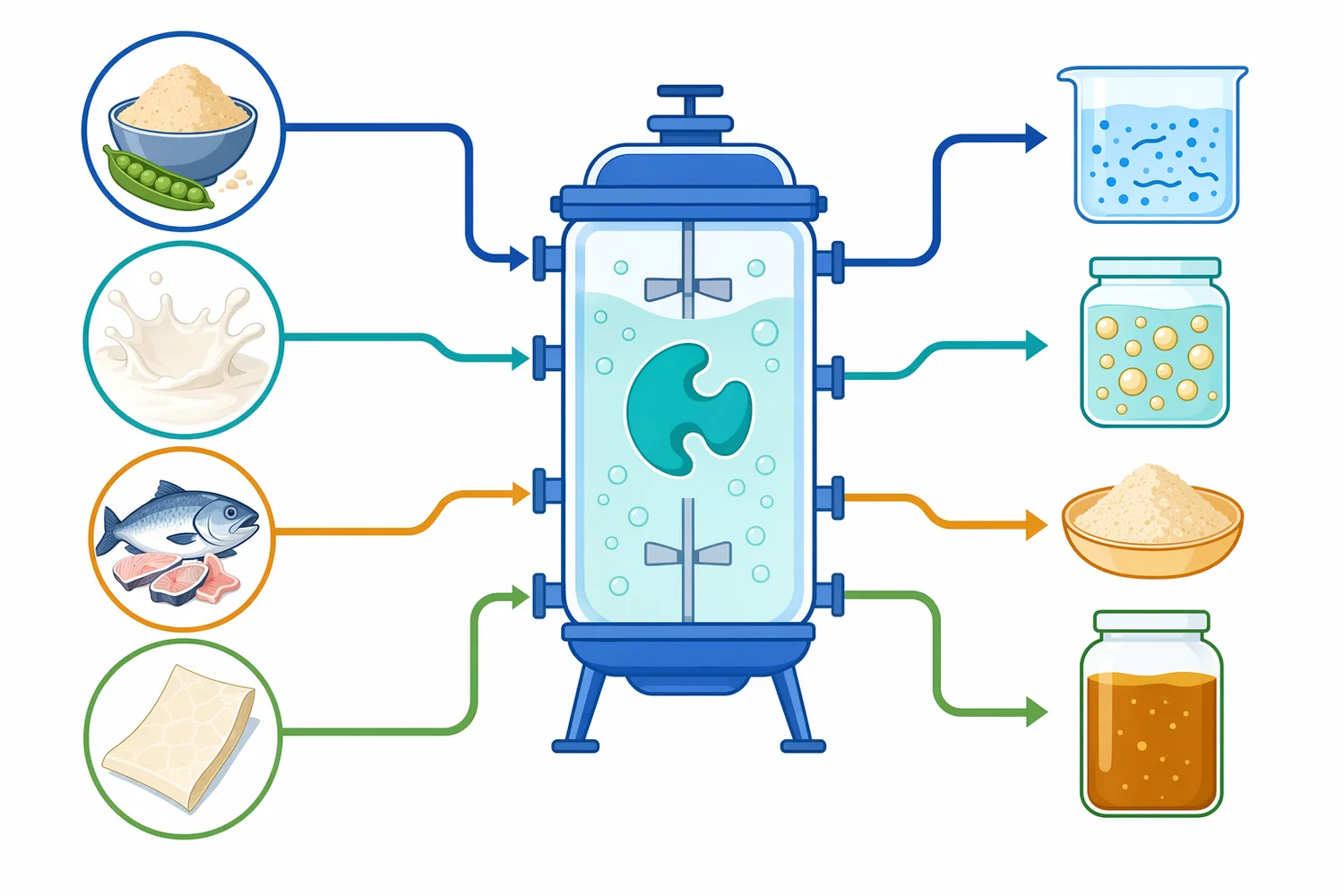
The commercial caution is important. A hydrolysate can be a promising source of functional peptides, but health or structure-function claims depend on the tested peptide fraction, dosage, finished matrix, jurisdiction, and human evidence where required. Enzymatic hydrolysis creates candidate peptide profiles; it does not automatically create a substantiated finished-product claim.
Protein hydrolysis can improve functionality while creating sensory challenges. Bitter peptides are commonly associated with hydrophobic amino-acid sequences, especially when proteolysis releases fragments that interact strongly with bitter taste receptors. This is why a hydrolysate that performs well in solubility or bioactivity testing may still be difficult to use in beverages, nutrition powders, or mild-tasting foods.
The mechanism is straightforward: intact proteins often hide hydrophobic amino acids inside the folded structure. Protease cleavage exposes and releases those segments. At moderate levels, this can improve surface activity or savory complexity; at higher levels, it can produce lingering bitterness.
Seafood and meat hydrolysates add another sensory layer because lipid oxidation and Maillard-type reactions can influence aroma. In seafood by-product hydrolysis, oxidative compound formation has been studied as a quality issue, showing that peptide generation, lipid stability, and aroma development are linked in real processing systems [13].
This is why alkaline protease is best treated as a precise processing aid rather than a universal sensory fix. The same mechanism that creates useful peptides can also create bitter peptides if the reaction continues beyond the desired endpoint.
A typical alkaline protease hydrolysis process begins with hydration and dispersion of the protein substrate. Water penetration matters because the enzyme acts in the aqueous phase; dry particles, dense aggregates, and poorly wetted material reduce contact between enzyme and cleavage sites.
The pH is then adjusted into an alkaline region compatible with the enzyme and the protein system. At this stage, the substrate itself often changes: plant proteins may swell, unfold, or dissolve more effectively, and that improved accessibility can accelerate hydrolysis. Research on alkaline protease-producing organisms and enzyme characterization repeatedly focuses on alkaline pH behavior because enzyme activity and stability are central to performance in these conditions [20].
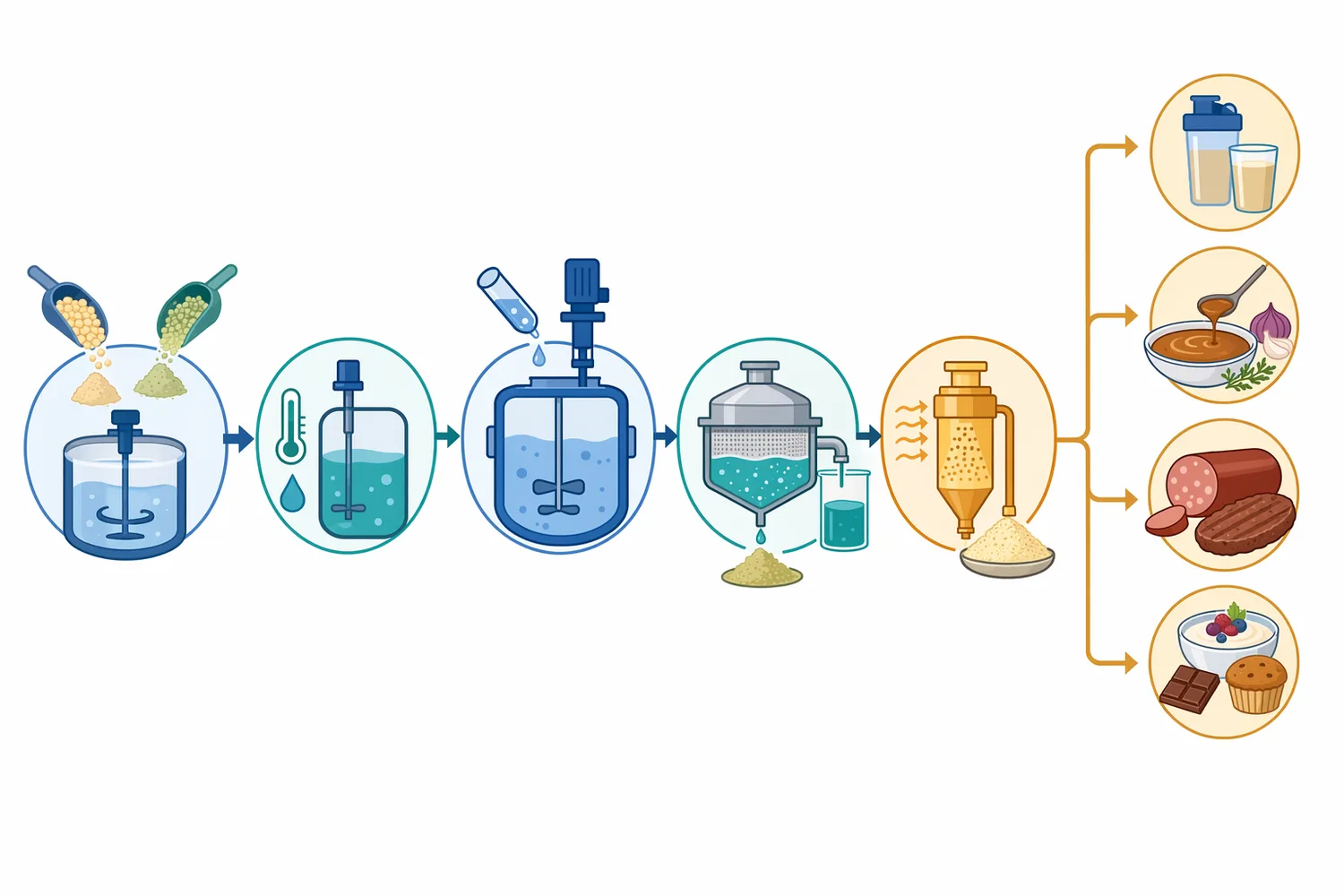
Temperature influences both reaction speed and enzyme stability. Warmer conditions generally increase molecular motion and enzyme-substrate collisions, but excessive heat can unfold the enzyme itself and reduce activity. The useful window is therefore a balance between faster hydrolysis and maintaining catalytic structure.
Time controls the extent of hydrolysis. Early in the process, large proteins are cut into intermediate fragments, often producing rapid changes in viscosity and solubility. Later, those fragments may be cut into smaller peptides, increasing free amino groups and peptide concentration but also increasing the risk of bitterness or loss of functional structure.
The reaction is commonly slowed or stopped when the target hydrolysate character is reached. In food processing, this may be done by heat treatment, pH shift, or downstream unit operations that remove or inactivate the enzyme. The endpoint is not only a laboratory number; it is the point where the hydrolysate behaves correctly in the intended process and finished product.
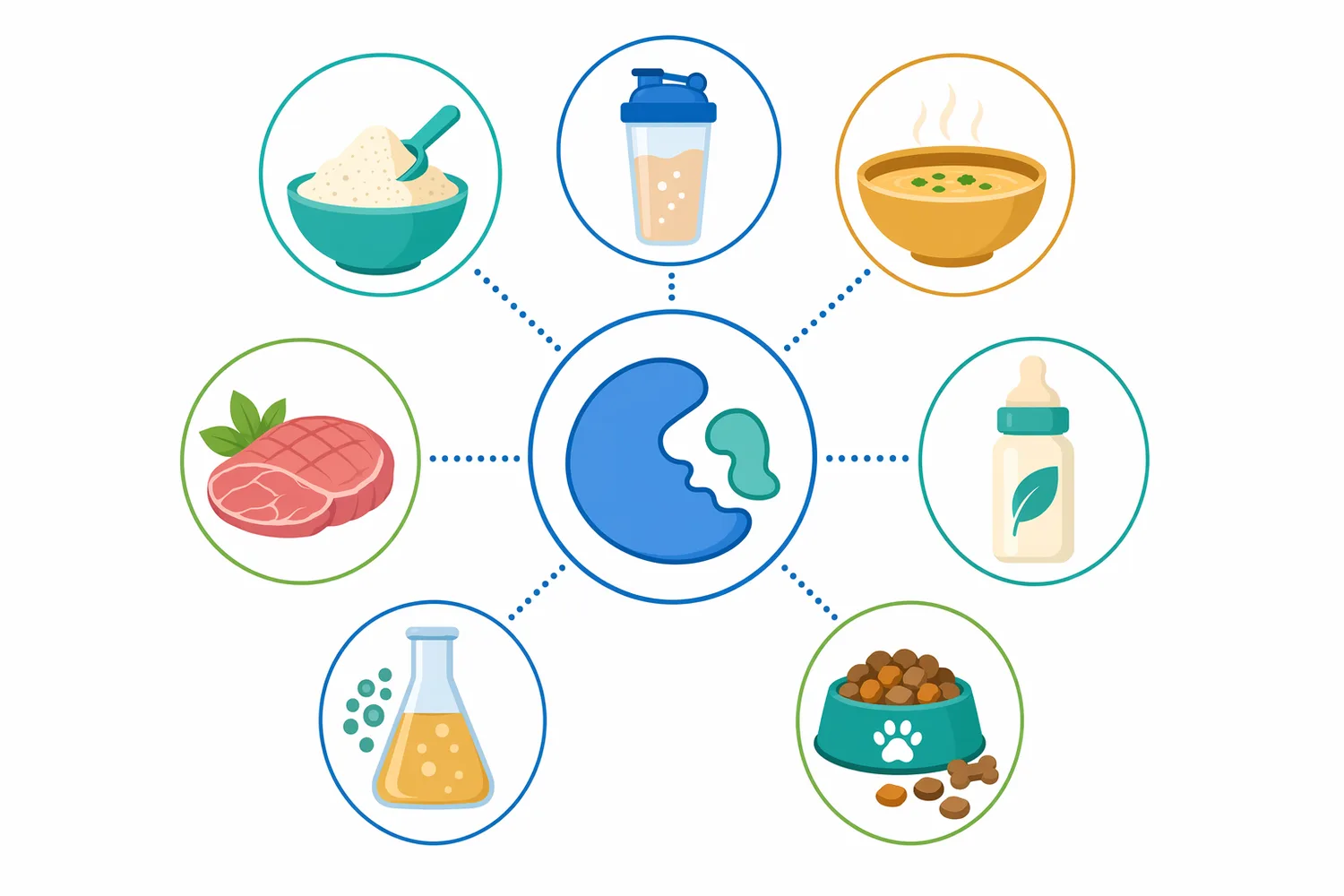
Alkaline protease can be used in soy, pea, lupine, pulse, cereal, and seed-protein systems where improved dispersion, viscosity control, peptide generation, or extraction-linked hydrolysis is desired. The enzyme is especially relevant where the protein is already handled under alkaline conditions for solubilization or fractionation.
Whey and casein hydrolysates are used in many nutrition and specialty ingredient formats. Alkaline protease may be relevant where the target peptide profile and processing pH align with an alkaline hydrolysis step. Studies on whey and casein systems show how enzymatic cleavage can change technological properties and release defined or bioactive peptide fractions [8].
Fish, meat, and collagen-rich materials can be converted into soluble hydrolysates for savory bases, nutrition intermediates, pet food ingredients, or peptide development. Enzymatic treatment can improve recovery from protein-rich side streams and convert solid or viscous material into a more manageable liquid hydrolysate.
Proteolysis releases amino acids and peptides that can contribute umami, kokumi-like fullness, brothy notes, and fermentation nutrient value. Alkaline protease may be used where a controlled hydrolysis step is needed before concentration, blending, fermentation, or drying.
Food systems generate side streams such as seed meals, mushroom scraps, fish trimmings, dairy streams, and plant extraction residues. Enzymatic hydrolysis can convert these from low-value solids into soluble peptide-rich fractions. Cost-benefit analysis of enzymatic hydrolysis alternatives for food waste management reflects the broader interest in using enzymes to improve the value and handling of food-derived materials [21].
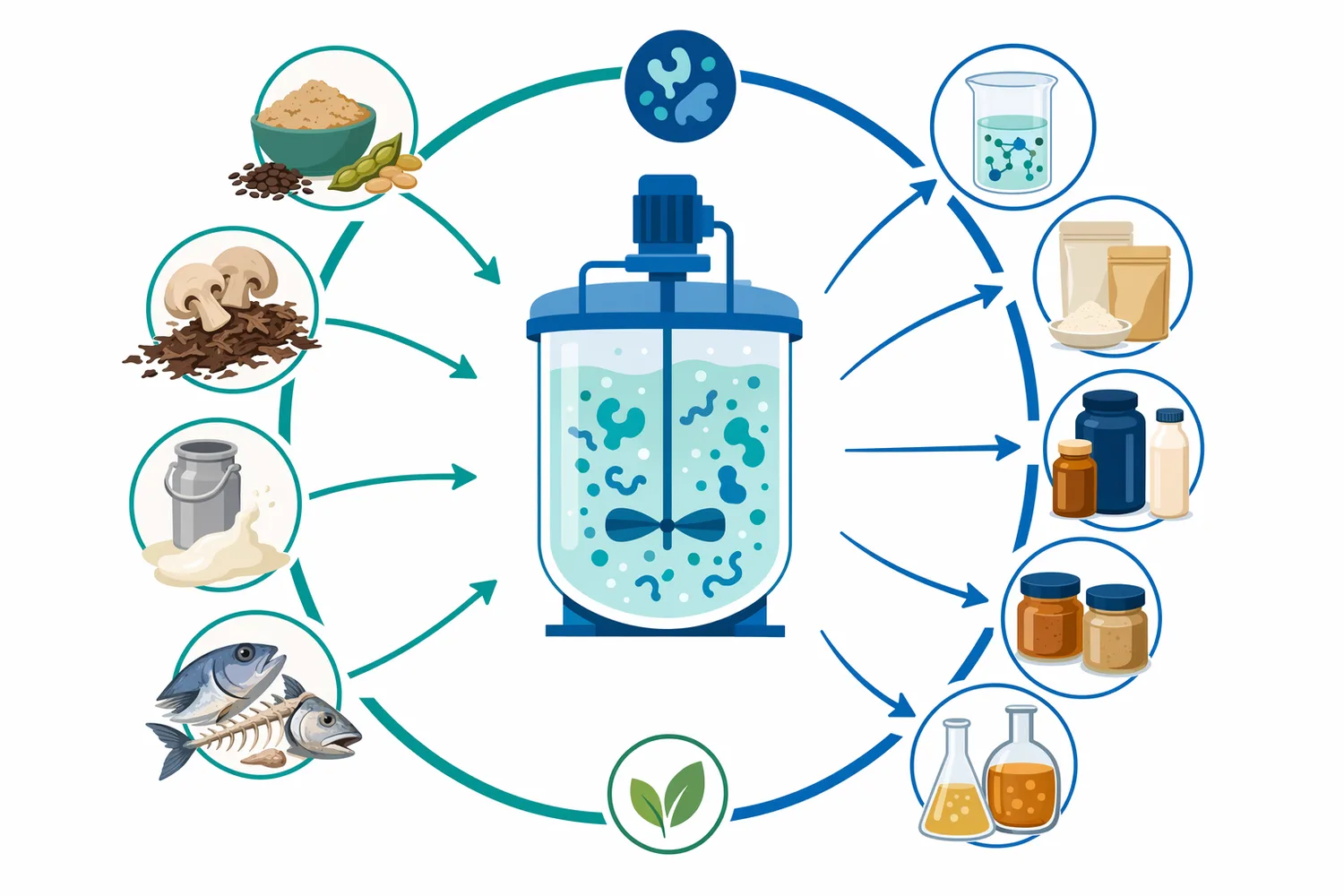
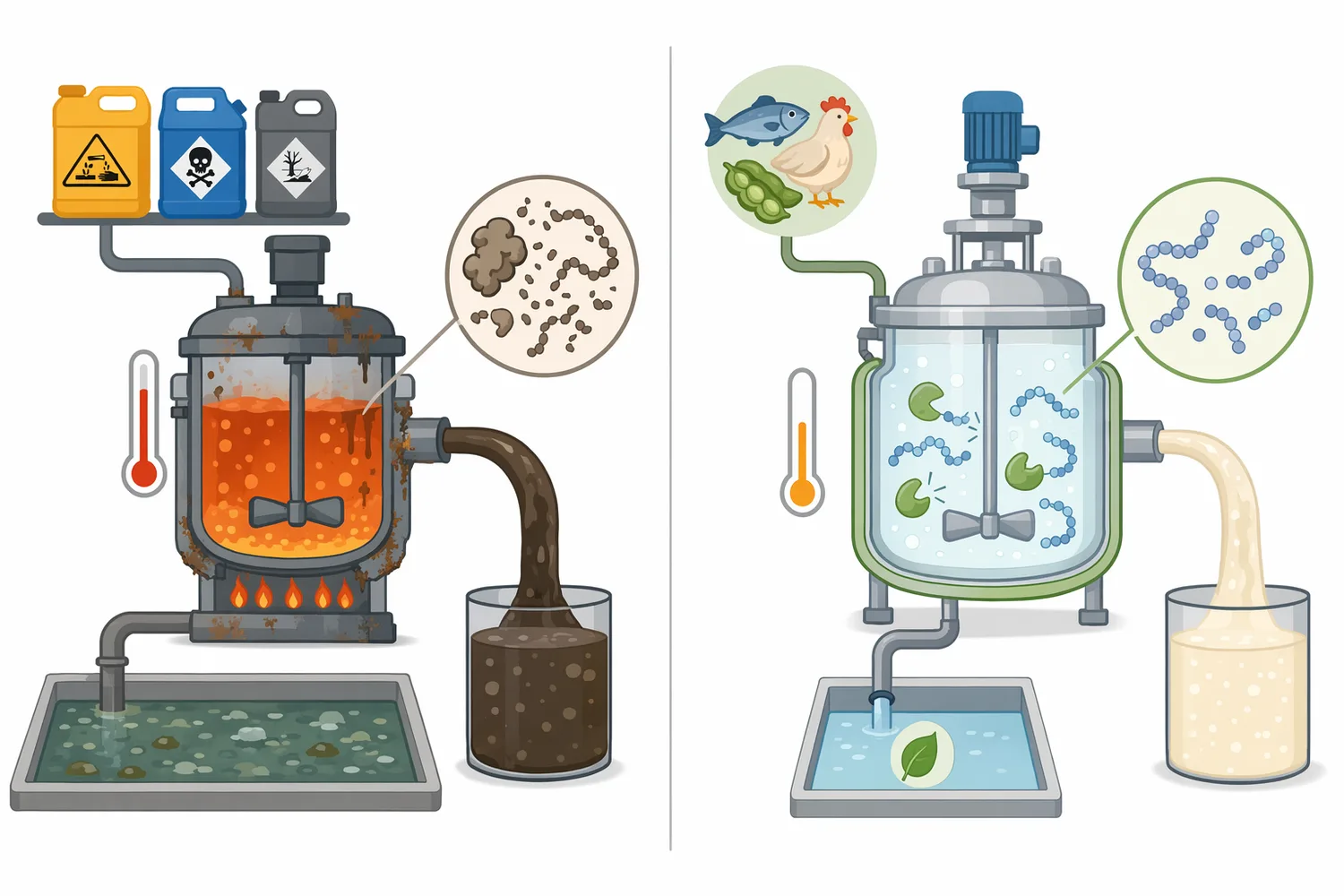
Alkaline protease offers a controlled biochemical route to protein modification. Instead of relying only on severe heat, acid, alkali, or long uncontrolled fermentation, processors can use enzymatic cleavage to target peptide-bond hydrolysis under aqueous conditions.
The process is also flexible. A single protein source can produce different hydrolysates depending on how far the reaction is allowed to proceed and how the hydrolysate is handled afterward. That flexibility is why enzymatic hydrolysis appears across pulse proteins, soy, lupine, whey, fish by-products, collagen, seed meals, and emerging alternative proteins.
The strongest value is often practical: a hard-to-disperse protein becomes easier to formulate; a viscous slurry becomes easier to pump; a by-product becomes a soluble hydrolysate; or a protein ingredient becomes a peptide-rich intermediate for further development. The enzyme does not replace product formulation work, but it gives the process a powerful and specific way to reshape protein structure.
Enzymes.bio supplies Food-Grade Alkaline Protease for Protein Hydrolysis directly online by the 1 kg unit. The purchasing process is simple: place the order online, pay online, and the order is processed and shipped.
A Certificate of Analysis and Safety Data Sheet are included with the order. Enzymes.bio is a supplier of the product, not the enzyme manufacturer or a testing laboratory.
For food ingredient work involving alkaline protein hydrolysis, this enzyme is relevant where the goal is to convert proteins into more functional, soluble, peptide-rich, or processable hydrolysates. Its value comes from a well-established mechanism: alkaline conditions help expose the protein structure, and protease cleavage converts large protein chains into smaller peptides that behave differently in water, processing equipment, and finished formulations.
Sold by the 1 kg unit, in stock and ready to ship. Order directly on our store — pay online and we process your order. A Certificate of Analysis and Safety Data Sheet are included with every order.
Buy Food-Grade Alkaline Protease For Protein Hydrolysis →Numbered in order of first citation. Open-access sources, each verified reachable at publication; citation numbers in the text link here.