
Food-grade β-amylase is a maltose-forming enzyme used in starch-based processing where the target is a higher maltose profile rather than complete conversion to glucose. It works from the non-reducing ends of starch-derived chains, releasing maltose units while stopping near branch points, which makes it especially useful after starch gelatinization or liquefaction. Enzymes.bio supplies this enzyme for direct online purchase in 1 kg units; orders are paid for online, processed, shipped, and accompanied by a Certificate of Analysis and Safety Data Sheet.
β-Amylase is best understood as a finishing and saccharification enzyme for maltose production. In a typical starch-conversion workflow, starch granules are first made accessible by heat, hydration, mechanical treatment, or liquefaction. Once the long starch polymers have been opened up into soluble or partially soluble chains, β-amylase can act on exposed chain ends and remove maltose, a two-glucose sugar that is central to brewing, distilling, maltose syrup, and controlled cereal saccharification.
The enzyme’s value is its product direction. α-Amylase rapidly lowers viscosity by cutting internal α-1,4 bonds in starch chains, generating dextrins and more chain ends; β-amylase then works from those ends to increase maltose. Modern starch research repeatedly shows that enzymatic hydrolysis efficiency depends strongly on starch conformation, chain organization, crystalline regions, and the accessibility created by pretreatment or prior hydrolysis steps [1].
For buyers using cereal mashes, liquefied starch, or starch-rich adjuncts, the practical benefit is a more maltose-oriented sugar spectrum. That matters because maltose behaves differently from glucose, maltotriose, larger dextrins, and resistant starch fractions in fermentation and sweetener applications. In fermentation, it contributes to yeast-accessible carbohydrate supply; in sweetener production, it supports syrups where maltose is the desired dominant sugar rather than a by-product.
Food-grade β-amylase liquid enzyme is therefore not a universal starch destroyer. It is a controlled conversion tool: it performs a defined biochemical cut, releases a defined sugar, and has predictable limitations where starch branching or physical inaccessibility prevents further progress. That specificity is why it is often discussed alongside other amylolytic enzymes in food, brewing, and starch-based industries rather than as a stand-alone solution for every carbohydrate substrate [2].
Starch is made mainly of two polymers: amylose and amylopectin. Amylose is largely linear, built mostly from α-1,4-linked glucose units. Amylopectin is much more branched, with α-1,4-linked chains connected through α-1,6 branch points. β-Amylase attacks the α-1,4-linked portions of these chains from the non-reducing end, removing maltose units sequentially.
This is different from an internal-cutting enzyme. α-Amylase behaves like molecular scissors inside the chain: it breaks long starch molecules into shorter dextrins, which rapidly reduces paste viscosity and creates more soluble fragments. β-Amylase behaves more like an end trimmer: once it binds an accessible chain end, it removes maltose step by step until the chain structure blocks further movement. Reviews of α-amylase structure and food applications emphasize this contrast between end-product control and internal starch-chain cleavage in practical starch processing [3].
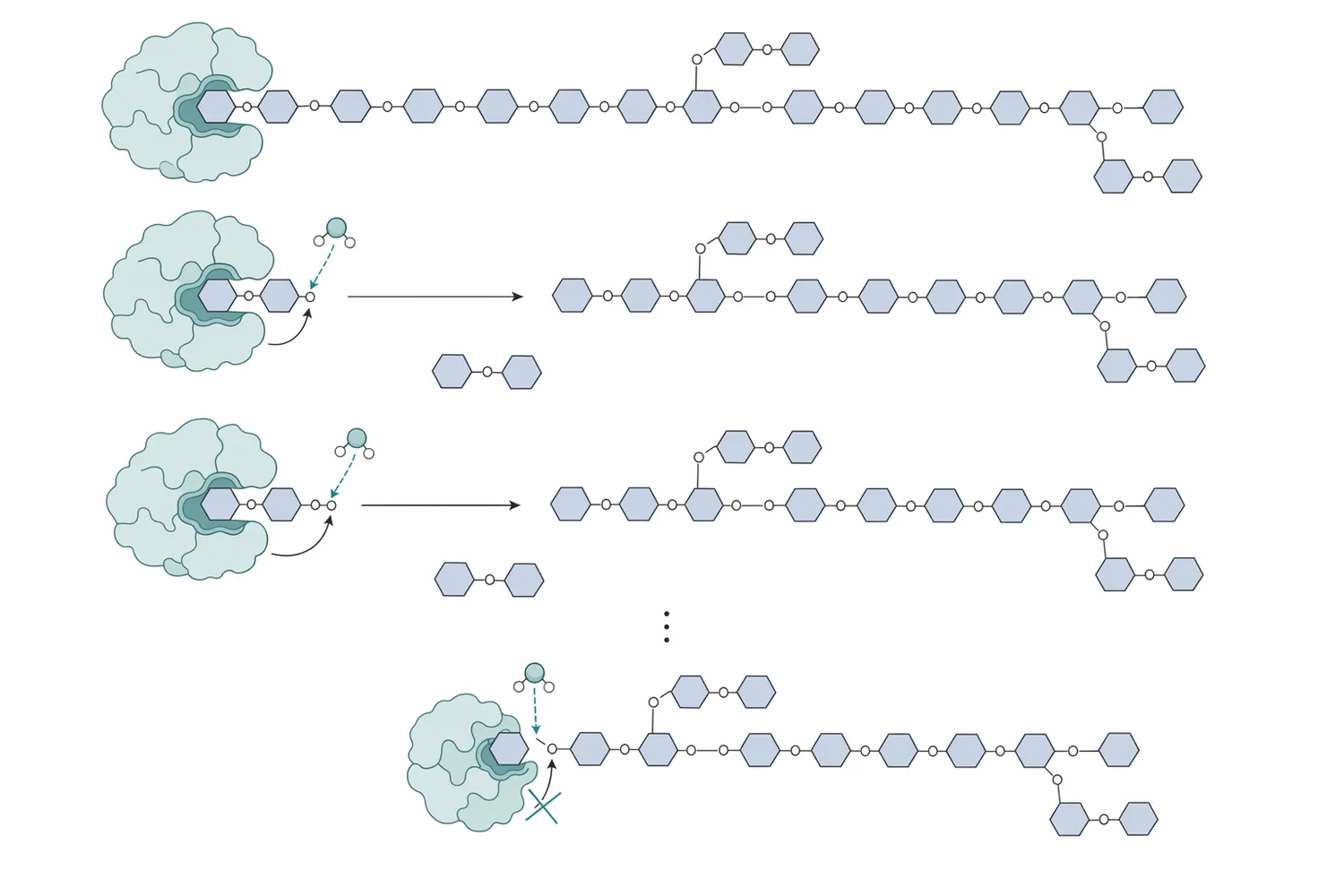
The reason β-amylase supports maltose production is simple but important. Maltose contains two glucose units. Because β-amylase removes glucose units in pairs from the chain end, its reaction naturally enriches the hydrolysate in maltose rather than producing a random mixture of sugars. The “β” in β-amylase refers to the anomeric form of the maltose released, not to the bonds in starch itself; starch remains an α-linked substrate.
The same mechanism explains the enzyme’s limits. When β-amylase approaches an α-1,6 branch point in amylopectin, it cannot continue through the branch in the same way it moves along a straight α-1,4 chain. The remaining branched fragments are often described as limit dextrins. This is why a process that requires very extensive conversion of amylopectin-derived material may use β-amylase alongside enzymes that open branches or first generate more accessible linear regions.
Physical access also matters. Native starch granules contain crystalline and amorphous regions, and enzyme molecules cannot hydrolyze bonds they cannot reach. Studies on enzymatic modification of starch show that hydrothermal pretreatment can alter granule morphology and digestibility, making starch more susceptible to enzymatic action by changing the structure the enzyme encounters [4].
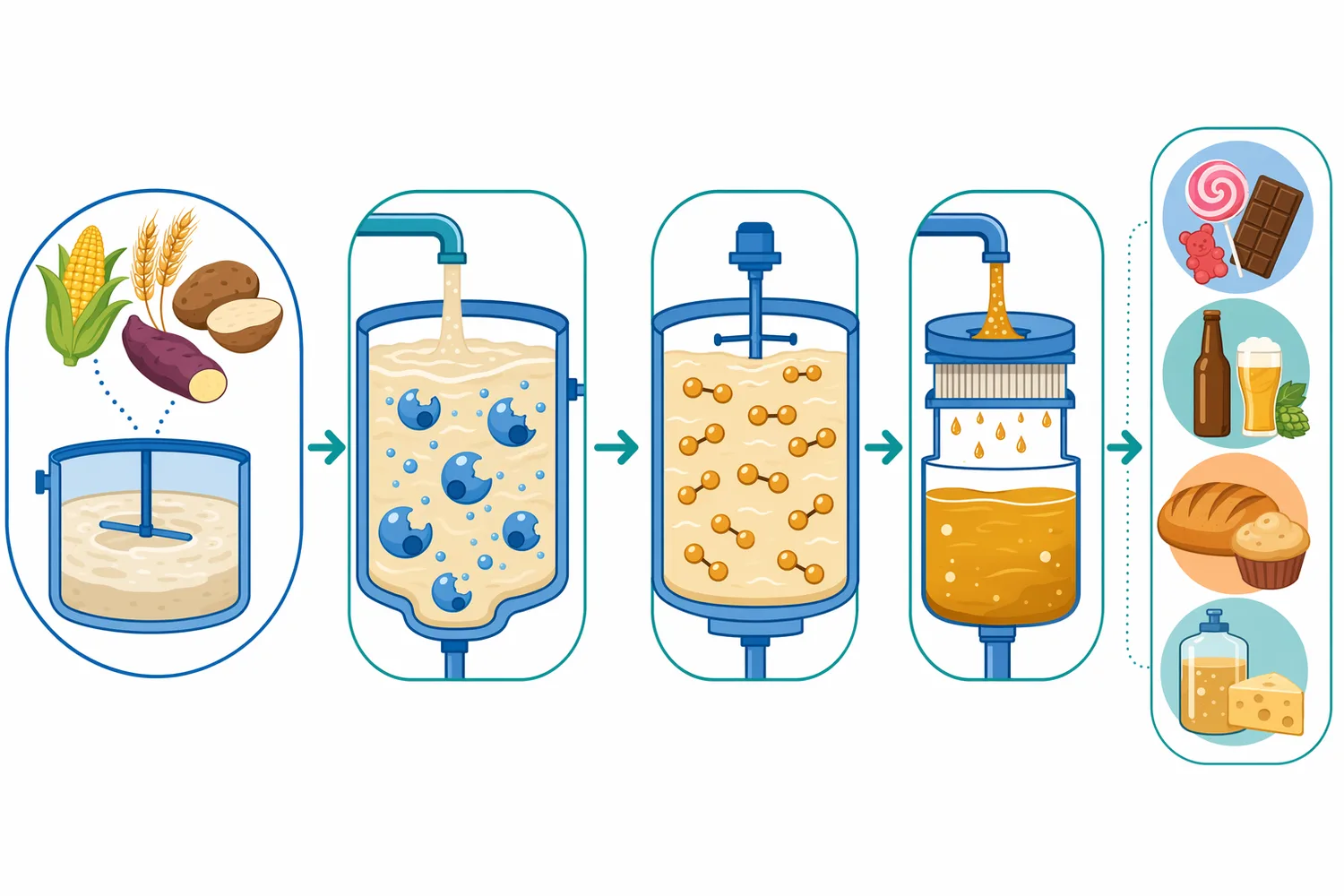
In maltose production, β-amylase is commonly placed after steps that expose starch chains. These may include cooking, gelatinization, liquefaction, or mechanical treatment depending on the raw material and process design. The practical sequence is: open the starch structure, reduce viscosity if needed, create accessible chain ends, then allow β-amylase to convert those ends into maltose.
This sequence is supported by the broader starch-hydrolysis literature. Porous starch studies, for example, show that enzymatic hydrolysis is not merely a chemical reaction in solution; it is shaped by how enzymes enter, erode, and enlarge channels or pores in the starch granule. Microwave-assisted enzymatic hydrolysis has been investigated as a way to prepare porous starch more efficiently by improving access to internal granule regions [5].
High-speed shear combined with enzymatic hydrolysis has also been studied for rice porous starch. The reported structural and physicochemical changes show that mechanical energy can disrupt granule organization, while enzymatic treatment then enlarges pores and increases surface damage. For β-amylase users, the principle is directly relevant even when the exact process differs: exposed surface area and chain accessibility strongly influence how much maltose can be formed [6].
Moderate electric field treatment has likewise been investigated for α-amylase-catalyzed porous starch preparation. The significance is not that every plant must use an electric field; rather, the research demonstrates a consistent processing concept: when starch structure is physically or thermally altered, enzymes can access more bonds and hydrolysis proceeds differently [7].
For maltose-focused saccharification, the same logic applies. A clear, hydrated, accessible dextrin stream gives β-amylase more productive chain ends than compact raw granules. This is why β-amylase is often most valuable after upstream treatment has already converted starch from a protected storage polymer into an enzyme-accessible substrate.
Different amylases are not interchangeable. They cut different bonds in different positions and produce different carbohydrate profiles. The table below gives a practical comparison for buyers considering where food-grade β-amylase fits in starch conversion.
| Enzyme type | Main action on starch | Typical process contribution | Main product tendency | Practical limitation |
|---|---|---|---|---|
| α-Amylase | Cuts internal α-1,4 linkages within starch chains | Rapid viscosity reduction, liquefaction, dextrin formation | Dextrins, shorter oligosaccharides, some fermentable sugars | Does not specifically maximize maltose by itself |
| β-Amylase | Removes maltose from non-reducing chain ends | Maltose enrichment after starch is accessible | Maltose | Stops near α-1,6 branch points and inaccessible regions |
| Glucoamylase | Releases glucose from chain ends and can act more extensively toward glucose formation | High-glucose saccharification and fermentation sugar preparation | Glucose | Not the preferred enzyme when maltose is the target sugar |
| Debranching enzymes | Hydrolyze branch-point linkages in amylopectin-derived structures | Improve access to branched starch fragments | More linear chains for further conversion | Usually used as a complement, not as the primary maltose-forming enzyme |
This comparison is important because a maltose process is not simply “more hydrolysis.” More severe hydrolysis can move the sugar spectrum away from maltose and toward glucose or mixed smaller sugars. β-Amylase is useful because it steers conversion toward maltose when the substrate structure and upstream treatment give it enough accessible chain ends.
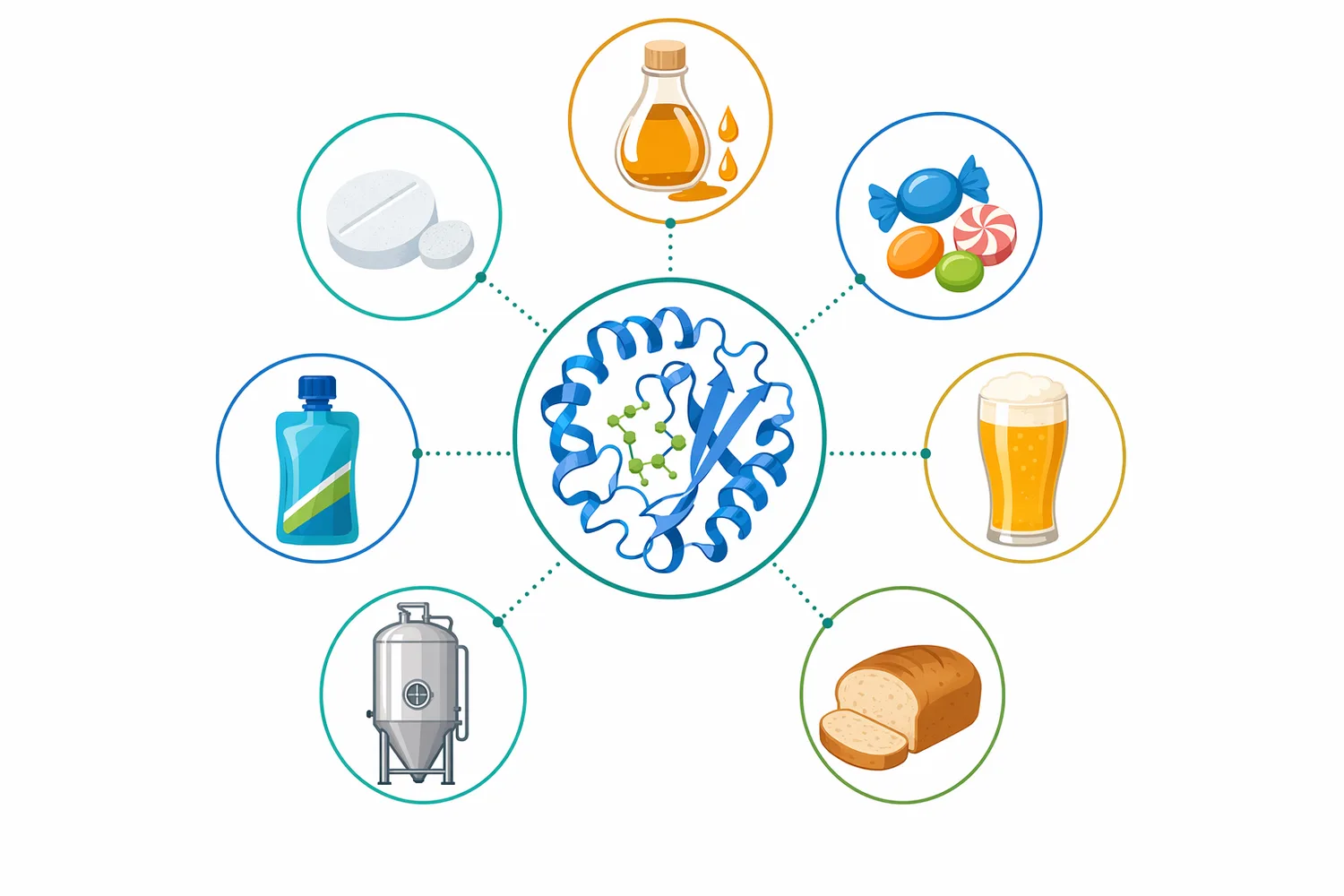
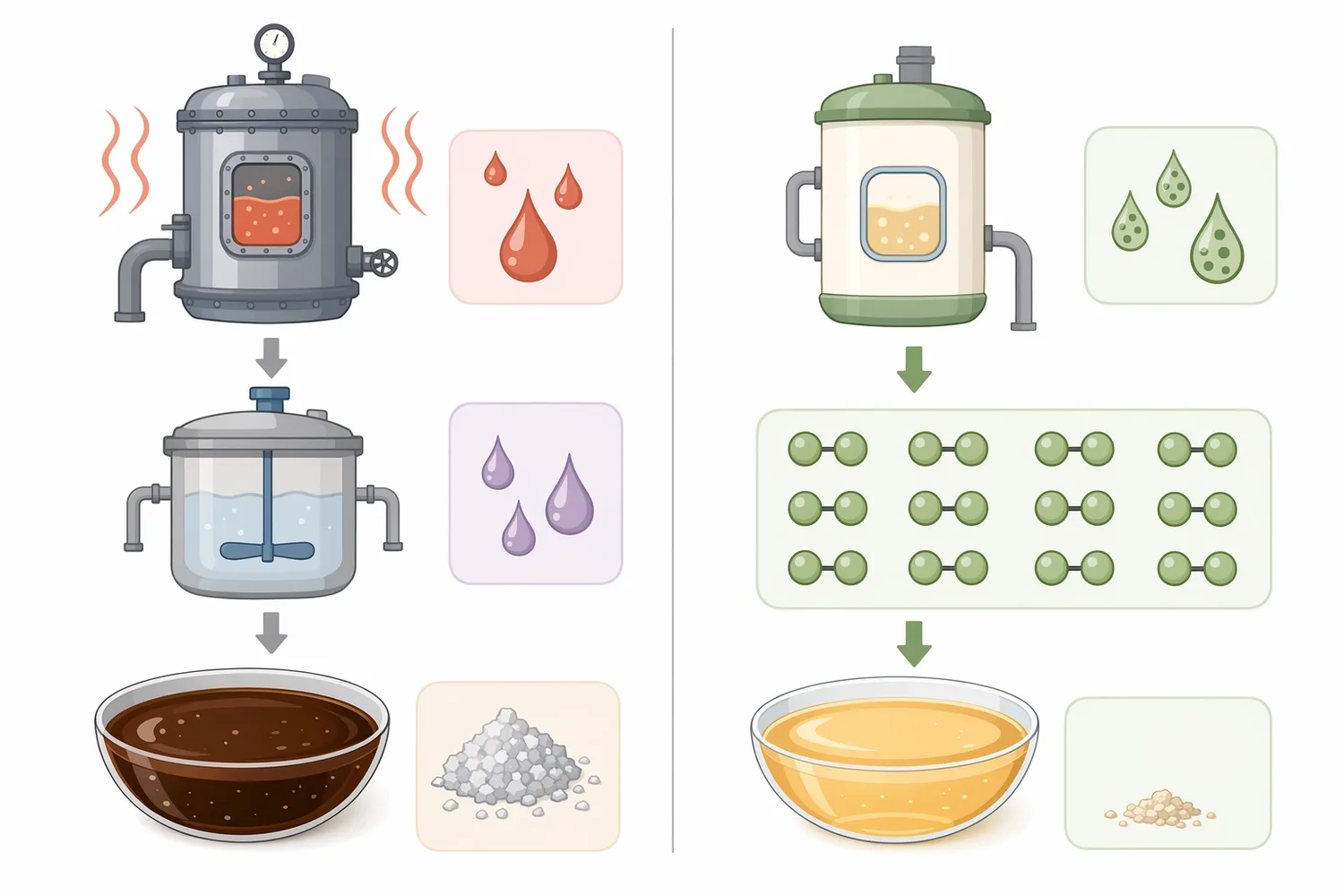
Maltose syrup production is the most direct application for food-grade β-amylase liquid enzyme. The desired outcome is a syrup in which maltose is intentionally enriched. β-Amylase supports this by repeatedly removing maltose units from soluble starch fragments and dextrins. Where liquefaction has already reduced viscosity and created shorter chains, β-amylase can act more efficiently because there are more accessible non-reducing ends.
The final syrup profile depends on the starting starch and the whole enzyme sequence. Corn, rice, wheat, tapioca, potato, and other starches differ in amylose content, amylopectin branching, granule size, crystallinity, and gelatinization behavior. Research on starch molecular conformation confirms that structural organization influences enzymatic hydrolysis efficiency, meaning two starch streams with the same dry solids can respond differently to enzymatic treatment [1].
A maltose-oriented process also needs to preserve the distinction between maltose formation and total starch breakdown. If an enzyme system is dominated by glucose-forming activity, the product profile can shift toward glucose. If internal hydrolysis is insufficient, large dextrins may remain. β-Amylase fills the middle role: it is used to convert accessible chain ends into maltose while avoiding the product direction of a purely glucose-focused process.
Branching is a key reason maltose yields are not simply theoretical. Amylopectin-rich fractions contain many α-1,6 branch points, and β-amylase cannot trim through them indefinitely. In practical terms, this means β-amylase can convert the linear segments it can reach, but branched residual dextrins may remain unless the process includes complementary actions that expose or debranch them. Studies on resistant starch also show how ordered structures and molecular arrangements can resist enzymatic hydrolysis even when the substrate is chemically made of glucose polymers [8].
In brewing, β-amylase is one of the enzymes associated with maltose formation during mashing. Maltose is a major fermentable sugar for brewing yeast, so the balance of β-amylase activity, mash temperature, malt quality, adjunct level, and starch accessibility influences wort fermentability. When the mash environment favors maltose formation, the wort generally contains more yeast-usable carbohydrate and fewer unfermentable higher dextrins.
The mechanism is the same as in starch syrup production, but the substrate environment is more complex. A mash contains malt, adjunct starches where used, proteins, cell-wall polysaccharides, minerals, and endogenous enzymes. β-Amylase must operate within this mixture. If starch is not adequately gelatinized or if the mash becomes too harsh for the enzyme, its contribution to maltose formation can be reduced.
Cereal structure affects this outcome. Barley malt provides a natural enzyme system, but adjuncts such as corn, rice, wheat, or other grains can change the enzyme-to-starch balance and the physical accessibility of starch. Research on red rice starch modification using pulsed electric field treatment and enzymatic hydrolysis illustrates how cereal starches can respond differently when non-thermal pretreatment is combined with amylase action [9].
For brewers using supplemental food-grade β-amylase, the practical aim is controlled maltose development rather than simply maximum starch degradation. A wort with excessive dextrins may ferment less completely; a wort pushed too far toward smaller sugars may alter the intended body and sensory balance. β-Amylase is valuable because it supports maltose formation while still leaving room for process design to manage the final carbohydrate spectrum.
Distilling and broader fermentation processes depend on converting starch into sugars that microorganisms can use. β-Amylase contributes by increasing maltose in grain-based or starch-based mashes. Yeast can metabolize maltose after transport and intracellular hydrolysis, making maltose an important fermentable carbohydrate in many cereal fermentation systems.
In these applications, β-amylase is typically part of a larger conversion environment. α-Amylase may reduce viscosity and create dextrins, β-amylase may enrich maltose, and other enzymes may be used where the target is broader fermentability. The important point is that β-amylase does not simply “make fermentation better” in a generic sense; it changes the sugar profile by generating maltose from accessible starch-chain ends.
Feedstock structure remains decisive. Studies on enzymatic hydrolysis in biomass and agricultural residues show that amylase-containing enzyme systems can improve hydrolysis and downstream conversion when carbohydrate accessibility is improved, but the response depends on the substrate matrix [10]. Grain mashes are simpler than lignocellulosic residues, yet the same principle holds: enzymes work where structure permits access.
For distilling buyers, β-amylase is most relevant where maltose formation is desirable within the saccharification profile. If the process target is maximum glucose, a different enzyme balance may be more appropriate. If the target is maltose-rich fermentable sugar generation from cereal starch, β-amylase has a clear biochemical role.
Beyond syrups and fermentation, amylases are widely used in cereal processing because starch hydrolysis changes texture, viscosity, fermentable sugar availability, and water interaction. β-Amylase can contribute maltose in cereal systems where starch has been made accessible by hydration, heat, or prior enzymatic action. This can be relevant in selected bakery, cereal, and processed grain applications, though the specific role depends on the flour or cereal base.
Food-industry literature on amylase production and applications highlights the broad importance of amylolytic enzymes in converting starch into smaller carbohydrates for food-processing functions [11]. In bakery systems, for example, fermentable sugars influence yeast activity and browning, while dextrin formation can affect crumb softness and moisture behavior. β-Amylase’s specific contribution is maltose release, not wholesale viscosity reduction.
Starch films and packaging research also illustrates how controlled enzymatic hydrolysis can alter starch properties. In corn starch films, optimizing enzymatic hydrolysis has been studied as a way to change mechanical properties for sustainable food packaging, showing that even partial starch-chain modification can influence functional behavior [12]. While this is not the same as maltose syrup production, it demonstrates a wider principle: controlled enzyme action can tune starch-derived materials.
In food-processing applications, β-amylase should therefore be viewed as a targeted maltose-forming ingredient within an enzyme toolbox. It is not always the main enzyme in every cereal process, but it is highly relevant when maltose generation is the desired carbohydrate change.
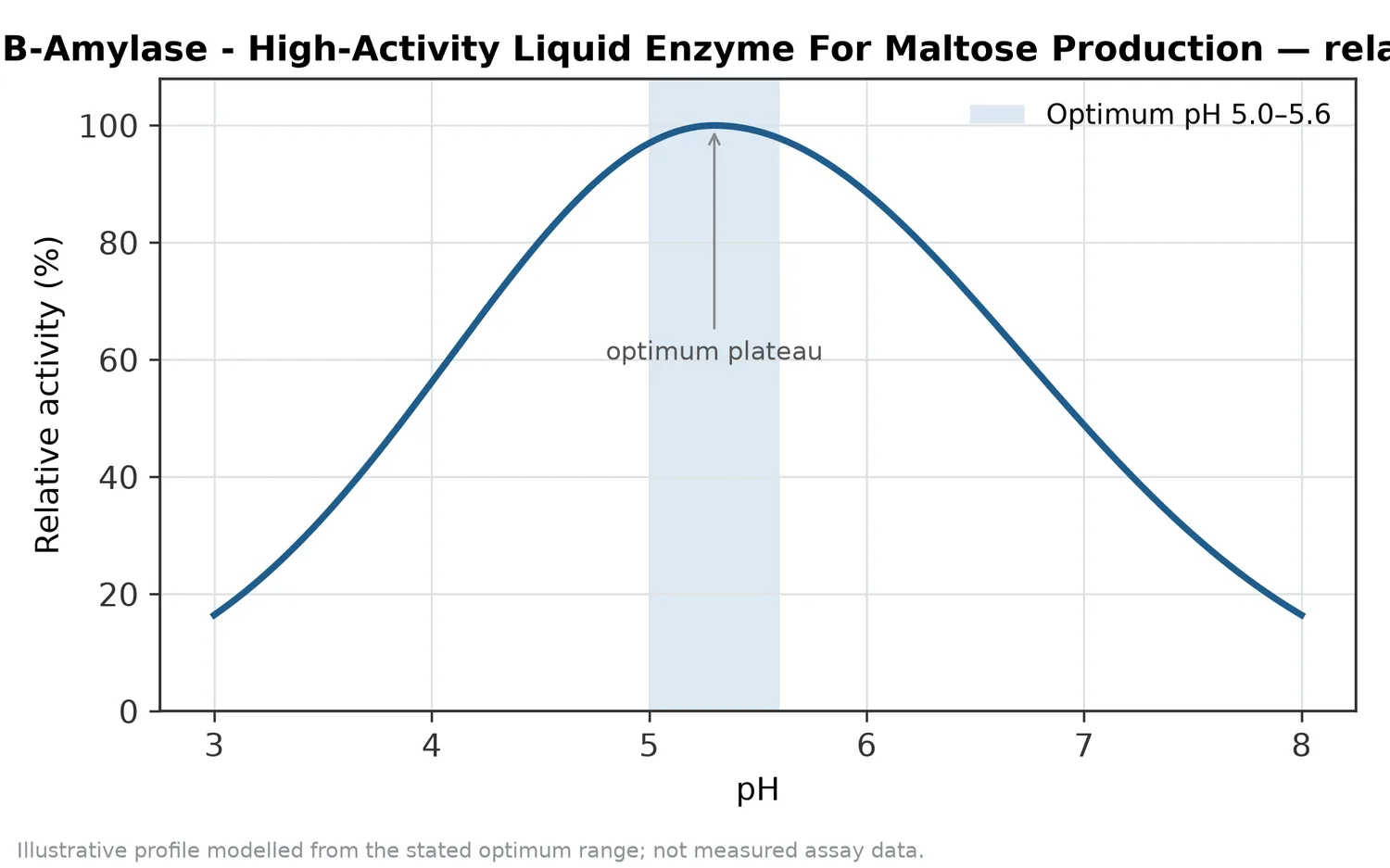
β-Amylase works best when the starch substrate is physically available and the process environment preserves enzyme activity long enough for saccharification. Warm, aqueous, mildly acidic conditions are common in many starch and cereal processes, but exact behavior depends on enzyme origin, formulation, substrate, solids level, and processing time. The key practical point is not a single universal number; it is matching the enzyme’s maltose-forming action to a substrate state where chain ends are exposed.
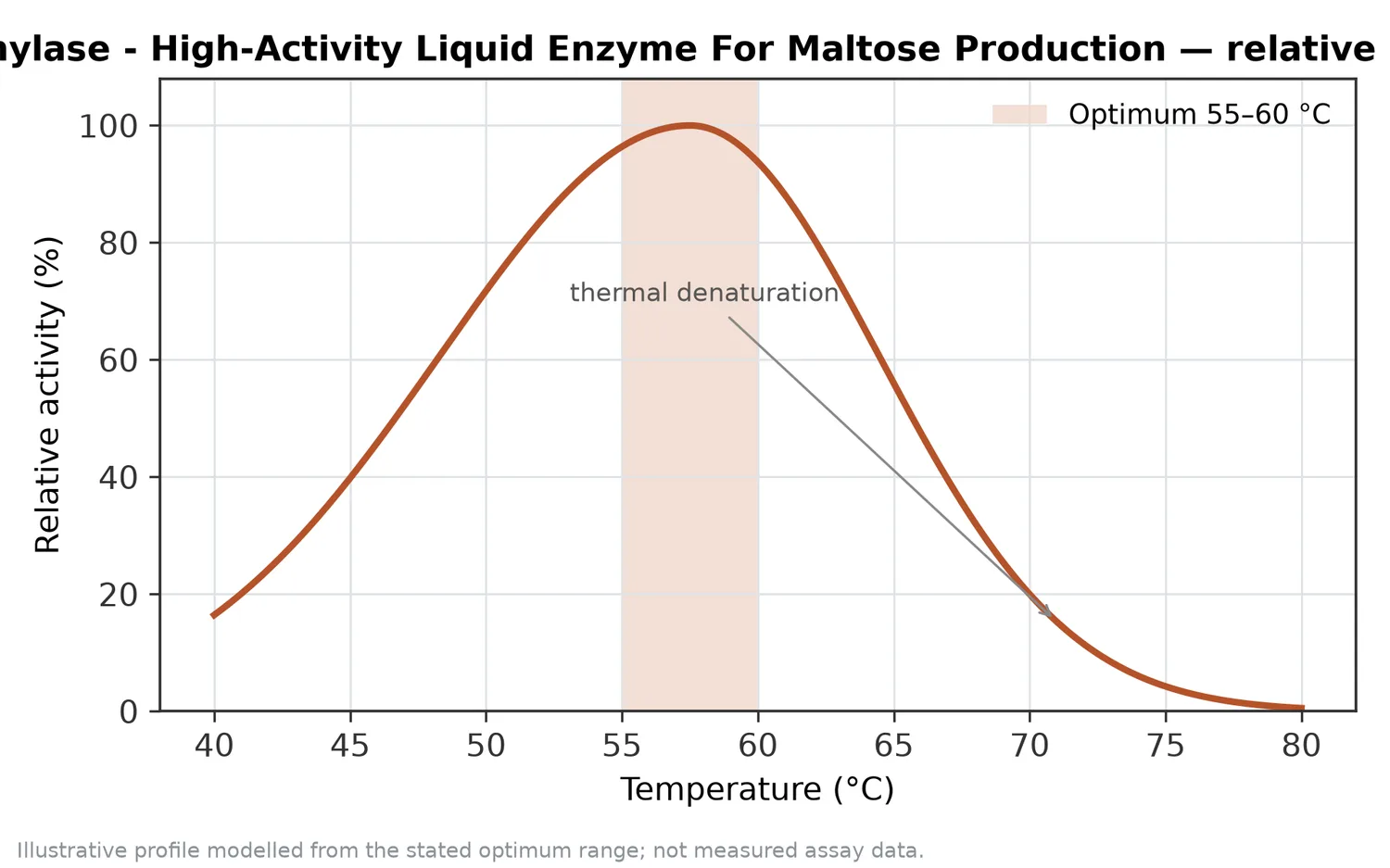
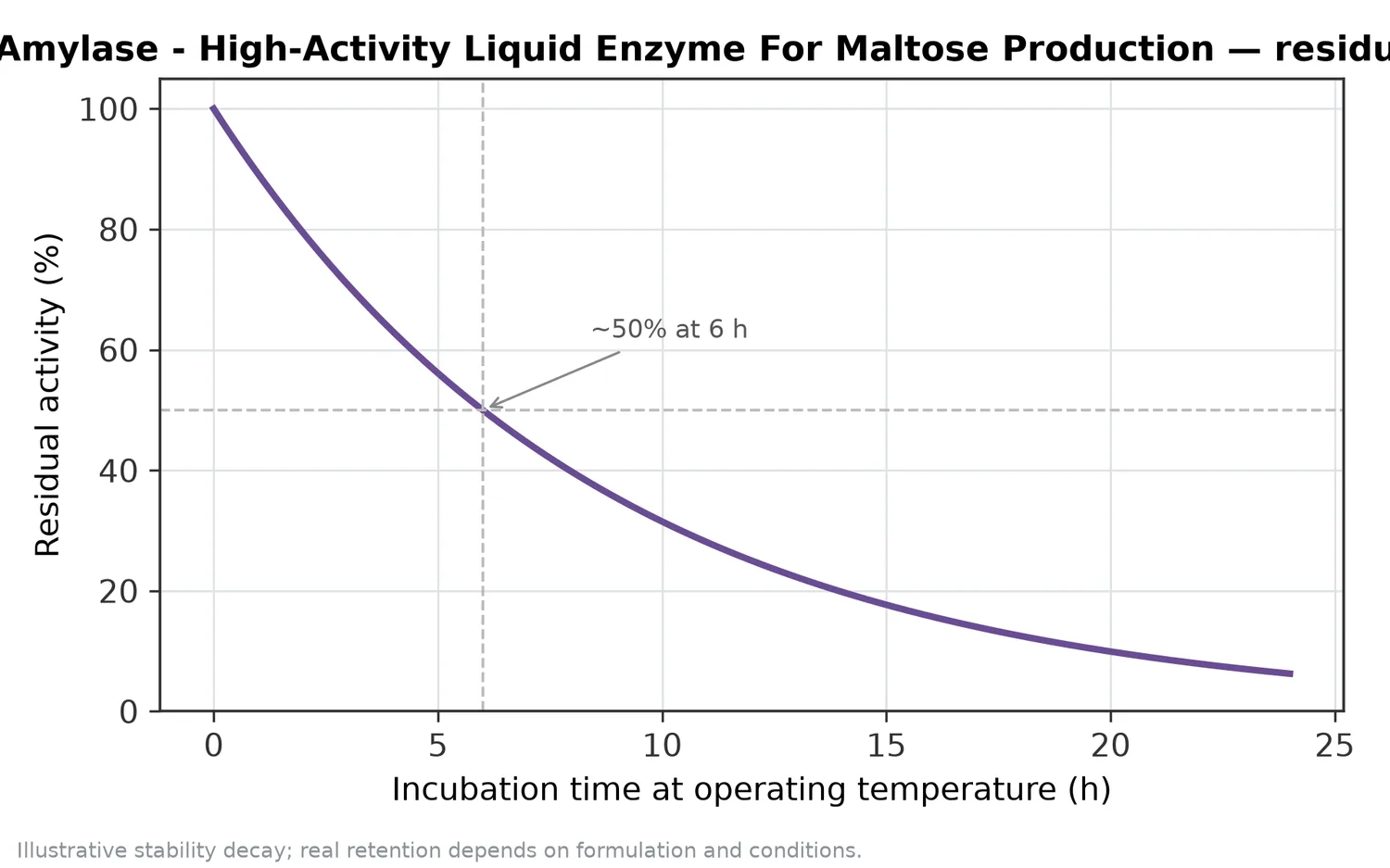
Heat history is especially important. Starch often needs heat to gelatinize and become accessible, but enzymes can lose activity if exposed to conditions beyond their tolerance. This creates a process balance: enough heat to open starch, but not so much harsh exposure during saccharification that the maltose-forming enzyme is rapidly inactivated. Research on thermostable amylase hydrolysis of maize starch in hot aqueous ethanol systems shows how process medium and temperature can strongly alter starch structure and hydrolysis behavior [13].
Pretreatment can improve access. Hydrothermal treatment, shear, microwave assistance, electric field treatment, and similar technologies have all been studied because they alter starch granule architecture. The common outcome is that enzymes hydrolyze starch differently when the substrate surface, pores, crystallinity, or molecular mobility has changed. Edible canna starch, for example, has been converted into porous starch by thermostable α-amylase hydrolysis, with characterization focused on the structural changes caused by enzyme attack [14].
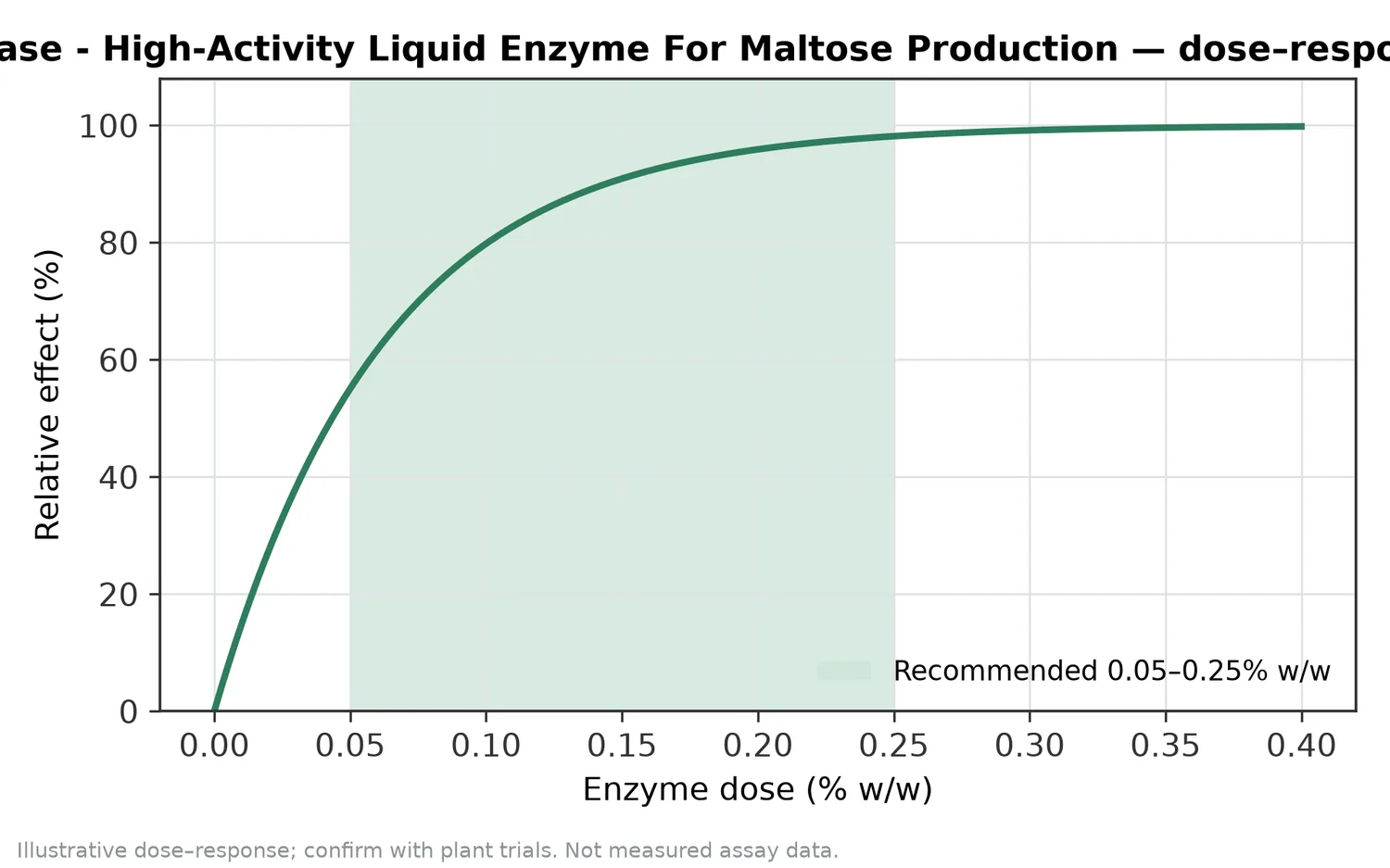
Solids concentration and product buildup can also influence the apparent rate of conversion. In dense starch streams, enzyme movement, substrate accessibility, and viscosity can all affect how quickly chain ends are encountered. As maltose accumulates, the reaction environment changes. For practical production, this is why β-amylase is normally considered as part of the overall residence time, mixing, and saccharification design rather than as a simple additive with a fixed outcome.
The strongest evidence for using β-amylase in maltose production comes from the basic biochemistry of amylolytic enzymes and from the larger body of starch-hydrolysis research showing that enzyme action is governed by bond type, chain accessibility, and molecular organization. Even studies focused on α-amylase are useful here because they show how starch structure changes under enzymatic attack and why pretreatment and accessibility matter.
A recurring finding across recent starch studies is that enzyme efficiency is linked to starch conformation. Zhong’s work on the relationship between starch molecular conformation and enzymatic hydrolysis efficiency directly supports the process reality that starch is not a uniform substrate; its chain arrangement affects how readily enzymes can act [1].
Research on hydrothermally pretreated red rice starch similarly shows that pretreatment changes digestibility and morpho-structural properties. That matters for β-amylase because the enzyme can only remove maltose from chain ends it can physically reach; when pretreatment changes granule morphology or molecular exposure, the hydrolysis profile can change [4].
Studies on resistant starch reinforce the same point from the opposite direction. When starch is arranged in structures that resist enzymatic attack, hydrolysis becomes slower or incomplete. The mechanism of resistance to enzymatic hydrolysis in RS-5 resistant starch has been analyzed in terms of structural features that reduce enzyme access or effectiveness [8].
Together, these studies support a practical conclusion: β-amylase’s reaction is chemically specific, but the observed process result is shaped by the physical state of starch. Good maltose production depends on both the right enzyme function and a substrate structure that allows that function to proceed.
β-Amylase should be expected to increase maltose formation from accessible starch-derived chains. It should not be expected to liquefy intact starch as aggressively as α-amylase, remove every branch-point limitation, or convert all carbohydrate into one sugar under every process condition. Its strength is selectivity, and its limitation is the same selectivity.
Where starch is highly branched, poorly gelatinized, or physically protected, conversion can be incomplete. This is not unusual enzyme failure; it is the result of substrate architecture. Starch granules, crystalline regions, lipid complexes, and resistant structures can all reduce hydrolysis, as shown in work examining why some starch structures resist enzymatic breakdown [8].
Where upstream treatment creates shorter chains and more exposed non-reducing ends, β-amylase has more productive sites to attack. That is why it often performs best after liquefaction or other accessibility-enhancing steps. Immobilized and industrial enzyme reviews also emphasize that enzyme performance in food applications depends not only on catalytic function but also on the processing environment in which the enzyme is used [15].
For buyers, the most useful expectation is a realistic one: β-amylase is a food-grade maltose-forming enzyme for controlled saccharification, especially in processes where starch has already been made enzyme-accessible. It is most valuable when the desired outcome is a maltose-rich carbohydrate profile rather than non-specific starch breakdown.
Enzymes.bio supplies food-processing enzymes online, including β-amylase products for starch and cereal applications. The liquid β-amylase format is convenient for aqueous processing because it can be dispersed into process streams without a powder wet-out step, supporting practical handling in maltose production, brewing, distilling, and related starch saccharification workflows.
The product is sold directly online by the 1 kg unit. Buyers can place the order through the website, pay online, and the order is then processed and shipped. A Certificate of Analysis and Safety Data Sheet accompany the order, so the essential product documentation is provided with the shipment.
Enzymes.bio is a supplier, not a manufacturer or testing laboratory. The product information is intended to help buyers understand the enzyme’s role and application area, while the scientific basis comes from the established mechanism of amylase-catalyzed starch hydrolysis and the broader literature on how starch structure controls enzyme performance .
Food-grade β-amylase liquid enzyme is used when the process target is maltose generation from starch-derived substrates. Its mechanism is specific: it trims maltose units from non-reducing ends of accessible α-1,4-linked starch chains, making it valuable in maltose syrup production, brewing, distilling, and selected cereal-processing applications.
Its best use is in a process where starch has already been made accessible through gelatinization, liquefaction, or other structural opening steps. Research across starch hydrolysis, porous starch preparation, hydrothermal treatment, and resistant starch confirms that enzyme efficiency depends strongly on molecular conformation, granule structure, and physical access to hydrolysable bonds [1].
The main commercial value is controlled maltose enrichment. β-Amylase does not replace every starch-converting enzyme, and it does not remove the need to manage starch branching or substrate accessibility. Used in the right part of a starch process, however, it provides a clear, targeted way to shift carbohydrate conversion toward maltose.
Sold by the 1 kg unit, in stock and ready to ship. Order directly on our store — pay online and we process your order. A Certificate of Analysis and Safety Data Sheet are included with every order.
Buy Food-Grade Β-Amylase - High-Activity Liquid Enzyme For Maltose Production →Numbered in order of first citation. Open-access sources, each verified reachable at publication; citation numbers in the text link here.