
Food Grade Beta Glucanase for Wine Making is an oenological processing enzyme used to hydrolyze β-glucans that can make wine difficult to clarify, filter or mature cleanly on lees. By cutting long glucose-based glucan chains into shorter fragments, it reduces the colloidal “slime” effect that can hold particles in suspension, raise viscosity and clog filtration media. Enzymes.bio supplies this product for direct online purchase by the 1 kg unit; orders are processed and shipped after online payment, with a Certificate of Analysis and Safety Data Sheet included.
Food Grade Beta Glucanase for Wine Making Cell Wall Breaking and Aging Enzyme is designed for wine-processing situations where β-glucans are part of the technical problem. In wine, β-glucans can originate from grape-associated microorganisms such as Botrytis cinerea, from yeast cell walls during fermentation and aging, and from broader microbial biomass in the must or wine environment. These glucans are not simple suspended solids; they are hydrated polysaccharides that behave as colloids, meaning they can remain dispersed, increase resistance to liquid flow and interfere with settling and filtration. Industry literature on winery β-glucans identifies enzymatic β-glucan hydrolysis as a practical route for improving filtration and stability when these polymers are present [1].
The product’s “cell wall breaking and aging enzyme” positioning reflects two connected applications. First, it helps degrade β-glucans that make wines harder to clarify and filter, especially in lots affected by gray mold or other glucan-forming organisms. Second, it supports the breakdown of yeast-cell-wall glucans during lees contact, which can help release mannoproteins and other autolysis-related materials involved in texture, foam behavior and maturation character in certain wine styles. Research on traditional sparkling wines has specifically examined β-glucanase enzymatic preparations in relation to yeast lysis during aging, supporting this application area as more than a theoretical use [2].
Enzymes.bio supplies the enzyme as a finished product for professional food and beverage processing, not as a laboratory service or custom-manufacturing project. Buyers can purchase the 1 kg unit directly online, pay at checkout, and receive the product with order documentation. This article explains the technical basis for the enzyme’s use in wine without presenting it as a cure-all: β-glucanase is most relevant where glucan polymers, yeast-wall glucans or glucan-related filtration resistance are materially involved in the wine matrix .
β-Glucans are polysaccharides made from glucose units joined through β-glycosidic bonds. The specific linkage pattern matters: β-1,3, β-1,4 and β-1,6 bonds produce different chain shapes, branching patterns and solubility behavior. In winemaking, the most troublesome examples are often high-molecular-weight, branched glucans that dissolve or disperse into the liquid phase and create a hydrated network. Rather than settling like heavy solids, these molecules can thicken the wine’s colloidal phase and increase resistance through filter pads, cartridges or membranes. Winery-focused discussions of β-glucans emphasize exactly this point: small amounts of glucan-rich material can have a large effect on filterability because the polymer structure interacts strongly with water and filtration surfaces [1].
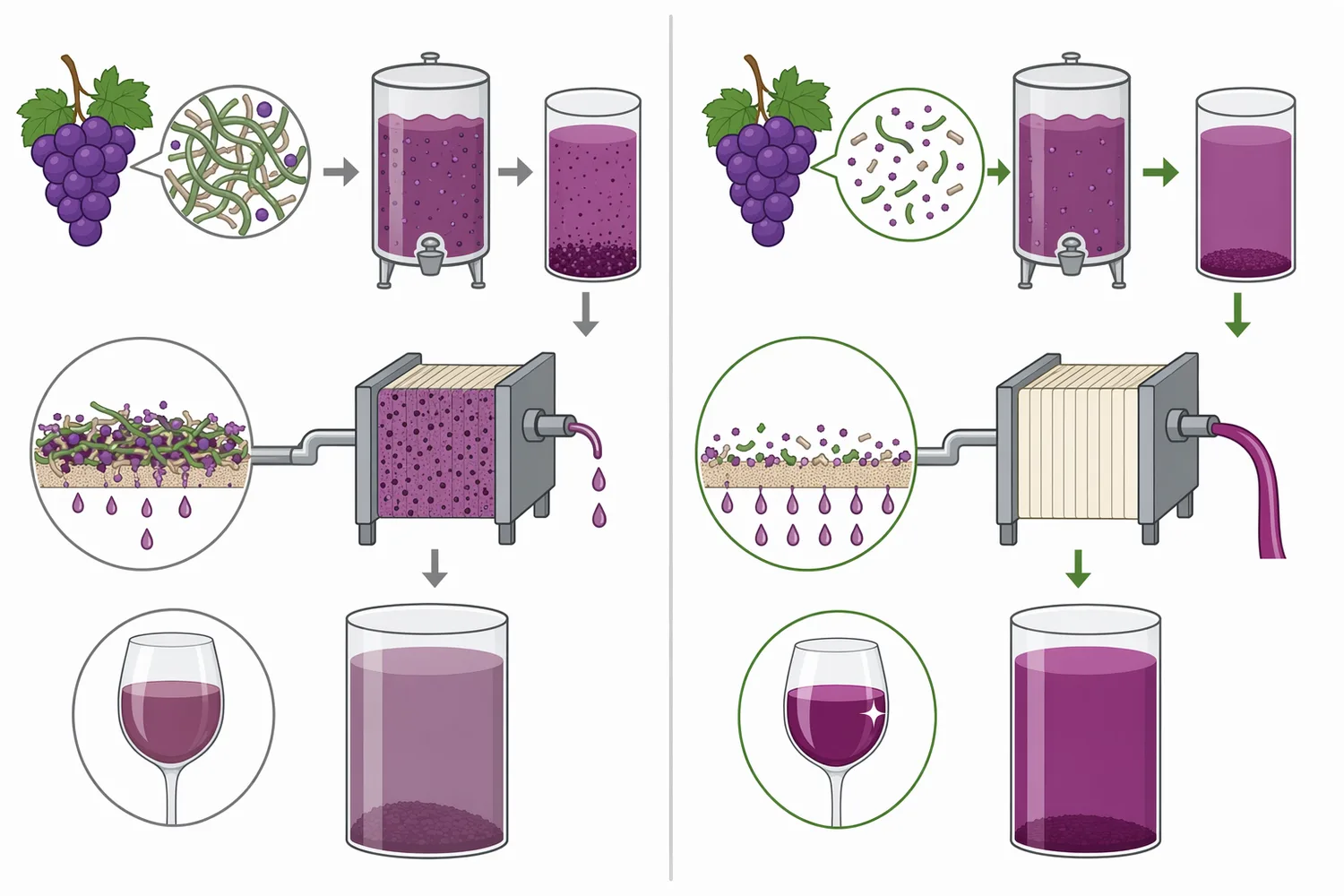
The classic winery example is Botrytis cinerea. In wet seasons or in fruit with gray mold pressure, Botrytis can release extracellular glucans into grape juice. These polymers can persist through fermentation and later appear as slow settling, hazy behavior or rapid filter blocking. The important detail is that the problem is not simply “more solids.” A filter can remove ordinary particulates if they form a reasonably porous cake, but glucan-rich material can create a compressible, gel-like layer that collapses under pressure and blocks flow. That is why a wine may be visually acceptable after settling or fining yet still perform badly during final filtration [1].
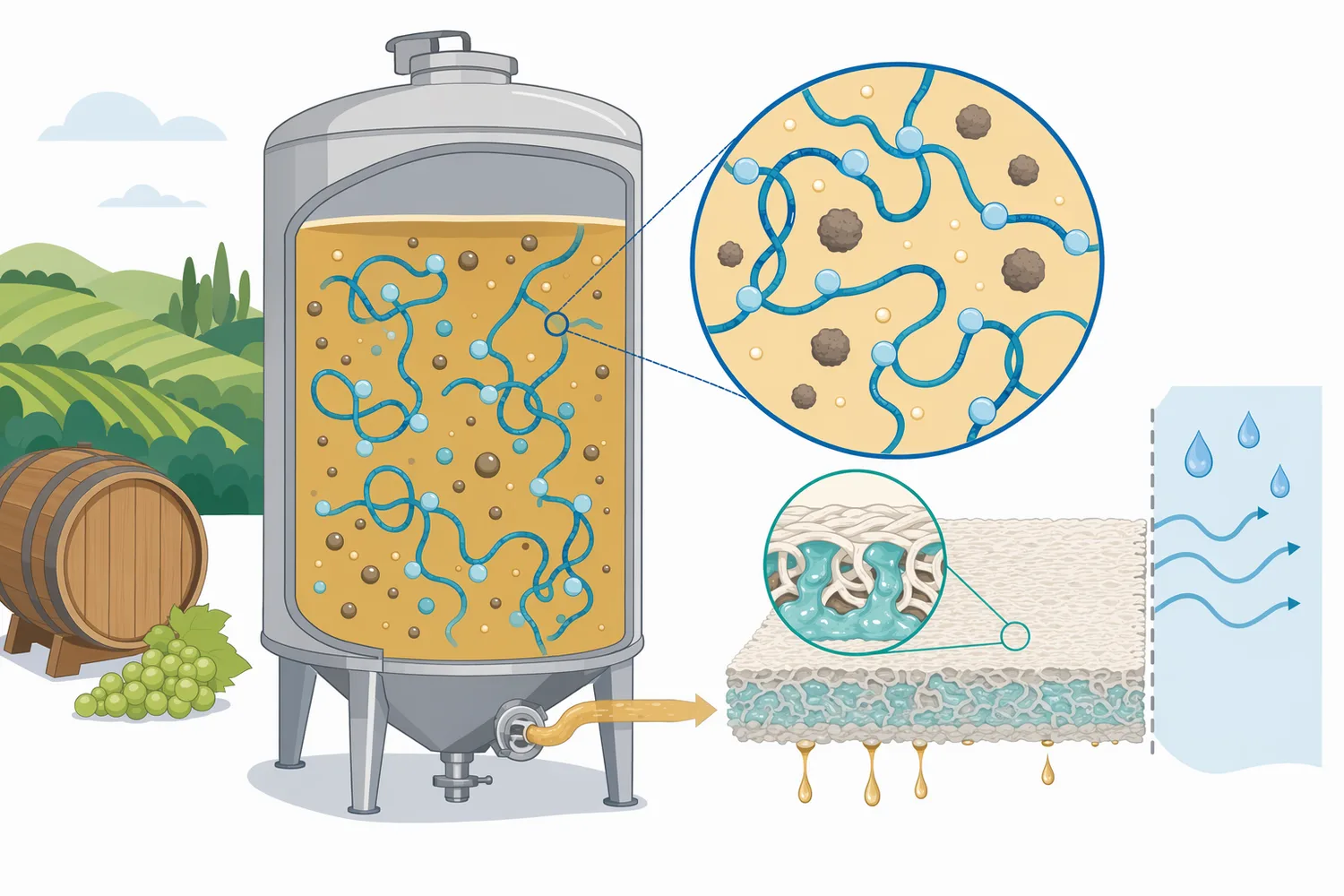
Yeast-derived glucans are a second relevant source. The yeast cell wall contains a structural glucan network, with mannoproteins associated with the outer wall. During lees aging, yeast autolysis slowly weakens the wall and releases wall-bound and intracellular compounds. This process is valued in sparkling wines and many still wines, but it is naturally gradual. A β-glucanase preparation acts on the glucan scaffold of the wall, making it easier for the wall structure to loosen and release mannoprotein-rich material into the wine. A study on traditional sparkling wines specifically evaluated how a β-glucanase enzymatic preparation affected yeast lysis during aging, aligning with the intended “aging enzyme” role [2].
The same polymer physics that matters in wine also appears in other biological systems: soluble β-glucans can increase viscosity, and β-glucanase treatment can reduce the molecular size or viscosity effect of those polymers. Poultry studies on barley-based diets, for example, have used β-glucanase to address viscosity associated with soluble barley β-glucans, showing the practical importance of polymer breakdown even outside wine [3]. Wine is a very different matrix, but the underlying mechanism—cutting long, hydrated glucan chains so they no longer behave as large flow-resistant polymers—is directly relevant.
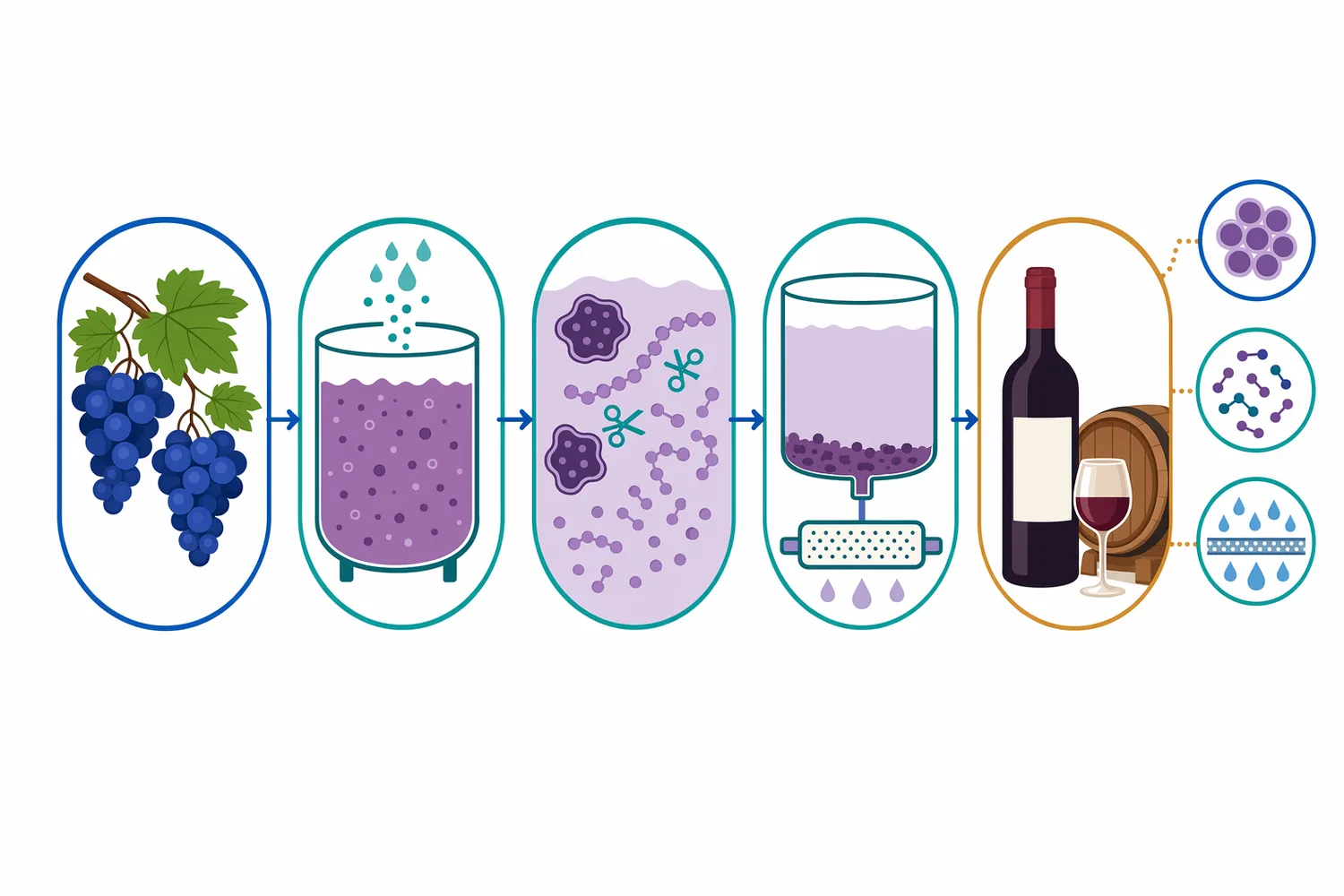
β-Glucanase works by hydrolyzing β-glycosidic bonds within β-glucan chains. In practical terms, the enzyme brings water into the bond and splits the polymer into shorter glucan fragments and oligosaccharides. Long β-glucan chains have a large hydrodynamic volume: they occupy more effective space in solution than their dry mass suggests, bind water, entangle with other polymers and help stabilize colloidal particles. Once cut into shorter fragments, they lose much of that network-forming behavior. The wine can then move more freely through filtration media, and particles that were held apart by polymeric steric stabilization are less likely to remain indefinitely suspended [4].
Endo-acting glucanases are particularly useful for reducing polymer length because they cut internal bonds along the chain rather than trimming only from the ends. A single internal cut can turn one long chain into two shorter chains; repeated cuts rapidly reduce average molecular size. This is why endo-glucanase activity can create a noticeable process effect even though the total carbohydrate mass has not disappeared. What changes is the chain length distribution, the water-holding behavior and the ability of the polymer to bridge particles or block pores. Studies characterizing endo-β-glucanases describe this internal chain-cleaving mode of action as central to their capacity to attack insoluble or structured glucan substrates [4].
β-1,3-glucanase activity is especially relevant to fungal and yeast cell-wall materials. Many fungal cell walls contain β-1,3-glucan as a structural component, often with branching or association with other polymers. Enzymes that attack β-1,3-glucans can weaken these structures, which explains their frequent study in fungal-cell-wall degradation and antifungal contexts. A recent characterization of extracellular β-1,3-glucanase from Paenibacillus polymyxa AT4, for example, focused on its ability to degrade β-1,3-glucan-related fungal structures, illustrating why this activity class is relevant when wine problems originate from yeast or mold-derived glucans [5].
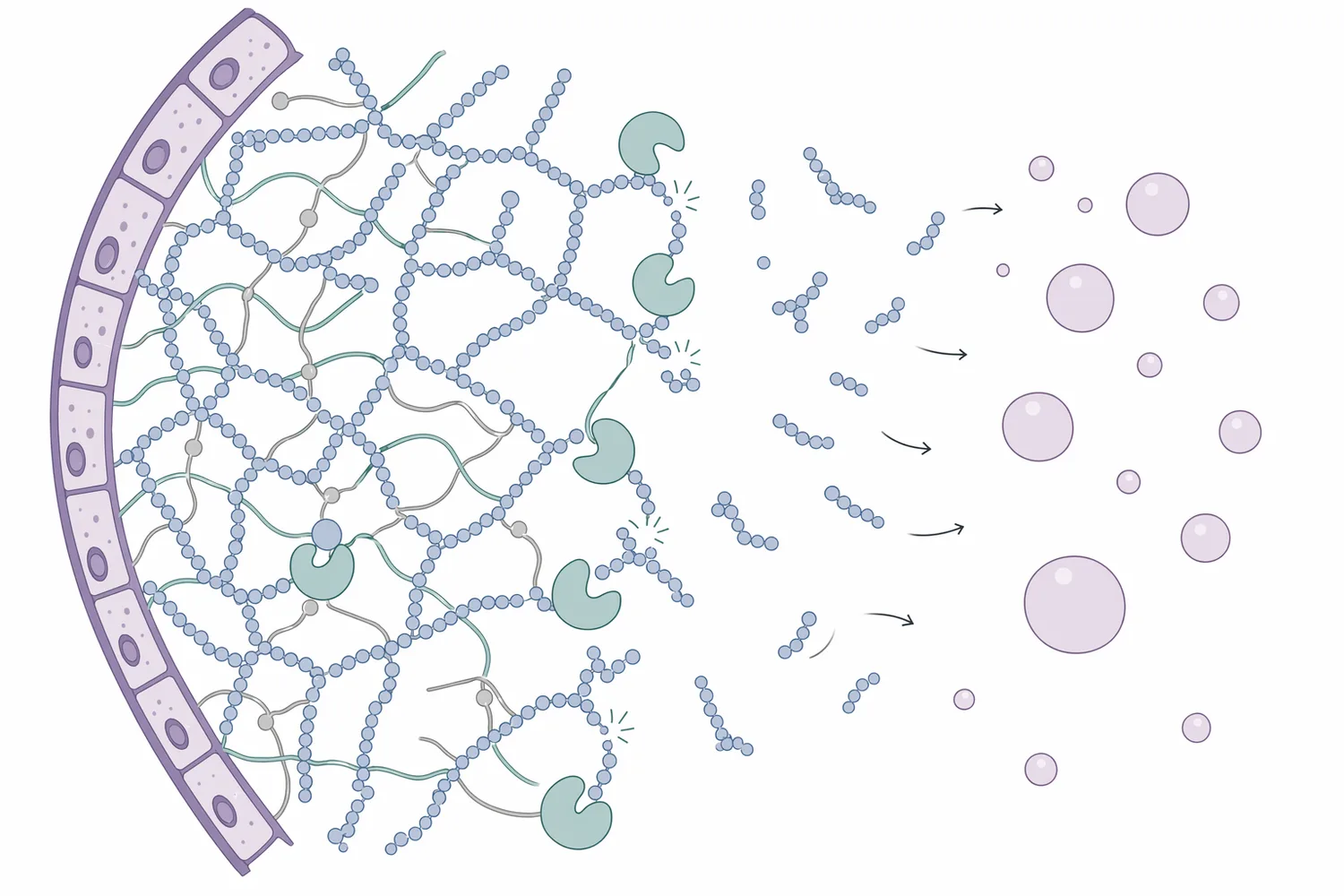
β-1,4-glucanase activity is a different but related glucan-degrading function. It targets β-1,4-linked glucans such as cellulose-like substrates and mixed-linkage glucans. The presence or emphasis of β-1,4 activity matters more in some plant or cereal applications than in the classic Botrytis wine-glucan problem, but the same enzymatic principle applies: reducing chain length changes solubility, viscosity and physical behavior. Research on endo-β-1,4-glucanases from microbial sources describes how these enzymes act on cellulosic or cellulose-like polymers by cleaving internal β-1,4 linkages [6].
| Wine or cell-wall component | Why it causes a process issue | What β-glucanase changes | Practical processing effect |
|---|---|---|---|
| Botrytis-derived β-glucan | High-molecular-weight hydrated polymer can persist in wine and form a gel-like filtration barrier | Cuts glucan chains into shorter fragments with less network-forming ability | Improved filterability and lower risk of rapid filter blocking |
| Yeast-cell-wall β-glucan | Forms part of the rigid wall scaffold that slows autolysis | Weakens the glucan network so wall material breaks down more readily | Supports lees-aging effects and mannoprotein release |
| Colloid-associated glucans | Help keep fine particles dispersed and can raise apparent viscosity | Reduces polymer bridging and water-holding behavior | Easier clarification and more predictable settling |
| Mixed glucan-containing residues | Can contribute to haze, fouling and slow flow depending on the matrix | Converts larger glucan structures into smaller soluble fragments | Better integration with racking, fining and filtration steps |
This table should be read mechanistically rather than as a guarantee of identical results in every wine. A wine that is slow to filter because of glucans is an excellent conceptual fit for β-glucanase; a wine that is difficult to filter because of tartrate crystals, microbial instability, excess protein haze or fine mineral particles may need other process controls. The enzyme changes β-glucan structure; it does not replace the broader cellar decisions that manage oxidation, microbiology, protein stability or final packaging quality [1].
Wines made from Botrytis-affected grapes are among the best-known use cases for β-glucanase. The issue can appear after fermentation, when the wine seems otherwise workable but filtration pressure rises rapidly or flow rates decline faster than expected. Because Botrytis glucans are soluble or colloidally dispersed, they may not be fully removed by settling alone. A β-glucanase treatment targets the polymer itself, reducing the chain length that makes it behave like a filtration gel [1].
The practical value is strongest when filtration difficulty is related to glucan load rather than ordinary suspended solids. In a glucan-rich wine, increasing pressure can make the problem worse by compressing the filter cake and forcing hydrated polymer into the filtration surface. Hydrolysis changes the feed stream before it reaches the filter, so the filter is no longer asked to retain a large, water-swollen polymer network. That is why β-glucanase is often described as a pre-filtration conditioning tool rather than merely a clarification additive [1].
After alcoholic fermentation, wine contains yeast, grape solids, colloids, polysaccharides and fermentation-derived macromolecules. Normal settling removes much of the larger particulate material, but glucan-rich colloids can remain in the liquid phase and interfere with clean racking. β-Glucanase can be used during post-fermentation handling to reduce the contribution of glucans to slow settling and high turbidity persistence. The main physical change is not that the enzyme “drops sediment” by itself; rather, it reduces the polymeric stabilization that can keep fine particles and colloids dispersed [1].
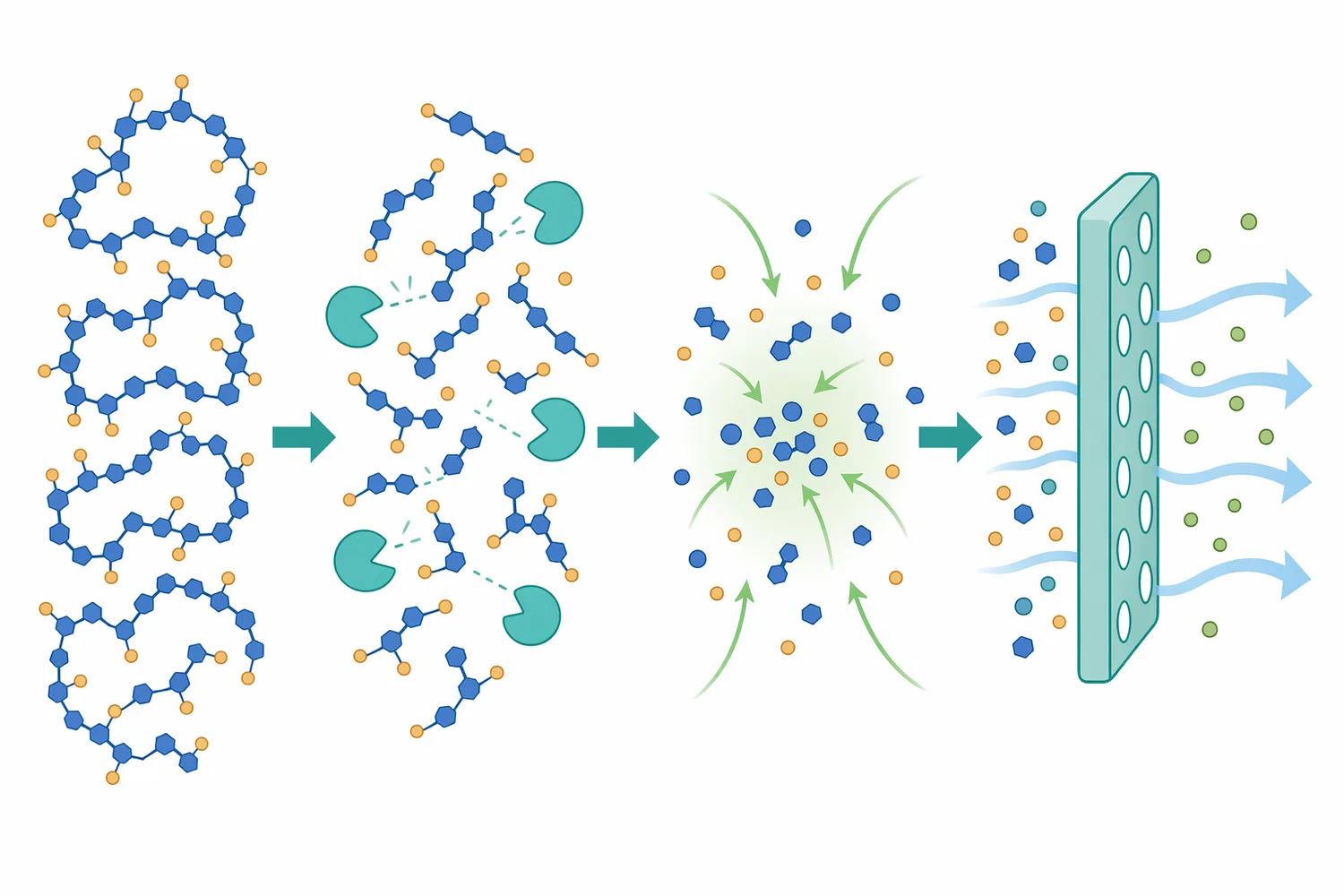
This effect can make later operations more predictable. When glucan chains are shorter, they are less able to span between particles, less able to bind large volumes of water and less likely to form a slimy layer during filtration. For wines where glucan is a limiting factor, this can mean a clearer racking interface, lower filtration resistance and fewer interruptions during polishing filtration. The result still depends on the wine matrix, but the target mechanism is well defined: hydrolysis of the glucan structure that is holding the system in an unfavorable colloidal state [4].
Final filtration exposes glucan problems quickly because the filtration surface is fine, the process is pressure-driven and even small amounts of compressible colloidal material can reduce flow. A wine may pass coarse handling steps and still fail during tighter filtration if glucan polymers are present. β-Glucanase can be useful before bottling filtration because it acts upstream of the filter, making the wine less likely to form a dense, hydrated fouling layer. Winery-oriented technical literature specifically frames β-glucanase as an enzymatic strategy for optimizing filtration and stability where β-glucans are involved [1].
The most important process concept is time. Enzymatic hydrolysis is not instantaneous, particularly in acidic, alcohol-containing wine at cellar temperatures. The enzyme must diffuse to its polymer substrate, bind the relevant glucan regions and complete hydrolysis events repeatedly across the polymer population. Cold wine, high phenolic load, alcohol and other matrix conditions can slow apparent performance. That does not mean the enzyme is inactive; it means the physical environment affects how quickly enough chain scission occurs to change filtration behavior [4].
During lees aging, wine remains in contact with dead or dying yeast cells. Over time, yeast autolysis releases amino compounds, peptides, nucleotides, lipids, mannoproteins and other wall-associated materials. β-glucanase is relevant because the yeast wall’s β-glucan network is one of the structural barriers to release. By hydrolyzing that network, the enzyme can accelerate or support the natural weakening of the wall. Research on traditional sparkling wines has directly examined β-glucanase preparations in relation to yeast lysis during aging, which supports this use as a practical oenological application rather than a generic enzyme claim [2].
Mannoprotein release is one of the main reasons this matters. Mannoproteins can influence mouthfeel, foam behavior in sparkling wines, colloidal stability and the perception of volume or softness depending on the wine style. β-glucanase does not “add” mannoproteins; it helps open the yeast-wall structure so material already present in the lees can move into the wine. That distinction is important. The enzyme supports a biological maturation pathway, while the sensory outcome still depends on lees quality, wine composition, contact time, temperature and the intended style [2].
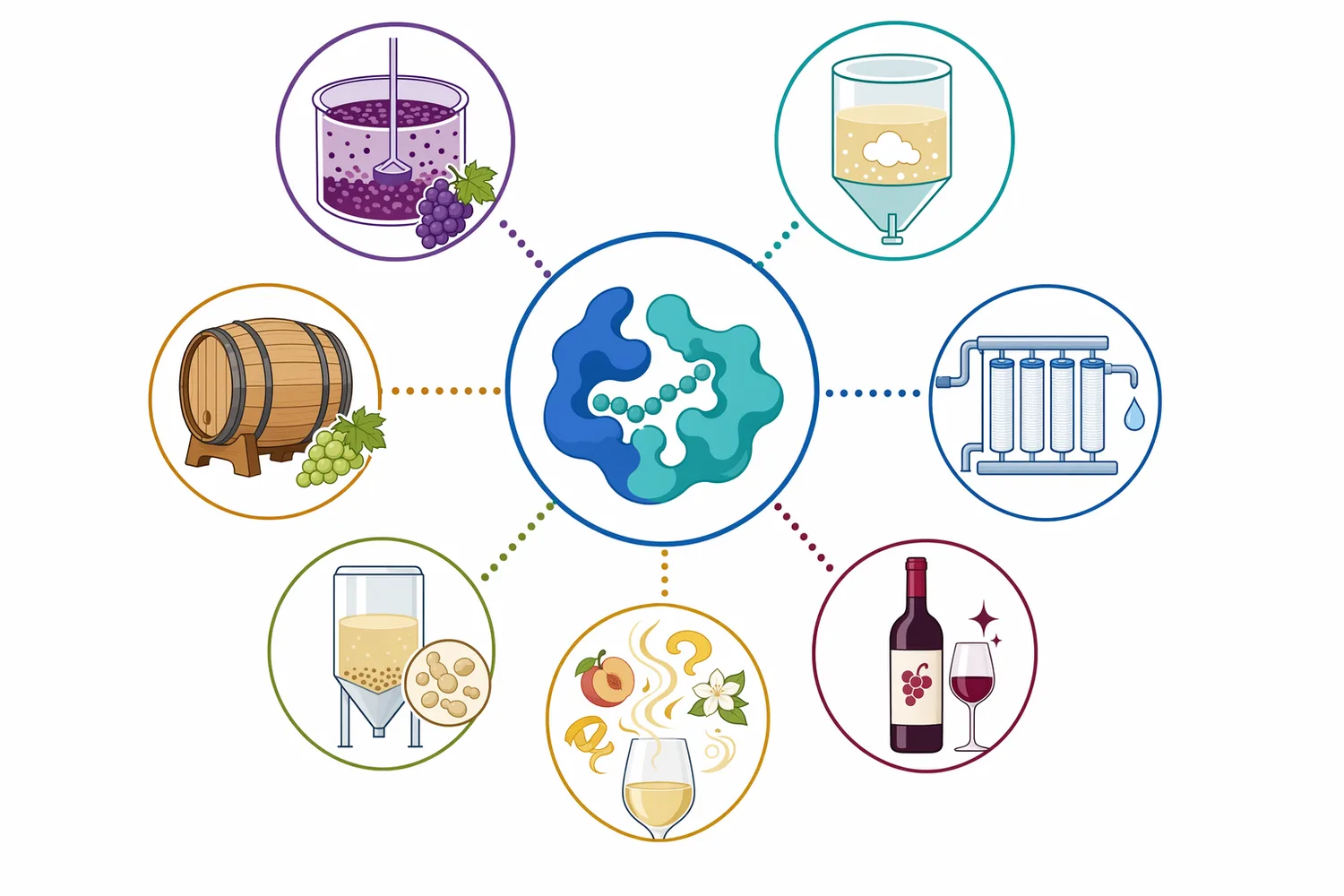
A study on Bombino bianco wine evaluated the combined effects of enzymatic treatment and aging on lees on wine aroma, showing that enzyme use and lees contact can interact in measurable ways in a real winemaking context [7]. This does not mean every wine will gain the same aroma profile, because aroma expression depends on grape variety, yeast strain, fermentation history and oxygen management. It does support the broader point that enzyme-assisted lees aging can affect more than filtration; it can influence maturation chemistry where yeast-wall breakdown is relevant.
β-Glucanase is sometimes grouped with other oenological enzymes, but its role is distinct. Understanding that distinction helps set realistic expectations: the enzyme is strongest where β-glucans or glucan-containing cell walls are the bottleneck. It is not the same as a pectinase for grape pulp breakdown, a protease for protein-related effects or a glycosidase for releasing bound aroma compounds.
| Enzyme type | Main substrate in wine processing | Primary mechanism | Typical process relevance |
|---|---|---|---|
| β-Glucanase | β-glucans from Botrytis, yeast walls or glucan-rich colloids | Hydrolyzes β-linked glucose polymers into shorter fragments | Filterability, clarification, viscosity reduction, yeast-wall breakdown |
| Pectinase | Pectins from grape pulp and skins | Breaks pectin networks that hold plant tissue and juice solids | Juice yield, settling, clarification, maceration support |
| Protease | Proteins and peptides | Cuts peptide bonds in proteins | Protein modification and, in some contexts, haze-related processing |
| β-Glycosidase | Glycosidically bound aroma precursors | Releases aglycones from sugar-bound aroma compounds | Aroma expression where suitable precursors are present |
This comparison is not a ranking of importance; it shows why enzyme choice is tied to the substrate causing the process issue. If a wine’s filtration problem is caused by pectin, β-glucanase is not the central enzyme. If the problem is Botrytis glucan or yeast-wall glucan, β-glucanase is directly relevant. Industry discussion of winery β-glucans emphasizes this substrate-specific approach because glucans require an enzyme capable of cleaving glucan bonds rather than a general clarification aid [1].
The strongest wine-specific support for β-glucanase is in filtration and treatment of glucan-rich wines. Winery technical literature consistently links β-glucans with slow filtration and identifies β-glucanase as the enzyme class that breaks those polymers down. The mechanism is chemically straightforward: the enzyme reduces polymer length, and reduced polymer length lowers the ability of glucans to form viscous, filter-blocking networks. This is why the application is especially associated with wines affected by Botrytis cinerea [1].
The broader enzymology literature supports the key mechanistic steps. Endo-glucanases reduce polymer size by cutting internal bonds; β-1,3-glucanases attack fungal and yeast-wall-related glucans; β-1,4-glucanases attack cellulose-like or mixed β-1,4 substrates. These enzyme classes are routinely characterized by substrate linkage specificity and mode of action, because the bond pattern determines whether the enzyme can effectively engage the polymer. Studies on β-1,3-glucanases and β-1,4-glucanases show that linkage specificity is central to how glucanase enzymes act on biological cell-wall materials [5].
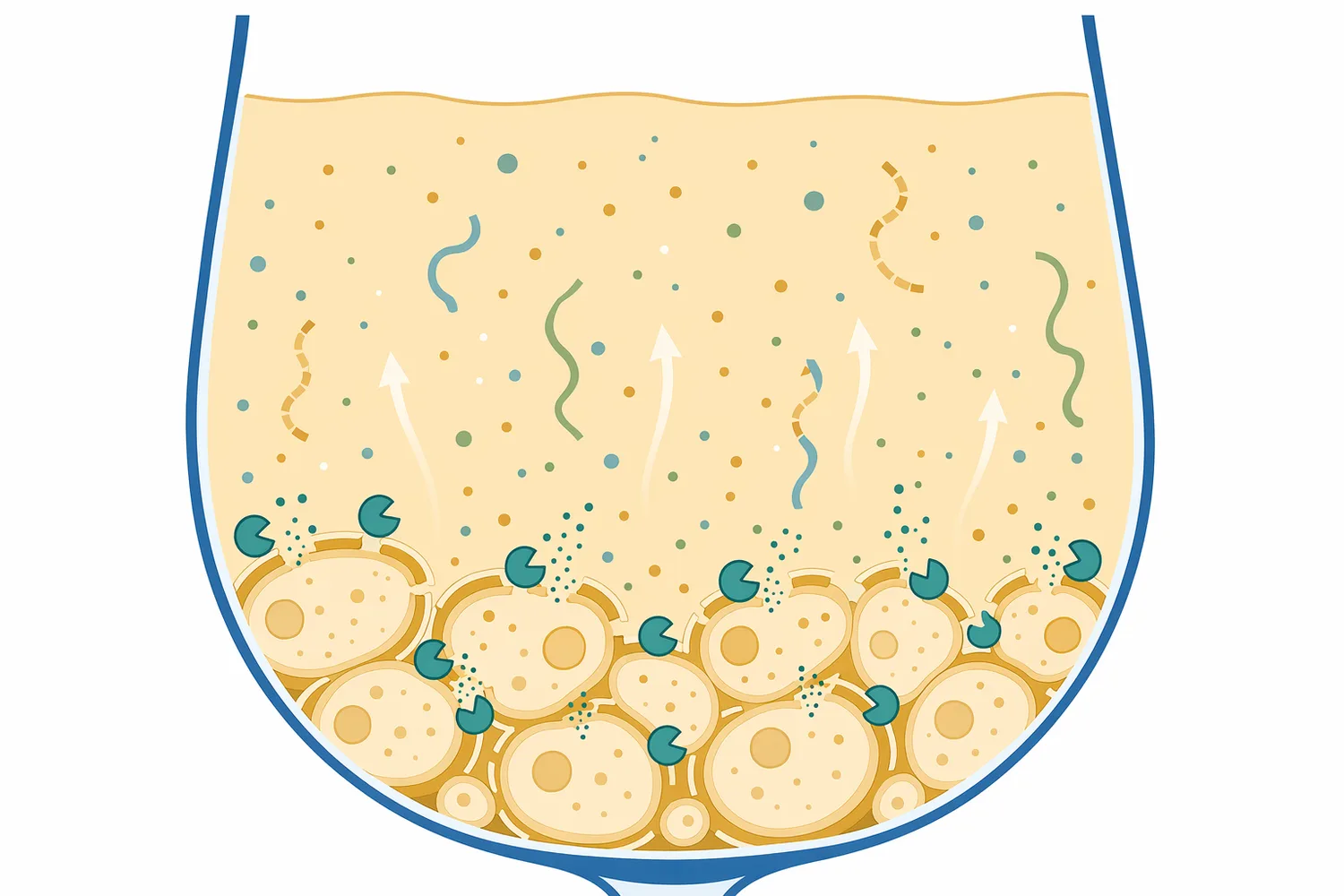
Lees-aging evidence is more style-dependent but still meaningful. The study on traditional sparkling wines examined the effects of a β-glucanase enzymatic preparation on yeast lysis during aging, while the Bombino bianco study considered enzymatic treatment together with aging on lees and aroma outcomes. Taken together, these sources support the view that β-glucanase can participate in yeast-wall breakdown and maturation chemistry, while also reminding users that aroma and mouthfeel outcomes are matrix-dependent rather than automatic [7] [2].
Evidence from non-wine systems also reinforces the physical importance of glucan molecular size. Studies on barley-based diets have connected β-glucanase supplementation with changes in viscosity and β-glucan behavior, while more recent work has examined soluble β-glucan molecular weight in digestive contents. These are not winemaking trials, but they support the general polymer principle: high-molecular-weight soluble β-glucans can strongly affect flow behavior, and enzymatic reduction of molecular size changes that behavior [8].
Wine is a demanding environment for enzymes. It is acidic, contains ethanol, may contain sulfur dioxide, phenolics, organic acids and metal ions, and is often processed at cool temperatures. These conditions can slow enzyme kinetics compared with ideal laboratory conditions. The practical implication is that β-glucanase performance depends on contact time and access to the substrate. The enzyme must encounter glucan chains within a complex liquid matrix, and the wine’s temperature, colloid load and alcohol content influence how quickly the desired physical change appears [4].
Because β-glucanase is a protein, it can also be affected by operations that remove or denature proteins. Fining materials, adsorbents or heat exposure may reduce the amount of active enzyme remaining in solution if applied before the enzyme has had time to act. In cellar terms, this means the enzyme is best understood as a process step that needs an appropriate window to hydrolyze glucans before later clarification or filtration operations take over. The purpose is not to leave the enzyme as a final wine component; the purpose is to allow it to complete enough glucan hydrolysis to improve processing behavior [1].
Alcoholic fermentation and maturation also change the substrate itself. Fresh yeast cells, compacted lees, aged lees and Botrytis-derived extracellular glucan do not present identical physical structures. Yeast-wall glucans are embedded in a wall matrix, while Botrytis glucans may already be dispersed into the wine. This affects how readily the enzyme reaches its target. Cell-wall applications are therefore typically slower and more dependent on lees condition than direct hydrolysis of soluble glucan polymers [2].
β-Glucanase can support sensory objectives indirectly by enabling yeast-wall breakdown during lees aging. When yeast walls are weakened, mannoproteins and other autolysis-derived compounds may be released more readily. These materials can contribute to perceived roundness, persistence and integration in some wine styles, particularly where lees contact is already part of the winemaking plan. The Bombino bianco study’s focus on enzymatic treatment and lees aging in relation to aroma illustrates that enzyme-assisted maturation can influence wine composition beyond simple clarification [7].
However, β-glucanase should not be treated as a universal aroma enzyme. Many aroma compounds in grapes are bound to sugars other than glucan polymers, and their release may involve other enzyme classes. Likewise, red wine color extraction is often more directly tied to skin maceration, pectin breakdown, anthocyanin chemistry, tannin extraction and fermentation management than to β-glucanase alone. β-Glucanase may help where cell-wall glucans are a barrier, but its strongest and clearest technical role remains glucan hydrolysis [1].
Stability effects should also be framed carefully. By reducing glucan-related colloidal problems, the enzyme may support more predictable clarification and filtration. By promoting lees breakdown, it may support release of mannoproteins associated with texture and colloidal behavior. But it does not replace microbial control, protein stability management, tartrate stabilization, oxygen control or sound packaging practice. The enzyme changes a defined substrate class; the finished wine still reflects the whole process [2].
In practice, β-glucanase is most often relevant after fermentation, during maturation, during treatment of botrytised lots, before difficult filtration, or during planned lees aging. These are points where the target substrate is present and where changing glucan structure can improve the next step. For example, a wine that has completed fermentation but filters poorly due to glucan-rich colloids may benefit from glucan hydrolysis before final filtration. A sparkling base or still wine aged on lees may use β-glucanase to support yeast-wall breakdown during the maturation period [1].
The enzyme is not normally thought of as a substitute for fruit selection or sanitation. Grapes heavily affected by mold bring multiple challenges, including off-flavors, oxidative enzymes, microbial load and altered phenolics. β-Glucanase addresses the glucan fraction of that problem, especially the filtration and clarification burden. It should therefore be viewed as a targeted processing aid within a broader quality-control strategy, not as a treatment that erases all consequences of compromised fruit [1].
For lees aging, the value depends on the desired style. Wines aged on fine lees for texture and complexity may benefit from controlled yeast-wall breakdown, while wines intended for very clean, neutral profiles may not need that emphasis. The enzyme can make the autolysis pathway more active, but it does not decide whether the resulting profile is stylistically appropriate. The wine style, lees quality and maturation plan remain central [7].
Enzymes.bio supplies Food Grade Beta Glucanase for Wine Making as an online product for professional food and beverage processing. The product is available by the 1 kg unit; buyers complete the purchase online, after which the order is processed and shipped. A Certificate of Analysis and Safety Data Sheet are included with the order, giving the buyer the standard documentation that accompanies the supplied product .
The key value for wine users is practical: β-glucanase targets the glucan polymers that can make wine viscous, slow to clarify, resistant to filtration or slower to mature on lees. The enzyme’s action is concrete and substrate-specific. It cuts β-linked glucose polymers, reduces their chain length, weakens glucan-based cell-wall structures and changes how those polymers behave in the wine matrix. That is why it is relevant to Botrytis-affected wines, post-fermentation clarification, pre-filtration conditioning and selected lees-aging applications [1].
For customers purchasing through Enzymes.bio, the product should be understood as a processing aid for defined winemaking problems rather than a broad sensory additive. Its most evidence-supported benefits are improved handling of β-glucan-related filtration and clarification challenges, with additional value in supporting yeast-cell-wall breakdown during aging where that fits the wine style. In the right context, Food Grade Beta Glucanase for Wine Making helps turn long, troublesome glucan chains into shorter, less disruptive fragments—making the wine easier to process and, in lees applications, helping the maturation chemistry proceed more efficiently [2].
Sold by the 1 kg unit, in stock and ready to ship. Order directly on our store — pay online and we process your order. A Certificate of Analysis and Safety Data Sheet are included with every order.
Buy Food Grade Beta Glucanase For Wine Making Cell Wall Breaking And Aging Enzyme →Numbered in order of first citation. Open-access sources, each verified reachable at publication; citation numbers in the text link here.