
Food-grade cellulase enzyme helps botanical extraction by hydrolyzing cellulose in plant cell walls, loosening the fibrous structure that can trap oils, pigments, phenolics, aromatics, and other plant-derived compounds. For processors working with herbs, roots, leaves, flowers, peels, pomace, seeds, or other fibrous botanicals, cellulase can improve liquid penetration, mass transfer, filtration behaviour, and extract clarity when cellulose-rich tissue is a limiting factor.
Enzymes.bio supplies Food-Grade Cellulase Enzyme for Botanical Extraction as a 1 kg online product for industrial and food-processing use. Buyers can purchase directly online; the order is processed and shipped, and a Certificate of Analysis and Safety Data Sheet are provided with the order .
Food-Grade Cellulase Enzyme for Botanical Extraction is used as a processing aid for plant materials where the cell wall structure limits extraction efficiency. Plant tissues are not simply loose powders: even after drying, milling, or chopping, many botanical particles retain a reinforced wall architecture built from cellulose microfibrils, hemicelluloses, pectins, lignin-associated structures, proteins, and other matrix components. Cellulose is one of the main load-bearing polymers in this structure, and its crystalline and semi-crystalline regions can reduce how quickly extraction liquid enters the particle and how readily intracellular or wall-associated compounds diffuse out [1].
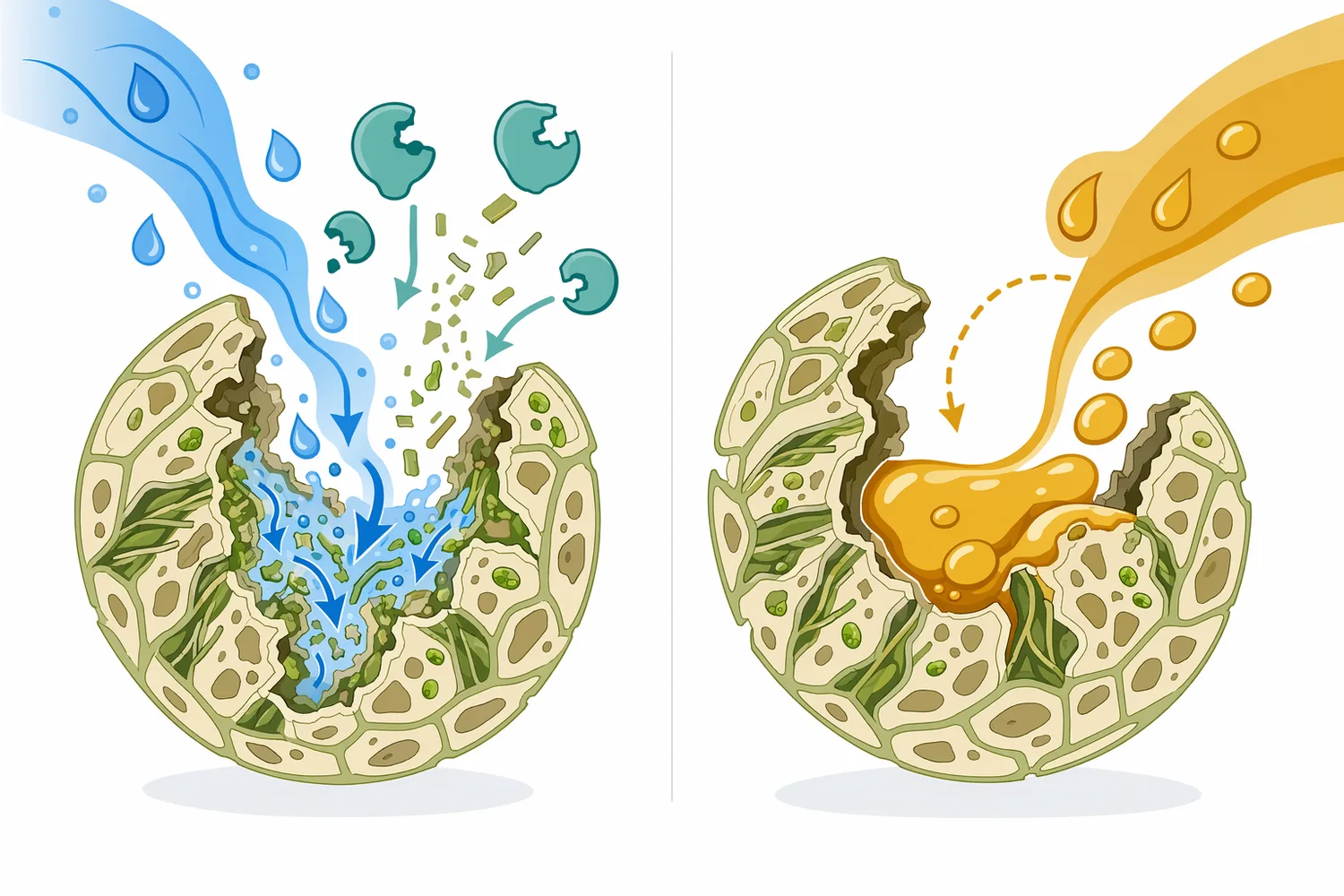
Cellulase does not act like a solvent. It does not “pull” target compounds out of the plant by chemical affinity. Instead, it attacks cellulose in the wall network. As cellulose chains are hydrolyzed, the wall becomes more porous, weaker, and less able to hold fibrous particles together. That structural change allows water or another compatible extraction liquid to reach more internal surface area, improves diffusion paths, and can reduce the amount of intact fibrous material that interferes with clarification [2].
This is especially relevant for botanical ingredients where valuable material is physically trapped rather than freely soluble at the surface. Examples include herbal extracts, functional food ingredients, fruit and vegetable by-products, seed residues, flowers, peels, stems, leaves, roots, and other plant-derived solids. Enzymes.bio positions this cellulase product for botanical extraction and plant-based processing applications where cellulose breakdown supports improved release and downstream handling .
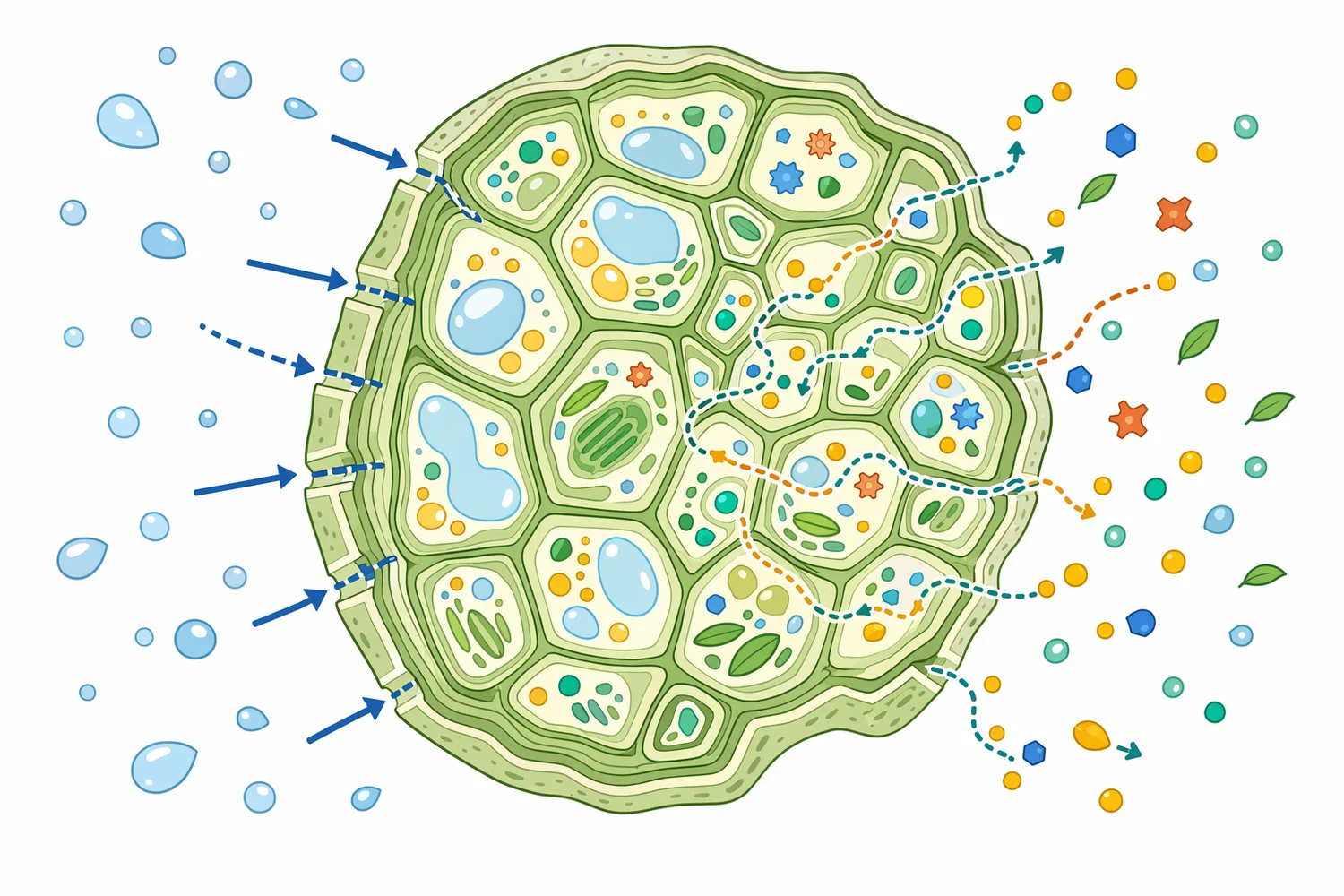
A plant cell wall is a composite material. Cellulose microfibrils provide tensile strength; hemicelluloses tether and coat those cellulose structures; pectins create hydrated gel-like domains; lignin and phenolic crosslinks can stiffen certain tissues; and proteins and minerals can further modify porosity. In extraction, that wall behaves like a barrier around and between cells. Even if the raw material has been milled, many particles remain as multi-cell fragments in which target compounds must diffuse through cell wall layers before reaching the extraction liquid [1].
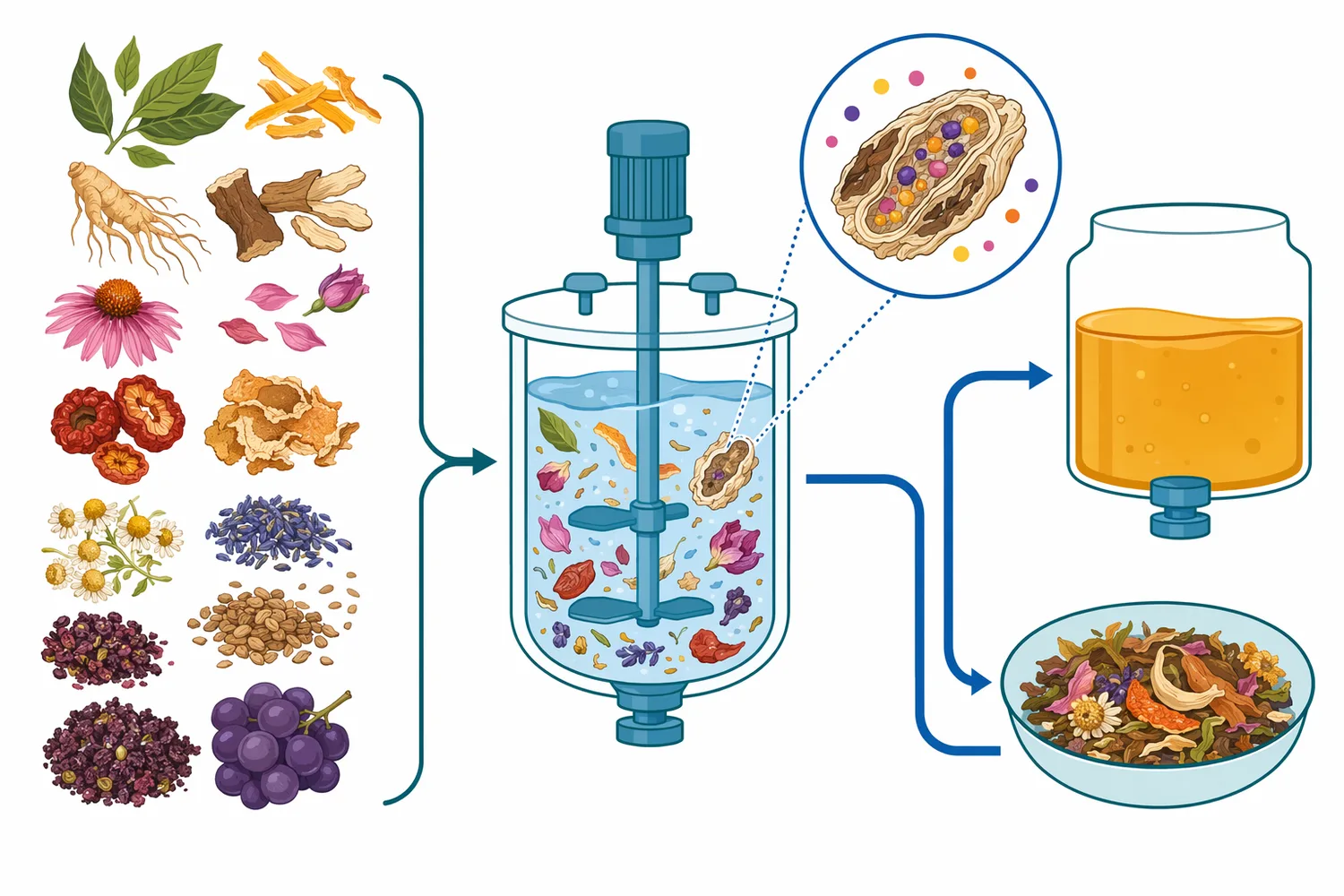
The barrier matters because botanical extraction is often controlled by mass transfer. The extraction liquid must wet the particle, penetrate pore spaces, dissolve or suspend the target compounds, and carry them into the bulk liquid. Dense cellulose-rich walls slow this process by limiting accessible surface area and increasing diffusion distance. If the matrix swells or releases colloidal polysaccharides, it can also raise viscosity, which slows mixing and makes filtration more difficult [2].
Mechanical size reduction helps by increasing external surface area, but it does not fully remove cell wall resistance. Very fine milling can also create its own problems: more fines, more suspended solids, higher filter loading, and sometimes more stable haze. Cellulase offers a different type of intervention. Rather than relying only on particle fracture, it selectively weakens the cellulose-rich architecture inside the particles, which can make the extraction liquid work more effectively without simply grinding the material finer [3].
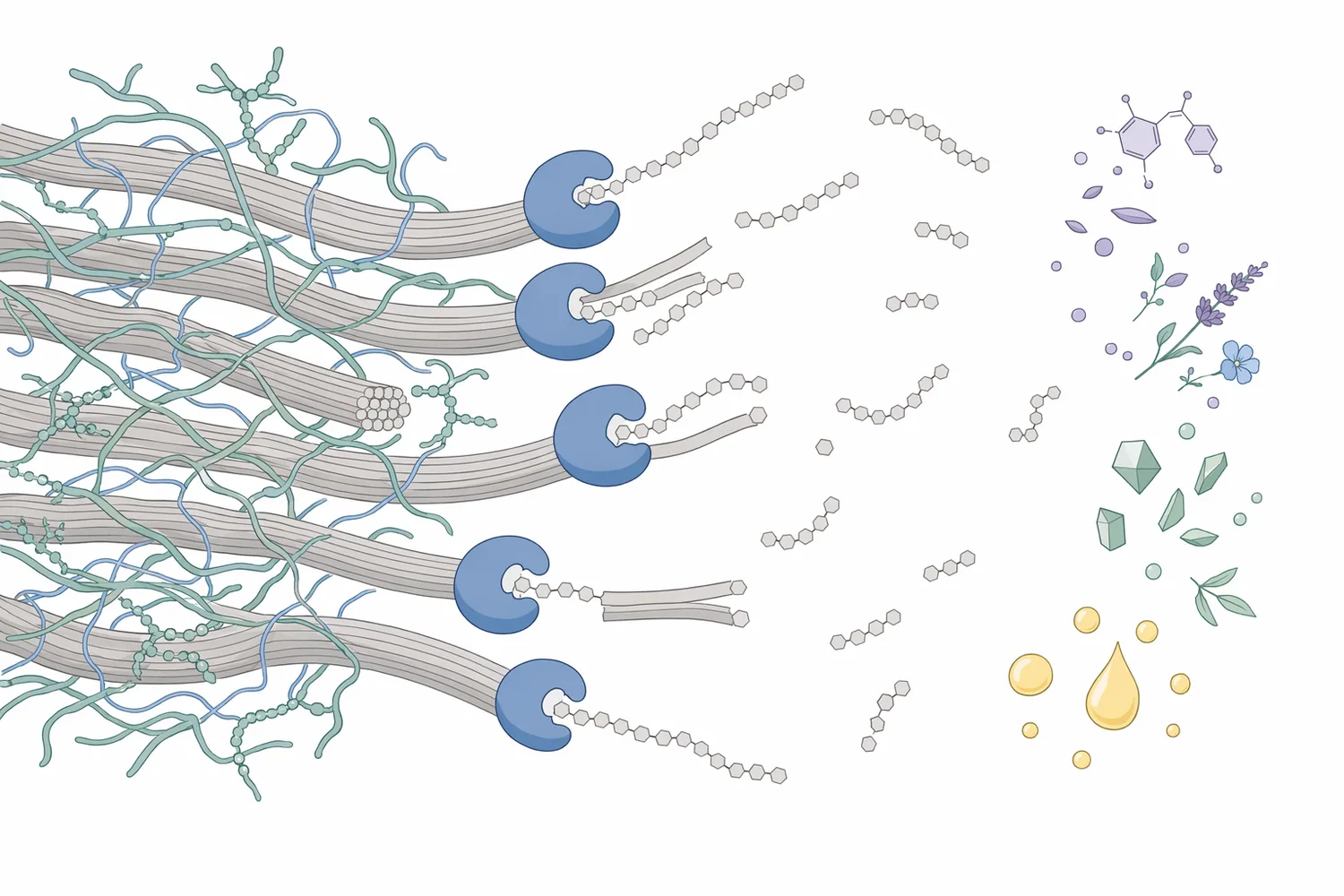
Cellulase is best understood as an enzyme system rather than a single physical action. Cellulose is made of glucose units linked mainly by β-1,4 bonds, packed into long chains and organized into fibrils. Cellulase enzymes hydrolyze those bonds at accessible points in the cellulose structure, producing shorter cellulose fragments and soluble sugars as the fiber network is degraded. Reviews of cellulase biotechnology describe cellulase efficiency as depending on coordinated enzyme action against insoluble cellulose, because different parts of the cellulose structure have different accessibility [4].
In a hydrated botanical slurry, cellulase first needs access to the cellulose surface. Once water has swollen the plant tissue, accessible cellulose regions are exposed at fractured edges, pores, and damaged wall surfaces. The enzyme binds at those sites and begins cleaving cellulose chains. This action opens microvoids, loosens the wall, and can cause cell fragments to soften or partially collapse. The result is not an instant disappearance of plant fiber; it is a progressive weakening of the barrier that had been slowing solvent penetration and compound release [5].
That physical weakening changes extraction performance in several ways. First, more liquid reaches the interior of the botanical particle. Second, intracellular compounds have shorter and less restrictive pathways into the extraction liquid. Third, the slurry can become easier to mix because long, intact fibrous networks are reduced. Fourth, downstream separation can improve because softened, partially hydrolyzed fibers may drain more readily than a mat of long, swollen plant fragments. These effects are matrix-dependent, but the underlying reason is concrete: the cellulose scaffold is being cut into shorter, less structurally effective pieces [6].
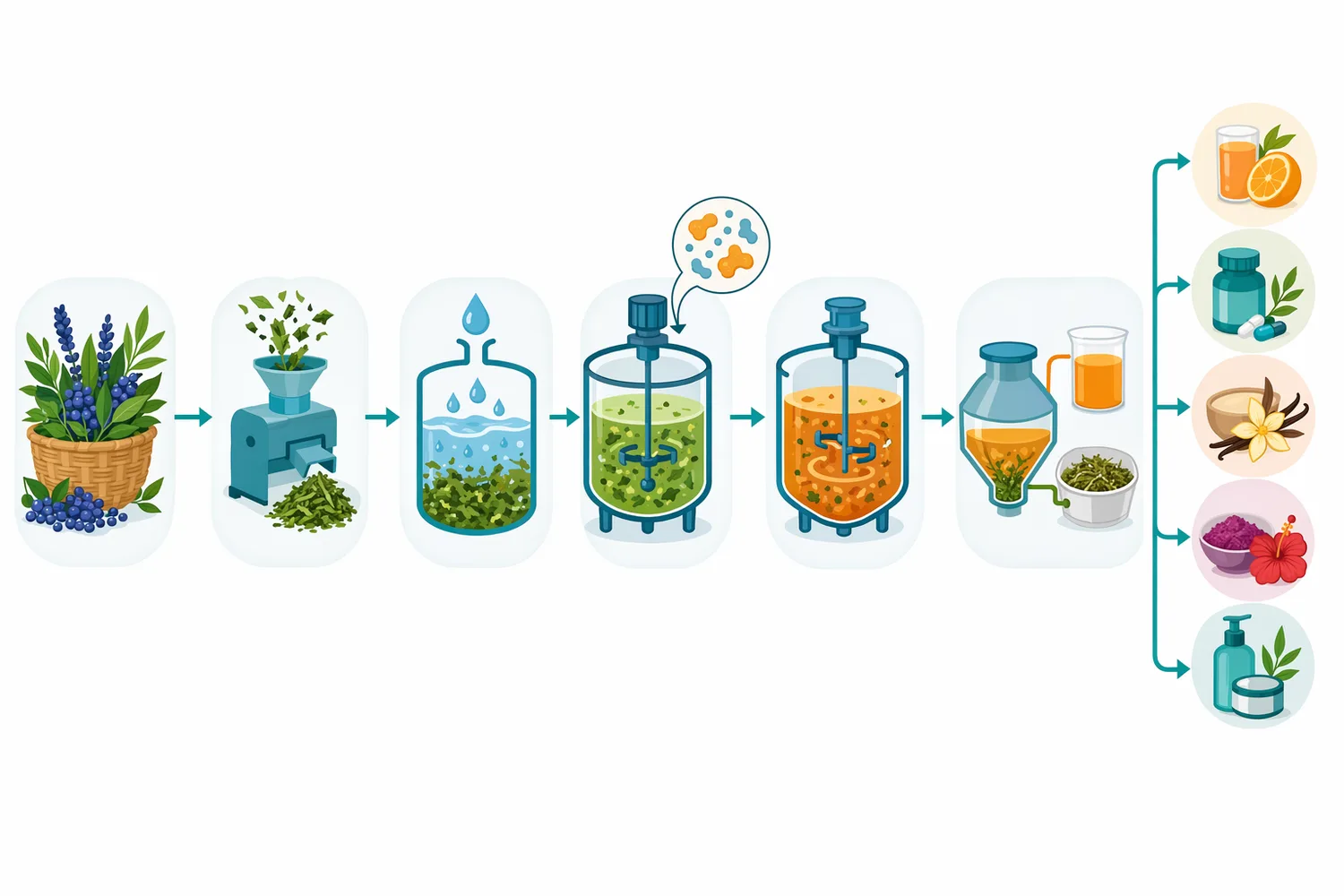
A typical botanical extraction workflow starts with raw material preparation, such as drying, cutting, milling, or grinding. The prepared plant material is then contacted with water or another compatible extraction liquid. Cellulase can be added during a hydration or extraction stage so it can contact the cellulose-rich wall material while the plant particles are swollen and accessible. After enzymatic treatment and extraction, solids are separated by filtration, centrifugation, pressing, or another clarification step, followed by concentration or drying if the process requires a powder or concentrate .
Cellulase is most useful when cellulose-rich structure is a real bottleneck. Leaf, stem, peel, pomace, root, seed, and fibrous herbal materials often contain enough structural carbohydrate to affect liquid access and separation. By contrast, if a target compound is already freely soluble and the plant matrix is not restricting mass transfer, cellulase may have less visible effect. The enzyme’s value comes from changing the substrate structure, so the condition of the substrate matters as much as the identity of the target compound [1].
The extraction liquid also influences what changes are observed. In aqueous or water-rich systems, plant cell walls hydrate and swell, which can improve enzyme access but also increase viscosity from polysaccharides and fines. Cellulase can help by reducing the structural contribution of cellulose to that viscosity and by opening the matrix for compound release. In processes using lower-water systems, the enzyme’s effect depends on whether there is enough available water for enzymatic action and substrate hydration [2].
The first expected benefit is improved extraction yield where the target material is trapped inside or behind cellulose-rich walls. When the plant matrix is opened, compounds that were previously inaccessible can migrate into the extraction liquid. This can apply to soluble solids, certain phenolic fractions, pigments associated with plant tissue, aroma precursors or semivolatile compounds, and other botanical constituents whose recovery is limited by tissue structure rather than only by solubility [7].
The second benefit is improved extraction rate. If the extraction liquid reaches internal plant surfaces faster, the same degree of release may occur in a shorter process window. The enzyme does not replace the need for mixing, hydration, and appropriate extraction design, but it can reduce the wall resistance that slows diffusion. This is why enzyme-assisted extraction is often discussed as a mass-transfer improvement rather than simply as “more chemical extraction” [2].
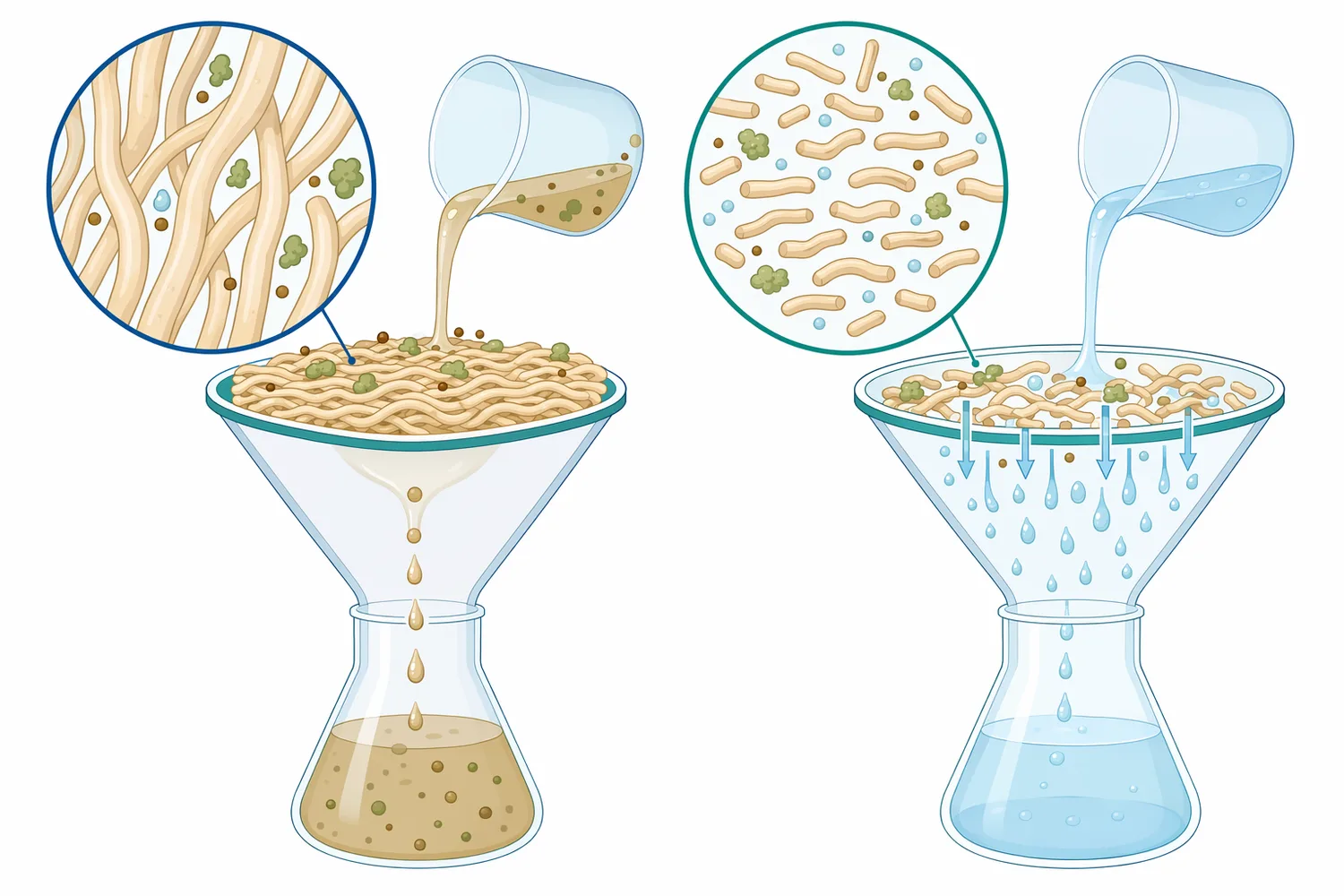
The third benefit is easier solid-liquid separation. Fibrous plant slurries can form compressible filter cakes, blind filter media, and retain liquid in swollen particles. Cellulase can reduce the integrity of the cellulose network that contributes to those problems. When long fibers and intact wall fragments are weakened, liquids can drain more cleanly and the extract may contain fewer large suspended fragments, depending on the botanical material and separation method [3].
The fourth benefit is potential improvement in extract appearance. Cleaner separation can reduce turbidity and haze caused by suspended plant solids. This does not mean cellulase is a universal clarifier; pectin, starch, proteins, tannin-protein complexes, lipids, and mineral particles may still influence clarity. But when cellulose-rich fragments are a major contributor to opacity or sediment, cellulase can support a cleaner liquid phase by breaking down the fibrous structure that carries those particles [6].
Plant materials contain more than cellulose, so cellulase is often one part of a broader enzyme-assisted extraction concept. The right enzyme effect depends on what structural or storage polymer is limiting extraction. The table below is conceptual: it shows why cellulase is useful for fibrous botanical tissue and why other enzymes may be relevant in matrices dominated by pectin, starch, or protein.
| Enzyme type | Main substrate in plant materials | What changes in the matrix | Typical extraction relevance |
|---|---|---|---|
| Cellulase | Cellulose in plant cell walls | Weakens cellulose microfibrils and opens fibrous wall structure | Improves liquid penetration, release from fibrous particles, drainage, and filtration where cellulose-rich tissue is limiting |
| Pectinase | Pectin-rich middle lamella and gel-like wall domains | Breaks down pectin gels that hold cells together and increase viscosity | Useful in fruit, peel, pomace, and soft tissues where pectin causes cloud, gel strength, or poor pressing |
| Hemicellulase / xylanase | Hemicelluloses associated with cellulose | Loosens matrix polymers that coat or connect cellulose fibrils | Supports breakdown of cereal, seed, husk, and fibrous plant structures where hemicellulose is significant |
| Amylase | Starch granules and gelatinized starch | Converts starch into smaller soluble carbohydrates | Useful when starch increases viscosity, traps liquid, or interferes with clarification |
| Protease | Structural or storage proteins | Hydrolyzes proteins that bind particles, oils, or phenolics | Relevant where proteins contribute to emulsions, haze, or compound binding |
This comparison matters because “plant cell wall breakdown” is not one reaction. Cellulase specifically addresses cellulose, which is one of the strongest structural elements in many botanical matrices. Pectinase may be more visible in pectin-rich fruit tissues; amylase may be more important in starchy roots or seeds; protease may help where protein binding or emulsification is the issue. For many botanicals, the observed extraction result reflects the combined structure of cellulose, pectin, hemicellulose, starch, protein, and lignified tissue [1].
Enzyme-assisted extraction is supported by the broader observation that enzymes can improve access to plant-derived compounds by altering plant tissues before or during extraction. A 2024 study on citrus semivolatile compounds used a new enzyme-assisted extraction technique and evaluated antimicrobial activity of the recovered compounds, demonstrating the relevance of enzyme-assisted methods in obtaining functional botanical fractions from citrus material [7].
This type of evidence is important because citrus tissues include cell wall structures that can retain aroma-active and semivolatile constituents. Enzymatic treatment can make those tissues more permeable and can help release compounds that are otherwise less accessible. The study should not be read as proof that cellulase alone gives the same result in every citrus or non-citrus process; rather, it supports the industrial logic of using enzymes to improve the recovery of botanical compounds from structured plant materials [7].
Research on plant cell wall degradation also supports the mechanism at a more fundamental level. Nanoscale examination of chemical and enzymatic degradation shows that enzymatic action changes the architecture of plant cell walls rather than merely washing compounds from the surface. That distinction is central to botanical extraction: when the wall architecture changes, the transport pathways available to extraction liquids also change [2].
Cellulase-producing microorganisms and cellulase enzyme systems have been widely studied because cellulose is abundant, recalcitrant, and industrially important. Reviews describe cellulase-producing organisms from diverse ecosystems and emphasize the biotechnological role of cellulases in degrading cellulose-rich materials. For botanical extraction, the relevance is not the organism itself but the catalytic capability: cellulase can convert a resistant structural polymer into smaller, less mechanically effective fragments [8].
Fungal cellulase systems are particularly well known for degrading plant biomass. Studies and reviews of fungal extracellular enzyme activity show that fungi produce enzyme mixtures capable of breaking down plant cell biomass, including cellulose and related wall polymers. That natural role maps directly onto botanical processing: the same biochemical capability that decomposes plant biomass can be applied under controlled food-processing conditions to weaken plant tissue before extraction [3].
Cellulase is a strong tool for cellulose-rich barriers, but it is not a universal extraction enhancer. Botanical materials vary by species, plant part, maturity, drying history, particle size, storage condition, and extraction liquid. A woody stem, a dried root, a citrus peel, a leafy herb, and a seed cake may all contain cellulose, but their wall structure, lignification, pectin content, oil bodies, starch level, and target compounds differ greatly. This variation explains why cellulase effects are often material-specific [1].
Target compound chemistry also matters. A water-soluble compound in the vacuole may respond differently from an oil-soluble compound in lipid bodies, a pigment associated with membranes, a phenolic bound to cell wall material, or a volatile compound vulnerable to process losses. Cellulase mainly improves access by modifying structure; the compound still needs to dissolve, disperse, or partition into the chosen extraction phase. That is why enzyme-assisted extraction is best understood as improving access and mass transfer, not changing the fundamental solubility of every botanical compound [2].
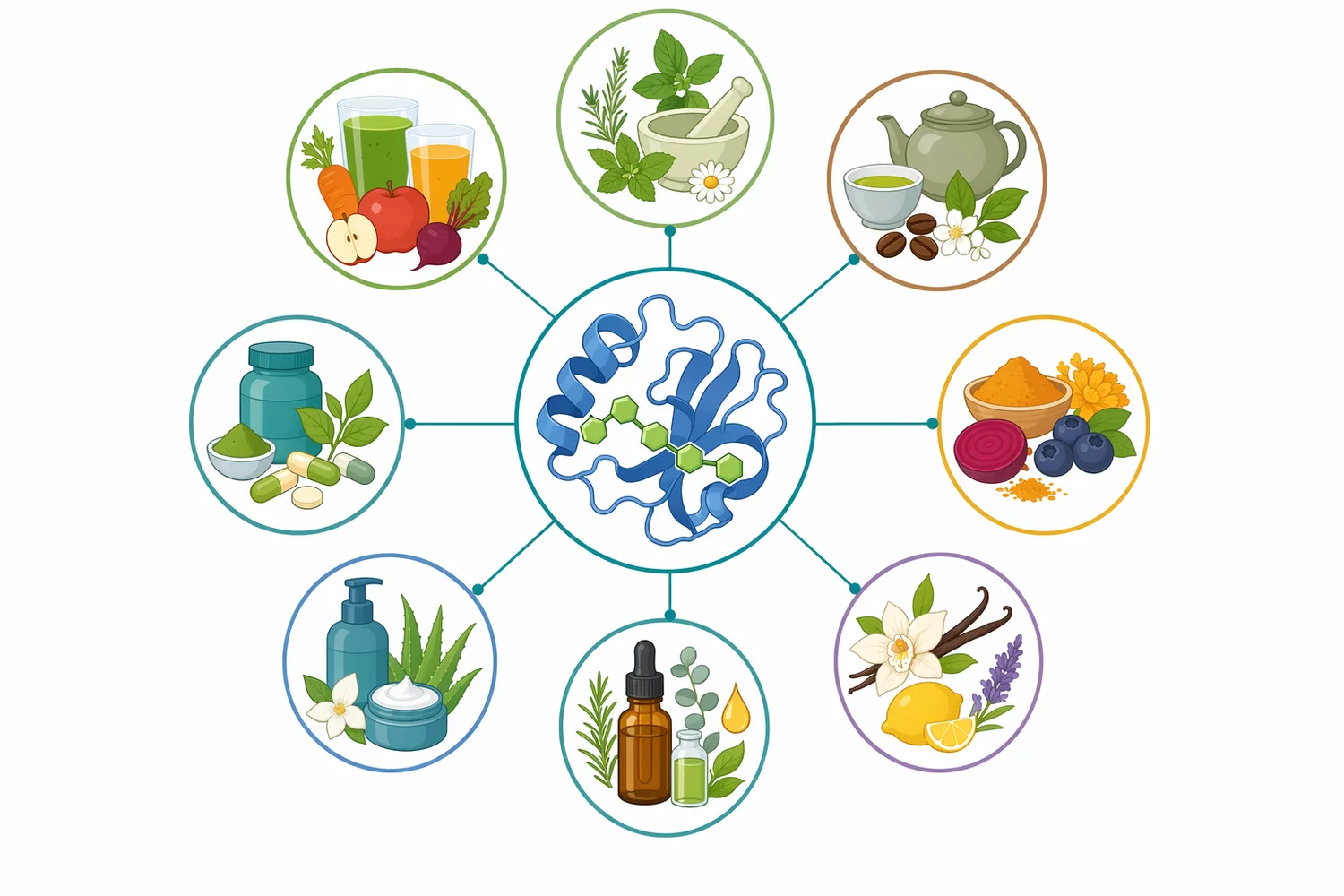
Some process outcomes can move in opposite directions. More wall breakdown may release more target compounds, but it may also release additional soluble carbohydrates, fine particles, or non-target material. In some botanicals, that may improve yield but require more attention to clarification. In others, moderate wall weakening may be enough to improve filtration without over-extracting unwanted components. The practical value of cellulase is therefore measured in the finished process outcome: usable extract recovery, manageable separation, and the desired quality profile [6].
In herbal extraction, cellulase is relevant where dried leaves, roots, stems, flowers, or whole-herb powders retain enough fibrous structure to slow release. Many herbal ingredients are extracted in water-rich systems, sometimes followed by concentration and drying. If intact wall fragments hold soluble solids inside the plant particle, cellulase can improve contact between the extraction liquid and the internal plant material, supporting better recovery from the same botanical input .
For functional food ingredients, cellulase can help process plant materials used in beverage bases, concentrates, powder ingredients, and plant-derived actives. In these applications, practical handling is often as important as yield. A fibrous slurry that filters slowly or produces a cloudy extract can limit throughput and create downstream quality issues. By modifying cellulose-rich walls, cellulase can contribute to a more manageable extract stream when fiber structure is the underlying cause [3].
Fruit and vegetable by-products are another important application area. Peels, pomace, seed press cakes, pulps, and trimmings can contain valuable compounds but are often difficult to process because they combine fiber, pectin, oils, pigments, and fine solids. Enzyme-assisted extraction has been studied in citrus materials, where enzymatic techniques were used to obtain semivolatile compounds with antimicrobial relevance, supporting the broader use of enzymes in by-product valorization [7].
Cellulase may also be relevant in mushroom and specialty botanical extracts where structural polysaccharides influence slurry behaviour. Although fungal cell walls differ from higher plant cell walls, many fibrous botanical and fungal-derived materials present similar processing issues: slow hydration, high suspended solids, viscosity, and difficult clarification. In these cases, cellulase is most useful when cellulose-containing plant matter or blended fibrous substrates are part of the extraction matrix .
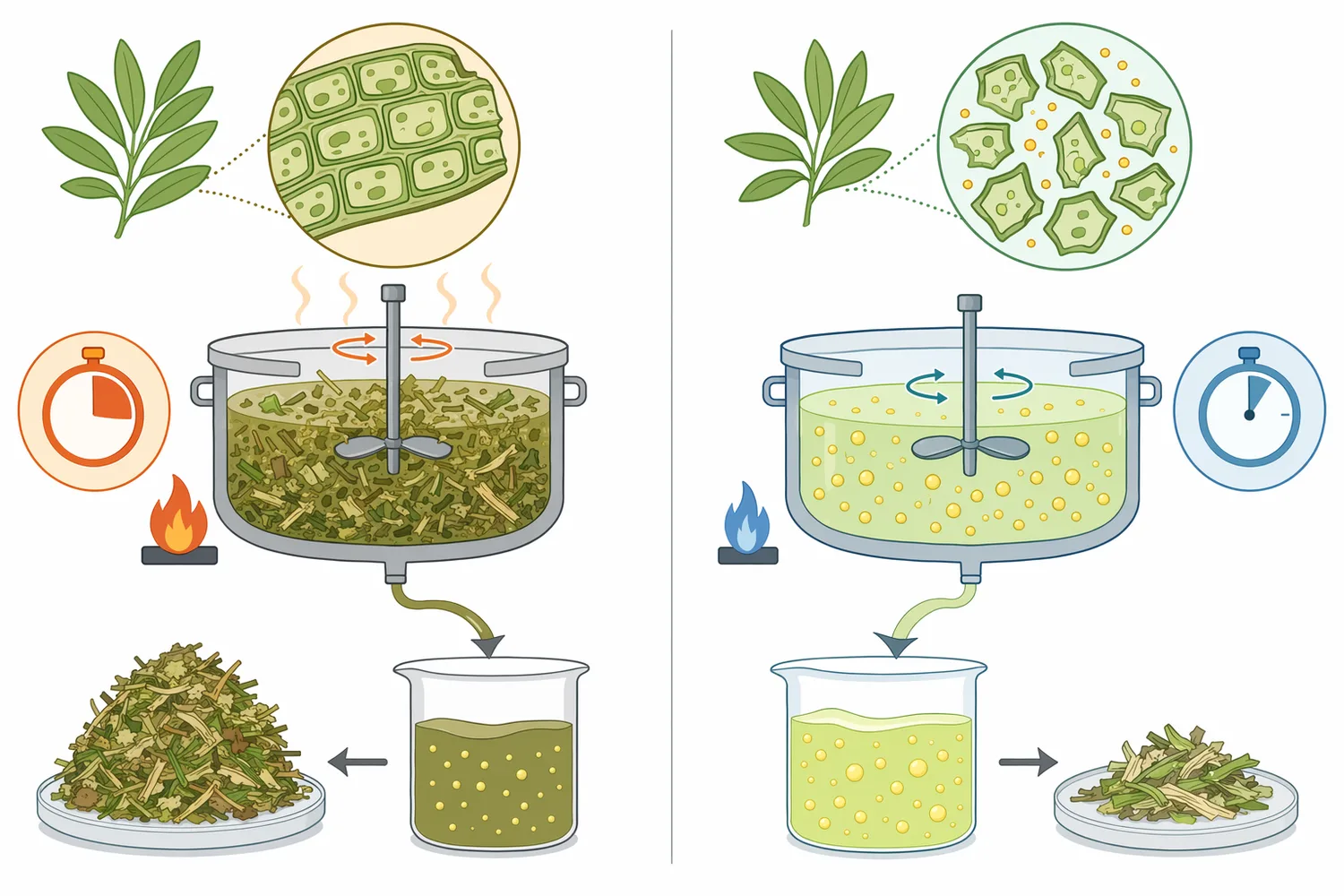
Aqueous extraction is attractive in many food and botanical processes because water is compatible with a wide range of food applications and can reduce dependence on harsher extraction conditions. The challenge is that water must penetrate the plant tissue and carry target compounds into the liquid phase. Cellulose-rich walls can slow both steps, especially when plant particles hydrate unevenly or form viscous slurries [1].
Cellulase supports aqueous extraction by increasing plant tissue permeability. As the cellulose scaffold is cut, pore pathways open and internal surfaces become more accessible. This can make water-based extraction more effective for compounds that are soluble or dispersible in the process liquid. It can also help release material that becomes accessible only after the cell wall and intercellular structure have been weakened [2].
In lower-solvent or solvent-conscious processes, cellulase is not a direct substitute for solvent choice. If a target compound is strongly nonpolar, the extraction phase must still be capable of carrying it. However, enzyme treatment can still improve physical access to oil bodies, membranes, resinous pockets, or compound-rich tissues before the compound partitions into the extraction phase. This is one reason enzyme-assisted extraction is often paired with other extraction technologies rather than treated as a stand-alone solvent replacement [7].
Viscosity in botanical extracts can come from several sources: soluble polysaccharides, swollen cell wall fragments, pectin gels, starch, proteins, gums, and fine suspended solids. Cellulase addresses the cellulose contribution by shortening and weakening fibrous wall structures. When cellulose-rich particles no longer form the same entangled network, the slurry may mix more easily and separate more predictably [3].
Filtration problems often occur when fibrous particles form a dense, compressible mat. Under pressure, that mat can collapse and block flow. Cellulase can reduce the integrity of the fibers contributing to this mat, allowing liquid to move through the solids more readily. The benefit is most apparent where filtration resistance is linked to intact plant fibers rather than to emulsified oils, pectin gels, or very fine mineral particles [6].
Clarity improvements follow the same logic. If haze is caused by suspended cellulose-rich fragments or fine wall debris, cellulase can help reduce the structural persistence of those particles. If haze is caused by other colloids, cellulase alone may not resolve it. This is why cellulase is often considered alongside other enzyme types in complex plant matrices, even though its own role remains specifically tied to cellulose breakdown [1].
Enzymes.bio supplies Food-Grade Cellulase Enzyme for Botanical Extraction as an online B2B product in 1 kg units. The product is presented for botanical extraction and food-processing applications, and it is supplied for processing use rather than direct human consumption or retail sale .
The purchasing model is straightforward: the buyer places the order online, pays online, and the order is processed and shipped. A Certificate of Analysis and Safety Data Sheet come with the order, supporting standard receiving and documentation needs without requiring a separate technical enquiry before purchase .
For process engineers and production buyers, the main practical point is that this is a ready-to-buy cellulase product for cellulose-rich botanical extraction work. It is not positioned as a custom development service, laboratory testing service, or manufacturing consultation. The value proposition is the enzyme’s role in weakening plant cell wall cellulose so existing extraction processes can become more efficient and easier to handle .
Cellulase should be applied with a clear understanding of the plant material and the intended extract. The enzyme changes the botanical matrix by hydrolyzing cellulose; it does not guarantee a specific increase in every target compound. A fibrous leaf extraction, a fruit peel extraction, a seed residue extraction, and a root extraction may all respond differently because their wall architecture and compound location differ [1].
The most meaningful evaluation is the finished process result: recovered extract solids or target markers, filtration behaviour, clarity, colour, aroma retention, viscosity, and compatibility with the downstream concentration or drying step. These outcomes reflect the combined effect of raw material, extraction liquid, enzyme contact, physical mixing, and separation. Cellulase contributes by opening the cellulose-rich structure, but the total process determines the final product quality [2].
It is also important to avoid overgeneralizing from one study or one botanical. Evidence from citrus enzyme-assisted extraction supports the usefulness of enzymes in recovering botanical compounds, and cellulase research supports the mechanism of cellulose degradation. However, every botanical matrix has its own balance of cellulose, pectin, hemicellulose, lignin, starch, protein, oils, and target compounds. Responsible expectations keep the focus on improved access and handling rather than universal yield guarantees [7].
Food-Grade Cellulase Enzyme for Botanical Extraction is a practical processing aid for plant materials where cellulose-rich cell walls restrict extraction. By hydrolyzing cellulose, cellulase weakens the fibrous wall network, improves liquid penetration, supports release of trapped compounds, and can make downstream filtration and clarification easier in suitable botanical matrices [1].
The science is strongest at the mechanism level: cellulose is a major structural component of plant cell walls, and cellulase enzymes degrade that structure in ways that change porosity, strength, and mass transfer. Application evidence from enzyme-assisted botanical extraction, including citrus semivolatile recovery, supports the broader industrial value of enzymatic methods for releasing plant-derived compounds from structured tissues [7].
Enzymes.bio supplies Food-Grade Cellulase Enzyme for Botanical Extraction directly online in 1 kg units for industrial and food-processing use. Buyers can purchase online, complete payment, and receive the order with a Certificate of Analysis and Safety Data Sheet included .
Sold by the 1 kg unit, in stock and ready to ship. Order directly on our store — pay online and we process your order. A Certificate of Analysis and Safety Data Sheet are included with every order.
Buy Food-Grade Cellulase Enzyme For Botanical Extraction →Numbered in order of first citation. Open-access sources, each verified reachable at publication; citation numbers in the text link here.