
Food-grade cellulase enzyme liquid is used to loosen cellulose-containing plant cell walls so processors can release more soluble solids, sugars, flavor precursors, pigments and intracellular bioactives from plant materials. It does not “add” flavor like a seasoning; it improves access to the plant matrix, which can support flavor development, extraction yield, clarification and controlled production of soluble carbohydrate or oligosaccharide-rich fractions. Cellulase-assisted processing is especially relevant in fruit, vegetable, botanical, cereal, peel, pomace and plant-residue applications where valuable compounds remain physically trapped in fibrous tissue.
Enzymes.bio supplies food-grade cellulase enzyme liquid for direct online purchase in 1 kg units. The buyer pays online, the order is processed and shipped, and a Certificate of Analysis and Safety Data Sheet are included with the order.
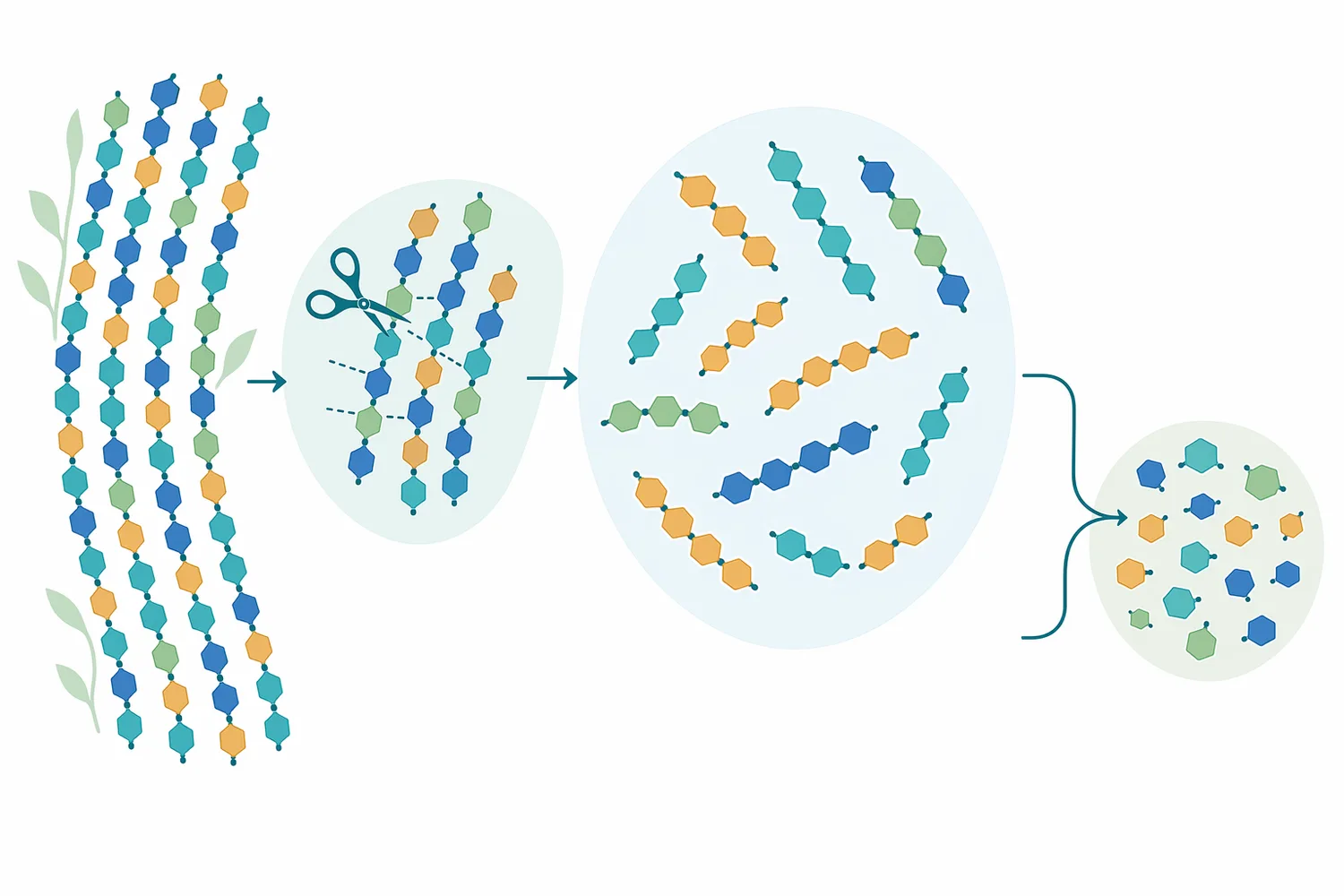
Cellulose is one of the main load-bearing polymers in plant cell walls. It is built from long chains of glucose units arranged into strong, hydrogen-bonded fibers that help give stems, peels, leaves, pulps and seed coats their rigidity. A cellulase preparation works by cutting those cellulose chains into shorter fragments, which weakens the wall structure and opens physical pathways for water, soluble solids and intracellular compounds to move out of the tissue; classic mechanistic work on fungal cellulase showed that different cellulase components act synergistically when solubilizing ordered cellulose structures [1].
In practical food and ingredient processing, the important change is not only “cellulose becomes sugar.” The more immediate effect is that the cell wall network loses strength. Once cellulose microfibrils are nicked and shortened, the plant tissue swells more easily, suspended particles break down, viscosity can shift, and compounds formerly held inside intact cells become more extractable. Reviews of enzyme technology in the food industry emphasize this kind of catalytic specificity under comparatively mild processing conditions as a major reason enzymes are used in modern food processing [2].
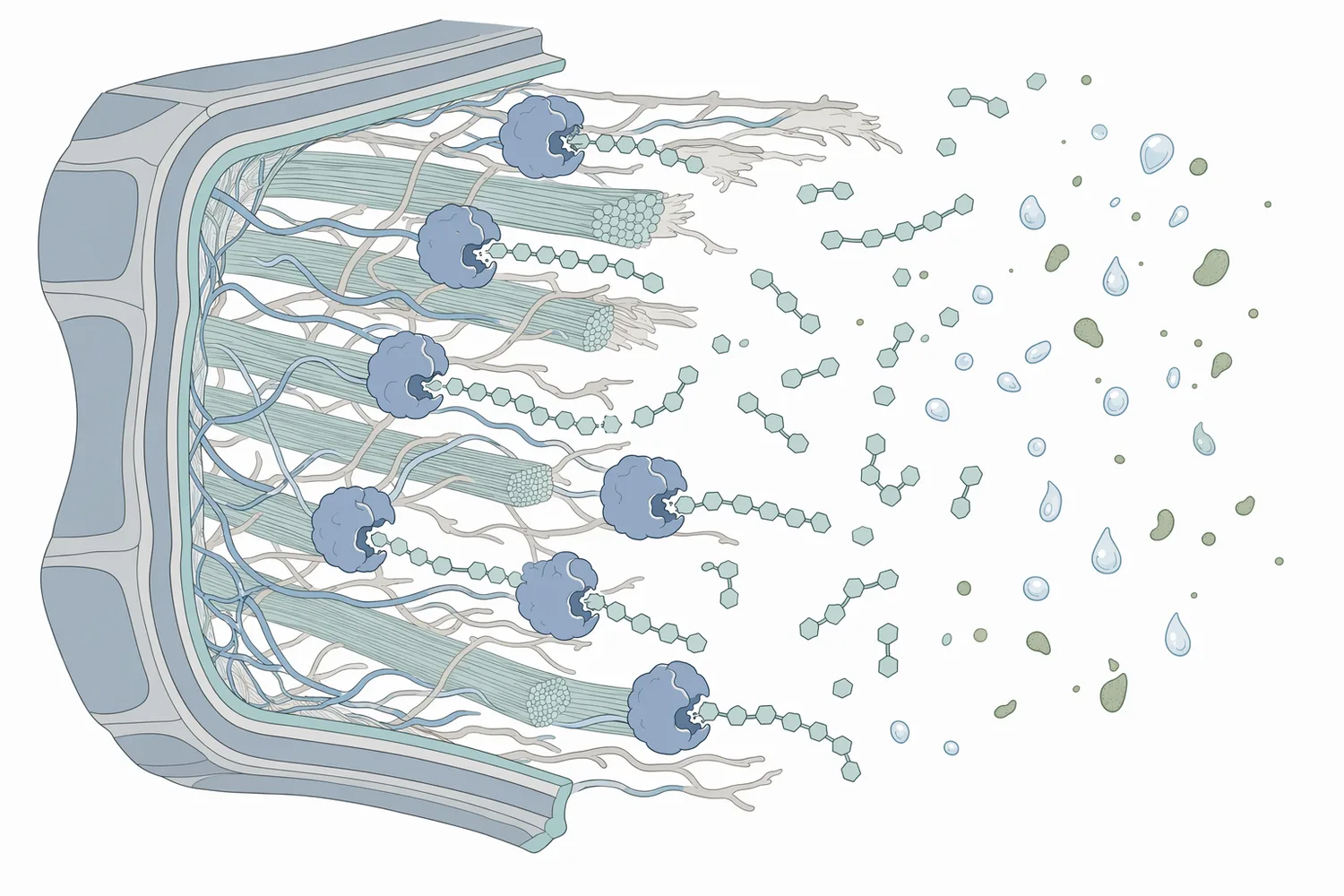
Commercial cellulase is usually best understood as a cellulolytic system rather than a single action. Endo-acting cellulase components cut within cellulose chains, creating new chain ends; exo-acting components continue the breakdown from exposed ends; β-glucosidase-type activity can further convert small cellulose fragments into glucose or low-molecular-weight soluble carbohydrates. That staged mechanism explains why cellulase can be used either for partial wall loosening or for more extensive saccharification, depending on how long the enzyme remains active in the hydrated plant matrix [3].
For flavor enhancement, this matters because many taste-active and aroma-relevant compounds are not freely dissolved at the start of processing. Sugars, organic acids, phenolics, glycosylated aroma precursors, pigments and soluble polysaccharides may sit inside cells or be entangled in a wall matrix of cellulose, pectin and hemicellulose. By opening that matrix, cellulase can increase the amount of extractable material available for blending, heating, fermentation or downstream conversion; studies on phenolic mobilization in oats during solid-state fermentation connect enzymatic cell-wall modification with the release of bound phenolic compounds [4].
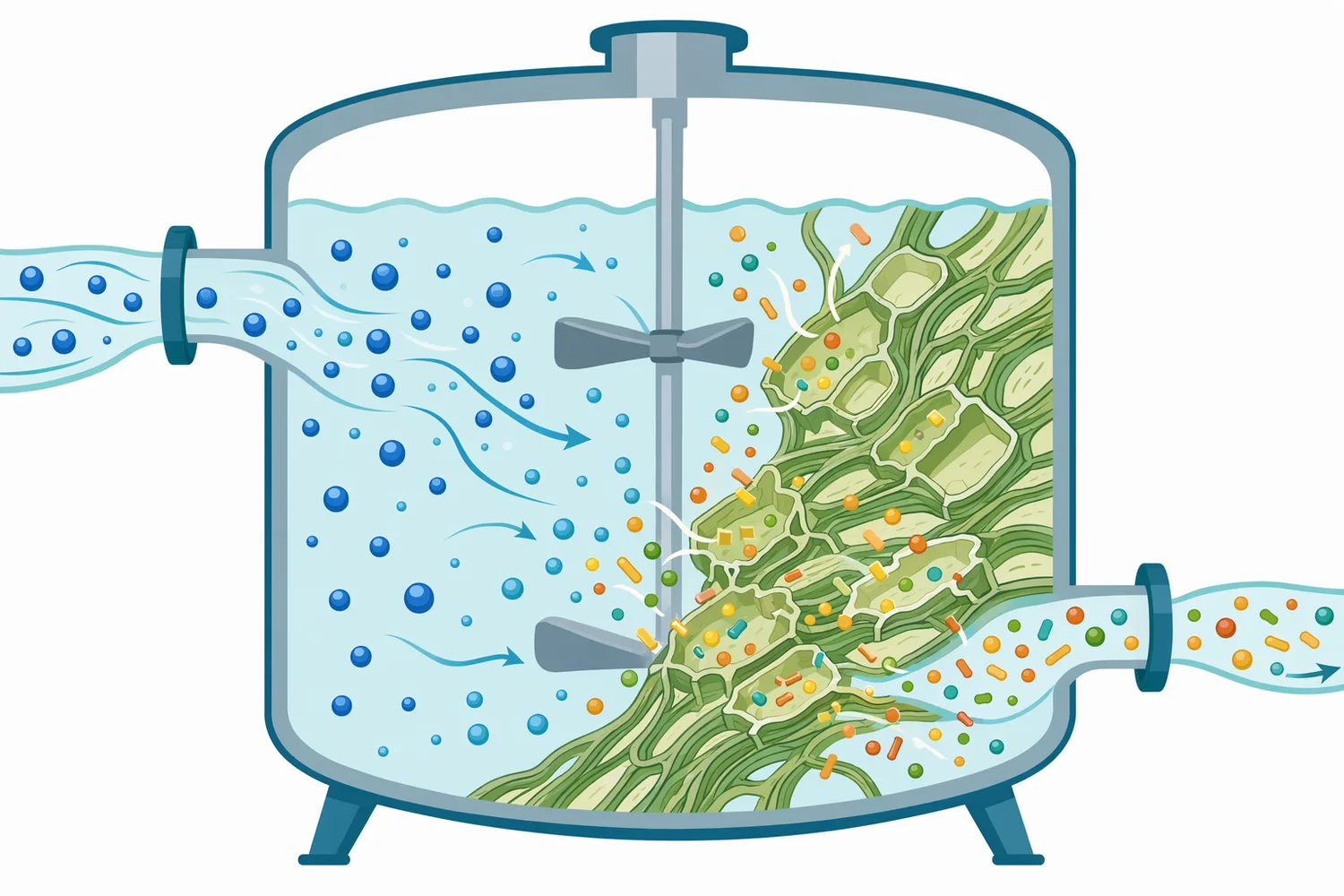
A liquid cellulase format is suited to hydrated plant materials: fruit mash, vegetable pulp, botanical slurries, cereal suspensions, peel extracts, pomace streams, tea or herb extractions, and plant-protein processing streams. In these systems, the enzyme needs intimate contact with wet cellulose-rich surfaces. A liquid product disperses into the water phase, allowing the enzyme to reach cut, milled, crushed or swollen tissue surfaces rather than remaining concentrated in isolated spots.
The enzyme still requires process compatibility. Cellulase acts at the solid–liquid interface: it adsorbs onto cellulose, cleaves accessible glycosidic bonds, releases shorter chains or sugars, then continues acting as more surface becomes available. Particle size reduction, hydration and mixing therefore affect how much cellulose surface is exposed, while temperature and acidity influence reaction speed and enzyme stability. Research on cold-active microbial cellulases also shows why temperature behavior matters in foods and beverages, since some applications benefit from activity at lower processing temperatures where flavor and color are more easily preserved [3].
Because plant materials are composite structures, cellulase is often part of a broader enzymatic logic. Fruits may be pectin-rich; cereal brans and grasses may contain substantial hemicellulose; peels and stems may be more lignified; algae and some botanical materials can have distinct wall architectures. Cellulase targets cellulose specifically, but its action can make the whole wall matrix more permeable, which is why it often complements pectinase, xylanase, β-glucanase or other carbohydrases in plant-processing systems rather than replacing them entirely [5].
The practical mechanism can be visualized in four connected changes. First, cellulase binds to accessible cellulose surfaces exposed by cutting, milling or natural tissue damage. Second, it cleaves β-1,4-glucan linkages in cellulose, reducing the length of chains that help reinforce the wall. Third, the weakened wall becomes more porous and less mechanically resistant, allowing solvent to penetrate and soluble intracellular compounds to diffuse outward. Fourth, continued hydrolysis increases the concentration of smaller carbohydrate fragments, including soluble cello-oligosaccharides and glucose, if the process is allowed to proceed far enough [1].
This is different from acid hydrolysis. Acid attacks carbohydrate bonds broadly and can require harsher conditions that may also affect color, aroma, heat-sensitive bioactives and by-product formation. Enzymatic hydrolysis is more selective: cellulase preferentially attacks cellulose, so the process can be directed toward wall opening, viscosity reduction, controlled sugar release or extraction support without necessarily imposing the same chemical severity on the rest of the food matrix. Green extraction reviews of citrus peels describe enzyme-assisted and other non-conventional extraction approaches as part of a wider move toward milder recovery of food bioactives from plant residues [6].
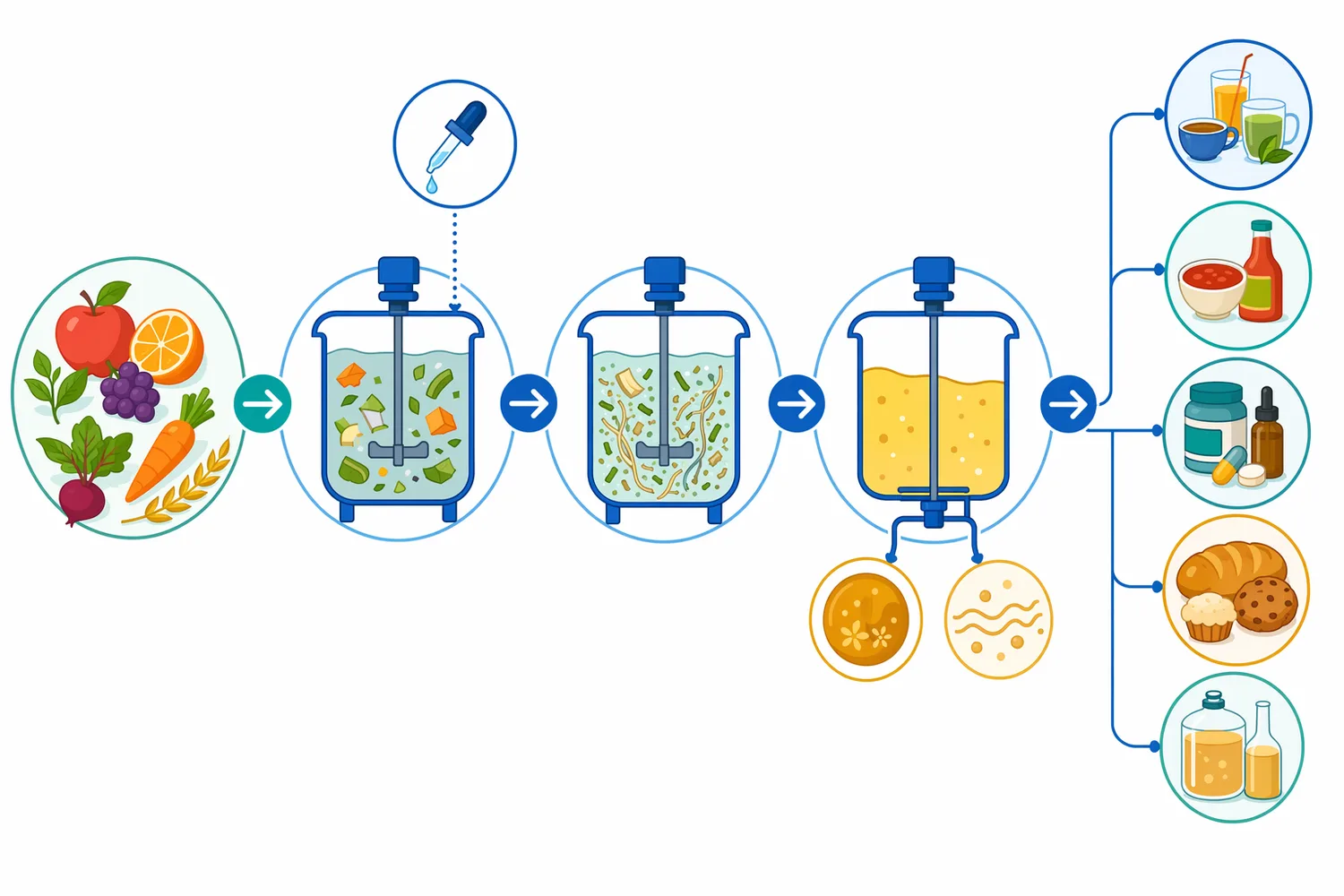
The degree of hydrolysis matters. A short or mild cellulase treatment may mainly soften tissue, improve pressing, increase extractable phenolics or reduce suspended fibrous particles. A longer or more intensive treatment can produce more soluble carbohydrates and may move the system toward saccharification. For oligosaccharide production, the target is often the middle ground: enough cleavage to create soluble short-chain carbohydrates, but not so much that the product is driven predominantly toward monosaccharides.
Cellulase is most effective when its role is understood alongside other enzyme families used in plant processing. The table below is conceptual rather than a product specification; it explains what each enzyme family mainly changes in a plant material.
| Enzyme family | Main substrate in plant materials | What physically changes in the matrix | Typical processing contribution |
|---|---|---|---|
| Cellulase | Cellulose microfibrils and accessible cellulose regions | Structural fibers are shortened; walls become weaker and more permeable | Plant extraction, soluble-solid release, oligosaccharide generation, viscosity and pulp modification |
| Pectinase | Pectin-rich middle lamella and fruit cell-wall gels | Cell adhesion and gel-like pectin networks loosen | Juice yield, clarification, pressing efficiency, fruit mash breakdown |
| Xylanase / hemicellulase | Hemicellulose such as xylans in bran, stems and grasses | Crosslinking polysaccharides around cellulose are reduced | Cereal, bran, biomass and plant-residue processing; improved access to cellulose |
| β-glucanase | β-glucans in cereals and selected plant materials | High-viscosity soluble glucans are shortened | Viscosity reduction and filtration support in cereal-based streams |
| Protease | Proteins rather than cell-wall cellulose | Proteins are cleaved into peptides and amino acids | Direct flavor generation in protein systems, protein functionality modification |
This comparison is important for flavor work. Proteases can directly create taste-active peptides and amino acids in protein-rich systems, while cellulase mainly improves access to plant-derived sugars, soluble solids and aroma precursors. That makes cellulase especially valuable where the flavor limitation is physical entrapment inside plant tissue rather than insufficient protein or fat hydrolysis.
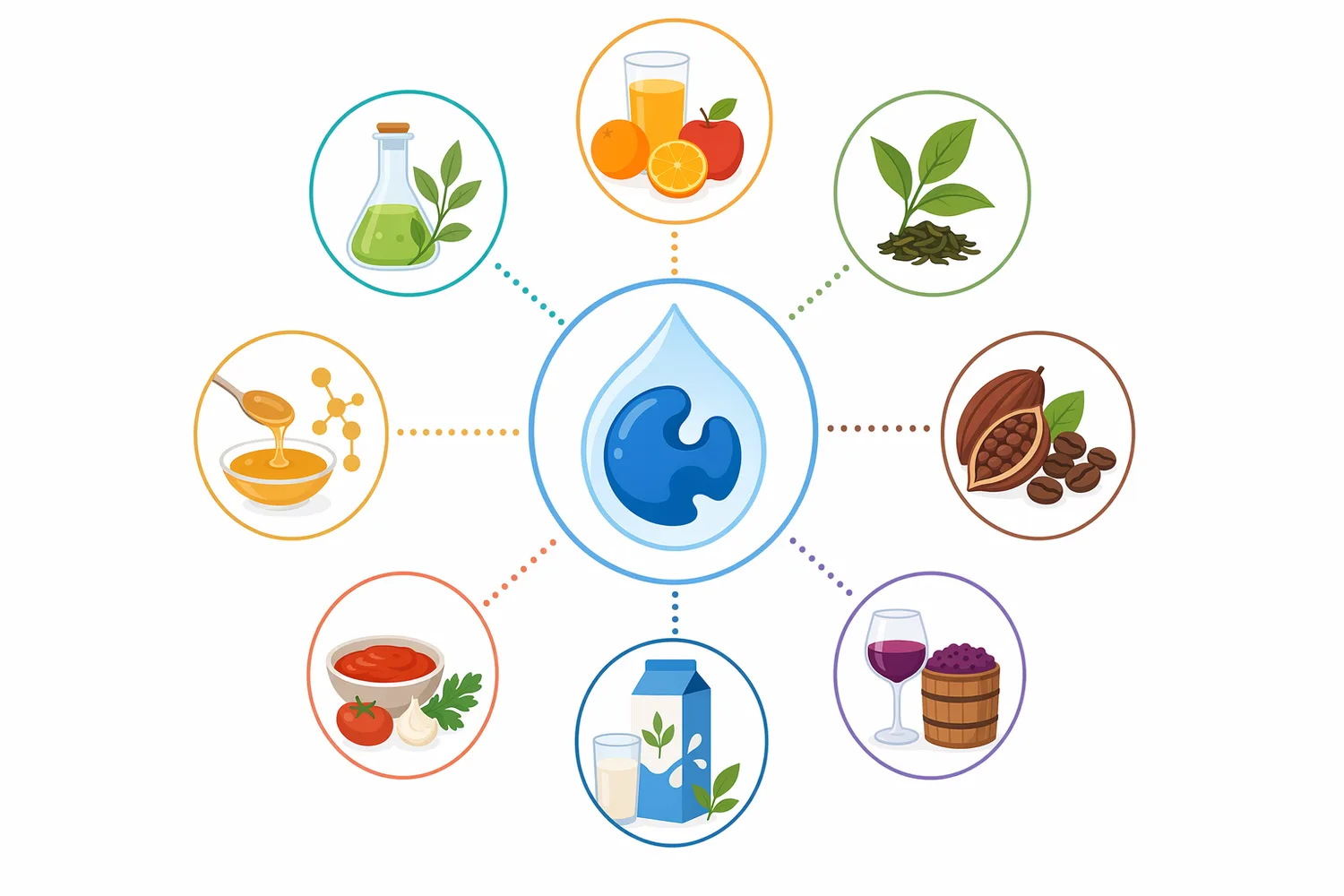
Cellulase contributes to flavor most credibly through release, not invention. When fruit, vegetable, herb or botanical tissue remains intact, some desirable compounds stay inside cells or diffuse slowly into the surrounding liquid. Cellulase weakens cellulose-reinforced barriers, so soluble sugars, acids, phenolics, pigments and aroma-relevant precursors can enter the extract more readily. In oat fermentation research, enzymatic action was linked with phenolic mobilization, showing how cell-wall modification can change the pool of extractable flavor- and bioactivity-related compounds [4].
Released sugars can influence sweetness and can also feed downstream reactions. In heated or fermented processes, a larger pool of accessible sugars can affect browning reactions, fermentation performance and the formation of cooked or fermented notes. Cellulase is therefore useful in flavor-supporting processing for plant materials such as fruit pulps, vegetable mashes, tea leaves, coffee-related solids, herbs, spices and cereal substrates, provided the process is designed around controlled release rather than uncontrolled over-hydrolysis.
Phenolic compounds are a good example of why “release” matters. Many phenolics contribute bitterness, astringency, antioxidant behavior, color stability or characteristic botanical notes. Reviews of gallic acid and other food phenolics highlight their importance in food applications and health-related functionality, but in real plant materials those compounds are often distributed between soluble, cell-contained and matrix-associated forms [7]. Cellulase-assisted wall opening can shift more of the accessible fraction into the liquid phase.
Cellulase-assisted extraction is widely studied because many valuable plant compounds are protected by cell walls. In botanical and food-ingredient extraction, the enzyme acts before or during extraction to reduce the physical resistance of the tissue. Once the wall is weakened, solvent can contact intracellular material more effectively, which can improve recovery without relying entirely on severe heat, strong chemicals or prolonged extraction time. Enzyme-assisted extraction of camptothecin from Nothapodytes nimmoniana has been optimized and characterized, illustrating the use of enzymes to improve recovery of a specific plant-derived compound [8].
The same principle appears in polysaccharide extraction. For Potentilla anserina L., enzyme-assisted extraction was used to recover polysaccharides that were then characterized for in vitro antioxidant activity [9]. In that type of process, cellulase does not merely “digest fiber”; it helps dismantle cell-wall barriers that limit mass transfer, allowing larger water-soluble polysaccharides or associated bioactives to move out into the extraction medium.
Pectin recovery from fruit residues also shows how cellulase can be useful even when the target is not cellulose itself. In pitaya peel processing, cellulase-assisted extraction was studied to maximize pectin yield [10]. Mechanistically, cellulase can open cellulose-reinforced peel tissue so pectin-rich fractions become more accessible, while the process must remain controlled enough to avoid excessive degradation of the desired pectin structure.
Grape pomace is another relevant matrix because it contains skins, seeds, pulp residues, phenolics and cell-wall polymers. A 2025 study on grape pomace residue examined a synergistic ultrasound- and enzyme-assisted approach for enhancing phenolic compound recovery [11]. Ultrasound can physically disrupt tissue and improve mass transfer, while enzymes weaken the biochemical structure of the wall; together, the two approaches can make bound or trapped phenolics more recoverable than either gentle soaking or mechanical separation alone.
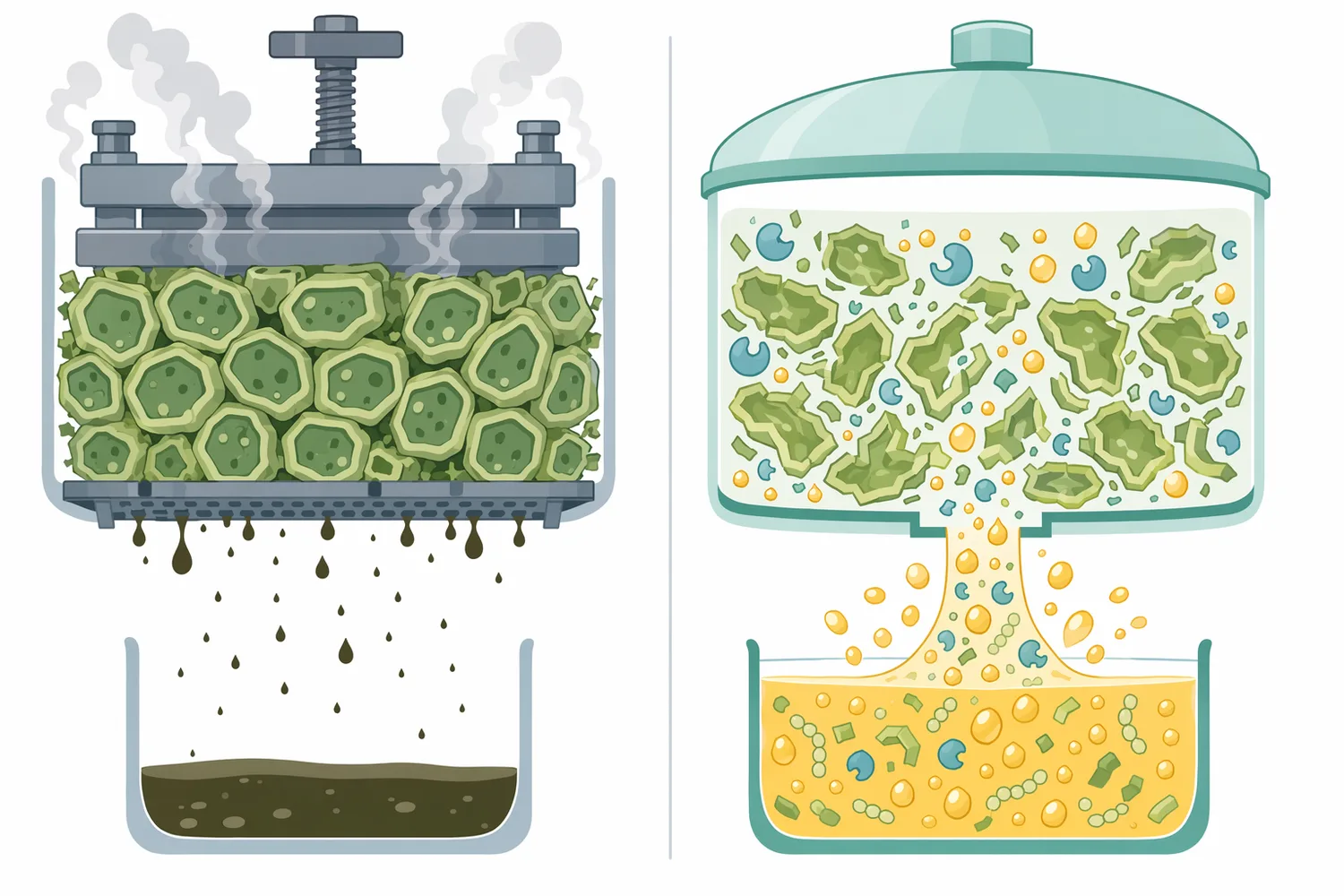
Pineapple peel research follows the same upcycling logic. A 2025 study evaluated enhanced recovery of bioactive compounds from pineapple peel using ultrasonic-assisted extraction with enzyme treatment at varying extraction times [12]. For processors working with peel or pomace streams, this illustrates a broader opportunity: cellulase can help convert fibrous by-products from a disposal problem into a source of soluble extracts, functional fractions or flavor-supporting ingredients.
Cellulase can also be used to produce soluble carbohydrate fractions from plant fibers. When cellulose chains are cut, the products may include glucose, cellobiose and longer cello-oligosaccharides, depending on the extent of hydrolysis and the balance of enzyme actions. For applications interested in oligosaccharide-rich fractions rather than complete sugar release, the process is managed to favor partial hydrolysis.
The scientific logic is clear: endo-acting cellulases create internal cuts that generate a distribution of shorter chains, while continued exo-acting and β-glucosidase activity can push those fragments toward smaller sugars. That means cellulase treatment is not a single fixed outcome. The same enzyme class can support mild fiber opening, moderate oligosaccharide generation or extensive saccharification depending on how the substrate and processing conditions interact.
Multi-enzyme saccharification studies demonstrate why cellulose rarely acts alone in real plant biomass. Immobilized hydrolase research using simultaneous xylanase, cellulase and amylolytic glucanotransferase action shows that carbohydrate conversion can involve multiple polymer types at once [5]. In a plant residue, cellulose may be shielded by hemicellulose, lignin, pectin or starch-containing structures, so cellulase may release more useful soluble carbohydrate when the matrix is already physically or enzymatically opened.
For food and beverage applications, oligosaccharide production is often valued because shorter soluble carbohydrates can change mouthfeel, fermentation behavior and soluble fiber characteristics. The target is not always maximum glucose. In some ingredient systems, preserving a distribution of short-chain carbohydrates can be more useful than pushing hydrolysis to completion.
Cellulase can support clarification by breaking down suspended cell-wall fragments that contribute haze, pulpiness or slow filtration. In fruit and vegetable systems, insoluble particles are often not inert; they are hydrated pieces of cell wall that hold water and trap soluble material. By shortening cellulose chains and weakening fibrous fragments, cellulase can help reduce the structural persistence of those particles.
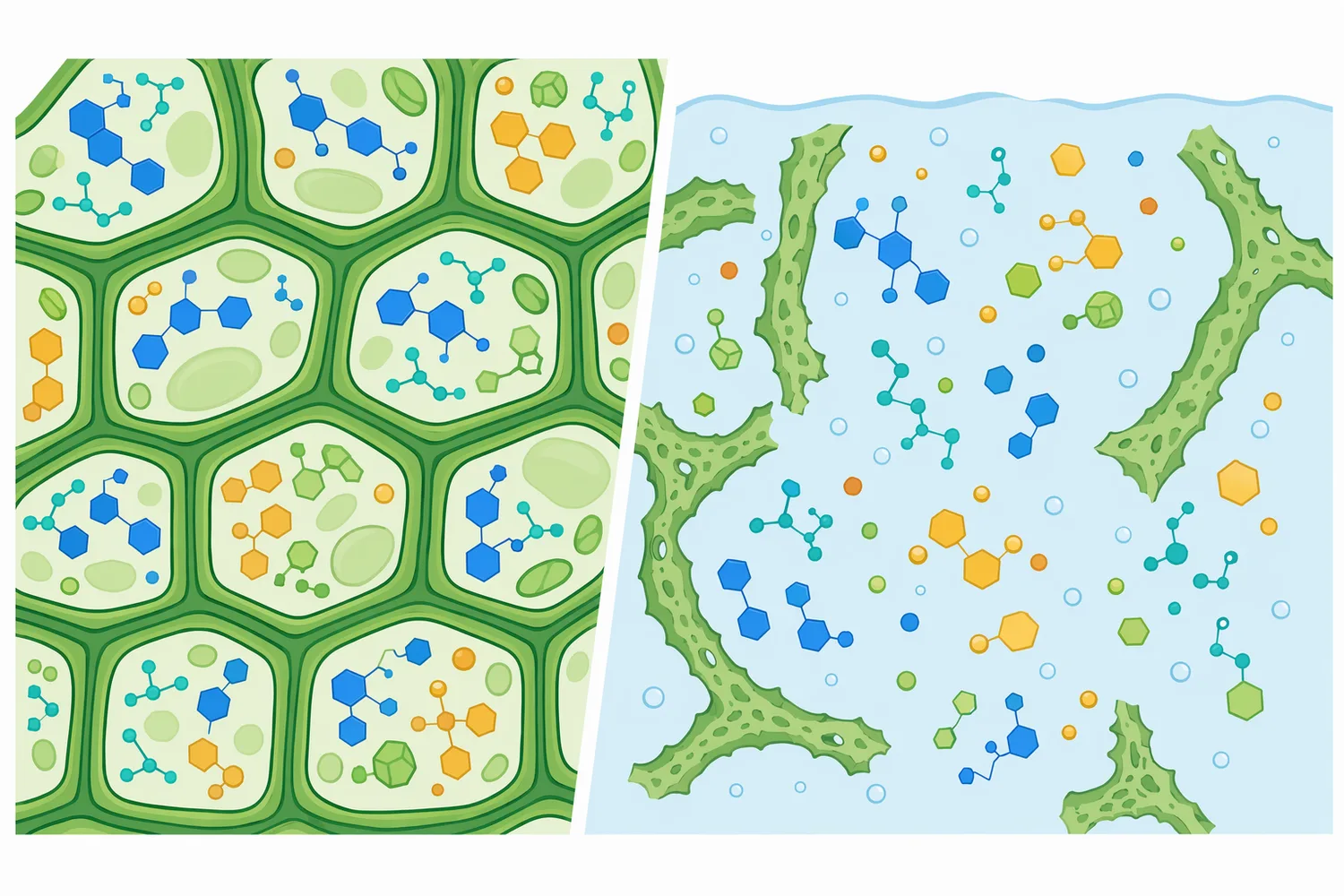
This action is different from pectinase-driven clarification but can complement it. Pectinase reduces pectin gels and cell adhesion, while cellulase attacks the cellulose framework that remains in pulp fragments. In high-pulp systems, the combined effect can improve juice release and separation behavior because the plant tissue loses both gel-like cohesion and fibrous strength. Food enzyme reviews describe such applications as part of the wider use of targeted enzymes for efficiency, quality and sustainability in food processing [2].
For cloudy beverages, the goal may not be complete clarification. Some products need stable cloud, natural body or pulpy texture. In those cases, cellulase treatment can be used conceptually as a texture-modifying step: enough action to improve extraction and reduce coarse fiber, but not so much that the beverage loses the desired natural body. The key mechanism remains controlled weakening of cellulose-rich particles.
Botanical materials often contain valuable compounds in glands, vacuoles, resin ducts or intracellular compartments surrounded by cell-wall structures. Cellulase-assisted extraction can improve solvent access to these compartments, especially after milling or soaking. In Glycyrrhiza uralensis, cellulase from an endophytic Bacillus species was studied for application in extracting glycyrrhizic acid, a characteristic bioactive compound of licorice root [13].
Flavonoid extraction provides another example. Cellulase-assisted extraction of total flavonoids from Equisetum was optimized using response surface methodology based on antioxidant activity [14]. Mechanistically, flavonoids may be present inside cells or associated with wall materials; when cellulase weakens the wall, more flavonoid-containing material can diffuse into the extraction solvent.
Essential oil recovery can also benefit when the plant structure limits release. A 2025 study examined glucose oxidase promoting cellulase-assisted hydrodistillation for extracting essential oil from Eleutherococcus senticosus [15]. In hydrodistillation, oil recovery depends on tissue disruption, heat, water movement and volatility; cellulase can help by opening the plant tissue before or during distillation so oil-bearing structures are more accessible.
Cellulase is also relevant when the target is not a carbohydrate fraction. Some plant or microbial protein materials contain cell walls or wall-like barriers that restrict protein release. In Spirulina platensis, protein extraction with cellulase enzyme assistance has been studied, showing how cellulase can support access to intracellular protein by disrupting carbohydrate-containing structural layers [16].
This is useful for plant-based ingredient development because extraction yield and functionality often depend on how gently the matrix can be opened. Mechanical disruption alone can be energy-intensive or may generate fine solids that complicate separation. Enzymatic wall loosening offers a complementary path: weaken the structure first, then separate proteins, pigments, polysaccharides or soluble extracts more efficiently.
Cellulase should not be confused with protease in these systems. Cellulase helps release protein by opening the surrounding structure; protease changes the protein itself by cleaving peptide bonds. If the goal is improved protein recovery while maintaining protein size, cellulase-type assistance has a different role from protein hydrolysis.
Fermentation often benefits from better access to fermentable sugars and nutrients. When plant material is fibrous, microorganisms may not readily access carbohydrates locked in the wall. Cellulase can increase soluble carbohydrate availability, which can support fermentation kinetics, acid production or conversion of low-value biomass into more useful streams. A study on woody plant silage found that cellulase and lactic acid bacteria acted synergistically to regulate silage fermentation [17].
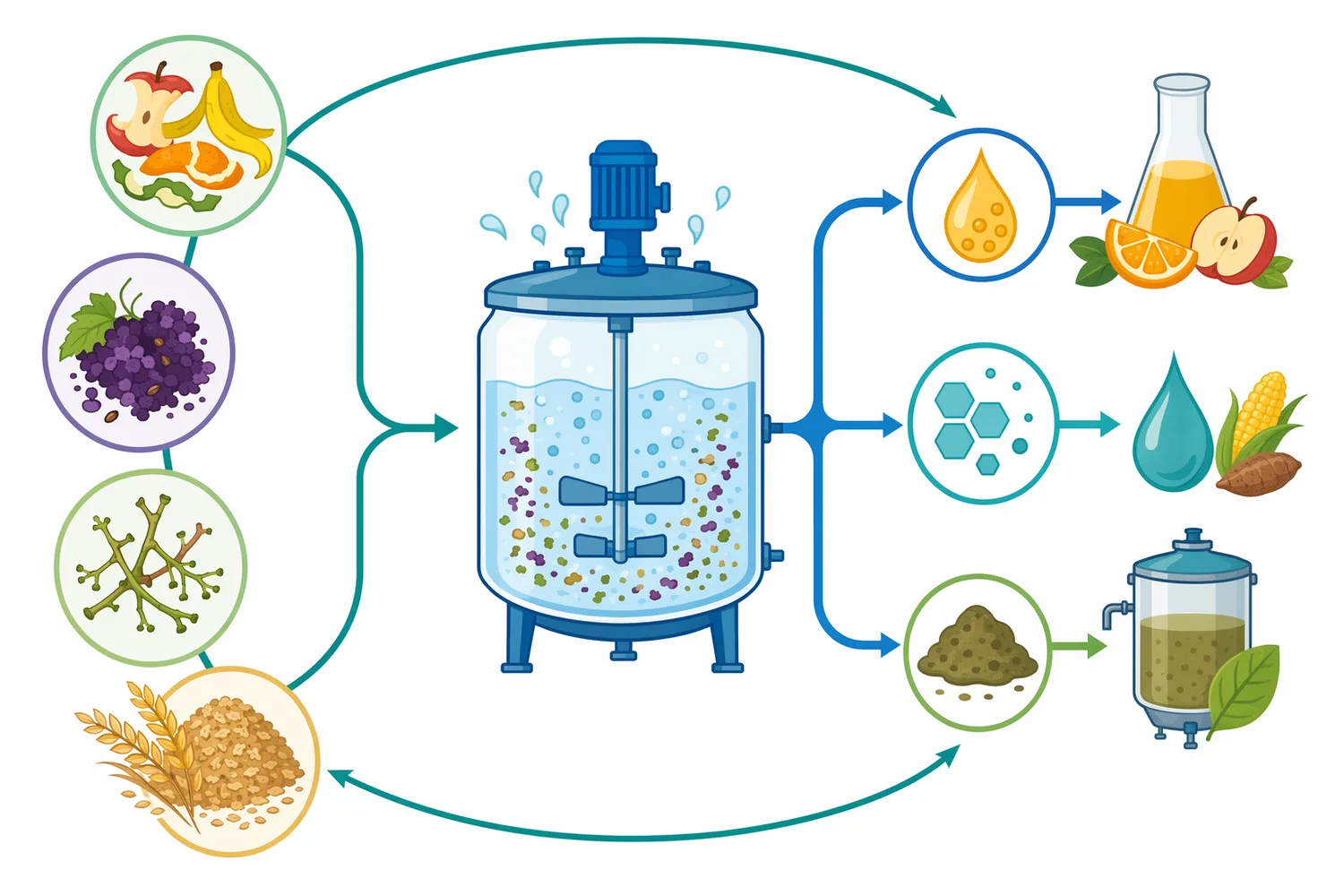
This principle applies beyond silage. Fruit pomace, vegetable residues, peels, stems, leaves and cereal by-products can retain significant carbohydrate and bioactive value after primary processing. Cellulase-assisted treatment can help recover soluble fractions or prepare the material for fermentation rather than sending it directly to low-value disposal. Reviews on green extraction from citrus peels place enzyme-assisted approaches within broader strategies for recovering bioactives from food-processing residues [6].
For businesses developing plant-based extracts or upcycled ingredients, cellulase provides a practical processing route because it acts on one of the main physical reasons residues are difficult to use: their cell walls remain intact. By reducing the structural barrier, the process can recover more of what is already present in the material.
In operation, cellulase performance depends on contact between enzyme, water and accessible cellulose. The plant material normally needs to be hydrated, mixed and physically prepared enough for enzyme access. As treatment proceeds, the material may soften, release more soluble solids, show changes in viscosity, filter more readily or yield an extract with a different sugar and phenolic profile.
Temperature and acidity influence the rate of reaction because cellulase is a protein catalyst with a functional operating window. Excessive heat can unfold enzymes, while very low temperature slows reaction speed; acidity outside the enzyme’s useful range can reduce activity or stability. Cold-active cellulase research in food and beverage contexts underscores that different cellulases can be valuable under different thermal conditions, especially where fresh flavor, color or low-temperature processing is important [3].
The reaction is usually stopped or stabilized by normal downstream processing, such as heating, pasteurization, separation, concentration or formulation steps. From a product-quality perspective, the important point is to avoid uncontrolled continued hydrolysis when the desired extraction, texture or carbohydrate profile has been reached. Cellulase is powerful because it keeps acting while conditions remain suitable, so the process should be designed around a defined endpoint.
The strongest use case for food-grade cellulase enzyme liquid is plant cell-wall modification. It is well aligned with extraction of plant bioactives, release of soluble solids, support for juice and puree processing, fiber loosening, plant-residue valorization and controlled carbohydrate hydrolysis. Studies across pitaya peel, grape pomace, pineapple peel, licorice, Equisetum, Potentilla and Spirulina show the breadth of enzyme-assisted extraction research involving cellulase or cellulase-type wall-opening strategies [10].
The flavor case is real but indirect. Cellulase can help a fruit, herb, cereal or botanical material express more of its own soluble composition. It can increase access to sweetness, phenolic complexity, color-associated compounds and precursors that later participate in fermentation or heat-driven flavor formation. It should not be positioned as a universal flavor generator in the way that lipases are used for fatty flavor notes or proteases are used for savory peptide and amino-acid release.
The oligosaccharide case is also process-dependent. Cellulase can generate soluble carbohydrate fragments from cellulose-rich materials, but real plant substrates contain mixed polymers. In many cases, the most useful carbohydrate profile comes from the combined breakdown of cellulose, hemicellulose, pectin or starch fractions rather than from cellulose alone. Simultaneous hydrolase studies reinforce this multi-polymer reality in saccharification systems [5].
Enzymes.bio supplies food-grade cellulase enzyme liquid in 1 kg units through direct online purchase. The ordering model is simple: choose the product, pay online, and the order is processed and shipped. A Certificate of Analysis and Safety Data Sheet are included with the order for documentation and safe handling.
For buyers working with plant extracts, beverages, fruit and vegetable preparations, botanical ingredients, cereal streams or upcycled plant residues, cellulase is best viewed as a targeted processing aid for opening cellulose-rich structures. Its value comes from what it makes accessible: soluble solids, sugars, flavor precursors, phenolics, polysaccharides, proteins or other intracellular compounds that are already present in the raw material but limited by the plant cell wall.
Sold by the 1 kg unit, in stock and ready to ship. Order directly on our store — pay online and we process your order. A Certificate of Analysis and Safety Data Sheet are included with every order.
Buy Food-Grade Cellulase Enzyme Liquid For Flavor Enhancement, Oligosaccharide Production And Plant Extraction →Numbered in order of first citation. Open-access sources, each verified reachable at publication; citation numbers in the text link here.