
Food Grade Flavor Protease is a food-processing protease used to hydrolyze plant proteins into smaller peptides and amino acids, helping improve solubility, reduce harsh bitterness, and create a more rounded savory flavor profile. Its value is strongest in controlled hydrolysis systems where the enzyme action is stopped before excessive bitter peptide accumulation occurs. Enzymes.bio supplies food-grade protease products online for professional food-processing use, with this product available for direct 1 kg purchase and order documentation provided with shipment .
Plant proteins are now used far beyond traditional soy foods. Pea, soy, rice, wheat, fava, chickpea, peanut, flaxseed, hemp, and other botanical proteins appear in beverages, bars, meat alternatives, dairy alternatives, soups, sauces, seasonings, and nutrition products. Their appeal is clear: they are widely available, adaptable, and aligned with the growth of plant-forward food systems. The technical challenge is that many plant proteins bring beany, grassy, earthy, astringent, chalky, or bitter notes, and their native protein structures can limit solubility, dispersion, emulsification, and mouthfeel in finished foods [1].
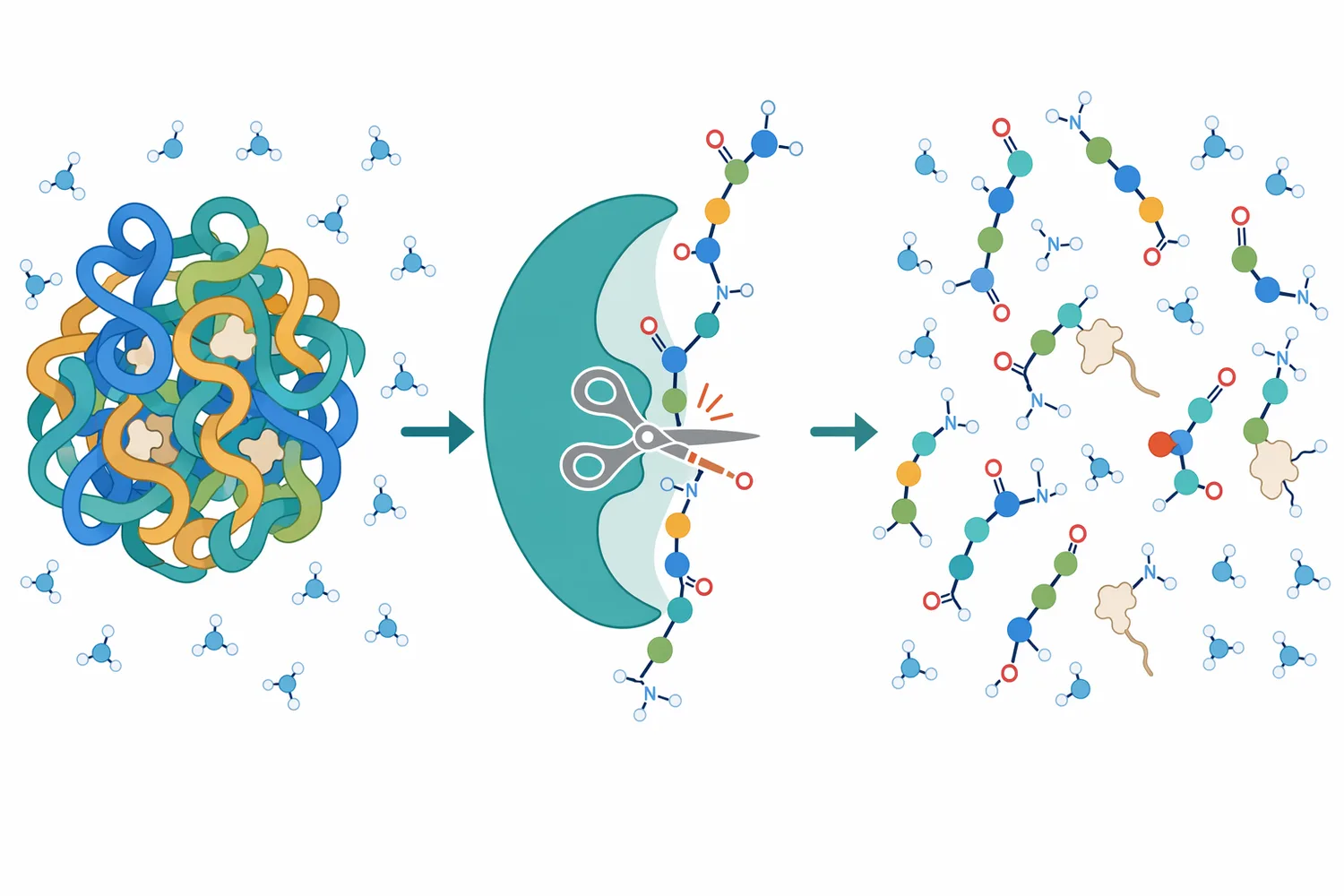
Food Grade Flavor Protease addresses these issues through controlled enzymatic hydrolysis. A protease cleaves peptide bonds in proteins, converting large folded or aggregated proteins into shorter peptides and, depending on the enzyme system, free amino acids. This changes how the protein behaves in water, how it interacts with oil and flavor compounds, and how it is perceived on the palate. Recent reviews of enzymatic plant protein hydrolysis describe this approach as a way to tailor functional properties, improve food application performance, and expand the use of plant proteins in formulated products [2].
For flavor work, the key word is controlled. Hydrolysis can improve flavor when it releases savory amino acids and reduces harsh protein-associated notes, but uncontrolled or excessive hydrolysis can also generate bitter hydrophobic peptides. The aim is not simply to break down as much protein as possible; it is to shift the peptide profile toward better solubility, smoother mouthfeel, and a cleaner, more savory taste balance. Studies on plant protein-derived peptides emphasize that peptide size, sequence, hydrophobicity, and processing history all influence functionality and sensory outcome [3].
A plant protein isolate or concentrate contains proteins folded into compact structures, aggregated through hydrophobic interactions, hydrogen bonding, disulfide linkages, and other molecular contacts. Many hydrophobic amino acid regions are partly buried inside the folded protein. During protease treatment, peptide bonds are cut at specific positions along the chain. The protein unfolds, its molecular weight decreases, and more charged or polar groups become exposed to water. This is one reason controlled hydrolysis can improve dispersion and solubility in aqueous systems [4].
At the same time, hydrolysis changes flavor chemistry. Large intact proteins usually have limited direct taste, but smaller peptides and free amino acids can be strongly taste-active. Some contribute umami, kokumi-like fullness, brothiness, or mild sweetness; others contribute bitterness, dryness, or lingering aftertaste. The sensory result depends on which peptide sequences are released. Research combining mass spectrometry with sensory evaluation in protein hydrolysates has shown that bitterness can be assessed through peptide-profile changes rather than by total hydrolysis alone [5].
A useful way to understand flavor protease action is to distinguish between internal cutting and end trimming. Endoprotease-type activity cuts inside protein chains and rapidly reduces protein size. Exopeptidase-type activity removes amino acids or small fragments from the ends of peptides. For bitterness reduction, this second type of action is important because some bitter peptides become less bitter when shortened, further cleaved, or converted into free amino acids. The finished sensory effect depends on whether the enzyme system mainly creates bitter fragments, further degrades them, or does both in a balanced way.
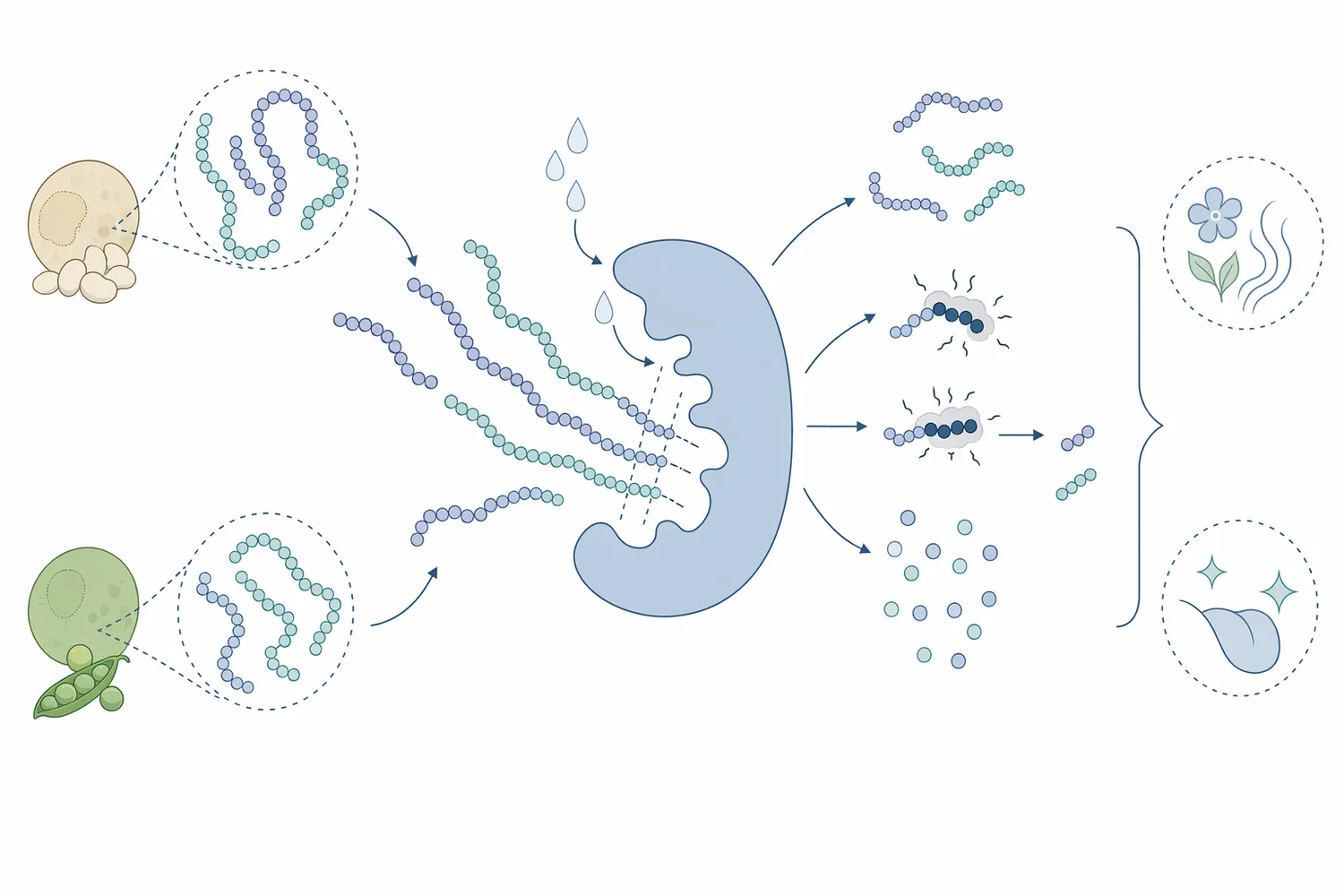
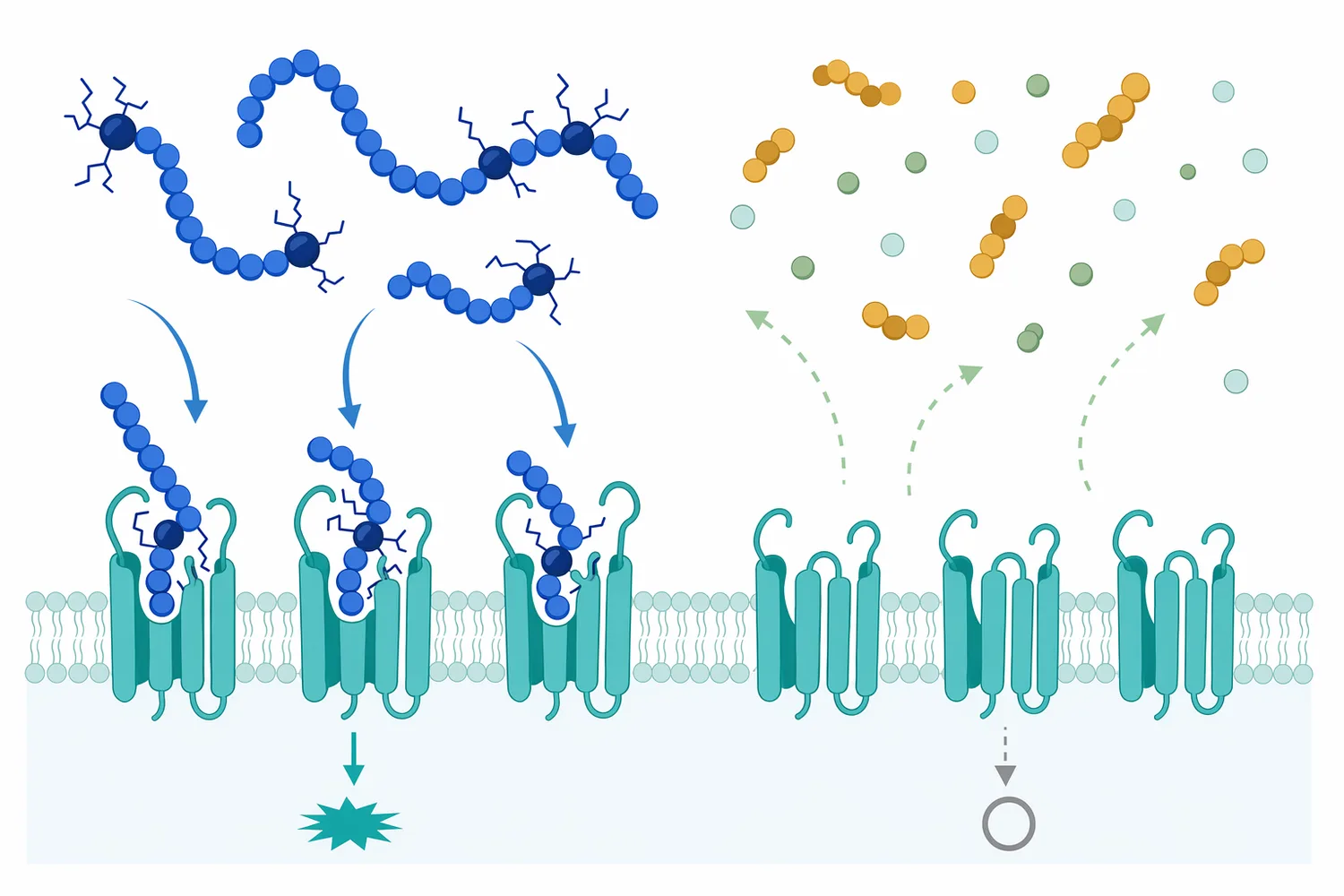
Bitterness in hydrolyzed protein systems is strongly associated with peptide structure. Bitter peptides commonly contain hydrophobic amino acids, especially when those residues are exposed in short or medium-length peptides that can interact with bitter taste receptors. The problem is especially visible when hydrolysis releases many hydrophobic fragments faster than they are further broken down. This explains why a hydrolysate can become more soluble and more bitter at the same time.
Rapeseed protein research illustrates this point well. A study integrating enzymatic treatment, metabolomics, and sensory analysis investigated bitterness reduction in rapeseed protein and focused on how enzymatic processing changes the molecular pool responsible for bitter perception [6]. Walnut protein hydrolysate research has also used integrated peptidomics to examine how bitter taste forms during hydrolysis, supporting the view that bitterness is tied to identifiable peptide formation rather than a vague “overprocessed” character [7].
Soy systems show the same practical pattern. In soybean protein hydrolysates, bitterness can be influenced by the hydrolysis enzyme, the peptide size distribution, and the structural modifications that follow protease treatment. A study combining Alcalase hydrolysis with transglutaminase cross-linking reported improved bitterness and techno-functional properties in soybean protein hydrolysates through structural modification, showing that bitterness can be managed by changing peptide interactions and protein-derived structures rather than masking alone [8].
Food Grade Flavor Protease supports bitterness reduction by changing the peptide population. When the enzyme cuts large proteins, it can expose and release peptides that were previously embedded inside the protein structure. Some of these peptides are bitter; others are neutral, savory, or functional. If the protease system continues trimming bitter peptides into shorter fragments or amino acids, the intensity and persistence of bitterness can fall. In practical sensory terms, this may show up as less lingering bitterness, less back-of-mouth harshness, and a cleaner base flavor.
This is different from sweetener or flavor masking. Masking leaves the bitter molecules in place and tries to cover them. Protease treatment changes the molecules themselves. In soybean meal peptide research, cyclodextrins were evaluated as a bitterness-reduction approach by interacting with bitter peptides, demonstrating that bitterness can be reduced either by changing peptide structure enzymatically or by changing how bitter peptides interact with other food components [9]. Enzymatic debittering is attractive because it can be built into the protein-processing step rather than added only as a final masking correction.
Controlled hydrolysis can also change how proteins bind off-flavor compounds. In soy protein isolate, mechanistic work has examined how enzymatic hydrolysis affects binding behavior between soy proteins and off-flavor molecules. This matters because beany and green notes are not only present as free volatiles; they can also be retained, released, or redistributed depending on protein structure and exposure of hydrophobic binding regions [10].
Flavor protease is not only a debittering tool. It also creates flavor precursors. When plant proteins are hydrolyzed, amino acids and small peptides become available for direct taste contribution and for downstream thermal reactions. In savory systems, free amino acids such as glutamate and aspartate are associated with umami perception, while other amino acids and peptides contribute body, continuity, and broth-like depth. The exact balance depends on the starting protein and how the hydrolysis is controlled.
Flaxseed protein research demonstrates how enzymatic hydrolysis can connect with flavor development beyond simple protein breakdown. In a study of flaxseed protein hydrolysis and sensory characterization of Maillard reaction products, enzymatically generated hydrolysates were used as precursors for reaction flavors, illustrating how protease treatment can set up later flavor formation through available amino groups and reducing-sugar reactions [11]. This is directly relevant to savory bases, roasted notes, soup systems, and plant-based meat flavor development where hydrolysates are often heated or combined with other flavor-building ingredients.
Protein hydrolysates can also support fermentation-style flavor development. Protease treatment increases the pool of peptides and amino acids available to microorganisms, which may then form acids, alcohols, esters, sulfur compounds, or other aroma-active metabolites depending on the culture and food matrix. In fermented sausage research, protease activity was linked with protein hydrolysis and flavor profiling, showing how proteolysis contributes to complex flavor generation in a fermented food environment [12].
Food proteases are often discussed by their preferred pH environment. The categories below are useful conceptually, but they should not be read as fixed product specifications. Actual performance depends on the enzyme source, formulation, substrate, and process design.
| Protease type | Conceptual processing environment | Typical effect on protein hydrolysis | Flavor considerations |
|---|---|---|---|
| Acid protease | Acidic food systems, fermented matrices, low-pH hydrolysis steps | Can hydrolyze proteins where acidic conditions are part of the process or desired for microbial control | May fit sour, fermented, or acidified systems; bitterness still depends on peptide profile |
| Neutral protease | Near-neutral plant protein slurries, savory bases, protein modification steps | Often used when moderate hydrolysis and functional improvement are desired without strongly acidic or alkaline conditions | Can support solubility and flavor precursor release while preserving a relatively mild process environment |
| Alkaline protease | Higher-pH hydrolysis systems and more aggressive protein breakdown contexts | Often associated with faster or more extensive cleavage of compact proteins | Can generate high peptide release, but sensory balance must be controlled to avoid harsh or bitter hydrolysates |
The broader point is that protease class affects peptide formation. A milk protein study comparing actinidin, bromelain, and papain showed that different proteases hydrolyze proteins with different kinetic and mechanistic behavior, reinforcing that protease identity influences the resulting peptide profile rather than simply “speeding up” the same reaction [13].
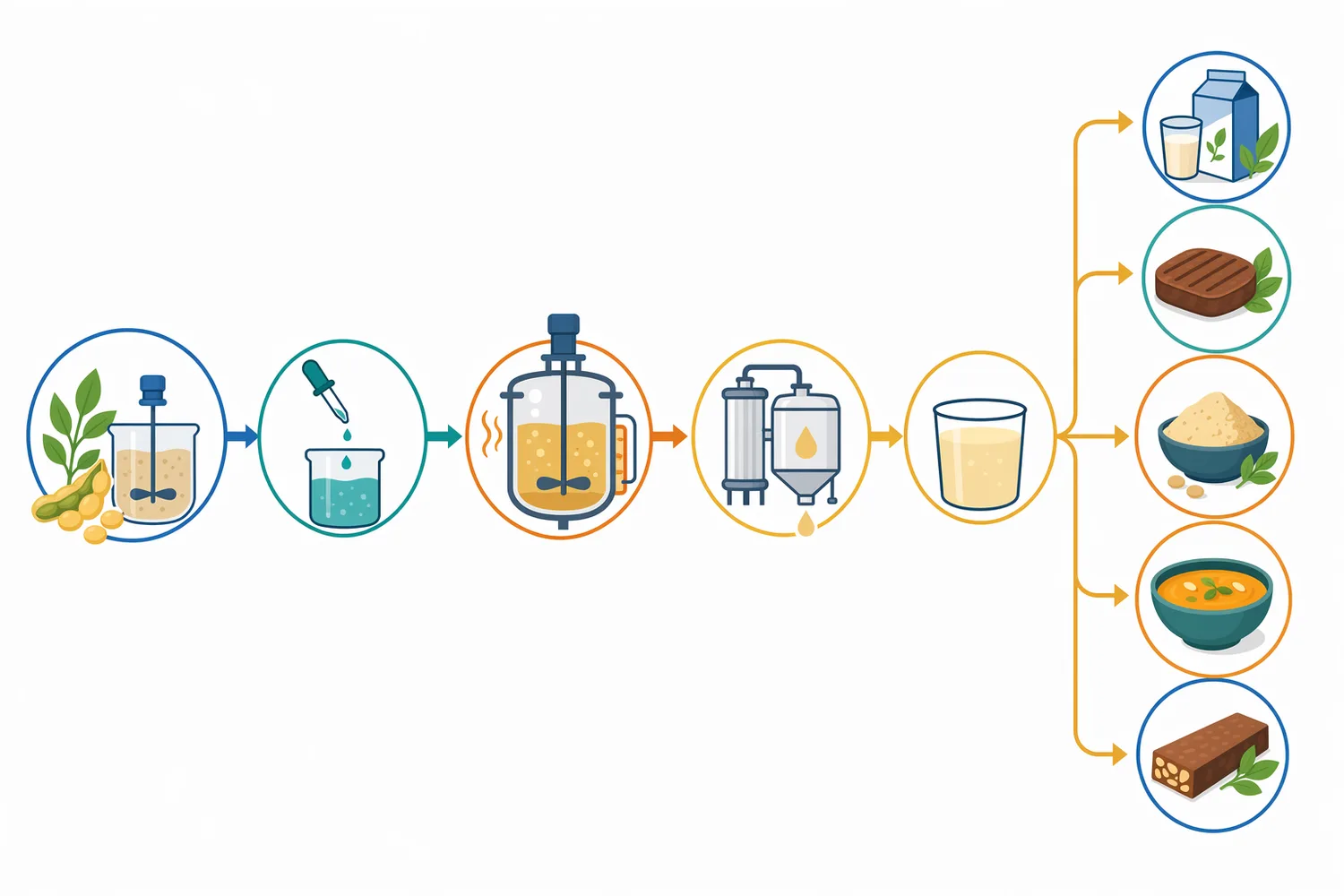
Hydrolyzed plant proteins are widely used in savory foods because they can provide body, umami, roasted depth, and salt-enhancing perception. Food Grade Flavor Protease can be used in hydrolysis steps for soy, pea, wheat, rice, and other plant proteins to create base materials for soups, sauces, bouillons, gravies, snack seasonings, marinades, and meat-alternative flavor systems. The practical advantage is that enzymatic hydrolysis can be milder and more targeted than harsh chemical hydrolysis, with greater opportunity to tune sensory results through process control.
Plant protein hydrolysis research consistently shows that hydrolysis modifies solubility, emulsifying behavior, foaming properties, and bioactive peptide formation. A review focused on enzymatic hydrolysis of plant proteins describes the method as a way to tailor characteristics and expand food applications, which is exactly the technical role of a flavor protease in savory ingredient development [2].
Plant-based meats need protein structure, fat binding, juiciness, and convincing savory flavor. Many formulations struggle with beany, cereal-like, grassy, or pea-like notes from protein concentrates and isolates. Flavor protease can help by reducing the intact protein structures that hold or express these notes, releasing savory precursors, and softening harsh protein taste. In soy protein systems, controlled enzymatic hydrolysis has been shown to change binding behavior with off-flavor compounds, which is directly relevant to the way beany volatiles are retained or released during processing [10].
The enzyme step does not create a complete meat flavor by itself. Instead, it improves the protein base so that yeast extract, vegetable extracts, spices, Maillard flavors, fats, smoke notes, or fermentation-derived flavors can perform more cleanly. This is especially useful when the target is not simply “strong flavor,” but a cleaner, less bitter, less raw-tasting plant protein foundation.
Plant-based dairy alternatives require smooth dispersion, low sedimentation, mild taste, and compatibility with cultures, stabilizers, fats, minerals, and heat treatment. Protease hydrolysis can reduce large protein aggregates and increase smaller peptides that disperse more easily. If controlled well, this can improve mouthfeel and reduce chalkiness. If pushed too far, however, it may thin texture or increase bitterness, which is why flavor protease use must be balanced against the target product format.
Soy protein isolate has been studied in dual-protein yogurt systems using enzymatic hydrolysis pretreatment combined with glycosylation. The research reflects a broader trend: plant proteins often need structural modification before they perform well in yogurt-like matrices, especially when flavor, texture, and protein stability must work together [14].
In high-protein beverages and powders, plant proteins can sediment, form gritty particles, or create a lingering bitter note. Partial hydrolysis can reduce particle size and improve hydration, allowing the protein to disperse more readily. It can also create a smoother flavor base when bitter peptides are further degraded. This is relevant to ready-to-drink beverages, instant protein powders, meal replacements, and nutritional blends.
The same mechanism that helps beverage dispersion can also create sensory risk if the peptide pool becomes too hydrophobic. Research into micellar casein hydrolysates using mass spectrometry and sensory evaluation shows that bitterness assessment must consider peptide composition, not simply the fact that hydrolysis occurred [5]. Although casein is a dairy protein, the sensory principle applies across protein hydrolysates: peptide identity drives taste.
Protease treatment can support fermented foods by increasing nitrogen availability. Microorganisms use peptides and amino acids for growth and for flavor metabolism. In plant-based fermented systems, this can help compensate for protein structures that are less accessible than dairy proteins. Pea protein research combining enzymatic hydrolysis and fermentation examined effects on antigenic proteins, functional properties, and sensory profile, showing how enzyme treatment and fermentation can interact in plant-protein product development [15].
Hybrid systems that combine plant proteins with dairy, egg, meat, or microbial proteins may also benefit from protease modification. The enzyme can help create a more compatible protein base, especially where one protein source dominates flavor or texture. As with any hydrolysate, the practical target is a controlled change in protein structure rather than maximum breakdown.
Soy remains one of the most researched plant proteins for enzymatic hydrolysis because it is widely used and technically challenging. It contains globular storage proteins that can contribute beany flavor, astringency, and functional limitations depending on processing. Enzymatic hydrolysis changes soy protein size, surface hydrophobicity, charge exposure, and peptide profile. These structural changes affect taste, emulsification, solubility, and interaction with volatile off-flavor compounds.
The study on soybean protein hydrolysates treated with Alcalase and then transglutaminase is especially relevant because it connects bitterness improvement with structural modification. It shows that hydrolysis is only one part of sensory management: the way peptides associate, cross-link, or remain exposed also changes perceived bitterness and functionality [8].
Pea protein is common in meat alternatives, beverages, and nutrition products, but it can have earthy, green, legume-like, and bitter notes. Enzymatic hydrolysis can improve its functional properties, while fermentation may further alter flavor and sensory profile. In pea protein isolate research, enzymatic hydrolysis and fermentation were studied together for their effects on antigenic proteins, functional properties, and sensory profile, indicating that pea protein benefits from combined structural and biochemical modification strategies [15].
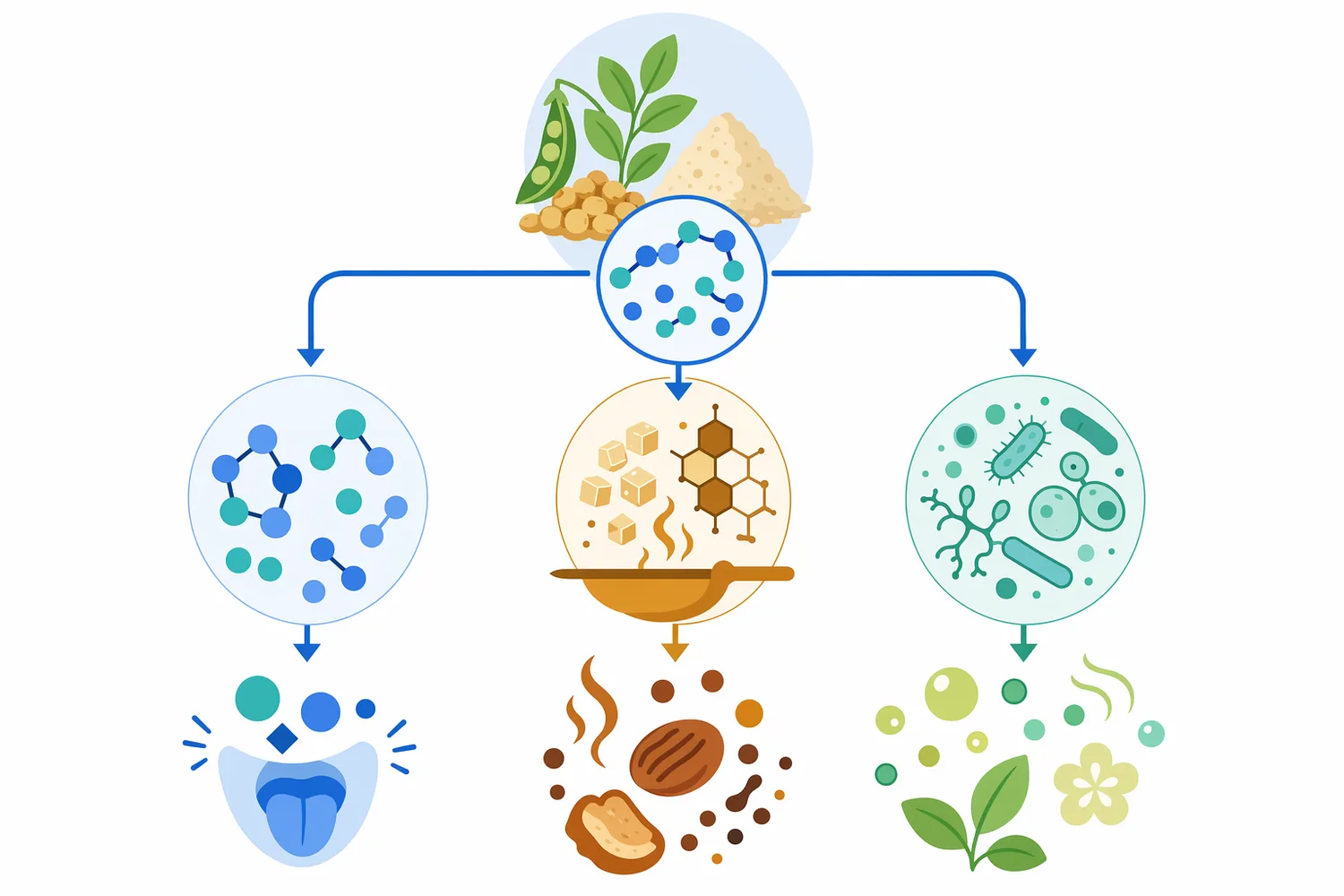
For a buyer using Food Grade Flavor Protease, the important takeaway is that pea protein response is matrix-dependent. A hydrolysis step can help reduce protein harshness and improve dispersion, but the finished sensory profile depends on the degree of peptide formation, downstream heating, fermentation, flavoring, and stabilizer system.
Newer plant proteins often bring stronger native flavors and less processing history than soy or wheat. Flaxseed, hemp, peanut, leaf proteins, and oilseed cakes can contain phenolics, lipids, fibers, and residual non-protein compounds that interact with hydrolysate flavor. Protease hydrolysis can improve protein usability, but bitterness and aroma must be managed in parallel with extraction and refining.
Flaxseed protein hydrolysis research linked enzymatic treatment with sensory characterization of Maillard reaction products, supporting the use of hydrolysates as flavor precursors rather than only nutritional ingredients [11]. Peanut protein processing research also emphasizes the importance of molecular structure in food applications, which is relevant because protease treatment works by deliberately changing that structure [16].
The best hydrolysate is not always the most extensively hydrolyzed hydrolysate. More cleavage generally means smaller peptides and higher solubility, but it can also increase the concentration of bitter peptides before those peptides are further degraded. Moderate hydrolysis can improve dispersion, emulsification, and mouthfeel while preserving a mild flavor. More extensive hydrolysis may be useful for savory bases, fermentation substrates, or reaction flavor precursors, but it requires careful sensory control.
This balance is visible across protein hydrolysis studies. Sea cucumber hydrolysis research comparing different enzymes found that enzyme choice influenced protein yield and bioactivity, reinforcing that different proteases generate different outcomes from the same substrate [17]. Although that study used an animal marine substrate, the principle is important for plant proteins as well: the enzyme does not merely “digest protein”; it creates a specific mixture of peptides.
For bitterness reduction, the practical goal is to move beyond the bitter peptide window. Early hydrolysis may expose bitter fragments. Continued targeted cleavage can reduce some of those fragments. But if the enzyme system is not suited to trimming the bitter sequences being released, bitterness can remain or intensify. This is why flavor protease is best understood as a tool for directed peptide remodeling, not as a universal bitter blocker.
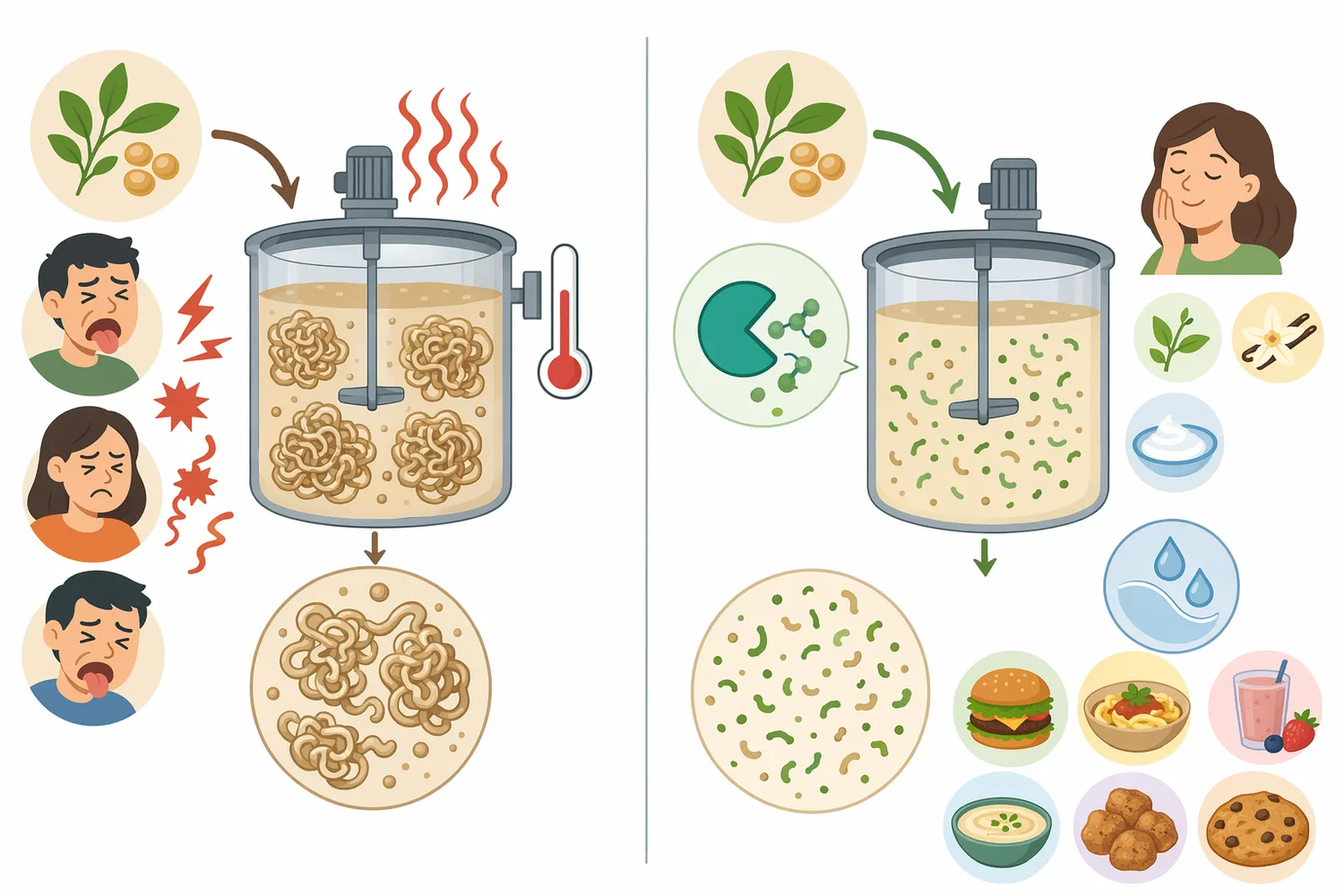
Hydrolysates are often heated after protease treatment. Heat may be used to stop enzyme action, concentrate the hydrolysate, dry the material, pasteurize the product, or develop reaction flavor. Once proteins have been hydrolyzed, more amino groups are available, and those groups can participate in Maillard reactions with reducing sugars. This can create roasted, toasted, meaty, caramelized, or broth-like notes, depending on the ingredient matrix and heating conditions.
The flaxseed hydrolysate study is a good example of this connection between enzymatic hydrolysis and Maillard-derived sensory properties. It shows that protein hydrolysates can act as flavor-building intermediates, not merely as solubility modifiers [11]. For savory plant-based applications, this makes flavor protease useful before thermal flavor development steps, provided the bitter peptide profile is controlled before heating concentrates the taste impact.
Heat can also lock in the hydrolysis endpoint by reducing enzyme activity. From a sensory standpoint, this matters because an active protease left unchecked may continue changing texture and flavor. In a finished product, uncontrolled ongoing proteolysis can create thinner body, increased bitterness, or flavor drift. In normal food processing, the enzyme step is therefore treated as a defined processing stage rather than an open-ended addition.
Flavor protease is often one part of a broader plant protein improvement strategy. Physical treatments such as heating, homogenization, ultrasound, extrusion, or pressure can unfold proteins and make peptide bonds more accessible. Carbohydrate-active enzymes may reduce viscosity or release entrapped protein from plant cell wall materials. Fermentation can transform volatile compounds and organic acids. Protease treatment fits into this larger toolkit by acting directly on the protein fraction.
Reviews of enzyme technology in food describe enzymes as molecular tools that enable targeted transformations under comparatively mild processing conditions, supporting sustainable and functional food innovation [18]. In plant protein systems, this targeted approach is valuable because harsh processing can intensify off-flavors, damage nutritional quality, or create poor texture. Protease treatment allows the protein structure to be modified through biochemical specificity rather than only mechanical or thermal force.
Physical pretreatments can sometimes increase hydrolysis efficiency by opening compact protein structures. Fish protein hydrolysate research using ultrasound pretreatment before enzymatic hydrolysis found that pretreatment changed physicochemical parameters of the resulting hydrolysates, illustrating how substrate accessibility affects enzyme outcomes [19]. While the substrate in that study was marine rather than plant-based, the processing principle is relevant: enzymes work on accessible peptide bonds, so upstream structure matters.
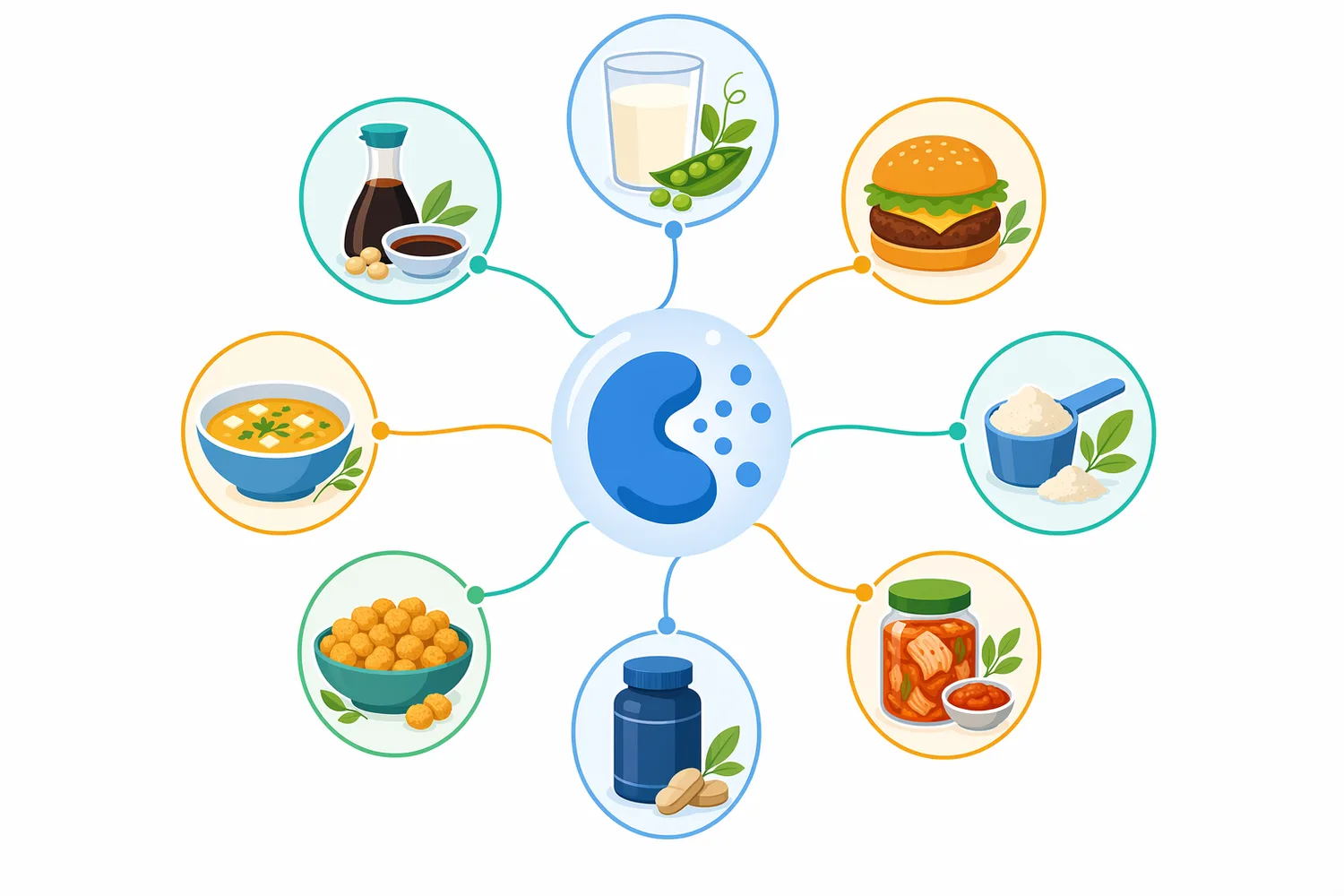
When used appropriately, Food Grade Flavor Protease can support several practical improvements in plant-protein systems. It can reduce protein harshness by breaking down intact proteins and modifying peptide populations. It can improve aqueous dispersion by lowering molecular size and exposing water-interacting groups. It can support savory flavor by releasing amino acids and peptides that contribute taste directly or act as flavor precursors. It can also improve the compatibility of plant proteins in fermented foods and hybrid formulations.
The strongest evidence-supported expectation is improvement, not automatic perfection. Scientific work on plant proteins repeatedly shows that hydrolysis outcomes depend on protein source, enzyme specificity, processing conditions, and downstream treatment. Reviews of plant protein modification emphasize that processing methods influence structure, functionality, nutrition, and sensory behavior together [4].
A realistic sensory target might be a cleaner pea protein base for a beverage, a less bitter soy hydrolysate for seasoning, a more soluble rice protein ingredient, or a more flavor-ready hydrolysate for Maillard reaction. The enzyme step helps move the protein toward that target by changing the peptide and amino acid profile. Final taste still reflects the whole formulation, including salt, acids, fats, sweeteners, flavors, minerals, heat history, and packaging stability.
Enzymes.bio supplies Food Grade Flavor Protease for plant protein hydrolysis, bitterness removal, and flavor enhancement as an online product purchase. The product is sold directly by the 1 kg unit: the buyer places the order online, pays online, and the order is processed and shipped. A Certificate of Analysis and Safety Data Sheet accompany the order for professional food-processing documentation.
This product should be viewed as a food-processing enzyme for controlled protein modification, not as a finished flavor, masking agent, or complete formulation. Its value comes from the core protease mechanism: cleaving plant proteins into a more useful peptide and amino acid profile that can improve solubility, reduce selected bitter peptide effects, and support savory flavor development. The scientific literature supports the central principle that enzymatic hydrolysis can tailor plant protein functionality and sensory performance when the process is controlled around the desired food application [2].
Sold by the 1 kg unit, in stock and ready to ship. Order directly on our store — pay online and we process your order. A Certificate of Analysis and Safety Data Sheet are included with every order.
Buy Food Grade Flavor Protease – Plant Protein Hydrolysis Enzyme For Bitterness Removal And Flavor Enhancement →Numbered in order of first citation. Open-access sources, each verified reachable at publication; citation numbers in the text link here.