
Food grade inulinase is used to convert inulin-rich carbohydrates into fructooligosaccharides, usually called FOS, by cutting the β-2,1 fructosidic bonds in inulin. For FOS production, the most relevant action is endo-inulinase activity, which cleaves inside the inulin chain and creates shorter fructan molecules instead of fully converting the substrate to free fructose. Research on fungal and microbial inulinases supports their use in FOS, fructose syrup, prebiotic ingredient, and plant-carbohydrate conversion processes [1].
Enzymes.bio supplies Food Grade Inulinase for Fructooligosaccharide Production for buyers who want a practical enzyme input for inulin-based carbohydrate processing. The product is purchased directly online by the 1 kg unit; after online payment, the order is processed and shipped, and a Certificate of Analysis and Safety Data Sheet are included with the order.
Inulinase is a carbohydrate-processing enzyme that acts on inulin, a plant fructan made mainly of fructose units joined through β-2,1 linkages, often with a glucose residue at one end. In an inulin solution or inulin-containing plant extract, the enzyme reduces the average chain length of the fructan fraction: long-chain inulin becomes a mixture of shorter fructooligosaccharides, inulooligosaccharides, fructose, glucose, or mixed products depending on the dominant enzyme action pattern and processing conditions [2].
For FOS production, that chain-shortening step is the key value. Long-chain inulin has limited sweetness and different solubility, viscosity, and mouthfeel behavior compared with shorter fructan chains. When inulinase cuts the polymer into smaller molecules, the carbohydrate profile shifts toward lower-degree-of-polymerization fructans that can be used in prebiotic ingredient systems, sugar-reduced foods, dairy formulations, beverages, and other functional carbohydrate applications [3].
The same enzyme family is also relevant to fructose-rich syrup production. If the process is driven mainly by exo-inulinase activity, the enzyme removes fructose units from the end of the chain, producing more free fructose rather than accumulating FOS. This is why “inulinase” is not a single practical outcome: the useful distinction is whether the process is being steered toward oligosaccharide formation or toward extensive hydrolysis [1].
Inulin can be pictured as a flexible chain of fructose units. The β-2,1 bonds are the connection points between those fructose units, and inulinase binds to the fructan substrate so that water can be used to split those bonds. After cleavage, one long chain becomes two shorter carbohydrate molecules; repeated cleavage lowers the average molecular size and changes functional properties such as solubility, sweetness contribution, viscosity, and fermentability in the final ingredient system [2].
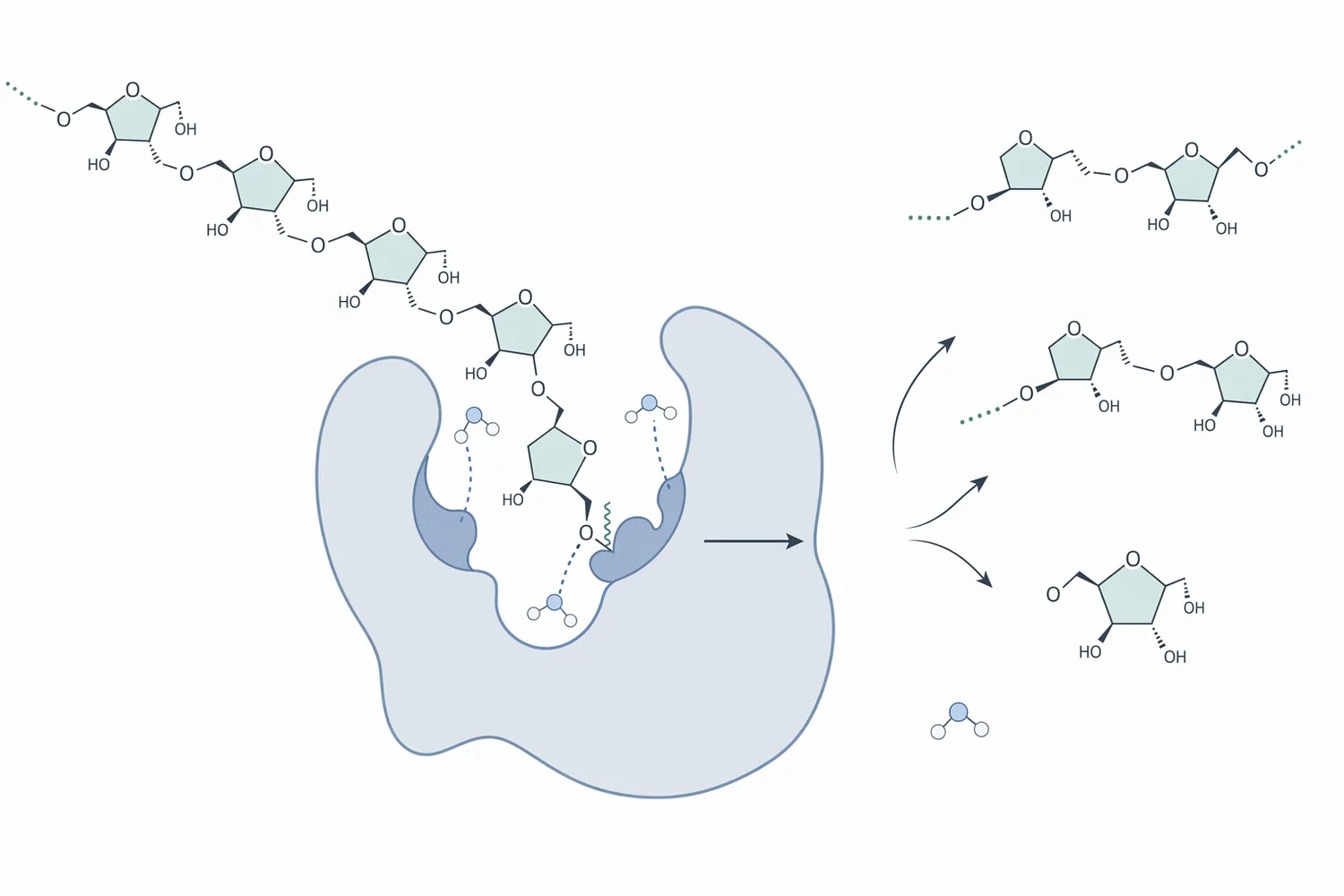
Endo-inulinase and exo-inulinase differ mainly in where they cut. Endo-inulinase attacks internal β-2,1 linkages along the chain, creating several shorter oligosaccharides from one long inulin molecule. Exo-inulinase works progressively from the chain end, releasing fructose units one by one; that action is more useful when the target is fructose production than when the target is FOS accumulation [1].
A useful way to think about the reaction is that endo activity “reshapes” the chain population, while exo activity “deconstructs” it. In an FOS-oriented process, the desired result is not maximum breakdown. The desired result is a controlled carbohydrate spectrum in which enough internal bonds have been cut to form shorter fructans, but not so much exo-type hydrolysis has occurred that the mixture becomes dominated by free fructose [3].
| Enzyme action pattern | Where the enzyme cuts | Main carbohydrate effect | Typical relevance |
|---|---|---|---|
| Endo-inulinase | Internal β-2,1 bonds within inulin | Long-chain inulin is converted into shorter fructooligosaccharides and inulooligosaccharides | FOS production and prebiotic carbohydrate development |
| Exo-inulinase | Chain ends, especially the non-reducing end | Fructose units are released progressively | Fructose-rich syrups and deeper hydrolysis |
| Fructosyltransferase-type activity | Transfers fructosyl groups between carbohydrate molecules | FOS can form from sucrose-rich systems under suitable conditions | Alternative FOS route, especially in sucrose-based research systems |
This distinction also explains why process timing matters. If the enzyme reaction is stopped when internal cleavage has generated an oligosaccharide-rich mixture, the result can support FOS production. If hydrolysis continues too far, or if the enzyme preparation is dominated by exo-type activity, the mixture can shift toward monosaccharides and lose the oligosaccharide profile that gives FOS its functional value [2].
Inulin is a strong starting material for FOS because its structure is already fructan-based. The enzyme does not need to build a fructan backbone from unrelated sugars; it modifies an existing β-2,1-linked polymer. That makes inulinase processing a direct route from a plant fructan substrate to shorter fructan products [1].
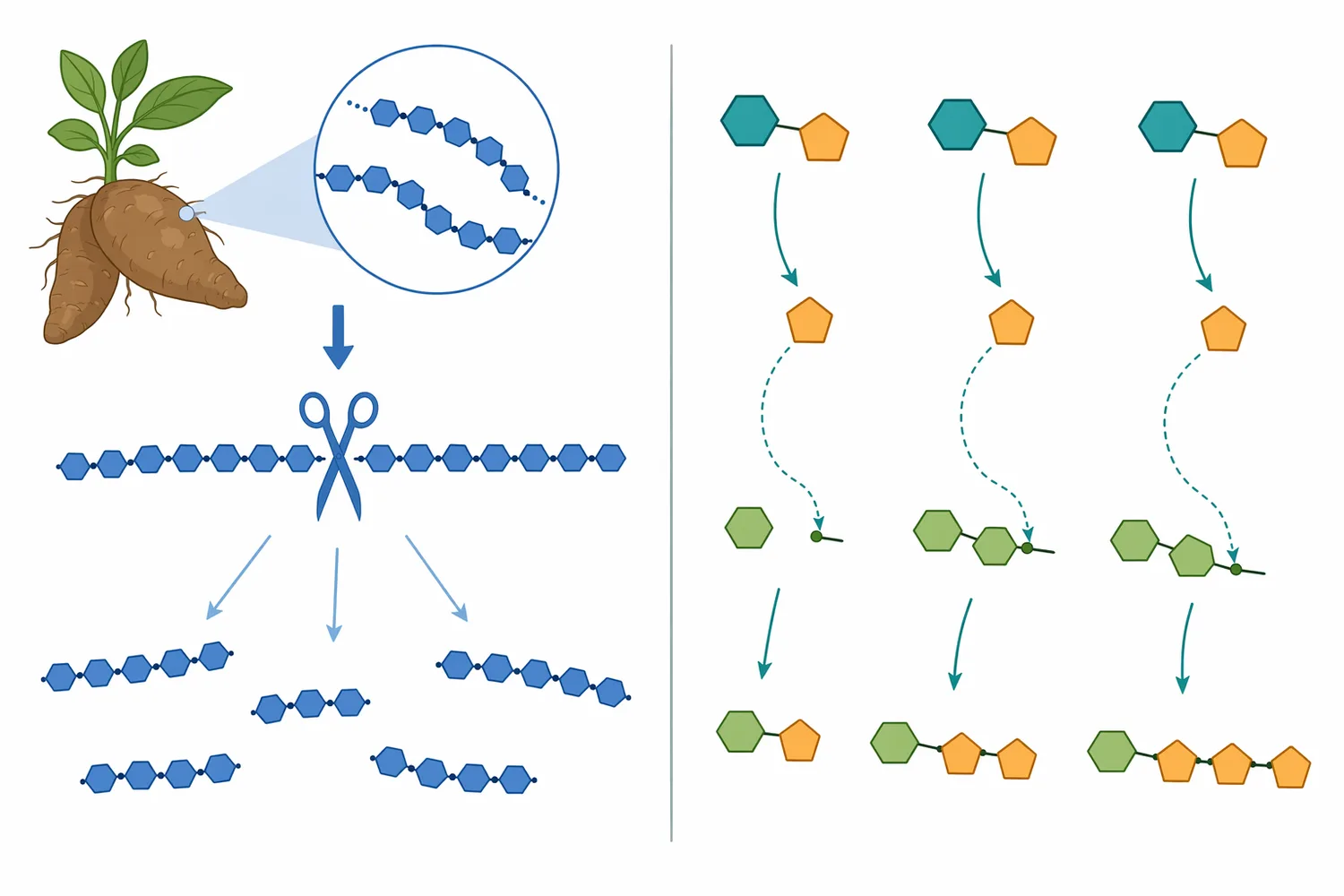
FOS production can also be approached through sucrose conversion using fructosyltransferase-type activity. Recent reviews describe fungal fructosyltransferases as important biocatalysts for producing prebiotic FOS, especially where sucrose is used as the fructosyl donor. In practice, the inulin route and the sucrose route are related but not identical: inulin hydrolysis shortens an existing fructan polymer, while transfructosylation builds oligosaccharides by transferring fructosyl groups between molecules [3].
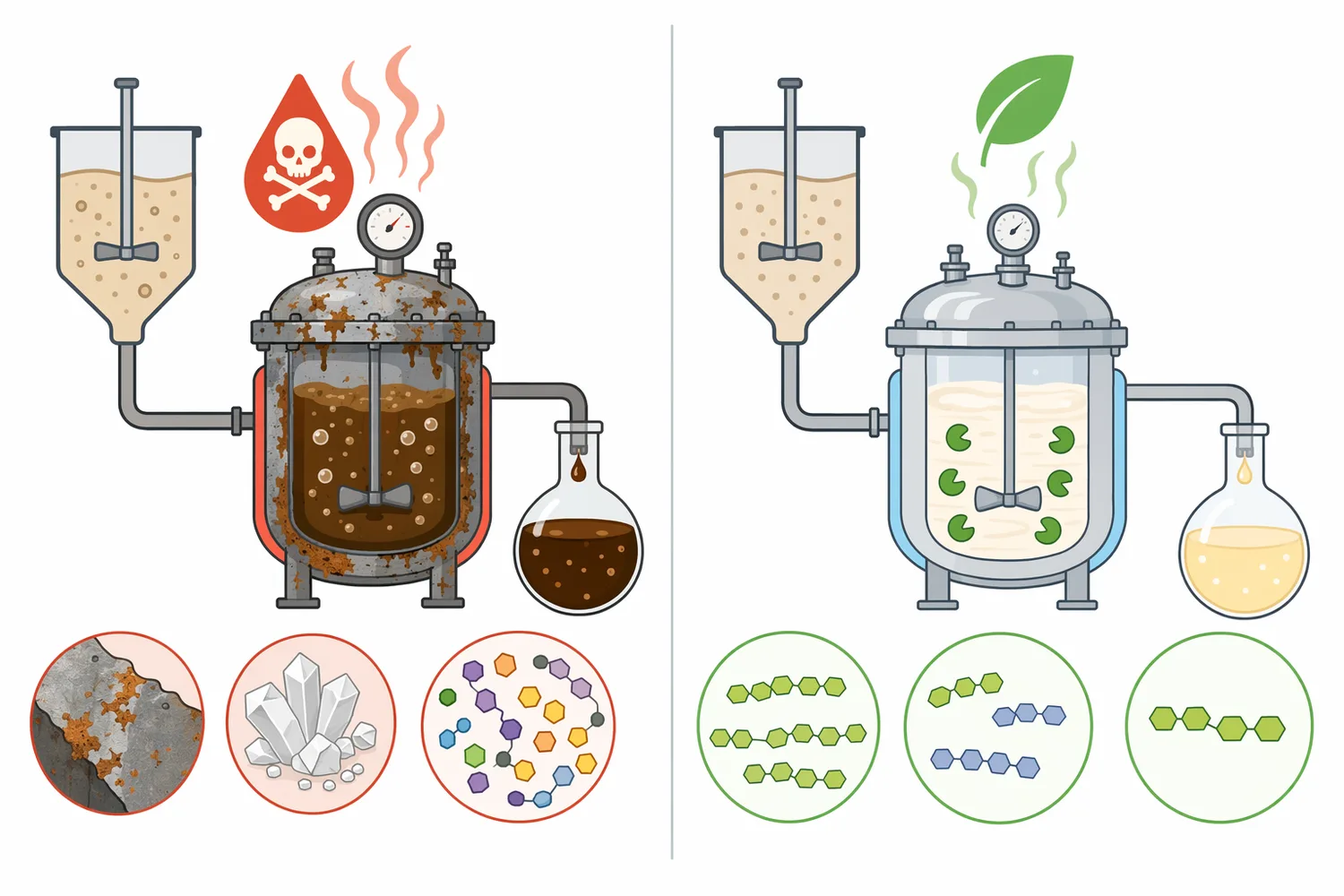
For an inulinase-focused process, the substrate choice affects the outcome. Purified inulin, chicory-derived material, Jerusalem artichoke-derived material, dahlia inulin, yacon-derived fractions, and other fructan-rich plant inputs can differ in chain length distribution and accompanying solids. Those differences influence viscosity, enzyme access, rate of chain cleavage, and the final balance between longer and shorter oligosaccharides [2].
The practical result is that inulinase is best understood as a profile-shaping enzyme. It does not merely “make sweetness” or “make fiber.” It changes a specific structural feature of the carbohydrate substrate—the β-2,1 fructan chain length—and that structural change is what creates the functional difference between long-chain inulin, FOS, and fructose-rich hydrolysates [1].
A broad body of research describes inulinase-producing microorganisms and inulinase-containing enzyme systems as useful tools for producing FOS and related fructan products. Reviews of fungal biofactories highlight fungi as important inulinase sources because fungal systems can produce extracellular enzymes that act on inulin-containing substrates, making them relevant to applied food and biotechnology processes [1].
Applied work on Fusarium sp. has specifically examined inulinase production and its application for fructooligosaccharide production for use as prebiotics. This supports the central technical claim that microbial inulinase can be used not only as a hydrolytic enzyme in theory, but also as a practical catalyst in FOS-oriented carbohydrate conversion [4].
Research on Aspergillus niger inulinase is also directly relevant. A study on inulinase from Aspergillus niger-245 examined production and action pattern, including hydrolysis of inulin from several sources. The value of that type of work is that it looks beyond enzyme presence alone and evaluates how the enzyme behaves on real inulin substrates, where chain length and botanical origin can affect the hydrolysis pattern [2].
More recent work has continued to explore fungal production systems and plant-based feedstocks. Inulinase and FOS production from carob using Aspergillus niger A42 under solid-state fermentation conditions shows the continuing interest in using plant materials as part of enzyme and oligosaccharide production strategies. Carob is not the same as purified inulin, but the study illustrates how inulinase research often connects enzyme production, plant carbohydrate substrates, and FOS generation in one process concept [5].
Other fungal studies have examined inulinase production by Aspergillus flavus using Saccharum arundinaceum and by Penicillium amphipolaria using hardy sugarcane stems. These studies are relevant because they show how strongly the field has focused on low-cost, plant-derived substrates and solid-state fermentation models for producing inulinase, even when the final commercial use may be a purified enzyme preparation or a controlled food-processing step [6].
In inulinase processing, the same enzyme class can produce different outcomes depending on how the reaction is run. Temperature, pH, substrate concentration, reaction time, mixing, substrate chain length, and solids content all influence how quickly the enzyme can reach and cut β-2,1 bonds. These are not abstract “optimization factors”; they change the physical and chemical environment in which the enzyme meets the substrate [7].
Temperature affects both enzyme movement and enzyme stability. Warmer reaction conditions generally increase molecular motion and can speed up substrate-enzyme contact, but excessive heat can distort the enzyme structure and reduce catalytic performance. This is why research includes thermostable inulinase-producing strains and thermophilic organisms: a process that remains active under warmer conditions can be more compatible with industrial carbohydrate handling [8].
pH changes the charge state of amino acids in the enzyme active site and can also affect the substrate environment. If the active-site residues are in the wrong protonation state, the enzyme may bind inulin less effectively or split the β-2,1 linkage less efficiently. This is why inulinase studies often report pH-dependent performance, even though the exact practical setting depends on the enzyme source and the food matrix [9].
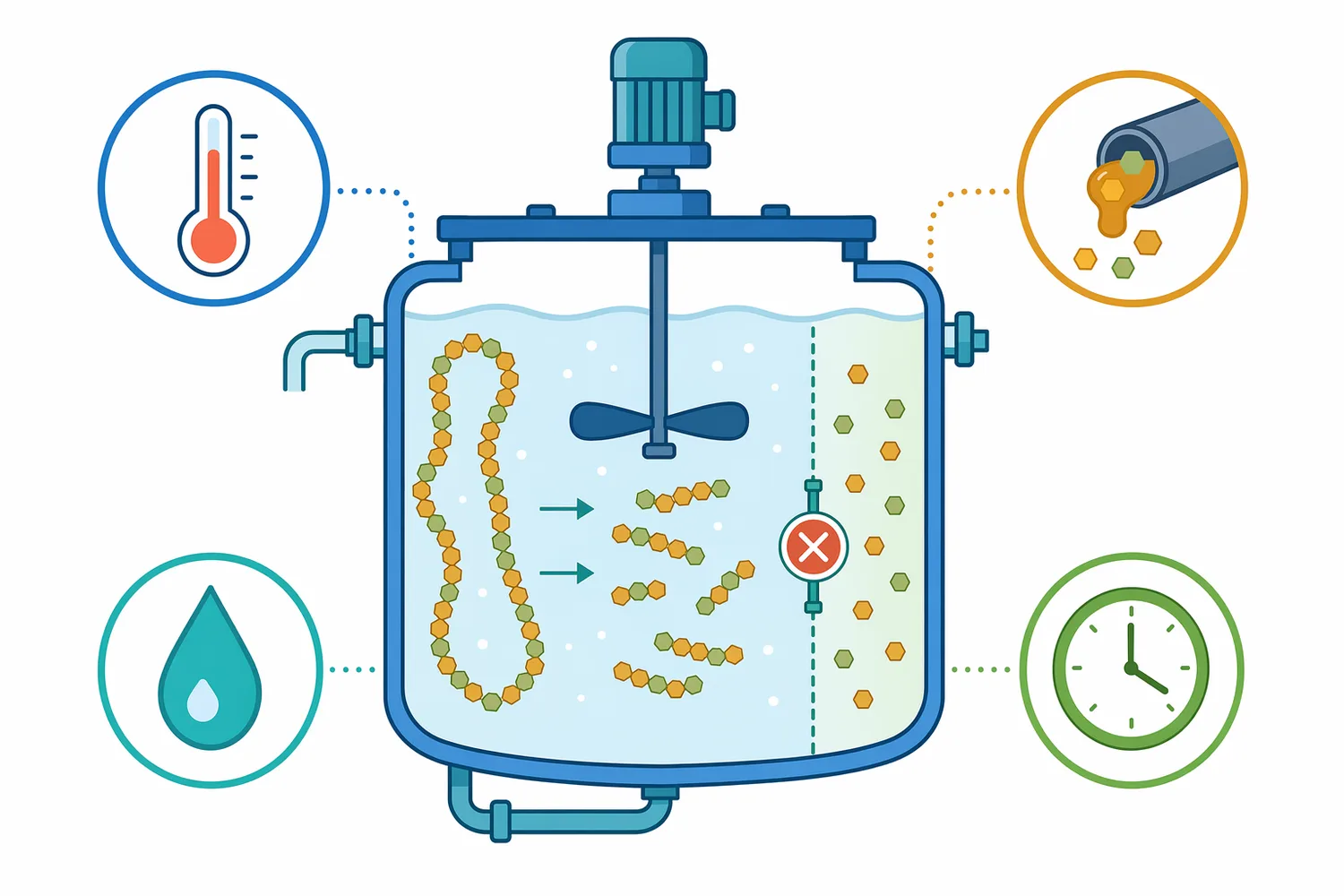
Substrate concentration affects both productivity and mass transfer. At higher inulin solids, there is more carbohydrate available for conversion, but the solution can become more viscous and mixing can become more difficult. If the enzyme cannot physically contact the inulin chains efficiently, the reaction may slow or become uneven, producing a less predictable FOS profile [2].
Reaction time is especially important because FOS can be an intermediate product. Early hydrolysis may convert long-chain inulin into desirable oligosaccharides, while extended hydrolysis can continue cutting those oligosaccharides into smaller sugars. The practical target is therefore a controlled endpoint, not simply the longest possible reaction [1].
Although this product is positioned for inulinase-based FOS production, FOS can also be made from sucrose using fructosyltransferase activity. In that route, fructosyl groups are transferred from sucrose to acceptor molecules, building short fructan chains rather than cutting a longer inulin polymer apart. Recent reviews describe fungal fructosyltransferases as a major focus for prebiotic FOS production because sucrose is widely available and can support transfructosylation under suitable conditions [3].
Some commercial and research enzyme systems may contain more than one relevant activity. A preparation can show inulin-hydrolyzing behavior, sucrose-transforming behavior, or a mixture of both, depending on the enzyme source and process context. Mechanistically, that matters because hydrolysis uses water to split bonds, while transfructosylation transfers a fructosyl group onto another sugar; the two routes can produce overlapping but not identical oligosaccharide mixtures [3].
Ultra-high-pressure processing has also been studied as a way to affect FOS synthesis and fructotransferase activity using commercial enzyme systems including Pectinex Ultra SP-L and inulinase from Aspergillus niger. That line of research is important because it shows that physical processing conditions can influence enzyme-catalyzed FOS formation, not just the enzyme and substrate selection [10].
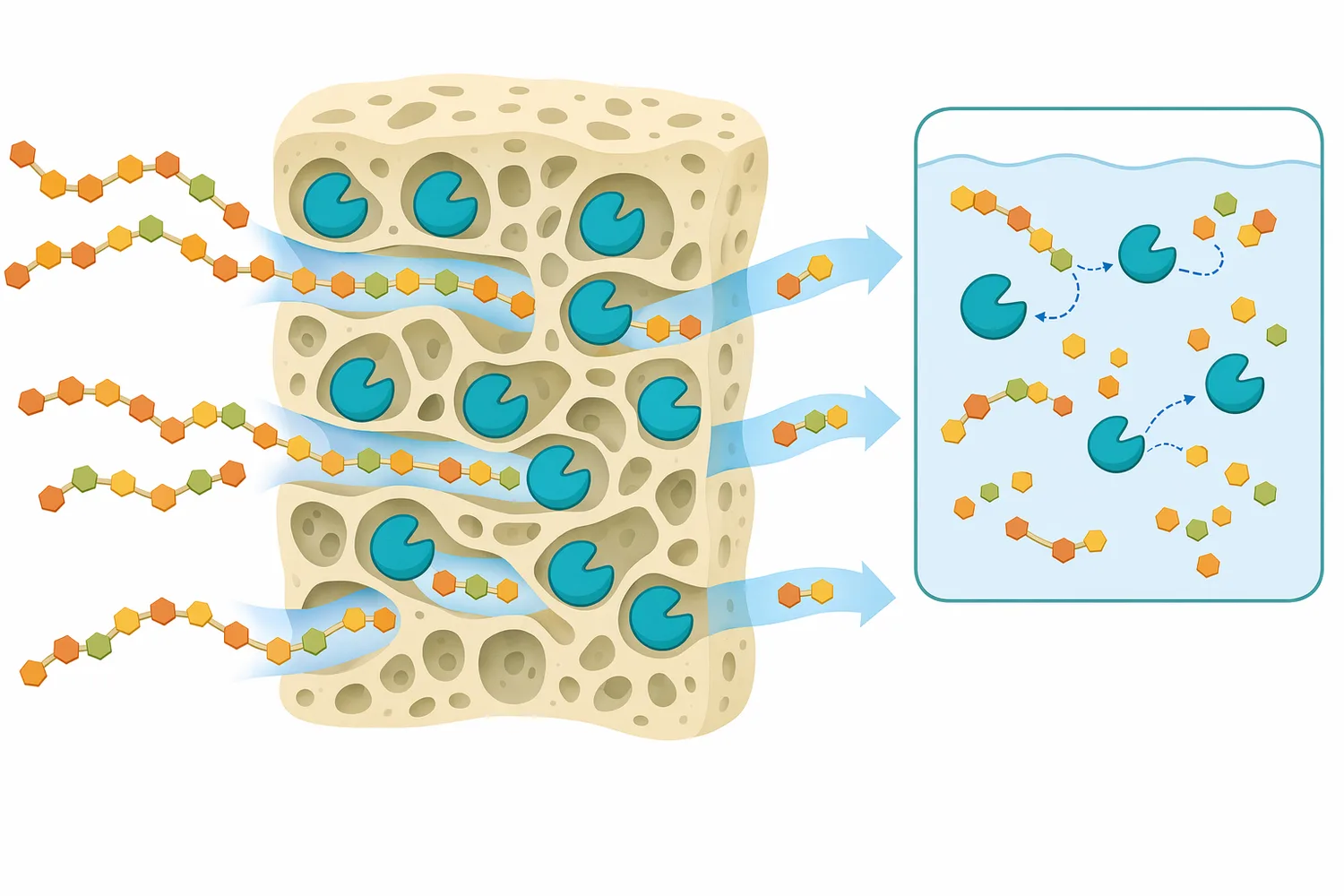
Immobilized inulinase systems are another area of research. Aspergillus niger inulinase immobilized in polyurethane foam and treated in pressurized LPG has been investigated as a potential catalyst for enzymatic FOS synthesis. Immobilization changes how the enzyme is held in the reactor, can affect reuse concepts, and may alter stability or mass transfer compared with a free enzyme in solution [11].
Inulinase immobilization in PAA/PEG composite materials has also been studied for efficient fructooligosaccharide production. The industrial logic is straightforward: if an enzyme can be retained in a structured material while substrate flows through or around it, the catalyst may be easier to separate from the product stream and may support repeated use in specialized process designs [12].
FOS are valued because they occupy a useful space between conventional sugars and non-digestible fibers. They can contribute mild sweetness and body while also being discussed in the literature as prebiotic carbohydrates. This combination explains why FOS appears in ingredient development for sugar reduction, fiber enrichment, digestive-health positioning, and plant-derived functional food systems [4].
In dairy applications, FOS can support sweetness adjustment, solids contribution, and prebiotic positioning. The carbohydrate profile matters because short-chain FOS behaves differently from long-chain inulin: it is typically easier to incorporate into aqueous systems and can contribute less viscosity than longer fructan chains. Inulinase processing is one way to move the ingredient profile toward those shorter, more formulation-flexible molecules [3].
In bakery and confectionery systems, FOS can be used where partial sucrose replacement or fiber enrichment is desired. The mechanism is not simply “less sugar.” Replacing sucrose changes water binding, glass transition behavior, browning potential, crystallization behavior, and texture development. Because FOS has a different molecular structure from sucrose, it changes the way water and solids interact during mixing, heating, cooling, and storage [3].
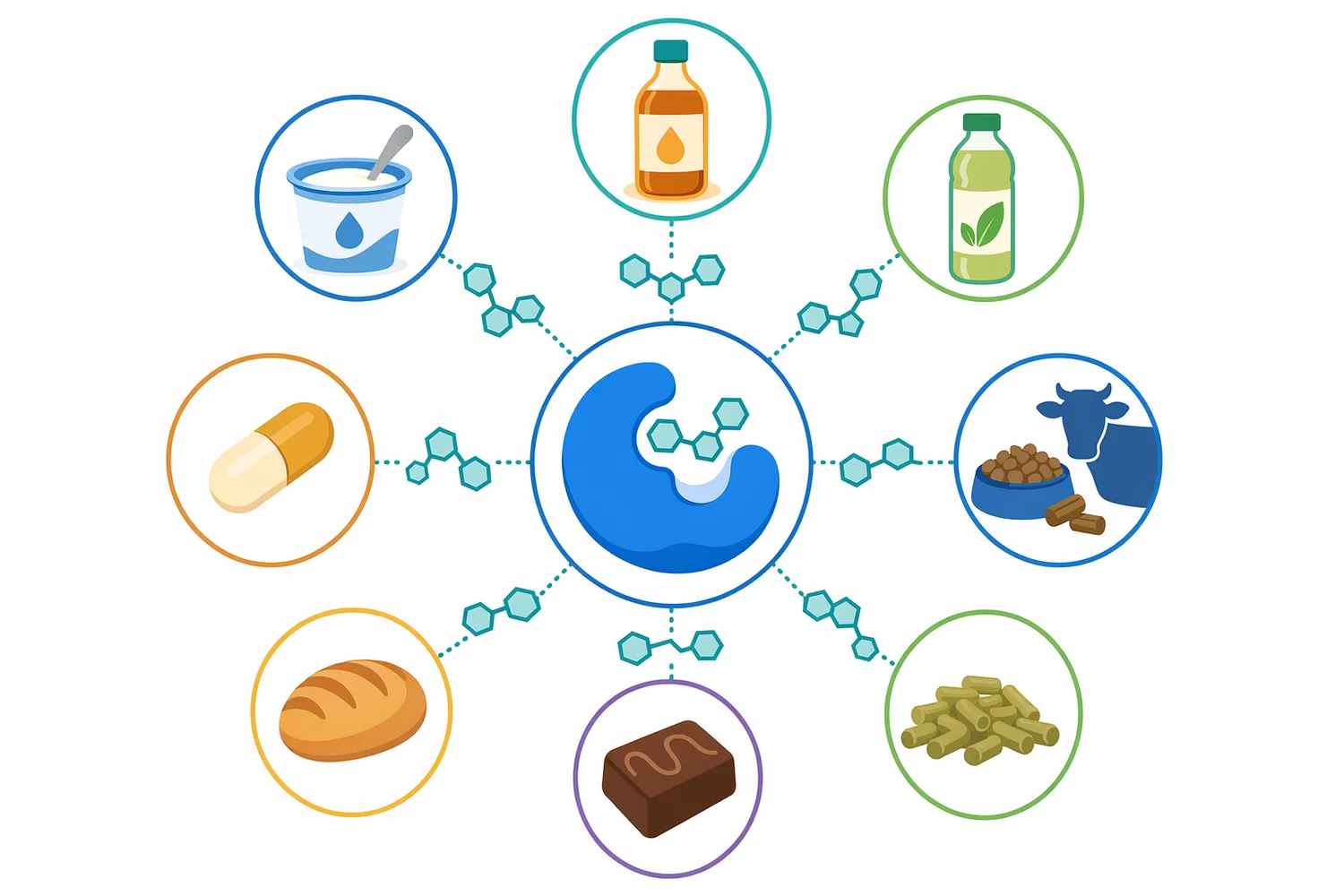
Beverage and extract applications are also developing. Research on coffee wastes and extracts has examined production of β-mannanase, inulinase, and oligosaccharides from coffee-related materials. This does not mean every beverage process will benefit in the same way, but it shows how enzyme-driven oligosaccharide generation can be applied beyond purified inulin syrup into more complex plant extract systems [13].
Animal food and pet food contexts also recognize fructans such as inulin, FOS, levan, and branched fructans as ingredient categories of interest. Validation work on fructan determination in animal food matrices reflects the broader relevance of these carbohydrates in feed, pet food, and ingredient systems, even though finished-product benefits depend on formulation and regulatory context [14].
Inulinase is closely connected with renewable plant carbohydrate streams. Inulin-rich crops and plant materials provide the fructan backbone; agro-industrial materials can support enzyme production; and side streams can sometimes be converted into higher-value oligosaccharide fractions. This is one reason the inulinase literature includes solid-state fermentation, plant residues, and alternative biomass substrates rather than only purified laboratory carbohydrates [15].
Carob-based work is a good example of this broader pattern. The study of inulinase and FOS production from carob using Aspergillus niger A42 connects a plant raw material with fungal enzyme activity and oligosaccharide production. In practical terms, that reflects a wider movement in food biotechnology: using enzyme specificity to upgrade plant carbohydrates into ingredients with higher functional value [5].
Coffee-related work illustrates another version of the same idea. Instead of treating coffee wastes only as disposal materials, research has explored enzyme production and oligosaccharide generation from coffee wastes and extracts. The importance is not that coffee is a universal FOS substrate, but that enzyme systems can help recover functionality from complex plant matrices [13].
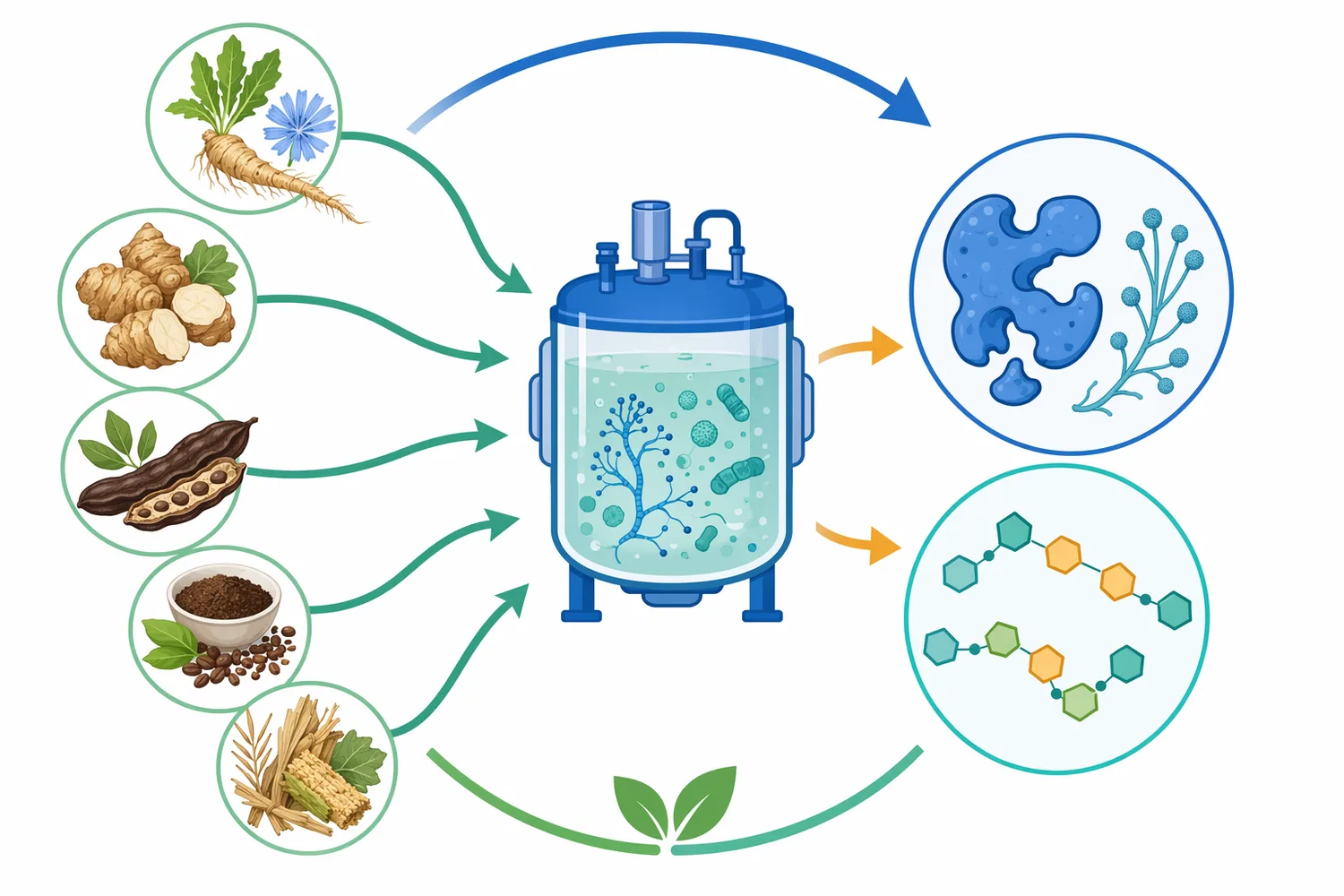
Thermophilic bacteria isolated from geothermal hot springs have also been investigated for inulinase production. Such research expands the source diversity of inulinases and highlights interest in enzymes that can tolerate warmer processing conditions. For industrial food processing, temperature tolerance can matter because carbohydrate syrups and plant extracts are often handled warm for viscosity and hygiene reasons [9].
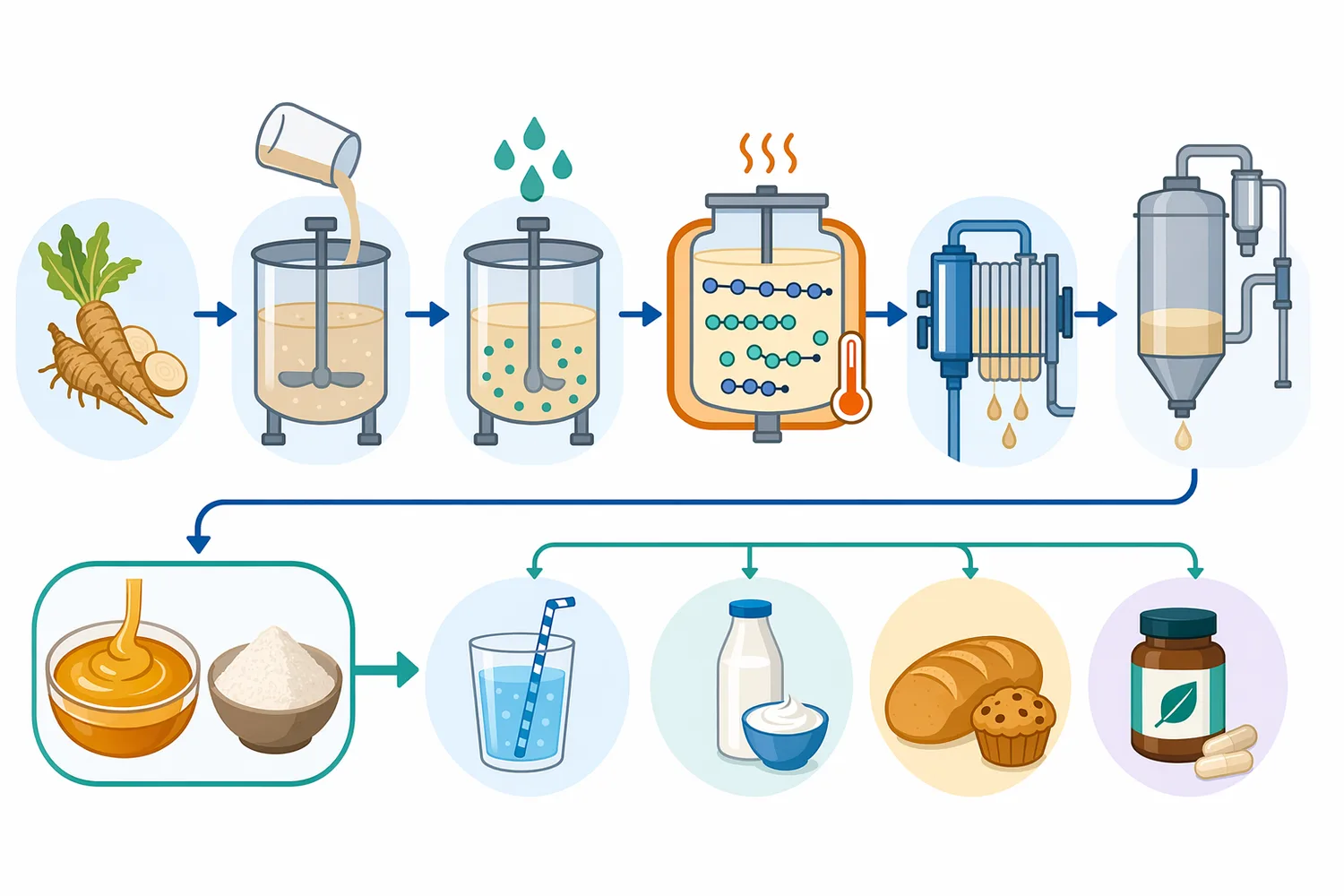
In a typical food-processing concept, the substrate is first prepared as an aqueous inulin-containing stream or carbohydrate solution. The enzyme is then dispersed so it can contact the fructan chains uniformly. As the reaction proceeds, the inulin chain distribution shifts: long polymers decline, shorter FOS increases, and—if hydrolysis continues—smaller sugars can accumulate [2].
The process is usually managed around the desired carbohydrate endpoint. If the target is FOS, the reaction is controlled to encourage oligosaccharide formation while limiting excessive breakdown. After the desired profile is reached, standard food-processing steps such as heat treatment, separation, concentration, filtration, or blending may be used according to the finished product design [1].
The same enzyme addition can behave differently in purified inulin syrup than in a plant extract. Plant extracts may contain proteins, minerals, polyphenols, fibers, or other carbohydrates that affect viscosity, water activity, enzyme access, or downstream clarification. That is why research studies often evaluate real substrates or model substrates separately rather than assuming that one result transfers perfectly to every food matrix [5].
For buyers using Enzymes.bio’s Food Grade Inulinase, the important expectation is that the enzyme provides the biological function needed for inulin conversion, while the final FOS profile is determined by the full process. Enzyme action, substrate type, solids handling, reaction endpoint, and downstream processing all combine to determine the final ingredient characteristics [3].
Food Grade Inulinase for Fructooligosaccharide Production from Enzymes.bio is a practical enzyme option for buyers working with inulin conversion, FOS ingredient development, prebiotic carbohydrate systems, and related food-processing applications. Enzymes.bio supplies the product directly online by the 1 kg unit; buyers complete the purchase online, and the order is processed and shipped with a Certificate of Analysis and Safety Data Sheet included.
The strongest scientific support is for inulinase as an enzyme class that hydrolyzes inulin and can generate FOS or fructose-rich products depending on the action pattern. Endo-inulinase activity is most relevant when the target is FOS accumulation, while exo-inulinase activity is more associated with extensive hydrolysis toward fructose [1].
FOS should be communicated responsibly in finished products. The literature supports FOS as prebiotic carbohydrates, but any nutrition, health, or labeling claims depend on the final ingredient composition, use level, product category, jurisdiction, and applicable regulations. Inulinase is a processing enzyme; it helps create or modify a carbohydrate ingredient, but it is not itself a health claim [4].
As with any enzyme-enabled food process, published studies provide a strong technical foundation but not a guarantee that every formulation will produce the same result. Substrate source, chain length distribution, process conditions, and reaction endpoint all affect the final mixture. Used appropriately, food grade inulinase gives processors a targeted way to convert plant fructans into shorter, higher-value fructooligosaccharide profiles [3].
Sold by the 1 kg unit, in stock and ready to ship. Order directly on our store — pay online and we process your order. A Certificate of Analysis and Safety Data Sheet are included with every order.
Buy Food Grade Inulinase For Fructooligosaccharide Production 100G →Numbered in order of first citation. Open-access sources, each verified reachable at publication; citation numbers in the text link here.