
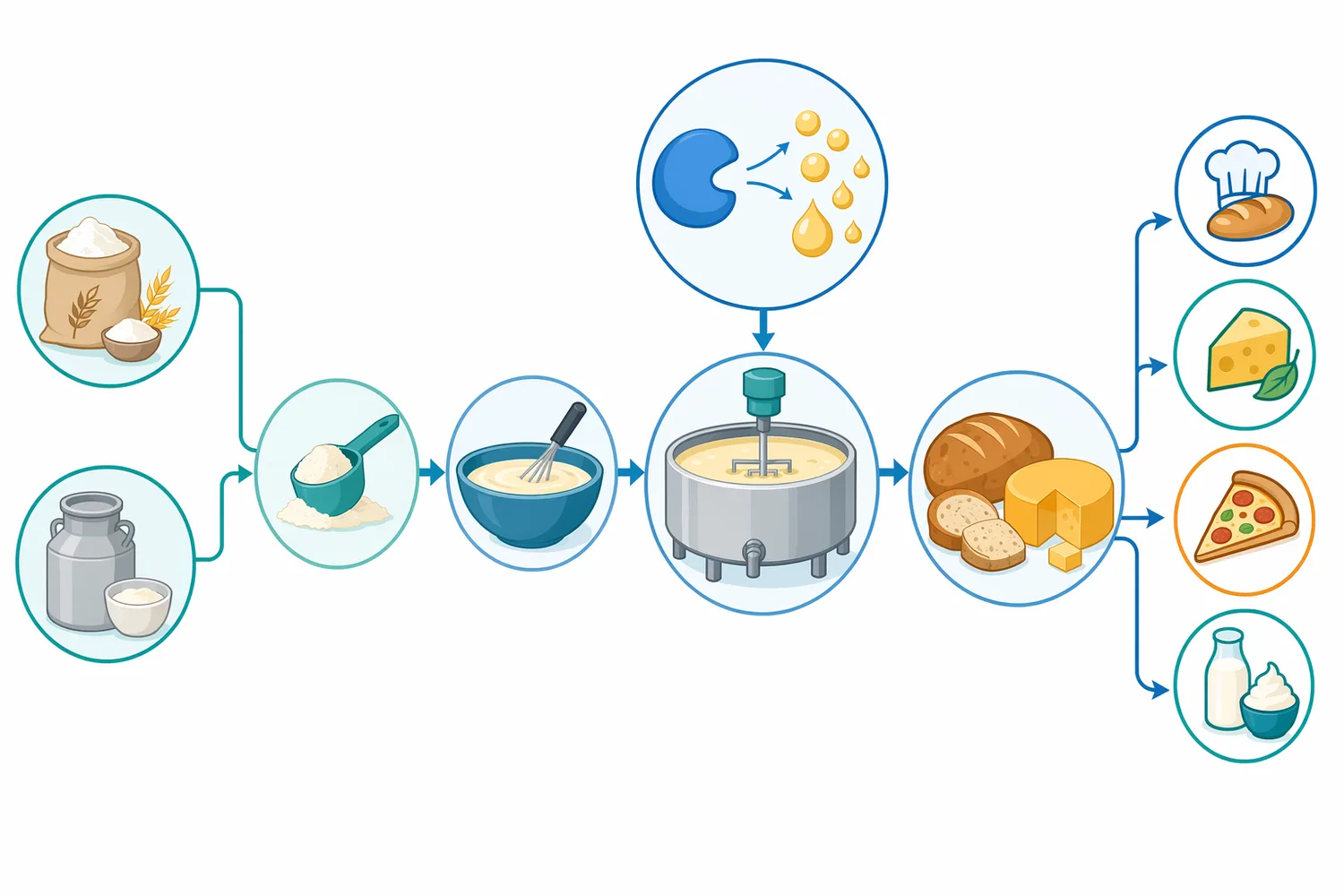
Food Grade Lipase Enzyme Powder is a lipid-modifying enzyme used in bread to improve dough strength, gas retention, loaf volume, crumb uniformity, and sliceability, and in cheese to support controlled lipolysis and characteristic flavor development. It works by hydrolyzing fat molecules into more reactive and flavor-active components, such as partial glycerides and free fatty acids, which then affect dough structure or cheese ripening chemistry depending on the food system [1].
Enzymes.bio supplies Food Grade Lipase Enzyme Powder directly online in 1 kg units for food processing applications, including bread and cheese manufacturing. The order is placed and paid for online, then processed and shipped; a Certificate of Analysis and Safety Data Sheet are provided with the order .
Lipases are enzymes that act on lipids, especially ester bonds in triglycerides and related fat molecules. In a food system containing water and fat, the most important reaction is usually hydrolysis: the enzyme helps split triglycerides into free fatty acids, monoacylglycerols, diacylglycerols, and glycerol-related fragments. In lower-water systems, lipases can also catalyze reactions such as esterification and transesterification, which is why the same enzyme class appears across food, oleochemical, and green chemistry applications [2].
The practical value of lipase in bread and cheese is that it changes the behavior of lipids already present in the formulation. In wheat dough, flour lipids are a small fraction of the recipe, but they have an outsized influence on gas-cell stability, gluten interactions, and crumb formation. In cheese, milk fat is a major substrate, and the products of fat hydrolysis become direct flavor compounds or precursors to aroma compounds during ripening [3].
“High concentrate” in this context means the powder is intended as a functional enzyme ingredient rather than a bulk flour, milk, or fat ingredient. It is used because a small amount of catalytic protein can transform many lipid molecules under suitable food-processing conditions; the enzyme is not consumed in the same way as an ordinary ingredient, but repeatedly participates in lipid-bond cleavage while it remains active [1].
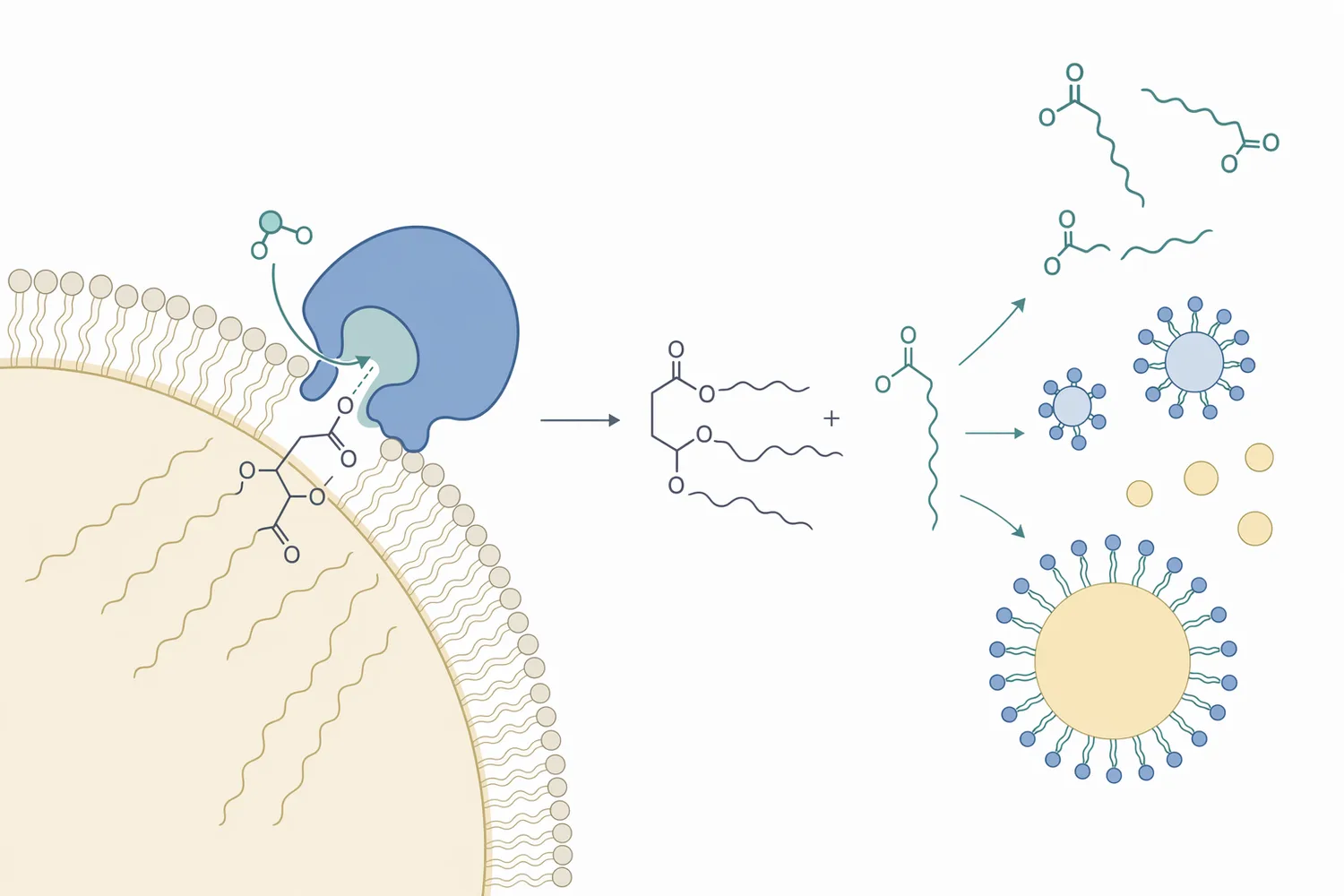
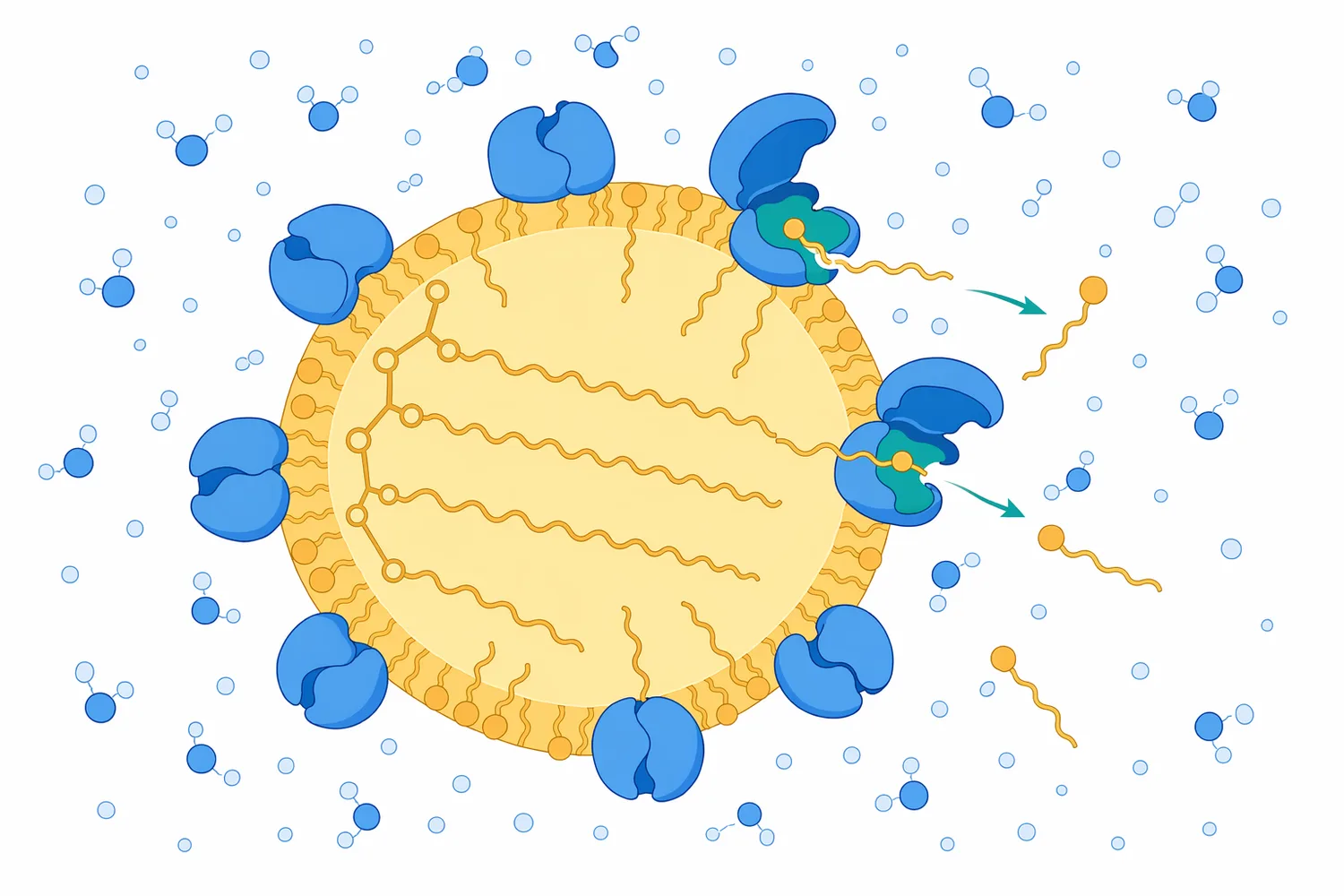
Lipase chemistry is strongly shaped by the fact that fats and oils do not dissolve evenly in water. Many lipases act most effectively at the boundary where a lipid phase meets an aqueous phase—the surface of a fat droplet, oil body, or milk fat globule. At that interface, the enzyme can position its active site close to ester bonds in triglycerides and catalyze their cleavage, releasing more polar reaction products that behave differently from the original fat [4].
A useful way to visualize the mechanism is to picture a triglyceride as a glycerol backbone carrying three fatty-acid chains. Lipase does not “remove fat” from the food; it clips ester bonds in that molecule. Once one or more fatty-acid chains are released, the resulting molecules are more surface-active, more flavor-active, or more chemically available for later ripening reactions. In bakery dough, that means lipids can participate more effectively at gas-cell interfaces; in cheese, it means fatty acids can contribute aroma directly or enter microbial and enzymatic pathways during aging [5].
The protein structure of lipases also matters. Many lipases have a mobile surface region often described as a “lid” that influences access to the catalytic site. When the enzyme contacts a lipid interface, conformational changes can expose the active site and allow substrate binding. This interfacial behavior helps explain why lipase performance depends on the physical state of the food—emulsification, fat globule size, mixing, moisture, and contact between enzyme and substrate all affect how much lipid the enzyme can reach [6].
In bread dough, the main functional substrate is the lipid fraction of wheat flour and any added fats. Although flour lipids represent only a small part of the dough, they influence how gas cells form and survive during mixing, proofing, and early baking. Lipase modifies these lipids into more polar, surface-active molecules that can stabilize the thin films around gas bubbles and interact with the gluten-starch matrix [3].
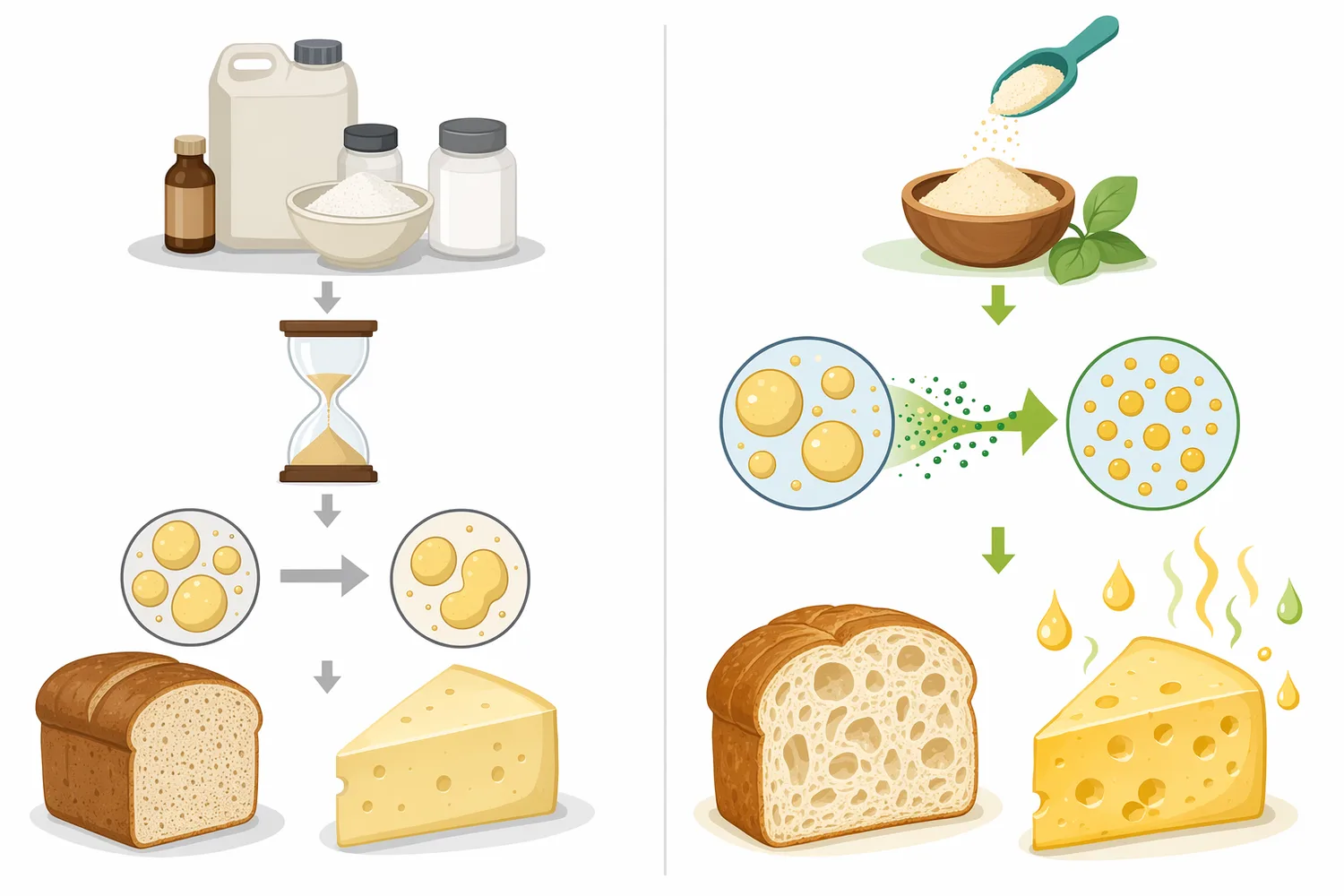
This matters because bread volume depends on more than yeast gas production. Yeast produces carbon dioxide, but the dough must hold that gas long enough for the loaf to expand before the structure sets in the oven. Lipase-generated partial glycerides and related lipid products can help strengthen the gas-cell walls, reduce coalescence of bubbles, and support a finer, more uniform crumb. The result is not simply “more gas,” but better retention and distribution of gas already produced during fermentation [7].
Lipase is therefore often discussed as a dough-strengthening or dough-conditioning enzyme. It complements the work of gluten development: gluten provides the elastic protein network, while modified lipids help stabilize interfaces and improve tolerance during processing. When dough is mixed, divided, rounded, proofed, and baked under commercial conditions, small improvements in gas-cell stability can show up as more consistent loaf height, better oven spring, and improved slice structure [3].
Frozen dough and interrupted bakery processes make this especially relevant. Freezing and thawing can damage yeast cells, disrupt gluten continuity, and weaken gas retention. Research on enzyme use for frozen-dough bread has examined how enzymes can improve sensory quality and mechanism-related dough performance, supporting the broader principle that enzyme systems can compensate for processing stress by modifying dough components before baking [7].
Lipase may also be used alongside other baking enzymes. For example, amylases act primarily on starch, xylanases on arabinoxylans, and oxidoreductases can influence gluten network behavior. A 2024 breadmaking study involving a Bacillus amylase with a fungal lipase illustrates how baking performance can be approached through complementary enzyme functions: starch modification affects fermentable sugars and crumb properties, while lipid modification affects dough structure and gas retention [8].
In cheese manufacturing, lipase acts mainly on milk fat. Milk fat is organized as globules containing triglycerides, and lipase hydrolyzes those triglycerides to release free fatty acids. These free fatty acids are central to the flavor of many cheese styles: short-chain fatty acids can be sharp, piquant, rancid, goaty, or buttery at different levels, while longer-chain fatty acids are less volatile but still contribute to the chemistry of ripening [9].
This is why lipase is especially relevant in aged or strongly flavored cheeses. Parmesan, Romano, Provolone, Feta-style cheeses, blue cheeses, and certain goat- or sheep-style profiles depend in part on lipolysis. Lipase does not create a finished cheese flavor on its own; rather, it supplies the fatty-acid building blocks that interact with starter cultures, secondary microbes, molds, salt, moisture, pH development, and time [10].
The difference between controlled lipase addition and uncontrolled fat breakdown is important. In desired cheese ripening, lipolysis develops gradually and in balance with proteolysis, acidification, moisture loss, and microbial metabolism. In spoilage, uncontrolled lipase activity can produce harsh rancidity or soapy off-notes. Food-grade lipase is used to guide fat breakdown toward a style target, not to indiscriminately intensify every fat-derived note [5].
Free fatty acids can also become precursors for other aroma compounds. In blue cheese, for example, fatty acids released from milk fat can be metabolized into methyl ketones, which are major contributors to blue-cheese aroma. This is one reason lipase treatment, milk-fat structure, and mold ripening are closely linked in blue-cheese flavor development [9].
Pasteurized-milk cheesemaking can also benefit from controlled enzymatic support. Heat treatment changes the native microbial and enzymatic environment of milk, which can reduce some of the spontaneous lipolytic complexity associated with traditional raw-milk systems. Enzyme use in dairy processing is therefore often discussed as a way to obtain more predictable reactions while retaining specific sensory goals [10].
Lipase is the same enzyme class in both bread and cheese, but the food matrix, substrate accessibility, and desired outcome are very different. The table below summarizes the practical mechanism without treating one application as interchangeable with the other.
| Application | Main lipid substrate | Immediate enzymatic change | What changes in the food matrix | Typical processing benefit |
|---|---|---|---|---|
| Yeast-leavened bread | Wheat flour lipids and added fats | Hydrolysis of lipid ester bonds into more polar lipid products | Improved surface activity at gas-cell interfaces; stronger interaction with dough structure | Better gas retention, loaf volume, crumb uniformity, oven spring, and sliceability |
| Frozen or stress-tolerant dough | Flour lipids in a dough system exposed to freezing, thawing, or extended handling | Lipid modification before the structure is fixed by baking | Gas cells are better supported despite processing stress | More consistent bread quality after frozen or delayed processing |
| Aged cheese | Milk fat triglycerides inside fat globules | Release of free fatty acids during curd formation and ripening | Fat-derived flavor compounds accumulate and enter ripening pathways | Sharper, piquant, buttery, goaty, or style-specific flavor development |
| Blue cheese | Milk fat plus mold-ripening system | Fatty-acid release followed by microbial conversion | Free fatty acids can contribute to methyl ketone formation | Characteristic blue-cheese aroma and flavor complexity |
The key point is that lipase changes lipids first; the visible or sensory result comes second. In bread, the result is primarily physical—better dough and crumb structure. In cheese, the result is primarily chemical and sensory—more developed fat-derived flavor during ripening [1].
Bread manufacturers use enzymes because flour is a biological raw material, not a perfectly uniform chemical commodity. Wheat variety, crop year, milling behavior, damaged starch, protein quality, and native lipid composition can all affect dough performance. Lipase helps address the lipid side of that variability by converting flour lipids into compounds that improve dough tolerance and gas-cell stability [3].
In pan bread and sandwich bread, the functional targets are usually loaf height, fine crumb, sliceability, and consistency from batch to batch. Lipase can support those outcomes by improving the dough’s ability to retain carbon dioxide through proofing and early oven expansion. A dough that holds gas more evenly tends to produce a crumb with fewer large voids and better mechanical integrity during slicing [3].
In buns, rolls, and enriched doughs, the same principle applies, but the presence of added fat, sugar, milk solids, or emulsifiers changes the matrix. Lipase-modified lipids can contribute to a softer, more cohesive crumb and improved handling, particularly where the dough must pass through dividing, rounding, sheeting, or depositing equipment. The enzyme’s value comes from modifying the lipid phase inside the actual dough, not from acting as a standalone softener [8].
Lipase also fits naturally into emulsifier-reduction strategies. Traditional emulsifiers help stabilize dough and crumb because they are amphiphilic: one part of the molecule associates with water, while another associates with fat or hydrophobic surfaces. Lipase can generate amphiphilic lipid products from native flour lipids and fats, helping reproduce some structural functions of added emulsifiers while keeping the mechanism enzyme-driven [3].
In cheese, lipase is most relevant where the desired style includes pronounced fat-derived flavor. Mild fresh cheeses generally depend less on lipolysis, while aged Italian-style, sheep-style, goat-style, and blue cheeses often rely on controlled fat breakdown as part of their identity. The enzyme’s contribution becomes more noticeable during ripening because fatty acids need time to accumulate and interact with the rest of the cheese chemistry [9].
The stage of addition matters because lipase must be distributed through the milk before the curd structure limits movement. Once coagulation begins, the milk becomes a gel and later a curd, so enzyme distribution becomes less uniform. When lipase is present before or during early curd formation, it becomes embedded throughout the curd mass and can act on milk fat as the cheese acidifies, drains, salts, and ripens [10].
Milk-fat structure strongly affects access. Homogenization, cream standardization, fat level, and curd handling all change how much fat surface is exposed to enzyme action. Smaller or more disrupted fat globules present more surface area, which can make lipolysis more apparent, while intact globules may limit access. This is one reason the same lipase can produce different sensory results in different cheese-milk systems [5].
Ripening microbiology then determines what happens to the released fatty acids. Starter cultures, adjunct cultures, molds, and surface flora can transform fatty acids into esters, ketones, lactones, alcohols, and other aroma-active compounds. Lipase supplies substrate for that network, but the final sensory result depends on the ripening ecosystem rather than lipase alone [9].
Lipases are among the best-established industrial enzyme classes because they work on fats, oils, and lipid-derived substrates across many sectors. Reviews of lipase applications describe their use in hydrolysis, esterification, transesterification, and interesterification, with food applications including dairy flavor development, fat modification, and bakery quality improvement [1].
Microbial lipases are particularly important because they can be produced from organisms such as fungi and bacteria and can vary in substrate preference, positional specificity, and stability. Reviews of Aspergillus-derived lipases highlight their relevance in industrial biotechnology and food-related processes, while also showing why lipase behavior should be understood in relation to the source enzyme and application environment [4].
In dairy, the evidence base for lipolysis is long-standing. Classic work on lipolytic enzymes in dairy flavor development describes how free fatty acids from milk fat contribute to cheese aroma and how different lipase systems can shift the intensity and character of the flavor profile. That foundation remains directly relevant to modern cheese manufacturing because the chemistry of milk-fat hydrolysis has not changed [9].
Milk-fat modification research also supports the idea that lipase is not simply a flavor additive. Lipase-catalyzed modification of milk fat can alter the distribution and availability of fatty acids, changing how the fat fraction behaves chemically and sensorially. In cheese, those changes become meaningful through the time-dependent ripening process [5].
For baking, modern reviews describe enzyme applications from dough development through shelf-life extension, placing lipase among the enzyme tools used to improve dough strength, bread volume, crumb quality, and processing tolerance. The scientific logic is consistent with the enzyme’s lipid chemistry: changing polar lipid composition changes how gas cells and dough films behave [3].
Lipase is most useful when lipids are limiting performance or flavor development. In bread, that means formulas where gas retention, dough tolerance, crumb uniformity, or emulsifier reduction are important. In cheese, it means styles where fat-derived flavor is expected and where ripening conditions allow the released fatty acids to develop into the desired sensory profile [3].
It is not accurate to treat lipase as a universal quality fix. A weak bread flour, poorly controlled fermentation, excessive mechanical stress, or an imbalanced formula cannot always be corrected by lipid modification. Lipase supports the dough system, but gluten quality, starch behavior, yeast activity, water absorption, mixing energy, and baking conditions still determine the final loaf [8].
The same caution applies to cheese. More lipolysis does not automatically mean better cheese. If fatty acids accumulate faster than the cheese matrix, cultures, salt level, moisture, and ripening temperature can balance them, the result may be harsh or rancid rather than pleasantly piquant. Controlled lipase use works best when it fits the intended cheese style and ripening program [10].
This balanced view is supported by the broader literature on enzymes in food processing: enzymes are highly specific catalysts, but the food matrix determines the practical outcome. Substrate accessibility, water activity, temperature history, pH development, and competing biochemical reactions all influence how much of the theoretical enzyme function becomes a finished-product benefit [11].
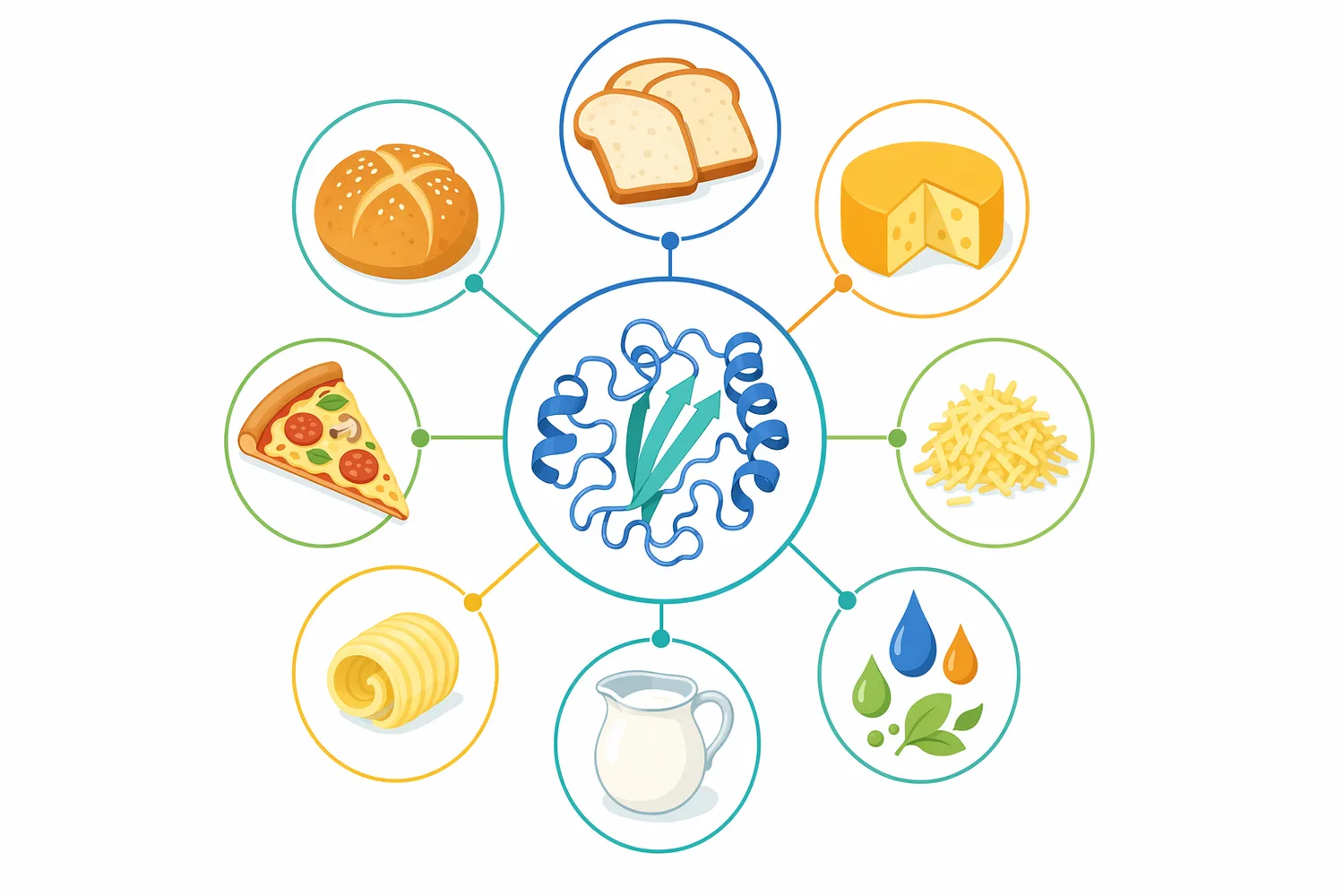
A powdered food-grade lipase is convenient for food processors because it can be stored, handled, and incorporated as a concentrated functional ingredient. In bread, it is typically used during dough preparation so it can act while flour lipids are hydrated, dispersed, and exposed through mixing. In cheese, it is used early enough for the enzyme to distribute through the milk system before the curd structure is established .
Enzymes.bio supplies Food Grade Lipase Enzyme Powder as an online 1 kg product for buyers who want to purchase directly without a quotation process. The product page is set up for online ordering and payment, after which the order is processed and shipped; the accompanying Certificate of Analysis and Safety Data Sheet are included with the order .
Because lipase is catalytic, it should be treated as a functional processing ingredient rather than a commodity filler. The practical outcome depends on the recipe, substrate, and process, so the best results come from using it consistently within the intended bread or cheese application and evaluating the finished product under normal production conditions [1].
Food Grade Lipase Enzyme Powder helps manufacturers control lipid chemistry in two very different but commercially important food systems. In bread, it converts flour and dough lipids into more functional surface-active molecules that support gas retention, loaf volume, crumb structure, and slicing performance. In cheese, it releases free fatty acids from milk fat, contributing to the piquant, buttery, sharp, goaty, or blue-cheese-type notes associated with controlled ripening [3].
The mechanism is concrete: lipase hydrolyzes ester bonds in fats. What changes afterward depends on the substrate. Wheat-flour lipids become dough-structuring aids; milk-fat triglycerides become flavor-active fatty acids and aroma precursors. That is why lipase can be valuable in both bread and cheese while delivering very different finished-product benefits [5].
For buyers ready to use a food-grade lipase powder in bread or cheese manufacturing, Enzymes.bio offers the product directly online in 1 kg units, with online payment, order processing, shipment, and the accompanying Certificate of Analysis and Safety Data Sheet included with the order .
Sold by the 1 kg unit, in stock and ready to ship. Order directly on our store — pay online and we process your order. A Certificate of Analysis and Safety Data Sheet are included with every order.
Buy Food Grade Lipase Enzyme Powder — High Concentrate For Bread & Cheese Manufacturing →Numbered in order of first citation. Open-access sources, each verified reachable at publication; citation numbers in the text link here.