
Food-grade pectinase is used in apple juice processing to break down pectin, the natural apple cell-wall polysaccharide that makes pressed juice viscous, cloudy, and harder to filter. By cutting long pectin chains into smaller fragments, pectinase weakens the colloidal network that keeps fine pulp particles suspended, so juice can clarify, settle, centrifuge, and filter more efficiently. Enzymes.bio supplies Food-Grade Pectinase for direct online purchase by the 1 kg unit; after online payment, the order is processed and shipped with a Certificate of Analysis and Safety Data Sheet.
Fresh apple juice is not just sugar, acids, aroma compounds, and water. It also contains plant-cell-wall material released during milling, crushing, maceration, and pressing. Pectin is one of the most important of these materials because it behaves as a natural thickener and colloid stabilizer: once released from apple tissue, it increases the viscosity of the liquid phase and helps hold fine pulp fragments in suspension. Reviews of pectinase describe this enzyme family as a major industrial tool for degrading pectin in fruit processing, including juice extraction and clarification applications [1].
Pectin is especially troublesome because it works at the microscopic level. A juice may look simply “cloudy,” but that cloud is stabilized by a network of dissolved and colloidal polymers surrounding suspended particles. Pectin molecules bind water, increase flow resistance, and reduce the rate at which particles collide, aggregate, and settle. In process terms, that means slower natural clarification, more load on centrifuges or filters, higher pressure during filtration, and a greater chance that haze remains after separation.
Food-grade pectinase addresses that root cause. It does not bleach the juice, strip color, or act as a preservative. Instead, it changes the physical chemistry of the juice by hydrolyzing pectin into shorter, less structure-forming fragments. Once pectin can no longer hold suspended solids in a stable network, particles can flocculate more readily and move out of the juice stream through settling, centrifugation, or filtration. Industrial reviews consistently place pectinase among the key enzyme systems used for fruit juice clarification and related food-processing operations [2].
Apple processing is a particularly natural fit for pectinase because apples are pectin-rich fruits and are widely processed into clarified juice, cider, concentrates, and other value-added products. General references on processed apple products describe apple juice as one of the central industrial apple outputs, with processing steps designed to transform variable fruit raw material into stable, marketable beverages and ingredients [3]. In that context, pectinase is best understood as a processing aid that makes the juice matrix easier to handle.
Pectinase is not one single catalytic action; it is a practical name for enzyme activities that attack pectic substances. The most relevant target is the pectin backbone, which is rich in galacturonic acid units. When enzymes cut this backbone or modify its side groups, long chains become shorter, the three-dimensional pectin network weakens, and the liquid loses part of its gel-like or syrup-like behavior. This is why pectinase is repeatedly described in the literature as useful for maceration, extraction, and clarification of fruit and vegetable materials [4].
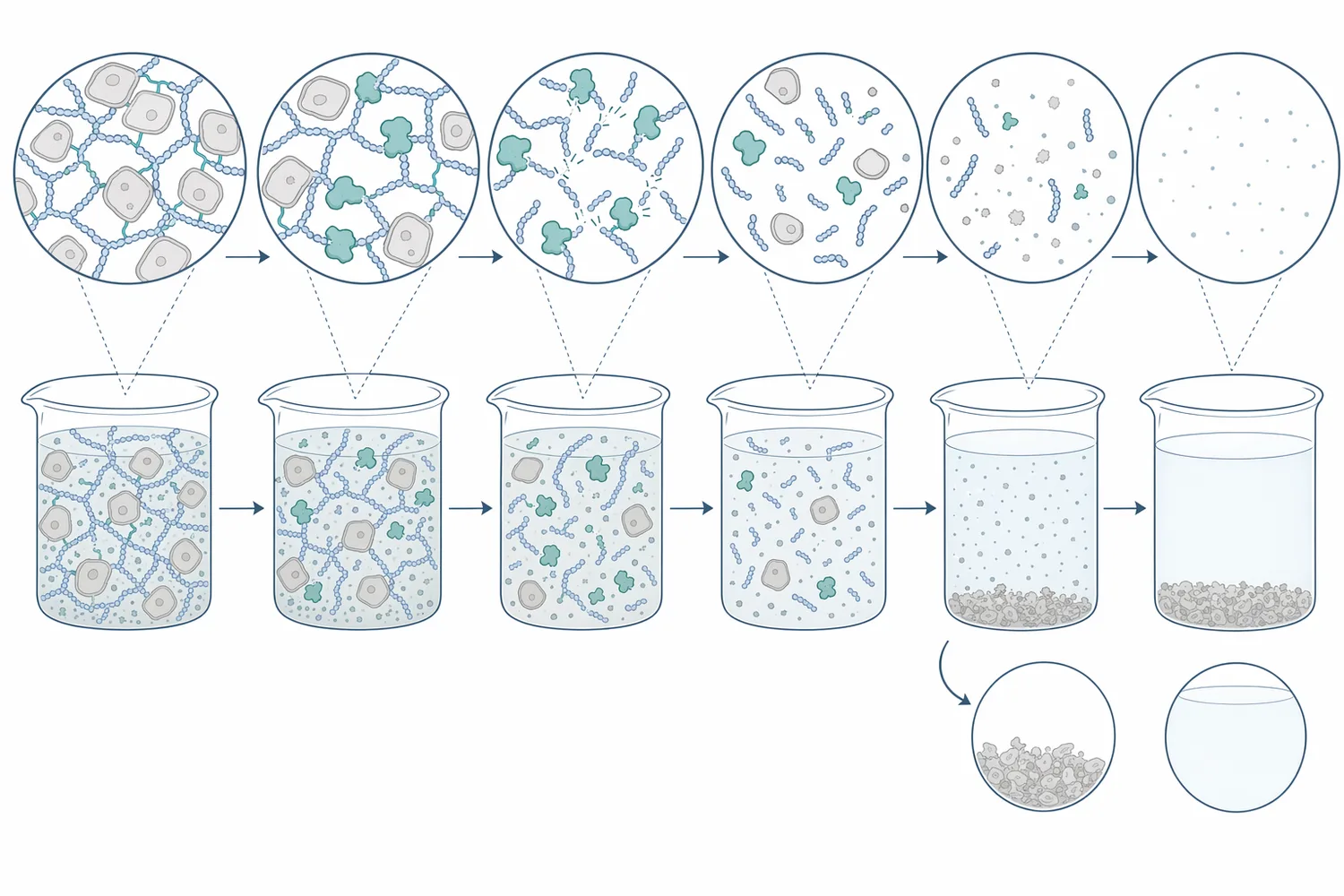
The most visible result is improved clarity. Before treatment, fine particles remain suspended because the surrounding pectin increases viscosity and reduces aggregation. After pectin hydrolysis, the same particles are less protected by the polymer network. They can collide, form larger aggregates, and separate more easily. This is the mechanism behind the practical observation that pectinase-treated juices are often easier to clarify by gravity settling, centrifugation, or filtration.
The second result is lower apparent viscosity. Viscosity is not only a sensory property; it affects pumps, pipes, tanks, decanters, membranes, filter media, and evaporation steps. Long pectin chains create internal resistance to flow because they occupy volume, bind water, and entangle with each other. When pectinase reduces chain length, the juice becomes less resistant to movement. Studies on enzymatic treatment of fruit pulps and juices show that enzyme treatment can change rheological behavior, supporting the general use of pectinase-containing systems for viscosity management in fruit matrices [5].
The third result is better separation behavior. Clarification depends on differences between the liquid phase and the suspended phase. Pectin blurs that separation by creating a stable colloidal environment. Hydrolyzed pectin fragments are less able to keep cloud particles apart, so solids can settle into lees, move more efficiently through centrifugation, or be retained with less resistance on a filter. For clear apple juice production, that difference often matters as much as the final clarity itself, because a process that filters slowly or blinds filter media can become inefficient even if the eventual product is acceptable.
The practical mechanism can be followed step by step. During milling and pressing, apple cells rupture and middle-lamella material is released. The middle lamella is rich in pectic substances that originally helped hold plant cells together. In juice, those same pectic substances no longer serve a structural role in the fruit; instead, they become dissolved or colloidal polymers that thicken the liquid and stabilize haze.
When food-grade pectinase is mixed into the juice or mash, enzyme molecules diffuse through the liquid and contact pectin chains. Depolymerizing pectinase activities split long pectin molecules into shorter sections. De-esterifying activities can alter methyl groups on pectin, changing charge and calcium interactions. The combined effect depends on the enzyme preparation and the juice matrix, but the central change is the same: pectin loses its ability to behave like a high-molecular-weight stabilizer. Scientific reviews describe microbial pectinases as a diverse group of enzymes with broad industrial relevance because they catalyze these pectin-degrading reactions [1].
Once the pectin network weakens, the juice changes physically. Fine particles that were held apart by hydrated polymers can come closer together. Small cloud particles can aggregate into larger bodies. Flow improves because water is less immobilized by long polymer chains. Filters see less gelatinous material, and solids are more likely to form a removable cake instead of a slimy layer that blocks flow. This is why pectinase is commonly linked not only with “clarity” but also with viscosity reduction and improved processability.
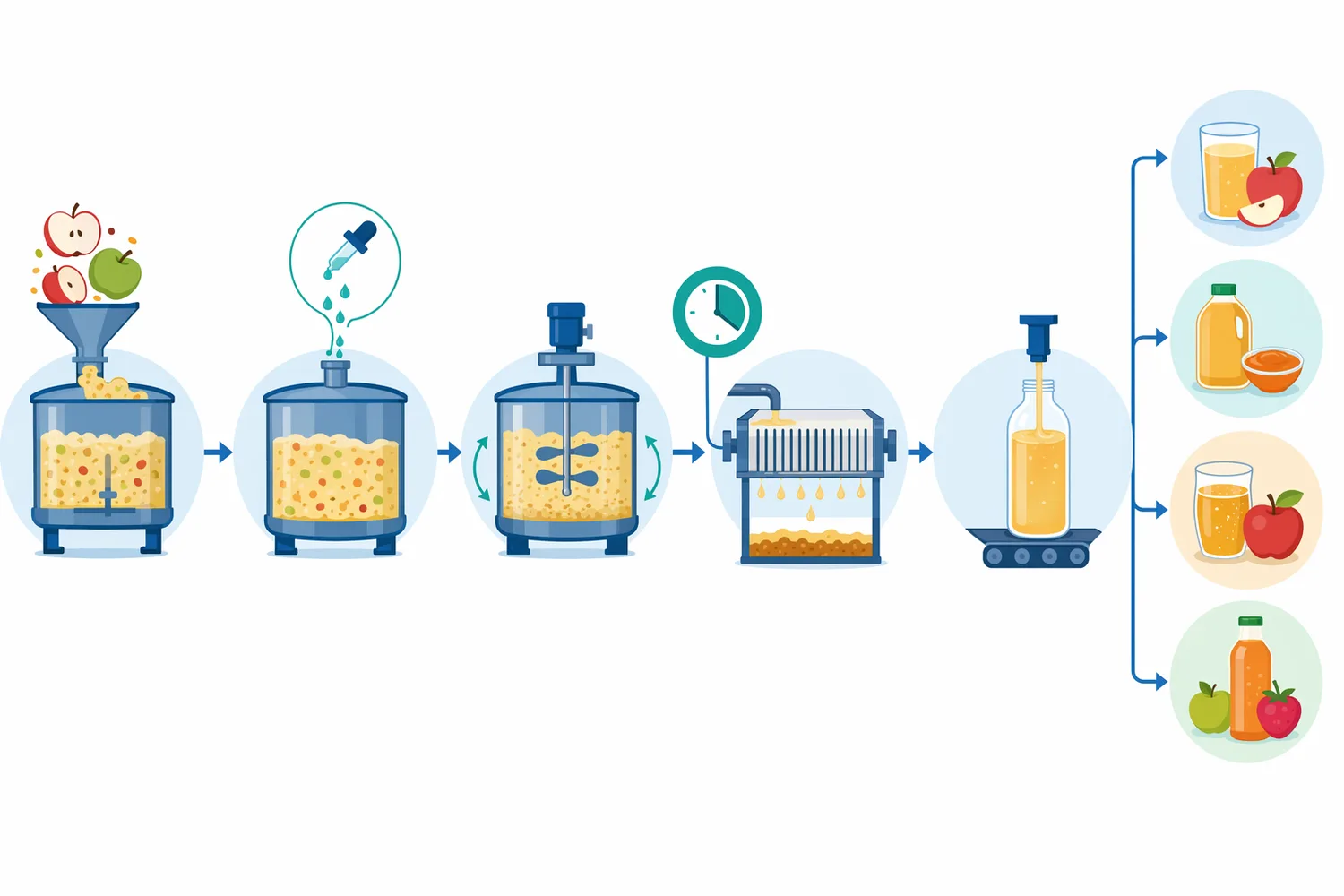
The effect is process-dependent because apple juice is a living agricultural matrix, not a pure laboratory solution. Apple variety, ripeness, storage conditions, milling severity, pressing method, pulp content, and heat history can all influence pectin load and haze behavior. Pectinase addresses pectin-driven problems directly, but starch, proteins, phenolic complexes, microbial instability, and mineral interactions can also contribute to haze. Reviews of enzyme use in fruit processing therefore discuss pectinase alongside other enzyme systems, because different raw materials contain different cell-wall and colloidal components [6].
Pectinase preparations are often discussed as if they perform one simple action, but the chemistry of pectin degradation can involve several complementary functions. The table below gives a conceptual view of the main enzyme actions relevant to apple juice. It is not a product specification; it is a practical explanation of what changes in the juice matrix.
| Enzyme function | What changes in the substrate | Practical effect in apple juice |
|---|---|---|
| Pectin backbone cleavage | Long pectin chains are cut into shorter fragments | Lower viscosity, weaker haze stabilization, easier clarification |
| Pectin de-esterification | Methyl ester groups on pectin are modified, changing charge and interaction behavior | Alters how pectin interacts with minerals, particles, and other polymers |
| Pulp cell-wall loosening | Pectin in middle lamella and cell-wall regions is degraded | Easier juice release from fruit tissue and less stable pulp suspension |
| Companion carbohydrase action, where present in broader enzyme systems | Cellulose or hemicellulose structures in pulp are partly opened | Useful in high-pulp or fiber-rich fruit systems where pectin is not the only structural polymer |
This distinction matters because apple juice turbidity is not only a color problem; it is a structure problem. The enzyme is effective when it changes the structure responsible for that turbidity. Pectinase is central because pectin is a major cloud-stabilizing polymer in apple juice, while companion enzymes may be relevant in pulp-heavy or blended fruit systems. Literature on fruit enzyme applications describes pectinase as a core tool but also recognizes that enzyme combinations can be useful depending on the fruit matrix and processing objective [2].
The broad evidence base for pectinase is strong: microbial pectinases are repeatedly reviewed as industrial enzymes used in food processing, with fruit juice clarification among the major applications. Haile and Ayele describe pectinase from microorganisms and its industrial applications, emphasizing the importance of pectin-degrading enzymes in sectors where pectin-rich plant materials must be processed efficiently [1]. That supports the practical use of food-grade pectinase in apple juice because the target substrate—pectin—is abundant and process-relevant.
Experimental work on fungal pectinase production also connects enzyme performance with juice clarification. Kc and co-authors investigated pectinase production, characterization, and industrial application from fungal strains, placing pectinase within the practical context of food technology and fruit processing [4]. For apple juice buyers, the important point is not the production organism itself, but the demonstrated industrial logic: pectinases are developed and evaluated because pectin breakdown has measurable value in juice clarification and related fruit-processing operations.
Recent reviews continue to describe pectinase as an actively developed enzyme class rather than an obsolete processing aid. Shrestha and colleagues reviewed pectinase production development and industrial applications, showing continued interest in improving pectinase availability, processing performance, and application breadth [2]. That ongoing research matters for apple juice processors because clarification requirements are not static: raw-material variability, energy costs, filtration expectations, and product formats all continue to evolve.
Research beyond apple juice also strengthens the mechanism. Cashew fruit juice, passion fruit juice, mixed fruit juices, and other pectin-containing beverages face the same basic problem: pectic polysaccharides and suspended pulp increase turbidity and flow resistance. Omeje and co-authors examined pectinase production by Aspergillus aculeatus and applied the enzyme in cashew fruit juice clarification, showing how pectinase activity can be connected directly to clarification of a real fruit juice matrix [7]. While cashew juice is not apple juice, the substrate logic—pectin-driven cloud and viscosity—is closely related.
Mixed fruit juice research is also relevant because apple is often part of blended beverage systems. Vinjamuri and colleagues studied enzymatic clarification of mixed fruit juices, reflecting the practical reality that pectinase treatment is often optimized in complex matrices rather than in single purified substrates [8]. Such studies support the broader point that fruit juice clarification depends on the combined effects of enzyme action, fruit composition, and separation method.
Passion fruit pretreatment research adds another useful comparison. Domingues and co-authors evaluated enzymatic pretreatment of passion fruit juice, a fruit system known for high pulp and colloidal complexity [9]. The apple juice matrix is different, but the processing principle is the same: enzyme pretreatment can change the physical state of juice before downstream separation, reducing the burden on clarification equipment.
In apple juice, viscosity and clarity are not separate problems. They reinforce each other. High viscosity slows the movement of suspended particles, meaning cloud material takes longer to settle. It also reduces the efficiency of centrifugation because particles experience more drag as they move through the liquid phase. During filtration, high viscosity increases resistance and can raise pressure requirements or reduce throughput.
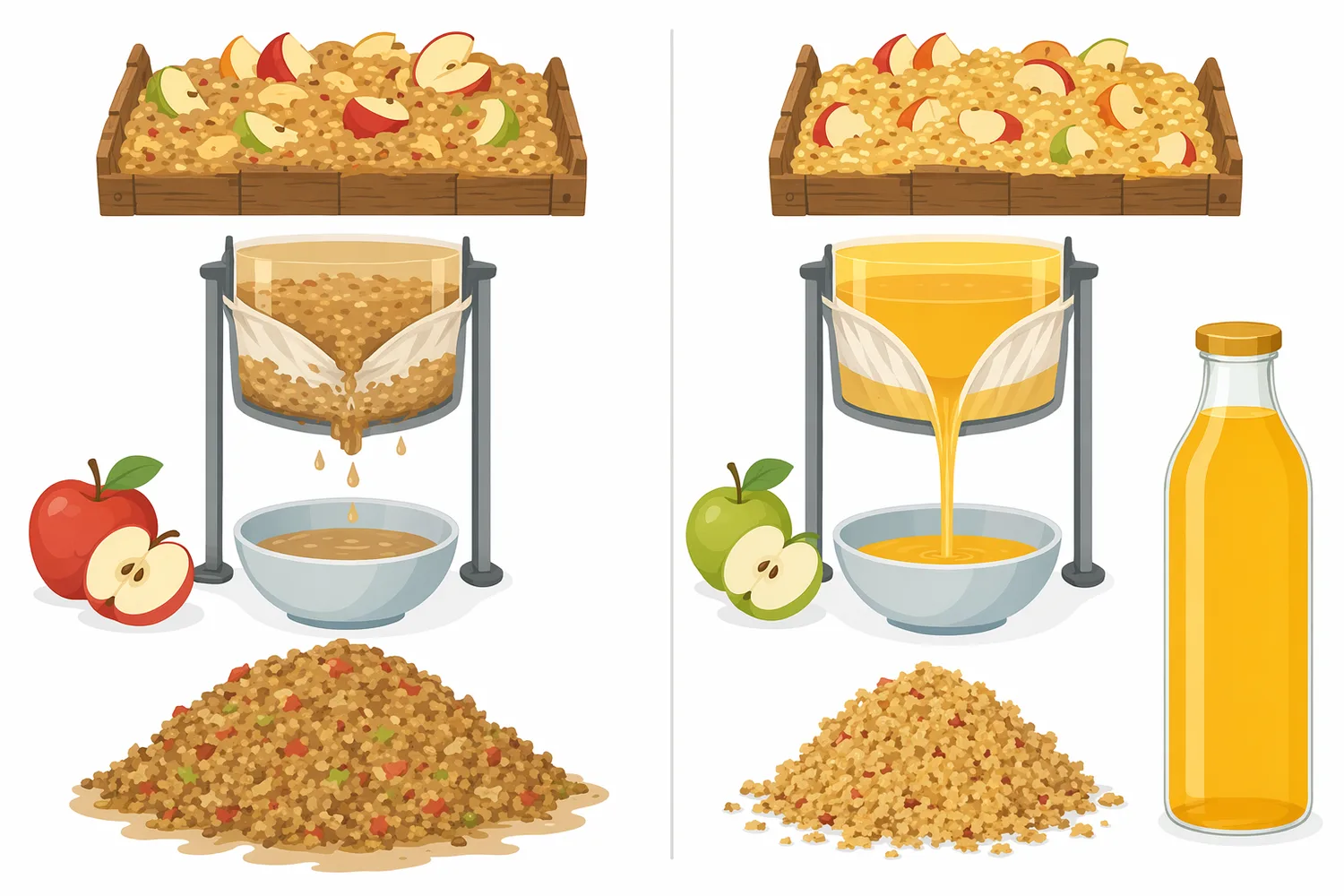
Pectinase helps because it attacks the polymer responsible for much of that resistance. Shorter pectin fragments bind less water and entangle less extensively, so the juice flows more freely. As flow improves, suspended solids become easier to move, concentrate, and separate. Studies on enzymatic treatment of fruit pulp show that enzyme action can alter rheological behavior, and this is the same physical principle that makes pectinase valuable for apple juice viscosity reduction [5].
Clarification is therefore not only about the final visual appearance in a bottle or tank. It is about how efficiently the process reaches that appearance. A juice that clarifies faster, filters with less resistance, or produces a more manageable sediment can save time and reduce operational friction. The scientific literature’s repeated focus on enzyme-assisted fruit juice clarification reflects this processing reality, not simply a preference for clear beverages [1].
Pectinase may be used where pectin is present and accessible: in crushed apple mash, in pressed juice before clarification, or in process stages designed to prepare juice for separation. The exact placement depends on the equipment layout and the product being made. In mash treatment, pectinase can help loosen plant tissue and support juice release. In pressed juice treatment, it focuses more directly on reducing viscosity and destabilizing haze before settling, centrifugation, or filtration.
The enzyme needs contact with the pectin-rich liquid or pulp phase. Good distribution matters because pectinase can only hydrolyze pectin it reaches. Inadequate mixing can leave parts of the tank untreated, while excessive mechanical stress is not usually the main requirement; the goal is uniform contact between enzyme and substrate. Process reviews of pectinase applications emphasize its role in transforming pectin-containing biomass into more manageable material for industrial operations [6].
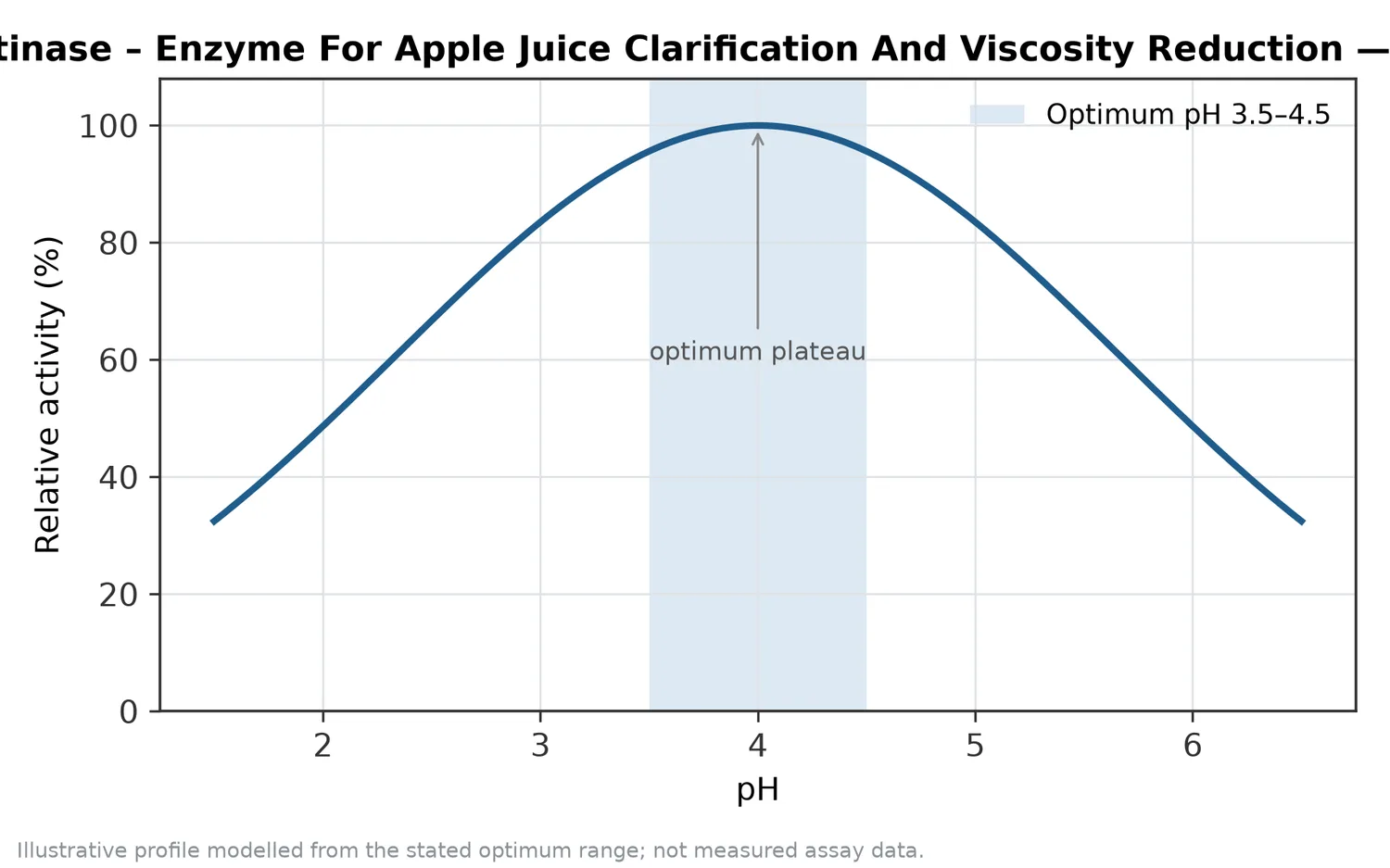
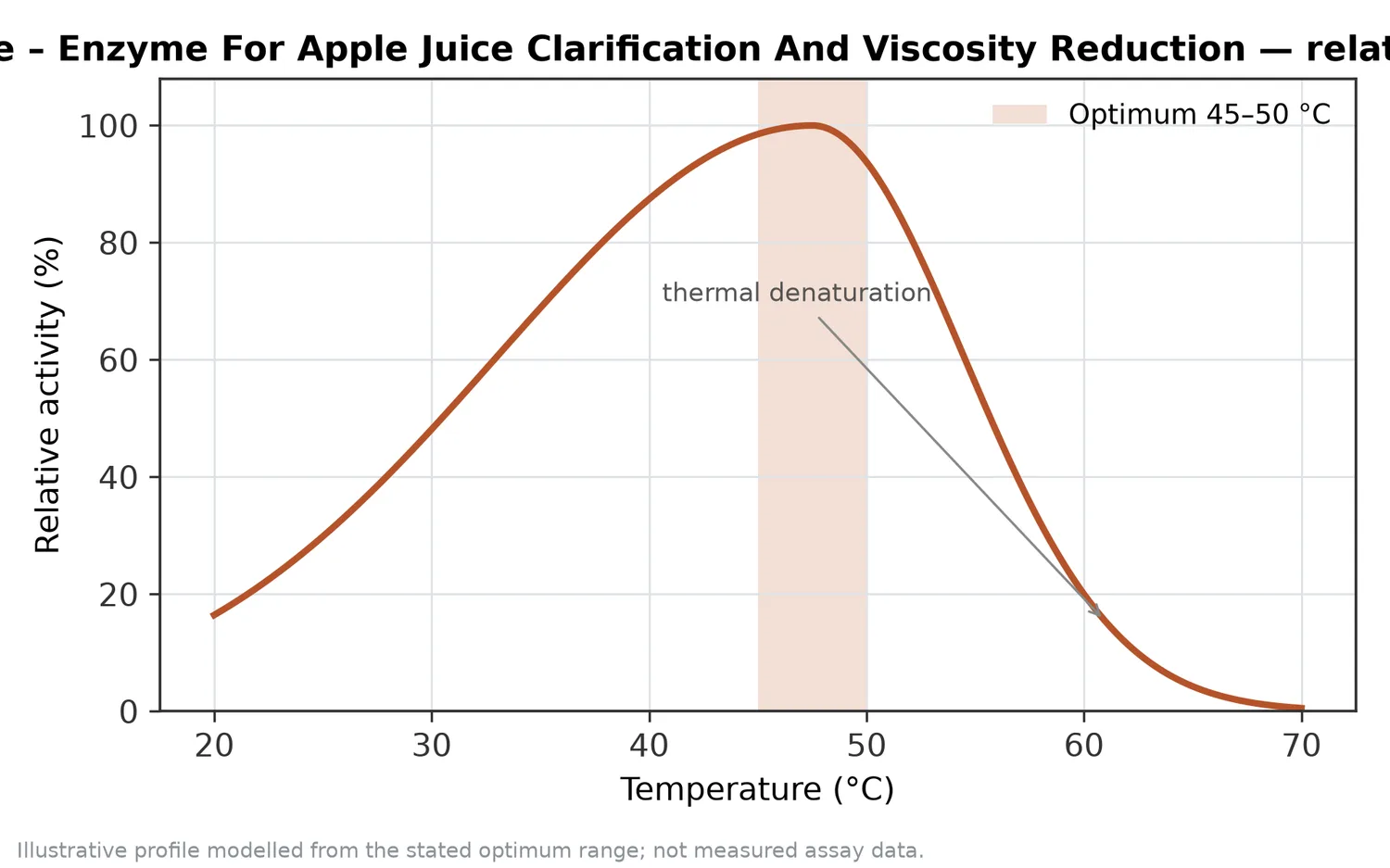
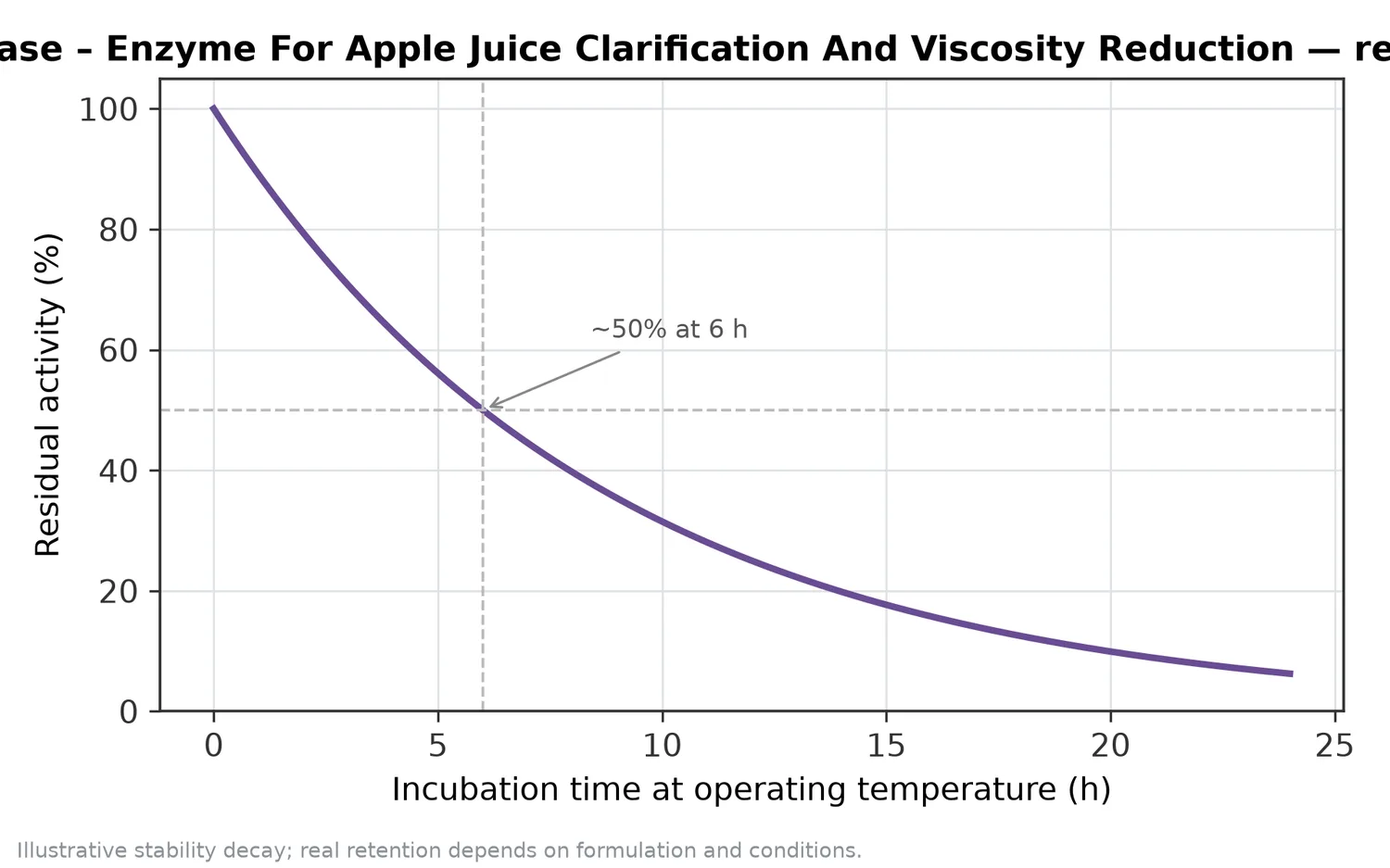
Temperature and acidity influence enzyme behavior, but apple juice naturally provides a favorable acidic fruit environment for many food-processing pectinases. Excessive heat can inactivate enzymes, while very cold conditions may slow reaction rates unless a cold-active enzyme system is used. Research interest in cold-active pectinases shows that lower-temperature clarification is a recognized area of development for fruit juice applications, especially where processors wish to limit heat exposure [2].
The downstream step still matters. Pectinase prepares the juice; it does not make suspended solids disappear. After pectin hydrolysis, the destabilized particles still need a path out of the juice—settling, racking, centrifugation, filtration, or another clarification method. This is why pectinase is best viewed as part of a clarification system rather than a standalone replacement for separation equipment.
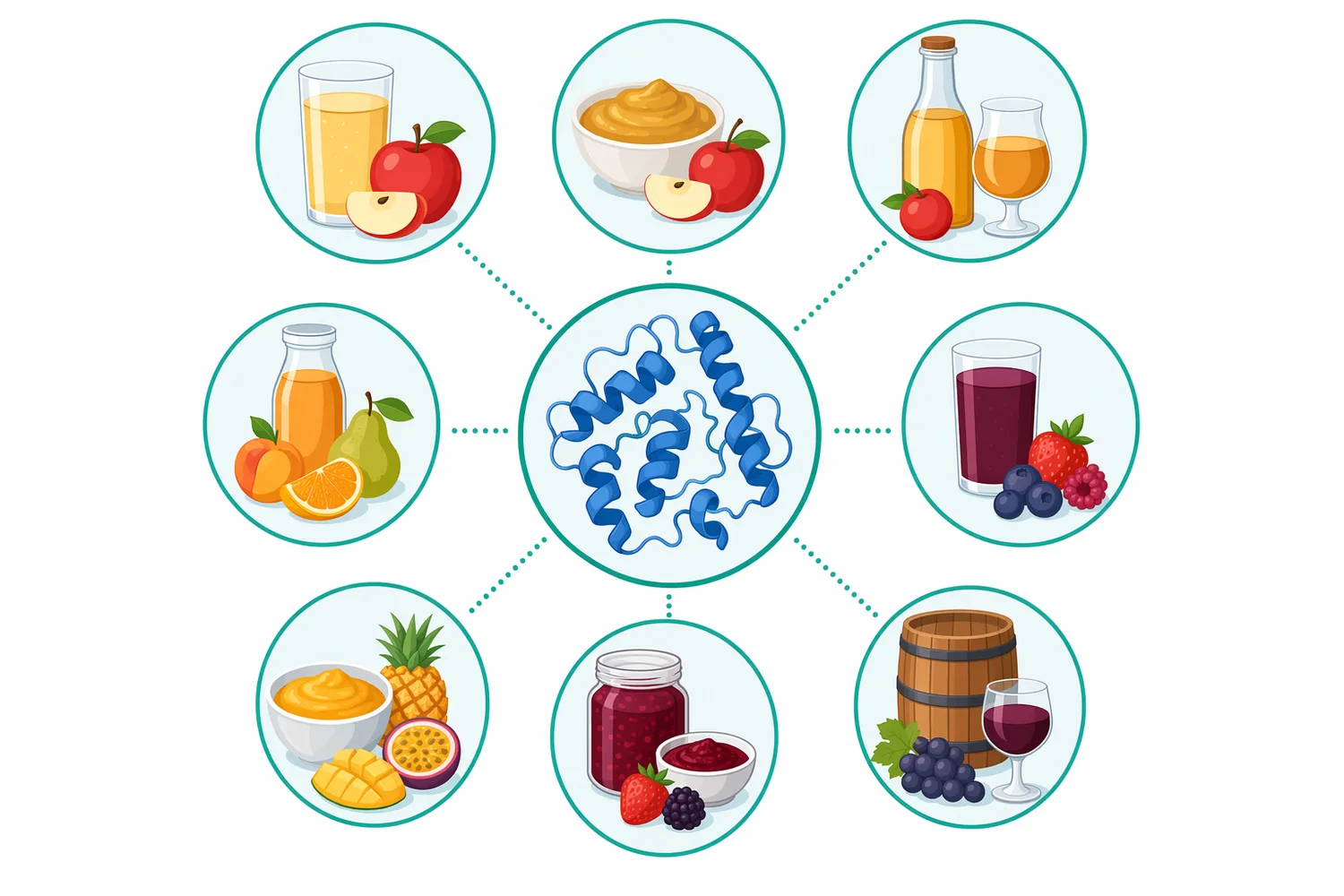
The most direct use is clear apple juice. Clear juice production depends on removing suspended particles and colloidal haze while preserving the desired color, taste, and soluble solids profile. By reducing pectin-driven cloud stability, food-grade pectinase can help create a juice that is easier to polish through conventional clarification and filtration stages. Processed apple product literature recognizes juice as a major apple product category, and pectinase is widely discussed in enzyme literature as a key tool for fruit juice clarification [3].
Apple juice concentrate is another logical application. Concentration magnifies processing problems: a viscous feed can be harder to clarify before evaporation and more difficult to handle as solids content rises. Pectinase treatment before concentration can reduce the pectin burden entering downstream operations. The mechanism is the same as in single-strength juice—pectin hydrolysis reduces viscosity and improves separation behavior—but the operational impact can be more noticeable because concentration steps intensify flow and fouling challenges.
Cider and fermented apple beverages can also benefit from pectinase when pre-fermentation clarification or improved juice handling is desired. The aim may be to reduce coarse pulp, improve tank separation, manage haze, or create a cleaner fermentation substrate. The outcome depends on the cider style: some producers want bright, clarified juice before fermentation, while others prefer more solids for body or fermentation character. Pectinase provides a way to modify the pectin fraction without treating the juice as a chemically stripped material.
Apple-based blends are a related but more variable application. Apple juice is often blended with other fruits, vegetables, botanicals, or functional ingredients. When apple pectin contributes significantly to viscosity or haze, pectinase can still be useful. However, the blend may contain other haze-forming materials such as starch, proteins, insoluble fiber, or phenolic complexes. Mixed fruit juice clarification studies show that enzyme treatment can be useful in blended matrices, but the response depends on the composition of the whole beverage, not only the apple fraction [8].
Apple pomace and fiber-enriched beverages are a more specialized case. When processors intentionally retain more pulp or add apple-derived fiber for texture or nutritional positioning, the goal may not be full clarity. In those systems, pectinase can still help manage excessive viscosity, improve pumpability, or reduce coarse particle behavior without necessarily producing a bright clear juice. Research on fruit-processing residues and pectinase production also highlights the close relationship between pectin-rich agro-materials and enzyme technologies [10].
The first benefit is improved clarification. Pectinase reduces the stabilizing effect of pectin, allowing haze-forming particles to separate more readily. This can support clearer juice, more predictable settling, and more efficient polishing steps. Reviews of microbial pectinase applications repeatedly identify juice clarification as a major industrial use because pectin removal directly addresses one of the main causes of persistent fruit juice cloud [1].
The second benefit is lower viscosity. Reduced viscosity helps juice move through pumps, lines, tanks, centrifuges, and filtration systems with less resistance. This is especially important when apple raw material has high pectin content or when processing includes pulp-heavy streams. Fruit pulp studies showing enzyme-driven rheological changes support the practical connection between pectinase activity and viscosity control [5].
The third benefit is improved filterability. Pectin-rich juice can form gelatinous deposits that blind filters and reduce flow. Once pectin is hydrolyzed, solids are less embedded in a thick polymeric phase, so the filter cake can behave more like a removable solid layer rather than a sticky gel. This is one reason pectinase is commonly used before filtration rather than after filtration has already become difficult.
The fourth benefit is more consistent handling of variable apples. Fruit is not a standardized raw material. Variety, maturity, orchard conditions, storage, and pressing method all influence pectin content and pulp behavior. Enzyme treatment gives the process a way to reduce the impact of that variability by targeting a known structural component of the juice. Pectinase production and application research continues to expand partly because industrial fruit processors need tools that can handle biological variation [2].
The fifth benefit is compatibility with broader sustainability thinking. A significant body of pectinase research explores production using agro-industrial residues such as fruit peels, pulps, and other pectin-rich wastes. Thakur and co-authors reviewed agro-waste utilization in pectinase production and industrial applications, showing how pectinase technology connects with residue valorization and circular processing concepts [6]. This does not describe every commercial supply chain, but it does show why pectinase remains relevant in modern food-processing research.
Pectinase has attracted research interest not only because it works, but also because it can be produced by microorganisms using pectin-rich substrates. Fungal strains, bacteria, and yeasts have all been studied for pectinase production. The food-processing relevance is clear: fruit and vegetable industries generate residues that contain pectin, and those residues can serve as substrates in enzyme-production research. Kc and co-authors’ work on fungal pectinase production and industrial application is one example of this continuing development area [4].
Agro-industrial residue studies are especially prominent. Shet and colleagues investigated pectinase production by an Aspergillus strain using agro-industrial waste and statistical process optimization, reflecting the broader movement toward converting low-value biomass into useful industrial enzymes [10]. Haske and co-authors studied pectinase production from Saccharomyces cerevisiae using orange peels and maize cobs in solid-state fermentation, again connecting enzyme production with residue utilization [11].
Other research explores pectinase from fruit pulps or regional agro-waste streams. García and colleagues studied pectinase production from soursop and cherimoya pulp for agro-industrial waste reduction in Colombia, illustrating the same concept in a different feedstock setting [12]. These studies do not need to be treated as direct specifications for an apple juice plant; their value is that they show pectinase is a mature enzyme category supported by active research, application testing, and sustainability-oriented development.
Pectinase is not a sanitizer, preservative, pasteurization step, or microbial control system. It changes pectin structure; it does not guarantee microbial stability. Juice still requires the appropriate food safety controls, preservation process, packaging controls, and storage conditions used by the processing facility. Reviews of fruit juice preservation technologies make clear that preservation is its own technical field, distinct from enzymatic clarification [13].
Pectinase also does not remove every possible haze. If haze is caused primarily by starch, protein-phenolic complexes, microbial growth, mineral precipitation, or heat-induced instability, pectinase alone may only partly improve the appearance. This is why fruit-processing literature discusses multiple enzyme classes and process technologies rather than presenting pectinase as a universal cure. The enzyme is strongest when pectin is a major cause of viscosity, cloud stability, or poor filterability [2].
It also should not be expected to produce identical results in every apple juice. A high-pectin late-season apple, a stored apple lot, a high-pulp pressing, and a low-pulp clarified juice can respond differently. Pectinase is a science-backed processing aid, but the final result still depends on the complete juice matrix and the separation method used after treatment.
Enzymes.bio supplies Food-Grade Pectinase for apple juice clarification and viscosity reduction as an enzyme ingredient available for direct online purchase by the 1 kg unit. The purchase is completed online; after payment, the order is processed and shipped. A Certificate of Analysis and Safety Data Sheet accompany the order.
This product-page guidance is intended to explain how pectinase works and why it is used in apple juice processing. It is not a substitute for the operating procedures, quality controls, or food safety systems used by a qualified food-processing facility. For buyers making clear apple juice, cider, concentrate, or apple-based blends, the practical value of pectinase is straightforward: it targets the pectin that drives viscosity, cloud stability, and filtration difficulty.
Food-grade pectinase is one of the most established enzyme tools for apple juice clarification because it acts directly on pectin, the apple-derived polymer that thickens juice and stabilizes haze. By breaking long pectin chains into smaller fragments, it reduces viscosity, weakens colloidal suspension, and helps suspended solids separate through settling, centrifugation, or filtration. The broader scientific literature supports pectinase as a major enzyme class for fruit juice clarification, extraction, and processing efficiency [1].
For apple juice and apple-based beverage production, pectinase should be viewed as a practical clarification aid rather than a cosmetic additive. It works by changing the substrate itself: the pectin network is hydrolyzed, the liquid phase becomes less structure-forming, and particles are no longer held as strongly in suspension. That concrete mechanism is why food-grade pectinase remains relevant for clear apple juice, cider preparation, concentrate processing, and viscosity reduction in apple-rich juice systems.
Sold by the 1 kg unit, in stock and ready to ship. Order directly on our store — pay online and we process your order. A Certificate of Analysis and Safety Data Sheet are included with every order.
Buy Food-Grade Pectinase – Enzyme For Apple Juice Clarification And Viscosity Reduction →Numbered in order of first citation. Open-access sources, each verified reachable at publication; citation numbers in the text link here.