
Food-grade pectinase is used in fruit pulping to break down pectin, the plant cell-wall “cement” that makes fruit mash thick, cloudy and difficult to press or filter. By cutting and modifying pectic substances in crushed fruit, pectinase helps reduce pulp viscosity, release trapped juice, improve clarification and support extraction of desirable colour, flavour and aroma compounds in suitable fruit systems [1].
Enzymes.bio supplies Food-Grade Pectinase For Fruit Pulping directly online by the 1 kg unit. Buyers place and pay for the product online; the order is then processed and shipped, with a Certificate of Analysis and Safety Data Sheet included with the order.
Pectinase is not one single enzyme. It is a group of related enzymes that act on pectin and pectic substances, which are major structural polysaccharides in plant cell walls and the middle lamella between plant cells. In fruit processing, that matters because pectin is one of the main reasons crushed fruit can remain thick, gelatinous, cloudy or slow to release juice even after mechanical pulping [1].
In intact fruit, pectin helps give tissue its firmness. It binds water, contributes to the structure of the cell wall, and helps hold neighbouring cells together. Once fruit is milled, mashed or crushed, some cells rupture immediately, but much of the liquid phase and soluble fruit material can remain trapped inside a partially broken network of cell-wall fragments. Pectinase changes that network chemically: it shortens pectin chains, alters their esterification pattern, and weakens the pectin-rich matrix so the pulp behaves less like a gel and more like a separable suspension [1].
This is why pectinase is widely used in fruit and vegetable juice processing, winemaking, clarification and plant-material extraction. Its value is practical rather than cosmetic alone: when the pectin network is weakened, fruit mash can become easier to pump, mix, press, settle, filter or clarify. The same mechanism can also help release soluble solids and plant-derived compounds that otherwise remain associated with skins, pulp solids and cell-wall material [1].
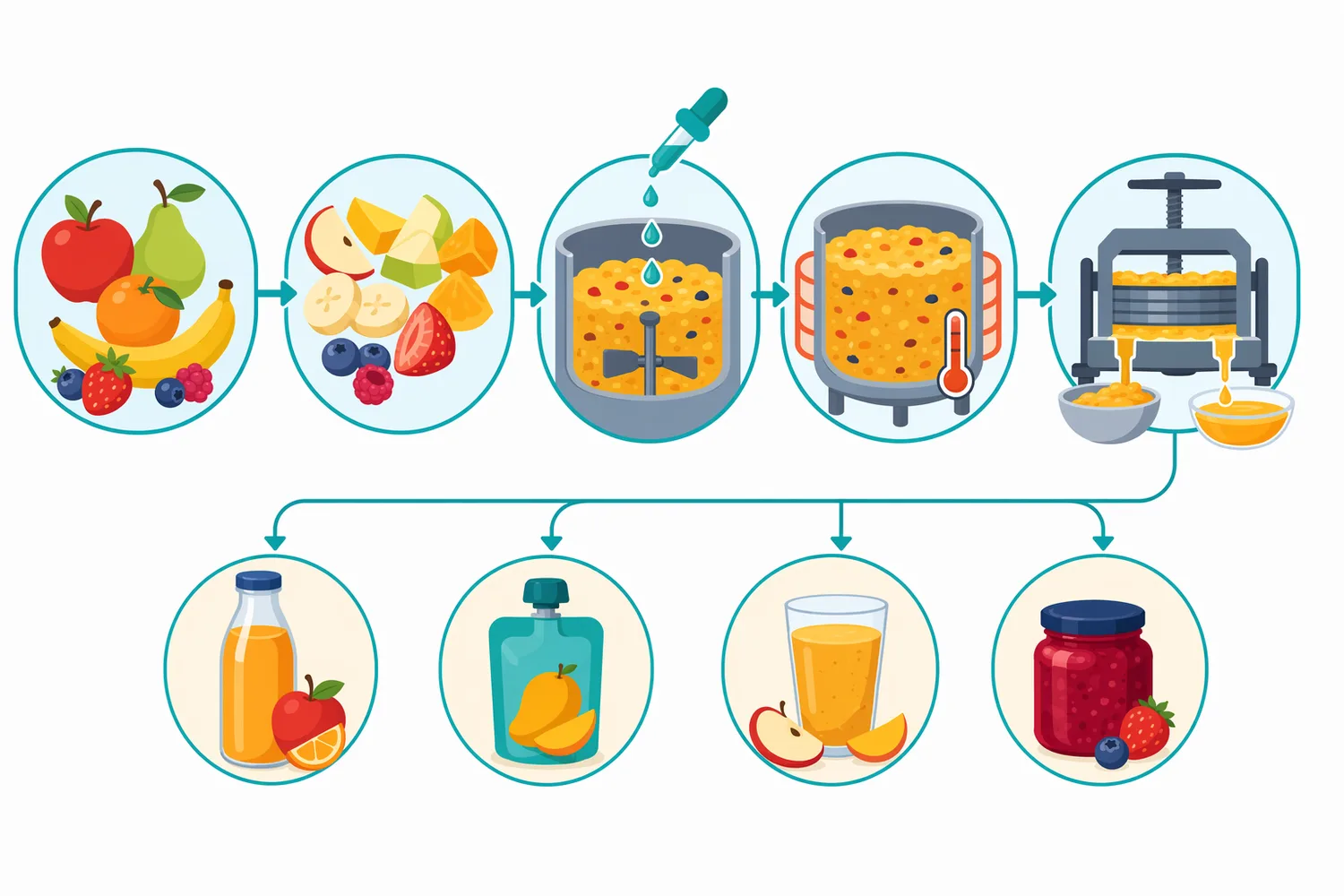
For fruit pulping, the enzyme is typically relevant before or around the stages where the processor wants better liquid release, lower viscosity, improved separation or a cleaner juice phase. It can be used with pectin-rich fruit materials such as apple, pear, berry, grape, citrus, tropical fruit pulp and other fruit preparations where pectin contributes to thickness, haze or poor separation. The exact process response depends on the fruit matrix, degree of ripeness, mechanical preparation and processing conditions, but the underlying target is the same: pectic substances in the plant tissue [1].
The most important change is depolymerisation of pectin. Long pectin chains contribute strongly to viscosity because they interact with water and with other cell-wall polymers, forming a hydrated network. When pectinase enzymes cut those chains into shorter fragments, that network loses strength. The pulp can become less stringy, less gel-like and more mobile, allowing liquid to move through the mash more easily [1].
A second change is loosening of the middle lamella, the pectin-rich region that helps bind plant cells to each other. Mechanical pulping breaks tissue apart physically, but enzymatic treatment attacks the biochemical adhesive that still holds many particles together. As the middle lamella weakens, cell clusters separate more readily, juice trapped between and within tissue fragments is released, and pressing or draining can become more efficient [1].
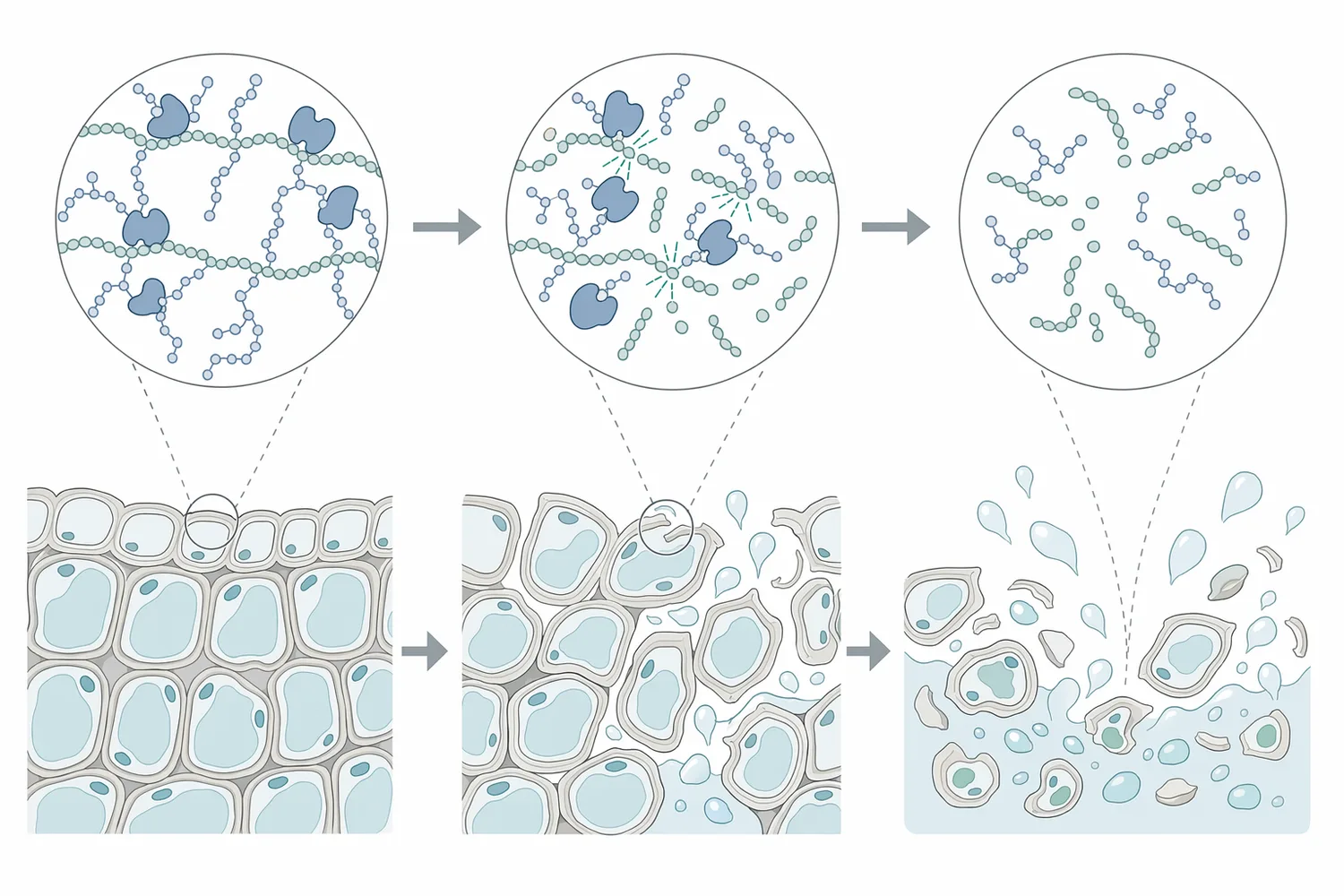
A third change is improved removal of pectin-related colloids. In juice, pectin can remain suspended and help stabilise haze. These pectic colloids may slow filtration because they retain water, interact with fine particles and contribute to a slimy or clogging filter cake. Pectinase treatment reduces the size and structural integrity of those pectin molecules, supporting clearer juice and improved filterability in processes where clarification is desired [1].
A fourth change can be improved extraction of fruit compounds from skins and pulp solids. In grape, berry and other coloured fruits, pigments, phenolics, tannins and aroma precursors may be physically trapped in cell-wall structures or associated with skin tissues. By degrading pectin in those tissues, pectinase can improve contact between the liquid phase and the extractable compounds, supporting better release where the product style calls for it [1].
These effects are connected. Lower viscosity helps mixing, mixing improves enzyme contact, better enzyme contact accelerates breakdown of the pectin-rich matrix, and a weakened matrix releases juice and suspended compounds more readily. The practical result can be a pulp that drains faster, presses more completely, clarifies more easily or behaves more consistently during downstream processing [1].
Commercial food-grade pectinase preparations are usually described by their overall ability to degrade pectin, but that overall effect can come from several enzyme activities. The major pectinase types include polygalacturonases, pectin lyases, pectate lyases and pectin methylesterases. Each acts on a different structural feature of pectin, which is why pectinase is better understood as an enzyme system rather than a single narrowly defined reaction [1].
| Pectinase activity | Main action on pectin | Practical meaning in fruit pulping |
|---|---|---|
| Polygalacturonase | Hydrolyses glycosidic bonds in the polygalacturonic acid backbone of pectin | Shortens pectin chains, reduces viscosity and weakens the pulp matrix |
| Pectin lyase | Cleaves highly esterified pectin by a lyase mechanism | Helps break down pectin in fruit materials where methyl-esterified pectin is significant |
| Pectate lyase | Cleaves de-esterified pectate structures | Acts on pectic material after or where pectin has lower esterification |
| Pectin methylesterase | Removes methyl ester groups from pectin | Changes pectin chemistry and can make it more accessible to other pectin-degrading enzymes |
Polygalacturonases are often central to viscosity reduction because they cut the pectin backbone. Pectin molecules derive much of their thickening effect from chain length and hydration. When the backbone is hydrolysed, the average molecular size falls and the pulp can lose some of its gel-like resistance to flow. In fruit pulping, that can translate into easier movement through pumps, screens, decanters, presses or filters, depending on the process design [1].
Pectin methylesterases work differently. Rather than cutting the backbone directly, they remove methyl ester groups from pectin. This changes the chemical character of the pectin molecule and can alter how it interacts with water, minerals and other pectinase activities. In mixed pectinase systems, this modification can make pectin more suitable for subsequent breakdown by enzymes that prefer de-esterified pectic regions [1].
Pectin lyases and pectate lyases cleave pectin by mechanisms distinct from simple hydrolysis. Pectin lyases act on esterified pectin, while pectate lyases act on de-esterified pectate. In practice, this matters because fruit pectin is not chemically uniform. Different fruits, ripeness levels and tissues contain pectin with different degrees of esterification and branching, so a preparation with complementary pectin-degrading activities can act across more of the pectic substrate present in the pulp [1].
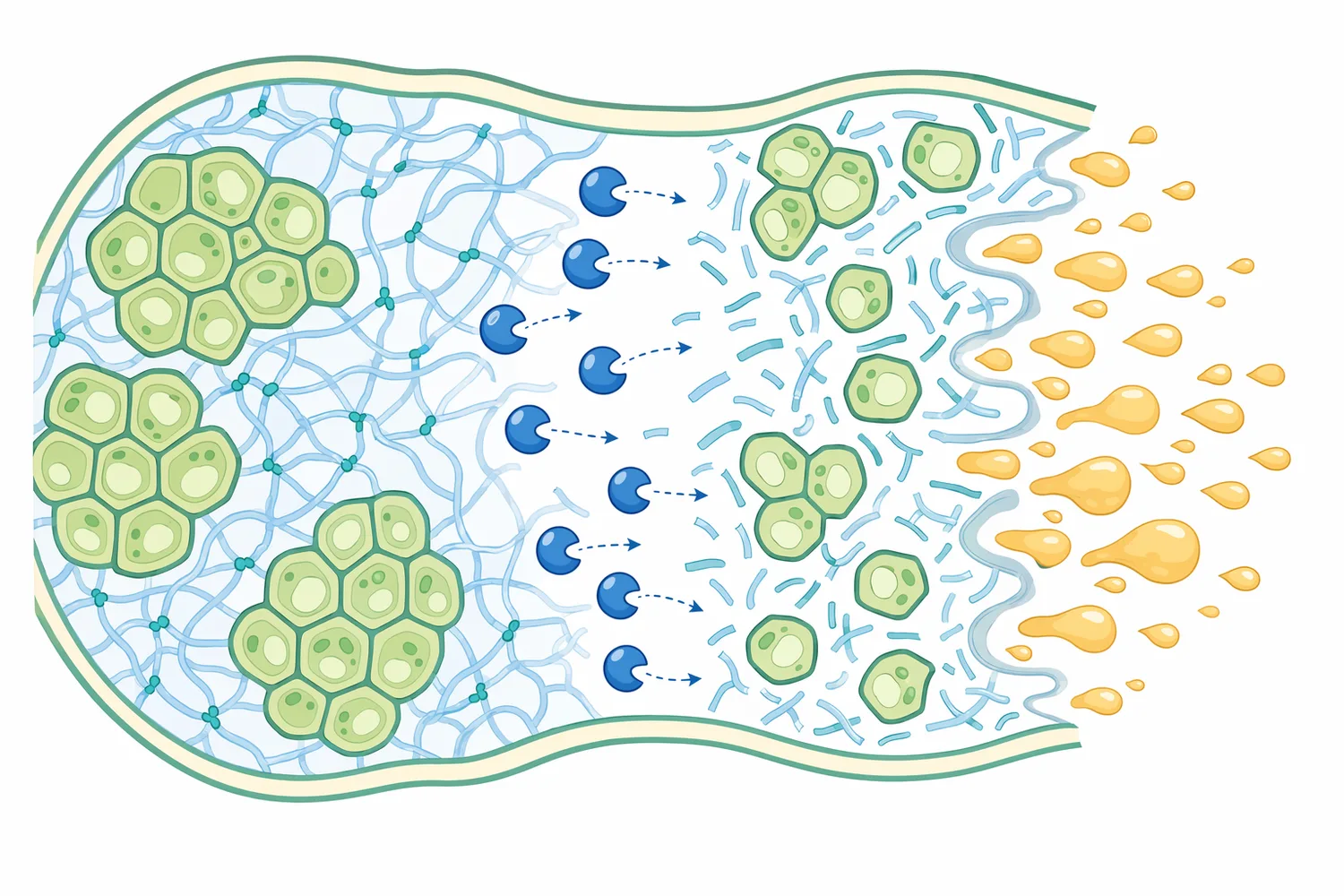
For a fruit processor, the operational value is the combined effect: pectin loses the structure that makes pulp viscous, cohesive and haze-forming. The enzyme does not “dissolve fruit” indiscriminately; it targets pectic substances that bind water and hold cell-wall fragments together. This targeted action is what makes pectinase useful as a processing aid in fruit mash, juice, purée and wine-related applications [1].
High viscosity is one of the most common reasons fruit pulping becomes inefficient. A mash that is too thick can require more energy to move, mix unevenly, drain poorly and create bottlenecks before pressing or clarification. Pectin contributes strongly to this behaviour because long, hydrated pectin chains create a network that resists flow even after the fruit has been mechanically broken down [1].
Pectinase reduces viscosity by breaking the long pectin polymers into smaller fragments and weakening the pectin-rich matrix. This changes the rheology of the pulp: instead of behaving like a cohesive gel or thick paste, the treated mash can become more fluid and easier to separate. The improvement is not simply dilution; it is a structural change in the polymer network responsible for thickness [1].
This is particularly relevant for fruits with high soluble pectin or pulps that become pasty after milling. Apple and pear mashes, berry pulps, mango and tropical fruit preparations, grape must, citrus-derived streams and other fruit systems can all present pectin-related viscosity challenges. The degree of improvement will vary, but the mechanism is consistent: pectinase attacks the pectin fraction that contributes to flow resistance [1].
Lower viscosity can also make enzyme action more effective once treatment begins. In very thick pulp, mixing can be uneven, which means some zones receive more enzyme contact than others. As pectinase starts loosening the matrix, the mash can become easier to distribute and expose to further enzymatic action. This positive processing effect can support more even treatment of the pulp mass [1].
Mechanical crushing opens fruit cells, but it does not fully overcome the structural hold of the cell wall and middle lamella. Juice can remain trapped in capillaries between cell-wall fragments, inside partially broken cells, or within clusters of cells still bound by pectin-rich material. Pectinase improves juice release by breaking down the pectic structures that keep those liquid compartments physically constrained [1].
As pectin chains are cleaved and the middle lamella weakens, the tissue network loses cohesion. More liquid can migrate out of the pulp during pressing, draining or separation because the channels through the mash become less obstructed and the solids hold less water. This is one reason pectinases are established processing enzymes in fruit juice extraction and related plant-material applications [1].
The same mechanism helps explain why pectinase can be useful before pressing rather than only after juice has been separated. Treating the mash allows the enzyme to act while the juice is still inside the pectin-rich tissue. By the time the pulp reaches a press, screen, centrifuge or filtration step, part of the structural barrier has already been weakened, so less juice remains trapped in the solid fraction [1].
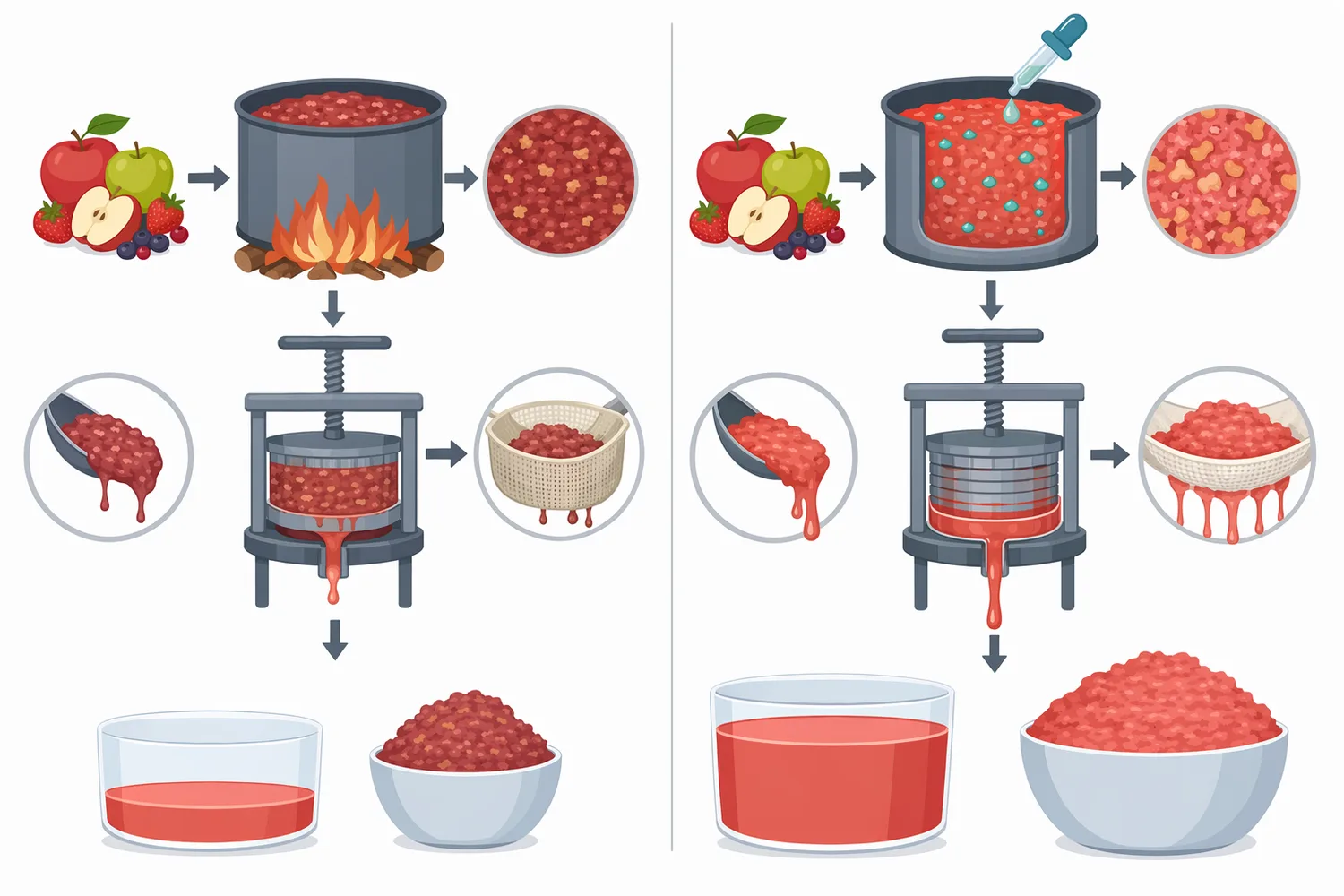
Juice release is not only about yield. It can also affect consistency of the extracted juice stream. When pulp holds juice unevenly, the first liquid fraction and later pressed fractions may differ in solids, colour, flavour intensity or turbidity. By helping the mash break down more uniformly, pectinase can support a more predictable separation between liquid and solids in fruit-processing lines [1].
Pectin is a major contributor to haze and turbidity in many fruit juices. Even when larger pulp particles are removed, soluble or colloidal pectic substances can remain suspended and help stabilise cloudiness. These molecules interact with water and fine particles, making the juice harder to clarify by settling or filtration alone [1].
Pectinase reduces haze potential by degrading those pectic substances into smaller, less structure-forming fragments. Once the pectin network is broken, suspended particles may aggregate or separate more readily, and the liquid can pass through filtration media with less resistance. This is why pectinase is commonly associated with juice clarification and improved filterability in fruit and beverage processing [1].
The effect is especially useful where a bright, clear juice or wine is desired. In these applications, the enzyme is not acting as a colouring or flavouring ingredient; it is changing the colloidal stability of the juice by removing one of the structural causes of persistent haze. When pectin-related cloudiness is reduced, downstream clarification steps can work more effectively [1].
In cloudy juices or purées where full clarification is not the goal, pectinase may still be used differently: to moderate excessive viscosity, improve extraction or create a more manageable pulp consistency without necessarily producing a crystal-clear liquid. The intended texture and appearance of the finished product therefore influence how the pectinase effect is used in practice [1].
In some fruit systems, the target is not only liquid release but also extraction of desirable compounds from skins, seeds or pulp solids. Grapes, berries and deeply coloured fruits contain pigments and phenolic compounds in tissues that can be slow to release by mechanical treatment alone. Pectinase helps by disrupting pectin-containing cell-wall structures that physically limit diffusion of these compounds into the liquid phase [1].
The mechanism is straightforward: when pectin-rich walls and intercellular adhesives are weakened, the surface area available for extraction increases and the path for soluble compounds to move into the juice or must becomes less restricted. Colour compounds, flavour precursors and aroma-related substances can therefore be released more effectively where they are present and process conditions support extraction [1].
This does not mean pectinase creates colour or flavour by itself. It does not replace fruit quality, ripeness or process design. Instead, it improves access to compounds already present in the raw material. In grape processing, for example, pectinase use is associated with extracting compounds from fruit tissues and reducing pectin-related haze in wine applications [1].
The same principle can apply to fruit preparations where the product benefits from stronger natural colour or fuller fruit expression. The value is most relevant when desirable compounds are located in cell-wall-rich tissues and the process includes enough contact between enzyme, pulp solids and liquid phase for extraction to occur [1].
Fruit juice processing is the most direct application. Pectinase is used to treat crushed fruit or juice streams so that pectin no longer holds the mash in a thick, difficult-to-separate state. The expected process effects are lower viscosity, improved juice liberation, better clarification and easier filtration when those outcomes are compatible with the product style [1].
In apple and pear processing, pectinase is especially relevant because these fruits contain pectic substances that influence mash thickness, pressability and juice clarity. Enzymatic breakdown of pectin helps the fruit tissue release juice more efficiently and can reduce problems associated with pectin haze in the liquid fraction [1].
In berry and grape processing, pectinase can support both separation and extraction. Berries and grapes contain valuable colour and flavour compounds in skins and surrounding tissue, and enzymatic weakening of pectin-rich cell walls can help those compounds transfer into the juice or must. In winemaking, pectinase is also used to assist clarification and reduce haze related to pectic substances [1].
In citrus and tropical fruit streams, the enzyme can help manage pulp viscosity and pectin-related turbidity. Citrus materials, mango purées and other tropical fruit pulps can be thick and rich in suspended solids, so pectinase may be used to improve handling, separation or clarification depending on the desired end product. The same biochemical target—pectin—remains the reason for use [1].
In fruit purées, sauces and preparations, pectinase can be useful where the processing goal is not full juice separation but controlled reduction of excessive thickness. A fruit preparation may need to remain fruit-rich and textured while still being pumpable, blendable or suitable for downstream concentration. Pectinase provides a way to adjust the pectin-driven component of viscosity rather than relying only on mechanical shear [1].
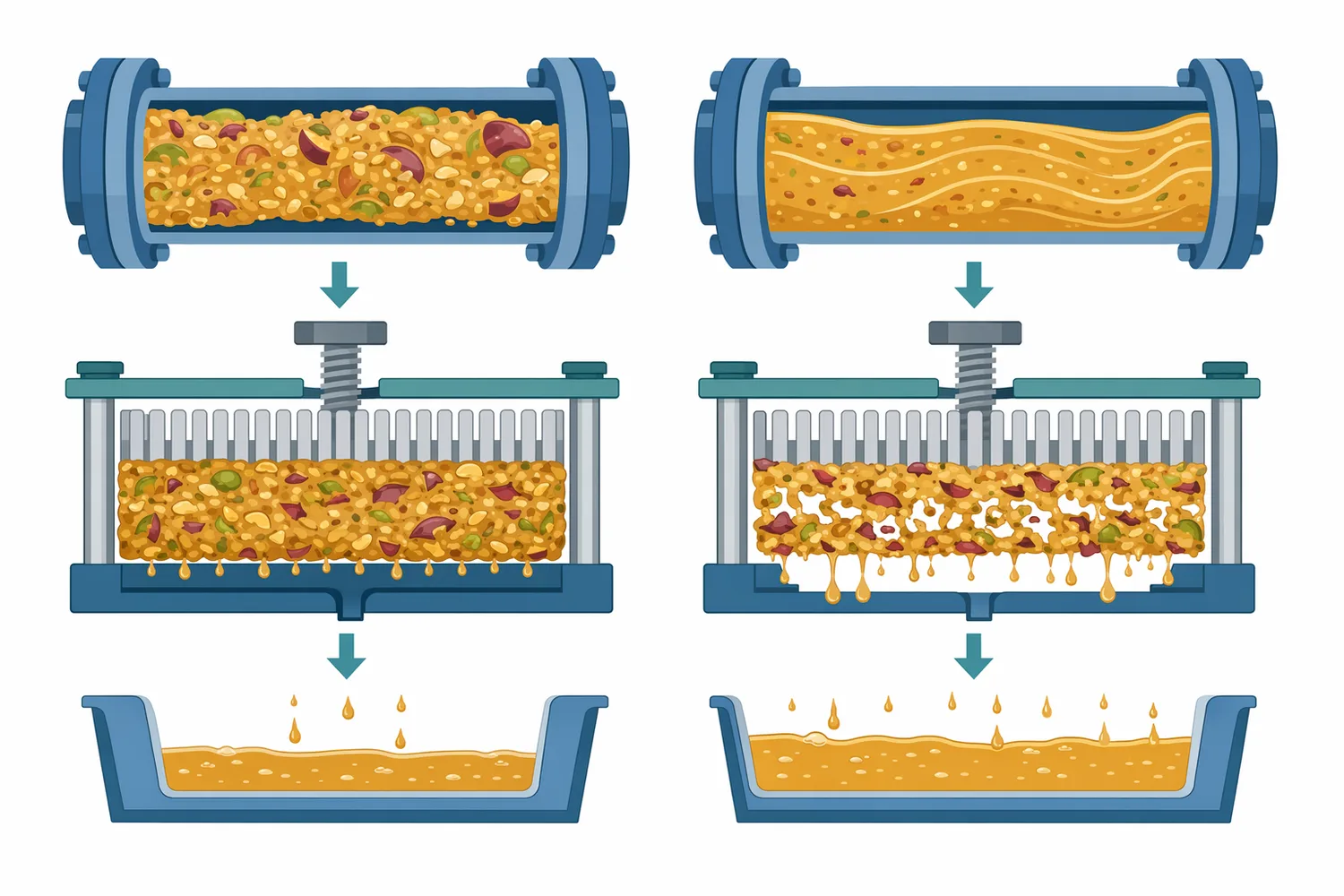
Pectinase performance is affected by the environment in which it contacts the pulp. Temperature, acidity, mixing, fruit type and treatment time all influence how quickly and completely pectic substances are modified. These factors matter because enzymes are proteins with active sites that must remain properly shaped and must physically encounter the pectin substrate to catalyse breakdown [1].
Fruit pulps are usually acidic, but the exact acidity varies by fruit and formulation. Pectinase activity depends on the compatibility between the enzyme and the fruit matrix. When conditions are favourable, the enzyme’s active site can bind pectin and catalyse cleavage or modification reactions efficiently; when conditions are unfavourable, the same amount of enzyme contact may produce a weaker effect [1].
Temperature affects reaction speed and enzyme stability. Moderate warming generally increases molecular motion and can speed enzyme-substrate contact, but excessive heat can damage the protein structure of an enzyme. If the active site is denatured, the enzyme can no longer bind and modify pectin effectively, so the pulp may retain more of its original viscosity and juice-holding structure [1].
Mixing is also important because pectinase only works where it reaches the substrate. In a dense mash, pockets of pulp may receive different levels of contact if the enzyme is not distributed evenly. Effective dispersion through the fruit mass allows more of the pectin-rich structure to be exposed to enzymatic action, supporting a more uniform change in texture and separation behaviour [1].
Fruit variety and ripeness influence the response because pectin structure changes naturally between species and during maturation. Some fruits contain more soluble pectin; others contain pectin that is more strongly associated with insoluble cell-wall material. These differences affect viscosity, haze formation and the way the pulp responds when pectinase begins cleaving or modifying pectic polymers [1].
Pectinases can be discussed in acidic, neutral and alkaline contexts, but fruit pulping is most closely associated with acidic fruit matrices. The distinction is useful because it explains why pectinase is used across many industries while food fruit applications focus on conditions compatible with fruit quality and beverage or purée processing [1].
| Pectinase context | Typical processing relevance | Conceptual fit for fruit pulping |
|---|---|---|
| Acidic pectinase context | Fruit juice, wine, acidic plant materials | Closest fit for most fruit pulp and juice systems |
| Neutral pectinase context | Selected plant-processing or specialised applications | May be relevant only where the matrix is closer to neutral |
| Alkaline pectinase context | Non-fruit industrial applications such as some textile or plant-fibre processes | Generally not the main context for fruit pulping |
This table should not be read as a rigid specification table. It is a conceptual distinction: pectinase enzymes are applied in different industries, and their useful operating environment must match the material being processed. For fruit pulping, the key point is that the enzyme must function in a food matrix where fruit acids, sugars, suspended solids and pectin-rich tissues are present [1].
The same broad enzyme family can therefore appear in juice clarification, winemaking, coffee and tea processing, textile processing, paper applications and biomass-related uses, but the process objective differs. In fruit pulping, the objective is not fibre scouring or industrial waste treatment; it is controlled breakdown of pectic substances to improve pulp handling, juice release, filtration and product appearance where appropriate [1].
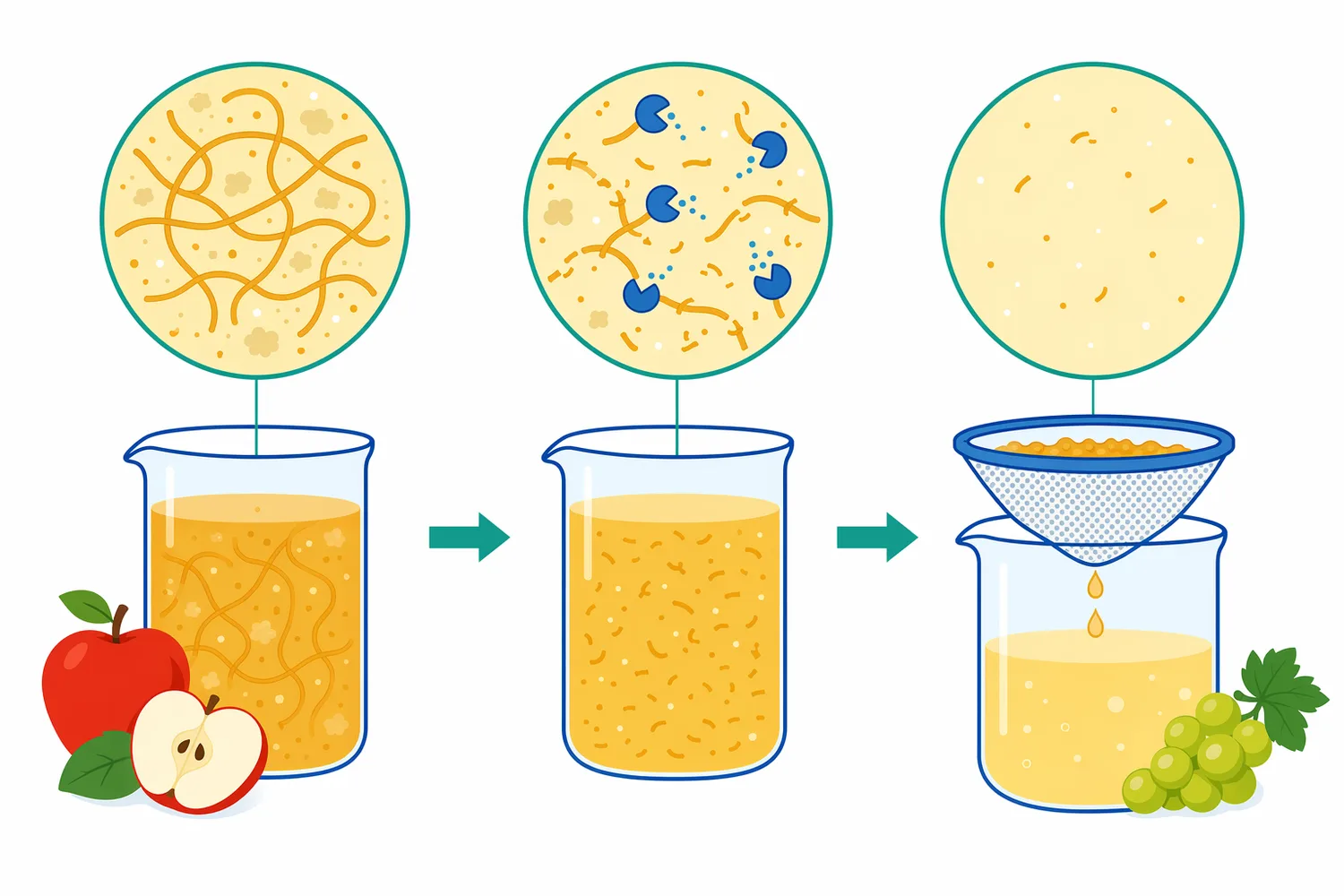
The first realistic benefit is easier handling of the pulp. When pectinase reduces the polymer-driven thickness of the mash, the fruit mass can become less resistant to movement. This can improve processing continuity in steps such as mixing, transfer, screening or feeding into separation equipment, especially for high-pectin pulps that otherwise behave as cohesive pastes [1].
The second benefit is improved liquid release. By weakening the middle lamella and degrading pectin chains, pectinase reduces the ability of the solid fraction to retain juice. This can support more efficient pressing or draining, with less liquid locked inside the pulp structure after mechanical treatment [1].
The third benefit is improved clarification and filtration. Pectin-related haze and colloidal stability can make a juice appear cloudy and slow its passage through filters. When pectinase breaks down haze-forming pectic substances, the liquid phase can become easier to clarify and may show better filterability in processes designed for bright juice or wine [1].
The fourth benefit is better access to natural fruit compounds. Where colour, aroma or flavour compounds are trapped in skins or pulp solids, pectinase can help release them by disrupting the cell-wall matrix. This is particularly relevant in grape, berry and other fruit systems where extraction from tissue is part of the product objective [1].
The fifth benefit is more predictable downstream behaviour. Pectin is a variable natural component, and differences in fruit maturity or variety can affect pulp texture. While pectinase does not eliminate all raw-material variability, it targets a major structural source of viscosity and haze, helping the processor manage one of the most important causes of inconsistent fruit-pulp performance [1].
The strongest evidence for pectinase use is in established fruit and beverage applications: juice extraction, clarification, viscosity reduction, wine processing and improved filterability. These uses are directly connected to the known ability of pectinase enzymes to degrade pectin and pectic substances in plant cell walls [1].
The mechanism is well supported: pectinase acts on the pectin backbone or modifies pectin chemistry, reducing the structural strength of pectin-rich networks. That mechanism explains the observed industrial effects better than a generic “enzyme improves processing” claim. When pectin is shortened or chemically modified, the pulp matrix physically changes; it holds less structure, traps less liquid and contributes less to haze [1].
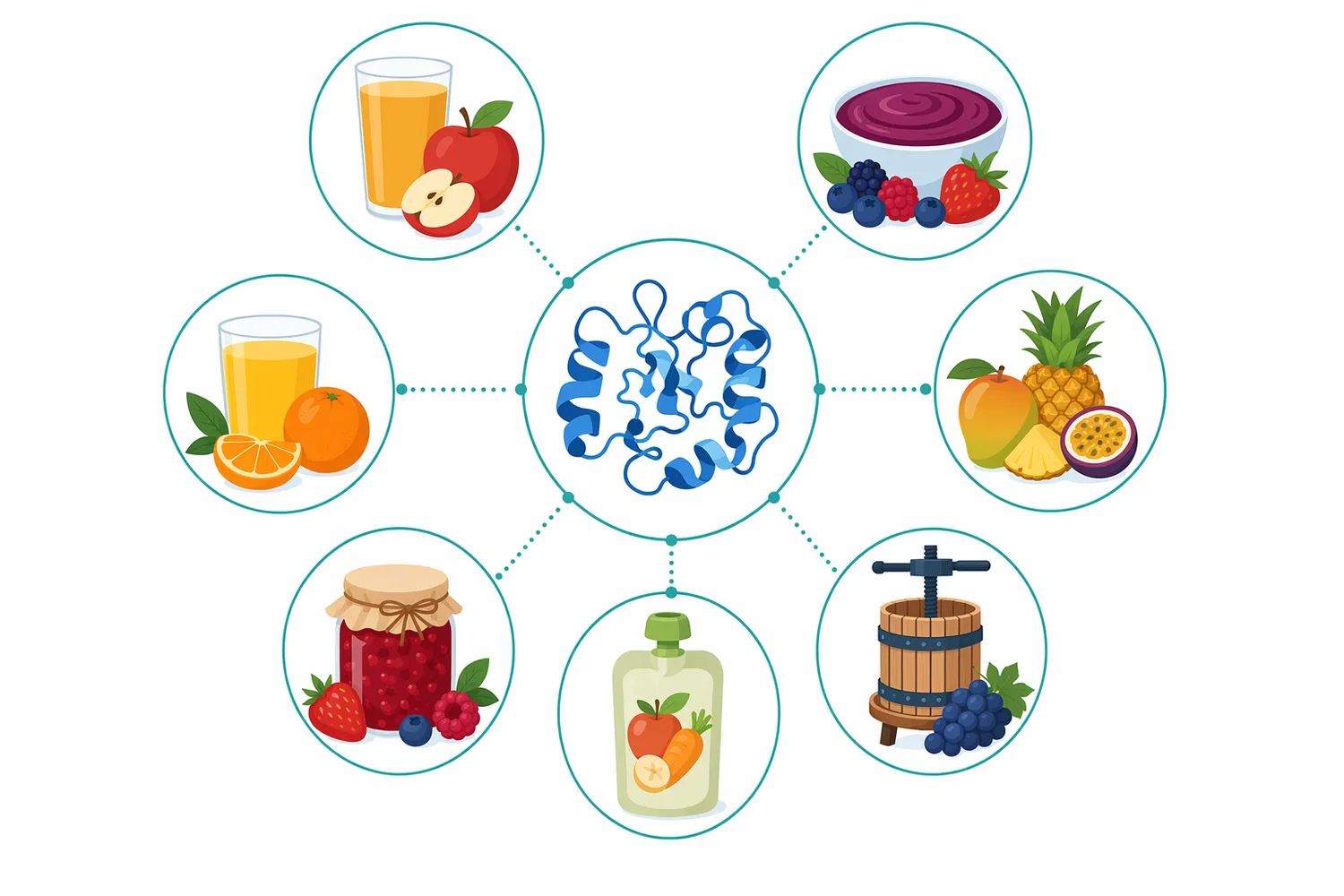
The process outcome, however, remains application-dependent. Different fruits contain different pectin structures, different suspended solids and different target product qualities. A clear apple juice, a red grape must, a mango purée and a berry preparation may all benefit from pectinase for different reasons, even though the enzyme target is the same [1].
Emerging and specialised uses of pectinase in plant-based processing, extraction of functional compounds and broader biotechnology applications show the versatility of the enzyme family. For fruit pulping, the most dependable interpretation remains the conventional one: pectinase is a processing aid for pectin-rich plant tissue where lower viscosity, improved juice release, clarification or extraction is desired [1].
Food-Grade Pectinase For Fruit Pulping from Enzymes.bio is offered for buyers who need a practical food-processing enzyme for pectin-rich fruit pulp, mash, purée or juice streams. Enzymes.bio supplies the product directly online by the 1 kg unit; buyers complete purchase and payment online, after which the order is processed and shipped.
A Certificate of Analysis and Safety Data Sheet are included with the order. Enzymes.bio is a supplier of the product, not a manufacturer or testing laboratory, so the product page is intended to support straightforward online purchasing rather than a custom development or laboratory service model.
Food-grade pectinase is valuable in fruit pulping because it targets pectin, one of the main structural reasons fruit mash remains thick, cloudy and difficult to separate. By degrading and modifying pectic substances in the cell wall and middle lamella, pectinase can reduce viscosity, loosen fruit tissue, release trapped juice, improve filtration, support clarification and help extract natural colour, aroma and flavour compounds where the fruit system contains them [1].
For fruit processors working with pectin-rich mash, pulp, purée or juice streams, pectinase is best understood as a targeted processing aid: it changes the fruit matrix by weakening the pectin network rather than merely masking a handling problem. Enzymes.bio supplies Food-Grade Pectinase For Fruit Pulping online in 1 kg units, with order documentation included for routine receiving and safe handling.
Sold by the 1 kg unit, in stock and ready to ship. Order directly on our store — pay online and we process your order. A Certificate of Analysis and Safety Data Sheet are included with every order.
Buy Food-Grade Pectinase For Fruit Pulping →Numbered in order of first citation. Open-access sources, each verified reachable at publication; citation numbers in the text link here.